.svg)




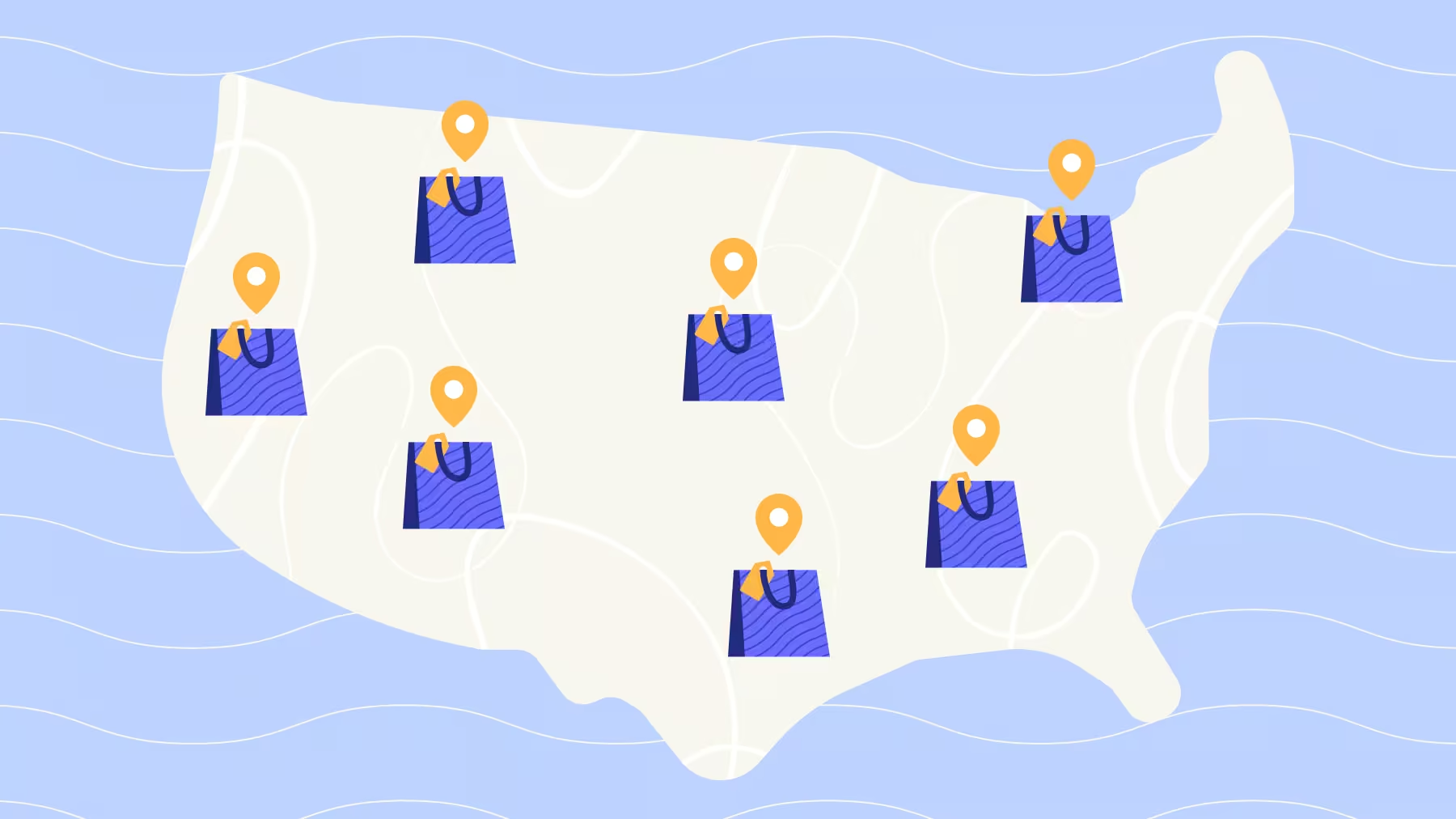


On a national level, retail foot traffic held notably steady in May 2026. However, even relatively small fluctuations at the state level tell a story of two external pressures – a sharp run-up at the pump and a destructive mid-May storm outbreak – shaping consumer behavior.
Traffic Reflects a Cautious Consumer
The chart below shows year-over-year (YoY) visits to overall retail by state in May 2026. And while performance varied somewhat by state,all changes remained within the narrow range of ±2 percentage points. Nationwide, overall retail sat relatively flat at 0.3% YoY – stability that suggests that consumers are closely managing their budgets amid a challenging economic backdrop.
Still, even modest year-over-year swings in foot traffic highlight the influence of two state-level pressures: ongoing gas price increases and adverse weather conditions.
Retail Traffic and the Path of Fuel Inflation
Gas prices continued to climb sharply in May 2026, and the map above suggests a relationship between YoY price hikes at the pump and retail visitation patterns. Regions that experienced the largest YoY increases in gas prices, such as the Midwest and Ohio – where prices climbed by over 45% and 50%, respectively – were often those that saw retail foot traffic soften. This could at least partly reflect consumers adjusting their spending to offset higher fuel costs.
Meanwhile, the regions with the lowest average gas price, the Gulf Coast and Lower Atlantic, or the West Coast – which experienced the smallest YoY price increase of (only) about 30% – for the most part posted positive YoY retail foot traffic. This trend held even as average gas prices along the West Coast reached over $5.5 per gallon – the highest in the country – suggesting that changes in gas prices had a greater impact on consumer traffic patterns than the absolute price level itself.
Severe Weather Weighed on Consumer Mobility
But fuel costs were only part of the retail foot traffic story in May 2026. Across the Midwest and parts of the Mid-Atlantic, a multi-day severe weather outbreak brought tornadoes, large hail, and flash flooding to the region. The same weather system also contributed to wildfire activity across southwestern Kansas and parts of Colorado, Oklahoma, and the Texas Panhandle.
As the map above shows, the band of declining retail visits running through the Midwest, Ohio Valley, and Mid-Atlantic – closely tracking the path of these storms. This alignment suggests that severe weather amplified existing economic headwinds and gas price sensitivity, limiting consumer movement in affected markets.
May In a Nutshell
May's retail traffic patterns suggest overall consumer caution with regional nuance influenced by varying degrees of gas price pressures and local weather events.
What will retail foot traffic look like in the weeks ahead? Visit Placer.ai/anchor to find out.


.avif)