.svg)




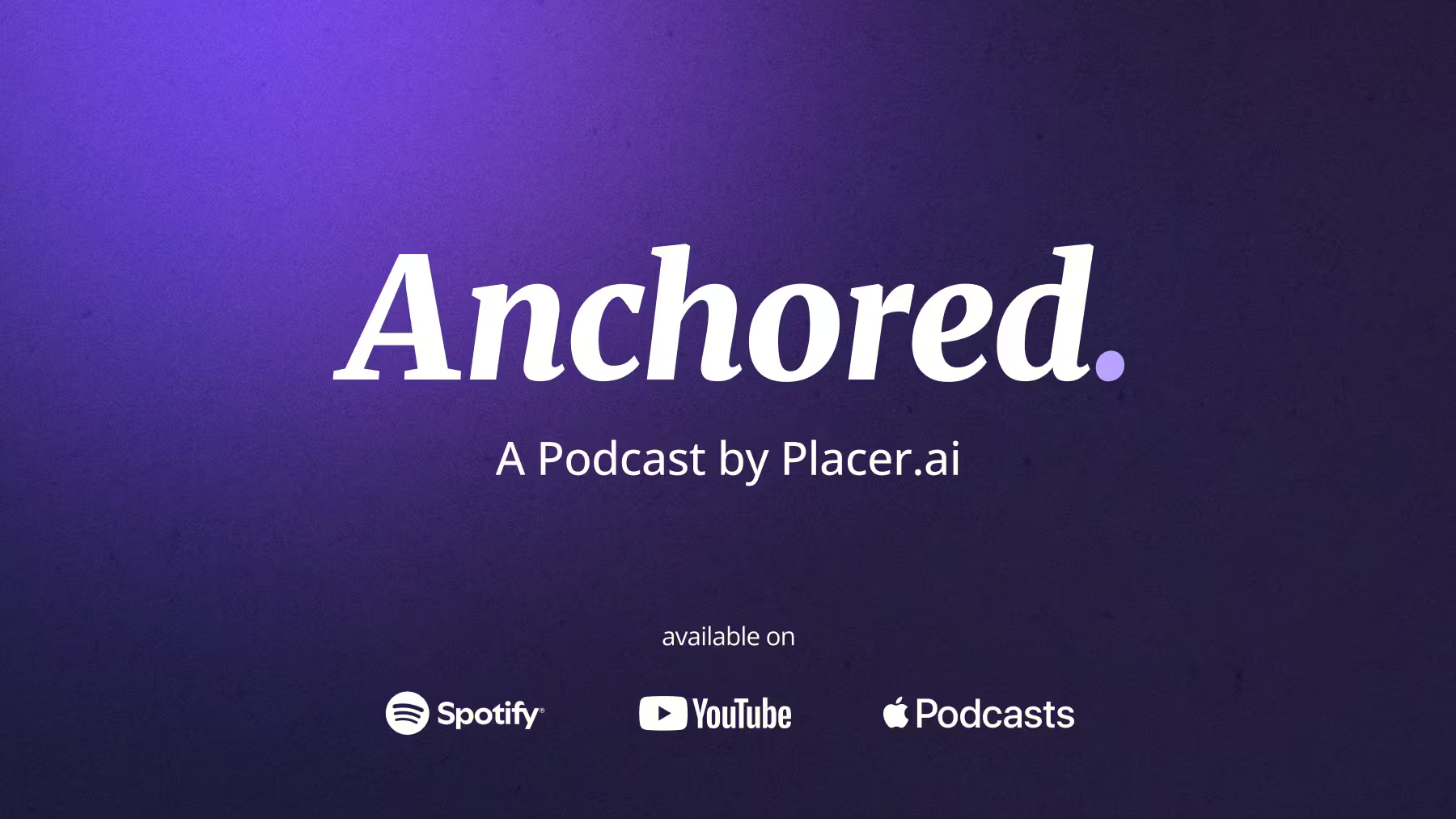


We recently launched a podcast called Anchored – and if you're a frequent visitor of The Anchor, this one's for you. Anchored brings together the sharpest minds in retail, real estate, and consumer behavior for honest, in-depth conversations about where the industry is actually headed.
Every episode is packed with ideas worth holding onto. Here are a few standout insights from our released episodes in Season 1:
Ep. 1, with Simeon Siegel from Guggenheim Partner
- There's a structural ceiling on brand growth which most companies mistake for a temporary setback. For example, North American apparel brands tend to hit saturation at around $3 to $4 billion in revenue – so companies need to either accept that plateau and operate a profitable business at that scale, pursue international expansion, or develop a portfolio of brands to grow past a single label's ceiling.
- The store has the best unit economics in retail, and most brands forgot that. In a store, the customer does the fulfillment themselves by picking the product off the shelf and carrying it home. In e-commerce, the brand absorbs every cost: pick, pack, ship, returns. Cutting out the physical store didn't remove the middleman so much as make brands the middleman – turning what should be a margin game into a volume game.
Watch: The $4 Billion Ceiling: Why Great Retail Brands Stop Growing
Ep. 2, with Karyln Mattson from Leadership Advisors
- Brand consistency is the price of admission for premium apparel. If a consumer is going to pay more, there has to be a reason – and that reason has to show up the same way in every market, every store, every product.
- Physical retail's original purpose was discovery, and most stores have lost that. The internet commoditized browsing, which means the store has to offer a superior sense of discovery and service to justify its existence. The brands winning right now are the ones actively engineering that experience, not just maintaining shelf space.
Watch: Why Retail Needs More Art and Less Science
Ep. 3, with Andrene dos Anjos from FGF Brands
- Internal structure is retail media's biggest obstacle. Who owns the budget, who owns the screens, and how teams are organized determines whether retail media thrives or stalls. The fragmentation in ownership, and measurement, is what keeps it from scaling as fast as it could.
- Every retailer is its own channel. A campaign that works at Walmart won't automatically translate to Kroger. The brands that win in retail media are the ones treating each network as distinct, with its own goals, tactics, and measurement approach, rather than repurposing a national campaign across all of them.
Watch: From Hype to Hybrid: The Evolution of Retail Media
Ep. 4, with Andrew Lipsman from Media, Ads + Commerce
- The physical store is massively undermonetized. Hundreds of millions of shoppers walk stores every week, and almost none of that audience is being monetized. Lipsman sees a path to $20B in in-store retail media over the next decade.
- Retail media is becoming the backbone of all advertising. Retail data increasingly powers targeting and measurement across display, social, CTV, and more, making it a core layer of the advertising ecosystem.
Watch: The In-Store Mega Channel
Ep. 5, with Stephanie McMahan from Coca Cola Company
- Discovery is physical retail's greatest strength – and it’s often overlooked. Shoppers say the store is their #1 place to find new products, but retail professionals consistently rank it near the bottom. That gap is costing brands.
- Personalization is the next frontier, and it starts with first-party data. The era of guessing what consumers want is coming to an end – real behavioral data tells brands what shoppers actually do. And the winners will use it without being creepy about it.
Watch: Convenience Meets Connection
Ep. 6, with Barrie Scardina, Growth-Oriented Senior Retail Executive
- Retail spending is bifurcating. The economy is K-shaped: Roughly 10% of affluent consumers are driving about 50% of overall retail spending. And recent sales growth is coming from price and product mix, not more foot traffic.
- The store has to evolve from transactional to experiential. The winners are turning physical spaces into experiential platforms for hospitality, events, or knowledgeable brand ambassadors – and reimagining shopping centers as mixed-use town centers curated with community data.
Watch: The New Retail Recipe
The common thread: the physical store is worth far more than most brands realize. Listen to Anchored to hear why – and explore more retail insights at Placer.ai/anchor.