.svg)




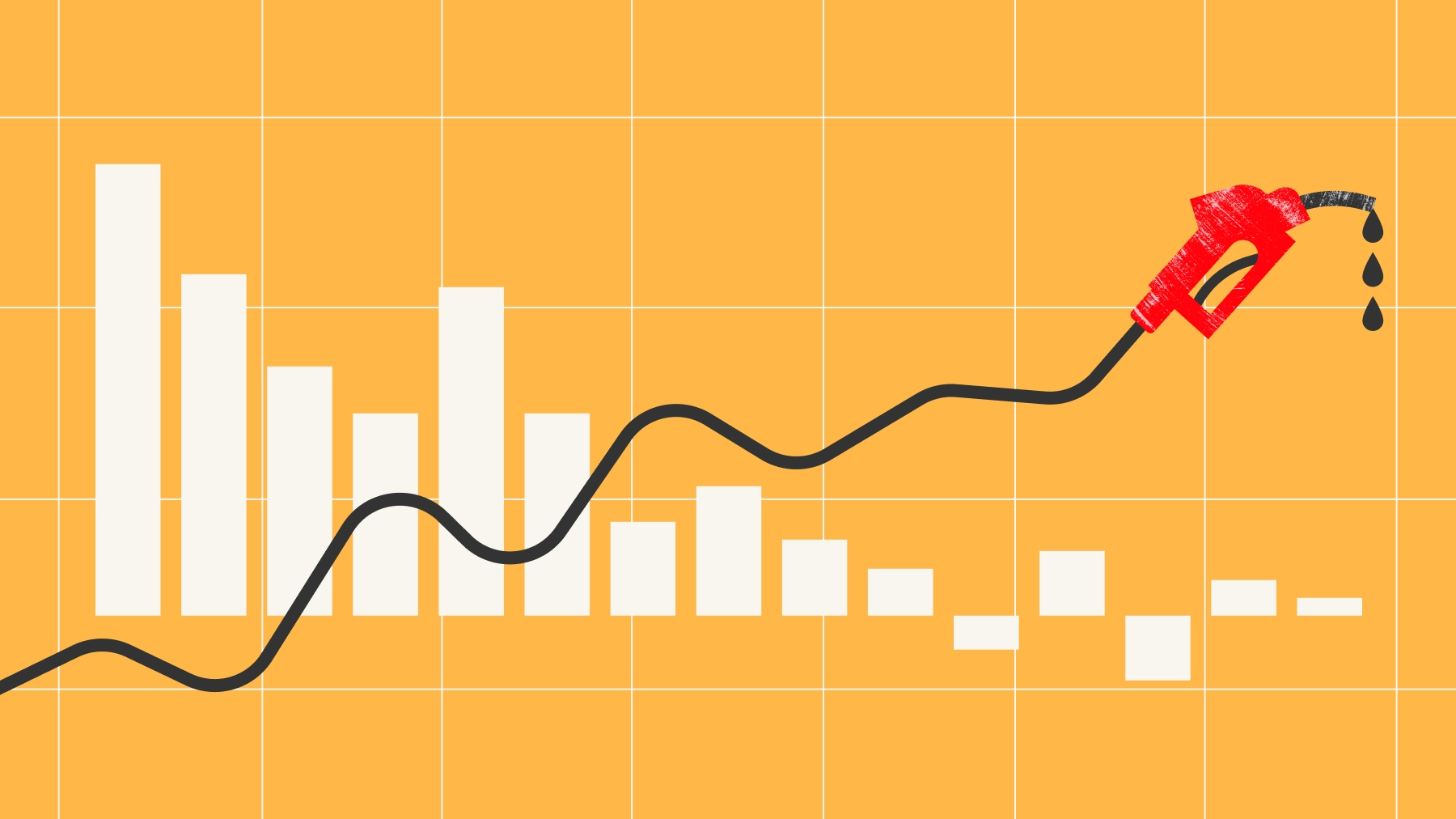


The Iran conflict and resulting supply disruptions pushed average U.S. gas prices from $2.80 per gallon in early January to $4.49 by mid-May – a nearly 60% increase. And while consumers initially appeared willing to absorb higher fuel costs, recent traffic patterns suggest that sustained pressure at the pump may finally be impacting behavior.
Consumers’ Initial Resilience
When gas prices initially began rising in early March 2026, both retail and fuel demand remained relatively resilient. As the chart below shows, discretionary retail and gas station visits hovered near or above prior-year levels – indicating that consumers were largely maintaining their shopping and driving habits. Meanwhile, non-discretionary retail traffic continued to post modest year-over-year (YoY) gains, perhaps a product of ongoing macroeconomic instability and the overall strength of essentials-based retail.
The Easter Escape
The Easter calendar shift – with the holiday falling on April 20th in 2025 and April 5th in 2026 – even provided a temporary lift across all three categories, which may have masked some of the early effects of rising fuel prices. Non-discretionary retail saw the strongest Easter impact – visits rose 10.0% YoY during the week of March 30th, 2026 – as consumers prepared for holiday gatherings. Easter-related travel also appears to have supported gas station visits, which increased 1.3% and 2.2% YoY the weeks of March 30th and April 6th, respectively. Discretionary retail benefited from the calendar shift as well, with visits increasing 5.0% YoY the week of April 6th, and 5.8% YoY the week of April 13th – likely driven by a combination of post-Easter promotions and spring break travel.
Consumers Pump the Brakes
Following a temporary Easter-related lift, location intelligence suggests that consumer behavior reached an inflection point in mid-April. The week of April 13th marked both the second consecutive week in which average gas prices exceeded $4.00 per gallon and the first week since the start of the supply disruption that gas station visits fell below year-ago levels. Since then, gas stations have experienced persistent YoY visitation declines, suggesting that consumers may be driving less or holding out between fill-ups.
Beginning the week of April 20th, discretionary retail traffic also slipped below prior-year levels – pointing to a potential pullback in non-essential shopping trips. Non-discretionary retail proved more resilient, remaining near or above the previous year’s levels from that week onward (a brief YoY visit gap the week of April 13th was likely due to the Easter calendar shift). And yet, even visits to essentials-based categories dipped below prior-year levels the week of May 18th, indicating that consumers may be shopping more deliberately or consolidating trips as transportation costs rise.
Have Consumers Reached a Fuel Price Threshold?
While consumers initially appeared willing to absorb higher fuel costs, recent foot traffic trends suggest that prolonged high prices at the pump have influenced fill-up and retail behavior across the board. However, if consumers continue to see some relief, that pressure could ease in the weeks ahead.
Want to stay informed on the latest consumer behavior trends? Visit Placer.ai/anchor.
Placer.ai leverages a panel of tens of millions of devices and utilizes machine learning to make estimations for visits to locations across the US. The data is trusted by thousands of industry leaders who leverage Placer.ai for insights into foot traffic, demographic breakdowns, retail sale predictions, migration trends, site selection, and more.


%20(1).avif)