.svg)




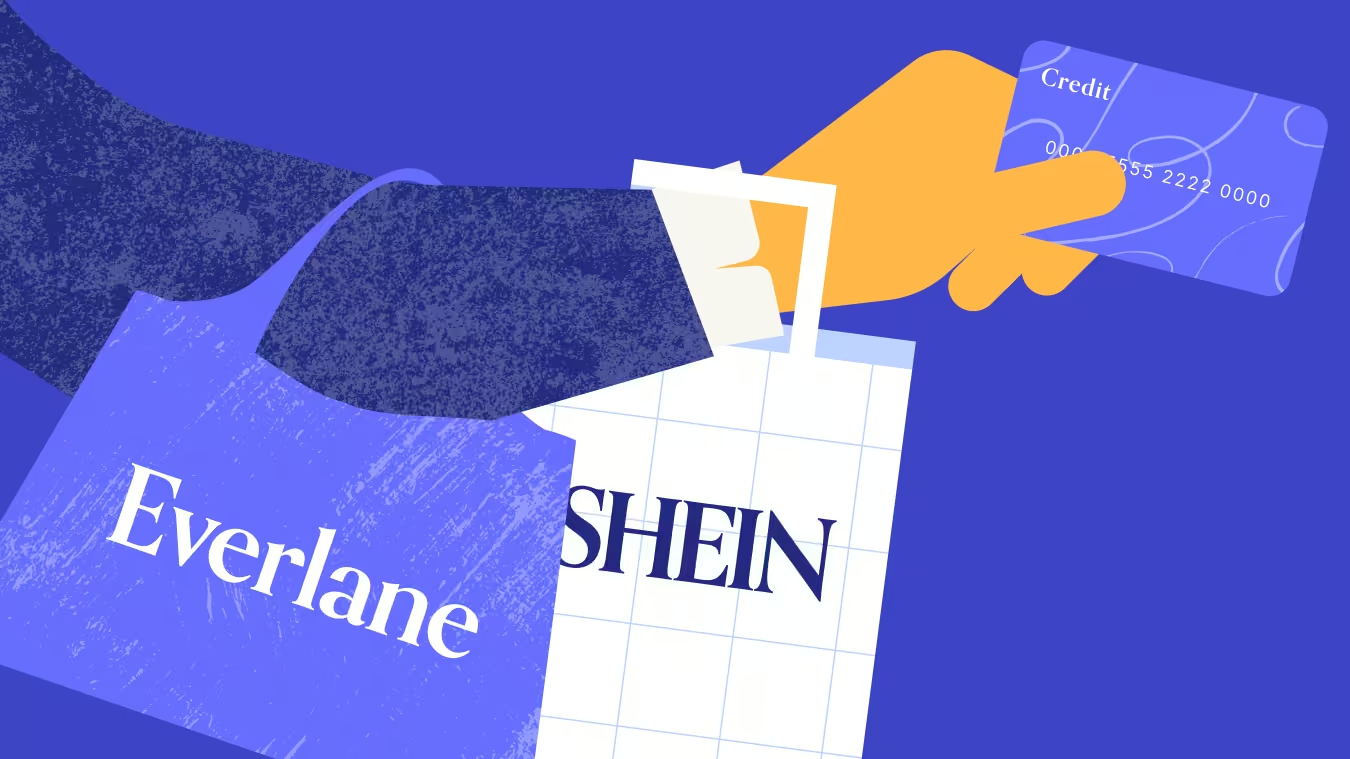


Just a few months after Allbirds announced it was pivoting to AI, another DTC darling has taken an unexpected turn. Everlane – the upscale, "radical transparency" sustainability brand – has just been bought by ultra-low-price fast-fashion giant Shein for a reported $100 million.
Much of the coverage has framed the deal as Shein buying a sustainability halo to shore up its credibility in the American market. But location analytics point to a more tangible, often overlooked, asset – direct access, through Everlane's brick-and-mortar footprint, to the high-income, urban consumers Shein has long coveted.
Everlane Pulls in Wealthier Shoppers Than Its Already Affluent Neighborhoods
Everlane’s stores are concentrated in affluent neighborhoods. Over the past twelve months, the brand’s potential market posted a median household income (HHI) of $127.7K – 46.3% above the nationwide baseline and a full $39.5K higher than the broader traditional apparel segment.
But even within these wealthy trade areas, Everlane disproportionately attracts the highest-income consumers. During the analyzed period, its captured market registered a median HHI of $142.3K – 11.5% above the brand’s already-affluent trade area. Other traditional apparel chains, by contrast, tend to attract audiences that more closely mirror the demographics of their surrounding markets.
For Shein, the striking gap between Everlane’s captured and potential markets is a signal of the brand’s durable equity: Despite its recent struggles, Everlane still demonstrates a powerful ability to attract highly desirable consumers beyond what would be expected from its physical footprint alone.
Everlane's Audience Lines Up With Shein's Target Demographic
Everlane's audience also lines up neatly with the hip, urban demographic Shein has been trying to reach. "Educated Urbanites" – young, well-educated singles in dense urban areas working relatively high-paying jobs – account for a remarkable 40.8% of Everlane's captured market, against just 3.6% nationwide. The brand also over-indexes on "Ultra Wealthy Families," at 18.4% of its captured audience versus a traditional apparel benchmark of 8.7%.
That profile mirrors the consumer Shein has pursued through temporary pop-ups – including in luxury malls – across major U.S. cities.
More Than a Sustainability Play
The sustainability narrative may dominate the headlines, but the strategic logic behind Shein’s Everlane acquisition also runs through the customer base itself.
For Shein, Everlane represents a shortcut into a consumer segment it has sought to penetrate more effectively: affluent, urban, brand-conscious shoppers who still value trend relevance. And for Everlane, that same demographic strength helped transform a distressed sale into a strategic acquisition target – while giving Shein a strong incentive to preserve the brand’s positioning going forward.
For more data-driven retail insights, follow Placer.ai/anchor.
Placer.ai leverages a panel of tens of millions of devices and utilizes machine learning to make estimations for visits to locations across the US. The data is trusted by thousands of industry leaders who leverage Placer.ai for insights into foot traffic, demographic breakdowns, retail sale predictions, migration trends, site selection, and more.



%20(2).avif)