.svg)




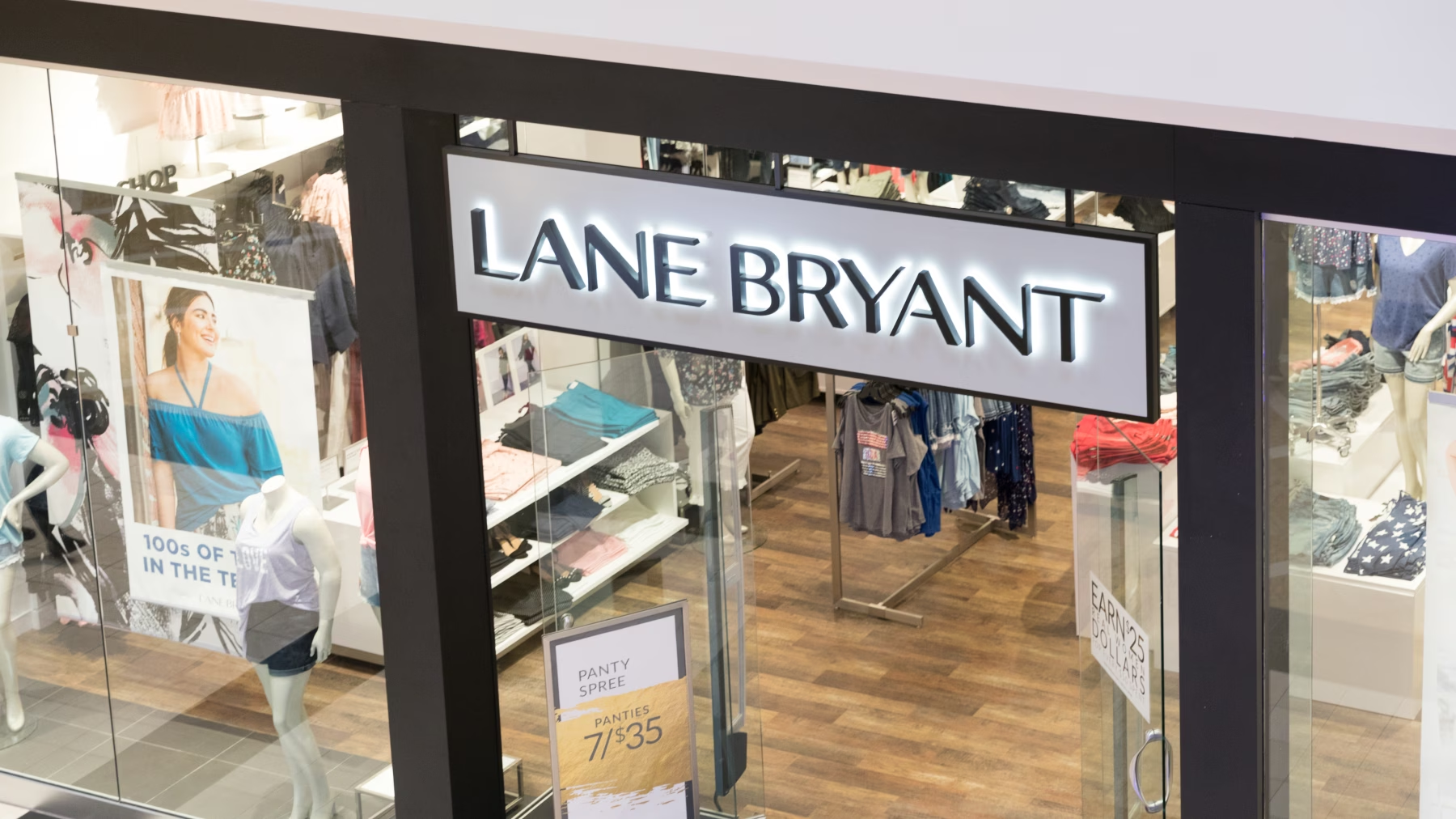


Lane Bryant faced significant challenges during the pandemic and has continued to gradually shrink its store fleet in the years since. And now, with nearly one in eight U.S. consumers using GLP-1 medications, plus-size apparel demand is beginning to shift in meaningful ways – introducing a new layer of complexity for the legacy retailer.
How is Lane Bryant navigating these challenges, and what does its customer base reveal about its ability to adapt?
Rightsized Fleet Finds Its Rhythm
In July 2020, Lane Bryant’s parent company filed for bankruptcy and closed more than 150 stores. But following its acquisition later that year by Sycamore Partners, the brand began to regain its footing – and recent location analytics suggest those stabilization efforts are taking hold.
While the reduced footprint has, unsurprisingly, led to lower overall traffic, average annual visits per location remain above 2019 levels, suggesting that demand has been successfully consolidated into existing locations. Average visits per location also held steady between 2024 and 2025, even as the company continued to quietly trim its unit count. The result is a smaller but more productive fleet, with steady activity supported by fewer, better-aligned stores.
Family Core Anchors Demand with Room to Expand
Still, as Lane Bryant continues to stabilize, the question becomes how it can further increase store-level productivity. And analyzing the demographic profile of its trade areas offers insight into both its core strengths and where the next phase of optimization may emerge.
One of the brand’s clearest advantages is Lane Bryant’s strong reach among family-oriented segments, which are overrepresented in its captured market – the areas within its trade area generating the highest share of visits – compared both to its overall trade area (its potential market) and to the national baseline. These segments, including parents of young children and households with teenagers at home, tend to skew younger than peak GLP-1 users, potentially offering the chain some near-term insulation from rapid GLP-1-driven disruption. Still, these cohorts are also seeing growing adoption – and as usage expands within this demographic, Lane Bryant will need to increasingly support customers through evolving size needs rather than rely on demand tied to a stable size identity.
At the same time, the data points to opportunities to expand reach across other segments. Among older households, Lane Bryant’s captured audience aligns with its trade area but falls below the nationwide average, highlighting potential whitespace that could be unlocked through footprint adjustments or more targeted engagement in markets where this segment is more concentrated.
Among younger “Contemporary Households,” by contrast – a segment that includes singles, non-family households, and married couples without children – the brand under-indexes relative to its trade area while slightly outperforming the national benchmark. This suggests Lane Bryant has geographic access to a larger pool of these consumers but has yet to fully capture their demand, pointing to an opportunity for growth through more targeted marketing and merchandising.
Challenges and Opportunities Ahead
GLP-1 adoption is disrupting traditional plus-size apparel demand, while also creating new opportunities as consumers undergoing weight loss journeys increase spend while moving through sizes. Retailers that can support customers across these transitions with more flexible assortments will be better positioned to capture this shift. And Lane Bryant’s steady operational footing and well-defined core audience provide it with a solid foundation to compete in this next phase of growth.
For more data-driven retail insights, visit placer.ai/anchor.
Placer.ai leverages a panel of tens of millions of devices and utilizes machine learning to make estimations for visits to locations across the US. The data is trusted by thousands of industry leaders who leverage Placer.ai for insights into foot traffic, demographic breakdowns, retail sale predictions, migration trends, site selection, and more.