.svg)






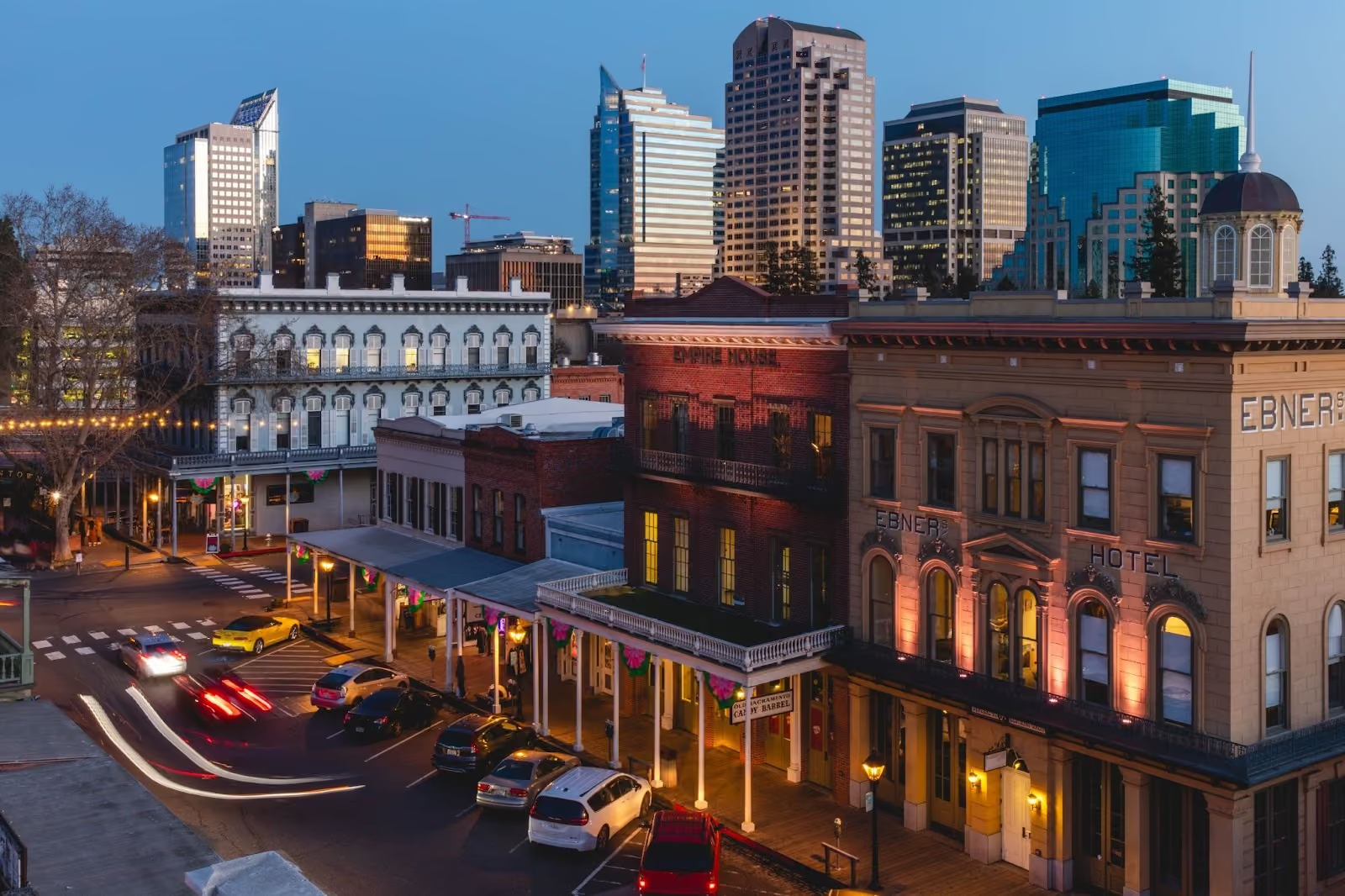
For downtowns still waiting on office attendance or international tourism to fully rebound, Sacramento offers a more proactive recovery model. Rather than anchoring its future to any single demand driver, the city has spent the past several years deliberately engineering demand – using programming, placemaking, and policy to create the kinds of “social collisions” that give people reasons to show up, stay longer, and come back.
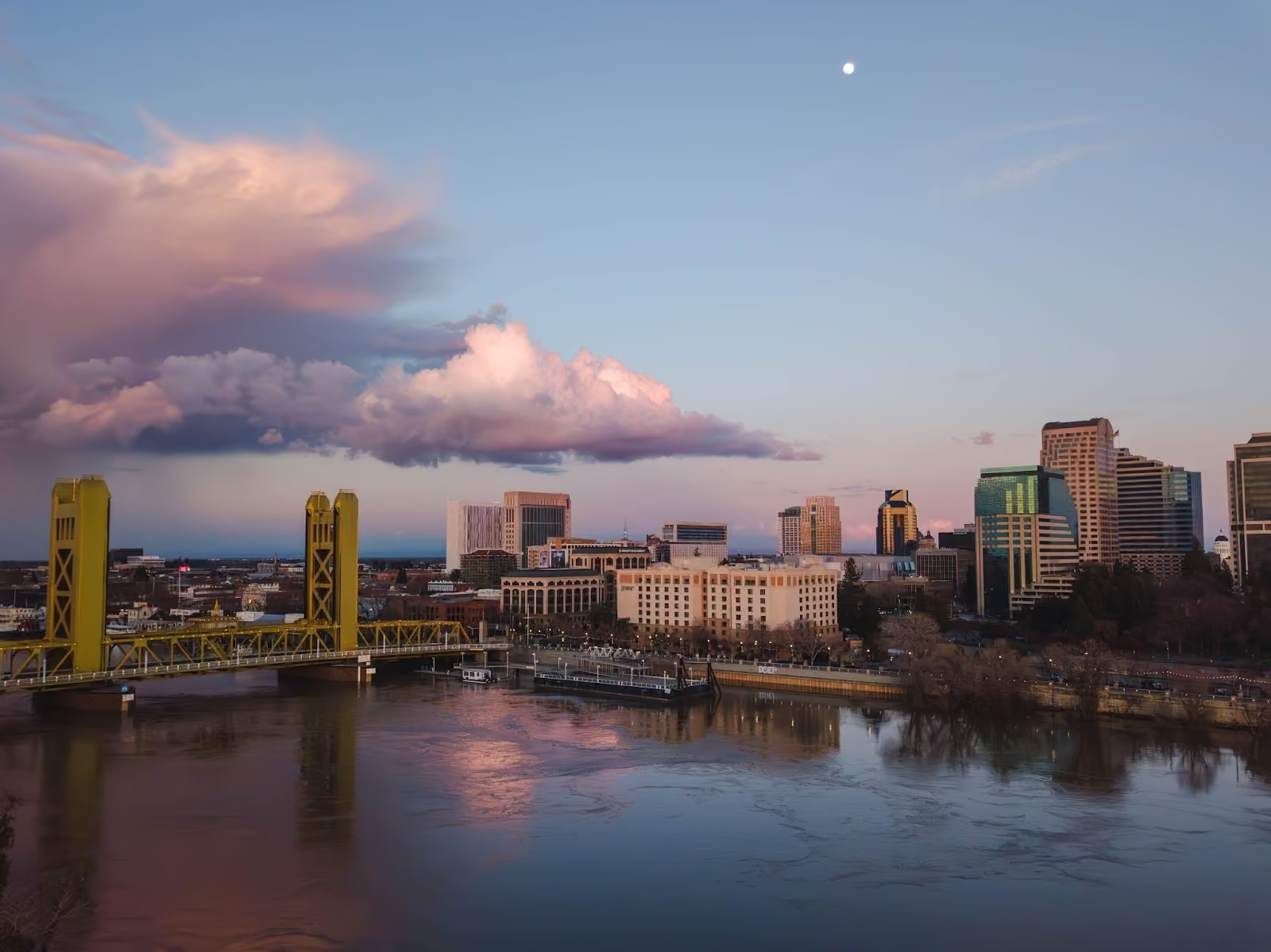
Shifting Demand Elevates the Role of Regional Identity
Like many cities, Sacramento has navigated prolonged disruptions to traditional downtown demand streams, from office attendance to international tourism and business travel. But instead of waiting for those patterns to fully normalize, city leaders have leaned into what they could control – regional identity and local draw.
Elevating the city’s creative and cultural assets while strengthening its positioning as the “Farm-to-Fork Capital of America” through major festivals like Terra Madre Americas, has helped Sacramento stabilize leisure visitation even amid broader uncertainty. Food-forward events, large-scale music festivals, and major league sports – including NBA Kings games and MLB Athletics games based in West Sacramento through 2027 – have created reasons to visit that do not depend on office mandates or long-haul travel.
And the impact of this strategy is showing up in visitor behavior. Weekend out-of-market visits to downtown Sacramento are on the rise, and visitors are staying longer – signaling sustained engagement with the urban core.
Programming as Economic Infrastructure
At the center of Sacramento’s strategy is a belief that programming functions as economic infrastructure. Over the past decade, the downtown has expanded from hosting a relatively limited number of annual events to more than 200 today, ranging from major festivals to weekly farmers markets.
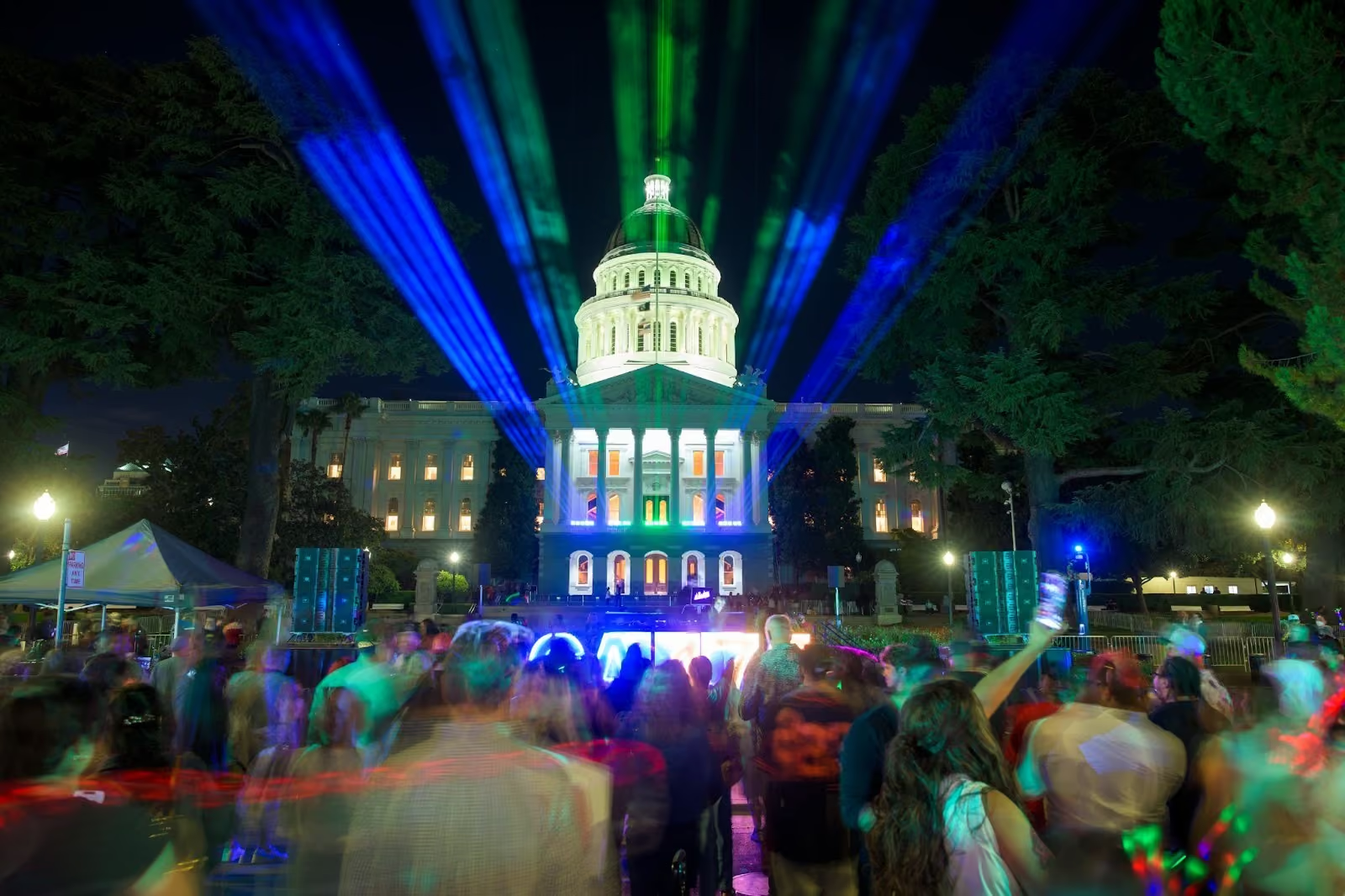
These events translate directly into foot traffic and revenue for retail, dining, and entertainment. The chart below shows how local programming draws visitors into DOCO, the Downtown Commons entertainment and retail district adjacent to Golden 1 Center, with audience composition varying by event. Family-oriented programming such as the Sacramento Santa Parade attracts more affluent family households, while events like the California Brewers Festival draw a higher share of younger singles and early-career professionals.
Event days are also associated with longer dwell times within the district, suggesting deeper engagement with the surrounding retail environment.
The city has also taken other steps to generate “social collisions”. Working with the city’s nighttime economy manager, Sacramento introduced a limited entertainment permit that removes one-size-fits-all regulatory barriers and allows brick-and-mortar businesses to host local performances at a far lower cost. And these policy changes were reinforced with targeted investments – like a six-block illuminated pedestrian corridor connecting key downtown anchors, which shifts colors for Sacramento Kings games or seasonal moments.
Designing Demand
Sacramento’s downtown recovery offers a clear lesson for cities navigating long-term structural change: Waiting for old patterns to return is far riskier than designing new ones. By leaning into culture and programming, Sacramento is strengthening the downtown economy while delivering value to local residents and the broader region.


%20(1).avif)