.svg)






Back From the Brink
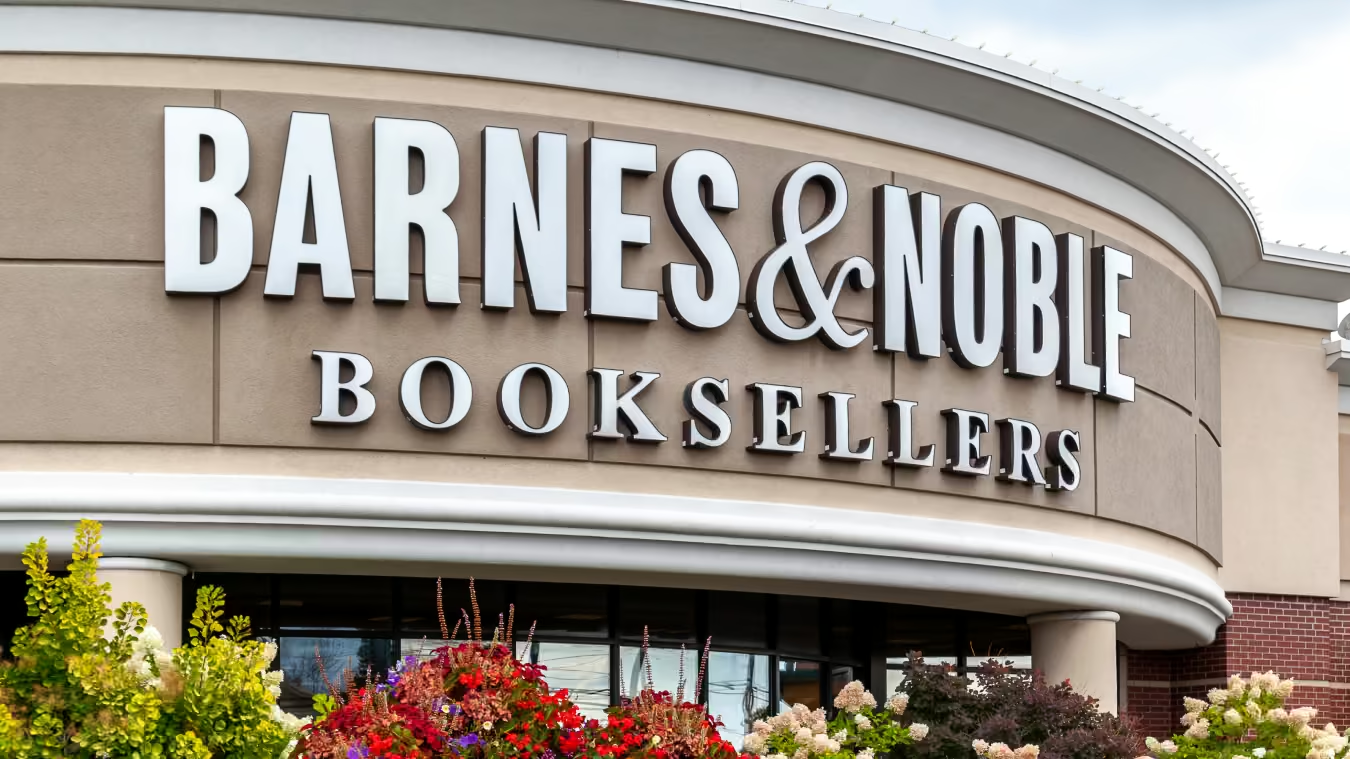
In August 2019, the outlook for Barnes & Noble was bleak. After a decade of losing book sales to online retailers, the chain had closed dozens of stores nationwide, prompting some in the industry to question whether it could survive.
Seven years later, however, those obituaries have proved well off the mark. Location data shows Barnes & Noble well above its 2019 visit levels and growing faster than the rest of the category. Visitors also spend longer in its stores than they do at other bookstores nationwide – the kind of behavior CEO James Daunt had in mind when he set out to turn Barnes & Noble back into a bookseller rather than simply a “seller of books.”
A Slow Return, Then a Fast One
Daunt’s approach was to run a national chain like a collection of local bookstores, cutting nearly half of corporate buyers and giving store managers more control over their shelves. Stores began to be rebuilt during the 2020 lockdowns, with assortments and events increasingly tailored to local communities. But the turnaround took time. Barnes & Noble’s visits initially tracked the broader category’s recovery, only returning to 2019 levels in Q4 2023 before beginning to pull ahead.
Since then, the two recovery paths have diverged. Bookstores more broadly have also found momentum, with BookTok helping draw audiences back to physical books and bookstores increasingly becoming places to meet, linger, and browse. But several years into its rebuild, Barnes & Noble has pulled decisively ahead: Visits to the chain now sit 33.6% above 2019 levels, compared with 16.5% for other bookstores.
Not Just Expansion
To be sure, expansion has been a major part of Barnes & Noble’s growth story. The chain has been adding stores at a rapid clip – opening 57 in 2024, more than 60 in 2025, and planning at least 60 more for 2026.
But new locations are only part of the picture. Quarterly same-store visits have also grown consistently since at least Q1 2024, generally tracking just behind overall visit growth – evidence that existing stores are gaining momentum too.
More Time to Browse
Visitors to Barnes & Noble also tend to settle in once they arrive, lingering longer than visitors to other bookstores. On weekends, 49.3% stay for more than 30 minutes, compared with 47.4% elsewhere. And the gap widens on weekdays, to 45.6% versus 41.9%.
Those longer stays may be partly thanks to the chain’s in-store cafés, which align with Daunt’s vision of bookstores as welcoming places to gather and connect. They also tap into growing consumer demand for “third places” – inviting spaces to spend time outside the home and workplace.
Taking Stock
The chain bookstore was supposed to be finished. Instead, Barnes & Noble is opening stores faster than it has in years, filling the ones it already had, and holding visitors for longer than the rest of the category it is now outgrowing. With an IPO reportedly in preparation and the peak holiday season ahead, the next few months will show how much further the story runs.
For more data-driven retail insights, visit placer.ai/anchor.