Thanks for Visiting!

Register for free to get the full story.

Sign Up
Already have a Placer.ai account? Log In
Article

Restaurant Outlook 2024: Year of New Location Expansion Plans?

By 
R.J. Hottovy
January 13, 2024
Restaurant Outlook 2024: Year of New Location Expansion Plans?
SHARE
Explore our free tools to get timely insights into key industries
Check out the latest trends for
No items found.
As the new year begins, how are restaurant managers and operators applying last year's lessons in 2024? We take a closer look at some key trends restaurant operators can consider as we move into the new year.
Key Takeaways

As discussed last week, 2023 was a year that forced restaurant operators to stay agile amid inflationary headwinds and changes in consumer behavior, daypart shifts, new approaches to drive-thru, and population migration changes. This week’s ICR Conference also gave us a chance to speak with the management team from more than 25 restaurant chains as well as their investors to better understand their lessons from 2023 and how they plan to apply them in 2024.

Despite most chains reporting that visits are still down on a year-over-year basis, there was a sense of optimism among many of the operators we spoke to. Many acknowledged that there were still pressures weighing on consumer spending, but that the strategies put in place during 2023 to stabilize visitation trends had been working (including an emphasis on value, elevated experience, adopting new restaurant formats to better address a wider range of commercial property types, and new menu innovations). Several management teams acknowledged that the contractor availability and equipment supply chain bottlenecks that had plagued new store openings in 2023 had started to dissipate, with several chains planning to resume or even exceed their pre-pandemic pace of restaurant openings (although many admitted that new store buildout costs are still running 25%-30% higher than they were 5 years ago). Given the higher costs involved with new store openings (and the risk of opening a location in a subpar site), there was a heavy emphasis on harnessing new data sources to better understand migration trends, trade area demographics, and incumbent competition when making site selection opportunities (and thank you to customers like Dave & Buster’s and Chuy’s for highlighting how they are incorporating Placer data into these decisions).

Below, we discuss a few key trends that restaurant operators and their commercial real estate partners should be thinking about as we move into 2024.

Restaurants Ready to Grow Again

Perhaps it shouldn’t be surprising at an event where several restaurant operators were looking to raise capital, but the overarching theme from most management teams that we spoke to this week was that they were ready to accelerate unit expansion plans. Expansion strategies differed by concept, but most operators planned to open new locations across a combination of existing and new markets. With respect to new markets, many operators told us they were prioritizing South and Southeastern markets for new market expansion, echoing what we heard from McDonald’s and others last year. Below, we’ve presented the latest data from Placer’s Migration Trends Report which shows total population changes by market from November 2019-November 2023. Indeed, our data confirms that many South (Phoenix, Texas) and Southeast (Central Florida, Carolinas) markets were among the highest growth populations in the U.S. over the past four years.

That said, with so many restaurant operators targeting these regions, we heard from several executives about the importance of fully understanding the makeup of the markets. Said another way, just because a market has seen meaningful population growth, it doesn’t necessarily mean it’s a candidate for expansion. Below, we’ve presented the same migration map as above (2019-2023 population growth), but with a origin/destination household income filter. A red dot on this map indicates that a market saw the average household income fall because of migration, while a green dot indicates that a market saw an increase in household income. Here, we see a slightly different story, as many higher growth populations actually saw a decline in household income due to migration. We also see the impact of the urban/suburban migration shift that we’ve discussed in the past, with many smaller markets across the Carolinas and Central Florida seeing the highest household income growth versus 2019.

Below, we’ve attempted to bring the two charts together and identify markets that have not only seen population growth but also a significant increase in household income. We see markets like Las Vegas and other areas in Central Florida and the Carolinas region score well using this methodology, but a number of other markets like Boise City, ID, Lakeland, WI, and Spokane, WA also seeing increases in population but also an increase in their average household income.

Most U.S. markets have gone through significant changes post-pandemic both in terms of population size and population makeup.  At the end of the day, it's important for restaurants and retailers to not only understand both of these factors when evaluating new markets for growth. We’ve certainly seen success stories–Portillo’s continues to thrive in Texas, for example–but we’ve also seen cases where restaurant openings haven’t been as successful in newer markets because of migration changes.

Eatertainment Demand Remains Strong

We spoke about trends in the eatertainment category last year with the conclusion being that these concepts were still key in driving traffic to commercial properties (despite facing tougher year-over-year comparisons from the great reopening we saw in 2022). There was a palpable sense of optimism among the eatertainment concepts we spoke to at the event, whether they were more focused on entertainment (including Dave & Buster’s, Puttshack, and Pinstripes) or interactive dining (Kura Revolving Sushi Bar or GEN Korean BBQ).  

We’ve updated the eatertainment versus casual dining category visit per location analysis we’ve presented in the past below. Although eatertainment’s visit per location outperformance narrowed versus casual dining during Q4 2023, we believe this is a byproduct of seasonality (shift to sit-down dining during the holiday season) and expect the gap to widen once again during Q1 2024.

Most of the eatertainment concepts we spoke to at the ICR conference planned a two-pronged approach to unit expansion in 2024: infilling existing markets and establishing a beachhead in newer markets. Most concepts in this category were planning to grow their store bases by at least double-digit growth rates in 2024, with some like Pinstripes are forecasting 30%+ unit growth this year. Other like Dave & Buster’s are planning to focus on remodeling activity on top of new unit openings to modernize their locations. As demand for eatertainment remains strong among consumers and mall owners, we anticipate that this will remain one of the past growing categories in dining during 2024.

Casual Dining Connecting with Millennials

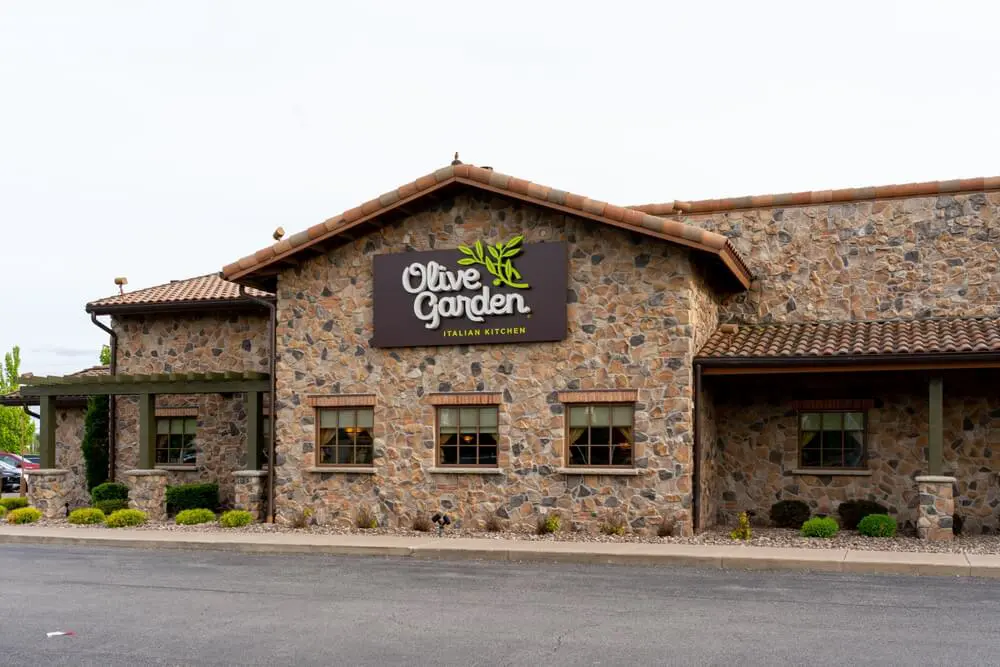
Casual dining concepts often have a reputation of catering to an older population. However, Darden’s management team called out several demographic trends that should benefit its different brands (including Olive Garden, Longhorn Steakhouse, Cheddar’s, Yardhouse, and others). First, while the percentage of the population in their peak earning years (typically between the ages of 35 and 55) had been on a downward trend for much of the 2000s and part of the 2010s, we’ve seen a reversal of this trend in recent years, which should stimulate demand for full-service dining. Second, the company noted that it over-indexes to millennials. Our data reinforces this, as the potential trade area audience profile by age cohort for Olive Garden (below) indicates a higher percentage of population between the ages of 30-49, encapsulating much of the millennial age range (roughly 27-42 years old today). Last year, we noted that some of the shift to earlier dining times may have been due to changing demographic trends in cities, with an increase in younger families in urban markets needing earlier dining times. Darden's commentary offers further validation of these trends and offers hope for other casual dining chains as this generation cohort continues to enter their peak earning years.

Last year, we noted that some of the shift to earlier dining times may have been due to changing demographic trends in cities, with an increase in younger families in urban markets needing earlier dining times. Darden's commentary offers further validation of these trends and offers hope for other casual dining chains as this generation cohort continues to enter their peak earning years.
Learn how downtown regions across US cities are measuring up with our free tools.
Check out the latest trends for
No items found.

Related Topics

Stay Anchored: Subscribe to Insider & Unlock more  Insights
Subscribe
SHARE
Get 3 brand & industry
breakdowns every week
Subscribe to the newsletter
Oops! Something went wrong while submitting the form.
Recent Publications
INSIDER
Report
Retail Trends to Watch in 2026
Explore how value, luxury, and authenticity will define 2026 retail — and how brands are winning across digital, dining, and suburban markets.
Placer Research
November 14, 2025
Article
Four Black Friday Signals for the 2025 Holiday Season 
Black Friday 2025 foot traffic trends show a holiday season defined by value-driven decisions, regional price sensitivity, and shifts toward budget-conscious categories. Longer in-store visits and standout gains for convenient, low-ticket coffee chains highlight shoppers’ deliberate, mission-focused approach to spending.
Shira Petrack
December 5, 2025
4 minutes
Article
Will Upscale Dining Lead the Holiday Season Again?
Holiday dining patterns highlight upscale and fine-dining restaurants as the strongest seasonal performers, with coffee, casual dining, and eatertainment showing targeted lifts. Emerging YoY trends point to premium full-service concepts leading demand again this December.
Bracha Arnold & Lila Margalit
December 4, 2025
4 minutes
Recent Publications
INSIDER
Report
Retail Trends to Watch in 2026
Explore how value, luxury, and authenticity will define 2026 retail — and how brands are winning across digital, dining, and suburban markets.
Placer Research
November 14, 2025
Article
Four Black Friday Signals for the 2025 Holiday Season 
Black Friday 2025 foot traffic trends show a holiday season defined by value-driven decisions, regional price sensitivity, and shifts toward budget-conscious categories. Longer in-store visits and standout gains for convenient, low-ticket coffee chains highlight shoppers’ deliberate, mission-focused approach to spending.
Shira Petrack
December 5, 2025
4 minutes
Article
Will Upscale Dining Lead the Holiday Season Again?
Holiday dining patterns highlight upscale and fine-dining restaurants as the strongest seasonal performers, with coffee, casual dining, and eatertainment showing targeted lifts. Emerging YoY trends point to premium full-service concepts leading demand again this December.
Bracha Arnold & Lila Margalit
December 4, 2025
4 minutes
INSIDER
Stay Anchored: Subscribe to Insider & Unlock more Foot Traffic Insights
Gain insider insights with our in-depth analytics crafted by industry experts
— giving you the knowledge and edge to stay ahead.
Subscribe
Is lululemon Poised for a Holiday Rebound?
Placer.ai November 2025 Mall Index: Early Strength Offsets a Softer Black Friday
Four Black Friday Signals for the 2025 Holiday Season 
Will Upscale Dining Lead the Holiday Season Again?
Did Fewer Franchise Films Limit Thanksgiving’s Movie Theater Lift?
Darden Heads Into Holiday Season With Strong Visit Trends
How Did Grocery Stores Perform This Turkey Wednesday?
Short Visits Surge as Kroger Bets on Store-Based Fulfillment
How Do Holiday Shopping Patterns Differ for Off-Price and Traditional Apparel?
Dollar Tree and Dollar General Thrive Amid Inflation Fatigue
DICK's Sporting Goods Riding Positive Visit Trend into the Holidays
October 2025 Placer.ai Office Index: Continued Momentum
Red Cup Day 2025 Outperforms Last Year With Bigger Crowds Than Bearista
Gap and Urban Outfitters See Visit Increases in Q3
Back to the Future of Retail: Why Technology Is Bringing Us Full Circle
Department Stores Ahead of the Holidays 
Superstores and Warehouse Clubs Find Early Holiday Momentum
Lowe’s and The Home Depot See the Future of Home Improvement in the Next Generation
TJX, Burlington, and Ross Gear Up for a Blockbuster Holiday Season
Is Turkey Wednesday the Only Big Day for Grocers?
Placer.ai October 2025 Mall Index: Shoppers Return to Malls
How Starbucks Proved That Free Isn’t Everything
Denny’s Goes Private: What’s Next for America’s Diner
Three Retailers to Watch Ahead of the Holidays
Serving Those Who Served: How Restaurants Honor Veterans Day
High-Street Retail Poised for Another Holiday Rush
Offline Growth Drives Engagement for Warby Parker
Grocery Outlet Bargain Market & WinCo Still Thriving Amidst Inflation Fatigue
Does CAVA Still Have Growth Potential?
Catching Up With 2021’s Dining IPOs
Wendy’s Bets on Fewer, Bigger Deals in Q3 2025
Yum! & RBI: QSR in Q3 2025
Shake Shack & Wingstop: Navigating Q3 Waters
Sips Of Success: Coffee in Q3 2025
Texas Roadhouse and Chili’s: Strong Q3 Traffic and a Secret Sauce of High-Income Diners
October Promotions Aimed to Capture Demand From Value-Seeking Consumers In-Store and Online
Retail Outlook: A Tale of Two Consumers Heading into Holiday 2025
McDonald’s and Chipotle Face Headwinds in Q3 2025
Manufacturing Foot Traffic Signals Continued Caution
September 2025 Placer.ai Office Index: A Fall Resurgence
Placer.ai September 2025 Mall Index: Summer Slowdown Extends Into Fall
Summer Surge for Sturgis as Motorcycles Vroom En Masse
K-Beauty & Personalization Drive Beauty Traffic 
All the Things I Think I Think About Retail Over the Last Quarter: Amazon, Walmart & Why the Box May Soon Be on the Other Porch
The Geography of BevAlc Retail Growth
The Comeback Blueprint for Kirkland’s and Bed Bath & Beyond
Distinct Playbooks Driving Growth in Premium Home Retail
Do QSR Value Promotions Still Resonate With Consumers?
Who’s Losing Grocery Share to Dollar General – and What Consumer Habit Is Driving Its Growth?
Exploring Barnes & Noble’s Recent Acquisitions 
3 Factors Driving Dillard’s Department Store Success
Expansion Into New Categories Signals Shift for Gap Inc. 
Beauty and Fitness Foot Traffic: From Post-Pandemic Correction to New Normal
Hobby Lobby and Michaels Defy Discretionary Spending Headwinds
Black Rock Coffee's Post-IPO Growth Potential  
How Asian Grocers Are Redefining the Grocery Experience
Affluent Shoppers Sustain Luxury, But Growth Potential May Be Limited
Costco Early Openings Reshape Store Traffic Patterns
Q2 2025 Restaurant Recap: A Cautious Consumer Shapes Dining Trends 
Is Costco’s Momentum Built to Last?
The US Open: A Comparison of Visitors to Fan Week and the Main Draw
Republic Square’s Summer Programming Proves to be a Hit
Darden Restaurants’ Portfolio Powers Through Consumer Headwinds
Are Cracks in Consumer Resilience Beginning to Show? 
Placer.ai Manufacturing Index: Traffic Dips in August
Will Delayed Car Purchases Fuel a Surge in Aftermarket Maintenance?
August 2025 Placer.ai Office Index: An End-of-Summer Slump? 
What Are the Fast-Growing QSR Categories in 2025?
Placer.ai August 2025 Mall Index: Is Consumer Caution Weighing on Mall Performance? 
Subscriptions Drive Eatertainment Visits for Topgolf, Dave & Buster’s, and Chuck E. Cheese 
Has Starbucks' Pumpkin Spice Latte Retained Its Appeal in 2025? 
Thrift Store Visit Growth Outpaces Apparel as Tariffs Loom
America’s Parks Are Calling: Later, Longer, Busier
How Economic Realities Are Redefining Vegas Tourism
Nordstrom Anniversary Sale: An Event that Continues to Find Success Amid Reinvention
Manufacturing Visits Drop Post-Tariff Implementation
Semi-Annual Sale Drives Visit Surge For Bath & Body Works 
Ulta's Post-Target Future Looks Strong
Where Can Dollar General & Dollar Tree Still Expand? 
Five Below & Ollie's Traffic Signals Growth for Value Retail
Gap Inc. Q2 2025: Old Navy Leads Foot Traffic Gains as Middle-Income Shoppers Return
Best Buy H1 2025 Traffic Data Suggests a Recovery Is Underway
How Athletic Retailers are Weathering the Storm in Q2 2025. 
Expansions Drive Visit Gains for Wholesale Clubs
Discretionary Slowdown Impacts Kohl's & Macy's Mid-Market Brands
Value-Driven Shoppers Still Fueling Off-Price Growth at Burlington, Ross, & Citi Trends
Home Depot & Lowe's: Navigating Challenges & Finding Growth in 2025
Lollapalooza Supercharges Summer Tourism in Chicago
What Walmart and Target's Q2 2025 Traffic Reveals About Future Performance
TJX Q2 2025 Visit Data Points to Strong Performance
The Summer Slowdown: Why Consumers Are Pumping the Brakes on Travel
Placer.ai Office Index: July 2025
Placer.ai Mall Index: July 2025
Retail’s Balancing Act: What the First Half of 2025 Reveals About Evolving Consumer Priorities
Din Tai Fung: Sky High Average-Unit-Volume is a Recipe for Success
Bracing for Impact: July's Manufacturing Surge Reveals Tariff Anxiety
How EAT, TXRH & BLMN Are Navigating the Q2 2025 Dining Market
Life Time & Planet Fitness Q2 2025 Visit Recap
Growth vs. Optimization: A Q2 2025 Analysis of First Watch, Denny's, & Dine Brands
Scaling Fast-Casual: CAVA's Depth vs. Sweetgreen's Breadth in Q2 2025