


.svg)




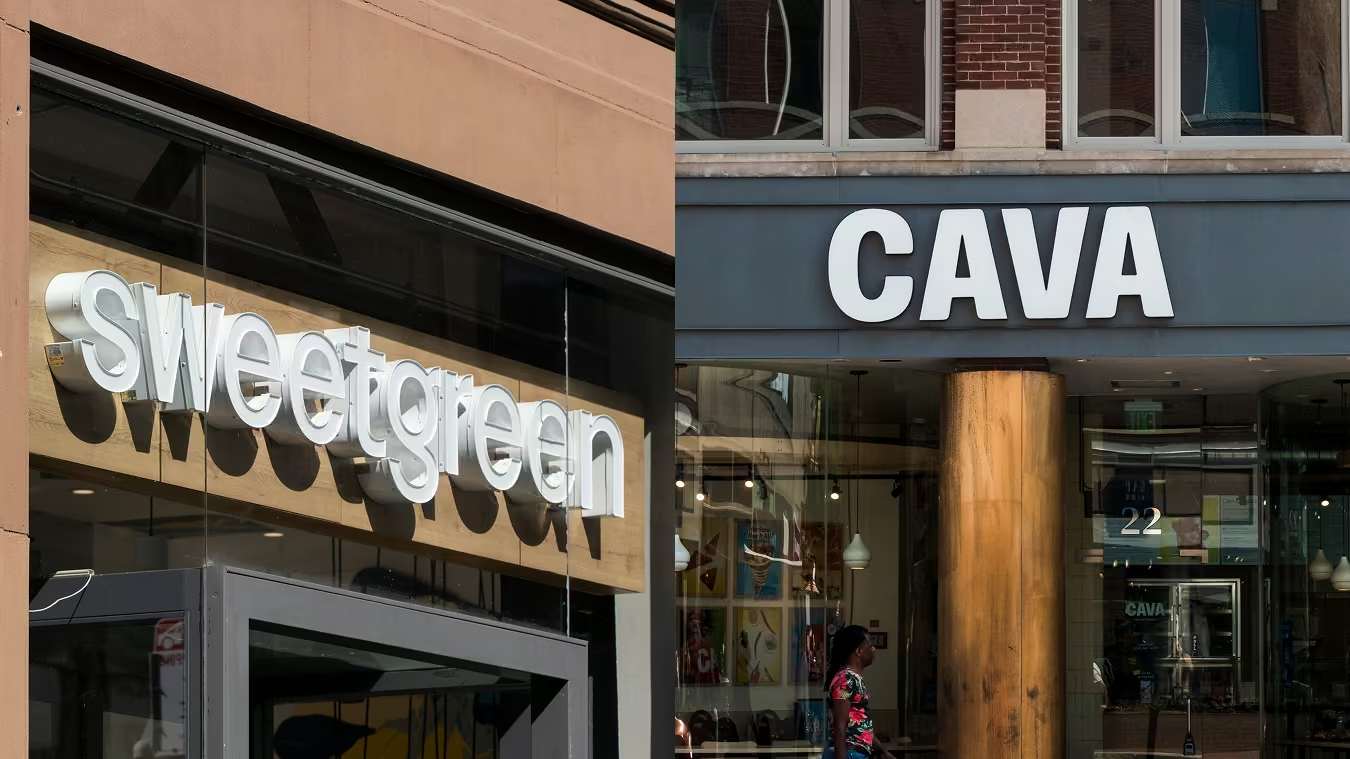


The fast casual space has become an increasingly competitive battleground for share-of-stomach as price-sensitive consumers trade down to lower-cost food channels. Against this backdrop, CAVA and sweetgreen offer a timely case study in resilience. Both brands continue to expand their footprints and diversify their audiences while leaning on loyalty programs and menu innovation to sustain growth during a volatile period for the dining sector. Using AI-powered location analytics, we uncover how macroeconomic pressures have shaped foot traffic trends to both chains and explore the strategies helping to keep them on a positive growth trajectory.
Expansion and Engagement Lift Visits
CAVA and sweetgreen continue to pursue aggressive expansion strategies, contributing to the overall visit growth of both brands. But while CAVA showed relative stability in both overall visits and same-store performance in H2 2025, sweetgreen experienced softer year-over-year (YoY) visit growth and moderate same-store visit declines in most months – raising the possibility of emerging “bowl fatigue.”
In Q4 2025, CAVA posted 16.6% YoY visit growth, with loyalty program enhancements and a holiday campaign likely helping to sustain visits.
Sweetgreen’s 4.4% visit growth in Q4 2025 was moderate by comparison, although December stood out for delivering positive YoY visits and same-store visits. This boost may have been driven by the value-focused $10 Harvest Bowl promotion alongside continued adoption of the brand’s refreshed loyalty program.
For both chains, revamped loyalty programs and continued expansion may set the stage for growth in the year ahead.
Younger Diners Show Signs of Returning as Audiences Broaden
Even as refreshed loyalty programs and expansion act as growth levers, both chains have recently called out a shared headwind – softer engagement among Gen Z and Millennial diners amid sustained financial pressure on younger consumers.
However, AI-powered captured market analysis combined with the Spatial.ai: PersonaLive dataset suggests early signs of renewed momentum. In Q4 2025, both chains saw an increased share of visitors from the “Young Urban Singles” segment – a cohort that skews heavily Gen Z and Millennial – compared to Q4 2024. And sweetgreen saw growth in its “Educated Urbanites” segment – another cohort that skews heavily Gen Z and Millennial, and which makes up a large share of the chain’s captured market. These shifts could indicate that both brands reclaimed some younger traffic toward the end of the year.
At the same time, both brands saw broader audience diversification within their captured markets. Sweetgreen increased its share of “Wealthy Suburban Families”, while CAVA saw gains among “Upper Suburban Diverse Families” and “Near-Urban Diverse Families”. This suggests that growth among older and more financially stable segments is likely helping to offset some of the pullback from younger diners.
And while some of CAVA and sweetgreen’s suburban and near-urban audience gains likely reflect both chains’ continued unit expansion beyond urban cores, the rise in young urban traffic indicates that strategic initiatives are resonating with traditional audiences. Menu innovation and tools that give diners greater control over nutritional inputs – particularly offerings aligned with protein-forward trends – may be helping to re-engage young urban diners.
Why Focused Strategy Matters More Than Ever in Fast Casual
As consumer budgets remain under pressure, CAVA and sweetgreen illustrate that sustaining momentum in today’s dining landscape requires a deliberate, multi-pronged strategy. Thoughtful real estate decisions can expand a brand’s consumer base while innovation and loyalty programs keep existing audiences engaged.
The broader industry takeaway is clear: brands that deepen relevance across multiple consumer segments may be best positioned to compete for share-of-stomach in the months ahead.
Which restaurant brands will succeed in 2026? Visit Placer.ai/anchor to find out.
Placer.ai leverages a panel of tens of millions of devices and utilizes machine learning to make estimations for visits to locations across the US. The data is trusted by thousands of industry leaders who leverage Placer.ai for insights into foot traffic, demographic breakdowns, retail sale predictions, migration trends, site selection, and more.




.avif)

