.png)
.png)

.png)
.png)


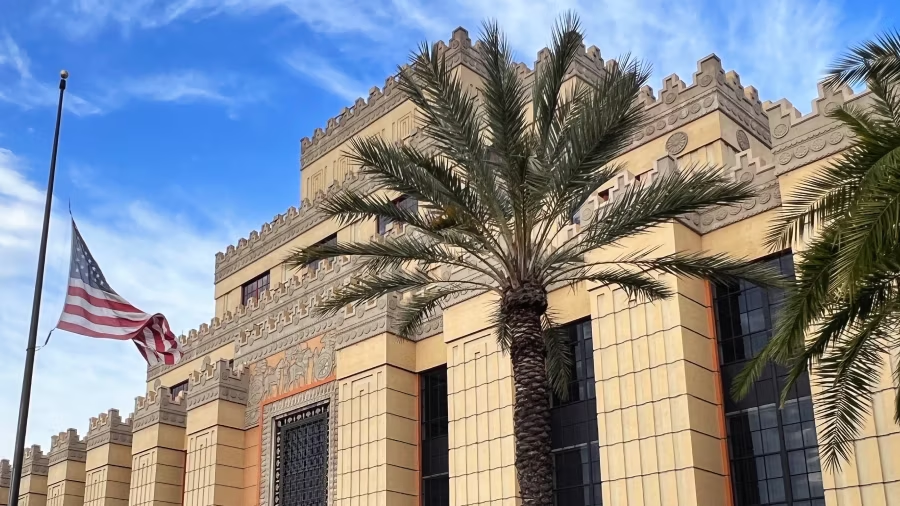
Black Friday deals may now be spread throughout the month of November – but for the Citadel Outlet’s most passionate shoppers, nothing beats the rush of standing in line with thousands of other eager customers awaiting the chance to be the first to scoop up deals. This year, the mall opened on Thanksgiving night once again – and the foot-traffic data shows that shoppers responded. While most malls in California and across the country saw visits plunge on the holiday, Citadel Outlets experienced a significant surge in traffic, despite being open for only a limited window.
Citadel Outlet as a whole opened Thanksgiving evening at 8pm, with certain stores opening even earlier at 4pm or 6pm. Black Friday sale hours ran until 11pm on Friday, giving these marathon shoppers 27 hours of continuous shopping. People driving northbound on the 5 freeway post-Thanksgiving dinner would have come across lines of cars visible already waiting to get into the Citadel parking lot to get a start on holiday shopping and burn off that turkey by hitting their step count. Once there, exciting experiences awaited, such as a giant Christmas tree and a gingerbread man scavenger hunt.
A quarter of visits to the Citadel on Thursday/Friday actually took place on the Thursday of Thanksgiving itself.
Value seekers came out in abundance, led by Melting Pot Families, Near-Urban Diverse Families, and City Hopefuls per Spatial.ai’s Personalive.
Angelenos were willing to come from afar, with the Citadel shoppers encompassing a whopping 255.5 mile trade area to score their deals on Black Friday alone. They say shopping is a marathon and it appears that for these dedicated customers, nothing beats the thrill of the chase when it comes to saving money.
Ultimately, Citadel Outlets’ Black Friday performance suggests that immersive experiences, extended hours, and a strong value proposition can still transform holiday shopping into a destination-worthy event.
For more data-driven retail insights, visit placer.ai/anchor.
Placer.ai leverages a panel of tens of millions of devices and utilizes machine learning to make estimations for visits to locations across the US. The data is trusted by thousands of industry leaders who leverage Placer.ai for insights into foot traffic, demographic breakdowns, retail sale predictions, migration trends, site selection, and more.

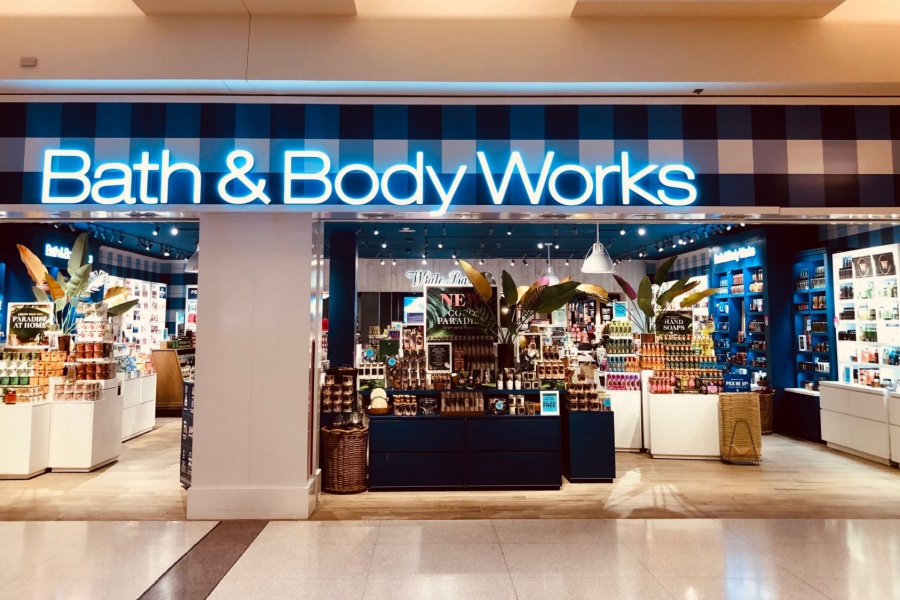
This year’s Candle Day once again drew eager shoppers to Bath & Body Works in search of deeply discounted candles. The in-store portion of the annual sale ran from December 5th through December 7th, 2025, during which traffic increased 266.8% compared to the chain's January to November daily average – a larger boost than that generated by the sale in both 2023 and 2024. This impressive visit surge suggests that shoppers are still willing to invest in affordable, emotionally resonant, or tradition-linked discretionary goods, provided the perceived value is high.
The sale also drove a noticeable spike in morning traffic, with roughly one-fifth of visits occurring before noon during Candle Day – up from the typical 17.1%.
Candle Day's strong showing highlights how brand appeal and strong value can still generate strong consumer interest – even as household budgets remain under pressure.
By pairing compelling pricing with strong brand identity and holiday timing, Bath & Body Works has succeeded in turning a discretionary product into a seasonal ritual that reliably drives engagement. Much like Starbucks’ Pumpkin Spice Latte phenomenon – where limited availability and emotional resonance generate recurring traffic spikes – Candle Day leverages anticipation, tradition, and value to prompt purchases that might otherwise be deprioritized.
For more data-driven insights, visit placer.ai/anchor.
Placer.ai leverages a panel of tens of millions of devices and utilizes machine learning to make estimations for visits to locations across the US. The data is trusted by thousands of industry leaders who leverage Placer.ai for insights into foot traffic, demographic breakdowns, retail sale predictions, migration trends, site selection, and more.

As the 2025 holiday season kicks off, Starbucks and Dunkin’ continue to see strong consumer engagement, with both brands outperforming their 2024 traffic levels and capitalizing on early seasonal launches.
Both Starbucks and Dunkin’ outperformed their 2024 traffic levels in Q3 2025. Starbucks visits rose 0.7% year-over-year in Q3, following slight declines in Q1 (-1.0%) and Q2 (-0.2%). Dunkin’ showed a similar trajectory – rebounding from a 1.8% drop in Q1 to a 1.7% increase in both Q2 and Q3.
These gains suggest that both brands have successfully reignited customer visits heading into the critical holiday season, when limited-time drinks and seasonal marketing tend to drive engagement.
The weekly data highlights the impact of seasonal offerings in the coffee space. Starbucks’ Bearista launch – on the same day as the holiday menu rollout – proved to be a major traffic driver, propelling visits up 11.9% year-over-year during the week of its launch. And the strong visit trends continued the following week with a 6.2% YoY increase, helped by an impressive “Red Cup Day” performance and highlighting Starbucks' capacity for generating demand with limited-time offerings.
Meanwhile, Dunkin’s Wicked collab – announced along with its holiday menu rollout – also generated traffic boosts, with visits up 3.5% to 3.6% YoY during the two weeks following the launch.
As competition in the coffee category intensifies, both brands’ early-season success highlights the growing importance of timing and tradition in driving visit growth.
For more data-driven consumer insights, visit placer.ai/anchor.
Placer.ai leverages a panel of tens of millions of devices and utilizes machine learning to make estimations for visits to locations across the US. The data is trusted by thousands of industry leaders who leverage Placer.ai for insights into foot traffic, demographic breakdowns, retail sale predictions, migration trends, site selection, and more.
.avif)
November 2025 marked the strongest November office attendance since 2019, with average daily visits on working days reaching a five-year high – although regional patterns diverged.
Office visits in November 2025 were 36.3% lower than in November 2019 – marking an improvement over November 2024 but falling slightly behind November 2023.
But monthly totals don’t always reflect true office activity, since the number of working days can vary from year to year. November 2025 began on a Saturday, giving the month five full weekends and the fewest working days of any November from 2019 to 2025. When we shift from looking at total visits to examining average visits per working day compared to November 2019–2024, a different picture emerges: office attendance on working days reached its highest level in five years.
As in recent months, Miami continues to lead the office recovery, pulling ahead of other major markets – including New York City. Many firms relocated to or expanded in Miami in recent years, contributing to the growth of the professional-services sector and boosting demand for office space and in-person work.
Meanwhile, New York City – which had led the nationwide office recovery in July – has been falling increasingly behind Miami. One possible factor is the city’s white collar workforce's reliance on long, transit-heavy commutes: as temperatures drop and weather worsens, many NYC commuters reduce their in-office days, while Miami’s more car-dependent workforce is less affected by seasonal conditions.
Meanwhile, San Francisco is posting some of the strongest year-over-year gains in office visits nationwide. Despite suffering some of the steepest office occupancy declines during the pandemic, the city is now mounting one of the most robust recoveries – perhaps helped by the recent AI boom which has attracted new tech talent to San Francisco.
Other cities with a strong tech scene – including Denver, Chicago, and Boston, have also posted solid YoY gains – although these markets continue to trail the nationwide average when comparing current office visit rates to pre-pandemic.
By contrast, Houston and Washington, D.C. showed YoY declines. Houston's office traffic may be impacted by the slower energy markets, while Washington, D.C. office trends were likely dampened by the government shutdown, which ended on November 12. (Although Placer.ai’s Washington, D.C. office index does not track government buildings, much of the private sector in the city is closely tied to federal agencies, so paused meetings and reduced client activity during the shutdown likely impacted in-office attendance across the board.)
These patterns highlight the growing influence of local dynamics in shaping the future of office work, with Miami’s momentum, San Francisco’s tech revival, and the strength of other innovation hubs revealing how regional conditions drive in-office activity.
For more data-driven insights, visit placer.ai/anchor.
Placer.ai leverages a panel of tens of millions of devices and utilizes machine learning to make estimations for visits to locations across the US. The data is trusted by thousands of industry leaders who leverage Placer.ai for insights into foot traffic, demographic breakdowns, retail sale predictions, migration trends, site selection, and more.

Dave’s Hot Chicken and Dutch Bros represent two stages of competitive maturity in the dining industry. Dave’s, the rookie powerhouse, is still in its breakout phase – driven by speed, excitement, and growth at any cost. Dutch Bros, on the other hand, is the seasoned veteran entering a more disciplined period of its career, focused on refinement, endurance, and strategic precision.
A snapshot of nationwide foot traffic data clearly shows the difference between the two brands. Between January and October 2025, Dave’s Hot Chicken recorded a remarkable 59.3% increase in total visits, driven by an aggressive pace of new openings. And the average number of visits to each individual store also rose 4.8%, signaling robust and growing demand.
Dutch Bros, meanwhile, experienced a more measured 13.1% growth in total visits, with visits per location holding steady at 0.2%. This stability suggests that while new units continue to perform, many established markets are reaching maturity – a hallmark of a seasoned brand transitioning from rapid expansion to optimization.
The contrast between the two brands becomes even more striking when analyzing major markets. While Dutch Bros’ visit growth reflects slower gains tied to market maturity, Dave’s is posting explosive per-location surges in major DMAs like Chicago (+18.4%), Orlando (+15.5%), and Houston (+15.0%). It’s the classic rookie hot streak – fast, fearless, and full of momentum.
Dutch Bros is now a massive operation with 1,080 locations in 24 states as of September 2025. Though much of the company's early growth was achieved through a franchise system, Dutch Bros stopped selling franchises to operators who didn’t grow up in the company in 2008 – and stopped franchising completely in 2017 to maintain consistency and preserve its distinctive brand and culture.
Today, only about 30% of Dutch Bros locations are franchise-operated. And as illustrated by the map below, while new stores are fueling growth, older markets – particularly in the Pacific Northwest – are reaching maturity. Dutch Bros is no longer just sprinting to open new stores; it’s managing endurance and refining its playbook – optimizing store placement, leveraging data analytics, and deepening engagement through its digital rewards program. This maturity mirrors what Starbucks went through two decades ago: fewer easy wins, but a much higher floor for long-term performance.
Then there’s Dave’s Hot Chicken – fast, fearless, and still in its hyper-growth phase. From a parking-lot pop-up in 2017 to around 300 locations today, Dave’s is scaling at a speed rarely seen in food service.
Like Dutch Bros in its early days, Dave’s still embraces a franchise-first approach. Backed by Roark Capital and celebrity investors including Drake, the brand is leveraging multi-unit operators to plant flags nationwide and abroad. The company aims to open 150 new locations a year and recently signed an 180-unit European deal with Azzurri Group – proof that the rookie’s winning streak is turning into a global phenomenon.
And the map below highlights how Dave’s Hot Chicken is playing offense with no signs of slowing down. The brand’s franchise-first model allows for rapid scaling with lower capital risk, while Roark Capital’s involvement brings big-league operational infrastructure. But like any breakout player, the challenge will be endurance – ensuring franchisees maintain consistency and profitability as the system races toward 1,000+ units.
For operators and investors, the Dutch Bros/Dave’s contrast is a roadmap to growth sequencing. Early-stage brands can learn from Dave’s: Invest in buzz, speed, and market saturation while consumer curiosity is high. Maturing chains, on the other hand, can look to Dutch Bros as proof that disciplined growth, data-led decisions, and cultural integrity are what sustain relevance once expansion slows.
For more data-driven insights, visit placer.ai/anchor
Placer.ai leverages a panel of tens of millions of devices and utilizes machine learning to make estimations for visits to locations across the US. The data is trusted by thousands of industry leaders who leverage Placer.ai for insights into foot traffic, demographic breakdowns, retail sale predictions, migration trends, site selection, and more.

How is lululemon performing in a challenging retail environment, and what does Black Friday data suggest about the holiday shopping season already under way? We dove into the data to find out.
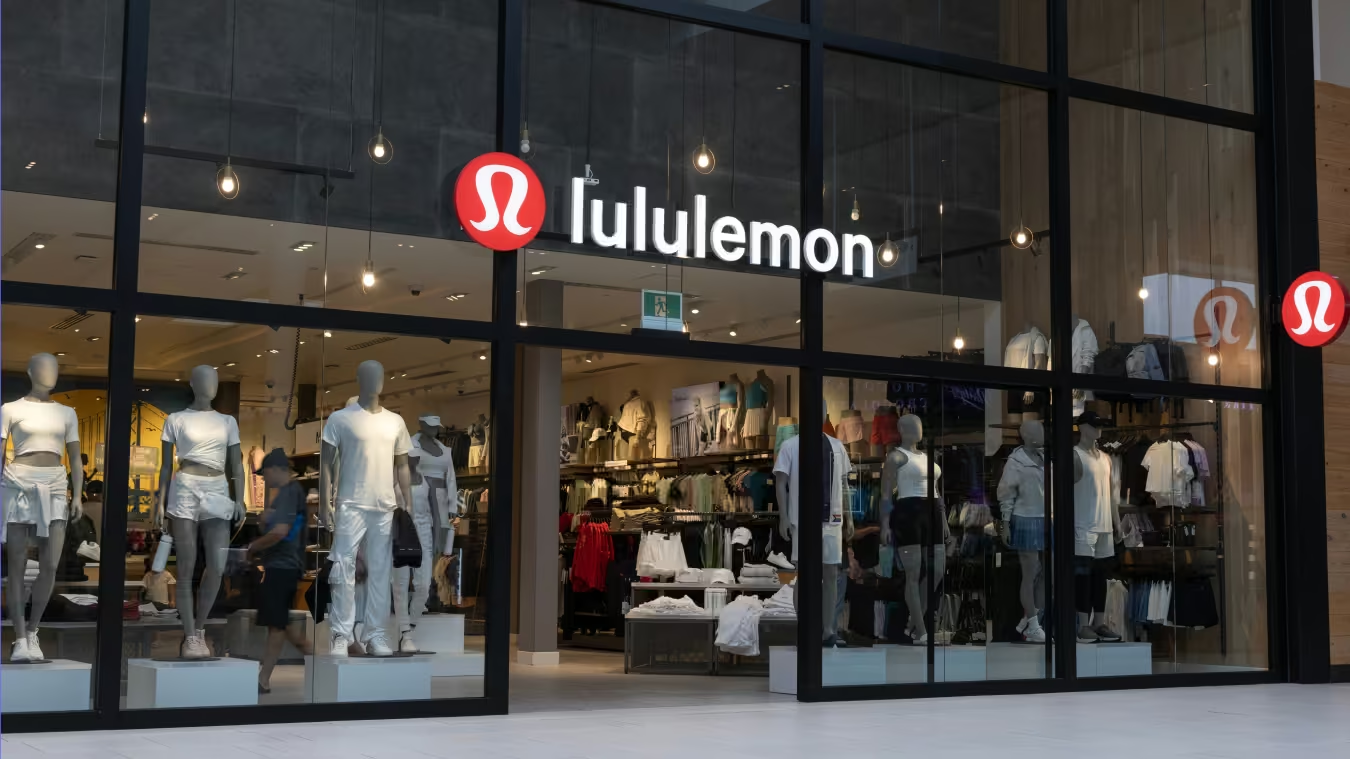
Visits to lululemon were up 4.2% year over year (YoY) in Q3 2025 – a promising sign ahead of the holidays. And though monthly same-store visits trended slightly negative YoY, same-store traffic grew in October – a positive sign ahead of a critical holiday season.
Looking back at previous holiday seasons provides further room for optimism for lululemon. The retailer reliably sees late-year traffic spikes – on Black Friday and especially at the end of December, when its End-of-Year sale and Boxing Day discounts pull in last-minute and bargain-seeking shoppers.
Black Friday 2025 data shows that luluemon is already off to a strong start, with visits surpassing even last year's strong performance – the chain experienced a 350.8% increase in visits compared to its January to September 2025 daily visit average.
Looking ahead, this early momentum positions lululemon to reclaim share during what many retailers expect to be a tighter holiday season. Given macroeconomic headwinds and shifting consumer sentiment, early wins like this may be critical – strong traffic now could translate into outsized holiday-season revenue, reinforce customer loyalty, and help offset any softening in post-Black-Friday demand.
Lululemon is driving increased foot traffic despite visit softness earlier in the year and persistent consumer headwinds. With the all-important holiday season fast-approaching, will the chain continue to drive visit growth?
For more data-driven retail insights follow Placer.ai/anchor.
Placer.ai leverages a panel of tens of millions of devices and utilizes machine learning to make estimations for visits to locations across the US. The data is trusted by thousands of industry leaders who leverage Placer.ai for insights into foot traffic, demographic breakdowns, retail sale predictions, migration trends, site selection, and more.