.png)
.png)

.png)
.png)

Sourcing food at home has become a lot more attractive for consumers against the backdrop of economic concerns in 2024. In Kroger’s earnings call, CEO Rodney McMullen called out that out of home food costs are outpacing in home food costs, leading shoppers to focus more on in-home meal solutions. Cooking can be seen as a cost saving lever for visitors, but the pandemic period also fostered a love of cooking and spending time in the kitchen, even for higher income households not necessarily looking to save money. And it appears through Placer’s location insights that retailers that focus on outfitting the kitchen have been benefiting from this change in consumer behavior.
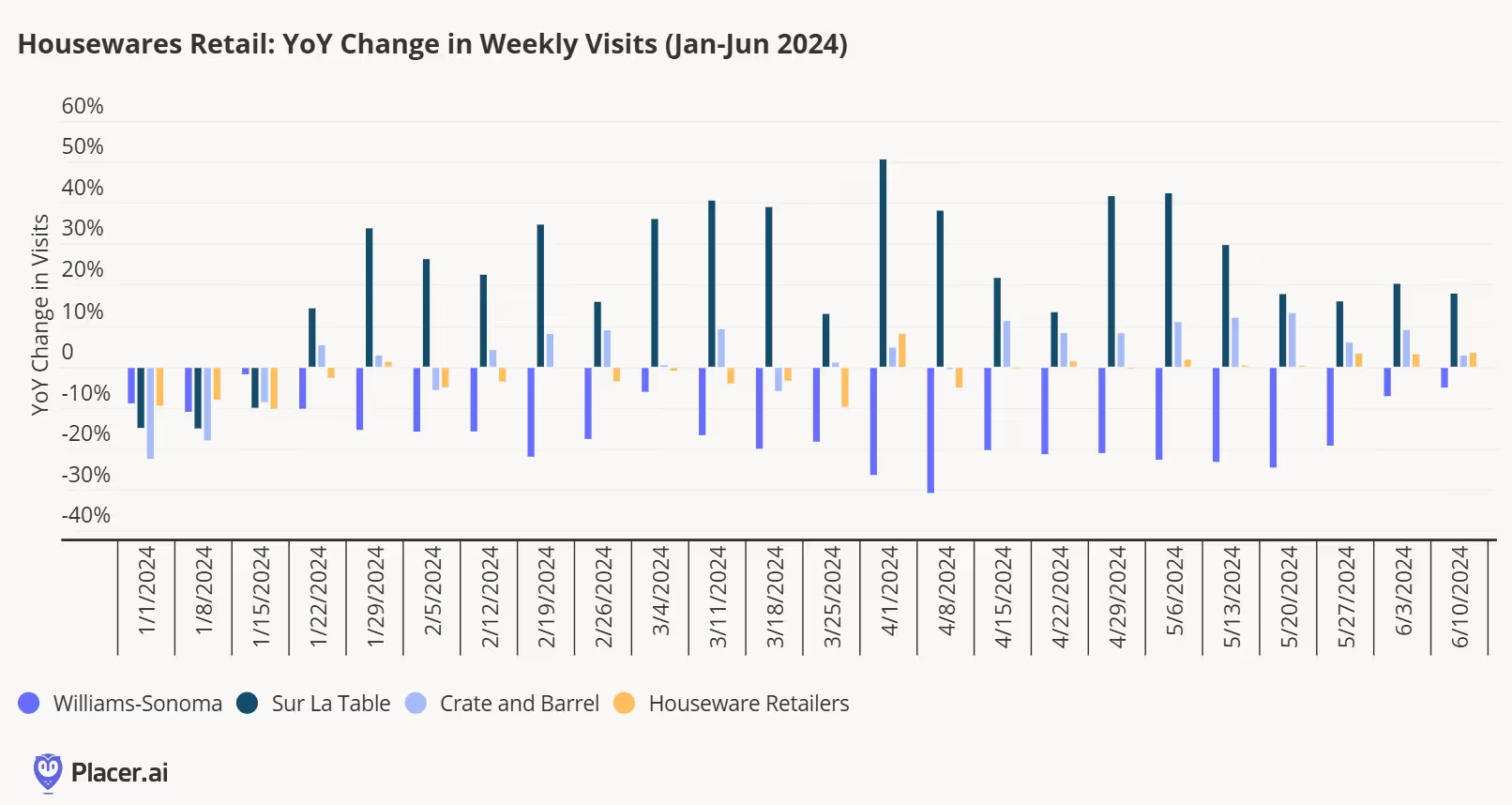
Despite the home industry having its challenges in foot traffic after the pandemic, housewares retailers have had some positive momentum over the past few months. Beyond that, houseware retailers that specialize in kitchen wares, such as Crate & Barrel and Sur La Table, have seen traffic growth throughout 2024. Williams-Sonoma, despite challenging year-over-year declines in traffic, reported comparable sales growth in the first quarter of 2024, which signals a higher level of conversion in-store.

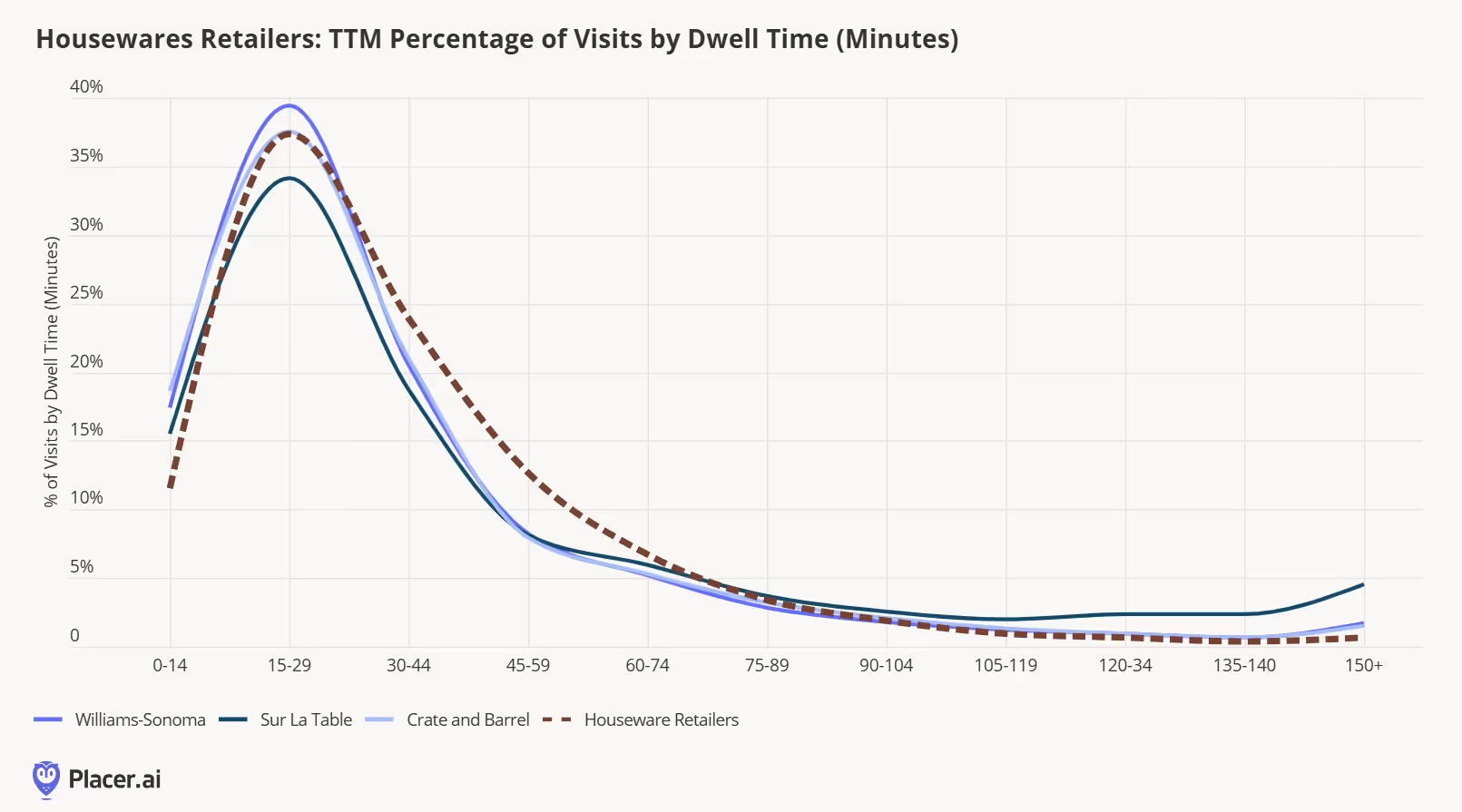
Sur La Table, a retailer that’s been challenged in the past, has found new life in changing consumer needs. One of Sur La Table’s core competencies is in-store cooking classes, and experiential retail continues to be one way the industry can provide inherent value to visitors. Dwell times are almost 10 minutes longer than Williams-Sonoma, its closest competitor (below). It also has the highest median household income of visitors and has the highest share of visits from households over $150k. Certainly at-home cooking has increased across income brackets, but high-end consumers also appear to be interested in adjacent home categories to take their skills to the next level. Blending product knowledge, experiences and assortment has greatly benefitted Sur La Table, and even against a challenging specialty retail landscape, the retailer has once again found its niche.

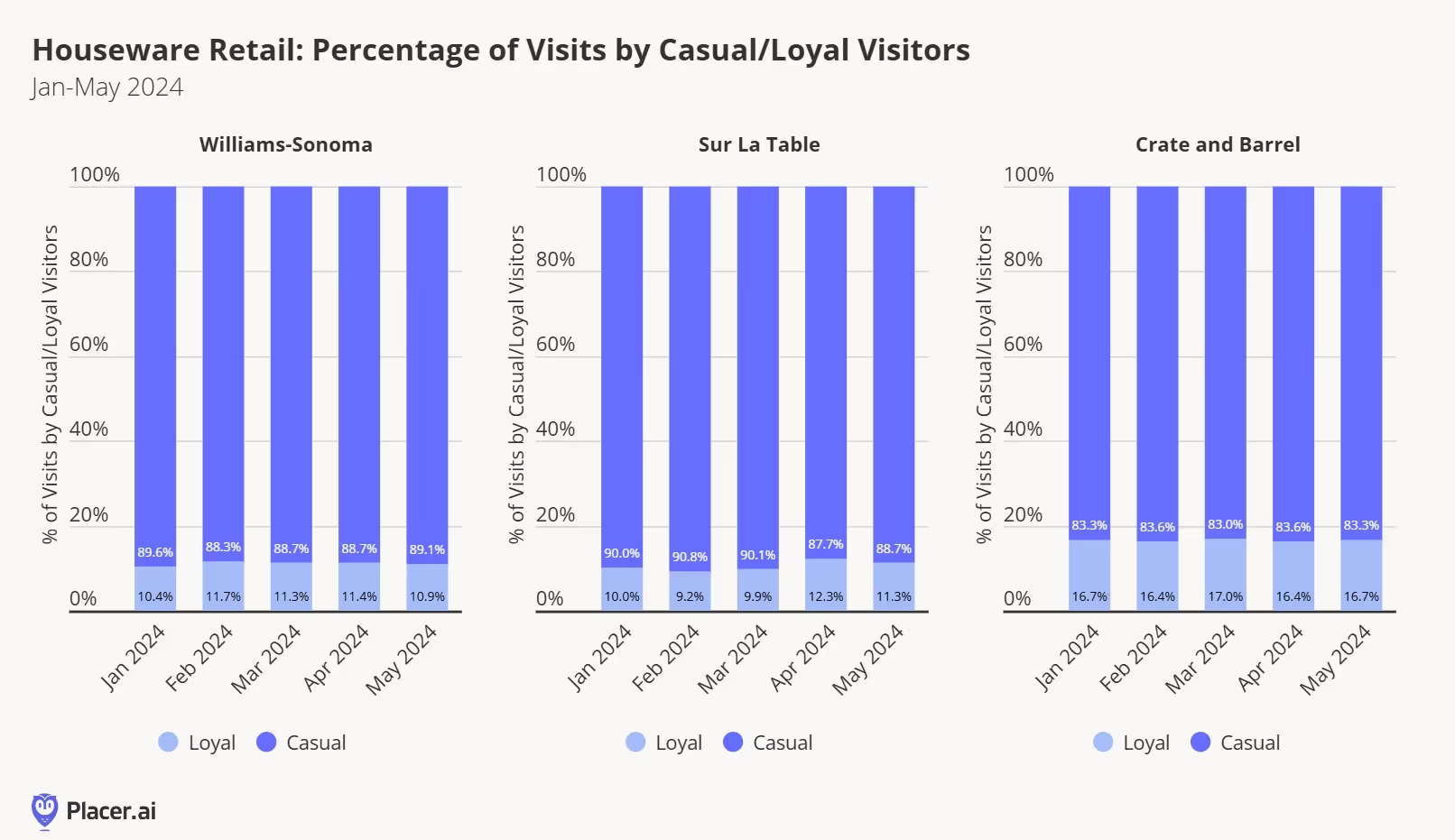
These retailers are often at the top of wedding registry lists, which could benefit traffic as we head into the summer months and the height of wedding season. Crate & Barrel, while not solely a kitchen focused retailer, has long been known as a registry destination that helps registrants outfit a kitchen with all of the cookware and gadgets one could need. Year to date through June, Crate & Barrel traffic is up 3% year-over-year, which is even more impressive considering that its assortment features an array of home furnishings categories, including furniture. Looking at demographic segments using Spatial.ai, Crate & Barrel over indexes in visits from Educated Urbanites and Young Professionals and Sunset Boomers compared the the average of other housewares chains, a signal that the wedding registry business, typically fueled by kitchen goods, could be attracting these particular subsets. Crate & Barrel also has a high level of loyalty in visits compared to other competitors in the space.

As we reported about Wayfair a few weeks ago, home retailers that have created exciting experiences and reasons to visit are still resonating with consumers, despite the tempered interest in the home category. An increased interest in cooking by consumers certainly plays a part in these retailers' success, but they have also had to provide even more incentive to drive traffic growth as consumers shift their attention away from purchasing for their homes. Having an experiential component or registry business have kept kitchen focused retailers more aligned with their consumer’s needs, which drive inherent value in today’s retail landscape, something not easy to come by.

Thrifting is on the rise. Whether fueled by a desire to shop more sustainably, find unique pieces, or save money, consumers have been increasingly turning to secondhand clothing stores for their new threads. And interest in thrift shopping is only expected to grow over the next few years – with some estimates putting the U.S. secondhand market at $73 billion by 2028.
With 2024 nearly at the midway point, we dove into the data to take a closer look at the segment.
The past few years have seen a growing interest among consumers in all things value, and thrift shops have been reaping the benefits. Between January and May 2024, the segment experienced strong monthly year-over-year (YoY) foot traffic growth. And compared to pre-COVID, too, thrift stores drew 29.6% more foot traffic in Q1 2024 than in Q1 2019.
Diving into the visit performance of individual thrift store chains reveals strength across a variety of brands. YoY visits to Goodwill, Crossroads Trading Co., and Savers were consistently elevated between January and May 2024.
Who are the shoppers driving thrift shop visit growth? Analyzing the demographics of thrift store visitors’ trade areas reveals that in 2024, thrift stores serve an economically diverse customer base. Data from the STI: PopStats dataset combined with Placer.ai captured market data shows that Goodwill draws customers from areas with a median household income (HHI) below the nationwide median $76.1K. Savers, for its part, draws shoppers from average-income areas, while Crossroad Trading Co. attracts a high-HHI customer base – likely due to the chain’s strong presence in affluent California and focus on high-end items.
Still, a look at the wider apparel shopping habits of thrift store visitors shows that these shoppers tend to be bargain hunters: Between January and May 2024, visitors to Crossroads Trading Co. and Savers were more likely to visit Goodwill than any other clothing chain. But they – together with Goodwill visitors – also did plenty of shopping at off-price chains like Ross Dress For Less, Marshall’s, and T.J. Maxx. (Crossroad Trading Co., which places a strong emphasis on selling on-trend, high-end items, also saw many of its customers shopping at Macy’s, while Savers visitors were more likely to frequent Kohl’s).
This consistent interest in budget-friendly venues underscores the strong preference for value among the growing ranks of thrift store shoppers
Thrifting is proving its staying power, with visits to major thrift stores outpacing those of other apparel categories. Will the secondhand market continue on its upward trajectory?
Follow Placer.ai to keep up with the latest data-driven retail trends.

Limited-assortment value grocery stores like Aldi and Grocery Outlet Bargain Market have thrived in recent years, as inflation-wary consumers sought out ways to save money at the till.
But how are these chains faring in 2024? Have cooling inflation and increased consumer confidence put a dent in their performance? We dove into the data to find out.
As the name suggests, limited-assortment grocery stores are known for carrying fewer products than traditional grocery stores in a bid to cut down on overhead costs and pass savings on to consumers. These chains also utilize other methods, such as private label brands, opportunistic merchandising, and fewer in-store amenities, to keep prices low.
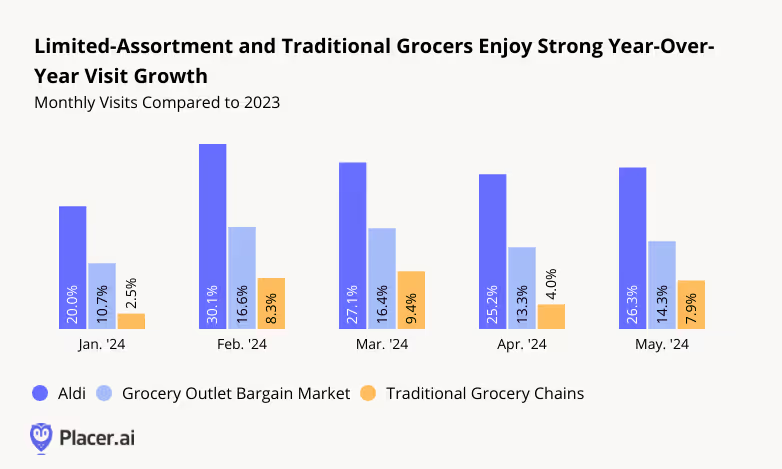
And foot traffic data shows that in the first part of 2024, consumers continued flocking to these brands to grab groceries at a discount – driving year-over-year (YoY) foot traffic growth that far outperformed that of traditional grocery stores. In May 2024, for example, visits to the overall grocery segment grew by 7.9% YoY, while Aldi and Grocery Outlet Bargain Market experienced YoY growth of 26.3%, 14.3%, and respectively.

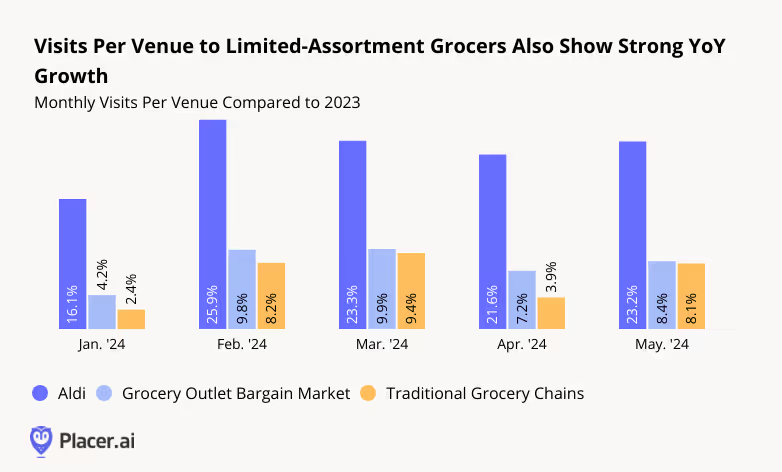
Some of this foot traffic growth can be attributed to the two chains’ continued expansion: Aldi added dozens of new stores in 2023 – with hundreds more in the pipeline – and Grocery Outlet Bargain Market also significantly grew its footprint. But the average number of visits to both brands’ individual locations also increased, again outpacing traditional grocery, showing that their expansion is meeting robust demand.

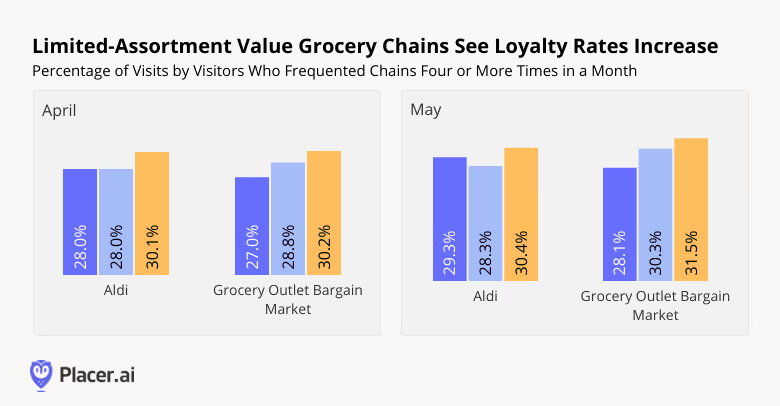
Looking into the loyalty rates of visitors to these limited-assortment value chains provides more reason for optimism for the sector: Over the past three years, Aldi and Grocery Outlet Bargain Market both saw an increase in loyal visits – defined as those made by people who frequented the chains at least four times in a month.
In April 2022, for example, 28.0% of visits to Aldi and 27.0% of visits to Grocery Outlet Bargain Market were made by people who visited the chains at least four times during the month – but by 2024, these shares grew to 30.1% and 30.2%, respectively. A similar trend was observed in May 2024.
Increasingly, it seems, people are doing at least part of their routine weekly grocery shopping at these limited-assortment chains. And with consumers continuing to seek ways to save money, these grocers are well-positioned to continue growing their visit shares.

The limited-assortment, value grocery model continues to prove its staying power, with impressive foot traffic, visits per location, and loyalty rates.
Will the segment continue on its upward trajectory?
Visit Placer.ai to find out.

About the Placer 100 Index for Retail & Dining: The Placer 100 Index for Retail & Dining is a curated, dynamic list of leading chains that often serve as prime tenants for shopping centers and malls. The index includes chains from various industries, such as superstores, grocery, dollar stores, dining, apparel, and more. Among the notable chains featured are Walmart, Target, Costco, Kroger, Ulta Beauty, The Home Depot, McDonald’s, Chipotle, Crunch Fitness, and Trader Joe's. The goal of the list is to provide insight into the wider trends impacting the retail, dining, and shopping center segments.
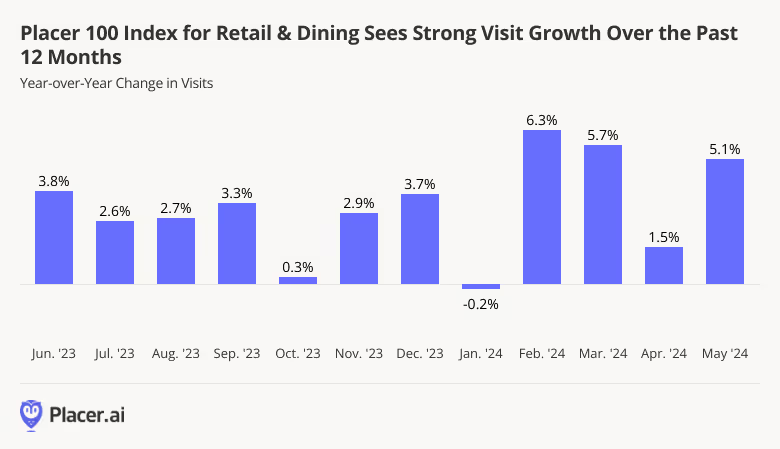
Foot traffic patterns at leading chains can serve as an interesting proxy for consumer sentiment – offering a glimpse into the overall health of the retail and dining spaces. And analyzing the YoY foot traffic performance of the Placer 100 Index for Retail & Dining over the past twelve months reveals that, for the most part, major retail and dining players have enjoyed consistently strong visit growth. In November and December 2023 – during the height of last year’s holiday shopping season – foot traffic to the chains included in the Index increased 2.9% and 3.7% respectively, compared to the equivalent period of 2022.
And although 2024 opened with a slight, weather-driven YoY decline in visits, retail and dining foot traffic quickly bounced back, finishing out May with a 5.1% increase. This springtime jump was partly due to two special calendar days – Mother’s Day weekend, and Memorial Day weekend – both of which drove bigger visit spikes this year than in 2023.
These robust visitation patterns highlight consumer resilience in the face of headwinds – and may be an encouraging indicator of a thriving summer ahead.

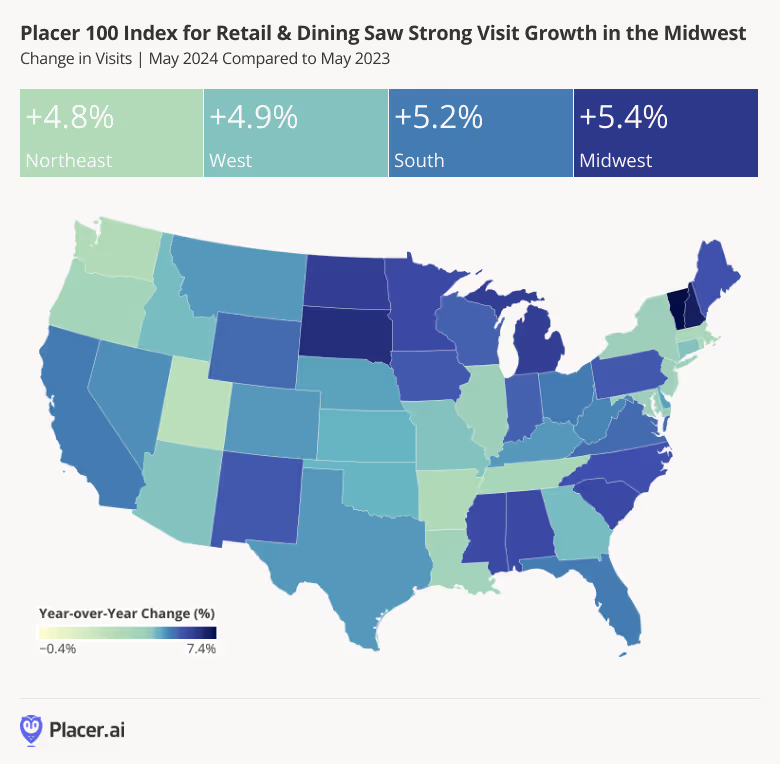
Zooming into the Index’s regional performance during May 2024 uncovers impressive positive YoY visit growth across the nation.
The Midwest led the way, buoyed by strong YoY foot traffic growth in South Dakota (6.7%), Michigan (6.4%), and North Dakota (6.4%). But the two states with the biggest YoY visit boosts – Vermont (7.4%) and New Hampshire (7.0%) – were in the Northeast, and the South and West performed well too. This impressive increase in retail and dining visits was observed across the vast majority of the continental U.S., regardless of population size and local weather conditions. Such widespread growth indicates a robust and uniform recovery in consumer activity nationwide, suggesting that factors beyond regional characteristics, such as slowing inflation and increased consumer confidence, played a significant role in driving this trend.

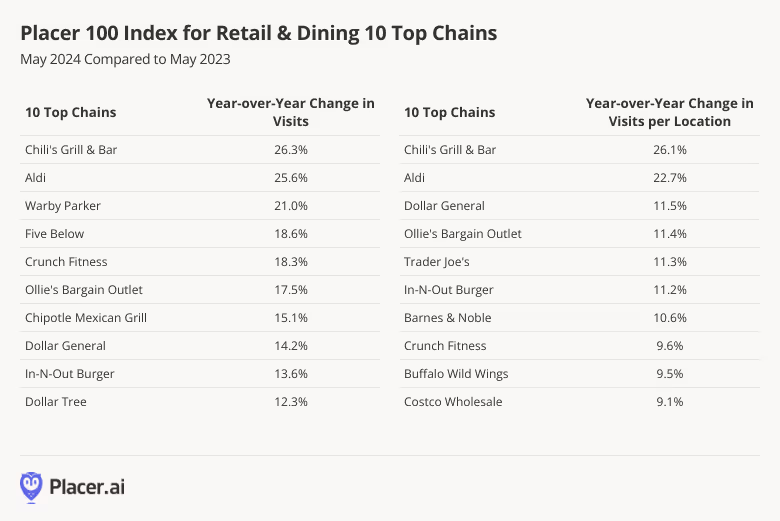
Drilling down into the rankings of individual chains in the index can highlight some of the key trends shaping retail and dining this year.
Value-oriented retailers – including Aldi, Ollie’s Bargain Outlet, and Dollar General, – featured prominently among May’s top performers, both for YoY chain-wide visits and for YoY average visits per location. This robust showing demonstrates the continued draw of budget fare, which has been observed across a wide range of segments – from grocery to apparel.
The quest for savings spilled over into other segments as well. Value gym Crunch Fitness, which grew its footprint significantly over the past year, ranked among the top performers both for overall visits and for visits per location – showcasing the success of its expansion strategy. And casual dining chains Chili’s Grill & Bar and Buffalo Wild Wings also made the list, with YoY visit growth likely driven by successful value promotions.

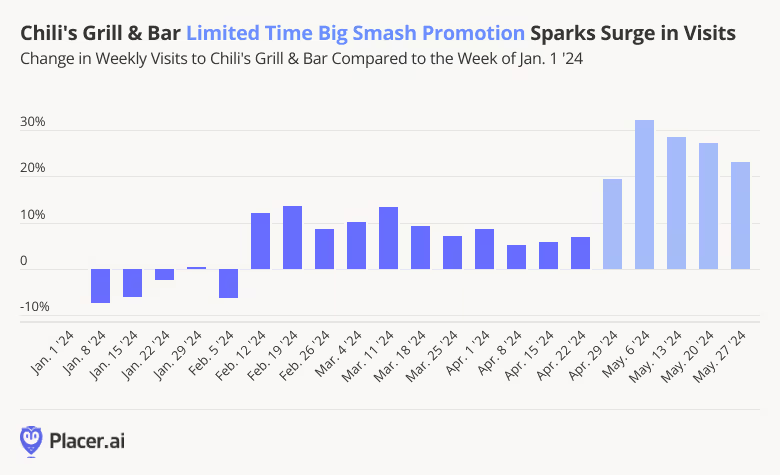
Indeed, Chili's Grill & Bar – propelled by its hit Big Smasher Burger promotion – has emerged as this month's leading chain, topping the charts both for overall visits (26.3%) and for average visits per location (26.1%).
Hungry, budget-conscious diners can get Chili’s Big Smasher as part of the chain’s signature 3 for Me deal, which lets diners choose a beverage, starter, and main course starting at $10.99. And the offering, which was launched on April 29th, 2024, has become a sensation – going viral on TikTok and garnering significant media attention.
The promotion is competitively priced against QSR offerings, at a time when fast-food chains have seen slowing sales due to cutbacks by inflation-wary consumers. Chili's has been praised for delivering exceptional value – and taking a closer look at weekly visitation trends shows that this strategy is paying off. Chili’s saw a surge of weekly visit growth beginning the week of the promotion (April 29th), and has continued thriving since. This highlights the importance of understanding consumer needs and finding ways to deliver value.

Will June continue to see a rise in retail and dining visits as summer approaches? Will the success of retail and dining foot traffic remain evenly spread across regions, even as some areas are more affected by summer heat? And will value-oriented retailers continue to dominate the ten top performers in retail and dining?
Visit Placer.ai to find out.

It’s no secret that the restaurant category is starting to get more promotional. As consumers–especially lower income consumers–have shifted toward substitute food retail channels like value grocers, warehouse clubs, and convenience stores due to the compounded effect of food-away-from home inflation, restaurant chains across all tiers are resorting to increased promotional activity to drive visit trends.
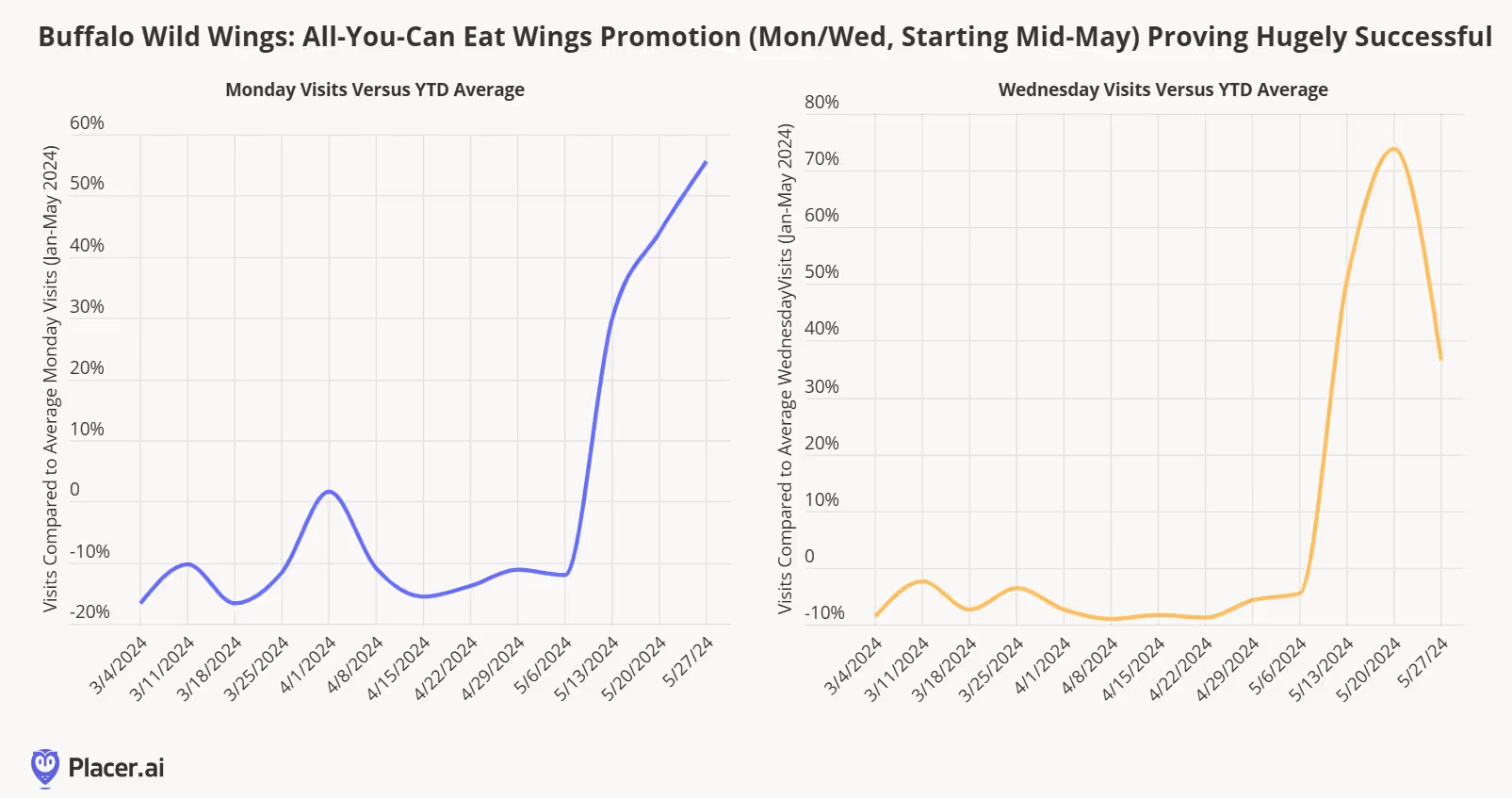
Over the past few weeks, we’ve discussed that several casual dining chains had seen success through all-you-can eat and other deep discount promotions. Last week, we noted that Chili’s had been outperforming broader casual-dining category averages through its value messaging. We also noted the success of Buffalo Wild Wings All-You-Can Eat wings promotions on Monday and Wednesdays starting in mid-May. Below, we show visit trends to Buffalo Wild Wings on Mondays and Wednesdays compared to their year-to-date averages since the beginning of March. The promotion has helped to drive incremental visits on two traditionally slower days. During May, the chain was seeing visits greater than 30% its normal daily visit count for Mondays and Wednesdays during the earlier part of the promotion and exceeding 50% during the latter part of the month. While it's unlikely that this promotion will be permanent–restaurants have to work with their suppliers ahead of time to make sure they have sufficient food for promotions like this–but given the success, the chain may consider running during other months (and potentially other days of the week) later this year.

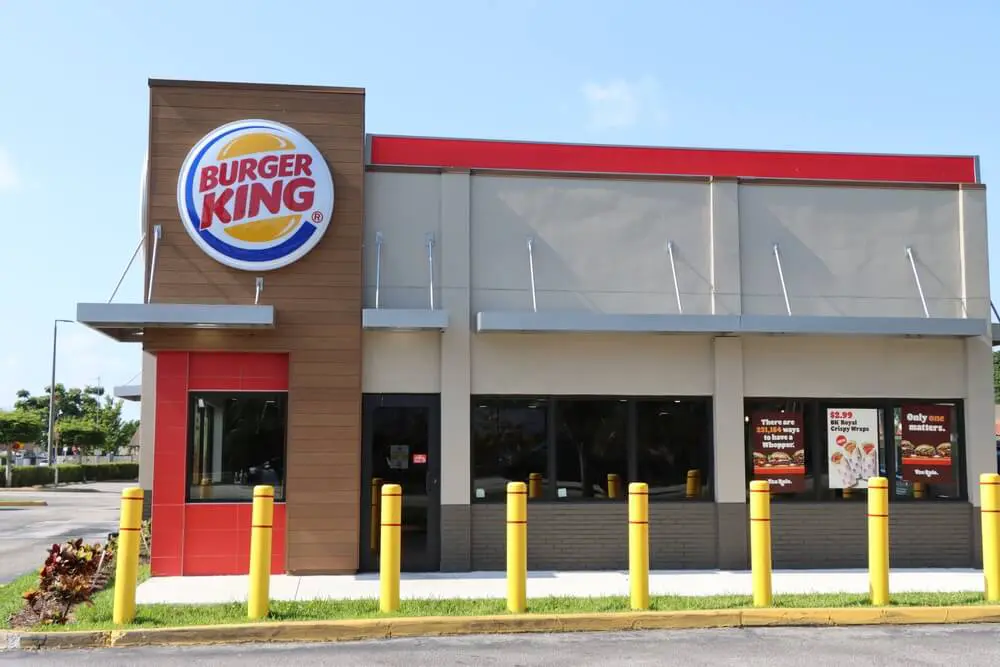
However, as we noted in our recap of this year’s National Restaurant Association show, QSR chains have started to get more promotional ahead as they look to recapture visit share lost to value grocers, dollar stores, and c-stores (especially within lower-income trade areas). McDonald’s will launch a national $5 value menu promotion on June 25, but it’s clear that other QSR chains are already seeing success with their competing $5 promotions. Below, we show year-over-year weekly visit trends from March through early June for the major QSR burger chains. Burger King launched its own $5 Your Way Meal value menu this past week, and has seen visit trends accelerate since then. Starbucks–which has historically stayed away from discounts as a way to protect its premium brand position–also surprised the industry by announcing a $5-$7 “pairings menu” this week.

Easing commodity costs have allowed restaurants to get more promotional, although when paired with rising labor costs (especially in California, which we covered last week), it does set up an environment where restaurant profits will likely be squeezed over the next several months. Also, substitute food retail channels are likely to introduce their own price reductions in the months to come (as we’ve already seen from Walmart).

Summer has unofficially arrived, and with that comes the desire to relax, unwind and travel. And despite some of the economic uncertainty still facing consumers, 2024 is off to a surprising start for traffic in certain parts of retail. According to AAA, auto traffic growth for Memorial Day weekend was projected to grow by 4% compared to last year and by almost 2% versus 2019. Car travel has long been seen as the value-based travel method across the U.S., and who can forget the allure of the “summer road trip”. But inflationary pressures may have made it less appealing over the past few years. In the most recent consumer price index for May 2024, a drop in gasoline prices was a large positive contributor to the overall rate of 3.3%, which could provide a stronger consumer push for summer car travel.

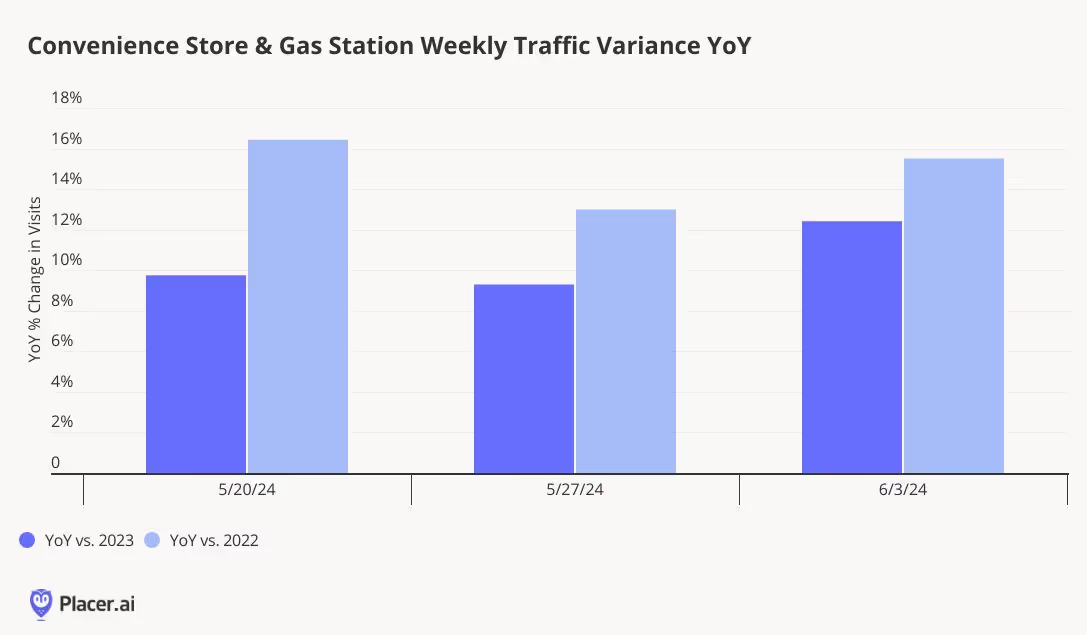
With the positive momentum in auto traffic and gas prices, gas station and convenience store traffic has greatly benefited since Memorial Day weekend. In fact, visits to chains from May 20 to June 10 this year increased by 11% compared to the same weeks in 2023 and 15% versus 2022. Traffic to convenience stores and gas chains is up almost 30% compared to the same weeks in 2019. Traffic growth steadily climbed over the course of the three weekends measured, and the weeks had some of the highest growth rates so far in 2024 with the exception of a week in March. Even with the projected increase in auto traffic across the country, convenience and gas is the summer blockbuster, building on the consumer trends of the past year and the successful strategies of various retailers.

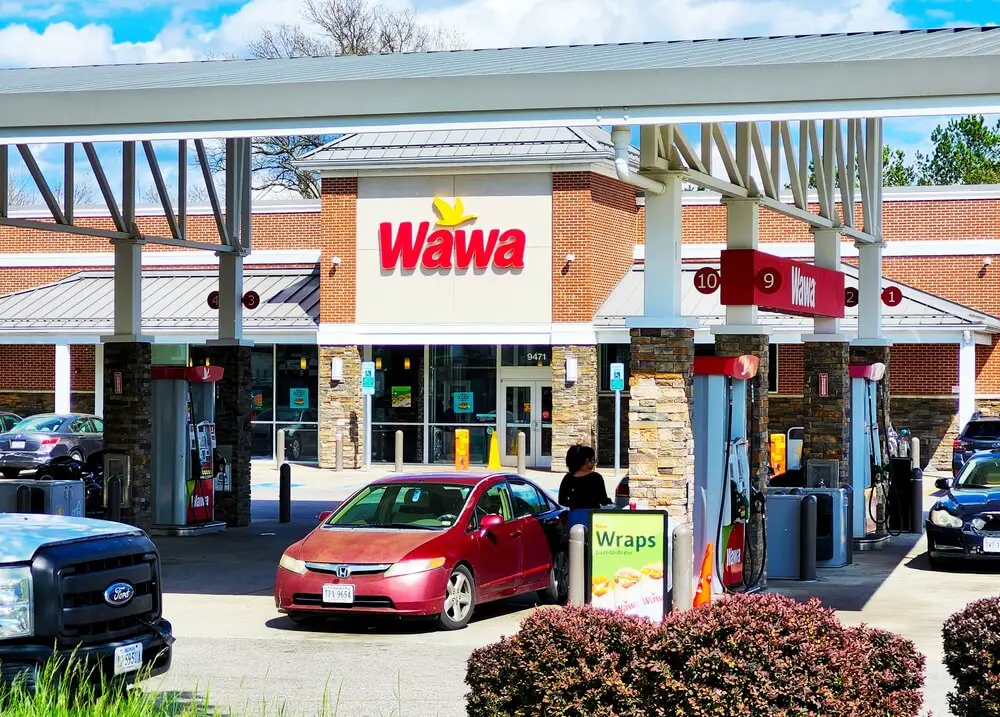
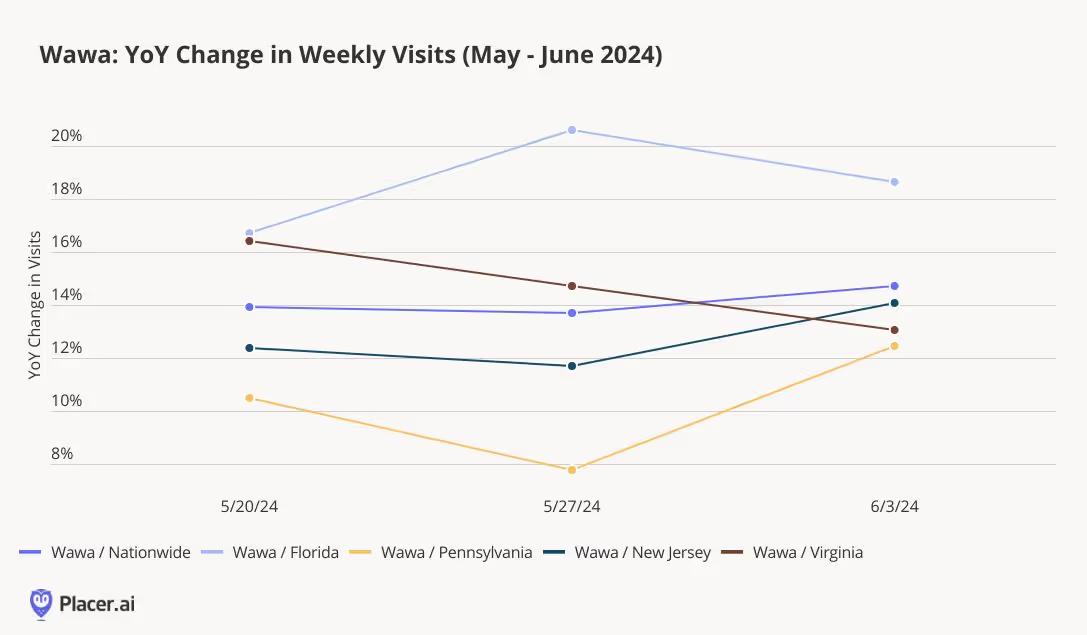
Wawa, in particular, saw strong visit patterns in the first unofficial few weeks of summer travel. The chain at a total level is up an impressive 14% year-over-year for the measured weeks. Looking at Wawa’s performance across various states, Florida drove much of the growth in traffic as the weather heats up, and outperformed some of the brand’s stronghold states like Pennsylvania & New Jersey. Average dwell times at Wawa locations in Florida are almost a minute higher than the chain average, highlighting that stores are not only pulling in more visits, but keeping visitors in-store for longer. The strong performance of the Florida locations, even during the off season, corroborates the brand’s investment in expansion across the state. One might suspect that Wawa is well positioned heading into the remainder of the summer with its coastal strategy.
Will C-stores continue to grow traffic as we officially enter the summer season? All signs point to yes, even if gas prices rise due to increased demand. Chains have done a fantastic job of enticing consumers with unique food offerings and might become the must-visit destination before heading to the beach this summer.

1. Appetite for offline retail & dining is stronger than ever. Both retail and dining visits were higher in H1 2025 than they were pre-pandemic.
2. Consumers are willing to go the extra mile for the perfect product or brand. The era of one-stop-shops may be waning, as many consumers now prefer to visit multiple chains or stores to score the perfect product match for every item on their shopping list.
3. Value – and value perception – gives chains a clear advantage. Value-oriented retail and dining segments have seen their visits skyrocket since the pandemic.
4. Consumer behavior has bifurcated toward budget and premium options. This trend is driving strength at the ends of the spectrum while putting pressure on many middle-market players.
5. The out-of-home entertainment landscape has been fundamentally altered. Eatertainment and museums have stabilized at a different set point than pre-COVID, while movie theater traffic trends are now characterized by box-office-driven volatility.
6. Hybrid work permanently reshaped office utilization. Visits to office buildings nationwide are still 33.3% below 2019 levels, despite RTO efforts.
The first half of 2025 marked five years since the onset of the pandemic – an event that continues to impact retail, dining, entertainment, and office visitation trends today.
This report analyzes visitation patterns in the first half of 2025 compared to H1 2019 and H1 2024 to identify some of the lasting shifts in consumer behavior over the past five years. What is driving consumers to stores and dining venues? Which categories are stabilizing at a higher visit point? Where have the traffic declines stalled? And which segments are still in flux? Read the report to find out.
In the first half of 2025, visits to both the retail and dining segments were consistently higher than they were in 2019. In both the dining and the retail space, the increases compared to pre-COVID were probably driven by significant expansions from major players, including Costco, Chick-fil-A, Raising Cane's, and Dutch Bros, which offset the numerous retail and dining closures of recent years.
The overall increase in visits indicates that, despite the ubiquity of online marketplaces and delivery services, consumer appetite for offline retail and dining remains strong – whether to browse in store, eat on-premises, collect a BOPIS order, or pick up takeaway.
A closer look at the chart above also reveals that, while both retail and dining visits have exceeded pre-pandemic levels, retail visit growth has slightly outpaced the dining traffic increase.
The larger volume of retail visits could be due to a shift in consumer behavior – from favoring convenience to prioritizing the perfect product match and exhibiting a willingness to visit multiple chains to benefit from each store's signature offering. Indeed, zooming into the superstore and grocery sector shows an increase in cross-shopping since COVID, with a larger share of visitors to major grocery chains regularly visiting superstores and wholesale clubs. It seems, then, that many consumers are no longer looking for a one-stop-shop where they can buy everything at once. Instead, shoppers may be heading to the grocery stores for some things, the dollar store for other items, and the wholesale club for a third set of products.
This trend also explains the success of limited assortment grocers in recent years – shoppers are willing to visit these stores to pick up their favorite snack or a particularly cheap store-branded basic, knowing that this will be just one of several stops on their grocery run.
Diving into the traffic data by retail category reveals that much of the growth in retail visits since COVID can be attributed to the surge in visits to value-oriented categories, such as discount & dollar stores, value grocery stores, and off-price apparel. This period has been defined by an endless array of economic obstacles like inflation, recession concerns, gas price spikes, and tariffs that all trigger an orientation to value. The shift also speaks to an ability of these categories to capitalize on swings – consumers who visited value-oriented retailers to cut costs in the short term likely continued visiting those chains even after their economic situation stabilized.
Some of the visit increases are due to the aggressive expansion strategies of leaders in those categories – including Dollar General and Dollar Tree, Aldi, and all the off-price leaders. But the dramatic increase in traffic – around 30% for all three categories since H1 2019 – also highlights the strong appetite for value-oriented offerings among today's consumers. And zooming into YoY trends shows that the visit growth is still ongoing, indicating that the demand for value has not yet reached a ceiling.
While affordable pricing has clearly driven success for value retailers, offering low prices isn't a guaranteed path to growth. Although traffic to beauty and wellness chains remains significantly higher than in 2019, this growth has now plateaued – even top performers like Ulta saw slight YoY declines following their post-pandemic surge – despite the relatively affordable price points found at these chains.
Some of the beauty visit declines likely stems from consumers cutting discretionary spending – but off-price apparel's ongoing success in the same non-essential category suggests budget constraints aren't the full story. Instead, the plateauing of beauty and drugstore visits while off-price apparel visits boom may be due to the difference in value perception: Off-price retailers are inherently associated with savings, while drugstores and beauty retailers, despite carrying affordable items, lack that same value-driven brand positioning. This may suggest that in today's market, perceived value matters as much as actual affordability.
Another indicator of the importance of value perception is the decline in visits to chains selling bigger-ticket items – both home furnishing chains and electronic stores saw double-digit drops in traffic since H1 2019.
And looking at YoY trends shows that visits here have stabilized – like in the beauty and drugstore categories – suggesting that these sectors have reached a new baseline that reflects permanently shifted consumer priorities around discretionary spending.
A major post-pandemic consumer trend has been the bifurcation of consumer spending – with high-end chains and discount retailers thriving while the middle falls behind. This trend is particularly evident in the apparel space – although off-price visits have taken off since 2019 (as illustrated in the earlier graph) overall apparel traffic declined dramatically – while luxury apparel traffic is 7.6% higher than in 2019.
Dining traffic trends also illustrate this shift: Categories that typically offer lower price points such as QSR, fast casual, and coffee have expanded significantly since 2019, as has the upscale & fine dining segment. But casual dining – which includes classic full-service chains such as Red Lobster, Applebee's, and TGI Fridays – has seen its footprint shrink in recent years as consumers trade down to lower-priced options or visit higher-end venues for special occasions.
Chili's has been a major exception to the casual dining downturn, largely driven by the chain's success in cementing its value-perception among consumers – suggesting that casual dining chains can still shine in the current climate by positioning themselves as leaders in value.
Consumers' current value orientation seems to be having an impact beyond the retail and dining space: When budgets are tight, spending money in one place means having less money to spend in another – and recent data suggests that the consumer resilience in retail and dining may be coming at the expense of travel – or perhaps experiences more generally.
While airport visits from domestic travelers were up compared to pre-COVID, diving into the data reveals that the growth is mostly driven by frequent travelers visiting airports two or more times in a month. Meanwhile, the number of more casual travelers – those visiting airports no more than once a month – is lower than it was in 2019.
This may suggest that – despite consumers' self-reported preferences for "memorable, shareable moments" – at least some Americans are actually de-prioritizing experiences in the first half of 2025, and choosing instead to spend their budgets in retail and dining venues.
The out of home entertainment landscape has also undergone a significant change since COVID – and the sector seems to have settled into a new equilibrium, though for part of the sector, the equilibrium is marked by consistent volatility.
Eatertainment chains – led by significant expansions from venues like Top Golf – saw a 5.5% visit increase compared to pre-pandemic levels, though YoY growth remained modest at 1.1%. On the other hand, H1 2025 museum traffic fell 10.9% below 2019 levels with flat YoY performance (+0.2%). The minimal year-over-year changes in both categories suggest that these entertainment segments have found their new post-COVID equilibrium.
The rise of eatertainment alongside the drop in museum visits may also reflect the intense focus on value for today's consumers. Museums in 2025 offer essentially the same value proposition that they offered in 2019 – and for some, that value proposition may no longer justify the entrance fee. But eatertainment has gained popularity in recent years as a format that offers consumers more bang for their buck relative to stand-alone dining or entertainment venues – which makes it the perfect candidate for success in today's value-driven consumer landscape.
But movie theaters traffic trends are still evolving – even accounting for venue closures, visits in H1 2025 were well below H1 2019 levels. But compared to 2024, movie traffic was also up – buoyed by the release of several blockbusters that drove audiences back to cinemas in the first half of 2025. So while the segment is still far from its pre-COVID baseline, movie theaters retain the potential for significant traffic spikes when compelling content drives consumer demand.
The blockbuster-driven YoY increase can perhaps also be linked to consumers' spending caution. With budgets tight, movie-goers may want to make sure that they're spending time and money on films they are sure to enjoy – taking fewer risks than they did in 2019, when movie tickets and concession prices were lower and consumers were less budget-conscious.
H1 2025 also brought some moderate good news on the return to office (RTO) front, with YoY visits nationwide up 2.1% and most offices seeing YoY office visit increases – perhaps due to the plethora of RTO mandates from major companies. But comparing office visitation levels to pre pandemic levels highlights the way left to go – nationwide visits were 33.3% below H1 2019 levels in H1 2025, with even RTO leaders New York and Miami still seeing 11.9% and 16.1% visit gaps, respectively.
So while the data suggests that the office recovery story is still being written – with visits inching up slowly – the substantial gap from pre-pandemic levels suggests that remote and hybrid work models have fundamentally reshaped office utilization patterns.
Five years post-pandemic, consumer behavior across the retail, dining, entertainment, and office spaces has crystallized into distinct new patterns.
Traffic to retail and dining venues now surpasses pre-pandemic levels, driven primarily by value-focused segments. But retail and dining segments that cater to higher income consumers –such as luxury apparel and fine dining – have also stabilized at a higher level, highlighting the bifurcation of consumer behavior that has emerged in recent years. Entertainment formats show more variability – while eatertainment traffic has settled above and museums below 2019 levels, and movie theaters still seeking stability. Office spaces remain the laggard, with visits well below pre-pandemic levels despite corporate return-to-office initiatives showing modest impact.
It seems, then, that the new consumer landscape rewards businesses that can clearly articulate their value proposition to attract consumers' increasingly selective spending and time allocation – or offer a premium product or experience catering to higher-income audiences.
.avif)
1. Overall dining traffic is mostly flat, but growth is concentrated in specific areas.
While nationwide dining visits were nearly unchanged in early 2025, western states like Utah, Idaho, and Nevada showed moderate growth, while states in the Midwest and South, along with Washington D.C., saw declines.
2. Fine dining and coffee chains are growing through expansion, not just busier locations.
These two segments were the only ones to see an increase in total visits, but their visits-per-location actually decreased, indicating that opening new stores is the primary driver of their growth.
3. Higher-income diners are driving the growth in resilient categories.
The segments that saw visit growth—fine dining and coffee—also attracted customers with the highest median household incomes, suggesting that affluent consumers are still spending on dining despite economic headwinds.
4. Remote work continues to reshape dining habits.
The share of suburban customers at fine dining establishments has increased since 2019, while it has decreased for coffee chains. This reflects a shift towards "destination" dining closer to home and away from commute-based coffee runs.
5. Limited-service restaurants own the weekdays; full-service restaurants win the weekend.
QSR, fast casual, and coffee chains see the majority of their traffic from Monday to Friday, whereas casual and fine dining see a significant spike in visits on weekends.
6. Each dining segment dominates a specific time of day.
Consumer visits are highly predictable by the hour: coffee leads in the early morning, fast casual peaks at lunch, casual dining takes the afternoon, fine dining owns the dinner slot, and QSR captures the late-night crowd.
Overall dining visits held relatively steady in the first five months of 2025, with year-over-year (YoY) visits to the category down 0.5% for January to May 2025 compared to the same period in 2024. Most of the country saw slight declines (less than 2.0%), though some states and districts experienced larger drops: Washington, D.C, saw the largest visit gap (-3.6% YoY), followed by Kansas and North Dakota (-2.9%), Arkansas (-2.8%), Missouri and Kentucky (-2.6%), Oklahoma (-2.1%), and Louisiana (-2.0%).
Still, there were several pockets of moderate dining strength, specifically in the west of the United States. January to May 2025 dining visits in Utah, Idaho, and Nevada increased 1.8% to 2.4% YoY, while the coastal states saw traffic rise 0.6% (California) to 1.2% (Washington). Vermont also saw a slight increase in dining visits (+1.9%).
Diving into visit trends by dining segment shows that fine dining and coffee saw the strongest overall visit trends, with visits to the segments up 1.3% and 2.6% YoY, respectively, between January and May 2025. But visits per location trends were negative for both segments – a decline of 0.8% YoY for fine dining and 1.8% for coffee during the period – suggesting that much of the visit strength is due to expansions rather than more crowded restaurants and coffee shops.
In contrast, full-service casual dining saw overall visits decrease by 1.5%, while visits per location remained stable (+0.2%) YoY between January and May 2025. Several casual dining chains have rightsized in the past twelve months – including Red Lobster, TGI Fridays, and Outback Steakhouse – which impacted overall visit numbers. But the data seems to show that their rightsizing was effective, as the remaining locations successfully absorbed the traffic and maintained performance levels from the previous year. And the monthly data also provides much reason for optimism, with May traffic up both overall and on a visit per location basis – suggesting that the casual dining segment is well positioned for growth in the second half of 2025.
Meanwhile, QSR and fast casual chains saw similar minor visits per venue dips (-1.5% and -1.2%, respectively). At the same time, QSR also saw an overall visit dip (-0.8%) while traffic to fast casual chains increased slightly (+0.3%) – suggesting that the fast casual segment is expanding more aggressively than QSR. But the two segments decoupled somewhat in May, with overall traffic and visits per venue to fast casual chains up YoY while traffic remained flat and visits per venue fell slightly for QSR – perhaps due to the relatively greater affluence of fast casual's consumer base.
Analyzing the income levels of visitors to the various dining segments over time shows that each segment followed a slightly different trend – and the differences in visitor income may help explain some of the current traffic patterns.
The only three segments with YoY visit growth – casual dining, fine dining, and coffee – also had the highest captured market median household income (HHI). Although the median HHI in the captured market of upscale and fine dining chains fell after COVID, it has risen back steadily over time and now stands at $98.0K – slightly higher than the $97.1K median HHI between January to May 2019. This may explain the segment's resilience in the face of wider consumer headwinds. Meanwhile, the median HHI at fast casual and coffee chains has fallen slightly, perhaps due to aggressive expansions in the space – including Dave's Hot Chicken and Dutch Bros – which likely broadened the reach of the segments, driving visits up and trade area median HHI down.
Like fine dining, casual dining also saw its trade area median HHI increase slightly over time – but the segment has still been facing visit dips. This could mean that, even though consumers trading down to casual dining may have boosted the trade area median HHI for the segment, it still might not have been enough to make up for the customers lost to tighter budgets.
The QSR segment saw its trade area median HHI remain remarkably steady – and visits to the segment have also been quite consistent – staying between $70.6K and $70.9K between 2019 and 2025 – which may explain why the segment's visits remained relatively stable YoY.
Diving into the psychographic segmentation shows that, although the fine dining segment attracted visitors from the highest-income areas between January and May 2025, fast casual chains drew the highest share of visitors from suburban areas, followed by casual dining and coffee. QSR attracted the smallest share of suburban visitors, with just 30.5% of the category's captured market between January and May 2025 belonging to Spatial.ai: PersonaLive suburban segments.
But looking at the data since 2019 reveals small but significant changes in the shares of suburban audiences in some categories' captured markets. And although the percentage changes are slight, these represent hundreds of thousands of diners every year.
The data shows that shares of suburban segments in the captured markets of fine dining chains have increased, while their share in the captured market of coffee chains has decreased. The shares of suburban visitors to QSR, fast casual, and casual chains have remained relatively steady.
This may suggest that the COVID-19 pandemic and the subsequent rise of remote and hybrid work models are still impacting consumer dining habits, benefiting destination-worthy experiences in suburban locales such as fine dining chains while reducing the necessity of daily coffee runs that were often tied to commuting and office work. Meanwhile, the stability in QSR, fast casual, and casual dining segments could indicate that these categories continue to meet consistent suburban demand for convenience and everyday dining, largely unaffected by the redistribution seen in the fine dining and coffee sectors.
Although QSR, fast casual, casual dining, fine dining, and coffee all fall under the wider dining umbrella, the data shows distinct consumer behavior patterns regarding visits to these five categories.
Limited service segments, including QSR, fast casual, and coffee tend to see higher shares of visits on weekdays, while full service segments – casual dining and fine dining – receive higher shares of weekend visits. Diving deeper shows that QSR has the largest share of weekday visits, with 72.3% of traffic coming in between Monday and Friday, followed by fast casual (69.8% of visits on weekdays) and coffee (69.4% of visits on weekdays.) Looking at trends within the work week shows that QSR receives a slightly larger visit share between Monday and Thursday compared to the other limited service segments. Meanwhile, coffee seems to receive the smallest share of Friday visits – 16.3% compared to 17.0% for fast casual and 17.2% for QSR.
On the full-service side, casual dining and fine dining chains have relatively similar shares of weekend visits (39.0% and 38.8%, respectively), but fine dining also sees an uptick of visits on Fridays (with 19.1% of weekly visits) as consumers choose to start the weekend on a festive note.
Hourly visit patterns also show variability between the segments. Coffee is the unsurprising leader of early visits, with 14.6% of visits taking place before 8 AM and, almost two-thirds (64.9%) of visits taking place before 2 PM. Fast casual leads the lunch rush (29.4% of visits between 11 AM and 2 PM), casual dining chains receive the largest share of afternoon (2 PM to 5 PM) visits, and fine dining chains receive the largest share of dinner visits, with almost 70% of visits taking place between 5 PM and 11 PM. QSR leads the late night visit share – 4.1% of visits take place between 11 PM and 5 AM – followed by casual dining chains (3.2% late night and overnight visit share), likely due to the popularity of 24-hour diners.
This suggests that each dining segment effectively "owns" a different part of the day, from the morning coffee ritual and the quick lunch break to the leisurely evening meal and late-night cravings.
An analysis of average visit duration also reveals a small but lasting shift in post-pandemic dining behavior. Between January and May 2025, the average dwell time for nearly every dining segment was shorter than during the same period in 2019. This efficiency trend is evident across limited-service categories like QSR, fast casual, and coffee shops, suggesting a continued emphasis on speed and convenience.
The one notable exception to this trend is upscale and fine dining, where the average visit duration has actually increased compared to pre-COVID levels. This may suggest that, while visits to most segments have become more transactional, consumers are treating fine dining more as an extended, deliberate experience, reinforcing its position as a destination-worthy occasion.

1. The Midwest is the only region where Black Friday retail visits outpace Super Saturday.
But several major Midwestern markets, including Chicago and Detroit, actually see higher shopper turnout on Super Saturday.
2. Holiday season demographic shifts also vary across regions.
Nationwide, electronics stores see a slight uptick in median household income (HHI) in December – yet in certain markets, electronics retailers such as Best Buy see a drop in captured market median HHI during this period.
3. Back-to-school shopping starts earliest for clothing and office supplies retailers in the South Central region, likely tied to earlier school schedules.
But back-to-school visits surge higher for these retailers in the Northeast later in the season.
4. The share of college students among back-to-school shoppers varies by region.
In August 2024, “Collegians” made up the largest share of Target’s back-to-school shopping crowd in New England, and the smallest in the West.
5. Mother’s Day drives the biggest restaurant visit spikes in the Middle Atlantic Region, while Father’s Day sees its biggest boosts in the South Atlantic states.
Mother’s Day diners also tend to travel farther to celebrate, suggesting an extra effort to treat mom.
6. Western states proved particularly responsive to McDonald’s recent Minecraft promotion.
During the week of A Minecraft Movie’s release, the promotion drove significantly higher visit spikes in the West than in the Eastern U.S.
Retailers rely on promotional events to fuel sales – from classics like Black Friday and back-to-school sales to unique limited-time offers (LTOs) and pop-culture collaborations. Yet consumer preferences and behavior can vary significantly by region, making it critical to tailor campaigns to local markets.
This report dives into the data to reveal how consumers in 2025 are responding to major retail promotions, exploring both broad regional trends and more localized market-level nuances. Where is Black Friday most popular, and which areas see a bigger turnout on Super Saturday? Where are restaurants most packed on Mother’s Day, and where on Father’s Day? Which region kicks off back-to-school shopping – and where are August shoppers most likely to be college students? And also – which part of the country went all out on McDonald’s recent Minecraft LTO?
Read on to find out.
Promotions aimed at boosting foot traffic on key holiday season milestones like Black Friday and Super Saturday are central to retailers’ strategies across industries. The day after Thanksgiving and the Saturday before Christmas typically rank among in-store retail’s busiest days, last year generating foot traffic surges of 50.1% and 56.3%, respectively, compared to a 12-month daily average. And
But a closer look at regional data shows that these promotions land differently across the country. In the Midwest, Black Friday outperformed Super Saturday last year, fueling the nation’s biggest post-Thanksgiving retail visit spike – a testament to the milestone’s strong local appeal. Meanwhile, in the Western U.S. Black Friday trailed well behind Super Saturday, though both milestones drove smaller upticks than in other regions. And in New England and the South Central states, Super Saturday achieved its biggest impact, suggesting that last-minute holiday specials may resonate especially well in that area.
Digging deeper into major Midwestern hubs shows that even within a single region, holiday promotions can produce widely different responses.
In St. Louis, Indianapolis, and Minneapolis, for example, consumers followed the broader Midwestern pattern, flocking to stores on Black Friday exhibiting less enthusiasm for Super Saturday deals. By contrast, Chicago and Detroit saw Super Saturday edge ahead, with Chicago’s Black Friday peak falling below the nationwide average of 50.1%. examples highlight the power of local preferences to shape holiday campaign results.
Holiday promotions don’t just drive visit spikes; they also spark subtle but significant changes in the demographic profiles of brick-and-mortar shoppers, expanding many retailers’ audiences during peak periods. And these shifts, too, can vary widely across regions.
Outlet malls, department stores, and beauty & self-care chains, for instance, which typically attract higher-income consumers, tend to see slight declines in the median household incomes (HHI) of their visitor bases in December. This dip may be due to promotions drawing in more mid- and lower-income shoppers during the peak holiday season. Electronics stores and superstores, on the other hand, which generally serve a less affluent base, see modest upticks in median HHI in the lead-up to Christmas.
But once again, drilling further down into regional chain-level data reveals more nuanced regional patterns. Take Best Buy, a leading holiday season electronics destination. In some of the chain’s biggest, more affluent markets – including New York, Los Angeles, and Chicago – the big-box retailer sees small dips in median HHI during December. But in Atlanta and Houston – also relatively affluent, but slightly less so – December saw a minor HHI uptick, hinting at a stronger holiday rush from higher-income shoppers in those cities.
Back-to-school promotions also play a pivotal role in the retail calendar, with superstores, apparel chains, office supply stores and others all vying for shopper attention. And though summer markdowns drive increased foot traffic nationwide, both the timing of these shifts and the composition of the back-to-school shopping crowd differ among regions.
Analyzing weekly fluctuations in regional foot traffic to clothing and office supplies stores shows, for example, that back-to-school shopping picks up earliest in the South Central region, likely due to earlier school start dates.
But the biggest visit peaks occur in the Northeast – with clothing retailer foot traffic surging in New England in late August, and office supplies stores seeing an even bigger surge in the Middle Atlantic region in early September. Retailers and advertisers can plan their back-to-school deals around these differences, targeting promotions to local trends.
Though K-12 families drive much of the back-to-school rush, college student shoppers also play a substantial role. And here, too, their participation varies by region.
For instance, the “Collegians” segment accounted for 2.2% of Target’s shopper base nationwide over the past year – rising to 3.0% in August 2024. But regionally, the share of “Collegians” soared as high as 4.0% in New England versus just 2.2% in the West. So while retailers in New England may choose to lean into the college vibe, those in Western states may place greater emphasis on families with children.
When it comes to dining, Mother’s Day and Father’s Day are the busiest days of the year for the full-service restaurant (FSR) category, as families treat their parents to a hassle-free meal out. And eateries nationwide capitalize on this trend by offering a variety of deals and promotions that add a little extra charm (and value) to the experience.
Nationwide, Mother’s Day drives more FSR foot traffic than Father’s Day – except in parts of the Pacific Northwest, where Father’s Day traditions run especially deep. Still, the size of these holiday boosts varies substantially by region.
This year, for instance, Mother’s Day (May 11, 2025) drove the largest FSR surge in the Middle Atlantic, with the South Atlantic and Midwest not far behind. Father’s Day, by contrast, saw its biggest lift in the South Atlantic. Mother’s Day proved least resonant in the West, whereas Father’s Day had its smallest impact in New England.
Dining behavior also differs between the two occasions. Mother’s Day celebrants display a slight preference for morning FSR visits and a bigger one for afternoon visits, while Father’s Day crowds favor evenings – perhaps reflecting a preference for sports bars and later dinners with dad. Another interesting nuance: On Mother’s Day, a larger share of FSR visits originate from between 3 and 50 miles away compared to Father’s Day, suggesting that families go the extra mile – sometimes literally – to celebrate mom.
While established dates like Black Friday or Mother’s Day naturally spur promotions, brands can also craft their own moments with limited-time offers (LTOs). And much like holiday campaigns, these retailer-led events can produce varied outcomes across different regions.
Fast food restaurants, for example, have leaned heavily on limited-time offers (LTOs) and pop-culture tie-ins to fuel buzz in what remains a challenging overall market. And McDonald’s recent Minecraft promotion, launched on April 1, 2025 to coincide with the April 3 release of A Minecraft Move, shows just how impactful the practice can be.
Nationally, the Minecraft promotion (featuring offerings for both kids and adults) drove a 6.9% lift in visits during the movie’s opening week. But the impact of the promotion was far from uniform across the U.S. Many of McDonald’s Western markets – including Utah, Idaho, Nevada, California, Texas, Arizona, Colorado, and Oregon – recorded visit lifts above 10.0%. Meanwhile, Kentucky saw a 2.1% dip, and several other Eastern states registered modest gains below 3.0%. The McDonald’s example illustrates the power of regional tastes to shape the success of even the most creative pop-culture collabs.
Whether it’s properly timing holiday and back-to-school discounts, recognizing where Mother’s Day or Father’s Day will resonate more, or pinpointing markets that respond best to pop-culture tie-ins, the data reveals that effective promotions depend heavily on local nuances. And by analyzing regional and DMA-level trends, retailers and advertisers can craft compelling, relevant campaigns that heighten engagement where it matters most.