.png)
.png)

.png)
.png)

Last summer’s touring sensations Taylor Swift and Beyonce held concerts that will remain in the hearts of many. With thousands in attendance, both live tours were absolute juggernauts. It was like an adrenaline shot for the performing arts category after COVID-induced closures. Remember the days of drive-in concerts as a panacea? While these two reigning Queens of Music took top billing, there are hundreds of local venues around the country that cater to smaller audiences at a time but are no less impactful on their communities. These are the heart and soul for local plays, musicals, symphonies, operas, touring bands, and art exhibitions. Fundraisers are often held at community performance venues, and they can be incubators for performers to move on to a larger stage.
Placer recently attended the California Presenters Conference, which includes representatives from California, Oregon, Washington, Nevada, Arizona, New Mexico, and Texas. Programming directors, events managers, and community liaisons all met to share best practices, challenges, and successes. One box office manager, Jonathan Lizardo of the Lisa Smith Wengler Center for the Arts at Pepperdine University, noted that “Nostalgia” was an important theme at his performing arts center, with a recent live show of the Animaniacs in Concert proving to be a hit with adults and kids alike. In this case, his patrons were seeking some escapism and levity in their lives. On the other end of the spectrum, the arts can also be a powerful way to engage the audience in more serious issues, as one panel on Responding to Global Conflict at arts venues drew a crowd. Another topic of interest was the importance of engaging youth with the arts, through school-sponsored visits or after school enrichment. Many University performing arts centers reps were also in attendance, such as USC Vision and Voices, Stanford Live, Caltech Presents, and Seattle University.
Placer’s presentation touched on macrotrends around discretionary spend, examples of venue attendance around the US, an analysis of the visitation trends, audience profile, and economic impact of Taylor Swift’s US tour, and in depth look at a select group of performing arts centers in Arizona to see the role that they play in their community.

Mesa Arts Center has had the highest overall visitation in the past 12 months. Located in Mesa, AZ, it encompasses over 210,000 sq ft and was completed in 2005 at the cost of $95 million. In addition to four performance venues, it is also home to Mesa Contemporary Arts Museum. Programming is suited to a multitude of interests, including National Geographic Live, Broadway, classical music, popular music, ethnic artists, western artists, and dance. It also offers Art Studio for visual arts classes; Opportunities for Ages 55+ such as flamenco classes; and Festivals and Events, such as Dia de Los Muertos. Within the theaters complex, there are four theaters--the 1,570-seat Tom and Janet Ikeda Theater, 550-seat Virginia G. Piper Repertory Theater, 200-seatNesbitt/Elliott Playhouse, and the 99-seat Anita Cox Farnsworth Studio.
The Chandler Center for the Arts recently celebrated its 35th season. Upcoming performances include ballet like Coppelia or live music, such as Billy Joel’s The Stranger. Entertaining acts such as Stomp, Piano Battle, and Cirque du Soleil will also make their way over during the 2024-2025 season. Located in downtown Chandler, the venue includes three dynamic performance spaces (the 1,500-seat Main Stage, the 350-seat Hal Bogle Theatre, and the 250-seat Recital Hall) as well as two extensive art galleries (The Gallery at CCA and Vision Gallery).
While Scottsdale Center for the Performing Arts had the fewest absolute visits in the past 12 months, its year-over-year variance increase has been the highest.

What might account for the difference, one might wonder. Fortunately, Placer data enables one to compare a venue against itself in order to highlight differences from one year to the next. According to the 2023-2024 calendar, it appears that Hubbard Street Dance Chicago playing 2 nights in a row, was a hit with the audience during the week of Jan 29-Feb 4.

It appears the increase in visits cannot be attributed to a single segment. In fact, visits across multiple segments increased year-over-year when comparing May 2023 - April 2024 (blue) vs. May 2022-April 2023 (red) per Spatial.ai PersonaLive.

The most recent 12 months also attracted visits from a much larger trade area.

Migration may also be a factor in the increase of visits to the Scottsdale Performing Arts Center. Placer’s Migration Dashboard is noting an increase in both residents and seasonal visitors over the years.


Eatertainment chains – entertainment concepts that combine dining and play – are thriving in the current experience economy. We dove into the data for game and restaurant chains Dave & Buster’s and Main Event Entertainment (acquired by Dave & Buster’s in 2022) to better understand how eatertainment is driving success in 2024.
The past few years have been challenging ones for restaurants. But eatertainment has a special draw – and since November 2023, both Dave & Buster’s and Main Event Entertainment have seen mainly positive YoY visit growth.
In January 2024, visits slowed in the wake of extreme weather that rocked much of the country and led many would-be diners to stay home. But in February and March 2024 things picked up again, with the two chains seeing YoY visit growth ranging from 4.6% to 10.6%.
Again in April 2024, both Dave & Buster’s and Main Event Entertainment experienced minor visit gaps. But a closer look at weekly visits reveals that this was largely due to a calendar shift: April 2024 had one fewer Saturday than April 2023 – the chains' busiest day of the week by far. (In Q1 2024, Saturdays accounted for 33.8% of total visits to Main Event Entertainment and 33.3% of visits to Dave & Buster’s). And during nearly every individual week of April 2024, the brands maintained strongly positive momentum.

Dave & Buster’s and Main Event Entertainment recent visit growth has been partly fueled by the two chains’ growing store counts. And a deeper dive into how the chains’ visitation patterns have evolved since COVID shows why they are well-positioned for continued expansion – and success.
One factor likely contributing to the eatertainment brands’ strength is the increasing loyalty of their visitors. Dave & Buster’s leveled up its rewards program in 2021 – and has been upping its loyalty game ever since. Members can access special deals, like the chain’s recent 50% off food promotion, and earn points by playing games or ordering off the menu. Main Event, too, keeps customers coming back with a variety of promotions, from Monday Night Madness to Kids Eat Free Tuesdays – a particularly attractive offer for the chain’s family-oriented audience.
And since 2019, both chains have seen a steady increase in the share of visits made by customers frequenting the chain at least twice a month.

In addition, both Dave & Buster’s and Main Event appear to be finding success by leaning into the evening daypart.
Back in 2019, Main Event introduced a late-night menu and announced that all of its stores would be open until at least 12:00 AM – and even later on Fridays and Saturdays. (Even before that, some of its stores were open during the wee hours). Dave & Buster’s has also taken steps to increase its night-time business with special late-night deals and happy hours.
And location analytics indicates that this strategy is bearing fruit. Over the past several years, both brands have experienced an increase in their share of late-night visits (i.e. those taking place between 9:00 PM and 2:00 AM). And in Q1 2024, Dave & Buster’s and Main Event saw 23.9% and 27.3% of their total visits during the late-night daypart, respectively.
While it might be assumed that at-home entertainment and the "Netflix effect" pose a threat to eatertainment chains (particularly during the evening hours, as there is more content than ever to get home to), the data suggests that many consumers are staying out late for social dining and entertainment.

Demand for dining and social experiences continues to grow. As consumer behavior and demographics evolve, how will these eatertainment chains perform and which new concepts may rise to prominence as 2024 progresses?
Visit Placer.ai to find out.

In this blog, we dive into the latest location analytics and demographic data for luxury retailers and high-end department stores and take a closer look at consumer behavior in the upscale shopping space.
Over the past year, the Placer.ai Luxury Retail Index – including brands like Louis Vuitton, Tiffany & Co., and Chanel – saw year-over-year (YoY) foot traffic growth during crucial shopping seasons. May and June 2023 had significant increases in YoY visits, perhaps due to an influx of recreational shoppers on summer vacation, and July saw an uptick as well. YoY visits peaked again in November and December, likely reflecting the popularity of upscale retail corridors during the all-important holiday shopping season.
Some of this strength may be a result of affluent consumers refocusing their shopping on the U.S.: In 2022, many high-income shoppers chose to purchase big-ticket items abroad due to various economic benefits. But by 2023, demand for domestic luxury retail appeared to rebound, as some upscale retail clients “repatriated” their discretionary dollars.
To be sure, visit gaps re-emerged in some months of early 2024 – though these are partly attributable to factors like January’s unusually stormy weather and an April calendar shift. (April 2024 had one fewer Saturday than April 2023, providing less opportunity for visits in the highly discretionary category). But March 2024 also saw YoY visit growth. And given how well luxury retailers performed during their busiest months of year, the category may very well rally once again heading into the summer.

Recent location intelligence also offers encouraging signs from the high-end department store space.
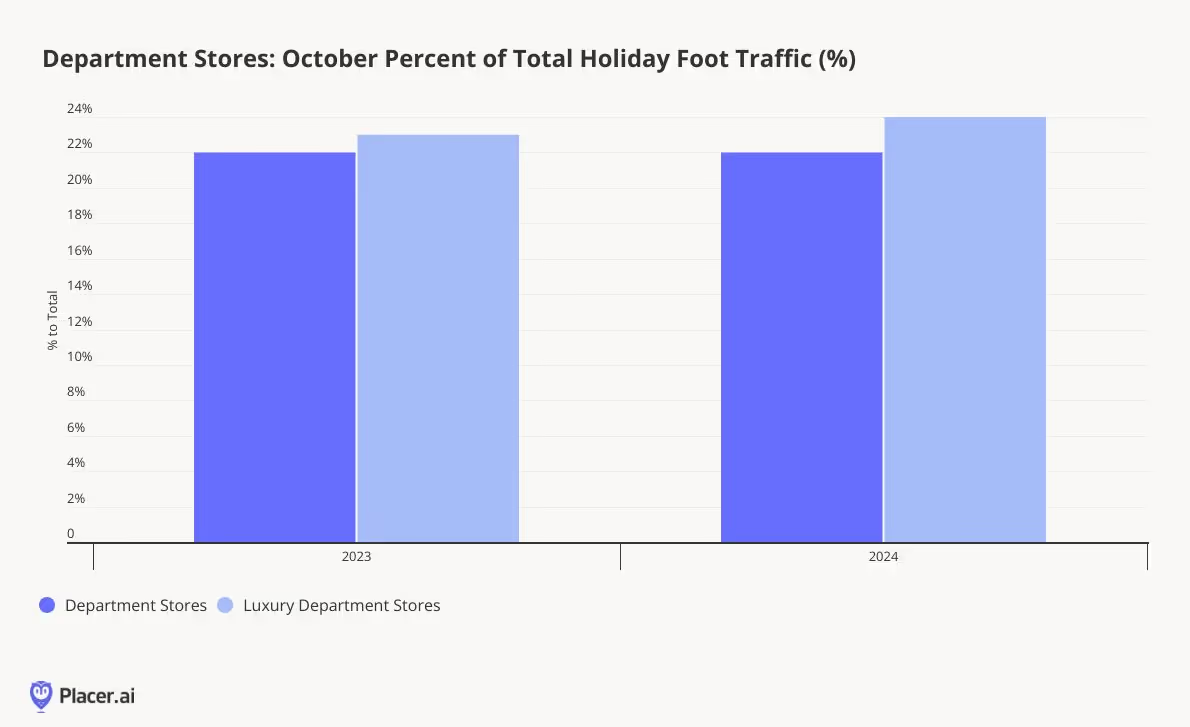
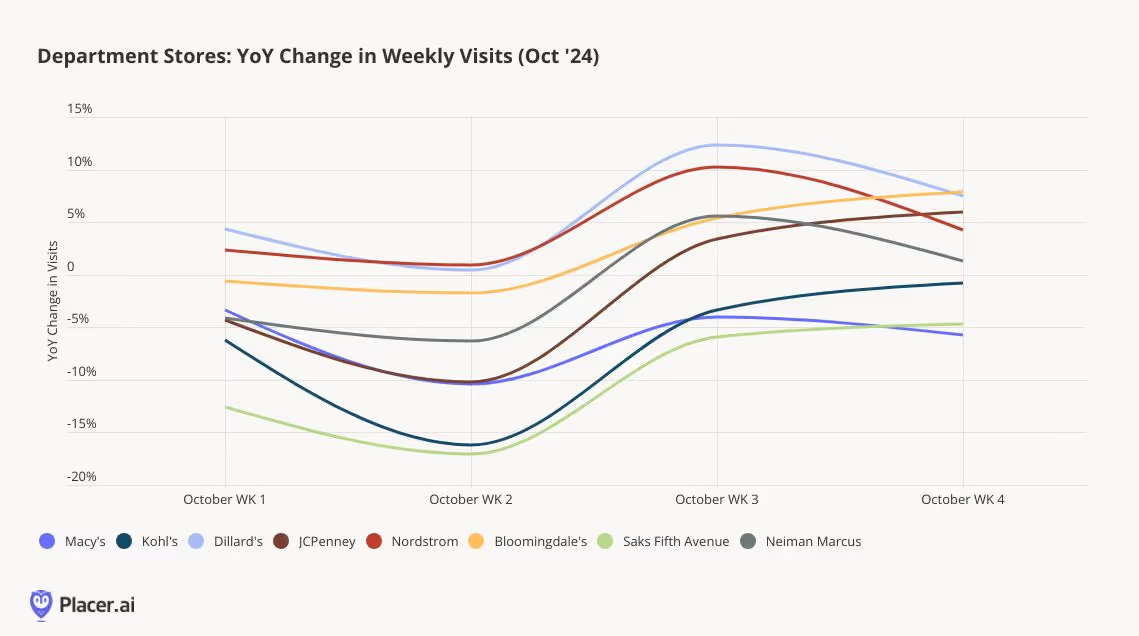
Like luxury retailers, high-end department stores saw narrowing visit gaps during the peak holiday shopping season – with Saks Fifth Avenue seeing a YoY uptick in November 2024, and Neiman Marcus seeing one in December.
In March 2024, YoY traffic turned positive for Nordstrom (3.3%), Bloomingdale’s (3.1%), and Neiman Marcus (3.1%), while Saks Fifth Avenue had just a -0.6% visit gap. And although April 2024 was a challenging month for the retailers, perhaps due in part to the calendar shift mentioned above, all four upscale department stores outperformed the traditional apparel category – another indication that high-end department stores may be poised for a comeback.

Analyzing demographic changes in the captured markets of both luxury brands and high-end department stores indicates that increasingly affluent consumers are the main drivers of visits to the segment. (A chain’s captured market is obtained by weighting each Census Block Group (CBG) in its trade area according to the CBG’s share of visits to the chain – and so reflects the population that actually visits the chain in practice).
Over the last four quarters, visitors to luxury retailers and high-end department stores came from areas with higher median household incomes (HHIs) than in previous years. For example, during the period between Q2 2023 and Q1 2024, the median HHI of Bloomingdale’s captured market was $122.1K, an increase from $119.7K between April 2022 and March 2023, and $117.3K from April 2021 to March 2022.
In the face of recent inflationary pressures, aspirational luxury shoppers (who tend to be slightly less affluent) are likely quicker to adjust their behavior and trade down to more affordable brands. Meanwhile, prestige luxury shoppers – those with the highest incomes – tend to be relatively resilient, and so are able to continue shopping at their favorite luxury brands, driving up the HHI in these retailers’ trade areas.

Luxury retailers and high-end department stores have had recent foot traffic successes, while their clientele has become increasingly affluent. Will these brands continue their upward visit trajectories – and how will they leverage affluent foot traffic going forward?
Visit Placer.ai to find out.

Discretionary retail has faced its fair share of headwinds over the past few years, from pandemic-related restrictions to inflation. And while prices have stabilized, subdued consumer confidence continues to weigh on non-essential segments. But even in this challenging environment, some companies, like Ulta Beauty, are continuing to see visit growth, while others, like Gap Inc. and its portfolio of apparel brands, are making a comeback.
With Q2 2024 well underway, we take a look at the foot traffic patterns for these companies to see how they are faring.
In 2020, Placer.ai predicted that Ulta Beauty would be an unstoppable force in beauty retail – and the chain has impressed ever since. Over the past several years, Ulta has been on a consistent upward visit trajectory, propelled by strong demand for affordable luxuries (the so-called “Lipstick Effect”), and consumer interest in self-care.
And though the pace of Ulta’s tremendous YoY visit growth has moderated somewhat in recent months, the beauty giant continues to thrive – drawing even more visitors in early 2024 than during the equivalent period of last year. Between January and April 2024, YoY visits to the beauty retailer remained consistently elevated, outperforming the wider Beauty & Wellness space.

The fashion segment has experienced rising prices and persistent inflation over the past few years, leading to a new era of discount and thrift shopping. And iconic apparel retailers like Gap Inc – operator of Gap, Old Navy, Athleta, and Banana Republic – have not been immune to the challenges facing the category.
But through a combination of high-profile hirings and revitalized branding efforts, Gap Inc. has been readying itself for a comeback. In Q4 2023, the retailer announced stronger-than-expected results, driven primarily by Gap and Old Navy. And recent foot traffic to the company’s largest brands provides further evidence that its turnaround efforts may be starting to bear fruit.
During the all-important November and December shopping season last year, Gap and Old Navy saw YoY visits hold steady or increase, outpacing the wider Apparel space. In January 2024, visits to the two chains declined in the wake of an Arctic blast that kept many shoppers at home. But in February, Gap enjoyed a 0.7% YoY visit bump, while Old Navy saw just a mild drop – less than that of the overall Apparel category. In March 2024, both Gap and Old Navy enjoyed strong YoY visit growth, far outperforming overall Apparel – likely driven by sales events held by each brand. And though April saw YoY visits decline once again, with the two chains falling behind Apparel, drilling down into weekly data offers a different perspective.

Both Gap and Old Navy started off April with lackluster YoY performance, perhaps due in part to the comparison to an early April 2023 that included Easter weekend. But towards the end of April and beginning of May, Gap and Old Navy’s’ visit gaps narrowed – with some weeks seeing positive YoY visit growth, and with the two chains once again either nearly on par with, or outperforming, overall Apparel.

Gap Inc. itself is bullish about what the next year holds in store, with big names like Zak Posen joining the Gap family in hopes of propelling the company forward. Though it may be premature to declare an end to the troubles that have plagued the clothier in recent years, early 2024 foot traffic provides further evidence that the company is heading in the right direction.
Ulta continues to experience visit growth, highlighting Beauty’s enduring appeal. Meanwhile, Gap and Old Navy are witnessing narrowed visit gaps and some weekly visit growth.
Is the Apparel segment making a comeback? Can the Beauty segment sustain its positive momentum indefinitely?
Visit Placer.ai to keep up to date with the latest retail developments.

We dove into the data to check in with specialty discount chains Ollie’s Bargain Outlet and Five Below. How did they fare in early 2024? And what can the two brands’ recent performance tell us about what lies in store for them in the months ahead?
A quest for bargains and the promise of unexpected finds have kept Discount & Dollar Store shoppers coming so far in 2024. Despite lapping a strong 2023, foot traffic to Ollie’s Bargain Outlet and Five Below remained consistently above last year’s levels between January and April 2024, partly due to the chains’ continued expansions.
Though both chains draw Easter shoppers with special seasonal offerings, Five Below’s primary focus on low-ticket recreational merchandise makes it a natural destination for shoppers eager to fill their baskets with candy and other inexpensive holiday items. And Q1 2024 foot traffic to the chain appeared to be shaped by Easter shopping patterns. The brand’s YoY visits increased significantly in February with the roll-out of holiday wares, and the Saturday before Easter (March 30th, 2024) saw a sizable foot traffic boost that was 38.7% above the chainwide average for Saturdays in Q1 2024 – contributing to the month’s elevated visits overall. This pull-forward in demand, together with the comparison to an April 2023 that included Easter Sunday, at least partially explains Five Below’s more modest visit growth in April.
For both Ollie’s and Five Below, strong traffic since the beginning of the year indicates continued YoY gains may be expected in the months ahead.

In addition to YoY visit growth in the early months of 2024, Ollie’s and Five Below are seeing elevated weekend visits and an increase in longer visits, indicative of a robust treasure-hunting culture that is driving demand.
In Q1 2024, 37.8% of visits to Ollie’s and 37.4% of Five Below’s visits occurred on weekends, while weekend visits accounted for only 32.8% of visits to the wider Discount & Dollar Store category. This is likely due to Ollie’s and Five Below’s growing notoriety as destinations for treasure hunting – a pastime perhaps preferred at the end of the work week when schedules are more flexible.
Meanwhile, the share of visits lasting over 30 minutes in Q1 2024 increased for both brands YoY, even as it slightly declined for the category as a whole. This indicates that shoppers drawn to Ollie’s and Five Below’s recreational vibes spent even more time browsing the aisles in Q1 2024 than they did last year. Ollie’s closeout buying model and shifting array of steeply discounted brand name merchandise is especially conducive to the thrill of the hunt – and the chain saw a remarkable 41.3% of visits lasting more than half an hour in Q1.

Ollie’s Bargain Outlet and Five Below continue to demonstrate their consumer appeal in 2024. As the brands expand, holidays prove to be retail highlights while a culture of treasure hunting has shown its capacity to drive consistent traffic.
For more data-driven retail insights, visit Placer.ai.

In the spirit of retail quarterly earnings season, it has been eye-opening to see the disparity in performances, especially among specialty retailers. This week, Urban Outfitters, Inc. (URBN) reported first quarter earnings, with comparable dollar sales up 4.6%, a strong growth number compared to many in the industry. Urban Outfitters, Inc. benefitted from a diversified retail portfolio, with the growth stemming from its Anthropologie, Free People and Nuuly brands, both in-store and online, while its namesake brand continues to be challenged over the past few years. As far as specialty apparel retailers go, the company has done a fantastic job of creating retail experiences that are unique and irreplaceable for their customers, and finding true competitors of its brands proves difficult.
Looking at Q1 2024 traffic performance, Free People and Anthropologie led the way, echoing the earnings release. Free People visits, excluding FP Movement, grew 8% year-over-year and Anthropologie saw an increase in traffic of 5% year-over-year. Urban Outfitters, on the other hand, actually saw traffic levels beat sales performance, with traffic flat compared to Q1 2023.
Anthropologie, despite retail and economic headwinds, has tightened up its value proposition to consumers and has a clear vision of its target shopper. Using Spatial.ai’s PersonaLive segmentation (as shown below), Anthropologie attracted the most visits from Ultra Wealthy Families in Q1 2024, followed by Young Professionals and Sunset Boomers. Compared to the other portfolio brands, Anthropologie attracts a higher median income consumer and over indexes with more mature consumers, two groups that have higher levels of spending power in today’s economy and haven’t decidedly altered their retail habits as much as middle- and lower-income shoppers. Anthropologie has clearly benefited from the strength of its visitors, and its curated multi-category retail experience that has shielded the chain from the struggles of other home furnishing and apparel retailers. It will be interesting to watch if the brand is able to continue to maintain its success through the remainder of the year if economic conditions become further challenged.
Free People appeals to a consumer somewhat in the middle of both Anthropologie and Urban Outfitters, and has been able to capitalize on Anthropologie’s success and hedge against Urban Outfitters’ struggles. Free People’s design sense makes it a crowd-favorite but also a source for many “dupes” on other retail platforms; however, the influx of similar designs haven’t seen to slow their momentum. FP Movement, the brand’s athleisure line that also has stand alone retail locations, has been another lever for growth. Using Placer.ai to look at three FP movement locations compared to the Free People chain, FP movement grew visits faster than the parent brand, and also had a higher dwell time. Urban Outfitters, Inc. disclosed that dollar sales for Free People were up almost 18% in Q1 2024, but the company doesn't break out sales between FP Movement and Free People. There are some risks with the athleisure market, as brands face softening performance and consumers shift away from more discretionary apparel categories. FP movement has created core and in-demand silhouettes that drive traffic, but with fashion trends, that may not be enough to sustain long-term visit growth.
Finally, there’s the lackluster performance from the namesake brand. Younger adults have so many retail options at their fingertips that retailers who cater to these consumers can often be lost in the shuffle, especially with so much competition coming from online and offline retail. Urban Outfitters long curated a distinct look and feel, as well as a mix of national brands and private labels that differentiated it from competitors; with retailers in similar price bands like Abercrombie & Fitch staging a comeback, Urban Outfitters has lost its footing. Looking into the consumer segments using Spatial.ai’s PersonaLive, Educated Urbanites and Young Professionals top Urban Outfitters segmentation; price-sensitivity could be making younger shoppers more discerning in their apparel purchases. Off-price may also be a factor here and provide higher levels of competition for the customer base. Urban Outfitters holds a lot of brand value, and if the brand is able to right size assortments and value in the short term, there could be upside to bring it closer to its sister brands.
Compared to most of the specialty retail narratives out in the market, Urban Outfitters, Inc. has a lot of positive momentum with a few of its brands. Nuuly, its subscription rental service, was also called out as a positive highlight of the quarter, and learnings about consumer preferences through that service could help to inform the go-forward strategies at Anthropologie, Free People and Urban Outfitters. There is a lot to celebrate as it relates to its discretionary retail fleet, despite the challenges at the namesake brand, and proves that specialty retail that still feels “special” has consumers' lasting attention.

Sports leagues like the NBA, NFL, and MLB boast billion-dollar revenues – and the venues where these games unfold hold significant commercial potential in their own rights. Many stadiums host concerts and other shows in addition to regularly held sporting matches and can accommodate tens of thousands of spectators at once – creating massive retail, dining, and advertisement opportunities.
This white paper analyzes location intelligence metrics for some of the biggest stadiums across the country to reveal the commercial potential of these venues beyond simple ticketing revenue. Where do visitors of various stadiums like to shop? Do specific sporting and cultural events impact the nearby restaurant scene differently? How can stadium operators, local businesses, and advertisers tailor their offerings to a stadium’s particular audience and make the most of the stadium and the space throughout the year?
We take a closer look below.
The three major sports leagues – the National Basketball League (NBA), Major League Baseball (MLB), and the National Football League (NFL) – play at different points of the year, and the number of games each league holds during the season also varies.
MLB leads in game frequency, with each team playing 162 games during the regular season, which runs approximately from April through September. Basketball season is also around six months – roughly from mid-October to mid-April – but each NBA team plays only 82 games a season. And the NFL has both the shortest season – 18 weeks running from early September to early January (with the pre-season starting in August) – and the fewest number of matches per team. Understanding the monthly visitation patterns for the various types of stadiums can help advertisers, stadium operators, and other stakeholders ensure that they are leveraging the full potential of the venue throughout the year.
Unsurprisingly, the sports arenas serving the different leagues see visit spikes during their leagues’ respective season. But comparing visit numbers throughout the year to the average monthly visit numbers for each category in 2023 reveals that the relative visit increases and decreases during the on- and off-season vary for each type of stadium.
MLB stadiums display the steadiest visit strength during the on-season – perhaps due to MLB’s packed game schedule. MLB tickets also tend to be relatively affordable compared to tickets to pro football or basketball matches, which may also contribute to MLB’s consistently strong visit numbers throughout the season. During the MLB off-season, baseball fields – which tend to be uncovered – are relatively empty.
The seasonal visit spike to NBA arenas is less steady. The beginning and end of the season see strong peaks, and visits slow down slightly during the mid-season months of January and February. Visits then drop during the off-season spring and summer, but the off-season visit dip is not as low as it is for MLB fields – perhaps because the NBA arenas’ indoor nature make them suitable locations for concerts and other non-basketball events.
Meanwhile, NFL stadiums see the least dramatic drop in visits during the NFL off-season, as these venues’ enormous size also make them the ideal location for concerts and other cultural events that draw large crowds. These arenas’ strong almost year-round visitation numbers mean that sponsors and advertisers looking to expand beyond sports fans to reach a diverse audience may have the most success with these venues.
Although MLB offers the most budget-friendly outing, combining STI: Popstats demographic metrics with trade area data reveals that MLB stadium visitors reside in higher-income areas when compared with visitors to NBA or NFL stadiums.
Baseball fans tend to be older than fans of the other sports, which could partially explain MLB stadium visitors’ higher household income (HHI). The combination of lower ticket prices, higher median HHI among fans, and many games per season offers baseball stadiums significant opportunities to engage effectively with their fan bases.
But while NBA and NFL stadium attendees may not come from as high-income areas as do MLB stadium visitors, fans of live basketball and football still reside in trade areas with a higher HHI compared to the nationwide median. So by leveraging stadium space, advertisers and other stakeholders can reach tens of thousands of relatively high-income consumers easily and effectively.
Sports fans are known to be passionate, engaged, and willing to spend money on their team – but stadium visitors also shop for non-sports related goods and services. Retailers and advertisers can draw on location analytics to uncover the consumer preferences of stadium visitors and tailor campaigns, sponsorships, and collaborations accordingly.
Visitation data to the top five most visited MLB stadiums during 2023 showed differences between the apparel and sporting goods shopping preferences of the various stadiums’ attendees. While 39.4% of visitors to Truist Park also visited DICK’s in 2023, only 30.8% of Yankee Stadium visitors stopped by the sporting goods retailer in the same period. Similarly, while 29.9% of visitors to Yankee Stadium frequented Kohl’s, that percentage jumped to 47.3% for Busch Stadium visitors.
Harnessing location intelligence to see the consumer preferences of a stadium’s visitor base can help retailers, stadium operators, and even team managers choose partnerships and merchandising agreements that will yield the most effective results.
Sports and snacks go hand in hand – what would a baseball game be without a hot dog or peanuts? But while every stadium likely provides a similar core of traditional game day eats, each venue also offers a unique set of dining options, both on- and off-premise. And by leveraging location analytics to gain visibility into stadium-goers dining habits, stadium operators and local food businesses can understand how to best serve each arena’s audience.
Mapping where stadium visitors dine before and after games can help stakeholders in the stadium industry reach more fans.
The chart below shows the share of visitors coming to a stadium from a dining venue (on the x-axis) or going to a dining venue after visiting the stadium (on the y-axis). The data reveals a correlation between pre-stadium dining and post-stadium dining – stadiums where many guests visit dining venues before the stadium also tend to have a large share of guests going to dining venues after the event. For example, the AT&T Stadium in Arlington, Texas, saw large shares of visitors grabbing a bite to eat on their journey to or from the stadium, while the M&T Bank Stadium in Baltimore, Maryland saw low rates of pre- and post stadium dining engagement.
These trends present opportunities for both local businesses and stadium stakeholders. For example, venues with high dining engagement can explore partnerships with local restaurants, while those with lower rates can build out their in-house dining options for hungry sports fans.
Stadiums looking to enhance their food offerings – or local entrepreneurs thinking of opening a restaurant near a stadium – can also get inspired by stadium visitors’ dining preferences. For example, psychographic data taken from the Spatial.ai: FollowGraph dataset reveals that visitors to MetLife Stadium in East Rutherford, New Jersey have a much stronger preference for Asian cuisine compared to New Jersey residents overall. With that knowledge, the stadium can enhance the visitor experience by expanding its Asian food offerings.
On the other hand, MetLife Stadium goers seem much less partial to Brewery fare than average New Jerseyans, so the stadium operators and restaurateurs may want to avoid offering too many Brewery-themed dining options. Stadium stakeholders can reserve the craft beers for Caesars Stadium, M&T Bank Stadium, and Soldier Field Stadiums, where visitors seem to enjoy artisanal brews more than the average resident in Louisiana, Maryland, and Illinois, respectively.
All of the stadiums analyzed exhibited unique visitor dining tastes, a reminder that no customer or fan base is alike. Aligning on- or off-site dining options with offerings that align with a given customer base’s preferences can improve overall visitor satisfaction and boost revenues.
Zooming in to look at consumer behavior around individual events reveals further variability in dining preferences even among visitors to the same stadium, with different types of events driving distinct dining behaviors.
State Farm Stadium in Glendale, Arizona, is home to the Arizona Cardinals. The stadium hosted the 2023 Super Bowl, but the NFL stadium also acts as a concert venue for acts ranging from Taylor Swift to Metallica. And location intelligence reveals that the dining preferences of stadium visitors vary based on the events held at the venue.
During the Super Bowl, sports bars such as Yard House and Buffalo Wild Wings saw the largest increase in visits compared to the chains’ daily average. A month later, attendees at Taylor Swift's concert gave fried-chicken leader Raising Cane’s a significant boost.
Local restaurants can leverage location analytics to see what types of events are popular with their visitor base and craft collaborations and advertising campaigns that resonate effectively with their patrons.
Sports stadiums and arenas are not just spaces for sports and music enthusiasts to gather; they also offer significant commercial opportunities for the surrounding communities. Stadium operators and local businesses can fine-tune their offerings by utilizing location analytics to better connect with their visitor bases and uncover new retail opportunities.

The dining industry showcased its agility over the past couple of years as it rapidly adapted to shifts in consumer preference brought on by COVID and rising prices. And with a new year around the corner, the pace of change shows no signs of slowing down.
This white paper harnesses location analytics, including visitation patterns, demographic data, and psychographic insights, to explore the trends that will shape the dining space in 2024. Which dining segments are likely to pull ahead of the pack? How are chains responding to changes in visitor behavior? And where are brands driving dining foot traffic by taking advantage of a new advertising possibility? Read on to find out how dining leaders can tap into emerging trends to stay ahead of the competition in 2024.
Comparing quarterly visits in 2023 and 2022 highlights the impact of the ongoing economic headwinds on the dining industry. The year started off strong, with year-over-year (YoY) dining visits up overall in Q1 2023 – perhaps aided by the comparison to an Omicron-impacted muted Q1 2022. And while overall dining growth stalled in Q2 2023, several segments – including QSR, Fast Casual, and Coffee – continued posting YoY visit increases, likely bolstered by consumers trading down from pricier full-service concepts.
Foot traffic slowed significantly in Q3 2023 as inflation and tighter consumer budgets constrained discretionary spending. Overall dining visits fell 2.4% YoY, and full-service restaurants – with their relatively high price point compared to other dining segments – seemed to be particularly impacted by the wider economic outlook. But the data also revealed some bright spots: Fast Casual still succeeded in maintaining positive YoY visit numbers and Coffee saw its Q3 visit grow an impressive 5.4% YoY. As the return to office continues, a pre-work coffee run or lunchtime foray to a fast-casual chain may continue propelling the two segments forward.
Restaurant visitation patterns have evolved over the past few years. Although an 8 PM seating was once the most coveted slot at fine-dining restaurants, recent visitation data suggests that sitting down to dinner earlier is rising in popularity.
But among the QSR segment, the opposite trend is emerging, with late-night visits rising. Analyzing hourly foot traffic to several major QSR chains reveals that the share of visits between 9 PM and 12 AM increased significantly between Q3 2019 and Q3 2023. Even Taco Bell – already known for its popularity among the late-night crowd – saw a substantial increase in late-night visits YoY – from 15.4% to 20.3%.
Who is driving the late night visit surge? One reason restaurants have been expanding their opening hours is to capture more Gen-Z diners, who tend to seek out nighttime dining options. But location intelligence reveals that younger millennials are also taking advantage of the later QSR closing times.
An analysis of the captured market for trade areas of top locations within one of Taco Bell’s major markets – the Chicago-Naperville-Elgin, IL-IN-WI Metropolitan area – reveals a year-over-four-year (Yo4Y) increase in “Singles & Starters.” The “Singles & Starters” segment is defined by Experian: Mosaic as young singles and starter families living in cities who are typically between 25 and 30 years old. As consumers continue to prioritize experiential entertainment and going out with friends, late-night dining may continue to see increased interest from young city-dwellers.
Millennials and Gen-Z consumers aren’t only heading to their favorite fast food joint for a late-night bite – these audience segments are also helping drive visits on the weekends. Smoothie King is one chain feeling the benefits of young, health-conscious consumers.
The chain, which opened in New Orleans, LA, in 1973 as a health food store, has since grown to over 1,100 locations nationwide and is currently expanding, focusing on the Dallas-Fort Worth CBSA. The area’s Smoothie King venues have seen strong visitation patterns, particularly on the weekends – weekend visits were up 3.4% YoY in Q3 2023. The smoothie brand’s trade areas in the greater Dallas region is also seeing a YoY increase in weekend visits from “Young Professionals” – defined by the Spatial.ai PersonaLive dataset as “well-educated young professionals starting their careers in white-collar or technical jobs.”
While some dining chains are appealing to the late-night or weekend crowd, others are driving visits by appealing to sports lovers. How have recent rule changes around student athletes changed the restaurant game, and how can college football teams drive business in their hometowns?
College sports have long been a major moneymaker, with top-tier teams raking in billions of dollars annually. And as of 2021, college athletes can enjoy a piece of the significant fan following of college sports thanks to the change in the NCAA’s Name, Image, and Likeness (NIL) rules, which now allows student athletes to sign endorsement deals.
Since then, multiple restaurants have jumped on the opportunity to partner with student athletes, some of whom have millions of followers on Instagram and TikTok. Chains like Chipotle, Sweetgreen, Slim Chickens, and Hooters have all signed college athletes to various brand deals.
How can brands ensure they partner with athletes their customers will want to engage with? Analyzing a chain’s audience by looking at the interests of residents in a given chain’s trade area can reveal which type of athlete will be the most attractive to each brand’s customer base. For example, data from Spatial.ai: Followgraph provides insight into the social media activity of consumers in a given trade area and can highlight desirable partnerships.
Examining the trade areas of Chipotle, Sweetgreen, Slim Chickens, and Hooters, for instance, reveals that Sweetgreen’s visitors tended to have the largest share of Women’s Soccer followers. Conversely, Sweetgreen’s trade area had lower-than-average shares of College Football Fans or College Basketball Fans, while residents of the trade areas of the other three chains showed greater-than-average interest in these sports. Leveraging location intelligence can help companies choose brand deals that their customers resonate with and find the ideal athletes to represent the chain.
Finding the right college athlete partnership is one way for dining brands to appeal to college sports enthusiasts. But dining chains and venues located near major college stadiums also benefit from the popularity of their local team by enjoying a major game day visit boost.
One of the country’s most popular college football teams, the Ohio State Buckeyes, can draw millions of TV viewers, and its stadium has a capacity of 102,780 – one of the largest stadiums in the country. And while tailgating is a popular activity for Buckeyes fans, nearby restaurants are some of the biggest beneficiaries of the college football craze. Panera experienced a 235.3% increase on game days as compared to a typical day, Domino’s Pizza visits grew by 283.3%, and Tommy’s Pizza, a local pie shop, saw its visits jump by a whopping 600.9%.
This influx in diners also causes a major shift in game day visitor demographics, as revealed by changes in visitors at dining venues located near stadiums of two of the nation’s best college football teams – the Ohio State Buckeyes and Ole Miss Rebels. Based on Spatial.ai: Personalive data for the captured market of these dining venues, game day visitors tended to come from “Ultra Wealthy Families” when compared to visitors during a typical non-game day in September or October.
The analysis indicates that popular sporting events create a unique opportunity for restaurants near college stadiums to attract high-income customers game day after game day, year after year.
While some spend game day tailgating or visiting a college restaurant, others hold a viewing party – with a six-foot submarine. And the sub’s popularity extends beyond Superbowl Sundays. Sandwich chains including Jersey Mike’s, Firehouse Subs, Jimmy John’s, and Subway (recently purchased by the same company that owns Jimmy John’s) have seen sustained YoY increases in visits and visits per venue in the first three quarters of 2023.
Some of the growth to these chains may be related to their affordability, a draw at all times but especially during a period marked by consumer uncertainty and rising food costs. And subway leaders seem to be seizing the moment and striking while the iron is hot – Jersey Mike’s opened 350 stores in 2023 and still saw its YoY visits per venue grow by 6.6%. And Subway reported ten consecutive quarters of positive sales, a promising sign for its new owner.
The love for a healthy, affordable sandwich extends across all income levels, with all four chains seeing a range in their visitors' median household income (HHI). Out of the four chains analyzed, Jersey Mike’s – which has long prioritized a suburban, middle-income customer – had the highest trade area median household income of the four chains at $77.3K/year. Subway, known for its affordability, had the lowest, with $62.9K/year. The variance in median HHI combined with the strong foot traffic growth shows that when it comes to sandwiches, there’s something for everyone.
Persistent inflation and declining consumer sentiment may pose serious challenges for the dining space, but emerging trends are helping boost some restaurants. Customers seeking out a late-night bite drive visits to QSR chains, and health-conscious diners are boosting foot traffic to smoothie bars and sandwich shops. Meanwhile, sports sponsorships and game-day restaurant visits can provide a boost to dining businesses that take advantage of these opportunities.

“Retail media networks have turned retailers into ad moguls. That’s a huge change and nobody yet understands all the implications of it.”
Constantine von Hoffman, MARTECH
Companies operating consumer-facing brick-and-mortar venues traditionally relied on selling goods and services as their primary revenue stream. But recently, leading retailers such as Walmart and Target have begun to leverage their immense store fleet into a powerful advertising platform.
Online retailers have been tapping into the advertising power of their digital sites for years by relying on various automated tools to show third-party advertisements to relevant consumer segments. But now, retailers with a strong offline presence can also leverage physical marketing impressions and focus their campaigns while reaching consumers at the point of purchase. Retailers have long recognized the intent that drives a store visit, and understanding the full value of leveraging that visit to its full extent is an important new frontier.
Major retailers are continuing to see their physical visits outnumber their online ones.
And in spite of the gloomy predictions regarding the future of brick and mortar retail, major retailers are continuing to see their physical visits outnumber their online ones. Monthly numbers of visitors to Walmart and Target significantly outpace the brands’ online reach, according to web data from Similarweb. So although, up until recently, these brands have focused their media placements on their digital channels, it is becoming increasingly clear that these chains’ physical stores hold powerful – and currently untapped – advertising potential.
Online visitor data source: similarweb.com
And with the recent rise in digital advertising costs, retail media networks are becoming more attractive for companies looking to make the most of their ad budget. Retail media networks can also help brands reach rural communities, elderly Americans, and other consumer segments that are currently underserved by digital advertisers.
This white paper explores several retailers on the cutting edge of the retail media network revolution. Keep reading to find out how advertisers can use retail media networks to promote to hard-to-reach consumers, segment their ad spending, and optimize their campaigns.
Residents of rural areas use the internet less frequently, and have lower levels of technology ownership than their urban and suburban counterparts. As a result, companies that stick to digital advertising may have a harder time reaching rural consumers. Brick and mortar retailers popular in smaller markets can fill in the gaps and help brands promote their products and services to this hard-to-reach audience.
Brick and mortar retailers popular in smaller markets can help brands advertise to hard-to-reach audiences.
Dollar General saw significant success over the pandemic, with the current economic climate continuing to benefit the brand. Between January and August 2022, nationwide visits to Dollar General venues were 35.6% higher than they were between January and August 2019, while the number of visitors increased 25.4% in the same period.Visit numbers aggregate the visits to the chain’s various locations in a given period, while visitor numbers track the number of people who enter the brand’s stores.
The company has also been operating a media network since 2018. The Dollar General Media Network (DGMN) enables advertisers to reach Dollar General consumers across the company’s channels to build awareness both digitally and in physical spaces. Advertisers with DGMN can display in-store bollard, blade, and wipe stand signs, security pedestals, basket bottomers, and shelfAdz to deliver in-store messaging from parking lot to purchase. Recently, Dollar General announced that its ad platform was now working with 21 new advertising partners, including Unilever, General Mills, Hershey’s, and Colgate-Palmolive.
Embracing the Power of the Small Market
Advertising partners can leverage the DGMN to promote their goods and services to harder-to-reach consumers.
Dollar General has been serving rural residents for years, with the majority of the company’s stores located in communities with fewer than 20,00 residents. And while the brand is growing nationwide, Dollar General’s strength is particularly evident in small markets – which means that advertising partners can leverage the DGMN to promote their goods and services to harder-to-reach consumers.
Comparing year-over-three-year (Yo3Y) visit change to Dollar General stores in metropolitan and micropolitan core based statistical areas (CBSAs) highlights the company’s success in smaller markets. According to the United States Office of Management and Budget, metropolitan and micropolitan CBSAs have over and under 50,000 residents, respectively. Since January 2022, monthly Yo3Y visit growth to Dollar General venues in select Texas micropolitans has consistently outpaced foot traffic to nearby metropolitan areas. While the Sherman-Denison metro area saw August 2022 foot traffic hit a solid 24.5% increase over August 2019, the Gainesville, Texas micro area – around 35 miles east of Sherman – saw its foot traffic increase 54.5% in the same period.
Dollar General’s presence across a significant number of smaller markets means that advertising partners can use the growing DGMN to increase awareness and drive purchase consideration among these harder-to-reach consumers.
In the digital space, three tech giants – Alphabet (previously Google), Meta (previously Facebook), and Amazon – enjoy over 60% of the digital ad revenue in the United States. This means that companies are competing for impressions on a small number of platforms – and smaller brands geared at specific consumer segments may need to spend significant advertising budgets to outbid the larger players. Retail media networks create additional advertising platforms, and enable advertisers to diversify their ad spend, increase their (physical) impressions, focus on more specialized channels to better reach their audience, and potentially reach customers at their highest point of intent.
Retail media networks create additional advertising platforms and potentially reach customers at their highest point of intent.
Albertsons launched its retail media network, Albertsons Media Collective, in November 2021 with the goal of delivering “digitally native, shopper-centric and engaging branded content to the company’s ever-growing network of shoppers.” Currently, the grocer’s media network is primarily digital, but Albertsons’ head of retail media products Evan Hovorka recognizes the importance of leveraging in-store assets to deliver a unique advertising experience. The company is testing out smart carts that link with “Albertsons for U” loyalty program to display ads to shoppers – and Albertsons is likely to find more ways to reach in-store consumers as it continues to develop its retail media network.
The chain is also one of the most popular grocers nationwide. With the exception of March and April 2022, when inflation and high gas prices temporarily halted growth, the brand’s monthly visits and visitor numbers have consistently exceeded pre-pandemic levels. Monthly visits for Albertsons in August 2022 were up 5.7% and monthly visitors were up 5.4% on a Yo3Y basis. This means that advertisers with Albertsons can increase their reach and grow their physical ad impressions just by displaying their ads in Albertsons locations and tapping into the chain’s growing visitor base.
Looking beyond Albertsons' nationwide average foot traffic trends reveals some important regional differences. Between January and July 2022, visits to the brands increased 4.6% in Wyoming on a Yo3Y basis, while foot traffic to the brand’s locations in Oregon jumped 18.5% compared to January through July 2019. This means that a brand looking to reach consumers in Oregon can contract with Albertsons’ media network to show its ads to a fast-growing pool of visitors.
A larger visitor count translates to an increase in unique ad impressions, while more visits from fewer visitors can drive repeated exposures.
Diving deeper into the data reveals an additional layer of insight. Some states with only moderate visit growth are seeing a surge in visitor numbers, while other states are seeing a drop in visitor numbers but a rise in visits. A larger visitor count translates to an increase in unique ad impressions and more people exposed to the ads, while more visits from fewer visitors translates to more overall impressions that can drive repeated exposure among a smaller group of visitors. So advertisers can use segmented foot traffic data to decide where to focus their marketing depending on the goal of the campaign.
For example, Wyoming's moderate increase in visits hides a significant spike in visitors, which means that advertisers to Albertsons venues in Wyoming can get their impressions before a large number of different potential consumers. Meanwhile, Oregon's 18.5% increase in visits is the result of just a 9.4% increase in visitors – so Albertsons is cultivating an increasingly loyal following in the Beaver State, and the grocer’s advertising partners can expect that the same visitors will be exposed to their brand repeatedly.
So companies that want to increase unique ad impressions and build awareness can advertise to Albertsons customers in Wyoming, where their ads will be seen by a large number of new people. But in Oregon, companies may want to promote a campaign that focuses on moving Albertsons visitors through their funnel.
In order to accurately assess the ad distribution patterns in each location, brands operating retail media networks need to understand both visits and visitors trends in each region and for the chain as a whole.
Advertisers with retail media networks can use foot traffic data to refine their geographic audience by identifying the consumer preferences of a given brick-and-mortar brand on a store or city level.
In August 2020, CVS Pharmacy launched its media network, the CVS Media Exchange (cMx). The company estimates that 76% of U.S. consumers live within five miles of at least one store, and the cMx allows partners to tap into the chain’s reach by giving advertisers access to CVS’ online and offline channels, including in-store ads.
Although CVS has been closing locations recently, the brand is still one of the strongest players in the brick-and-mortar retail space. Its 2022 visit numbers have consistently exceeded pre-pandemic levels nationwide, and data from CVS locations in leading cities shows that its Yo3Y visits per venue and visitor numbers are even higher.
CVS’s nationally distributed fleet means that the brand’s locations in different regions attract distinct consumer bases.
CVS carries a varied product mix of daily essentials in addition to its healthcare offerings, so the brand attracts a wide range of consumer segments. And the chain’s nationally distributed store fleet means that CVS has locations in different regions that attract distinct consumer bases who do not all have the same lifestyle preferences. By using foot traffic data to understand the regional consumer preferences of CVS consumers beyond the store, advertising partners can refine their market and make the most of the cMx.
Different regions have different fitness cultures. Chains catering to health-conscious consumers can use retail media networks and foot traffic data to focus their efforts on areas where inhabitants exhibit a high demand for regular workouts.
Analyzing cross-visit data from CVS locations across five major urban centers in the U.S. shows that the percentage of those who also visited gyms or fitness studios varied significantly across each DMA. In the New York area, 62.7% of those who visited CVS in Q2 2022 also visited a fitness venue during that period, in contrast with only 38.0% of CVS visitors around Dallas-Ft. Worth, TX in the same period. This information can help advertising partners in the health and wellness space decide where to place their campaigns.
Looking at cross-visit data on a city-wide level can provide a sense of the consumer culture in each area, but advertisers that dive into foot traffic data for individual stores can refine their messaging even further.
On average, 43.8% of CVS visitors in the Chicago DMA also visited a gym in Q2 2022. But drilling down to the top CVS locations in the city reveals that the rate of cross-visits varies significantly from location to location. Both the E 53rd Street and W 103rd Street locations have a relatively high share of visitors who visit fitness locations – 52.5% and 49.2%, respectively. Meanwhile fitness cross-visits were at just 36.6% for the South Stony Island Avenue location. Advertisers promoting health and wellness related products and services may want to focus on the 103rd St. and 53rd St. CVS locations.
Diving into a customer’s behavior and preferences outside the store can help retail media network operators and advertising partners find the areas and locations best suited for each type of ad.
Cross-visit data is one way to identify consumer preferences beyond the physical store. Advertisers can also analyze digital preferences of offline visitors to focus their marketing on the most appropriate locations.
Advertisers can also analyze digital preferences of offline visitors to focus on the most appropriate locations.
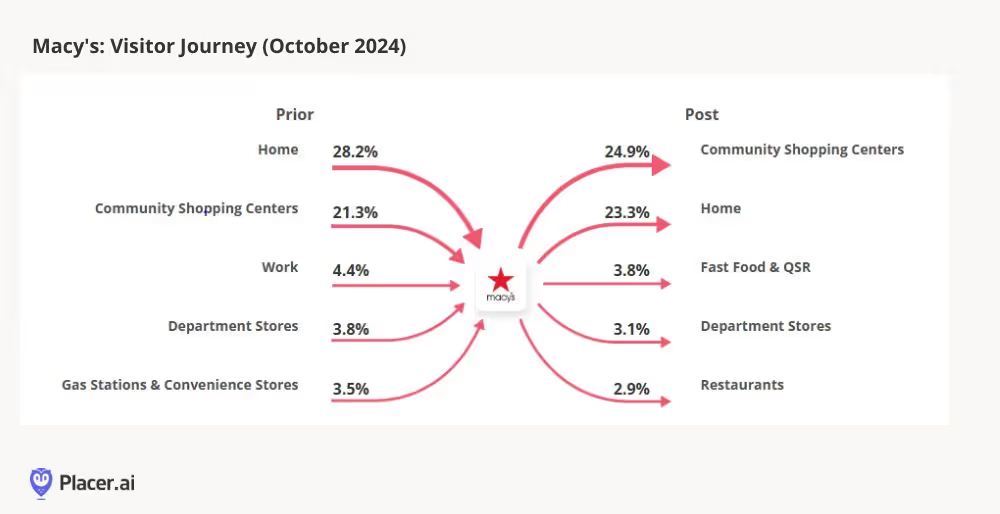
Over the past couple of years, Macy’s has been finding ways to reinvent itself and optimize its store fleet – and foot traffic data indicates that the retailer's efforts are paying off. In the first half of 2022, Macy’s exceeded its H1 2021 overall visit and average visits per venue numbers and posted a positive year-over-year (YoY) visitor count. In Q2 2022, despite the wider economic challenges, Macy’s visitors, visits, and average visits per venue saw YoY increases of 3.4%, 4.0% and 9.9% increases.
Like CVS, Macy’s launched its media network in August 2020, and by February 2021 the Macy’s Media Network was already generating $35 million annually. In addition to advertising on the company’s digital channels, Macy’s also offers partners the use of in-store screen displays, package inserts, and the brand’s iconic billboard in New York City’s Herald Square.
Advertisers can optimize their advertising by analyzing the differences in consumer profiles between a chain’s various stores.
Advertisers that understand the differences in consumer profiles between a chain’s various stores can optimize their advertising efforts. While looking at variations in cross-visit trends is one way to identify interested brick-and-mortar consumers, diving into visitor’s digital behavior and online preferences can also provide valuable insights.
Tools such as Spatial.ai’s GeoWeb, which tracks online engagement with various trends and topics by neighborhood, can reveal how offline consumers behave online. An index score of 100 indicates that consumers in an area have an average interest in a given topic, while scores over (or under) 100 indicate that consumers are more (or less) interested in the topic when compared to the national average interest.
We used Spatial.ai’s GeoWeb tool to analyze the online behavior of consumers in the True Trade Areas (TTA) of five Macy’s locations in the Philadelphia, PA DMA – and found that residents of the different TTAs stores showed differing indexes. For example, the Macy’s in the King of Prussia Mall location showed a high index of 161 in “Men’s Business Clothes Shoppers,” while the Cottman Ave. location had an only slightly above average index of 102. This means that advertisers of men’s business apparel may see more results by focussing their advertising on visitors to the King of Prussia location.
Advertisers that use retail media networks do a lot more than just reach in-store shoppers. Stores exist in the physical world, so advertisers can also reach passers-by through physical venues’ windows, blade signs – or in the case of Macy’s, through its Herald Square Billboard. Here too, foot traffic data can reveal the consumer preferences of people walking by the sign.
We looked at the online behavior in the TTA around the traffic pin on the corner where the billboard is located (Broadway/6th Ave and 34th Street in New York) to understand which advertisers might benefit most from a billboard at that location. While the “Men’s Business Clothes Shoppers” category was over-indexed compared to the national average, as would be expected in midtown Manhattan, “Women’s Fashion Brand Shoppers” had an even higher index. “Gen Z Apparel Shoppers” were over-represented, but “Leather Good Shoppers” and ”Athleisure Shoppers” were under-represented. So a brand that carries both elegant wear and athleisure may want to display its less casual clothing lines on the billboard.
Understanding how consumers behave both on and offline can help retail media networks and advertising partners promote their campaigns most effectively.
To transform their physical store fleet into a media network, brands and companies need to analyze the reach of each venue. The same chain operating in multiple regions may be reaching different types of consumers in each area, or even in various neighborhoods of the same city. These distinct audiences may have contrasting products, brands, and shopping preferences.
Retailers that leverage their brick and mortar presence can transform the advertisement space as it exists today.
Retailers can also partner with advertising partners who wish to promote goods and services not carried by the retailer. For this to succeed, the retailer will need to analyze how consumers behave outside of its stores. Understanding what characterizes the overall behavior of consumers in each locations’ trade area will allow the retailer to reach a larger audience and truly compete with the digital giants. And by leveraging their brick and mortar presence, brick and mortar retail can transform the advertisement space as it exists today.