.png)
.png)

.png)
.png)

%20(3).avif)
In April 2026, Home Depot's five-day return-to-office mandate took effect for corporate employees – the latest addition to a growing list of major employers requiring more in-person presence. What does the latest data reveal about the pace of recovery on the ground?
Nationwide office visits landed 29.1% below April 2019 levels in April 2026 – a slight improvement compared to April 2025. While this marks continued progress, the pace of recovery was more measured than in March, which saw a 4.2 percentage point gain when controlling for the number of working days. (April 2025 and April 2026 had the same number of working days, offering a clean basis for comparison).
Alongside the growing wave of mandates, a survey from MyPerfectResume early this year found that just 7% of employees would quit outright over a mandatory RTO policy in 2026 – down from 51% in January 2025. The shift reflects a labor market that has continued to soften, leaving workers with less leverage to push back on policies they might have resisted just a year ago.
On the other side of the ledger, rising gas prices introduced a meaningful counterweight in April, with the national average surpassing $4.00 per gallon for the first time since 2022. For daily commuters already reassessing the cost of in-office work, a jump of more than $1.00 per gallon in a single month is a significant headwind – and likely one factor behind the slower pace of gains.
Looking across eleven major office markets, nearly all posted modest YoY visit growth, led again by West Coast hubs Los Angeles and San Francisco. Once viewed as a persistent laggard, San Francisco’s AI-powered recovery has helped it avoid the bottom spot for several months running. And as the city’s narrative continues shifting from “doom loop” to “boom loop,” it is likely to keep gaining ground in the months ahead.
Denver, on the other hand, finished last in April across both measures – down 45.3% versus April 2019 and 1.1% from a year ago. With one of the most remote-friendly labor markets in the country and downtown office vacancy still hovering around 38%, the city is increasingly leaning on alternative strategies such as office-to-residential conversions to revive its urban core. Still, prime and Class A buildings remain a bright spot, as employers look to draw workers back with higher-quality spaces and perks rather than mandates alone – and as these efforts gain traction, Denver could begin to narrow the gap.
April’s data reinforces a familiar theme: The return to office remains non-linear, marked by steady but uneven progress. Mandates continue to accumulate and employer leverage has strengthened compared to last year, helping push attendance higher. But rising gas prices are adding friction – and the gap between the nation’s strongest and weakest office markets remains wide.
For more data-driven RTO reports follow Placer.ai/anchor.
%20(1).avif)
Location intelligence for Walmart and Target highlights two distinct storylines in the superstore space – one defined by sustained momentum, and the other by the early stages of a rebound.
Over the past several months, Walmart has recorded consistent year-over-year (YoY) visit growth, with same-store visits closely tracking overall traffic – suggesting that gains are being driven primarily by existing locations rather than new store openings. This trend aligns with the company’s previously reported transaction growth, reinforcing the strength of underlying demand and serving as a positive signal as Q2 2026 progresses.
Target, on the other hand, entered 2026 under pressure, as visits trailed prior-year levels in both November and December 2025 – partly reflecting continued softness in discretionary categories, which represent a significant portion of its business.
January 2026, however, appeared to mark the beginning of a notable shift, with both overall visits and same-store visits stabilizing. The months that followed brought a meaningful traffic rebound, indicating that February’s positive sales trends may have continued, and new CEO Michael Fiddelke’s turnaround strategy may be bearing fruit. These improvements are particularly noteworthy in light of ongoing weakness in consumer sentiment and the impact of energy price hikes.
An analysis of visits to both brands by day of week adds further context to their recent performance. At Walmart and Target alike, weekday visits rose sharply YoY in Q1 2026 – marking a clear improvement for both retailers – while weekend visits remained essentially flat YoY.
For Target, this stabilization in weekend visits is notable, as prior declines had weighed on overall performance. This matters because weekends tend to capture more discretionary browsing and higher-margin categories that are central to Target’s model.
At the same time, with non-essential spending under pressure, growth anchored in steady weekday demand – reflecting routine, need-based shopping trips – suggests that both brands are reinforcing their roles as essential retail destinations. A measured, but steady, start to 2026.
AI-powered location intelligence indicates that Walmart continues to benefit from steady, need-based demand, while Target appears to be regaining traction after a softer period. Whether Target can build on this early momentum and translate it into sustained growth may be one of the more closely watched dynamics in the sector in the months ahead.
For updates, visit Placer.ai/anchor.
Placer.ai leverages a panel of tens of millions of devices and utilizes machine learning to make estimations for visits to locations across the US. The data is trusted by thousands of industry leaders who leverage Placer.ai for insights into foot traffic, demographic breakdowns, retail sale predictions, migration trends, site selection, and more.
.avif)
We're living through one of the most consequential technology shifts of our lifetimes. Generative AI is reshaping how people analyze information, make decisions, and do their work at a pace that would have seemed implausible only a few years ago. For industries like ours, where professionals rely on data to make high-stakes decisions about the physical world, the opportunity is especially exciting. Insights that once took weeks can now surface in minutes. Analytical workflows that once required specialized training can become accessible to anyone.
But that opportunity comes with real responsibility. The same capabilities that make GenAI so powerful also introduce risks such as bias, accuracy, privacy, and misuse - and those risks compound when the underlying technology is moving faster than the norms and regulations around it. The companies building with AI today are, in many ways, writing the operating rules in real time. How we choose to do that matters.
At Placer, we want to be clear about how we choose to do it. Placer doesn't build its own large language models (LLMs). Instead, we use well-established, trusted models from leading providers - the same foundation models that power the most widely adopted AI tools in the enterprise today. That's a deliberate choice. Our value to customers comes from the depth and quality of our data and the analytical expertise built around it, not from reinventing general-purpose AI infrastructure.
But not building the models ourselves doesn't let us off the hook for how we use them. If anything, it raises the bar. When we embed GenAI into our platform, whether as an analytical assistant, an automated summary, or a future agent that helps professionals move faster through their workflows, our customers trust us with the outcome. They're trusting us to pick the right models, apply the right guardrails, protect their data, and be transparent about what the technology is and isn't doing.
That's why we're publishing our Responsible AI Principles today. They're clear, concise, and they reflect how we actually operate.
The four Responsible AI principles address the issues we believe matter most to the professionals who rely on Placer every day:
Fairness and bias mitigation. AI systems can reflect and amplify existing biases in their training data. Our core defense is something we've been doing since long before GenAI: continuously validating our models, monitoring our AI practices and de-biasing outputs where appropriate.
Transparency and accountability. When we use GenAI in customer-facing features, we say so. We build feedback mechanisms into the product and treat that feedback as a real input to how the system evolves.
Privacy by design. Our AI tools are built to identify patterns about places and brands, not individuals. The same strict privacy measures that govern the rest of the Placer platform apply to every new GenAI feature we ship.
Security and safety. We are responsible custodians of our customers' data and are committed to safeguarding its integrity using industry leading standards.
We've also published a clear statement on how Placer's GenAI capabilities may be used and what restrictions we apply. These aren't new restrictions; they extend the responsible-use commitments that have always governed how our data can be used.
We're excited about the era of GenAI and about the value these new capabilities will create for our customers. The AI principles we're publishing are part of a broader effort across the company that’s grounded in a simple idea: trust isn't something we claim once and move on from. It's something we earn in every feature we ship.
.avif)
April 2025 set a high bar for movie theater performance, with A Minecraft Movie (April 4) and Sinners (April 18) driving significant spikes in foot traffic. Against this strong comparison, year-over-year (YoY) theater visits trended negative through much of April 2026. This followed a stronger March 2026, when releases like Scream 7 and Project Hail Mary – and easier comparisons – helped sustain significant YoY traffic gains
While the highly anticipated The Devil Wears Prada 2 (released May 1) did not generate a meaningful YoY uplift – given the difficult April 2025 comparison – it appears to have helped stabilize visitation trends, halting the declines seen in prior weeks.
Overall, the data reinforces that theater traffic remains highly blockbuster-driven, with consumers still willing to return to theaters when content feels like a must-see experience. With a slate of major releases ahead – including Star Wars: The Mandalorian and Grogu in late May and Toy Story 5 in mid-June – the sector is likely to see renewed spikes in visitation tied to tentpole premieres.
For more data-driven consumer insights, visit placer.ai/anchor.
Placer.ai leverages a panel of tens of millions of devices and utilizes machine learning to make estimations for visits to locations across the US. The data is trusted by thousands of industry leaders who leverage Placer.ai for insights into foot traffic, demographic breakdowns, retail sale predictions, migration trends, site selection, and more.
%20(1).avif)
April data indicates positive momentum for the mall sector, with year-over-year (YoY) traffic increases across all three formats analyzed – indoor malls, open-air shopping centers, and outlet malls. This performance is particularly notable given the strong April baseline last year, when traffic rose between 3.7% and 4.3% across formats compared to April 2024.
Open-air centers came out on top, extending a trend in place since December 2025, with visits rising 3.5% YoY. This marks a return to the top growth position after ceding the lead to indoor malls for much of 2025. Indoor malls followed with a 2.2% increase, while outlet malls lagged behind, posting a modest 0.5% YoY gain in April 2025 – potentially reflecting greater sensitivity to elevated gas prices in recent weeks.
At the same time, the average visit duration declined YoY, with all formats experiencing a shift toward shorter visits (under 30 minutes) and a corresponding drop in longer visits (45+ minutes).
This divergence between rising traffic and shorter dwell times suggests that a growing share of consumers are engaging in more mission-driven trips – visiting with a specific purpose in mind rather than for extended browsing. As a result, malls may be seeing more targeted, efficiency-oriented behavior that could concentrate spend within fewer stores per trip.
Still, this shift does not signal a wholesale move away from malls as destinations: across formats, over 40% of visits continue to last more than 60 minutes, indicating that a significant segment of consumers remains engaged in longer, more experiential visits even as quick trips become more prevalent.
April’s data suggests that malls are evolving to meet a wider range of consumer needs. The combination of rising traffic and varied visit lengths suggests that malls are successfully functioning both as convenient, mission-driven retail hubs and as destinations for longer, experiential outings. This dual role may ultimately prove to be a strength, enabling operators and tenants to capture multiple trip types and occasions. If sustained, these trends position the sector for continued resilience, with opportunities to further optimize tenant mix, merchandising strategies, and on-site experiences to align with increasingly dynamic consumer behavior.
Placer.ai leverages a panel of tens of millions of devices and utilizes machine learning to make estimations for visits to locations across the US. The data is trusted by thousands of industry leaders who leverage Placer.ai for insights into foot traffic, demographic breakdowns, retail sale predictions, migration trends, site selection, and more.
.avif)
The home improvement category has faced sustained headwinds in recent years – from elevated mortgage rates to sluggish existing-home sales and a consumer base hesitant to take on major remodeling projects. But after a prolonged stretch of year-over-year (YoY) visit declines, both Home Depot and Lowe’s have returned to growth – and the foot traffic data suggests this shift is more than just a seasonal uptick.
Both home improvement leaders closed Q1 2026 with YoY visit gains – Home Depot up 1.9% and Lowe’s up 2.0% – building on the stabilization seen in Q4 2025. This improvement aligns with their latest financial results: Home Depot reported U.S. comparable sales growth of 0.3%, while Lowe’s posted a stronger 1.3%. And for both chains, the return to positive territory suggests a long-awaited recovery may finally be underway.
Monthly data also suggests that while inclement weather contributed to the segment's strong performance in January, the underlying recovery is genuine. Home improvement benefits from unusual weather events, and January's strong gains for both chains – Home Depot +2.5%, Lowe's +3.9% – were partly fueled by Winter Storm Fern, which impacted communities across more than thirty states. But the momentum carried into February, and while growth moderated in March – and for Home Depot again in April – neither brand slipped into negative territory.
That resilience is an encouraging signal for the category during the critical spring home improvement season, particularly given renewed headwinds like rising gas prices and softening consumer sentiment. Lowe's stronger performance in April 2026, supported by easier comparisons, may also reflect its greater exposure to DIY customers tackling smaller repairs and at-home projects as consumers redirect spending closer to home.
Interest rates remain elevated and the housing market sluggish – but those same forces may now be working in the category's favor, as homeowners staying put begin to tackle a growing backlog of deferred repairs and maintenance. The bigger question is whether that momentum eventually unlocks the large discretionary projects both retailers say consumers are still holding back on – especially amid continued tariff uncertainty and elevated prices at the pump.
For more data-driven retail insights, follow Placer.ai/anchor.
Placer.ai leverages a panel of tens of millions of devices and utilizes machine learning to make estimations for visits to locations across the US. The data is trusted by thousands of industry leaders who leverage Placer.ai for insights into foot traffic, demographic breakdowns, retail sale predictions, migration trends, site selection, and more.

The COVID-19 pandemic – and the subsequent shift to remote work – has fundamentally redefined where and how people live and work, creating new opportunities for smaller cities to thrive.
But where are relocators going in 2024 – and what are they looking for? This post dives into the data for several CBSAs with populations ranging from 500K to 2.5 million that have seen positive net domestic migration over the past several years – where population inflow outpaces outflow. Who is moving to these hubs, and what is drawing them?
The past few years have seen a shift in where people are moving. While major metropolitan areas like New York still attract newcomers, smaller cities, which offer a balance of affordability, livability, and career opportunities, are becoming attractive alternatives for those looking to relocate.
Between July 2020 and July 2024, for example, the Austin-Round Rock-Georgetown, TX CBSA, saw net domestic migration of 3.6% – not surprising, given the city of Austin’s ranking among U.S. News and World Report’s top places to live in 2024-5. Raleigh-Cary, NC, which also made the list, experienced net population inflow of 2.6%. And other metro areas, including Fayetteville-Springdale-Rogers, AR (3.3%), Des Moines-West Des Moines, IA (1.4%), Oklahoma City, OK (1.1%), and Madison, WI (0.6%) have seen more domestic relocators moving in than out over the past four years.
All of these CBSAs have also continued to see positive net migration over the past 12 months – highlighting their continued appeal into 2024.
What is driving domestic migration to these hubs? While these metropolitan areas span various regions of the country, they share a common characteristic: They all attract residents coming, on average, from CBSAs with younger and less affluent populations.
Between July 2020 and July 2024, for example, relocators to high-income Raleigh, NC – where the median household income (HHI) stands at $84K – tended to hail from CBSAs with a significantly lower weighted median HHI ($66.9K). Similarly, those moving to Austin, TX – where the median HHI is $85.4K – tended to come from regions with a median HHI of $69.9K. This pattern suggests that these cities offer newcomers an aspirational leap in both career and financial prospects.
Moreover, most of these CBSAs are drawing residents with a younger weighted median age than that of their existing residents, reinforcing their appeal as destinations for those still establishing and growing their careers. Des Moines and Oklahoma City, in particular, saw the largest gaps between the median age of newcomers and that of the existing population.
Career opportunities and affordable housing are major drivers of migration, and data from Niche’s Neighborhood Grades suggests that these CBSAs attract newcomers due to their strong performance in both areas. All of the analyzed CBSAs had better "Jobs" and "Housing" grades compared to the regions from which people migrated. For example, Austin, Texas received the highest "Jobs" rating with an A-, while most new arrivals came from areas where the "Jobs" grade was a B.
While the other analyzed CBSAs showed smaller improvements in job ratings, the combination of improvements in both “Jobs” and “Housing” make them appealing destinations for those seeking better economic opportunities and affordability.
Young professionals may be more open than ever to living in smaller metro areas, offering opportunities for cities like Austin and Raleigh to thrive. And the demographic analysis of newcomers to these CBSAs underscores their appeal to individuals seeking job opportunities and upward mobility.
Will these CBSAs continue to attract newcomers and cement their status as vibrant, opportunity-rich hubs for young professionals? And how will this new mix of population impact these growing markets?
Visit Placer.ai to keep up with the latest data-driven civic news.

Convenience stores, or c-stores, have been one of the more exciting retail categories to watch over the past few years. The segment has undergone significant shifts, embracing more diverse offerings like fresh food and expanded dining options, while also exploring new markets and adapting to changing consumer needs. We looked at the recent foot traffic data to see what this category's successes reveal about the current state of brick-and-mortar retail.
Convenience stores are increasingly viewed not only as places to fuel up, but as affordable destinations for quick meals, snacks, and other necessities. And analyzing monthly visits to the category shows that it is continuing to benefit from its positioning as a stop for food, fuel, and in some cases, tourism.
Despite lapping a strong H1 2023, visits to the category either exceeded last year’s levels or held steady during all but one of the first eight months of 2024 – highlighting the segment’s ongoing strength. Only in January 2024 did C-stores see a slight YoY dip, likely reflecting a weather-induced exaggeration of the segment’s normal seasonality.
Indeed, examining monthly fluctuations in visits to c-stores (compared to a January 2021 baseline) shows that foot traffic to the category tends to peak in summer months – perhaps driven by summer road trips and vacations – and slow down significantly in winter. Given summer’s importance for convenience stores, the category’s August YoY visit bump is a particularly promising indication of c-stores’ robust positioning this year.
While some C-store chains, like 7-Eleven, have a nationwide presence, others are concentrated in specific areas of the country. But as the popularity of C-stores continues to grow, regional chains like Wawa, Buc-ee’s, and Sheetz are expanding into new territories, broadening their reach.
Wawa, a beloved brand with roots in Pennsylvania, has become synonymous with its fresh sandwiches, coffee, and a highly loyal customer base. Wawa has been a major player in the c-store space in recent years, with a revamped menu driving ever-stronger foot traffic to its Mid-Atlantic region stores. Between January and August 2024, YoY visits to the chain were mostly elevated. And the chain is now venturing into states like Florida – where its store count has grown significantly over the past few years – as well as Georgia and Alabama.
Meanwhile, Texas favorite Buc-ee’s, though known for its enormous stores and mind boggling array of dining options, has a relatively small footprint – but that might be changing. The chain, which also outpaced its already-strong 2023 performance this year, is opening locations in Arkansas and North Carolina, further building on its reputation as a destination for travelers. And Sheetz, another regional chain with a strong presence in Pennsylvania, is also expanding, with plans to open locations in Southern states like North Carolina and Tennessee.
This trend toward regional expansion offers significant opportunities for growth, not only by increasing store count, but also by reaching new consumer bases and target audiences. Customer behavior differs between markets – and by expanding into new areas, c-stores can tap into unique local visitation patterns.
One metric that highlights local differences in consumer behavior is dwell time, or the amount of time a customer spends inside a convenience store per visit. In some regions, visitors tend to move in and out quickly, while in others, customers linger for longer periods of time.
Analyzing convenience store dwell times by state highlights substantial differences in visitor behavior. During the first eight months of 2024, coastal states (with the exception of Oregon) tended to see shorter average dwell times (between 7.5 and 11.8 minutes). On the other hand, in states like Wyoming, Montana, and North Dakota, average dwell times ranged between 21.2 and 28.2 minutes.
Interestingly, the states with the longest dwell times also have some of the highest percentages of truck traffic on interstate highways – suggesting that these longer stops are perhaps made by long-haul truckers looking for a place to shower, relax, and grab a bite to eat.
Even as regional favorites expand their reach, nationwide classic 7-Eleven is taking steps to further cement its growing role as a prime grab-and-go food and beverage destination. And like other dining destinations, the chain relies on limited-time offers (LTOs) to fuel excitement – and visits.
One of the most iconic, and beloved c-store LTOs is 7-Eleven’s Slurpee Day, which falls each year on July 11th. The event, during which all 7-Eleven locations hand out free slurpees, tends to drive significant upticks in foot traffic – and this year was no exception. Visits to the convenience store jumped by a whopping 127.3% on July 11th, 2024 relative to the YTD daily visit average – proving that good deals will bring customers in the door.
The convenience store sector continues building on the impressive growth seen in 2023. As many chains double down on expanding both their regional presence and their offerings, will they continue to drive growth in the coming years?
Visit Placer.ai to keep up with the latest data-driven convenience store updates.
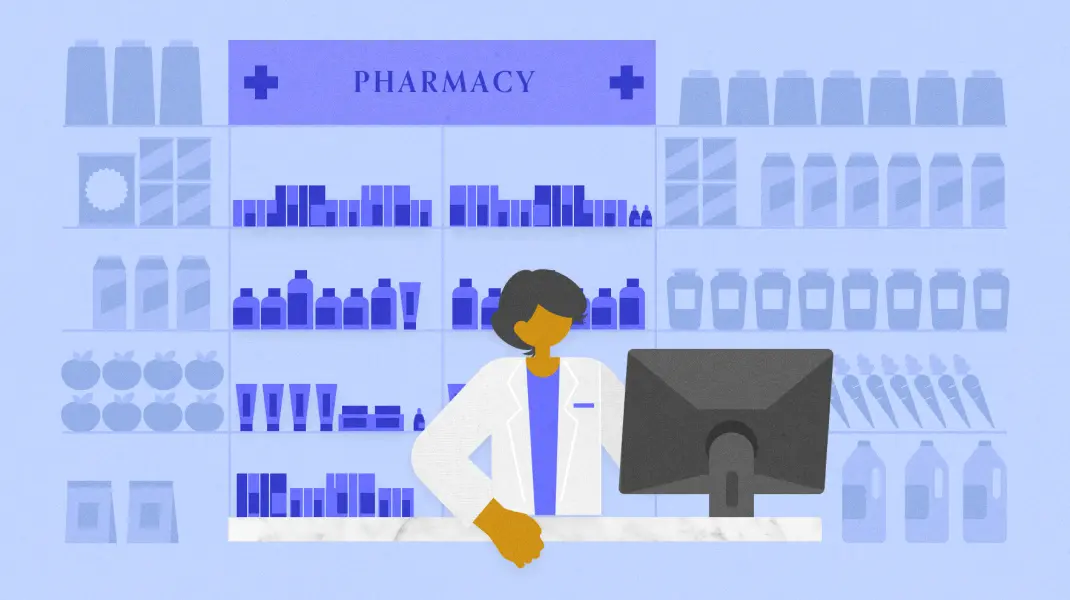
Grocery chains in the United States are increasingly investing in on-site healthcare clinics, transforming their stores into hubs for both food and wellness. While grocery stores have long featured pharmacies and some basic healthcare services like vaccinations, recent years have seen a shift towards more extensive healthcare offerings.
Today, many grocery stores offer a range of services – from primary and urgent care to dental and mental health care. In addition to providing an important community service, grocery-anchored healthcare clinics can boost foot traffic at chains, help health providers reach more patients, and allow shoppers to manage their health and home needs in one convenient trip.
This white paper examines the impact these in-store clinics have on grocery chain visitation patterns and trade area characteristics. Are shoppers more or less likely to make repeat visits to grocery stores with healthcare services? And how does the addition of a clinic affect the demographic profile of a grocery store’s captured market? The report examines these questions and more, offering insights for stakeholders across the grocery and healthcare industries.
Analyzing foot traffic to grocery stores with and without in-store clinics shows the positive impact of these services: Across chains, locations with on-site healthcare offerings drew more visits in H1 2024 than their chain-wide averages.
The Kroger Co., which operates numerous regional banners as well as its own eponymous chain, has been a leader in in-store healthcare services since the early aughts. The company introduced its in-store medical center, The Little Clinic in 2003 – and today operates over 225 Little Clinic locations across its Kroger banner, as well as regional chains Dillons, Jay C Food Stores, Fry’s, and King Soopers.
And in H1 2024, the eight Dillons locations with clinics saw, on average, 93.0% more visits per location than the chain’s banner-wide average. Jay C, which offers two in-store clinics, also saw visits to these venues outpace the H1 2024 banner-wide average by 92.9%. For both chains, relatively small overall footprints may contribute to their outsize visit differences: Indiana-focused Jay C operates just 22 locations, all in the Hoosier State, while Kansas-based Dillons has some 64 locations.
But similar patterns, if somewhat less pronounced, could be observed at Kroger (43.0%), Fry’s (19.2%), and King Soopers (16.5%) – as well as at H-E-B (14.5%), which boasts its own expanding network of in-store clinics.
Analyzing the trade areas of grocery stores with healthcare clinics shows that these services tend to draw more affluent visitors from within the stores’ trade areas.
For some chains, including King Soopers, H-E-B, and Jay C, the clinics are positioned to begin with in areas serving higher-income communities. The median household income (HHI) of King Soopers’ in-store clinic’s potential markets, for example, came in at $92.3K in H1 2024 – significantly above the chain’s overall potential market median HHI of $88.1K. Similarly, the potential markets of H-E-B and Jay C Food Stores with clinics had higher median HHIs than the chains’ overall averages.
And for all three chains, stores with clinics tended to attract visitors from captured markets with even higher median HHIs – showing that within these affluent communities, it is the more well-to-do customers that tend to frequent these venues. (A chain or store’s potential market is obtained by weighting each CBG in its trade area according to the size of the population – thus reflecting the general composition of the community it serves. A chain or store’s captured market, on the other hand, is obtained by weighting each CBG according to its share of visits to the business in question – and thus represents the population that actually visits it in practice.)
Other brands, including Fry’s, Kroger, and Dillons, have positioned clinics in stores with potential market median HHIs slightly below chain-wide averages. But within these markets, too, it is the more affluent consumers that are visiting these stores, pushing up the median HHI of their captured markets.
These patterns highlight that, for now, grocery store clinics tend to attract consumers on the upper ends of local income spectrums. This information can be utilized by healthcare professionals and grocery store owners to pinpoint neighborhoods that may be open to grocery-anchored clinics, or to take steps to increase penetration in other areas.
Supermarket giant Kroger is a major player in the world of grocery-anchored healthcare, offering visitors access to pharmacies, clinics, and telehealth options via its grocery stores. What impact has the company’s embrace of healthcare had on visits and loyalty?
An analysis of household compositions across the potential and captured markets of Kroger-owned stores with and without Little Clinic offerings suggests that families with children are extremely receptive to these services.
In H1 2024, Kroger, King Soopers, Fry’s, Jay C, and Dillons all featured captured markets with higher shares of STI: PopStats’ “Households With Children” segment than their potential ones – highlighting the chains’ appeal for families. But the share of parental households in those stores with Little Clinics jumped significantly higher for all five banners.
The share of families with children in King Soopers’ overall captured market stood at 28.3% in H1 2024, higher than the 27.2% in its potential one. But the households with children in the captured markets of King Soopers locations with Little Clinics was significantly higher – 30.6% – and similar patterns emerged at Jay C, Dillons, Kroger, and Fry’s.
This special draw is likely linked to the clinics' focus on family health services like physicals, nutrition plans, and vaccines. The convenience of being able to take care of healthcare, grocery shopping, and pharmacy needs all in one go makes these stores particularly attractive to parents. And this jump in foot traffic shows the strategic advantage of incorporating healthcare services into the retail environment.
Providing essential healthcare services at the supermarket can establish a grocery chain as a crucial part of a shopper's daily life, enhancing visitor loyalty, and helping nurture long-term customer relationships. Indeed, in-store clinics offer a unique opportunity for grocery providers to connect with customers on a level that extends beyond the transactional.
An analysis of several Kroger-branded locations in the Cincinnati metro area showcases the profound impact in-store clinics can have on customer loyalty. In H1 2024, stores with Little Clinics had significantly higher shares of repeat visitors – defined as those making six or more stops at the store during the analyzed period – than those without.
For instance, 36.4% of visitors to a Kroger Marketplace store with an in-store clinic in Harrison, Ohio, frequented the location at least six times during the first half of 2024. But over the same period, only 29.0% of visitors stopped by at least six times to a nearby Kroger location in Cleves, Ohio – just ten miles away. Similarly, 30.7% of visitors to the Beechmont Ave. Kroger Food & Drug location with a clinic visited at least six times in H1 2024, compared to 23.0% for the nearby Ohio Pike Kroger store.
This trend was consistent across the analyzed locations, with those offering in-store clinics attracting significantly higher shares of loyal visitors. These metrics support the value of offering additional services as a draw for frequent visitors, while also providing the clinics themselves with the visitor volume needed to operate profitably.
Texan grocery chain H-E-B is beloved across the state – and though the chain isn’t new to the healthcare scene, it has been doubling down on wellness. In 2022, H-E-B launched H-E-B Wellness, a healthcare platform that offers patrons a variety of medical services, including – as of today – some 12 primary care clinics, many of them inside stores.
H-E-B stores with primary care clinics are helping to cement the grocer’s role as a convenient one-stop for local residents – allowing them to drop in to a nearby location for both daily grocery needs and wellness care.
H-E-B has always placed a premium on community, stepping up to help local residents in times of need. And though the chain as a whole draws an overwhelming majority of its visitors from nearby areas, those with clinics do so even more effectively. In H1 2024, some 83.6% of visitors to H-E-B came from less than 10 miles away. But for locations with primary care clinics, this share increased to 88.0%.
This suggests that wellness services are particularly appealing to nearby residents, strengthening H-E-B’s connection with local consumers even further. And for a grocery store centered on community engagement, the integration of health services into its offerings is proving to be a winning strategy.
H-E-B has been steadily expanding its primary care offerings since it launched the Wellness concept, adding two primary clinics at locations in Cypress, TX and Katy, TX in June 2023. Following the opening of these clinics – which operate Mondays through Fridays – both locations saw marked increases in the share of “Urban Cliff Dwellers” in their weekday captured markets. This STI: Landscape segment group encompasses families both with and without children, earning modest incomes and enjoying middle-class pleasantries.
Between June 2022 - May 2023, the share of “Urban Cliff Dwellers” in the weekday captured markets of the Cypress and Katy locations stood at 9.5% and 7.2%, respectively. But once the stores had clinics in place, those numbers jumped to 12.4% and 11.0%, respectively.
This increase in the stores’ reach among “Urban Cliff Dwellers” immediately following the clinics’ openings suggests that in addition to more affluent consumers, middle-class families also harbor considerable interest in these services. As more retailers continue making inroads into the healthcare sector, they may find similar success in attracting diverse groups of convenience-seeking shoppers.
As grocery stores lean into healthcare, they are transforming into multifaceted hubs that offer both essential health services and everyday shopping needs. Retailers like Kroger and H-E-B are reaping the benefits of boosted foot traffic, higher-income visitors, and strengthened community ties – while offering their shoppers convenience that helps streamline their daily routines.