.svg)






As the experience economy evolves, the options for fun continue to grow. Here at the Anchor, we’ve delved into eatertainment, bowling, rock climbing, pickleball, mini-golf, driving ranges, and more. Enter Axe Throwing. It’s the type of activity you’ll often see on some of those reality dating shows, but upon closer inspection, it’s also come into a league of its own, and with technology allowing one to project targets onto the cork board, the ante is upped with a variety of games available. The International Axe Throwing Federation has over 20,000 members in 9 countries, pointing to the popularity of this sport worldwide. Here in the US, two large chains include Bad Axe Throwing and Bury the Hatchet.
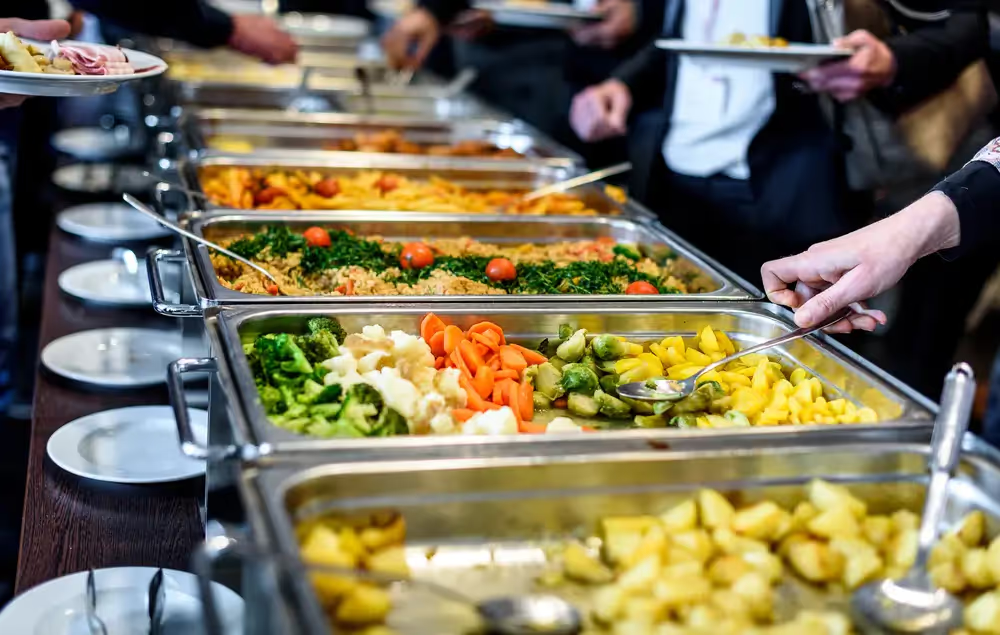
Mercado Gonzalez: This Mexican Food Hall is a Magnet
Mercado Gonzalez opened less than six months ago, and boy, is it making a splash! This marketplace/food hall located in Costa Mesa, CA hosts 20 food stalls where one can stroll through, buy colorful produce, and imagine that one is at the Mercado de Coyoacan in Mexico City, one of various mercados from which this location takes inspiration. Already, we see from the Placer data below that since opening in mid-November (just in time for the holidays!), Mercado Gonzalez is proving to be one of the most-visited locations in the Northgate Gonzalez portfolio.
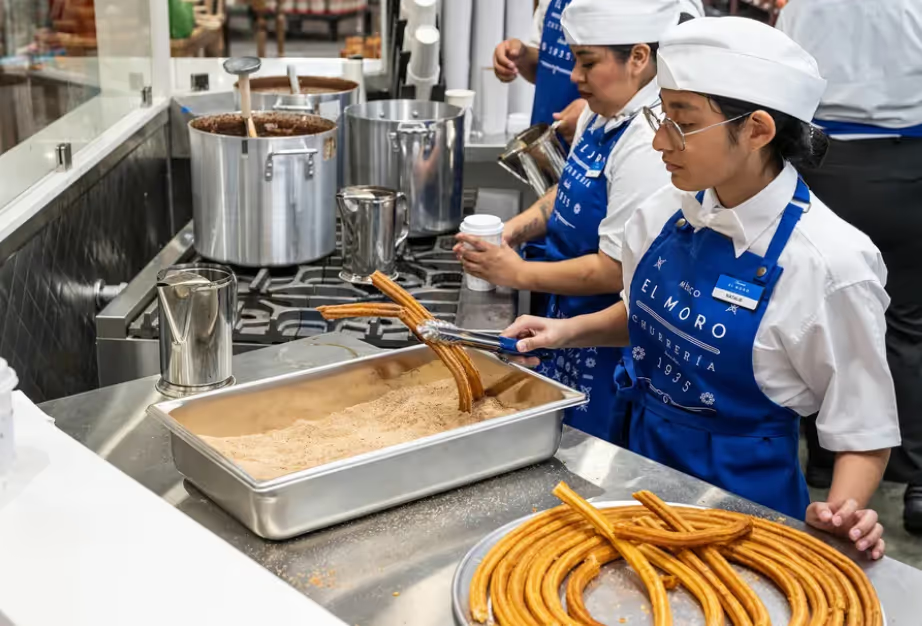
The weekend spikes really stand out as patrons from all over Southern California come to partake of pan dulces, aguas frescas, and oh-so-delectable hot and fresh churros at Churreria El Moro.
We wrote about food fusion last week, and indeed, in addition to traditional Mexican specialties like tortas ahogadas at Chiva Torta, one can also find Mexican-style sushi at Sushi El Sinaloense. From street food to gourmet at Maizano and Entre Nos, one has options that run the gamut from hot tortillas to cochinita pibil with fresh masa.
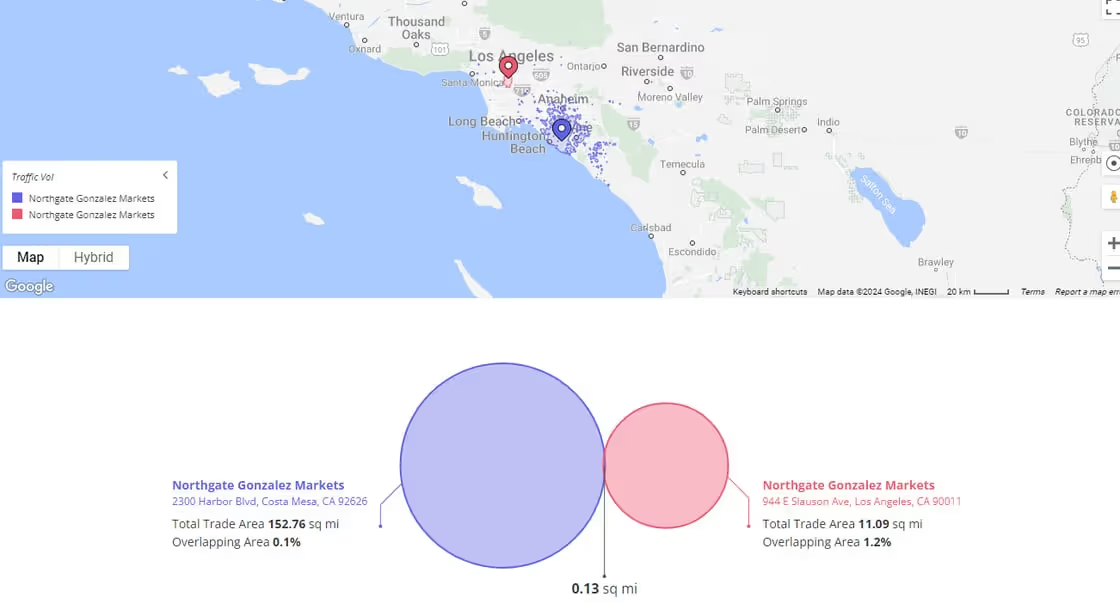
This food hall extravaganza bills itself as the “ultimate destination for Mexican food and culture” and it appears that customers who travel from a trade area of over 150 miles are in total agreement.
Compared to another top–trafficked Northgate Gonzalez market in Los Angeles, which draws from a much more local crowd of 11 sq miles (keep in mind, there are numerous Northgate Gonzalez markets across the Southern California landscape), this novel food hall concept attracts a much more diverse audience, across multiple dimensions like geography, ethnicity, and household income.
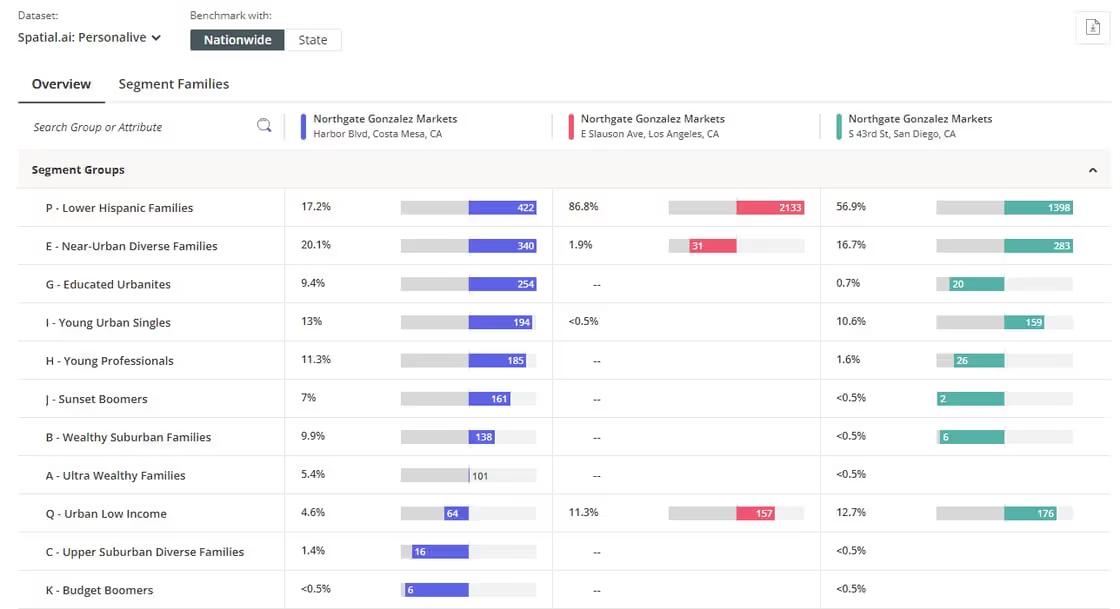
While the traditional grocery store attracts heavily from the segment of Lower Hispanic Families at the Los Angeles and San Diego locations, and also from Near-Urban Diverse Families and Young Urban Singles in San Diego, the segment data from Spatial.ai: PersonaLive reveals that Mercado Gonzalez also brings in Young Professionals, Educated Urbanites, Wealthy Suburban Families, and Ultra Wealthy Families.
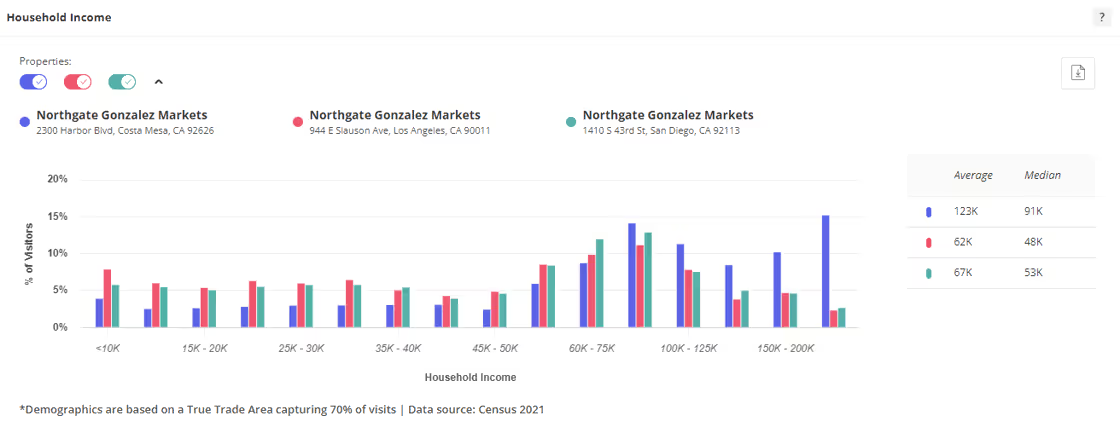
In addition, the average HHI of those visiting Mercado Gonzalez is roughly twice that of the other Northgate Gonzalez grocery stores.
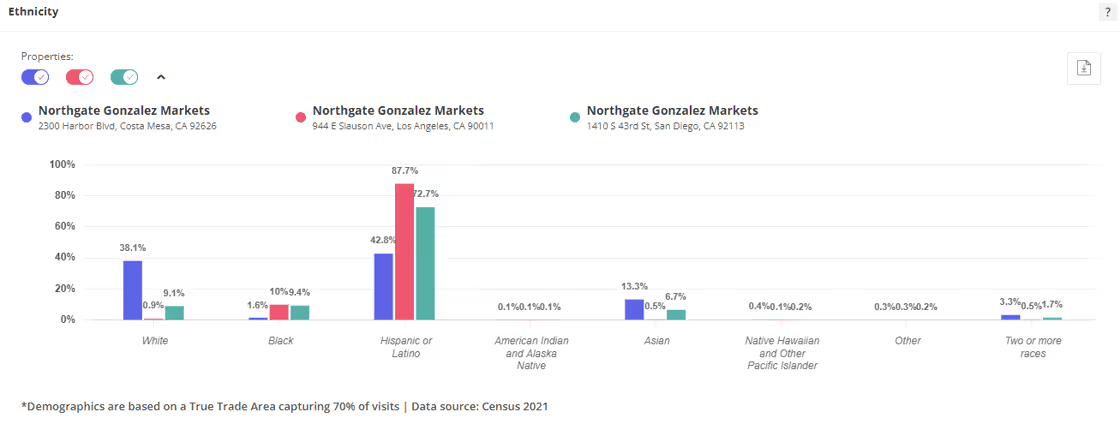
The food hall also attracts a broader swath of ethnicities.
Much like Eataly before it, Jose Andres’ Spanish Mercado Little Spain, or Asian food halls that we wrote about recently in our Lunar New Year articles, there is enthusiastic appetite for an immersive encounter reminiscent of being in another country and having access to authentic flavors and eating experiences.
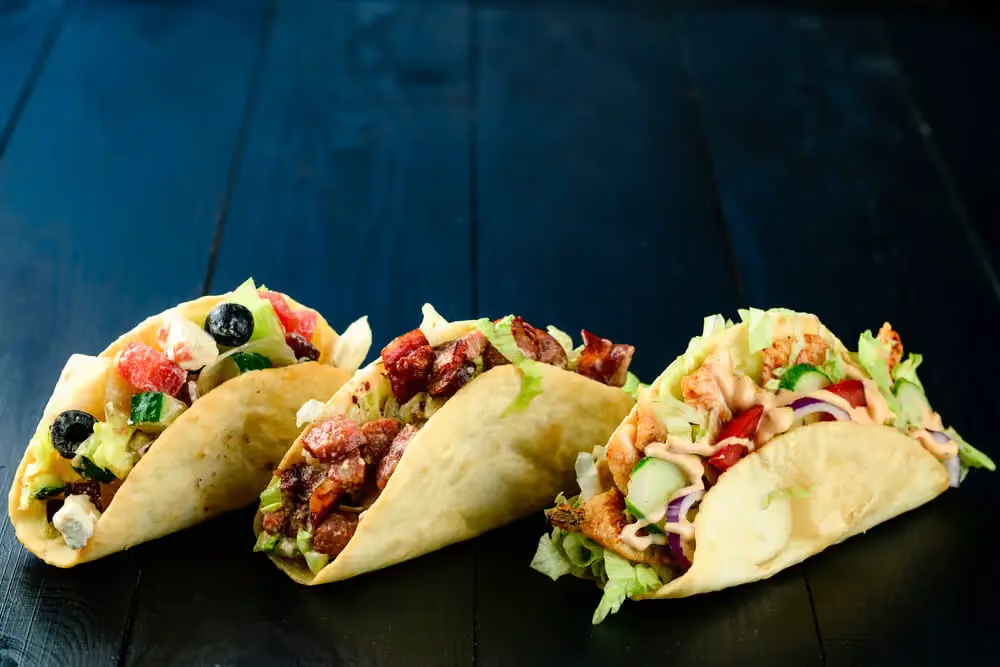
In the U.S., one can find many different dishes that incorporate a range of culinary traditions: Kogi truck introduced us to the joy of putting short ribs and vinaigrette slaw in a corn tortilla, topped off with a distinctly Korean salsa made of Korean chiles, rice wine vinegar, and scallions; Banh mi po’ boys combine the best of Vietnamese and Louisianan tradition; Lime and jalapeno-topped yellowtail sashimi hearkens to both Japanese and Peruvian lineages.
In Los Angeles, the LA Times takes readers on a culinary journey to the world of Black Tacos, where lines can reach 3 hours at Worldwide Tacos as one chooses from unique protein options like lamb, salmon, crab, and duck and mouthwatering flavor combinations like jerk, curry, pina colada, blueberry with blue cheese and raspberry chipotle.
While often anchored with a traditional corn tortilla, Black tacos also incorporate flavors and techniques from soul food, such as versions that use barbeque sauce, yams with wild rice, ground turkey, pulled pork, or hot honey catfish.
Alta Adams has its own take on Black tacos with a jerk-spiced sweet plantain taco. Nestled within a homemade corn tortilla, one will find caramelized plantain, mango-habanero salsa and chopped onion and cilantro. In 2022, the Hollywood Reporter named this spot “Black Hollywood’s Top Restaurant for Power Dining.” This restaurant is a popular evening destination, as patrons sip their inventive cocktails well into the night and see if they might catch a glimpse of Jay-Z or John Legend.

At the Smithsonian’s National Museum of African American History and Culture, the entire month of February was dedicated to “African Americans and the Arts” and the impact of African Americans on visual arts, music, cultural movements, and more. From the BLM Movement to Harlem Hellfighters, Hip Hop and Rap to Musical Life at HBCUs, a rich cornucopia awaits. Per Spatial.ai PersonaLive, among those who visited in the past 6 months, when we look at those comprising 70% of visits, nearly 3 in 10 are Educated Urbanites, as well as a healthy dose of Young Professionals, Near-Urban Diverse Families, and Ultra Wealthy Families.
The museum also attracted a broad cross-section of different ethnicities.
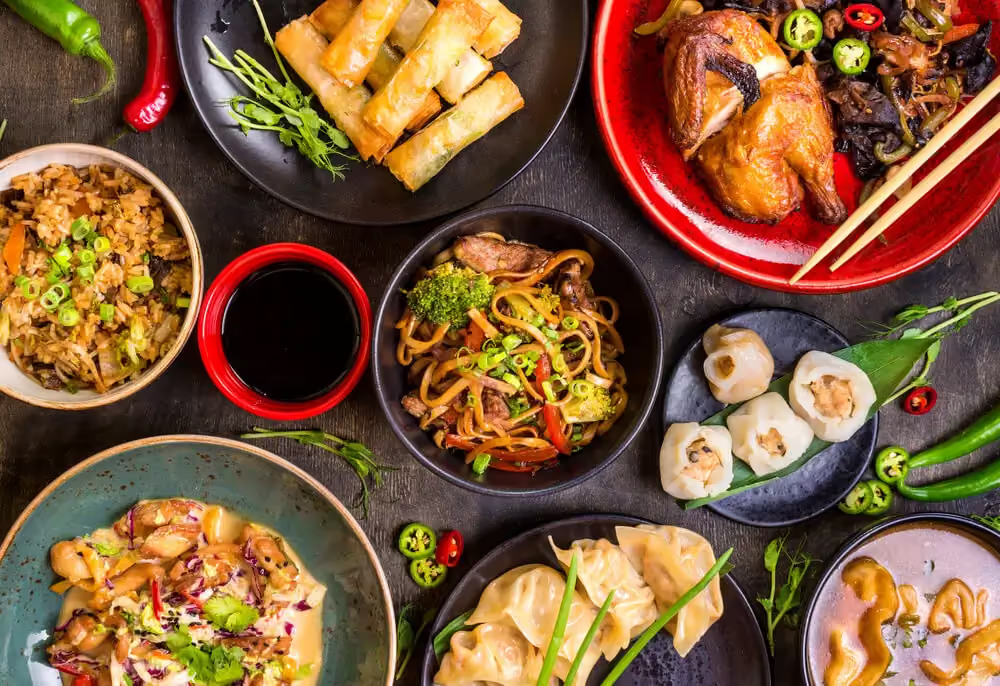
There are so many ways to say Happy New Year in Asian languages, such as “Gong Xi Fa Cai” in Mandarin, which means wishing you prosperity in the coming year, “Saehae Bok Mani Badeuseyo” in Korean, wishing you lots of luck, and “Chuc mung nam moi” in Vietnamese, with a similar meaning of wishing you a joyful year. Along with these auspicious greetings are traditional foods such as dumpling soup, mung bean pancake, BBQ beef, sticky rice cakes, and candied fruits. Within the melting pot that is the USA, one can often find an Asian-themed shopping center in which to partake of the festivities. In Westminster, CA, Asian Garden Mall is one of the largest Vietnamese shopping centers in the U.S. At The Source OC, Korean shops and eateries abound. In the Midwest, one can visit Asia Mall Minnesota, with a pan-Asian panoply of offerings.
Last year, Lunar New Year kicked off on Jan. 22, and we can see that Asian Garden Mall visits skyrocketed on that day (below)
During the summer, there is also a vibrant night market there, open from 7-11pm on the weekends. Finds include pork skewers and buns, grilled scallops, mini shrimp crepes, and sugar cane juice.
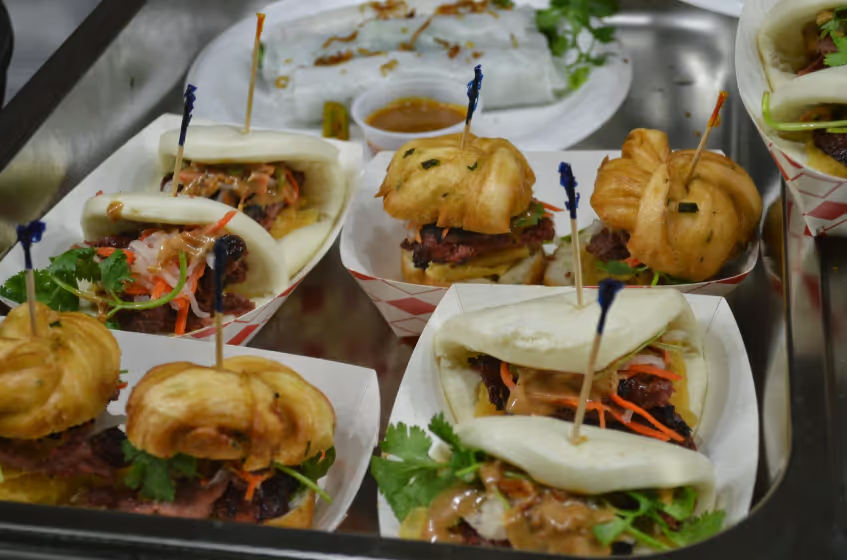
The night market takes place in the parking lot of Asian Garden Mall and draws accretive business. What would normally be empty during the Feb-May period without a night market becomes a thriving evening adventure during the summer months.
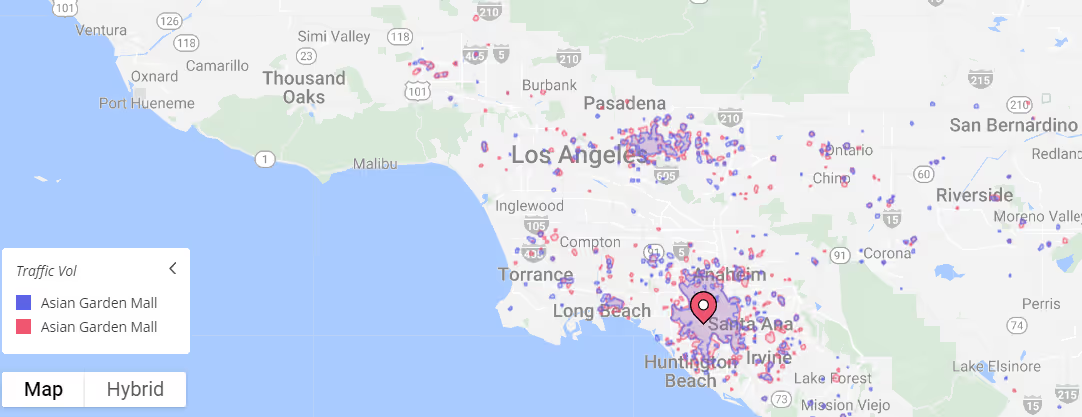
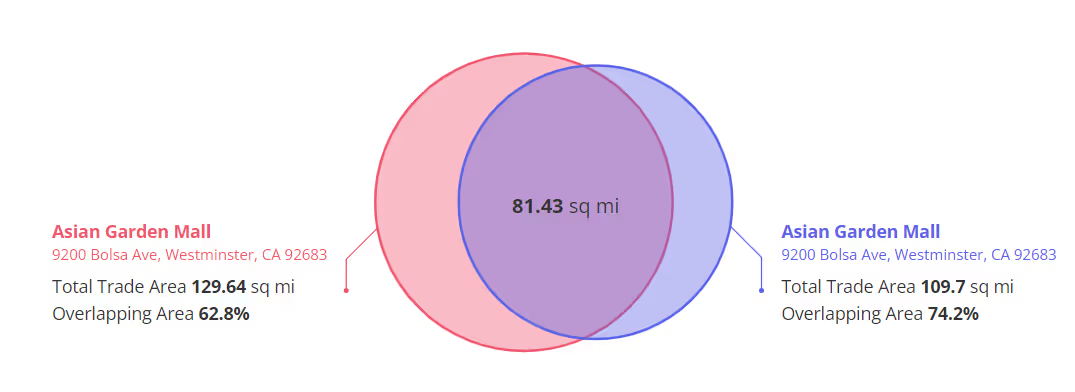
In comparing Feb-May visits (blue) versus Jun-Sept visits (red) below, the mall also draws from a much larger trade area when the night market is occurring.
In terms of festivities, parades and food stalls abound at celebrations like the Tet festival in New Orleans, which takes place this year on Feb. 16-18 in the Village de l’Est neighborhood. There will be fireworks and a dragon dance and of course vats of simmering pho, crispy spring rolls, and puffy fried bananas. In San Jose, CA, home to one of the US’s largest Vietnamese populations, a Tet celebration will be held in the former Sears parking lot at Eastridge Center from Feb 16-18. There will be a talent contest, a visit from Miss Vietnam California, carnival rides, and of course plenty of food booths and desserts.
One of the newer Korean-themed malls is the Source OC, which opened in 2019. While the majority of the food options transport you to being in Korea, there is also Italian at Il Fiora, Japanese at Izakaya Ichie, and Mexican at La Huasteca. One can indulge in Gangnam House Korean BBQ, Monday to Sunday shaved ice, and Cheesetella Japanese Cheesecake. We saw the Source OC dip during Covid like practically all retail, but it has bounced back and is now exceeding pre-Covid visitation levels. Besides the draw of the food, there is also an indoor golf-simulator, a VR experience, and a children’s playground.
Both Koreatown Plaza and Koreatown Galleria are long-standing stalwarts in the heart of LA, but as Americans of all ethnicities increasingly migrate to suburbs, we will no doubt see more shopping center options catering to ethnic tastes outside of downtowns.
The nation’s first enclosed shopping mall was Southdale Center in Edina, MN, a project that opened in 1956, by Victor Gruen, an Austrian-American who would henceforth be known as the “father of the shopping mall.” His original vision was a community hub with access to many shops as well as medical centers, schools, and even residences. This did not occur in the 50s, but three-quarters of a century later, many mall developers are re-envisioning malls to be places to live, eat, play, and shop as well as have access to essential services and to be that third space for community gatherings and celebrations. How fitting that another recent mall in Minnesota, the Asia Mall has been conceived as a reflection of the local community. It opened in November 2022, inspired by the desire for a one-stop pan-Asian mall to get all groceries as opposed to dashing around Minneapolis, St. Paul, Brooklyn Park, and Brooklyn Center to obtain the desired goods. Food and drinks are procured from various Asian countries, such as Vietnam, China, and Korea and anchored by grocery store Asian Mart 88. Dining includes Pho Mai, Hot Pot City with all-you-can-eat hot pot, Cruncheez Korean hot dogs, and Mochi Dough doughnuts. As part of the trend for including essential services, this mall also has a hair salon, insurance company, and travel agency.
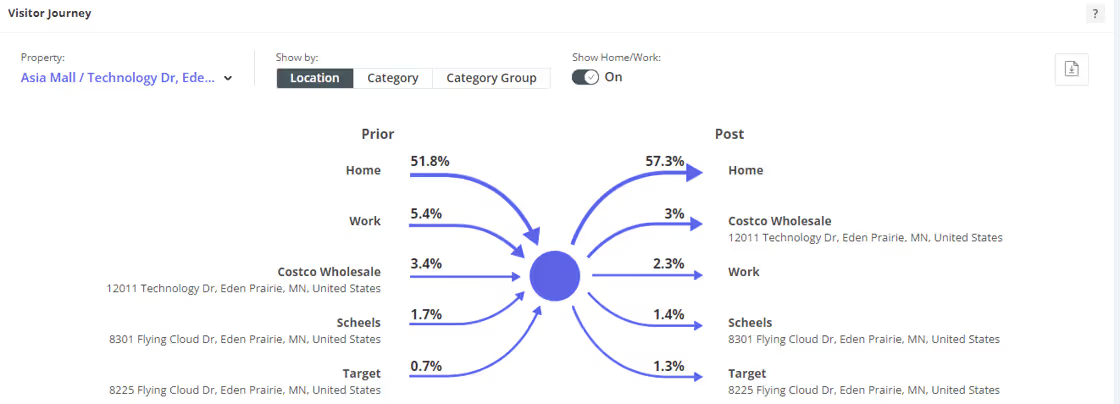
It also appears the concept of one-stop-shop, be it for Asian groceries or for warehouse-sized purchases, is prized by the inhabitants of Eden Prairie who really value efficiency. Asia Mall does half the visits of the nearby Costco, which is impressive. Besides home and work, visitors of Asia Mall are most likely to visit Costco before or after a shopping trip (below).
It only comes around once every 12 years, and for those born in the Year of the Dragon, they are considered to be the luckiest of the Zodiac signs. This year’s element is wood, and thus a Wood Dragon year can portend good fortune, action, and expansion. Let’s take a look at some Asian concepts, brands, and shopping centers and see if our Placer trends indicate whether they might be in for a lucky, powerful year.
More Tea, Please: Tea is Anywhere and Everywhere, All at Once
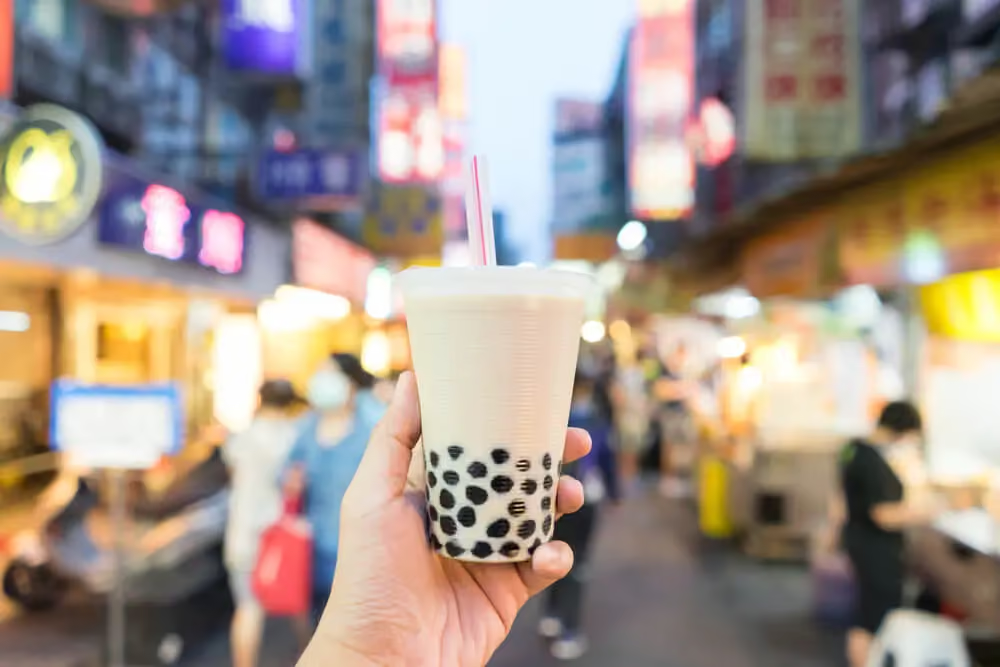
Tea drinks, especially those including tapioca pearls otherwise known as boba have created billionaires in China, and global expansion means that you can get your fill of the chewy goodies all over the world nowadays. Some of the largest chains in the US include Kung Fu Tea, with over 350 locations; Gong Cha; Sharetea with more than 500 stores in 15 locations; Boba Guys known for their famous strawberry puree matcha tea latte; and It’s Boba Time, Happy Lemon, YiFang Taiwan Fruit Tea, and Boba Loca.
Tea has been an integral part of our global history. As a precious commodity, it was traded along the Silk Road, leading to increased transcontinental commerce. In American history, the Boston Tea Party was perhaps not so much about tea itself but about taxation and representation, but in any words, it was definitely a catalyst towards American independence. And now, thousands of years later, tea continues to be a tour de force for antioxidants, anti-aging, and an overall delicious base for a bevy of creative drinks. Economists often talk about the “latte index” - used to estimate purchasing power parity in 16 countries around the world compared to the cost of a tall Starbucks latte in NYC.
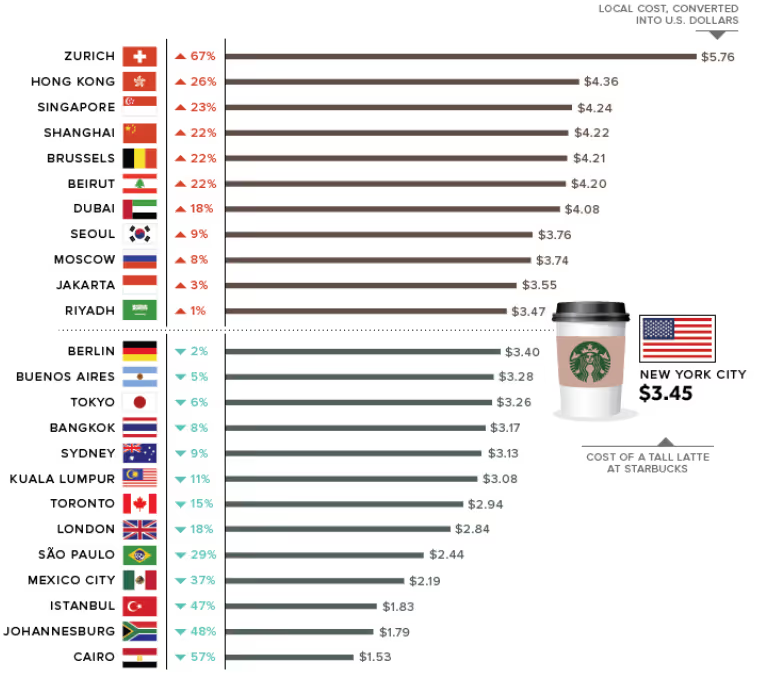
With the way things are going with teas, could a boba index not be far behind? We examined year-over-year traffic for some of the leading tea/boba chains compared to specialty coffee chains. Boba has seen gains compared to last year, usually at a higher percentage than coffee. Both beverage type chains have trended upwards in 2023, although coffee had a bit of a dip in the latter part of the year.
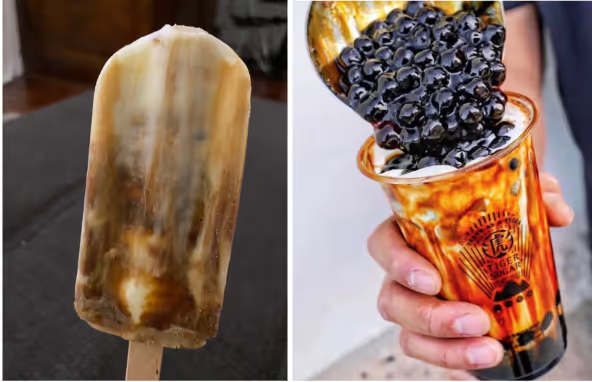
To be fair, one can often order a coffee at a tea store and vice versa, but there are certainly toppings and color sensations at tea stores that are uniquely suited to social media, such as butterfly pea, which is an intense shade of violet, or various vibrant toppings such as popping boba in pink and orange. In some creations, the tea is even dispensed with entirely, such as Tiger Sugar’s brown sugar boba milk with a deep caramel flavor, or their highly-coveted ice cream bar version of the drink.
Asian Malls in the US to Visit for Lunar New Year
For those wishing for an authentic taste of an Asian shopping mall experience during Lunar New Year, there are many options around the US including Chinese shopping malls in the west like Focus Plaza/San Gabriel Square in San Gabriel Valley, Diamond Jamboree in Irvine, Shanghai Plaza in Chinatown Las Vegas, and Great Wall Mall in Kent, WA as well as in the east like Tangram and New World Mall in Flushing, NY.
Of these malls, Diamond Jamboree is the most visited. It has local favorites like The Kickin' Crab, Hai Di Lao, and Pepper Lunch. For dessert, head on over to Meet Fresh, with its refreshing grass jelly or chewy taro balls or SomiSomi for the cutest fish-shaped pancakes and a delectable choice of soft-serve flavors like ube and sesame.
Next is Shanghai Plaza, which is located in Las Vegas Chinatown. At Shanghai Taste, one can slurp xiao long bao soup dumplings, and another favorite - sheng jian bao - which is basically the love child of the more well known bao zi (meat bun) and the aforementioned xiao long bao. Somehow, it manages to have the fluffiness of the outer dough with a burst of soup and filling inside. Add the slight crunchiness of a pan-fried base and your mouth will be amazed by the variety of flavors and textures.
San Gabriel Square, also known as Focus Plaza, is the granddaddy of San Gabriel Valley larger-than-life malls. Also lovingly named “Chinese Disneyland” it offers a famous restaurant Five Star Seafood, a 99 Ranch, as well as other restaurants and jewelry stores. It opened in 1990 and became the place where one could go to buy laserdiscs for karaoke machines, as well as buy delicacies like honey-dried mangoes or salted plums. Nearly 25 years later, it is poised for renovation as it competes with other Chinese malls in the Greater Los Angeles and Orange County area for hot new restaurants and bakeries.
Moving across the country, we have Tangram in Queens, NY. Who doesn’t love an Asian food hall, with its dizzying array of hawkers, smells, and bustle? Tangram opened its Food Hall in January 2023, with a mix of international cuisine such as Joju for Vietnamese sandwiches, Zaab Zaab for Thai food, and Na Tart for egg tarts. One unique offering at Xi’an Famous Food is their piece de resistance lamb noodles. Topped with melt-in-your-mouth lamb, the broth is composed of both cumin and chili, and the hand-pulled noodles offer you that perfect texture referred to as “qq” in Chinese, whose closest renditions for noodles in another language might be “al dente.” This food hall spans 24,000 square feet and is lit with neon to mimic the non-stop night market energy in cosmopolitan Asian cities.
Great Wall Mall in Kent, Seattle is another Pan-Asian shopping center, despite its Chinese-centric name. Anchored by a 99 Ranch market, it also includes Chinese and Vietnamese restaurants, a Korean clothing store, hair and nail salons, and home decor. Architecturally, the outside is flanked by a fortress-style wall that mimics the Great Wall of China.
Last, but not least, we have New World Mall. Another sprawling food hall awaits, with over two dozen eateries to choose from. The exciting part of visiting food halls is the ability to get to the level of regional cuisine. Whether its Chongqing xiao mian featuring spicy Sichuan noodles or knife-cut noodles from Lanzhou, one has the opportunity to try a variety of cooking styles, nuances in similar-sounding dishes, and basically explore an entire country through its diversity of tastes.

Introduction
2024 has been another challenging year for retailers. Still-high prices and an uncertain economic climate led many shoppers to trade down and cut back on unnecessary indulgences. Value took center stage, as cautious consumers sought to stretch their dollars as far as possible.
But price wasn’t the only factor driving consumer behavior in 2024. This past year saw the rise of a variety of retail and dining trends, some seemingly at odds with one another. Shoppers curbed discretionary spending, but made room in their budgets for “essential non-essentials” like gym memberships and other wellness offerings. Consumers placed a high premium on speed and convenience, while at the same time demonstrating a willingness to go out of their way for quality or value finds. And even amidst concern about the economy, shoppers were ready to pony up for specialty items, legacy brands, and fun experiences – as long as they didn’t break the bank.
How did these currents – likely to continue shaping the retail landscape into 2025 – impact leading brands and categories? We dove into the data to find out.
Conventional Value Reaching Its Ceiling
Bifurcation has emerged as a foundational principle in retail over the past few years: Consumers are increasingly gravitating toward either luxury or value offerings and away from the ‘middle.’ Add extended economic uncertainty along with rapid expansions and product diversification from top value-oriented retailers, and you have an explosion of visits in the value lane.
But we are seeing a ceiling to that growth – especially in the discount & dollar store space. Throughout 2023 and the first part of 2024, visits to discount & dollar stores increased steadily. But no category can sustain uninterrupted visit growth forever. Since April 2024, year–over-year (YoY) foot traffic to the segment has begun to slow, with September 2024 showing just a modest 0.8% YoY visit increase.
Discount & dollar stores, which attract lower-income shoppers compared to both grocery stores and superstores, have also begun lagging behind these segments in visit-per-location growth. In Q3, the average number of visits to each discount and dollar store location remained essentially flat compared to 2023 (+0.2%), while visits per location to superstores and grocery stores grew by 2.8% and 1.0%, respectively. As 2024 draws to a close, it is the latter segments, which appeal to shoppers with incomes closer to the nationwide median of $76.1K, which are seeing better YoY performance.
The deceleration doesn’t mean that discount retailers are facing existential risk – discount & dollar stores are still extremely strong and well-positioned with focused offerings that resonate with consumers. The visitation data does suggest, however, that future growth may need to focus on initiatives other large-scale fleet expansions. Some of these efforts will involve moving upmarket (see pOpShelf), some will focus on fleet optimization, and others may include new offerings and channels.
Return of the middle anyone?
Innovative and Disruptive Value Shake Up Retail and Dining
Still, in an environment where consumers have been facing the compounded effects of rising prices, value remains paramount for many shoppers. And brands that have found ways to let customers have their cake and eat it too – enjoy specialty offerings and elevated experiences without breaking the bank – have emerged as major visit winners this year.
Trader Joe’s Drives Visits With Private Label Innovation
Trader Joe’s, in particular, has stood out as one of the leading retail brands for innovative value in 2024, a trend that is expected to continue into 2025.
Trader Joe’s dedicated fan base is positively addicted to the chain’s broad range of high-quality specialty items. But by maintaining a much higher private label mix than most grocers – approximately 80%, compared to an industry average of 25% to 30% – the retailer is also able to keep its pricing competitive. Trader Joe’s cultivates consumer excitement by constantly innovating its product line – there are even websites dedicated to showcasing the chain’s new offerings each season. In turn, Trader Joe’s enjoys much higher visits per square foot than the rest of the grocery category: Over the past twelve months, Trader Joe’s drew a median 56 visits per square foot – compared to 23 for H-E-B, the second-strongest performer.
Chili’s Beats QSR at its Own Game
Casual dining chain Chili’s has also been a standout on the disruptive value front this past year – offering consumers a full-service dining experience at a quick-service price point.
Chili’s launched its Big Smasher Burger on April 29th, 2024, adding the item to its popular ‘3 for Me’ offering, which includes an appetizer, entrée, and drink for just $10.99 – lower than than the average ticket at many quick-service restaurant chains. The innovative promotion, which has been further expanded since, continues to drive impressive visitation trends. With food-away-from-home inflation continuing to decelerate, this strategy of offering deep discounts is likely to continue to be a key story in 2025.
The Convenience Myth
Convenience is king, right?
Well, probably not. If convenience truly were king, visitors would orient themselves to making fewer, longer visits to retailers – to minimize the inconvenience of frequent grocery trips and spend less time on the road. But analyzing the data suggests that, while consumers may want to save time, it is not always their chief concern.
Looking at the superstore and grocery segments (among others) reveals that the proportion of visitors spending under 30 minutes at the grocery store is actually increasing – from 73.3% in Q3 2019 to 76.6% in Q3 2024. This indicates that shoppers are increasingly willing to make shorter trips to the store to pick up just a few items.
At the same time, more consumers than ever are willing to travel farther to visit specialty grocery chains in the search of specific products that make the visit worthwhile.
Cross visitation between chains is also increasing – suggesting that shoppers are willing to make multiple trips to find the products they want – at the right price point. Between Q3 2023 and Q3 2024, the share of traditional grocery store visitors who also visited a Costco at least three times during the quarter grew across chains.
Does this mean convenience doesn’t matter? Of course not. Does it indicate that value, quality and a love of specific products are becoming just as, if not more, important to shoppers? Yes.
The implications here are very significant. If consumers are willing to go out of their way for the right products at the right price points – even at the expense of convenience – then the retailers able to leverage these ‘visit drivers’ will be best positioned to grow their reach considerably. The willingness of consumers to forego convenience considerations when the incentives are right also reinforces the ever-growing importance of the in-store experience.
So while convenience may still be within the royal family, the role of king is up for grabs.
Serving Diners Quicker With Automatization
Chipotle Draws Crowds With Autocado
Convenience may not be everything, but the drive for quicker service has emerged as more important than ever in the restaurant space. Diners want their fast food… well, as fast as possible. And to meet this demand, quick-service restaurants (QSRs) and fast-casual chains have been integrating more technology into their operations. Chipotle has been a leader in this regard, unveiling the “Autocado” robot at a Huntington Beach, California location last month. The robot can peel, pit, and chop avocados in record time, a major benefit for the Tex-Mex chain.
And the Autocado seems to be paying off. The Huntington Beach location drew 10.0% more visits compared to the average Chipotle location in the Los Angeles-Long Beach-Anaheim metro area in Q3 2024. Visitors are visiting more frequently and getting their food more quickly – 43.9% of visits at this location lasted 10 minutes or less, compared to 37.5% at other stores in the CBSA.
Are diners flocking to this Chipotle location to watch the future of avocado chopping in action, or are they enticed by shorter wait times? Time will tell. But with workers able to focus on other aspects of food preparation and customer service, the innovation appears to be resonating with diners.
McDonald’s Leans into Automation in Texas
McDonald’s, too, has leaned into new technologies to streamline its service. The chain debuted its first (almost) fully automated, takeaway-only restaurant in White Settlement, TX in 2022 – where orders are placed at kiosks or on app, and then delivered to customers by robots. (The food is still prepared by humans.) Unsurprisingly, the restaurant drives faster visits than other local McDonald’s locations – in Q3 2023, 79.7% of visits to the chain lasted less than 10 minutes, compared to 68.5% for other McDonald’s in the Dallas-Fort Worth-Arlington, TX CBSA. But crucially, the automated location is also busier than other area McDonald’s, garnering 16.8% more visits in Q3 than the chain’s CBSA-wide average. And the location draws a higher share of late-night visits than other area McDonald’s – customers on the hunt for a late-night snack might be drawn to a restaurant that offers quick, interaction-free service.
Evolving Retail Formats - Finding the Right Fit
Changing store formats is another key trend shaping retail in 2024. Whether by reducing box sizes to cut costs, make stores more accessible, or serve smaller growth markets – or by going big with one-stop shops, retailers are reimagining store design. And the moves are resonating with consumers, driving visits while at the same improving efficiency.
Macy’s Draws Local Weekday Visitors With Small-Format Stores
Macy’s, Inc. is one retailer that is leading the small-format charge this year. In February 2024, Macy’s announced its “Bold New Chapter” – a turnaround plan including the downsizing of its traditional eponymous department store fleet and a pivot towards smaller-format Macy’s locations. Macy’s has also continued to expand its highly-curated, small-format Bloomie’s concept, which features a mix of established and trendy pop-up brands tailored to local preferences.
And the data shows that this shift towards small format may be helping Macy’s drive visits with more accessible and targeted offerings that consumers can enjoy as they go about their daily routines: In Q3 2024, Macy’s small-format stores drew a higher share of weekday visitors and of local customers (i.e. those coming from less than seven miles away) than Macy’s traditional stores.
Harbor Freight Tools and Ace Hardware Serve Smaller Growth Markets With Less Square Footage
Small-format stores are also making inroads in the home improvement category. The past few years have seen consumers across the U.S. migrating to smaller suburban and rural markets – and retailers like Harbor Freight Tools and Ace Hardware are harnessing their small-format advantage to accommodate these customers while keeping costs low.
Harbor Freight tools and Ace Hardware’s trade areas have a high degree of overlap with some of the highest growth markets in the U.S., many of which have populations under 200K. And while it can be difficult to justify opening a Home Depot or Lowe’s in these hubs – both chains average more than 100,000 square feet per store – Harbor Freight Tools and Ace Hardware’s smaller boxes, generally under 20,000 square feet, are a perfect fit.
This has allowed both chains to tap into the smaller markets which are attracting growing shares of the population. And so while Home Depot and Lowe’s have seen moderate visits declines on a YoY basis, Harbor Freight and Ace Hardware have seen consistent YoY visit boosts since Q1 2024 – outperforming the wider category since early 2023.
Hy-Vee Bucks the Trend by Going Big
Are smaller stores a better bet across the board? At the end of the day, the success of smaller-format stores depends largely on the category. For retail segments that have seen visit trends slow since the pandemic – home furnishings and consumer electronics, for example – smaller-format stores offer brands a more economical way to serve their customers. Retailers have also used smaller-format stores to better curate their merchandise assortments for their most loyal customers, helping to drive improved visit frequency.
That said, a handful of retailers, such as Hy-Vee, have recently bucked the trend of smaller-format stores. These large-format stores are often designed as destination locations – Hy-Vee’s larger-format locations usually offer a full suite of amenities beyond groceries, such as a food hall, eyewear kiosk, beauty department, and candy shop. Rather than focusing on smaller markets, these stores aim to attract visitors from surrounding areas.
Visit data for Hy-Vee’s large-format store in Gretna, Nebraska indicates that this location sees a higher percentage of weekend visits than other area locations – 37.7% compared to 33.1% for the chain’s Omaha CBSA average – as well as more visits lasting over 30 minutes (32.9% compared to 21.9% for the metro area as a whole). For these shoppers, large-format, one-stop shops offer a convenient – and perhaps more exciting – alternative to traditionally sized grocery stores. The success of the large-format stores is another sign that though convenience isn’t everything in 2024, it certainly resonates – especially when paired with added-value offerings.
A Resurgence of Legacy Brands
Many retail brands have entrenched themselves in American culture and become an extension of consumers' identities. And while some of these previously ubiquitous brands have disappeared over the years as the retail industry evolved, others have transformed to keep pace with changing consumer needs – and some have even come back from the brink of extinction. And the quest for value notwithstanding, 2024 has also seen the resurgence of many of these (decidedly non-off-price) legacy brands.
In apparel specifically, Gap and Abercrombie & Fitch – two brands that dominated the cultural zeitgeist of the 1990s and early 2000s before seeing their popularity decline somewhat in the late aughts and 2010s – may be staging a comeback. Bed Bath & Beyond, a leader in the home goods category, is also making a play at returning to physical retail through partnerships.
Anthropologie, another legacy player in women’s fashion and home goods, is also on the rise. Anthropologie’s distinctive aesthetic resonates deeply with consumers – especially women millennials aged 30 to 45. And by capturing the hearts of its customers, the retailer stands as a beacon for retailers that can hedge against promotional activity and still drive foot traffic growth.
And visits to the chain have been rising steadily. In Q4 2023, the chain experienced a bigger holiday season foot traffic spike than pre-pandemic, drawing more overall visits than in Q4 2019. And in Q3 2024, visits were higher than in Q3 2023.
Meeting the Evolving Needs of Millennials
And speaking of the 35 to 40 set – the generation that all retailers are courting? Millennials. Does that sound familiar? Yes, because this is the same generational cohort that retailers tried to target a decade ago. As millennials have aged into the family-formation stage of life, their retail needs have evolved, and the industry is now primed to meet them.
Sam’s Club Draws Value-Conscious Singles and Starters
From the revival of nostalgic brands like the Limited Too launch at Kohl’s to warehouse clubs expanding memberships to younger consumers as they move to suburban and rural communities, there are myriad examples of retailers reaching out to this cohort. And Sam’s Club offers a prime example of this trend.
Over the past few years, millennials and Gen-Zers have emerged as major drivers of membership growth at Sam’s Club, drawn to the retailer’s value offerings and digital upgrades – like the club’s Scan & Go technology. Over the same period, Sam’s Club has grown the share of “Singles and Starters” households in its captured market from 6% above the national benchmark in Q3 2019 to 15% in Q3 2024. And with plans to involve customers in co-creating products for its private-label brand, Sam’s Club may continue to grow its market share among this value-conscious – but also discerning and optimistic – demographic.
Taco Bell Brings in Crowds With Value Nostalgia Menu
Millennials are also now old enough to wax nostalgic about their youth – and brands are paying attention. This summer, Taco Bell leaned into nostalgia with a promotion bringing back iconic menu items from the 60s, 70s, 80s, and 90s – all priced under $3. The promotion, which soft-launched at three Southern California locations in August, was so successful that the company is now offering the specials nationwide. The three locations that trialed the “Decades Menu” saw significant boosts in visits during the promotional period compared to their daily averages for August. And people came from far and wide to sample the offerings – with a higher proportion of visitors traveling over seven miles to reach the stores while the items were available.
What Lies Ahead?
Hot on the heels of a tumultuous 2023, 2024’s retail environment has certainly kept retailers on their toes. While embracing innovative value has helped some chains thrive, other previously ascendant value segments, including discount & dollar stores, may have reached their growth ceilings. Consumers clearly care about convenience – but are willing to make multiple grocery stops to find what they need. At the same time, legacy brands are plotting their comeback, while others are harnessing the power of nostalgia to drive millennials – and other consumers – through their doors.