.svg)





This year’s March Madness really lived up to its name, buoyed by the star power of Caitlin Clark, Angel Reese, Paige Bueckers, and Juju Watkins driving viewership to new heights. For the first time in history, the NCAA women’s basketball title drew more viewers than the men’s at 18.9M for the women’s and 14.8M for the men’s, per Nielsen.
Tickets to the Final Four cost $532 on average, an 82% increase over last year, and for the championship game, Rocket Mortgage Fieldhouse Stadium in Cleveland, OH was packed to the gills.
In the days leading up to the women’s final, nearby hotels saw visits increase as well.

Say the word New Mexico and one might picture the stunning cliff dwellings at Bandelier Monument, rich troves of Native American Pueblo culture, or the stunning artworks of Georgia O’Keefe. This vibrant state’s largest city is Albuquerque, but Santa Fe also lays claim to fame by being the oldest state capital in the United States.
In Albuquerque, a large development is taking place centered around the Indian Pueblo Cultural Center. While one may be a bit surprised at its location, which is within an outdoor shopping center, it serves as a perfect anchoring point for a convention or a leisure trip. The museum features insights into 19 Pueblo cultures, and also hosts an authentic Indian kitchen where one can try indigenous favorites such as red chile beef stew, calabacitas, and assorted fruit pies. There is a Holiday Inn Express & Suites and a Towneplace Suites by Marriott just across the street for those who need accommodations. Meetings, parties, and events can be held onsite with particularly memorable experiences to be had in the outdoor arena and fire pit. One can even hold a wedding at the venue. And in a sign of the convenience store trend we are seeing towards localization, Four Winds offers a walk-in humidor with cigar selection, the ability to fill a growler with local craft beers, and an assortment of food, beer, wine, liquor, and tobacco.
Further afield, an hour away in Santa Fe, visitors flock to the galleries galore, restaurants and bars like Coyote Cantina, or simply enjoy an ice cream while people watching at Santa Fe Plaza. One of the highlights for opera lovers around the world is coming to Santa Fe Opera House during its season, which runs from the end of June to the end of August. Here, one can enjoy the unique open-air aspect of the opera house while sobbing along to the sad fate of Violetta in La Traviata.
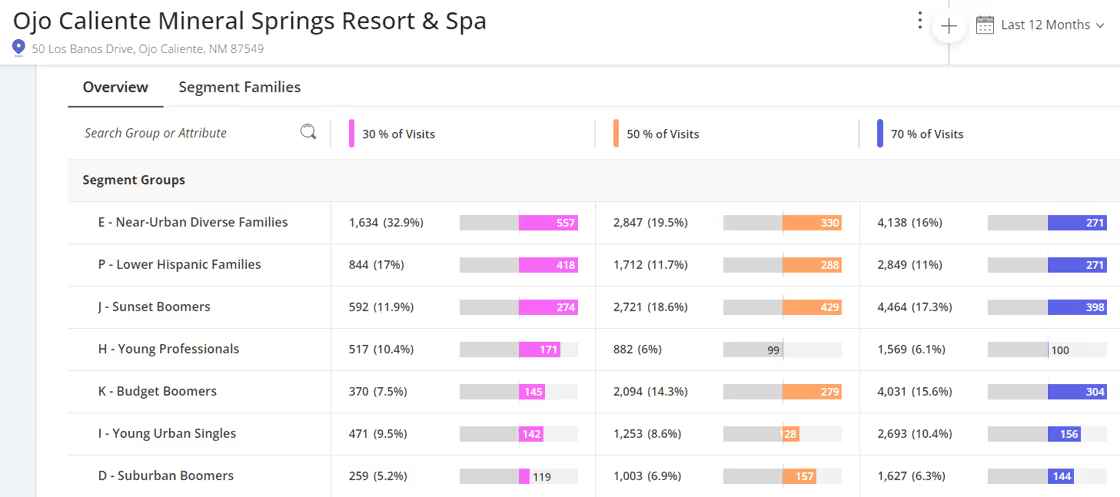
Junior Rangers might enjoy exploring Carlsbad Caverns, Aztec Ruins National Monument, or venture to Petroglyph National Monument. Adults seeking R&R can ski the day away in Taos or opt for a therapeutic visit to Ojo Caliente Mineral Springs Resort & Spa. A review of the resort describes it as “Just you, the blue New Mexico sky, peace and quiet.” Add to that a massage or spa treatment, and it sounds like just what the doctor ordered.
One of the major employers in New Mexico is Los Alamos National Laboratory. A visit to the National Historic Park there will take you on an intriguing journey of key sites that were relevant to the Manhattan Project. Between last summer’s Oppenheimer blockbuster and current global sensation The Three-Body Problem fanning interest in cutting-edge science, this is a must-see location.
DC residents and businesses have been on tenterhooks ever since plans were announced in December 2023 to move the Caps and Wizards to Potomac Yard in Alexandria, VA. Original plans called for a new Wizards practice facility, a separate performing arts center, a media studio, new hotels, a convention center, housing and shopping. Meanwhile, DC mayor Muriel Bowser worked furiously to keep the teams, eventually putting together a $500 million+ deal that was officially approved in the last week, so that the teams would stay in the District until “at least 2050.” That is good news for those businesses by Gallery Place/Chinatown, and the teams can keep the Washington moniker, as opposed to potentially being the “National Landing” teams were they to have moved to the Potomac Yard area.
Brands like M&Ms, Hershey’s, and Jelly Belly are redefining what it means to be as happy as a “kid in a candy store.” With their life-size M&M characters on a flagship in Orlando, FL, a chocolate Statue of Liberty sculpted out of 800 pounds of Hershey’s chocolate on the Las Vegas Strip, or a working jellybean factory tour in Fairfield, CA, manufacturers are literally bringing their brands to life. M&M’s World in Orlando, FL posted particularly impressive year-over-year visits in the second half of 2023.
Recently, Hollywood darling Timothee Chalamet starred in the fantastical movie Wonka, grossing $600M+ worldwide. In other headline news, the “tried to jump on the wagon but failed miserably” fiasco of the unauthorized Willy’s Chocolate Experience in Scotland reveals that the appetite for sweets and chocolate is insatiable. Never fear, if you missed the Candytopia pop-up a few years ago, you can head over to Dylan’s Candy Bar for an experience right out of Charlie and the Chocolate Factory. It’s clear that demand peaks in the summer, probably due to locations that see summer tourists. The holidays are another popular season for buying sweets.
At Hershey’s Chocolate World, one can be immersed in all-things chocolate, from creating your own candy to taking a selfie with a life-size Reese’s peanut butter cup. The dessert options are limited only by your imagination. That tower of S’mores sure looks tempting!
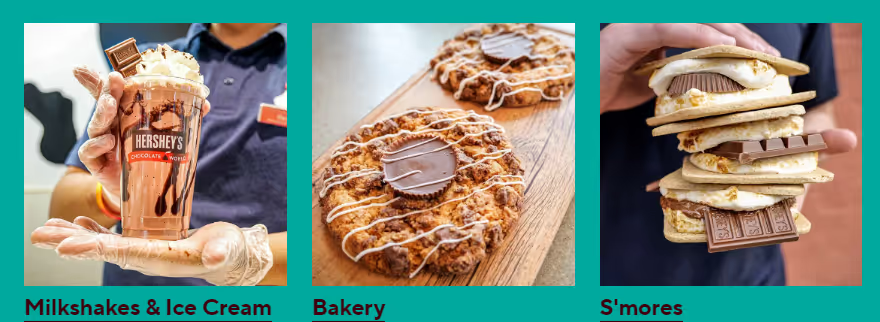
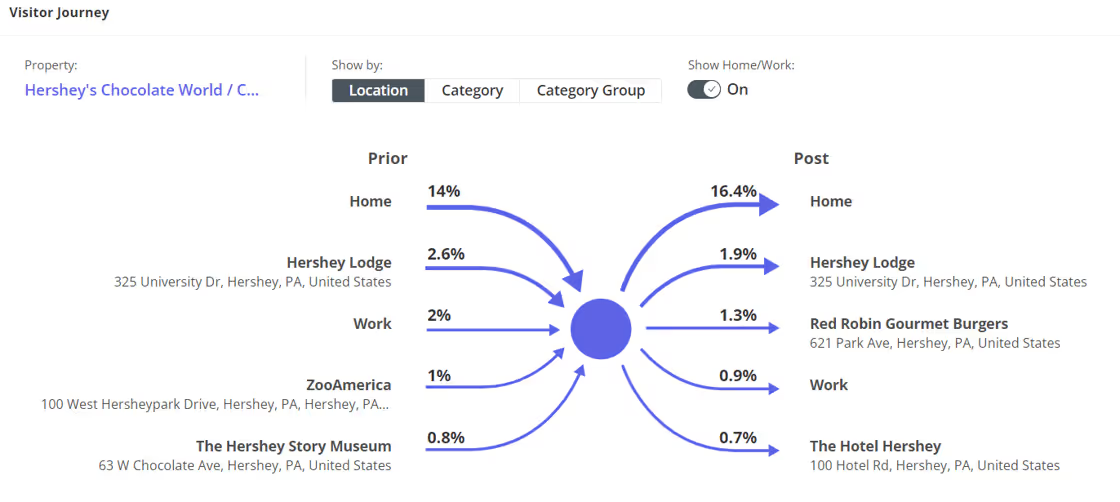
Many visitors also opt to visit the Hershey Story Museum or stay at Hershey Lodge or the Hotel Hershey.
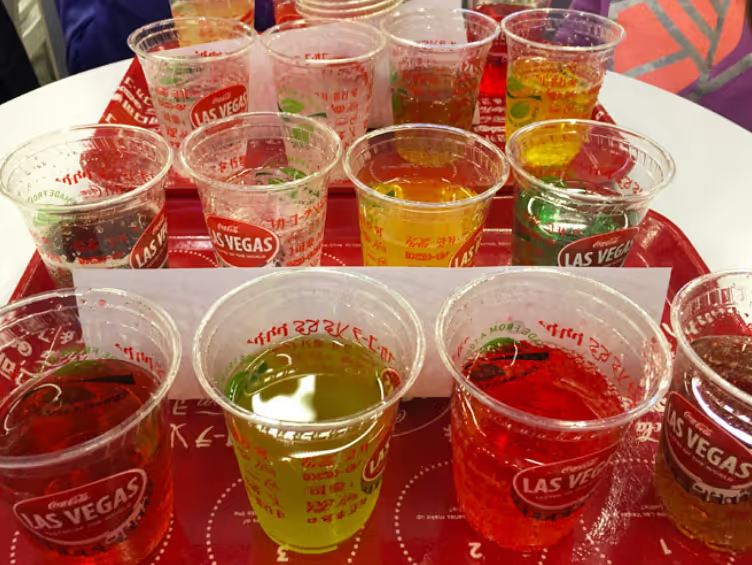
If you prefer your sweets in liquid form, there are three Coca-Cola Stores--in Atlanta, Las Vegas, and Orlando--to satisfy your cravings. Here, you can buy a Coke plushie, flout the famous “Enjoy Coca-Cola” slogan shirt in a variety of languages, or dress yourself head-to-toe in comfy Coke PJs. One of the coolest options is an international tasting flight that lets you try out Coca-Cola beverages from around the world, with flavors like sparberry from Zimbabwe.
At the Coca-Cola Store in Orlando, FL, visitation jumps during vacations like Spring Break, summer, and Christmas holidays.
Another beloved brand that has made its way into brick-and-mortar is King’s Hawaiian. Founded in 1950, they were famous for their round loaves of sweet and fluffy Hawaiian bread. Fast forward three-quarters of a century later, and they have added new options like savory dinner rolls or pull-apart pans of bread. One can experience gastronomic delights made with Hawaiian bread at their Torrance-based King’s Hawaiian Bakery and Restaurant.
The restaurant menu includes breakfasts featuring their famous King’s Hawaiian Sweet Bread as French toast, lunch and dinner options like Macadamia Nut Onion Rings, Chicken Katsu Curry Loco Moco, and Saimin noodles, but it’s the bakery that literally takes the cake. The Paradise Delight Cake has three layers of chiffon cake in enticing flavors like guava, passionfruit, and lime. It is then topped with layers of fresh strawberries, peaches, and kiwis. One can also choose from chocolate, coconut, pineapple, raspberry cakes, and more.

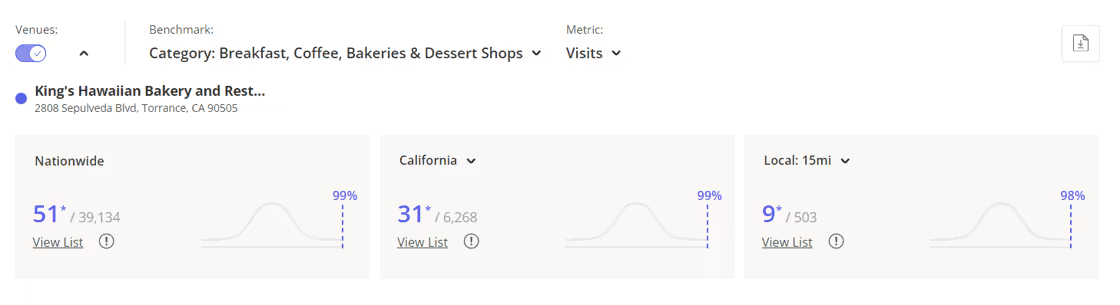
With Placer's ranking of "Breakfast, Coffee, Bakeries, and Dessert Shops" indicating that King's is in the top 1% nationwide and statewide, it looks like they've found a sweet recipe for success.

Nowruz took place on March 20 this year, and this celebration of the spring equinox dates back over three thousand years. Westwood Blvd, just south of UCLA, is home to a profusion of Persian restaurants, markets, bookstores, and ice-cream stores with flavors not found in your typical Baskin-Robbins. Hence, the affectionate moniker Tehrangeles for this little pocket where an Iranian diaspora has settled.
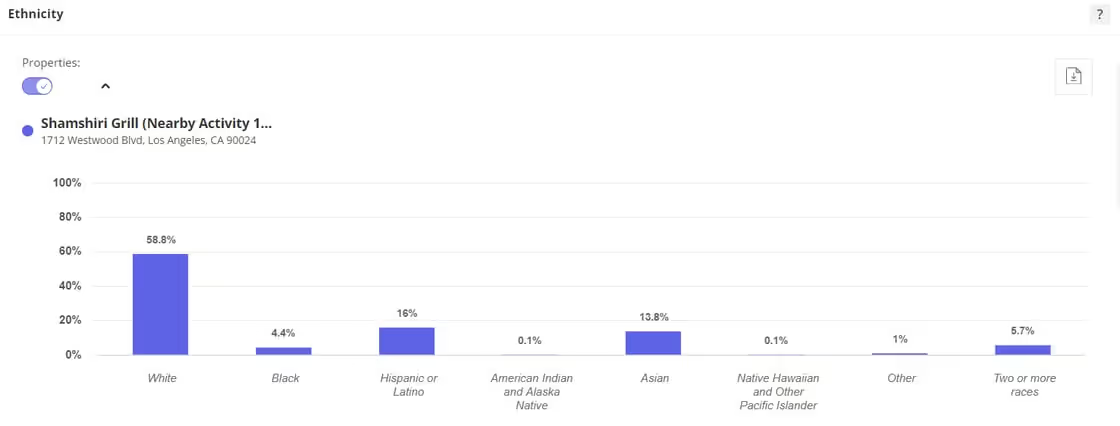
Restaurants like Shamshiri Grill, with its juicy beef koobideh kebab broiled to perfection and tomatoes that burst in your mouth, proves to be a hit with a wide cross-section of Angelenos. For dessert, be sure to stop at nearby Saffron & Rose for their namesake flavors or Mashti Malone’s for a uniquely Persian faloodeh shirazi, similar to a rosewater sorbet, topped with cherry sauce and rice starch vermicelli.
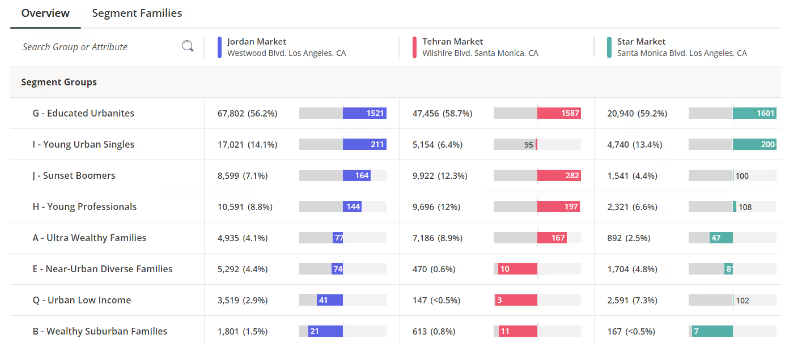
There are also numerous Persian markets in the area should you want to buy groceries and try cooking yourself. Jordan Market, Tehran Market, and Star Market all see over half their clientele come from the segment of Educated Urbanites.
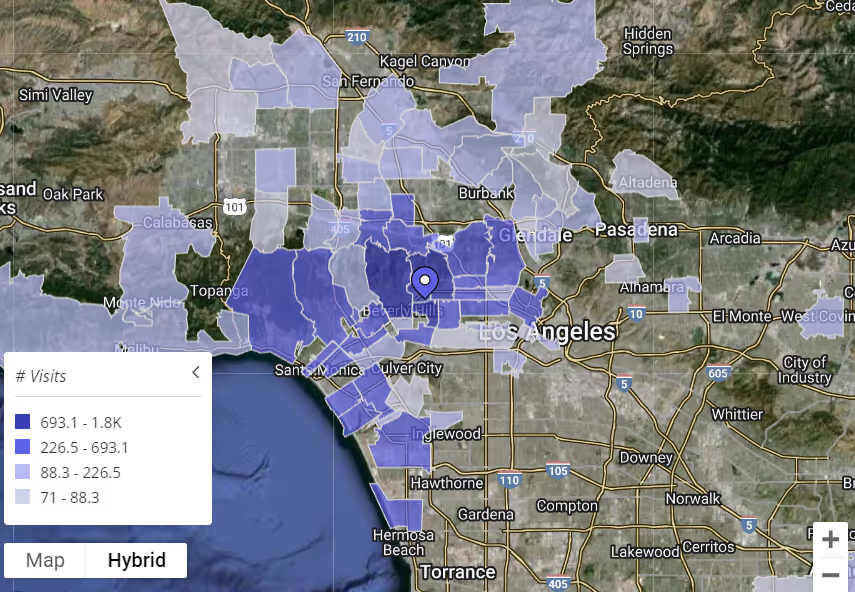
If you’d like to simultaneously celebrate Women’s History Month and buy yourself a little something for the New Year, then look no further than Cult Gaia, just a short drive away in West Hollywood. Founded by Jasmin Larian Hekmat in 2012, its Ark bag reached cult status within just a few years. Oozing a vacation-ready vibe and cool-girl aesthetic, the LA-based designer has most recently opened up a new store on the ritzy island of St. Barths. While the majority of visits to the West Hollywood store come from metro LA, there are still quite a few fans coming from further afield to shop.
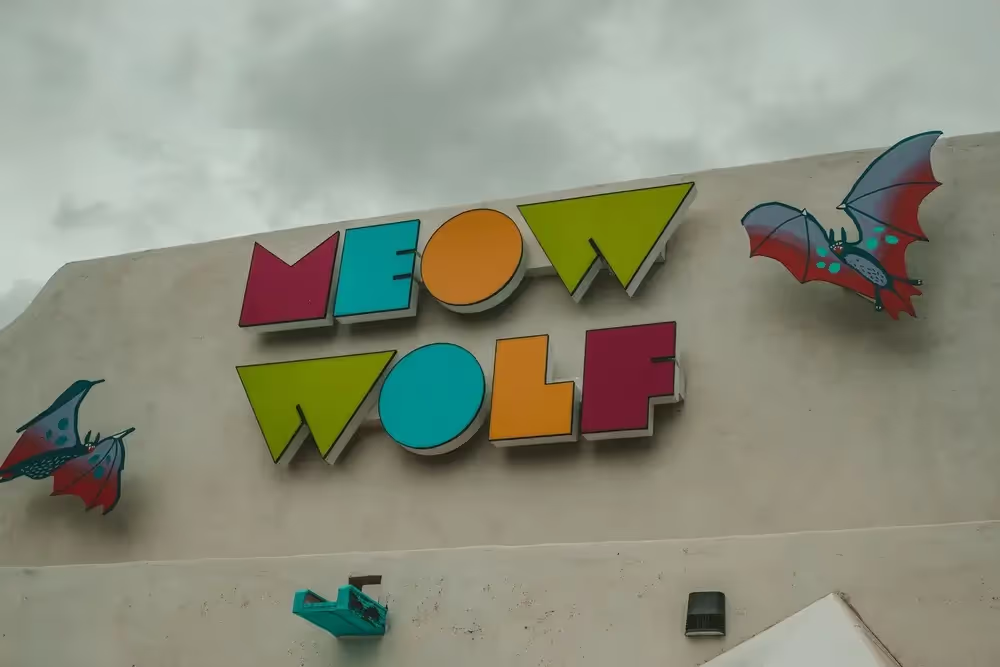
Meow Wolf’s Omega Mart in Las Vegas is an immersive entertainment experience that is sui generis and requires an in-person visit to truly understand this one-of-a-kind adventure. It’s a bit like an escape room, a bit of a psychedelic art show, with tongue-in-cheek humor and a satiric take on our consumerist tendencies. Make sure to keep an open mind when you visit and don’t be afraid to touch and feel the objects. In addition to Las Vegas, there are also locations in Denver “Convergence Station”, Grapevine “The Real Unreal”, and Santa Fe “House of Eternal Return”, with Houston opening in 2024.
When we look at participants from Las Vegas, Denver, and Grapevine, per Spatial.ai Followgraph, they have a higher propensity for being enthusiasts about Artificial Intelligence, Robotics, Electric Vehicles, Celebrity Entrepreneurs, Mental Health Advocates, and Athleisure. They are more likely than average to Chase Credit Card Rewards, Invest in Real Estate, eat Mexican Food, and Love BBQ.
The segments they come from are varied, per Spatial.ai PersonaLive. Las Vegas tends to attract the most Near-Urban Diverse Families, followed by Young Professionals. Nearly 1 in 5 at the Denver location are Young Professionals, as are 14.1% in Grapevine.
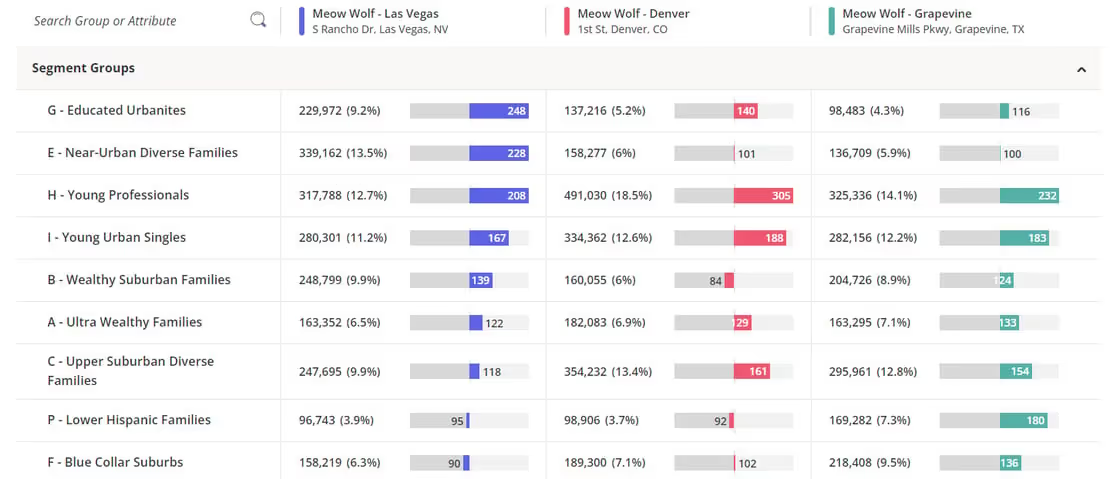
Those visiting the Denver location stay the longest, with a median dwell time of 120 minutes. Santa Fe is next at 109 minutes.

Introduction
2024 has been another challenging year for retailers. Still-high prices and an uncertain economic climate led many shoppers to trade down and cut back on unnecessary indulgences. Value took center stage, as cautious consumers sought to stretch their dollars as far as possible.
But price wasn’t the only factor driving consumer behavior in 2024. This past year saw the rise of a variety of retail and dining trends, some seemingly at odds with one another. Shoppers curbed discretionary spending, but made room in their budgets for “essential non-essentials” like gym memberships and other wellness offerings. Consumers placed a high premium on speed and convenience, while at the same time demonstrating a willingness to go out of their way for quality or value finds. And even amidst concern about the economy, shoppers were ready to pony up for specialty items, legacy brands, and fun experiences – as long as they didn’t break the bank.
How did these currents – likely to continue shaping the retail landscape into 2025 – impact leading brands and categories? We dove into the data to find out.
Conventional Value Reaching Its Ceiling
Bifurcation has emerged as a foundational principle in retail over the past few years: Consumers are increasingly gravitating toward either luxury or value offerings and away from the ‘middle.’ Add extended economic uncertainty along with rapid expansions and product diversification from top value-oriented retailers, and you have an explosion of visits in the value lane.
But we are seeing a ceiling to that growth – especially in the discount & dollar store space. Throughout 2023 and the first part of 2024, visits to discount & dollar stores increased steadily. But no category can sustain uninterrupted visit growth forever. Since April 2024, year–over-year (YoY) foot traffic to the segment has begun to slow, with September 2024 showing just a modest 0.8% YoY visit increase.
Discount & dollar stores, which attract lower-income shoppers compared to both grocery stores and superstores, have also begun lagging behind these segments in visit-per-location growth. In Q3, the average number of visits to each discount and dollar store location remained essentially flat compared to 2023 (+0.2%), while visits per location to superstores and grocery stores grew by 2.8% and 1.0%, respectively. As 2024 draws to a close, it is the latter segments, which appeal to shoppers with incomes closer to the nationwide median of $76.1K, which are seeing better YoY performance.
The deceleration doesn’t mean that discount retailers are facing existential risk – discount & dollar stores are still extremely strong and well-positioned with focused offerings that resonate with consumers. The visitation data does suggest, however, that future growth may need to focus on initiatives other large-scale fleet expansions. Some of these efforts will involve moving upmarket (see pOpShelf), some will focus on fleet optimization, and others may include new offerings and channels.
Return of the middle anyone?
Innovative and Disruptive Value Shake Up Retail and Dining
Still, in an environment where consumers have been facing the compounded effects of rising prices, value remains paramount for many shoppers. And brands that have found ways to let customers have their cake and eat it too – enjoy specialty offerings and elevated experiences without breaking the bank – have emerged as major visit winners this year.
Trader Joe’s Drives Visits With Private Label Innovation
Trader Joe’s, in particular, has stood out as one of the leading retail brands for innovative value in 2024, a trend that is expected to continue into 2025.
Trader Joe’s dedicated fan base is positively addicted to the chain’s broad range of high-quality specialty items. But by maintaining a much higher private label mix than most grocers – approximately 80%, compared to an industry average of 25% to 30% – the retailer is also able to keep its pricing competitive. Trader Joe’s cultivates consumer excitement by constantly innovating its product line – there are even websites dedicated to showcasing the chain’s new offerings each season. In turn, Trader Joe’s enjoys much higher visits per square foot than the rest of the grocery category: Over the past twelve months, Trader Joe’s drew a median 56 visits per square foot – compared to 23 for H-E-B, the second-strongest performer.
Chili’s Beats QSR at its Own Game
Casual dining chain Chili’s has also been a standout on the disruptive value front this past year – offering consumers a full-service dining experience at a quick-service price point.
Chili’s launched its Big Smasher Burger on April 29th, 2024, adding the item to its popular ‘3 for Me’ offering, which includes an appetizer, entrée, and drink for just $10.99 – lower than than the average ticket at many quick-service restaurant chains. The innovative promotion, which has been further expanded since, continues to drive impressive visitation trends. With food-away-from-home inflation continuing to decelerate, this strategy of offering deep discounts is likely to continue to be a key story in 2025.
The Convenience Myth
Convenience is king, right?
Well, probably not. If convenience truly were king, visitors would orient themselves to making fewer, longer visits to retailers – to minimize the inconvenience of frequent grocery trips and spend less time on the road. But analyzing the data suggests that, while consumers may want to save time, it is not always their chief concern.
Looking at the superstore and grocery segments (among others) reveals that the proportion of visitors spending under 30 minutes at the grocery store is actually increasing – from 73.3% in Q3 2019 to 76.6% in Q3 2024. This indicates that shoppers are increasingly willing to make shorter trips to the store to pick up just a few items.
At the same time, more consumers than ever are willing to travel farther to visit specialty grocery chains in the search of specific products that make the visit worthwhile.
Cross visitation between chains is also increasing – suggesting that shoppers are willing to make multiple trips to find the products they want – at the right price point. Between Q3 2023 and Q3 2024, the share of traditional grocery store visitors who also visited a Costco at least three times during the quarter grew across chains.
Does this mean convenience doesn’t matter? Of course not. Does it indicate that value, quality and a love of specific products are becoming just as, if not more, important to shoppers? Yes.
The implications here are very significant. If consumers are willing to go out of their way for the right products at the right price points – even at the expense of convenience – then the retailers able to leverage these ‘visit drivers’ will be best positioned to grow their reach considerably. The willingness of consumers to forego convenience considerations when the incentives are right also reinforces the ever-growing importance of the in-store experience.
So while convenience may still be within the royal family, the role of king is up for grabs.
Serving Diners Quicker With Automatization
Chipotle Draws Crowds With Autocado
Convenience may not be everything, but the drive for quicker service has emerged as more important than ever in the restaurant space. Diners want their fast food… well, as fast as possible. And to meet this demand, quick-service restaurants (QSRs) and fast-casual chains have been integrating more technology into their operations. Chipotle has been a leader in this regard, unveiling the “Autocado” robot at a Huntington Beach, California location last month. The robot can peel, pit, and chop avocados in record time, a major benefit for the Tex-Mex chain.
And the Autocado seems to be paying off. The Huntington Beach location drew 10.0% more visits compared to the average Chipotle location in the Los Angeles-Long Beach-Anaheim metro area in Q3 2024. Visitors are visiting more frequently and getting their food more quickly – 43.9% of visits at this location lasted 10 minutes or less, compared to 37.5% at other stores in the CBSA.
Are diners flocking to this Chipotle location to watch the future of avocado chopping in action, or are they enticed by shorter wait times? Time will tell. But with workers able to focus on other aspects of food preparation and customer service, the innovation appears to be resonating with diners.
McDonald’s Leans into Automation in Texas
McDonald’s, too, has leaned into new technologies to streamline its service. The chain debuted its first (almost) fully automated, takeaway-only restaurant in White Settlement, TX in 2022 – where orders are placed at kiosks or on app, and then delivered to customers by robots. (The food is still prepared by humans.) Unsurprisingly, the restaurant drives faster visits than other local McDonald’s locations – in Q3 2023, 79.7% of visits to the chain lasted less than 10 minutes, compared to 68.5% for other McDonald’s in the Dallas-Fort Worth-Arlington, TX CBSA. But crucially, the automated location is also busier than other area McDonald’s, garnering 16.8% more visits in Q3 than the chain’s CBSA-wide average. And the location draws a higher share of late-night visits than other area McDonald’s – customers on the hunt for a late-night snack might be drawn to a restaurant that offers quick, interaction-free service.
Evolving Retail Formats - Finding the Right Fit
Changing store formats is another key trend shaping retail in 2024. Whether by reducing box sizes to cut costs, make stores more accessible, or serve smaller growth markets – or by going big with one-stop shops, retailers are reimagining store design. And the moves are resonating with consumers, driving visits while at the same improving efficiency.
Macy’s Draws Local Weekday Visitors With Small-Format Stores
Macy’s, Inc. is one retailer that is leading the small-format charge this year. In February 2024, Macy’s announced its “Bold New Chapter” – a turnaround plan including the downsizing of its traditional eponymous department store fleet and a pivot towards smaller-format Macy’s locations. Macy’s has also continued to expand its highly-curated, small-format Bloomie’s concept, which features a mix of established and trendy pop-up brands tailored to local preferences.
And the data shows that this shift towards small format may be helping Macy’s drive visits with more accessible and targeted offerings that consumers can enjoy as they go about their daily routines: In Q3 2024, Macy’s small-format stores drew a higher share of weekday visitors and of local customers (i.e. those coming from less than seven miles away) than Macy’s traditional stores.
Harbor Freight Tools and Ace Hardware Serve Smaller Growth Markets With Less Square Footage
Small-format stores are also making inroads in the home improvement category. The past few years have seen consumers across the U.S. migrating to smaller suburban and rural markets – and retailers like Harbor Freight Tools and Ace Hardware are harnessing their small-format advantage to accommodate these customers while keeping costs low.
Harbor Freight tools and Ace Hardware’s trade areas have a high degree of overlap with some of the highest growth markets in the U.S., many of which have populations under 200K. And while it can be difficult to justify opening a Home Depot or Lowe’s in these hubs – both chains average more than 100,000 square feet per store – Harbor Freight Tools and Ace Hardware’s smaller boxes, generally under 20,000 square feet, are a perfect fit.
This has allowed both chains to tap into the smaller markets which are attracting growing shares of the population. And so while Home Depot and Lowe’s have seen moderate visits declines on a YoY basis, Harbor Freight and Ace Hardware have seen consistent YoY visit boosts since Q1 2024 – outperforming the wider category since early 2023.
Hy-Vee Bucks the Trend by Going Big
Are smaller stores a better bet across the board? At the end of the day, the success of smaller-format stores depends largely on the category. For retail segments that have seen visit trends slow since the pandemic – home furnishings and consumer electronics, for example – smaller-format stores offer brands a more economical way to serve their customers. Retailers have also used smaller-format stores to better curate their merchandise assortments for their most loyal customers, helping to drive improved visit frequency.
That said, a handful of retailers, such as Hy-Vee, have recently bucked the trend of smaller-format stores. These large-format stores are often designed as destination locations – Hy-Vee’s larger-format locations usually offer a full suite of amenities beyond groceries, such as a food hall, eyewear kiosk, beauty department, and candy shop. Rather than focusing on smaller markets, these stores aim to attract visitors from surrounding areas.
Visit data for Hy-Vee’s large-format store in Gretna, Nebraska indicates that this location sees a higher percentage of weekend visits than other area locations – 37.7% compared to 33.1% for the chain’s Omaha CBSA average – as well as more visits lasting over 30 minutes (32.9% compared to 21.9% for the metro area as a whole). For these shoppers, large-format, one-stop shops offer a convenient – and perhaps more exciting – alternative to traditionally sized grocery stores. The success of the large-format stores is another sign that though convenience isn’t everything in 2024, it certainly resonates – especially when paired with added-value offerings.
A Resurgence of Legacy Brands
Many retail brands have entrenched themselves in American culture and become an extension of consumers' identities. And while some of these previously ubiquitous brands have disappeared over the years as the retail industry evolved, others have transformed to keep pace with changing consumer needs – and some have even come back from the brink of extinction. And the quest for value notwithstanding, 2024 has also seen the resurgence of many of these (decidedly non-off-price) legacy brands.
In apparel specifically, Gap and Abercrombie & Fitch – two brands that dominated the cultural zeitgeist of the 1990s and early 2000s before seeing their popularity decline somewhat in the late aughts and 2010s – may be staging a comeback. Bed Bath & Beyond, a leader in the home goods category, is also making a play at returning to physical retail through partnerships.
Anthropologie, another legacy player in women’s fashion and home goods, is also on the rise. Anthropologie’s distinctive aesthetic resonates deeply with consumers – especially women millennials aged 30 to 45. And by capturing the hearts of its customers, the retailer stands as a beacon for retailers that can hedge against promotional activity and still drive foot traffic growth.
And visits to the chain have been rising steadily. In Q4 2023, the chain experienced a bigger holiday season foot traffic spike than pre-pandemic, drawing more overall visits than in Q4 2019. And in Q3 2024, visits were higher than in Q3 2023.
Meeting the Evolving Needs of Millennials
And speaking of the 35 to 40 set – the generation that all retailers are courting? Millennials. Does that sound familiar? Yes, because this is the same generational cohort that retailers tried to target a decade ago. As millennials have aged into the family-formation stage of life, their retail needs have evolved, and the industry is now primed to meet them.
Sam’s Club Draws Value-Conscious Singles and Starters
From the revival of nostalgic brands like the Limited Too launch at Kohl’s to warehouse clubs expanding memberships to younger consumers as they move to suburban and rural communities, there are myriad examples of retailers reaching out to this cohort. And Sam’s Club offers a prime example of this trend.
Over the past few years, millennials and Gen-Zers have emerged as major drivers of membership growth at Sam’s Club, drawn to the retailer’s value offerings and digital upgrades – like the club’s Scan & Go technology. Over the same period, Sam’s Club has grown the share of “Singles and Starters” households in its captured market from 6% above the national benchmark in Q3 2019 to 15% in Q3 2024. And with plans to involve customers in co-creating products for its private-label brand, Sam’s Club may continue to grow its market share among this value-conscious – but also discerning and optimistic – demographic.
Taco Bell Brings in Crowds With Value Nostalgia Menu
Millennials are also now old enough to wax nostalgic about their youth – and brands are paying attention. This summer, Taco Bell leaned into nostalgia with a promotion bringing back iconic menu items from the 60s, 70s, 80s, and 90s – all priced under $3. The promotion, which soft-launched at three Southern California locations in August, was so successful that the company is now offering the specials nationwide. The three locations that trialed the “Decades Menu” saw significant boosts in visits during the promotional period compared to their daily averages for August. And people came from far and wide to sample the offerings – with a higher proportion of visitors traveling over seven miles to reach the stores while the items were available.
What Lies Ahead?
Hot on the heels of a tumultuous 2023, 2024’s retail environment has certainly kept retailers on their toes. While embracing innovative value has helped some chains thrive, other previously ascendant value segments, including discount & dollar stores, may have reached their growth ceilings. Consumers clearly care about convenience – but are willing to make multiple grocery stops to find what they need. At the same time, legacy brands are plotting their comeback, while others are harnessing the power of nostalgia to drive millennials – and other consumers – through their doors.