Skip to Main Content
Thank you! Your submission has been received!
Oops! Something went wrong while submitting the form.
0
0
0
0
----------
0
0
Articles
Article
Small Format Stores - Sprouting, Blooming, and Expanding
We take a look at the visit data across several small-format stores - Sprouts, Bloomingdale's, and BJ's Wholesale Club - to see how consumers are interacting with these new smaller spaces.
Maytal Cohen & Noam Maman
Jun 25, 2024
4 minutes

Small-format stores which offer consumers more convenient and localized shopping experiences are on the rise. The trend has been gaining traction since COVID – spearheaded by major retailers like Macy's and Nordstrom, and followed by players such as IKEA, Target, Best Buy, and others.

But what impact do small-format stores have on shopper behavior? We dove into the data to explore consumer interaction with three retailers that are leaning into the small-format space: Sprouts Farmers Market, Bloomingdale’s, and BJ’s Wholesale Club.

Key Takeaways

  • Since January 2022, Sprout Farmers Market has driven significant visit growth by growing its footprint through the addition of small-format locations.
  • Macy’s Bloomie’s concept is successfully attracting urban social segments – in alignment with the company’s goal of offering city dwellers a more contemporary, convenient shopping experience.
  • BJ's Wholesale Club’s smaller-format store in Warwick, Rhode Island has significantly boosted customer engagement and loyalty – beating regional and nationwide chain averages for both year-over-year (YoY) visit growth and share of monthly visits. 

Sprouting Into New Sizes

Sprouts Farmers Market provides a great example of how a small-format expansion strategy can drive visit growth. Since January 2022, the chain has doubled down on a small-format strategy aimed at significantly reducing the chain’s square footage and environmental impact. And partially thanks to this expansion effort, Sprout saw visits to its smaller format stores increase by nearly 50.0% over the same period – helping the brand outpace the overall grocery sector in early 2024. 

By focusing on customer acquisition through smaller accessible stores, Sprouts is successfully meeting the demand for convenience and sustainability. And as a pioneer in the small-format grocery space, Sprouts is setting a high bar for other grocery chains like Whole Foods and Trader Joe’s, who are rolling out their own smaller convenience-style locations. Could this mark the start of an overall shift in the grocery sector? Only time will tell.

Bloomie’s Small Format in Full Bloom

In February 2024, Macy’s announced a turnaround plan calling for the closing of about 30% of its traditional department stores, the opening of smaller versions of the company’s eponymous chain, and the addition of more Bloomingdale’s locations. Macy’s also plans the addition of at least one more small-format Bloomie’s store this year – the highly curated, small-format neighborhood concept launched by Macy’s in 2021. With three locations nationwide – and a fourth set to open this fall in New Jersey – Bloomie’s features a mix of established brands and trendy pop-ups tailored to local tastes. 

And zooming in on visitation data for the Bloomie’s in Skokie, Illinois shows how the format helps Bloomingdale’s attract new audience segments. Compared to Bloomingdale’s full-size locations, visitors to the Skokie Bloomie’s in May 2024 came from areas with higher shares of urbanites – including STI: Landscape’s “Urban Cliff Dwellers”, “Seasoned Urban Dwellers”, and “Urban Cliff Climbers” segments. This indicates that Bloomie’s appeals to city dwellers – aligning with Bloomingdale’s goal of providing a contemporary, accessible, and convenient shopping experience in urban settings.

BJ’s Small Format Test: Efficiency Meets Loyalty

In April 2022, BJ’s Wholesale Club unveiled BJ’s Market - a smaller-format store in Warwick, Rhode Island that’s roughly half the size of a full-sized club location. Examining the location’s visit performance over the last two years highlights the significant impact small-format stores can have on customer engagement and loyalty. 

During the first five months of 2024, BJ’s small-format Warwick location experienced consistent YoY visit growth – outperforming the chain’s already-impressive state- and nationwide averages over nearly the entire analyzed period.  

But visitors also interacted with the small-format venue differently in other important ways as well. Unsurprisingly, the average visit stay at the small format BJ’s in May 2024 was significantly shorter than the average stay at BJ’s in Rhode Island and at the chain nationwide (21 minutes, versus 27.6 and 30.7 minutes, respectively). And people tended to drop by the Warwick BJ’s more frequently – with 55.0% of visitors visiting the location at least twice during the month, compared to just 37.5% in Rhode Island and 38.7% nationwide. 

BJ’s testing of the Warwick small-format location proves that wholesale can be extended beyond endless roaming through enormous big box stores in search for the best value bargain. There is a clear demand for a quicker, more frequent and more efficient shopping experience in the wholesale space, and BJ’s is seizing the opportunity.

Looking Ahead

Retailers across categories  are increasingly incorporating small format stores into their evolving store footprints – with promising results. How will this trend continue to play out? And will consumer preferences continue to shift towards quick, efficient, experiential, and curated shopping experiences?

Follow Placer.ai to keep up with the latest data-driven retail trends.  

Article
Retail and Dining on Father’s Day
June 16th, 2024 was Father’s Day – and sons and daughters nationwide took the opportunity to show their dad some appreciation. Find out how Father’s Day retail and dining foot traffic compared to that of Mother’s Day.
Lila Margalit
Jun 24, 2024
3 minutes

June 16th, 2024 was Father’s Day – and sons and daughters nationwide took the opportunity to show their dad some appreciation. But how did Father’s Day retail and dining foot traffic compare to that of Mother’s Day

We dove into the data to find out. 

A (More Muted) Hallmark Visit Bump

Last month, we observed that though Mother’s Day wasn’t actually created by the greeting card industry, the holiday is one of Hallmark’s busiest days of the year. 

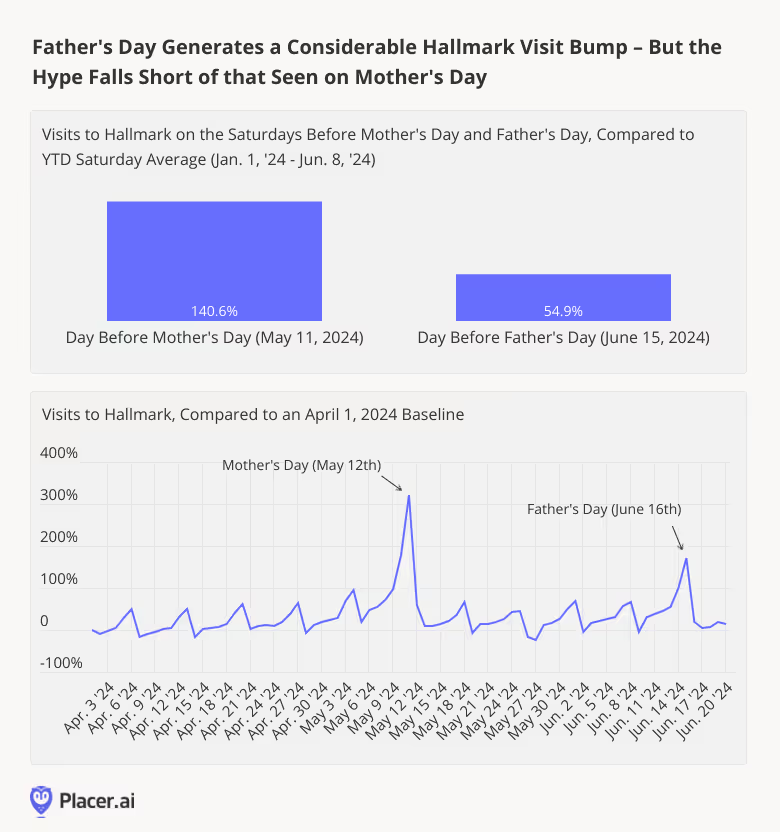
And foot traffic analytics show that Father’s Day isn’t far behind. On June 15th, 2024 (the Saturday before Father’s Day), Hallmark stores drew 54.9% more visits than on an average year-to-date (YTD) Saturday – making it the company’s third-busiest day of the year so far. Only May 10th and May 11th, the days before Mother’s Day, drew bigger crowds to the greeting card chain.

Visits to Hallmark on Saturdays before Mother's and Father's Day compared to YTD Saturday visit Average - Jan. - June 8, 2024; visits to Hallmark compared to an April 1, 2024 baseline

Sporting Goods (Finally!) Score a Win

And a look at visits to major industries that are top picks for dads shows that a variety of segments enjoyed visit boosts in the run-up to Father’s Day – though for most categories, the magnitude of the bump was considerably smaller than that seen before Mother’s Day. 

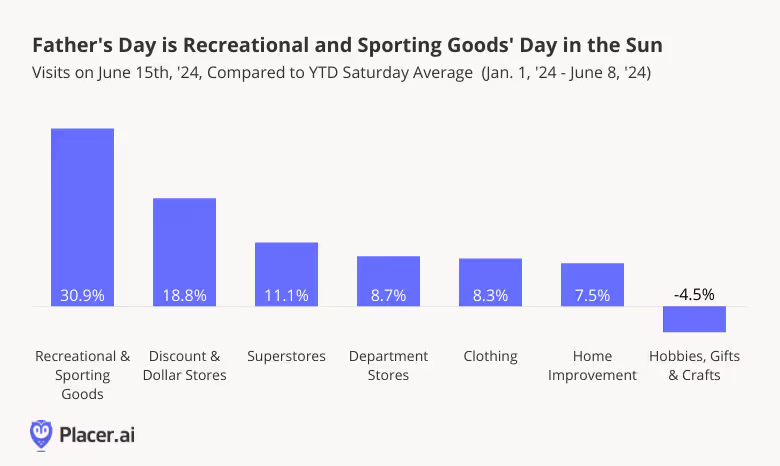
But for one category in particular – recreational and sporting goods – it was the day before Father’s Day that was the bigger deal. On June 15th, 2024, visits to these retailers jumped 30.9% compared to an average YTD Sunday – making them the biggest beneficiaries of dad’s special occasion. Hobbies, crafts, & gift stores, on the other hand – which saw a substantial visit boost in the lead-up to Mother’s Day – experienced a drop in foot traffic.

Visits to recreational & sporting goods, discount & dollar stores, superstores, department stores, clothing stores, home improvement stores, and hobby stores on June 15th, 2024, compared to YTD Saturday visit average

Grabbing a Bite to Eat With Dad

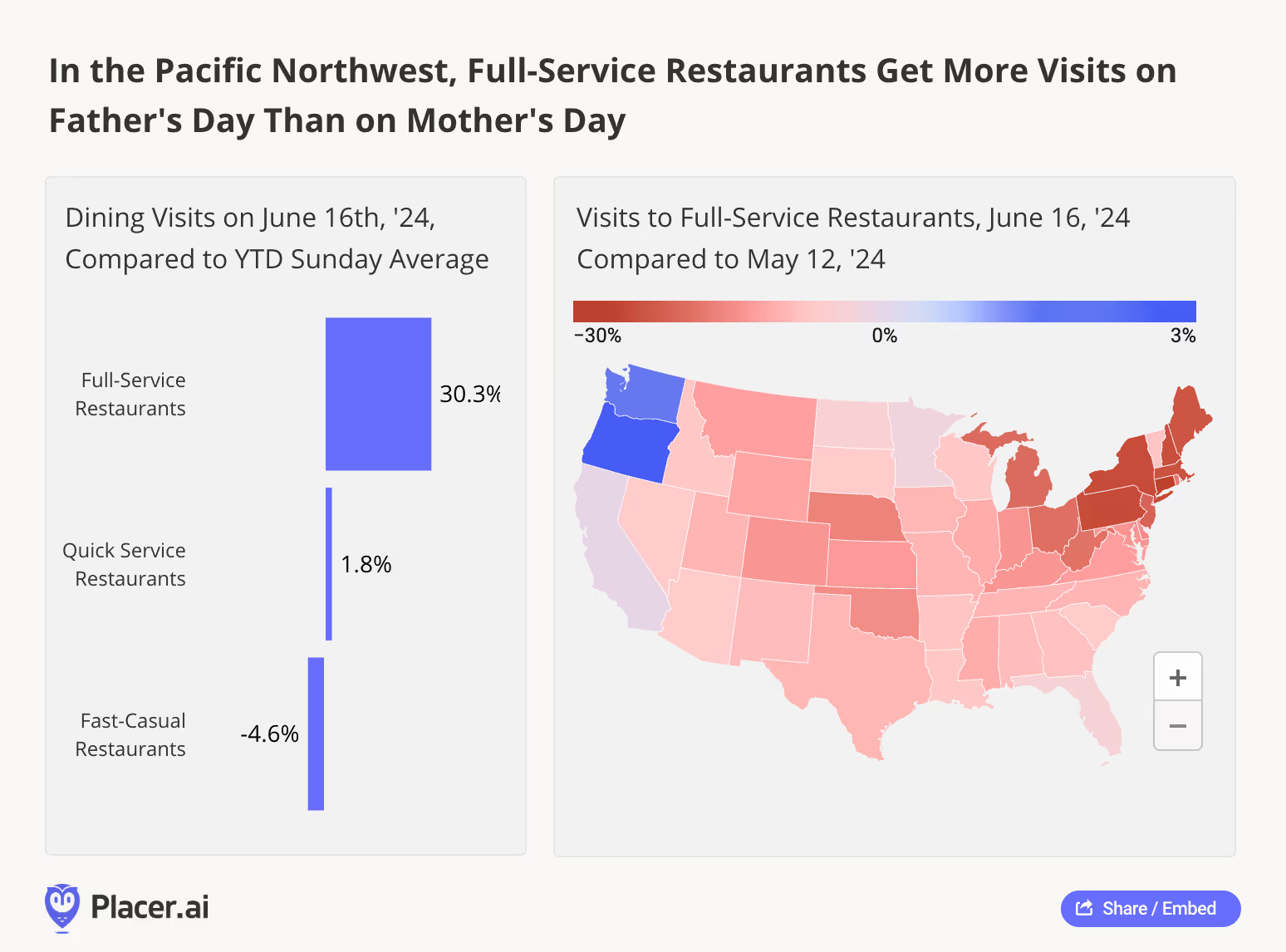
Like on Mother’s Day, grateful offspring ponied up on Father’s Day to treat their dads to a nice, sit-down meal. On June 16th, 2024, visits to full-service dining venues jumped 30.3% compared to a YTD Sunday average. Meanwhile, visits to quick-service restaurants increased just slightly, and those to fast-casual establishments declined. 

Still, throughout most of the country, full-service restaurants (FSRs) were much busier this year on Mother’s Day than on Father’s Day. The discrepancy was most pronounced in Northeastern states like Connecticut, Pennsylvania, New York, New Hampshire, Massachusetts, Maine, and New Jersey – where Mother’s Day FSR visits were more than 20.0% higher than Father’s Day ones. But two states in the Pacific Northwest, Washington and Oregon, drew more FSR foot traffic on Father’s Day than on Mother’s Day – perhaps due in part to the region’s special connection to the occasion honoring dads. (The tradition of celebrating Father’s Day originated in Spokane, WA in the early 1900’s, decades before it was declared a federal holiday in 1972).

Dining visits on June 26th, '24, to full-service restaurants, quick service restaurants, and fast-casual restaurants; nationwide visits to full-service restaurants on June 16th '24 compared to May 12, '24

A Juicy Steak at… Texas Roadhouse

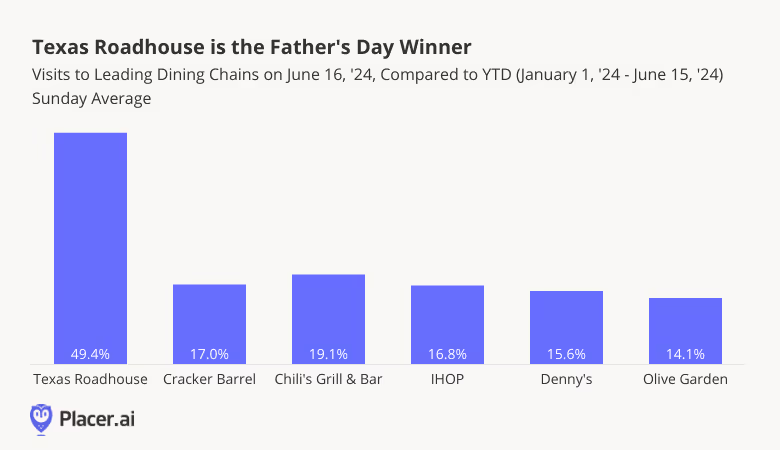
The dining difference between Father’s Day and Mother’s Day is about more than just quantity: Where moms have a clear soft spot for Olive Garden, dads are all about the steak. Texas Roadhouse was the single busiest FSR chain on Father’s Day this year, with visits outpacing an average YTD Sunday by 49.4%.

Visits to leading dining chains on June 16th, '24, compared to YTD (Jan. 1, '24 - June 15th, '24) Sunday average

A Day for Dads

Father’s Day doesn’t have quite the same retail and dining impact as Mother’s Day – but it’s an important milestone nonetheless. 

What other special calendar days are poised to draw outsize customer foot traffic in 2024?

Follow Placer.ai’s data-driven retail and dining analyses to find out.

Article
South Asian Influence on Sports, Groceries, and Malls
Caroline Wu
Jun 21, 2024

We’ve previously written about the influence of East Asian, Southeast Asian, and Hispanic cultures and their influence on groceries, malls, and food halls with the likes of H Mart, 99 Ranch, Asia Garden Mall, and Mercado Gonazlez. Now, let’s turn our attention to the huge Indian subcontinent, which includes India, Pakistan, Bangladesh, Nepal, Bhutan, Sri Lanka, and the Maldives.

One of this summer’s breakout sports stories is that of Sarubh Netravalkar, Oracle software engineer by day, Cricket star on the side!  He helped Team USA beat Pakistan during the Men’s T20 Cricket World Cup in a huge upset, and has now been nicknamed the “Desi Diaspora Darling.”  The United States is co-hosting and participating in this Cricket tournament for the first time, and fans came out in droves to Eisenhower Stadium in Nassau, NY, which essentially became a pop-up stadium in order for the competition to take place. Tikka fries, an ultimate combo of South Asian flavor and American snack favorite, were on offer at the concession stands.

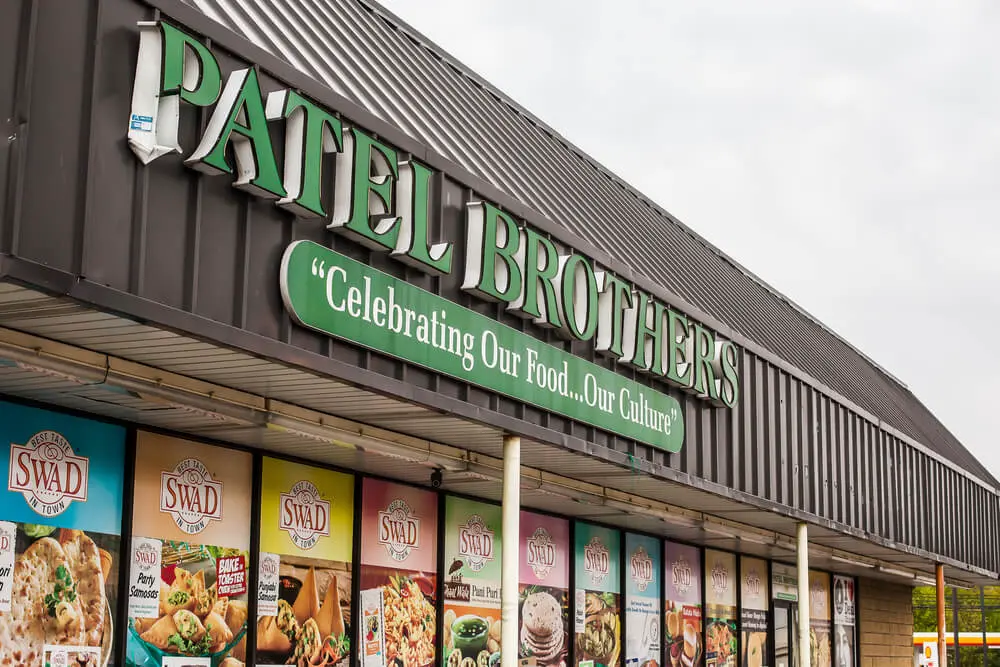
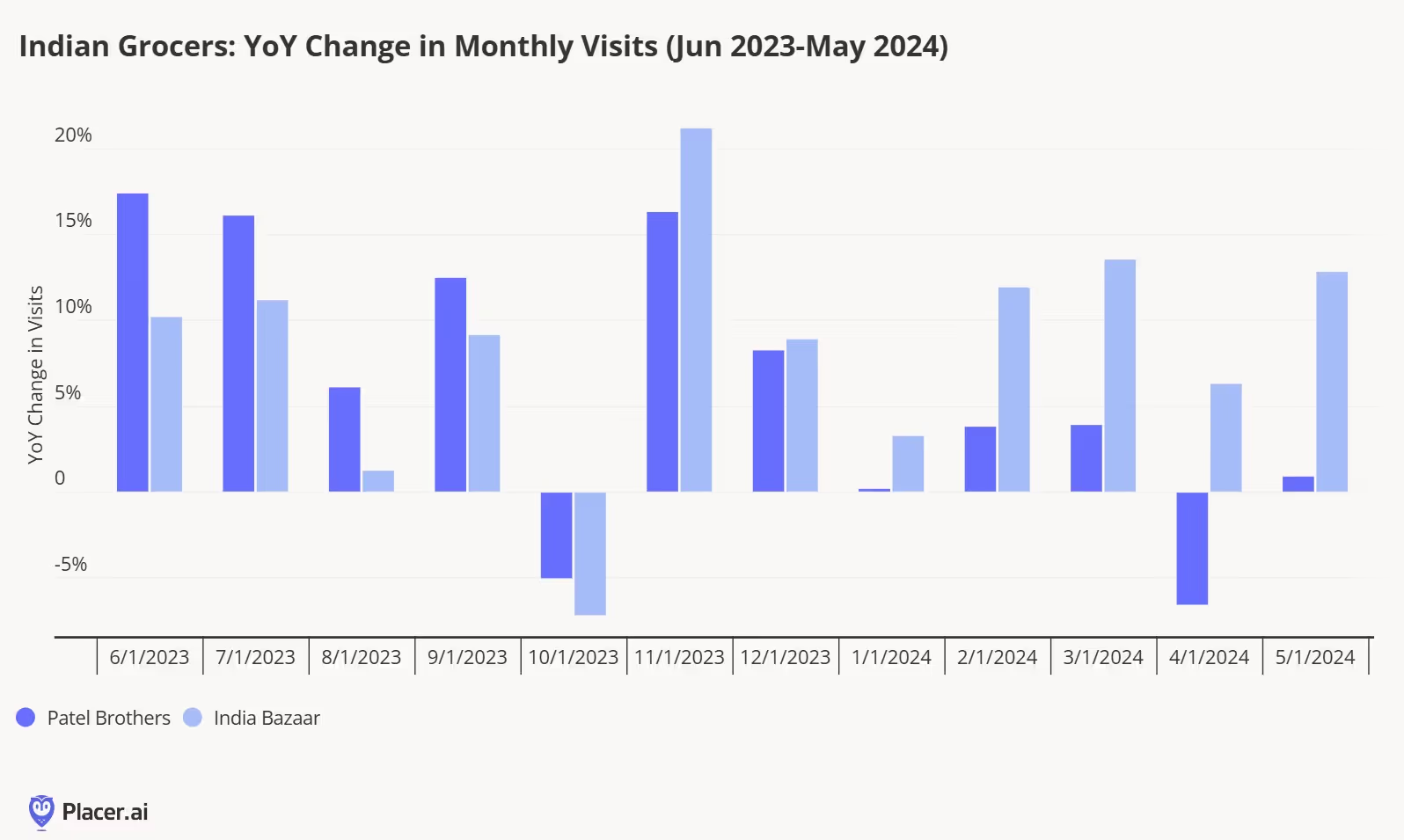
The embrace of South Asian flavors can also be seen in the growth and success at grocery. Patel Brothers and India Bazaar are two Indian grocery chains that have been growing rapidly. The former saw increased year-over-year growth in 8 of the 12 months preceding. Meanwhile, the latter saw year-over-year growth in 11 out of the last 12 months.

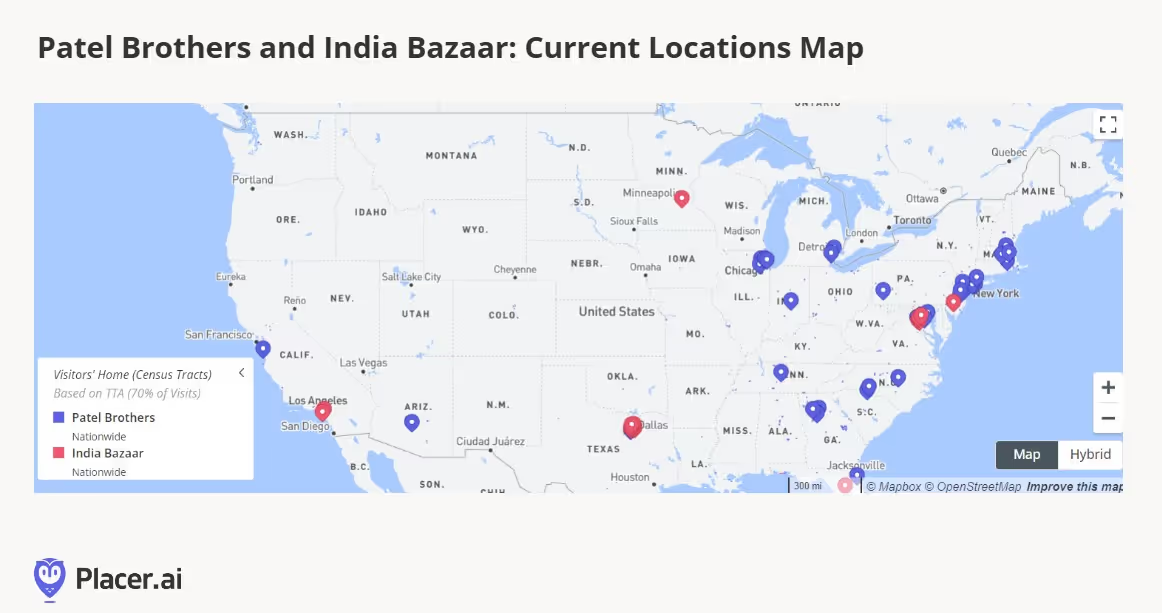
The grocery stores can be found in various states in the US, with a particular concentration for Patel Bros in the Chicago, New York, Boston, and DC areas and for India Bazaar in the Dallas area.

South Asian food has many highly flavorful vegetarian and vegan options, which makes it attractive to those seeking a taste boost to dishes.  Chai is a staple at many tea and coffee specialty stores, and some are saying that naan sandwiches could be the next burrito.  Having the right recipe can really open doors.  Bombay Frankie, now located within Westfield Culver City, has its origins at a gas station, but the demand became so high that they opened up a brick-and-mortar restaurant.  Their affectionately called “Indian Burrito” comes both rolled up or deconstructed.  With deconstructed, one can decide the perfect bite ratio of fluffy naan, seasoned chicken, cool raita, crunchy cucumbers, and tomatoes bursting with flavor.

Source: Bombay Frankie Company

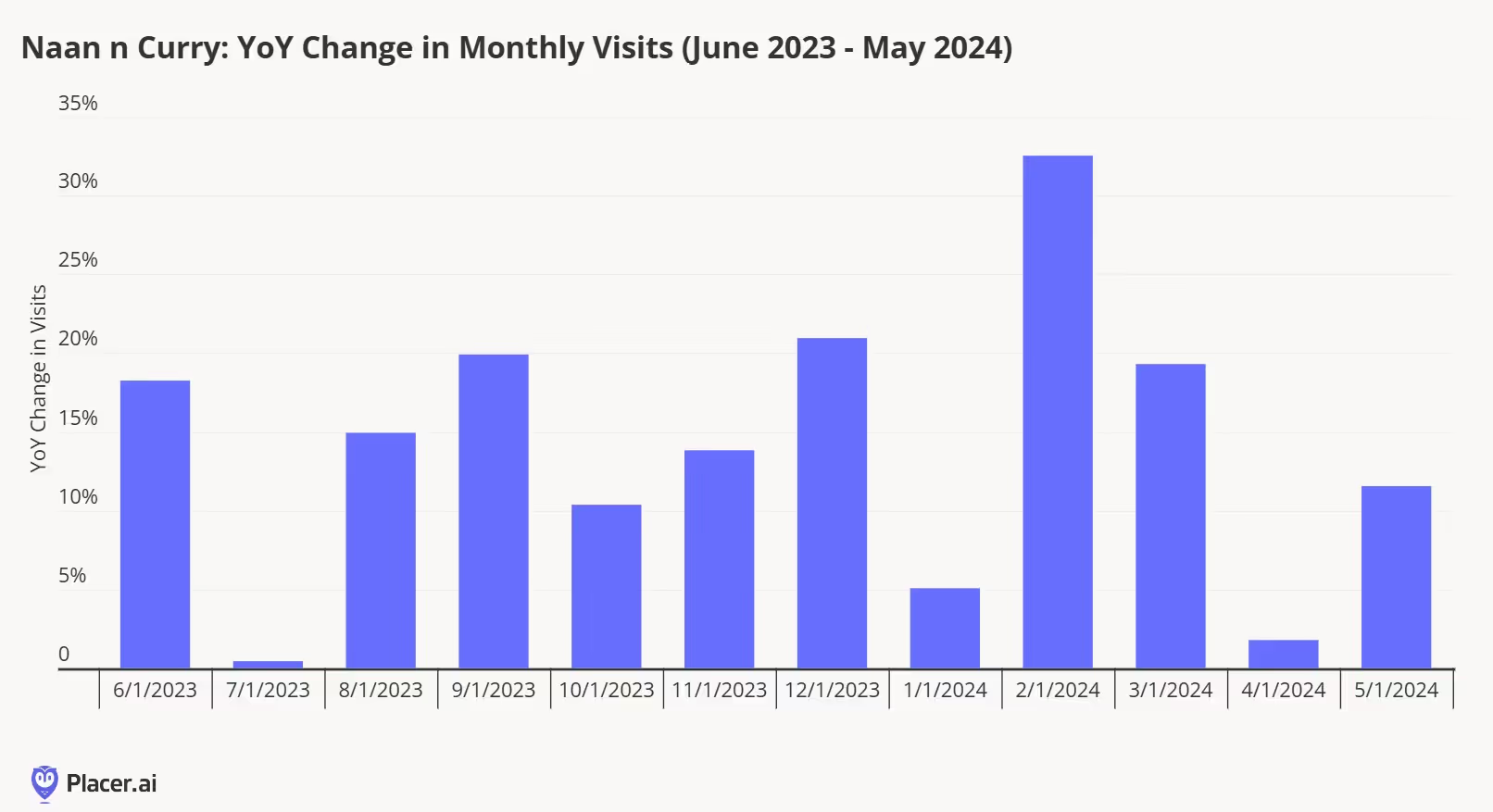
A quick Google search shows a burst of restaurants that incorporate naan into their name, such as Naan-tastic, Naansense, and Naan & Kabob. Naan n Curry is an example of a naan chain that has seen positive year-over-year growth.

Article
Housewares Retail: Kitchen Focused Chains Still Thriving
Elizabeth Lafontaine
Jun 21, 2024

Sourcing food at home has become a lot more attractive for consumers against the backdrop of economic concerns in 2024. In Kroger’s earnings call, CEO Rodney McMullen called out that out of home food costs are outpacing in home food costs, leading shoppers to focus more on in-home meal solutions. Cooking can be seen as a cost saving lever for visitors, but the pandemic period also fostered a love of cooking and spending time in the kitchen, even for higher income households not necessarily looking to save money. And it appears through Placer’s location insights that retailers that focus on outfitting the kitchen have been benefiting from this change in consumer behavior.

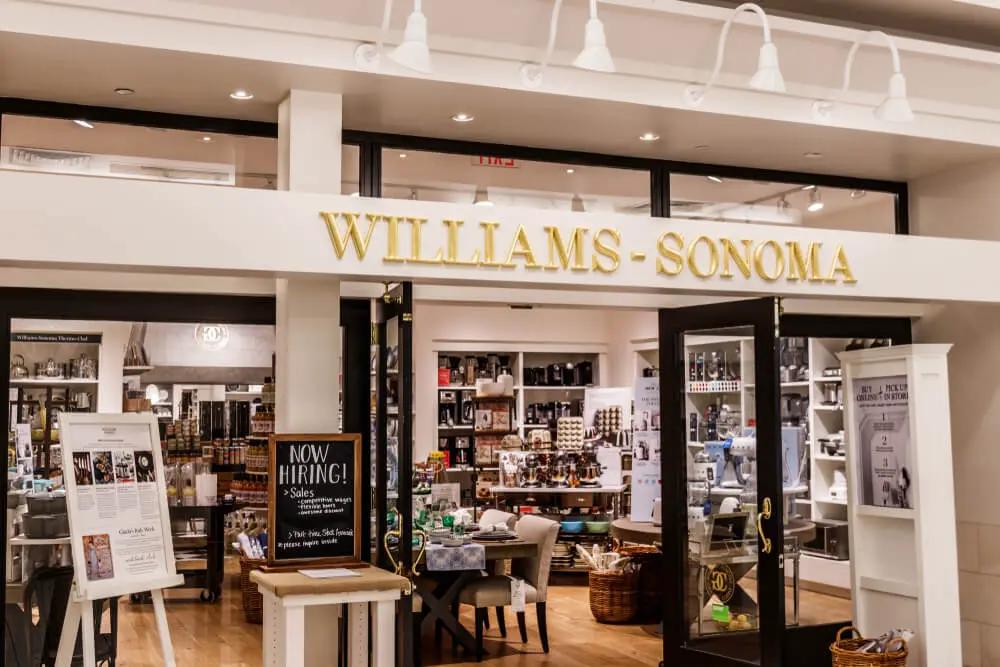
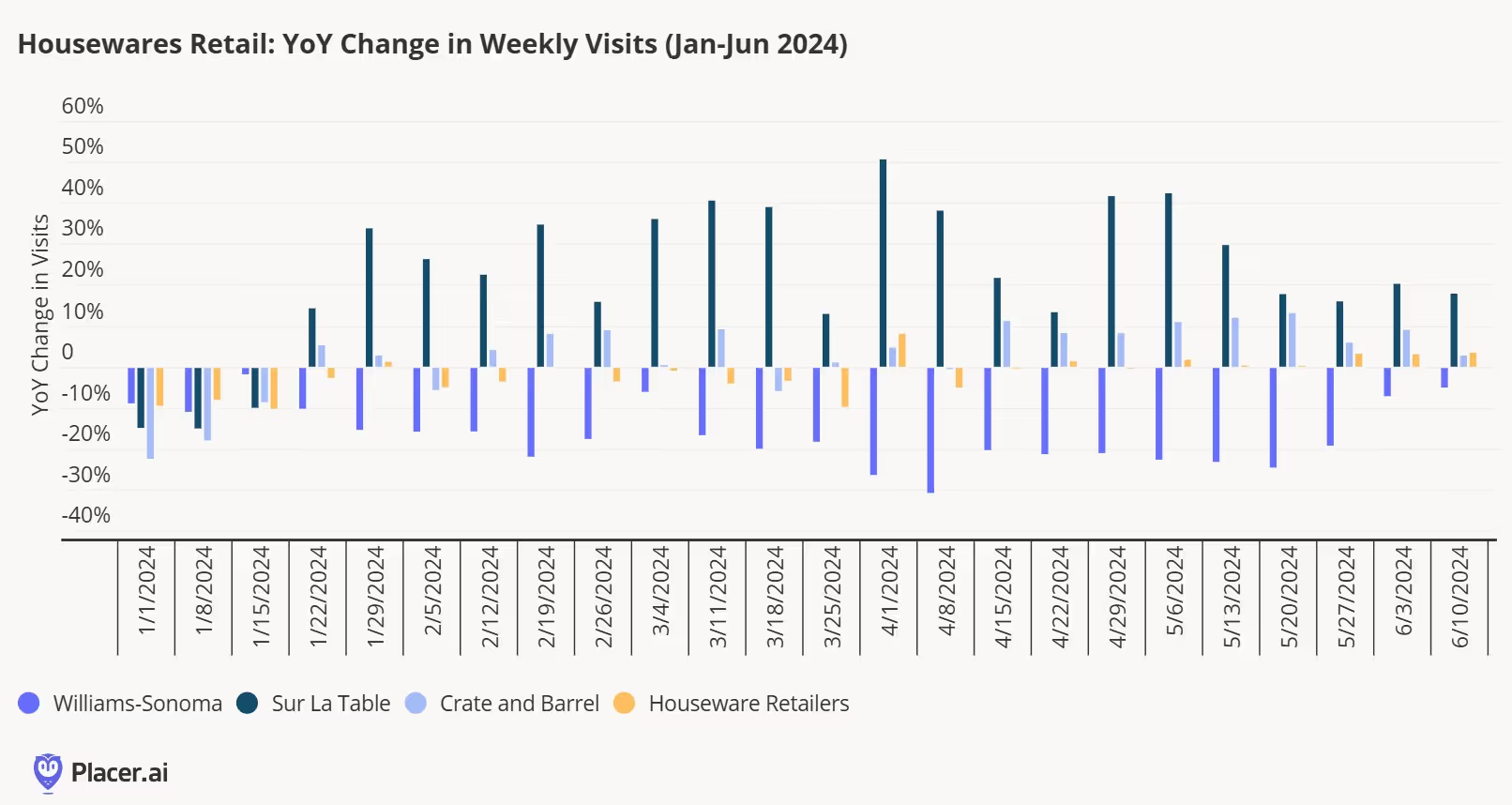
Despite the home industry having its challenges in foot traffic after the pandemic, housewares retailers have had some positive momentum over the past few months. Beyond that, houseware retailers that specialize in kitchen wares, such as Crate & Barrel and Sur La Table, have seen traffic growth throughout 2024. Williams-Sonoma, despite challenging year-over-year declines in traffic, reported comparable sales growth in the first quarter of 2024, which signals a higher level of conversion in-store.

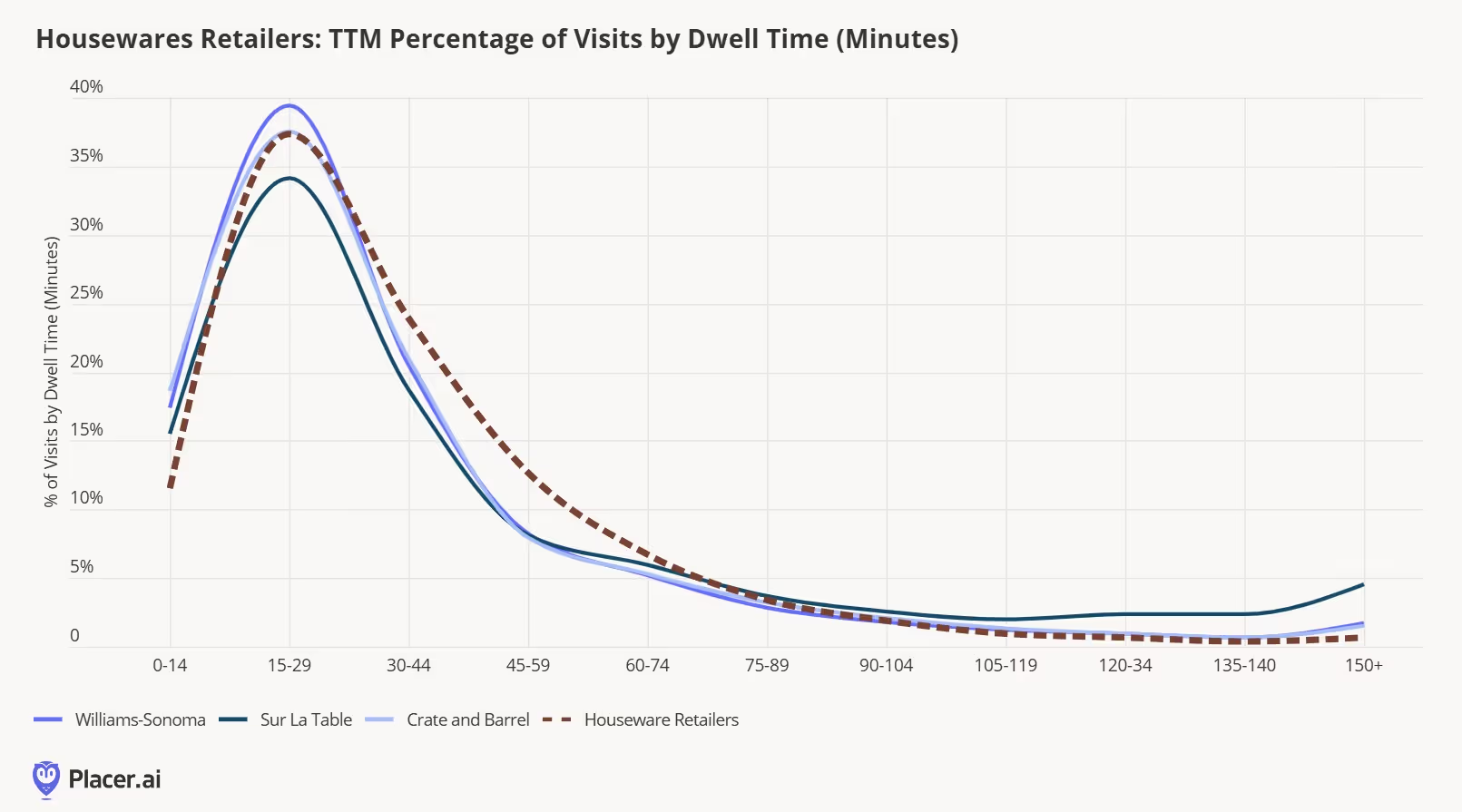
Sur La Table, a retailer that’s been challenged in the past, has found new life in changing consumer needs. One of Sur La Table’s core competencies is in-store cooking classes, and experiential retail continues to be one way the industry can provide inherent value to visitors. Dwell times are almost 10 minutes longer than Williams-Sonoma, its closest competitor (below). It also has the highest median household income of visitors and has the highest share of visits from households over $150k. Certainly at-home cooking has increased across income brackets, but high-end consumers also appear to be interested in adjacent home categories to take their skills to the next level. Blending product knowledge, experiences and assortment has greatly benefitted Sur La Table, and even against a challenging specialty retail landscape, the retailer has once again found its niche.

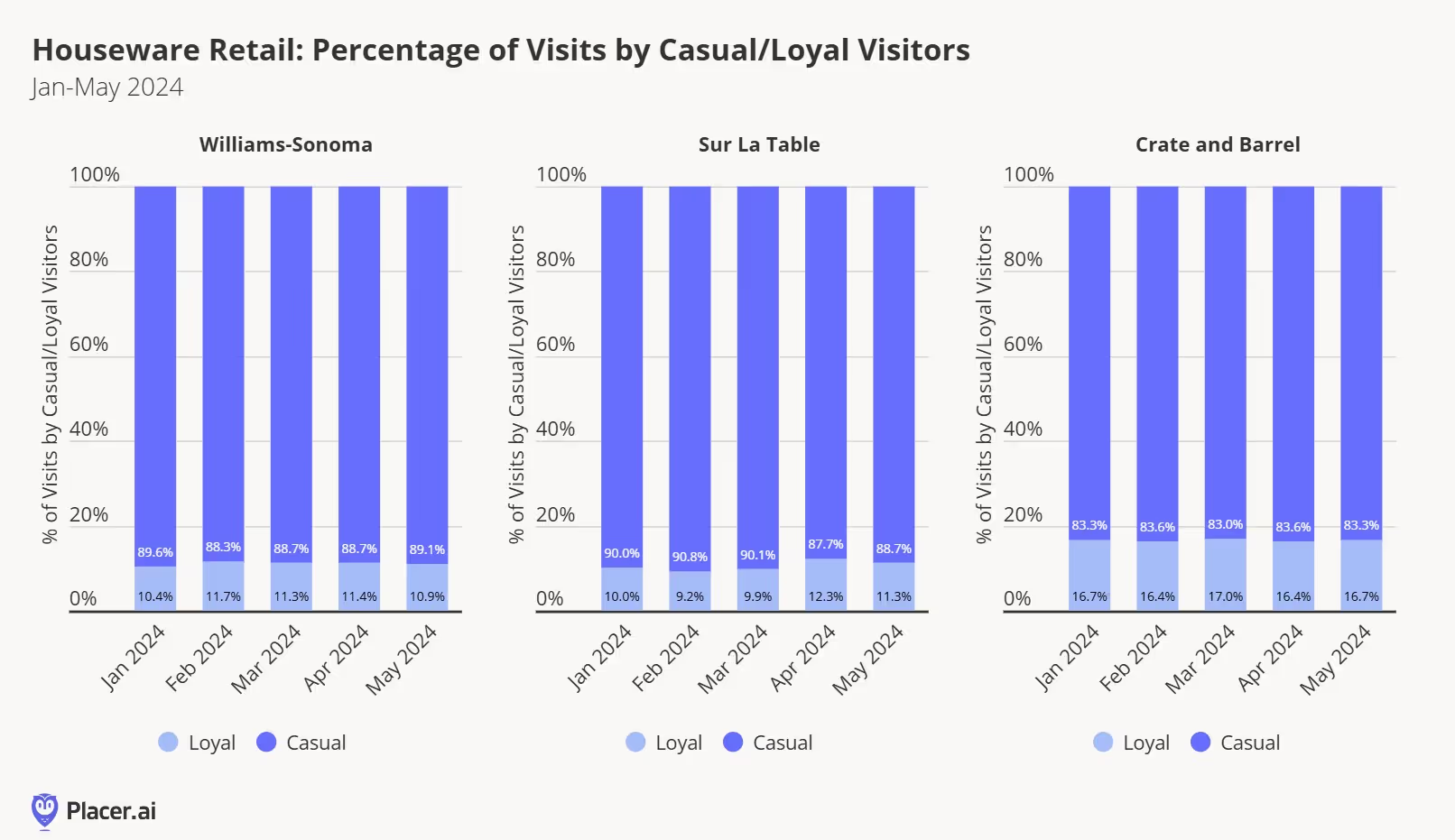
These retailers are often at the top of wedding registry lists, which could benefit traffic as we head into the summer months and the height of wedding season. Crate & Barrel, while not solely a kitchen focused retailer, has long been known as a registry destination that helps registrants outfit a kitchen with all of the cookware and gadgets one could need. Year to date through June, Crate & Barrel traffic is up 3% year-over-year, which is even more impressive considering that its assortment features an array of home furnishings categories, including furniture. Looking at demographic segments using Spatial.ai, Crate & Barrel over indexes in visits from Educated Urbanites and Young Professionals and Sunset Boomers compared the the average of other housewares chains, a signal that the wedding registry business, typically fueled by kitchen goods, could be attracting these particular subsets. Crate & Barrel also has a high level of loyalty in visits compared to other competitors in the space.

As we reported about Wayfair a few weeks ago, home retailers that have created exciting experiences and reasons to visit are still resonating with consumers, despite the tempered interest in the home category. An increased interest in cooking by consumers certainly plays a part in these retailers' success, but they have also had to provide even more incentive to drive traffic growth as consumers shift their attention away from purchasing for their homes. Having an experiential component or registry business have kept kitchen focused retailers more aligned with their consumer’s needs, which drive inherent value in today’s retail landscape, something not easy to come by.

Article
Thrift Store Visit Scores
Interest in thrifting and secondhand fashion has been on the rise in recent years. With 2024 nearly at the midway point, we dove into the data to take a closer look at the segment. 
Bracha Arnold
Jun 20, 2024
3 minutes

Thrifting is on the rise. Whether fueled by a desire to shop more sustainably, find unique pieces, or save money, consumers have been increasingly turning to secondhand clothing stores for their new threads. And interest in thrift shopping is only expected to grow over the next few years – with some estimates putting the U.S. secondhand market at $73 billion by 2028.

With 2024 nearly at the midway point, we dove into the data to take a closer look at the segment. 

Key Takeaways:

  • Thrift stores showed consistent monthly year-over-year (YoY) visit growth between January and May 2024 – and are drawing significantly more visits than before COVID. 
  • Diving into individual secondhand chains reveals strength across brands: Goodwill, Crossroads Trading Co., and Savers all enjoyed consistent YoY visit growth in early 2024.
  • Thrift stores in 2024 also serve an economically diverse customer base – Goodwill draws visitors from areas with median household incomes (HHIs) below the nationwide median, while Crossroads Trading Co. attracts more affluent consumers and Savers attracts average-income shoppers. 
  • Still, thrift shoppers place a high premium on bargains. Between January and May 2024, visitors to Crossroads Trading Co. and Savers were more likely to visit Goodwill than any other clothing chain, and all thrift store shoppers displayed a strong affinity for off-price retailers. 

Thrift Is A Winner

The past few years have seen a growing interest among consumers in all things value, and thrift shops have been reaping the benefits. Between January and May 2024, the segment experienced strong monthly year-over-year (YoY) foot traffic growth. And compared to pre-COVID, too, thrift stores drew 29.6% more foot traffic in Q1 2024 than in Q1 2019. 

Secondhand Stars 

Diving into the visit performance of individual thrift store chains reveals strength across a variety of  brands. YoY visits to Goodwill, Crossroads Trading Co., and Savers were consistently elevated between January and May 2024. 

Thrifty Business

Who are the shoppers driving thrift shop visit growth? Analyzing the demographics of thrift store visitors’ trade areas reveals that in 2024, thrift stores serve an economically diverse customer base. Data from the STI: PopStats dataset combined with Placer.ai captured market data shows that Goodwill draws customers from areas with a median household income (HHI) below the nationwide median $76.1K. Savers, for its part, draws shoppers from average-income areas, while Crossroad Trading Co. attracts a high-HHI customer base – likely due to the chain’s strong presence in affluent California and focus on high-end items.

Favoring Other Thrift, Off-Price Chains

Still, a look at the wider apparel shopping habits of thrift store visitors shows that these shoppers tend to be bargain hunters: Between January and May 2024, visitors to Crossroads Trading Co. and Savers were more likely to visit Goodwill than any other clothing chain. But they – together with Goodwill visitors – also did plenty of shopping at off-price chains like Ross Dress For Less, Marshall’s, and T.J. Maxx. (Crossroad Trading Co., which places a strong emphasis on selling on-trend, high-end items, also saw many of its customers shopping at Macy’s, while Savers visitors were more likely to frequent Kohl’s). 

This consistent interest in budget-friendly venues underscores the strong preference for value among the growing ranks of thrift store shoppers 

Thrift Store Gold Rush

Thrifting is proving its staying power, with visits to major thrift stores outpacing those of other apparel categories. Will the secondhand market continue on its upward trajectory?

Follow Placer.ai to keep up with the latest data-driven retail trends. 

Article
Charting Value Grocery’s Visit Growth
Limited-assortment value grocery stores like Aldi and Grocery Outlet Bargain Market have thrived in recent years. How are these chains faring as inflation cools and consumer confidence returns? We take a closer look.
Bracha Arnold
Jun 18, 2024
3 minutes

Limited-assortment value grocery stores like Aldi and Grocery Outlet Bargain Market have thrived in recent years, as inflation-wary consumers sought out ways to save money at the till. 

But how are these chains faring in 2024? Have cooling inflation and increased consumer confidence put a dent in their performance? We dove into the data to find out. 

Limited-Assortment Value Grocers Outperform

As the name suggests, limited-assortment grocery stores are known for carrying fewer products than traditional grocery stores in a bid to cut down on overhead costs and pass savings on to consumers. These chains also utilize other methods, such as private label brands, opportunistic merchandising, and fewer in-store amenities, to keep prices low.  

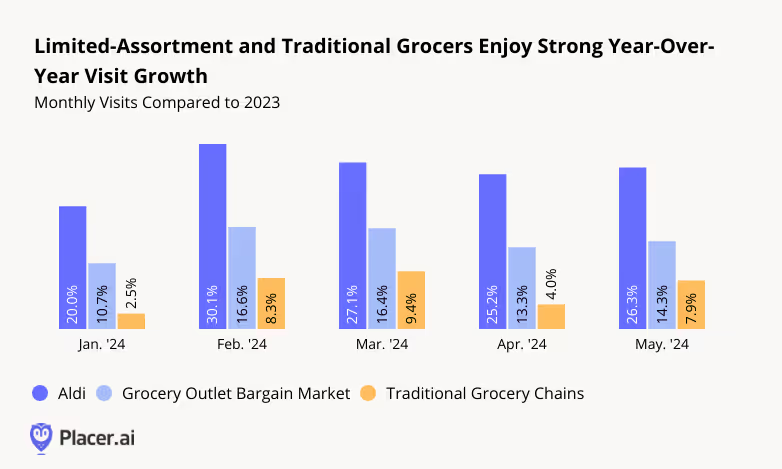
And foot traffic data shows that in the first part of 2024, consumers continued flocking to these brands to grab groceries at a discount – driving year-over-year (YoY) foot traffic growth that far outperformed that of traditional grocery stores. In May 2024, for example, visits to the overall grocery segment grew by 7.9% YoY, while Aldi and Grocery Outlet Bargain Market experienced YoY growth of 26.3%, 14.3%, and respectively.

Monthly visits to Aldi, Grocery Outlet Bargain Market, and overall grocery chains compared to previous year

Visits Per Location Increases

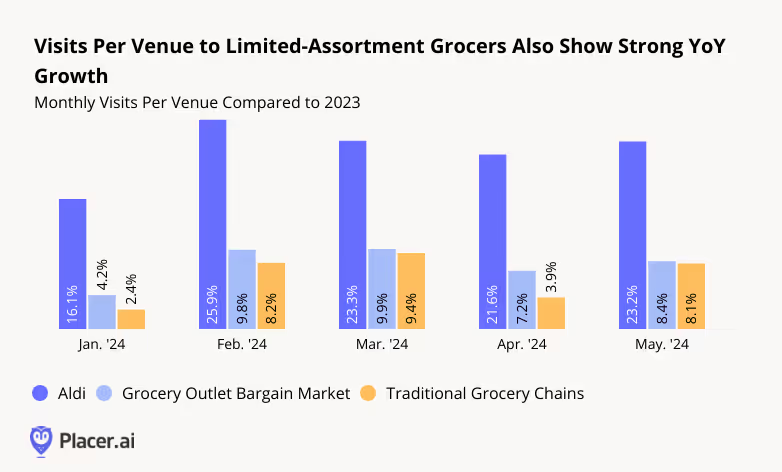
Some of this foot traffic growth can be attributed to the two chains’ continued expansion: Aldi added dozens of new stores in 2023 – with hundreds more in the pipeline – and Grocery Outlet Bargain Market also significantly grew its footprint. But the average number of visits to both brands’ individual locations also increased, again outpacing traditional grocery, showing that their expansion is meeting robust demand.

Monthly visits per location to Aldi, Grocery Outlet Bargain Market, and traditional grocery chains compared to 2023

No Limitation On Loyalty

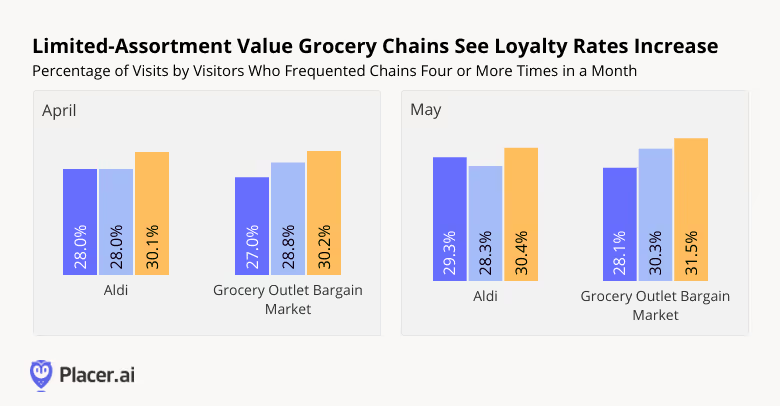
Looking into the loyalty rates of visitors to these limited-assortment value chains provides more reason for optimism for the sector: Over the past three years, Aldi and Grocery Outlet Bargain Market both saw an increase in loyal visits – defined as those made by people who frequented the chains at least four times in a month.

In April 2022, for example, 28.0% of visits to Aldi and 27.0% of visits to Grocery Outlet Bargain Market were made by people who visited the chains at least four times during the month – but by 2024, these shares grew to 30.1% and 30.2%, respectively. A similar trend was observed in May 2024. 

Increasingly, it seems, people are doing at least part of their routine weekly grocery shopping at these limited-assortment chains. And with consumers continuing to seek ways to save money, these grocers are well-positioned to continue growing their visit shares.

Percentage of visits by visitors who frequented chains - Aldi & Grocery Outlet Bargain Market - four or more times in April and May 2024

Grocery Gains

The limited-assortment, value grocery model continues to prove its staying power, with impressive foot traffic, visits per location, and loyalty rates.

Will the segment continue on its upward trajectory?

Visit Placer.ai to find out. 

Reports
INSIDER
Report
Physical Retail in 2026: How the Giants Are Winning
Read the report to find out how Walmart, Target, Costco Wholesale, and Dollar General are performing in 2026 – and what their trajectories reveal about broader retail trends.
May 11, 2026

Physical retail is increasingly defined by a small group of dominant players – Walmart, Target, Costco Wholesale, and Dollar General – that span grocery, essentials, and discretionary categories at a scale no other retailers can match. These chains serve as bellwethers of consumer behavior, revealing where Americans are spending, how often they shop, and what drives their decisions. And understanding their visitation patterns sheds light on the key dynamics shaping both their performance and the broader blueprint for retail success in 2026. 

1. Physical Retail is Consolidating

Retail giants Walmart, Target, Costco Wholesale, and Dollar General continue to capture a growing share of brick-and-mortar visits nationwide.

Major Insight:

• The share of physical retail traffic captured by these giants rose from 16.8% in 2019 to 17.5% in Q1 2026, signaling continued sector consolidation.

• The scale advantage enjoyed by retail giants is increasingly self-reinforcing: Larger players benefit from superior data, stronger vendor leverage, and operational efficiencies that in turn further widen the gap. 

Strategic Takeaways: 

• As these advantages compound, direct competition becomes less viable. Instead, smaller retailers should focus on owning specific trip missions – such as convenience, fill-in, or discovery – where format, assortment curation, and in-store experience can more directly shape consumer choice.

• For CRE operators, the growing dominance of these retail giants increases reliance on top-tier anchors, potentially driving performance gaps between centers with strong national tenants and those without.

• For CPG companies, the consolidation in the offline retail space heightens channel concentration, making success with a handful of large retailers critical while increasing those retailers’ negotiating leverage.

2. Costco Wholesale and Dollar General Charge Ahead

Traffic trends across the four giants reveal meaningful divergence in performance.

Major Insights:

• Costco and Dollar General are driving the strongest visit growth, supported by both substantial fleet expansions and rising visits per location. In 2025, visits per store exceeded pre-pandemic levels by 18.1% for Costco and 10.2% for Dollar General, with both brands also seeing steady increases in their share of total brick-and-mortar retail chain visits.

• Walmart remains the largest player by far, accounting for 9.7% of traffic to major brick-and-mortar chains in 2025. And though the behemoth’s share of visits declined slightly in the immediate aftermath of the pandemic, it has held steady over the past three years. 

• Target’s visit share has remained relatively flat over the past three years, reflecting stalled momentum. Still, early 2026 trends point to emerging signs of recovery – with Q1 visits up 8.3% compared to Q1 2019.

Strategic Takeaways:

• Value retail is winning, but in more specialized forms: Dollar General (extreme value + convenience) and Costco (bulk value + loyalty) are driving the strongest traffic growth and rising visits per store, while Walmart’s broad “everyday value” remains steady with slower growth. Target, for its part, is lagging – likely a reflection of the broader bifurcation in retail which has left middle-market players caught between consumers trading down to value and those trading up to quality. 

• For retailers and CPG companies, the broader lesson is that value perception is becoming more nuanced. It’s no longer just about offering low prices at scale, but about how value is delivered – whether through small packs vs. bulk, or quick trips vs. stock-up missions. Success increasingly depends on prioritizing these distinct value formats and investing in channels where store-level productivity is improving.

• For CRE operators, the outperformance of retailers with clearly defined value propositions underscores the importance of mission-driven tenant mix. As shoppers visit with increasingly specific missions in mind, retailers that cater to those missions are outperforming. Tenant strategies should reflect this shift, ensuring complementary offerings that reinforce a cohesive shopping mission.

3. Beyond Walmart, Multiple Winners Emerge Across Markets and Segments

Walmart remains the dominant brick-and-mortar retailer nationwide and across all fifty states. Still, the data suggests there is room for multiple runners-up to succeed across geographies and customer segments.

Major Insights:

• Dollar General, Target, and Costco each attract distinct audience segments. Dollar General attracts a disproportionately high share of the “Mature and Retired Living” segment, while Costco leads among family households, with Target also over-indexing with this group. Among younger “Contemporary Households,” meanwhile – a segment encompassing singles, married couples without children, and non-family households – Target commands the highest share, slightly over-indexing compared to the nationwide baseline. 

• Regional strengths vary significantly, with Dollar General concentrated in the South, Costco dominant in the Northwest, and Target showing more dispersed areas of strength.

• Despite similar overall visit share, Dollar General leads in more states (26 vs. 17 for Target), reflecting broader geographic dominance.

Strategic Takeaways:

• For retailers, the data suggests that growth opportunities are increasingly shaped by localized demographic and geographic dynamics – meaning that targeted, market-specific strategies may be more effective than uniform national approaches.

• Younger “Contemporary Households” remain less locked-in than older demographics, representing a key battleground for future growth.

• For CPG companies, this data highlights that channel strategy is really about building the right mix of retailers, since even large national players reach different types of consumers. 

• CRE operators should ask "which anchor is right for this trade area" rather than "which anchor is strongest," as mismatched tenants can underperform even if they’re nationally dominant.

4. Walmart Sees Broad-Based Growth Across Nearly All Markets

After remaining essentially flat in 2025, average visits per location to Walmart grew 3.5% YoY in Q1 2026. And the retailer’s solid Q1 performance across the U.S. underscores its unique ability to resonate across income levels, geographies, and shopping missions.

Major Insights:

• Walmart posted year-over-year visit growth across nearly all U.S. markets in Q1 2026, reinforcing its role as a universally relevant retailer. 

• The giant’s comparative softness in small parts of the Northeast suggests an opportunity to double down on region-specific assortments, urban-friendly formats, or partnerships to better match local shopping behaviors. 

Strategic Takeaways:

• Walmart’s broad-based growth shows that even as consumers are increasingly willing to visit multiple retailers to get what they want, its Superstore model has solidified its role as a primary stop on the American shopping journey – making it a uniquely reliable anchor for CRE operators.

• For smaller retailers, this underscores the opportunity to win the “second stop” – capturing trips through curated assortments and more tailored in-store experiences that Walmart’s scale is less optimized to deliver.

• For CPG companies, Walmart stands out as a highly attractive partner for broad, efficient reach, given its consistent traffic across markets.

5. Target Shows Early Signs of a Turnaround

Target’s recent performance suggests early momentum in reversing prior softness.

Major Insights:

• Q1 2026 visits to Target rose 5.1% year over year, marking the chain’s first positive visit growth in more than a year, and suggesting that the chain’s new turnaround strategy may be bearing fruit. 

• Gains were driven primarily by visits lasting 30 to 45 minutes, which accounted for 19.6% of overall visits to Target in Q1 2026 – pointing to stronger in-store engagement rather than quick, mission-driven stops.

Strategic Takeaways:

• Target’s return to traffic growth – driven by increases in mid-length trips – signals a sustainable recovery on the horizon, strengthening its reliability as a traffic-driving tenant for CRE operators.

• Target's turnaround shows retailers how increasing shopper engagement can generate growth by converting quick trips into higher-value, multi-category experiences.

• For CPG companies, the rise in mid-length visits indicates a more receptive in-store environment for discovery and trade-up, making Target an increasingly attractive channel for innovation, merchandising, and premium offerings.

6. Dollar General Strengthens Its Role as a Local, Habitual Destination

Dollar General is becoming embedded in consumers’ daily routines. 

Major Insights:

• Visitor frequency to Dollar General is on the rise. In Q1 2026, nearly a quarter of visitors frequented the chain at least four times in an average month, up from 21.2% in Q1 2022.

• Dollar General is becoming increasingly local in nature: As its footprint expands, more visits originate nearby, with 28.0% coming from within one mile – reinforcing its role as a neighborhood store of choice. 

Strategic Takeaways:

• Dollar General’s visitation patterns point to a growing ownership of the convenience mission. Its expanding store density is creating a self-reinforcing network effect, where proximity fuels frequency, and frequency strengthens long-term defensibility. 

• For retailers, Dollar General’s rising share of nearby and high-frequency visits shows that proximity can drive habit, making convenience a powerful lever for building repeat behavior.

• For CRE operators, the data highlights the strength of hyper-local, necessity-driven traffic, positioning Dollar General as a stable tenant that anchors consistent, repeat visitation.

• For CPG professionals, the increase in frequent trips signals a high-velocity purchase environment, favoring smaller pack sizes and products that align with regular replenishment cycles.

7. Costco Sustains Growth Following Fee Hike

Costco continues to grow and diversify its audience despite higher membership fees and stricter food court access policies, highlighting the strength of its value proposition and loyalty model. 

Major Insights:

• In September 2024, Costco raised its membership fees for the first time in seven years – and more recently tightened enforcement of member-only access to its food courts. Despite these changes, visitation has remained strong, highlighting the company’s pricing power and deep customer loyalty.

• At the same time, Costco’s shopper base is broadening, with median household income trending slightly downward while remaining relatively affluent.

Strategic Takeaways:

• Offering strong value to a relatively affluent consumer base can be a winning formula in 2026. Retailers that combine quality, trust, and perceived savings – rather than competing solely on low prices – are well positioned to drive both loyalty and sustained traffic growth.

• For CRE operators, Costco’s sustained traffic growth and broadening shopper base reinforce its value as a standalone, high-demand traffic magnet that can anchor entire trade areas and drive surrounding retail development.

• For CPG companies, the combination of high traffic and declining median HHI signals that Costco is evolving into a scaled channel reaching beyond affluent shoppers, requiring more diversified assortment and pricing strategies.

INSIDER
4 Opportunities the World Cup Will Unlock for Retail, Dining, and Stadiums
AI-powered location insights from major events reveal how the 2026 World Cup will shape audiences and consumer behavior nationwide. 
April 16, 2026

Expanding Engagement Beyond the Stadium

It’s been decades since the U.S. last hosted the World Cup, and anticipation continues to build. While the matches themselves will deliver thrilling moments for fans inside the stadium, a far broader audience is expected to engage from beyond the gates – gathering at bars, watch parties, and living rooms across the country.

Drawing on insights from recent sporting and cultural events, this analysis examines how the World Cup may impact consumer behavior and audiences across stadiums, host cities, and nationwide.

1. World Cup Audiences Will Be Unique – Even Among Major Events

There is No Typical Concert and Sports Audience 

In 2025, MetLife Stadium in East Rutherford, NJ hosted a wide range of concerts and sporting events. And an examination of three – Kendrick Lamar & SZA’s tour stop, the FIFA Club World Cup Final, and a Week 17 New York Jets matchup against division rivals and the Super Bowl-bound New England Patriots – reveals clear differences in audience composition across event types.

Trade area analysis showed that the 2025 FIFA Club World Cup Final drew the largest share of single visitors and the highest median household income (HHI) of the three events – a pattern that could reflect the premium tickets and travel typically associated with a quadrennial championship match.

With the 2026 World Cup elevating the level of global competition, stadiums set to host matches this summer – including MetLife – may see even more dramatic shifts in their audience relative to other events.

Later-stage matches will draw more affluent audiences.

While spectators attending World Cup matches are likely to differ from those drawn to other events throughout the year, audience shifts are likely to occur also within the tournament itself. As the competition progresses and the stakes rise, the visitor profile at host stadiums may trend progressively higher-income, as suggested by an analysis of Levi’s Stadium in Santa Clara, CA during the recent NFL season and Super Bowl.

During the Super Bowl, the stadium’s captured market median HHI surpassed that of every 49ers home game during the 2025-26 season – a pattern consistent with the event’s premium ticket pricing, national draw, and high levels of out-of-market travel.

And since the World Cup only takes place every four years, and necessitates international travel for die-hard fans, attendees are likely to be even more affluent than Super Bowl go-ers. Moreover, as the tournament reaches its later stages, each match becomes more significant and carries the potential to drive an even more affluent in-person audience.

2. World Cup Will Generate Significant Opportunities for Nearby Dining and Entertainment

Tailgaters Expand the Opportunity Beyond Ticketed Guests

Diving deeper into last year’s FIFA Club World Cup Final and Semifinal matches at MetLife Stadium provides further insight into the significance of the in-person audience that doesn’t make it into the stands. While FIFA generally places restrictions on tailgating, the behavior was still observed at MetLife and several other tournament venues in 2025. To put the phenomenon into perspective, location intelligence indicates that on the day of the Club World Cup final, combined visits to MetLife and its parking lots were 24.8% higher than visits to the stadium alone.

AI-powered trade area analysis further contextualizes the economic significance of this audience. During the semifinal matches, MetLife Stadium’s captured market median HHI remained nearly identical – just over $100K – with and without parking lot visitors. A similar pattern held for the Final, where median HHI for both the stadium-only and combined stadium-plus-parking visitors both rose above $115K, with the stadium-only figure only marginally higher.

This suggests that tailgaters represent a significant cohort with discretionary income to spend on the broader match-day experience, even if they opt out of spending big money on tickets.

With tailgating during the 2026 World Cup likely to remain limited due to FIFA regulations, the spending power of fans just outside the stadiums could create opportunities for alternative forms of engagement. Fan zones and other nearby hospitality events may offer effective ways to capture demand.

Strong demand for stadium-adjacent dining and entertainment.

Nearby dining and entertainment venues are among the most accessible experiences for fans in the stadium area, and these stand to benefit significantly from elevated game-day foot traffic.

Analysis of recent FIFA Club World Cup matches reveals the impact of match-day activity on local businesses. Visitor journey data from the June 25th, 2025 matchup between Inter Milan and River Plate at Seattle’s Lumen Field, and the June 28th, 2025 meeting between Palmeiras and Botafogo at Lincoln Financial Field in Philadelphia reveals that a significant share of stadium visitors also stopped at nearby dining and recreation venues on the day. Location intelligence also shows that, on the day of the match, each stadium-adjacent venue received a significant visit boost compared to its 2025 daily average.

This pattern underscores the potential impact of the World Cup on the surrounding commercial ecosystem. The stadium may anchor the experience, but fan engagement will likely spill into adjacent areas – creating opportunities for both organizers and local businesses. To take full advantage, restaurants and bars can position themselves as fan-friendly destinations through watch parties, extended hours, and even mobile or outdoor offerings in stadium corridors.

3. Host Regions Will See Broad Economic Impact

Dining demand will rise as fans converge.

Previous major sporting events – including the Super Bowl – demonstrate that the impact of large-scale sporting moments often extends beyond the immediate stadium vicinity into the broader regional economy.

In the weeks leading up to the latest Super Bowl in Santa Clara, CA on February 8th, 2026, both the San Francisco-Oakland-Berkley and San Jose-Sunnyvale-Santa Clara CBSAs saw a notable uptick in year-over-year dining traffic – outperforming the nationwide average. The timing suggests that early-arriving travellers combined with locals enjoying pre-event concerts and events helped fuel demand. In contrast, nationwide dining traffic saw a more pronounced lift the following week – likely tied to Valentine’s Day on February 14.

This pattern indicates that regions hosting – or located near – World Cup 2026 matches could experience similar pre-event dining tailwinds. As out-of-town visitors arrive and local engagement builds in the days and weeks leading up to key matches, restaurants and hospitality may benefit from elevated demand – particularly when supported by ancillary events and fan experiences.

Matches will drive high-value tourism to host cities.

Other recent examples suggest that cities hosting major events like the World Cup stand to benefit from an influx of out-of-town visitors – particularly those with higher spending power.

Since the beginning of 2025, New Orleans has hosted a series of popular events that drove significant non-local traffic. AI-powered trade area data indicates that during these periods, out-of-market visitors consistently exhibited a higher median HHI than both local residents and typical commuters into the city.

As expected, the 2025 Super Bowl generated the most pronounced spike in out-of-market visitor median HHI among the events analyzed, but the pattern extends beyond one-time spectacles. Recurring events like Mardi Gras and major music festivals also attracted high-income visitors to the city – likely benefitting the local hospitality, dining, and retail industries.

Looking ahead to the 2026 World Cup, host cities are likely to experience a similar dynamic. The tournament’s global draw will likely bring affluent travelers with discretionary dollars to the host regions – visitors that will spend not only on match tickets, but also on accommodation, dining, and shopping. By sponsoring tournament-related festivals, concerts, and experiences in or near retail corridors, cities can amplify the economic impact of the World Cup beyond the stadium.

4. The World Cup’s Impact Will Extend Nationwide

Grocery and party food chains will see repeat visit spikes.

The impact of the 2026 World Cup is unlikely to be confined to the select cities hosting matches. Major sporting events drive large-scale at-home viewership, generating ripple effects nationwide.

The Super Bowl offers a useful benchmark. In the days leading up to February 8th, 2026, visits to grocery stores and pizza chains rose above day-of-week averages for 2025, ultimately peaking on the day of the big game day as households appeared to pick up last-minute fixings and takeout for their watch parties.

This pattern indicates that the World Cup – with its extended schedule and multiple high-stakes matchups – could drive repeated waves of elevated grocery and take-out demand as fans gather together throughout the tournament.

Sports bars will experience elevated match-day traffic.

Of course, at-home viewing is just one piece of the match-day equation. Many fans opt for a more communal experience – gathering at sports bars across the country to watch the game alongside fellow supporters.

Recent highly-anticipated soccer matches offer a clear signal of this behavior. During the recent Allstate Continental Clásico, MLS Cup Final, and SheBelieves Cup Final, top sports bars in key markets like Los Angeles and Miami recorded visit spikes above day-of-week averages.

Not every World Cup fan will be able to attend in-person or travel to a host city, but previous match-day lifts in sports bar traffic demonstrate that fans nationwide will participate in the tournament experience.

One Tournament, Multiple Touchpoints

The 2026 FIFA World Cup is set to engage a wide spectrum of fans – from casual viewers at home to dedicated supporters traveling to stadiums – shaping how and where demand emerges.

As a result, the tournament’s impact will be felt across multiple layers of retail, dining, and tourism. Stadium-centered spending, activity in surrounding corridors, host-city consumer demand, and gatherings of spectators nationwide all point to a broad and interconnected World Cup effect that is likely to shape both audience composition and behavior at scale.

INSIDER
Report
How Malls Can Win in 2026
Dive into the latest traffic data to see how indoor malls, open-air centers, and outlets are performing this year – and the factors shaping success across formats.
Placer Research
April 2, 2026

Strategic Insights From the Report: 

1. Mall traffic is proving resilient across formats.

Indoor malls and open-air centers have posted consistent YoY visit growth, outlet declines have been modest, and early 2026 data shows renewed momentum across all three formats.

2. Performance is increasingly defined by the convenience–experience divide.

Growth in short visits and extended stays – alongside declines in mid-length trips – shows that consumers are gravitating toward trips with a clear purpose, favoring either efficiency or immersion.

3. Indoor malls are strengthening their role as experiential “third places.”

Rising dwell times and strong engagement from younger, contemporary households position indoor malls as leading destinations for longer, experience-driven trips. 

4. Open-air centers are winning the weekly routine.

A higher share of short, weekday visits – along with strong appeal among affluent families – underscores their role as convenient, essential retail hubs.

5. Outlet malls are at a crossroads.

As off-price and online alternatives erode their treasure-hunt advantage and long-distance visitation softens, outlets face a strategic choice between deepening local relevance and reinvesting in destination appeal.

6. Strategic clarity will determine the winners.

The malls that thrive will be those that intentionally optimize for convenience, experience, or a disciplined integration of both.

Here to Stay

Despite economic headwinds, intensifying e-commerce competition, and fragile consumer confidence, shopping centers continue to defy the “dead mall” narrative – reinventing themselves and, in many cases, thriving.

What can location analytics tell us about the state of the mall in 2026? Which trends and audiences are driving their performance – and how can operators and retailers best capitalize on the opportunities within the category?

Traffic Resilience

Over the past two years, both indoor malls and open-air shopping centers have posted consistent year-over-year (YoY) traffic growth. And while outlet malls experienced slight declines, the pullback was modest – signaling a period of stability rather than erosion.

Early 2026 data also points to continued momentum, with all three mall formats recording mid-single-digit YoY traffic gains in the first two months of the year. Although it’s still early days – and YoY comparisons in 2026 were boosted by an additional Saturday – the positive start suggests that the industry is entering the year on a solid footing.

The Convenience / Experience Divide

With e-commerce always within reach, hybrid work anchoring more consumers at home, and ongoing economic uncertainty influencing spending decisions, trips to physical stores are becoming more intentional. Shopping center visit data reflects this shift as well, with growth in both quick convenience visits and extended experiential outings – alongside a decline in mid-length trips.

In 2025, quick trips (under 30 minutes) increased across all formats, underscoring malls’ growing role as convenient, high-utility destinations for picking up an online order, grabbing a quick bite, or making a targeted purchase. At the same time, extended visits of more than 75 minutes increased at indoor malls and open-air centers, reflecting sustained appetite for immersive, experiential outings.

Meanwhile, mid-length visits (between 30 and 75 minutes) lagged across formats – falling indoor malls and outlet malls and remaining flat at open-air centers – suggesting shoppers are losing patience with undifferentiated trips that lack a clear purpose. 

Still, although short visits increased year over year across all mall types, and long visits increased for both indoor malls and open-air centers, the distribution of dwell time varies by format. Short visits make up a larger share of traffic at open-air shopping centers, for example, while longer visits account for a greater share at indoor malls. This divergence underscores the need for format-specific strategies, with operators clearly defining the core shoppers and missions they are best suited to serve and aligning tenant mix, amenities, and marketing accordingly. 

Indoor Malls Lean Into the Hangout Economy

Indoor malls, for instance, have increasingly positioned themselves as experiential hubs – particularly for younger consumers. Recent survey data shows that 57% of shoppers aged 18 to 34 report visiting a mall frequently or often, and they are more likely than older cohorts to arrive without a specific purchase in mind.

Foot traffic patterns reinforce this experiential appeal. In 2025, 37.6% of indoor mall visits lasted more than 75 minutes, compared to 33.4% for open-air centers and 34.6% for outlets. Indoor malls also captured the largest share of visits from the young-skewing “contemporary households” segment – singles, non-family households, and young couples without children – indicating strong resonance with younger audiences.

Indoor Mall Dwell Times on the Rise

As indoor malls expand their experiential offerings, visit durations are rising even further – even as they hold steady or even slightly decline at other formats. For operators, this shift highlights a significant opportunity for indoor malls to deepen their role as climate-controlled third places. And for brands, it means high-impact access to Gen Z consumers in discovery mode – top-of-funnel engagement that is increasingly difficult and expensive to replicate through digital channels alone.  

Open-Air Centers Anchor the Weekly Routine

If indoor malls excel at capturing extended, social visits, open-air centers are finding success through convenience. In 2025, open-air centers had the highest shares of both weekday visits (64.0%) and short, sub-30 minutes (36.8%) among the three formats. Grocery anchors, superstores, and essential-service tenants like gyms – more common at open-air centers than at other formats – help drive steady, non-discretionary traffic.

Demographically, open-air centers drew the highest share of affluent families, a key demographic for daily errands. This alignment with higher-income households, combined with weekday consistency, positions open-air centers as reliable errand hubs embedded in community life.

Outlet Malls at a Crossroads

Outlet malls, for their part, have historically differentiated themselves by offering something shoppers couldn’t find elsewhere: an experiential treasure hunt featuring brand-name merchandise at compelling prices. But the decline in long visits shown above suggests that this positioning may be coming under pressure – likely from the rise of off-price and discount chains as well as other low-cost, convenient treasure-hunt alternatives like thrift stores. When shoppers can score attractive deals online or browse for bargains at a nearby T.J. Maxx or Ollie’s Bargain Outlet, the incentive to dedicate time and travel to an outlet trip may no longer feel as compelling – especially for outlet malls’ core audience, which includes meaningful contingents of middle and lower-income consumers with families.

Going the Distance?

And data points to a subtle but steady erosion in the share of visitors willing to go the extra mile to visit outlet malls. Since 2023, the share of outlet visits from consumers traveling more than 30 miles has slipped from 33.1% to 31.8%, even as long-distance visits to other mall formats have remained relatively stable. This softening of destination demand may be contributing to outlets’ recent traffic lags.

Still, despite these lags in foot traffic, major outlet companies continue to see YoY increases in same-center tenant sales per square foot. The format’s strong visit start to 2026 also suggests that outlets still have significant draw – and that with the right strategy, they could reinvigorate their traffic trends.

One option is for outlet malls to lean further into their immediate trade areas: Nearly 20% of visits to outlets already originate within five miles – a share that edged up from 19.4% in 2023 to 19.9% in 2025. These closer shoppers may be largely responsible for the segment’s rise in short visits, pointing to an opportunity to further augment BOPIS offerings and select essential-use tenants. 

Another option is to strengthen outlets’ destination appeal with distinctive retail, dining, and experiential offerings that resonate with value-oriented, larger-household shoppers. But whether they focus on convenience or on justifying the journey – or attempt to balance both – success will depend on identifying who their shoppers are and which missions they are best positioned to own. 

Strategic Clarity for the Win

As in other areas of retail, shopping center success increasingly depends on strategic clarity. The malls that thrive will be those that clearly define their role in their customers’ lives and execute against it with intention – whether by decisively optimizing for efficiency, fully investing in experience, or thoughtfully integrating both.

Loading results...
We couldn't find anything matching your search.
Browse one of our topic pages to help find what you're looking for.
For more in-depth analyses on a variety of subjects, explore Reports.
The Anchor Logo
INSIDER
Stay Anchored: Subscribe to Insider & Unlock more Foot Traffic Insights
Gain insider insights with our in-depth analytics crafted by industry experts
— giving you the knowledge and edge to stay ahead.
Subscribe