Thank you! Your submission has been received!
Oops! Something went wrong while submitting the form.
0
0
0
0
----------
0
0
Articles
Article
Starbucks, Dutch Bros., Dunkin’: Finding Summer Success
We dove into the data to see how coffee leaders Starbucks, Dunkin', and Dutch Bros. fared in Q2 2024.
Ezra Carmel & Noam Maman
Jul 24, 2024
4 minutes

We dove into the latest data for java leaders Starbucks, Dutch Bros., and Dunkin’ – to discover how each brand drove visits in Q2 2024 and explore coffee consumer visit patterns heading into the summer.

Key Takeaways:

  • Since the week of May 6th, Starbucks’ summer promotions have driven consistent weekly year-over-year (YoY) visit increases, putting the chain's overall YoY foot traffic gains at 2.3% in Q2 2024. 
  • Also in Q2 2024, visits to Dutch Bros. increased 15.0% YoY, partly due to an expanding footprint. The brand also sustained YoY visit-per-location gains for most of H1, highlighting strong demand for the chain as it grows. 
  • Dunkin’s National Donut Day promotion on June 7th, 2024 proved to be a critical retail moment that sparked consecutive weeks of YoY foot traffic growth for the coffee leader.
  • All three coffee chains experience significant evening foot traffic upticks during the summer – positioning them for more evening visits as the summer gets into full swing.

Starbucks’ Promotions Provide Stable Visit Growth

Starbucks has been finding foot traffic success this summer with promotions that seem to be resonating with consumers. In May 2024, the chain launched 50% Off Fridays (beginning May 10th), special Monday Deal Drops (beginning May 13th), and limited-time only summer drinks. And in June, Starbucks’ promotions continued with a new Pairings Menu and a round of handcrafted iced beverages

Since the week of May 6th, 2024, weekly traffic to Starbucks has been consistently elevated YoY – with visits up 2.3% YoY for Q2 2024 as a whole – indicating that Starbucks’ array of summer promotions are shoring up traffic to the chain.

Summer Promotions Boost YoY Viists to Starbucks

Dutch Bros. Leans Into Expansion

Like Starbucks, Dutch Bros. ushered in the warm season with a special line-up of summer drinks in May 2024. But even before the launch of these seasonal promotions, the coffee powerhouse has been driving visits. 

In Q2 2024, Dutch Bros.’ visits increased 15.0% YoY amidst ongoing fleet expansion. And throughout H1 2024, monthly visits-per-location increased YoY nearly across the board – surpassing the wider category average – indicating that Dutch Bros.’ growth is meeting robust demand.  

In June 2024, Dutch Bros. saw 5.7% YoY visit-per-location growth, the chain’s largest increase of the year so far. With more planned expansions, an additional promotional drink release in July, and continued steps to advance mobile ordering and its rewards program, Dutch Bros. appears poised to drive growth in the back half of 2024 as well.

Powerful Summer Momentum Reveals Dutch Bros. Growth in 2024

Dunkin’ Drives Foot Traffic With National Donut Day 

Though indisputably a coffee chain, Dunkin’ is still donut-obsessed and celebrates the doughy treat every year on National Donut Day (this year, June 7th). Among its many promotional events this summer, Dunkin’ treated customers to a free donut with the purchase of a beverage on the big day. And the milestone turned out to be Dunkin’s busiest day of the year so far – driving a 28.4% foot traffic increase compared to the daily year-to-date average (January 1st to July 20th, 2024). 

Indeed, National Donut Day seems to have kickstarted Dunkin’s busy summer. Following several weeks of flagging YoY visit performance in May – likely attributable in part to the chain’s strong May 2023 performance – Dunkin’ saw a YoY visit boost of 4.5% during the week of June 3rd, 2024. And subsequent weeks have seen a continuation of this positive momentum, as the chain continues to promote its summer fare.

National Donut Day Kickstarts Summer Traffic to Dunkin'

Summer Nights Drive Visits to Coffee Chains

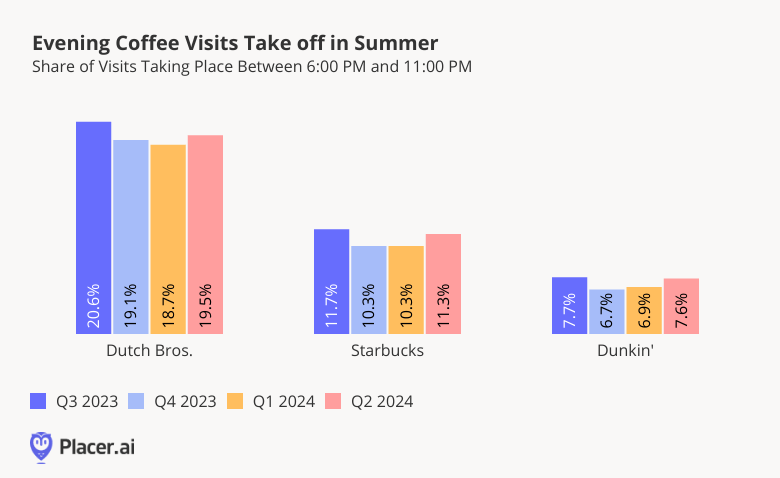
Starbucks, Dutch Bros., and Dunkin’ each do summer in their own way. But one thing all three chains have in common is an increase in evening visits during the summer months. 

In Q3 2023, including the peak summer months of July and August, all three chains experienced significant upticks in evening visits (between 6:00 and 11:00 PM). During the winter months – Q4 2023 and Q1 2024 – the share of visits taking place in the evenings dropped for all three chains, before picking up again in Q2 2024. 

A variety of factors may be behind this summer shift in coffee consumption. Consumers may be more likely to be out socializing during lazy summer evenings – when students are off and many Americans take vacation. Extended daylight hours in summer may also entice more consumers into an extra caffeine boost later in the day. 

If last year’s Q3 evening coffee visit boost is any indication, Starbucks, Dunkin’, and Dutch Bros. may all be in for evening foot traffic increases as the summer wears on.  

Evening Coffee Visits Take off in Summer

Full Steam Ahead

How will these coffee giants stay hot during the final stretch of summer and will they maintain their momentum going forward?

Visit Placer.ai to find out.

Article
Fast Food and Fast Casual Favorites, Plus CosMc’s Takeoff
We checked in with McDonald’s, Wendy’s, Wingstop, and Shake Shack to see how they performed in Q2 2024 – and examined location analytics for McDonald’s latest concept – CosMc’s – to uncover emerging visitation trends for the new chain. 
Ezra Carmel
Jul 23, 2024
3 minutes

Summer is a time when many consumers are on the go – and vacationers moving between activities look to quick-service restaurants (QSR) and fast-casual chains to fill up and beat the heat. 

We checked in with McDonald’s, Wendy’s, Wingstop, and Shake Shack to see how they are performing heading into the summer, and examined location analytics for McDonald’s latest concept – CosMc’s – to uncover emerging visitation trends for the new chain. 

Key Takeaways

  • In Q2 2024, Wingstop and Shack Shack saw respective year-over-year (YoY) visit growth of 31.9% and 28.3% – driven in part by the chains’ aggressive expansion strategies.
  • Also in Q2 2024, McDonald’s visits grew by 0.4% YoY and Wendy’s grew by 1.4%.
  • McDonald’s new CosMc’s restaurant draws higher-income consumers than the traditional McDonald’s chain – helping McDonald’s attract new audiences.

Wingstop and Shake Shack Sizzle in Summer

Popular wing and burger destinations Wingstop and Shake Shack are thriving this summer, as both chains double down on expansion plans. Shake Shack is on track to add dozens of new locations to its 300+ domestic shacks in 2024, and Wingstop’s hundreds of newly added locations bring its U.S. restaurant count to nearly 2000 venues. 

These aggressive expansion strategies are playing a significant role in the chains’ respective visit growth. In June 2024, Wingstop’s visits were up 34.2% YoY, while Shake Shack’s were up 28.1%.

As the chains expand their footprints, both are taking steps to increase store efficiency and improve service. Wingstop recently adopted a new in-house transaction software, while Shack Shack continues to streamline the kiosk ordering experience

Wingstop and Shake Shack: An Appetite for Expansion

Value on the Fast-Food Menu 

The experience at many eateries continues to change – as do the prices diners see on their menus. During the first months of 2024, inflation drove price increases across the QSR space. And as consumers took note of the higher prices, “the summer of value wars” got underway –  with a long list of chains, including fast-food giants McDonald’s and Wendy’s, introducing low-cost meals and menus to reel in inflation-wary diners

Despite price hikes felt by consumers, in Q2 2024, McDonald’s visits grew by 0.4% YoY and Wendy’s grew by 1.4%. And the late-June launch of McDonald’s and Wendy’s new limited-time $5 bundles – which are already making their impact felt on the ground – may drive further foot traffic growth for the two chains throughout the summer.

McDonald's and Wendys: Positive H1 2024 Feeding into Summer

CosMc’s Draws Higher-Income Visitors into McDonald’s Orbit

While many fast-food diners are looking for value this summer, they’re also proving eager to try new culinary experiences. McDonald’s spin-off restaurant CosMc’s landed in late 2023, with throngs of eager diners lining up for a taste of the unique concept. Since the first location opened in Bolingbrook, IL, several new CosMc’s have emerged to heavy fanfare, including one in Watauga, TX and another in Dallas. 

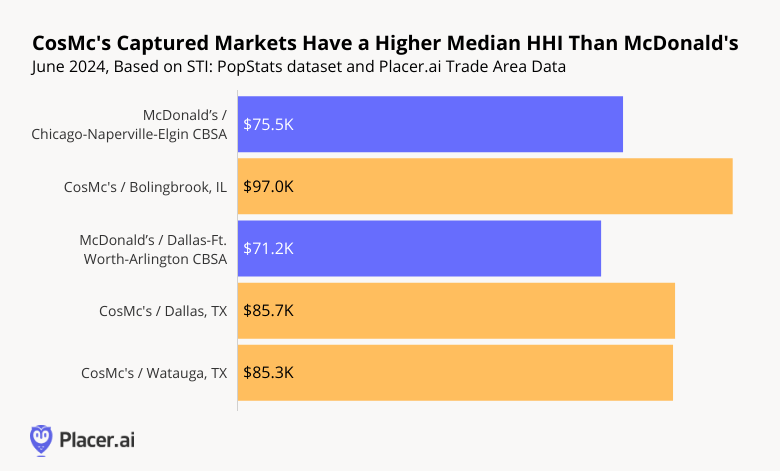
And although CosMc’s is still in its infancy, location analytics shows that the concept already drives traffic from more affluent consumers than the traditional McDonald’s chain.

In June 2024, for example, the median household income (HHI) in the captured market of the Bolingbrook, IL CosMc’s was $97.0K – significantly higher than that of McDonald’s in the Chicago metro area ($75.5K) or of McDonald’s nationwide ($65K).

A similar trend could be observed in the Dallas-Ft. Worth-Arlington CBSA – where the captured markets of local CosMc’s featured significantly higher median HHIs than those of McDonald’s. 

As a beverage-led concept, CosMc’s may drive more traffic from higher-income consumers than a traditional McDonald’s – where simple soft drinks typically come as an inexpensive meal add-on. And as a result, the chain may help McDonald’s bring a new consumer cohort into the fold.

CosmMc's Captured Markets Have Higher Median HHI Than McDonald's

Looking Ahead 

Summer 2024 is undoubtedly shaping up to be the “Summer of Value” and perhaps the “Summer of Fast Food” as well. Will favorable trends continue in the months ahead?

Visit Placer.ai to find out.

Article
Chipotle and Sweetgreen: Fast-Casual in Q2 2024
How did Chipotle and sweetgreen fare in the second quarter of 2024 – and what are they doing right? We dove into the data to find out.
Lila Margalit
Jul 22, 2024
4 minutes

The fast-casual space has been having a moment – with rising QSR prices leading many diners to embrace an upgraded experience. So with Q2 2024 in the rearview mirror, we dove into the data to check in with two fast-casual restaurant chains that have been doing particularly well: Chipotle and sweetgreen. How did their Q2 performance compare to that of the wider fast-casual segment? And what is it, exactly, that they are doing right?

We dove into the data to find out. 

Key Takeaways:

  • In Q2 2024, Chipotle saw year over year (YoY) increases in both overall visits (16.9%) and visits per location (9.5%) – outperforming the wider fast-casual segment on both metrics. 
  • Chipotle’s growth is likely due in part to the growing loyalty of its customer base – which has increased significantly each year since 2019.
  • Sweetgreen also performed exceptionally well in Q2 2024, with visits and visits per location up a respective 19.9% and 5.9%. 
  • Sweetgreen is finding success by leaning into what it does best – drawing the weekday lunchtime crowd.

Chipotle Rocks Q2 2024

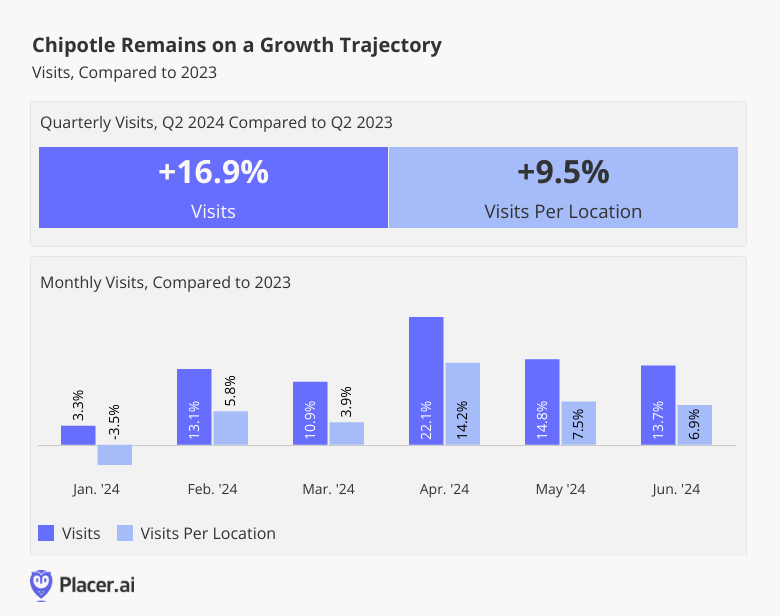
In the first quarter of 2024, Chipotle reported a 14.1% YoY increase in total revenue, and a 7.0% increase in comparable restaurant sales. And the chain isn’t showing any signs of slowing down. In Q2 2024, Chipotle saw YoY chain-wide foot traffic growth of 16.9%. And while some of this increase was undoubtedly due to the chain’s continued expansion – Chipotle added some 247 U.S. restaurants over the past year – the average number of visits to each of Chipotle’s restaurants also increased by an impressive 9.5%. By way of comparison, fast-casual restaurants experienced average quarterly YoY visit growth of just 4.2%, and visit-per-location growth of 2.9%. 

Chipotle Remains on a Growth Trajectory

Leaning Into Loyalty

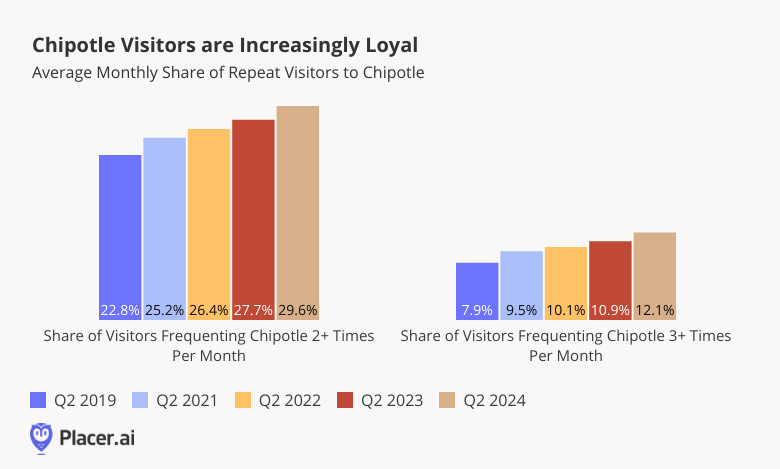
One factor that appears to be contributing to Chipotle’s remarkable visit growth is its repeat customer base – which is growing more loyal with every passing year. Between Q2 2019 and Q2 2024, the share of visitors frequenting a Chipotle at least twice a month increased from 22.8% to 29.6%, while the share of visitors frequenting a Chipotle at least three times a month grew from 7.9% to 12.1%. 

This rise in loyalty has taken place against the backdrop of Chipotle’s growing loyalty program – Chipotle Rewards – which launched in Q1 2019 and today boasts more than 40 million members. The program, which lets members earn points for every dollar spent, offers diners access to personalized deals and a range of special promotions – like free delivery on National Burrito Day. (Before you ask, foot traffic data shows that National Burrito Day, which fell on Thursday, April 4th, 2024 wasn’t just a day for ordering online: It was Chipotle’s busiest Thursday of the year so far, with visits up 19.7% compared to a regular Thursday). This April, Chipotle also partnered with Tekken 8 to offer diners in-game currency in exchange for orders – with special perks for Rewards members.

Chiipotle Visitors are Increasingly Loyal

Sweetgreen’s Growing Momentum 

Another eatery that has been performing remarkably well in 2024 is sweetgreen – the fast-casual restaurant known for its healthy, fresh food. During Q2 2024, visits to sweetgreen were up a remarkable 19.9% YoY, a reflection of the chain’s growing footprint. But foot traffic data shows that there is more than enough demand to sustain sweetgreen’s accelerated expansion – over the analyzed period, the average number of visits to each sweetgreen location also increased by 5.9%. 

Sweetgreen Continues to Grow Visits and Visits per Location

A Lunchtime Fave

A look at the hourly distribution of visits to sweetgreen shows that though the chain has made inroads into the dinner daypart, lunchtime remains its prime time to shine – especially on weekdays. 

During the first half of 2024, 24.9% of weekday visits to sweetgreen took place between noon and 2:00 PM – compared to just 21.7% for the wider fast-casual category. But while sweetgreen, popular among the in-office crowd, drew a greater share of lunchtime visitors on weekdays, the fast-casual segment as a whole drew a greater share of lunchtime visitors on the weekends. Indeed, on Saturdays and Sundays, the share of lunchtime sweetgreen visitors dropped to 22.7%, while the share of fast-casual lunchtime visitors increased to 22.2%.

Still, suppertime is also a popular daypart for the salad chain on weekdays – with 20.0% of Monday - Friday visits taking place between 6:00 and 8:00 PM. As sweetgreen continues to lean into steaks and other dinner fare, it will be interesting to see if the restaurant begins to capture even more evening traffic. 

On Weekdays, Sweetgreen is All About Lunchtime

Looking Ahead

Chipotle’s and sweetgreen’s strong quarter positions them well for further growth as the year wears on. Will Chipotle’s loyalty continue to increase? And will sweetgreen double down on dinner? 

Follow Placer.ai’s data-driven restaurant analyses to find out. 

Article
Limited Too: Brand Relaunch Has Millennials in Mind
Elizabeth Lafontaine
Jul 19, 2024

Millennials everywhere, rejoice, because a beloved brand is back, for the next generation. Limited Too, an apparel staple for girls growing up in the 1990’s and 2000’s, has found its way back to the retail stage after years of dormancy. The brand began teasing its return a month ago, but last week brought the announcement that Limited Too’s relaunch will take place via a new apparel line at Kohl’s. With the Fourth of July over and Amazon Prime Day complete, the back-to-school season is officially upon us, even if it still feels like summer.  In Kohl’s press release on Friday, the Limited Too introduction is a part of its larger back-to-school efforts, and it appears to be aimed at expanding apparel offerings for girls. And, with Kohl’s recent and upcoming additions like Sephora, Babies”R”Us, and now Limited Too, the target is clearly to woo and excite the Millennial shopper.

The relaunch of Limited Too includes fashion for girls size 7-16, the same Tween demographic that the brand originally captured. Mall-based Limited Too shut its doors in 2008, and the majority of stores were converted into rival retailer, Justice, who shuttered all of its stores in 2020. The brand revival is likely positioned by Kohl’s to appeal to parents who grew up with an affinity for the brand who can now purchase for their children.

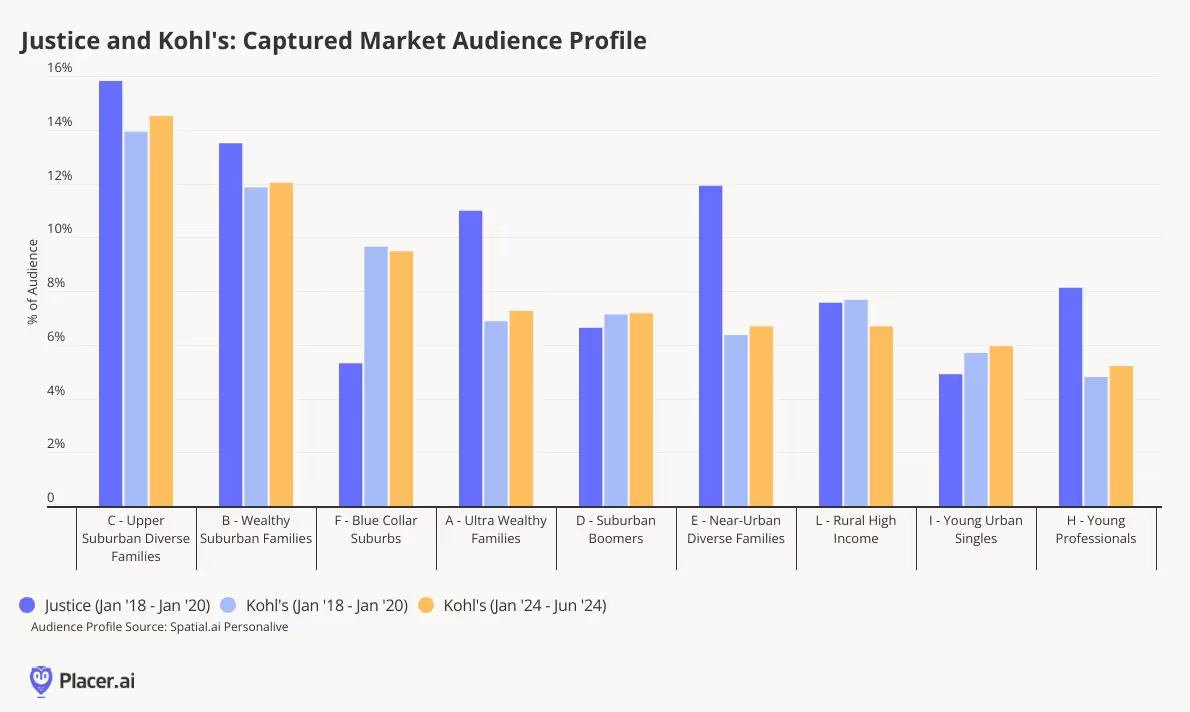
With the relaunch, how well situated is Kohl’s to attract this ideal “Limited Too Loyalist”? We took a look at a sampling of former Justice stores prior to closing, from 2018 to January 2020, and compared the audience profile of Justice visitors to Kohl’s visitors using Spatial.ai PersonaLive, both during the same time period as well as in 2024.

Our data highlights that both retailers actually have a similar audience profile of visitors, and that Kohl’s has continued to grow its percentage of Upper Suburban Diverse Families and Wealthy Suburban Families to more closely align with the former Justice demographics. Since the pandemic and through its new partnerships and planned additions, Kohl’s has been able to capture wealthier suburban families, and as Millennials continue to migrate out of urban centers, the retailer may have set itself up well to welcome these shoppers.

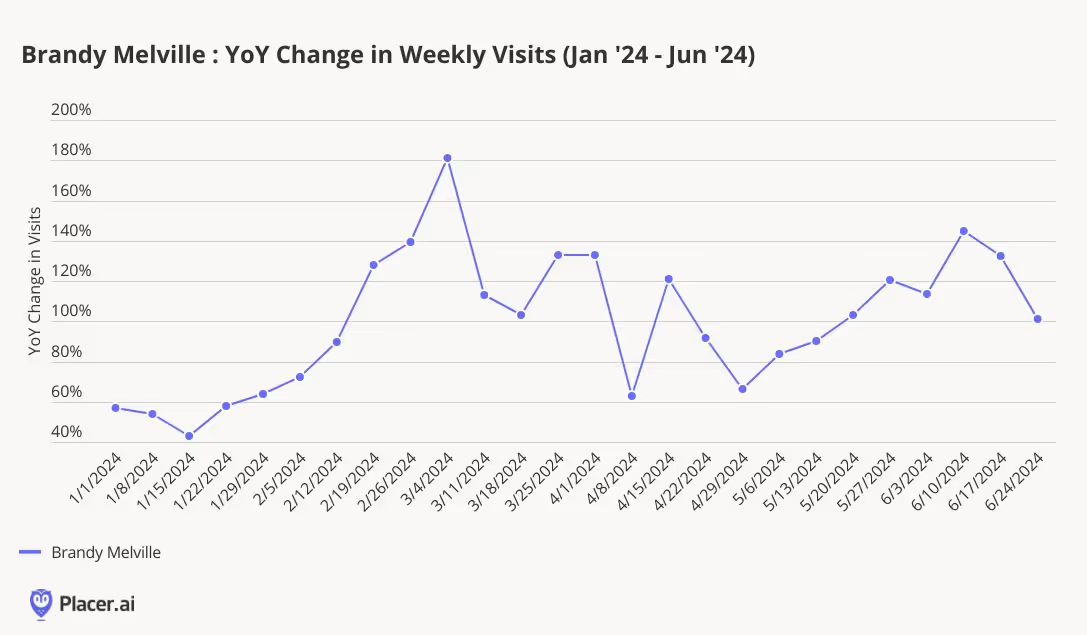
The tween apparel market today is highly fragmented, as is true with most areas of discretionary retail, with shoppers having access to countless brands and channels to choose from. Mass merchants, fast fashion, and athleisure brands are all vying for the attention of tweens, who are in turn influencing the retail decisions of their parents. A few months ago, we wrote about Brandy Melville, a somewhat controversial retailer that is still hugely popular with tweens. The retailer has the cool and elusive styling that young shoppers crave, and continues to be a strong traffic performer so far in 2024 (below). We’ve also written about the renaissance of Abercrombie & Fitch, another 2000’s brand with a strong connection to Millennials that has been able to recapture visitors’ attention, and still operates the Abercrombie Kids brand aimed at the same size range as the newly launched Limited Too.

Kohl’s new bet for the back-to-school season hangs on appealing to nostalgic Millennial parents, a group that quickly is becoming a target for many retailer strategies. We wrote last week about the rise of younger visitors to warehouse clubs, and the importance of younger shoppers to growing the member base. In a competitive and value-oriented retail environment, appealing to this group and gaining their loyalty in visits is critical to long-term success. It will be interesting to see if the Millennial love for Limited Too still remains, even after all these years.

Article
Darden: A Data-Driven Look at the Chuy's Acquisition
R.J. Hottovy
Jul 19, 2024

Another year, another acquisition for casual-dining restaurant leader Darden Restaurants. Following up last year’s acquisition of Ruth’s Chris Steakhouse, Darden plans to acquire Chuy's for $605M (representing 10.3x Chuy’s trailing-twelve-month adjusted EBITDA of $59, or 8.2x adjusting for run-rate G&A costs that can be eliminated by adding Chuy’s to the Darden portfolio). Chuy’s is among the leading players in the Mexican casual-dining space in terms of revenue ($451M in revenue during 2023, adjusting for the extra week in the reporting calendar), average revenue per unit ($4.5M), and restaurant-level EBITDA (20%).

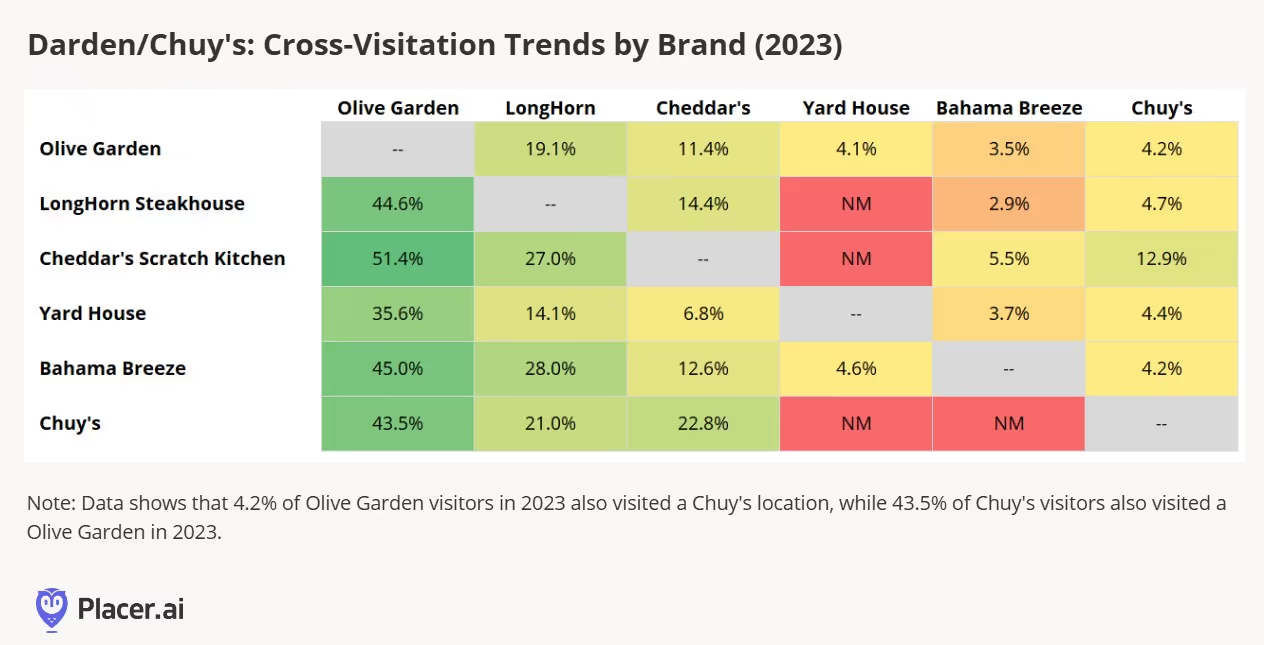
The acquisition of Chuy’s makes sense to us on a number of levels. First, and most obviously, Chuy’s fills a gap in the Darden portfolio. The company already owns the top player among casual-dining Italian chains (Olive Garden) and the number-two player in casual-dining steakhouses in addition to its other casual-dining (Cheddar’s, Yard House, Bahama Breeze) and fine-dining (Ruth’s Chris, The Capital Grille, Eddie V's, Seasons 52) concepts. By adding a casual-dining Mexican concept to its portfolio, we believe there will be an opportunity to attract incremental visitors. Below, we’ve presented cross visitation for Darden’s casual-dining brands and Chuy’s in 2023, and we see minimal overlap (although the cross-visit data is admittedly impacted by chain size and geography). According to our data, only 4%-5% of visitors to Darden’s existing restaurants also visited a Chuy’s location in 2023 (with the exception of Cheddar’s, which saw a 12.9% cross-visitation percentage).

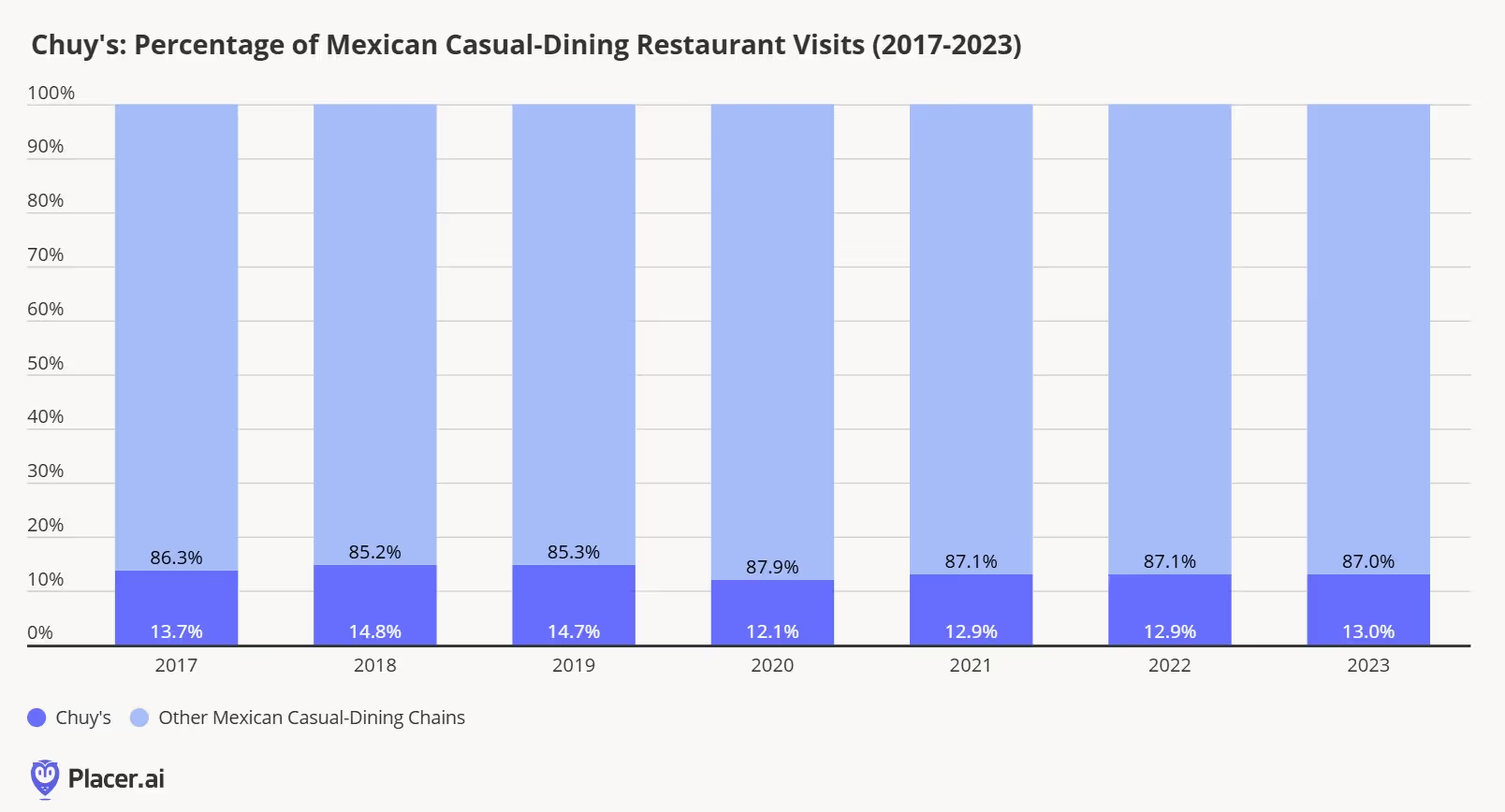
Second, despite Chuy’s being the leading player in the Mexican casual dining space, it’s still a relatively fragmented category that is ripe for consolidation. Below, we show the share of visitation data for Chuy’s compared to almost 20 other full-service Mexican restaurant chains from 2017-2023. Despite Chuy’s growth, its share of visits relative to the rest of the category has remained relatively healthy in the 12%-15% range. Backed by Darden’s purchasing, advertising, and real estate scale advantages, we see a meaningful opportunity to consolidate share of visits going forward, including visit per location improvement.

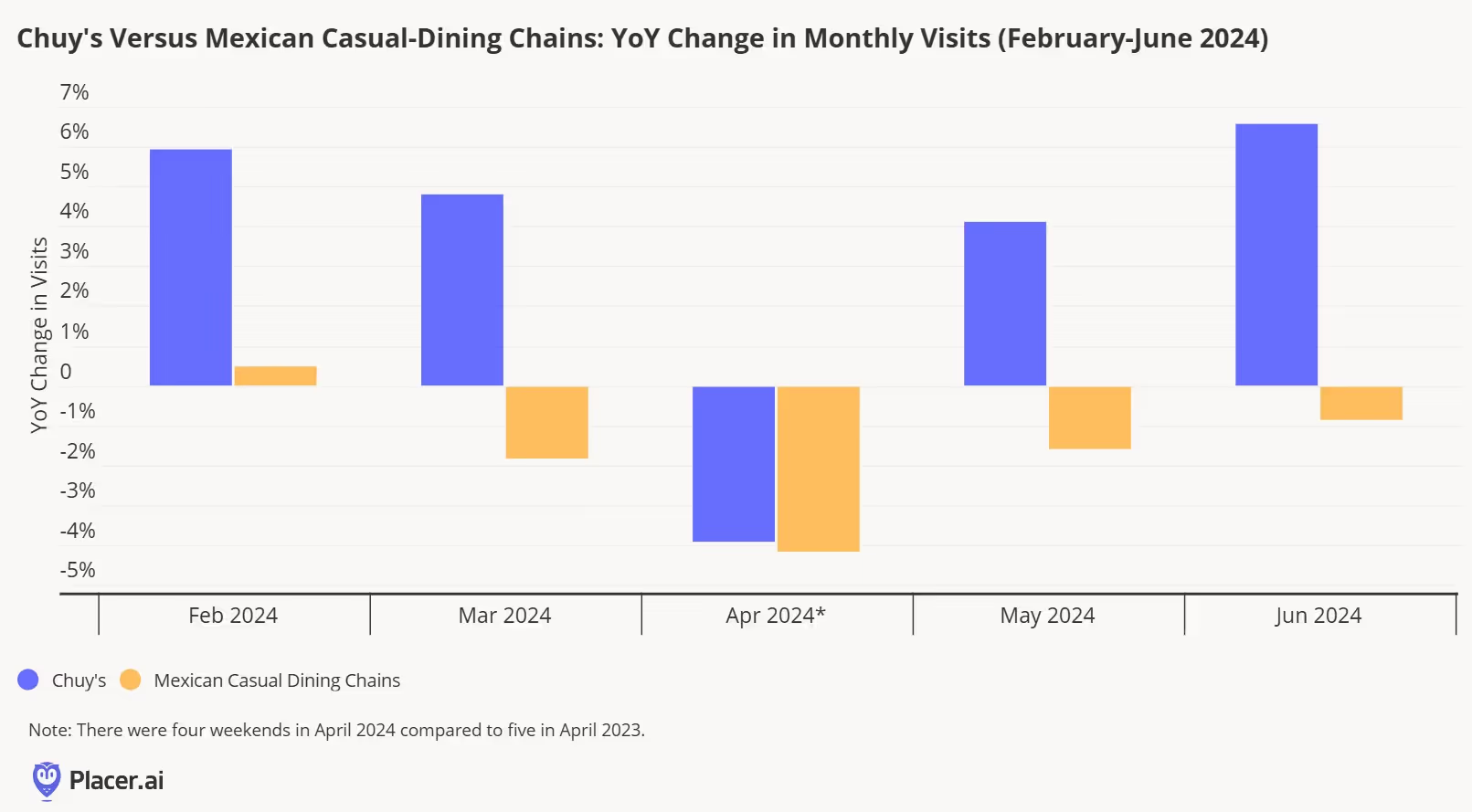
Chuy’s has been one of the leaders in the Mexican casual-dining chains in terms of visitation growth this year, outpacing monthly visits for the category by 5% on average (below). While integration will take time, applying guest experience, menu innovation, pricing, and marketing best practices from Darden should help to maintain this leadership.

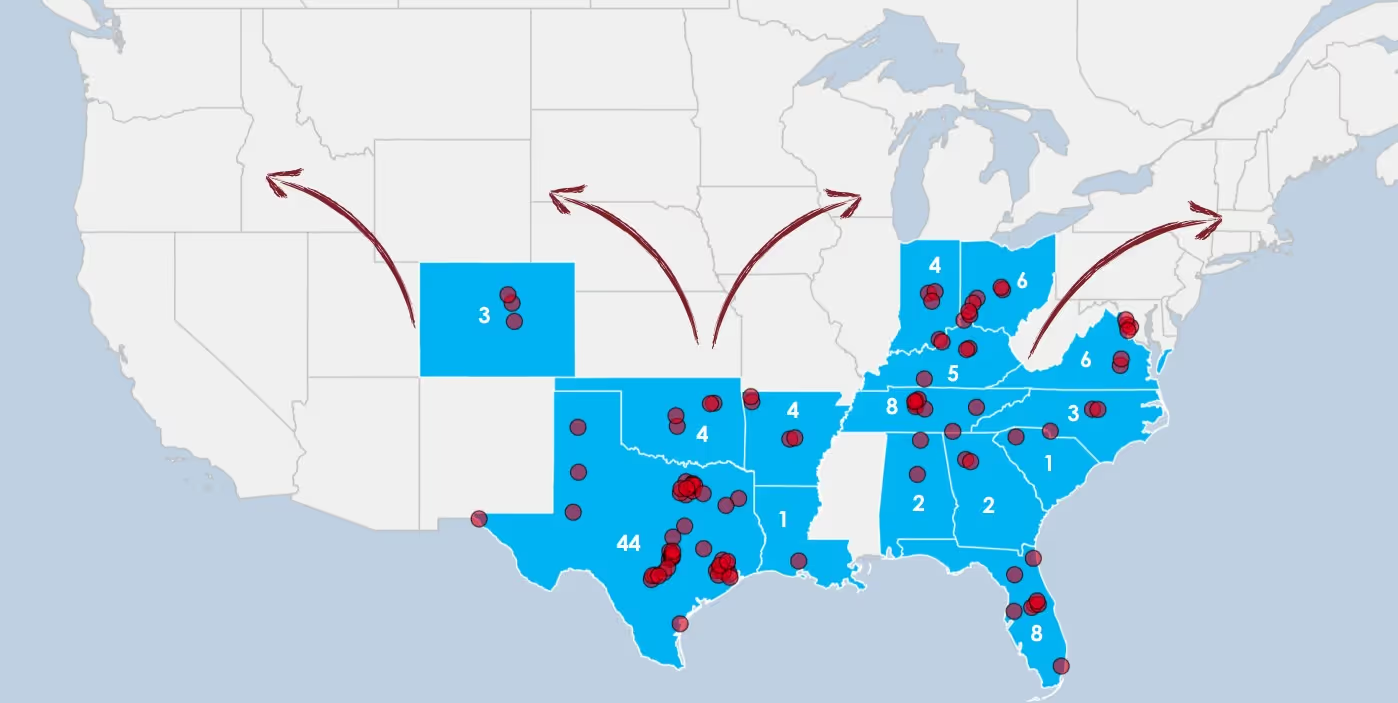
At 101 company-owned restaurants today, Chuy’s is comparable to several other brands in the Darden portfolio (including Yard House at 88 units and Ruth’s Chris at 79). The chain is well established in Texas (44 company-owned units) but has a relatively small presence in other states across the Southeast and Midwest (below).

Source: Darden Chuy’s Holdings Acquisition Presentation (7/18/24). Note: Includes restaurant openings and closures subsequent to Chuy’s 2024 Q1 10-Q filing.

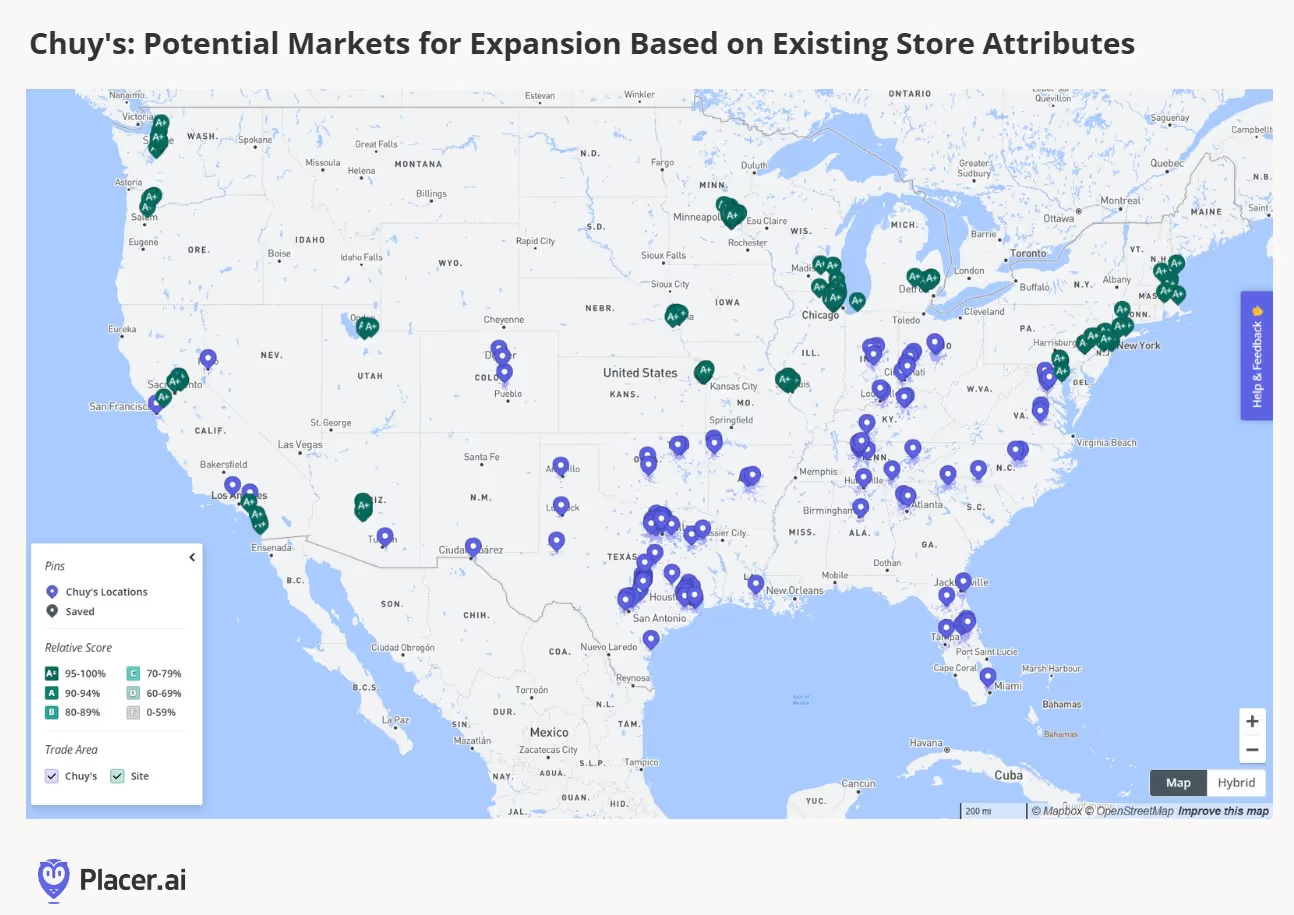
As Darden and Chuy’s management pointed out in a conference call to discuss the transaction, there are significant opportunities in both existing and new markets. Placer’s Site Selection tool (which identifies the characteristics of Chuy’s top locations–including trade area populations, demographic fit, cannibalization risk, and competition density–and finds markets/sites with similar characteristics) sees the best fits for expansion in several West, Midwest, and Northeast markets.

Article
1H 2024 Shopping Center Index: Foot Traffic Optimism
Caroline Wu
Jul 19, 2024

The first half of 2024 is proving to be more heavily visited for all types of shopping centers. June in particular is stronger than it was last year. After some January doldrums, where all shopping traffic was lower than the prior year due to weather, February began to pick up and March was particularly strong comparatively for outlet malls compared to last year. April saw a general downtick for more discretionary shopping, but May and June are looking strong so far.

The top 5 outlet malls by traffic during the last week of June were Arundel Mills, Ontario Mills, Sawgrass Mills, Legends Outlets Kansas City, and The Outlets at Orange. Among indoor malls, shoppers flocked to Mall of America, Roosevelt Field, Westfield Valley Fair, Del Amo Fashion Center, and Westfield Southcenter. Weather is always a consideration in the summer months, but as shopping centers have become increasingly sophisticated about strategically placed shade or places to take a break, it can be quite refreshing to visit an open-air lifestyle center. Tops in the nation for traffic include Ala Moana Center, Pier Park, Easton Town Center, Irvine Spectrum Center, and Victoria Gardens. As for high street retail corridors, no one can match the Big Apple. Three of the top five high streets were here, including Times Square and 42nd St at #1, SoHo at #3, and 5th Ave at #4.  In second place was Michigan Ave in Chicago and in fifth place was Beverly Hills.

Reports
INSIDER
Report
The Return to Office: Recovery Still Underway
Dive into the data to explore the state of office recovery in 2024 and see how evolving office visit patterns are impacting ground transportation hubs, fast-casual dining, and more.
January 31, 2025
8 minutes

Starbucks. Amazon. Barclays. AT&T. UPS. These are just some of the major corporations that have made waves in recent months with return-to-office (RTO) mandates requiring employees to show up in person more often – some of them five days a week. 

But how are crackdowns like these taking shape on the ground? Is the office recovery still underway, or has it run its course? And how are evolving in-office work patterns impacting commuting hubs and dining trends? This white paper dives into the data to assess the state of office recovery in 2024 – and to explore what lies ahead for the sector in 2025.

A Marathon, Not a Sprint

In 2024, office foot traffic continued its slow upward climb, with visits to the Placer.ai Office Index down just 34.3% compared to 2019. (In other words, visits to the Placer.ai Office Index were 65.7% of their pre-COVID levels). And zooming in on year-over-year (YoY) trends reveals that office visits grew by 10.0% in 2024 compared to 2023 – showing that employee (and manager) pushback notwithstanding, the RTO is still very much taking place.

Indeed, diving into quarterly office visit fluctuations since Q4 2019 shows that office visits have been on a slow, steady upward trajectory since Q2 2020, following – at least since 2022 – a fairly consistent seasonal pattern. In Q1, Q2, and Q3 of each year, office visit levels increased steadily before dipping in holiday-heavy Q4 – only to recover to an even higher start-of-year baseline in the following Q1. 

Between Q1 and Q3 2022, for example, the post pandemic office visit gap (compared to a Q4 2019 baseline) narrowed from 63.1% to 47.5%. It then widened temporarily in Q4 before reaching a new low – 41.4% – in Q1 2023. The same pattern repeated itself in both 2023 and 2024. So even though Q4 2024 saw a predictable visit decline, the first quarter of Q1 2025 may well set a new RTO record – especially given the slew of strict RTO mandates set to take effect in Q1 at companies like AT&T and Amazon. 

The Stubborn Staying Power of the TGIF Workweek

Despite the ongoing recovery, the TGIF work week – which sees remote-capable employees concentrating office visits midweek and working remotely on Fridays – remains more firmly entrenched than ever. 

Low Friday Visit Share

In 2024, just 12.3% of office visits took place on Fridays – less than in 2022 (13.3%) and on par with 2023 (12.4%). Though Fridays were always popular vacation days – after all, why not take a long weekend if you can – this shift represents a significant  departure from the pre-COVID norm, which saw Fridays accounting for 17.3% of weekday office visits.

Unsurprisingly, Tuesdays and Wednesdays remained the busiest in-office days of the week, followed by Thursdays. And Mondays saw a slight resurgence in visit share – up to 17.9% from 16.9% in 2023 – suggesting that as the RTO progresses, Manic Mondays are once again on the agenda. 

Tuesday Visit Gap Just 24.3%

Indeed, a closer look at year-over-five-year (Yo5Y) visit trends throughout the work week shows that on Tuesdays and Wednesdays, 2024 office foot traffic was down just 24.3% and 26.9%, respectively, compared to 2019 levels. The Thursday visit gap registered at 30.3%, while the Monday gap came in at 40.5%. 

But on Fridays, offices were less than half as busy as they were in 2019 – with foot traffic down a substantial 53.2% compared to 2019. 

Hybrid Travel Trends

Before COVID, long commutes on crowded subways, trains, and buses were a mainstay of the nine-to-five grind. But the rise of remote and hybrid work put a dent in rush hour traffic – leading to a substantial slowdown in the utilization of public transportation. As the office recovery continues to pick up steam, examining foot traffic patterns at major ground transportation commuting hubs, such as Penn Station in New York or Union Station in Washington, D.C., offers additional insight into the state of RTO.

A Not-So-Rush Hour 

Rush hour, for one thing – especially in the mornings – isn’t quite what it used to be. In 2024, overall visits to ground transportation hubs were down 25.0% compared to 2019. But during morning rush hour – weekdays between 6:00 AM and 9:00 AM – visits were down between 44.6% and 53.0%, with Fridays (53.0%) and Mondays (49.7%) seeing the steepest drops. Even as people return to the office, it seems, many may be coming in later – leaning into their biological clocks and getting more sleep.  And with today’s office-goers less likely to be suburban commuters than in the past (see below), hubs like Penn Station aren’t as bustling first thing in the morning as they were pre-pandemic.

Evening rush hour, meanwhile, has been quicker to bounce back, with 2024 visit gaps ranging from 36.4% on Fridays to 30.0% on Tuesdays and Wednesdays. Office-goers likely form a smaller part of the late afternoon and evening rush hour crowd, which may include more travelers heading to a variety of places. And commuters going to work later in the day – including “coffee badgers” – may still be apt to head home between four and seven.

An Urban Shift

The drop in early-morning public transportation traffic may also be due to a shift in the geographical distribution of would-be commuters. Data from Placer.ai’s RTO dashboard shows that visits originating from areas closer to office locations have recovered faster than visits from farther away – indicating that people living closer to work are more likely to be back at their desks. 

And analyzing the captured markets of major ground transportation hubs shows that the share of households from “Principal Urban Centers” (the most densely populated neighborhoods of the largest cities) rose substantially over the past five years. At the same time, the share of households from the “Suburban Periphery” dropped from 39.1% in 2019 to 32.7% in 2024. (A location’s captured market refers to the census block groups (CBGs) from which it draws its visitors, weighted to reflect the share of visits from each one – and thus reflects the profile of the location’s visitor base.) 

This shift in the profile of public transportation consumers may explain the relatively slow recovery of morning transportation visits: City dwellers , who seem to be coming into the office more frequently than suburbanites, may not need to get as early a start to make it in on time. 

Dining Ripple Effects

While the RTO debate is often framed around employer and worker interests, what happens in the office doesn’t stay in the office. Office attendance levels leave their mark on everything from local real estate markets to nationwide relocation patterns. And industries from apparel to dining have undergone significant shifts in the face of evolving work routines. 

Out to Lunch

Within the dining space, for example, fast-casual chains have always been workplace favorites. Offering quick, healthy, and inexpensive lunch options, these restaurants appeal to busy office workers seeking to fuel up during a long day at their desks. 

Traditionally, the category has drawn a significant share of its traffic from workplaces. And after dropping during COVID, the share of visits to leading fast-casual brands coming from workplaces is once again on the rise.

In 2019, for example, 17.3% of visits to Chipotle came directly from workplaces, a share that fell to just 11.6% in 2022. But each year since, the share has increased – reaching 16.0% in 2024. Similar patterns have emerged at other segment leaders, including Jersey Mike’s Subs, Panda Express, and Five Guys. So as people increasingly go back to the office, they are also returning to their favorite lunch spots.

More Coffee Please!

For many Americans, coffee is an integral part of the working day. So it may come as no surprise that shifting work routines are also reflected in visit patterns at leading coffee chains. 

In 2019, 27.5% of visits to Dunkin’ and 20.1% of visits to Starbucks were immediately followed by a workplace visit, as many employees grabbed a cup of Joe on the way to work or popped out of the office for a midday coffee break. In the wake of COVID, this share dropped for both coffee leaders. But since 2022, it has been steadily rebounding – another sign of how the RTO is shaping consumer behavior beyond the office. 

A Developing Story

Five years after the pandemic upended work routines and supercharged the soft pants revolution, the office recovery story is still being written. Workplace attendance is still on the rise, and restaurants and coffee chains are in the process of reclaiming their roles as office mainstays. Still, office visit data and foot traffic patterns at commuting hubs show that the TGIF work week is holding firm – and that people aren’t coming in as early or from as far away as they used to. As new office mandates take effect in 2025, the office recovery and its ripple effects will remain a story to watch.

INSIDER
Report
Quarterly Retail Review: Q4 2024
See how major retail categories fared during the all-important fourth quarter of 2024.
January 20, 2025
INSIDER
Report
10 Top Brands to Watch in 2025
Dive into Placer’s list of 10 top brands – and three potential surprises – for 2025, and find out what the data says about these brands’ growth accelerators.
January 16, 2025
14 minutes

Many retail and dining chains performed well in 2024 despite the ongoing economic uncertainty. But with the consumer headwinds continuing into 2025, which brands can continue pulling ahead of the pack? 

This report highlights 10 brands (in no particular order) that exhibit significant potential to grow in 2025 – as well as three chains that have faced some challenges in 2024 but appear poised to make a comeback in the year ahead. Which chains made the cut? Dive into the report to find out. 

1. Sprouts

Through 2024, visits to Sprouts Farmers Market locations increased an average of 7.2% year-over-year (YoY) each month, outpacing the wider grocery segment standard by an average of six percentage points. And not only were visits up – monthly visits per location also grew YoY. 

The promising coupling of overall and visits per location growth seems driven by the brands’ powerful understanding of who they are and what they bring to the market. The focus on high quality, fresh products is resonating, and the utilization of small- format locations is empowering the chain to bring locations to the doorstep of their ideal audiences. 

This combination of forces positions the brand to better identify and reach key markets efficiently, offering an ideal path to continued growth. The result is a recipe for ongoing grocery success.

2. CAVA

CAVA has emerged as a standout success story in the restaurant industry over the past several years. Traditionally, Mediterranean concepts have not commanded the same level of demand as burger, sandwich, Mexican, or Asian fast-casual concepts, which is why the category lacked a true national player until CAVA's rise. However, evolving consumer tastes have created a fertile landscape for Mediterranean cuisine to thrive, driven by factors such as social media influence, expanded food options via third-party delivery, growing demand for healthier choices, the rise of food-focused television programming, and the globalization of restaurant concepts .

CAVA’s success can be attributed to several key factors. Roughly 80% of CAVA locations were in suburban areas before the pandemic, aligning well with consumer migration and work-from-home trends. Additionally, CAVA was an early adopter of digital drive-thru lanes, similar to Chipotle’s "Chipotlanes," and began developing these store formats well before the pandemic. The brand has also utilized innovative tools like motion sensors in its restaurants to optimize throughput and staffing during peak lunchtime hours, enabling it to refine restaurant design and equipment placement as it expanded. CAVA’s higher employee retention rates have also contributed to its ability to maintain speed-of-service levels above category averages.

These strengths allowed CAVA to successfully enter new markets like Chicago in 2024. While many emerging brands have struggled to gain traction in new areas, CAVA’s visit-per-location metrics in recently entered markets have matched its national averages, positioning the brand for continued growth in 2025.

3. Ashley Furniture

Ashley’s recent strategy shift to differentiate itself through experiential events, such as live music, workshops, and giveaways, is a compelling approach in the challenging consumer discretionary category. Post-pandemic, commercial property owners have successfully used community events to boost visit frequency, dwell time, and trade area size for mall properties. It’s no surprise that retailers like Ashley are adopting similar strategies to engage customers and enhance their in-store experience.

The decision to incorporate live events into its marketing strategy reflects the growing demand for experiential and immersive retail experiences. While home furnishings saw a surge in demand during the pandemic, the category has struggled over the past two years, underperforming other discretionary retail sectors compared to pre-pandemic levels. Recognizing this challenge, Ashley’s rebrand focuses on creating interactive and memorable experiences that allow customers to engage directly with its products and explore various design possibilities. In turn, this has helped to drive visits from trade areas with younger consumers with lower household incomes.

Ashley has leaned into collaborations with interior designers and industry experts to offer informative sessions and workshops during these events. These initiatives not only attract traffic but also provide valuable insights into customers’ preferences, which can be used to refine product offerings, enhance customer service, and shape future marketing efforts. This approach is particularly relevant as millennials and Gen Z drive new household formation. While still early, Ashley’s pivot to live events is showing promising results in attracting visits and increasing customer engagement.

4. Nordstrom

Department stores have had many challenges in navigating changing consumer behavior and finding their place in an evolving retail landscape. Nordstrom, an example of department store success in 2024, has been able to maintain a strong brand relationship with its shoppers and regain its footing with its store fleet. While the chain has certainly benefited from catering to a more affluent, and less price sensitive, consumer base, it still shines in fostering a shopping experience that stands out.

Value might be a driver of retail visitation across the industry, but for Nordstrom, service and experience is paramount. The retailer has downplayed promotional activity in favor of driving loyalty among key visitors. Nordstrom also has captured higher shares of high-value, younger consumer segments, which defies commonly held thoughts about department stores. The chain was a top visited chain during Black Friday in 2024, showcasing that it’s top of mind for shoppers for both gift giving and self-gifting. 

What’s next? Nordstrom announced at the end of December that it plans to go private with the help of Mexican retail chain Liverpool. We expect to see even more innovation in store experience, assortments and services with this newfound flexibility and investment. And, we cannot forget about Nordstrom Rack, which allows the retailer to still engage price-conscious shoppers of all income levels, which is certainly still a bright spot as we head into 2025.

5. Sam’s Club

Visits are up, and the audience visiting Sam’s Club locations seems to be getting younger which – when taken together – tells us a few critical things. First, Sam’s Club has parlayed its pandemic resurgence into something longer term, leveraging the value and experience it provides to create loyal customers. Second, the power of its offering is attracting a newer audience that had previously been less apt to take advantage of the unique Sam’s Club benefits.

The result is a retailer that is proving particularly adept at understanding the value of a visit. The membership club model incentives loyalty which means that once a visitor takes the plunge, the likelihood of more visits is heightened significantly. And the orientation to value, a longer visit duration, and a wide array of items on sale leads to a larger than normal basket size.

In a retail segment where the value of loyalty and owning ‘share of shopping list’ is at a premium, Sam’s Club is positioned for the type of success that builds a foundation for strength for years to come.

6. Raising Cane’s Chicken Fingers

Raising Cane’s exemplifies the power of focus by excelling at a simple menu done exceptionally well. Over the past several years, the chain has been one of the fastest-growing in the QSR segment, driven by a streamlined menu that enhances speed and efficiency, innovative marketing campaigns, and strategic site selection in both new and existing markets. Notably, Raising Cane’s ranked among the top QSR chains for visit-per-location growth last year. Unlike many competitors that leaned on deep discounts or nostalgic product launches to boost traffic in 2024, Raising Cane’s relied on operational excellence to build brand awareness and drive visits. This approach has translated into some of the highest average unit sales in the segment, with restaurants averaging around $6 million in sales last year.

Raising Cane’s operational efficiency has also been a key driver of its rapid expansion, growing from 460 locations at the end of 2019 to more than 830 heading into 2025. This includes over 100 new store openings in 2024 alone, placing it among the top QSR chains for year-over-year visit growth. The chain’s ability to maintain exceptional performance while scaling rapidly highlights its strong foundation and operational strategy.

7. Life Time

While Life Time has fitness at its core, it has also expanded to become a lifestyle.  Healthy living is its mantra and this extends to both the gym aspect, but also the social health of its members with offerings like yoga, childcare, personalized fitness programs, coworking, and even an option for luxury living just steps away. 

With all these choices, it’s no wonder that its members are more loyal than others in its peer group.  

8. Barnes & Noble  

To the delight of book lovers everywhere, Barnes & Noble is back in force.  With a presence in every single state and approximately 600 stores, location options are growing to browse bestsellers, chat with in-store bibliophiles, or grab a latte.  Stores are feeling cozier and more local, with handwritten recommendations across the store. The chain’s extensive selection of gifts and toys mean that one can stop in for more than just books. The membership program is also relaunching, rewarding members for their purchases.  Even though some locations have downsized, efficiency is up with average visits per square foot increasing over the last 3 years.  Customers are also lingering, with nearly 3 in 10 visitors staying 45 minutes or longer. 

With options for a “third place” that’s not home or work dwindling, Barnes & Noble is poised to fill that hole.

9. H Mart

From its origins as a corner grocery store in Queens, NY 42 years ago, H Mart now boasts over 80 stores throughout the US. Shoppers are enticed by the aroma of hot roasted sweet potatoes wafting through the store, the opportunities to try new brands like Little Jasmine fruit teas, and the array of prepared foods such as gimbap and japchae. In addition to traditional Korean, Chinese, and Japanese groceries, H Mart’s assortment has expanded to staple items and American brands as well like Chobani yogurt or Doritos.

 As the Hallyu wave sweeps across the nation and K-pop stars like Rose top the charts for the eight straight week with the catchy “APT”, so too is the appetite for Asian food.  At the second-most visited H Mart in the nation in Carrollton, TX, the ethnic makeup of customers is 39% White, 14% Black, 23% Hispanic or Latino, and 20% Asian – reflecting the truly universal appeal of this supermarket chain.

10. Bluemercury

Beauty retail had a transformative 2024, with a general cooling off in demand for the category. Competition between chains has increased and delivering quality products, expertise and services is critical to maintain visits. Against this backdrop, Bluemercury stands out as a shining star in parent company Macy’s portfolio of brands, with the brand well positioned to take on this next chapter of beauty retail.

Bluemercury’s success lies in its ability to be a retailer, an expert, and a spa service provider to its consumers. Placer data has shown that beauty chains with a service and retail component tend to attract more visitors than those who just specialize in retail offerings, and Bluemercury is no exception. The chain also focuses solely on the prestige market within the beauty industry and caters to higher income households compared to the broader beauty category; both of those factors have contributed to more elastic demand than with other retailers. 

Bluemercury’s bet on product expertise and knowledge combined with a smaller format store help to foster a strong connection between the beauty retailer and its consumers. The brand overindexes with visitors “seeking youthful appearance” and has cemented itself as a destination for niche and emerging beauty brands. As the larger Macy’s brand grapples with its transformation, Bluemercury’s relevance and deep connection to its consumer base can serve as an inspiration, especially as the beauty industry faces mounting uncertainty.

3 Potential Surprises for 2025

1. Starbucks

Competitors like Dutch Bros and 7Brew are on the rise, critical office visitation patterns remain far behind pre-pandemic levels, and the chain did not end the year in the most amazing way in terms of visit performance. But there is still so much to love about Starbucks – and the addition of new CEO Brian Niccol positions the coffee giant to rebound powerfully. 

The focused attention on leaning into its legendary ‘third place’ concept is in excellent alignment with the shift to the suburbs and hybrid work and with audiences that continue to show they value experience over convenience. But the convenience-oriented customer will likely also benefit from the brand’s recent initiatives, including pushes to improve staffing, mobile ordering alignment and menu simplification. In addition, the brand is still the gold standard when it comes to owning the calendar, as seen with their annual visit surges for the release of the Pumpkin Spice Latte or Red Cup Day and their ability to capitalize on wider retail holidays like Black Friday and Super Saturday. 

The combination of the tremendous reach, brand equity, remaining opportunities in growing markets and the combined ability to address both convenience and experience oriented customers speaks to a unique capacity to regain lost ground and drive a significant resurgence against the expectations of many.

2. Adidas

Retail has had its challenges this year, with many consumers opting for off-price to snag deals – but the strength of the Adidas brand should not be underestimated.  Gazelles and Sambas are still highly coveted, and a partnership with Messi x Bad Bunny racked up over a million likes. Consumers are favoring classic silhouettes across both shoes and clothing, and nothing says classic like those three stripes.

3. Gap Inc.

Gap, and its family of brands including Old Navy and Banana Republic, are synonymous with American apparel retail. The namesake brand has always been at the center of comfort, value and style, but over time lost its way with consumers. However, over the past year and a half, the reinvigoration of the Gap family of brands has started to take shape under the direction of CEO Richard Dickson. 

New designs, collaborations, splashy marketing campaigns and store layouts have taken shape across the portfolio. While we haven’t seen a lot of change in visitation to stores over the past year, trends are certainly moving in the right direction and outpacing many other brands in the apparel space. Gap has also reinserted itself into the fabric of American fashion this past year with designs for the Met Gala.

The benefit of Gap Inc.’s portfolio is that each brand has a distinct and unique audience of consumers that it draws from. This allows each brand to focus on meeting the needs of its visitors directly instead of trying to be all things for a broader group of consumers. Old Navy in particular has a strong opportunity with consumers as value continues to be a key motivator. 

Gap has done all of the right things to not only catch up to consumers’ expectations but to rise beyond them. Even as legacy store-based retail brands have seen more disruption over the past few years, Gap is ready to step back into the spotlight.

Variety of Paths to Success in 2025 

The diversity of brands featured in this report highlight the variety of categories and strategic initiatives that can drive retail and dining success in 2025. 

Sprouts’ focus on quality products and small-format stores, CAVA’s rise as a suburban dining powerhouse, and Nordstrom’s commitment to customer experience all highlight how understanding and responding to consumer needs can drive success. Brands like Ashley Furniture, Sam’s Club, H Mart, and Life Time have shown how offering a unique value proposition within a crowded segment, leveraging loyalty, and creating memorable experiences can fuel growth. And Raising Cane’s demonstrates the power of simplicity and operational efficiency in building momentum.

At the same time, niche players like Bluemercury are excelling by catering to specific audiences with authenticity and expertise. And while Starbucks, Adidas, and Gap Inc. face challenges, the three companies’ brand equity and revitalization efforts suggest potential for a significant comeback.

Loading results...
We couldn't find anything matching your search.
Browse one of our topic pages to help find what you're looking for.
For more in-depth analyses on a variety of subjects, explore Reports.
The Anchor Logo
INSIDER
Stay Anchored: Subscribe to Insider & Unlock more Foot Traffic Insights
Gain insider insights with our in-depth analytics crafted by industry experts
— giving you the knowledge and edge to stay ahead.
Subscribe