Skip to Main Content
Thank you! Your submission has been received!
Oops! Something went wrong while submitting the form.
0
0
0
0
----------
0
0
Articles
Article
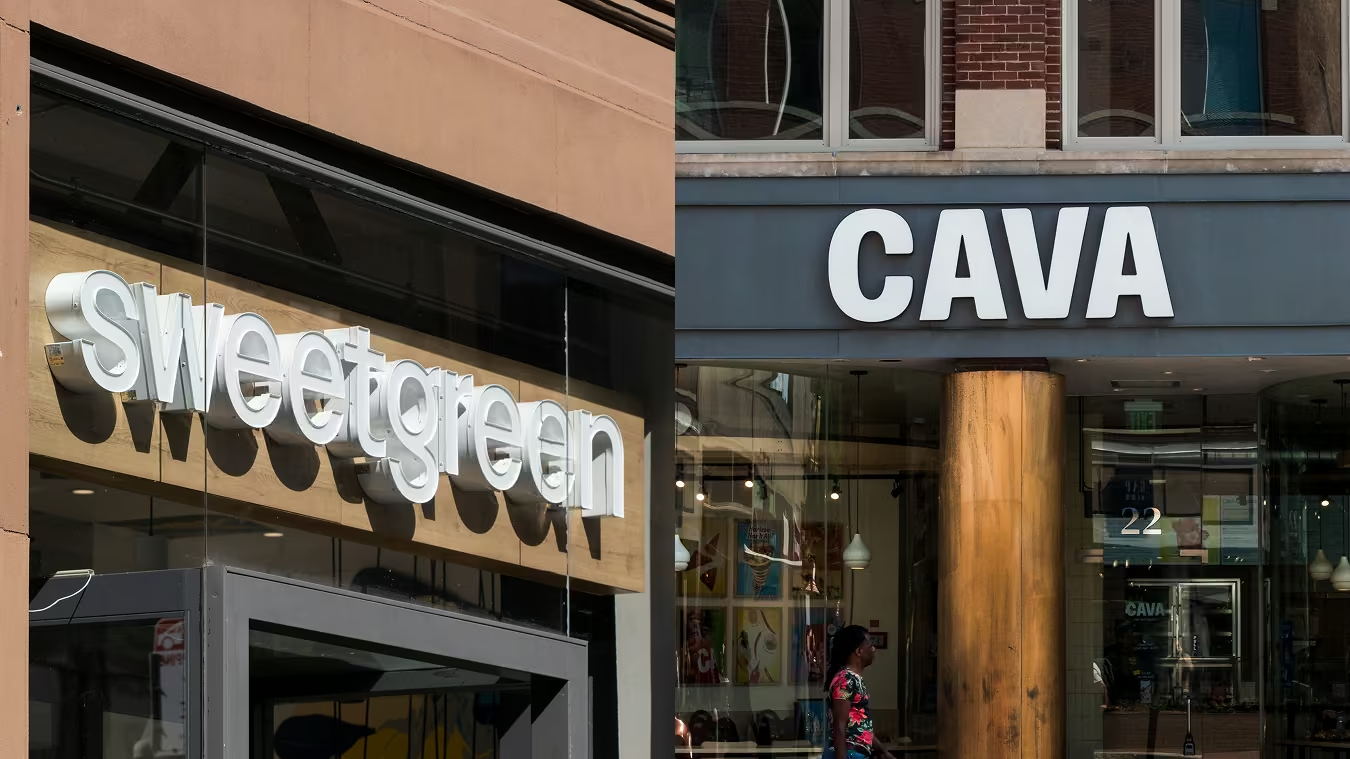
How CAVA and sweetgreen are Sustaining Growth in Today’s Dining Landscape
Ezra Carmel
Feb 10, 2026
3 minutes

The fast casual space has become an increasingly competitive battleground for share-of-stomach as price-sensitive consumers trade down to lower-cost food channels. Against this backdrop, CAVA and sweetgreen offer a timely case study in resilience. Both brands continue to expand their footprints and diversify their audiences while leaning on loyalty programs and menu innovation to sustain growth during a volatile period for the dining sector. Using AI-powered location analytics, we uncover how macroeconomic pressures have shaped foot traffic trends to both chains and explore the strategies helping to keep them on a positive growth trajectory.

Expansion and Engagement Lift Visits

CAVA and sweetgreen continue to pursue aggressive expansion strategies, contributing to the overall visit growth of both brands. But while CAVA showed relative stability in both overall visits and same-store performance in H2 2025, sweetgreen experienced softer year-over-year (YoY) visit growth and moderate same-store visit declines in most months – raising the possibility of emerging “bowl fatigue.”

In Q4 2025, CAVA posted 16.6% YoY visit growth, with loyalty program enhancements and a holiday campaign likely helping to sustain visits.

Sweetgreen’s 4.4% visit growth in Q4 2025 was moderate by comparison, although December stood out for delivering positive YoY visits and same-store visits. This boost may have been driven by the value-focused $10 Harvest Bowl promotion alongside continued adoption of the brand’s refreshed loyalty program.

For both chains, revamped loyalty programs and continued expansion may set the stage for growth in the year ahead.

Younger Diners Show Signs of Returning as Audiences Broaden

Even as refreshed loyalty programs and expansion act as growth levers, both chains have recently called out a shared headwind – softer engagement among Gen Z and Millennial diners amid sustained financial pressure on younger consumers.

However, AI-powered captured market analysis combined with the Spatial.ai: PersonaLive dataset suggests early signs of renewed momentum. In Q4 2025, both chains saw an increased share of visitors from the “Young Urban Singles” segment – a cohort that skews heavily Gen Z and Millennial – compared to Q4 2024. And sweetgreen saw growth in its “Educated Urbanites” segment – another cohort that skews heavily Gen Z and Millennial, and which makes up a large share of the chain’s captured market. These shifts could indicate that both brands reclaimed some younger traffic toward the end of the year.

At the same time, both brands saw broader audience diversification within their captured markets. Sweetgreen increased its share of “Wealthy Suburban Families”, while CAVA saw gains among “Upper Suburban Diverse Families” and “Near-Urban Diverse Families”. This suggests that growth among older and more financially stable segments is likely helping to offset some of the pullback from younger diners.

And while some of CAVA and sweetgreen’s suburban and near-urban audience gains likely reflect both chains’ continued unit expansion beyond urban cores, the rise in young urban traffic indicates that strategic initiatives are resonating with traditional audiences. Menu innovation and tools that give diners greater control over nutritional inputs – particularly offerings aligned with protein-forward trends – may be helping to re-engage young urban diners. 

Why Focused Strategy Matters More Than Ever in Fast Casual

As consumer budgets remain under pressure, CAVA and sweetgreen illustrate that sustaining momentum in today’s dining landscape requires a deliberate, multi-pronged strategy. Thoughtful real estate decisions can expand a brand’s consumer base while innovation and loyalty programs keep existing audiences engaged. 

The broader industry takeaway is clear: brands that deepen relevance across multiple consumer segments may be best positioned to compete for share-of-stomach in the months ahead.

Which restaurant brands will succeed in 2026? Visit Placer.ai/anchor to find out.

Placer.ai leverages a panel of tens of millions of devices and utilizes machine learning to make estimations for visits to locations across the US. The data is trusted by thousands of industry leaders who leverage Placer.ai for insights into foot traffic, demographic breakdowns, retail sale predictions, migration trends, site selection, and more.

Article
January 2026 Placer.ai Mall Index: Strong Start to 2026
Shira Petrack
Feb 9, 2026
2 minutes

Malls Start the Year Strong

Malls started the year on a strong note, with year-over-year traffic increases across all three mall formats. Open-air shopping centers received the largest gains, with visits up 6.2% compared to January 2025. Indoor malls, which outperformed the other formats for much of 2025, also posted solid growth of 4.5% YoY – a notable result given their already strong performance last January. Even outlet malls, which struggled to maintain growth momentum for most of 2025, saw a 3.6% increase in visits – perhaps suggesting that consumers are entering 2026 more willing to return to discretionary shopping destinations after a cautious 2025.

Increased Returns Activity Likely Contributed to Visit Strength 

A closer look at the data suggests that a meaningful share of last month’s mall traffic may have been driven by post-holiday retail returns. There is some evidence that return activity was higher this January than in January 2025, and the timing of visits supports this interpretation. 

Mall traffic was heavily front-loaded to the first two weeks of the year – consistent with the post-holiday returns window – with visit growth already beginning to moderate during the third week of January. (The more pronounced decline in traffic observed in the final week of the month was likely driven by the impact of Winter Storm Fern, which weighed on visits across all mall formats).

Short Trips Surge, but Longer Visits Grow Too

Visit duration patterns further support the idea that increased returns activity drove much of January’s mall traffic surge – the largest gains were concentrated in short visits, with trips lasting 10 minutes or less increasing by double digits across all mall formats.

At the same time, the data also shows year-over-year growth in longer visits, indicating that higher-quality, more engaged mall trips increased in January 2026 as well. So while post-holiday returns clearly played a role in driving January foot traffic, the simultaneous growth in longer trips suggests that shoppers were also spending time browsing or making additional purchases.

Efficiency Meets Engagement in 2026

As 2026 unfolds, this blend of efficiency and engagement will be a key dynamic to watch: consumers appear increasingly willing to re-enter physical retail spaces, but they remain intentional about how they shop. Mall formats that can seamlessly support quick, frictionless visits while also encouraging extended dwell time may be best positioned to capture both sides of evolving consumer behavior in the year ahead.

For more data-driven retail insights, visit placer.ai/anchor

Placer.ai leverages a panel of tens of millions of devices and utilizes machine learning to make estimations for visits to locations across the US. The data is trusted by thousands of industry leaders who leverage Placer.ai for insights into foot traffic, demographic breakdowns, retail sale predictions, migration trends, site selection, and more.

Article
RBI Brands: Where Do The Chains Stand After Q4?
Ezra Carmel
Feb 6, 2026
1 minute

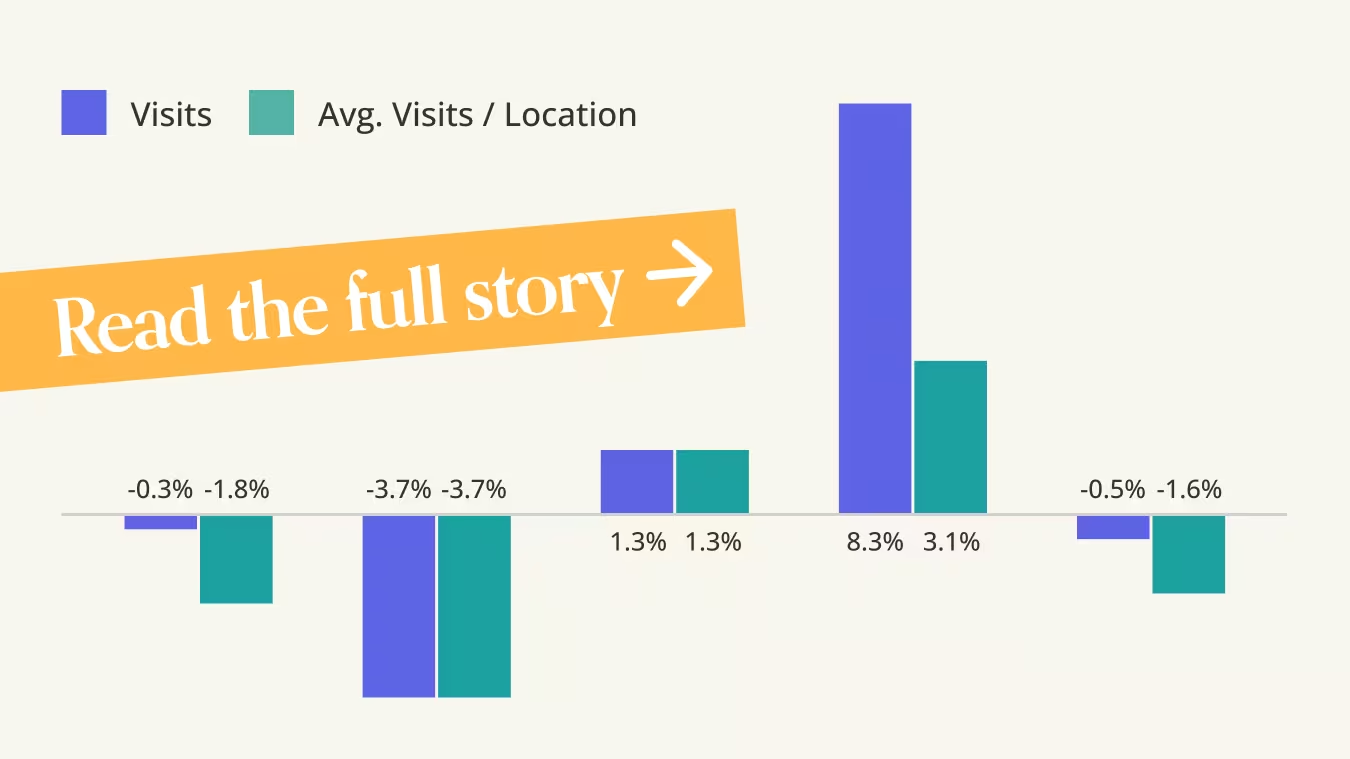
Year-over-year (YoY) visit performance for RBI chains was mixed in Q4 2025. Burger King (0.7%) and Popeyes (-0.5%) had nearly flat foot traffic, while Firehouse Subs (3.9%) had more significant growth. Meanwhile, Tim Hortons (-4.5%) experienced a significant visit gap. 

Diving Into Each Brand

Foot traffic trends across RBI brands in Q4 2025 reveal a divide in chain performance. Burger King and Firehouse Subs were the primary drivers of domestic visit growth, while Popeyes and Tim Hortons experienced softer traffic patterns.

As the monthly visit graph below shows, Burger King’s Q4 2025 momentum came mostly in December 2025, coinciding with the brand’s limited-time SpongeBob Movie Menu and its 13 Days of Deals promotion. Meanwhile, Firehouse Subs sustained visit growth throughout Q4 2025, supported by continued expansion of its store footprint. 

Popeyes visits and same-store visits tracked closely and remained largely flat in Q4 2025, pointing to continued challenges for the brand. RBI has emphasized long-term operational improvements and a renewed focus on core menu items as key levers for improving Popeyes’ performance, and while the impact of these initiatives has yet to materialize in the visit data, they could begin to support meaningful growth in 2026.

Domestic traffic to Tim Hortons – a relatively small chain in the U.S. coffee space – lagged significantly in Q4 2025. However, RBI has signaled ambitions to replicate the brand’s international success domestically, leveraging a robust promotional calendar and an accelerated expansion strategy that could help lift brand awareness and strengthen consumer loyalty over time.

What’s next for these brands in 2026? Visit Placer.ai/anchor to find out.

Placer.ai leverages a panel of tens of millions of devices and utilizes machine learning to make estimations for visits to locations across the US. The data is trusted by thousands of industry leaders who leverage Placer.ai for insights into foot traffic, demographic breakdowns, retail sale predictions, migration trends, site selection, and more.

Article
World Cup Connections
Kevin Ching
Feb 6, 2026
3 minutes

I grew up playing soccer and have great World Cup memories growing up near the Rose Bowl. 

In 1994, the US hosted the men’s World Cup, marking the first time the country had ever hosted a World Cup – men's or women's. We tied our first game against Switzerland, and the second game was against Columbia at the Rose Bowl. I went to that game! Valderama was at his peak, and it seemed one in five fans wore a big yellow wig. The US went on to win that game – our first win ever on home soil. The party that ensued was madness. Seemingly, the whole stadium paraded to Old Town Pasadena after the game, basking in the upset. Old Town had not expected tens of thousands of soccer fans to descend upon them.  

But something even greater happened in 1999. The Rose Bowl hosted another epic game, this time between the US and China in the Women’s World Cup finals. The game went into overtime, and then penalties, where we finally won. The image of Brandi Chastain after her game-winning penalty is one of my favorite images of all time.  

This year’s World Cup will be played across stadiums nationwide – and although none of these venues include the Rose Bowl, new memories will still be made for fans new and old. 

Eight tournament matches, including the final, will be held at MetLife Stadium in New Jersey, which already hosted a World Cup-like audience during the 2025 FIFA Club World Cup. Analyzing the demographics and consumer preferences of fans at that event can provide a strong preview of who will fill the stands in 2026 – and how marketers can capitalize on the opportunity.

So if you are a brand that wants to tap into this experience, here are a few things you can do to help get as close to the action as possible.

1. Prioritize Millennial and Gen X Audiences

Comparing the FIFA Club World Cup Final (July 13, 2025) to other high-profile sporting events held at MetLife Stadium reveals that the soccer match attracted a higher share of Millennials and Gen X attendees than high-profile NFL and NHL events at the same venue. Meanwhile, the NFL and NHL events skewed more heavily toward both older generations and Gen Z.

Takeaway: Global soccer events such as the FIFA World Cup may be especially effective for brands targeting Millennial and Gen X consumers at major U.S. venues.

2. Activate Beyond the Stadium 

Diving deeper into the differences between FIFA Club World Cup attendees compared to NHL and NFL fans at MetLife Stadium shows that FIFA Club World Cup Final Attendees tended to travel to the match from further away. The data also shows that MetLife visitors during the FIFA Club World Cup were more likely to take advantage of their trip to MetLife to visit the nearby American Dream Mall compared to NHL or NFL fans. 

Takeaway: Global soccer events drive stronger destination-style behavior, creating meaningful spillover for nearby retail and entertainment destinations – and expanded opportunity for brands beyond game day itself.

3. Rethink Game Day Menus 

Compared to NFL and NHL audiences, FIFA Club World Cup Final attendees showed distinct food and beverage preferences. In terms of food choices, soccer fans tended to have a strong preference for Asian cuisine and a slightly higher-than-average affinity for Italian food. On the beverage front, FIFA Club World Cup guests showed lower relative interest in craft beer and higher interest in at-home craft coffee compared to the NFL or NHL game-day crowds. 

Takeaway: Soccer fans’ psychographic profiles point to opportunities for non-traditional, globally inspired food and beverage concepts around major soccer events.

Let Fan Behavior Guide World Cup Strategy

One of my favorite learnings from being around brands my entire professional life is that fans are diehard. Fans go to extraordinary lengths to get access to experiences and content that they love. If you are a brand that is somehow lucky enough to be part of the experience, you are etched positively in memory. But if you try to force yourself into the experience and aren’t authentic, consumers will punish you for it.  

The World Cup is a global event, but it’s not for everyone. By leveraging AI-powered location analytics, you can see who attends these types of events, how far they travel, where they stay, where they eat – and maybe most importantly, what they do when they are not at the game.

Article
Dutch Bros’ Grounds for Success in 2026
Ezra Carmel
Feb 5, 2026
2 minutes

Our recent analysis highlighted Dutch Bros’ push to capture a greater share of morning-daypart visits alongside its aggressive expansion strategy. Now, we’ll dive deeper into the connection between these two aspects of Dutch Bros’ strategy. Using an AI-powered analysis of visitor behavior we’ll explore how Dutch Bros’ play for the morning commuter could help foster brand recognition and loyalty in new markets, driving success as the chain grows its footprint. 

Expansion Sets the Stage For Growth

Dutch Bros saw consistently positive visit growth in 2025, largely driven by rapid unit expansion, while the chain’s elevated same-store visits indicate strong demand as it entered new markets. The brand’s particularly robust end-of-year momentum may also be linked to its holiday season promotions.

Could Breakfast Drive Success in New Markets? 

As Dutch Bros grows its footprint, its visitor’s journeys appear consistent with a brand yet to cement itself as part of morning coffee and breakfast routines in new geographies. 

In 2025, fewer Dutch Bros visitors came from home immediately before visiting the chain or continued to work immediately after visiting, compared to 2024. This shift may reflect consumers who are encountering the chain more organically as it opens in their area – with curiosity and novelty fueling irregular visits rather than visitation being part of an established routine or commute.

Perhaps morning commuters, the kind Dutch Bros hopes to attract with its aforementioned breakfast strategy, could be the key to turning discovery into loyalty among consumers in new markets.

Viewed together, two facets of Dutch Bros’ growth plan – expansion and morning commuter visits – appear highly complementary; expanded breakfast offerings could potentially facilitate the transition from unfamiliar brand to habitual pit stop as the chain grows its footprint.

What will Dutch Bros’ visit patterns reveal about its growth in the months ahead? Visit Placer.ai/anchor to find out.

Placer.ai leverages a panel of tens of millions of devices and utilizes machine learning to make estimations for visits to locations across the US. The data is trusted by thousands of industry leaders who leverage Placer.ai for insights into foot traffic, demographic breakdowns, retail sale predictions, migration trends, site selection, and more.

Article
Higher-End Bloomin' Concepts Outperformed in Q4 2025
Shira Petrack
Feb 4, 2026
2 minutes

Higher-End Bloomin’s Concepts Benefited From Affluent Demand

Fleming’s Prime Steakhouse & Wine Bar – Bloomin’s most upscale concept – posted year-over-year visit growth in Q4 2025, while elevated-casual chain Bonefish Grill also sustained traffic gains. Both brands draw disproportionately from higher-income trade areas: Bonefish and Fleming’s captured market median household incomes are $88.0K and $102.6K, respectively, compared with a nationwide median of $79.6K, according to STI: Popstats 2024.

By contrast, Outback Steakhouse saw largely flat traffic in Q4 2025, while Carrabba’s Italian Grill recorded a 3.7% year-over-year decline in visits. These brands attract diners from trade areas with median household incomes closer to the national average – $79.7K for Outback and $82.9K for Carrabba’s.

The traffic trends combined with the trade-area income patterns suggest Bloomin’s brand performance mirrors broader industry dynamics. As consumers remain selective with discretionary spending – particularly on dining out – traffic is increasingly concentrated among higher-end destinations offering a clear “value-plus-experience” proposition or casual chains with a well-defined value proposition. Meanwhile, undifferentiated casual dining brands continue to lag.

Against this backdrop, Outback Steakhouse’s flat to slightly negative same-store traffic through much of H2 2025 reflects its positioning within the more challenged segment of casual dining rather than a lack of strategic focus. Management has outlined plans to sharpen the Outback's value proposition through improvements in food quality, guest experience, and operational consistency – steps designed to better position Outback with diners seeking greater value and differentiation in 2026.

Casual Bloomin' Brands Faced Greater Holiday Pressure

Taken month by month, the data suggest that Bloomin’ Brands’ higher-end concepts benefited from both stronger underlying demand and greater flexibility in capturing discretionary spend. Meanwhile core casual brands remained more exposed to year-end pressure. 

Bonefish Grill’s same-store traffic showed episodic strength – most notably in October – indicating periods of solid unit-level demand even as momentum softened into the holidays. Fleming’s Prime Steakhouse & Wine Bar, by contrast, delivered its strongest gains on an overall traffic basis, pointing to system-level growth and traffic concentration that helped offset more uneven same-store performance. 

Meanwhile, Outback Steakhouse and Carrabba’s Italian Grill saw declines deepen into December across both metrics. This dip underscores the heightened vulnerability of traditional casual dining concepts during the holiday season, when increased competition for discretionary spending tends to pressure lower-differentiated dining occasions.

Positioned For A More Balanced Portfolio Performance in 2026

Looking ahead to 2026, Bloomin’ Brands appears positioned to benefit as stabilizing consumer conditions intersect with ongoing brand-level investments. With higher-end concepts demonstrating resilience and Outback’s repositioning efforts underway, the portfolio is better aligned to capture both experience-driven and value-oriented dining demand.

For more data-driven consumer insights, visit placer.ai/anchor

Placer.ai leverages a panel of tens of millions of devices and utilizes machine learning to make estimations for visits to locations across the US. The data is trusted by thousands of industry leaders who leverage Placer.ai for insights into foot traffic, demographic breakdowns, retail sale predictions, migration trends, site selection, and more.

Reports
INSIDER
Report
The Current Pace of the Fitness Space
Dive into the data to explore recent visitation patterns and consumer trends in the fitness space - and uncover potential keys to success, rooted in location intelligence.
May 5, 2025
8 minutes

Key Takeaways

1. Elevated visitor frequency could mean that gym-goers are getting more value out of their memberships and are therefore more likely to stay signed up. Between January and March 2025, all of the gym chains analyzed had a higher share of frequent visitors (those who visited about once a week) than in the equivalent month of 2024.

2. Fitness chains at all price tiers need to be strategic about the value they offer and the amenities that can engage budget-conscious consumers. Between Q1 2022 and Q1 2025, the captured trade area median HHI increased for all fitness subsegments – value-priced, mid-range, and high-end – suggesting that consumers swapped pricier gym memberships for more affordable options. 

3. Close attention should be paid to how long visitors spend at fitness chains in order to reduce crowding and bottlenecks. Between Q1 2022 and Q1 2025, the average visit length increased at value-priced, mid-range, and high-end gyms. Floorplan and equipment improvements could be considered, as well as having trainers available to help gym-goers streamline workouts. 

4. Gyms can use hourly visit data to better serve their members or use promotions to stabilize facility usage throughout the day. In Q1 2025, high-end chains received a larger share of morning visits while value-priced and mid-range fitness chains received larger shares of evening visits.

Fitness Flexes Its Muscles

Like many industries in recent years, the fitness sector has experienced significant shifts in consumer behavior. From the rise in home workouts during the pandemic to the strain of hyper-inflation, foot traffic trends to gyms and health clubs have been as dynamic as the consumers they serve.

This report leverages location analytics to explore the consumer trends driving visitation in the fitness space and provides actionable insights for industry stakeholders. 

Back in Shape: The COVID Recovery

The pandemic drove several shifts in the fitness space. Widespread gym closures led consumers to embrace home-based workouts, while demand for all things fitness increased due to an emphasis on overall health and wellness. This subsequently drove a renewed interest in gym-based workouts as restrictions lifted – even as some consumers remained committed to their home workout routines. 

In Q1 2023, visits to fitness chains surpassed Q1 2019 levels for the first time since the onset of the pandemic, a sign that consumers had recommitted to out-of-home fitness. And in Q1 2024 and Q1 2025, fitness chains saw further growth, climbing to 12.8% and 15.5% above the Q1 2019 baseline, respectively. 

Several factors have likely driven consumers’ return to gyms and health clubs, including the desire for both social connection and professional-grade facilities difficult to replicate at home. The steep increase in cost of living has likely also played a role, since consumers cutting back on discretionary spending can enjoy multiple outings and a range of recreational activities at the gym for one monthly fee.

Getting Gains: Strong Q1 ‘25

Zooming in on weekly visits to the fitness space in Q1 2025 reveals the industry’s exceptional strength and resilience in the early part of the year. 

The fitness industry experienced YoY visit growth nearly every week of Q1 2025 (and 2.4% YoY visit growth overall) with only minor visit gaps the weeks of January 20th, 2025 and February 17th, 2025 – likely due to extreme weather that prevented many Americans from hitting the gym. 

And the fitness industry’s weekly visit growth appeared to strengthen throughout the quarter, defying the typical waning of New Year's resolutions. This could indicate that gym visits haven't plateaued and that consumers are demonstrating greater commitment to their fitness routines compared to last year.

Increasing Reps: Visitor Frequency Up At Leading Chains

Diving into visitation patterns for leading fitness chains highlights how increased visitor frequency drove foot traffic growth in Q1 2025.

Fitness chains tend to receive the most visits during the first months of the year as consumers recommit to health and wellness in their post-holidays New Year’s resolutions. And not only do more people hit the gym – analyzing the data reveals that gym-goers also typically work out more frequently during this period. Zooming in on 2025 so far suggests that consumers are especially committed to their fitness routines this year: Leading gyms saw an increase in the proportion of frequent visitors (4+ times a month) in Q1 2025 compared to the already significant percentage of frequent visitors in the first quarter of 2024. 

Elevated visitor frequency could mean that gym-goers are getting more value out of their memberships than last year, and are therefore more likely to stay signed up throughout the year.

At the same time, the data also reveals that – contrary to what may be expected – a fitness chain’s share of frequent visitors appears to be independent of the cost of membership associated with the club: Life Time, a high-end club, and EōS Fitness, a value-priced gym, had the highest shares of frequent visitors between January 2024 and March 2025. This suggests that factors other than cost, such as location convenience, class offerings, community, or individual motivation, might be more influential in driving frequent gym attendance.

Fitness Clubs at Different Price Points

Segmenting the fitness industry by membership price tiers – value-priced, mid-range, and high-end – can reveal further insights on current consumer behavior around out-of-home fitness. 

Household Income Bulks Up

In Q1 2025, the captured market* median household income (HHI) was higher than the nationwide median HHI ($79.6K/year) across all price tiers – suggesting that even value-priced fitness chains are attracting a relatively affluent audience. This could indicate that gym memberships are somewhat of a luxury and that consumers from lower-income households gave up their gym memberships altogether as they tightened their purse strings.

Analyzing the historical data since Q1 2022 also reveals that the captured market median HHI has risen consistently over the past couple of years with the largest median HHI increase observed in the captured trade areas of high-end fitness chains. This suggests that middle-income households – that are more sensitive to the rising cost of living – likely swapped pricier gym memberships for more affordable options in recent years. 

These metrics indicate that fitness chains at all price tiers need to think strategically about the value they offer and the amenities that can engage budget-conscious consumers who are carefully weighing every expenditure.

*Captured trade area is obtained by weighting the census block groups (CBGs) from which the chain draws its visitors according to their share of visits to the chain and thus reflects the population that visits the chain in practice.

Average Stay Increases

Fitness clubs of all types need to manage their capacity to ensure health and safety standards and a positive experience for members. And understanding the average amount of time visitors spend at the gym can help fitness chains at every price point keep their finger on the pulse of their facilities. 

Between Q1 2022 and Q1 2025, the average visit length increased at value-priced, mid-range, and high-end gyms. Value-priced gyms experienced the largest increase in average visit length – from 72.4 minutes in Q1 2022 to 74.0 minutes in Q1 2025 – perhaps due to their relatively lower-income visitors spending more time enjoying club amenities after cutting back on other forms of recreation. Meanwhile, mid-range and high-end gyms experienced relatively modest increases in average visit length, which were higher to begin with – likely due to their ample class and spa offerings and overall inviting, upscale spaces.

Elevated average visit length could mean that visitors are well-engaged and less likely to cancel their memberships. But as overall gym visits are on the rise, fitness chains may want to pay close attention to how long visitors spend at the facility. Floorplan and equipment improvements could be considered in order to reduce bottlenecks, and having trainers available to instruct on equipment usage and workout technique could help gym-goers streamline workouts. 

Workouts on a Schedule

Along with average visit length, understanding the daypart in which they receive the most visits is another way that fitness chains can improve efficiency and prevent overcrowding. And analysis of the hourly visits to fitness sub-segments revealed that some fitness segments receive more morning visits while others are more popular in the evenings.  

In Q1 2025, high-end chains received a larger share of visits between 6 a.m. and 9 a.m. (19.7%) than value-priced and mid-range fitness chains (11.6% and 11.8%, respectively). Meanwhile, value-priced and mid-range fitness chains received larger shares of visits between 6 p.m. and 9 p.m. (21.9% and 22.2%) than high-end chains (16.5%).  

Gyms can leverage this data to better serve members, for instance by scheduling more classes during peak hours. Value-priced and mid-range gyms, which saw a larger disparity between shares of morning and evening visits in Q1 2025, might also consider incentivizing off-peak usage through discounted morning memberships or early-bird snack bar deals.

Fitness Continues to Grow

The fitness space appears to be in good shape in 2025. Visits have made a full recovery from the pandemic era and still continue to grow, indicating strong consumer demand for out-of-home workouts. And using location intelligence to analyze the behavior and demographics of visitors to gyms at different price points can help identify opportunities for driving even greater success. 

INSIDER
Report
Domestic Migration in 2025: The Great Slowdown
Dive into the data to explore domestic migration patterns over the past four years – and uncover states and metro areas emerging as relocation hotspots in 2025.
April 25, 2025
6 minutes

Key Takeaways

1. Idaho and South Carolina have emerged as significant domestic migration magnets over the past four years. Between January 2021 and 2025, both states gained over 3.0% of their populations through domestic migration. Other Mountain and Sun Belt states – including Nevada, Montana, and Florida – also drew significant inflow, while California, New York, and Illinois experienced the greatest outmigration. 

2. Interstate migration cooled noticeably in 2024. During the 12-month period ending January 2025, California, New York and Illinois saw their outflows slow dramatically, while domestic migration hotspots like Georgia, Texas, and Florida saw inflows flatten to zero.  A similar cooling trend emerged on a CBSA level.

3. Still, some states continued to see notable relocation activity over the past year. In 2024, Idaho, South Carolina, and North Dakota drew the most relocators relative to their populations. And among the nation’s ten largest states, North Carolina led with an inflow of 0.4%. 

4. Phoenix remained a rare bright spot among the nation’s ten largest metro areas. The CBSA was the only major analyzed hub to maintain positive net domestic migration through 2024.

Americans on the Move

Over the past several years, the United States has experienced significant domestic migration shifts, driven by factors like remote work, housing affordability, and regional economic opportunities. As some areas reap the benefits of population inflows, others grapple with outflows tied to higher living costs and evolving workplace dynamics. 

This report dives into the location analytics to explore where Americans have moved since 2021 – and how these patterns began to change in 2024.

Sunny Skies and High Peaks: The Mountain & Sun Belt Advantage

Since 2021, Americans have flocked toward warmer climates, expansive natural scenery, and more affordable housing options – particularly in the Mountain and Sun Belt states. 

Between January 2021 and January 2025, South Carolina led the nation in positive net domestic migration – drawing an influx of newcomers equivalent to 3.6% of its January 2025 population. (This metric is referred to as a state’s “net migrated percent of population.”) Next in line was Idaho with a 3.4% net migrated percent of population, followed by Nevada, (2.8%), Montana (2.8%), Florida (2.1%), South Dakota (2.1%), Wyoming (2.0%), North Carolina (2.0%), and Tennessee (1.9%). Texas saw positive net migration of just 0.9% during the same period. However, the Lone Star State’s large overall population means a substantial number of newcomers in absolute terms.

Meanwhile, California (-2.2%), New York (-2.1%), and Illinois (-1.9%) experienced the greatest outflows relative to their populations. This exodus was driven largely by soaring housing costs and the rise of remote work, which lowered barriers to moving out of high-priced areas.

Hitting the Brakes in 2024

Between January 2024 and January 2025, many of the same broad patterns persisted, but at a more moderate clip – suggesting a stabilization of domestic migration nationwide. This leveling off could reflect factors such as rising mortgage interest rates, which dampened home buying and selling, as well as the increased push for employees to return to the office. 

Still, South Carolina (+0.6%) and Idaho (+0.6%) remained among the top inflow states. The two hotspots were joined – and slightly surpassed – by North Dakota (+0.8%), where even modest waves of newcomers make a big impact due to the state’s lower population base. A wealth of affordable housing and a strong job market have positioned North Dakota as a particularly attractive destination for U.S. relocators in recent years. And Microsoft and Amazon’s establishment of major presences around Fargo has strengthened the region’s economy.

Meanwhile, California (-0.3%), New York (-0.2%), and Illinois (-0.1%) continued to post negative net migration, but at a markedly slower rate than in prior years. And notably, several states that had been struggling with outflow, such as Michigan, Minnesota, Virginia, Ohio, and Oregon, began showing minor positive inflow during the same 12-month window. As home affordability erodes in pandemic-era hot spots like the Mountain states and Sun Belt, these areas may emerge as new destinations for Americans seeking lower costs of living.

The Big Ten: Stabilization in America’s Largest States

Zooming in on the ten most populous U.S. states offers an even clearer picture of how domestic migration patterns have stabilized over the past year. The graph below shows a side-by-side comparison of domestic migration patterns during the 36-month period ending January 2024 and the 12-month period ending January 2025. 

California, New York, and Illinois saw population outflows slow dramatically during the 12 months ending January 2025 – while domestic migration magnets such as Georgia, Texas, and Florida saw inflow flatten to zero. Meanwhile, Ohio, Michigan, and Pennsylvania flipped from slightly negative to slightly positive net migration – incremental upticks that could signal a possible turnaround. 

The only “Big Ten” pandemic-era migration magnet to maintain strong inflow in 2024 was North Carolina – which saw a 0.4% influx in 2024 as a result of interstate moves.

Where are Californians & New Yorkers Going?

A closer look at the top four states receiving outmigration from California and New York (October 2020 to October 2024) reveals that residents leaving both states tended to settle in nearby areas or in Florida. 

Among those leaving New York, 37.4% ended up in neighboring states – 21.1% moved to New Jersey, 9.2% to Pennsylvania, and 7.1% to Connecticut. But an astonishing 28.8% decamped all the way to the Sunshine State, trading the Northeast’s colder climate for Florida sunshine. 

Similarly, 20.1% of California leavers chose to stay nearby, moving to Nevada (11.5%) or Arizona (8.6%). Another 19.1% moved to Texas, and 8.0% moved to Florida, making it the fourth-largest destination for Californians.

Phoenix Bucks the Trend

Zooming in on CBSA-level data – focusing on the nation’s ten largest metropolitan areas, all with over five million people – reveals a similar picture of slowing domestic migration over the last year. 

Los Angeles, New York, Chicago, and Washington, D.C. – four cities that experienced notable population outflows between January 2021 and January 2024 – saw those outflows flatten considerably. For these metros, this leveling-off may serve as a promising sign that the waves of departures seen in recent years may have begun to subside. Conversely, Houston and Dallas, which both welcomed positive net migration between January 2021 and January 2024, registered zero-net domestic migration in 2024. Atlanta, for its part, remained flat in both of the analyzed periods. 

In Miami, however, outmigration persisted at a substantial rate. Despite Florida’s overall status as a domestic migration magnet, Miami lost 2.6% of its population to domestic net migration between January 2020 and January 2024 – and another 1.0% between January 2024 and January 2025. As one of Florida’s most expensive housing markets, Miami may be losing some residents to other parts of the state or elsewhere in the region. Meanwhile, Philadelphia, which lost 0.3% of its population to net domestic migration between January 2021 and January 2024, continued losing residents at a slightly faster pace in 2024 – another 0.3% just last year. 

Of the ten biggest CBSAs nationwide, only Phoenix continued to see a net domestic migration gain through 2024 (+0.2%). This highlights the CBSA’s continued draw as a (relative) relocation hotspot even in 2024’s cooling market.

Digging Deeper Into the Phoenix Draw

Who are the domestic relocators heading to Phoenix?

From October 2020 to October 2024, the top five metro areas sending residents to the Phoenix CBSA each registered median household incomes (HHIs) of $73K to $98K – surpassing Phoenix’s own median of $72K. This suggests that many of those moving in are arriving from wealthier, often more expensive metro areas – for whom even Phoenix’s high-priced market may offer more affordable living.

Looking Ahead

Overall, domestic migration patterns appear to have cooled in 2024, reflecting economic and societal trends that have slowed the rush from pricey coastal hubs to more affordable regions. Yet states like South Carolina, Idaho, and North Dakota – as well as metro areas like Phoenix – continue to attract new arrivals, paving the way for evolving regional demographics in the years to come.

INSIDER
Report
3 Consumer Trends to Watch in 2025
Dive into the data to explore key trends shaping consumer behavior in 2025 and discover strategies helping top brands drive foot traffic to brick-and-mortar stores.
March 27, 2025
6 minutes

In today’s retail landscape, consumer behavior is influenced by a multitude of factors, directly impacting the success of products and brands. This report explores the latest trends in value perception, shopping behavior, and media consumption that impact which brands consumers are most likely to engage with – and how. 

Demand for Value and the Perfect Piece

In the apparel space, consumers continue to prioritize value and unique merchandise. 

Thrift and Off-Price Shopping Appeals to Diverse Audience Segments

Analysis of visits to various apparel categories reveals a steady increase in the share of visits going to off-price retailers and thrift stores at the expense of traditional apparel chains. 

And the popularity of off-price chains and thrift stores appears to be widespread across multiple audience segments. Analyzing trade area data with the Experian: Mosaic psychographic dataset reveals a clear preference for second-hand retailers among both younger (ages 25-30) and older (51+) consumer segments. Meanwhile, middle-class parents aged 36-45 with teenagers – the “Family Union” segment – are significantly more likely to shop at off-price apparel stores, highlighting their emphasis on buying new, while saving both time and money.

This suggests that the powerful blend of treasure-hunting and deep value, central to both the off-price and thrift experiences, is driving traffic from a variety of audiences, and that other industries could benefit from combining affordability with the allure of unique products.

Consumers Shop a Mix of High-End and Budget Retailers, Balancing Cost and Quality

Diving deeper into the location intelligence for the apparel space further highlights thrift and off-price’s broad appeal – and that a combination of quality and price motivates consumers to visit different retailers. 

Between 2019 and 2024, the share of Bloomingdale’s, Saks Fifth Avenue, Neiman Marcus, and Nordstrom visitors that also visited a Goodwill or Ross Dress for Less increased significantly. 

And while this could mean that the current economic climate is causing some higher-income consumers to trade down to lower-priced retailers, it could also be that consumers are prioritizing sustainability and seeking value in terms of  “bang for their buck” – shopping a combination of retailers depending on the cost versus quality considerations for each purchase.

Flexible Consumerism on the Rise

Consumers increasingly expect to shop on their own terms, opting for a more flexible shopping experience that blurs the lines between traditional retail channels and categories. 

Superstores as Quick-Visit Destinations

Superstores and warehouse stores, for example, often evoke the image of navigating aisle after aisle of nearly every product imaginable – a time-consuming endeavor given the sheer size of their stores. But the latest location intelligence shows that more consumers are turning to these retailers for super-quick shopping trips. 

Between 2019 and 2024, the share of visits lasting less than ten minutes at Target, Walmart, BJ’s Wholesale Club, Sam’s Club, and to a lesser extent Costco, rose steadily – perhaps due to increased use of flexible BOPIS (buy online, pick-up in-store) and curbside pick-up options. These stores may also be seeing a rise in consumers popping in to grab just a few items as-needed or to cherry-pick particular deals to complement their larger online shopping orders.

This trend highlights the demand for frictionless store experiences that allow visitors to conveniently shop or pick up orders even at large physical retailers. 

Finding Quick Eats Outside of the Quick-Service Category

And the breaking down of traditional retail silos isn’t limited to big-box chains. Diving into the data for quick service restaurants (QSR), fast casual chains, and grocery stores indicates that more consumers are also looking for new ways to grab a convenient bite. 

Since 2019, grocery stores have been claiming an increasingly large share of the midday short visit pie –  i.e. visits between 11:00 AM 3:00 PM lasting less than ten minutes – at the expense of QSR chains. This suggests that consumers seeking quick and affordable lunches are increasingly turning to grocery stores to pick up a few items or take advantage of self-service food bars. Notably, the rise in supermarket lunching hasn’t come at the expense of fast-casual restaurants, which have also upped their quick-service games – and have seen a small increase in their share of the quick lunchtime crowd over the past five years. 

While some of QSR’s relative decline in short lunchtime visits could be due to discontent with rising fast-food prices, it’s clear that an increasing share of consumers see grocery and fast-casual chains as viable options during the lunch rush.

Tapping into Trends Amplifies Brand Success

In 2025, tapping into hot trends and creating viral moments are among the most powerful tools for amplifying promotions and driving foot traffic to physical stores.  

Pop Culture Collabs Drive Customer Engagement

Retailers across categories have successfully harnessed the power of pop culture collaborations to generate excitement – and visits – by leaning into trending themes. On October 8th, 2024, for example, Wendy’s launched its epic Krabby Patty Collab, inspired by the beloved SpongeBob franchise. And during the week of the offering, the chain experienced a remarkable 21.5% increase in foot traffic compared to an average week that year. 

Similarly, Crumbl – adept at creating buzz through manufactured scarcity – sparked a frenzy with the debut of its exclusive Olivia Rodrigo GUTS cookie. Initially available only at select locations near the artist’s concert venues, the cookie was launched nationwide for a limited time from August 19th to 24th, 2024. This buzz-driven release resulted in a 27.7% traffic surge during the week of the launch, as fans rushed to get a taste of the star-studded treat. 

And it’s not just dining chains benefiting from these pop-culture moments. On February 16th, 2025, Bath & Body Works launched a Disney Princess-inspired fragrance line, perfect for fans of Cinderella, Ariel, Belle, Jasmine, Moana, and Tiana. The collaboration resonated, fueling a 23.2% visit spike for the chain. 

Trend-Setting Promotion Drives Visits to Cinemark

While tapping into existing pop-culture trends has the ability to drive traffic, so does creating a new one. Analysis of movie theater visits on National Popcorn Day (Sunday, January 19th, 2025) shows how initiating a trend can spur social media engagement and impact in-person traffic to physical retail spaces.

National Popcorn Day was a successful promotional holiday across the movie theater industry in 2025. Both Regal Cinemas and AMC Theatres offered popcorn-based promotions on the day, but Cinemark’s “Bring Your Own Bucket” campaign, in particular, appears to have spurred a significant foot traffic boost during the event. 

Visits to Cinemark on National Popcorn Day in 2025 increased 57.5% relative to the Sunday visit average for January and February 2025, as movie-goers showed off their out-of-the-bucket popcorn receptacles on social media. Clearly, by starting a trend that invited creativity and expression, Cinemark was able to amplify the impact of its National Popcorn Day promotion. 

The 2025 Consumer

Location intelligence illuminates some of the key trends shaping consumer behavior in 2025. The data reveals that value-driven shopping, demand for flexibility across touchpoints, and the power of unique retail moments have the power to drive consumer engagement and the success of retail categories, brands, and products.

Loading results...
We couldn't find anything matching your search.
Browse one of our topic pages to help find what you're looking for.
For more in-depth analyses on a variety of subjects, explore Reports.
The Anchor Logo
INSIDER
Stay Anchored: Subscribe to Insider & Unlock more Foot Traffic Insights
Gain insider insights with our in-depth analytics crafted by industry experts
— giving you the knowledge and edge to stay ahead.
Subscribe