.png)
.png)

.png)
.png)


Wingstop and Shake Shack are on a roll. We dove into recent location intelligence data to understand what is driving success at these two dining leaders.
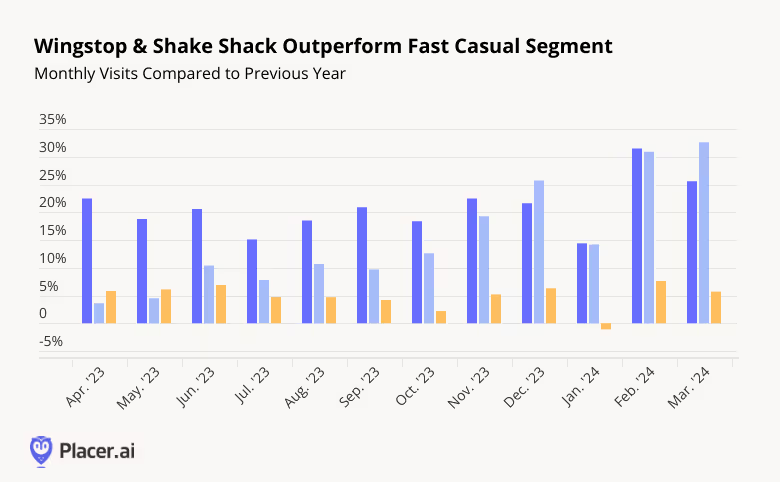
Texas-based Wingstop and New York-based Shake Shack are growing fast. Over the past twelve months, both chains outperformed the fast casual segment and posted impressive traffic increases – in March 2024, visits to Wingstop and Shake Shack were up 25.6% and 32.6%, respectively, compared to March 2023.
Some of the visit strength is likely driven by the chains’ recent expansion. Last year, Wingstop opened around 200 of its almost 2000 U.S. locations, while Shake Shack opened around 40 new restaurants domestically for a total of more than 300 locations in December 2023.

A rapidly expanding footprint is not the only factor driving success for these fast casual leaders. Location intelligence suggests that both chains attract visitors looking for a more leisurely dining experience, which could be helping Wingstop and Shake Shack stay ahead of the competition.
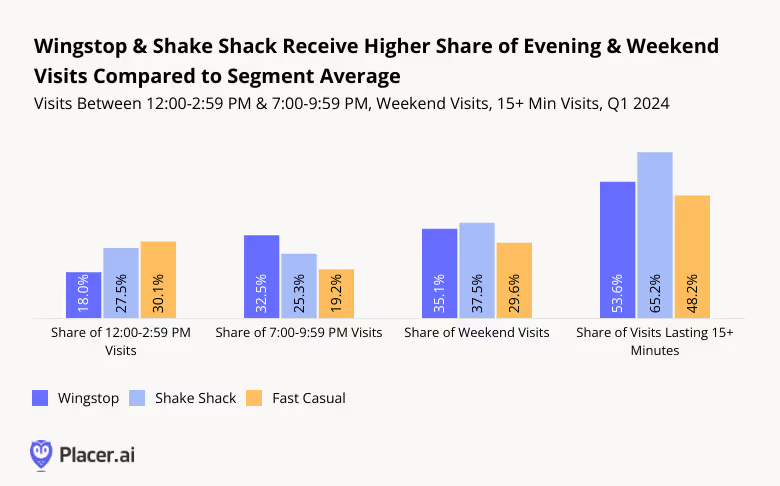
Compared to the average fast-casual dining venue, Wingstop and Shake Shack receive fewer visits during the lunch rush (12:00 to 2:59 PM) when diners are looking for a quick bite to eat before returning to work. Instead, the two chains attract a larger share of visits in the evening hours (between 7:00 and 9:59 PM) – when guests tend to have more time to savor their meals. Both chains also receive a relatively sizable portion of their visits on weekends, when patrons have more time to linger on premises.
And the data indicates that Shake Shack and Wingstop visitors do indeed linger longer than the average fast casual patron: Over half of visits to Wingstop and almost two-thirds of Shake Shack visits last longer than 15 minutes, compared to just 48.2% of visits lasting 15+ minutes for the wider fast casual segment.
It seems, then, that consumers are not just visiting Shake Shack or Wingstop for a burger and shake combo or a platter of steaming wings. The data suggests that many guests are also visiting these chains during more leisurely times when they can focus on the dining experience and take in the chains’ atmosphere.

As the companies continue to expand into new markets and deepen their reach in existing ones, the willingness of consumers to dedicate evenings and weekends to eating at Shake Shack and Wingstop bodes well for these chains in 2024 – and beyond.
For more data-driven dining insights, visit placer.ai/blog.

We recently looked at where the home improvement retail category stood after 1Q 2024, noting that industry had seen improved visit trends and that we could see continued momentum in the second half of 2024 as housing turnover picks up. As a follow up to that analysis, we thought we’d examine a wider range of retailers in the home improvement retail category. Below, we’ve presented year-over-year visitation trends for the top retailers in the home improvement category in terms of visits. While Home Depot and Lowe’s are down on a year-over-year basis, we see that a number of smaller box chains like Harbor Freight and Ace Hardware are seeing year-over-year visits (Large-box Menards has also been relatively strong).
The trend of smaller box home improvement retailers outperforming has actually been going on for a while. Below, we show share visit data from 2017-2023 for the largest home improvement retailers. Here we also see big gains from Ace Hardware and Harbor Freight
What explains these trends? We believe a lot of it boils down to store expansion and migration trends. Both chains have been growing. We discussed Ace Hardware’s unit growth plans back in November 2022, with the chain reaching 5,800 stores globally (and more than 4,700 in the U.S.) after opening 160 locations in 2022 and 170 in 2023. We’ve also called out Harbor Freight’s recent growth–it was one of the reasons we named it to our Top 10 Brands to watch list this year–and the chain now operates almost 1,500 locations across the U.S. Below, using Placer’s new Map Studio feature to plot Harbor Freight and Ace Hardware locations nationwide. We see a heavy concentration of stores in the Eastern U.S. for both chains.
We’ve also presented a map from Placer’s Migration Report below showing population percentage growth from January 2020 to January 2024 at the market level. Green dots represent markers that have seen permanent population growth, while red represents markets that have seen population declines.
Examining the two maps together sheds some light on the success of Harbor Freight and Ace Hardware–they have a high degree of overlap with some of the highest growth markets in the U.S. We’ve covered the migration of consumers to these markets in the past, including markets have populations smaller than 500,000 people and often under 200,000 individuals. Here, having a smaller format box is an advantage for chains like Harbor Freight and Ace Hardware. Home Depot and Lowe’s both average more than 100,000 square feet per store, which can be difficult to justify in a smaller population market. However, the average Harbor Freight store is 15,000-16,500 square feet and the average Ace Hardware is 10,000 square feet (although ranging between 3,000 and 30,000 square feet). This has allowed both chains to tap smaller markets where much of the population (and household income) has transferred to.
Not surprising, we’ve seen a flood of announcements about retail chains planning to adopt smaller store formats over the past few months. We’ve previously discussed examples across a number of retail categories, including home furnishing (Arhaus and Ethan Allen) and department stores (Bloomie’s), but there has been a notable uptick in announcements from retailers unveiling smaller format stores, including Best Buy, Macy’s, and Whole Foods. Lowe’s has recognized this trend, announcing plans to more aggressively open stores in rural markets.
At a time when it’s more expensive for retailers to operate physical stores due to higher interest rates, higher rent costs (especially among A malls properties), minimum wage increases and labor scarcity, retailers are looking for any way they can to maximize the returns on their store properties, including retail media networks, store-in-store partnerships, and co-branded stores. However, in addition to generating more revenue from ancillary services like advertising or store-in-store partnerships, it’s clear that utilizing a smaller box to address population migration trends has become an increasingly attractive option

Commercial real estate is constantly coming up with new and inventive concepts, and one of the latest ideas is the dog park bar. Chains such as Bark Social and Fetch Park are two such entrants that noted the rise in pet ownership during Covid, and are capitalizing on pet owners’ love for their dogs, as well as desire for human companionship and playdates for their canines.
These dog park bars combine the joy of seeing your furry friend run around with other dogs, while the owners can enjoy a cold frosty brew.
Fetch Park has five locations in Georgia, including Buckhead and Alpharetta. Meanwhile, Bark Social has locations in Baltimore, Bethesda, Alexandria, and Philadelphia, with upcoming plans for Los Angeles and Columbia.
Fetch Park includes events such as “Ales, Tails, and Trivia”, weekly karaoke nights, stand-up comedy, and even a singles’ mingle to meet other like-minded pooch people. Bark Social styles itself as a bar for dog lovers, and includes Bark Rangers that oversee puppy activities such as holding your pet’s first birthday party. There is even doggy daycare and summer camp available.
And in sunny LA, it’s not the San Vicente Bungalows or SoHo House that’s getting attention, it’s Dog PPL in Santa Monica, a private dog park whose $80/month membership lets your dog play in style. There are “ruffarrees” on hand to keep the calm while owners socialize and imbibe rosé or kombucha. It can even serve as a co-working location or gym substitute with its dog yoga classes.

Source: Dog PPL
If you’re in the Midwest, check out Barkside in Detroit. This 10,000 sq ft location in the West Village combines a dog park, bar, and beer garden all in one. There is a special focus on Detroit and Michigan brands when it comes to libations, which include beer, wine, spritzers, and a variety of coffee drinks.
And if you truly can’t part from your furry friend for even a minute, new BARK Air has partnered with a jet charter service and offers a Gulfstream V so you and your pet can travel in style. For the price of $6,000 one-way, amenities include dog champagne (aka chicken broth), special blankets and pillows, and delicious dog treats. This service is only available for NY, LA, and London jetsetters, but if this concept takes off and comes to more cities, that would truly be paw-some.

If there’s one sector of the retail industry that continues to innovate, evolve and perform at a high level, it’s convenience stores. Convenience chains remained in lock step with their consumers over the past few years, a difficult feat for many retailers, and benefited from suburban and rural migration patterns. 2023 was a banner year for C-Stores, with visits to large scale chains growing by 6% compared to 2022 (though some of the growth was due to chain consolidation).
C-Stores have done a fantastic job of attracting more visitors through additions like EV charging, local autonomous delivery, and expanded service offerings. However, the winning formula for many C-Store chains has been the bet on fresh, prepared and made to order foods. Chains have transformed consumer thinking around convenience driven foodservice and the concept has won over consumer’s appetites and wallets.
Chains that prioritize prepared foods have higher dwell times, more weekend visits and strong traffic growth according to our data. In a retail industry that prioritizes uniqueness in experience and product, more foodservice options clearly move the needle for visitors. Compared to the large chain C-store average dwell time of 10 minutes in Q1 2024, chains such as Buc-ee’s, Wawa, and Sheetz have higher dwell times by at least a minute, while chains associated with grab-and-go have shorter than average dwell times.
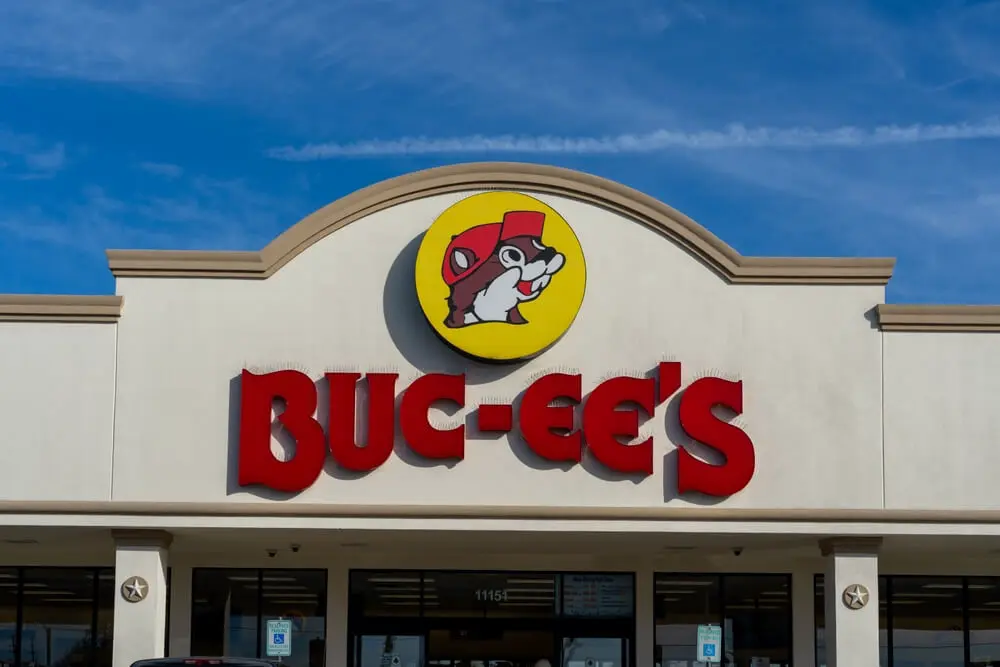
Looking a little more closely at Buc-ee’s, the darling of both the southeast and TikTok fame, the dwell time is double the average of large chain C-Stores. Buc-ee’s has the unique ability to blend entertainment, kitsch and prepared foods in a way that enchants visitors. Maybe it’s the chain’s Beaver Nuggets or the house-smoked barbeque, or its beloved mascot?
Buc-ee’s has the highest percentage of visits lasting 15 minutes or longer, and excels in visits between 15 and 45 minutes compared to other C-Store chains (below). More than half of the visits to Buc-ee’s occur between Friday-Sunday, more than any other competitor. Buc-ee’s can be seen as a destination C-Store as opposed to a daily stop due to the size and location of stores, which certainly contributes to the higher dwell time. Other C-Store chains looking to improve food offerings can use Buc-ee’s as a source of inspiration when it comes to breadth of assortment and mix of specialty packaged items and foodservice options.
The most surprising metrics come from Casey’s, a chain that has publicly committed to foodservice, but can’t seem to capture longer visits. Casey’s dwell time more closely mirrors that of grab-and-go chains like Maverik or Kwik Trip than it does Buc-ee’s or Wawa. Looking at the differences in demographic segments between Buc-ee’s, Wawa and Casey’s, Wawa and Buc-ee’s attract a visitor that is suburban, younger and more affluent than Casey’s. There may be a correlation between made to order offerings and suburban locations that’s benefitting chains focused on both.
The C-Store evolution is quickly blurring the lines between grocery, QSR and traditional convenience models, and is a bellwether of what’s to come across other sectors in retail. The bi-furcation of c-store formats is likely to accelerate throughout the remainder of 2024. Blending the right product selection, on-demand offerings and a beneficial experience for visitors is necessary in today’s retail climate.

Sprouts, the natural and organic food focused grocery chain operating in 23 states nationwide, is going through a growth spurt. We dove into the visit and audience data to see where the chain stands today and what the rest of 2024 – and beyond – may have in store.
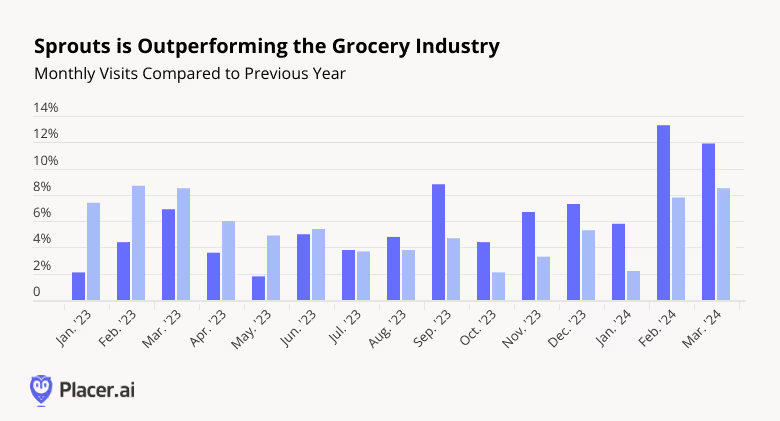
Sprouts is on the rise. Year-over-year (YoY) visits increased every month of last year and have been outperforming the nationwide Grocery average since mid-2023. And the chain continued to grow in Q1 2024, with visits up an impressive 13.3% and 11.9% in February and March 2024, respectively – an impressive feat given the comparison to an already strong Q1 2023.
Some of the growth is driven by expansion – the company opened 30 new stores in 2023 and expects to add 35 additional locations in 2024. But the increase in foot traffic is also a testament to the potential of specialty grocery stores to leverage their unique product selection to attract grocery shoppers, even in the face of growing competition in the space.

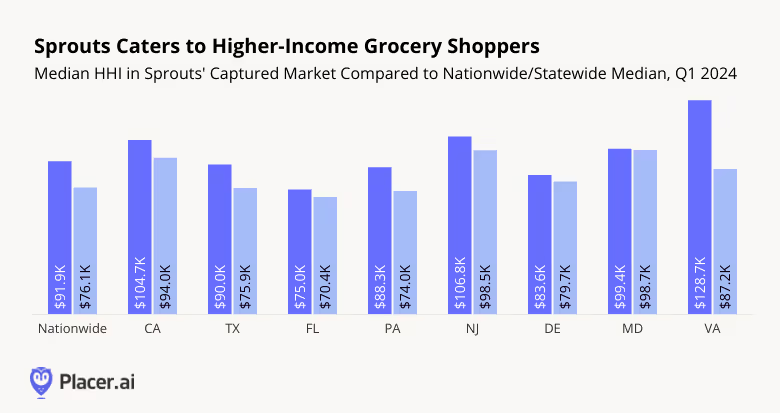
The relatively high income of Sprout’s visitor base is likely also helping the chain stay ahead of the grocery pack: Median HHI in Sprout’s trade areas nationwide is higher than the U.S. median HHI, and the data shows a similar trend in Sprout’s eight growth markets.
The relative affluence of Sprouts shoppers means that this segment may not be as impacted by high food prices as other grocery shoppers – so the retail headwinds predicted this year are not likely to slow down Sprout’s growth potential as the chain continues expanding its reach in 2024.

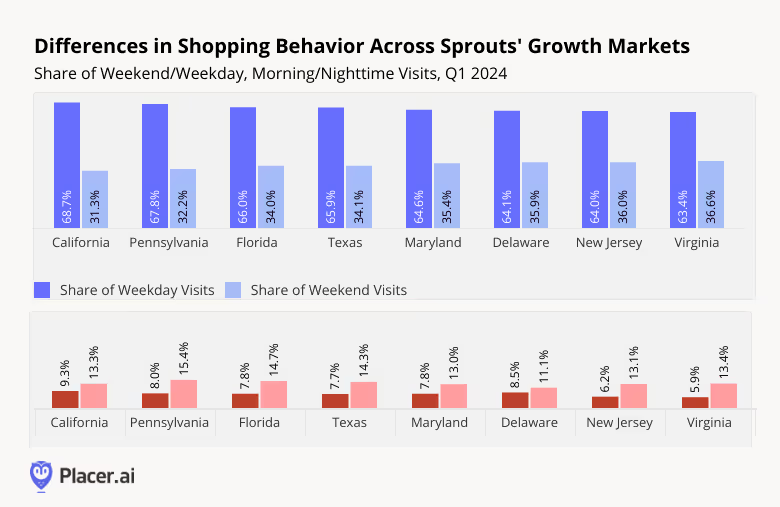
While Sprouts’ visitors across states seem to share a relatively high income level, diving deeper into the location intelligence data reveals some major differences in both in-store behavior and overall market composition.
For example, the share of weekend (as opposed to weekday) visits to Sprouts in Q1 2024 varied significantly – from 31.3% in California to 36.6% in Virginia. Shoppers in the company’s various growth markets also visited stores at different hours throughout the day: Mornings (8:00 AM to 9:59 PM) were popular with California, Delaware, and Pennsylvania residents, while evenings were favored by Pennsylvanians, Floridians, and Texans.
Understanding the in-store behavior of shoppers in each state will likely help Sprouts adapt its operations and staffing schedules as the company continues expanding in these markets.

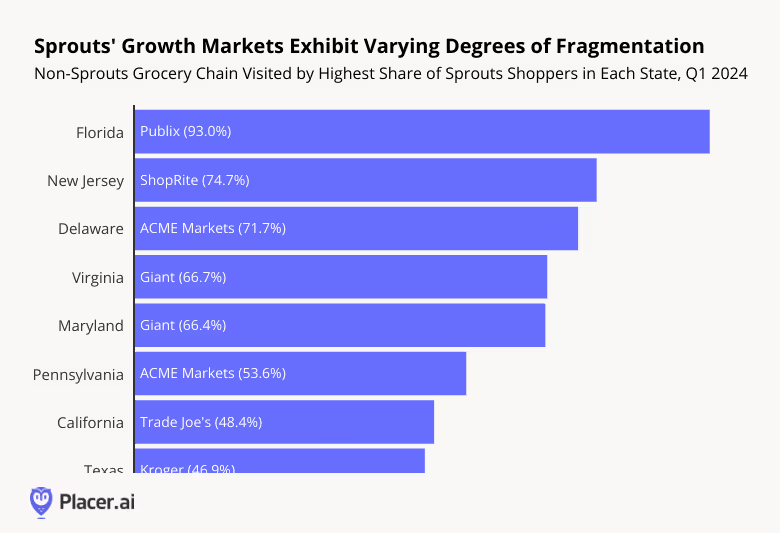
In addition to highlighting the variance between the shopping habits of Sprouts visitors across markets, diving deeper into the location intelligence data also reveals differences in the relationship between Sprouts shoppers and the wider grocery markets in each state.
The chart below shows the most popular grocery alternative for Sprouts shoppers in each state (which other grocery chain was the most visited by Sprouts visitors) and what share of Sprouts shoppers visited that grocery chain in Q1 2024.
In Florida, over 90% of Sprouts shoppers also visited a Publix location in Q1 2024 – indicating that Sprouts in the Sunshine State is operating in a relatively consolidated grocery market and operating against an established crowd favorite. Meanwhile, only 46.9% of Texan Sprouts visitors also visited a Kroger – the other grocery chain most visited by Sprouts visitors – indicating that the Texas grocery market may be more fragmented, and so may respond to a different expansion strategy, than the Florida grocery market.

Sprouts strong visitation trends indicate that the grocery chain is expanding into willing markets, and the brand’s relatively affluent shopper base means that Sprouts is unlikely to be too impacted by whatever economic headwinds may lie ahead. As the chain continues making its presence felt in newer markets, location intelligence suggests that Sprouts has plenty of room to grow in 2024 and beyond.
For more data-driven retail insights, visit our blog at placer.ai.

Crocs’ rebrand from ugly to chic is one of retail’s most fascinating Cinderella stories (glass clog, anyone?). We dive into the latest location analytics and demographic data to explore the consumer behavior that drives Crocs’ continued success.
Embarking on a journey to become a fashionable brand, in 2017 Crocs inked a partnership with Christopher Kane who became the first designer to collaborate with the brand. A stampede of designer and celebrity-inspired styles followed in 2018 and 2019 including Balenciaga's iconic ten-inch platform Croc and Post Malone's take on the classic clog.
During the pandemic, Crocs built on its success in fashion and celebrity circles, and gained a new following from comfort-first shoe shoppers stuck at home or running errands.
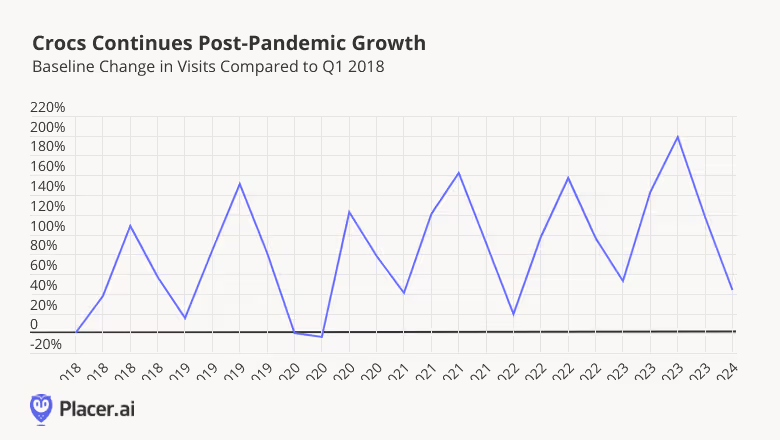
Taking a wide lens on Crocs’ foot traffic since 2018 shows how a strategy of designer partnerships as well as recognition as a functional shoe drives visits to the brand. In 2018 and 2019, as designer Crocs rolled out, visits to the brand climbed to new heights.
And since the wider retail reopening in 2021, Crocs’ foot traffic growth has accelerated as comfort reigns supreme in and out of the home.
Compared to a Q1 2018 baseline, Crocs saw its largest monthly visit peak in Q3 2023 (199.1%) – the critical summer period. And foot traffic in the most recent Q1 2024 was 43.7% above the Q1 2018 baseline. This indicates that the shoe’s acceptance within pop-culture combined with demand for comfortable footwear is elevating the brand’s traffic to new levels.

As Crocs continues to gain traction, the company appears to be pursuing a real estate strategy aimed at repositioning the brand as an affordable shoe for the whole family. Although Crocs shrank its store count in the years leading up to the pandemic, the brand has now begun opening new locations in outlet malls – five in 2023, with plans for 30 new stores in outlet malls in 2024.
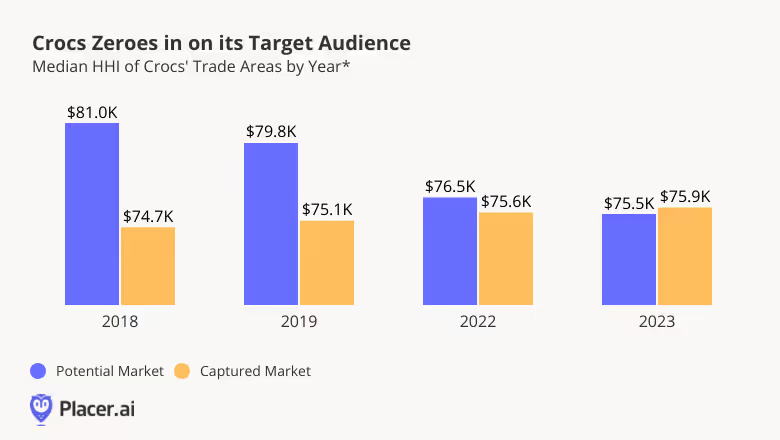
Analyzing Crocs’ trade areas between 2018 and 2023 suggests that this strategy is helping the brand reach its audience. According to the STI: Popstats 2023 dataset, in 2018, there was a gap of more than $6K between the median household income (HHI) in Crocs’ potential market ($81.0K/year) and in its captured market ($74.7K/year). But by 2023, the median HHI of the brand’s potential market ($75.5K) and captured market ($75.9K) had more closely aligned. This indicates that by opening stores in outlet malls – where consumers looking for discounts are likely to shop – Crocs’ potential market more closely reflects its actual visitors and the brand can drive additional traffic from its target audience.

From humble beginnings, Crocs have become runway-famous. And yet, the clogs are more popular than ever with the everyday consumer – at home or out on the town. How will Crocs shape the next chapter of this foam fairytale?
Visit Placer.ai to find out.
This blog includes data from Placer.ai Data Version 2.0, which implements improvements to our extrapolation capabilities, adds short visit monitoring, and enhances visit detection.
Following COVID-era highs, domestic migration levels have begun to taper off – with the number of Americans moving within the U.S. hitting an all-time low, according to some sources, in 2023.
To be sure, some popular COVID-era destinations – including Idaho, the Carolinas, and Utah – saw their net domestic migration continue to rise, albeit at a slower pace. But other states which had been relocation hotspots between February 2020 and February 2023, such as Wyoming and Texas, experienced negative net migration between February 2023 and February 2024.
Analyzing CBSA-level migration data reveals differences and similarities between last year’s migration patterns and COVID-era trends.
Between February 2020 and February 2023, seven out of the ten CBSAs posting the largest population increases due to inbound domestic migration were located in Florida. But between February 2023 and February 2024, the top 10 CBSAs with the largest net migrated percent of the population were significantly more diverse. Only four out of the ten CBSAs were located in Florida, and several new metro areas – including Provo-Orem, UT, Kingsport-Bristol, TN-VA, and Boulder, CO – joined the list.
This white paper leverages a variety of location intelligence tools – including Placer.ai’s Migration Report, Niche Neighborhood Grades, and ACS Census Data location intelligence – to analyze two migration hotspots. Specifically, the report focuses on Daytona Beach, FL, which already appeared on the February 2020 to February 2023 list and has continued to see steady growth, and Boulder, CO, which has emerged as a new top destination. The data highlights the potential of CBSAs with unique value propositions to continue to attract newcomers despite ongoing housing headwinds.
The Boulder, CO CBSA has emerged as a domestic migration hotspot: The net influx of population between February 2023 and February 2024 (i.e. the total number of people that moved to Boulder from elsewhere in the U.S., minus those that left) constituted 3.1% of the CBSA’s February 2024 population.
The strong migration is partially due to the University of Colorado, Boulder’s growing popularity. But the metro area has also emerged as a flourishing tech hub, with Google, Apple, and Amazon all setting up shop in town, along with a wealth of smaller start ups.
Most domestic relocators tend to remain within state lines – so unsurprisingly, many of the recent newcomers to Boulder moved from other CBSAs in Colorado. But perhaps due to Boulder’s robust tech ecosystem, many of the new residents also came from Los Angeles, CA (6.6%) and San Francisco, CA (3.4%) – other CBSAs known for their thriving tech scenes.
At the same time, looking at the other CBSAs feeding migration to the area indicates that tech is likely not the only draw attracting people to Boulder: A significant share of relocators came from the CBSAs of Chicago, IL (6.1%), Dallas , TX (4.9%), and New York, NY (3.9%). The move from these relatively urbanized CBSAs to scenic Boulder indicates that some of the domestic migration to the area is likely driven by people looking for better access to nature or a general lifestyle change.
According to the U.S. News & World Report, Boulder ranked in second place in terms of U.S. cities with the best quality of life. Using Niche Neighborhood Grades to compare quality of life attributes in the Boulder CBSA and in the areas of origin dataset highlights some of the draw factors attracting newcomers to Boulder beyond the thriving tech scene.
The Boulder CBSA ranked higher than the metro areas of origin for “Public Schools,” “Health & Fitness,” “Fit for Families,” and “Access to Outdoor Activities.” These migration draw factors are likely helping Boulder attract more senior executives alongside younger tech workers – and can also explain why relocators from more urban metro areas may be choosing to make Boulder their home.
Boulder’s strong inbound migration numbers over the past year – likely driven by its flourishing tech scene and beautiful natural surroundings – reveal the growth potential of certain CBSAs regardless of wider housing market headwinds.
Florida experienced a population boom during the pandemic, and several CBSAs in the state – including the Deltona-Daytona Beach-Ormond Beach, FL CBSA – have continued to welcome domestic relocators in high numbers. The CBSA’s anchor city, Daytona Beach – known for its Bike Week and NASCAR’s Daytona 500 – has also seen positive net migration between February 2023 and February 2024.
Americans planning for retirement or retirees operating on a fixed income are likely particularly interested in optimizing their living expenses. And given Daytona’s relative affordability, it’s no surprise that the median age in the areas of origin feeding migration to Daytona Beach tends to be on the older side.
According to the 2021 Census ACS 5-Year Projection data, the median age in Daytona Beach was 39.0. Meanwhile, the weighted median age in the areas of migration origin was 42.6, indicating that those moving to Daytona Beach may be older than the current residents of the city.
Zooming into the migration data on a zip code level also highlights Daytona Beach’s appeal to older Americans: The zip code welcoming the highest rates of domestic migration was 32124, home to both Jimmy Buffet’s Latitude Margaritaville’s 55+ community and the LPGA International Golf Club, host of the LPGA Tour. The median age in this zip code is also older than in Daytona Beach as a whole, and the weighted age in the zip codes of origin was even higher – suggesting that older Americans and retirees may be driving much of the migration to the area.
Looking at the migration draw factors for Daytona Beach also suggests that the city is particularly appealing to retirees, with the city scoring an A grade for its “Fit for Retirees.” But the city of Daytona Beach is also an attractive destination for anyone looking to elevate their leisure time, with the city scoring higher than Daytona Beach’s cities of migration origin for “Weather,” “Access to Restaurants,” or “Access to Nightlife.”
Like Boulder, Daytona’s scenery – including its famous beaches – is likely attracting newcomers looking to spend more time outdoors and improve their work-life balance. And like Boulder and its tech scene, Daytona Beach also has an extra pull factor – its affordability and fit for older Americans – that is likely helping the area continue to attract new residents, even as domestic migration slows down nationwide.
Although the overall pace of domestic migration has slowed, analyzing location intelligence data reveals several migration hotspots amidst the overall cooldown. Boulder and Daytona Beach each have a set of unique draw factors that seem to attract different populations – and the success of these regions highlights the many paths to migration growth in 2024.
The Fitness industry was a major post-pandemic winner. Visits to gyms across the country surged as stay-at-home orders ended and people returned to their in-person workout routines. And even as consumers reduced discretionary spending in the face of inflation, they kept going to the gym – finding room in their budgets for the chance to embrace wellness and get in shape while interacting with other people.
But no category can sustain such unabated growth forever – and as the segment inevitably stabilizes, gyms will need to stay nimble on their feet to maintain their competitive edge.
This white paper takes a closer look at the state of Fitness as the category transitions into a more stable growth phase following two years of outsize post-pandemic demand. The report digs into the location analytics to reveal how the Fitness space has changed – and what strategies gyms can adopt to stay ahead of the pack.
*This report excludes locations within Washington state due to local legislation.
Monthly visits to the Fitness category have grown consistently year over year (YoY) since early 2022, when COVID subsided and gyms returned to full capacity. And the segment is still doing remarkably well. Even in January and March 2024 – when visits were curtailed by an Arctic blast and by the Easter holiday weekend – YoY Fitness visits remained positive, despite the comparison to an already strong 2023.
Still, recent months have seen smaller YoY increases than last year, indicating that the Fitness category is entering a more normalized growth phase.
By keeping a close watch on evolving consumer preferences, fitness chains can uncover new opportunities for growth and adaptation within a stabilizing market – including leaning into increasingly popular dayparts.
Examining the evolving distribution of gym visits by daypart over the past six years shows that major shifts were brought on by the COVID-19 pandemic.
Between Q1 2019 and Q1 2021, as remote work took hold, gyms saw their share of 2:00 PM - 5:00 PM visits increase from 15.8% to 18.6%. Though this trend partially reversed as the pandemic receded, afternoon visits remained elevated in Q1 2024 compared to pre-COVID – likely a reflection of hybrid work patterns that leave people free to take an exercise break during their workdays.
At the same time, the share of morning visits to fitness chains (between 8:00 AM and 11:00 AM) dropped from 20.5% in Q1 2019 to 17.2% in Q1 2024, while evening visits (between 8:00 PM and 11:00 PM) increased from 11.3% to 13.2%.
Gyms that recognize this changing behavior can adapt to new workout preferences – whether by incentivizing morning visits, scheduling popular classes mid-afternoon, or offering extended evening hours.
In fact, the data indicates that gyms that are leaning into the evening workout trend are already finding success: Of the top 12 most-visited gym chains in the country, those that saw bigger increases in their shares of evening visits also tended to see greater YoY visit growth.
EōS Fitness and Crunch Fitness, for example, have seen their shares of evening visits grow by 5.5% and 3.4%, respectively, since COVID – and in Q1 2024, their YoY visits grew by 29.0% and 21.8%, respectively. Other chains, including 24 Hour Fitness and Chuze Fitness, experienced similar shifts in visit patterns. At the same time, LA Fitness saw just a minor increase in its share of evening visits between Q1 2019 and Q1 2024, and a correspondingly small increase in YoY visits.
As the evening workout slot gains popularity, gym operators that can adapt to these new trends and encourage evening visits may see significant benefits in the years to come.
Diving into demographic data for the analyzed gym chains sheds light on some factors that may be driving this heightened preference for evening workouts at top-performing gyms.
The four fitness chains that experienced the greatest YoY visit boosts in Q1 – Crunch Fitness, EōS Fitness, 24 Hour Fitness, and Chuze Fitness – all featured trade areas with significantly higher-than-average shares of Young Professionals and Non-Family Households. (STI: PopStat’s Non-Family Household segment includes households with more than one person not defined as family members. Spatial.ai: PersonaLive’s Young Professional consumer segment includes young professionals starting their careers in white collar or technical jobs.)
In plainer terms, these consumer segments – typically young, well-educated, and without children – and therefore more likely to be flexible in their workout times – are driving visits to some of the best-performing gyms across the country. And these audiences seem to be displaying a preference for nighttime sweat sessions – a factor that gyms can take into account when planning programming and marketing efforts.
Leaning into emerging gym visitation patterns is one way for fitness chains to thrive in 2024 – but it isn’t the only marker of success for the segment. Even after years of visit growth, the market remains open to new opportunities and innovations that meet health-conscious consumers where they are.
STRIDE Fitness, a gym that offers treadmill-based interval training, has sparked a trend among running enthusiasts. This niche player is finding success, particularly among a specific demographic: runners and endurance training enthusiasts.
Between January and April 2024, monthly YoY visits to STRIDE Fitness consistently outperformed the wider Fitness space. A standout month was January, when STRIDE Fitness’s visits soared by an impressive 33.6% YoY, surpassing the industry average of 5.7% for the same period.
Psychographic data from the Spatial.ai’s FollowGraph dataset – which looks at the social media activity of a given audience – suggests that STRIDE Fitness’ trade areas are well-positioned to attract those visitors most open to its offerings. Residents of STRIDE Fitness’s potential market are 24% more likely to be, or to be interested in, Endurance Athletes than the nationwide average – compared to just 3% for the Fitness industry as a whole. Similar patterns emerge for Marathon Runners and Triathlon Participants. This indicates that the chain is well-situated near consumers with a passion for endurance sports and long distance running, helping it maintain a competitive edge in the crowded gym market.
Pickleball, a game that blends elements of tennis, ping pong, and badminton, is the fastest-growing sport in the country. And recognizing its broad appeal, some fitness chains have begun incorporating pickleball courts into their facilities.
Arizona-based EōS Fitness added a pickleball court at a Phoenix, AZ location – and early 2024 data highlights the impact of this addition. Between January and April 2024, the location drew between 9.1% and 33.3% more monthly visits than the chain’s Arizona visit-per-location average.
And analyzing the demographic profile of the chain’s location with a pickleball court reinforces the game’s increasingly wide appeal. Young consumer segments have been embracing the game in large numbers – and the Phoenix EōS Fitness location’s potential market includes a significantly higher share of 18 to 34-year-olds than the chain’s overall Arizona potential market. Residents of the pickleball location’s trade area are also less affluent than the chain’s Arizona average.
Pickleball has typically been associated with more affluent consumer segments, and it seems like this may be shifting. With more people than ever embracing the game, gyms that choose to add courts to their facilities may reap the foot traffic benefits.
The Fitness industry has undergone a significant transformation since COVID-19. The category’s outsize post-pandemic visit growth has begun to stabilize, and gyms are staying ahead by adapting to changing consumer preferences. Evenings are emerging as crucial dayparts for gym operators, likely driven by younger consumer segments. And niche fitness chains are seeing visit success, proving that there are plenty of ways for the Fitness segment to succeed.
This report includes data from Placer.ai Data Version 2.0, which implements improvements to our extrapolation capabilities, adds short visit monitoring, and enhances visit detection.
Grabbing a coffee or snack at a convenience store is a time-honored road trip tradition – but increasingly, Convenience Stores (C-Stores) have also emerged as places people go out of their way to visit.
Convenience stores have thrived in recent years, making inroads into the discretionary dining space and growing both their audiences and their sales. Between April 2023 and March 2024, C-Stores experienced consistent year-over-year (YoY) visit growth, generally outperforming Overall Retail. Unsurprisingly, C-Stores fell behind Overall Retail in November and December 2023, when holiday shoppers flocked to malls and superstores to buy gifts for loved ones. But in January 2024, the segment regained its lead, growing YoY visits even as Overall Retail languished in the face of an Arctic blast that had many consumers hunkering down at home.
C-Stores’ current strength is partially due to the significant innovation by leading players in the space: Chains like Casey’s, Maverik, Buc-ee’s, and Rutter’s are investing in both in their product offerings and in their physical venues to transform the humble C-Store from a stop along the way into a bona fide destination. Dive into the data to explore some of the key strategies helping C-Stores drive consumer engagement and stay ahead of the pack.
While chain expansion may explain some of the C-Store segment growth, a look at visit-per-location trends shows that demand is growing at the store level as well. Over the past year (April 2023 to March 2024), average visits per location on an industry-wide basis grew by 1.8%, compared to the year prior (April 2022 to 2023).
And within this growing segment, some brands are distinguishing themselves and outperforming category averages. Casey’s, for example, saw the average number of visits to each of its locations increase by 2.3% over the same time frame – while Maverik, Buc-ee’s and Rutter’s saw visits per location increase by 3.2%, 3.4% and 3.9%, respectively.
Each in its own way, Casey’s, Maverik, Buc-ee’s, and Rutter’s, are helping to transform C-Stores from pit stops where people can stretch their legs and grab a cup of coffee to destinations in and of themselves.
Midwestern gas and c-store chain Casey’s – famous for its breakfast pizza and other grab-and-go breakfast items – has emerged as a prime spot for fast food pizza lovers to grab a slice first thing in the morning. And Salt Lake City, Utah-based Maverik – which recently acquired Kum & Go and its 400-plus stores – is also establishing itself as a breakfast destination thanks to its specialty burritos and other chef-inspired creations.
Casey’s and Maverik’s popular breakfast options are likely helping the chains receive its larger-than-average share of morning visits: In Q1 2024, 16.3% of visits to Maverik and 17.5% of visits to Casey’s took place during the 7:00 AM - 10:00 AM daypart, compared to just 14.9% of visits to the wider C-Store category.
Psychographic data from the Spatial.ai’s FollowGraph dataset – which looks at the social media activity of a given audience – also suggests that Casey’s and Maverik’s have opened stores in locations that allow them to reach their target audience. Compared to the average consumer, residents of Casey’s potential market are 7% more likely to be “Fast Food Pizza Lovers” than both the average consumer and the average C-Store trade area resident. Residents of Maverik’s potential market are 16% more likely than the average consumer to be “Mexican Food Enthusiasts,” compared to residents of the average C-Store’s trade area who are only 1% more likely to fall into that category.
With both chains expanding, Casey’s and Maverik can hope to introduce new audiences to their unique breakfast options and solidify their hold over the morning daypart within the C-Store space over the next few years.
Everything is said to be bigger in the Lone Star State, and Texas-based convenience store chain Buc-ee’s – holder of the record for the worlds’ largest C-Store – is no exception. With a unique array of specialty food items and award-winning bathrooms, Buc-ee’s has emerged as a well-known tourist attraction. And the popular chain’s status as a visitor hotspot is reflected in two key metrics.
First, Buc-ee’s attracts a much greater share of weekend visits than other convenience store chains. In Q1 2024, 39.6% of visits to Buc-ee’s took place on the weekends, compared to just 28.3% for the wider C-Store industry. And second, Buc-ee’s captured markets feature higher-than-average shares of family-centric households – including those belonging to Experian: Mosaic’s Suburban Style, Flourishing Families, and Promising Families segments.
Rather than merely a place to stop on the way to work, Buc-ee’s has emerged as a favored destination for families and for people looking for something fun to do on their days off.
Buc-ee’s isn’t the only C-Store chain that believes bigger is better. Pennsylvania-based Rutter’s is increasing visits and customer dwell time by expanding its footprint – both in terms of store count and venue size. New stores will be 10,000 to 12,000 square feet – significantly larger than the industry average of around 3,100 square feet. And in more urban areas, where space is at a premium, the company is building upwards.
Rutter’s added a second floor to one of its existing locations in York, PA in December 2023. The remodel, which was met with enthusiasm by customers, provided additional seating for up to 30 diners, a beer cave, and an expanded wine selection. And in Q1 2024, the location experienced 15.6% YoY visit growth – compared to a chainwide average of 7.6%. Visitors to the newly remodeled Rutter’s also stayed significantly longer than they did pre-renovation. The share of extended visits to the store (longer than ten minutes) grew from 20.8% in Q1 2023 to 27.0% in Q1 2024 – likely from people browsing the chain’s selection of beers or grabbing a bite to eat.
Convenience stores are flourishing, transforming into some of the most exciting dining and tourist destinations in the country. Today, C-Store customers can expect to find brisket sandwiches, gourmet coffees, or craft beers, rather than the stale cups of coffee of old. And the data shows that customers are receptive to these innovations, helping drive the segment’s success.