.png)
.png)

.png)
.png)

The past couple of years have been challenging ones for the dining industry as high food prices and economic headwinds led many consumers to cut back on unnecessary indulgences. Still, people can’t eat at home all the time, and there’s always demand for restaurants that serve up good food and a welcoming ambiance – without breaking the bank.
So with Q4 2023 under our belts, we dove into the data to check in with two dining chains that are especially good at giving customers what they want: Shake Shack and Wingstop. How did they perform during the final quarter of 2023? And what lies ahead for them in the new year?
Shake Shack, curiously named after an amusement park ride from 70’s hit movie Grease, continues to impress. Following a robust third quarter, the gourmet burger joint maintained strong positive year-over-year (YoY) visit growth throughout Q4 2023 – finishing out the year with a remarkable 24.3% foot traffic jump in December 2023.
Wingstop, another darling of the dining industry, also ended 2023 with a bang. Whether celebrating the New York Knicks with a special lemon garlic flavor, or jumping on the dry January bandwagon with its own “dry rub January”, the popular chicken restaurant draws crowds by staying up-to-date with popular trends. And throughout Q4 2023, Wingstop saw positive visit growth ranging from 12.8% to 16.3%.
.png)
The ongoing success of these two chains in a difficult overall environment shows that there’s more than one way to win at the dining game. With limited-time offerings like White Truffle Burgers, and sandwiches that feature Kimchi slaw, Shake Shack’s relatively upscale offerings have traditionally drawn affluent audiences. But as the chain has continued to expand, its customer base has diversified – with the median household income (HHI) of its captured market dropping by 8.6% over the past four years. Over the same period, the share of ultra-wealthy families and educated urbanites in the restaurant’s captured market declined, while the share of young professionals and urban low income consumers increased. Wider audiences, of course, means broader appeal – and more people getting addicted to Shake Shack’s delicious offerings.
.avif)
Wingstop, for its part, has pursued a somewhat different strategy. Positioned as an affordable eatery straddling the space between fast food and fast-casual, Wingstop draws less well-to-do consumers. Combining foot traffic data with demographics from STI’s PopStats shows that the median HHI of Wingstop’s captured market came in at $62.1K in Q4 2023, well below the nationwide baseline of $69.5K.
But despite targeting a demographic with less discretionary income, Wingstop has carved out a niche for itself as a to-go dining destination for people seeking the perfect place to sit down to a nice, big meal with the family. In Wingstop’s four biggest markets – Texas, California, Florida, and Illinois – the chain’s trade areas featured more persons per household than the statewide averages in Q4 2023. And Wingstop’s captured markets were also over-indexed for families with children – showing that parents are particularly likely to pay the restaurant a visit.
.png)
Though food prices have stabilized and consumer confidence has begun to recover, last year ended on a tough note for restaurants. But while the category as a whole has yet to fully regain its footing, chains like Shake Shack and Wingstop are finding success by leaning into evolving consumer demand.
Will cooling inflation kickstart a dining revival? And what does the rest of 2024 have in store for Shake Shack and Wingstop?
Follow Placer.ai to find out.

Few things are more beloved by Americans than a steak – and two of the most popular steakhouse chains in the U.S. are Texas Roadhouse and Outback Steakhouse. Who is visiting these chains, and what characteristics do they share? We take a closer look.
Food-away-from-home prices remained high for much of 2023, presenting challenges for dining establishments as would-be restaurant patrons reconsidered going for a meal out. Outback Steakhouse in particular felt the impact of the dining downturn, with year-over-year (YoY) visits falling in 2023 – although the dip may also be due to the chain’s downsizing its store fleet. And the chain seems to have offset at least some of the drop thanks to its price increases, which increased the value of every visit.
Texas Roadhouse, meanwhile, continued its expansion and benefited from growing YoY foot traffic every quarter of 2023.
.png)
Texas Roadhouse’s success is particularly notable given its trade area median HHI. Both Outback Steakhouse and Texas Roadhouse tend to have a lower median household income (median HH) in their trade areas when compared to the average fast-casual chain, despite having higher price points. The steakhouse leaders also have a trade area median HHI that is significantly lower than the overall fine-dining segment.
The lower median HHI of Texas Roadhouse and Outback Steakhouse visitors suggests that these diners may be avoiding the purchase of more casual, on-the-go meals and instead choosing to direct their more limited funds toward special occasion dining. And Outback Steakhouse and Texas Roadhouse may be seen as an affordable luxury for those seeking a more elevated dining experience than might be found at a local fast-casual joint.
By understanding the types of diners who visit the restaurant, dining chains can make sure to deliver the type of experience their customers are seeking – in this case, a special-occasion dining destination that won't break the bank.
.png)
Outback Steakhouse and Texas Roadhouse Popular Among Suburban Segments
A deeper exploration of the psychographic compositions of each chains’ trade area reveals that suburban families are particularly drawn to Texas Roadhouse and Outback Steakhouse. For both chains, the share of households in Spatial.ai’s PersonaLive “Upper Suburban Diverse Families,” “Suburban Boomers,” and “Wealthy Suburban Families” segments exceeded the statewide average in several major states.
As suburban markets continue gaining momentum, Texas Roadhouse and Outback Steakhouse’s popularity with suburban audiences can help the chains stay ahead of the pack in 2024.
.png)
The State Of Steak
The enduring appeal of a well-made steak (or Blooming Onion, or honey butter) is indisputable. Will customers continue to visit these chains for a special occasion? Or will 2024 bring with it a new shift in diner preferences?
Follow Placer.ai’s data-driven analyses to find out.

The Placer.ai Nationwide Office Building Index: The office building index analyzes foot traffic data from some 1,000 office buildings across the country. It only includes commercial office buildings, and commercial office buildings with retail offerings on the first floor (like an office building that might include a national coffee chain on the ground floor). It does NOT include mixed-use buildings that are both residential and commercial.
Remote work may not be bad for companies’ bottom lines – but it does appear to have drawbacks for employees. Fully remote workers were 35% more likely to be laid off in 2023 than those who came into the office at least part of the week. And full-time WFH personnel also got fewer promotions.
Still, reaping the benefits of in-person office work doesn’t require a full-time return to office. (Five days a week? Seriously?) And for many participants in the remote work wars, 2023 was a year for compromise. But what did the hybrid model look like in 2023? And who were last year’s office visitors?
We dove into the data to find out.
Analyzing office visit trends over the past several years suggests that some variation of the hybrid model is indeed here to stay – though the jury’s still out on whether we’ve found the sweet spot. Since Q2 2023, quarterly visits to office buildings have remained about 34.0%-38.0% below pre-COVID levels. But Q4 2023 office foot traffic was 12.9% higher than the equivalent period of 2022, suggesting that additional office recovery may still be in the cards.
Regionally speaking, Miami and New York closed out 2023 at the head of the pack, with visits about 20% below the pre-pandemic baseline. Dallas and Chicago finished the year with respective quarterly visit gaps of 31.8% and 43.0%. And San Francisco continued to bring up the rear, with office foot traffic 53.8% below pre-COVID levels.
.avif)
These general trends continued into January 2024. Nationwide, office buildings experienced a 42.1% year-over-four-year (Yo4Y) visit gap, potentially indicating stalling recovery. But at the same time, major markets across the country – most impressively San Francisco – saw sustained YoY visit growth, showing that the return to office (RTO) story is still being written.
.png)
Whether office recovery has run its course, or whether 2024 promises a renewed upward trajectory – a more granular picture of the specific habits and characteristics of office-goers can help stakeholders adapt to evolving trends.
And while foot traffic remains substantially below 2019 levels, the affluence of office buildings’ visitor base has very nearly rebounded to what it was before COVID. In Q1 2019, the median household income (HHI) of the Nationwide Office Index’s captured market stood at $91.9K, a metric which plummeted in early 2020 as more affluent employees rode out lockdowns from home. But since then, the median HHI has slowly risen – reaching $90.1K - $91.6K in 2023.
Unsurprisingly, remote and hybrid work opportunities aren’t distributed equally – and wealthier, more-educated workers are better positioned than others to take advantage of them. But visitors to major office buildings tend to have significantly higher-than-average HHIs to begin with (STI’s PopStats puts the nationwide baseline at $69.5K). So even if the median HHI of office visitors is once again close to what it was before COVID, it is these relatively affluent employees that are coming in less frequently and helping to shape the new hybrid normal.
.png)
At the same time, there has been a subtle but distinct decline in the share of parental households in offices’ captured markets – indicating that parents of children accounted for a smaller proportion of office visits in 2023 than in 2019. This change varied by region, with Chicago seeing the smallest shift and tech-heavy San Francisco seeing the largest one.
For many working parents, flexibility is the name of the game – and employees juggling parental responsibilities along with their work loads may be particularly eager to embrace working from home.
.png)
Another data point that’s particularly important for stakeholders to understand is the daily breakdown of office visits throughout the week. And foot traffic data for 2023 shows that the TGIF work week that we first observed in 2022 remains more firmly entrenched than ever. People continue to concentrate office visits mid-week and log on from home on Mondays and especially Fridays – an effect that is most pronounced in San Francisco, and least pronounced in Miami. And for municipalities, CRE companies, and local businesses that rely on office foot traffic, recognizing the persistence of this pattern can be key to making the most of those days when offices are abuzz with activity.
.avif)
The new hybrid model remains a work in progress – and it’s too soon to tell whether offices will indeed see further attendance increases in 2024. But either way, the behaviors and attributes of office-goers will continue to evolve, presenting stakeholders with opportunities and challenges alike.
What does 2024 have in store for RTO? And how will the profile of visitors to America’s offices change in the new year?
Follow placer.ai/blog to find out.

Just as the dining space was beginning to recover from the COVID pandemic, the ongoing inflation brought a fresh set of challenges to the sector in 2022 and 2023. How did the headwinds impact Burger King, Popeyes Louisiana Kitchen, Taco Bell, KFC, and other leading brands from the RBI and Yum! Portfolio? We dove into the data to find out.
Restaurant Brands International (RBI) and Yum! Brands each own three QSR banners along with one fast-casual chain. RBI owns the Burger King, Popeyes Louisiana Kitchen, and Tim Hortons brands as well as fast-casual sub chain Firehouse Subs. Yum! Brands operates the KFC, Pizza Hut, and Taco Bell fast-food banners and the fast-casual The Habit Burger Grill.
Both companies’ banners saw year-over-year (YoY) growth in Q1 2023, likely aided by favorable comparisons to an Omicron-plagued Q1 2022. And although traffic dropped off as the year went on – perhaps due to consumers cutting back on dining out – the dip was subdued, with visits staying relatively close to 2022 levels.
RBI’s banners ended the year with just a 2.5% YoY dip in Q4 2023, although Firehouse Subs, Popeyes Louisiana Kitchen, and Tim Hortons all saw positive visit growth for three out of four quarters of 2023.
Following three quarters of YoY visit growth for the Pizza Hut banner and for the company as a whole, Yum! Brands also began feeling the impact of the consumer spending contraction, with the company’s Q4 2023 foot traffic performance 3.7% lower, on average, than in 2022.
.png)
The wider QSR space tends to serve trade areas composed of Census Block Groups with an overall median household income (HHI) that is lower than the median HHI nationwide ($63.2K for QSR compared with $69.5K nationwide). And the median HHI in the trade areas of Pizza Hut, Taco Bell, KFC, Burger King, Tim Hortons, and Popeyes is even lower than the median HHI in the wider QSR space.
The relatively low median HHI in the trade areas of RBI and Yum! Brands’ QSR banners means that visitors to these chains may be feeling particularly frugal, which could explain the slight dips in foot traffic towards the end of 2023.
But some of these brands are already implementing changes to woo back their budget-conscious customers. Taco Bell recently unveiled a new value menu that includes some items priced at $1.99, and several other chains in the Yum! and RBI portfolio have launched national campaigns advertising wallet-friendly promotions – which may well bring foot traffic back up in 2024.
.png)
QSR chains seem particularly attractive to singles, with the trade area of the average QSR brand containing a larger share of one-person and non-family (roommate) households compared to the nationwide average (33.8% to 33.2%). And analyzing the household composition of the QSR banners of RBI and Yum! reveals that the trade areas of these brands tend to include an even larger share of one-person and non-family households than the wider QSR industry. (Pizza Hut is the sole exception, with one-person and non-family households making up 33.6% of households in its trade area – slightly less than the QSR industry average of 33.8%, but still more than the nationwide average of 33.2%.)
The trade areas of QSR brands also tend to include a greater share of large households (households of four or more people) compared to the percentage of 4+ person households nationwide. But Yum! And RBI banners (with the exception of Popeyes) seem to serve fewer 4+ person households compared to the QSR average (although Pizza Hut, Taco Bell, KFC, Burger King, and Tim Hortons still have more 4+ person households in the trade areas compared to the nationwide average.)
This trade area demographic data could help Yum! and RBI plan their 2024 promotions – discounts on larger orders could be particularly appealing to Popeyes diners, but may not necessarily drive demand among the visitor base of the other QSR banners. At the same time, all brands analyzed may benefit from offering value-priced individual items that can help singles living alone or with roommates budget smartly.
.avif)
With food-away-from-home prices expected to increase in 2024, chains that offer low-cost options are likely to see a resurgence – and RBI and Yum! may well benefit from consumers’ continued thriftiness.

Who wouldn’t want weekends to last seven days? That’s the thinking behind Marine Layer’s eco-friendly and “absurdly soft” tees. This San Francisco-based company, founded in 2009, has its beginnings in a shirt thrown away by a girlfriend. One man’s trash is another man’s treasure, and from that action sprouted the seeds for founder Mike Natenshon as he set on his quest to create the ultimate soft-on-day-1 shirt. Forty-five stores later, Marine Layer has spread across the nation, timed perfectly with our desire for coziness after extended time at home made comfy clothing a must.
One of the higher-trafficked outdoor Marine Layer locations is at Ponce City Market in Atlanta. This shopping center boasts other in-demand brands like Lululemon, Reformation, and Buck Mason. Another popular location resides at 12South, a Nashville neighborhood spanning a half mile that includes walkable local businesses, bars, and bakeries. White Bison Coffee and Five Daughters Bakery are places to stop in for a bite while shopping. And in Boulder, Pearl St is another pedestrian-friendly venue for shoppers.
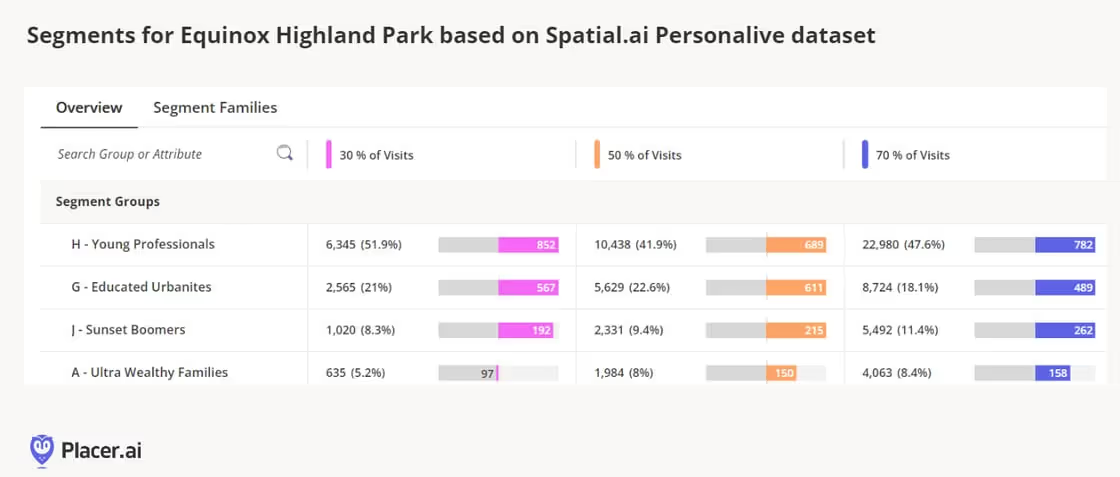
It’s clear that certain segments are attracted to Marine Layer’s offer - most notably Young Professionals in Atlanta and Boulder, who make up a quarter of the customers, as well as Ultra Wealthy Families across the board, particularly in Nashville where they comprise a fifth. There are a few clientele differences, such as the fact that Marine Layer draws Urban Low Income in Atlanta and more Sunset Boomers in Boulder.
Looking at the potential market for these three areas, we see some interesting patterns arise via Spatial.ai Followgraph. For instance, all three markets overindex in following the musical Hamilton, fitness brand Peloton, outdoor sporting goods store REI, and the confection Moon Pie. Regarding fashion brands, Tory Burch, J. Crew, Lululemon, Vineyard Vines, and Patagonia are popular too.

Faherty is a brand that has been around for 10 years but that we’ve seen accelerating its physical store footprint in the last few years. Evoking chill surf trips, family bonfires, and hikes in the great outdoors, this American brand invites you to cozy up in its sweaters, spend a Saturday riding the waves, or just all-out enjoy family time and making memories. Its locations span from east coast to west coast, with popular locations in Panama City Beach, New York City, Austin, Manhattan Beach, among others.
The appeal of this brand is such that it finds itself on the beach, in urban high streets, and suburban locations, indicating that it’s really more about the vibe. Not only that, the segments are quite varied in terms of who is shopping at Faherty (using PersonaLive segments). In Panama City Beach, we see largely Ultra Wealthy Families, Sunset Boomers, and Young Professionals. Meanwhile, in SoHo, Educated Urbanites and Young Urban Singles make up the lion’s share of the trade area. The Austin shopper profile is more similar to the Panama City Beach one, with the addition of Educated Urbanites as well. This intergenerational appeal is possibly rooted in the ethos of the brand with its focus on family, friends, and enjoying life’s moments.
One thing that these shoppers do have in common? High household incomes. Most of these shoppers come from households earning $150K+, with particularly high earners hailing from Greenwich, CT.
While the customers from Florida, New York, and Texas are geographically dispersed, they do share some commonalities: an above average propensity to be bubbly drinkers and wine drinkers, clearly in line with the brand’s positioning of celebratory moments. Customers in these three markets also consider themselves “Pilates People”, “Joggers,” and “Fitness Fans.” You will find Faherty devotees from all three of these markets at the spa, at the museum, or enjoying book clubs. And largely in keeping with Faherty’s sustainability promise, many of their customers consider themselves Environmental Activists.
The positive retail momentum observed in Q1 2024 continued into Q2 – as stabilizing prices and a strong job market fostered cautious optimism among consumers. Year-over-year (YoY) retail foot traffic remained elevated throughout the quarter, with June in particular seeing significant weekly visit boosts ranging from 4.7% to 8.5%.
The robustness of the retail sector in Q2 was also highlighted by positive visit growth during the quarter’s special calendar occasions, including Mother’s Day (the week of May 6th) and Memorial Day (the week of May 27th). And though consumer spending may moderate as the year wears on, retail’s strong Q2 showing offers plenty of room for optimism ahead of back-to-school sales and other summer milestones.
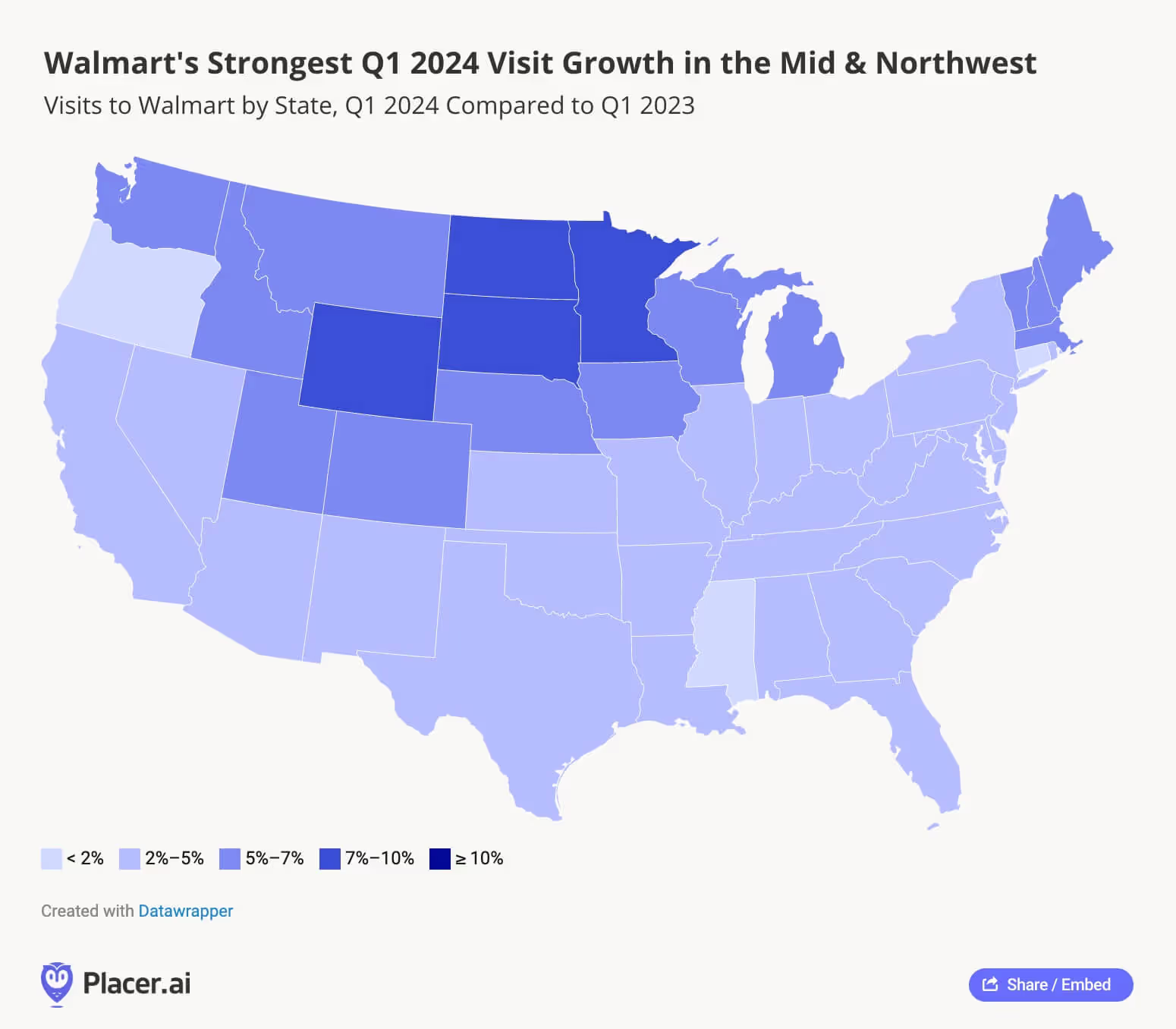
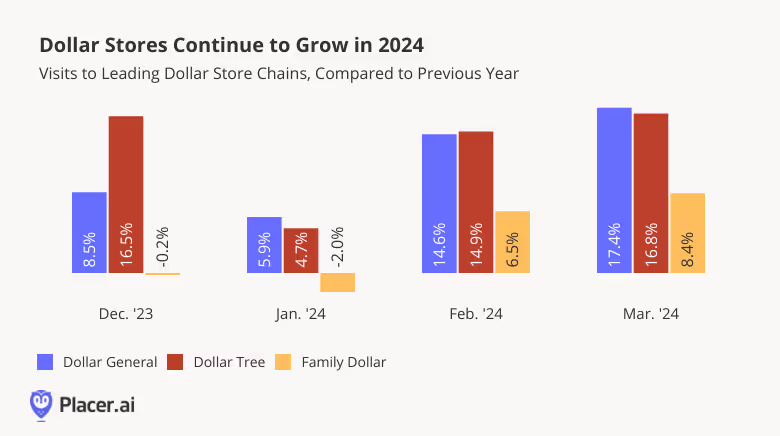
On a quarterly basis, overall retail visits rose 4.2% in Q2. And diving into specific categories shows that value continued to reign supreme, with discount and dollar stores seeing the most robust YoY visit growth (11.2%) of any analyzed category.
Other essential goods purveyors, such as grocery store chains (7.6%) and superstores (4.6%), also outperformed the overall retail baseline. And fitness – a category deemed essential by many health-conscious consumers – outpaced overall retail with a substantial 6.0% YoY foot traffic increase.
The decidedly more discretionary home improvement industry performed less well than overall retail in Q2 – but in another sign of consumer resilience, it too experienced a YoY visit uptick. And overall restaurant foot traffic increased 2.6% YoY.
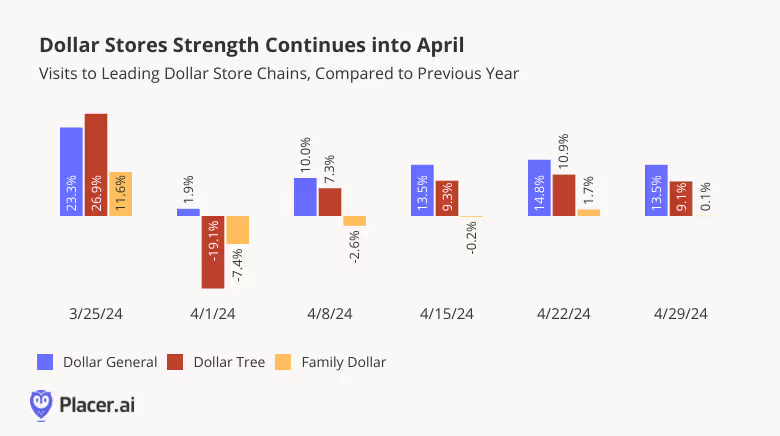
Discount and dollar stores enjoyed a strong Q2 2024, maintaining YoY visit growth above 10.0% for six out of the quarter’s 13 weeks. Only during the week of April 1st did the category see a temporary decline, likely the result of an Easter calendar shift. (The week of April 1st 2024 is being compared to the week of April 3rd, 2023, which included the run-up to Easter)
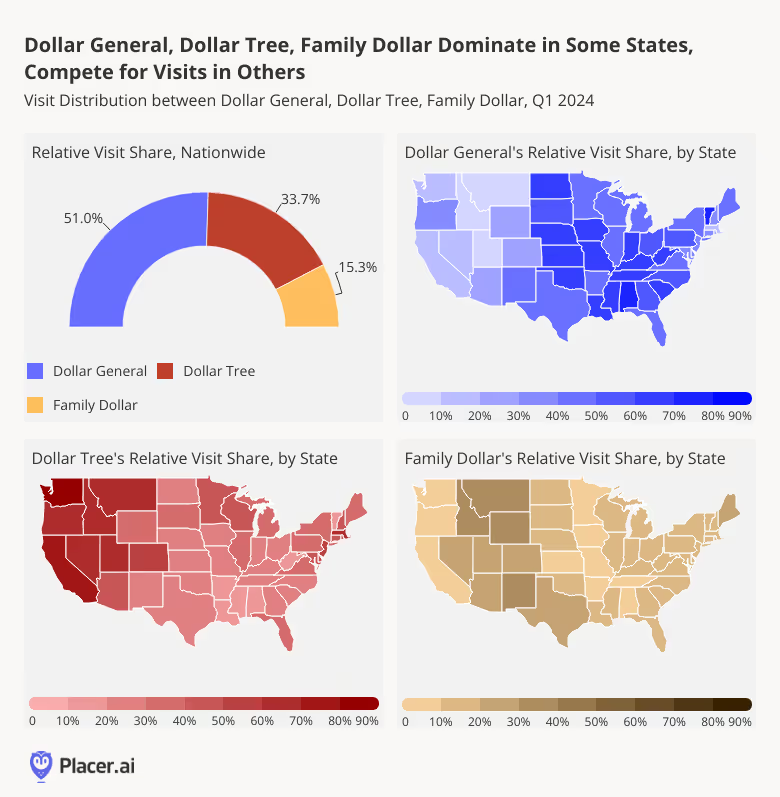
Some of this growth can be attributed to the continued expansion of segment leaders like Dollar General. But the category has also been bolstered by the emphasis consumers continue to place on value in the face of still-high prices and economic uncertainty.
Dollar General, which has been expanding both its store count and its grocery offerings, saw YoY visits increase between 9.1% and 15.9% throughout the quarter. Affordable-indulgence-oriented Five Below, which has also been adding locations at a brisk clip, saw YoY visits increase between 4.9% and 18.8%.
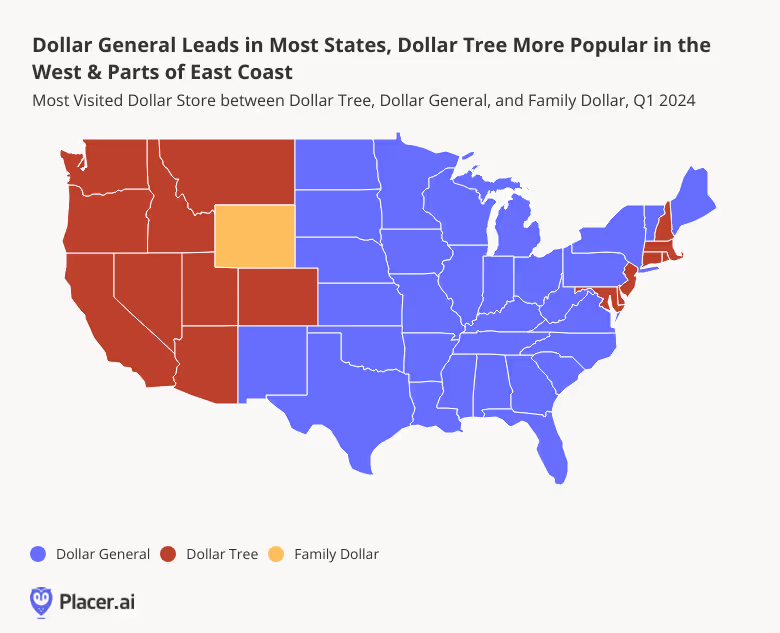
And though Dollar Tree has taken steps to rightsize its Family Dollar brand, the company’s eponymous banner – which caters to middle-income consumers in suburban areas – continued to grow both its store count and its visits in Q2.
Grocery store chains also performed well in Q2 2024 – experiencing strongly positive foot traffic growth throughout the quarter. Though the sector continues to face its share of challenges, stabilizing food-at-home prices and improvements in employee retention and supply chain management have helped propel the industry forward.
Diving into the performance of specific chains shows that within the grocery segment, too, price was paramount in Q2 2024 – with limited-assortment value grocery stores like Aldi and Trader Joe’s leading the way.
Traditional chains H-E-B and Food Lion (owned by Ahold Delhaize) – both of which are known for relatively low prices – outperformed the wider grocery sector with respective YoY foot traffic boosts of 11.4% and 8.7%. But ShopRite, Safeway (owned by Albertsons), Kroger, and Albertsons also drew more visits in Q2 2024 than in the equivalent period of last year.
Fitness has proven to be relatively inflation-proof in recent years – thriving even in the face of reduced discretionary spending and consumer cutbacks. Indeed, rising prices may have actually helped boost gym attendance, as people sought to squeeze the most value out of their monthly fees and replace pricy outings with already-paid-for gym excursions.
And despite lapping a remarkably strong 2023, visits to gyms nationwide remained elevated YoY in Q2 2024.
Diving into the data for some of the nation’s leading gyms shows that today’s fitness market has plenty of room at the top. Planet Fitness, 24 Hour Fitness, Life Time Fitness, Orangetheory Fitness, and LA Fitness all experienced YoY visit growth in Q2 2024 – reflecting consumers’ enduring interest in all things wellness-related.
But it was EōS Fitness and Crunch Fitness – two value gyms that have been pursuing aggressive expansion strategies – that really hit it out of the park, with respective YoY foot traffic increases of 23.4% and 21.4%.
The week of April 1st saw a decline in YoY visits to superstores – likely attributable to the Easter calendar shift noted above. But the category quickly rallied, and with back-to-school shopping and major superstore sales events coming up this July, the category appears poised to enjoy continued success throughout the summer.
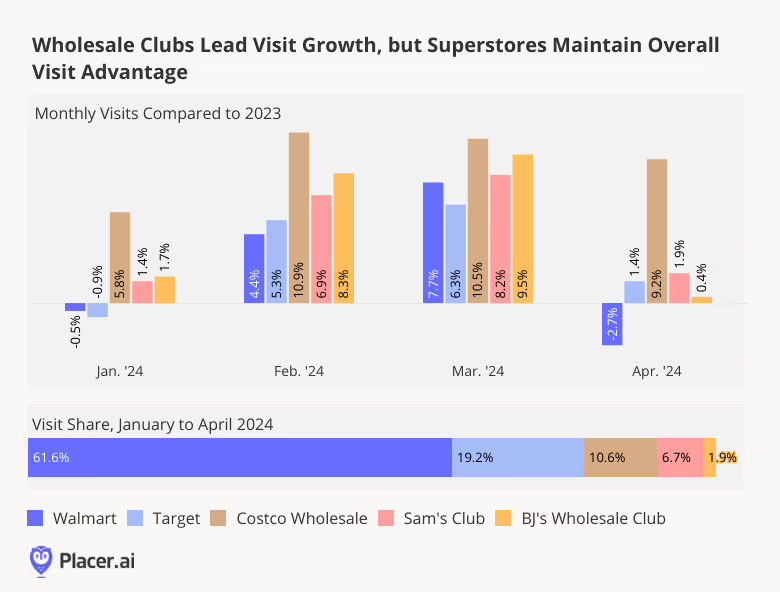
Within the superstore category, wholesale clubs continued to stand out – with Costco Wholesale, Sam’s Club and BJ’s Wholesale Club enjoying YoY foot traffic growth ranging from 12.0% to 7.4%. But Target and Walmart also impressed with 4.6% and 4.0% YoY visit increases.
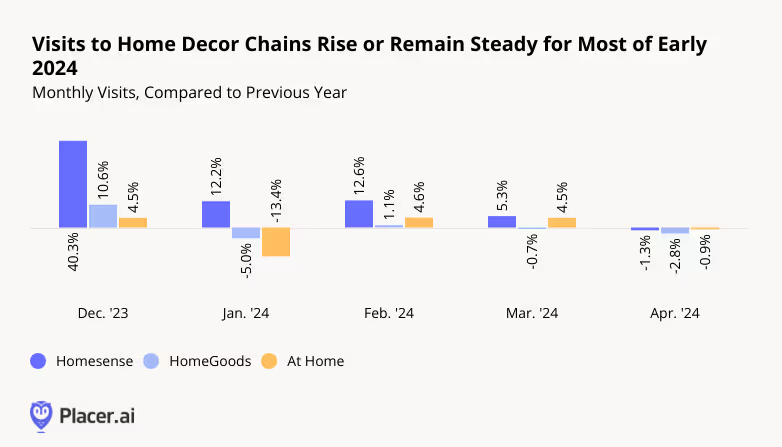
Inflation, elevated interest rates, and a sluggish real estate market have created a perfect storm for the home improvement industry, with spending on renovations in decline. The accelerated return to office has likely also taken its toll on the category, as people spend more time outside the home and have less availability to immerse themselves in DIY projects.
But despite these challenges, weekly YoY foot traffic to home improvement and furnishing chains remained elevated throughout much of the Q2 – with June and April seeing mostly positive YoY visit growth, and May hovering just below 2023 levels. This (modest) visit growth may be driven by consumers loading up on supplies for necessary home repairs, or by shoppers seeking materials for smaller projects. And given the importance of Q2 for the home improvement sector, this largely positive snapshot may offer some promise of good things to come.
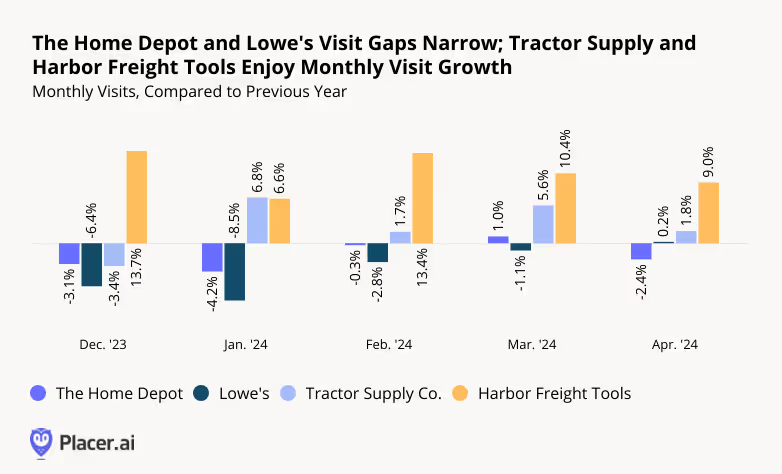
Some chains within the home improvement category continued to perform especially well in Q2 2024 – with rapidly expanding, budget-oriented Harbor Freight Tools leading the pack. But Ace Hardware, Menards, The Home Depot, and Lowe’s also saw foot traffic increases in Q2, showcasing the category’s resilience in the face of headwinds.
Restaurants – including full-service restaurants (FSR), quick-service restaurants (QSR), fast-casual chains, and coffee chains – lagged behind grocery stores and other essential goods retailers in Q2 2024, as price-sensitive consumers prioritized needs over wants and ate at home more often.
Still, YoY restaurant foot traffic remained up throughout most of the quarter. And impressively, the sector saw a YoY visit uptick during the week of Mother’s Day (the week of May 6th, 2024, compared to the week of May 8th, 2023) – an important milestone for FSR.
The restaurant industry’s YoY visit growth was felt across segments – though fast-casual and coffee chains experienced the biggest visit boosts. Like in Q1 2024, fast-casual restaurants hit the sweet spot between indulgence and affordability, outpacing QSR in the wake of fast food price hikes. And building on the positive YoY trendline that began to emerge last quarter, full-service restaurants finished Q2 2024 with a 1.4% YoY visit uptick.
Chain expansion was the name of the restaurant game in Q2 2024, with several chains that have been growing their footprints outperforming segment averages – including CAVA, Chipotle Mexican Grill, Ziggi’s Coffee, California-based Philz Coffee, Raising Cane’s, Whataburger, and First Watch. Chili’s Grill and Bar also outpaced the full-service category average, aided by the revamping of its “3 for Me” menu.
Retailers and restaurants in Q2 2024 continued to face plenty of challenges, from inflation to rising labor costs and volatile consumer confidence. But foot traffic trends across industries – including both essential goods purveyors like grocery stores and more discretionary categories like home improvement and restaurants – suggest plenty of room for cautious optimism as 2024 wears on.
Return-to-office (RTO) trends have been closely watched over the past few years, with relevant stakeholders trying to puzzle out the impact remote and hybrid work have had on business operations and worker performance. And while visits to office buildings, overall, remain below pre-pandemic levels, office recovery varies from city to city – reflecting the complex and nuanced nature of regional economic trends, workforce preferences, and industry-specific needs.
This white paper harnesses location analytics to explore office recovery in the country’s second-largest economy – Los Angeles. The first part of the report is based on an analysis of foot traffic data from Placer.ai’s Los Angeles Office Index – an index comprising 100 office buildings in LA (including several in the greater metro area). The second part of the report broadens the lens to analyze visits by local employees to points of interest (POIs) corresponding to four major LA-area office districts: Century City, Downtown LA, Santa Monica, and Culver City. The white paper examines the impact that return-to-work mandates have had on visits to office buildings, discovers which demographic groups are driving the RTO, and explores the connection between commute time and return-to-office rates.
The return to office in Los Angeles has consistently lagged behind other major cities, underperforming nationwide recovery levels since the pandemic ground in-office work to a virtual halt. Still, the city’s office buildings are seeing a steady increase in visits, with foot traffic tending to spike at the beginning of each year. This indicates that even though office visits in LA are still below national averages, they are on a steady growth trajectory – a promising sign for stakeholders in the city.
A closer examination of Los Angeles office buildings also shows that despite the overall lag, some top-performing buildings in the LA metro area are defying the odds. Visits to the 20 local office buildings with the narrowest Q2 2024 post-COVID visit gaps were down just 8.7% in June 2024 compared to January 2019 – significantly outperforming the nationwide average.
So while overall office recovery in the city is still behind nationwide trends, these top-performing buildings indicate an optimistic outlook for the city’s office spaces.
Diving into the demographics of visitors to LA’s top-performing office buildings reveals an important insight: these buildings are attracting younger workers. This cohort has shown a stronger preference for in-person work compared to their older colleagues.
Analyzing the buildings’ captured markets with psychographics from AGS: Panorama reveals that these buildings are attracting visitors from areas with larger shares of "Emerging Leaders" and "Young Coastal Technocrats" than the broader metro area.
"Emerging Leaders'' – upper-middle-class professionals in early stages of their careers – make up 20.3% of households in the trade areas feeding visits to these top-performing buildings, compared to 14.9% in the broader LA CBSA. Similarly, "Young Coastal Technocrats," young and highly educated professionals in tech and professional services, account for 14.7% of households driving visits to the top-performing buildings, compared to only 12.1% in the broader area.
The trend suggests that companies in these high-performing office buildings employ many early-career professionals eager to accelerate their careers and work in-person with colleagues and mentors. This is a positive sign for the future of the office market in the LA metro area, indicating that it is attractive to key demographic groups that are likely to drive future growth and innovation.
Over the past few years, the debate regarding return-to-office mandates has been a heated one. Will employees follow return-to-office requirements? Can companies enforce the return to office after offering remote and hybrid work options? Recent location analytics data suggests that, at least in the Los Angeles metro area, some return-to-office mandates have been effective.
Three major tech companies – Activision Blizzard, TikTok, and SNAP Inc. – recently made their return-to-office policies stricter. Activision mandated a full return to the office in January 2024. TikTok has also intensified its return-to-office policy while seeking to expand its office presence in the greater Los Angeles area. And SNAP Inc. required employees to return to the office earlier this year as a condition of continued employment.
Visitation patterns at each of these companies' respective headquarters suggest that their policies have directly impacted visit frequency. Since the beginning of the year, the share of repeat office visits (defined as two or more visits per week) has increased for all three locations. Activision saw its share of repeat office visits grow from 52.1% in H1 2023 to 61.4% in the same period of 2024. TikTok’s repeat visits grew from 49.5% to 61.0%, and SNAP’s repeat visits increased from 36.6% to 42.8%.
These numbers highlight how return-to-office policies can lead to noticeable changes in office visit patterns and offer a blueprint to other businesses looking to foster a stronger in-office workforce.
Los Angeles is the second-largest metro area in the country, with several distinct business districts across its sprawling landscape. And a closer look at four major office hubs in the greater LA area – Century City, Downtown LA, Santa Monica, and Culver City – highlights how the office recovery can vary, not just by city or demographic, but on a neighborhood level.
Weekday visits by local employees to all four analyzed business districts have rebounded significantly since 2020 – though each area has followed its own particular trajectory.
Culver City, home to major businesses including Sony Pictures and Disney Digital Network, saw the least pronounced drop in employee visits during the early days of the pandemic. And in Q2 2024, weekday visits by local workers were down just 18.4% compared to Q1 2019.
Century City, on the other hand, saw the most marked drop in local employee foot traffic as the pandemic set in. But the district’s recovery trajectory has also been the most dramatic – with a Q2 2024 visit gap of just 28.5%, smaller than Downtown LA’s 29.7% visit gap. Perhaps capitalizing on this momentum, Century City is expanding its business district with the addition of a major new office building, set to be completed in 2026 and serve as the headquarters for Creative Artists Agency. Santa Monica, for its part, finished off Q2 2024 with a 23.3% visit gap.
Century City stands out within the Los Angeles metropolitan area for its dramatic decline and subsequent resurgence in local employee foot traffic. And looking at another metric of office recovery – employee commute distance – further underscores the district’s remarkable comeback.
The share of employees commuting to Century City from three to seven miles away has nearly returned to pre-COVID levels – suggesting a normalization of commuting patterns by local workers living in the area. In H1 2019, 33.5% of workers in Century City commuted between 3 and 7 miles to work; in 2022, that number had dropped to 29.8%. But by 2024, the share of visitors making that commute had grown to 32.5% – much closer to pre-COVID numbers.
Similarly, the region’s trade area size, which had contracted significantly in the wake of the pandemic, bounced back significantly in 2024. This serves as another indication of Century City’s rebound, cementing Century City’s status as a key business hub within the Los Angeles metropolitan area.
Five years after the upheaval caused by the pandemic, office spaces are still changing. Although the Los Angeles area has taken longer to recover than other major cities, analyzing local visitation data shows significant potential for the city’s business areas. With young employees leading the return-to-office charge, the city is poised to keep driving its strong economy and adjust to an evolving office environment.
Retail media networks (RMNs) have cemented their roles as the future – and present – of advertising. These networks enable advertisers to promote products and services through a retailer’s online properties and physical stores, when consumers are close to the point-of-purchase and primed to buy.
Today, we take a closer look at two newcomers to the retail media space: Costco Wholesale and Wawa. Both chains have an online presence – but both also excel at in-store experiences, offering unique opportunities for consumer engagement and exposure to new products.
This white paper dives into the data to explore some of the key advantages Costco and Wawa bring to the retail media table – and examine how the retailers’ physical reach can best be leveraged to help advertising partners find new audiences.
Wawa and Costco, the latest additions to the growing number of companies with retail media networks, exhibit significant advertising potential. Both brands boast a wide reach and diverse customer base, and both have access to troves of customer data through membership and loyalty programs.
Foot traffic data confirms the robust offline positioning of the two retailers. In Q1 2024, year-over-year (YoY) visits to Costco and Wawa increased 9.5% and 7.5% respectively – showing that their in-store engagement is on a growth trajectory.
And since consumers tend to spend a lot more time in-store than they do on retailers’ websites, Costco’s and Wawa’s strong brick-and-mortar growth positions them especially well to help advertisers reach new customers. In Q1 2024, the average visits to Costco’s and Wawa’s physical stores lasted 37.4 and 11.4 minutes respectively – compared to just 6.7 and 4.6 minutes for the chains’ websites. These longer in-store dwell times can be harnessed to maximize ad exposure and offer partners more extended opportunities for meaningful interactions with customers. Partners can also analyze the behavior and preferences of the two chains’ growing visitor bases to craft targeted online campaigns.
Costco’s retail media network will tap into the on- and offline shopping habits of its staggering 74.5 million members to inform targeted advertising by partners. And the retailer’s tremendous reach offers a significant opportunity to engage customers in-store.
But while Costco is dominant in some areas of the country, other markets are led by competitors like Sam’s Club and BJ’s Wholesale Club. And advertisers looking to choose between competing RMNs or hone in on the areas where Costco is strongest can analyze Costco's performance and visit share – on a local or national level – to determine where to focus their efforts.
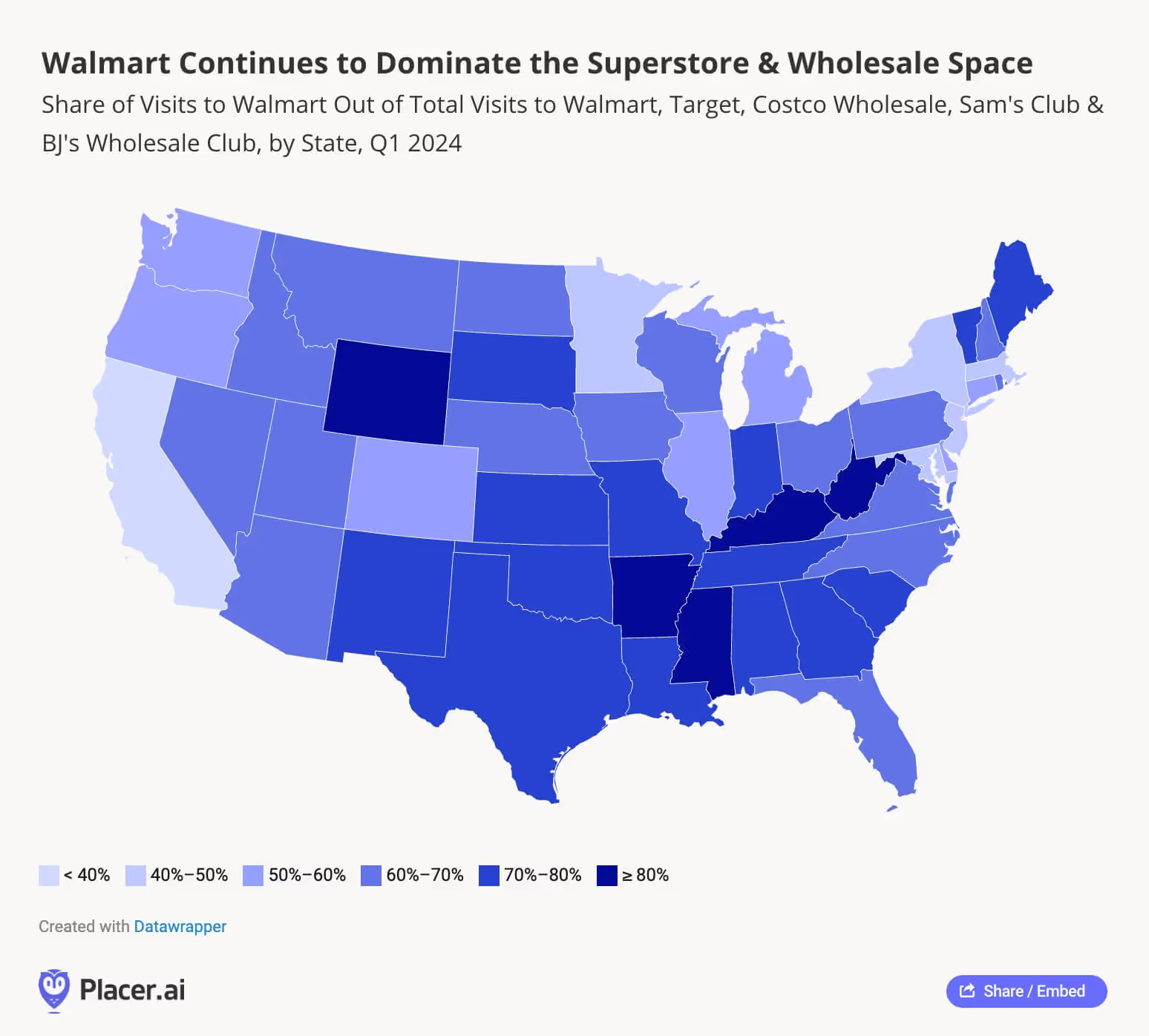
An analysis of the share of visits to wholesalers across the country reveals that Costco is the dominant wholesale membership club in much of the Western United States. But Costco also captures the largest share of wholesale club visits in many other major population centers, including important markets like New York, Chicago, Phoenix, and San Antonio. Costco’s widespread brick-and-mortar dominance offers prospective advertising partners a significant opportunity to connect with regional audiences in a wide array of key markets.
Another one of Costco’s key advantages as a retail media provider lies in its highly loyal and engaged audience. In May 2024, a whopping 41.4% of Costco’s visitors frequented the club at least twice during the month – compared to 36.6% for Sam’s Club and 36.0% for BJ’s Wholesale.
Moreover, Costco led in average visit duration compared to its competitors. In May 2024, customers spent an average of 37.1 minutes at Costco – surpassing even the impressive dwell times at Sam’s Club and BJ’s Wholesale Club.
YoY visits per location to Costco, too, were the highest of the analyzed wholesalers, all three of which saw YoY increases. These metrics further establish the wholesaler’s position as an effective retail media provider.
Even when foot traffic doesn't show a brand’s clear regional dominance, location analytics can reveal other metrics that signal its unique potential. Take the Richmond-Petersburg, VA, designated market area (DMA), for example. In May 2024, BJ’s Wholesale Club led the DMA with 41.2% of wholesale club visits, while Costco was a close second with 37.3% of visits.
But despite BJ’s lead in visit share, Costco's Richmond audience was more affluent. Costco's visitors came from trade areas with a median household income (HHI) of $93.2K/year, compared to $73.1K/year for Sam’s Club and $89.5K/year for BJ’s. Additionally, Costco drew a higher share of weekday visits than its counterparts.
Analyzing shopper habits and preferences across chains on a local level can provide crucial context for strategists working on media campaigns. Advertisers can partner with the brands most likely to attract consumers interested in their offerings, and identify where – and when – to focus their advertising efforts.
Convenience stores, or c-stores, are emerging as destinations in and of themselves – and their rising popularity among a wider-than-ever swath of consumers opens up significant opportunities in the retail advertising space.
Wawa is a relative newcomer to the world of retail media, after other c-stores like 7-Eleven and Casey’s launched their networks in 2022 and 2023. But despite coming a bit late to the party, the potential for Wawa’s Goose Media Network is significant – thanks to a cadre of highly loyal visitors who enjoy the physical shopping experience the c-store chain offers.
In May 2024, Wawa’s share of loyal visitors (defined as those who visited the chain at least twice in a month) was 60.1%. In contrast, other leading c-store chains operating in Wawa’s market area – QuickTrip and 7-Eleven, for example – saw loyalty rates of 56.0% and 47.9%, respectively, for the same period.
Additionally, Wawa visitors browsed the aisles longer than those at other convenience retailers. In May 2024, 39.9% of Wawa visitors stayed in-store for 10 minutes or longer, compared to 29.6% at QuickTrip and 25.7% at 7-Eleven.
Wawa's loyal customer base and longer visit durations make it a strong contender in the retail media space. By harnessing this high level of customer engagement, Wawa can draw in advertisers and develop targeted marketing strategies that resonate with its dedicated shoppers.
Wawa has been on an expansion roll over the past few years, with plans to open at least 280 stores over the next decade in North Carolina, Tennessee, Georgia, Alabama, Ohio, Indiana, and Kentucky. The chain has also been steadily increasing its footprint in Florida – between January 2019 and April 2024, Wawa grew from 167 Sunshine State locations to 280, with more to come.
And analyzing changes in Wawa’s visit share in one of Florida’s biggest markets – the Miami-Ft. Lauderdale DMA – shows how successful the chain’s local expansion has been. Between January 2019 and April 2024, Wawa more than doubled its category-wide visit share in the Miami area (i.e. the portion of total c-store visits in the DMA going to Wawa) – from 19.0% to nearly 40.0%.
A look at changes in Wawa’s Miami-Ft. Lauderdale trade area shows that the chain’s growing visit share has been driven by an expanding market and an increasingly diverse audience.
In April 2019, there were some 55 zip code tabulation areas (ZCTAs) in the Miami-Ft. Lauderdale DMA from which Wawa drew at least 3,000 visits per month. By April 2021, this figure grew to 96 – and by April 2024, it reached 129.
Over the same period, the share of “Family Union” households in Wawa’s local captured market – defined by the Experian: Mosaic dataset as families comprised of middle-income, blue collar workers – nearly doubled, growing from 7.4% in April 2019 to 14.4% in April 2024.
Retail media networks that make it easier to introduce shoppers to products and brands that are closely aligned with their preferences and habits offer a win-win-win for retailers, advertisers, and consumers alike. And Costco and Wawa are extremely well-positioned to make the most of this opportunity.