.png)
.png)

.png)
.png)

In December 2023, Placer.ai released two white papers: How Physical Stores Help DNBs Thrive and East Coast Migration Hubs. Below is a taste of our findings. To read more data-driven consumer research, visit our library.
DNBs – Digitally Native Brands – refer to retailers that began their retail journey exclusively online, selling their product line direct-to-consumers through their owned digital channel. But although all these businesses start out as a pure e-commerce play, many DNBs eventually move offline, choosing to leverage the various benefits of brick-and-mortar channels to grow their business even further.
Analyzing year-over-year (YoY) data for Q3 2023 shows that, while many retailers struggled, DNB leaders such as Vuori, Allbirds, Everlane, and Warby Parker all saw significant growth in quarterly visits per venue. Many of these brands also underwent significant expansions, but the increase in visits per venue reveals that many of the DNBs are seeing more crowded stores despite the increase in number of overall venues. The success of these brands in operating stores that consumers want to keep visiting – even in times of economic headwinds – suggests that DNBs are particularly well positioned to take advantage of the diverse benefits of offline stores.
How Physical Stores Help DNBs Thrive uses location intelligence to reveal the different brick-and-mortar strategies helping DNBs broaden their reach, build their brand, and acquire new audiences. Several DNBs are building massive store fleets, while others focus on a couple well-placed stores – and some focus on temporary pop-ups to reap the benefits of physical stores without the long-term commitment.
Read the full report here to discover the diverse methods that digitally native brands are enlisting to to drive growth through brick-and-mortar expansion.
Much has been written about the recent population outflows from New York, Massachusetts, and other northeastern states. But many states on the East Coast – including Maine, Vermont, Rhode Island, Delaware, North and South Carolina, and Florida – are actually seeing influxes of newcomers.
Each of these states – and each of the metropolitan areas attracting relocators within them – offers its own set of benefits. But those willing to make the move often fit a similar profile – younger individuals or families looking for a more favorable housing market, better schools, or more job opportunities.
East Coast Migration Hubs looks at several states and metro areas on the East Coast to explore the factors driving migration to these emerging hubs. Using location data to understand who is moving, and harnessing Niche’s Neighborhood Grades dataset to identify differences between origin and destination areas, the report seeks to shed light on recent domestic migration trends in the Eastern United States.
Read the full report here to discover the factors driving domestic migration to several popular relocation destinations on the East Coast.
For more data-driven consumer research, visit our library.

Last year was marked by inflation and consumer cutbacks as shoppers adjusted to price hikes across key retail and dining categories. But despite the challenges, many categories and retailers not only weathered the storm but positively thrived under the ongoing headwinds.
Now, with a new year offering fresh opportunities for growth, what are the retail and dining segments positioned for success in 2024? We dove into the data to find out.
Last year’s high grocery prices led to a surge in foot traffic to affordable supermarket chains – but food-away-from-home inflation also seems to have driven visits to high-end grocers. Visits to chains such as New York-based Uncle Giuseppe’s, Illinois-based Cermak Fresh Market, and California-based Lazy Acres saw consistent year-over-year (YoY) visit increases as consumers sought specialty ingredients to recreate restaurant-quality dishes at home. Rising interest in sustainability, natural products, and organic ingredients – especially among Gen-Z – likely helped drive traffic growth as well.
But the success of specialty grocers isn’t just coming from singles willing to splurge on the latest influencer-backed food trend – trade area demographic data reveals that families with children are overrepresented in the captured market trade area of all three specialty grocers analyzed. With restaurant prices likely increasing slightly in 2024, consumers looking to feed their families tasty dishes without breaking the bank – or shoppers feeding the growing demand for natural food products – will likely keep visits to specialty grocers high in the coming year.
.avif)
Along with the rise in specialty grocers selling natural and organic ingredients, restaurants focusing on whole, healthy foods are also seeing a boost – and the segment is positioned for further growth in 2024. Consumers are flocking to concepts such as Mendocino Farms, honeygrow, and Crisp & Green that boast fresh ingredients and made-from-scratch dishes – and these chains are all expanding to meet the growing demand.
Visits to healthy dining concepts are no longer reserved for special occasions – weekday foot traffic is also on the rise, with all three dining brands analyzed seeing a YoY rise in the share of Monday to Friday visits. With employees slowly but surely returning to the office and looking to grab a nutritious lunch mid-day or meet up with friends for a balanced dinner on their way home, demand for health-focused dining concepts is likely to continue growing in 2024.

Dave’s Hot Chicken was one of 2023’s biggest dining success stories, and the chain was not the only fried chicken franchise attracting significant foot traffic. Raising Cane’s, which has been on a roll for several years, and Huey Magoo’s Chicken Tenders – which serves grilled chicken and other fare alongside its signature fried tenders – are also taking the country by storm.
Foot traffic to the chains surged in 2023, driven in part by aggressive expansions. But zooming into November 2023 data reveals that average visits per venue are also up YoY, despite all three brands’ much larger store fleets – indicating that the fried chicken boom is meeting a ready demand. It seems, then, that while some diners will favor healthy foods in the new year, other consumers are likely to continue driving visits to fried chicken chains in 2024.
.avif)
Fried chicken isn’t the only indulgence positioned to thrive in 2024. Other affordable luxuries raked in visits last year and are likely to continue seeing growth in the year ahead.
Although inflation appears to be cooling, prices across many goods and services still remain elevated, with some shoppers still putting off large purchases. But consumers are willing to splurge on small treats that won’t break the bank, and tasty snacks and food items – from craft doughnuts to gourmet deli sandwiches to specialty coffee concoctions – could provide the perfect affordable and guilt-free pick-me-up. Parlor Doughnuts, Pickleman’s Gourmet Cafe, and Dutch Bros. Coffee are some of the chains that benefited from this trend in 2023 and will likely continue to grow in the new year.
The trade areas of the three chains analyzed all include a larger-than-average share of “non-family households” – people living with unrelated individuals. As high housing costs continue to lead more U.S. adults to live with roommates, the number of consumers looking to escape their daily grind with an affordable indulgence is likely to increase in 2024 – and drive even larger visit surges to chains offering budget-friendly treats.
.avif)
Non-comestible affordable indulgence such as tanning salons, hair-removal parlors, and eyelash salons are also seeing a rise in visits that will likely continue in the coming year. Deka Lash, Tan Republic, Glo Tanning, and LaserAway are some of the chains that saw their YoY visits increase significantly in 2023, and the growth does not appear to be slowing down.
All four chains’ trade areas included a larger share of Gen-Z visitors (aged 18-24) than the share of 18-24 year olds nationwide. And since, despite inflation, younger shoppers tend to spend more than the average American on beauty and self care – and Gen Z’s spending power is only expected to grow in the coming year – personal grooming chains are well positioned to succeed even further in 2024.
.avif)
Another personal care-adjacent segment slated for growth in 2024 is themed fitness. Gyms and studios that focus on a particular type of activity or fitness regimen – such as climbing, yoga, pilates, or HIIT are seeing their visits skyrocket, with both the number of monthly visits and the average visit frequency on the rise YoY.
The rising popularity of themed fitness concepts may be aided by the sense of community fostered by many of these chains. Touchstone Climbing organizes meetup groups geared towards specific audiences, while F45 Training prides itself on facilitating a sense of purpose and belonging among its members. And yoga and pilates classes have long been recognized for their capacity for connection-building.
With loneliness on the rise and many consumers looking to incorporate a fun, social element into their fitness routines, the demand for themed fitness concepts will likely keep on growing in 2024.
.avif)
Cost-effectiveness does not necessarily mean cheap. And while some retail segments to watch in 2024 stand out for their low price points, other segments that offer consumers a particularly strong value proposition also appear well positioned to thrive in the coming year. Chains such as Theory, Anthropologie, and Marine Layer all saw YoY increases in monthly visits every month of 2023, perhaps aided by the “quiet luxury” trend that drove demand for high-quality, non-ostentatious fashion. And while these brands may not offer the cheapest price, the focus on good craftsmanship and premium fabrics may help consumers feel better about shelling out a little more for each item.
All three brands analyzed have a significant presence in California. Diving into their captured market in the Golden State reveals that visitors to these upscale apparel retailers tend to be wealthier and are more likely to live alone when compared to the average California resident. So even as many companies look to cater to the increasing share of budget-conscious consumers, other retailers willing to invest in quality materials and offer a premium customer experience can still thrive in 2024 by meeting the needs of more affluent audiences.
.avif)
From healthy foods to fried fare, and from affordable treats to higher-priced apparel, the diversity of retail and dining segments to watch in 2024 highlights the many opportunities for success in the coming year. Where will visits skyrocket? Which brands will hit it out of the park?
Visit placer.ai/blog to find out.

Streets adorned in holiday lights, bustling Christmas stores and pop-ups, and local festivals all make the holiday season a truly magical time of year. So with Christmas in the rearview mirror, we dug into the data to explore some of the most beloved holiday spots throughout the country. Who visits Christmas stores? How do holiday events affect foot traffic to local hangouts? And what impact do annual parades have on major retail corridors like Chicago’s Mag Mile?
We dove into the data to find out.
Bronner’s Christmas Wonderland in Frankenmuth, MI is the biggest Christmas store in the country – nay, the world. Spanning some 27 acres, the store carries everything from personalized holiday ornaments to Christmas trees. And the venue, which is open 361 days a year, has emerged as a true destination, where visitors can enjoy a taste of the holiday spirit and load up on all their Christmas essentials.
People visit Bronner’s all year round – but foot traffic to the store really picks up during the holiday season: Between November 1st and December 21st, 2023, the holiday wonderland drew a stunning 438.0% more daily visits, on average, than it did between January and October of this year.
Drilling down deeper into the data shows that much of this visit bump is driven by locals, who flock to Bronner’s during the Christmas season. Throughout the year, Bronner’s draws tourists from all over the country – and in the summer, most visits to the shop are by shoppers living more than 100 miles away. Individuals living within 100 miles of Bronner’s tend to visit closer to Christmas, when the time comes to stock up on supplies for the holiday. And as the holiday approaches, the share of true locals in Bronner’s visitor base – i.e. those living less than 50 miles away from the store – increases significantly.

As the Yuletide season kicks into gear, special holiday-themed pop-ups and happenings also spring up throughout the country, with bars, malls, and restaurants all hosting special events filled with holiday cheer.
One venue that goes all out for the holidays is Mozart’s Coffee Roasters, the lakeside Austin, TX coffee shop that’s been a local landmark since 1993. With free wifi, expansive seating, and bottomless coffee, Mozart’s is the perfect place for remote employees to get some work done. And with hundreds of artists performing at the venue each year and a weekly open mic night, it’s also a great place to go out in the evenings. In the run-up to Christmas, Mozart’s hosts its famed annual holiday lights show, replete with a Bavarian Marketplace, a silent disco, and this year, an actual piece of Taylor Swift’s dance floor.
During the light show, Mozart’s is positively teeming with customers: Since the start of the event this year (November 9th), the coffee shop drew 104.3% more daily visitors, on average, than it did between January 7th (the end of last year’s show) and November 8th, 2023. And unsurprisingly, foot traffic data shows that most of this visit bump is driven by evening customers: During most of the year, the majority of visits to Mozart’s take place before 6:00 PM, with 24.4% concentrated in the morning hours. But when the festival kicks off, this pattern reverses – with 66.7% of visits taking place between 6:00 PM and midnight.

Local parades and festivals are another mainstay of the holiday season. From New York’s iconic Macy’s Thanksgiving Day Parade to the Hollywood Christmas Parade in Los Angeles, cities across America draw massive crowds to streets decked out with holiday cheer.
One of the nation’s most timeless Christmas celebrations is Chicago’s Wintrust Magnificent Mile Lights Festival – an all-day bonanza that features a slew of booths and activities, a televised parade, and an impressive fireworks display. The festival, which famously illuminates the city with a million lights, is one of the Mag Mile’s prime events of the year. And comparing November 18th, 2023 foot traffic to the popular Chicago retail corridor – the day of the big event – to a September 1st 2023 baseline, shows that the festivities generated a tremendous 179.5% visit spike.

And a look at the demographic characteristics of visitors to the Mag Mile during the Lights Festival reveals that the celebration draws a more economically diverse crowd, as well as a larger share of families with children. Throughout most of this year, the median household income (HHI) of the Magnificent Mile’s captured market was relatively high – $85.4K. At the same time, the share of parental households in the retail corridor’s captured market increased from 21.0% to 23.4%, highlighting the event’s special appeal for families.

Everybody needs some seasonal cheer – and the sheer variety of holiday-themed events and festivals means there’s something for everybody. How will Christmas stores fare as the retail environment continues to evolve? And how will shifting urban landscapes impact local events, parades, and festivals in the years to come?
Follow Placer.ai’s data-driven retail and civic analyses to find out.

College students make up a small percentage of the overall U.S. population. But they often have money to spend – and back-to-college shopping is a significant driver of retail sales. This year in particular, students heading back to school were expected to spend record amounts on dorm decor, clothing, and other campus essentials. And since today’s college students make up a large chunk of tomorrow’s affluent consumers, retailers across industries are eager to cement positive relationships with the segment.
So with fall semester just under way, we dove into the data to explore the spending habits of today’s undergraduate young adults. When do they shop? What do they like to buy? And what can retailers do to get their attention?
To get a sense of when collegians tend to do the most shopping, we analyzed the monthly share of college students in the captured markets of select retailers and segments, using audience segmentation data from Spatial.ai’s PersonaLive. And the analysis revealed that student consumer behavior follows a clear seasonal pattern.
In 2019, the share of college students in the captured markets of big box superstores like Target and Walmart peaked in August, and to a lesser extent in June, July, and September, as collegians enjoyed their summer vacations and did their back-to-school shopping. Additional upticks emerged in January, when many students were on winter break. But during regular school months, when midterms, finals, and homework likely kept many students hunkered down in the library, their share in the chains’ captured markets was much lower. While this pattern was disrupted in the wake of COVID, it returned in full force in 2022. Similar seasonality arose when looking at wider segments like apparel and off-price retail, as well as various dining categories.
In addition to seasonality, the above graphs also appear to indicate that despite their tight budgets, collegians don’t necessarily prioritize price over everything else. So to further explore the shopping preferences of college kids, we examined the share of the #College segment in the captured markets of popular chains across categories.
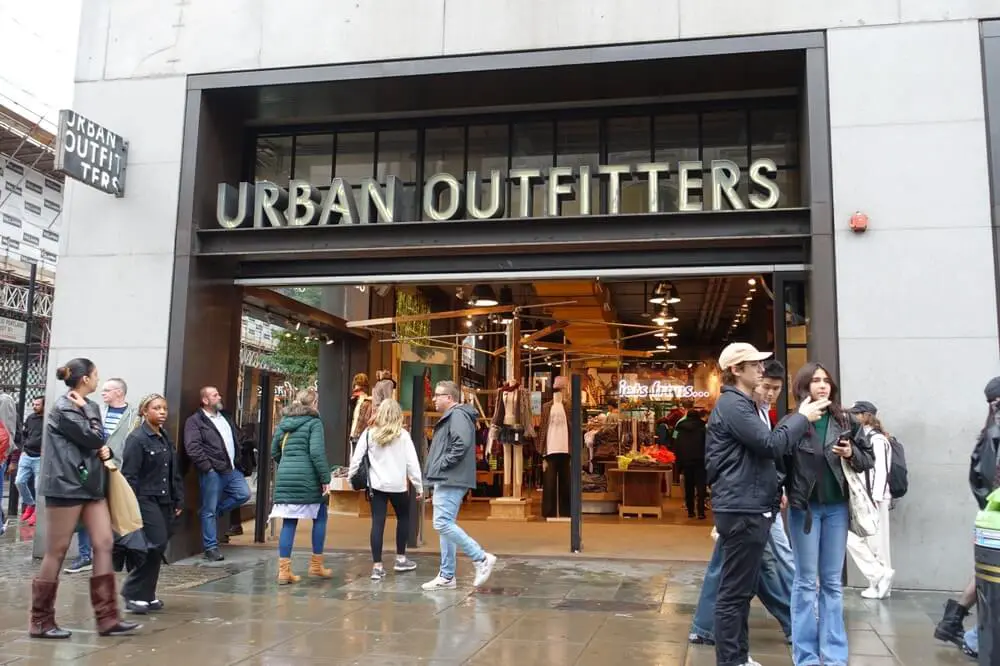
Trade area data seems to indicate that university students shop at Target, frequent non-off-price-apparel chains, eat at fast-casual restaurants – and make up smaller shares of the customer bases of less expensive alternatives. Indeed, as hard-up as they may be, undergrads know how to splurge and are willing to pay for high quality stuff. They can’t get enough Urban Outfitters and love mid to higher range brands like Madewell and lululemon athletica.
At the same time, college students are highly oriented to thrift shops – especially those like Buffalo Exchange and Plato’s Closet, where they can sell their old clothes and snag stylish, name-brand items for a steal.
Of course, the share of collegians in the captured market of any given retailer or segment can also be impacted by the behavior of other demographics. For example, if a particular chain attracts an extremely broad audience, a lower relative share of college students may indicate that their presence is being offset by other segments. Still, while a small share of collegians in a chain’s trade area may not necessarily mean that the chain does not appeal to this group, a disproportionate share of students in a chain’s captured market is a strong indication that the brand is embraced by this demographic.
And chains which see a smaller share of college students among their customer base may draw an outsize proportion of undergrads during peak season. Walmart’s captured market, for example, was just 14.0% over-indexed for the #College segment between September 2022 and August 2023, compared to a nationwide baseline. But looking just at August 2023 – peak college Back to School shopping season – the share of #College students in its captured market was 94.0% higher than the nationwide average. Walmart also enjoyed higher-than-average shares of collegians in September, June, July, January, and to a lesser extent – October. Dollar Tree, too, attracted an outsize share of collegians in the summer and in January.
Collegian shopping habits are shaped by the rhythms of campus life. And while students are budget-conscious, they place a high premium on quality and are willing to spend money on things that are important to them. Brands that can lean into college students’ seasonal groove – while providing the products they crave at price points that don’t break the bank – will be poised to win over this demographic, gaining customers that may stay with them for life.
How will college spending habits continue to evolve as the school year progresses? Which brands will stand out as collegian favorites?
Follow Placer.ai’s data-driven insights to find out.

Marriott International, Inc. has long been a dominant player on the U.S. hospitality scene. The company boasts a wide-ranging portfolio of some 31 brands, running the gamut from luxury chains like The Ritz Carlton to more budget-friendly options like Courtyard by Marriott. And with more than 8,500 locations worldwide, including some 5,700 in the U.S., the hotel giant is continuing to expand its footprint.
Against this backdrop, Marriott International’s decision last May to launch the hospitality industry’s first media network – leveraging visitor data to let external brands advertise to its customers – should come as no surprise. With millions of customers passing through its doors each year, Marriott is particularly well-placed to help relevant advertising partners reach new audiences. The network, powered by Yahoo, offers both online and offline marketing opportunities, including in-room television and digital-screen promotions.
To better understand the potential reach of Marriott’s advertising network, we dove into the data to explore the characteristics and preferences of the people that visit the hospitality leader’s various brands and locations. By layering foot traffic data with demographic and psychographic metrics from STI: Popstats, AGS Behavior & Attitudes, and Experian’s Mosaic, we examined Marriott’s different captured markets, gaining insight into the habits, interests, and profiles of its customer bases.
*A chain or venue’s captured market refers to the population residing in its trade area, weighted to reflect the actual share of visits from each Census Block Group comprising the trade area.
Marriott’s brands are divided into three tiers: Luxury, Premium, and Select. And with something for everyone, the company’s customer base encompasses a wide swath of society – from budget-conscious families looking for inexpensive accommodations, to affluent singles on the hunt for high-end, luxury getaways. Marriott also runs several extended-stay venues, including Residence Inn and TownePlace Suites.
A look at the profiles of visitors to four different Marriott chains shows that, as expected, wealthier patrons tend to frequent the company’s luxury hotels, while less affluent customers tend to visit its more budget-oriented Select brands. But even the company’s less pricey offerings – such as Four Points by Sheraton (acquired by Marriott in 2016) – attract consumers from relatively affluent areas. And certain Select tier destinations, like Marriott’s Millennial and GenZ-oriented Moxy Hotels, draw higher-HHI travelers than some Premium brands.
The household compositions and consumer preferences of visitors to Marriott’s various brands also differ. Four Points stands out as a prime destination for families with children, as well as older couples – while Moxy attracts an outsize share of “Young City Solos.” Moxy and Ritz Carlton guests are more likely to be museum goers and use ride share apps like Lyft and Uber. And visitors to Four Points and Westin locations are more apt to be into DIY home improvement.
One Marriott chain that has been doing particularly well in recent months is Moxy Hotels, a brand squarely targeted at the “young at heart.” Positioned as an experiential destination – a place to play, and not just stay – Moxy Hotels’ website exudes youthfulness, inviting travelers to “PLAY ON #ATTHEMOXY,” and touting the chain’s fun communal spaces. The rooms are relatively compact and affordable, and at some locations, guests can check in at the bar and claim a complimentary cocktail.
And the chain, which boasts some 120 properties across 23 countries (including more than 30 in the U.S.), experienced positive year-over-year (YoY) visit growth throughout H1 2023. While some of this growth is undoubtedly due to the chain’s continued expansion, the average number of visits to each Moxy Hotel also increased. The consumer quest for fun experiences, which has propelled experiential models in retail and dining, appears to be leaving its mark on the hotel industry as well.
Moxy Hotel’s highly targeted experiential vibe may make it particularly attractive for advertisers interested in reaching younger consumers. But while Moxy targets a pretty specific demographic, the profile of its customers is far from uniform. Visitors to Moxy’s New Orleans Hotel, for example, are more likely to have a lower HHI and to include families with children than visitors to its Washington, D.C. and East Village (New York) venues. And while more than 60.0% of visitors to the East Village Moxy in H1 2023 were locals hailing from less than 30 miles away, 81.5% of visitors to the New Orleans Moxy came from further away.
Buoyed by a post-COVID travel boom that has seen people flocking back to hotels and airlines, Marriott International – along with its media network – appears poised for further growth. While the network will undoubtedly harness Marriott’s own first-party data, including from its Bonvoy loyalty program, location intelligence can offer additional layers of insight into the actual audiences it is likely to reach.
For more data-driven foot traffic insights, visit Placer.ai.

Although many dining chains have been challenged by recent economic headwinds, others are finding success. Adding itself to the list of restaurant winners in 2023 is CAVA – a growing Mediterranean fast-casual chain that recently filed for an initial public offering (IPO). We dove into the location analytics for CAVA to take a closer look at how the company is thriving in a turbulent economic climate and what lies ahead for the chain in its next chapter.
CAVA has shown a remarkable ability to drive foot traffic over the past couple of years. Since 2019, CAVA’s baseline visit growth has outperformed the fast-casual restaurant space nearly every month – with visits really taking off in 2021. The brand has been able to capitalize on growing suburban markets – accounting for 80% of locations – which may be contributing to the chain’s visit growth.
Visits to CAVA have skyrocketed. And like other fast-casual success stories, CAVA has embraced drive-thrus and invested in a streamlined in-store experience, both of which are likely contributing to at least some of the brand’s recent strength.
In addition to impressive visit growth, CAVA recorded a 12.8% revenue increase in 2022 compared to 2021 – no small feat considering the impact of inflation on overall restaurant traffic.
Zooming into visits per venue showcases CAVA’s strength even more clearly. CAVA’s visits-per-venue seem to follow industry trends – as overall fast-casual visits-per-venue fell year-over-year (YoY) between January and April 2023, CAVA’s visit-per-venue growth slowed as well. But although the direction was similar, the actual performance differed substantially, with the company significantly outperforming the wider fast-casual category.
CAVA’s YoY monthly visits per venue have been up since January 2023 – a particularly impressive feat in light of the chain’s continued expansion, and an indication that new locations are driving traffic despite the current economic environment. So, while CAVA appears to be affected by broader restaurant trends, the brand remains far ahead of the fast-casual dining space.
CAVA’s bold brick-and-mortar strategy is part of the reason why it has been able to get ahead of the pack in the fast-casual category. The company acquired Zoës Kitchen in 2018 and has since rebranded almost all Zoës Kitchen locations as CAVA restaurants. Such a strategy is relatively rare in the restaurant industry, but location analytics show that the move has paid off.
Since Q1 2021, CAVA’s YoY visits per venue have consistently outperformed visits-per-venue at the remaining Zoës Kitchen locations. This not only validates CAVA’s decision to phase out the Zoës Kitchen brand but also suggests that CAVA resonates with Zoës Kitchen diners who continue to visit a location when it becomes a CAVA restaurant.
CAVA’s IPO announcement is a welcome next step for one of the fastest-growing fast-casual chains. With a focused expansion strategy and an eye on growing markets, there may be no telling how far the company can go.
For updates and more data-driven foot traffic insights, visit Placer.ai.
New York City is one of the world’s leading commercial centers – and Manhattan, home to some of the nation's most prominent corporations, is at its epicenter. Manhattan’s substantial in-office workforce has helped make New York a post-pandemic office recovery leader, outpacing most other major U.S. hubs. And the plethora of healthcare, service, and other on-site workers that keep the island humming along also contribute to its thriving employment landscape.
Using the latest location analytics, this report examines the shifting dynamics of the many on-site workers employed in Manhattan and the up-and-coming Hudson Yards neighborhood. Where does today’s Manhattan workforce come from? How often do on-site employees visit Hudson Yards? And how has the share of young professionals across Manhattan’s different districts shifted since the pandemic?
Read on to find out.
The rise in work-from-home (WFH) trends during the pandemic and the persistence of hybrid work have changed the face of commuting in Manhattan.
In Q2 2019, nearly 60% of employee visits to Manhattan originated off the island. But in Q2 2021, that share fell to just 43.9% – likely due to many commuters avoiding public transportation and practicing social distancing during COVID.
Since Q2 2022, however, the share of employee visits to Manhattan from outside the borough has rebounded – steadily approaching, but not yet reaching, pre-pandemic levels. By Q2 2024, 54.7% of employee visits to Manhattan originated from elsewhere – likely a reflection of the Big Apple’s accelerated RTO that is drawing in-office workers back into the city.
Unsurprisingly, some nearby boroughs – including Queens and the Bronx – have seen their share of Manhattan worker visits bounce back to what they were in 2019, while further-away areas of New York and New Jersey continue to lag behind. But Q2 2024 also saw an increase in the share of Manhattan workers commuting from other states – both compared to 2023 and compared to 2019 – perhaps reflecting the rise of super commuting.
Commuting into Manhattan is on the rise – but how often are employees making the trip? Diving into the data for employees based in Hudson Yards – Manhattan’s newest retail, office, and residential hub, which was officially opened to the public in March 2019 – reveals that the local workforce favors fewer in-person work days than in the past.
In August 2019, before the pandemic, 60.2% of Hudson Yards-based employees visited the neighborhood at least fifteen times. But by August 2021, the neighborhood’s share of near-full-time on-site workers had begun to drop – and it has declined ever since. In August 2024, only 22.6% of local workers visited the neighborhood 15+ times throughout the month. Meanwhile, the share of Hudson Yards-based employees making an appearance between five and nine times during the month emerged as the most common visit frequency by August 2022 – and has continued to increase since. In August 2024, 25.0% of employees visited the neighborhood less than five times a month, 32.5% visited between five and nine times, and 19.2% visited between 10 and 14 times.
Like other workers throughout Manhattan, Hudson Yards employees seem to have fully embraced the new hybrid normal – coming into the office between one and four times a week.
But not all employment centers in the Hudson Yards neighborhood see the same patterns of on-site work. Some of the newest office buildings in the area appear to attract employees more frequently and from further away than other properties.
Of the Hudson Yards properties analyzed, Two Manhattan West, which was completed this year, attracted the largest share of frequent, long-distance commuters in August 2024 (15.3%) – defined as employees visiting 10+ times per month from at least 30 miles away. And The Spiral, which opened last year, drew the second-largest share of such on-site workers (12.3%).
Employees in these skyscrapers may prioritize in-person work – or have been encouraged by their employers to return to the office – more than their counterparts in other Hudson Yards buildings. Employees may also choose to come in more frequently to enjoy these properties’ newer and more advanced amenities. And service and shift workers at these properties may also be coming in more frequently to support the buildings’ elevated occupancy.
Diving deeper into the segmentation of on-site employees in the Hudson Yards district provides further insight into this unique on-site workforce.
Analysis of POIs corresponding to several commercial and office hubs in the borough reveals that between August 2019 and August 2024, Hudson Yards’ captured market had the fastest-growing share of employees belonging to STI: Landscape's “Apprentices” segment, which encompasses young, highly-paid professionals in urban settings.
Companies looking to attract young talent have already noticed that these young professionals are receptive to Hudson Yards’ vibrant atmosphere and collaborative spaces, and describe this as a key factor in their choice to lease local offices.
Manhattan is a bastion of commerce, and its strong on-site workforce has helped lead the nation’s post-pandemic office recovery. But the dynamics of the many Manhattan-based workers continues to shift. And as new commercial and residential hubs emerge on the island, workplace trends and the characteristics of employees are almost certain to evolve with them.
The restaurant space has experienced its fair share of challenges in recent years – from pandemic-related closures to rising labor and ingredient costs. Despite these hurdles, the category is holding its own, with total 2024 spending projected to reach $1.1 trillion by the end of the year.
And an analysis of year-over-year (YoY) visitation trends to restaurants nationwide shows that consumers are frequenting dining establishments in growing numbers – despite food-away-from-home prices that remain stubbornly high.
Overall, monthly visits to restaurants were up nearly every month this year compared to the equivalent periods of 2023. Only in January, when inclement weather kept many consumers at home, did restaurants see a significant YoY drop. Throughout the rest of the analyzed period, YoY visits either held steady or grew – showing that Americans are finding room in their budgets to treat themselves to tasty, hassle-free meals.
Still, costs remain elevated and dining preferences have shifted, with consumers prioritizing value and convenience – and restaurants across segments are looking for ways to meet these changing needs. This white paper dives into the data to explore the trends impacting quick-service restaurants (QSR), full-service restaurants (FSR), and fast-casual dining venues – and strategies all three categories are using to stay ahead of the pack.
Overall, the dining sector has performed well in 2024, but a closer look at specific segments within the industry shows that fast-casual restaurants are outperforming both QSR and FSR chains.
Between January and August 2024, visits to fast-casual establishments were up 3.3% YoY, while QSR visits grew by just 0.7%, and FSR visits fell by 0.3% YoY. As eating out becomes more expensive, consumers are gravitating toward dining options that offer better perceived value without compromising on quality. Fast-casual chains, which balance affordability with higher-quality ingredients and experiences, have increasingly become the go-to choice for value-conscious diners.
Fast-casual restaurants also tend to attract a higher-income demographic. Between January and August 2024, fast-casual restaurants drew visitors from Census Block Groups (CBGs) with a weighted median household income of $78.2K – higher than the nationwide median of $76.1K. (The CBGs feeding visits to these restaurants, weighted to reflect the share of visits from each CBG, are collectively referred to as their captured market).
Perhaps unsurprisingly, quick-service restaurants drew visitors from much less affluent areas. But interestingly, despite their pricier offerings, full-service restaurants also drew visitors from CBGs with a median HHI below the nationwide baseline. While fast-casual restaurants likely attract office-goers and other routine diners that can afford to eat out on a more regular basis, FSR chains may serve as special occasion destinations for those with more moderate means.
Though QSR, FSR, and fast-casual spots all seek to provide strong value propositions, dining chains across segments have been forced to raise prices over the past year to offset rising food and labor costs. This next section takes a look at several chains that have succeeded in raising prices without sacrificing visit growth – to explore some of the strategies that have enabled them to thrive.
The fast-casual restaurant space attracts diners that are on the wealthier side – but some establishments cater to even higher earners. One chain of note is NYC-based burger chain Shake Shack, which features a captured market median HHI of $94.3K. In comparison, the typical fast-casual diner comes from areas with a median HHI of $78.2K.
Shake Shack emphasizes high-quality ingredients and prices its offerings accordingly. The chain, which has been expanding its footprint, strategically places its locations in affluent, upscale, and high-traffic neighborhoods – driving foot traffic that consistently surpasses other fast-casual chains. And this elevated foot traffic has continued to impress, even as Shake Shack has raised its prices by 2.5% over the past year.
Steakhouse chain Texas Roadhouse has enjoyed a positive few years, weathering the pandemic with aplomb before moving into an expansion phase. And this year, the chain ranked in the top five for service, food quality, and overall experience by the 2024 Datassential Top 500 Restaurant Chain.
Like Shake Shack, Texas Roadhouse has raised its prices over the past year – three times – while maintaining impressive visit metrics. Between January and August 2024, foot traffic to the steakhouse grew by 9.7% YoY, outpacing visits to the overall FSR segment by wide margins.
This foot traffic growth is fueled not only by expansion but also by the chain's ability to draw traffic during quieter dayparts like weekday afternoons, while at the same time capitalizing on high-traffic times like weekends. Some 27.7% of weekday visits to Texas Roadhouse take place between 3:00 PM and 6:00 PM – compared to just 18.9% for the broader FSR segment – thanks to the chain’s happy hour offerings early dining specials. And 43.3% of visits to the popular steakhouse take place on Saturdays and Sundays, when many diners are increasingly choosing to splurge on restaurant meals, compared to 38.4% for the wider category.
Though rising costs have been on everybody’s minds, summer 2024 may be best remembered as the summer of value – with many quick-service restaurants seeking to counter higher prices by embracing Limited-Time Offers (LTOs). These LTOs offered diners the opportunity to save at the register and get more bang for their buck – while boosting visits at QSR chains across the country.
Limited time offers such as discounted meals and combo offers can encourage frequent visits, and Hardee’s $5.99 "Original Bag" combo, launched in August 2024, did just that. The combo allowed diners to mix and match popular items like the Double Cheeseburger and Hand-Breaded Chicken Tender Wraps, offering both variety and affordability. And visits to the chain during the month of August 2024 were 4.9% higher than Hardee’s year-to-date (YTD) monthly visit average.
August’s LTO also drove up Hardee’s already-impressive loyalty rates. Between May and July 2024, 40.1% to 43.4% of visits came from customers who visited Hardee’s at least three times during the month, likely encouraged by Hardee’s top-ranking loyalty program. But in August, Hardee’s share of loyal visits jumped to 51.5%, highlighting just how receptive many diners are to eating out – as long as they feel they are getting their money’s worth.
McDonald’s launched its own limited-time offer in late June 2024, aimed at providing value to budget-conscious consumers. And the LTO – McDonald’s foray into this summer’s QSR value wars – was such a resounding success that the fast-food leader decided to extend the deal into December.
McDonald’s LTO drove foot traffic to restaurants nationwide. But a closer look at the chain’s regional captured markets shows that the offer resonated particularly well with “Young Urban Singles” – a segment group defined by Spatial.ai's PersonaLive dataset as young singles beginning their careers in trade jobs. McDonald's locations in states where the captured market shares of this demographic surpassed statewide averages by wider margins saw bigger visit boosts in July 2024 – and the correlation was a strong one.
For example, the share of “Young Urban Singles” in McDonald’s Massachusetts captured market was 56.0% higher than the Massachusetts statewide baseline – and the chain saw a 10.6% visit boost in July 2024, compared to the chain's statewide H1 2024 monthly average. But in Florida, where McDonald’s captured markets were over-indexed for “Young Urban Singles” by just 13% compared to the statewide average, foot traffic jumped in July 2024 by a relatively modest 7.3%.
These young, price-conscious consumers, who are receptive to spending their discretionary income on dining out, are not the sole driver of McDonald’s LTO foot traffic success. Still, the promotion’s outsize performance in areas where McDonald’s attracts higher-than-average shares of Young Urban Singles shows that the offering was well-tailored to meet the particular needs and preferences of this key demographic.
While QSR, fast-casual, and FSR chains have largely boosted foot traffic through deals and specials, reputation is another powerful way to attract diners. Restaurants that earn a coveted Michelin Star often see a surge in visits, as was the case for Causa – a Peruvian dining destination in Washington, D.C. The restaurant received its first Michelin Star in November 2023, a major milestone for Chef Carlos Delgado.
The Michelin Star elevated the restaurant's profile, drawing in affluent diners who prioritize exclusivity and are less sensitive to price increases. Since the award, Causa saw its share of the "Power Elite" segment group in its captured market increase from 24.7% to 26.6%. Diners were also more willing to travel for the opportunity to partake in the Causa experience: In the six months following the award, some 40.3% of visitors to the restaurant came from more than ten miles away, compared to just 30.3% in the six months prior.
These data points highlight the power of a Michelin Star to increase a restaurant’s draw and attract more affluent audiences – allowing it to raise prices without losing its core clientele. Wealthier diners often seek unique culinary experiences, where price is less of a concern, making these establishments more resilient to inflation than more venues that serve more price-sensitive customers.
Dining preferences continue to evolve as restaurants adapt to a rapidly changing culinary landscape. From the rise in fast-casual dining to the benefits of limited-time offers, the analyzed restaurant categories are determining how to best reach their target audiences. By staying up-to-date with what people are eating, these restaurant categories can hope to continue bringing customers through the door.

The COVID-19 pandemic – and the subsequent shift to remote work – has fundamentally redefined where and how people live and work, creating new opportunities for smaller cities to thrive.
But where are relocators going in 2024 – and what are they looking for? This post dives into the data for several CBSAs with populations ranging from 500K to 2.5 million that have seen positive net domestic migration over the past several years – where population inflow outpaces outflow. Who is moving to these hubs, and what is drawing them?
The past few years have seen a shift in where people are moving. While major metropolitan areas like New York still attract newcomers, smaller cities, which offer a balance of affordability, livability, and career opportunities, are becoming attractive alternatives for those looking to relocate.
Between July 2020 and July 2024, for example, the Austin-Round Rock-Georgetown, TX CBSA, saw net domestic migration of 3.6% – not surprising, given the city of Austin’s ranking among U.S. News and World Report’s top places to live in 2024-5. Raleigh-Cary, NC, which also made the list, experienced net population inflow of 2.6%. And other metro areas, including Fayetteville-Springdale-Rogers, AR (3.3%), Des Moines-West Des Moines, IA (1.4%), Oklahoma City, OK (1.1%), and Madison, WI (0.6%) have seen more domestic relocators moving in than out over the past four years.
All of these CBSAs have also continued to see positive net migration over the past 12 months – highlighting their continued appeal into 2024.
What is driving domestic migration to these hubs? While these metropolitan areas span various regions of the country, they share a common characteristic: They all attract residents coming, on average, from CBSAs with younger and less affluent populations.
Between July 2020 and July 2024, for example, relocators to high-income Raleigh, NC – where the median household income (HHI) stands at $84K – tended to hail from CBSAs with a significantly lower weighted median HHI ($66.9K). Similarly, those moving to Austin, TX – where the median HHI is $85.4K – tended to come from regions with a median HHI of $69.9K. This pattern suggests that these cities offer newcomers an aspirational leap in both career and financial prospects.
Moreover, most of these CBSAs are drawing residents with a younger weighted median age than that of their existing residents, reinforcing their appeal as destinations for those still establishing and growing their careers. Des Moines and Oklahoma City, in particular, saw the largest gaps between the median age of newcomers and that of the existing population.
Career opportunities and affordable housing are major drivers of migration, and data from Niche’s Neighborhood Grades suggests that these CBSAs attract newcomers due to their strong performance in both areas. All of the analyzed CBSAs had better "Jobs" and "Housing" grades compared to the regions from which people migrated. For example, Austin, Texas received the highest "Jobs" rating with an A-, while most new arrivals came from areas where the "Jobs" grade was a B.
While the other analyzed CBSAs showed smaller improvements in job ratings, the combination of improvements in both “Jobs” and “Housing” make them appealing destinations for those seeking better economic opportunities and affordability.
Young professionals may be more open than ever to living in smaller metro areas, offering opportunities for cities like Austin and Raleigh to thrive. And the demographic analysis of newcomers to these CBSAs underscores their appeal to individuals seeking job opportunities and upward mobility.
Will these CBSAs continue to attract newcomers and cement their status as vibrant, opportunity-rich hubs for young professionals? And how will this new mix of population impact these growing markets?
Visit Placer.ai to keep up with the latest data-driven civic news.