.png)
.png)

.png)
.png)


The off-price apparel space remains well-positioned as consumers continue to favor budget-friendly retailers. We dive into the latest location intelligence for the space – and category leaders Burlington, Marshalls, Ross Dress for Less, and T.J. Maxx – to explore how the segment closed out 2024 and started off in 2025.
The leaders of the off-price apparel space – Burlington, Marshalls, Ross Dress for Less, and T.J. Maxx – drove the success of the category last year. In 2024, Burlington’s visits increased (7.9%), as did visits to Marshalls (5.3%), Ross (0.7%) and T.J. Maxx (4.9%).
Zooming into H2 2024 reveals that Burlington, Marshalls, and T.J. Maxx saw consistent YoY visit growth. And although Ross Dress for Less saw mild visit gaps for some of the period, all four off-price apparel chains analyzed started the new year on a high note with January 2025 visits up across the board compared to the previous year.
Marmaxx, Ross, and Burlington expanded their real estate footprints in 2024 – likely contributing to the chains’ YoY visit increases. And all four retailers’ have plans to continue their expansion strategies in the coming years – putting them on a foot traffic growth trajectory for 2025.
The foot traffic growth of Burlington, Marmaxx, and Ross plays a significant role in the success of the off-price category, which has steadily increased its share of total apparel visits.
In Q4 2024, the off-price apparel category claimed a majority of the combined off-price and our traditional apparel category visits (51.9%) for the first time since at least 2019. This demonstrates the segment’s strong holiday performance and continued resilience in the face of economic headwinds for both consumers and retailers.
Diving deeper into the foot traffic for Burlington, Ross, Marshalls, and T.J. Maxx highlights robust nationwide visits as well as several regional preferences among consumers.
Nationwide, Ross claimed the lion’s share of visits between the four chains in Q4 2024 (31.0%), followed by T.J. Maxx (28.0%), Marshalls (23.1%), and Burlington (17.9%).
Analysis of the chains’ share of visits by CBSA reveals that Ross claimed the greatest share of visits in a majority of the West and Southwest, as well as in many large metropolises. Meanwhile, T.J. Maxx appeared to be the most-visited brand in many CBSAs throughout the Eastern United States, while Marshalls appeared to be the preferred brand in the Mid-Atlantic.
And despite claiming 17.9% of combined visits to the four off-price apparel chains, Burlington received the largest share of visits in only two CBSAs – Midland, TX and Anchorage, AK, which could be due to the brand’s long-term smaller-format strategy. While a smaller-format store may have less physical real estate (and therefore visitor potential) than the typical Marmaxx and Ross location, it affords Burlington the flexibility to source locations with strong economics that can drive productivity for the brand in markets nationwide.
All four brands have a robust presence nationwide, yet regional preferences and variations in real estate footprints highlight the different paths to success in the off-price space.
The off-price apparel segment is thriving in 2025, with Burlington, Marshalls, Ross, and T.J. Maxx leading the charge. Consumers continue to prioritize value, fueling steady foot traffic growth and cementing off-price retailers as key players in the apparel space. Each brand is carving out its own regional strongholds while expanding its footprint, setting the stage for even greater success in the year ahead.
Want more data-driven insights? Visit Placer.ai.

How did Walmart, Target, and wholesale clubs perform in 2024? What do early 2025 foot traffic trends tell us about superstores’ growth potential in the coming year? And what do visitation patterns at Target and Walmart reveal about the role each chain plays in the wider retail landscape? We dove into the data to find out.
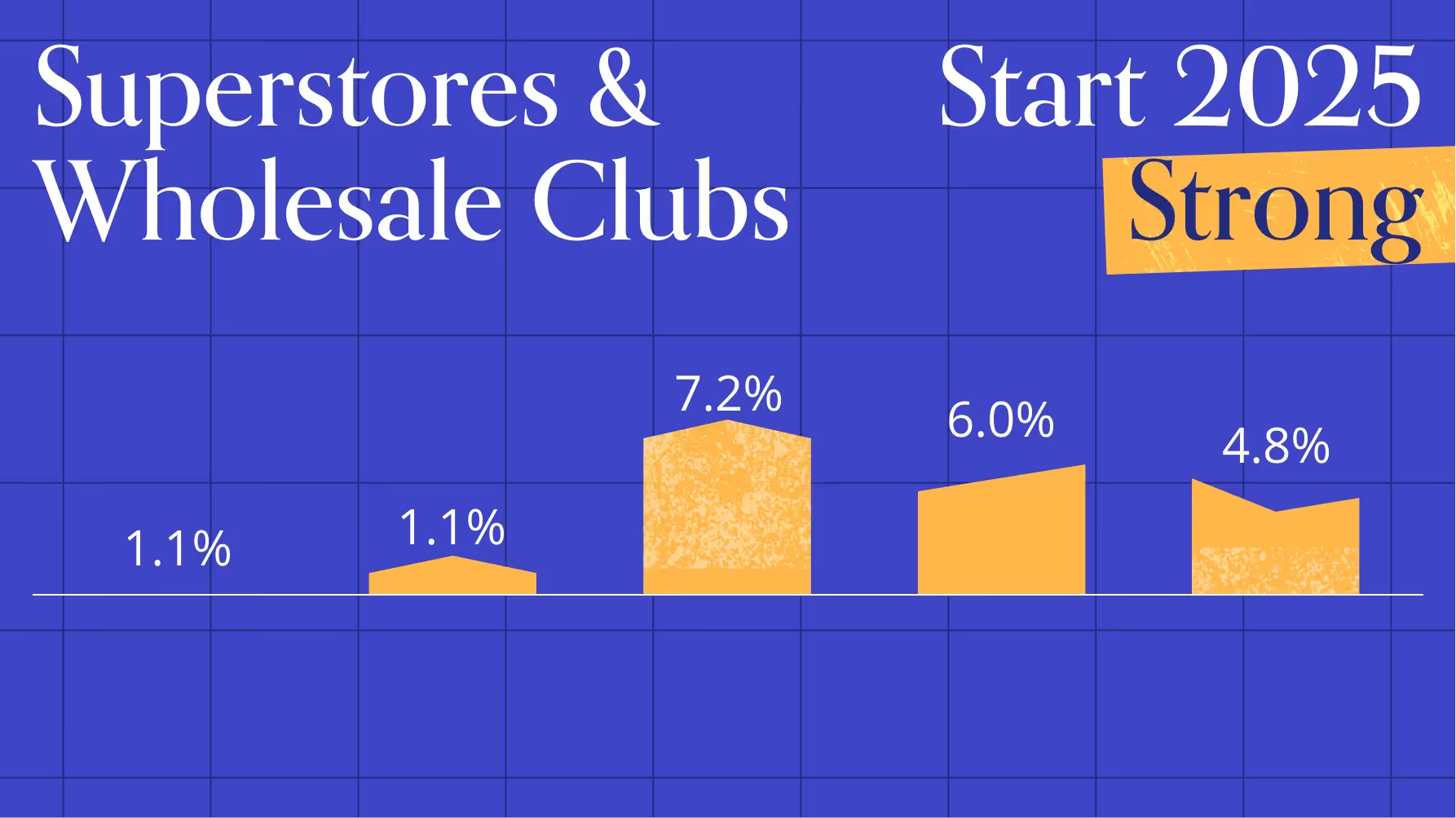
Wholesale clubs outperformed more traditional superstores in 2024, as Costco, BJ’s, and Sam’s Club saw 4.8% to 7.2% YoY increases in visits while Target and Walmart’s traffic remained relatively flat. And though wholesale clubs continued outperforming Target and Walmart in the new year as well, the two superstore leaders did see clear visit increases of 3.6% and 3.0%, respectively, in January 2025 – a promising sign for the retail giants’ growth in the year ahead.
Target and Walmart both operate national chains of one-stop shops that carry a variety of consumables and non-consumables, including groceries, apparel, toys, and electronics. But diving into the demographics of the two brand’s captured market reveals that each chain serves a slightly different audience.
Target tends to attract visitors from areas with higher HHI and larger households: The company’s captured market includes a larger share of both households with children and non-family (e.g. roommates) households than Walmart’s, perhaps due to Target’s relative appeal to both suburban and strongly urbanized segments. Meanwhile, Walmart seems to attract more repeat monthly visitors (who visit the chain at least twice a month), perhaps thanks to the chain’s extensive grocery offerings and to its popularity among rural and semirural segments who may not have a variety of retail options to frequent.
The two chains’ visitor base also exhibit differences in in-store behavior. Walmart visitors do seem to linger a little longer in store, with 20.7% of the chain’s visits lasting longer than 45 minutes compared to Target’s 17.1% – maybe thanks to the mission-driven shopping behavior of some of its rural and semirural customer base. But despite the longer visits, Walmart still receives a larger share of weekday visits than Target – perhaps thanks to its larger share of single shoppers with fewer weekday commitments.
For more data-driven consumer insights, visit placer.ai.

How did home improvement leaders The Home Depot and Lowe’s perform in 2024? And what lies ahead for the chains in 2025? We dove into the data to find out.
A challenging retail environment continued weighing on the home improvement space in 2024 as high prices and tighter consumer budgets led many consumers to push off discretionary renovations and remodels. As a result, visits to The Home Depot and Lowe’s remained below 2023 levels throughout 2024. Still, the visit gaps were relatively minor – The Home Depot received 1.6% to 3.5% fewer quarterly visits and Lowe’s saw a 2.2% to 4.7% visit gap relative to 2023 – a testament to the enduring strength of these home improvement giants.
Diving deeper into the daily visits data also reveals that, despite the challenges, the two retailers succeeded in driving significant visit boosts through promotions and holiday sales: Mother’s Day, Black Friday, and the Saturday of Memorial Day were the top three visited days for The Home Depot and Lowe’s in 2024. Lowe’s received its highest daily traffic boost on Mother’s Day – likely thanks to its free plant giveaway – while The Home Depot saw its largest visit surge over the traditionally busy Black Friday. Finally, Memorial Day sales drove the third largest visit peak for both chains.
The boost in consumer traffic during special events underscores the potential of seasonal promotions to drive engagement and foot traffic – even in times of wider retail headwinds and economic uncertainty.
Both The Home Depot and Lowe’s received fewer visitors in 2024 compared to 2023, but a closer look reveals that the YoY dips in repeat visitors (who visited at least twice a month) were larger than the declines in casual (once a month) shoppers. For example, in December 2024, the number of casual visitors to The Home Depot dipped 3.0% YoY while the number of repeat monthly visitors declined by 4.0% compared to 2023. YoY visitor trends to Lowe’s generally followed a similar trend.
This trend suggests that, with home sales at their lowest levels since 1995 and many consumers looking to avoid non-essential expenditures, demand for large-scale renovations may be slowing. As a result, contractors and homeowners undertaking major remodeling projects are likely visiting these stores less frequently.
But while these trends may be hampering home improvement visits in the short term, the current downturn could also be setting the stage for a future recovery – as a stabilizing economy could unleash significant pent-up demand.
Visits to the country’s two largest home improvement retailers, while not yet returned to their pandemic-era highs, are beginning to stabilize. Will 2025 see a return to normal for the chains?
Visit Placer.ai to keep up with the latest data-driven retail insights.

With consumer interest in wellness showing no sign of slowing down, we dove into fitness foot traffic data to see how the segment performed in 2024 and understand what the new year holds for the category.
The fitness category has yet to hit its peak. Following consistent year-over-year (YoY) growth in monthly visits throughout 2024, traffic to the category rose again in January 2025 with visits 2.3% higher than in January 2024 – a strong start for what is likely to be another standout year in the fitness space.
And while some may consider New Year’s resolutions to be an outdated, unhelpful institution, the data indicates that January still drives a significant fitness spike as Americans across the country commit to their wellness goals at the start of the year.
Fitness visits in January 2025 were 21.2% higher than in December 2024 – only a slightly lower spike than the month-over-month (MoM) January 2024 jump of 23.4% – indicating that New Year’s resolutions are still quite popular in 2025. At the same time, the slightly lower MoM growth in January may also reflect the relatively stable visitation trends throughout 2024 – a shift from the traditional patterns of fitness chains losing about 30% of their members each year.
Diving into individual fitness chains reveals that the category’s ongoing success is driving visit growth across the fitness segment – including at budget gyms such as Planet Fitness and Crunch Fitness, mid-range chains such as LA Fitness, and premium brands such as Life Time. And critically, both overall visitors and visit frequency were consistently elevated in H2 2024 and going into 2025, indicating that not only are more people going to the gym – they’re also generally going more frequently. It seems, then, that the wellness trend of the past few years is still gaining momentum.
While the increased interest in wellness seems to have brought a boost in industry-wide fitness visits, analyzing visit frequency by brand and quarter does reveal some differences – and some similarities – across different brand tiers.
All four brands analyzed – Planet Fitness, Crunch Fitness, LA Fitness, and Life Time – received the largest share of repeat visitors (at least twice a month) in Q1 2024, as New Year’s resolutions drove a boost in gym-going frequency. The share of repeat visitors then consistently fell throughout the year, and the chains (with the exception of Life Time) received the lowest share of repeat visits in Q4 as vacations and holidays likely interfered with people’s exercise schedule.
One might expect high value low price (HVLP) gyms to attract lower-usage members – since the modest fee may mean that members are not compelled to get the most bang for their buck – but looking at the data reveals that visit frequency did not necessarily correlate with membership pricing. While Planet Fitness and Crunch Fitness are both HVLP chains, their visit frequency patterns differed significantly: Planet Fitness seemed to attract a relatively high share of lower-usage members, while Crunch Fitness’ visit frequency exceeded that of higher-priced LA Fitness and was in fact was closer to that of premium chain Life Time.
For more data-driven consumer insights, visit placer.ai.

Bloomin’ Brands, the parent company of Outback Steakhouse, Carrabba’s Italian Grill, Bonefish Grill, and Fleming’s Prime Steakhouse, faced a year of mixed results in 2024 amid continued challenges in the dining sector.
We analyzed the company’s overall performance, along with its individual brands, to see what the visit data reveals about the past year.
The past year was a challenging one for many restaurant chains, and Bloomin’ Brands was not immune. Overall visits to the restaurant group declined by 2.9% YoY, with quarterly visits in 2024 falling between 1.9% and 4.0% compared to 2023.
Still, Bloomin’ appears to be working on a pivot – and visits per location metrics suggest that this is working. The company closed dozens of stores throughout 2024, a rightsizing strategy aimed at focusing on high-performing locations. As a result, visits per location tracked more closely with 2023 levels, with visits per location for 2024 as a whole up by 0.1% compared to 2023.
Diving into individual brands reveals that most of Bloomin’s chains displayed minimal visit gaps. In particular, Fleming’s Prime Steakhouse finished the year strong with a 0.8% YoY increase in Q4 2024 visits – in keeping with the general outperformance of fine dining concepts, especially around the holidays.
Still, one brand, Bonefish Grill, lagged behind the others. The company intends to simplify the menu and enhance the core brand experience, which may help bring visits back to Bonefish in 2025.
While most Bloomin’ Brands chains experienced visit declines in 2024, visits per location tracked closely with 2023 levels, reflecting the impact of the company’s strategic closures.
Outback Steakhouse, Carrabba’s Italian Grill, and Fleming’s Prime Steakhouse all saw YoY increases in visits per location for three out of four quarters in 2024. Fleming’s in particular ended the year strong with a 3.3% visit per location increase in Q4 2024 – suggesting that Bloomin’ might do well by focusing on its more upscale offerings.
And Bonefish Grill saw smaller YoY visit gaps in average visits per location compared to its overall visit metric – a sign that rightsizing may have helped offset some of the broader traffic challenges.
Despite facing a challenging year, the stability in the average visits per location across Bloomin’ Brands serves as a reminder that there are plenty of ways for restaurants to pivot and succeed.
Follow Placer.ai for the latest data-driven dining insights.

CAVA and sweetgreen have been rapidly expanding, cementing their place in the fast-casual dining landscape. We dive into the data to take a closer look at CAVA and sweetgreen’s foot traffic performance and uncover the seasonal visitation patterns driving appetite for these fast-growing chains in 2025.
CAVA and sweetgreen are still firmly in expansion mode, with new store openings fueling their foot traffic growth. Last quarter, CAVA reported a 21.4% year-over-year (YoY) increase in total restaurants and currently boasts nearly 380 locations. And in the past year, sweetgreen has opened dozens of new venues, growing the chain’s footprint to over 900 locations.
Through H2 2024 and the start of 2025, CAVA and sweetgreen experienced consistent YoY visit growth – outperforming the fast-casual restaurant category every month. CAVA’s significantly larger visit growth (26.9% compared to sweetgreen’s 9.9% YoY in Q4 2024) was likely due to the proportional impact of new restaurant openings on CAVA’s smaller real estate footprint.
As CAVA and sweetgreen continue to expand, 2025 is likely to be another year of sustained growth for both restaurants.
Analyzing seasonal visit trends can reveal some of the factors driving sweetgreen and CAVA’s success.
Fast-casual restaurants generally receive more of their visits during lunch than during dinner. And CAVA and sweetgreen received an even larger share of lunchtime (12 PM to 3 PM) visits than the fast-casual average – indicating that these restaurants’ lunchtime popularity is likely a major growth driver.
CAVA also received the highest dinner (between 6 PM and 9 PM) visit share. This indicates that despite CAVA’s fast-casual designation, consumers seem to treat it more like a full-service restaurant, with patrons visiting the chain to eat a proper meal and not just to grab a convenient bite between errands. And the company’s recently launched loyalty program may well bring even more lunch and dinner visits to the chain in 2025.
Meanwhile, sweetgreen’s dinner visit share remained at or below the fast-casual average throughout the year. But evening traffic to the salad chain did increase during the warmer months – hitting a high of 27.4% between July and October – perhaps due to consumers remaining out and about later when there were more daylight hours. Consumers generally spend significantly more on dinner out than on lunch, so sweetgreen may want to fuel its warm-weather dinner boost by offering specials or promotions to attract even more evening patrons to its locations during Q2 and Q3. Sweetgreen may also choose to incorporate time-dependent ordering incentives into its new loyalty program to encourage more evening visits throughout the year.
Further analysis of visitor behavior reveals that CAVA and sweetgreen drive a significant share of weekend visits. And while sweetgreen’s dinner boost tends to occur in Q2 and Q3, both sweetgreen and CAVA’s weekend visit share increases in Q1 and Q4.
At least some of the elevated weekend visits in Q4 2024 may have been due to the many consumers that were on vacation – eating fewer mid-week meals out of the house – or grabbing a bite while doing their holiday shopping on Saturday and Sunday. Still, elevated weekend traffic in Q1 indicates that the chains have the potential to drive significant traffic during other cold-weather months on days when consumers have more time for recreation.
CAVA’s continued investment in inviting dining rooms – part of the chain’s “Project Soul” campaign – may attract unhurried diners looking to experience a cozy ambiance, while sweetgreen’s early-stage rollout of the robotic “Infinite Kitchen” may actually elevate the indoor dining experience to one that is fun and weekend-worthy.
As sweetgreen and CAVA pursue various strategies in their next phase of growth, an understanding of consumer behavior can help the chains maximize the potential of their robust visitor bases and enhance operational efficiency.
Want more data-driven dining insights? Visit Placer.ai.

Physical retail is increasingly defined by a small group of dominant players – Walmart, Target, Costco Wholesale, and Dollar General – that span grocery, essentials, and discretionary categories at a scale no other retailers can match. These chains serve as bellwethers of consumer behavior, revealing where Americans are spending, how often they shop, and what drives their decisions. And understanding their visitation patterns sheds light on the key dynamics shaping both their performance and the broader blueprint for retail success in 2026.
Retail giants Walmart, Target, Costco Wholesale, and Dollar General continue to capture a growing share of brick-and-mortar visits nationwide.
• The share of physical retail traffic captured by these giants rose from 16.8% in 2019 to 17.5% in Q1 2026, signaling continued sector consolidation.
• The scale advantage enjoyed by retail giants is increasingly self-reinforcing: Larger players benefit from superior data, stronger vendor leverage, and operational efficiencies that in turn further widen the gap.
• As these advantages compound, direct competition becomes less viable. Instead, smaller retailers should focus on owning specific trip missions – such as convenience, fill-in, or discovery – where format, assortment curation, and in-store experience can more directly shape consumer choice.
• For CRE operators, the growing dominance of these retail giants increases reliance on top-tier anchors, potentially driving performance gaps between centers with strong national tenants and those without.
• For CPG companies, the consolidation in the offline retail space heightens channel concentration, making success with a handful of large retailers critical while increasing those retailers’ negotiating leverage.
Traffic trends across the four giants reveal meaningful divergence in performance.
• Costco and Dollar General are driving the strongest visit growth, supported by both substantial fleet expansions and rising visits per location. In 2025, visits per store exceeded pre-pandemic levels by 18.1% for Costco and 10.2% for Dollar General, with both brands also seeing steady increases in their share of total brick-and-mortar retail chain visits.
• Walmart remains the largest player by far, accounting for 9.7% of traffic to major brick-and-mortar chains in 2025. And though the behemoth’s share of visits declined slightly in the immediate aftermath of the pandemic, it has held steady over the past three years.
• Target’s visit share has remained relatively flat over the past three years, reflecting stalled momentum. Still, early 2026 trends point to emerging signs of recovery – with Q1 visits up 8.3% compared to Q1 2019.
• Value retail is winning, but in more specialized forms: Dollar General (extreme value + convenience) and Costco (bulk value + loyalty) are driving the strongest traffic growth and rising visits per store, while Walmart’s broad “everyday value” remains steady with slower growth. Target, for its part, is lagging – likely a reflection of the broader bifurcation in retail which has left middle-market players caught between consumers trading down to value and those trading up to quality.
• For retailers and CPG companies, the broader lesson is that value perception is becoming more nuanced. It’s no longer just about offering low prices at scale, but about how value is delivered – whether through small packs vs. bulk, or quick trips vs. stock-up missions. Success increasingly depends on prioritizing these distinct value formats and investing in channels where store-level productivity is improving.
• For CRE operators, the outperformance of retailers with clearly defined value propositions underscores the importance of mission-driven tenant mix. As shoppers visit with increasingly specific missions in mind, retailers that cater to those missions are outperforming. Tenant strategies should reflect this shift, ensuring complementary offerings that reinforce a cohesive shopping mission.
Walmart remains the dominant brick-and-mortar retailer nationwide and across all fifty states. Still, the data suggests there is room for multiple runners-up to succeed across geographies and customer segments.
• Dollar General, Target, and Costco each attract distinct audience segments. Dollar General attracts a disproportionately high share of the “Mature and Retired Living” segment, while Costco leads among family households, with Target also over-indexing with this group. Among younger “Contemporary Households,” meanwhile – a segment encompassing singles, married couples without children, and non-family households – Target commands the highest share, slightly over-indexing compared to the nationwide baseline.
• Regional strengths vary significantly, with Dollar General concentrated in the South, Costco dominant in the Northwest, and Target showing more dispersed areas of strength.
• Despite similar overall visit share, Dollar General leads in more states (26 vs. 17 for Target), reflecting broader geographic dominance.
• For retailers, the data suggests that growth opportunities are increasingly shaped by localized demographic and geographic dynamics – meaning that targeted, market-specific strategies may be more effective than uniform national approaches.
• Younger “Contemporary Households” remain less locked-in than older demographics, representing a key battleground for future growth.
• For CPG companies, this data highlights that channel strategy is really about building the right mix of retailers, since even large national players reach different types of consumers.
• CRE operators should ask "which anchor is right for this trade area" rather than "which anchor is strongest," as mismatched tenants can underperform even if they’re nationally dominant.
After remaining essentially flat in 2025, average visits per location to Walmart grew 3.5% YoY in Q1 2026. And the retailer’s solid Q1 performance across the U.S. underscores its unique ability to resonate across income levels, geographies, and shopping missions.
• Walmart posted year-over-year visit growth across nearly all U.S. markets in Q1 2026, reinforcing its role as a universally relevant retailer.
• The giant’s comparative softness in small parts of the Northeast suggests an opportunity to double down on region-specific assortments, urban-friendly formats, or partnerships to better match local shopping behaviors.
• Walmart’s broad-based growth shows that even as consumers are increasingly willing to visit multiple retailers to get what they want, its Superstore model has solidified its role as a primary stop on the American shopping journey – making it a uniquely reliable anchor for CRE operators.
• For smaller retailers, this underscores the opportunity to win the “second stop” – capturing trips through curated assortments and more tailored in-store experiences that Walmart’s scale is less optimized to deliver.
• For CPG companies, Walmart stands out as a highly attractive partner for broad, efficient reach, given its consistent traffic across markets.
Target’s recent performance suggests early momentum in reversing prior softness.
• Q1 2026 visits to Target rose 5.1% year over year, marking the chain’s first positive visit growth in more than a year, and suggesting that the chain’s new turnaround strategy may be bearing fruit.
• Gains were driven primarily by visits lasting 30 to 45 minutes, which accounted for 19.6% of overall visits to Target in Q1 2026 – pointing to stronger in-store engagement rather than quick, mission-driven stops.
• Target’s return to traffic growth – driven by increases in mid-length trips – signals a sustainable recovery on the horizon, strengthening its reliability as a traffic-driving tenant for CRE operators.
• Target's turnaround shows retailers how increasing shopper engagement can generate growth by converting quick trips into higher-value, multi-category experiences.
• For CPG companies, the rise in mid-length visits indicates a more receptive in-store environment for discovery and trade-up, making Target an increasingly attractive channel for innovation, merchandising, and premium offerings.
Dollar General is becoming embedded in consumers’ daily routines.
• Visitor frequency to Dollar General is on the rise. In Q1 2026, nearly a quarter of visitors frequented the chain at least four times in an average month, up from 21.2% in Q1 2022.
• Dollar General is becoming increasingly local in nature: As its footprint expands, more visits originate nearby, with 28.0% coming from within one mile – reinforcing its role as a neighborhood store of choice.
• Dollar General’s visitation patterns point to a growing ownership of the convenience mission. Its expanding store density is creating a self-reinforcing network effect, where proximity fuels frequency, and frequency strengthens long-term defensibility.
• For retailers, Dollar General’s rising share of nearby and high-frequency visits shows that proximity can drive habit, making convenience a powerful lever for building repeat behavior.
• For CRE operators, the data highlights the strength of hyper-local, necessity-driven traffic, positioning Dollar General as a stable tenant that anchors consistent, repeat visitation.
• For CPG professionals, the increase in frequent trips signals a high-velocity purchase environment, favoring smaller pack sizes and products that align with regular replenishment cycles.
Costco continues to grow and diversify its audience despite higher membership fees and stricter food court access policies, highlighting the strength of its value proposition and loyalty model.
• In September 2024, Costco raised its membership fees for the first time in seven years – and more recently tightened enforcement of member-only access to its food courts. Despite these changes, visitation has remained strong, highlighting the company’s pricing power and deep customer loyalty.
• At the same time, Costco’s shopper base is broadening, with median household income trending slightly downward while remaining relatively affluent.
• Offering strong value to a relatively affluent consumer base can be a winning formula in 2026. Retailers that combine quality, trust, and perceived savings – rather than competing solely on low prices – are well positioned to drive both loyalty and sustained traffic growth.
• For CRE operators, Costco’s sustained traffic growth and broadening shopper base reinforce its value as a standalone, high-demand traffic magnet that can anchor entire trade areas and drive surrounding retail development.
• For CPG companies, the combination of high traffic and declining median HHI signals that Costco is evolving into a scaled channel reaching beyond affluent shoppers, requiring more diversified assortment and pricing strategies.
.avif)
It’s been decades since the U.S. last hosted the World Cup, and anticipation continues to build. While the matches themselves will deliver thrilling moments for fans inside the stadium, a far broader audience is expected to engage from beyond the gates – gathering at bars, watch parties, and living rooms across the country.
Drawing on insights from recent sporting and cultural events, this analysis examines how the World Cup may impact consumer behavior and audiences across stadiums, host cities, and nationwide.
In 2025, MetLife Stadium in East Rutherford, NJ hosted a wide range of concerts and sporting events. And an examination of three – Kendrick Lamar & SZA’s tour stop, the FIFA Club World Cup Final, and a Week 17 New York Jets matchup against division rivals and the Super Bowl-bound New England Patriots – reveals clear differences in audience composition across event types.
Trade area analysis showed that the 2025 FIFA Club World Cup Final drew the largest share of single visitors and the highest median household income (HHI) of the three events – a pattern that could reflect the premium tickets and travel typically associated with a quadrennial championship match.
With the 2026 World Cup elevating the level of global competition, stadiums set to host matches this summer – including MetLife – may see even more dramatic shifts in their audience relative to other events.
While spectators attending World Cup matches are likely to differ from those drawn to other events throughout the year, audience shifts are likely to occur also within the tournament itself. As the competition progresses and the stakes rise, the visitor profile at host stadiums may trend progressively higher-income, as suggested by an analysis of Levi’s Stadium in Santa Clara, CA during the recent NFL season and Super Bowl.
During the Super Bowl, the stadium’s captured market median HHI surpassed that of every 49ers home game during the 2025-26 season – a pattern consistent with the event’s premium ticket pricing, national draw, and high levels of out-of-market travel.
And since the World Cup only takes place every four years, and necessitates international travel for die-hard fans, attendees are likely to be even more affluent than Super Bowl go-ers. Moreover, as the tournament reaches its later stages, each match becomes more significant and carries the potential to drive an even more affluent in-person audience.
Diving deeper into last year’s FIFA Club World Cup Final and Semifinal matches at MetLife Stadium provides further insight into the significance of the in-person audience that doesn’t make it into the stands. While FIFA generally places restrictions on tailgating, the behavior was still observed at MetLife and several other tournament venues in 2025. To put the phenomenon into perspective, location intelligence indicates that on the day of the Club World Cup final, combined visits to MetLife and its parking lots were 24.8% higher than visits to the stadium alone.
AI-powered trade area analysis further contextualizes the economic significance of this audience. During the semifinal matches, MetLife Stadium’s captured market median HHI remained nearly identical – just over $100K – with and without parking lot visitors. A similar pattern held for the Final, where median HHI for both the stadium-only and combined stadium-plus-parking visitors both rose above $115K, with the stadium-only figure only marginally higher.
This suggests that tailgaters represent a significant cohort with discretionary income to spend on the broader match-day experience, even if they opt out of spending big money on tickets.
With tailgating during the 2026 World Cup likely to remain limited due to FIFA regulations, the spending power of fans just outside the stadiums could create opportunities for alternative forms of engagement. Fan zones and other nearby hospitality events may offer effective ways to capture demand.
Nearby dining and entertainment venues are among the most accessible experiences for fans in the stadium area, and these stand to benefit significantly from elevated game-day foot traffic.
Analysis of recent FIFA Club World Cup matches reveals the impact of match-day activity on local businesses. Visitor journey data from the June 25th, 2025 matchup between Inter Milan and River Plate at Seattle’s Lumen Field, and the June 28th, 2025 meeting between Palmeiras and Botafogo at Lincoln Financial Field in Philadelphia reveals that a significant share of stadium visitors also stopped at nearby dining and recreation venues on the day. Location intelligence also shows that, on the day of the match, each stadium-adjacent venue received a significant visit boost compared to its 2025 daily average.
This pattern underscores the potential impact of the World Cup on the surrounding commercial ecosystem. The stadium may anchor the experience, but fan engagement will likely spill into adjacent areas – creating opportunities for both organizers and local businesses. To take full advantage, restaurants and bars can position themselves as fan-friendly destinations through watch parties, extended hours, and even mobile or outdoor offerings in stadium corridors.
Previous major sporting events – including the Super Bowl – demonstrate that the impact of large-scale sporting moments often extends beyond the immediate stadium vicinity into the broader regional economy.
In the weeks leading up to the latest Super Bowl in Santa Clara, CA on February 8th, 2026, both the San Francisco-Oakland-Berkley and San Jose-Sunnyvale-Santa Clara CBSAs saw a notable uptick in year-over-year dining traffic – outperforming the nationwide average. The timing suggests that early-arriving travellers combined with locals enjoying pre-event concerts and events helped fuel demand. In contrast, nationwide dining traffic saw a more pronounced lift the following week – likely tied to Valentine’s Day on February 14.
This pattern indicates that regions hosting – or located near – World Cup 2026 matches could experience similar pre-event dining tailwinds. As out-of-town visitors arrive and local engagement builds in the days and weeks leading up to key matches, restaurants and hospitality may benefit from elevated demand – particularly when supported by ancillary events and fan experiences.
Other recent examples suggest that cities hosting major events like the World Cup stand to benefit from an influx of out-of-town visitors – particularly those with higher spending power.
Since the beginning of 2025, New Orleans has hosted a series of popular events that drove significant non-local traffic. AI-powered trade area data indicates that during these periods, out-of-market visitors consistently exhibited a higher median HHI than both local residents and typical commuters into the city.
As expected, the 2025 Super Bowl generated the most pronounced spike in out-of-market visitor median HHI among the events analyzed, but the pattern extends beyond one-time spectacles. Recurring events like Mardi Gras and major music festivals also attracted high-income visitors to the city – likely benefitting the local hospitality, dining, and retail industries.
Looking ahead to the 2026 World Cup, host cities are likely to experience a similar dynamic. The tournament’s global draw will likely bring affluent travelers with discretionary dollars to the host regions – visitors that will spend not only on match tickets, but also on accommodation, dining, and shopping. By sponsoring tournament-related festivals, concerts, and experiences in or near retail corridors, cities can amplify the economic impact of the World Cup beyond the stadium.
The impact of the 2026 World Cup is unlikely to be confined to the select cities hosting matches. Major sporting events drive large-scale at-home viewership, generating ripple effects nationwide.
The Super Bowl offers a useful benchmark. In the days leading up to February 8th, 2026, visits to grocery stores and pizza chains rose above day-of-week averages for 2025, ultimately peaking on the day of the big game day as households appeared to pick up last-minute fixings and takeout for their watch parties.
This pattern indicates that the World Cup – with its extended schedule and multiple high-stakes matchups – could drive repeated waves of elevated grocery and take-out demand as fans gather together throughout the tournament.
Of course, at-home viewing is just one piece of the match-day equation. Many fans opt for a more communal experience – gathering at sports bars across the country to watch the game alongside fellow supporters.
Recent highly-anticipated soccer matches offer a clear signal of this behavior. During the recent Allstate Continental Clásico, MLS Cup Final, and SheBelieves Cup Final, top sports bars in key markets like Los Angeles and Miami recorded visit spikes above day-of-week averages.
Not every World Cup fan will be able to attend in-person or travel to a host city, but previous match-day lifts in sports bar traffic demonstrate that fans nationwide will participate in the tournament experience.
The 2026 FIFA World Cup is set to engage a wide spectrum of fans – from casual viewers at home to dedicated supporters traveling to stadiums – shaping how and where demand emerges.
As a result, the tournament’s impact will be felt across multiple layers of retail, dining, and tourism. Stadium-centered spending, activity in surrounding corridors, host-city consumer demand, and gatherings of spectators nationwide all point to a broad and interconnected World Cup effect that is likely to shape both audience composition and behavior at scale.
.avif)
Indoor malls and open-air centers have posted consistent YoY visit growth, outlet declines have been modest, and early 2026 data shows renewed momentum across all three formats.
Growth in short visits and extended stays – alongside declines in mid-length trips – shows that consumers are gravitating toward trips with a clear purpose, favoring either efficiency or immersion.
Rising dwell times and strong engagement from younger, contemporary households position indoor malls as leading destinations for longer, experience-driven trips.
A higher share of short, weekday visits – along with strong appeal among affluent families – underscores their role as convenient, essential retail hubs.
As off-price and online alternatives erode their treasure-hunt advantage and long-distance visitation softens, outlets face a strategic choice between deepening local relevance and reinvesting in destination appeal.
The malls that thrive will be those that intentionally optimize for convenience, experience, or a disciplined integration of both.
Despite economic headwinds, intensifying e-commerce competition, and fragile consumer confidence, shopping centers continue to defy the “dead mall” narrative – reinventing themselves and, in many cases, thriving.
What can location analytics tell us about the state of the mall in 2026? Which trends and audiences are driving their performance – and how can operators and retailers best capitalize on the opportunities within the category?
Over the past two years, both indoor malls and open-air shopping centers have posted consistent year-over-year (YoY) traffic growth. And while outlet malls experienced slight declines, the pullback was modest – signaling a period of stability rather than erosion.
Early 2026 data also points to continued momentum, with all three mall formats recording mid-single-digit YoY traffic gains in the first two months of the year. Although it’s still early days – and YoY comparisons in 2026 were boosted by an additional Saturday – the positive start suggests that the industry is entering the year on a solid footing.
With e-commerce always within reach, hybrid work anchoring more consumers at home, and ongoing economic uncertainty influencing spending decisions, trips to physical stores are becoming more intentional. Shopping center visit data reflects this shift as well, with growth in both quick convenience visits and extended experiential outings – alongside a decline in mid-length trips.
In 2025, quick trips (under 30 minutes) increased across all formats, underscoring malls’ growing role as convenient, high-utility destinations for picking up an online order, grabbing a quick bite, or making a targeted purchase. At the same time, extended visits of more than 75 minutes increased at indoor malls and open-air centers, reflecting sustained appetite for immersive, experiential outings.
Meanwhile, mid-length visits (between 30 and 75 minutes) lagged across formats – falling indoor malls and outlet malls and remaining flat at open-air centers – suggesting shoppers are losing patience with undifferentiated trips that lack a clear purpose.
Still, although short visits increased year over year across all mall types, and long visits increased for both indoor malls and open-air centers, the distribution of dwell time varies by format. Short visits make up a larger share of traffic at open-air shopping centers, for example, while longer visits account for a greater share at indoor malls. This divergence underscores the need for format-specific strategies, with operators clearly defining the core shoppers and missions they are best suited to serve and aligning tenant mix, amenities, and marketing accordingly.
Indoor malls, for instance, have increasingly positioned themselves as experiential hubs – particularly for younger consumers. Recent survey data shows that 57% of shoppers aged 18 to 34 report visiting a mall frequently or often, and they are more likely than older cohorts to arrive without a specific purchase in mind.
Foot traffic patterns reinforce this experiential appeal. In 2025, 37.6% of indoor mall visits lasted more than 75 minutes, compared to 33.4% for open-air centers and 34.6% for outlets. Indoor malls also captured the largest share of visits from the young-skewing “contemporary households” segment – singles, non-family households, and young couples without children – indicating strong resonance with younger audiences.
As indoor malls expand their experiential offerings, visit durations are rising even further – even as they hold steady or even slightly decline at other formats. For operators, this shift highlights a significant opportunity for indoor malls to deepen their role as climate-controlled third places. And for brands, it means high-impact access to Gen Z consumers in discovery mode – top-of-funnel engagement that is increasingly difficult and expensive to replicate through digital channels alone.
If indoor malls excel at capturing extended, social visits, open-air centers are finding success through convenience. In 2025, open-air centers had the highest shares of both weekday visits (64.0%) and short, sub-30 minutes (36.8%) among the three formats. Grocery anchors, superstores, and essential-service tenants like gyms – more common at open-air centers than at other formats – help drive steady, non-discretionary traffic.
Demographically, open-air centers drew the highest share of affluent families, a key demographic for daily errands. This alignment with higher-income households, combined with weekday consistency, positions open-air centers as reliable errand hubs embedded in community life.
Outlet malls, for their part, have historically differentiated themselves by offering something shoppers couldn’t find elsewhere: an experiential treasure hunt featuring brand-name merchandise at compelling prices. But the decline in long visits shown above suggests that this positioning may be coming under pressure – likely from the rise of off-price and discount chains as well as other low-cost, convenient treasure-hunt alternatives like thrift stores. When shoppers can score attractive deals online or browse for bargains at a nearby T.J. Maxx or Ollie’s Bargain Outlet, the incentive to dedicate time and travel to an outlet trip may no longer feel as compelling – especially for outlet malls’ core audience, which includes meaningful contingents of middle and lower-income consumers with families.
And data points to a subtle but steady erosion in the share of visitors willing to go the extra mile to visit outlet malls. Since 2023, the share of outlet visits from consumers traveling more than 30 miles has slipped from 33.1% to 31.8%, even as long-distance visits to other mall formats have remained relatively stable. This softening of destination demand may be contributing to outlets’ recent traffic lags.
Still, despite these lags in foot traffic, major outlet companies continue to see YoY increases in same-center tenant sales per square foot. The format’s strong visit start to 2026 also suggests that outlets still have significant draw – and that with the right strategy, they could reinvigorate their traffic trends.
One option is for outlet malls to lean further into their immediate trade areas: Nearly 20% of visits to outlets already originate within five miles – a share that edged up from 19.4% in 2023 to 19.9% in 2025. These closer shoppers may be largely responsible for the segment’s rise in short visits, pointing to an opportunity to further augment BOPIS offerings and select essential-use tenants.
Another option is to strengthen outlets’ destination appeal with distinctive retail, dining, and experiential offerings that resonate with value-oriented, larger-household shoppers. But whether they focus on convenience or on justifying the journey – or attempt to balance both – success will depend on identifying who their shoppers are and which missions they are best positioned to own.
As in other areas of retail, shopping center success increasingly depends on strategic clarity. The malls that thrive will be those that clearly define their role in their customers’ lives and execute against it with intention – whether by decisively optimizing for efficiency, fully investing in experience, or thoughtfully integrating both.