Skip to Main Content
Thank you! Your submission has been received!
Oops! Something went wrong while submitting the form.
0
0
0
0
----------
0
0
Articles
Article
Walmart Goes to the Mall: Insights From the Monroeville Acquisition
Walmart’s recent acquisition of the Pittsburgh, PA-area Monroeville Mall signals a new chapter for the retail giant. Why did Walmart choose this particular property, what makes it such an appealing prospect – and what might the company do with the space? 
Lila Margalit
Mar 4, 2025
4 minutes

Walmart’s recent acquisition of the Pittsburgh, PA-area Monroeville Mall signals a new chapter for the retail giant, creating opportunities for both Walmart and the mall itself. Why did Walmart choose this particular property, what makes it such an appealing prospect – and what might the company do with the space? 

We dove into the data to find out.

A Different Kind of Consumer

Unsurprisingly, shoppers also interact differently with malls – including the Monroeville Mall purchased by Walmart – than they do with Walmart. In 2024, for example, 39.4% of indoor mall visits nationwide took place on weekends, compared to just 33.6% for Walmart. Mall shoppers were also more likely to travel further for their visits and stay longer, partly due to the entertainment and dining options malls typically offer. (Monroeville Mall, for instance, is home to a Cinemark movie theater). By moving into the mall space, Walmart stands to reach a new kind of shopper, both demographically and behaviorally.

A Perfect Fit

Why did Walmart choose to begin its foray into malls with the Monroeville Mall? Foot traffic data points to a unique balance here: The Monroeville Mall audience is different enough to expand Walmart’s reach, yet still similar in ways that could make it easier to convert new shoppers.

Analyzing Walmart’s trade areas with demographic data from STI: PopStats, for example, reveals that, on average, indoor mall shoppers tend to be more affluent than Walmart shoppers. In 2024, the median household income (HHI) of Walmart’s captured market was $64.5K – noticeably below the indoor mall median of $88.5K. But Monroeville Mall’s captured market had a median HHI of $62.8K – slightly below that of local Walmarts in the Pittsburgh, PA CBSA. Monroeville shoppers were also more likely to visit Walmart than shoppers at other malls, suggesting a natural overlap between the two visitor bases.

At the same time, Monroeville Mall offers Walmart access to new audience segments. In 2024, Monroeville Mall’s captured market showed significantly higher proportions of “Singles and Starters” and “Suburban Style” visitors (the latter encompassing middle-aged, suburban families with upscale incomes). Meanwhile, its share of the older “Autumn Years” segment – though still high – was smaller than that of Walmart’s base, highlighting the opportunity to engage a wider range of demographics.

Monroeville Mall’s Fitness Potential

Walmart has yet to announce specific plans for its new acquisition – though some have speculated that its partnership with Cypress Equities to “reimagine” the space signals a mix of retail, entertainment, and other amenities. Location analytics hint at several potential directions Walmart might pursue.

As consumers have changed their shopping habits, many malls have doubled down on experiential offerings – including on-site gyms, which deliver regular, repeat visits. And location analytics show that adding a fitness club to the Monroeville property may be especially beneficial for Walmart. Over the past year, Monroeville visitors were more likely to visit leading gym chains like Planet Fitness, Anytime Fitness, and LA Fitness compared to the average mall-goer nationwide. 

Successful Tenants Show the Way

And examining some of Monroeville Mall’s successful tenants highlights additional potential  strategies for Walmart. Malls have faced considerable headwinds in recent years, and the downturn appears to have impacted the Monroeville Mall as well, with overall foot traffic dipping somewhat year over year (YoY) in 2024. But some tenants – including Barnes & Noble and Harbor Freight Tools – saw YoY visit upticks. 

Visits to entertainment-focused offerings also increased, with the complex’s Full Throttle Adrenaline Park logging a 6.1% YoY foot traffic boost. And taking a broader look at the consumer habits of Monroeville visitors reveals an affinity for eatertainment: In 2024, 14.3% of Monroeville Mall-goers frequented a Dave & Busters, compared to just 7.4% for indoor mall visitors nationwide.

Opportunity Ahead

While Walmart’s ultimate intentions for Monroeville Mall remain under wraps, location analytics reveal a world of possibilities. And as retail continues to shift, Monroeville Mall may stand as a powerful case study of how a traditional big-box brand can successfully bridge into the mall space, capturing new audiences and invigorating a retail property ready for reinvention.

For more data-driven retail insights, visit Placer.ai.

Article
Gap Inc. in 2025 – Recapping 2024 and Uncovering Banana Republic’s Athleisure Opportunity 
In February 2024, Gap Inc. hired Zac Posen as Creative Director, tasking the designer with revitalizing the companies’ portfolio of brands. A year later, we analyzed the data to understand where the company stands today and uncover untapped opportunities for growth.
Shira Petrack
Mar 3, 2025
4 minutes

In February 2024, Gap Inc. hired Zac Posen as Creative Director, tasking the designer with revitalizing the companies’ portfolio of brands. A year later, we analyzed the data to understand where the company stands today and uncover untapped opportunities for growth.

Athleta Led Gap Brands in 2024

In 2024, visits to most Gap brands declined slightly compared to 2023, with the company’s four banners collectively experiencing a year-over-year (YoY) traffic dip of 3.5%. 

Athleta outperformed the other three brands as well as the overall apparel (excluding off-price and department stores) average, with yearly visits up 0.2% and positive quarterly traffic growth for two of the four quarters. Old Navy came in second, starting the year strong with a 4.2% YoY increase in Q1 visits and ending 2024 with Q4 visits down just 2.4% – outperforming the industry’s YoY dip of 3.3%. And though Gap did lag slightly behind the overall apparel average, the brand managed to stay relatively close to its 2023 visit levels, indicating that its performance is stabilizing. 

Meanwhile, Banana Republic experienced the sharpest visit declines with 2024 traffic down 9.6% YoY – indicating that the brand continues to face significant challenges.

The Banana Republic Opportunity 

Banana Republic’s 2024 performance continues a multi-year trend of declining traffic, despite the brand’s relatively affluent consumer base – an audience that, in theory, should have positioned the brand to weather the current inflationary environment more effectively.

But the brand may be positioning itself for a comeback. Last year, Banana Republic underwent a leadership change, with Gap Inc. CEO Richard Dixon stating that “2024 will be about getting back to the basics.” The brand has been redesigning select stores and leaning into influencer marketing with the goal of “reestablishing the brand to thrive in the premium lifestyle space.” 

And as return to office mandates continue to roll in – reinvigorating the long dormant demand for business casual and office wear – the chain is well positioned for a comeback.

Do Banana Republic Shoppers Want More Athleisure?  

Location intelligence analysis also reveals an additional growth opportunity. Banana Republic is the only Gap banner without a dedicated sportswear line. Athleta specializes in athletic wear, Gap offers GapFit, and Old Navy’s activewear line has been a core component of the banner’s success in recent years. 

But the data indicates that Banana Republic shoppers are just as active as visitors of the other Gap banners – in fact, cross-visit data suggests that those who shop at Banana Republic frequent fitness chains at similar rates as Athleta customers.

Analyzing cross-visitation to leading sporting goods retailers also indicates high demand for sportswear among Banana Republic shoppers: Consumers who visit Banana Republic visit Dick’s Sporting Goods and Academy Sports + Outdoors at higher rates than Gap Shoppers, and visit lululemon and REI at higher rates than both Gap and Old Navy visitors. This data strongly suggests that Banana Republic customers would likely embrace an expanded product mix that includes premium athleisure and sportswear.

The Men’s Athleisure Opportunity 

While Gap Inc. already offers premium women’s activewear through its Athleta brand, none of Gap Inc.’s existing brands cater to the growing demand for premium men’s athletic wear. Expanding Banana Republic’s offerings to include a high-end athleisure line – with a specific focus on menswear – could help the brand carve out a niche in this fast-growing segment while leveraging its existing customer base’s interest in performance apparel.

Beyond product expansion, this move could align with Banana Republic’s broader repositioning efforts, reinforcing its identity as a premium lifestyle brand that caters to both professional and active lifestyles. Given the increasing overlap between workwear and athleisure, a thoughtfully designed sportswear line could also strengthen Banana Republic’s appeal to younger, fashion-conscious consumers who seek versatility in their wardrobes.

Gap Inc.’s Potential for Growth in 2025 

As Gap Inc. navigates its next phase under Zac Posen’s creative leadership, identifying and leveraging untapped opportunities—such as Banana Republic’s athleisure potential—will be critical for reinvigorating the company’s portfolio. By strategically diversifying its offerings, Gap Inc. can not only address shifting consumer preferences but also carve out a more competitive position in an evolving retail landscape.

For more data-driven retail insights, visit placer.ai/blog

Article
Department Stores Providing Value in Today’s Retail Landscape
Department stores continue to adapt to evolving consumer preferences and an ever-changing retail landscape. We looked at the latest location analytics for traditional and luxury department stores to uncover how they are finding success in today’s dynamic apparel space.
Ezra Carmel
Feb 28, 2025
3 minutes

Department stores continue to adapt to evolving consumer preferences and an ever-changing retail landscape. We looked at the latest location analytics for traditional and luxury department stores to uncover how they are finding success in today’s dynamic apparel space. 

Off-Price Poses a Challenge

Consumers’ prioritization of value has significantly impacted the apparel space in recent years. 

Fueled by tepid consumer confidence and rampant inflation, demand for off-price has soared, putting pressure on department stores and traditional apparel retailers. As a result, off-price’s share of total visits to the apparel space steadily increased between 2021 (36.4%) and 2024 (41.5%), while the visit shares of our traditional department stores and other apparel segments declined. 

But luxury department stores, which serve a higher-income clientele, appear to have remained relatively insulated from the rise in budget-conscious shopping, as the relative share of visits to this segment held steady over the past four years.

Leaning into Value

Diving into cross-visitation trends also reveals the impact of a growing off-price segment on the department store space. 

Between 2021 and 2024, the share of both Nordstrom’s and Dillard’s visitors that also visited one of the leading off-price chains increased – suggesting that shoppers at both traditional and premium department stores feel the draw of off-price apparel. (Still, the shares of Dillard’s visitors that also visited one of the off-price chains was generally larger than that of Nordstrom’s, suggesting that visitors to the more upscale department store were less inclined to also visit an off-price store.) 

And it seems that leading department stores are already trying to meet the growing demand for discounts within their consumer base. Dillard’s emphasis on private-label merchandise helps keep products affordable without compromising quality. Meanwhile, Nordstrom continues to expand its off-price format – Nordstrom Rack – to capitalize on demand for value in the apparel space.

Delivering on Experience

Still, value-seeking behavior on the part of the consumer doesn’t always mean prioritization of discounts, and one way that several department stores are adding value – and finding success – is by investing in the shopping experience. 

Bloomingdale’s emphasized experiential events and exclusive product launches to engage consumers last year, including several pop-culture-inspired collections. The department store’s visits increased 1.5% YoY in 2024, perhaps reflecting the demand for Bloomingdale’s immersive and culturally relevant environment. 

Meanwhile, Nordstrom’s digital strategy demonstrated how a seamless omnichannel platform can elevate the shopping experience. The brand’s new app uses generative AI to make personalized style recommendations and allows users to check merchandise availability or make a stylist appointment at their local store. The app’s pre-holiday release may have contributed to Nordstrom’s resounding success in 2024, including a 2.2% visit increase compared to 2023.

And the investments in in-store experiences yielding visit dividends are not limited to premium chains. Dillard's, often considered a mid-range brand, has expert stylists ready to assist, and carefully manages inventory so stores are well-stocked but clutter-free, cultivating a classy retail environment. Dillard’s saw 2.3% YoY visit growth in 2024, indicating that its in-store experience is highly valued by shoppers. 

The Department Store Opportunity

Department stores are uniquely positioned to thrive in the current apparel retail landscape. Faced with demand for lower price points, department stores can harness the opportunity with affordable private-label merchandise or off-price formats. And while value-seeking is on the rise, retailers that provide an elevated shopping experience add a different kind of value to their brand.

For more data-driven retail insights, visit Placer.ai.

Article
Dine Brands Maintains Their Broad Appeal
Dine Brands, which owns and operates IHOP, Applebee’s, and Fuzzy’s Taco Shop, is a major name in the full-service casual-dining restaurant segment. We took a look at how its two largest brands – IHOP and Applebee’s – performed in 2024. 
Bracha Arnold
Feb 27, 2025
3 minutes

Dine Brands, which owns and operates IHOP, Applebee’s, and Fuzzy’s Taco Shop, is a major name in the full-service casual-dining restaurant segment. We took a look at how its two largest brands – IHOP and Applebee’s – performed in 2024. 

Visits Stay Close to 2023 Levels

The full-service dining segment has experienced its fair share of challenges over the past years, with pandemic-era closures and inflation weighing on restaurant visits. And Dine Brands’ largest chains, IHOP and Applebee’s, were not immune to these challenges, with YoY visits down by 3.6% and 3.0%, respectively, in 2024. 

Applebee’s closed a number of locations throughout 2024, a move that likely contributed to the relative stability of its visits per location metrics: Q4 2024’s visits per location were just 1.6% lower than in Q4 2023 compared to a YoY decline of 3.9% in overall traffic. The brand’s emphasis on value may also have helped Applebee’s narrow its YoY visit gap between Q3 and Q4, as its $9.99 Really Big Meal Deal – launched in November 2024 and extended into 2025 – likely drove traffic from budget-conscious patrons.

Owning The Clock

IHOP and Applebee’s dominate in their own distinct dayparts – IHOP in the mornings and Applebee’s in the evenings. This diversity allows Dine Brands to effectively "own the clock" and cater to a range of dining preferences throughout various times of day.

Perhaps unsurprisingly – the word “pancake” is in its name – IHOP primarily attracts guests during morning hours, with 46.6% of its visits occurring between 6:00 AM and 12:00 PM. In contrast, Applebee’s serves as a popular post-work and dinner destination, with 56.0% of its visits taking place after 6:00 PM.

And recognizing the value of owning the clock in this way, Dine Brands unveiled its newest concept – a dual-branded IHOP-Applebee’s, with the first opening in February in Seguin, Texas and another twelve slated to open throughout 2025. This approach, which Dine Brands already piloted in international markets, allows diners the option to mix and match from IHOP and Applebee’s most popular menu items.

Different Brands, Different Visitors

Beyond visit timing, IHOP and Applebee’s also serve distinct customer demographics, further reinforcing their complementary strengths. In 2024, 28.5% of households in IHOPs’ captured market were households with children, compared to 26.7% for Applebee’s. IHOP also saw larger shares of “Singles & Starters” in its captured market – defined by the Experian: Mosaic dataset as young singles and starter families living a city lifestyle.

Meanwhile, Applebee’s attracted visitors coming from captured markets with older audiences, with 9.4% of its visitors falling into the "Autumn Years" category – nearly double IHOP’s 5.0% share. 

These distinctions mean that Dine Brands isn’t just spreading its traffic across different times of day – it also is capturing consumers across different life stages. By offering something for a variety of diners, the restaurant group can continue driving visits across multiple dining needs and occasions.

Digging Into Dining

Despite weathering their fair share of challenges in 2024, IHOP and Applebee’s are innovating as 2025 gets underway. 

For the latest data-driven dining insights, visit Placer.ai.

Article
Best Buy: Fully Charged for 2025
Best Buy has long been a go-to destination for consumers looking for the latest tech – but like many retailers, it has faced challenges in recent years. We dove into the data to explore the latest visitation trends for Best Buy and the demographics of visitors that are driving traffic to the chain. 
Ezra Carmel
Feb 26, 2025
4 minutes

Best Buy has long been a go-to destination for consumers looking for the latest tech – but like many retailers, it has faced challenges in recent years. We dove into the data to explore the latest visitation trends for Best Buy and the demographics of visitors that are driving traffic to the chain. 

Best Buy Bounces Back

Best Buy’s visits lagged in 2024 (7.0% below 2023 levels), but the company continues to invest in a real estate strategy aimed at improving consumer engagement. To leverage its store fleet most efficiently, Best Buy is closing traditional large-format stores while opening smaller-format ones to provide a tailored experience to consumers – often in small and midsized markets previously untapped by the retailer. 

And Best Buy may already be reaping the benefits of this strategy; in January 2025, the retailer received a 0.4% YoY boost in foot traffic. As the chain continues to optimize its real estate footprint, it could be on track to drive more visit growth in the near future – particularly as more shoppers replace consumer electronics purchased during the pandemic.

Daily Holiday Spikes

Drilling down to daily visitation over the holiday season further highlights Best Buy’s momentum going into 2025. Best Buy consistently drives traffic during critical retail moments, and 2024 was no exception. 

On Black Friday 2024, the retailer saw a 473.1% visit boost compared to the daily average for 2024. And the foot traffic surge continued the following day (Black Saturday, 162.4%) as consumers likely continued to take advantage of the weekend’s discounts. 

And as was the case in previous years, Best Buy’s traffic picked up as Christmas 2024 neared, with significant visit spikes on Super Saturday (199.0%), Panic Sunday (151.3%), and Christmas Eve Eve (171.7%). Best Buy also saw elevated traffic post-Christmas traffic on Boxing Day (128.0%), when consumers likely looked to exchange gifts or set up their new tech with the help of the renowned Geek Squad

Plugging in to Family Foot Traffic

Of course, Best Buy is more than just a holiday shopping destination. And analysis of audience segmentation for the retailer reveals that families are overrepresented in the chain’s captured* market relative to its potential* market – indicating that this segment in particular drives significant traffic year-round.

According to the AGS: Demographic Dimensions dataset, in 2024, the average household size in Best Buy’s potential market was 2.49 people compared to 2.64 people in the chain’s captured market. Married couples with children were also more heavily represented in the chain’s captured market (33.4%) compared to its potential market (32.0%), suggesting a relatively larger share of visitors from family households among Best Buy’s visitors.

Further analysis of audience segments within the chain’s captured and potential markets indicates that visitors from a variety of family types are drawn to Best Buy. According to the Spatial.ai: PersonaLive dataset, residents belonging to the “Wealthy Suburban Families”, “Upper Suburban Diverse Families”, “Near-Urban Diverse Families”, and “Blue Collar Suburbs” segments were all over-represented in Best Buy’s captured market compared to its potential market. This suggests that visitors from different types of family households – working-class, wealthy, urban, and suburban – are driving traffic to Best Buy. 

Perhaps families are drawn to Best Buy’s expanding experiential format, where visitors of all ages can get hands-on with LEGO and explore home theater set ups worthy of a family movie night. 

*A chain or venue’s potential market is derived by the census block groups (CBGs) from which the retailer draws its visitors weighted by the population size of each, whereas a captured market is derived from the same CBGs weighted by the share of visits from each, and thus reflects the population that actually visits the chain or venue.

The Best is Yet to Come

Best Buy’s ability to drive traffic through strategic store formats, holiday shopping surges, and family households highlights the company’s ongoing relevance in the evolving consumer electronics landscape. With early signs of a foot traffic resurgence, Best Buy appears to have positioned itself for continued success in 2025.

Want more data-driven retail insights? Visit Placer.ai.

Article
Shopping Centers Provide Havens for Residents Affected by the LA Fires
Our hearts go out to all those affected by the recent Los Angeles wildfires. Many Angelenos, in search of a sense of normalcy and diversion, have turned to a familiar and comforting place—the mall. 
Caroline Wu
Feb 25, 2025
3 minutes

Our hearts go out to all those affected by the recent Los Angeles wildfires. Many Angelenos, in search of a sense of normalcy and diversion, have turned to a familiar and comforting place—the mall. 

Los Angeles Malls Provide Escape to Displaced Palisadians

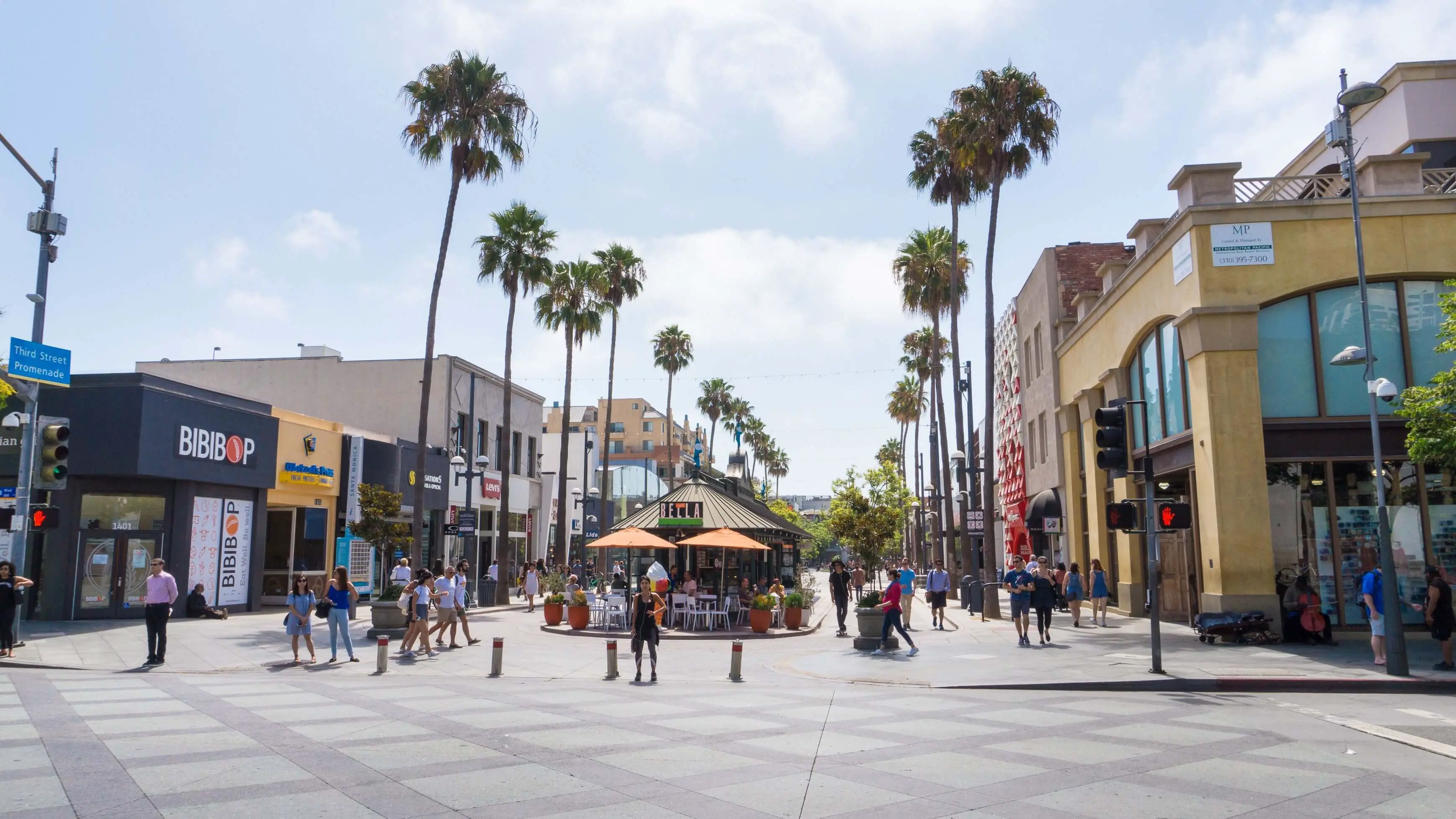
On the west side of Los Angeles, Third Street Promenade in Santa Monica experienced a significant surge in weekly visitation compared to a baseline of January 6th-12th 2025. This increase is not surprising, as many Palisadians fled south to Santa Monica hotels and rentals, allowing them to stay close to their neighborhoods, children’s schools, and social circles.

Westfield Century City and The Grove also saw increased foot traffic, as both malls serve as key gathering spots in their communities and feature state-of-the-art movie theaters, providing a few hours of escape. Additionally, their upgraded HVAC systems—enhanced post-pandemic—may offer an added layer of comfort for visitors. Similarly, Westfield Topanga, a familiar shopping destination for residents of the San Fernando Valley, saw an uptick in visits during the second half of January. And traffic at these shopping destinations was still elevated as of mid-February, suggesting that at least some displaced residents are likely staying in the area in the more medium-term. 

Some Palisadians have opted to relocate much farther south, though this migration appears to have had a more dispersed effect on shopping patterns. As a result, we do not see a significant impact on visitation to South Bay shopping centers like Manhattan Village and Del Amo Fashion Center.

While reports have mentioned some Palisadians moving to Newport Beach—a community that shares similar demographics with the Palisades—the influx does not appear to be large enough to meaningfully shift mall visitation patterns in January. Additionally, given the circumstances, it is unlikely that many displaced residents would be making frequent trips to Fashion Island or South Coast Plaza. Instead, those who have temporarily relocated to the area are likely settling in as newly arrived locals.

Visits to Third Street Promenade from Pacific Palisades Increased in January 2025

If we examine the year-over-year (YoY) change in visits from specific ZIP codes, Placer data reveals a significant surge in visitation to Third Street Promenade from the Pacific Palisades during January 2025, with visits increasing by 20.4% compared to the same period last year.

Third Street Promenade Drew More Families and Affluent Visitors

Demographic analysis of the Third Street Promenade’s trade area also indicates that the shopping corridor drew a higher proportion of family households and more affluent audience segments – perhaps thanks to the influx of visitors from the Palisades.

Shopping Centers Serve As Oases of Normalcy 

Amid the disruption caused by the wildfires, shopping centers have stepped in as steady community spaces rather than just retail venues. The uptick in foot traffic at locations like Third Street Promenade and Westfield Century City shows that these malls are serving as reliable hubs for daily routines and social connection, offering residents practical support as they navigate uncertain times.

Reports
INSIDER
Report
2026 CRE Outlook
Read the report to find out which markets are gaining ground in office recovery, where retail traffic is strongest, and how population shifts are reshaping demand.
March 19, 2026

Commercial real estate in 2026 is characterized by differentiated performance across markets and asset types. Office recovery trajectories vary meaningfully by metro, retail performance reflects format-specific resilience, and domestic migration patterns continue to influence long-term demand fundamentals.


Return to Office Patterns 

Many higher-income metros continue to trail 2019 benchmarks but drive the strongest Year-over-year gains, signaling a potential inflection in office utilization trends.

Miami Continued Leading RTO in 2025; San Francisco Led the Year-over-Year Office Recovery

Major Insights:

• Sunbelt markets along with New York, NY are closest to pre-pandemic office visit levels, while many coastal gateway and tech-heavy markets trail 2019 benchmarks. 

• Many of the metros still furthest below pre-pandemic levels are now posting the strongest year-over-year gains.

Key Takeaways for CRE Professionals: 

• Leasing velocity may accelerate in coastal markets – particularly in high-quality assets – even if full recovery remains distant. The expansion of AI-driven firms and innovation-focused employers could support incremental demand in these ecosystems, reinforcing a bifurcation between top-tier buildings and the broader office inventory.

Median Household Income in Market Correlates With Office Recovery

Major Insights:

• Higher-income metros such as San Francisco show deeper structural gaps vs 2019, perhaps due to their higher concentration of hybrid-eligible workers – yet those same metros are driving the strongest YoY recovery in 2025.

• Accelerating growth in 2025 suggests that shifting employer policies, workplace enhancements, or broader labor dynamics may be beginning to drive increased in-office activity.

Key Takeaway for CRE Professionals: 

• Office performance in higher-income markets will increasingly depend on workplace quality and policy alignment. Assets that support premium amenities, modern design, and tenants implementing clear in-office expectations are likely to influence sustained office visits and leasing velocity in these metros.


Shopping Center Patterns

Retail traffic is broadly improving across states, though performance varies by region and format.

Shopping Center Visits Increased in 2025

Major Insights:

• Retail traffic growth is broad-based, with the majority of states showing year-over-year gains in shopping center traffic in 2025.

• Still, even as many states are posting gains, pockets of softer performance remain – specifically in parts of the Southeast and Midwest. 

Key Takeaway for CRE Professionals: 

• Broad-based traffic gains indicate consumer demand is more durable than anticipated. In growth states, operators can shift from defensive stabilization to capturing upside – pushing rents, upgrading tenant quality, and accelerating leasing while momentum holds. In softer markets, the focus should remain on protecting traffic through strong anchors and necessity-driven tenancy.

Convenience-Based Performance Pulling Ahead

Major Insights: 

• Convenience-oriented formats are leading traffic growth, with strip/convenience centers materially outperforming all other shopping center types, and neighborhood and community centers also posting gains. This reinforces the strength of proximity-driven, daily-needs retail.

• Destination retail formats, including regional malls and factory outlets, continue to lag, while super-regional malls were essentially flat. Larger-format, discretionary-driven centers are not capturing the same momentum as convenience-based formats.

Key Takeaway for CRE Professionals: 

• The data suggests that consumer behavior continues to favor convenience, frequency, and necessity over destination-based shopping. Operators should lean into service-oriented and daily-needs tenancy in strip and neighborhood formats, while mall operators may need to further reposition assets toward experiential, mixed-use, or non-retail uses to stabilize traffic. 


Migration Patterns 

Domestic migration continues to reshape state-level demand, with gains clustering in select growth corridors.

Northern Planes, Southeast Lead State-Level Migration Growth

Major Insights: 

• Domestic migration drove population gains in parts of the Southeast and Northern Plains, while several Western and Northeastern states show flat or negative migration.

• Some previously strong in-migration states in the South and West, including Texas and Utah, are showing softer movement, while other established migration leaders such as Florida and the Carolinas continue to attract net inbound residents.

Key Takeaway for CRE Professionals: 

• Migration flows are shifting relative to prior years. Operators should temper growth assumptions in states where inflows are slowing and prioritize markets where inbound demand remains strong.

Florida Metros Magnet For Domestic Migration

Major Insights: 

• Florida dominates metro-level migration growth, with eight of the top ten U.S. metros for net domestic migration are in Florida.

• The markets with the strongest domestic migration-driven population gains are not major gateway cities but smaller, often retirement- or lifestyle-oriented metros, suggesting that migration-driven demand is increasingly flowing to secondary markets.

Key Takeaway for CRE Professionals: 

• CRE operators should prioritize expansion, leasing, and site selection in high-growth secondary metros where population inflows can directly translate into retail spending, housing absorption, and service demand.

INSIDER
Report
5 Grocery Growth Drivers in 2026
How Expanded Supply, Trip Frequency, and Shopping Missions Are Reshaping Food Retail and Creating Multiple Paths to Growth
February 19, 2026

Key Takeaways

1. Expanded grocery supply is increasing overall category engagement. New locations and deeper food assortments across formats are bringing shoppers into the category more often, rather than fragmenting demand.

2. Grocery visit growth is being driven by low- and middle-income households. Elevated food costs are leading to more frequent, budget-conscious trips, reinforcing grocery’s role as a non-discretionary category.

3. Short, frequent trips are a major driver of brick-and-mortar traffic growth. Fill-in shopping, deal-seeking, and omnichannel behaviors are pushing visit frequency higher, even as trip duration declines.

4. Scale is accelerating consolidation among large grocery chains. Larger retailers are using their size to invest in value, assortment, private label, and execution, allowing them to capture longer and more engaged shopping trips.

5. Both large and small grocers have viable paths to growth. Large chains are winning by competing for the full grocery list, while smaller banners can grow by specializing, owning specific missions, or offering compelling value that earns them a place in shoppers’ routines.

What is Driving Grocery Growth in 2026?

While much of the retail conversation going into 2026 focused on discretionary spending pressure, digital substitution, and higher-income consumers as the primary drivers of growth, grocery foot traffic tells a different story.

More Trips, More Formats, and a Shift Toward Mission-Driven Shopping

Rather than being diluted by new formats or eroded by e-commerce, brick-and-mortar grocery engagement is expanding. Visits are rising even as grocery supply spreads across wholesale clubs, discount and dollar stores, and mass merchants. At the same time, growth is being powered not by affluent trade areas, but by low- and middle-income households navigating higher food costs through more frequent, targeted trips. Shoppers are showing up more often and increasingly splitting their trips across retailers based on value, availability, and mission – pushing grocers to compete for portions of the grocery list instead of the full weekly basket. 

Scale Captures Demand – But Fragmented Trips Leave Room to Grow

The data also suggests that the largest grocery chains are capturing a disproportionate share of rising grocery demand – but the multi-trip nature of grocery shopping in 2026 means that smaller banners can still drive traffic growth. By strengthening their value proposition, specializing in specific products, or owning specific shopping missions, these smaller chains can complement, rather than compete with, larger one-stop destinations.

The Core Drivers of Grocery Growth in 2026

Ultimately, AI-based location analytics point to a clear set of grocery growth drivers in 2026: expanded supply that increases overall engagement, more frequent and mission-driven trips, and continued traffic concentration among large chains alongside new opportunities for smaller banners.

1. Expanded Grocery Supply Is Fueling Growth While Traditional Grocery Stores Hold Their Lead 

Expanded Grocery Access Is Increasing Overall Category Engagement

One driver of grocery growth in recent years is simply the expansion of grocery supply across multiple retail formats. Wholesale clubs are constantly opening new locations and discount and dollar stores are investing more heavily in their food selection, giving consumers a wider choice of where to shop for groceries. And rather than fragmenting demand, this broader availability appears to have increased overall grocery engagement – benefiting both dedicated grocery stores and grocery-adjacent channels.

Traditional Grocery Stores Maintain a Stable Share of Visits Despite Growing Competition

Grocery stores continue to capture nearly half of all visits across grocery stores, wholesale clubs, discount and dollar stores, and mass merchants. That share has remained remarkably stable thanks to consistent year-over-year traffic growth – so even as grocery supply increases across categories, dedicated grocery stores remain the primary destination for food shopping.

Mass Merchants Face Share Pressure as One-Stop Competition Expands

Meanwhile, mass merchants have seen a decline in relative visit share as expanding grocery assortments at discount and dollar stores and the growing store fleets of wholesale clubs give consumers more alternatives for one-stop shopping. 

2. Low and Medium-Income Households Driving Larger Visit Gains 

Grocery Growth Is Shifting Toward Lower- and Middle-Income Trade Areas

While much of the broader retail conversation heading into 2026 centers on higher-income consumers carrying growth, the trend looks different in the grocery space. Recent visit trends show that grocery growth has increasingly shifted toward lower- and middle-income trade areas, underscoring the distinct dynamics of non-discretionary retail. 

Higher Food Costs Likely Driving More Frequent, Budget-Conscious Trips

For lower- and middle-income shoppers, elevated food costs appear to be translating into more frequent grocery trips as consumers manage budgets through smaller baskets, deal-seeking, and shopping across retailers. In contrast, higher-income households – often cited as a key growth engine for discretionary retail – are contributing less to grocery visit growth, likely reflecting more stable shopping patterns or a greater ability to consolidate trips or shift spend online.

Necessity-Driven Shopping Is Powering Grocery Visit Growth

This means that, in 2026, grocery growth is not being propped up by high-income consumers. Instead, it is being fueled by necessity-driven shopping behavior in lower- and middle-income communities – reinforcing grocery’s role as an essential category and suggesting that similar dynamics may be at play across other non-discretionary retail segments.

3. Rise in Short Grocery Trips Driving Offline Grocery Gains

More Frequent, Shorter Grocery Trips

Another factor driving grocery growth is the rise in short grocery visits in recent years. Between 2022 and 2025, the biggest year-over-year visit gains in the grocery space went to visits under 30 minutes, with sub-15 minute visits seeing particularly big boosts. As of 2025, visits under 15 minutes made up over 40% of grocery visits nationwide – up from 37.9% of visits in 2022. 

Omnichannel Grocery Shopping Fueling Short Trips to Physical Stores 

This shift toward shorter visits – especially those under 15 minutes – is driven in part by the continued expansion of omnichannel grocery shopping, as many consumers complete larger stock-up orders online and rely on in-store trips for order collection or quick, fill-in needs. At the same time, the rise in short visits paired with consistent YoY growth in grocery traffic points to additional, behavior-driven forces at play – consumers' growing willingness to shop around at different grocery stores in search of the best deal or just-right product. 

Grocery Shoppers Are Splitting Trips Across Multiple Retailers

Value-conscious shoppers – particularly consumers from low- and middle-income households, which have driven much of recent grocery growth – seem to be increasingly shopping across multiple retailers to secure the best prices. This behavior often involves making targeted trips to different stores in search of the strongest deals, a pattern that is contributing to the rise in shorter, more frequent grocery visits. At the same time, other grocery shoppers are making quick trips to pick up a single ingredient or specialty item – perhaps reflecting the increasingly sophisticated home cooks and social media-driven ingredient crazes. In both these cases, speed is secondary to getting the best value or the right product.

Different Trip Types, One Outcome: Continued Store Traffic Growth

So while some shorter visits reflect a growing emphasis on efficiency – as shoppers use in-store trips to complement primarily online grocery shopping – others appear driven by a preference for value or product selection over speed. Despite their differences, all of these behaviors have one thing in common – they're all contributing to continued growth in brick-and-mortar grocery visits. Grocers who invest in providing efficient in-store experiences are particularly well-positioned to benefit from these trends. 

4. Consolidation as a Growth Driver 

Large Chains Continue to Pull Ahead in Visit Share

As early as 2022, the top 15 most-visited grocery chains already accounted for roughly half of all grocery visits nationwide. And by outpacing the industry average in terms of visit growth, these chains have continued to capture a growing share of grocery foot traffic.

Scale Enables Broader Assortment, Stronger Value, and Better Execution

This widening gap suggests that scale is increasingly enabling grocers to reinvest in the factors that attract and retain shoppers. Larger chains are better positioned to invest in broader and more differentiated product selection, stronger private-label programs that deliver quality at accessible price points, competitive pricing, and operational excellence across stores and omnichannel touchpoints. These capabilities allow top chains to serve a wide range of shopping missions – from quick, convenience-driven trips to more intentional visits in search of the right product or ingredient.

Consolidation at the top of the grocery category is reinforcing a virtuous cycle: scale enables better value, selection, and experience, which in turn draws more shoppers into stores and supports continued grocery traffic growth.

5. Competition for "Share of List" Growing Grocery Visit Pie 

Both Long and Short Trips Are Driving Grocery Traffic Growth

In 2025, the top 15 most-visited grocery chains accounted for a disproportionate share of visits lasting 15 minutes or more, while smaller grocers captured a larger share of the shortest trips. As shown above, larger grocery chains, which tend to attract longer visits, grew faster than the industry overall – but short visits, which skew more heavily toward smaller chains, accounted for a greater share of total traffic growth. Together, these patterns show that both long, destination trips and short, targeted visits are driving grocery traffic growth and creating viable paths forward for retailers of all sizes.

Large and Small Chains Win by Competing for Different Shopping Missions

Larger chains are more likely to serve as destinations for fuller shopping missions, competing for the entire grocery list – or a significant share of it. But smaller banners can grow too by competing for more short visits. By specializing in a specific product category, owning a clearly defined shopping mission, or delivering a compelling value proposition, smaller grocers can earn a place in shoppers’ routines and become a deliberate stop within a broader grocery journey. 

What These Trends Mean for Grocery Growth in 2026

As grocery moves deeper into 2026, growth is being driven by the cumulative effect of how consumers are navigating food shopping today. Expanded supply has increased overall engagement, higher food costs are driving more frequent and targeted trips, and shoppers are increasingly willing to split their grocery list across retailers based on value, availability, and mission.

Looking ahead, this suggests that grocery growth will remain resilient, but unevenly distributed. Retailers that clearly understand which trips they are best positioned to win – and invest accordingly – will be best placed to capture that growth. Large chains are likely to continue benefiting from scale, consolidation, and their ability to serve full shopping missions, while smaller banners can grow by earning a defined role within shoppers’ broader grocery journeys. In 2026, success in grocery will be less about winning every trip and more about consistently winning the right ones.

INSIDER
Report
Office Attendance Drivers in 2026: The New Rules of Showing Up
Dive into the data to learn how convenience-driven behaviors are impacting the office recovery – and how stakeholders from employers to office owners and local retailers can best adapt.
February 5, 2026

Key Takeaways:

To optimize office utilization and surrounding activity in 2026, stakeholders should: 

1. Plan for continued, but slower, office recovery. Attendance continues to rise and has reached a post-pandemic high, but moderating growth suggests the return-to-office may progress at a more gradual and incremental pace than in prior years.

2. Account for growing seasonality in office staffing, local retail operations, and municipal services. As office visitation becomes increasingly concentrated in late spring and summer, offices, downtown retailers, and cities may need to plan for more predictable peaks and troughs by adjusting hours, staffing levels, and local services accordingly, rather than relying on annual averages.

3. Align leasing strategies with seasonal demand. Stronger attendance in Q2 and Q3 suggests these quarters are best suited for leasing activity, while softer Q1 and Q4 periods may be better used for renovations, repositioning, and targeted activation efforts designed to draw workers in.

4. Design hybrid policies around midweek anchor days. With Tuesdays and Wednesdays consistently driving the highest office attendance, employers can maximize collaboration and space utilization by concentrating meetings, programming, and in-office expectations midweek.

5. Reduce early-week commute friction to support attendance. Monday office attendance appears closely correlated with commute ease, suggesting that reliable and efficient transportation may be an important factor in early-week office recovery.

6. Prioritize proximity in leasing and development decisions. Visits from employees traveling less than five miles to work have increased steadily since 2019, reinforcing the value of centrally located offices and housing near employment hubs.

When Policy Isn’t Enough

2025 was the year of the return-to-office (RTO) mandate. Employers across industries – from Amazon to JPMorgan Chase –  instituted full-time on-site requirements and sought to rein in remote work. But the year also underscored the limits of policy. As employee pushback and enforcement challenges mounted, many organizations turned to quieter tactics such as “hybrid creep” to gradually expand in-office expectations without triggering outright resistance.

For employers seeking to boost attendance, as well as office owners, retailers, and cities looking to maximize today’s visitation patterns, understanding what actually drives employee behavior has become more critical than ever. This reports dives into the data to examine office visitation patterns in 2025 – and explore how structural factors such as weather, commute convenience, and workplace proximity have emerged as key differentiators shaping how and when, and how often workers come into the office. 

Office Attendance Reaches a New High, But Momentum Slows

National office visits rose 5.6% year over year in 2025, bringing attendance to just 31.7% below pre-pandemic levels and marking the highest point since COVID disrupted workplace routines. At the same time, the pace of growth slowed compared to 2024, signaling a possible transition into a steadier phase of recovery.

With new return-to-office mandates expected in 2026, and the balance of power quietly shifting towards employers, additional gains remain likely. But the trajectory suggested by the data points toward gradual progress rather than a return to the more rapid rebounds seen in 2023 or 2024. 

Weather, Workations, and a New Kind of Seasonality 

Before COVID, “I couldn’t come in, it was raining” would have sounded like a flimsy excuse to most bosses. But today, weather, travel, and individual scheduling are widely accepted reasons to stay home, reflecting a broader assumption that face time should flex around convenience.

This shift is visible in the growing seasonality of office visitation, which has intensified even as overall attendance continues to rise. In 2019, office life followed a relatively steady year-round cadence, with only modest quarterly variation after adjusting for the number of working days. In recent years, however, greater seasonality has emerged. Since 2024, Q1 and Q4 have consistently underperformed while Q2 and Q3 have posted meaningfully stronger attendance – a pattern that became even more pronounced in 2025. Winter weather disruptions, extended holiday travel, and the growing normalization of “workations” appear to be pulling some visits out of the colder, holiday-heavy months and concentrating them into late spring and summer.

For employers, office owners, downtown retailers, and city planners, this emerging seasonality matters. Staffing, operating budgets, and programming decisions increasingly need to account for predictable soft quarters and peak periods, making quarterly planning a more useful lens than annual averages. Leasing activity may also convert best in Q2 and Q3, when districts feel most active. Slower quarters, meanwhile, may be better suited for renovations, construction, or employer- and city-led programming designed to give workers a reason to show up.

The Quest for Convenience and the TGIF Workweek

The growing premium placed on convenience is also evident in the persistence of the TGIF workweek – and in the factors shaping its regional variability.

Before COVID, Mondays were typically the busiest day of the week, followed by relatively steady attendance through Thursday and a modest drop-off on Fridays. Today, Tuesdays and Wednesdays have firmly established themselves as the primary anchor days, while Mondays and Fridays see consistently lower activity. And notably, this pattern has remained essentially stable over the past three years – despite minor fluctuations – as workers continue to cluster their in-office time around the days that offer the most perceived value while preserving flexibility at the edges of the week.

Commute Friction Shaping the Start of the Week

At the same time, while the hybrid workweek remains firmly entrenched nationwide, its contours vary significantly across regions – and the data suggests that convenience is once again a key differentiator.

Across major markets, a clear pattern emerges: Cities with higher reliance on public transportation tend to see weaker Monday office attendance, while markets where more workers drive alone show stronger early-week presence. While industry mix and local office culture still matter, the data points to commute hassle as another factor potentially shaping Monday attendance. 

New York City, excluded from the chart below as a clear outlier, stands as the exception that proves the rule. Despite nearly half of local employees relying on public transportation (48.7% according to the Census 2024 (ACS)), the city’s extensive and deeply embedded transit system appears to reduce perceived friction. In 2025, Mondays accounted for 18.4% of weekly office visits in the city, even with heavy transit usage.

The contrast highlights an important nuance: Where transit is fast, frequent, and integrated into daily routines, it can support office recovery, offering a potential roadmap for other dense urban markets seeking to rebuild early-week momentum. 

Proximity as a Key Attendance Driver

Another powerful signal of today’s convenience-first mindset shows up in commute distances. Since 2019, the share of office visits generated by employees traveling less than five miles has steadily increased, largely at the expense of mid-distance commuters traveling 10 to 25 miles.

To be sure, this metric reflects total visits rather than unique visitors, so the shift may be driven by increased visit frequency among workers with shorter, simpler commutes rather than a change in where employees live overall. Still, the pattern is telling: Workers with shorter commutes appear more likely to generate repeat in-person visits, while longer and more complex commutes correspond with fewer trips. Over time, this dynamic could shape office leasing decisions, residential demand near employment centers – whether in urban cores or in nearby suburbs – and the geography of the workforce.

Friction in Focus 

Taken together, the data paints a clear picture of the modern return-to-office landscape. Attendance is rising, but behavior is no longer driven by mandates alone. Instead, workers are making rational, convenience-based decisions about when coming in is worth the effort.

For cities, the implication is straightforward: Ease of access matters. Investments in transit reliability, last-mile connectivity, and housing near employment centers can all play a meaningful role in shaping how consistently people show up. For employers, too, the lesson is that the path back to the office runs through convenience, not just compulsion, as attendance gains are increasingly driven by how effectively organizations reduce friction and increase the perceived value of being on-site.

Loading results...
We couldn't find anything matching your search.
Browse one of our topic pages to help find what you're looking for.
For more in-depth analyses on a variety of subjects, explore Reports.
The Anchor Logo
INSIDER
Stay Anchored: Subscribe to Insider & Unlock more Foot Traffic Insights
Gain insider insights with our in-depth analytics crafted by industry experts
— giving you the knowledge and edge to stay ahead.
Subscribe