.png)
.png)

.png)
.png)

It’s that time again. The time where I share my thoughts on everything I think I think about retail...at this very moment.
Over the first nine months of 2025, we have witnessed some pretty darn amazing things across the retail industry. We've witnessed traditional competitive boundaries blur as some large scale grocery players (at least, one that is one and one that wants to be one) venture into same-day delivery logistics, we’ve seen warehouse clubs reimagine convenience, and we have also had more than one retailer experiment with what the right size of its store footprint should be.
What emerges from this chaos is a revalidation of what omnichannel retailing really is. It is about the reimagining of how consumers shop, where they shop, and why they choose to shop one retailer over another.
Therefore, the following observations represent not just trends to watch, but strategic inflection points that could determine which retailers will have the greatest probability to thrive going forward in this beautiful and increasingly complex omnichannel world.
In Q2 2025, Walmart delivered comparable sales growth of +4.5% (excluding fuel), driven largely by profitable e-commerce, and maintained stable store traffic. Monthly same-store visits, according to Placer.ai, were also remarkably steady between +0.7% and -1.8%, from May through August, amid industry-wide macroeconomic pressures.
Meanwhile, the other U.S. retailing behemoth, Amazon, began pushing (or is it forcing?) its way into grocery in August by way of same-day delivery. Walmart, on the flip side, and not to be outdone, also began putting significant resources behind its Walmart Fulfillment Services offering.
All told, it is a game of anything you can do, I can do better. It is one-upmanship at its finest.
The only question is – who stands the better chance of winning? Or at least drawing blood from the other?
From my vantage point, Walmart has a much better chance of holding onto its grocery reign because it already is a grocer, and quite a large one at that – drawing nearly half as many visits as the entire brick-and-mortar grocery category. Walmart’s 4,600+ store advantage is sizable. Amazon may take from others but the moat around Walmart is pretty large.
On the other hand, will Amazon keep a similar hold on its vendor logistics business?
If I were a betting man, Walmart has a better chance of making inroads on Amazon’s logistics revenue than Amazon has on hurting Walmart in grocery.
Said another way, I guess the box may soon be on the other porch, Amazon.
The size of one’s store base is dependent upon so many factors.
Location, the overall experience design, the ROI of “the box,” and more can all impact the size and shape of a retailer’s store base, and, more often than not, all of them actually work in concert together. Which is why anyone pontificating on the trend in the “size” of stores likely hasn’t put much thought into his or her argument.
Despite the recent run-up of retailers trying to get smaller (Macy’s, in particular, comes to mind), there is no tried-and-true rule that smaller stores will work or vice versa.
In some cases, like in dense or urban markets, smaller stores might work, while in others, if the approach is one of creating destination-type stores, like Hy-Vee or Buc-ees, larger stores might work, too.
My favorite example of someone “getting smaller” is Sprouts. As Sprouts CEO Jack Sinclair told me at Groceryshop, Sprouts realized its format had gotten too large, went back to its roots of differentiated products and great looking fresh produce in a smaller box, and has not looked back since.
At the end of the day – smaller, bigger, uncut – none of it matters as much as what your brand is trying to accomplish for your customers and what, in turn, resonates with them the most.
I think we can all agree that, generally speaking, Walmart and the warehouse clubs are noted for having great prices. On the flip side, what they haven’t been known as much for in the past is a quick and convenient shopping experience.
But that is about to change for two reasons.
The first is economics. There is always a trade-off between convenience and price. As budgets continue to get constrained, people will begin to trade off waiting in lines or navigating the dreaded Costco parking lot to save money.
The second is the evolution of these retailers as omnichannel retailers. For example, Walmart’s Chief E-Commerce Officer David Guggina told me recently that one-third of Walmart’s scheduled deliveries are delivered to Walmart customers in under three hours (see video of interview). This behavior itself gives rise to the theory that people are starting to leverage Walmart for quick trips.
Delivery is only one leg of the omnichannel stool, however.
The other two legs are buy online, pickup in-store (BOPIS) and the actual speed of the in-store experience itself. Much has been documented already about the rise of BOPIS following the pandemic, so I won’t belabor the point here because it, too, is likely driving the data below.
The other aspect is that places like Sam’s Club have done a masterful job of making their stores more convenient and time-efficient. Sam’s Club is leading the way on cashierless checkout in the club channel. Sam’s Club Scan & Go shoppers, which account for an amazing one-third of the Sam’s Club customer base, can simply walk through an AI-powered exit arch and then have a digital receipt sent to them upon exit.
Allow me to take a moment to put this last statement into perspective with a concrete example.
Pretend my wife calls me on my way home from work and asks me to pick up some milk. I have a choice: Do I go to the local grocer or do I go to Sam’s? If I decide to go local, I likely will end up paying more ,and I could also possibly have to wait in line to check out at either a manned till or a self-checkout machine. On the other hand, if I go to Sam’s Club, I can just walk in, scan the milk I want, pay at a paystation and then walk through the arch.
Which experience would you choose?
Enough said.
The number one answer any retailer needs to answer in today’s omnichannel world is, “Why come to my store in the first place.”
And that answer begins and ends with good merchandising.
Take a look at some of the more creative merchandising efforts this year as depicted in the graph below:
What they all have in common is a “hook.” Someone got creative and went outside of the box to compel customers into their stores for new and exciting reasons. It is the definition of good merchandising.
Therefore, retailers, convenience store operators, and QSRs can never rest on their laurels. They constantly need to push the envelope to one-up the year before and the competition.
The best merchants get supercharged by the creative demands of this challenge. The worst merchants get their answers from interpolating spreadsheets and making decisions solely off of last year’s data.
Speaking of merchandising, the convergence of technology and the increasing tendency of consumers to use supermarkets as their mid-day lunch or snack source versus QSRs could inspire a unique opportunity for those grocers adventurous enough to seize it.
I have long been a proponent of electronic shelf labels. The use cases in support of them are almost endless at this point. One of my favorite use cases is the ability to run intra-day promotions, an idea that is virtually impossible with paper price tags, and one that also gets supercharged when the component of in-store digital media screens gets added to the equation as well.
Imagine a grocer who uses electronic shelf labels and then starts running unique daily promotions at lunch time. These promotions could be done on ANYTHING:
You get the idea. It is the Venn diagram of retail media and in-store execution at its finest.
The convergence of these above trends signals a tried-and-true retail axiom, i.e. that success is determined not by what you sell per se, but by how you can integrate convenience, value, and your brand (a better word choice than experience) across every touchpoint.
And this axiom will manifest itself in a number of self-affirming, yet sizable ways.
First, as the Walmart/Amazon tête-à-tête illustrates, a single channel advantage will become almost impossible to defend. Retailers need to decide in which channels they want to speak to their customers or risk being outflanked by competitors who will. This creates both vulnerability for established players and opportunities for agile newcomers who can build omnichannel capabilities from the ground up.
Second, technology will play an even bigger role as the industry equalizer. The Sam's Club scan-and-go example is the perfect encapsulation of this idea. It shows how technology can completely flip traditional competitive dynamics. Warehouse clubs, once seen as inconvenient despite their pricing advantages, are at the tipping point of becoming more convenient (and value-laden) than traditional grocers. Retailers who boldly invest in finding new ways to use technology to flip their positioning on the convenience-value-brand spectrum stand to capture disproportionate market share, regardless of their historical positioning.
Third, merchandising is and will forever be the epicenter of retailing. As physical store differentiation becomes harder to achieve, creative merchandising becomes the primary weapon for driving foot traffic and brand loyalty. Retailers who cannot consistently surprise and delight customers with consistent in-stocks, innovative in-store displays, exciting product collaborations, and limited-time offerings will find themselves relegated to utility shopping only, which is about as big as a “Danger Will Robinson” position as there is.
As I look back on 2025, Walmart, hands down, is “winning.” Sure, it has scale. It is the biggest retailer going. But scale isn’t why Walmart is on the hot streak that it is. The real secret to Walmart’s success has been its incredible speed of adaptation, rather than the scale of its operation. Its scale only enhances the impact of successful adaptation.
That is the real punchline to the joke.
What got you here won’t get you there. The task at hand is to transform fast enough to remain relevant in a world where the rules of engagement are being rewritten all the time, by competitors both large and small.
For more data-driven insights, visit placer.ai/anchor.

2025 has been a year of comebacks for legacy retailers. Brands like Barnes & Noble, Gap, and Abercrombie & Fitch are seeing renewed momentum. And amid this wave of revivals, Beyond, Inc. and The Brand House Collective (formerly Kirkland’s Inc.) are betting on one of retail’s most iconic banners: Bed Bath & Beyond (BBB).
After acquiring Kirkland’s intellectual property, Beyond Inc. plans to rebrand 250–275 Kirkland’s stores as Bed Bath & Beyond Home and close the rest. The strategy aims to merge Kirkland’s real estate footprint with the trust and recognition of BBB – once the undisputed leader in home furnishings retail. Can the pull of nostalgia and the equity of a trusted brand rewrite the trajectory of a struggling home furnishings chain?
Kirkland’s, known for accessible home décor and furnishings, has long been a staple of the home furnishings sector. Yet like many of its peers, it has grappled with headwinds from softening discretionary spending. Since 2019, overall visits to the chain have steadily declined as the company downsized its store fleet – and most months of 2025 have continued to register year-over-year (YoY) foot traffic declines. Online performance has also lagged, with digital comparable sales dropping last quarter by double digits.
Still, the data also reveals signs of underlying brick-and-mortar strength. Over the past several quarters, Kirkland’s in-store comparable sales have remained relatively stable, with some quarters seeing slight increases and others modest declines. And as illustrated by the chart below, the chain’s reduced fleet has posted modest same-store visit gains through much of this year, suggesting that the company’s remaining stores may be well-positioned for a turnaround.
Against this backdrop, plans to merge Kirkland’s real estate footprint with the trust and recognition of BBB offer significant promise. The pie chart below offers a reminder of just how influential Bed Bath & Beyond once was: In 2019, BBB accounted for nearly one-fourth of all visits to the home furnishings sector nationwide, far outpacing rivals. While the company’s bankruptcy in 2023 suggested that brand power alone couldn’t offset operational missteps, the name still carries significant weight with consumers. For Kirkland’s, this partnership could provide the spark it needs for renewed growth.
The combination of Kirkland’s streamlined fleet and BBB’s brand equity creates a compelling recipe for revival. With the right execution – balancing nostalgia with modern retail practices – this collaboration could transform a fading chain into a leader once more.
To see up-to-date retail traffic trends, visit our free tools.
Placer.ai leverages a panel of tens of millions of devices and utilizes machine learning to make estimations for visits to locations across the US. The data is trusted by thousands of industry leaders who leverage Placer.ai for insights into foot traffic, demographic breakdowns, retail sale predictions, migration trends, site selection, and more.

Homewares and home decor chains have seen their share of ups and downs over the past few years, from pandemic highs to a discretionary retail slowdown – but some chains, especially high-end ones, are thriving. We took a look at visit data to four retailers – Restoration Hardware (RH), Le Creuset, and Sur La Table – to see what the visit data and demographics reveal about the segment.
Homewares are having a cultural moment – a shift that first gained momentum during the pandemic, when people stuck at home began investing deeply in their living spaces. Since then, social media’s influence has helped lifestyle-forward brands like RH and Le Creuset gain cultural cachet – and visits to these retailers have significantly outpaced the broader home improvement sector, as shown in the chart below.
This resilience – especially amid a broader retail slowdown – underscores how home decor and kitchenware are evolving into status and lifestyle symbols, with culinary aesthetics even finding expression in decor trends.
Although RH, Sur La Table, and Le Creuset all compete in the premium home goods segment, their different brand identities attract distinct audiences and lead to very different in-store behaviors.
RH and Sur La Table attract some of the most affluent, luxury-oriented shoppers in retail and consistently post long dwell times. Both brands use their store fleets not just as showrooms, but as platforms for high-margin services and experiences that extend engagement and drive revenue between product cycles.
Many flagship RH stores include a fine-dining restaurant, and the chain ties complimentary design consultations to a paid annual membership – both of which may resonate with younger “Educated Urbanites” who value elevated dining experiences and expert guidance as they furnish their first homes. Sur La Table, by contrast, generates fee-based revenue from cooking classes and curated international culinary trips, offerings that appeal most to “Booming with Confidence” households – prosperous, established couples eager to invest in premium food and travel experiences. By tailoring experiential services to the distinct aspirations of their core audiences, RH and Sur La Table demonstrate how luxury retailers can extend brand relevance, and sustain growth beyond traditional product sales.
Le Creuset, by contrast, follows a more sales-driven model. With a lower share of high-income households, the brand reaches aspirational, luxury-adjacent shoppers who may have less discretionary income for premium experiences. Store activations such as Factory-to-Table events are designed primarily to drive transactions rather than prolong visits. Le Creuset also over-indexes among “Singles and Starters” – younger, upwardly mobile shoppers who frequently discover the brand on social media. This group tends to conduct heavy online research before visiting, leading to shorter, purpose-driven trips where shoppers arrive ready to buy.
Together, the patterns suggest two distinct playbooks: RH and Sur La Table use experience to lengthen visits and monetize engagement between product cycles, while Le Creuset relies on highly considered, research-led purchases that translate into shorter, purpose-driven store trips.
The success of RH, Sur La Table, and Le Creuset highlights that there is no single formula for winning in luxury retail. Some brands lean on immersive experiences that extend and monetize engagement. Others focus on sales-driven activations that convert researched shoppers. What unites them is a sharp alignment between strategy and the values and behaviors of their core audiences – a positioning that enables them to thrive even amid broader retail headwinds.
For more retail data, visit our free tools.
Placer.ai leverages a panel of tens of millions of devices and utilizes machine learning to make estimations for visits to locations across the US. The data is trusted by thousands of industry leaders who leverage Placer.ai for insights into foot traffic, demographic breakdowns, retail sale predictions, migration trends, site selection, and more.

The recent revival of McDonald’s Extra Value Meal has fueled speculation that the quick-service restaurant (QSR) space might be gearing up for another round of value wars. Yet the data suggests that basic value offerings may no longer be enough to reliably drive traffic. To overcome consumer fatigue and heightened price sensitivity, brands must deliver promotions that truly stand out – whether through unusually deep discounts, memorable giveaways, or culturally resonant collaborations.
McDonald’s recent foot traffic trends illustrate this dynamic. Despite the chain’s Extra Value Meals relaunch, visits to McDonald’s dropped 4.4% year over year (YoY) during the week of September 8th and fell a further 5.2% and 3.7% over the next two weeks. These results pale in comparison to the brand’s April 2025 Minecraft Movie Meal collaboration, which generated consistent traffic boosts throughout its run.
The muted YoY impact of the new value meal doesn’t necessarily signal failure – after all, McDonald’s is lapping last year’s $5 Summer of Value campaign, which extended through 2024. But it highlights the limits of standard deals in a marketplace where consumers expect baseline value from QSR leaders. In an environment crowded with offerings – from Taco Bell’s Luxe Boxes, to Wendy’s Biggie Bags and Burger King’s 2 for $5 promotions – incremental savings feel less like innovation and more like table stakes.
Still, truly eye-catching promotions continue to break through – and McDonald’s 50-cent Double Cheeseburger deal on National Cheeseburger Day (September 18th, 2025) is a case in point. On the day of the promotion, visits jumped 6.4% compared to the chain’s recent Thursday average – showing that consumers remain highly responsive to promotions that feel unique and unmissable.
Pizza Hut’s summer promotions tell a similar story. The chain’s $2-Buck Tuesday deal, which offered a one-topping Personal Pan Pizza for just $2, drove a remarkable 63.2% YoY surge in Tuesday visits during its run (July 8th through August 26th, 2025). And although foot traffic continued to decline on other days of the week, the promotion’s Tuesday lift was enough to push overall weekly visits into positive territory for much of its duration.
Yet when Pizza Hut followed up with a more conventional $5 Crafted Flatzz menu in late August – available all week long until 5:00 PM – the response was far less dramatic. Though traffic held steady YoY during the first weeks of the launch, and the brand’s YoY visit gap has remained somewhat narrower since, consumers clearly differentiated between a “can’t-miss” deal and a “reasonable” discount.
Dairy Queen provides further illustration of both the power and the limits of value promotions in 2025. The chain’s annual Free Cone Day, held at the start of spring, generated an astonishing 326.7% spike in visits on Thursday, March 20th compared to the prior same-day average. The deal even outperformed 2024’s Free Cone Day, boosting weekly traffic 23.8% YoY despite lapping last year’s March 19th event. And an 85-cent Blizzard deal the following week extended the surge, lifting visits 31.2% YoY.
But when Dairy Queen relaunched the same 85-cent Blizzard offer in September (September 8th to 21st, 2025), results were far more muted. Seasonality likely played a role – ice cream naturally peaks in spring and summer, and wanes in colder weather. But repetition also dulls impact, and without the momentum of a free giveaway just days before, the fall promotion may have felt more routine.
The mixed results of McDonald’s, Pizza Hut, and Dairy Queen’s 2025 promotions show that standard value menus are no longer enough to stand out in today’s price-sensitive QSR market. The most effective deals offer consumers something they can’t get anywhere else – whether freebies, unusually deep discounts, or resonant pop-culture tie-ins. For QSRs, the challenge is to capture attention and disrupt routines without eroding margins through unsustainable discounting.
For more QSR insights, explore Placer.ai’s free industry trends tool.
Placer.ai leverages a panel of tens of millions of devices and utilizes machine learning to make estimations for visits to locations across the US. The data is trusted by thousands of industry leaders who leverage Placer.ai for insights into foot traffic, demographic breakdowns, retail sale predictions, migration trends, site selection, and more.

Even as overall retail and dining visits show signs of slowing amid economic uncertainty, dollar stores continue to thrive. In July and August 2025, overall foot traffic to Dollar General and Dollar Tree rose 2.7% and 3.9% year over year (YoY), with average visits per location up 1.8% and 5.7%, respectively.
This momentum has not necessarily come at the expense of other discount giants like Walmart and Target. But what does the dollar-store surge mean for the grocery sector? We dove into the data to find out, focusing on category leader Dollar General. Is the retailer siphoning visits away from supermarkets, or is it serving as a complementary stop alongside other formats?
Over the past several years, Dollar General has steadily deepened its grocery presence. Fresh produce rollouts, expanded frozen assortments, and a focus on “everyday essentials” have helped shift its positioning from an occasional convenience stop to a more frequent shopping destination.
Foot traffic trends align with this shift. From Q2 2019 to Q2 2025, Dollar General’s share of grocery visits – across both traditional and value chains – rose consistently, while traditional chains like Kroger and Albertsons lost nearly four percentage points. Value grocers, meanwhile, (i.e. Aldi) remained stable through 2022 before gaining ground themselves, suggesting that Dollar General has primarily pulled shoppers away from traditional supermarkets even as other budget-oriented grocers strengthened.
Cross-visitation data also supports this pattern. Kroger visitors are increasingly supplementing their shopping routines with Dollar General, while Dollar General customers are gradually reducing their reliance on Kroger. This points to Dollar General’s growth coming, at least in part, at the expense of traditional grocers.
So far, this shift has yet to make a major dent in grocery performance. Even as the share of Dollar General shoppers visiting Kroger has declined, Kroger’s overall traffic has remained relatively steady – up 1.3% between Q2 2019 and Q2 2022, and down just 1.2% between Q2 2022 and Q2 2025. This indicates that Kroger has so far managed to offset losses to Dollar General by drawing in new visits, potentially including shoppers trading down from restaurants to prepared foods in the grocery aisle. Looking ahead, grocers may continue to hold their ground by adapting to consumers' changing food routines, even as dollar stores expand their role in food retail.
Meanwhile, Dollar General’s relationship with Aldi has evolved differently. From 2019 to 2022, overlap between the two chains held flat or dipped slightly. But from 2022 to 2025, cross-visitation rose in both directions: More Dollar General shoppers visited Aldi, and vice versa. The pattern suggests the two are increasingly functioning as complementary stops for value-driven households – similar to how Dollar General coexists with Walmart, Target, and Costco. Aldi's positioning as a complement rather than a direct competitor is likely also one of the tailwinds behind the grocer's sustained nationwide growth.
And these patterns extend nationwide. Dollar General’s footprint remains strongest in the South, where it accounted for one in five visits to grocery stores in Q2 2025. But the chain’s fastest grocery visit growth is occurring elsewhere. Between 2019 and 2025, its grocery visit share climbed by over four points in the Midwest and more than three points in the Northeast. And despite Dollar General’s relatively limited presence in the West, it nearly doubled its grocery visit share over the same period.
Location analytics further reveal that Dollar General’s growth has been fueled largely by its dominance in short visits – ”in-and-out” trips lasting less than ten minutes for essentials like milk, bread, eggs, or snacks. Dollar General now accounts for 28.0% of all under-ten minute visits to Dollar General, traditional grocery stores, and value grocery stores. This is a sharp increase from the 24.1% relative short visit share going to Dollar General in Q2 2019.
Dollar General's share of extended visits (over 10 minutes) also grew between Q2 2019 and Q2 2025, but these still account for just 10.2% of combined Dollar General and grocery visits. Together, these trends underscore how Dollar General has solidified its role as a quick-stop destination, carving out a niche that complements rather than fully replaces the traditional grocery trip.
As Dollar General continues expanding its footprint and grocery offerings, its impact on how – and where – Americans shop for food is poised to keep growing. By capturing short-visit traffic and offering a broader grocery selection, the chain is reshaping the competitive landscape and prompting both traditional and value grocers to adapt.
For the most up-to-date dollar store visit data, check out Placer.ai's free tools.
Placer.ai leverages a panel of tens of millions of devices and utilizes machine learning to make estimations for visits to locations across the US. The data is trusted by thousands of industry leaders who leverage Placer.ai for insights into foot traffic, demographic breakdowns, retail sale predictions, migration trends, site selection, and more.
.avif)
Book retailer Barnes & Noble has been making strategic moves to strengthen its position in the marketplace. The chain, which prioritizes building a local, independent bookstore feel while leveraging its size and purchasing power, has been steadily acquiring beloved independent bookstore chains. It first acquired Colorado chain Tattered Cover in 2023, and just announced the acquisition of Books Inc. in the Bay Area.
We took a closer look at recent visit trends and compared Barnes & Noble’s customer behavior with Books Inc. to understand how this acquisition may help B&N extend its experiential, community-driven model – while giving Books Inc. the scale and pull of a national brand.
Some of the most successful brick-and-mortar retailers today are tapping into consumer desire for experiential retail and community – and Barnes & Noble is no exception. The chain has undergone a significant transformation in recent years, guided by new leadership and a deliberate shift toward bookstores that feel independent while being part of a national brand.
This approach seems to be resonating with shoppers: Throughout 2025, visits to B&N have risen consistently on a YoY basis. And average visits per location have increased most months as well, showing that even as the bookseller grows its fleet, existing stores are thriving. Building on that momentum, B&N is pushing ahead with expansion – beyond its recent acquisitions, the chain plans to open 60 new stores in 2025.
Barnes & Noble has achieved what many booksellers struggle to do: establish itself as an experiential destination for book lovers. Store managers have the freedom to curate selections tailored to their local communities, giving each location its own personality while maintaining the reach and resources of a large retailer. And while the company has acquired smaller, struggling brands, it has done so in a way that preserves their identity while giving them the purchasing power and financial cushion of a major national retailer. The latest example is Bay Area independent bookstore chain Books Inc., which will keep its name even as it operates under new management.
Location analytics reveal meaningful differences in customer behavior at the two chains. At a Barnes & Noble in Redwood City, CA, 65.1% of visitors stayed more than 15 minutes, compared to 57.2% at a Books Inc. just 5.5 miles away. Longer visits reflect the success of Barnes & Noble’s experiential approach – stores designed not just for quick purchases, but for browsing, discovery, and lingering.
The data also highlight a seasonal divergence. Barnes & Noble sees dramatic surges around key shopping moments – in December 2024, visits to the Redwood City B&N surged 47.5% above average, while Books Inc.’s increase was a more modest 16.4%. While Books Inc. has remained a steady draw throughout the year, Barnes & Noble has carved out a distinct role as a holiday destination, competing not only with other bookstores but also with broader categories like gifting and entertainment – a crucial differentiator in a retail sector where fourth-quarter performance can define a year.
Taken together, these patterns suggest that under B&N’s leadership, Books Inc. could deepen its appeal as both a community hub and a shopping destination. If management successfully blends Books Inc.’s historic local ties with B&N’s proven ability to capture extended visits and seasonal demand, the chain may see more sustained engagement and stronger sales peaks.
Barnes & Noble’s acquisition of Books Inc. has the potential to strengthen both brands. For B&N, it reinforces a community-first strategy that independent bookstores have long excelled at – and that continues to resonate with readers. For Books Inc., it brings the pull and financial stability of a national chain.
To explore more chains leading the visit growth pack, check out our free tools.
Placer.ai leverages a panel of tens of millions of devices and utilizes machine learning to make estimations for visits to locations across the US. The data is trusted by thousands of industry leaders who leverage Placer.ai for insights into foot traffic, demographic breakdowns, retail sale predictions, migration trends, site selection, and more.
.avif)
1. Overall dining traffic is mostly flat, but growth is concentrated in specific areas.
While nationwide dining visits were nearly unchanged in early 2025, western states like Utah, Idaho, and Nevada showed moderate growth, while states in the Midwest and South, along with Washington D.C., saw declines.
2. Fine dining and coffee chains are growing through expansion, not just busier locations.
These two segments were the only ones to see an increase in total visits, but their visits-per-location actually decreased, indicating that opening new stores is the primary driver of their growth.
3. Higher-income diners are driving the growth in resilient categories.
The segments that saw visit growth—fine dining and coffee—also attracted customers with the highest median household incomes, suggesting that affluent consumers are still spending on dining despite economic headwinds.
4. Remote work continues to reshape dining habits.
The share of suburban customers at fine dining establishments has increased since 2019, while it has decreased for coffee chains. This reflects a shift towards "destination" dining closer to home and away from commute-based coffee runs.
5. Limited-service restaurants own the weekdays; full-service restaurants win the weekend.
QSR, fast casual, and coffee chains see the majority of their traffic from Monday to Friday, whereas casual and fine dining see a significant spike in visits on weekends.
6. Each dining segment dominates a specific time of day.
Consumer visits are highly predictable by the hour: coffee leads in the early morning, fast casual peaks at lunch, casual dining takes the afternoon, fine dining owns the dinner slot, and QSR captures the late-night crowd.
Overall dining visits held relatively steady in the first five months of 2025, with year-over-year (YoY) visits to the category down 0.5% for January to May 2025 compared to the same period in 2024. Most of the country saw slight declines (less than 2.0%), though some states and districts experienced larger drops: Washington, D.C, saw the largest visit gap (-3.6% YoY), followed by Kansas and North Dakota (-2.9%), Arkansas (-2.8%), Missouri and Kentucky (-2.6%), Oklahoma (-2.1%), and Louisiana (-2.0%).
Still, there were several pockets of moderate dining strength, specifically in the west of the United States. January to May 2025 dining visits in Utah, Idaho, and Nevada increased 1.8% to 2.4% YoY, while the coastal states saw traffic rise 0.6% (California) to 1.2% (Washington). Vermont also saw a slight increase in dining visits (+1.9%).
Diving into visit trends by dining segment shows that fine dining and coffee saw the strongest overall visit trends, with visits to the segments up 1.3% and 2.6% YoY, respectively, between January and May 2025. But visits per location trends were negative for both segments – a decline of 0.8% YoY for fine dining and 1.8% for coffee during the period – suggesting that much of the visit strength is due to expansions rather than more crowded restaurants and coffee shops.
In contrast, full-service casual dining saw overall visits decrease by 1.5%, while visits per location remained stable (+0.2%) YoY between January and May 2025. Several casual dining chains have rightsized in the past twelve months – including Red Lobster, TGI Fridays, and Outback Steakhouse – which impacted overall visit numbers. But the data seems to show that their rightsizing was effective, as the remaining locations successfully absorbed the traffic and maintained performance levels from the previous year. And the monthly data also provides much reason for optimism, with May traffic up both overall and on a visit per location basis – suggesting that the casual dining segment is well positioned for growth in the second half of 2025.
Meanwhile, QSR and fast casual chains saw similar minor visits per venue dips (-1.5% and -1.2%, respectively). At the same time, QSR also saw an overall visit dip (-0.8%) while traffic to fast casual chains increased slightly (+0.3%) – suggesting that the fast casual segment is expanding more aggressively than QSR. But the two segments decoupled somewhat in May, with overall traffic and visits per venue to fast casual chains up YoY while traffic remained flat and visits per venue fell slightly for QSR – perhaps due to the relatively greater affluence of fast casual's consumer base.
Analyzing the income levels of visitors to the various dining segments over time shows that each segment followed a slightly different trend – and the differences in visitor income may help explain some of the current traffic patterns.
The only three segments with YoY visit growth – casual dining, fine dining, and coffee – also had the highest captured market median household income (HHI). Although the median HHI in the captured market of upscale and fine dining chains fell after COVID, it has risen back steadily over time and now stands at $98.0K – slightly higher than the $97.1K median HHI between January to May 2019. This may explain the segment's resilience in the face of wider consumer headwinds. Meanwhile, the median HHI at fast casual and coffee chains has fallen slightly, perhaps due to aggressive expansions in the space – including Dave's Hot Chicken and Dutch Bros – which likely broadened the reach of the segments, driving visits up and trade area median HHI down.
Like fine dining, casual dining also saw its trade area median HHI increase slightly over time – but the segment has still been facing visit dips. This could mean that, even though consumers trading down to casual dining may have boosted the trade area median HHI for the segment, it still might not have been enough to make up for the customers lost to tighter budgets.
The QSR segment saw its trade area median HHI remain remarkably steady – and visits to the segment have also been quite consistent – staying between $70.6K and $70.9K between 2019 and 2025 – which may explain why the segment's visits remained relatively stable YoY.
Diving into the psychographic segmentation shows that, although the fine dining segment attracted visitors from the highest-income areas between January and May 2025, fast casual chains drew the highest share of visitors from suburban areas, followed by casual dining and coffee. QSR attracted the smallest share of suburban visitors, with just 30.5% of the category's captured market between January and May 2025 belonging to Spatial.ai: PersonaLive suburban segments.
But looking at the data since 2019 reveals small but significant changes in the shares of suburban audiences in some categories' captured markets. And although the percentage changes are slight, these represent hundreds of thousands of diners every year.
The data shows that shares of suburban segments in the captured markets of fine dining chains have increased, while their share in the captured market of coffee chains has decreased. The shares of suburban visitors to QSR, fast casual, and casual chains have remained relatively steady.
This may suggest that the COVID-19 pandemic and the subsequent rise of remote and hybrid work models are still impacting consumer dining habits, benefiting destination-worthy experiences in suburban locales such as fine dining chains while reducing the necessity of daily coffee runs that were often tied to commuting and office work. Meanwhile, the stability in QSR, fast casual, and casual dining segments could indicate that these categories continue to meet consistent suburban demand for convenience and everyday dining, largely unaffected by the redistribution seen in the fine dining and coffee sectors.
Although QSR, fast casual, casual dining, fine dining, and coffee all fall under the wider dining umbrella, the data shows distinct consumer behavior patterns regarding visits to these five categories.
Limited service segments, including QSR, fast casual, and coffee tend to see higher shares of visits on weekdays, while full service segments – casual dining and fine dining – receive higher shares of weekend visits. Diving deeper shows that QSR has the largest share of weekday visits, with 72.3% of traffic coming in between Monday and Friday, followed by fast casual (69.8% of visits on weekdays) and coffee (69.4% of visits on weekdays.) Looking at trends within the work week shows that QSR receives a slightly larger visit share between Monday and Thursday compared to the other limited service segments. Meanwhile, coffee seems to receive the smallest share of Friday visits – 16.3% compared to 17.0% for fast casual and 17.2% for QSR.
On the full-service side, casual dining and fine dining chains have relatively similar shares of weekend visits (39.0% and 38.8%, respectively), but fine dining also sees an uptick of visits on Fridays (with 19.1% of weekly visits) as consumers choose to start the weekend on a festive note.
Hourly visit patterns also show variability between the segments. Coffee is the unsurprising leader of early visits, with 14.6% of visits taking place before 8 AM and, almost two-thirds (64.9%) of visits taking place before 2 PM. Fast casual leads the lunch rush (29.4% of visits between 11 AM and 2 PM), casual dining chains receive the largest share of afternoon (2 PM to 5 PM) visits, and fine dining chains receive the largest share of dinner visits, with almost 70% of visits taking place between 5 PM and 11 PM. QSR leads the late night visit share – 4.1% of visits take place between 11 PM and 5 AM – followed by casual dining chains (3.2% late night and overnight visit share), likely due to the popularity of 24-hour diners.
This suggests that each dining segment effectively "owns" a different part of the day, from the morning coffee ritual and the quick lunch break to the leisurely evening meal and late-night cravings.
An analysis of average visit duration also reveals a small but lasting shift in post-pandemic dining behavior. Between January and May 2025, the average dwell time for nearly every dining segment was shorter than during the same period in 2019. This efficiency trend is evident across limited-service categories like QSR, fast casual, and coffee shops, suggesting a continued emphasis on speed and convenience.
The one notable exception to this trend is upscale and fine dining, where the average visit duration has actually increased compared to pre-COVID levels. This may suggest that, while visits to most segments have become more transactional, consumers are treating fine dining more as an extended, deliberate experience, reinforcing its position as a destination-worthy occasion.

1. The Midwest is the only region where Black Friday retail visits outpace Super Saturday.
But several major Midwestern markets, including Chicago and Detroit, actually see higher shopper turnout on Super Saturday.
2. Holiday season demographic shifts also vary across regions.
Nationwide, electronics stores see a slight uptick in median household income (HHI) in December – yet in certain markets, electronics retailers such as Best Buy see a drop in captured market median HHI during this period.
3. Back-to-school shopping starts earliest for clothing and office supplies retailers in the South Central region, likely tied to earlier school schedules.
But back-to-school visits surge higher for these retailers in the Northeast later in the season.
4. The share of college students among back-to-school shoppers varies by region.
In August 2024, “Collegians” made up the largest share of Target’s back-to-school shopping crowd in New England, and the smallest in the West.
5. Mother’s Day drives the biggest restaurant visit spikes in the Middle Atlantic Region, while Father’s Day sees its biggest boosts in the South Atlantic states.
Mother’s Day diners also tend to travel farther to celebrate, suggesting an extra effort to treat mom.
6. Western states proved particularly responsive to McDonald’s recent Minecraft promotion.
During the week of A Minecraft Movie’s release, the promotion drove significantly higher visit spikes in the West than in the Eastern U.S.
Retailers rely on promotional events to fuel sales – from classics like Black Friday and back-to-school sales to unique limited-time offers (LTOs) and pop-culture collaborations. Yet consumer preferences and behavior can vary significantly by region, making it critical to tailor campaigns to local markets.
This report dives into the data to reveal how consumers in 2025 are responding to major retail promotions, exploring both broad regional trends and more localized market-level nuances. Where is Black Friday most popular, and which areas see a bigger turnout on Super Saturday? Where are restaurants most packed on Mother’s Day, and where on Father’s Day? Which region kicks off back-to-school shopping – and where are August shoppers most likely to be college students? And also – which part of the country went all out on McDonald’s recent Minecraft LTO?
Read on to find out.
Promotions aimed at boosting foot traffic on key holiday season milestones like Black Friday and Super Saturday are central to retailers’ strategies across industries. The day after Thanksgiving and the Saturday before Christmas typically rank among in-store retail’s busiest days, last year generating foot traffic surges of 50.1% and 56.3%, respectively, compared to a 12-month daily average. And
But a closer look at regional data shows that these promotions land differently across the country. In the Midwest, Black Friday outperformed Super Saturday last year, fueling the nation’s biggest post-Thanksgiving retail visit spike – a testament to the milestone’s strong local appeal. Meanwhile, in the Western U.S. Black Friday trailed well behind Super Saturday, though both milestones drove smaller upticks than in other regions. And in New England and the South Central states, Super Saturday achieved its biggest impact, suggesting that last-minute holiday specials may resonate especially well in that area.
Digging deeper into major Midwestern hubs shows that even within a single region, holiday promotions can produce widely different responses.
In St. Louis, Indianapolis, and Minneapolis, for example, consumers followed the broader Midwestern pattern, flocking to stores on Black Friday exhibiting less enthusiasm for Super Saturday deals. By contrast, Chicago and Detroit saw Super Saturday edge ahead, with Chicago’s Black Friday peak falling below the nationwide average of 50.1%. examples highlight the power of local preferences to shape holiday campaign results.
Holiday promotions don’t just drive visit spikes; they also spark subtle but significant changes in the demographic profiles of brick-and-mortar shoppers, expanding many retailers’ audiences during peak periods. And these shifts, too, can vary widely across regions.
Outlet malls, department stores, and beauty & self-care chains, for instance, which typically attract higher-income consumers, tend to see slight declines in the median household incomes (HHI) of their visitor bases in December. This dip may be due to promotions drawing in more mid- and lower-income shoppers during the peak holiday season. Electronics stores and superstores, on the other hand, which generally serve a less affluent base, see modest upticks in median HHI in the lead-up to Christmas.
But once again, drilling further down into regional chain-level data reveals more nuanced regional patterns. Take Best Buy, a leading holiday season electronics destination. In some of the chain’s biggest, more affluent markets – including New York, Los Angeles, and Chicago – the big-box retailer sees small dips in median HHI during December. But in Atlanta and Houston – also relatively affluent, but slightly less so – December saw a minor HHI uptick, hinting at a stronger holiday rush from higher-income shoppers in those cities.
Back-to-school promotions also play a pivotal role in the retail calendar, with superstores, apparel chains, office supply stores and others all vying for shopper attention. And though summer markdowns drive increased foot traffic nationwide, both the timing of these shifts and the composition of the back-to-school shopping crowd differ among regions.
Analyzing weekly fluctuations in regional foot traffic to clothing and office supplies stores shows, for example, that back-to-school shopping picks up earliest in the South Central region, likely due to earlier school start dates.
But the biggest visit peaks occur in the Northeast – with clothing retailer foot traffic surging in New England in late August, and office supplies stores seeing an even bigger surge in the Middle Atlantic region in early September. Retailers and advertisers can plan their back-to-school deals around these differences, targeting promotions to local trends.
Though K-12 families drive much of the back-to-school rush, college student shoppers also play a substantial role. And here, too, their participation varies by region.
For instance, the “Collegians” segment accounted for 2.2% of Target’s shopper base nationwide over the past year – rising to 3.0% in August 2024. But regionally, the share of “Collegians” soared as high as 4.0% in New England versus just 2.2% in the West. So while retailers in New England may choose to lean into the college vibe, those in Western states may place greater emphasis on families with children.
When it comes to dining, Mother’s Day and Father’s Day are the busiest days of the year for the full-service restaurant (FSR) category, as families treat their parents to a hassle-free meal out. And eateries nationwide capitalize on this trend by offering a variety of deals and promotions that add a little extra charm (and value) to the experience.
Nationwide, Mother’s Day drives more FSR foot traffic than Father’s Day – except in parts of the Pacific Northwest, where Father’s Day traditions run especially deep. Still, the size of these holiday boosts varies substantially by region.
This year, for instance, Mother’s Day (May 11, 2025) drove the largest FSR surge in the Middle Atlantic, with the South Atlantic and Midwest not far behind. Father’s Day, by contrast, saw its biggest lift in the South Atlantic. Mother’s Day proved least resonant in the West, whereas Father’s Day had its smallest impact in New England.
Dining behavior also differs between the two occasions. Mother’s Day celebrants display a slight preference for morning FSR visits and a bigger one for afternoon visits, while Father’s Day crowds favor evenings – perhaps reflecting a preference for sports bars and later dinners with dad. Another interesting nuance: On Mother’s Day, a larger share of FSR visits originate from between 3 and 50 miles away compared to Father’s Day, suggesting that families go the extra mile – sometimes literally – to celebrate mom.
While established dates like Black Friday or Mother’s Day naturally spur promotions, brands can also craft their own moments with limited-time offers (LTOs). And much like holiday campaigns, these retailer-led events can produce varied outcomes across different regions.
Fast food restaurants, for example, have leaned heavily on limited-time offers (LTOs) and pop-culture tie-ins to fuel buzz in what remains a challenging overall market. And McDonald’s recent Minecraft promotion, launched on April 1, 2025 to coincide with the April 3 release of A Minecraft Move, shows just how impactful the practice can be.
Nationally, the Minecraft promotion (featuring offerings for both kids and adults) drove a 6.9% lift in visits during the movie’s opening week. But the impact of the promotion was far from uniform across the U.S. Many of McDonald’s Western markets – including Utah, Idaho, Nevada, California, Texas, Arizona, Colorado, and Oregon – recorded visit lifts above 10.0%. Meanwhile, Kentucky saw a 2.1% dip, and several other Eastern states registered modest gains below 3.0%. The McDonald’s example illustrates the power of regional tastes to shape the success of even the most creative pop-culture collabs.
Whether it’s properly timing holiday and back-to-school discounts, recognizing where Mother’s Day or Father’s Day will resonate more, or pinpointing markets that respond best to pop-culture tie-ins, the data reveals that effective promotions depend heavily on local nuances. And by analyzing regional and DMA-level trends, retailers and advertisers can craft compelling, relevant campaigns that heighten engagement where it matters most.

1. Experiential and niche retailers can deliver anchor-level traffic. At Towne East Square Mall, the addition of a Scheels in 2023 significantly increased foot traffic and long-distance travelers, while Barnes & Noble at Coronado Center in Albuquerque has become a key driver of both foot traffic and higher-spend demographics.
2. Size isn’t everything – especially for dining venues. At Glendale Galleria and Northridge Fashion Center, smaller restaurants attracted more foot traffic than some traditional anchors.
3. Refocusing on tenants’ actual traffic contributions enables a flexible anchor approach. Balancing weekend draws like Scheels with weekday favorites such as Costco or Chick-fil-A can help maintain steady visitor flow throughout the week. Similarly, onsite fitness clubs can shift traffic to earlier in the day – an opportunity to adjust store hours and capture additional morning shoppers.
4. Temporary pop-ups can form an integral part of a visit-focused anchor strategy. The Barbie Dreamhouse Living Truck Tour generates mall visit spikes well above typical Saturday levels. Operators can integrate these events into their overall anchor strategies, offering preferential terms to high-performing pop-ups.
5. New tenants can boost traffic for existing stores in similar categories. After Aldi joined Green Acres Commons in February 2020, visits to an existing BJ’s Wholesale Club trended upwards. This synergy highlights how overlapping audiences can become a strength, creating a larger overall customer base.
Malls, it seems, are cool once again. After languishing in the wake of the pandemic, shopping centers across the country are thriving – reinventing themselves as prime “third places” where people can hang out, shop, and grab a bite to eat.
One key driver behind this resurgence is a shift in how malls view their anchor tenants. While traditional mainstays like Macy’s and JCPenney still play an important role, specialized offerings – from popular eateries to fitness centers and immersive retailtainment destinations – are increasingly taking center stage. These attractions maximize the experiential value that brick-and-mortar venues can deliver, driving visits and sales for the center as a whole.
Against this backdrop, this report leverages the latest location intelligence data to explore the types of tenants that can function as mall anchors in 2025. Should mall operators still focus on general merchandisers to draw crowds, or can dining chains and more niche retailers also do the job? How important is square footage in identifying the anchor-like tenants in a shopping center? And how can a visit-focused approach help mall operators select effective anchor or anchor-like tenants – whether to fill big-box spaces or to leverage the leasing perks traditionally reserved for major large-format chains?
One of the most important functions of a mall anchor is to ensure steady visitation – providing its smaller tenants with a constant flow of potential customers. And as the role of the mall continues to evolve, analyzing the actual foot traffic impacts of different types of businesses can help identify the kinds of non-traditional anchors best suited to fulfill that purpose.
Experiential venues, for example, are particularly well-poised to serve as powerful anchors in today’s retail environment – as illustrated by the visit surge experienced by Towne East Square Mall in Wichita, KS following the addition of a Scheels in July 2023.
By blending traditional retail with immersive experiences, Scheels has emerged as a true experiential destination. And this pull has also helped the mall draw more long-distance visitors willing to travel to enjoy Scheels’ offerings. In 2024, 41.9% of the mall’s customers traveled more than 50 miles to visit, compared to 35.8% back in 2018 when Sears occupied the same lot.
Traditionally, anchors aimed to please the widest possible audiences – with department stores, big-box chains, and grocery stores leading the way. But visitation data shows that niche concepts can also deliver anchor-level traffic if they’re compelling enough to attract dedicated fans.
The experience of the Barnes & Noble at Coronado Center in Albuquerque, NM is a case in point. After being written off as all but obsolete, Barnes & Noble has staged an impressive comeback in recent years, finding success through a more curated, localized approach to book selling. And despite not being a formal anchor, the Coronado Center Barnes & Noble accounted for 7.9% of visits to the mall in 2024 – outperforming both Macy’s and JCPenney.
Year-over-year data also shows foot traffic surging at the Coronado Center Barnes & Noble, lifting overall visitation to the mall. And demographic data reveals that the bookstore draws a more affluent audience than either the center as a whole or the two department stores – attracting a crowd with more spending power.
This example also illustrates how smaller tenants can sometimes draw larger crowds. Even though Barnes & Noble occupies a smaller onsite space than either Macy’s or JCPenney, it is proving a powerful visit driver out of proportion to its physical size.
Dining chains are also adept at punching above their square footage – often attracting crowds disproportionate to their size.
Despite its relatively small footprint, for example, the In-N-Out Burger at Glendale Galleria drew an impressive 8.6% of visits to the mall complex in 2024, outpacing some of the mall’s official anchors like DICK’s Sporting Goods, Macy’s, and JCPenney. Still, the onsite Target drew even larger crowds at 14.4% of visits.
A similar pattern emerged at Northridge Fashion Center, where Porto’s Bakery and Cafe captured a notable 15.6% of visits to the complex in 2024 – more than some of the center’s traditional department stores.
These examples underscore the potential for dining chains, which typically require less space, to serve as micro-anchors by consistently attracting outsized crowds – a key consideration for mall operators looking to sustain visitor traffic.
Refocusing on tenants’ actual foot traffic contributions also opens the door to a more flexible and dynamic approach to anchor selection and management – one that considers each venue’s unique visitation patterns.
Seasonal factors, for example, can make certain anchors more powerful at specific times of the year, while different venues shine on particular days of the week.
At Jordan Creek Town Center in West Des Moines, Iowa, for instance, Scheels and Costco each delivered just under 20.0% of the complex’s overall visits in 2024. But the two retailers’ daily patterns differed significantly: Scheels saw bigger crowds on weekends, while Costco was the primary weekday destination.
Understanding differences like these can help operators optimize their tenant mix to maintain a balanced flow of shoppers throughout the week.
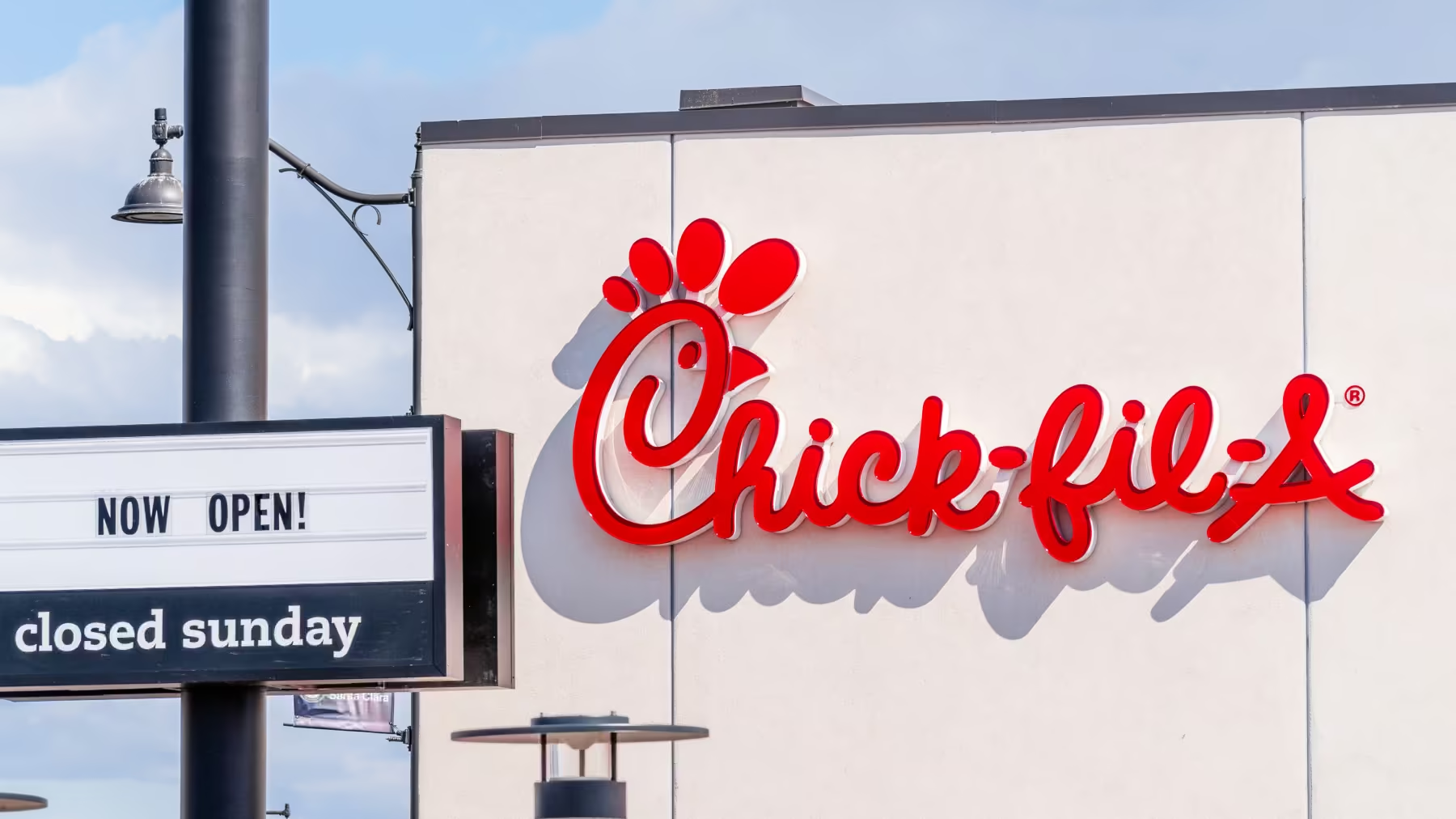
Another example of the impact of differing weekday traffic patterns is offered by the impact of mall-based Chick-fil-A locations on the distribution of mall visits throughout the week.
Despite its relatively small size, Chick-fil-A draws substantial traffic to malls. And after adding Chick-fil-A locations, both Northridge and Miller Hill Malls saw meaningful drops in the share of visits to the centers taking place on Sundays – even as the wider indoor mall segment saw slight upticks.
Recognizing this trend could prompt mall operators to compensate by adding more weekend-friendly traffic drivers – or to lean into this distinction by taking additional steps to bolster the mall’s role as a go-to weekday destination.
The power of different mall traffic magnets also varies throughout the day. Increasingly, shopping centers are turning to fitness centers as experiential anchors. And since many people work out early in the morning, these gyms are having a significant impact on the distribution of mall visits across dayparts.
The addition of gyms to Northshore Mall in Peabody, MA and Jackson Crossing in Jackson, MI, for instance, led to a significant rise in visits between 7:00 AM and noon. And though the rest of the stores in these malls typically open at 10:00 or 11:00 AM, this shift presents the centers with a significant opportunity.
By adjusting opening hours to accommodate these early-morning patrons, malls can capitalize on this added traffic, driving up visits and sales for relevant tenants – especially health-focused retailers such as juice bars and sporting goods stores.
Adopting a broader, visit-focused view of anchoring also allows mall operators to apply some of the strategies typically reserved for anchors to non-conventional traffic-generating businesses, to ensure a consistent flow of traffic year-round.
Pop-up stores and events, for example, generally don’t follow the same seasonal trends as other retailers – instead, they generate short-term visit boosts during their runs, whenever in the year that may be. And a visit-focused anchor strategy can leverage some of the perks traditionally reserved for anchor tenants – such as preferential leasing terms – to complement traditional full-time anchors during slower retail periods.
The Barbie Dreamhouse Living Truck Tour is a prime example of a traffic-driving pop-up. By bringing exclusive merchandise to malls across the U.S., the truck generates plenty of buzz, drawing crowds eager to snatch up limited-edition items and immerse themselves in all things Barbie. As a result, malls hosting the tour often see significant visit spikes, with foot traffic surging well above typical Saturday levels. Well-timed pop-ups like these can help balance out traffic throughout the year, offsetting traditional slow periods.
A visit-focused approach to anchor management can also help mall operators assess the potential impact of new tenants on existing stores operating in similar categories. For example, mall owners often worry that new tenants operating in similar categories might cannibalize existing businesses. But a visit-focused anchor approach reveals that a well-chosen addition can sometimes benefit current tenants – especially if they cater to similar audiences.
In February 2020, for instance, value supermarket Aldi opened at Green Acres Commons in Valley Stream, NY – a center that already hosted budget-friendly BJ’s Wholesale Club. While BJ’s visits were relatively flat in 2018 and 2019, they began to rise after Aldi’s opening (and following a pandemic-induced dip). Cross-shopping data also shows that Aldi customers were more likely to visit BJ’s than the average Green Acres patron last year.
This synergy may be due in part to the two retailers’ similar visitor bases: In 2024, the Aldi and BJ’s stores in Green Acres Common drew shoppers with comparable economic profiles. This suggests that overlapping audiences can become a strength if aligned brands attract new shoppers, who then explore multiple stores in the same center.
Looking ahead, effective mall anchors will be defined less by physical footprint and more by their capacity to maintain consistent, valuable foot traffic. While traditional department stores remain pivotal, smaller or niche brands can often rival – or surpass – large-format retailers. And by thinking out of the anchor box and choosing tenants that cultivate a balanced visitor flow and align with local preferences, operators can position their centers as true go-to destinations.