Thank you! Your submission has been received!
Oops! Something went wrong while submitting the form.
0
0
0
0
----------
0
0
Articles
Article
A Data-Driven Look at Consumer Behavioral Changes Across Food and Essentials Retail
R.J. Hottovy
Oct 11, 2024
3 minutes

We’ve spent a lot of time this past year analyzing how consumer behavior has evolved across the broader food and essentials category, noting that consumers continue to shop a wide number of stores across multiple channels for food purchases. With the release of Placer Data Version 2.1, we thought we’d revisit the topic.

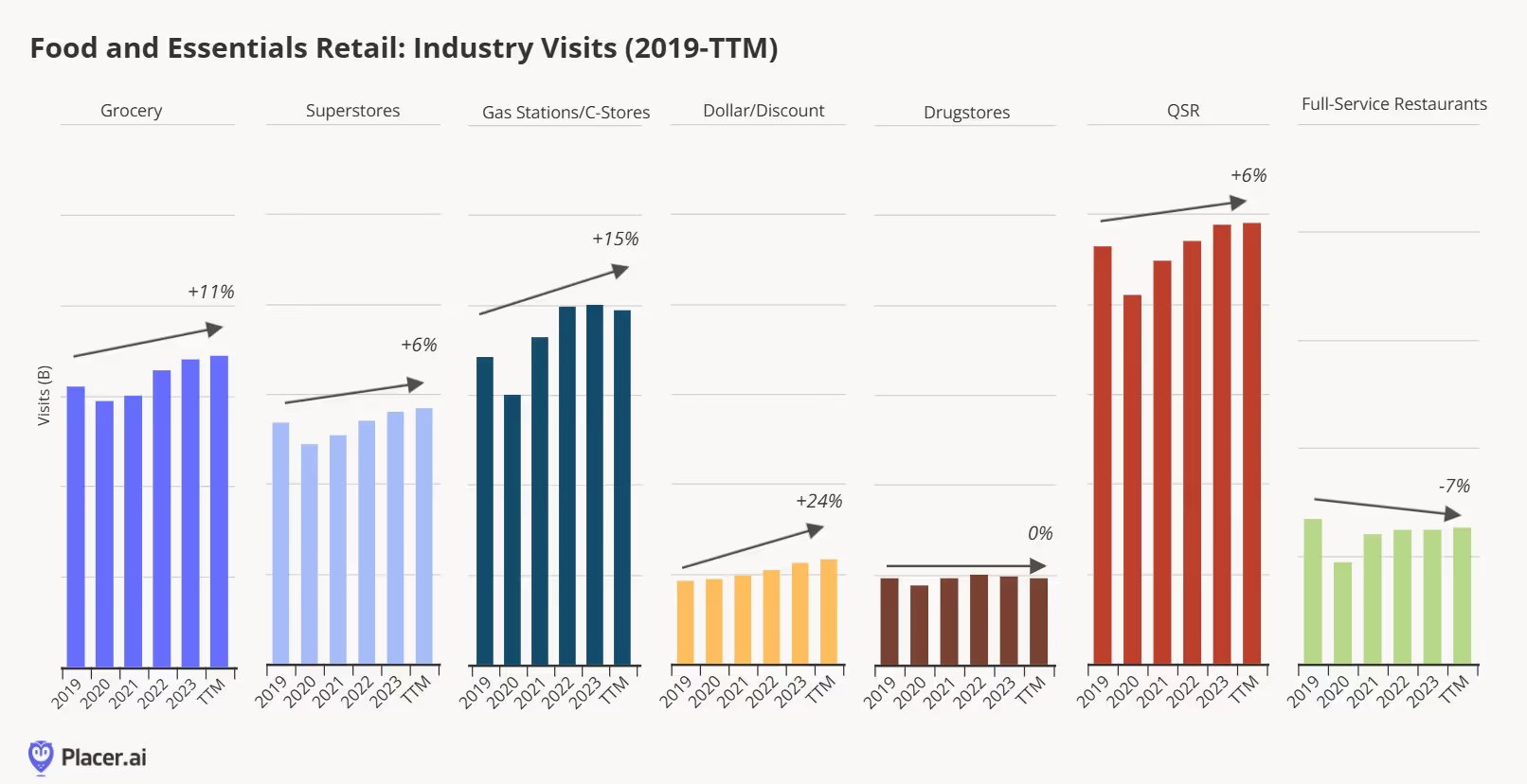
Below, we’ve presented total category visits for grocery stores (including both conventional and value grocery chains), superstores (including mass merchants and warehouse clubs), gas stations and convenience stores, dollar and discount stories (including liquidators), drugstores, quick-service restaurants (QSR), and full-service restaurants from 2019 to the trailing-twelve-month period (TTM0. A few takeaways: (1) Dollar stores saw the largest increase in total visits versus the other categories as they vastly expanded their food and consumables offering since 2019 to drive frequency and traffic. However, the pace of growth has decelerated materially over the past twelve months amid increased competitive pressure from superstore and value-oriented retailers like Aldi and 99 Cents Only Stores exiting the market; (2) drugstore visits have remained flat versus 2019 despite most of the major chains in the category undergoing store closure programs. We believe healthcare service and weight-loss drug prescriptions visits have helped to offset some of the store closures, although we continue to see some transfer of visits to other retail categories in this channel; and (3) the decline in full-service restaurants is partly due to permanent closures compared to 2019.

Visits by industry for food and essential retail from 2019 - TTM shows an increase for all except full service restaurants

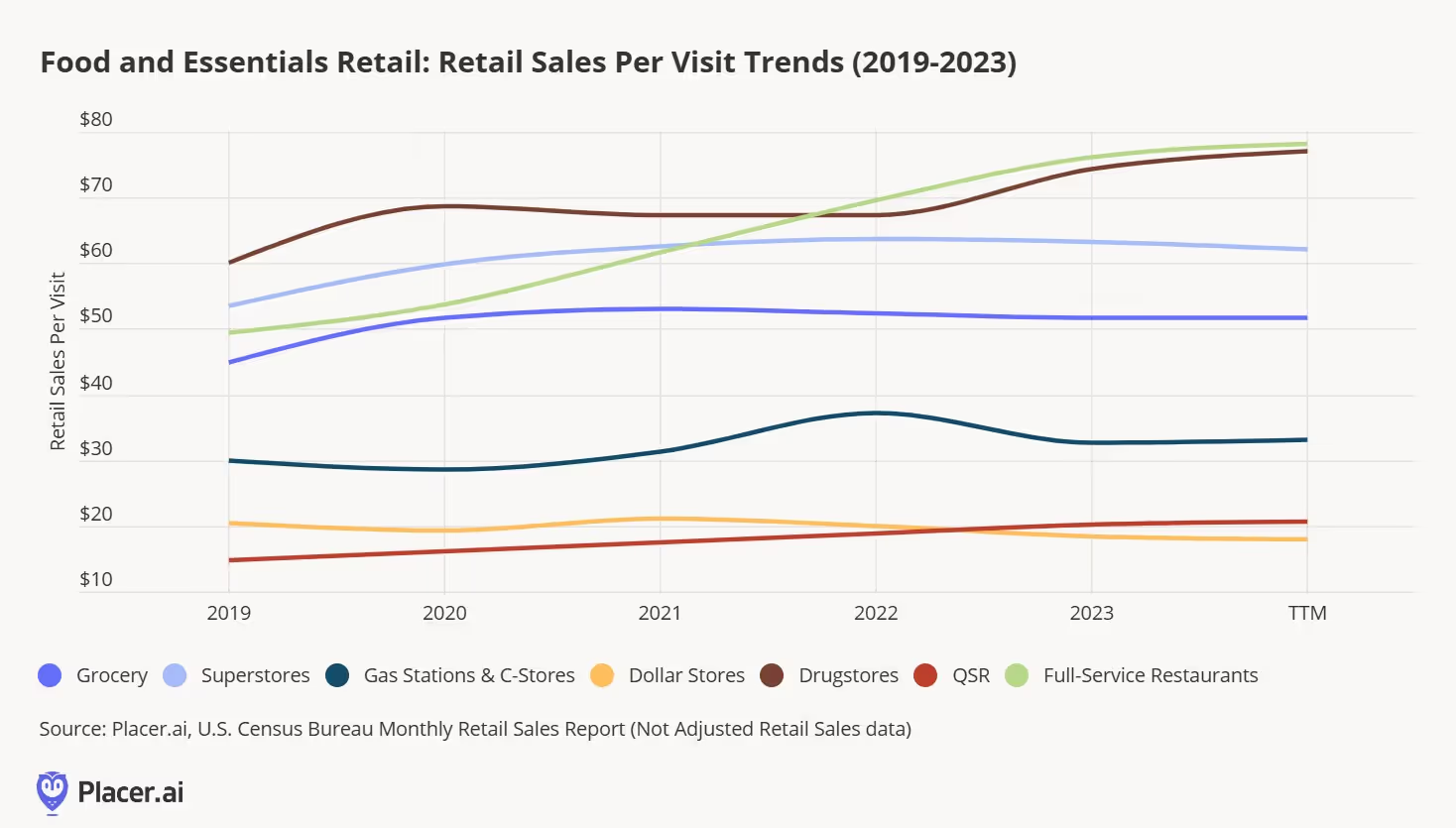
It gets interesting when we compare category-level retail sales data from the U.S. Census Bureau to our visitation data. Below, we’ve taken retail sales (on an unadjusted basis) for the same timeframe that we looked at above to analyze retail spend per visit. A few things stand out here: (1) Three categories saw the average retail sales per visit increase period of the analysis: QSR, full-service restaurants, and drugstores. The increase in drugstores is likely partly to due with the shift in sales mix to more healthcare related services, while the increase in QSR and full-service restaurant retail sales per visit likely explain this summer’s promotional activity to win back customers who traded to other channels; (2) The impact of increased promotional activity and fewer units purchased per transaction can be seen across the other categories, where we saw an inflection in retail sales per visit in 2023 and continuing into 2024 for most.

Food and essentials retail categories sales per visit from 2019 - 2023

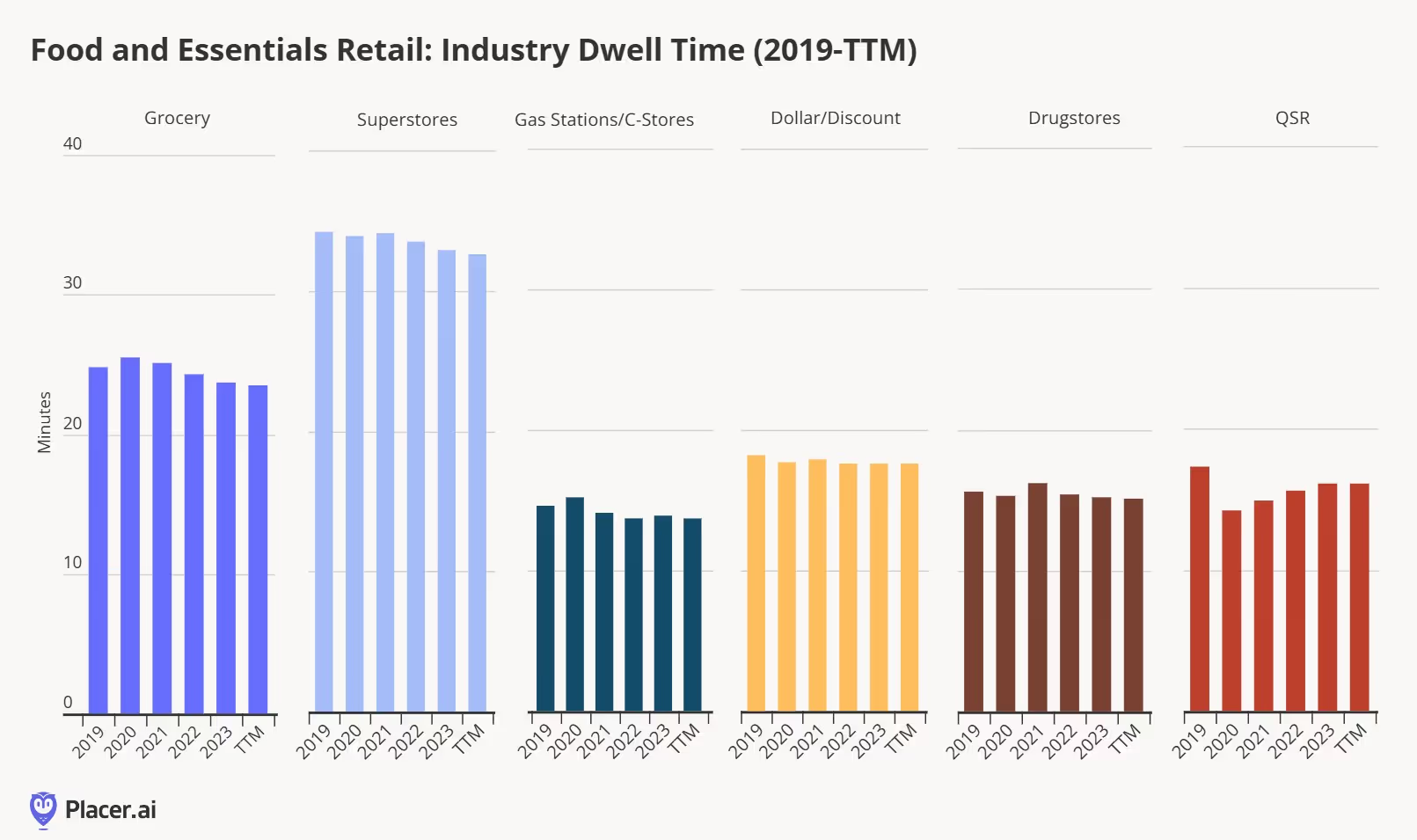
We also thought we’d assess dwell times across the different food and essentials retail categories (for purposes of this analysis, we’ve removed full-service restaurants, which have gone from an average dwell time of 52 minutes in 2019 to 49 minutes over the past twelve months, although we continue to see fine-dining chain dwell times exceed pre-pandemic levels as consumers look to maximize their experience when dining out). Here, we also see two callouts: (1) As consumers make food purchases across a wider number of channels, dwell time has decreased for most, matching the decrease in units per transaction that we've called out in the past. We did see dwell times increase for a few categories during the back half of 2023 which we believe was due to consumers engaging in price comparisons, but this has reversed in 2024 as consumers have now solidified new shopping routines (i.e., knowing what stores to get what deals); and (2) QSR dwell time remains below pre-pandemic levels, which isn’t surprising given that a higher percentage of transactions are now taking place via drive-thru and takeout orders. However, the increase in dwell time the past few years also suggests the potential for improved drive-thru optimization, a topic we recently analyzed.

Food and essentials industries dwell time from 2019 to most recent 12 months
Article
Catching Up With Carter's 
Carter’s Inc., owner of the OshKosh B’gosh and Carter’s baby and children’s clothing brands, is a major player in the nation’s $28 billion children's clothing industry. How is Carter's faring in 2024? We took a closer look to find out. 
Bracha Arnold
Oct 10, 2024
3 minutes

Carter’s Inc., owner of the OshKosh B’gosh and Carter’s baby and children’s clothing brands, is a major player in the nation’s $28 billion children's clothing industry. As of the end of 2023, the company boasted nearly 800 physical stores throughout the U.S. And after closing hundreds of stores in 2020, the brand is back to betting big on brick-and-mortar – with plans to open some 250 new U.S. locations by 2027. 

How is Carter's faring in 2024? We took a closer look to find out. 

Children's Clothing Creates Crowds

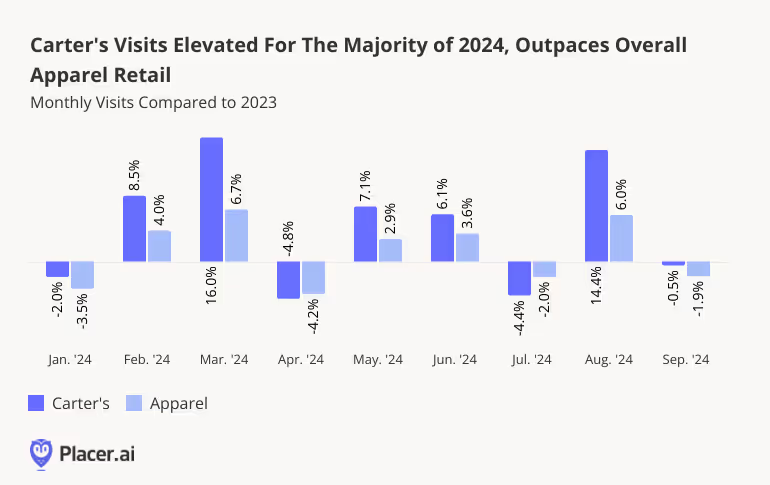
Discretionary spending cutbacks and the rise of online shopping have weighed on apparel retailers in recent years. But some clothing chains – including Carter’s – are bucking the trend. Between January and September 2024, monthly visits to Carter’s stores generally outpaced the wider apparel industry, with some months posting double-digit growth. 

March and August 2024 saw respective YoY visit increases of 16.0% and 14.4%, likely driven by pre-Easter and back-to-school shopping. (March and August 2024 each also had one more Saturday than March or August 2023 – a busy day for clothing stores.) And Carter’s finished out Q3 2024 with a 4.3% YoY visit increase, even as the broader apparel category saw just a minor 0.8% uptick.

Monthly visits for Carters vs Apparel comapared to 2023 show it outpaces the apparel category

Baby Sale Boom 

Indeed, examining weekly foot traffic to Carter's highlights the seasonality of the company’s visitation patterns. Visits are typically lower during the colder winter months but pick up in anticipation of Easter and spring break – likely encouraged by spring sales held by the brand. 

Carter’s real spike, however, comes during the back-to-school season, when parents head to the store to pick up new clothing for the school year – and when Carter's holds major back-to-school sales. During the week of August 5th, foot traffic surged to 29.5% above the year-to-date (YTD) weekly visit average. And with the holiday season fast approaching – including major retail milestones like Black Friday and Super Saturday – the children's retailer appears poised to enjoy continued success.

Weekly Visits Relative to Year-to-Date Weekly Visit Average for January - September 2024 show Easter and back to school drive visits

Family Friendly Fashion 

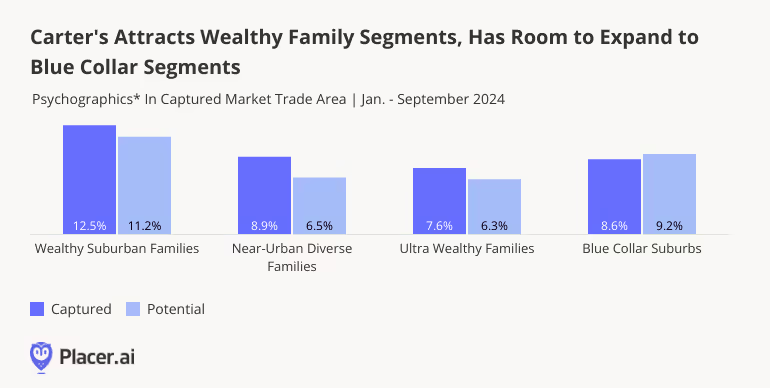
Unsurprisingly, Carter's attracts family segments to its stores, and over-indexes for wealthy and suburban family markets.

Using the Spatial.ai: PersonaLive dataset to analyze Carter's trade areas reveals that, on a nationwide level, the company’s captured market has higher shares of wealthy and suburban consumer segments than its potential one. (A chain’s potential market is obtained by weighting each Census Block Group (CBG) in its trade area according to population size, thus reflecting the overall makeup of the chain’s trade area. A business’ captured market, on the other hand, is obtained by weighting each CBG according to its share of visits to the chain in question – and thus represents the profile of its actual visitor base). 

Between January and September 2024, the shares of “Wealthy Suburban Families” and “Ultra Wealthy Families” in Carter's captured market stood at 12.5% and 8.9%, respectively – outpacing the company’s potential market shares. This highlights Carter's’ success in attracting these high-income family segments. Meanwhile, households hailing from “Blue Collar Suburbs” were underrepresented in Carter's captured market compared to its potential one. This suggests that, as Carter’s continues to open stores, targeting blue collar suburban areas may pay off for the brand.

Psychographics In Captured Market Trade Area for Jan. - September 2024 shows room to expand to blue collar segments

Kid-Sized Summary

Carter's is managing not just to survive, but to thrive. After closing stores during the pandemic, the company is back with full force, driving visits and maximizing high-traffic periods. 

Will Carter's continue to outpace the wider apparel category during the upcoming holiday season? 

Visit Placer.ai to keep up with the latest data-driven retail insights. 

This blog includes data from Placer.ai Data Version 2.1, which introduces a new dynamic model that stabilizes daily fluctuations in the panel, improving accuracy and alignment with external ground truth sources.

Article
A Texas Roadhouse and LongHorn Steakhouse Showdown
Find out how Texas Roadhouse and LongHorn Steakhouse performed in Q3 2024 – and explore factors contributing to their success.
Lila Margalit
Oct 9, 2024
4 minutes

Recovering consumer sentiment has provided a boost to restaurants in recent months – but not all dining segments are performing equally well. 

We dove into the data to check in with two casual dining steakhouse chains that were recently named America’s favorite full-service restaurants – Texas Roadhouse and Darden’s LongHorn Steakhouse. How did they perform in Q3? And what are some of the factors contributing to their success?

Leading the Full-Service Pack 

Since April 2024, Texas Roadhouse and LongHorn Steakhouse have both experienced consistently positive YoY foot traffic – outpacing the wider full-service restaurant space. The steakhouses’ strongest months were in May and June, when both chains traditionally draw big Mother’s Day and Father’s Day crowds. In August, too – prime vacation season – Texas Roadhouse and LongHorn Steakhouse experienced 12.5% and 9.3% YoY visit increases, respectively. 

On a quarterly basis, YoY visits to Texas Roadhouse and LongHorn Steakhouse increased 5.9% and 4.0%, respectively, in Q3 2024 – while the wider FSR space saw a 2.0% decline. And though some of this growth can be attributed to the chains’ expanding footprints, the average number of visits to each chain’s individual locations also rose YoY (3.0% for Texas Roadhouse and 2.6% for LongHorn Steakhouse).

Reaping Weekday Rewards

What is the secret to these steakhouses’ success? One factor that appears to be driving growth for both restaurants is their relative affordability – especially on weekday afternoons. The cost of beef has continued to climb in recent months – and though the two chains have been forced to raise prices, they have remained committed to providing high-quality meals that don’t break the bank. 

One way they’ve done so is through weekday specials that allow hungry customers to indulge as they go about their routines. Texas Roadhouse’s Early Dine Menu offers diners a variety of entrees for $8.99 to $11.99 – as long as they snag them before the dinner time rush. LongHorn Steakhouse, for its part, offers a lunchtime special on Mondays through Saturdays from 11:00 AM to 3:00 PM, including an $8.99 sandwich combo.  

And foot traffic data suggests that these offerings may be helping to drive traffic to the two chains. In Q3 2024 (July to September), both Texas Roadhouse and LongHorn Steakhouse saw significantly higher weekday YoY visit growth during the afternoons – 9.7% and 8.0% respectively, compared to 6.8% and 4.3% after 6:00 PM. The accelerating return-to-office push may also be contributing to the two chains’ YoY visit growth, as commuters seek out affordable places to have lunch with colleagues.

Staking Regional Claims

Texas Roadhouse and LongHorn Steakhouse are both major national chains – with locations spread across the continental U.S. But a look at the geographic distribution of visits to the two steakhouse giants shows that each of them has a somewhat different regional focus. Though Georgia – where LongHorn Steakhouse was founded – is the brand’s second-largest market in terms of restaurant count, the Peach State garnered the highest share of visits to the chain in Q3 2024 (13.3%). Next in line was Florida, with 12.6% of visits. For Louisiana-based Texas Roadhouse, on the other hand, Texas was at the center of it all – with Florida coming in a not-so-close second. 

Both chains, however, share some major markets – including Ohio (about six percent of visits to each chain) and Pennsylvania (about five percent of visits to each chain) – showing that many regional markets have plenty of room for high-quality, affordable steakhouses.

Something for Everyone – Especially in the Burbs

And a look at the demographic profiles of Texas Roadhouse and LongHorn Steakhouse’s trade areas shows that like other successful chains, both brands appeal to a wide range of audience segments. The eateries’ captured markets boast higher-than-average shares of very different suburban segments – from wealthy and upper-middle-class suburban families to suburban boomers and residents of blue collar suburbs.

Looking Ahead

Full-service restaurants still face significant hurdles in 2024 – from rising costs to discretionary spending cutbacks. The 2024 consumer prioritizes value and convenience, making it difficult for traditional sit-down eateries to compete. But the continued success of Texas Roadhouse and LongHorn Steakhouse proves that even in today’s difficult environment, FSR chains that succeed in providing affordable, high quality offerings can thrive. 

Follow Placer.ai for more data-driven restaurant insights. 

This blog includes data from Placer.ai Data Version 2.1, which introduces a new dynamic model that stabilizes daily fluctuations in the panel, improving accuracy and alignment with external ground truth sources.

Article
Placer.ai Mall Index: September 2024 Recap – Labor Day Peaks and Holiday Season Predictions
How are malls faring ahead of 2024's holiday season? We took a look at the data to find out.
Maytal Cohen
Oct 8, 2024
5 minutes

About the Mall Index: The Index analyzes data from 100 top-tier indoor malls, 100 open-air shopping centers (not including outlet malls) and 100 outlet malls across the country, in both urban and suburban areas. Placer.ai leverages a panel of tens of millions of devices and utilizes machine learning to make estimations for visits to locations across the country. 

The Calm Before the (Holiday) Storm

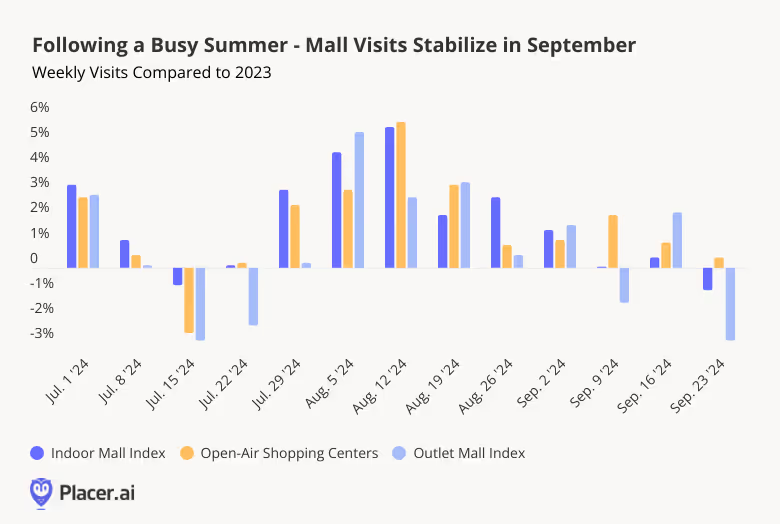
It was an amazing summer for malls, with August proving an especially strong month across all three mall categories – indoor malls, open-air shopping centers, and outlet malls. Between huge blockbuster summer releases, rising consumer confidence, and favorable weather, malls drew bigger crowds than they did last year. The week of August 12th saw YoY visit boosts of 5.6% for indoor malls, 5.8% for open-air centers, and 2.8% for outlet malls. (Outlet malls saw a more impressive YoY boost of 5.4% during the week of August 5th). 

As the summer wound down and families settled into back-to-school routines, mall traffic leveled off – with weekly YoY visits ranging from -2.9% to 2.2% in September. But September’s relative quiet won’t last long. Mall traffic is expected to ramp up again in October as early holiday promotions begin to draw crowds, as both retailers and consumers gear up for this year’s shorter holiday shopping season — just 27 days between Thanksgiving and Christmas.

Weekly mall visits for jul - sept. 2024 show a peak in the summer with stabilization in september

Labor Day Peaks

September’s relative quiet notwithstanding, the first Monday of the month – Labor Day – is always a busy one for retailers, and this year was no different. Eager crowds converged on malls during the holiday to take advantage of special sales and enjoy a day of retail therapy. 

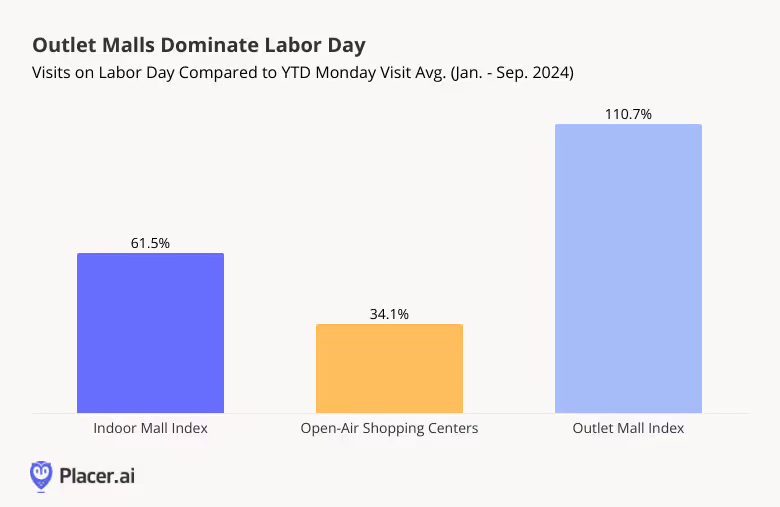
Compared to the average year-to-date Monday, indoor malls saw a 61.5% increase in foot traffic on Labor Day, while open-air shopping centers saw a 34.1% rise. But it was outlet malls that really hit it out of the park with a remarkable 110.7% boost. Outlet malls often lead during holiday weekends, as shoppers take advantage of their time off for an extended excursion.

Visits on labour day compared to year to date monday visit average for jan. - sept. 2024 shows outlet malls leading the way for visits increase

Predicting the Holiday Season 

What do malls’ 2024 performance thus far tell us about what they can expect this holiday season? 

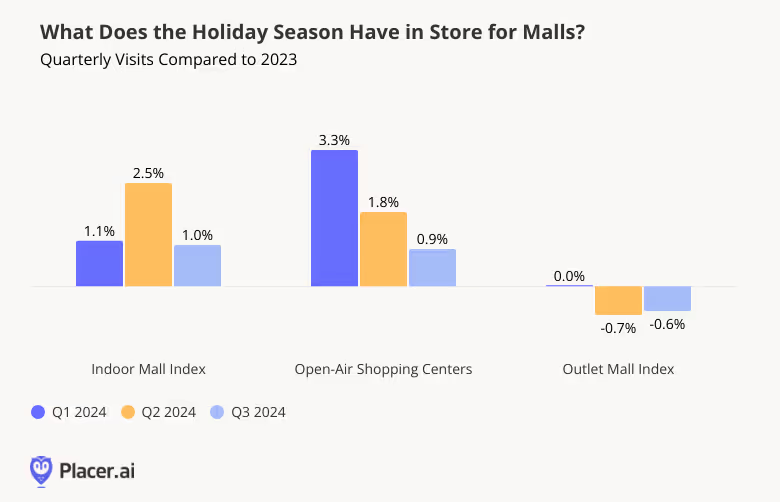
If the rest of the year is any indication, indoor malls and open-air shopping centers are poised for a robust holiday season, having experienced YoY visit growth during every quarter of the year so far. And while outlet mall visits have largely remained aligned with 2023 levels, they are traditionally strong performers during the holidays – so a solid season is still expected for them as well.

Quarterly mall visits compared to 2023 for Q1, Q2 and Q3 for indoor malls, open-air shopping and outlet malls

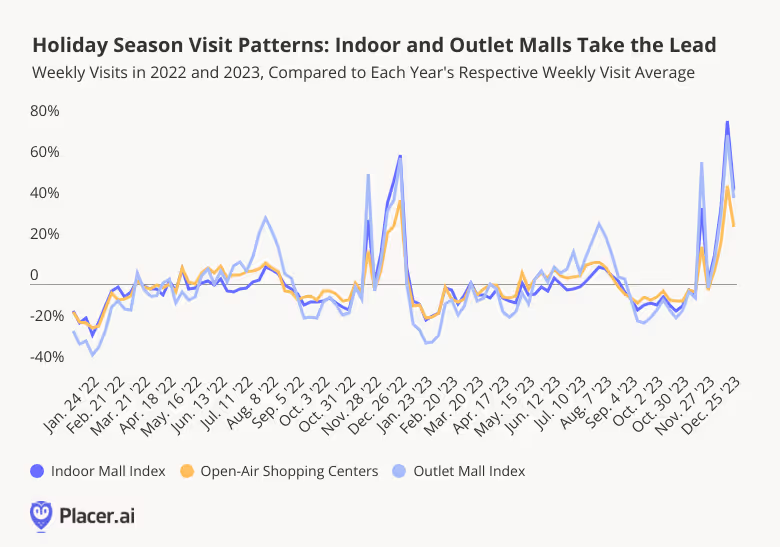
Indeed, in past years, outlet malls have proven to be major holiday shopping destinations. Comparing weekly visits to malls in 2022 and 2023 to each year’s weekly visit average shows significant surges in November and December, with outlet malls seeing the most pronounced spikes. 

During the week before Christmas in 2023, for example, outlet malls saw visits soar 79.3%, compared to 72.8% for indoor malls and 47.8% for open-air shopping centers. And on Black Friday outlet malls were the clear winners – with a 59.3% visit spike compared to 36.9% for indoor malls and just 18.2% for open-air centers. 

This year is expected to follow suit, with all three mall categories likely to see heavy traffic during the peak holiday weeks—and outlet malls expected to shine especially bright as shoppers go the extra mile to seek out the best deals.

Weekly visits in 2022 and 2023 compared to each years weekly visit average for malls show a great increase in visits for indoor and outlet malls during peak shopping seasons

Shorter Days, Longer Visits

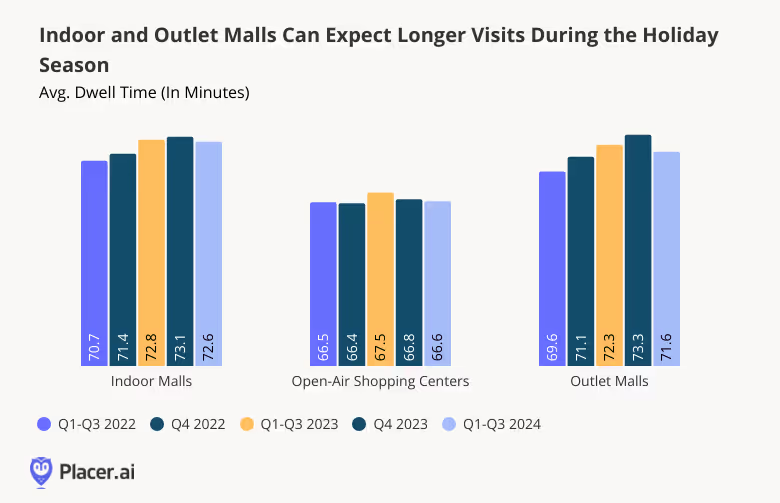
The holiday season not only boosts mall traffic but also shifts consumer behavior. Data from the past two years shows that malls’ average dwell times tend to increase during the all-important final quarter. In both 2022 and 2023, indoor and outlet malls saw average Q4 visit durations rise by about a minute compared to the rest of the year. Though a one-minute increase might appear minor, even a small shift in the overall average is significant given the millions of visits that take place during this period. 

This trend highlights a shift in consumer behavior during the holidays, as visitors spend more time strolling through malls to snag special deals and seek out ideal gifts for loved ones.  Interestingly, open-air shopping centers, which also saw smaller holiday visit peaks, did not show the same shift in dwell time – suggesting that visitor interaction with these centers during the holidays is more in line with that observed throughout the rest of the year.

Average dwell times for malls show higher dwell times for indoor and outlet malls during Q4

Looking Ahead

As October unfolds, and malls begin to fill with holiday scents, music, decor, and promotions, the sector appears well-positioned for a strong holiday season. And this optimism is even further bolstered by predictions of increased consumer spending in the months ahead.

Will malls meet these high expectations during the upcoming season? Follow our blog at Placer.ai to find out. 

This blog includes data from Placer.ai Data Version 2.1, which introduces a new dynamic model that stabilizes daily fluctuations in the panel, improving accuracy and alignment with external ground truth sources.

Article
Albertsons Q3 Check-In
Albertsons Companies operates over a dozen regional grocery banners and serves millions of shoppers nationwide. We looked at some of the trends and visitation patterns that drove visits in 2024 and dove into the demographics of some of its largest markets.
Bracha Arnold
Oct 7, 2024
3 minutes

Albertsons Companies is one of the largest grocery holding companies in the U.S., operating over a dozen regional grocery banners and serving millions of shoppers across the country. 

With such a broad presence, the brand caters to a highly diverse customer base – but some overall trends can be observed on a nationwide scale. We took a closer look at the overall visitation patterns the brand experienced in Q3 2024 and dove into the demographics of some of its largest markets.  

Holding Onto Gains

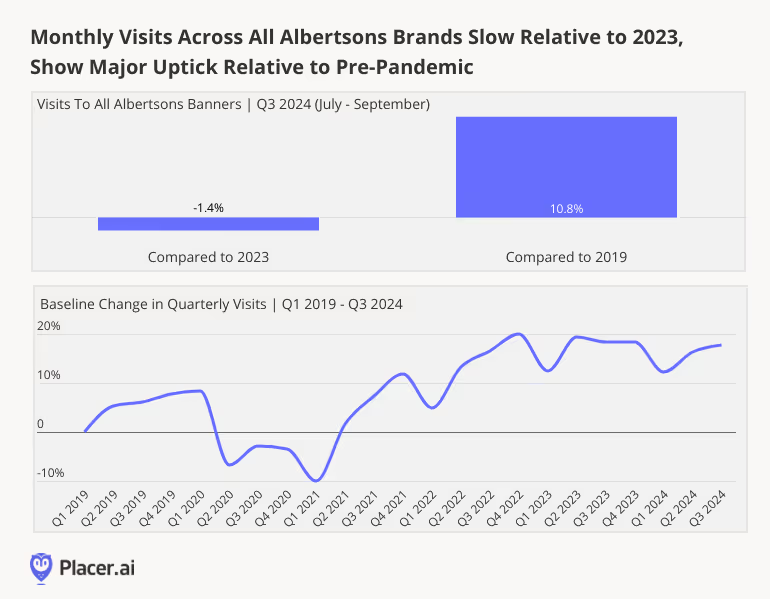
Year over year (YoY), Q3 2024 visits to Albertsons’ banners dropped 1.4% compared to the equivalent period of 2023, possibly reflecting the ongoing financial strain consumers face amid rising grocery prices. Despite this, visits to the company’s chains were significantly higher than pre-pandemic, with Q3 2024 visits up by 10.8% compared to 2019.

Analyzing quarterly visits to Albertsons’ banners relative to a Q1 2019 baseline further highlights the chain’s firm long-term positioning. After dropping during the pandemic, visits increased steadily through Q4 2022 – and have held steady since, despite the challenges facing traditional grocery stores over the past two years. This indicates that even in the face of the growing competition posed by online and value grocers, Albertsons has succeeded in holding onto gains and maintaining its standing within the sector.

Monthly visits at Albertson brands compared to 20233, 2019 and a baseline change since Q1 2019 shows consistent growth with some slowdown in the last year

Sale Events Drive Traffic Across All Banners

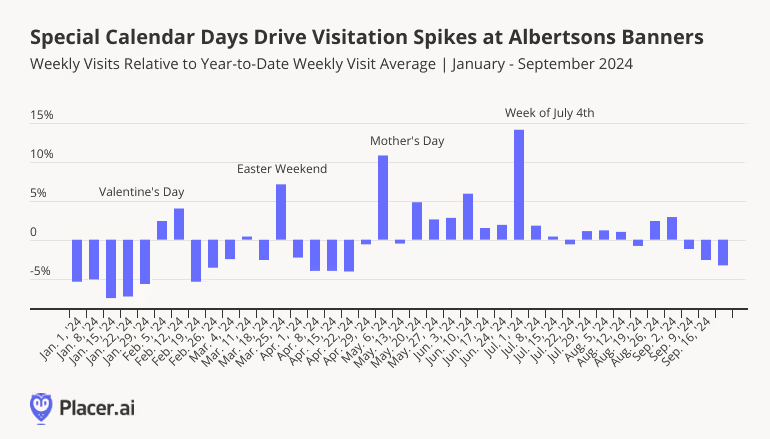
While major holidays like Thanksgiving and Christmas are known for driving grocery visits, other key dates also spark significant foot traffic across Albertsons’ banners. For instance, during the week of July 1, 2024, visits to the company’s portfolio spiked by 14.1% compared to the year-to-date (YTD) weekly visit average, as customers flocked to stores for July 4th weekend supplies.

Mother’s Day also drove significant foot traffic, with visits during the week of May 6, 2024 rising 10.8% above the YTD average. So with Halloween, Turkey Wednesday, and Christmas just around the corner, Albertsons appears poised to enjoy a busy holiday season.

Weekly visits relatively to visit average shows spikes on special calendar days: valentines, easter, mothers day and 4th of July

Albertsons’ Customer Base: Wealthier, Suburban Shoppers

Albertsons’ extensive reach means that it attracts a broad spectrum of consumers, but overall, the company tends to over-index for wealthier and suburban markets. 

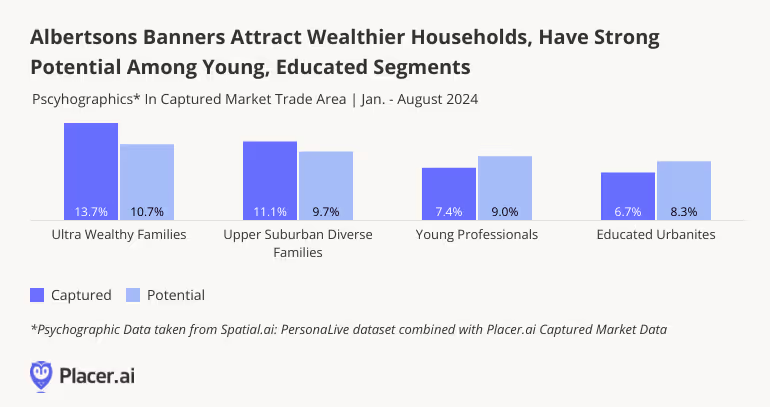
Using the Spatial.ai: PersonaLive dataset to analyze Albertsons' trade areas reveals that, on a nationwide level, the company’s captured market has higher shares of wealthy and suburban consumer segments than its potential one. (A business’ potential market is obtained by weighting each Census Block Group (CBG) in its trade area weighted according to the size of its population. A business’ captured market, on the other hand, is obtained by weighting each CBG according to its share of visits to the chain or venue in question – and thus represents the profile of its actual visitor base). 

During the first eight months of 2024, for example, the share of “Ultra Wealthy Families” in Albertsons’ captured market stood at 13.7%, higher than the company’s potential market share of 10.7%. This suggests that from within the overall trade areas served by Albertsons, the chain is especially successful at attracting this affluent demographic.  

On the flip side, consumer groups like “Young Professionals” and “Young Urban Singles” were underrepresented in Albertsons’ captured market compared to its potential one. This signals potential growth opportunities for Albertsons, as they could expand their appeal to younger, city-based segments.

Captured vs. potential markets of wealther households and young professionals showing Albertson banners attract wealthier households and have potential to tap into the younger markets more

Final Thoughts

Albertsons continues to offer something for everyone, enjoying visit boosts offered by special calendar days and growing its foot traffic relative to pre-pandemic.

For the latest data-driven grocery insights, visit Placer.ai.

This blog includes data from Placer.ai Data Version 2.1, which introduces a new dynamic model that stabilizes daily fluctuations in the panel, improving accuracy and alignment with external ground truth sources.

Article
Coffee: Shift to Drive-Thru Concepts Continues
Coffee chains saw growth this year, but drive-thru focused brands like Dutch Bros. thrived, while Starbucks and Dunkin' saw declines. Starbucks is now shifting strategy to adapt.
R.J. Hottovy
Oct 4, 2024
2 minutes

It’s been quite a year for coffee and beverage chains. Heading into the year, we thought the category would see strong visitation trends due to store expansion, return-to-work, menu innovation, migration, and new approaches to promotional strategies. By and large, that has played out, with mid-single-digit visitation growth on a year-over-year basis (excluding January, which was negatively impacted by inclement weather across much of the country, and April, which was impacted by a calendar shift that resulted in four weekends this year versus five in the year-ago period).

coffee and beverage chains year over year monthly visits

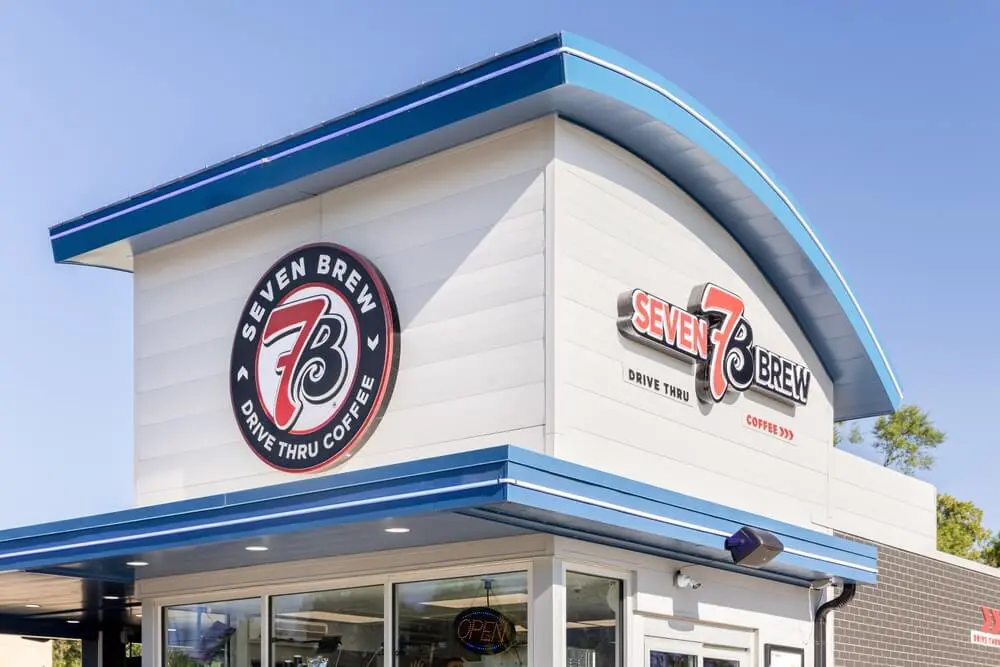
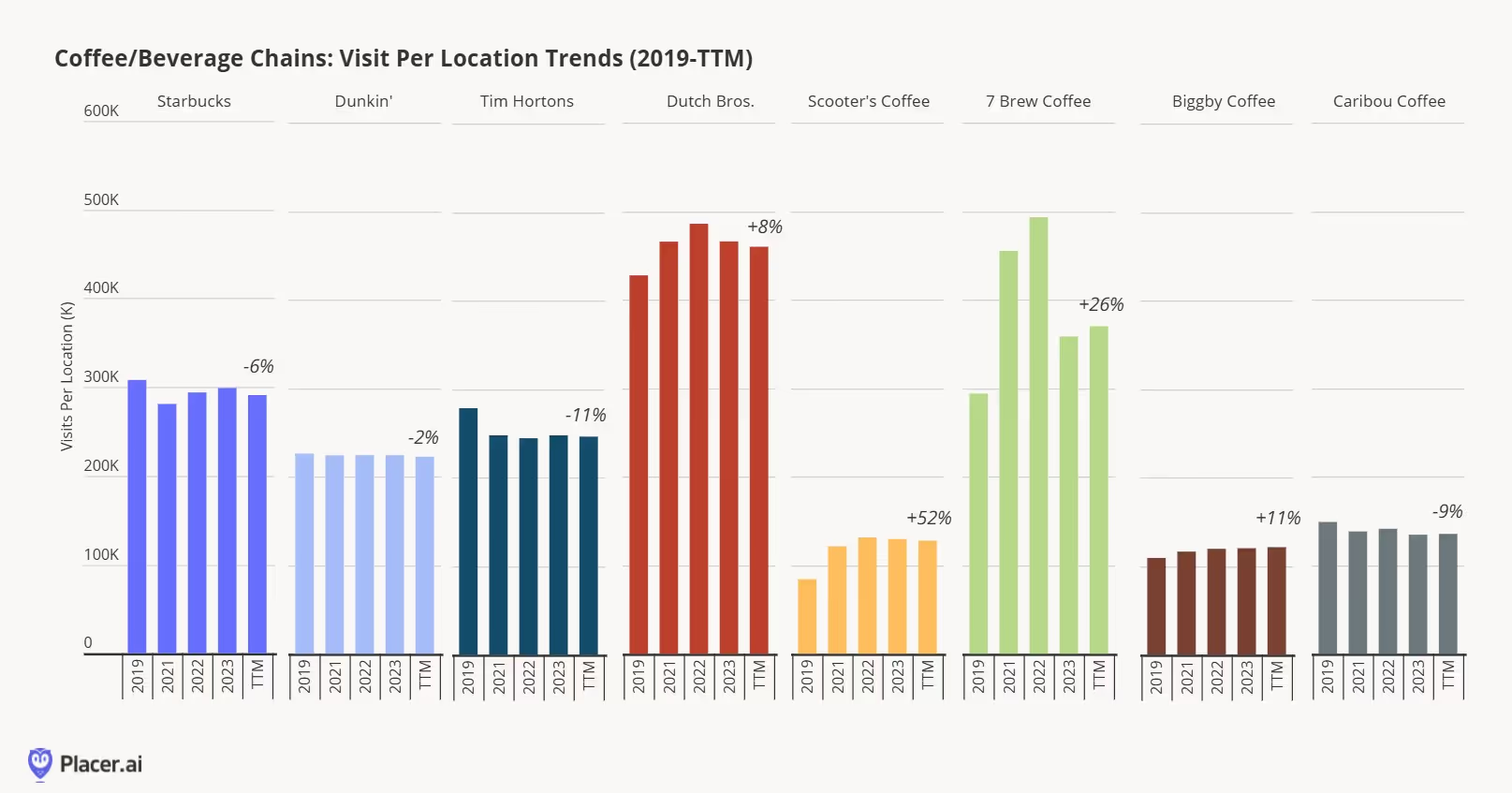
Of course, the category has been much more nuanced. Category-leader Starbucks has seen visits moderate, which played a part in one of the more notable leadership changes in the restaurant industry history. However, as we’ve discussed over the past several years, the shift to drive-thru focused coffee and beverage chains has accounted for much of the growth. Below, we’ve presented visits per location for eight of the leading coffee and beverage chains. Drive-thru chains like Dutch Bros., Scooter’s Coffee, 7 Brew Coffee, and Biggby Coffee all remain well above their pre-pandemic visit per location trends, even as they continue to aggressively expand unit openings. On the other hand, traditional players like Starbucks, Dunkin’, Tim Hortons, and Caribou Coffee have all seen visit per location declines the past several years.

Coffee and beverage trends visits per location for select chains

The success of these emergent competitors will likely result in further changes across Starbucks and other legacy coffee chains. New Starbucks CEO Brian Niccol has already made it clear that, going forward, Starbucks stores will have “a clear distinction between “to-go” and “for-here” service”, and we suspect other chains will follow suit.

Reports
INSIDER
Report
A New Era for Retail Giants: Who’s Winning in 2025?
Find out how the Dollar General, Dollar Tree, and Costco's hyper growth have changed the retail landscape and see how Walmart and Target can stay competitive in today's value-driven market.
August 21, 2025

Key Takeaways:

1. The hypergrowth of Costco, Dollar Tree, and Dollar General between 2019 and 2025 has fundamentally changed the brick-and-mortar retail landscape. 

2. Overall visits to Target and Walmart have remained essentially stable even as traffic to the new retail giants skyrocketed – so the increased competition is not necessarily coming at legacy giants' expense. Instead, each retail giant is filling a different need, and success now requires excelling at specific shopping missions rather than broad market dominance.

3. Cross-shopping has become the new normal, with Walmart and Target maintaining their popularity even as their relative visit shares decline, creating opportunities for complementary rather than purely competitive strategies.

4. Dollar stores are rapidly graduating from "fill-in" destinations to primary shopping locations, signaling a fundamental shift in how Americans approach everyday retail.

5. Walmart still enjoys the highest visit frequency, but the other four chains – and especially Dollar General – are gaining ground in this realm.

6. Geographic and demographic specialization is becoming the key differentiator, as each chain carves out distinct niches rather than competing head-to-head across all markets and customer segments.

Shifting Retail Dynamics

Evolving shopper priorities, economic pressures, and new competitors are reshaping how and where Americans buy everyday goods. And as value-focused players gain ground, legacy retail powerhouses are adapting their strategies in a bid to maintain their visit share. In this new consumer reality, shoppers no longer stick to one lane, creating a complex ecosystem where loyalty, geography, and cross-visitation patterns – not just market share – define who is truly winning.

This report explores the latest retail traffic data for Walmart, Target, Costco, Dollar Tree, and Dollar General to decode what consumers want from retail giants in 2025. By analyzing visit patterns, loyalty trends, and cross-shopping shifts, we reveal how fast-growing chains are winning over consumers and uncover the strategies helping legacy players stay competitive in today's value-driven retail landscape. 

The New Competitive Landscape

Dollar General, Dollar Tree, and Costco's Hypergrowth Since 2019 

In 2019, Walmart and Target were the two major behemoths in the brick-and-mortar retail space. And while traffic to these chains remains close to 2019 levels, overall visits to Dollar General, Dollar Tree, and Costco have increased 36.6% to 45.9% in the past six years. Much of the growth was driven by aggressive store expansions, but average visits per location stayed constant (in the case of Dollar Tree) or grew as well (in the case of Dollar General and Costco). This means that these chains are successfully filling new stores with visitors – consumers who in the past may have gone to Walmart or Target for at least some of the items now purchased at wholesale clubs and dollar stores. 

This substantial increase in visits to Costco, Dollar General, and Dollar Tree has altered the competitive landscape in which Walmart and Target operate. In 2019, 55.9% of combined visits to the five retailers went to Walmart. Now, Walmart’s relative visit share is less than 50%. Target received the second-highest share of visits to the five retailers in 2019, with 15.9% of combined traffic to the chains. But Between January and July 2025, Dollar General received more visits than Target – even though the discount store had received just 12.1% of combined visits in 2019.

Some of the growth of the new retail giants could be attributed to well-timed expansion. But the success of these chains is also due to the extreme value orientation of U.S. consumers in recent years. Dollar General, Dollar Tree, and Costco each offer a unique value proposition, giving today's increasingly budget-conscious shoppers more options.

The Role of Each Retail Giant in the Wider Retail Ecosystem

Walmart’s strategy of "everyday low prices" and its strongholds in rural and semi-rural areas reflect its emphasis on serving broad, value-focused households – often catering to essential, non-discretionary shopping. 

Dollar General serves an even larger share of rural and semi-rural shoppers than Walmart, following its strategy of bringing a curated selection of everyday basics to underserved communities. The retailer's packaging is typically smaller than Walmart's, which allows Dollar General to price each item very affordably – and its geographic concentration in rural and semi-rural areas also highlights its direct competition to Walmart. 

By contrast, Target and Costco both compete for consumer attention in suburban and small city settings, where shopper profiles tilt more toward families seeking one-stop-shopping and broader discretionary offerings. But Costco's audience skews slightly more affluent – the retailer attracts consumers who can afford the membership fees and bulk purchasing requirements – and its visit growth may be partially driven by higher income Target shoppers now shopping at Costco. 

Dollar Tree, meanwhile, showcases a uniquely balanced real estate strategy. The chain's primary strength lies in suburban and small cities but it maintains a solid footing in both rural and urban areas. The chain also offers a unique value proposition, with a smaller store format and a fixed $1.25 price point on most items. So while the retailer isn't consistently cheaper than Walmart or Dollar General across all products, its convenience and predictability are helping it cement its role as a go-to chain for quick shopping trips or small quantities of discretionary items. And its versatile, three-pronged geographic footprint allows it to compete across diverse markets: Dollar Tree can serve as a convenient, quick-trip alternative to big-box retailers in the suburbs while also providing essential value in both rural and dense urban communities.

As each chain carves out distinct geographic and demographic niches, success increasingly depends on being the best option for particular shopping missions (bulk buying, quick trips, essential needs) rather than trying to be everything to everyone.

Cross-Shopping on the Rise Despite Visit Share Shuffle

Still, despite – or perhaps due to – the increased competition, shoppers are increasingly spreading their visits across multiple retailers: Cross-shopping between major chains rose significantly between 2019 and 2025. And Walmart remains the most popular brick-and-mortar retailer, consistently ranking as the most popular cross-shopping destination for visitors of every other chain, followed by Target.

This creates an interesting paradox when viewed alongside the overall visit share shift. Even as Walmart and Target's total share of visits has declined, their importance as a secondary stop has actually grown. This suggests that the legacy retail giants' dip in market share isn't due to shoppers abandoning them. Instead, consumers are expanding their shopping routines by visiting other growing chains in addition to their regular trips to Walmart and Target, effectively diluting the giants' share of a larger, more fragmented retail landscape.

Cross-visitation to Costco from Walmart, Target, and Dollar Tree also grew between 2019 and 2025, suggesting that Costco is attracting a more varied audience to its stores.

But the most significant jumps in cross-visitation went to Dollar Tree and Dollar General, with cross-visitation to these chains from Target, Walmart, and Costco doubling or tripling over the past six years. This suggests that these brands are rapidly graduating from “fill-in” fare to primary shopping destinations for millions of households.

The dramatic rise in cross-visitation to dollar stores signals an opportunity for all retailers to identify and capitalize on specific shopping missions while building complementary partnerships rather than viewing every chain as direct competition. 

Competition For Visit Frequency in a Fragmented Retail Landscape 

Walmart’s status as the go-to destination for essential, non-discretionary spending is clearly reflected in its exceptional loyalty rates – nearly half its visitors return at least three times per month on average -between  January to July 2025, a figure virtually unchanged since 2019. This steady high-frequency visitation underscores how necessity-driven shopping anchors customer routines and keeps Walmart atop the retail loyalty ranks. 

But the data also reveals that other retail giants – and Dollar General in particular – are steadily gaining ground. Dollar General's increased visit frequency is largely fueled by its strategic emphasis on adding fresh produce and other grocery items, making it a viable everyday stop for more households and positioning it to compete more directly with Walmart.

Target also demonstrates a notable uptick in loyal visitors, with its share of frequent shoppers visiting at least three times a month rising from 20.1% to 23.6% between 2019 and 2025. This growth may suggest that its strategic initiatives – like the popular Drive Up service, same-day delivery options, and an appealing mix of essentials and exclusive brands – are successfully converting some casual shoppers into repeat customers. 

Costco stands out for a different reason: while overall visits increased, loyalty rates remained essentially unchanged. This speaks to Costco’s unique position as a membership-based outlet for targeted bulk and premium-value purchases, where the shopping behavior of new visitors tends to follow the same patterns as those of its  already-loyal core. As a result, trip frequency – rooted largely in planned stock-ups – remains remarkably consistent even as the warehouse giant grows foot traffic overall. 

Dollar Tree currently has the smallest share of repeat visitors but is improving this metric. As it successfully encourages more frequent trips and narrows the loyalty gap with its larger rivals, it's poised to become an increasing source of competition for both Target and Costco.

The increase in repeat visits and cross-shopping across the five retail giants showcases consumers' current appetite for value-oriented mass merchants and discount chains. And although the retail giants landscape may be more fragmented, the data also reveals that the pie itself has grown significantly – so the increased competition does not necessarily need to come at the expense of legacy retail giants. 

The Path Forward

The retail landscape of 2025 demands a fundamental shift from zero-sum competition to strategic complementarity, where success lies in owning specific shopping missions rather than fighting for total market dominance. Retailers that forego attempting to compete on every front and instead clearly communicate their mission-specific value propositions – whether that's emergency runs, bulk essentials, or family shopping experiences – may come out on top. 

INSIDER
Report
LA vs SF: Divergent Office Recovery Paths
See the data on Los Angeles and San Francisco's divergent office recovery paths and understand why Century City is emerging as LA's standout submarket for CRE professionals.
Placer Research
August 4, 2025
6 minutes

Key Takeaways: 

1. Market Divergence: While San Francisco's return-to-office trends have stabilized, Los Angeles is increasingly lagging behind national averages with office visits down 46.6% compared to pre-pandemic levels as of June 2025.

2. Commuter Pattern Shifts: Los Angeles faces a persistent decline in out-of-market commuters while San Francisco's share of out-of-market commuters has recovered slightly, indicating deeper structural challenges in LA's office market recovery.

3. Visit vs. Visitor Gap: Unlike other markets where increased visits per worker offset declining visitor numbers, Los Angeles saw both metrics decline year-over-year, suggesting fundamental workforce retention issues.

4. Century City Exception: Century City emerges as LA's strongest office submarket with visits only 28.1% below pre-pandemic levels, driven by its premium amenities and strategic location adjacent to Westfield Century City shopping center.

5. Demographic Advantage: Century City's success may stem from its success in attracting affluent, educated young professionals who value lifestyle integration and are more likely to maintain consistent office attendance in hybrid work arrangements.

LA and SF Office Markets Post-Pandemic Divergeance

While return-to-office trends have stabilized in many markets nationwide, Los Angeles and San Francisco face unique challenges that set them apart from national patterns. This report examines the divergent trajectories of these two major West Coast markets, with particular focus on Los Angeles' ongoing struggles and the emergence of one specific submarket that bucks broader trends.

Through analysis of commuter patterns, demographic shifts, and localized performance data, we explore how factors ranging from out-of-market workforce changes to amenity-driven location advantages are reshaping the competitive landscape for office real estate in Southern California.

LA is Falling Behind on RTO 

LA Recovery Lags as SF RTO Stabilizes

Both Los Angeles and San Francisco continue to significantly underperform the national office occupancy average. In June 2025, average nationwide visits to office buildings were 30.5% below January 2019 levels, compared to a 46.6% and 46.4% decline in visits to Los Angeles and San Francisco offices, respectively. 

While both cities now show similar RTO rates, they arrived there through different trajectories. San Francisco has consistently lagged behind national return-to-office levels since pandemic restrictions first lifted.

Los Angeles, however, initially mirrored nationwide trends before its office market began diverging and falling behind around mid-2022.

Decline in Out-of-Market Commuters 

The decline in office visits in Los Angeles and San Francisco can be partly attributed to fewer out-of-market commuters. Both cities saw significant drops in the percentage of employees who live outside the city but commute to work between H1 2019 and H1 2023.

However, here too, the two cities diverged in recent years: San Francisco's share of out-of-market commuters relative to local employees rebounded between 2023 and 2024, while Los Angeles' continued to decline – another indication that LA's RTO is decelerating as San Francisco stabilizes.

Unlike in SF, LA Office Visit Growth Doesn't Offset Visitor Decline

Like in other markets, Los Angeles saw a larger drop in office visits than in office visitors when comparing current trends to pre-pandemic levels. This is consistent with the shift to hybrid work arrangements, where many of the workers who returned to the office are coming in less frequently than before the pandemic, leading to a larger drop in visits compared to the drop in visitors. 

But looking at the trajectory of RTO more recently shows that in most markets – including San Francisco – office visits are up year-over-year (YoY) while visitor numbers are down. This suggests that the workers slated to return to the office have already done so, and increasing the numbers of visits per visitor is now the path towards increased office occupancy.  

In Los Angeles, visits also outperformed visitors – but both figures were down YoY (the gap in visits was smaller than the gap in visitors). So while the visitors who did head to the office in LA in Q2 2025 clocked in more visits per person compared to Q2 2024, the increase in visits per visitor was not enough to offset the decline in office visitors.

Century City is a Pocket of RTO Strength

While Los Angeles may be lagging in terms of its overall office recovery, the city does have pockets of strength – most notably Century City. In Q2 2025, the number of inbound commuters visiting the neighborhood was just 24.7% lower than it was in Q2 2019 and higher (+1.0%) than last year's levels. 

According to Colliers' Q2 2025 report, Century City accounts for 27% of year-to-date leasing activity in West Los Angeles – more than double any other submarket – and commands the highest asking rental rates. The area benefits from Trophy and Class A office towers that may create a flight-to-quality dynamic where tenants migrate from urban core locations to this Westside submarket.


The submarket's success is likely bolstered by its strategic location adjacent to Westfield Century City shopping center – visit data reveals that 45% of weekday commuters to Century City also visited Westfield Century City during Q2 2025. The convenience of accessing the mall's extensive retail, dining, and entertainment options during lunch breaks or after work may encourage employees to come into the office more frequently.

Century City Attracts Younger, More Affluent Employees

Perhaps thanks to its strategic locations and amenities-rich office buildings, Century City succeeds in attracting relatively affluent office workers. 

Century City's office submarket has a higher median trade area household income (HHI) than either mid-Wilshire or Downtown LA. The neighborhood also attracts significant shares of the "Educated Urbanite" Spatial.ai: PersonaLive segment – defined as "well educated young singles living in dense urban areas working relatively high paying jobs".

This demographic typically has fewer family obligations and greater flexibility in their work arrangements, making them more likely to embrace hybrid schedules that include regular office attendance. Affluent singles also tend to value the lifestyle amenities and networking opportunities that come with working in a premium office environment like Century City: This demographic is often in career-building phases where in-person collaboration and visibility matter more, driving consistent office utilization that helps sustain the submarket's performance even as other LA office areas struggle with lower occupancy rates.

The higher disposable income of this audience also aligns well with the submarket's upscale retail and dining options at nearby Westfield Century City, creating a mutually reinforcing ecosystem where the office environment and surrounding amenities cater to their preferences.

Premium Locations Pull Ahead as Office Market Polarizes

As the broader Los Angeles market grapples with a shrinking commuter base and declining office utilization, the performance gap between premium, amenity-rich locations and traditional office districts is likely to widen. For investors and tenants alike, these trends underscore the growing importance of location quality, demographic targeting, and lifestyle integration in determining long-term office market viability across Southern California.

Century City's success – anchored by its affluent, career-focused workforce and integrated lifestyle amenities – can offer a blueprint for office market resilience in the hybrid work era. 

INSIDER
Report
6 Trends Still Defining Post- Pandemic Consumer Behavior
Dive into the data five years post-COVID to uncover six fundamental shifts in consumer behavior since the pandemic.
Placer Research
July 17, 2025
10 minutes

Key Takeaways: 

1. Appetite for offline retail & dining is stronger than ever. Both retail and dining visits were higher in H1 2025 than they were pre-pandemic.

2. Consumers are willing to go the extra mile for the perfect product or brand. The era of one-stop-shops may be waning, as many consumers now prefer to visit multiple chains or stores to score the perfect product match for every item on their shopping list.

3. Value – and value perception – gives chains a clear advantage. Value-oriented retail and dining segments have seen their visits skyrocket since the pandemic. 

4. Consumer behavior has bifurcated toward budget and premium options. This trend is driving strength at the ends of the spectrum while putting pressure on many middle-market players. 

5. The out-of-home entertainment landscape has been fundamentally altered. Eatertainment and museums have stabilized at a different set point than pre-COVID, while movie theater traffic trends are now characterized by box-office-driven volatility.   

6. Hybrid work permanently reshaped office utilization. Visits to office buildings nationwide are still 33.3% below 2019 levels, despite RTO efforts.

The first half of 2025 marked five years since the onset of the pandemic – an event that continues to impact retail, dining, entertainment, and office visitation trends today. 

This report analyzes visitation patterns in the first half of 2025 compared to H1 2019 and H1 2024 to identify some of the lasting shifts in consumer behavior over the past five years. What is driving consumers to stores and dining venues? Which categories are stabilizing at a higher visit point? Where have the traffic declines stalled? And which segments are still in flux? Read the report to find out. 

Retail Outperforming Dining

In the first half of 2025, visits to both the retail and dining segments were consistently higher than they were in 2019. In both the dining and the retail space, the increases compared to pre-COVID were probably driven by significant expansions from major players, including Costco, Chick-fil-A, Raising Cane's, and Dutch Bros, which offset the numerous retail and dining closures of recent years. 

The overall increase in visits indicates that, despite the ubiquity of online marketplaces and delivery services, consumer appetite for offline retail and dining remains strong – whether to browse in store, eat on-premises, collect a BOPIS order, or pick up takeaway. 

Product and Brand Focused Consumers Bypass Convenience 

A closer look at the chart above also reveals that, while both retail and dining visits have exceeded pre-pandemic levels, retail visit growth has slightly outpaced the dining traffic increase. 

The larger volume of retail visits could be due to a shift in consumer behavior – from favoring convenience to prioritizing the perfect product match and exhibiting a willingness to visit multiple chains to benefit from each store's signature offering. Indeed, zooming into the superstore and grocery sector shows an increase in cross-shopping since COVID, with a larger share of visitors to major grocery chains regularly visiting superstores and wholesale clubs. It seems, then, that many consumers are no longer looking for a one-stop-shop where they can buy everything at once. Instead, shoppers may be heading to the grocery stores for some things, the dollar store for other items, and the wholesale club for a third set of products. 

This trend also explains the success of limited assortment grocers in recent years – shoppers are willing to visit these stores to pick up their favorite snack or a particularly cheap store-branded basic, knowing that this will be just one of several stops on their grocery run.  

Value-Oriented Categories Fuel Retail Growth 

Value-Forward Retail Categories Still Growing

Diving into the traffic data by retail category reveals that much of the growth in retail visits since COVID can be attributed to the surge in visits to value-oriented categories, such as discount & dollar stores, value grocery stores, and off-price apparel. This period has been defined by an endless array of economic obstacles like inflation, recession concerns, gas price spikes, and tariffs that all trigger an orientation to value. The shift also speaks to an ability of these categories to capitalize on swings – consumers who visited value-oriented retailers to cut costs in the short term likely continued visiting those chains even after their economic situation stabilized.

Some of the visit increases are due to the aggressive expansion strategies of leaders in those categories – including Dollar General and Dollar Tree, Aldi, and all the off-price leaders. But the dramatic increase in traffic – around 30% for all three categories since H1 2019 – also highlights the strong appetite for value-oriented offerings among today's consumers. And zooming into YoY trends shows that the visit growth is still ongoing, indicating that the demand for value has not yet reached a ceiling. 

Value Alone Doesn't Drive Success

While affordable pricing has clearly driven success for value retailers, offering low prices isn't a guaranteed path to growth. Although traffic to beauty and wellness chains remains significantly higher than in 2019, this growth has now plateaued – even top performers like Ulta saw slight YoY declines following their post-pandemic surge – despite the relatively affordable price points found at these chains.

Some of the beauty visit declines likely stems from consumers cutting discretionary spending – but off-price apparel's ongoing success in the same non-essential category suggests budget constraints aren't the full story. Instead, the plateauing of beauty and drugstore visits while off-price apparel visits boom may be due to the difference in value perception: Off-price retailers are inherently associated with savings, while drugstores and beauty retailers, despite carrying affordable items, lack that same value-driven brand positioning. This may suggest that in today's market, perceived value matters as much as actual affordability.

Traffic to Chains Selling Big-Ticket Products Significantly Below 2019 Levels 

Another indicator of the importance of value perception is the decline in visits to chains selling bigger-ticket items – both home furnishing chains and electronic stores saw double-digit drops in traffic since H1 2019. 

And looking at YoY trends shows that visits here have stabilized – like in the beauty and drugstore categories – suggesting that these sectors have reached a new baseline that reflects permanently shifted consumer priorities around discretionary spending.

Bifurcation of Consumer Behavior  

Mid-Market Apparel Underperforms Luxury & Off-Price

A major post-pandemic consumer trend has been the bifurcation of consumer spending – with high-end chains and discount retailers thriving while the middle falls behind. This trend is particularly evident in the apparel space – although off-price visits have taken off since 2019 (as illustrated in the earlier graph) overall apparel traffic declined dramatically – while luxury apparel traffic is 7.6% higher than in 2019. 

Bifurcated Dining Behavior

Dining traffic trends also illustrate this shift: Categories that typically offer lower price points such as QSR, fast casual, and coffee have expanded significantly since 2019, as has the upscale & fine dining segment. But casual dining – which includes classic full-service chains such as Red Lobster, Applebee's, and TGI Fridays – has seen its footprint shrink in recent years as consumers trade down to lower-priced options or visit higher-end venues for special occasions. 

Chili's has been a major exception to the casual dining downturn, largely driven by the chain's success in cementing its value-perception among consumers – suggesting that casual dining chains can still shine in the current climate by positioning themselves as leaders in value. 

Are Consumers De-Prioritizing Experiences? 

Consumers' current value orientation seems to be having an impact beyond the retail and dining space: When budgets are tight, spending money in one place means having less money to spend in another – and recent data suggests that the consumer resilience in retail and dining may be coming at the expense of travel – or perhaps experiences more generally.  

While airport visits from domestic travelers were up compared to pre-COVID, diving into the data reveals that the growth is mostly driven by frequent travelers visiting airports two or more times in a month. Meanwhile, the number of more casual travelers – those visiting airports no more than once a month – is lower than it was in 2019. 

This may suggest that – despite consumers' self-reported preferences for "memorable, shareable moments" – at least some Americans are actually de-prioritizing experiences in the first half of 2025, and choosing instead to spend their budgets in retail and dining venues. 

Stability and Volatility in the Entertainment Space

The out of home entertainment landscape has also undergone a significant change since COVID – and the sector seems to have settled into a new equilibrium, though for part of the sector, the equilibrium is marked by consistent volatility. 

Museums & Eatertainment Reach New Set Point 

Eatertainment chains – led by significant expansions from venues like Top Golf – saw a 5.5% visit increase compared to pre-pandemic levels, though YoY growth remained modest at 1.1%. On the other hand, H1 2025 museum traffic fell 10.9% below 2019 levels with flat YoY performance (+0.2%). The minimal year-over-year changes in both categories suggest that these entertainment segments have found their new post-COVID equilibrium. 

The rise of eatertainment alongside the drop in museum visits may also reflect the intense focus on value for today's consumers. Museums in 2025 offer essentially the same value proposition that they offered in 2019 – and for some, that value proposition may no longer justify the entrance fee. But eatertainment has gained popularity in recent years as a format that offers consumers more bang for their buck relative to stand-alone dining or entertainment venues – which makes it the perfect candidate for success in today's value-driven consumer landscape.  

But movie theaters traffic trends are still evolving – even accounting for venue closures, visits in H1 2025 were well below H1 2019 levels. But compared to 2024, movie traffic was also up – buoyed by the release of several blockbusters that drove audiences back to cinemas in the first half of 2025. So while the segment is still far from its pre-COVID baseline, movie theaters retain the potential for significant traffic spikes when compelling content drives consumer demand.

The blockbuster-driven YoY increase can perhaps also be linked to consumers' spending caution. With budgets tight, movie-goers may want to make sure that they're spending time and money on films they are sure to enjoy – taking fewer risks than they did in 2019, when movie tickets and concession prices were lower and consumers were less budget-conscious. 

Office Traffic Slowly Inching Up  

H1 2025 also brought some moderate good news on the return to office (RTO) front, with YoY visits nationwide up 2.1% and most offices seeing YoY office visit increases – perhaps due to the plethora of RTO mandates from major companies. But comparing office visitation levels to pre pandemic levels highlights the way left to go – nationwide visits were 33.3% below H1 2019 levels in H1 2025, with even RTO leaders New York and Miami still seeing 11.9% and 16.1% visit gaps, respectively. 

So while the data suggests that the office recovery story is still being written – with visits inching up slowly – the substantial gap from pre-pandemic levels suggests that remote and hybrid work models have fundamentally reshaped office utilization patterns.

Post-COVID Stabilization of Consumer Behavior 

Five years post-pandemic, consumer behavior across the retail, dining, entertainment, and office spaces has crystallized into distinct new patterns.

Traffic to retail and dining venues now surpasses pre-pandemic levels, driven primarily by value-focused segments. But retail and dining segments that cater to higher income consumers –such as luxury apparel and fine dining – have also stabilized at a higher level, highlighting the bifurcation of consumer behavior that has emerged in recent years. Entertainment formats show more variability – while eatertainment traffic has settled above and museums below 2019 levels, and movie theaters still seeking stability. Office spaces remain the laggard, with visits well below pre-pandemic levels despite corporate return-to-office initiatives showing modest impact.

It seems, then, that the new consumer landscape rewards businesses that can clearly articulate their value proposition to attract consumers' increasingly selective spending and time allocation – or offer a premium product or experience catering to higher-income audiences.

Loading results...
We couldn't find anything matching your search.
Browse one of our topic pages to help find what you're looking for.
For more in-depth analyses on a variety of subjects, explore Reports.
The Anchor Logo
INSIDER
Stay Anchored: Subscribe to Insider & Unlock more Foot Traffic Insights
Gain insider insights with our in-depth analytics crafted by industry experts
— giving you the knowledge and edge to stay ahead.
Subscribe