.png)
.png)

.png)
.png)


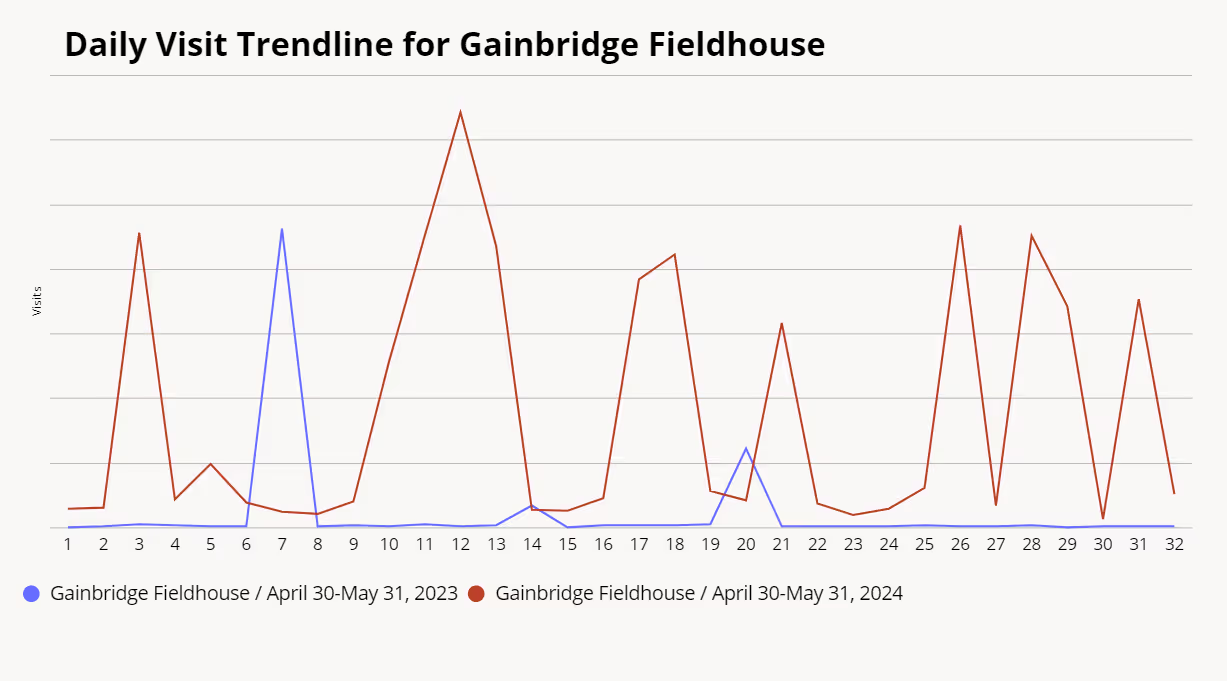
Post-March Madness, many of the NCAA women’s basketball players went on to the WNBA. Caitlin Clark to the Indiana Fever, Cameron Brink to the LA Sparks, and Angel Reese to the Chicago Sky were some of the most hotly anticipated draft picks. The newfound appetite for the WNBA is real. Take Gainbridge Fieldhouse in Indianapolis as an example. Just comparing the time period of April 30-May 31, 2023 vs April 30-May 31, 2024, there is a stark contrast in the number of attendees to home games. In just five games, attendance to this year’s Fever games has already surpassed that of the entire 2023 season.

The trade area draw is also something to note as the area from which 70% of visits originated practically doubled from May 2023 (blue) to May 2024 (red), showing the magnetic effect a star player can have.

This heightened interest is great news for concepts like The Sports Bra, a bar and restaurant based in Portland, Oregon. It’s 100% dedicated to women’s sports so you can be sure to catch your favorite female player on the screen. Since opening in the spring of 2022, it’s had steady business, and odds are with all the women’s sports to watch, there should be a busy summer ahead.

In addition, might the added exposure bring new fans to brands such as Wilson Sporting Goods, which signed Caitlin Clark? This familiar brand opened its first West Coast brick and mortar store on Santa Monica’s Third Street Promenade just about a year ago. Meanwhile, Angel Reese has signed on some big brands such as Reebok, Raising Cane’s and AirBnB. Former Stanford Cardinal and now LA Sparks superstar Cameron Brink is one of the faces of New Balance, and has starred in an ad with Shohei Otani and Coco Gauff.

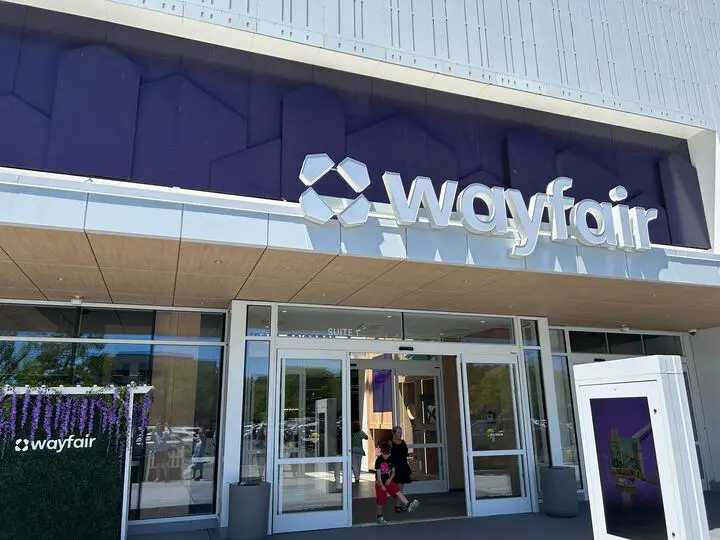
Over Memorial Day Weekend, Wayfair opened its highly anticipated addition to the world of physical retail, something we've been waiting for since the company's large-format store plan first came into view in early 2022. Technically, Wayfair’s new mega-store, sized at 150,000 square feet in Wilmette, Illinois, isn’t its first foray into brick-and-mortar, but it is certainly its splashiest. In an era when many home furnishing retailers are going small, early indications from Placer show that betting big has yielded success in attracting visitors, but questions about the longevity of success and health of the broader home industry remain.
This week, we had a chance to visit the store ourselves, and it's immediately evident how much attention was put into the store. Most visitors enter through the "Market Square", which feature unique housewares, locally-relevant products, and seasonal merchandise. Above the Market Square is a large video board that showcases certain products and other digital media assets which help set the tone for the shopping experience.


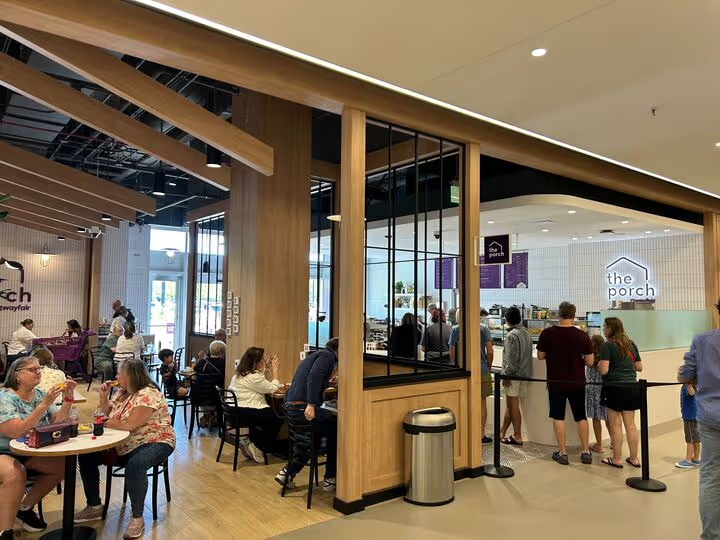
According to the retailer, its first namesake location brings a new shopping experience to consumers and features its first food service offering, The Porch (below).

The store also features an expanded selection and one-on-one personal design services, which can be seen in store layout below. The new location clearly took learnings from other Wayfair-owned brands like Joss & Main or All Modern, each of which have also opened physical stores.

The Wilmette large format store opened on May 23, just in time for Memorial Day Weekend foot traffic, and the location greatly benefitted from the timing. According to Placer’s early reads from May 18-June 1, 2024, Wayfair’s visits accounted for almost half of the visits to Edens Plaza (below), the shopping center in which it’s located. Beyond that, during its opening weekend from May 23-27, it drove 60% of visits to the plaza. The shopping center is located right off the Edens expressway, and the store is visible from the road, which helping to draw the attention of travelers.

Wayfair’s debut is a clear victory for the shopping center, with the store’s first few weeks helping to attract new visitors to the center. Comparing the two week period before the store opening to the two weeks of its opening using Spatial.ai’s PersonaLive segments, the percentage of visits coming from trade areas from Ultra Wealthy Families--the typical center visitors--actually decreased from 45% to 32%. However, there was a large increase in the percentage of visits by Educated Urbanites and Young Professionals. Buzzworthy openings help to revitalize shopping centers and Wayfair’s initial success will hopefully provide some meaningful shifts in visitors beyond the first few weeks.

Home furnishing retailers, in particular, have made experiences and expanded service offerings a cornerstone of their strategies to foster a captive consumer audience and increase dwell time, and hopefully conversion. Looking at local home furnishing experiential retail locations in the Metro Chicago area, Wayfair’s opening splash is even more apparent with its two story, expansive footprint. Compared to the closest IKEA store (Schaumburg), Wayfair Wilmette's visits were 12% higher during its initial two-week period and saw 19% more visits than IKEA during the highest traffic day of opening weekend. The trade area of the two retailers, even in the first two weeks, starts to tell the story of the visiting consumer; Wayfair drove more visits despite having a smaller trade area than IKEA and more overlapping territory, and primarily pulled its visitors from the northern Chicago suburbs.

Wayfair’s early indicators of traffic highlight a combination of the right concept, the right consumer, and the right location. It will be fascinating to watch the long-term visit trends for Wayfair, especially compared to other large-scale regional furniture retailers. Despite many home furnishing retailers looking to smaller formats for growth, if Wayfair’s location sustains its traffic growth, larger-format stores may become an attractive solution for shopping centers to revitalize themselves.

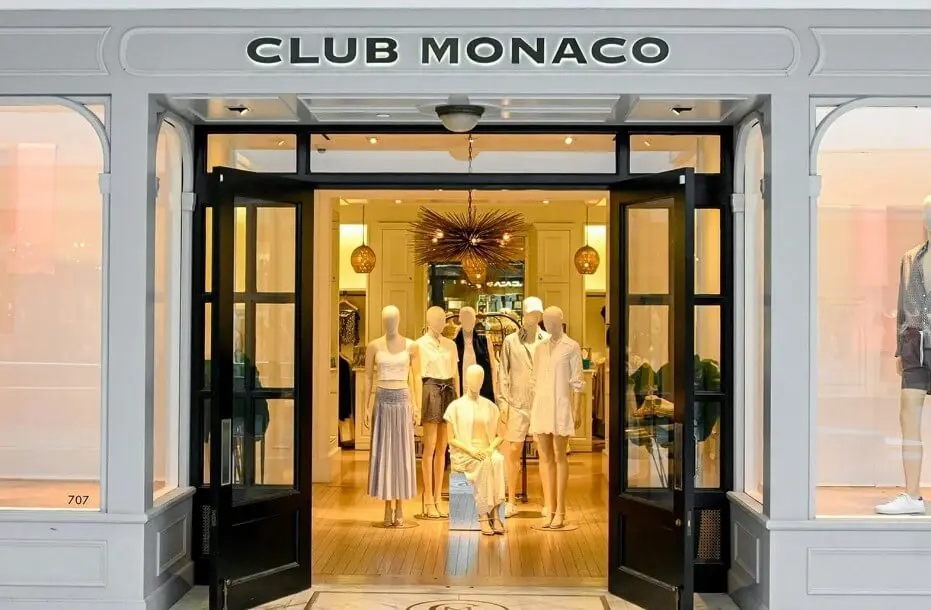
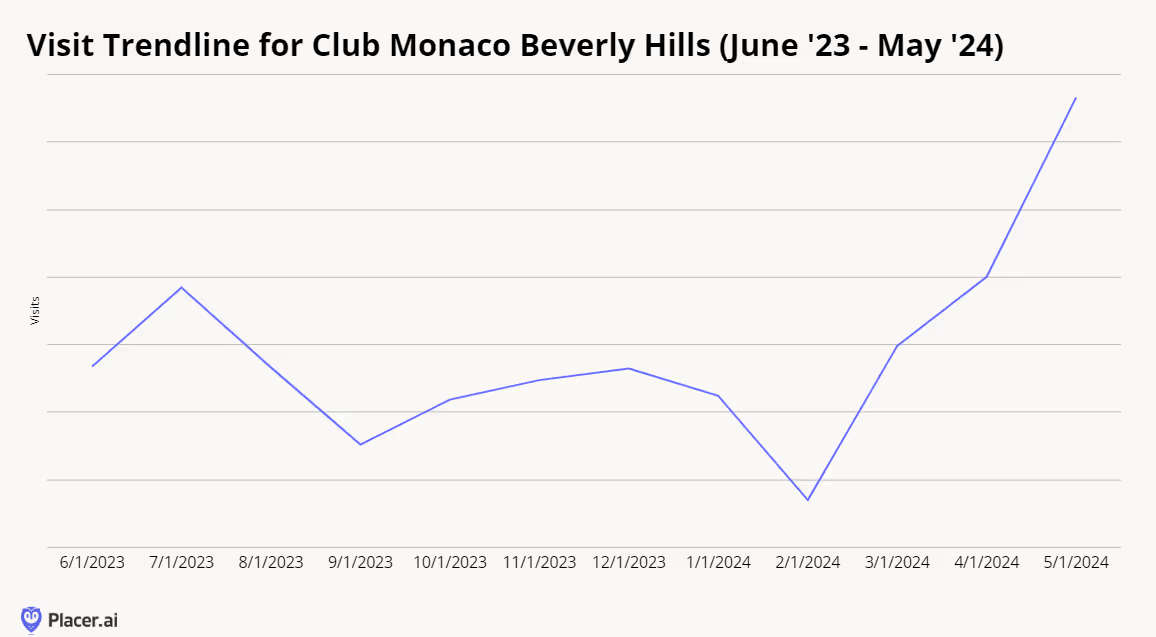
Mixing high-low fashion means pairing expensive designer items with more budget-friendly ones, think H&M jeans with a tweed Chanel jacket. This concept has been around for a while, and though one may originally have had to frequent different stores to attain this, with the way investment firms are snapping up different brands, shopping “High-Low” may become a more commonplace occurrence. Regent acquired Escada in 2019 and Club Monaco in 2021. While one might not normally think of those brands in the same sentence, if you’re walking on Beverly Drive and enticed by the Club Monaco outfits, walk in a bit deeper and before you know it, you will be encountering designer pantsuits and evening gowns by Escada.

Since the space is all one, it’s hard to decipher who’s going in for Club Monaco versus for Escada. Technically, Escada has its own entrance on Brighton Way. Either way, overall traffic for this space is up in the last few months, so perhaps this is simply the evolution of real estate as owners become creative with how they use their spaces and the brands within. As for us shoppers, we love to be surprised and delighted, so for sure finding an unexpected brand as you meander around is always welcome.


Over the past few months, we’ve noted how consumers–particularly from lower-income trade areas–have started to migrate from QSR to value-grocers, dollar stores, and convenience stores. Against that backdrop, we wanted to examine visitation trends for QSR chains in the state of California, where a $20 per hour minimum wage law was put in place on April 1 for employees of fast-food chains with more than 60 locations nationwide (with some exemptions for smaller stores at grocery stores, airports, and entertainment venues). This represented a 25% increase from the previous minimum wage for fast-food employees of $16 per hour (which remains the state’s minimum wage for other categories except for workers in healthcare facilities, which also saw minimum wage increased to $20 per hour).
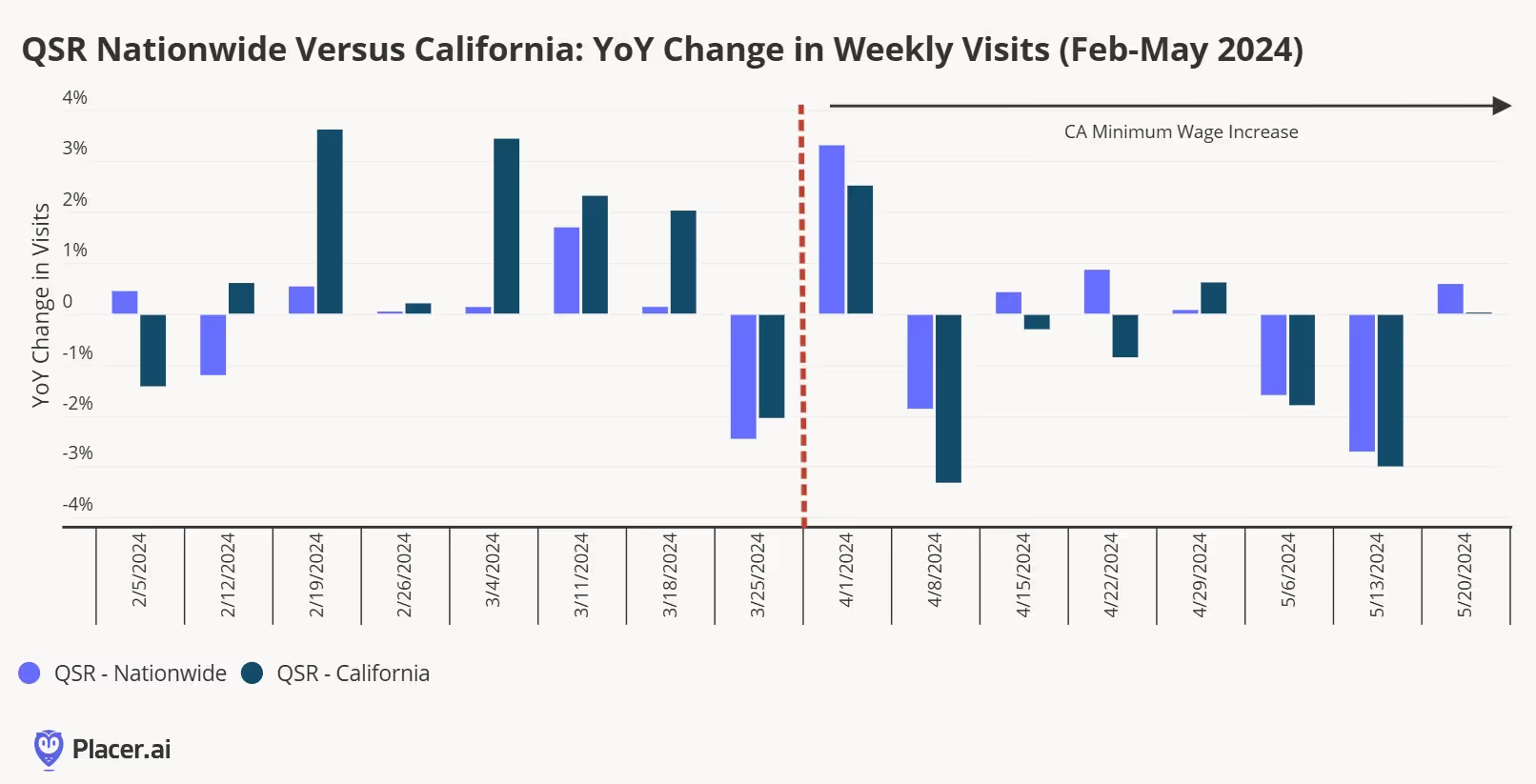
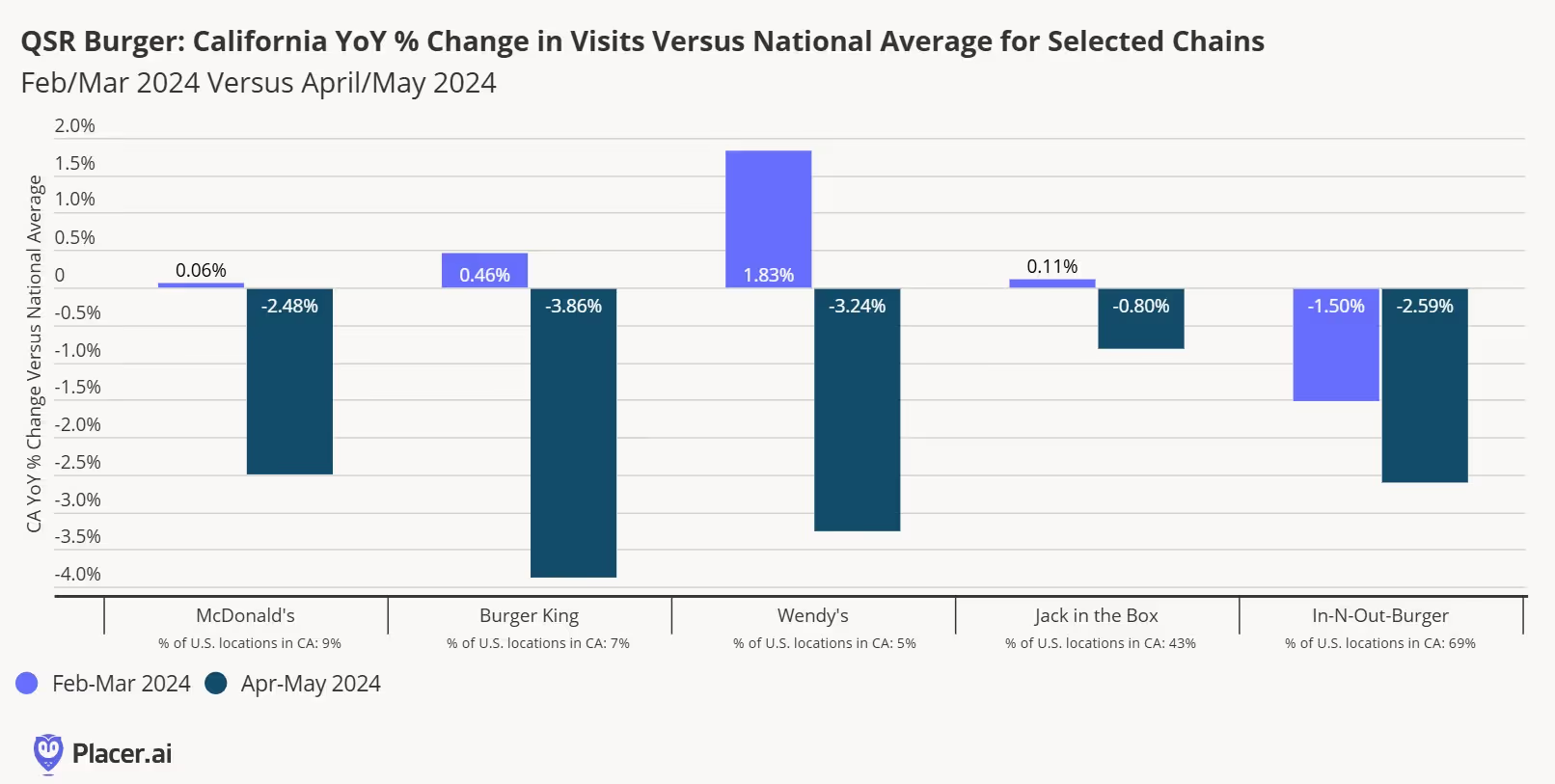
As a result of the minimum wage increase, most chains have raised prices in the region anywhere from the mid-single digits to the midteens. We compared year-over-year visit trends for QSR chains nationwide and California, and it’s clear that the menu price increase is having an impact. During February-March 2024 (we’ve excluded January due to inclement weather across much of the country), year-over-year QSR visit trends in the state of California had been running slightly ahead of national averages (below). However, this abruptly shifted when the minimum wage increase went into effect, with the nationwide visit trend year-over-year exceeding the state average seven of the eight weeks during the April-May 2024 timeframe.

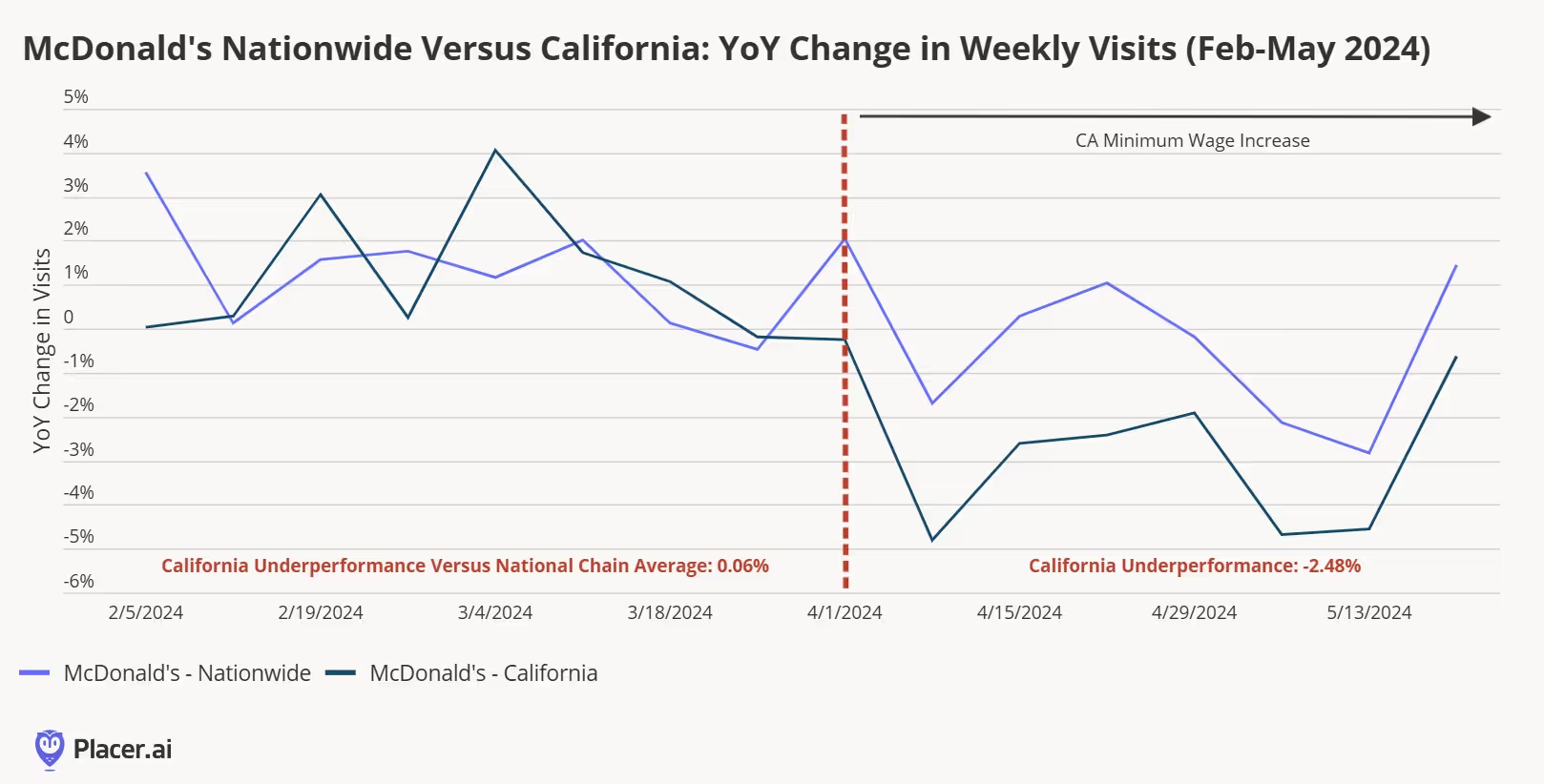
We also see the impact at the chain level. Below, we’ve looked at year-over-year visitation trends for McDonald’s nationwide and in California (where about 9% of its restaurants are located) from February through May. Again, we see a situation where McDonald’s California was seeing roughly the same year-over-year visit trends as its national average during February-March but underperformed by almost 250 basis points after the minimum wage increase went into effect.

Our data indicates that QSR burger chains have generally been the hardest hit by the California increase in minimum wage and subsequent increase in menu prices. In addition to McDonald’s, we see that other large QSR burger chains in the state also underperformed their national average following the minimum wage increase. Chipotle–which raised menu prices by 6%-7% in California to help offset the minimum wage increase–also saw year-over-year visit trends in California underperform its national average in April and May.

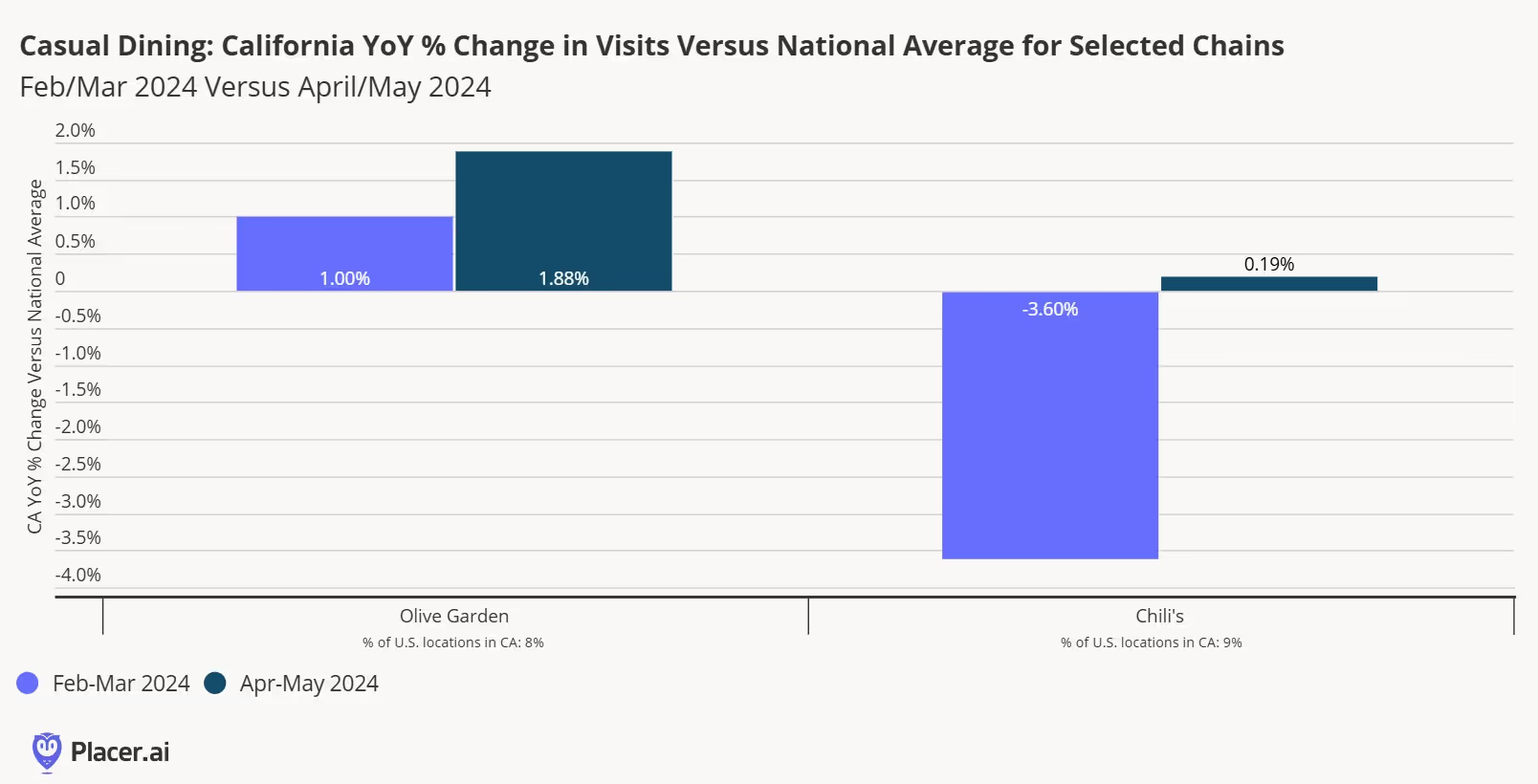
It’s early, but we’re starting to see the ripple effect of the minimum wage increase across the broader restaurant industry. First, we’ve started to see some operators close locations in the state, especially chains that were already facing financial difficulties. Earlier this week, Rubio’s Coastal Grill shut down almost 50 locations in California and filed for Chapter 11 bankruptcy protection, citing “significant increases to the minimum wage in California” as a reason for closing the restaurants. Second, the minimum wage hike and subsequent increase in QSR menu prices may be benefitting casual dining chains (many of which were already paying above the new minimum wages for many employees). Below, we see that Darden’s Olive Garden concept and Brinker International’s Chili’s concept in California have outperformed their national averages with respect to year-over-year visit trends starting in April (below). Finally, the minimum wage increase could make it more costly to do business across other retail and restaurant categories, something we called out in our recap of 99 Cents Only going out of business.

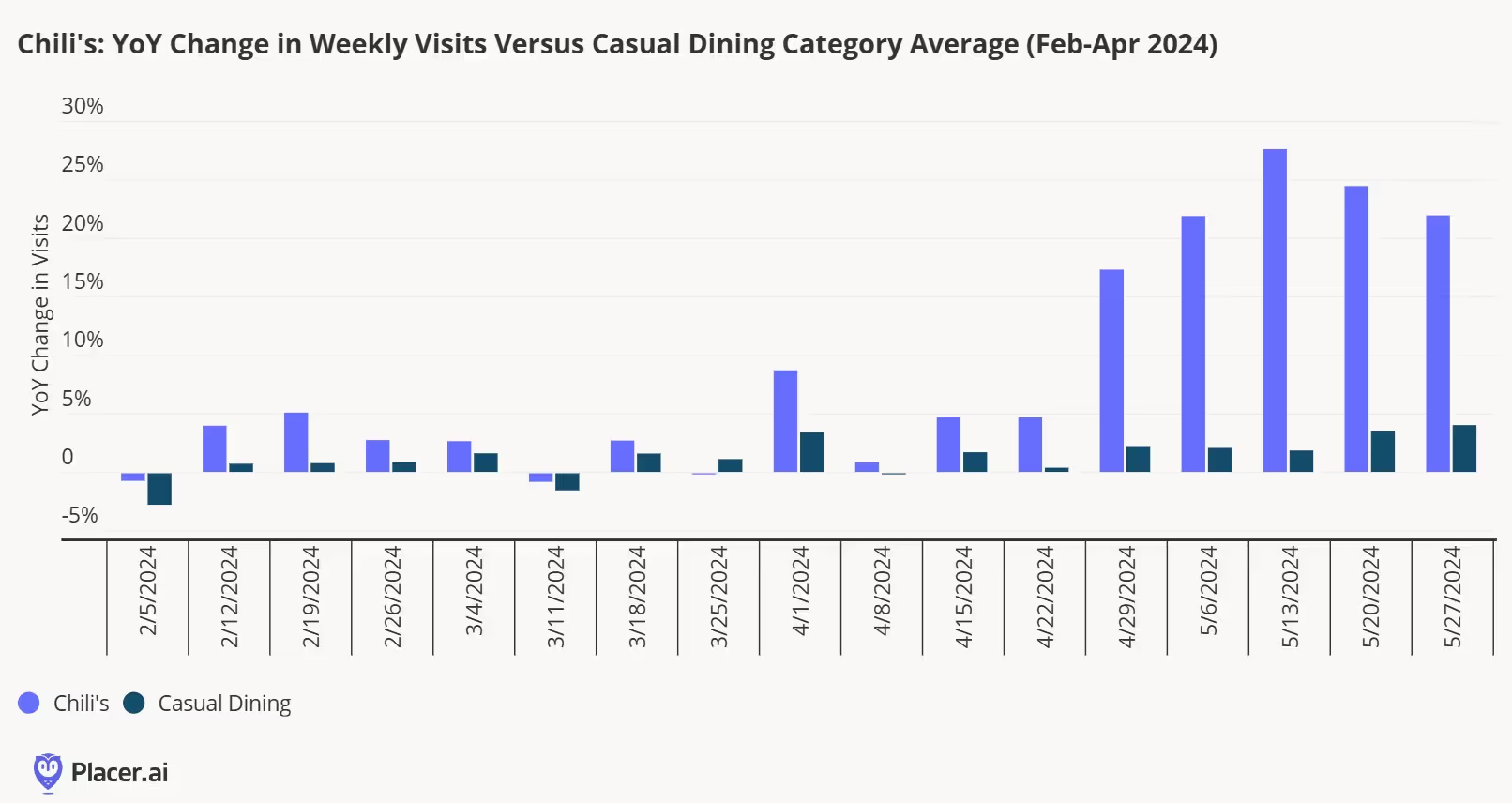
As we discussed following this year’s National Restaurant Association show, casual dining has been making a comeback the past several months, with many chains accentuating value proposition through promotions. Chili’s has seen visitation trends outperform casual-dining category averages by a significant amount the past several weeks (below) through its value messaging, while Buffalo Wild Wings All-You-Can Eat wings promotions on Monday and Wednesdays starting in mid-May has been one of the more successful promotions that we’ve seen in the full-service restaurant category in some time. However, with several QSR chains starting to get more promotional ahead of McDonald’s planned $5 value menu promotion at the end of the month, it’s clear that QSR chains are looking to also emphasize value in the coming months, even while facing higher labor costs.


About the Mall Index: The Index analyzes data from 100 top-tier indoor malls, 100 open-air shopping centers (not including outlet malls) and 100 outlet malls across the country, in both urban and suburban areas. Placer.ai leverages a panel of tens of millions of devices and utilizes machine learning to make estimations for visits to locations across the country.
After a brief calendar-driven slowdown in April, May saw a resurgence in foot traffic to malls. Indoor malls led the way with an 8.6% YoY increase, followed by open-air shopping centers and outlet malls, which experienced YoY jumps of 6.2% and 5.7%, respectively.
This uptick is likely due to a variety of factors – from warmer weather to rising consumer confidence amidst slowly easing inflation. And malls’ particularly strong showing on two of May’s most important retail milestones – Mother’s day and Memorial day also helped propel the segment forward.
Taking a closer look at visit patterns to the three mall types on Mother’s Day and Memorial Day shows how significant these special days were for mall foot traffic. On Mother’s Day (May 12th), indoor malls, open-air shopping centers, and outlet malls saw respective visit spikes of 15.8%, 26.0%, and 11.4%, compared to an average year-to-date (YTD) Sunday. And Mother’s Day visits were up significantly YoY as well – further highlighting the category’s robust positioning.
All three mall types also saw impressive visit bumps on Memorial Day – this time compared to an average YTD Monday. The relative spikes were bigger across the board, since malls tend to be less busy on Mondays than on Sundays. But for outlet malls, Memorial Day visits really hit it out of the park – with foot traffic up by a whopping 123.3%. As a day off work featuring plenty of markdowns, Memorial Day is an ideal time to make the longer trip to an outlet mall and hunt for bargains.
And in another promising sign for the category, Memorial Day visits to all three mall types increased YoY – showing that despite continued headwinds, malls are still on the rise.
Comparing weekly mall visits to an early January baseline also shows the varying impact of different holidays on the three mall types.
On Easter, and even more so on Memorial Day – an extended weekend very much focused on savings – outlet malls won the day. On these holidays, shoppers may be more likely to have the time and state of mind to make a day of their shopping trip and lean into the treasure-hunting experience.
But on Mother’s Day, more upscale open-air shopping centers took the lead, as consumers embraced a more unique and luxurious shopping experience. Still, all three mall types drew increased traffic on the different special days – showing that each can benefit from a variety of calendar highlights.
Malls’ strong May performance – especially on the holidays – shows that shopping centers are on the upswing once again. This could be an encouraging sign for the category heading into the summer, and may hint at a promising shopping season during the warm months ahead.
For more data-driven retail insights, visit our blog at Placer.ai.

The Placer.ai Nationwide Office Building Index: The office building index analyzes foot traffic data from some 1,000 office buildings across the country. It only includes commercial office buildings, and commercial office buildings with retail offerings on the first floor (like an office building that might include a national coffee chain on the ground floor). It does NOT include mixed-use buildings that are both residential and commercial.
With summer nearly upon us, we dove into the data to see how the return-to-office fared in May 2024. Did the post-pandemic visit recovery trajectory observed in April continue apace? And which major regional hub saw the most YoY visit growth?
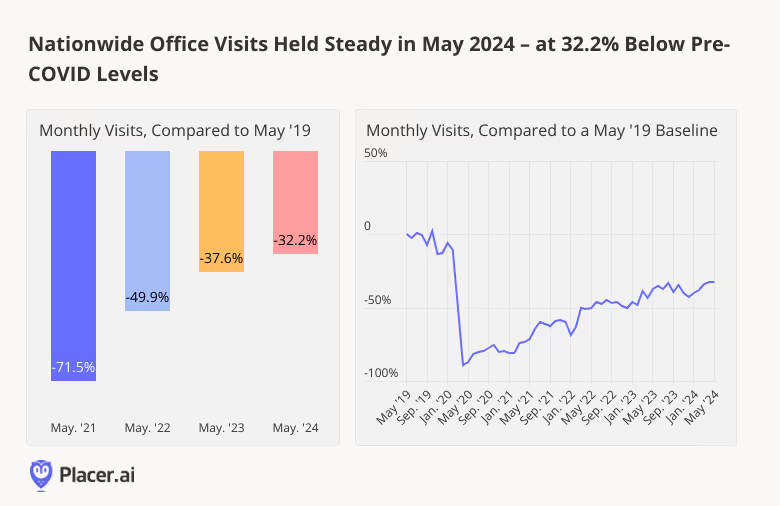
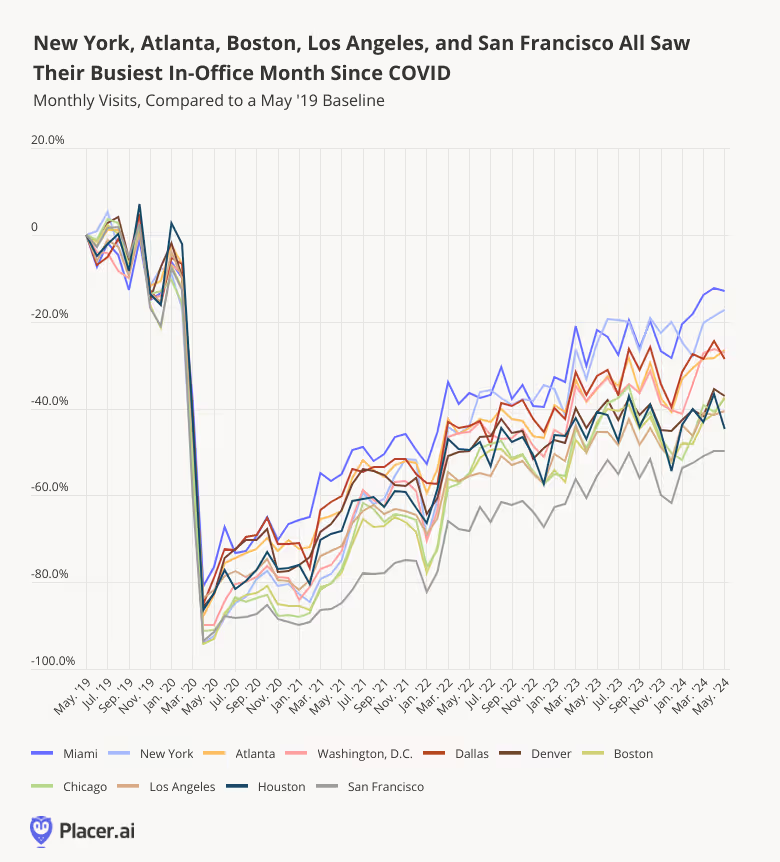
The office recovery is still very much underway. Visits to office buildings nationwide in May 2024 were just 32.2% lower than in May 2019 – and slightly higher than they’ve been during any other month since COVID. Year-over-year (YoY), office foot traffic in May increased by 8.6%.

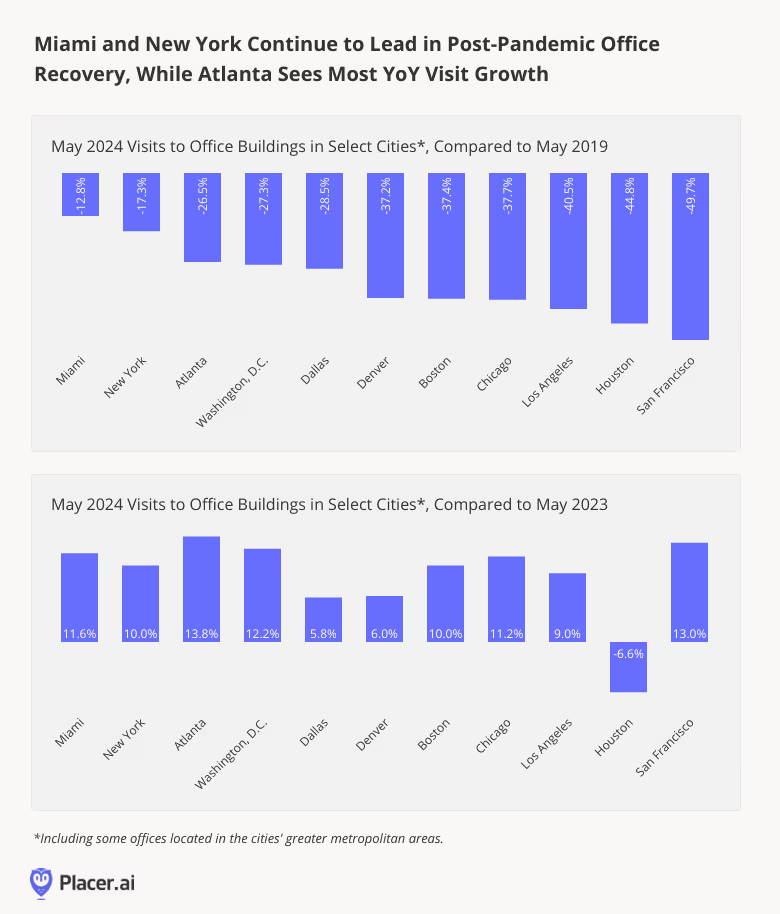
And drilling down into the data for 11 major business hubs nationwide shows recovery continuing unabated throughout (most of) the country. For New York, Atlanta, Boston, Los Angeles, and San Francisco, May 2024 was the single busiest in-office month since February 2020. And for Miami, Washington, D.C., and Denver, it was the second-busiest month.

Consistent with recent trends, Miami continued to lead the post-COVID recovery pack, followed by New York: Foot traffic to the two cities was just 12.8% and 17.3%, respectively, below May 2019 levels.
But the data also contained some surprises. Atlanta, which saw the biggest YoY visit jump of any analyzed city, pulled into third place – outpacing Washington, D.C. And Houston, the only city to see a YoY decline in visits, fell significantly in the rankings.

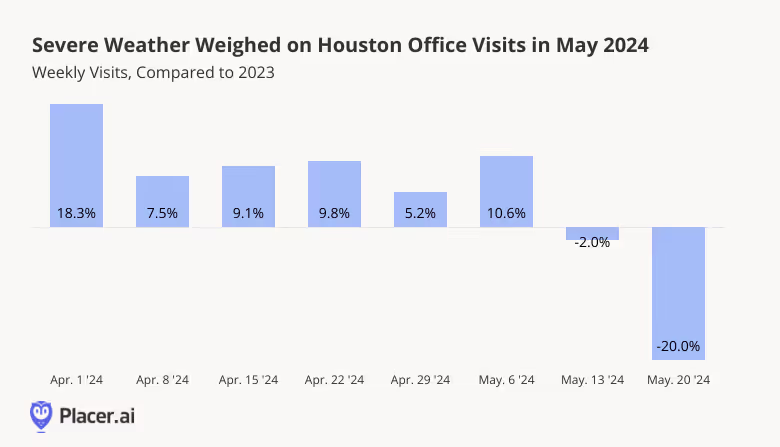
Why did Houston YoY office visits drop in May? A look at weekly YoY visits to local office buildings confirms that this was likely due to the extreme weather that engulfed the city during the second half of the month. On Thursday, May 16th, Houston was hit by a particularly violent storm that caused significant damage to the downtown area – breaking windows, downing power lines, and leaving a battered city in its wake. Additional severe weather events pummeled the region as the month wore on – forcing many residents to hunker down at home. And it was when the storm hit that YoY visits began to turn negative, with the week of May 20th seeing a significant 20.0% drop. As the weather improves in the southeast Texas hub, office recovery will likely resume.

Five years after COVID upended office routines, employees and companies are still feeling out the ideal balance between WFH and in-person interaction. Will office attendance increase or decrease as the weather warms up?
Follow Placer.ai’s data-driven office analyses to find out.
Following COVID-era highs, domestic migration levels have begun to taper off – with the number of Americans moving within the U.S. hitting an all-time low, according to some sources, in 2023.
To be sure, some popular COVID-era destinations – including Idaho, the Carolinas, and Utah – saw their net domestic migration continue to rise, albeit at a slower pace. But other states which had been relocation hotspots between February 2020 and February 2023, such as Wyoming and Texas, experienced negative net migration between February 2023 and February 2024.
Analyzing CBSA-level migration data reveals differences and similarities between last year’s migration patterns and COVID-era trends.
Between February 2020 and February 2023, seven out of the ten CBSAs posting the largest population increases due to inbound domestic migration were located in Florida. But between February 2023 and February 2024, the top 10 CBSAs with the largest net migrated percent of the population were significantly more diverse. Only four out of the ten CBSAs were located in Florida, and several new metro areas – including Provo-Orem, UT, Kingsport-Bristol, TN-VA, and Boulder, CO – joined the list.
This white paper leverages a variety of location intelligence tools – including Placer.ai’s Migration Report, Niche Neighborhood Grades, and ACS Census Data location intelligence – to analyze two migration hotspots. Specifically, the report focuses on Daytona Beach, FL, which already appeared on the February 2020 to February 2023 list and has continued to see steady growth, and Boulder, CO, which has emerged as a new top destination. The data highlights the potential of CBSAs with unique value propositions to continue to attract newcomers despite ongoing housing headwinds.
The Boulder, CO CBSA has emerged as a domestic migration hotspot: The net influx of population between February 2023 and February 2024 (i.e. the total number of people that moved to Boulder from elsewhere in the U.S., minus those that left) constituted 3.1% of the CBSA’s February 2024 population.
The strong migration is partially due to the University of Colorado, Boulder’s growing popularity. But the metro area has also emerged as a flourishing tech hub, with Google, Apple, and Amazon all setting up shop in town, along with a wealth of smaller start ups.
Most domestic relocators tend to remain within state lines – so unsurprisingly, many of the recent newcomers to Boulder moved from other CBSAs in Colorado. But perhaps due to Boulder’s robust tech ecosystem, many of the new residents also came from Los Angeles, CA (6.6%) and San Francisco, CA (3.4%) – other CBSAs known for their thriving tech scenes.
At the same time, looking at the other CBSAs feeding migration to the area indicates that tech is likely not the only draw attracting people to Boulder: A significant share of relocators came from the CBSAs of Chicago, IL (6.1%), Dallas , TX (4.9%), and New York, NY (3.9%). The move from these relatively urbanized CBSAs to scenic Boulder indicates that some of the domestic migration to the area is likely driven by people looking for better access to nature or a general lifestyle change.
According to the U.S. News & World Report, Boulder ranked in second place in terms of U.S. cities with the best quality of life. Using Niche Neighborhood Grades to compare quality of life attributes in the Boulder CBSA and in the areas of origin dataset highlights some of the draw factors attracting newcomers to Boulder beyond the thriving tech scene.
The Boulder CBSA ranked higher than the metro areas of origin for “Public Schools,” “Health & Fitness,” “Fit for Families,” and “Access to Outdoor Activities.” These migration draw factors are likely helping Boulder attract more senior executives alongside younger tech workers – and can also explain why relocators from more urban metro areas may be choosing to make Boulder their home.
Boulder’s strong inbound migration numbers over the past year – likely driven by its flourishing tech scene and beautiful natural surroundings – reveal the growth potential of certain CBSAs regardless of wider housing market headwinds.
Florida experienced a population boom during the pandemic, and several CBSAs in the state – including the Deltona-Daytona Beach-Ormond Beach, FL CBSA – have continued to welcome domestic relocators in high numbers. The CBSA’s anchor city, Daytona Beach – known for its Bike Week and NASCAR’s Daytona 500 – has also seen positive net migration between February 2023 and February 2024.
Americans planning for retirement or retirees operating on a fixed income are likely particularly interested in optimizing their living expenses. And given Daytona’s relative affordability, it’s no surprise that the median age in the areas of origin feeding migration to Daytona Beach tends to be on the older side.
According to the 2021 Census ACS 5-Year Projection data, the median age in Daytona Beach was 39.0. Meanwhile, the weighted median age in the areas of migration origin was 42.6, indicating that those moving to Daytona Beach may be older than the current residents of the city.
Zooming into the migration data on a zip code level also highlights Daytona Beach’s appeal to older Americans: The zip code welcoming the highest rates of domestic migration was 32124, home to both Jimmy Buffet’s Latitude Margaritaville’s 55+ community and the LPGA International Golf Club, host of the LPGA Tour. The median age in this zip code is also older than in Daytona Beach as a whole, and the weighted age in the zip codes of origin was even higher – suggesting that older Americans and retirees may be driving much of the migration to the area.
Looking at the migration draw factors for Daytona Beach also suggests that the city is particularly appealing to retirees, with the city scoring an A grade for its “Fit for Retirees.” But the city of Daytona Beach is also an attractive destination for anyone looking to elevate their leisure time, with the city scoring higher than Daytona Beach’s cities of migration origin for “Weather,” “Access to Restaurants,” or “Access to Nightlife.”
Like Boulder, Daytona’s scenery – including its famous beaches – is likely attracting newcomers looking to spend more time outdoors and improve their work-life balance. And like Boulder and its tech scene, Daytona Beach also has an extra pull factor – its affordability and fit for older Americans – that is likely helping the area continue to attract new residents, even as domestic migration slows down nationwide.
Although the overall pace of domestic migration has slowed, analyzing location intelligence data reveals several migration hotspots amidst the overall cooldown. Boulder and Daytona Beach each have a set of unique draw factors that seem to attract different populations – and the success of these regions highlights the many paths to migration growth in 2024.
The Fitness industry was a major post-pandemic winner. Visits to gyms across the country surged as stay-at-home orders ended and people returned to their in-person workout routines. And even as consumers reduced discretionary spending in the face of inflation, they kept going to the gym – finding room in their budgets for the chance to embrace wellness and get in shape while interacting with other people.
But no category can sustain such unabated growth forever – and as the segment inevitably stabilizes, gyms will need to stay nimble on their feet to maintain their competitive edge.
This white paper takes a closer look at the state of Fitness as the category transitions into a more stable growth phase following two years of outsize post-pandemic demand. The report digs into the location analytics to reveal how the Fitness space has changed – and what strategies gyms can adopt to stay ahead of the pack.
*This report excludes locations within Washington state due to local legislation.
Monthly visits to the Fitness category have grown consistently year over year (YoY) since early 2022, when COVID subsided and gyms returned to full capacity. And the segment is still doing remarkably well. Even in January and March 2024 – when visits were curtailed by an Arctic blast and by the Easter holiday weekend – YoY Fitness visits remained positive, despite the comparison to an already strong 2023.
Still, recent months have seen smaller YoY increases than last year, indicating that the Fitness category is entering a more normalized growth phase.
By keeping a close watch on evolving consumer preferences, fitness chains can uncover new opportunities for growth and adaptation within a stabilizing market – including leaning into increasingly popular dayparts.
Examining the evolving distribution of gym visits by daypart over the past six years shows that major shifts were brought on by the COVID-19 pandemic.
Between Q1 2019 and Q1 2021, as remote work took hold, gyms saw their share of 2:00 PM - 5:00 PM visits increase from 15.8% to 18.6%. Though this trend partially reversed as the pandemic receded, afternoon visits remained elevated in Q1 2024 compared to pre-COVID – likely a reflection of hybrid work patterns that leave people free to take an exercise break during their workdays.
At the same time, the share of morning visits to fitness chains (between 8:00 AM and 11:00 AM) dropped from 20.5% in Q1 2019 to 17.2% in Q1 2024, while evening visits (between 8:00 PM and 11:00 PM) increased from 11.3% to 13.2%.
Gyms that recognize this changing behavior can adapt to new workout preferences – whether by incentivizing morning visits, scheduling popular classes mid-afternoon, or offering extended evening hours.
In fact, the data indicates that gyms that are leaning into the evening workout trend are already finding success: Of the top 12 most-visited gym chains in the country, those that saw bigger increases in their shares of evening visits also tended to see greater YoY visit growth.
EōS Fitness and Crunch Fitness, for example, have seen their shares of evening visits grow by 5.5% and 3.4%, respectively, since COVID – and in Q1 2024, their YoY visits grew by 29.0% and 21.8%, respectively. Other chains, including 24 Hour Fitness and Chuze Fitness, experienced similar shifts in visit patterns. At the same time, LA Fitness saw just a minor increase in its share of evening visits between Q1 2019 and Q1 2024, and a correspondingly small increase in YoY visits.
As the evening workout slot gains popularity, gym operators that can adapt to these new trends and encourage evening visits may see significant benefits in the years to come.
Diving into demographic data for the analyzed gym chains sheds light on some factors that may be driving this heightened preference for evening workouts at top-performing gyms.
The four fitness chains that experienced the greatest YoY visit boosts in Q1 – Crunch Fitness, EōS Fitness, 24 Hour Fitness, and Chuze Fitness – all featured trade areas with significantly higher-than-average shares of Young Professionals and Non-Family Households. (STI: PopStat’s Non-Family Household segment includes households with more than one person not defined as family members. Spatial.ai: PersonaLive’s Young Professional consumer segment includes young professionals starting their careers in white collar or technical jobs.)
In plainer terms, these consumer segments – typically young, well-educated, and without children – and therefore more likely to be flexible in their workout times – are driving visits to some of the best-performing gyms across the country. And these audiences seem to be displaying a preference for nighttime sweat sessions – a factor that gyms can take into account when planning programming and marketing efforts.
Leaning into emerging gym visitation patterns is one way for fitness chains to thrive in 2024 – but it isn’t the only marker of success for the segment. Even after years of visit growth, the market remains open to new opportunities and innovations that meet health-conscious consumers where they are.
STRIDE Fitness, a gym that offers treadmill-based interval training, has sparked a trend among running enthusiasts. This niche player is finding success, particularly among a specific demographic: runners and endurance training enthusiasts.
Between January and April 2024, monthly YoY visits to STRIDE Fitness consistently outperformed the wider Fitness space. A standout month was January, when STRIDE Fitness’s visits soared by an impressive 33.6% YoY, surpassing the industry average of 5.7% for the same period.
Psychographic data from the Spatial.ai’s FollowGraph dataset – which looks at the social media activity of a given audience – suggests that STRIDE Fitness’ trade areas are well-positioned to attract those visitors most open to its offerings. Residents of STRIDE Fitness’s potential market are 24% more likely to be, or to be interested in, Endurance Athletes than the nationwide average – compared to just 3% for the Fitness industry as a whole. Similar patterns emerge for Marathon Runners and Triathlon Participants. This indicates that the chain is well-situated near consumers with a passion for endurance sports and long distance running, helping it maintain a competitive edge in the crowded gym market.
Pickleball, a game that blends elements of tennis, ping pong, and badminton, is the fastest-growing sport in the country. And recognizing its broad appeal, some fitness chains have begun incorporating pickleball courts into their facilities.
Arizona-based EōS Fitness added a pickleball court at a Phoenix, AZ location – and early 2024 data highlights the impact of this addition. Between January and April 2024, the location drew between 9.1% and 33.3% more monthly visits than the chain’s Arizona visit-per-location average.
And analyzing the demographic profile of the chain’s location with a pickleball court reinforces the game’s increasingly wide appeal. Young consumer segments have been embracing the game in large numbers – and the Phoenix EōS Fitness location’s potential market includes a significantly higher share of 18 to 34-year-olds than the chain’s overall Arizona potential market. Residents of the pickleball location’s trade area are also less affluent than the chain’s Arizona average.
Pickleball has typically been associated with more affluent consumer segments, and it seems like this may be shifting. With more people than ever embracing the game, gyms that choose to add courts to their facilities may reap the foot traffic benefits.
The Fitness industry has undergone a significant transformation since COVID-19. The category’s outsize post-pandemic visit growth has begun to stabilize, and gyms are staying ahead by adapting to changing consumer preferences. Evenings are emerging as crucial dayparts for gym operators, likely driven by younger consumer segments. And niche fitness chains are seeing visit success, proving that there are plenty of ways for the Fitness segment to succeed.
This report includes data from Placer.ai Data Version 2.0, which implements improvements to our extrapolation capabilities, adds short visit monitoring, and enhances visit detection.
Grabbing a coffee or snack at a convenience store is a time-honored road trip tradition – but increasingly, Convenience Stores (C-Stores) have also emerged as places people go out of their way to visit.
Convenience stores have thrived in recent years, making inroads into the discretionary dining space and growing both their audiences and their sales. Between April 2023 and March 2024, C-Stores experienced consistent year-over-year (YoY) visit growth, generally outperforming Overall Retail. Unsurprisingly, C-Stores fell behind Overall Retail in November and December 2023, when holiday shoppers flocked to malls and superstores to buy gifts for loved ones. But in January 2024, the segment regained its lead, growing YoY visits even as Overall Retail languished in the face of an Arctic blast that had many consumers hunkering down at home.
C-Stores’ current strength is partially due to the significant innovation by leading players in the space: Chains like Casey’s, Maverik, Buc-ee’s, and Rutter’s are investing in both in their product offerings and in their physical venues to transform the humble C-Store from a stop along the way into a bona fide destination. Dive into the data to explore some of the key strategies helping C-Stores drive consumer engagement and stay ahead of the pack.
While chain expansion may explain some of the C-Store segment growth, a look at visit-per-location trends shows that demand is growing at the store level as well. Over the past year (April 2023 to March 2024), average visits per location on an industry-wide basis grew by 1.8%, compared to the year prior (April 2022 to 2023).
And within this growing segment, some brands are distinguishing themselves and outperforming category averages. Casey’s, for example, saw the average number of visits to each of its locations increase by 2.3% over the same time frame – while Maverik, Buc-ee’s and Rutter’s saw visits per location increase by 3.2%, 3.4% and 3.9%, respectively.
Each in its own way, Casey’s, Maverik, Buc-ee’s, and Rutter’s, are helping to transform C-Stores from pit stops where people can stretch their legs and grab a cup of coffee to destinations in and of themselves.
Midwestern gas and c-store chain Casey’s – famous for its breakfast pizza and other grab-and-go breakfast items – has emerged as a prime spot for fast food pizza lovers to grab a slice first thing in the morning. And Salt Lake City, Utah-based Maverik – which recently acquired Kum & Go and its 400-plus stores – is also establishing itself as a breakfast destination thanks to its specialty burritos and other chef-inspired creations.
Casey’s and Maverik’s popular breakfast options are likely helping the chains receive its larger-than-average share of morning visits: In Q1 2024, 16.3% of visits to Maverik and 17.5% of visits to Casey’s took place during the 7:00 AM - 10:00 AM daypart, compared to just 14.9% of visits to the wider C-Store category.
Psychographic data from the Spatial.ai’s FollowGraph dataset – which looks at the social media activity of a given audience – also suggests that Casey’s and Maverik’s have opened stores in locations that allow them to reach their target audience. Compared to the average consumer, residents of Casey’s potential market are 7% more likely to be “Fast Food Pizza Lovers” than both the average consumer and the average C-Store trade area resident. Residents of Maverik’s potential market are 16% more likely than the average consumer to be “Mexican Food Enthusiasts,” compared to residents of the average C-Store’s trade area who are only 1% more likely to fall into that category.
With both chains expanding, Casey’s and Maverik can hope to introduce new audiences to their unique breakfast options and solidify their hold over the morning daypart within the C-Store space over the next few years.
Everything is said to be bigger in the Lone Star State, and Texas-based convenience store chain Buc-ee’s – holder of the record for the worlds’ largest C-Store – is no exception. With a unique array of specialty food items and award-winning bathrooms, Buc-ee’s has emerged as a well-known tourist attraction. And the popular chain’s status as a visitor hotspot is reflected in two key metrics.
First, Buc-ee’s attracts a much greater share of weekend visits than other convenience store chains. In Q1 2024, 39.6% of visits to Buc-ee’s took place on the weekends, compared to just 28.3% for the wider C-Store industry. And second, Buc-ee’s captured markets feature higher-than-average shares of family-centric households – including those belonging to Experian: Mosaic’s Suburban Style, Flourishing Families, and Promising Families segments.
Rather than merely a place to stop on the way to work, Buc-ee’s has emerged as a favored destination for families and for people looking for something fun to do on their days off.
Buc-ee’s isn’t the only C-Store chain that believes bigger is better. Pennsylvania-based Rutter’s is increasing visits and customer dwell time by expanding its footprint – both in terms of store count and venue size. New stores will be 10,000 to 12,000 square feet – significantly larger than the industry average of around 3,100 square feet. And in more urban areas, where space is at a premium, the company is building upwards.
Rutter’s added a second floor to one of its existing locations in York, PA in December 2023. The remodel, which was met with enthusiasm by customers, provided additional seating for up to 30 diners, a beer cave, and an expanded wine selection. And in Q1 2024, the location experienced 15.6% YoY visit growth – compared to a chainwide average of 7.6%. Visitors to the newly remodeled Rutter’s also stayed significantly longer than they did pre-renovation. The share of extended visits to the store (longer than ten minutes) grew from 20.8% in Q1 2023 to 27.0% in Q1 2024 – likely from people browsing the chain’s selection of beers or grabbing a bite to eat.
Convenience stores are flourishing, transforming into some of the most exciting dining and tourist destinations in the country. Today, C-Store customers can expect to find brisket sandwiches, gourmet coffees, or craft beers, rather than the stale cups of coffee of old. And the data shows that customers are receptive to these innovations, helping drive the segment’s success.