.png)
.png)

.png)
.png)

About the Mall Index: The Index analyzes data from 100 top-tier indoor malls, 100 open-air shopping centers (not including outlet malls) and 100 outlet malls across the country, in both urban and suburban areas. Placer.ai leverages a panel of tens of millions of devices and utilizes machine learning to make estimations for visits to locations across the country.
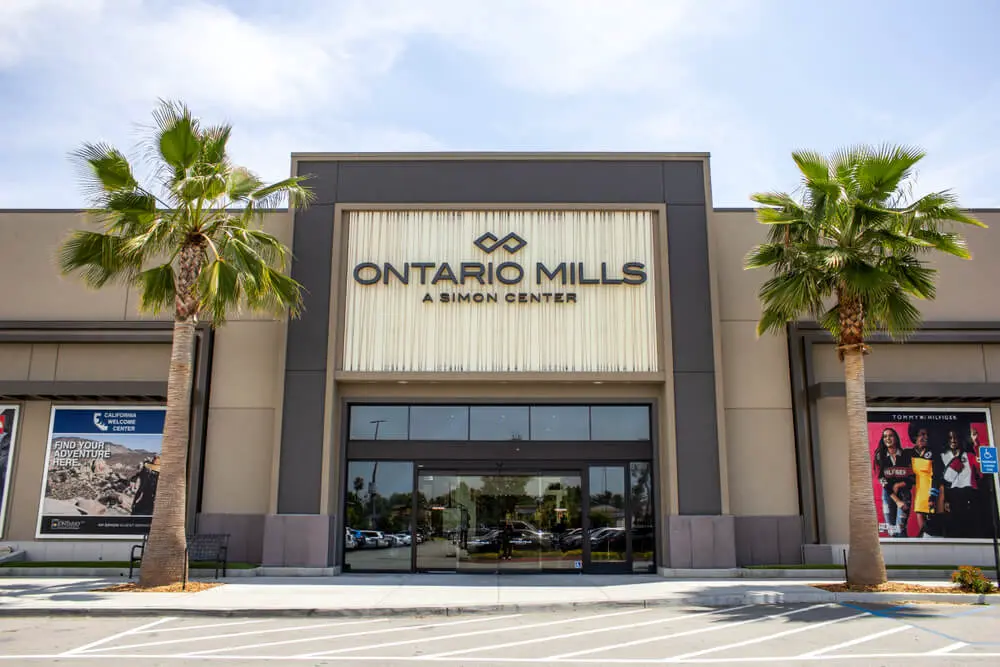
Shopping centers are making a comeback. Following an unusually cold January that impacted retail visit trends across the country, mall visits increased year-over-year (YoY) in February 2024 and rose even higher in March: Last month, traffic to Indoor Malls, Open-Air Shopping Centers, and Outlet Malls was up 9.7%, 10.1%, and 10.7% respectively, compared to March 2023.
The positive visitation trends along with the rising consumer sentiment numbers capping off the first quarter of 2024 bode well for retail in general and discretionary categories in particular – and may signal the end of the retail challenges that plagued much of 2022 and 2023.
.png)
Comparing Q1 visits to malls in 2021, 2022, 2023, and 2024 to Q1 2019 further highlights the positive trajectory of the ongoing mall recovery. The data reveals that the pre-pandemic visit gap has been steadily narrowing over the past four years across all shopping center formats. And in Q1 2024, visits to Open-Air Shopping Centers even exceeded 2019 levels for the first time since the lockdowns – indicating that retail has not yet fully settled into a “new normal” and the post-COVID recovery story is still being written.
.png)
But even as mall visit numbers may be returning to pre-pandemic levels, analyzing the visitor journey for malls in Q1 2019 and Q1 2023 – which looks at where mall visitors were directly before and after their mall visit – indicates that some mall-based shopping habits have shifted.
Between Q1 2019 and Q1 2024, the share of shoppers coming to a mall directly from home or returning home directly following the mall visit decreased. And during the same period, the share of mall visitors coming from or going to dining venues or other retail locations before or after a mall visit generally increased across mall formats. The change in visitor journey between 2019 and 2024 indicates that more consumers are now visiting malls as one of multiple stops within a larger outing.
The fact that consumers are still visiting malls, even if they are no longer treating shopping centers like a one-stop-shop can be seen as another testament of malls’ resilience: Despite the string of big-name retailers expanding off-mall in recent years, shoppers continue incorporating malls into their shopping and dining routines – even as they expand their outing to add stops to off-mall shopping or dining locations as well.
.png)
Despite the years of mall apocalypse predictions, consumer behavior continues to showcase the central role that malls play in the U.S. retail landscape. And even as consumer habits change, top shopping centers have proven capable at adapting their offerings to current consumer appetites to maintain their relevance in 2024 and beyond.
For more data-driven retail insights, visit our blog at placer.ai.
This report includes data from Placer.ai Data Version 2.0, which implements improvements to our extrapolation capabilities, adds short visit monitoring, and enhances visit detection.

The Placer.ai Nationwide Office Building Index: The office building index analyzes foot traffic data from some 1,000 office buildings across the country. It only includes commercial office buildings, and commercial office buildings with retail offerings on the first floor (like an office building that might include a national coffee chain on the ground floor). It does NOT include mixed-use buildings that are both residential and commercial.
Is return-to-office picking up steam?
Last month, location intelligence indicated that the office recovery needle was starting to move once again. Whether due to stricter corporate mandates – especially in the finance sector – or to employees seeking to reap the rewards of in-person collaboration and mentoring, office activity appeared to be on an upswing.
But what’s happened since then? Has the momentum worn off, or is RTO still trending on the ground?
Hybrid work may be here to stay – but the situation on the ground remains very much in flux. Last month, office visits nationwide were just 32.7% below what they were in March 2019 (pre-pandemic). This represents a significant narrowing of the visit gap in relation to March 2022 and March 2023 – when visits were down 48.2% and 36.3%, respectively.
And comparing monthly visits to a March 2022 baseline shows that visits last month were among the highest they’ve been since COVID. Only August 2023 (which had two more working days than March) and October 2023 featured higher visitation rates.
.avif)
Drilling down into the data for eleven major cities nationwide shows that Miami and New York are holding firmly onto their regional RTO leads – with less than a 20% visit gap compared to pre-pandemic levels. And RTO appears likely to continue apace in both cities, driven by tech companies in Miami and finance firms in the Big Apple. Indeed, in Miami, visits to office buildings in March 2024 were the highest they’ve been in four years. Washington, D.C., Dallas, Atlanta, and Denver also outperformed the nationwide baseline compared to pre-COVID, while Chicago, Boston, Houston, Los Angeles, and San Francisco lagged behind.
.avif)
But despite bringing up the rear for overall post-COVID office recovery, San Francisco has been experiencing outsize YoY office visit growth for some time now. And in March 2024, the city continued to lead the regional YoY visit recovery pack – tied for first place with Washington, D.C.
.avif)
Given San Francisco’s stubbornly large post-COVID visit gap, it may come as no surprise that the city’s office vacancy rate is higher than it’s ever been. But demand for office space in San Francisco is back on the rise, leading market observers to conclude that bright times may be ahead for the local market.
San Francisco’s strong YoY office visit performance may be a reflection of this increased demand, providing another sign of good things to come in the Golden Gate city.
Remote work carries plenty of benefits, but a variety of factors – from Gen Z work-from-home fatigue to the better wages and opportunities available to on-site employees – are driving increased office attendance. And if March 2024 data is any indication, further shifts in the RTO/WFH balance may yet be in the cards.
For more data-driven return-to-office updates, follow Placer.ai.
This blog includes data from Placer.ai Data Version 2.0, which implements improvements to our extrapolation capabilities, adds short visit monitoring, and enhances visit detection.

Every year in March and early April, thousands of young people descend on Florida beaches to soak up some sun, kick back with friends, and have a good time. But while the influx of revelers can be a boon to local businesses, some municipalities are pushing back against the mayhem. This year, Miami Beach famously announced its intention to “break up” with spring break (“It’s not us, it’s you”) – instituting a series of restrictive measures, from curfews to elevated parking fees, designed to temper the crowds.
But what’s happening on the ground? How did this year’s spring break impact local businesses in key Florida destinations like Miami, Key West, Panama City Beach, and Daytona Beach? Which retail segments continued to benefit from the excitement – and who were the visitors driving foot traffic to their venues?
Florida is home to the most-searched spring break destinations in the United States. And perhaps thanks to the influx of vacationers, location intelligence shows that Quick-Service Restaurants (QSR) and Breakfast, Coffee, Bakeries, & Dessert Shops in Florida spring break hotspots enjoy significant annual visit boosts during March and early April.
The extent of the seasonal boost varies between CBSAs – and though this year’s traffic spikes were slightly lower than last year’s bumps, the two dining segments continued to benefit strongly from spring break-fueled visit bumps in 2024.
Visits to QSR & Fast-Food venues and Breakfast, Coffee, Bakeries, & Dessert Shops in Panama City – known as the spring break capital of the world – were up 57.6% and 56.9%, respectively, during the week of March 11th 2024, compared to an early January 2023 baseline. This represents a minor decline from the comparable period last year (the week of March 13th, 2023), when visits were up a respective 59.2% and 68.6%.
QSR and coffee and breakfast chains in the Miami-Fort Lauderdale-Pompano Beach, Key West, and Deltona-Daytona Beach-Ormond Beach CBSAs also experienced significant visit spikes during the week of March 11th, 2024. Though the March foot traffic increases in these CBSAs were smaller than those seen in Panama City, they were nearly on par with the visit bumps seen in the comparable period of 2023.
.avif)
Who are the visitors driving this spring break dining activity? Drilling down into the data for leading Panama City QSR and coffee chains shows that college student influxes are likely a major contributing factor.
In July 2023 – during Panama City’s peak summer season – the captured markets of local Whataburger, Dunkin’, Starbucks, and Chick-fil-A locations were nearly devoid of STI: Landscape’s “Collegian” segment – a category encompassing currently-enrolled college students. But in March 2024, the share of this segment in the brands’ captured markets skyrocketed.
.png)
Analyzing the audiences of local Panama City resorts reveals a similar pattern. During the month of July, the captured markets of SpringHill Suites and Holiday Inn Resort – two venues popular among spring breakers – included miniscule shares of Collegians. But in March, the share of college students in the resorts’ captured markets jumped to 13.8% and 10.0%, respectively – highlighting the role of undergrads in driving hotel visits during this period.
.png)
Spring break is party time – and Florida has traditionally been at the center of it all.
How will 2024 spring break continue to unfold this year in the Sunshine State? And what other retail categories stand to benefit from the excitement?
Follow Placer.ai’s data-driven civic and retail analyses to find out.
This blog includes data from Placer.ai Data Version 2.0, which implements improvements to our extrapolation capabilities, adds short visit monitoring, and enhances visit detection.

DC residents and businesses have been on tenterhooks ever since plans were announced in December 2023 to move the Caps and Wizards to Potomac Yard in Alexandria, VA. Original plans called for a new Wizards practice facility, a separate performing arts center, a media studio, new hotels, a convention center, housing and shopping. Meanwhile, DC mayor Muriel Bowser worked furiously to keep the teams, eventually putting together a $500 million+ deal that was officially approved in the last week, so that the teams would stay in the District until “at least 2050.” That is good news for those businesses by Gallery Place/Chinatown, and the teams can keep the Washington moniker, as opposed to potentially being the “National Landing” teams were they to have moved to the Potomac Yard area.

Migration to the Mountain States, named for the sprawling Rocky Mountain range that runs through the region, has been on an upward trend in recent years. And one state in particular – Utah – has received an impressive influx of new residents.
Which areas are experiencing the most growth? And what is driving migration to the Beehive State? We take a closer look.
Utah, with its iconic national parks and burgeoning tech industry, is growing fast. According to Placer.ai’s Migration Trends Report, Utah experienced an 5.5% rise in population between January 2020 and January 2024, partially driven by inbound domestic migration: 1.8% of the state’s January 2024 population moved in between January 2020 and January 2024.
Utah has a relatively young population – the median age in Utah (according to the 2021 ACS 5-Year Projection dataset) is 31. But relocators to the state seem to be coming from older states – the weighted median age in the states of origins of newcomers moving to Utah over the past four years was 38.
But although Utah’s median age is lower than the median age in the states of origin, the median HHI in the Beehive State is higher than in its feeder states. Between January 2020 and January 2024, the weighted median HHI in the states feeding migration to Utah was $71K/year, lower than the Utah median of $79K/year (although higher than the national average of $69.0K/year).
.avif)
Although Utah as a whole has seen positive net migration over the past four years, the new residents are not evenly distributed across the state’s major metropolitan areas. Inbound domestic migration was particularly strong in the Provo-Orem and Ogden-Clearfield CBSAs (core-based statistical areas), with both states also seeing significant increases in their population (10.7% and 5.1%, respectively) over the past four years. But during the same period, the migrated share of the population of Utah’s largest CBSA – Salt Lake City – has declined, and the overall population in the Salt Lake City CBSA grew by just 1.0%. So what is driving migration to Provo-Orem and Ogden-Clearfield?
.png)
January 2020 to January 2024 migration data reveals that relocators to Provo and Ogden come from CBSAs with a lower median age and HHI compared to those moving to Salt Lake City: Newcomers to the Provo-Orem and Ogden-Clearfield CBSAs came from CBSAs with a weighted median HHI of $73K and $72K, respectively, compared to a $75K median HHI for CBSAs feeding migration to the Salt Lake City CBSA. And the weighted median age in the CBSAs of origin for Provo-Orem and Ogden Clearfield was 25 and 32, respectively, compared to 33 in the CBSAs of origin for Salt Lake City.
The movement of younger people from lower-HHI areas to these CBSAs may indicate that many of those relocating to Utah to benefit from the state’s robust economy are specifically choosing the Provo-Orem and Ogden-Clearfield metro areas.
.avif)
Niche’s Neighborhood Grades – available in the Placer.ai Marketplace – assigns grades to various types of regions based on a variety of factors, including job opportunities. And comparing the Niche rating for “Jobs” assigned to Utah’s three largest CBSAs with the aggregate “Jobs” grade assigned to the CBSAs of origin also suggests that Provo and Ogden’s economic opportunities are driving migration to these smaller metro areas.
All three Utah CBSAs analyzed received a higher “Jobs” grade than their CBSAs of origin – indicating that the employment opportunities in all three metro areas are likely drawing newcomers. But while Salt Lake City only got a “B+” in “Jobs” – just one grade up from the aggregate grade assigned to its areas of origin – Provo-Orem and Ogden-Clearfield got a “Jobs” grade of “A-”, or two notches up from the “Jobs” grade in their CBSAs of origin. The highly robust job markets in these smaller CBSAs may explain why newcomers seem to prefer Provo-Orem and Ogden-Clearfield to Salt Lake City.
.avif)
Utah’s population growth makes it one of the most exciting states to watch, and the state’s promising employment opportunities seems to be a major draw for newcomers to the state.
Will Utah continue to experience population growth?
Visit placer.ai to keep up with the latest migration trends.
This blog includes data from Placer.ai Data Version 2.0, which implements improvements to our extrapolation capabilities, adds short visit monitoring, and enhances visit detection.

In a world where convenience is key and online shopping reigns supreme, many brands are turning to experiential retail to draw visitors into brick-and-mortar stores. We take a look at three companies with different types of experiential offerings – Michaels, DICK’S, and Lowe’s Home Improvement – to understand what experiential retail can look like in 2024.
Some retailers are encouraging consumers to engage fully in their brand by dedicating entire brick-and-mortar venues entirely to immersive experience. Sporting goods brands in particular, including Lululemon with its yoga studios and Nike and its training studios, have employed this strategy to directly engage with their core audience. And perhaps the best example of this is the DICK’S House of Sport concept, launched in 2021 by sporting goods retailer DICK’S.
DICK’S currently operates 12 House of Sports locations where visitors can repair their bikes, pick out a golf club, use a climbing wall or batting cage. The concept has been highly successful, especially as more people engage in some form of recreational sports or fitness activities, and the chain is looking to add at least 100 more of these experiential stores in the next five years.
Quarterly foot traffic patterns suggest that the new locations will be met with enthusiasm. Visits to the three longest-running House of Sports stores in Q4 2023 were 7.2% higher than they were in Q4 2022, while visits to DICK’S Sporting Goods stores nationwide were 2.3% lower for the same period. Psychographic data also reveals that House of Sport visitors also tend to be slightly older and more established than visitors to DICK’S nationwide – and this older audience may be more inclined to spend more than their younger counterparts.
%20(1).avif)
By creating an immersive athletic experience that taps into the growing popularity of personal fitness, House of Sport can continue to draw in visitors and foster community – and serve as a model for other sporting goods retailers looking to expand their experiential offerings.
Retailers who don’t want to devote an entire location to their experiential offering can also leverage their regular venues to offer visitors hands-on engagement with their products on certain days or time slots. Rising costs have led more people than ever to turn to DIY – and meeting that demand, leading home improvement retailer Lowe’s has introduced a DIY workshop on Saturdays and Sundays at 100 locations across the country. Visitors heading to participating Lowe’s stores will be able to participate in workshop stations and take advantage of all-day demos – with no registration required. The company also runs a family-friendly Weekending at Lowe’s program, which allows visitors to register to free workshops focused on child-friendly activities, such as creating a butterfly biome or a tabletop basketball game
Providing people with a hands-on, practical approach to home repairs may help Lowe’s expand its customer base as more people embrace DIY concepts. Participants in the DIY workshops may feel more confident in tackling new projects at home. They are also more likely to choose Lowe’s products due to familiarity with the store and its offerings — a win for the company.
Comparing year-over-year (YoY) visits at Lowe’s locations with DIY workshops to the foot traffic performance of the chain as a whole indicates that the DIY venue, while experiencing the effects of the ongoing retail headwinds, are managing to perform better than Lowe’s stores overall. And analyzing locations using the Spatial.ai: PersonaLive dataset reveals that Lowe’s DIY stores are particularly popular among rural segments, with more "Rural Average Income" and "Rural Low Income" segments in their captured markets than their potential market*.
*A chain’s potential market refers to the population residing in a given trade area, where the Census Block Groups (CBGs) making up the trade area are weighted to reflect the number of households in each CBG. A chain’s captured market weighs each CBG according to the actual number of visits originating to the chain from that CBG.
.png)
Lowe’s can harness this data if it seeks to expand the DIY concept further to help it capitalize on its success among rural audiences – and other retailers can take note of the demand for hands-on workshops from this segment.
A third model for experiential retail empowers the customer to take the reins and decide when to schedule the in-store event – and who to add to the guest list. Craft chain Michaels, which has long emphasized child-friendly experiences like summer camps and free classes, recently introduced store-hosted birthday parties for kids up to age 13.
Demographic data from both potential and captured trade areas suggest that this focus on kids activities is succeeding in attracting the family households in its trade area. Michaels attracts a larger share of married couples with children in its captured market than in its potential market, and has a captured market household size of 2.6, slightly larger than its potential market household size. The share of households in Experian: Mosaic’s “Suburban Style,” “Flourishing Families”, and “Family Union” segments were also all higher in Michaels captured market than in its potential market.
.avif)
Michael’s seems to be positioning itself as a one-stop shop for crafters of all ages, and focusing on children’s events may help the chain attract more family segments to its stores. This serves as a reminder of the draw that quality children’s entertainment can provide and offers a blueprint for retailers wishing to attract more families to their locations.
These three chains prove that there are plenty of ways to attract people into brick-and-mortar stores. By offering workshops, events, and in-store attractions, the three chains are building brand awareness and increasing their foot traffic.
Will experiential retail continue to dominate in 2024?
Visit placer.ai/blog to stay up-to-date on the latest retail trends.
This blog includes data from Placer.ai Data Version 2.0, which implements improvements to our extrapolation capabilities, adds short visit monitoring, and enhances visit detection.
Return-to-office (RTO) trends have been closely watched over the past few years, with relevant stakeholders trying to puzzle out the impact remote and hybrid work have had on business operations and worker performance. And while visits to office buildings, overall, remain below pre-pandemic levels, office recovery varies from city to city – reflecting the complex and nuanced nature of regional economic trends, workforce preferences, and industry-specific needs.
This white paper harnesses location analytics to explore office recovery in the country’s second-largest economy – Los Angeles. The first part of the report is based on an analysis of foot traffic data from Placer.ai’s Los Angeles Office Index – an index comprising 100 office buildings in LA (including several in the greater metro area). The second part of the report broadens the lens to analyze visits by local employees to points of interest (POIs) corresponding to four major LA-area office districts: Century City, Downtown LA, Santa Monica, and Culver City. The white paper examines the impact that return-to-work mandates have had on visits to office buildings, discovers which demographic groups are driving the RTO, and explores the connection between commute time and return-to-office rates.
The return to office in Los Angeles has consistently lagged behind other major cities, underperforming nationwide recovery levels since the pandemic ground in-office work to a virtual halt. Still, the city’s office buildings are seeing a steady increase in visits, with foot traffic tending to spike at the beginning of each year. This indicates that even though office visits in LA are still below national averages, they are on a steady growth trajectory – a promising sign for stakeholders in the city.
A closer examination of Los Angeles office buildings also shows that despite the overall lag, some top-performing buildings in the LA metro area are defying the odds. Visits to the 20 local office buildings with the narrowest Q2 2024 post-COVID visit gaps were down just 8.7% in June 2024 compared to January 2019 – significantly outperforming the nationwide average.
So while overall office recovery in the city is still behind nationwide trends, these top-performing buildings indicate an optimistic outlook for the city’s office spaces.
Diving into the demographics of visitors to LA’s top-performing office buildings reveals an important insight: these buildings are attracting younger workers. This cohort has shown a stronger preference for in-person work compared to their older colleagues.
Analyzing the buildings’ captured markets with psychographics from AGS: Panorama reveals that these buildings are attracting visitors from areas with larger shares of "Emerging Leaders" and "Young Coastal Technocrats" than the broader metro area.
"Emerging Leaders'' – upper-middle-class professionals in early stages of their careers – make up 20.3% of households in the trade areas feeding visits to these top-performing buildings, compared to 14.9% in the broader LA CBSA. Similarly, "Young Coastal Technocrats," young and highly educated professionals in tech and professional services, account for 14.7% of households driving visits to the top-performing buildings, compared to only 12.1% in the broader area.
The trend suggests that companies in these high-performing office buildings employ many early-career professionals eager to accelerate their careers and work in-person with colleagues and mentors. This is a positive sign for the future of the office market in the LA metro area, indicating that it is attractive to key demographic groups that are likely to drive future growth and innovation.
Over the past few years, the debate regarding return-to-office mandates has been a heated one. Will employees follow return-to-office requirements? Can companies enforce the return to office after offering remote and hybrid work options? Recent location analytics data suggests that, at least in the Los Angeles metro area, some return-to-office mandates have been effective.
Three major tech companies – Activision Blizzard, TikTok, and SNAP Inc. – recently made their return-to-office policies stricter. Activision mandated a full return to the office in January 2024. TikTok has also intensified its return-to-office policy while seeking to expand its office presence in the greater Los Angeles area. And SNAP Inc. required employees to return to the office earlier this year as a condition of continued employment.
Visitation patterns at each of these companies' respective headquarters suggest that their policies have directly impacted visit frequency. Since the beginning of the year, the share of repeat office visits (defined as two or more visits per week) has increased for all three locations. Activision saw its share of repeat office visits grow from 52.1% in H1 2023 to 61.4% in the same period of 2024. TikTok’s repeat visits grew from 49.5% to 61.0%, and SNAP’s repeat visits increased from 36.6% to 42.8%.
These numbers highlight how return-to-office policies can lead to noticeable changes in office visit patterns and offer a blueprint to other businesses looking to foster a stronger in-office workforce.
Los Angeles is the second-largest metro area in the country, with several distinct business districts across its sprawling landscape. And a closer look at four major office hubs in the greater LA area – Century City, Downtown LA, Santa Monica, and Culver City – highlights how the office recovery can vary, not just by city or demographic, but on a neighborhood level.
Weekday visits by local employees to all four analyzed business districts have rebounded significantly since 2020 – though each area has followed its own particular trajectory.
Culver City, home to major businesses including Sony Pictures and Disney Digital Network, saw the least pronounced drop in employee visits during the early days of the pandemic. And in Q2 2024, weekday visits by local workers were down just 18.4% compared to Q1 2019.
Century City, on the other hand, saw the most marked drop in local employee foot traffic as the pandemic set in. But the district’s recovery trajectory has also been the most dramatic – with a Q2 2024 visit gap of just 28.5%, smaller than Downtown LA’s 29.7% visit gap. Perhaps capitalizing on this momentum, Century City is expanding its business district with the addition of a major new office building, set to be completed in 2026 and serve as the headquarters for Creative Artists Agency. Santa Monica, for its part, finished off Q2 2024 with a 23.3% visit gap.
Century City stands out within the Los Angeles metropolitan area for its dramatic decline and subsequent resurgence in local employee foot traffic. And looking at another metric of office recovery – employee commute distance – further underscores the district’s remarkable comeback.
The share of employees commuting to Century City from three to seven miles away has nearly returned to pre-COVID levels – suggesting a normalization of commuting patterns by local workers living in the area. In H1 2019, 33.5% of workers in Century City commuted between 3 and 7 miles to work; in 2022, that number had dropped to 29.8%. But by 2024, the share of visitors making that commute had grown to 32.5% – much closer to pre-COVID numbers.
Similarly, the region’s trade area size, which had contracted significantly in the wake of the pandemic, bounced back significantly in 2024. This serves as another indication of Century City’s rebound, cementing Century City’s status as a key business hub within the Los Angeles metropolitan area.
Five years after the upheaval caused by the pandemic, office spaces are still changing. Although the Los Angeles area has taken longer to recover than other major cities, analyzing local visitation data shows significant potential for the city’s business areas. With young employees leading the return-to-office charge, the city is poised to keep driving its strong economy and adjust to an evolving office environment.
Retail media networks (RMNs) have cemented their roles as the future – and present – of advertising. These networks enable advertisers to promote products and services through a retailer’s online properties and physical stores, when consumers are close to the point-of-purchase and primed to buy.
Today, we take a closer look at two newcomers to the retail media space: Costco Wholesale and Wawa. Both chains have an online presence – but both also excel at in-store experiences, offering unique opportunities for consumer engagement and exposure to new products.
This white paper dives into the data to explore some of the key advantages Costco and Wawa bring to the retail media table – and examine how the retailers’ physical reach can best be leveraged to help advertising partners find new audiences.
Wawa and Costco, the latest additions to the growing number of companies with retail media networks, exhibit significant advertising potential. Both brands boast a wide reach and diverse customer base, and both have access to troves of customer data through membership and loyalty programs.
Foot traffic data confirms the robust offline positioning of the two retailers. In Q1 2024, year-over-year (YoY) visits to Costco and Wawa increased 9.5% and 7.5% respectively – showing that their in-store engagement is on a growth trajectory.
And since consumers tend to spend a lot more time in-store than they do on retailers’ websites, Costco’s and Wawa’s strong brick-and-mortar growth positions them especially well to help advertisers reach new customers. In Q1 2024, the average visits to Costco’s and Wawa’s physical stores lasted 37.4 and 11.4 minutes respectively – compared to just 6.7 and 4.6 minutes for the chains’ websites. These longer in-store dwell times can be harnessed to maximize ad exposure and offer partners more extended opportunities for meaningful interactions with customers. Partners can also analyze the behavior and preferences of the two chains’ growing visitor bases to craft targeted online campaigns.
Costco’s retail media network will tap into the on- and offline shopping habits of its staggering 74.5 million members to inform targeted advertising by partners. And the retailer’s tremendous reach offers a significant opportunity to engage customers in-store.
But while Costco is dominant in some areas of the country, other markets are led by competitors like Sam’s Club and BJ’s Wholesale Club. And advertisers looking to choose between competing RMNs or hone in on the areas where Costco is strongest can analyze Costco's performance and visit share – on a local or national level – to determine where to focus their efforts.
An analysis of the share of visits to wholesalers across the country reveals that Costco is the dominant wholesale membership club in much of the Western United States. But Costco also captures the largest share of wholesale club visits in many other major population centers, including important markets like New York, Chicago, Phoenix, and San Antonio. Costco’s widespread brick-and-mortar dominance offers prospective advertising partners a significant opportunity to connect with regional audiences in a wide array of key markets.
Another one of Costco’s key advantages as a retail media provider lies in its highly loyal and engaged audience. In May 2024, a whopping 41.4% of Costco’s visitors frequented the club at least twice during the month – compared to 36.6% for Sam’s Club and 36.0% for BJ’s Wholesale.
Moreover, Costco led in average visit duration compared to its competitors. In May 2024, customers spent an average of 37.1 minutes at Costco – surpassing even the impressive dwell times at Sam’s Club and BJ’s Wholesale Club.
YoY visits per location to Costco, too, were the highest of the analyzed wholesalers, all three of which saw YoY increases. These metrics further establish the wholesaler’s position as an effective retail media provider.
Even when foot traffic doesn't show a brand’s clear regional dominance, location analytics can reveal other metrics that signal its unique potential. Take the Richmond-Petersburg, VA, designated market area (DMA), for example. In May 2024, BJ’s Wholesale Club led the DMA with 41.2% of wholesale club visits, while Costco was a close second with 37.3% of visits.
But despite BJ’s lead in visit share, Costco's Richmond audience was more affluent. Costco's visitors came from trade areas with a median household income (HHI) of $93.2K/year, compared to $73.1K/year for Sam’s Club and $89.5K/year for BJ’s. Additionally, Costco drew a higher share of weekday visits than its counterparts.
Analyzing shopper habits and preferences across chains on a local level can provide crucial context for strategists working on media campaigns. Advertisers can partner with the brands most likely to attract consumers interested in their offerings, and identify where – and when – to focus their advertising efforts.
Convenience stores, or c-stores, are emerging as destinations in and of themselves – and their rising popularity among a wider-than-ever swath of consumers opens up significant opportunities in the retail advertising space.
Wawa is a relative newcomer to the world of retail media, after other c-stores like 7-Eleven and Casey’s launched their networks in 2022 and 2023. But despite coming a bit late to the party, the potential for Wawa’s Goose Media Network is significant – thanks to a cadre of highly loyal visitors who enjoy the physical shopping experience the c-store chain offers.
In May 2024, Wawa’s share of loyal visitors (defined as those who visited the chain at least twice in a month) was 60.1%. In contrast, other leading c-store chains operating in Wawa’s market area – QuickTrip and 7-Eleven, for example – saw loyalty rates of 56.0% and 47.9%, respectively, for the same period.
Additionally, Wawa visitors browsed the aisles longer than those at other convenience retailers. In May 2024, 39.9% of Wawa visitors stayed in-store for 10 minutes or longer, compared to 29.6% at QuickTrip and 25.7% at 7-Eleven.
Wawa's loyal customer base and longer visit durations make it a strong contender in the retail media space. By harnessing this high level of customer engagement, Wawa can draw in advertisers and develop targeted marketing strategies that resonate with its dedicated shoppers.
Wawa has been on an expansion roll over the past few years, with plans to open at least 280 stores over the next decade in North Carolina, Tennessee, Georgia, Alabama, Ohio, Indiana, and Kentucky. The chain has also been steadily increasing its footprint in Florida – between January 2019 and April 2024, Wawa grew from 167 Sunshine State locations to 280, with more to come.
And analyzing changes in Wawa’s visit share in one of Florida’s biggest markets – the Miami-Ft. Lauderdale DMA – shows how successful the chain’s local expansion has been. Between January 2019 and April 2024, Wawa more than doubled its category-wide visit share in the Miami area (i.e. the portion of total c-store visits in the DMA going to Wawa) – from 19.0% to nearly 40.0%.
A look at changes in Wawa’s Miami-Ft. Lauderdale trade area shows that the chain’s growing visit share has been driven by an expanding market and an increasingly diverse audience.
In April 2019, there were some 55 zip code tabulation areas (ZCTAs) in the Miami-Ft. Lauderdale DMA from which Wawa drew at least 3,000 visits per month. By April 2021, this figure grew to 96 – and by April 2024, it reached 129.
Over the same period, the share of “Family Union” households in Wawa’s local captured market – defined by the Experian: Mosaic dataset as families comprised of middle-income, blue collar workers – nearly doubled, growing from 7.4% in April 2019 to 14.4% in April 2024.
Retail media networks that make it easier to introduce shoppers to products and brands that are closely aligned with their preferences and habits offer a win-win-win for retailers, advertisers, and consumers alike. And Costco and Wawa are extremely well-positioned to make the most of this opportunity.

Everybody loves coffee. And with some 75% of American adults indulging in a cup of joe at least once a week, it’s no wonder the industry is constantly on an upswing.
In early 2024, year-over-year (YoY) visits to coffee chains increased nationwide – with every state in the continental U.S. experiencing year-over-year (YoY) coffee visit growth.
The most substantial foot traffic boosts were seen in smaller markets like Oklahoma (19.4%), Wyoming (19.3%), and Arkansas (16.9%), where expansions may have a more substantial impact on statewide industry growth. But the nation’s largest coffee markets, including Texas (10.9%), California (4.2%), Florida (4.2%), and New York (3.5%), also experienced significant YoY upticks.
The nation’s coffee visit growth is being fueled, in large part, by chain expansions: Major coffee players are leaning into growing demand by steadily increasing their footprints. And a look at per-location foot traffic trends shows that by and large, they are doing so without significantly diluting visitation to existing stores.
On an industry-wide level, visits to coffee chains increased 5.1% YoY during the first five months of 2024. And over the same period, the average number of visits to each individual coffee location declined just slightly by 0.6% – meaning that individual stores drew just about the same amount of foot traffic as they did in 2023.
Drilling down into chain-level data shows some variation between brands. Dutch Bros., BIGGBY COFFEE and Dunkin’ all saw significant chain-wide visit boosts, accompanied by minor increases in their average number of visits per location.
Starbucks, for its part, which reported a YoY decline in U.S. sales for Q2 2024, maintained a small lag in visits per location. But given the coffee leader’s massive footprint – some 16,600 stores nationwide – its ability to expand while avoiding more significant dilution of individual store performance shows that Starbucks’ growth is meeting robust demand.
What is driving the coffee industry’s remarkable category-wide growth? And who are the customers behind it? This white paper dives into the data to explore key factors driving foot traffic to leading coffee chains in early 2024. The report explores the demographic and psychographic characteristics of visitors to major players in the coffee space and examines strategies brands can use to make the most of the opportunity presented by a thriving industry.
One factor shaping the surge in coffee visit growth is the slow-but-sure return-to-office (RTO). Hybrid work may be the post-COVID new normal – but RTO mandates and WFH fatigue have led to steady increases in office foot traffic over the past year. And in some major hubs – including New York and Miami – office visits are back to more than 80.0% of what they were pre-pandemic.
A look at shifting Starbucks visitation patterns shows that customer journeys and behavior increasingly reflect those of office-goers. In April and May 2022, for example, 18.6% of Starbucks visitors proceeded to their workplace immediately following their coffee stop – but by 2024, this share shot up to 21.0%.
Over the same period, the percentage of early morning (7:00 to 10:00 AM) Starbucks visits lasting less than 10 minutes also increased significantly – from 64.3% in 2022 to 68.7% in 2024. More customers are picking up their coffee on the go – many of them on the way to work – rather than settling down to enjoy it on-site.
Dunkin’ is another chain that is benefiting from consumers on the go. Examining the coffee giant’s performance across major regional markets – those where the chain maintains a significant presence – reveals a strong correlation between the share of Dunkin’ visits in each state lasting less than five minutes and the chain’s local YoY trajectory.
In Wisconsin, for example, 50.9% of visits to Dunkin’ between January and May 2024 lasted less than five minutes. And Wisconsin also saw the most impressive YoY visit growth (5.9%). Illinois, Ohio, Maine, and Connecticut followed similar patterns, with high shares of very short visits and strong YoY showings.
On the other end of the spectrum lay Tennessee, Alabama, and Florida, where very short visits accounted for a low share of the chain’s statewide total – under 40.% – and where visits declined YoY.
Dunkin’s success with very short visits may be driven in part by its popular app, which makes it easy for harried customers to place their order online and save time in-store. And this is good news indeed for the coffee leader – since customers using the app also tend to generate bigger tickets.
Dutch Bros.’ meteoric rise has been fueled, in part, by its appeal to younger audiences. Recently ranked as Gen Z’s favorite quick-service restaurant, the rapidly-expanding coffee chain sets itself apart with a strong brand identity built on cultivating a positive, friendly customer experience.
And Dutch Bros.’ people-centered approach is resonating especially well with singles – including young adults living alone – who may particularly appreciate the chain’s community atmosphere.
Analyzing the relative performance of Dutch Bros.’ locations across metro areas – focusing on regions where the chain has a strong local presence – shows that it performs best in areas with plenty of singles. Indeed, the share of one-person households in Dutch Bros.’ local captured markets is very strongly correlated with the coffee brand’s CBSA-level YoY per-location visit performance. Areas with higher concentrations of one-person households saw significantly more YoY visit growth in the first part of 2024. (A chain’s captured market is obtained by weighting each Census Block Group (CBG) in its trade area according to the CBG’s share of visits to the chain – and so reflects the population that actually visits the chain in practice).
The share of one-person households in Dutch Bros.’ Tucson, AZ captured market, for example, stands at 33.4% – well above the nationwide baseline of 27.5%. And between January and May 2024, Tucson-area Dutch Bros. saw a 6.0% increase in the average number of visits per location. Tulsa, OK, Medford, OR, and Oklahoma City, OK – which also feature high shares of one-person households (over 30.0%) – similarly saw per-location visit increases ranging from 3.6% - 7.0%. On the flip side, Fresno, CA, Las Vegas-Henderson-Paradise, NV, and San Antonio-New Braunfels, TX, which feature lower-than-average shares of single-person households, saw YoY per-location visit declines ranging from 1.5%-9.5%.
As Dutch Bros. forges ahead with its planned expansions, it may benefit from doubling down on this trends and focusing its development efforts on markets with higher-than-average shares of one-person households – such as university towns or urban areas with lots of young professionals.
Michigan-based BIGGBY COFFEE is another java winner in expansion mode. With a growth strategy focused on emerging markets with less brand saturation, BIGGBY has been setting its sights on small towns and rural areas throughout the Midwest and South. Though the chain does have locations in bigger cities like Detroit and Cincinnati, some of its most significant markets are in smaller population centers.
And a look at the captured markets of BIGGBY’s 20 top-performing locations in early 2024 shows that they are significantly over-indexed for suburban consumers – both compared to BIGGBY as a whole and compared to nationwide baselines. (Top-performing locations are defined as those that experienced the greatest YoY visit growth between January and May 2024).
“Suburban Boomers”, for example – a Spatial.ai: PersonaLive segment encompassing middle-class empty-nesters living in suburbs – comprised 10.6% of BIGGBY’s top captured markets in early 2024, compared to just 6.6% for BIGGBY’s overall. (The nationwide baseline for Suburban Boomers is even lower – 4.4%.) And Upper Diverse Suburban Families – a segment made up of upper-middle-class suburbanites – accounted for 9.6% of the captured markets of BIGGBY’s 20 top locations, compared to just 7.2% for BIGGBY’s as a whole, and 8.3% nationwide.
Coffee has long been one of America’s favorite beverages. And java chains that offer consumers an enjoyable, affordable way to splurge are expanding both their footprints and their audiences. By leaning into shifting work routines and catering to customers’ varying habits and preferences, major coffee players like Starbucks, Dunkin’, Dutch Bros., and BIGGBY COFFEE are continuing to thrive.