Skip to Main Content
Thank you! Your submission has been received!
Oops! Something went wrong while submitting the form.
0
0
0
0
----------
0
0
Articles
Article
What Other QSR Brands Can Learn From McDonald’s Loyalty Strategy
Shira Petrack
Jan 21, 2026
3 minutes

McDonald’s Builds Visit Momentum Heading Into 2026

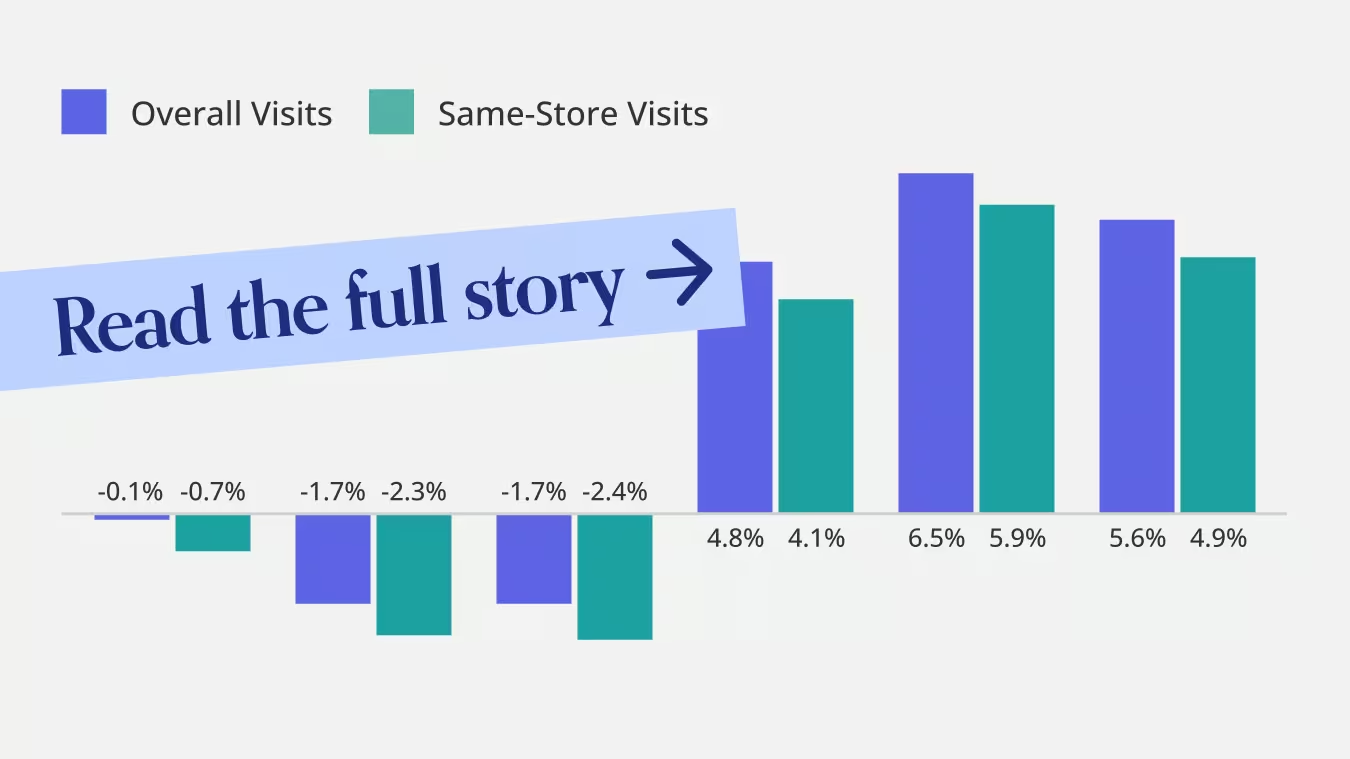
McDonald’s ended 2025 with clear visit momentum, reversing earlier softness and posting steady gains in the back half of the year. Same-store visits followed a similar trajectory, indicating that growth was driven by stronger underlying demand rather than unit expansion. This late-year rebound positions McDonald’s with solid visit momentum heading into 2026, suggesting improving consumer engagement as the year closed.

Higher-Frequency Diners Drive McDonald’s Visit Growth

Some of the visit growth is likely due to the chain's popular Q4 LTOs – but diving deeper into the visit frequency data suggests that McDonald’s long-term investment in its loyalty program is also playing a part. The company's launch of MyMcDonald’s Rewards in 2021 seems to have succeeded in shifting traffic toward higher-frequency, incremental visits rather than relying on new customer acquisition. 

Compared to pre-loyalty levels in H2 2019, a growing share of McDonald’s visits now comes from diners visiting an average of 4+ times per month, with the share of visits from consumers visiting the chain an average of 8+ times per month showing the most dramatic growth. Grouping YoY visit trends by visit frequency also shows that visits from high-frequency diners grew the most compared to H2 2024 and H2 2019. This dynamic points to a core benefit of loyalty-led growth: driving incremental visits from existing customers is typically far more efficient than acquiring new ones, especially in a mature, highly penetrated category like quick service restaurants.

McDonald’s executives have been explicit that loyalty is designed to increase frequency, not just enrollment. The continued growth of the program through 2025 – including deeper integration with value offers and digital ordering – suggests McDonald’s is still finding room to extract incremental visits from an already loyal base.

What McDonald’s Loyalty Strategy Signals for Other Restaurant Chains

For other restaurant chains, McDonald’s experience points to the value of using loyalty as a lever for incremental growth, particularly once a customer has already been acquired. While many QSR brands continue to drive expansion by entering new markets or opening additional locations, McDonald’s data illustrates how meaningful gains can also come from increasing visit frequency among existing customers. Even without McDonald’s scale, the underlying strategy is broadly applicable: converting first-time or occasional visitors into higher-frequency customers can serve as a complementary – and often more efficient – path to growth alongside physical expansion.

Will these lessons shape the QSR space in 2026? Visit Placer.ai/anchor to find out.

Placer.ai leverages a panel of tens of millions of devices and utilizes machine learning to make estimations for visits to locations across the US. The data is trusted by thousands of industry leaders who leverage Placer.ai for insights into foot traffic, demographic breakdowns, retail sale predictions, migration trends, site selection, and more.

Article
Opportunity vs. Operational Reality in Dollar Tree's 99 Cents Only Acquisition
Shira Petrack
Jan 20, 2026
3 minutes

Lessons From Dollar Tree's 99 Cents Only Acquisition 

In 2024, Dollar Tree capitalized on the liquidation of the 99 Cents Only chain to execute a strategic "land grab" in the notoriously tight US retail market. By acquiring designation rights for 170 leases across priority markets like California, Arizona, Nevada, and Texas, the retailer aimed to bypass zoning hurdles and accelerate growth. 

AI-powered location analytics indicates the selection process was highly disciplined: Looking at over 85 California stores that were converted from 99 Cents Only to Dollar Tree reveals that Dollar Tree cherry-picked high-performing sites that were generating 6.0% more foot traffic than the 99 Cents Only chain average in 2023. This suggests the acquisition was a calculated move to secure proven, high-quality real estate.

Beware of Cannibalization 

However, 2025 performance data reveals that capitalizing on this opportunity comes with distinct operational costs. Total visits to the converted stores have dropped 38.8% compared to their 2023 baselines. While some of this decline is structural – Dollar Tree operates a lower-frequency "treasure hunt" model compared to the high-frequency grocery model of the previous tenant – a significant portion is self-inflicted through network overlap. 

A staggering 36% of the new sites are located less than a mile from an existing Dollar Tree, which inevitably dilutes local traffic through cannibalization. This serves as a critical lesson for retailers considering bulk acquisitions: purchasing a portfolio "en masse" often prevents perfect network optimization, forcing the acquirer to manage the friction where new footprints compete with the old.

A "Healthy Correction"

Still, despite this cannibalization and the drop in raw volume, the transition offers a potential "healthy correction" for the business. The previous tenant collapsed under the weight of "rising levels of shrink" and low-margin grocery sales. By shifting the model, Dollar Tree is effectively filtering out non-paying visitors and low-value transactions, trading chaotic volume for a more controlled, margin-focused operation. The discrepancy between the sharp drop in total visits (-38.8%) and the more moderate dip in visits per square foot (-25.0%) suggests Dollar Tree is already rightsizing these operations, leaving some "ghost space" inactive rather than over-investing in labor to manage the entire cavernous floor.

Increasingly Affluent Dollar Tree Audience Key to New Stores' Success

And this excess square footage is only a liability if it remains empty; turning it into an asset requires leveraging the fundamental change in who is now shopping these aisles. The shift in shopper demographics – where "Wealthy Suburban Families" have replaced the "Young Urban Singles" and "Melting Pot Families" of the previous tenant – is crucial for Dollar Tree's future. This new audience, which is less price-sensitive, provides the ideal environment for Dollar Tree to deploy its "Multi-Price" strategy

While CFO Jeff Davis has cited "start-up costs" regarding these conversions, the long-term opportunity is clear: if Dollar Tree can utilize the extra square footage to showcase this higher-margin assortment, these locations could evolve from overlapping burdens into profitable flagships that capture a share of wallet the traditional small-box fleet never could. 

For more data-driven CRE insights, visit placer.ai/anchor

Placer.ai leverages a panel of tens of millions of devices and utilizes machine learning to make estimations for visits to locations across the US. The data is trusted by thousands of industry leaders who leverage Placer.ai for insights into foot traffic, demographic breakdowns, retail sale predictions, migration trends, site selection, and more.

Article
Which Gym Is Right For You in 2026?
Using AI-powered location analytics, we reveal which gyms are less crowded at peak times, skew younger or older, and attract the most singles.
Ezra Carmel
Jan 16, 2026
4 minutes

It’s mid-January, and you promised yourself this would be the year you finally join a gym and get in shape.

But let’s be honest – choosing a gym is about more than fitness goals alone. You’ll still need to judge the equipment, locker rooms, and showers for yourself (we’re not here to do your dirty work) but there are other, less obvious factors that can determine which gym feels like the right fit – and that’s where we come in.

Trying to dodge the morning rush? Hoping to make new friends? Curious where other singles work out? Letting AI-powered location analytics do some of the heavy lifting, we analyzed major fitness chains to uncover the patterns that could help you find your ideal gym in 2026.

Get Gains, Skip the Crowds

Few things derail motivation faster than showing up ready to work out – only to find every treadmill and weight machine taken. To understand which gyms are most likely to offer breathing room during the busiest parts of the day, we analyzed hourly visit patterns across the nation’s largest fitness chains.

The analysis shows clear differences in how morning traffic is distributed. For early risers, LA Fitness recorded the lowest share of daily visits between 5:00 AM and 8:00 AM in 2025, at just 8.9%. 24 Hour Fitness and EōS Fitness also kept morning traffic below the 10% mark, suggesting these chains may be better options for members looking to avoid crowded early workouts.

If after-work workouts are more your style – and minimizing crowds is the priority – the data points to a few clear standouts.

Among the analyzed gyms, Club Pilates recorded the smallest share of visits between 5:00 PM and 8:00 PM at 16.5%, followed by Orangetheory (17.3%) and Burn Boot Camp (18.7%). That lighter early-evening traffic likely reflects the structured nature of class-based formats, which can help limit overcrowding even during peak hours.

Looking specifically at traditional gyms, EōS Fitness, Life Time, and Vasa Fitness saw the lowest share of early-evening visits – making them potential options for those hoping to squeeze in a workout while avoiding the after-work rush.

Are you…ehm…single?

If getting in shape and finding love are both on the agenda this year, there may be a way to double up. Using AI-powered captured market data, we analyzed major gym chains to understand where members are most likely to be single – which may mean a higher chance of meeting someone special.

The analysis shows that Genesis Health Clubs had the highest combined share of one-person households and non-family households – i.e. people living alone or with roommates – in its captured market, at 36.6%. Crunch Fitness followed closely at 35.8%, with Planet Fitness just behind at 35.2%. These household segmentation patterns suggest that these gyms may offer more opportunities to meet other singles while getting in a workout.

Which Gyms Attract Younger vs. Older Members?

If you’re looking for love, or simply to make new friends, age demographics may be something to consider when choosing a gym.

Our analysis of major fitness chains shows that the potential markets of Fitness Connection, Vasa Fitness, and In-Shape Family Fitness – i.e. the areas from which each chain draws its visitors – skewed younger in 2025, with large shares of visitors under 30.

By contrast, gyms such as The Edge Fitness Club, Retro Fitness, and Life Time tended to attract older audiences, with large shares of visitors 45 and older. For members looking to work out alongside peers closer to their own age, these demographic patterns could help narrow the field.

Find a Gym Where Members Share Your Interests

Age is just a number, right? So if you’re looking to make a real connection at the gym this year, you might look for some common areas of interest with other members. Our analysis highlights which gyms are most likely to attract visitors with your shared passions.

For dog lovers hoping to meet a fellow fitness enthusiast who’s just as excited about the dog park as leg day, Burn Boot Camp stands out. The chain over-indexed most strongly for the “Dog Lovers” segment, based on Spatial.ai: Proximity and AI-powered captured market data.

Prefer bonding over a good book? Genesis Health Clubs led the pack for the “Bookish” segment, suggesting a higher likelihood of members who enjoy reading as much as a solid workout. Coffee aficionados may find their people at 24 Hour Fitness, which showed the strongest over-indexing for the “Coffee Connoisseur” segment.

For those with travel on the brain, Workout Anytime over-indexed for the “Wanderlust” segment – pointing to a member base more likely to dream about their next destination. And if your ideal post-workout plan includes a movie or live show, 24 Hour Fitness and Gold’s Gym emerged as standouts, over-indexing for the “Film Lovers” and “Live & Local Music” segments, respectively.

Ready for a Workout that Fits Your Lifestyle?

Ultimately, choosing the right gym goes beyond equipment, pricing, or proximity. Visit patterns, demographics, and shared interests all shape the experience – influencing when you’ll work out, who you’ll see, and how the gym fits into your broader lifestyle. While no dataset can guarantee a perfect match, these patterns offer a data-backed starting point for finding a gym that aligns with how you want to train, socialize, and show up in 2026.

Want more data-driven insights for the real world? Visit Placer.ai/anchor.

Placer.ai leverages a panel of tens of millions of devices and utilizes machine learning to make estimations for visits to locations across the US. The data is trusted by thousands of industry leaders who leverage Placer.ai for insights into foot traffic, demographic breakdowns, retail sale predictions, migration trends, site selection, and more.

*This article excludes data from Washington State due to local regulations

Article
Placer.ai Overall Retail, E-Commerce Distribution, Industrial Manufacturing Index, December 2025
Shira Petrack
Jan 15, 2026
2 minutes

Brick-and-Mortar Retail Ends 2025 On a High Note

Brick-and-mortar retail ended 2025 on a high note, with offline retailers posting a 2.4% increase in traffic in Q4 2025 relative to Q4 2024. This growth underscores the sector’s continued relevance even amid ongoing e-commerce growth and reinforces that retail growth is not a zero-sum dynamic, but one in which physical and digital channels increasingly coexist and complement one another.

The traffic gains during the holiday season also highlights the particular appeal of physical retail  during the holiday season, when demand for in-person shopping experiences is particularly high. And as retailers refine store formats, right-size footprints, and better integrate physical locations into omnichannel strategies, brick-and-mortar retail is well positioned to remain a critical growth and engagement channel heading into 2026.

Foot Traffic Strength Signals Durable Demand for Logistics Space

Foot traffic to e-commerce distribution centers remained consistently positive YoY throughout 2025, underscoring the strength of the logistics segment and signaling durable demand for logistics space rather than short-term fluctuations. This pattern aligns with the broader trajectory of e-commerce in the U.S., where online retail sales are projected to continue expanding, and reflects a broader structural shift in how goods move through the economy, with fulfillment infrastructure playing an increasingly central role.

This consistency is driven by long-term forces shaping retail and supply chains, including omnichannel fulfillment, faster delivery expectations, and inventory decentralization. As retailers rely more heavily on regional distribution nodes to support ship-from-store, curbside pickup, and next-day delivery, logistics facilities have become essential infrastructure rather than optional back-end operations. Even as growth moderated slightly later in the year, the persistence of positive YoY traffic points to sustained operational intensity and long-term relevance.

December Uptick Points to Stabilizing Manufacturing Activity

Year-over-year (YoY) foot traffic to U.S. manufacturing facilities points to volatility rather than sustained growth, reflecting a sector that is actively managing uncertainty. Visits declined during much of the year, suggesting restrained hiring as manufacturers appear to be operating lean – adjusting labor and on-site activity quickly in response to demand changes. Productivity gains and automation are likely also playing a role, allowing facilities to maintain output with less consistent physical presence. As a result, the foot traffic volatility may be reflecting operational flexibility rather than simple expansion or contraction.

Against this backdrop, December stands out with a clear uptick in manufacturing visits, signaling increased end-of-year activity. This rise likely reflects a mix of year-end production runs, inventory adjustments, maintenance work, and preparation for early-year demand. The December traffic increase reinforces that U.S. manufacturing – still one of the largest and most economically significant sectors globally – is adapting, not retreating, maintaining operational relevance even as it recalibrates for efficiency, automation, and selective growth.

For more data-driven retail & CRE insights, visit placer.ai/anchor.

Article
PacSun Puts Gen Z in Focus
Ezra Carmel
Jan 14, 2026
2 minutes

Pacsun has seen its fair share of challenges in its more than forty years of business. Now, the brand is entering a new phase of growth, with a major brick-and-mortar expansion alongside concrete steps to engage Gen Z consumers. We dove into the data for several Pacsun locations outperforming their host malls to understand what a growing footprint could mean for shopping centers and how the brand is connecting with young consumers online and off.

Pacsun Can Help Drive Traffic to Malls 

Pacsun has faced its share of challenges over the years. More recently, however, the legacy brand and mall staple appears to be in the midst of a renaissance – with plans to further expand its domestic brick-and-mortar footprint in 2026. 

Foot traffic data for several Pacsun locations that experienced notable foot traffic growth in 2025 suggests that the brand’s stores have the potential to help drive traffic to the shopping centers that host them. At The Promenade Shops at Centerra in Colorado, visits to Pacsun rose 35.7% YoY in 2025, significantly outpacing the -5.5% visit gap of the mall as a whole.

Pacsun’s Eye on Gen Z: Online and In-Store

Psychographic segmentation suggests that beyond driving visits, these locations also help attract key young demographics to the mall. 

At Winter Garden Village, for example, the Gen Z-aligned "Young Professionals" segment accounted for 19.4% of the Pacsun store’s captured market, compared to the mall’s 16.2% share of the segment. 

These locations may be an example of how Pacsun’s physical retail presence works together with its social-sales strategy to engage with a younger generation; driving traffic, in part, by serving as spaces to experience products seen on trusted social channels or at creator-led events.

And Pacsun appears firmly committed to its younger audience as part of its wider strategy. Although the brand looks to move upmarket, the latest example of which being the launch of a premium eyewear collection, by maintaining what it views as an accessible price point, Pacsun remains focused on consumers yet to reach their peak earning years. 

Pacsun’s ability to drive traffic from this key demographic makes it an attractive potential tenant for malls looking to build long-term loyalty among younger audiences with earning potential. 

Will Pacsun Stay Hot?

The Pacsun model demonstrates that physical retail remains a critical touchpoint for brands investing in digital engagement and younger audiences. With plans to open dozens of new locations over the next few years, Pacsun emerges as a compelling tenant for shopping centers seeking cultural relevance and the next generation of consumers.

For more retail insights, visit Placer.ai/anchor.

Placer.ai leverages a panel of tens of millions of devices and utilizes machine learning to make estimations for visits to locations across the US. The data is trusted by thousands of industry leaders who leverage Placer.ai for insights into foot traffic, demographic breakdowns, retail sale predictions, migration trends, site selection, and more.

Article
Checking Out Grocery in 2025 and Lessons for 2026
Ezra Carmel
Jan 13, 2026
4 minutes

The grocery category saw notable shifts in consumer behavior in 2025 as inflation and tariff uncertainty continued to weigh on household budgets. Analyzing consumer traffic trends for several grocery formats – including wholesale clubs, which serve as primary grocery destinations for many families – reveals how evolving consumer preferences shaped grocery performance in 2025 and highlights key lessons for grocers and CPG companies heading into 2026.

Fresh Format and Value-Forward Grocers Lead in YoY Growth in 2025

Like many retail categories in 2025, grocery was shaped by continued economic uncertainty and value-seeking behavior. But AI-powered location analytics shows that consumers also prioritized quality when forming a value perception in the grocery space.  

The graph below shows that grocery visits increased across formats, likely reflecting consumers’ shift toward more meals at home as a way to save money in a persistently inflationary environment.

Fresh format grocers posted the strongest year-over-year (YoY) visit growth, perhaps due to their selection of prepared foods and salad bars as an alternative to eating out, as well as their emphasis on health and wellness – an emerging priority among grocery shoppers. Meanwhile, value grocers and wholesale clubs, known for their ability to deliver savings, consistently outperformed traditional grocers in YoY visit growth.

These patterns indicate that consumers are increasingly weighing up quality and price in the grocery aisle, a trend that is driving the expansion of private-label offerings.

Increased Demand For Grocery Store Lunches

As consumers substituted restaurant meals with more cost-conscious options, grocery stores also emerged as increasingly important destinations for quick, convenient lunches.

Analyzing relative visit share between the grocery category and quick-service restaurants (QSRs) shows that between 2024 and 2025, grocery stores claimed an increasingly large share of short midday visits –  i.e. visits lasting less than ten minutes between 11:00 AM and 3:00 PM. 

And while some of QSR’s relative decline in short lunchtime visits could be due to discontent with rising fast-food prices among highly value-conscious consumers, it also suggests that a growing share of consumers see grocery stores – where they can pick up ready-to-eat items – as convenient options during the lunch rush. Traditional grocers saw the largest increase in short midday visits (from 15.9% to 16.6%) while value and fresh format grocers saw more modest increases. Notably, the share of short midday visits to wholesale clubs was unchanged between 2024 and 2025 (2.1%), perhaps since these chains don’t offer the same pre-prepared and small-package options like other grocery formats. 

These metrics underscore the strong demand for on-the-go meal options and single-serving, shelf-stable products that both grocery stores and CPG companies can provide.

Turkey Wednesday and Christmas Eve Were Busiest Grocery Days of 2025

Beyond the lunchtime rush, celebration-driven demand continued to play a central role in grocery traffic this year. Like in past years, Turkey Wednesday – the day before Thanksgiving – was by far the busiest grocery shopping day of the year, with category visits up 80.5% compared to the 2025 daily average. Several of the year’s other busiest grocery days similarly fell immediately ahead of major holidays, including New Year’s Eve, Easter, Mother’s Day, and the 4th of July, as consumers stocked up ahead of gatherings with family and friends.

Leading up to Christmas, grocery shopping appeared to be spread across several high-traffic days rather than concentrated on a single peak; Christmas Eve and December 23rd had nearly identical foot traffic boosts of 57.9% and 58.0%, respectively. And even December 22nd – three days before Christmas – stood out as one of the year’s busiest grocery shopping days, with visits running 28.9% above average for 2025.

Some consumers may have made multiple “re-stocking” grocery trips in the days leading up to Christmas – potentially driven by the presence of out-of-town guests requiring ongoing food replenishment – or visited multiple stores to secure specific ingredients for holiday meals.

Grocers could leverage this trend by stocking a wide range of holiday-specific ingredients and rotating promotions that encourage repeat visits ahead of Thanksgiving and Christmas.

Grocery Formats Preferred By Singles vs. Households With Children 

The grocery landscape in 2025 was also shaped by distinct shopping preferences across demographic groups. 

AI-powered captured market data combined with the STI: PopStats dataset shows that singles – defined as non-family and one-person households – heavily favored fresh-format grocers, while households with children were most likely to visit wholesale clubs and value grocers. 

Grocers and CPGs can unlock growth by tailoring assortments and promotional strategies to their target audience – emphasizing bulk value and price-driven messaging for family shoppers, while leaning into curated selection, prepared foods, and convenience to engage singles. 

Several consumer trends shaped the grocery space in 2025 – including holiday visit surges, the prioritization of value, and convenient on-the-go meals. 

How will these trends shape the grocery space in 2026? Visit Placer.ai/anchor to find out.

Placer.ai leverages a panel of tens of millions of devices and utilizes machine learning to make estimations for visits to locations across the US. The data is trusted by thousands of industry leaders who leverage Placer.ai for insights into foot traffic, demographic breakdowns, retail sale predictions, migration trends, site selection, and more.

Reports
INSIDER
Pricing Strategies Driving Restaurant Visits in 2024
Dive into the data to explore the state of the restaurant industry in 2024 and see how leading chains are navigating the challenges posed by rising prices.
September 26, 2024
7 minutes

Dining in 2024 (So Far)

The restaurant space has experienced its fair share of challenges in recent years – from pandemic-related closures to rising labor and ingredient costs. Despite these hurdles, the category is holding its own, with total 2024 spending projected to reach $1.1 trillion by the end of the year.

And an analysis of year-over-year (YoY) visitation trends to restaurants nationwide shows that consumers are frequenting dining establishments in growing numbers – despite food-away-from-home prices that remain stubbornly high.

Overall, monthly visits to restaurants were up nearly every month this year compared to the equivalent periods of 2023. Only in January, when inclement weather kept many consumers at home, did restaurants see a significant YoY drop. Throughout the rest of the analyzed period, YoY visits either held steady or grew – showing that Americans are finding room in their budgets to treat themselves to tasty, hassle-free meals.

Still, costs remain elevated and dining preferences have shifted, with consumers prioritizing value and convenience – and restaurants across segments are looking for ways to meet these changing needs. This white paper dives into the data to explore the trends impacting quick-service restaurants (QSR), full-service restaurants (FSR), and fast-casual dining venues – and strategies all three categories are using to stay ahead of the pack. 

Dollar-Driven Dining Decisions 

Overall, the dining sector has performed well in 2024, but a closer look at specific segments within the industry shows that fast-casual restaurants are outperforming both QSR and FSR chains. 

Between January and August 2024, visits to fast-casual establishments were up 3.3% YoY, while QSR visits grew by just 0.7%, and FSR visits fell by 0.3% YoY. As eating out becomes more expensive, consumers are gravitating toward dining options that offer better perceived value without compromising on quality. Fast-casual chains, which balance affordability with higher-quality ingredients and experiences, have increasingly become the go-to choice for value-conscious diners.

Fast-casual restaurants also tend to attract a higher-income demographic. Between January and August 2024, fast-casual restaurants drew visitors from Census Block Groups (CBGs) with a weighted median household income of $78.2K – higher than the nationwide median of $76.1K. (The CBGs feeding visits to these restaurants, weighted to reflect the share of visits from each CBG, are collectively referred to as their captured market). 

Perhaps unsurprisingly, quick-service restaurants drew visitors from much less affluent areas. But interestingly, despite their pricier offerings, full-service restaurants also drew visitors from CBGs with a median HHI below the nationwide baseline. While fast-casual restaurants likely attract office-goers and other routine diners that can afford to eat out on a more regular basis, FSR chains may serve as special occasion destinations for those with more moderate means. 

Who Can Afford to Raise Prices?

Though QSR, FSR, and fast-casual spots all seek to provide strong value propositions, dining chains across segments have been forced to raise prices over the past year to offset rising food and labor costs. This next section takes a look at several chains that have succeeded in raising prices without sacrificing visit growth – to explore some of the strategies that have enabled them to thrive.

Shake Shack: Drawing Affluent Audiences 

The fast-casual restaurant space attracts diners that are on the wealthier side – but some establishments cater to even higher earners. One chain of note is NYC-based burger chain Shake Shack, which features a captured market median HHI of $94.3K. In comparison, the typical fast-casual diner comes from areas with a median HHI of $78.2K. 

Shake Shack emphasizes high-quality ingredients and prices its offerings accordingly. The chain, which has been expanding its footprint, strategically places its locations in affluent, upscale, and high-traffic neighborhoods – driving foot traffic that consistently surpasses other fast-casual chains. And this elevated foot traffic has continued to impress, even as Shake Shack has raised its prices by 2.5% over the past year. 

Texas Roadhouse: Thriving Through Price Hikes

Steakhouse chain Texas Roadhouse has enjoyed a positive few years, weathering the pandemic with aplomb before moving into an expansion phase. And this year, the chain ranked in the top five for service, food quality, and overall experience by the 2024 Datassential Top 500 Restaurant Chain.

Like Shake Shack, Texas Roadhouse has raised its prices over the past year – three times – while maintaining impressive visit metrics. Between January and August 2024, foot traffic to the steakhouse grew by 9.7% YoY, outpacing visits to the overall FSR segment by wide margins. 

This foot traffic growth is fueled not only by expansion but also by the chain's ability to draw traffic during quieter dayparts like weekday afternoons, while at the same time capitalizing on high-traffic times like weekends. Some 27.7% of weekday visits to Texas Roadhouse take place between 3:00 PM and 6:00 PM – compared to just 18.9% for the broader FSR segment – thanks to the chain’s happy hour offerings early dining specials. And 43.3% of visits to the popular steakhouse take place on Saturdays and Sundays, when many diners are increasingly choosing to splurge on restaurant meals, compared to 38.4% for the wider category.

QSR Limited-Time Offers (LTOs) to the Rescue

Though rising costs have been on everybody’s minds, summer 2024 may be best remembered as the summer of value – with many quick-service restaurants seeking to counter higher prices by embracing Limited-Time Offers (LTOs). These LTOs offered diners the opportunity to save at the register and get more bang for their buck – while boosting visits at QSR chains across the country. 

Hardee’s August Combo Deal: A Recipe for Loyalty

Limited time offers such as discounted meals and combo offers can encourage frequent visits, and Hardee’s $5.99 "Original Bag" combo, launched in August 2024, did just that. The combo allowed diners to mix and match popular items like the Double Cheeseburger and Hand-Breaded Chicken Tender Wraps, offering both variety and affordability. And visits to the chain during the month of August 2024 were 4.9% higher than Hardee’s year-to-date (YTD) monthly visit average.

August’s LTO also drove up Hardee’s already-impressive loyalty rates. Between May and July 2024, 40.1% to 43.4% of visits came from customers who visited Hardee’s at least three times during the month, likely encouraged by Hardee’s top-ranking loyalty program. But in August, Hardee’s share of loyal visits jumped to 51.5%, highlighting just how receptive many diners are to eating out – as long as they feel they are getting their money’s worth. 

McDonald’s Special Meal Deal

McDonald’s launched its own limited-time offer in late June 2024, aimed at providing value to budget-conscious consumers. And the LTO – McDonald’s foray into this summer’s QSR value wars – was such a resounding success that the fast-food leader decided to extend the deal into December. 

McDonald’s LTO drove foot traffic to restaurants nationwide. But a closer look at the chain’s regional captured markets shows that the offer resonated particularly well with “Young Urban Singles” – a segment group defined by Spatial.ai's PersonaLive dataset as young singles beginning their careers in trade jobs. McDonald's locations in states where the captured market shares of this demographic surpassed statewide averages by wider margins saw bigger visit boosts in July 2024 – and the correlation was a strong one.  

For example, the share of “Young Urban Singles” in McDonald’s Massachusetts captured market was 56.0% higher than the Massachusetts statewide baseline – and the chain saw a 10.6% visit boost in July 2024, compared to the chain's statewide H1 2024 monthly average. But in Florida, where McDonald’s captured markets were over-indexed for “Young Urban Singles” by just 13% compared to the statewide average, foot traffic jumped in July 2024 by a relatively modest 7.3%. 

These young, price-conscious consumers, who are receptive to spending their discretionary income on dining out, are not the sole driver of McDonald’s LTO foot traffic success. Still, the promotion’s outsize performance in areas where McDonald’s attracts higher-than-average shares of Young Urban Singles shows that the offering was well-tailored to meet the particular needs and preferences of this key demographic. 

Michelin Star Success 

While QSR, fast-casual, and FSR chains have largely boosted foot traffic through deals and specials, reputation is another powerful way to attract diners. Restaurants that earn a coveted Michelin Star often see a surge in visits, as was the case for Causa – a Peruvian dining destination in Washington, D.C. The restaurant received its first Michelin Star in November 2023, a major milestone for Chef Carlos Delgado.

The Michelin Star elevated the restaurant's profile, drawing in affluent diners who prioritize exclusivity and are less sensitive to price increases. Since the award, Causa saw its share of the "Power Elite" segment group in its captured market increase from 24.7% to 26.6%. Diners were also more willing to travel for the opportunity to partake in the Causa experience: In the six months following the award, some 40.3% of visitors to the restaurant came from more than ten miles away, compared to just 30.3% in the six months prior.

These data points highlight the power of a Michelin Star to increase a restaurant’s draw and attract more affluent audiences – allowing it to raise prices without losing its core clientele. Wealthier diners often seek unique culinary experiences, where price is less of a concern, making these establishments more resilient to inflation than more venues that serve more price-sensitive customers.

The Final Plate

Dining preferences continue to evolve as restaurants adapt to a rapidly changing culinary landscape. From the rise in fast-casual dining to the benefits of limited-time offers, the analyzed restaurant categories are determining how to best reach their target audiences. By staying up-to-date with what people are eating, these restaurant categories can hope to continue bringing customers through the door. 

INSIDER
The Rising Stars: Six Metro Areas Welcoming Young Professionals
Find out which metro areas are seeing positive net migration and discover what might be drawing newcomers to these cities.
September 23, 2024
3 minutes

The COVID-19 pandemic – and the subsequent shift to remote work – has fundamentally redefined where and how people live and work, creating new opportunities for smaller cities to thrive. 

But where are relocators going in 2024 – and what are they looking for? This post dives into the data for several CBSAs with populations ranging from 500K to 2.5 million that have seen positive net domestic migration over the past several years – where population inflow outpaces outflow. Who is moving to these hubs, and what is drawing them? 

CBSAs on the Rise

The past few years have seen a shift in where people are moving. While major metropolitan areas like New York still attract newcomers, smaller cities, which offer a balance of affordability, livability, and career opportunities, are becoming attractive alternatives for those looking to relocate. 

Between July 2020 and July 2024, for example, the Austin-Round Rock-Georgetown, TX CBSA, saw net domestic migration of 3.6% – not surprising, given the city of Austin’s ranking among U.S. News and World Report’s top places to live in 2024-5. Raleigh-Cary, NC, which also made the list, experienced net population inflow of 2.6%. And other metro areas, including Fayetteville-Springdale-Rogers, AR (3.3%), Des Moines-West Des Moines, IA (1.4%), Oklahoma City, OK (1.1%), and Madison, WI (0.6%) have seen more domestic relocators moving in than out over the past four years.

All of these CBSAs have also continued to see positive net migration over the past 12 months – highlighting their continued appeal into 2024.

Younger and Hungrier

What is driving domestic migration to these hubs? While these metropolitan areas span various regions of the country, they share a common characteristic: They all attract residents coming, on average, from CBSAs with younger and less affluent populations. 

Between July 2020 and July 2024, for example, relocators to high-income Raleigh, NC – where the median household income (HHI) stands at $84K – tended to hail from CBSAs with a significantly lower weighted median HHI ($66.9K). Similarly, those moving to Austin, TX – where the median HHI is $85.4K – tended to come from regions with a median HHI of $69.9K. This pattern suggests that these cities offer newcomers an aspirational leap in both career and financial prospects.

Moreover, most of these CBSAs are drawing residents with a younger weighted median age than that of their existing residents, reinforcing their appeal as destinations for those still establishing and growing their careers. Des Moines and Oklahoma City, in particular, saw the largest gaps between the median age of newcomers and that of the existing population.

Housing and Jobs: Upgrading and Improving

Career opportunities and affordable housing are major drivers of migration, and data from Niche’s Neighborhood Grades suggests that these CBSAs attract newcomers due to their strong performance in both areas. All of the analyzed CBSAs had better "Jobs" and "Housing" grades compared to the regions from which people migrated. For example, Austin, Texas received the highest "Jobs" rating with an A-, while most new arrivals came from areas where the "Jobs" grade was a B. 

While the other analyzed CBSAs showed smaller improvements in job ratings, the combination of improvements in both “Jobs” and “Housing” make them appealing destinations for those seeking better economic opportunities and affordability.

Final Grades

Young professionals may be more open than ever to living in smaller metro areas, offering opportunities for cities like Austin and Raleigh to thrive. And the demographic analysis of newcomers to these CBSAs underscores their appeal to individuals seeking job opportunities and upward mobility. 

Will these CBSAs continue to attract newcomers and cement their status as vibrant, opportunity-rich hubs for young professionals? And how will this new mix of population impact these growing markets?

Visit Placer.ai to keep up with the latest data-driven civic news. 

INSIDER
Redefining Retail Spaces: Lessons from the C-Store Category
Dive into the data to see how convenience stores are redefining retail spaces.
September 16, 2024
5 minutes

Convenience stores, or c-stores, have been one of the more exciting retail categories to watch over the past few years. The segment has undergone significant shifts, embracing more diverse offerings like fresh food and expanded dining options, while also exploring new markets and adapting to changing consumer needs. We looked at the recent foot traffic data to see what this category's successes reveal about the current state of brick-and-mortar retail.

Seasonal Stops Along The Way

Convenience stores are increasingly viewed not only as places to fuel up, but as affordable destinations for quick meals, snacks, and other necessities. And analyzing monthly visits to the category shows that it is continuing to benefit from its positioning as a stop for food, fuel, and in some cases, tourism. 

Despite lapping a strong H1 2023, visits to the category either exceeded last year’s levels or held steady during all but one of the first eight months of 2024 – highlighting the segment’s ongoing strength. Only in January 2024 did C-stores see a slight YoY dip, likely reflecting a weather-induced exaggeration of the segment’s normal seasonality. 

Indeed, examining monthly fluctuations in visits to c-stores (compared to a January 2021 baseline) shows that foot traffic to the category tends to peak in summer months – perhaps driven by summer road trips and vacations – and slow down significantly in winter. Given summer’s importance for convenience stores, the category’s August YoY visit bump is a particularly promising indication of c-stores’ robust positioning this year.  

Regional Chains Expanding Their Reach

While some C-store chains, like 7-Eleven, have a nationwide presence, others are concentrated in specific areas of the country. But as the popularity of C-stores continues to grow, regional chains like Wawa, Buc-ee’s, and Sheetz are expanding into new territories, broadening their reach.

Wawa, a beloved brand with roots in Pennsylvania, has become synonymous with its fresh sandwiches, coffee, and a highly loyal customer base. Wawa has been a major player in the c-store space in recent years, with a revamped menu driving ever-stronger foot traffic to its Mid-Atlantic region stores. Between January and August 2024, YoY visits to the chain were mostly elevated. And the chain is now venturing into states like Florida – where its store count has grown significantly over the past few years – as well as Georgia and Alabama. 

Meanwhile, Texas favorite Buc-ee’s, though known for its enormous stores and mind boggling array of dining options, has a relatively small footprint – but that might be changing. The chain, which also outpaced its already-strong 2023 performance this year, is opening locations in Arkansas and North Carolina, further building on its reputation as a destination for travelers. And Sheetz, another regional chain with a strong presence in Pennsylvania, is also expanding, with plans to open locations in Southern states like North Carolina and Tennessee.

Taking the Pulse of Statewide Dwell Times

This trend toward regional expansion offers significant opportunities for growth, not only by increasing store count, but also by reaching new consumer bases and target audiences. Customer behavior differs between markets – and by expanding into new areas, c-stores can tap into unique local visitation patterns.  

One metric that highlights local differences in consumer behavior is dwell time, or the amount of time a customer spends inside a convenience store per visit. In some regions, visitors tend to move in and out quickly, while in others, customers linger for longer periods of time.

Analyzing convenience store dwell times by state highlights substantial differences in visitor behavior. During the first eight months of 2024, coastal states (with the exception of Oregon) tended to see shorter average dwell times (between 7.5 and 11.8 minutes). On the other hand, in states like Wyoming, Montana, and North Dakota, average dwell times ranged between 21.2 and 28.2 minutes. 

Interestingly, the states with the longest dwell times also have some of the highest percentages of truck traffic on interstate highways – suggesting that these longer stops are perhaps made by long-haul truckers looking for a place to shower, relax, and grab a bite to eat. 

Limited-Time Options

Even as regional favorites expand their reach, nationwide classic 7-Eleven is taking steps to further cement its growing role as a prime grab-and-go food and beverage destination. And like other dining destinations, the chain relies on limited-time offers (LTOs) to fuel excitement – and visits. 

One of the most iconic, and beloved c-store LTOs is 7-Eleven’s Slurpee Day, which falls each year on July 11th. The event, during which all 7-Eleven locations hand out free slurpees, tends to drive significant upticks in foot traffic – and this year was no exception. Visits to the convenience store jumped by a whopping 127.3% on July 11th, 2024 relative to the YTD daily visit average – proving that good deals will bring customers in the door.

A Strong Year for Convenience Stores

The convenience store sector continues building on the impressive growth seen in 2023. As many chains double down on expanding both their regional presence and their offerings, will they continue to drive growth in the coming years?

Visit Placer.ai to keep up with the latest data-driven convenience store updates. 

Loading results...
We couldn't find anything matching your search.
Browse one of our topic pages to help find what you're looking for.
For more in-depth analyses on a variety of subjects, explore Reports.
The Anchor Logo
INSIDER
Stay Anchored: Subscribe to Insider & Unlock more Foot Traffic Insights
Gain insider insights with our in-depth analytics crafted by industry experts
— giving you the knowledge and edge to stay ahead.
Subscribe