.png)
.png)

.png)
.png)

The Lollapalooza festival, held annually in Chicago's Grant Park, is one of the world's most iconic music events. We dove into the location intelligence data to explore how the festival impacts tourism to the Windy City – and understand the characteristics and preferences of the audience that flocks to the city each year.
The festival acts as a powerful magnet for tourists, particularly those from nearby regions. During Lollapalooza, the number of domestic tourists to Chicago (i.e., out-of-market visitors traveling more than 50 miles) surged by 180.7% compared to an average Thursday through Sunday – and by 43.8% compared to the already-busy summer period of June and July.
But a closer look at the data reveals that the greatest increase came from visitors living 50 to 100 miles away, with a massive 343.3% increase over the 12-month average. In contrast, the smallest increase stemmed from long-distance travelers journeying 250 miles or more, with visits up just 145.7% from the average. This strong local pull shows that Lollapalooza is a regional tourism powerhouse, driving an incredible surge in visits from a concentrated market that views the festival as a premiere, must-attend event.
This substantial influx of tourists also brought a more affluent crowd than usual. Summer – peak Chicago tourist season – attracts a slightly wealthier crowd than the rest of the year. But the median household income (HHI) of visitors’ home areas hit $89.7K during Lollapalooza, a clear jump from both the June-July average of $83.9K and the 12-month average of $82.5K.
The festival’s audience is also more diverse than its reputation might suggest. The share of “Young Professionals” in the visitor mix rose to 16.6% during Lollapalooza, up from 14.5% during the summer, while the share of “Ultra Wealthy Families” climbed to 7.6% from 6.4% and the share of “Sunset Boomers” rose to 5.1% from 4.7%. The increase in these segments shows the festival’s broad appeal, attracting not just young people but also older, established, and affluent families.
In addition to being wealthier, Lollapalooza attendees had a distinctly different lifestyle profile. Compared to both the 12-month and summer averages, visitors were more likely to be married couples and to enjoy wine and good coffee. Notably, the share of visitors who worked from home increased to 18.7% during the festival, compared to a 17.0% summertime benchmark. These lifestyle markers signal a premium, high-value consumer that presents an ideal audience for local businesses and sponsors looking to create targeted on-site experiences, from specialized pop-up cafes to wine-tasting events.
Overall, these findings highlight Lollapalooza’s potent role in supercharging Chicago’s tourism sector. Beyond the simple boost in overall visitor numbers, the festival draws a more affluent and distinctive demographic than the typical summer crowd – making it a powerful economic engine for the city.
For more data-driven insights, visit placer.ai/anchor.

For many Americans, Walmart functions as a grocer and essential-goods provider. Target’s competitive advantage, meanwhile, lies in higher-margin discretionary categories – stylish home goods, affordable fashion, and exclusive brand collaborations. In the face of ongoing macroeconomic pressures, both retailers are adopting elements of each other’s approaches: Walmart is seeking to elevate its image and expand discretionary offerings through a rebrand, while Target is ramping up its focus on essentials. But Q2 2025 location intelligence data reveals that the two brands’ immediate challenges remain distinctly different.
Walmart has been thriving in recent months, exceeding analyst expectations with solid sales growth driven largely by a profitable e-commerce segment. Last quarter (ending April 30th, 2025), Walmart U.S. posted comparable sales growth (excluding fuel) of +4.5%, with e-commerce contributing approximately 3.5 percentage points to that growth. And in June 2025, the company built on this momentum with the debut of its “Walmart, Who Knew” campaign – part of a strategic rebranding highlighting expanded, premium product offerings alongside enhanced e-commerce capabilities – such as one-hour express delivery and an online marketplace of over half a billion items.
Against this backdrop, Walmart’s stable YoY foot traffic – hovering between +0.8% and -1.6% monthly May through July – is a powerful signal of its continued strength. The data validates the company’s omnichannel strategy, indicating an ability to grow its digital business without materially sacrificing its foundational in-store visitor base.
In contrast, Target has faced meaningful challenges, with YoY same-store visit gaps ranging from 2.2% to 9.7% since February 2025. Like Walmart, Target’s online growth has been a bright spot – last quarter, the company reported a 4.7% increase in digital comp sales, aided by more than 35% growth in same-day delivery. But this was not enough to offset a 5.7% decline in in-store comp sales. And though consumer reactions to Target’s recent policy updates do appear to have contributed to the retailer’s softening YoY performance, persistent challenges point to a more fundamental shift in consumer preferences amid discretionary cutbacks.
Both Walmart and Target are borrowing elements of each other’s playbooks. But consumer visitation data shows that while Walmart and Target can learn from each other, they service fundamentally different shopping missions.
Walmart’s vast scale and extensive grocery selection make it a prime destination for habitual, necessity-driven shopping. Between May and July 2025, about 34.0% of shoppers visited Walmart at least four times a month. Target’s 14% frequent visitor share, on the other hand, reflects its role as a more occasional destination centered on discovery-led shopping experiences – such as its successful Kate Spade collaboration, hailed by the company as the most successful design collab in a decade. While strengthening essentials plays to the current economic climate and likely contributed to the modest increase in Target’s frequent visitors over the past year, the retailer’s future success depends on sharpening – not blurring – its core strengths.
Walmart’s foot traffic stability combined with proven ecommerce growth positions it well to continue outperforming, especially as consumer caution favors essentials and convenience. Furthermore, the retailer’s rebranding and push into broader, discretionary categories may help attract higher-income consumers who are trading down.
Target, for its part, faces a more difficult strategic balancing act in the months ahead. Augmenting its offerings with compelling essentials will be critical. But as demonstrated by the strong performance of retailers like Five Below and T.J. Maxx, there still exists a healthy market for discretionary treasure hunting. Ultimately, Target’s ability to reignite growth will depend on its success in rejuvenating its competitive edge in the discretionary market – a task likely to be further complicated by anticipated tariffs.
For more data-driven retail insights, follow Placer.ai/anchor.

The office recovery is back in full swing. Major employers such as Samsung, Google, and Starbucks have tightened return-to-office (RTO) policies in recent months. And though hybrid work remains prevalent across industries, Q2 2025 saw a majority of Fortune 100 employees subject to full-time in-office mandates – up from just 5.0% in Q2 2023.
In June, accumulating RTO mandates helped shrink the post-pandemic office visit gap to 27.4% compared to the same period in 2019. And July 2025 set a new record for office attendance, with visits down just 21.8% relative to July 2019 (both Julys had 22 working days) – making it the single busiest in-office month since COVID.
Stark regional differences remain, however, between major business hubs nationwide. New York City, where many employees are subject to the stricter in-office requirements of the finance world, saw positive (+1.3%) year-over-six-year (Yo6Y) office foot traffic growth in July 2025 – a first since Placer.ai began tracking these trends. Miami, which has developed a thriving financial sector of its own, followed closely behind, effectively closing its visit gap with a 0.1% lag.
Atlanta and Dallas also made considerable headway – both markets saw visit gaps dip below 20% compared to 2019. Meanwhile, Denver – an emerging hub for tech startups and one of the most remote-friendly labor markets in the U.S. – took up the rear, while San Francisco inched up two notches in the rankings, beating out both Denver and Los Angeles.
Indeed, San Francisco appears to be in the midst of a major revival, with rising rents, improving public sentiment, and waves of new restaurant, retail, and small business openings breathing fresh life into a city once dismissed as stuck in a “doom loop”. And in July 2025, the City by the Bay once again topped the year-over-year (YoY) office recovery charts, outpacing all other analyzed hubs with remarkable 21.6% visit growth – more tangible evidence of the progress San Francisco continues to make.
If past experience is any guide, the road to office recovery will continue to be anything but linear. RTO policies remain far from uniform, and hybrid work continues to serve as a key baseline for many organizations. Still, July 2025 seems to mark a meaningful RTO tipping point, with numerous markets making substantial progress toward pre‐COVID office foot traffic levels.
Follow Placer.ai/anchor for more office visitation insights.

Same-store visit growth at TJX chains in recent months exceeded the company's official guidance of 2-3% same-store sales growth for Q2 FY26 (May 4 - August 2, 2025), aligning with analyst expectations for an earnings beat.
The largest growth in same-store visits went to HomeGoods, which continues to be a key growth engine for TJX, with its outperformance stemming from a multi-faceted competitive edge. Its consistent lead over the core apparel banners, T.J. Maxx and Marshalls, may be due to its more defensible position in the less-crowded off-price home category. And when compared to its sister brand, Homesense, HomeGoods' superior performance may be attributed to its significant brand maturity and a merchandise mix centered on higher-frequency, smaller-ticket items. This positions the banner effectively to capture discretionary spending from consumers seeking affordable indulgences in the current economic environment.
All banners experienced YoY growth in overall traffic, but the strongest growth went to the latest newest additions to the company's U.S. portfolio – Homesense and Sierra, suggesting that both brands have a long runway for unit potential.
Sierra is engineered to capture a significant share of the lucrative outdoor and active lifestyle market, a space that critically lacks a dominant, national, off-price competitor, giving it a clearer and more defensible runway for explosive growth. In contrast, while Homesense plays the vital role of deepening TJX's penetration in the home category with larger-scale items like furniture, it enters a more contested field and must contend with established competition from other discount and value-oriented furniture retailers.
Both expansions are ultimately underpinned by TJX's core competency: leveraging its world-class buying organization and real estate expertise to dominate new off-price segments and capture a larger share of total consumer discretionary spending.
This push into new product categories is happening in parallel with a push into new markets. Year-over-year analysis reveals TJX has systematically expanded its rural and semi-rural household penetration across all banners – aligning with management's stated focus on "smaller markets and smaller footprint stores" as identified growth opportunities. With TJX planning around 130 net new stores in 2025, this rural expansion strategy provides a credible pathway for continued domestic growth in an increasingly competitive retail landscape.
For more data-driven retail insights, visit placer.ai/anchor.
The information, data, analyses and opinions presented herein do not constitute investment advice; are provided solely for informational purposes and therefore are not an offer to buy or sell a security; and are not warranted to be correct, complete or accurate. By means of this publication, Placer Labs Inc. (“Placer”) is not rendering accounting, business, financial, investment, legal, tax or other professional advice or services. This publication is not a substitute for such professional advice or services, nor should it be used as a basis for any decision or action that may affect your business. Before making any decision or taking any action that may affect your business, you should consult a qualified professional advisor.
Placer shall not be responsible for any loss sustained by any person who relies on this publication. The opinions and data presented are as of the date written and are subject to change without notice. The information contained herein is the proprietary property of Placer and may not be reproduced, in whole or in part, or used in any manner, without the prior written consent of Placer.

As the U.S. economy enters the second half of 2025, evidence is mounting that consumers are pulling back on discretionary purchases. This possibility was something we recently discussed when highlighting the divergence between industrial and retail activity. While last week's Amazon Prime Day and other sales events drove a temporary surge in visits for big-ticket and back-to-school items, persistent macroeconomic uncertainty and the first real impacts of tariff-related price increases appear to be taking a toll on consumer confidence. With sentiment remaining fragile, households are becoming more selective, prioritizing essential spending while cutting back on discretionary purchases and travel.
Recently, Placer’s analyst team looked at visitation trends for airports, but we’re also seeing a slowdown in car travel based on visitation data to gas stations. After a sluggish February, foot traffic to gas stations and convenience stores has continued to show year-over-year declines through the spring and into the summer. This trend points to more than just fluctuating fuel prices; it reflects a conscious pullback by consumers who appear to be consolidating trips and reducing non-essential driving. This financial anxiety is causing many to shorten or delay vacation plans, resulting in weaker foot traffic at airports and fewer long-distance road trips.
Our analysis confirms that the traditional summer vacation is being reshaped by this economic uncertainty. Using our new Markets data, we’ve seen a decrease in the average miles traveled during the first half of 2025 for roughly two-thirds of the top 25 most populated markets in the U.S.
This has led to a rise in shorter "micro-cations" rather than extended, long-haul journeys. Consequently, while people are still traveling, the overall distance covered per trip has decreased, a sentiment that also extends to air travel, where a slowdown in both leisure and corporate bookings reflects a broad pullback on expensive, long-distance commitments in favor of more predictable, regional getaways.
As we move through July, the consumer narrative for the second half of 2025 is being defined by a strategic retreat in discretionary spending, particularly travel. While major sales events can still create temporary bursts of activity, the underlying trend shows a more cautious consumer responding to economic pressures by reducing non-essential driving, shortening vacation distances, and opting for more budget-friendly "micro-cations." This shift away from long-haul travel, visible in both gas station and airport traffic data, signals a significant recalibration of household budgets that will likely shape the broader retail and travel landscape for the remainder of the year.

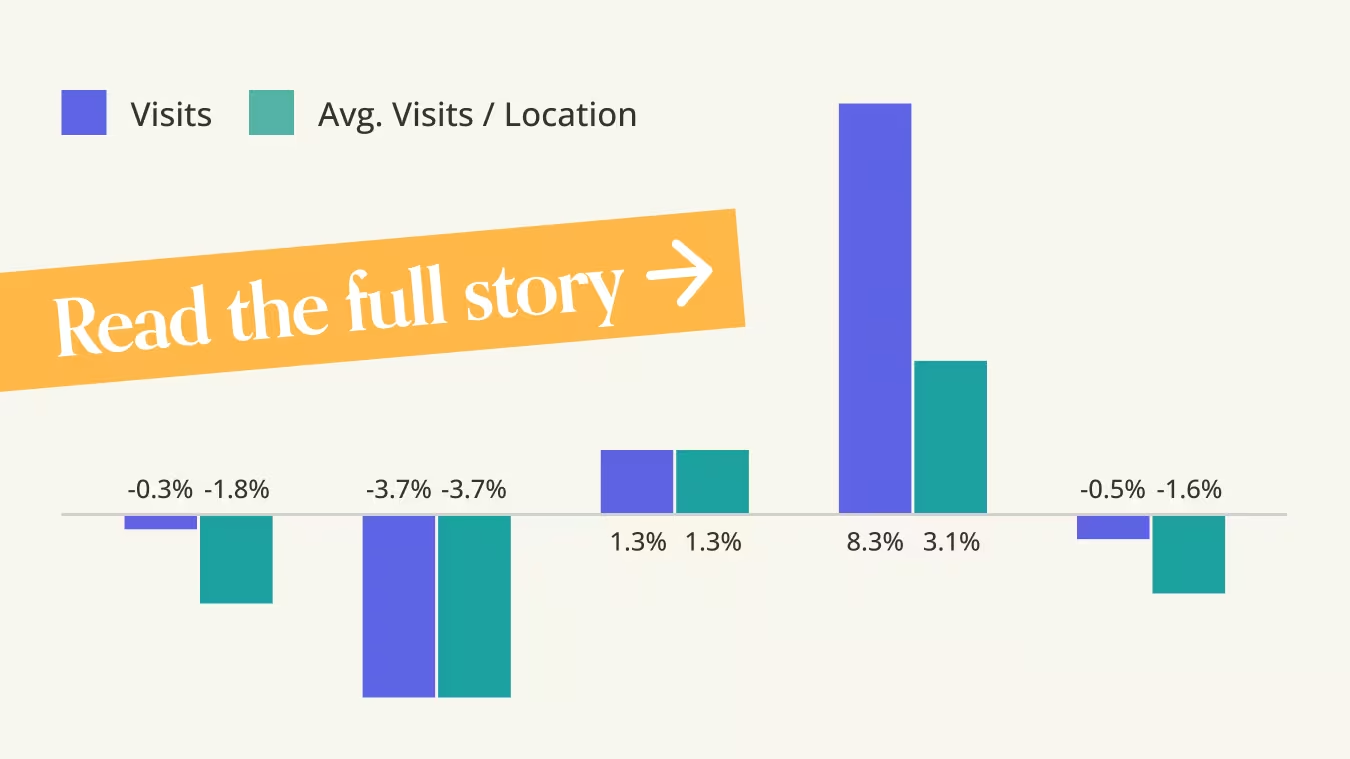
Mall visit trends improved slightly in July 2025. Indoor mall traffic grew 1.3% year-over-year, reversing June's visit declines. This growth highlights indoor malls' rebound and suggests that enclosed shopping centers continue to attract consumers seeking climate-controlled comfort during peak summer heat.
Meanwhile, open-air shopping centers and outlet malls narrowed their visit gaps, with visits to open-air shopping centers almost on par with July 2024 levels and visits to outlet malls just 2.1% lower than this time last year.
Diving into the weekly data reveals a more complex picture. While mid-July visits were generally up relative to 2024 – perhaps boosted by the various July sales events – traffic across all three formats softened towards the end of the month. This may suggest that these major promotional events may be pulling demand forward rather than generating sustained, incremental traffic and highlights the challenge of converting a promotional 'sugar rush' into lasting momentum.
Boise Towne Square significantly outpaced the broader Placer.ai Indoor Mall Index in July, posting 12.2% year-over-year growth versus the national average of 1.3% – extending the Idaho mall's exceptional performance streak throughout 2025. And remarkably, Boise Towne Square has also consistently surpassed its pre-pandemic visit level every month of 2025 so far.
While multiple factors likely contribute to this strength, a major traffic driver has been the new In-N-Out location that opened in the mall in late October 2024. Since the opening, visits to Boise Towne Square have steadily increased, and other tenants – including other dining establishments – have also benefited from sustained visit improvements across the entire mall.
This demonstrates the powerful halo effect that a high-draw non-traditional anchor tenant can create for an entire shopping center.
To check out retail foot traffic trends for yourself, try Placer.ai's free industry trends tool.
Grocery chains in the United States are increasingly investing in on-site healthcare clinics, transforming their stores into hubs for both food and wellness. While grocery stores have long featured pharmacies and some basic healthcare services like vaccinations, recent years have seen a shift towards more extensive healthcare offerings.
Today, many grocery stores offer a range of services – from primary and urgent care to dental and mental health care. In addition to providing an important community service, grocery-anchored healthcare clinics can boost foot traffic at chains, help health providers reach more patients, and allow shoppers to manage their health and home needs in one convenient trip.
This white paper examines the impact these in-store clinics have on grocery chain visitation patterns and trade area characteristics. Are shoppers more or less likely to make repeat visits to grocery stores with healthcare services? And how does the addition of a clinic affect the demographic profile of a grocery store’s captured market? The report examines these questions and more, offering insights for stakeholders across the grocery and healthcare industries.
Analyzing foot traffic to grocery stores with and without in-store clinics shows the positive impact of these services: Across chains, locations with on-site healthcare offerings drew more visits in H1 2024 than their chain-wide averages.
The Kroger Co., which operates numerous regional banners as well as its own eponymous chain, has been a leader in in-store healthcare services since the early aughts. The company introduced its in-store medical center, The Little Clinic in 2003 – and today operates over 225 Little Clinic locations across its Kroger banner, as well as regional chains Dillons, Jay C Food Stores, Fry’s, and King Soopers.
And in H1 2024, the eight Dillons locations with clinics saw, on average, 93.0% more visits per location than the chain’s banner-wide average. Jay C, which offers two in-store clinics, also saw visits to these venues outpace the H1 2024 banner-wide average by 92.9%. For both chains, relatively small overall footprints may contribute to their outsize visit differences: Indiana-focused Jay C operates just 22 locations, all in the Hoosier State, while Kansas-based Dillons has some 64 locations.
But similar patterns, if somewhat less pronounced, could be observed at Kroger (43.0%), Fry’s (19.2%), and King Soopers (16.5%) – as well as at H-E-B (14.5%), which boasts its own expanding network of in-store clinics.
Analyzing the trade areas of grocery stores with healthcare clinics shows that these services tend to draw more affluent visitors from within the stores’ trade areas.
For some chains, including King Soopers, H-E-B, and Jay C, the clinics are positioned to begin with in areas serving higher-income communities. The median household income (HHI) of King Soopers’ in-store clinic’s potential markets, for example, came in at $92.3K in H1 2024 – significantly above the chain’s overall potential market median HHI of $88.1K. Similarly, the potential markets of H-E-B and Jay C Food Stores with clinics had higher median HHIs than the chains’ overall averages.
And for all three chains, stores with clinics tended to attract visitors from captured markets with even higher median HHIs – showing that within these affluent communities, it is the more well-to-do customers that tend to frequent these venues. (A chain or store’s potential market is obtained by weighting each CBG in its trade area according to the size of the population – thus reflecting the general composition of the community it serves. A chain or store’s captured market, on the other hand, is obtained by weighting each CBG according to its share of visits to the business in question – and thus represents the population that actually visits it in practice.)
Other brands, including Fry’s, Kroger, and Dillons, have positioned clinics in stores with potential market median HHIs slightly below chain-wide averages. But within these markets, too, it is the more affluent consumers that are visiting these stores, pushing up the median HHI of their captured markets.
These patterns highlight that, for now, grocery store clinics tend to attract consumers on the upper ends of local income spectrums. This information can be utilized by healthcare professionals and grocery store owners to pinpoint neighborhoods that may be open to grocery-anchored clinics, or to take steps to increase penetration in other areas.
Supermarket giant Kroger is a major player in the world of grocery-anchored healthcare, offering visitors access to pharmacies, clinics, and telehealth options via its grocery stores. What impact has the company’s embrace of healthcare had on visits and loyalty?
An analysis of household compositions across the potential and captured markets of Kroger-owned stores with and without Little Clinic offerings suggests that families with children are extremely receptive to these services.
In H1 2024, Kroger, King Soopers, Fry’s, Jay C, and Dillons all featured captured markets with higher shares of STI: PopStats’ “Households With Children” segment than their potential ones – highlighting the chains’ appeal for families. But the share of parental households in those stores with Little Clinics jumped significantly higher for all five banners.
The share of families with children in King Soopers’ overall captured market stood at 28.3% in H1 2024, higher than the 27.2% in its potential one. But the households with children in the captured markets of King Soopers locations with Little Clinics was significantly higher – 30.6% – and similar patterns emerged at Jay C, Dillons, Kroger, and Fry’s.
This special draw is likely linked to the clinics' focus on family health services like physicals, nutrition plans, and vaccines. The convenience of being able to take care of healthcare, grocery shopping, and pharmacy needs all in one go makes these stores particularly attractive to parents. And this jump in foot traffic shows the strategic advantage of incorporating healthcare services into the retail environment.
Providing essential healthcare services at the supermarket can establish a grocery chain as a crucial part of a shopper's daily life, enhancing visitor loyalty, and helping nurture long-term customer relationships. Indeed, in-store clinics offer a unique opportunity for grocery providers to connect with customers on a level that extends beyond the transactional.
An analysis of several Kroger-branded locations in the Cincinnati metro area showcases the profound impact in-store clinics can have on customer loyalty. In H1 2024, stores with Little Clinics had significantly higher shares of repeat visitors – defined as those making six or more stops at the store during the analyzed period – than those without.
For instance, 36.4% of visitors to a Kroger Marketplace store with an in-store clinic in Harrison, Ohio, frequented the location at least six times during the first half of 2024. But over the same period, only 29.0% of visitors stopped by at least six times to a nearby Kroger location in Cleves, Ohio – just ten miles away. Similarly, 30.7% of visitors to the Beechmont Ave. Kroger Food & Drug location with a clinic visited at least six times in H1 2024, compared to 23.0% for the nearby Ohio Pike Kroger store.
This trend was consistent across the analyzed locations, with those offering in-store clinics attracting significantly higher shares of loyal visitors. These metrics support the value of offering additional services as a draw for frequent visitors, while also providing the clinics themselves with the visitor volume needed to operate profitably.
Texan grocery chain H-E-B is beloved across the state – and though the chain isn’t new to the healthcare scene, it has been doubling down on wellness. In 2022, H-E-B launched H-E-B Wellness, a healthcare platform that offers patrons a variety of medical services, including – as of today – some 12 primary care clinics, many of them inside stores.
H-E-B stores with primary care clinics are helping to cement the grocer’s role as a convenient one-stop for local residents – allowing them to drop in to a nearby location for both daily grocery needs and wellness care.
H-E-B has always placed a premium on community, stepping up to help local residents in times of need. And though the chain as a whole draws an overwhelming majority of its visitors from nearby areas, those with clinics do so even more effectively. In H1 2024, some 83.6% of visitors to H-E-B came from less than 10 miles away. But for locations with primary care clinics, this share increased to 88.0%.
This suggests that wellness services are particularly appealing to nearby residents, strengthening H-E-B’s connection with local consumers even further. And for a grocery store centered on community engagement, the integration of health services into its offerings is proving to be a winning strategy.
H-E-B has been steadily expanding its primary care offerings since it launched the Wellness concept, adding two primary clinics at locations in Cypress, TX and Katy, TX in June 2023. Following the opening of these clinics – which operate Mondays through Fridays – both locations saw marked increases in the share of “Urban Cliff Dwellers” in their weekday captured markets. This STI: Landscape segment group encompasses families both with and without children, earning modest incomes and enjoying middle-class pleasantries.
Between June 2022 - May 2023, the share of “Urban Cliff Dwellers” in the weekday captured markets of the Cypress and Katy locations stood at 9.5% and 7.2%, respectively. But once the stores had clinics in place, those numbers jumped to 12.4% and 11.0%, respectively.
This increase in the stores’ reach among “Urban Cliff Dwellers” immediately following the clinics’ openings suggests that in addition to more affluent consumers, middle-class families also harbor considerable interest in these services. As more retailers continue making inroads into the healthcare sector, they may find similar success in attracting diverse groups of convenience-seeking shoppers.
As grocery stores lean into healthcare, they are transforming into multifaceted hubs that offer both essential health services and everyday shopping needs. Retailers like Kroger and H-E-B are reaping the benefits of boosted foot traffic, higher-income visitors, and strengthened community ties – while offering their shoppers convenience that helps streamline their daily routines.
Walmart, Target, and Costco are three of the most popular retailers in the country, drawing millions of shoppers through their doors each day. Each of these retail giants boasts distinct strengths and strategies that cater to their unique customer bases, allowing them to thrive in a highly competitive market.
This white paper takes a closer look at some of the factors that are helping the three chains flourish. How does Walmart’s positioning as a family-friendly retailer help it drive visits in its more competitive markets? How can Target leverage its reach to drive more loyal visits? And what does the increase in young shoppers frequenting membership warehouse clubs mean for Costco?
We dove into the location analytics to explore these questions further.
Examining monthly visitation patterns for the three retail giants shows Costco’s wholesale club model leading the way with consistent year-over-year (YoY) visit growth – ranging from 6.1% in stormy January 2024 to 13.3% in June. Family favorite Walmart followed closely behind, seeing YoY foot traffic growth during all but two months, when visits briefly trailed slightly behind 2023 levels before rebounding.
Target, meanwhile, had a slower start to the year, with visits trending below 2023 levels for most of January to April. Over this same period (the three months ending May 2024), Target reported a 3.7% decline in YoY comparable sales. But since then, things have begun to turn around for the chain, with YoY visits rising in May (2.5%), June (8.9%), and July (4.7%). This renewed visit growth into the second half of the year bodes well for the superstore – and the ongoing back-to-school season may well push visits up further as the summer winds down.
For all three chains, Q2 2024’s visit success has likely been bolstered in part by summer deals and intensifying price wars – as the retailers slash prices to woo inflation-weary consumers back to the store.
Over the past few years, consumer behaviors have been changing rapidly in response to shifting economic conditions. This next section explores some of these changes at Walmart, Target, and Costco, to better understand what may be driving these shifts.
One way that consumers have traditionally responded to inflation and other headwinds has been through the adoption of mission-driven shopping – making fewer, but longer, trips to retailers, so that every visit counts. Superstores and wholesale clubs, which offer one-stop shopping experiences, have long been prime destinations for these extended shopping trips. And even during periods when visits have lagged, these retailers have often benefited from extended dwell times – leading to bigger basket sizes.
A look at changes in average dwell times at Walmart and Target suggests that as YoY visits have picked up, dwell times have come down – perhaps reflecting a normalization of consumers’ shopping patterns. With inflation stabilizing and gas prices lower than they were in 2022 and 2023, customers may feel less pressure to consolidate shopping trips than they have in recent years.
In contrast, Costco’s comparatively long dwell times have remained stable over the past several years. The warehouse club’s bulk offerings, plentiful free samples, and inexpensive food court encourage shoppers to spend more time browsing the aisles than they would at other retailers. And even if mission-driven shopping continues to subside, Costco customers will likely keep on making extra-long shopping trips.
While inflation is cooling faster than expected, prices remain high, and new players are stepping into the retail space occupied by Walmart, Target, and Costco – especially dollar stores. Though higher-income customers increasingly rely on the three retail giants for many of their purchases, customers of more modest means are often drawn to the rock-bottom prices offered at dollar stores.
And analyzing the cross-shopping patterns of visitors to Walmart, Target, and Costco shows that growing shares of visitors to the three behemoths also visit Dollar Tree on a regular basis. In Q2 2019, the share of visitors to Walmart, Target, and Costco who frequented Dollar Tree at least three times ranged between 9.8% and 13.7%. But by Q2 2024, that share rose to 16.7%-21.6%.
Dollar Tree is leaning into this increased interest among superstore shoppers. Over the past year, Dollar Tree added some 350 Dollar Tree locations, even as it shuttered nearly 400 Family Dollar stores. And the chain recently acquired the leases of some 170 99 Cents Only Stores – offering Dollar Tree access to a customer base accustomed to buying everything from groceries to household goods. As Dollar Tree continues to grow its footprint and expand its food offerings, the chain will be better positioned than ever to provide a real challenge to Walmart, Target, and Costco.
Still, the three retail giants each have unique offerings that distinguish them from dollar stores. This next section examines what sets Walmart, Target, and Costco apart – and how they can continue to strengthen their competitive edge.
With competition on the rise, Walmart, Target, and Costco must display agility in navigating an ever-evolving market landscape. This section dives into the data for each chain’s more successful metro areas to see what factors are helping them outperform nationwide averages – and what metrics the retailers can harness to try to replicate these results nationwide.
Target recently expanded its Target Circle Rewards program, rolling out three new tiers for its 100 million members. And this focus on loyalty has proven successful for the chain. Demographic and visitation data reveal a strong correlation between the median household incomes (HHIs) of Target locations’ captured markets across CBSAs (core-based statistical areas), and their share of loyal visitors in Q2 2024: CBSAs where Target locations’ captured markets had higher median HHIs also tended to draw more repeat monthly visitors.
Target’s captured markets in the Los Angeles-Long Beach-Anaheim, LA CBSA, for example, featured a median HHI of $89.8K in Q2 2024 – and 48.0% of the chain’s LA visitors frequented a Target at least twice a month during the quarter. Target stores in the Chicago-Naperville-Elgin, IL-IN-WI CBSA, where the chain’s captured markets had a median HHI of $88.7K in Q2 2024, also had a loyalty rate of 48.0%.
Target generally attracts a more affluent audience than Walmart. And even as the superstore slashes prices to attract more price-conscious consumers, the retailer is also taking steps likely to enhance its popularity among higher-income households. In April 2024, Target debuted a paid membership tier within its loyalty program offering perks like same-day delivery for a fee. Maintaining and expanding these premium offerings will be key for Target as it seeks to attract more affluent customers and replicate its high-performing results in CBSAs nationwide.
The persistent inflation of the past few years, while challenging for some retailers, has also created new opportunities – particularly for wholesalers. Membership warehouse clubs, including Costco, are gaining popularity among younger shoppers, a cohort often looking for new ways to stretch their more limited budgets. An October 2023 survey revealed that nearly 15% of respondents aged 18 to 24 and 17% of those aged 25 to 30 shop at Costco.
A closer look at some of Costco’s best-performing CBSAs for YoY visit-per-location growth highlights the significance of these younger shoppers: In H1 2024, the company’s YoY visit-per-location growth was strongest in areas with higher-than-average shares of young urban singles.
For example, the San Diego-Chula Vista-Carlsbad, CA CBSA experienced visit-per-location growth of 10.4% YoY in H1 2024, while the nationwide average stood at 7.9%. And the CBSA’s share of Young Urban Singles, defined by the Spatial.ai: PersonaLive dataset as “singles starting their careers in trade and service jobs,” was 12.1%, well above Costco’s nationwide average of 7.3%.
Walmart is a one-stop shop for everything from affordable groceries to clothing to home furnishings, making it especially popular among families. The retailer actively courts this segment with baby offerings designed to meet the needs of both kids and parents, virtual offerings in the metaverse, and collectible toys.
And visitation data reveals a connection between the extent of different Walmart locations’ YoY visit growth and the share of households with children in their captured markets.
In H1 2024, nationwide visits to Walmart increased by 4.1% YoY, while the share of households with children in the chain’s overall captured market hovered just under the nationwide baseline. But in some CBSAs where Walmart outpaced this nationwide growth, the retail giant also proved especially adept at attracting parental households – outpacing relevant statewide baselines.
In Boston-Cambridge-Newton, MA, for example, Walmart experienced 5.0% YoY visit growth in H1 2024 – while the share of households with children in the chain’s local captured market stood 7% above the Massachusetts state average. And in Grand Rapids-Kentwood, MI, where Walmart’s share of parental households outpaced the Minnesota state average by an even wider 15% margin, the retailer saw impressive 7.3% YoY visit growth. This pattern repeated itself in other metro areas, suggesting that there may be a correlation between local Walmart locations’ visit growth and their relative ability to draw households with children.
Walmart can continue solidifying its market position by leaning into its family-oriented offerings and expanding its footprint in regions with growing populations of young families.
Walmart, Target, and Costco all experienced YoY visit growth in the final months of H1 2024, with Costco leading the way. And though the three chains still face considerable challenges, each one brings unique strengths to the table. By continuously innovating and responding to changing market conditions, Walmart, Target, and Costco can not only overcome obstacles but also leverage them to reinforce their market positions and drive continued growth.

The first Lollapalooza – a four-day music festival – took place in 1991. Chicago’s Grant Park became the event’s permanent home (at least in the United States) in 2005, drawing thousands of revelers and music fans to the park each year.
This year, the festival once again demonstrated its powerful impact on the city. On August 1st, 2024, visits to Grant Park surged by 1,313.2% relative to the YTD daily average, as crowds converged on the park to see Chappell Roan’s much-anticipated performance. And during the first three days of the event, the event drew significantly more foot traffic than in 2023 – with visits up 18.9% to 35.9% compared to the first three days of last year’s festival (August 3rd to 5th, 2023).
Lollapalooza led to a dramatic spike in visits to Grant Park – and it also attracted a different type of visitor compared to the rest of the year.
Analyzing Grant Park’s captured market with Spatial.ai’s PersonaLive dataset reveals that Lollapalooza attendees are more likely to belong to the “Young Professionals” and “Ultra Wealthy Families” segment groups than the typical Grant Park visitor.
By contrast, the “Near-Urban Diverse Families” segment group, comprising middle-class diverse families living in or near cities, made up only 6.5% of visitors during the festival, compared to 12.0% during the rest of the year.
Additionally, visitors during Lollapalooza came from areas with higher HHIs than both the nationwide baseline of $76.1K and the average for park visitors throughout the year. Understanding the demographic profile of visitors to the park during Lollapalooza can help planners and city officials tailor future events to these segment groups – or look for ways to make the festival accessible to a wider range of music lovers.
Lollapalooza’s impact on Chicago extended beyond the boundaries of Grant Park, with nearby hotels seeing remarkable surges in foot traffic. The Congress Plaza Hotel on South Michigan Avenue witnessed a staggering 249.1% rise in visits during the week of July 29, 2024, compared to the YTD visit average. And Travelodge on East Harrison Street saw an impressive 181.8% increase. These spikes reflect the festival’s draw not just for locals but for out-of-town visitors who fill hotels across the city.
The North Michigan Avenue retail corridor also enjoyed a significant increase in foot traffic during the festival, with visits on Thursday, August 1st 56.0% higher than the YTD Thursday visit average. On Friday, August 2nd, visits to the corridor were 55.7% higher than the Friday visit average. These numbers highlight Lollapalooza’s role in driving economic activity across Chicago, as festival-goers venture beyond the park to explore the city’s vibrant retail and hospitality offerings.
City parks often serve as community hubs, and Flushing Meadows Corona Park in Queens, NY, has been a major gathering point for New Yorkers. The park hosted one of New York’s most beloved summer concerts – Governors Ball – which moved from Governors Island to Flushing Meadows in 2023.
During the festival (June 9th -11th, 2024), musicians like Post Malone and The Killers drew massive crowds to the park, with visits soaring to the highest levels seen all year. On June 9th, the opening day of the festival, foot traffic in the park was up 214.8% compared to the YTD daily average, and at its height, on June 8th, the festival drew 392.7% more visits than the YTD average.
The park also hosted other big events this summer – a July 21st set by DMC helped boost visits to 185.1% above the YTD average. And the Hong Kong Dragon Boat Festival on August 3rd and 4th led to major visit boosts of 221.4% and 51.6%, respectively.
These events not only draw large crowds, but also highlight the park’s role as a space where cultural and civic life can find expression, flourish, and contribute to the health of local communities.
Analyzing changes in Flushing Meadows Corona Park’s trade area size offers insight into how far people are willing to travel for these events. During Governors Ball, for example, the park’s trade area ballooned to 254.5 square miles, showing the festival's wide appeal. On July 20th, by contrast, when the park hosted several local bands and DJs, the trade area was a much more modest 57.0 square miles.
Summer events drive community engagement, economic activity, and civic pride. Cities that invest in their parks and event hubs, fostering lively and inclusive spaces, can create lasting value for both residents and visitors, enriching the cultural and social life of urban areas.
For more data-driven civic stories, visit Placer.ai.