.png)
.png)

.png)
.png)

.avif)
In my last column for The Anchor, I debuted a new quarterly series, entitled “All The Things I Think I Think About Retail Over The Last Quarter.”
Well, another quarter has come and gone, so that means it is time to dust off the shelves and scorecard past predictions as well as to signal what is most top of mind at present.
So, first, the scorecard. Loyal readers of my first column will remember these predictions:
It has only been three months since I put a stake in the ground on all of them, but on the “Nailed It/Too Early To Tell/Dead Wrong” scale, I am feeling pretty darn good about most of the above.
It is way too early to tell on Macy’s, Bloomie’s, and Wayfair. Same goes for Sam’s Club and Sprouts. And, as much as I would like to take a victory lap on these last two especially, the proof will be in the pudding much more down the road. Though I still am feeling like all six will break my way soon.
Finally, I would be remiss if I didn’t mention Kohl’s. Kohl’s is such a dumpster fire (meme stock, anyone?) that the very same above prediction is also likely in play for whomever gets chosen as Ashley Buchanan’s ultimate successor.
All of which leads me to…
Over the last quarter, Costco and Target have been a tale of two retailers. One stood strong on DEI, while the other kowtowed to public pressure. Both companies stated their contrasting positions publicly this past January, and the traffic results speak for themselves..
Costco has emerged unscathed, as predicted, while Target now faces concerns that it could become the next Kmart or Sears (and for a whole host of reasons beyond DEI).
The biggest takeaway for me, however?
No matter your personal opinions on DEI, the most important thing retail executives have to ask themselves is, “What matters most to our brand?”
Target and Brian Cornell forgot this one important question. They didn’t do their homework, and thereby took their fingers off the pulse of the Target customer, and clearly the customer has been voting with his or her feet.
It will likely take a regime change with a clear stated purpose to get them back.
I missed on Starbucks, and, frankly, I am kind of pissed about it. I was thrilled when Starbucks’ new CEO Brian Niccol announced his intentions to enliven the in-store Starbucks experience. His promise of “4 Minutes or Less” wait times and his introduction of ceramic mugs had me at Frappuccino.
But then something interesting happened on the way to the coffee roaster.
First, few, if any, baristas have ever offered me a ceramic mug at checkout. Plus, the experience of drinking my coffee in said ceramic mug actually adds more friction to the overall Starbucks’ experience because you still have to go back and wait in line to take your coffee to go.
Second, the wait time promise has also fallen flat. When Niccol first made the announcement, I would go into Starbucks, order at the counter, track the wait time on my phone, and, without fail, get served my coffee in under four minutes. I even proudly shared my improved wait time experiences on social media.
I bought into Brian Niccol’s java-flavored Kool-Aid hook, line, and sinker, but, as much it pains me to admit it, I also forgot one important axiom of retailing – never judge anything out-of-the-gate (which, side note, is also why, in contrast, I have not jumped on the Richard Dickson at Gap Inc. bandwagon yet, too).
Any initial promise for Starbucks in Q1 was quickly overshadowed by Starbucks’ Q2 results. Starbucks same-store sales fell for the fifth straight quarter, with U.S. same-store sales down 2%.
Shame on me. I should have known better.
When running stores, it is easy to get store teams behind anything for a short period of time. I simply made the call too early and now worry the pendulum may be swinging back entirely. Part and parcel, people appear to be spending less time, not more time, in Starbucks since the regime change, which doesn’t bode well.
Any Kool-Aid drinking, whether it be for Niccol, for Dickson, or, as Target CEO Brian Cornell has received during his tenure, should always be reserved until one is sure that results are sustainable.
For more data-driven retail insights, visit placer.ai/anchor

The coffee space has become increasingly competitive in recent years. And while traffic to the segment is up, the growth of small and medium sized chains may be coming at the expense of Starbucks. Visits to the reigning coffee giant were down slightly (0.1%) YoY in Q2 2025 while average visits per location declined 4.2% in the same period.
Still, these trends mark an improvement compared to last quarter, when YoY visits and average visits per venue were down 0.9% and 5.4%, respectively – suggesting that the company's "Back to Starbucks" strategy and recent menu innovations are beginning to drive a turnaround.
Meanwhile, Dunkin' – the second-largest coffee chain in the country – is seeing modest growth, with overall visits and average visits per venue up 1.7% and 0.3% YoY, respectively, in Q2 2025. Like Starbucks, Dunkin' showed improvement in Q2 2025 compared to Q1 2025 – perhaps an early sign of strengthening consumer confidence.
But while broader market forces may have helped, Dunkin's Q2 2025 turnaround may also be attributed to the chain's promotional efforts – including a new ad campaign to promote the chain's $6 Meal Deals. As value continues to drive consumer decision-making, Dunkin's emphasis on affordable bundles positions it well to maintain its visit share despite the growing competition in the space.
Dutch Bros, one of the fastest growing coffee brands in recent years, maintained its momentum in Q2 2025, as coffee chains betting on small-format, largely drive-thru locations – including 7Brew, PJ's Coffee, Biggby, and Foxtail – continue to resonate with consumers.
Overall visits to the Oregon-based chain grew 13.8% YoY alongside a 0.8% increase in average visits per venue – indicating that the chain's ongoing expansion is not cannibalizing traffic from existing venues. This bodes well for the brand as it continues its aggressive expansion – 2,029 stores by 2029.
As we look to the second half of 2025, the coffee sector will be characterized by the distinct strategies of its key players. Dutch Bros' aggressive expansion will continue to challenge the incumbents on a local level, while Dunkin's focus on value will likely remain a key advantage with budget-conscious consumers. The ultimate test will be for Starbucks, as the industry leader's ability to translate its strategic innovations into sustained visit growth will determine its capacity to defend its market share.
For more data-driven dining insights, visit placer.ai/anchor.

Shake Shack traffic increased an impressive 13.7% year-over-year (YoY) in Q2 2025 while average visits per venue held relatively steady at -1.7% – indicating that the chain's aggressive expansion strategy is capturing new market share without cannibalizing existing locations.
Meanwhile, although Q2 2025 visits to Wingstop were up 3.6%, the chain's average visits per venue declined 6.3% – which may suggest that discretionary dining brands serving lower-income consumers may be experiencing pressure from tightening household budgets.
Analyzing trade area demographic data reveals that Wingstop's captured market has a median household income of $69.5K – significantly lower than Shake Shack's $97.0K. Wingstop's trade area also includes a much higher proportion of households with children.
Wingstop attracts families with tighter budgets who must stretch their dining dollars further, which likely contributed to the decline in average visits per venue during this period of economic uncertainty. Meanwhile, Shake Shack's appeals to higher-income consumers with more discretionary spending power could explain the chain's impressive visit strength despite the ongoing headwinds.
Looking at the change in visit frequency compared to 2024 also suggests that Wingstop is feeling the impact of its visitors' tighter budgets.
Wingstop still maintains a significant advantage in customer loyalty, with 16.8% to 18.1% repeat monthly visitors in H1 2025 compared to Shake Shack's 10.5% to 11.4%. But comparing these numbers to 2024 reveals that Wingstop's share of repeat visitors has declined slightly since 2024, while Shake Shack has posted modest monthly gains throughout H1 2025.
This shift suggests that budget-conscious families may be reducing their regular Wingstop visits to save money, while Shake Shack's strategic expansion is bringing locations closer to customers which could be driving increased repeat visitation.
Despite facing economic headwinds, Wingstop's continued positive visit growth and superior customer loyalty metrics demonstrate the brand's strong fundamentals and deep connection with its core family demographic.
As economic conditions stabilize, Wingstop's established customer base and proven appeal to budget-conscious families positions the chain for a strong rebound, particularly given that families with children represent a large and resilient market segment that will likely return to regular dining patterns when household budgets recover.
Visit Placer.ai/anchor for the latest data-driven dining insights.

Eyewear chain Warby Parker continues to be a disruptor. The glasses chain got its start online and made the pivot to brick-and-mortar in 2013. And while many retailers who made that move have since shifted to other retail formats, Warby Parker is pressing on – the brand has plans to open 45 new locations in 2025 alone and is partnering with Target to open store-in-stores in H2 2025.
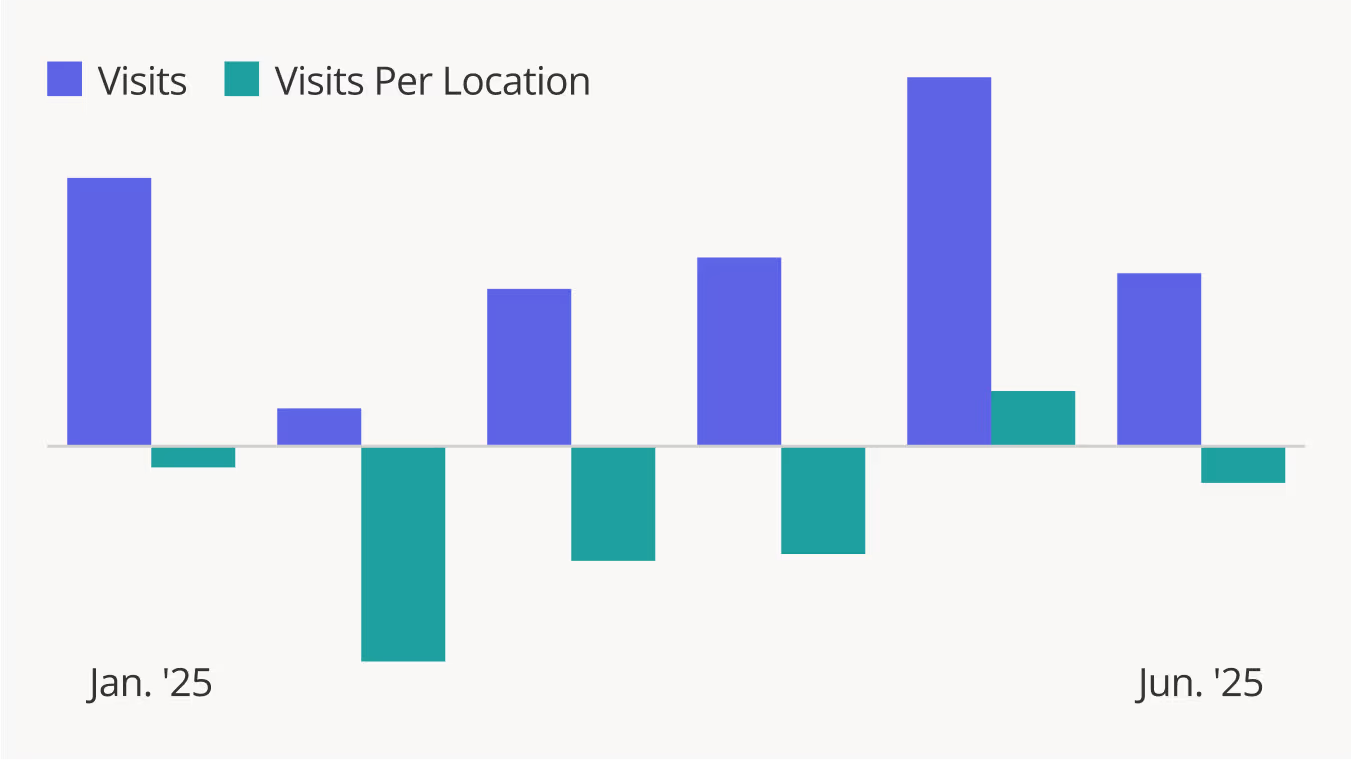
The chain's ongoing expansion drove year-over-year (YoY) visit increases for all months of 2025 so far. Average visits per location showed more variance – average visits per venue declined 2.7% YoY in Q2 2025 – perhaps reflecting the brand's deliberate focus on market penetration and its use of stores as strategic omnichannel touchpoints rather than purely traffic-dependent locations.
Like Warby Parker, footwear brand Allbirds began online before pivoting to physical retail. But Allbirds is now going in a different direction and shrinking rather than expanding its footprint. In March 2024, the company made the strategic decision to shutter about one-third of its store fleet – and the result has been impressive. While overall visits declined YoY by -12.5% in Q2 2025, visits per location surged, increasing by 18.2% in the same period.
Monthly visits followed a similar pattern, with overall visits generally lower than they were in 2024 while visits per location were largely positive – and looking at visits since the beginning of 2025 shows that the YoY overall visit gap has also been narrowing. Visits in January 2025 were 37.1% lower than they were in January 2024, but by June 2025 that visit gap had narrowed to just 15.1%. Meanwhile, average visits per location were elevated by 13.2% YoY in June 2025. This impressive shift highlights that demand for in-store shopping at Allbirds is strong, and the decision to focus on its highest-performing stores has had the intended effect.
Warby Parker and Allbirds have taken divergent approaches to their brick-and-mortar strategy, and both chains are managing to keep things moving forward.
What will H2 look like for these brands? Visit Placer.ai/anchor for the latest data-driven retail insights.

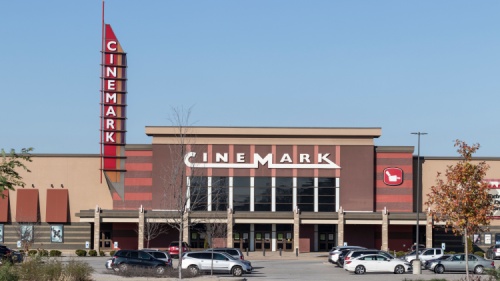
Movie theater visits were up year-over-year in Q2 2025, but traffic generally remains significantly below 2019 levels – with the exception of Cinemark, where visits are almost on par with pre-pandemic levels. We analyzed the data to understand how movie-going behavior has changed since COVID and why Cinemark is staying ahead of the curve.
Movie theater traffic jumped year-over-year (YoY) in Q2 2025 thanks to the release of several successful blockbusters, including A Minecraft Movie, Sinners, Lilo & Stitch, and Mission Impossible: The Final Reckoning.
Still, baseline movie theater attendance remains significantly lower than it was pre-pandemic. And although YoY trends for AMC, Regal, and Cinemark were relatively consistent, comparing these chains' recent visit trends to pre-pandemic traffic reveals major differences in long-term performance.
Between July 2024 and June 2025, visits to the two largest chains – AMC and Regal – were 33.2% and 40.0% lower, respectively, than they were between July 2018 to June 2019. The visits per location gap was slightly narrower – due to rightsizing efforts that consolidated traffic into fewer movie theaters – but the data still indicates that AMC and Regal theaters are generally emptier than they were in 2018-2019.
But bucking the trend is Cinemark, which saw traffic to its flagship Cinemark brand dip just 2.6% compared to pre-COVID, while average visits per location were relatively stable at -0.8%. Thanks to this impressive recovery, Cinemark has significantly strengthened its position in the wider movie theater landscape.
A deeper look at the data confirms Cinemark's success in attracting moviegoers. Cinemark theaters average more visits both per location and per square foot, indicating that their higher visit numbers stem from fuller theaters rather than larger venues or more locations.
But just because Cinemark's visit numbers are relatively aligned with 2018-2019 traffic levels does not mean that the chain has not been impacted by the shift in post-COVID movie-going behavior.
Comparing monthly visits between July 2018-June 2019 and July 2024-June 2025 reveals increased traffic volatility at all three chains, with higher peaks and deeper valleys compared to average monthly baselines. This volatility likely stems from blockbusters playing a more central role in driving movie visits. Fewer consumers now go to movies casually – instead, they save their limited movie budgets for major releases.
The data also shows that all three chains have seen a relative drop in visits to matinee screenings (before 5 PM) along with a relative increase in late-night visits (9 PM to 1 AM) – which could also be consistent with a more intentional and less casual movie-going pattern.
And Cinemark hasn't been immune to these changes. The chain has also experienced similar monthly visit volatility, fewer matinee visits, and more late-night visits – matching the patterns seen at AMC and Regal.
So what is driving Cinemark's success? Some of the answer may lie in its strategic focus on less affluent family audiences. Compared to AMC and Regal, Cinemark attracts visitors from areas with lower median household incomes and higher concentrations of families – a positioning the chain seems to be deliberately cultivating.
Cinemark has built an ecosystem designed for budget-conscious families: their Movie Club membership includes monthly rollover ticket credits and concession discounts, while their Summer Movie Clubhouse offers discounted family packages. Select locations also feature Camp Cinemark auditoriums – screening rooms specifically designed to be child-friendly.
This strategy creates a virtuous cycle. While Cinemark's lower-income audience has tighter entertainment budgets, they're also less likely to have premium home theater setups that compete with the theatrical experience.
When these families do decide to splurge on entertainment, Cinemark's value-oriented approach and family-friendly amenities make it the logical choice – turning occasional visits into a more loyal customer base that sustains traffic even during industry-wide downturns.
While most movie theater chains continue to struggle with significantly lower attendance compared to pre-pandemic levels, the strong YoY performance suggests that the movie theater recovery story is still being written. Cinemark's success demonstrates that chains willing to adapt their strategies to serve underserved audiences can not only survive but thrive in the transformed post-pandemic entertainment landscape.
For more data-driven consumer insights, visit placer.ai/anchor.

Major retailers held promotional events around Amazon's Prime Day sales event. How did the promotional events impact retail foot traffic? And what does the data reveal about the state of consumers going into the second half of 2025?
Comparing daily visits to major retailers during their July campaigns against same-day YTD averages (e.g., Sunday July 6th traffic versus average Sunday visits in 2025) reveals that sales primarily boosted weekday traffic. Visits increased Monday through Friday during the promotional periods, but every retailer that extended its campaign to Saturday – typically the busiest in-store shopping day – experienced traffic declines compared to YTD Saturday averages.
Individual retailer analysis shows Best Buy achieved the strongest response, with visits increasing 13.2% to 21.9% between July 7th and 11th compared to same-day YTD averages, and the final day (Sunday July 13th) posting a 7.2% increase. Conversely, Dollar General saw the weakest performance – only three of seven promotional days generated visit increases, all remaining in low single digits.
This pattern suggests consumers leveraged sales for big-ticket purchases at discounts but didn't use the opportunity to stock up on lower-priced items.
Comparing average daily visits during 2024 and 2025 July campaigns shows generally lower in-store traffic this year. Timing likely played a role – except for Best Buy, all analyzed retailers ran their 2024 campaigns before Amazon Prime Day, while this year all five overlapped with Amazon's event. This means that, unlike in 2024, Target, Walmart, Kohl's, and Dollar General directly competed with Amazon Prime Day in 2025, potentially driving the in-store traffic decline.
This calendar shift makes Walmart's performance particularly noteworthy. Average daily visits during "Walmart Deals" increased 8.9% compared to last year – despite facing direct Amazon competition for the first time.
Walmart's strength may stem from its recent "Who Knew?" advertising campaign, which may have kept the retailer top-of-mind for many customers during this period of intense retail competition.
The YoY visit growth during July campaigns represents another milestone in the company's turnaround and brand refresh, demonstrating the legacy retailer's continued relevance in today's competitive retail landscape.
The data reveals that consumers approached July 2025 promotional events with strategic intent, focusing on high-value purchases during convenient weekday shopping windows rather than impulse buying across all categories.
Walmart's standout performance amid increased competition suggests that strong brand messaging and strategic positioning can overcome market headwinds, providing optimism for retailers heading into the second half of 2025.
For more data-driven retail insights, visit placer.ai/anchor.