Skip to Main Content
Thank you! Your submission has been received!
Oops! Something went wrong while submitting the form.
0
0
0
0
----------
0
0
Articles
Article
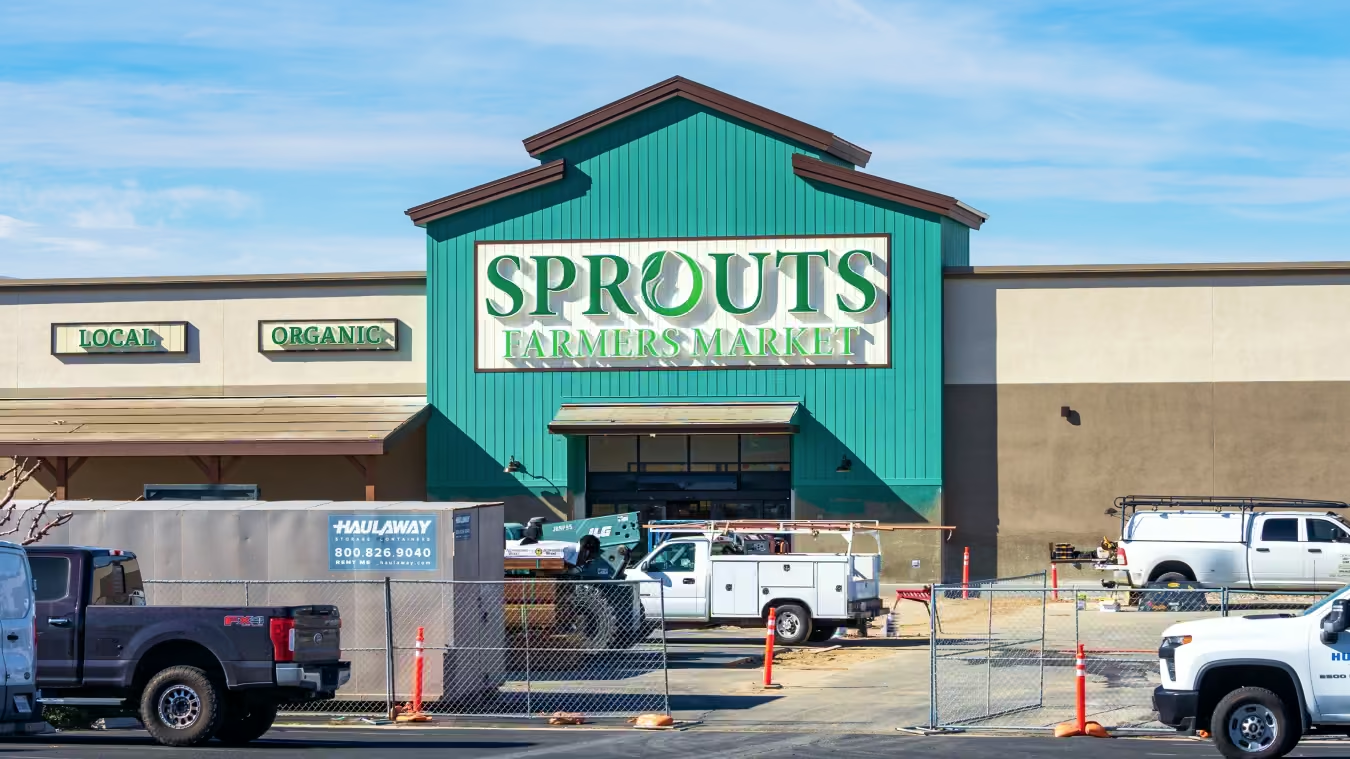
Sprouts Same-Store Visits Slow in Q1 2026 Amid Tough Comparisons and Softening Consumer Demand
Lila Margalit
Apr 29, 2026
2 minutes

Lapping a Strong Q1 2025

Sprouts Farmers Market entered 2026 expecting a challenging quarter – and Q1 foot traffic trends bore that out. Against a Q1 2025 comparison where comps surged 11.7% year over year (YoY), the company guided Q1 2026 comparable sales to decline between -3.0% and -1.0%, citing both the tough lap and continued pressure on grocery shoppers from elevated food prices. And same-store visits also dropped, falling between -3.0% and -6.0% YoY in Q1.

Still, overall foot traffic rose 1.8%, supported by the 37 stores opened in fiscal 2025 and additional locations added in early 2026, which helped offset softness at existing stores.

The Road Ahead

Against this backdrop, Sprouts is making several forward-looking investments that could support a traffic recovery later this year. Continued expansion, a new loyalty program launched in 2025, and ongoing merchandising innovation – alongside its transition to self-distribution for fresh meat – all position the company to compete on both quality and value as macro conditions evolve.

Will Sprouts return to same-store visit growth in Q2? 

Visit Placer.ai/anchor to find out.

Placer.ai leverages a panel of tens of millions of devices and utilizes machine learning to make estimations for visits to locations across the US. The data is trusted by thousands of industry leaders who leverage Placer.ai for insights into foot traffic, demographic breakdowns, retail sale predictions, migration trends, site selection, and more.

Article
Chipotle’s "Recipe for Growth" Shows Early Gains, Fueled by LTOs and Viral Marketing
Shira Petrack
Apr 28, 2026
3 minutes

Chipotle's Recipe for Growth May Already be Working 

In February 2026, Chipotle unveiled its "Recipe for Growth" plan to reverse declining sales by improving operations, boosting marketing, and refreshing its menu. And though the plan has only been in place for a couple of months, traffic data suggests that it may already be having a positive impact on foot traffic to the chain. 

After three consecutive quarters of year-over-year declines in average visits per location, Chipotle's foot traffic trends are showing signs of recovery. In Q1 2026, average visits per location were nearly flat (-0.2% YoY), while overall visits grew 5.8% – the strongest growth seen over the past year.

The Return of Chicken al Pastor Delivers Strong February Traffic 

Several branding and menu innovations likely contributed to Chipotle's traffic recovery, including the high protein menu launched in late December 2025 and partnerships with athletes and sporting events. The biggest single driver, however, appears to have been the return of Chicken al Pastor on February 10, 2026 – a fan-favorite protein that had generated more social media requests for its comeback than any other LTO in the chain's history. In the month of its launch, overall visits rose 10.1% YoY and same-store visits grew 5.1%.

Can Rotating LTOs Sustain Momentum? 

Still, the following month, overall visits were up just 3.6% and same-store visits were flat – suggesting that popular menu items can generate meaningful visit spikes, but those spikes may not automatically translate into lasting traffic bumps.

Chipotle appears to be leaning into this dynamic rather than fighting it. Starting April 28, the chain is rotating out Chicken al Pastor in favor of Honey Chicken – its best-performing LTO ever – effectively betting that a steady drumbeat of novelty and scarcity can sustain traffic where any single item cannot.

Viral Promotions Fuel Brand Relevance

Another pillar of the company's "Back to Growth" plan entailed creating "new occasions that drive demand into our restaurants" – and Chipotle seems to have accomplished just that with its successful "Tatted Like a Chipotle Bag" BOGO promotion. 

On March 13, 2026, from 3 to 4 PM local time, Chipotle offered an in-store BOGO entrée to any customer sporting a tattoo – real, temporary, or hand-drawn – a nod to the iconic tattoo-style graphics on a Chipotle bag. The one-hour activation drove a 55.3% spike in visits above the year-to-date average, with the highest daily visit count recorded since Placer.ai began tracking Chipotle's traffic in 2018. Chipotle also reported March 13th 2026 as the highest daily sales day in the chain's history. 

That a single one-hour, in-store promotion could shatter the chain's all-time sales record speaks to the power of Chipotle's brand equity and the effectiveness of leaning into what makes it culturally distinct.

The early results suggest that Chipotle's 'Recipe for Growth' is already working – Q1's traffic recovery was built on a potent mix of menu innovation, viral activations, and renewed cultural relevance. But while the chain's strategy of cycling LTOs and engineering shareable moments has clearly rekindled consumer excitement – whether this delivers consistent same-store visit growth will be the real measure of "Recipe for Growth" success. 

For more data-driven dining insights, visit placer.ai/anchor 

Article
How Did McDonald’s Navigate Q1 2026 Headwinds?
Lila Margalit
Apr 27, 2026
4 minutes

After a strong Q4 2025 that delivered record single-day sales and one of the largest digital acquisition events in McDonald's history, Q1 2026 posed a harder test. Severe weather, pressure on lower-income consumers, and rising gas prices all weighed on the QSR category. So how did McDonald’s perform in Q1? We dove into the data to find out. 

Value, Marketing, and Menu 

Q1 2026 visits to McDonald’s rose 0.6% year over year (YoY), with average visits per location essentially flat at 0.1%. Given Winter Storm Fern’s outsized impact on January traffic and a consumer environment that grew more selective as the quarter progressed, finishing Q1 in positive territory is a meaningful result.

That resilience reflects momentum built in Q4 2025, when McDonald’s delivered across all three of the pillars the company has identified as central to the brand's recovery: value, marketing, and menu. The September 2025 relaunch of Extra Value Meals helped reestablish McDonald’s value positioning, while MONOPOLY – returning to U.S. restaurants for the first time in nearly a decade – became one of the brand’s largest digital customer acquisition events ever. Meanwhile, the December 2025 Grinch Meal, featuring Dill Pickle McShaker Fries and collectible holiday socks, drove the highest single sales day in company history.

McDonald’s carried that strategy into Q1, bringing back the Shamrock Shake in February and launching the Big Arch Burger nationally in March. But in a quarter shaped by weather disruption and more cautious consumer spending, these initiatives generated more muted traffic responses than Q4’s record-setting activations.

A Stop Start Quarter

The chart below illustrates McDonald’s uneven performance throughout the quarter. January same-store visits fell 1.3% YoY, due in part to Winter Storm Fern, which swept across more than 30 states late in the month, disrupting operations and driving temporary restaurant closures. February rebounded to +3.8% YoY, supported by pent-up demand and the return of the Shamrock Shake, which delivered a modest but discernable lift during its launch week. March, however, slipped back to -1.2% – reflecting the Big Arch Burger's more muted traffic response and possibly also the tightening of consumer purse strings in the face of rising gas prices.  

K Pop Collab Cuts Through the Noise

But despite this consumer caution, the response to McDonald's latest pop-culture collab shows that even in a more demanding environment, the right promotion can still cut through.

On March 31 – the launch date of McDonald's collaboration with Netflix's Oscar-winning animated film KPop Demon Hunters – Tuesday visits reached 11.1% above the year-to-date Tuesday average, the highest single Tuesday reading of the entire first quarter. The promotion featured two dueling adult meals inspired by the film's rival groups, HUNTR/X and the Saja Boys, along with limited-time Korean-inspired items like Ramyeon McShaker Fries. And traffic stayed elevated in the days that followed, contributing to the chain's busiest week of the year so far.

Momentum Requires More Than One Lever

Q1 data shows that McDonald’s can still drive traffic at scale, even in a softer environment. But success increasingly depends on executing consistently across value, marketing, and menu – while also delivering the kind of culturally relevant moments that give consumers a compelling reason to visit. How will the chain perform in Q2 as it rolls out its revamped McValue menu? 

Follow Placer.ai/anchor to find out. 

Placer.ai leverages a panel of tens of millions of devices and utilizes machine learning to make estimations for visits to locations across the US. The data is trusted by thousands of industry leaders who leverage Placer.ai for insights into foot traffic, demographic breakdowns, retail sale predictions, migration trends, site selection, and more.

Article
Starbucks and Dutch Bros Take Different Paths to Growth
Shira Petrack
Apr 24, 2026
3 minutes

Starbucks and Dutch Bros may both operate in the coffee space, but they are pursuing distinct strategies that reflect their different stages of growth. Starbucks, the legacy leader, is focused on revitalizing its established brand. Dutch Bros, the newer, fast-growing entrant, is expanding its footprint and building brand awareness. And AI-powered location analytics suggests that both approaches appear to be working. 

Same-Store Visit Growth at Both Starbucks & Dutch Bros

Dutch Bros is driving traffic through aggressive expansion, a drive-thru–focused model, and ongoing menu innovation. Meanwhile, Starbucks’ “Back to Starbucks” plan centers on closing underperforming stores, re-emphasizing the coffeehouse experience, and simplifying operations. Both chains may also be benefiting from the current consumer headwinds driving demand for affordable treats, with year-over-year (YoY) same-store visits up every month of the past six months. 

"Back to Starbucks" Turnaround 

In September 2024, Starbucks' then-new CEO Brian Niccol announced the Back to Starbucks turnaround strategy, focusing on reestablishing the brand's core identity as a coffee-first, community-centered brand, centered on high-quality coffee, skilled baristas, and a welcoming in-store experience. It also prioritizes improving service speed and consistency, simplifying operations, and strengthening the overall customer experience. 

In September 2024, shortly after becoming CEO, Brian Niccol introduced the company's "Back to Starbucks" turnaround strategy, aimed at restoring the brand’s identity as a coffee-first, community-centered experience built on quality coffee, skilled baristas, and welcoming stores. The plan also emphasizes improving speed and consistency, simplifying operations, and enhancing the overall customer experience.

Traffic data reveals that the restructuring plan is already bearing fruit. Over the past two full quarters (Q4 2025 and Q1 2026) the company's overall traffic and average visits per venue increased 4.9% to 5.9% compared to the previous year – a particularly strong performance given broader consumer headwinds. If sustained, this momentum could signal a meaningful and durable return to growth for the brand. 

Dutch Bros' Expansion Drives Double-Digit Traffic Gains 

Concurrently, Dutch Bros’ rapid expansion is translating into strong top-line traffic growth, with overall visits rising at a double-digit pace throughout 2025 and into early 2026. Quarterly gains ranged from 12.3% to 17.9% YoY as the brand entered new markets and scaled its footprint.

At the same time, average visits per location have remained relatively stable, suggesting that new store openings are not significantly cannibalizing existing units. This combination of robust overall traffic growth and steady per-location performance points to a healthy expansion strategy, where footprint growth is driving incremental demand rather than diluting it.

Looking Ahead 

As both brands continue to execute on their respective strategies, early traffic trends suggest that there is no single path to growth in today’s coffee space. Starbucks’ operational reset and Dutch Bros’ expansion-led model are each resonating with consumers, albeit in different ways. The key question going forward will be whether these gains can be sustained as macro pressures persist and competition intensifies.

For more data-driven insights, visit placer.ai.anchor 

Article
What Shake Shack’s Q1 2026 Performance Reveals About Dining in 2026
Lila Margalit
Apr 23, 2026
3 minutes

In a macroeconomic environment that continues to challenge dining chains, Shake Shack’s performance offers a clear signal of what consumers prioritize in 2026 – familiarity, convenience, and affordable indulgences.

Stacked and Scaling

Over the past several years, Shake Shack has expanded its footprint while maintaining solid performance at existing locations. In Q4 2025, total revenue rose nearly 22% year over year, while same-store sales increased 2.1%, driven primarily by pricing alongside a modest (+0.5%) lift in traffic – marking the brand’s 20th consecutive quarter of positive comparable growth. Restaurant-level margins also improved, pointing to stronger execution at the unit level.

And that momentum carried into Q1 2026. Overall visits rose 19.9% YoY, with average visits per location increasing in every month except January, when severe weather – including Winter Storm Fern – likely contributed to a slight 0.4% YoY dip. 

Customers That Keep Coming Back for More

A key driver of this consistency is Shake Shack’s alignment with evolving consumer routines. Loyalty has been rising, with repeat visitors accounting for an increasing share of traffic. At the same time, shorter weekday visits are becoming more common, suggesting that more customers are incorporating the brand into their weekly rhythms – whether for a quick lunch or an afternoon treat. And Shake Shack’s newly announced loyalty platform is likely to reinforce this behavior, further embedding the brand into day-to-day routines.

Menu Moments That Matter

Menu innovation and popular limited-time offers also continue to play a major role in Shake Shack’s growth. Last summer, the nationwide launch of the Dubai Chocolate Pistachio Shake generated significant buzz. And more recently, the chain’s popular Valentine’s Day “True Love Shake” BOGO delivered its busiest day of the year – with visits jumping 14.8% above the typical Saturday baseline.

Built for Everyday Eating

Shake Shack’s expansion strategy and visitation patterns point to a broader truth about dining in 2026: Success increasingly hinges on fitting seamlessly into everyday life while still delivering moments of excitement. As macroeconomic pressures persist, the brands that can balance routine convenience with craveable, culturally relevant offerings are likely to lead the next phase of growth.

For more data-driven dining insights, visit Placer.ai/anchor.

Placer.ai leverages a panel of tens of millions of devices and utilizes machine learning to make estimations for visits to locations across the US. The data is trusted by thousands of industry leaders who leverage Placer.ai for insights into foot traffic, demographic breakdowns, retail sale predictions, migration trends, site selection, and more.

Article
Flagship Chains and Fast-Casual Concepts Bolster Yum! and RBI in Q1 2026
Lila Margalit
Apr 22, 2026
4 minutes

Quick-service restaurants have faced significant headwinds, even as value offerings and limited-time promotions have helped stabilize traffic across the segment. Still, the largest restaurant groups are finding ways to outperform.

The latest visit data shows Yum! Brands and Restaurant Brands International (RBI) pulling ahead of the category – with growth in both cases driven by their leading brands and supported by the strength of their fast-casual concepts. 

Beating the Baseline

In Q1 2026, traffic to QSRs rose just 0.1% year over year (YoY), as increasingly cautious consumers pulled back on dining out. Against this backdrop, Yum! Brands’ 2.1% increase in overall portfolio traffic and 3.0% rise in average visits per location represent meaningful outperformance. While RBI lagged slightly in overall traffic, it still modestly outpaced the segment average in per-location traffic.

Yum! Growth Driven by Taco Bell

Diving into brand-level data, Taco Bell – which accounted for nearly three quarters of total Yum! visits in Q1 2026 – remained the company’s clear growth engine. A combination of strategic value pricing, ongoing menu innovation, and a strong digital loyalty program continued to drive same-store traffic growth and broaden the brand’s appeal across income cohorts – including higher-income consumers, families, and younger diners alike.

The Habit Burger Grill, Yum!’s fast-casual concept, also performed well in Q1, with same-store visits up in the mid- to high-single digits throughout the quarter. KFC, meanwhile, in the midst of a turnaround, saw mixed same-store visit trends – as did Pizza Hut, currently the subject of a strategic review.  

Burger King Drives RBI Growth as Turnaround Gains Traction

On the RBI side, QSR leader Burger King continued to lead performance. After reporting a 2.6% same-store sales increase in Q4 2025, the chain delivered a 1.4% YoY rise in overall traffic in Q1 2026, with same-store visits increasing in both February and March. This momentum likely reflects ongoing execution of RBI’s “Reclaim the Flame” strategy, alongside ongoing menu innovation – including the January launch of the Ultimate Steakhouse Whopper, which was met with strong consumer response.

Fast-casual Firehouse Subs, which similarly posted a 2.4% increase in same-store sales in Q4 2025, also remained a bright spot in Q1, with positive same-store visit growth in January and February, and March performance roughly in line with the prior year. 

By contrast, Tim Hortons continued to see traffic softness in the U.S., though ongoing expansion plans suggest confidence in its long-term opportunity. And Popeyes faced continued pressure, with RBI actively working to reposition the brand.

Outperformance in a Tough Market

Both Yum! and RBI are successfully navigating a challenging QSR environment, driven by the strength of their flagship brands, solid performance in fast-casual concepts, and ongoing investments to stabilize underperforming chains. Will the companies be able to sustain this momentum in the coming months?

Follow Placer.ai/anchor to find out.

Placer.ai leverages a panel of tens of millions of devices and utilizes machine learning to make estimations for visits to locations across the US. The data is trusted by thousands of industry leaders who leverage Placer.ai for insights into foot traffic, demographic breakdowns, retail sale predictions, migration trends, site selection, and more.

Reports
INSIDER
Report
Rethinking the Mall Anchor in 2025: A Visit-Focused Approach
Discover how mall anchors are transforming in 2025 – and how a foot-traffic-focused approach to choosing key tenants can drive visits and shopper engagement.
May 29, 2025
8 minutes

Key Takeaways 

1. Experiential and niche retailers can deliver anchor-level traffic. At Towne East Square Mall, the addition of a Scheels in 2023 significantly increased foot traffic and long-distance travelers, while Barnes & Noble at Coronado Center in Albuquerque has become a key driver of both foot traffic and higher-spend demographics. 

2. Size isn’t everything – especially for dining venues. At Glendale Galleria and Northridge Fashion Center, smaller restaurants attracted more foot traffic than some traditional anchors.  

3. Refocusing on tenants’ actual traffic contributions enables a flexible anchor approach. Balancing weekend draws like Scheels with weekday favorites such as Costco or Chick-fil-A can help maintain steady visitor flow throughout the week. Similarly, onsite fitness clubs can shift traffic to earlier in the day – an opportunity to adjust store hours and capture additional morning shoppers. 

4. Temporary pop-ups can form an integral part of a visit-focused anchor strategy. The Barbie Dreamhouse Living Truck Tour generates mall visit spikes well above typical Saturday levels. Operators can integrate these events into their overall anchor strategies, offering preferential terms to high-performing pop-ups. 

5. New tenants can boost traffic for existing stores in similar categories. After Aldi joined Green Acres Commons in February 2020, visits to an existing BJ’s Wholesale Club trended upwards. This synergy highlights how overlapping audiences can become a strength, creating a larger overall customer base. 

The Retail Comeback Kid 

Malls, it seems, are cool once again. After languishing in the wake of the pandemic, shopping centers across the country are thriving – reinventing themselves as prime “third places” where people can hang out, shop, and grab a bite to eat. 

One key driver behind this resurgence is a shift in how malls view their anchor tenants. While traditional mainstays like Macy’s and JCPenney still play an important role, specialized offerings – from popular eateries to fitness centers and immersive retailtainment destinations – are increasingly taking center stage. These attractions maximize the experiential value that brick-and-mortar venues can deliver, driving visits and sales for the center as a whole. 

Against this backdrop, this report leverages the latest location intelligence data to explore the types of tenants that can function as mall anchors in 2025. Should mall operators still focus on general merchandisers to draw crowds, or can dining chains and more niche retailers also do the job? How important is square footage in identifying the anchor-like tenants in a shopping center? And how can a visit-focused approach help mall operators select effective anchor or anchor-like tenants – whether to fill big-box spaces or to leverage the leasing perks traditionally reserved for major large-format chains? 

Out-of-the-(Big)-Box Visit Drivers

One of the most important functions of a mall anchor is to ensure steady visitation – providing its smaller tenants with a constant flow of potential customers. And as the role of the mall continues to evolve, analyzing the actual foot traffic impacts of different types of businesses can help identify the kinds of non-traditional anchors best suited to fulfill that purpose. 

The Power of a Well-Placed Scheels

Experiential venues, for example, are particularly well-poised to serve as powerful anchors in today’s retail environment – as illustrated by the visit surge experienced by Towne East Square Mall in Wichita, KS following the addition of a Scheels in July 2023. 

By blending traditional retail with immersive experiences, Scheels has emerged as a true experiential destination. And this pull has also helped the mall draw more long-distance visitors willing to travel to enjoy Scheels’ offerings. In 2024, 41.9% of the mall’s customers traveled more than 50 miles to visit, compared to 35.8% back in 2018 when Sears occupied the same lot. 

The Barnes & Noble Effect

Traditionally, anchors aimed to please the widest possible audiences – with department stores, big-box chains, and grocery stores leading the way. But visitation data shows that niche concepts can also deliver anchor-level traffic if they’re compelling enough to attract dedicated fans. 

The experience of the Barnes & Noble at Coronado Center in Albuquerque, NM is a case in point. After being written off as all but obsolete, Barnes & Noble has staged an impressive comeback in recent years, finding success through a more curated, localized approach to book selling. And despite not being a formal anchor, the Coronado Center Barnes & Noble accounted for 7.9% of visits to the mall in 2024 – outperforming both Macy’s and JCPenney.

Year-over-year data also shows foot traffic surging at the Coronado Center Barnes & Noble, lifting overall visitation to the mall. And demographic data reveals that the bookstore draws a more affluent audience than either the center as a whole or the two department stores – attracting a crowd with more spending power.

This example also illustrates how smaller tenants can sometimes draw larger crowds. Even though Barnes & Noble occupies a smaller onsite space than either Macy’s or JCPenney, it is proving a powerful visit driver out of proportion to its physical size. 

Dining Chains Punching Above Their Size

Dining chains are also adept at punching above their square footage – often attracting crowds disproportionate to their size.

Despite its relatively small footprint, for example, the In-N-Out Burger at Glendale Galleria drew an impressive 8.6% of visits to the mall complex in 2024, outpacing some of the mall’s official anchors like DICK’s Sporting Goods, Macy’s, and JCPenney. Still, the onsite Target drew even larger crowds at 14.4% of visits. 

A similar pattern emerged at Northridge Fashion Center, where Porto’s Bakery and Cafe captured a notable 15.6% of visits to the complex in 2024 – more than some of the center’s traditional department stores. 

These examples underscore the potential for dining chains, which typically require less space, to serve as micro-anchors by consistently attracting outsized crowds – a key consideration for mall operators looking to sustain visitor traffic. 

Choosing a Mall Anchor in 2025

Refocusing on tenants’ actual foot traffic contributions also opens the door to a more flexible and dynamic approach to anchor selection and management – one that considers each venue’s unique visitation patterns. 

The Weekend/Weekday Divide

Seasonal factors, for example, can make certain anchors more powerful at specific times of the year, while different venues shine on particular days of the week.

At Jordan Creek Town Center in West Des Moines, Iowa, for instance, Scheels and Costco each delivered just under 20.0% of the complex’s overall visits in 2024. But the two retailers’ daily patterns differed significantly: Scheels saw bigger crowds on weekends, while Costco was the primary weekday destination. 

Understanding differences like these can help operators optimize their tenant mix to maintain a balanced flow of shoppers throughout the week.

Another example of the impact of differing weekday traffic patterns is offered by the impact of mall-based Chick-fil-A locations on the distribution of mall visits throughout the week. 

Despite its relatively small size, Chick-fil-A draws substantial traffic to malls. And after adding Chick-fil-A locations, both Northridge and Miller Hill Malls saw meaningful drops in the share of visits to the centers taking place on Sundays – even as the wider indoor mall segment saw slight upticks. 

Recognizing this trend could prompt mall operators to compensate by adding more weekend-friendly traffic drivers – or to lean into this distinction by taking additional steps to bolster the mall’s role as a go-to weekday destination. 

The Early-Morning Fitness Advantage

The power of different mall traffic magnets also varies throughout the day. Increasingly, shopping centers are turning to fitness centers as experiential anchors. And since many people work out early in the morning, these gyms are having a significant impact on the distribution of mall visits across dayparts. 

The addition of gyms to Northshore Mall in Peabody, MA and Jackson Crossing in Jackson, MI, for instance, led to a significant rise in visits between 7:00 AM and noon. And though the rest of the stores in these malls typically open at 10:00 or 11:00 AM, this shift presents the centers with a significant opportunity. 

By adjusting opening hours to accommodate these early-morning patrons, malls can capitalize on this added traffic, driving up visits and sales for relevant tenants – especially health-focused retailers such as juice bars and sporting goods stores.

Adding Temporary Pop-Ups Into the Mix 

Adopting a broader, visit-focused view of anchoring also allows mall operators to apply some of the strategies typically reserved for anchors to non-conventional traffic-generating businesses, to ensure a consistent flow of traffic year-round.

Pop-up stores and events, for example, generally don’t follow the same seasonal trends as other retailers – instead, they generate short-term visit boosts during their runs, whenever in the year that may be. And a visit-focused anchor strategy can leverage some of the perks traditionally reserved for anchor tenants – such as preferential leasing terms – to complement traditional full-time anchors during slower retail periods.  

The Barbie Dreamhouse Living Truck Tour is a prime example of a traffic-driving pop-up. By bringing exclusive merchandise to malls across the U.S., the truck generates plenty of buzz, drawing crowds eager to snatch up limited-edition items and immerse themselves in all things Barbie. As a result, malls hosting the tour often see significant visit spikes, with foot traffic surging well above typical Saturday levels. Well-timed pop-ups like these can help balance out traffic throughout the year, offsetting traditional slow periods.

Creating a Bigger Visit Pie

A visit-focused approach to anchor management can also help mall operators assess the potential impact of new tenants on existing stores operating in similar categories. For example, mall owners often worry that new tenants operating in similar categories might cannibalize existing businesses. But a visit-focused anchor approach reveals that a well-chosen addition can sometimes benefit current tenants – especially if they cater to similar audiences. 

In February 2020, for instance, value supermarket Aldi opened at Green Acres Commons in Valley Stream, NY – a center that already hosted budget-friendly BJ’s Wholesale Club. While BJ’s visits were relatively flat in 2018 and 2019, they began to rise after Aldi’s opening (and following a pandemic-induced dip). Cross-shopping data also shows that Aldi customers were more likely to visit BJ’s than the average Green Acres patron last year.

This synergy may be due in part to the two retailers’ similar visitor bases: In 2024, the Aldi and BJ’s stores in Green Acres Common drew shoppers with comparable economic profiles. This suggests that overlapping audiences can become a strength if aligned brands attract new shoppers, who then explore multiple stores in the same center.

Anchor’s Away

Looking ahead, effective mall anchors will be defined less by physical footprint and more by their capacity to maintain consistent, valuable foot traffic. While traditional department stores remain pivotal, smaller or niche brands can often rival – or surpass – large-format retailers. And by thinking out of the anchor box and choosing tenants that cultivate a balanced visitor flow and align with local preferences, operators can position their centers as true go-to destinations. 

INSIDER
Report
Grocery in 2025: Visitation Trends and Consumer Behavior
Dive into the data to see the trends shaping the grocery space in 2025 and uncover actionable insights for strategic decision-making in the competitive food-at-home market.
May 15, 2025
8 minutes

Key Takeaways: 

1. Shoppers are taking more, shorter trips to grocery stores. Over the past 12 months, grocery stores have experienced nearly uniform YoY visit growth. And since COVID, the segment has steadily increased both overall visits and average visits per location – even as average dwell times have consistently declined.

2. Grocery stores are holding ground against fierce competition. Despite growing inroads by discount and dollar stores, wholesale clubs, and general mass retailers like Walmart and Target, grocery stores have maintained their share of the overall food-at-home visit pie over the past several years. 

3. Grocery visit share is most pronounced on the coasts. In Q1 2025, grocery stores claimed the majority of food-at-home visits on the West Coast, in parts of the Northeast, Mid-Atlantic, and Mountain Regions, and in Florida and Michigan.

4. Fresh-format, value, and ethnic grocery visit shares are growing at the expense of traditional chains. And in Q1 2025, fresh-format and value grocers outperformed the other sub-segments with positive YoY visit and average visit-per-location growth. 

5. Hispanic markets are on the rise. Though the broader ethnic grocery sub-segment was essentially flat YoY in Q1 2025, Hispanic-focused stores recorded increases in both visits and visits per location – and have been steadily growing visits since 2021. 

6. Smaller formats for the win. In Q1 2025, smaller-format grocery store locations outpaced mid-sized and larger-format ones, underscoring the power of compact spaces to deliver significant foot traffic gains. 

A Study in Resilience

Brick-and-mortar grocery stores face an uncertain market in 2025. Rising food-at-home prices (eggs, anyone?), declining consumer confidence, and increased competition from discounters, superstores, and online shopping channels all present the segment with significant headwinds. Yet even in the face of these challenges, the sector has demonstrated remarkable resilience – growing its foot traffic and holding onto visit share.  

What strategies have helped the segment navigate today’s tough market? And how can industry stakeholders make the most of the opportunities in the current market? This report draws on the latest location intelligence to uncover the trends shaping grocery retail in early 2025 – highlighting insights to help key players make informed, data-driven decisions on store formats, product offerings, and more. 

Growth in Aisle One

The grocery segment has experienced nearly uniform positive year-over-year (YoY) growth over the last 12 months. This sustained performance in the face of inflation and other headwinds highlights the underlying strength of the category.

Visits Up, Dwell Time Down

What is driving this growth? Since 2022, the grocery segment has seen consistent overall visit growth that has outpaced increases in visits per location – a sign that chain expansion has played a key role in the category’s success. But the average number of visits to each grocery store has also been on the rise, indicating that the segment continues to expand without cannibalizing existing store traffic. 

At the same time, visitor dwell times have been steadily dropping since 2021. This shift appears to reflect a trend towards multiple, shorter trips by inflation-wary consumers eager to avoid large, costly carts or cherry pick deals across various retailers. Many shoppers may also be placing more bulk orders online and supplementing those deliveries with brief in-store stops for additional items as needed. 

The bottom line: Shoppers are taking more grocery trips overall each year, but spending less time in-store during each visit. Operators can respond to this trend by optimizing layouts and promoting “grab-and-go” areas for an even more efficient quick-trip experience.

Still in Stock

Visit share data also shows that despite fierce competition from discount and dollar stores, wholesalers, and general mass retailers, the grocery segment has steadfastly preserved its share of the overall food-at-home visit pie. 

Between Q1 2019 and Q1 2025, wholesale clubs and discount and dollar stores increased their share of total food-at-home visits, gains that have come primarily at the expense of Walmart and Target. Meanwhile, grocery outlets have held firm – despite some fluctuations over the years, their Q1 2019 visit share remained essentially unchanged in Q1 2025. 

So even as consumers flock to alternative food purveyors in search of lower prices, grocery stores aren’t losing ground – and on a nationwide level, they remain the biggest player by far in the food-at-home shopping space.

A Coastal Advantage

Still, grocery store visit share varies significantly by region. On the West Coast, in parts of the Northeast, Mid-Atlantic, and Mountain regions, and in Florida and Michigan, grocery stores accounted for the majority of food-at-home visits in Q1 2025. Oregon (61.6%) and Washington (59.6%) led the pack, followed by Massachusetts (59.2%), Vermont (58.5%), and California (57.9%). Meanwhile, in West Virginia, Arkansas, South Dakota, Oklahoma, North Dakota, and Mississippi, less than 30% of food-at-home traffic went to grocery stores, with more shoppers in these regions turning to general mass retailers or discounters. 

Grocery store operators in lower-grocery-share regions may choose to focus on price competitiveness and convenient store locations to capture more foot traffic from competitors in the space.

Fresh and Frugal on the Rise

Which types of grocery stores are thriving the most? The grocery segment is diverse, encompassing traditional grocery chains like Kroger, Safeway, and H-E-B; budget-oriented value chains such as Aldi, WinCo Foods, Grocery Outlet Bargain Market, and Market Basket; fresh-format specialty brands like Trader Joe’s, Whole Foods, and Sprouts Farmers Market; and numerous ethnic grocers. 

Examining shifts in visit share among these various grocery store segments shows that traditional grocery still dominates, commanding over 70.0% of total grocery store foot traffic. 

Still, over the past several years, traditional grocers have gradually ceded ground to other segments – especially value chains. Budget grocers saw a temporary surge in visits during the panic-buying days of early 2020 – and have been more gradually gaining visit share since Q1 2023. . Fresh-format banners, which lost ground in 2021 after a Q1 2020 bump,  in the wake of COVID, have also been on the upswing and appear poised to capture additional visit share in the coming months and years. And though ethnic grocers still account for a relatively small portion of the overall market, they have slightly increased their visit share, reflecting heightened consumer interest in these specialized offerings.

The Discount and Premium Edge

Recent performance metrics point to a bifurcation in the grocery market similar to that observed in other retail categories. In Q1 2025, fresh-format and value retailers – which appeal, respectively, to the most and least affluent visitor bases – saw the greatest growth in both overall visits and average visits per location. 

This trend highlights the power of both value and health-focused quality to motivate consumers in 2025. And grocery players that can meet these needs will be well-positioned for success in the months ahead.

WFH Fresh-Format Lunch Crunch

One factor fueling fresh-format’s success may be its role as a convenient, relatively affordable midday lunch destination for the remote work crowd. 

In Q1 2025, consumers working from home accounted for 20.2% of fresh-format grocery stores’ captured market – a significantly higher share than any other analyzed grocery segment. These stores also tended to be busier midday than the other segments. Remote workers may be stopping by to grab a quick bite – and some may be choosing to do their grocery shopping during their lunch break when stores are less crowded. 

This finding suggests an opportunity for grocery operators across all segments to develop or enhance in-store salad bars and quick-serve sections to tap into the lunch rush. Likewise, CPG companies may benefit from developing more ready-made, nutritious meal options that align with these midday dining habits.

Salsa Surge

Though the broader ethnic grocery category remained essentially flat in Q1 2025, Hispanic-focused grocers emerged as a sub-segment to watch. Both overall visits and average visits per location to these stores have been on the rise since 2021. 

This robust demand presents an opportunity for CPG brands and grocers across segments to expand Hispanic-focused offerings, capturing a slice of this growing market.

Less is More

Finally, store size matters more than ever in 2025. During the first quarter of the year, smaller format grocery store locations (locations under 30K square feet, across different chains) outpaced larger stores with a 3.2% YoY jump in visits, showing that bigger isn’t always better in the grocery store space. 

This pattern aligns with the decrease in dwell times noted above – shoppers may be making shorter trips to smaller, more convenient grocery store locations. These quick errands are ideal for picking up a few items to supplement online orders, shopping multiple deals, or sourcing specialty products unavailable at larger grocery destinations. And to lean into this trend, grocery operators might consider testing neighborhood “micro-store” concepts, focusing on curated selections, and offering convenient parking or pickup to match consumer preferences for targeted purchases and quicker trips.

Final Thoughts

Location intelligence reveals a growing, dynamic grocery landscape which is holding its ground in the face of increased competition. Shorter trips, busier lifestyles, and changing work routines are reshaping in-store experiences. And grocery players that refine their store formats, target both lunch and on-the-go shoppers, and adapt to shifting demographics can position themselves to thrive in this competitive sector. As the market continues to evolve, continuous attention to these changing patterns will be key to maintaining and expanding market share.

INSIDER
Report
The Current Pace of the Fitness Space
Dive into the data to explore recent visitation patterns and consumer trends in the fitness space - and uncover potential keys to success, rooted in location intelligence.
May 5, 2025
8 minutes

Key Takeaways

1. Elevated visitor frequency could mean that gym-goers are getting more value out of their memberships and are therefore more likely to stay signed up. Between January and March 2025, all of the gym chains analyzed had a higher share of frequent visitors (those who visited about once a week) than in the equivalent month of 2024.

2. Fitness chains at all price tiers need to be strategic about the value they offer and the amenities that can engage budget-conscious consumers. Between Q1 2022 and Q1 2025, the captured trade area median HHI increased for all fitness subsegments – value-priced, mid-range, and high-end – suggesting that consumers swapped pricier gym memberships for more affordable options. 

3. Close attention should be paid to how long visitors spend at fitness chains in order to reduce crowding and bottlenecks. Between Q1 2022 and Q1 2025, the average visit length increased at value-priced, mid-range, and high-end gyms. Floorplan and equipment improvements could be considered, as well as having trainers available to help gym-goers streamline workouts. 

4. Gyms can use hourly visit data to better serve their members or use promotions to stabilize facility usage throughout the day. In Q1 2025, high-end chains received a larger share of morning visits while value-priced and mid-range fitness chains received larger shares of evening visits.

Fitness Flexes Its Muscles

Like many industries in recent years, the fitness sector has experienced significant shifts in consumer behavior. From the rise in home workouts during the pandemic to the strain of hyper-inflation, foot traffic trends to gyms and health clubs have been as dynamic as the consumers they serve.

This report leverages location analytics to explore the consumer trends driving visitation in the fitness space and provides actionable insights for industry stakeholders. 

Back in Shape: The COVID Recovery

The pandemic drove several shifts in the fitness space. Widespread gym closures led consumers to embrace home-based workouts, while demand for all things fitness increased due to an emphasis on overall health and wellness. This subsequently drove a renewed interest in gym-based workouts as restrictions lifted – even as some consumers remained committed to their home workout routines. 

In Q1 2023, visits to fitness chains surpassed Q1 2019 levels for the first time since the onset of the pandemic, a sign that consumers had recommitted to out-of-home fitness. And in Q1 2024 and Q1 2025, fitness chains saw further growth, climbing to 12.8% and 15.5% above the Q1 2019 baseline, respectively. 

Several factors have likely driven consumers’ return to gyms and health clubs, including the desire for both social connection and professional-grade facilities difficult to replicate at home. The steep increase in cost of living has likely also played a role, since consumers cutting back on discretionary spending can enjoy multiple outings and a range of recreational activities at the gym for one monthly fee.

Getting Gains: Strong Q1 ‘25

Zooming in on weekly visits to the fitness space in Q1 2025 reveals the industry’s exceptional strength and resilience in the early part of the year. 

The fitness industry experienced YoY visit growth nearly every week of Q1 2025 (and 2.4% YoY visit growth overall) with only minor visit gaps the weeks of January 20th, 2025 and February 17th, 2025 – likely due to extreme weather that prevented many Americans from hitting the gym. 

And the fitness industry’s weekly visit growth appeared to strengthen throughout the quarter, defying the typical waning of New Year's resolutions. This could indicate that gym visits haven't plateaued and that consumers are demonstrating greater commitment to their fitness routines compared to last year.

Increasing Reps: Visitor Frequency Up At Leading Chains

Diving into visitation patterns for leading fitness chains highlights how increased visitor frequency drove foot traffic growth in Q1 2025.

Fitness chains tend to receive the most visits during the first months of the year as consumers recommit to health and wellness in their post-holidays New Year’s resolutions. And not only do more people hit the gym – analyzing the data reveals that gym-goers also typically work out more frequently during this period. Zooming in on 2025 so far suggests that consumers are especially committed to their fitness routines this year: Leading gyms saw an increase in the proportion of frequent visitors (4+ times a month) in Q1 2025 compared to the already significant percentage of frequent visitors in the first quarter of 2024. 

Elevated visitor frequency could mean that gym-goers are getting more value out of their memberships than last year, and are therefore more likely to stay signed up throughout the year.

At the same time, the data also reveals that – contrary to what may be expected – a fitness chain’s share of frequent visitors appears to be independent of the cost of membership associated with the club: Life Time, a high-end club, and EōS Fitness, a value-priced gym, had the highest shares of frequent visitors between January 2024 and March 2025. This suggests that factors other than cost, such as location convenience, class offerings, community, or individual motivation, might be more influential in driving frequent gym attendance.

Fitness Clubs at Different Price Points

Segmenting the fitness industry by membership price tiers – value-priced, mid-range, and high-end – can reveal further insights on current consumer behavior around out-of-home fitness. 

Household Income Bulks Up

In Q1 2025, the captured market* median household income (HHI) was higher than the nationwide median HHI ($79.6K/year) across all price tiers – suggesting that even value-priced fitness chains are attracting a relatively affluent audience. This could indicate that gym memberships are somewhat of a luxury and that consumers from lower-income households gave up their gym memberships altogether as they tightened their purse strings.

Analyzing the historical data since Q1 2022 also reveals that the captured market median HHI has risen consistently over the past couple of years with the largest median HHI increase observed in the captured trade areas of high-end fitness chains. This suggests that middle-income households – that are more sensitive to the rising cost of living – likely swapped pricier gym memberships for more affordable options in recent years. 

These metrics indicate that fitness chains at all price tiers need to think strategically about the value they offer and the amenities that can engage budget-conscious consumers who are carefully weighing every expenditure.

*Captured trade area is obtained by weighting the census block groups (CBGs) from which the chain draws its visitors according to their share of visits to the chain and thus reflects the population that visits the chain in practice.

Average Stay Increases

Fitness clubs of all types need to manage their capacity to ensure health and safety standards and a positive experience for members. And understanding the average amount of time visitors spend at the gym can help fitness chains at every price point keep their finger on the pulse of their facilities. 

Between Q1 2022 and Q1 2025, the average visit length increased at value-priced, mid-range, and high-end gyms. Value-priced gyms experienced the largest increase in average visit length – from 72.4 minutes in Q1 2022 to 74.0 minutes in Q1 2025 – perhaps due to their relatively lower-income visitors spending more time enjoying club amenities after cutting back on other forms of recreation. Meanwhile, mid-range and high-end gyms experienced relatively modest increases in average visit length, which were higher to begin with – likely due to their ample class and spa offerings and overall inviting, upscale spaces.

Elevated average visit length could mean that visitors are well-engaged and less likely to cancel their memberships. But as overall gym visits are on the rise, fitness chains may want to pay close attention to how long visitors spend at the facility. Floorplan and equipment improvements could be considered in order to reduce bottlenecks, and having trainers available to instruct on equipment usage and workout technique could help gym-goers streamline workouts. 

Workouts on a Schedule

Along with average visit length, understanding the daypart in which they receive the most visits is another way that fitness chains can improve efficiency and prevent overcrowding. And analysis of the hourly visits to fitness sub-segments revealed that some fitness segments receive more morning visits while others are more popular in the evenings.  

In Q1 2025, high-end chains received a larger share of visits between 6 a.m. and 9 a.m. (19.7%) than value-priced and mid-range fitness chains (11.6% and 11.8%, respectively). Meanwhile, value-priced and mid-range fitness chains received larger shares of visits between 6 p.m. and 9 p.m. (21.9% and 22.2%) than high-end chains (16.5%).  

Gyms can leverage this data to better serve members, for instance by scheduling more classes during peak hours. Value-priced and mid-range gyms, which saw a larger disparity between shares of morning and evening visits in Q1 2025, might also consider incentivizing off-peak usage through discounted morning memberships or early-bird snack bar deals.

Fitness Continues to Grow

The fitness space appears to be in good shape in 2025. Visits have made a full recovery from the pandemic era and still continue to grow, indicating strong consumer demand for out-of-home workouts. And using location intelligence to analyze the behavior and demographics of visitors to gyms at different price points can help identify opportunities for driving even greater success. 

Loading results...
We couldn't find anything matching your search.
Browse one of our topic pages to help find what you're looking for.
For more in-depth analyses on a variety of subjects, explore Reports.
The Anchor Logo
INSIDER
Stay Anchored: Subscribe to Insider & Unlock more Foot Traffic Insights
Gain insider insights with our in-depth analytics crafted by industry experts
— giving you the knowledge and edge to stay ahead.
Subscribe