.png)
.png)

.png)
.png)


Oh baby! The competition for ownership of the baby retail space has once again intensified. Target recently announced the debut of its new “Baby Boutique” concept, which launched online on March 15th and is expected to roll out to 200 locations this year. The updated format greatly expands Target’s assortment of brands and baby items, including the debut of beloved and upscale baby brands like Uppababy, Doona, Bugaboo and Stokke, which previously hadn’t been sold at the retailer. Target’s strategy appears to be aimed at courting and retaining new and expectant parents who are looking for a one-stop shopping experience for baby products, whether in hardlines or softlines.
The baby category, in particular, has presented a white space opportunity for retailers across the country since the closure of buybuy Baby in 2023. Since then, Kohl’s launched a shop-in-shop concept with Babies”R”Us and buybuy Baby had a small but unsuccessful relaunch after being sold. That has left consumers with fractured options, including e-commerce only, department stores, mass merchants and local boutiques. Target’s push could propel it into the national leader role for the category, and also help the brand to revitalize itself after a challenging 2025 performance.
Looking at some of the insights behind this new pivot, it’s clear that Target is hoping to capture the attention of shoppers who would have normally shopped at the former buybuy Baby. According to Placer.ai’s foot traffic combined with Personalive consumer segmentation, Target’s shopper profile looks very similar to that of buybuy Baby during its operation. Specifically, the share of visits by Wealthy Suburban Families, Near Urban Diverse Families and Ultra Wealthy Families are all very closely aligned between the two chains, indicating that Target’s strategy could easily entrench itself with today’s consumer.
Despite the battle for national attention, there have also been innovations on a smaller scale in baby products. Babylist, a popular digitally native registry service, opened its first brick and mortar location in Beverly Hills in 2023, bringing the showroom experience to life for shoppers who want to test and learn before committing to baby gear. Baby items, particularly in hardlines like car seats and strollers, tend to be large ticket items, and many parents still want that tactile experience while shopping.
According to Placer’s foot traffic insights, the location has been successful in attracting the right customer base. The store allows shoppers to gain product knowledge and compare brands and models by category, making it easier to plan an online baby registry more effectively. Traffic has grown over the last year to the showroom, and the store's audience over-indexes for Ultra Wealthy Families, which both could drive conversion to the online marketplace.
Another group that has a high share of visits are Sunset Boomers, which would account for potential new grandparents. Grandparents are a vital shopper base for baby retailers, as they have higher levels of disposable income and are often purchasing gifts for others. Target could benefit from the buy-in of this group as it continues its journey into the world of baby-focused retail.
For more data-driven retail insights, visit placer.ai/anchor.
Placer.ai leverages a panel of tens of millions of devices and utilizes machine learning to make estimations for visits to locations across the US. The data is trusted by thousands of industry leaders who leverage Placer.ai for insights into foot traffic, demographic breakdowns, retail sale predictions, migration trends, site selection, and more.

The Men’s Final Four tips off this week in Indianapolis, IN, with UConn, Illinois, Arizona, and Michigan all vying for the title. While much of the attention will center on the action inside Lucas Oil Stadium, the experience extends far beyond the court, with a series of events unfolding across downtown. To better understand the impact of this multi-day spectacle, we looked back at last year’s Final Four in San Antonio, TX – examining the moments that drove meaningful consumer engagement and what they could signal for this year’s conclusion to March Madness.
Much like this year’s Final Four in Indianapolis, IN, the 2025 event in San Antonio, TX was spread over several days and multiple downtown locations. The Alamodome hosted the semifinals and national championship, while Fan Fest – a hub for sponsor activations, presentations, and interactive experiences – took place at the nearby Henry B. González Convention Center. Just outside, in Hemisfair’s Tower Park and Civic Park, free concerts, watch parties, giveaways, and games captured fan engagement beyond the arena.
AI-powered analysis of the 2025 Final Four revealed that fans attending a semifinal or national championship game were likely to have a higher household income (HHI) than visitors to other Final Four events – a trend consistent with the premium ticket prices associated with a national tournament. The free or low-cost admission to Fan Fest, Tip-Off Tailgate, and the Music Festival, on the other hand, meant that visitors to the convention center and Hemisfair were more likely to have a household income aligned with state and nationwide benchmarks.
This underscores the importance of layered engagement during a high-profile sporting event. Not every fan will splurge on game tickets, but a diverse mix of accessible experiences allows a broader audience to participate. By investing in these touchpoints, organizers expand the event’s reach and amplify its overall impact.
A deeper dive into the 2025 Final Four highlights how each venue attracted a distinct audience segment – working together to create a more complete, destination-worthy experience for a wide range of fans.
Trade area analysis underscores the differences between the events at each venue. The games at the Alamodome drew a significant share of out-of-town visitors, with more than half traveling over 250 miles. Fan Fest at the convention center skewed far more local, with nearly 70% of visitors coming from within 100 miles.
Meanwhile, music and tailgate events at Hemisfair struck a balance between the two. The venue’s proximity to the stadium, combined with a lineup of high-profile artists, likely made it a natural stop for traveling fans already in town for the games. At the same time, the open-air activities appear to have resonated with local audiences, many of whom may have paired their visit with the nearby Fan Fest at the convention center.
First, this year's Fan Fest and Tip-Off Tailgate in Indianapolis may possess an even stronger local skew than last year's. The addition of the Division II and Division III championships alongside the National Invitational Tournament (NIT) at nearby Gainbridge Fieldhouse introduces more budget-friendly viewing options – a factor that may attract even more local fans. This shift may benefit certain sponsor activations while limiting the reach of others, depending on their target audience.
Second, headline concerts can serve as a powerful draw for out-of-town visitors. And when scheduled before the games, these performances may encourage longer stays – as visitors who travel from afar are likely to remain through the championship game – providing a more sustained hotel and tourism lift across the full event window.
Taken together, these findings reinforce the importance of a multi-layered event strategy. By offering varied experiences that appeal to different audiences, organizers can maximize engagement and elevate the overall impact of a high-profile sporting showcase like the Final Four.
A closer look at the Hemisfair district – home to the Final Four’s Music Festival and Tip-Off Tailgate in 2025 – further highlights the potential of these events to drive local consumer engagement.
Relative to the 2025 daily visit average, traffic during the 2025 Final Four weekend (most notably, April 4th to 6th) ranked as the second-busiest stretch of the year for Hemisfair – surpassed only by the Saturday of Muertos Fest on October 25th.
This visit spike underscores the outsized role of ancillary programming in driving visitation – an effect that can be expected from the 2026 Final Four events as well. But unlike 2025’s closely clustered setup, the 2026 event hubs are set a short distance apart in Indianapolis’s downtown core. This could encourage pedestrian movement along connecting corridors – increasing retail and dining exposure and broadening the tournament’s economic impact.
All eyes will be on this week’s matchups between the final four teams, as the nation awaits the crowning of a new college basketball champion.
But if last year’s Final Four is any indication, the impact will extend well beyond the court. The broader ecosystem of multi-day programming is poised to drive local consumer engagement, reinforcing the tournament’s role as a catalyst for foot traffic and economic activity.
For more in-depth event insights, visit Placer.ai/anchor.
Placer.ai leverages a panel of tens of millions of devices and utilizes machine learning to make estimations for visits to locations across the US. The data is trusted by thousands of industry leaders who leverage Placer.ai for insights into foot traffic, demographic breakdowns, retail sale predictions, migration trends, site selection, and more.

Following a difficult 2025, Target appears to be on a recovery path. Weekly visits from February 2 to March 22, 2026 rose 6.6% to 10.3% year over year, suggesting that the company's turnaround strategy – which includes improving its product assortment and in-store experience – is beginning to deliver results.
In-store traffic volume during the company's recent Circle Days also suggest that a turnaround is on the horizon. Average daily visits during this year's Circle Days (March 25th to 27th 2026) were 2.9% and 5.9% higher than the comparable spring events in 2024 and 2025, respectively – despite those prior events benefiting from weekend days. (In 2024 and 2025, Target's spring Circle Day promotion ran for seven days.) Traffic was also higher compared to the YTD same-weekday average – that shoppers are returning to Target, with Circle Days further boosting already elevated traffic levels.
Target’s early-2026 performance suggests its turnaround efforts are beginning to resonate, supported by investments in stores, staffing, and merchandising aimed at improving the in-store experience. Encouraging traffic trends – including stronger performance during Circle Days despite already elevated baseline visits – point to renewed shopper engagement. If Target can sustain this momentum beyond promotional periods, it appears well positioned for stabilization and modest growth in 2026.
For more data-driven retail insights, visit placer.ai/anchor
Placer.ai leverages a panel of tens of millions of devices and utilizes machine learning to make estimations for visits to locations across the US. The data is trusted by thousands of industry leaders who leverage Placer.ai for insights into foot traffic, demographic breakdowns, retail sale predictions, migration trends, site selection, and more.

IKEA’s recent decision to open a store in Tulsa, OK may seem surprising at first glance. But a closer look at the location analytics reveals a market with a compelling mix of inbound migration, rising incomes, and retail momentum – a combination that is putting the state of Oklahoma on the map as a next-tier retail destination.
So what do location analytics reveal about the trends shaping Oklahoma’s largest markets – and why did IKEA choose Tulsa, the state’s second-largest CBSA, over its biggest, Oklahoma City? We dug into the data to find out.
Population growth is often one of the first signals retailers look for. And while states like California, New York, and Illinois have continued to see domestic outflows in recent years, Oklahoma has been quietly gaining ground. Between January 2023 and January 2026, the state saw an influx of relocators equal to 0.3% of its 2023 population.
Both Oklahoma City and Tulsa have benefited from this trend – but Tulsa holds a slight edge, one factor that may be contributing to IKEA’s decision. The gap may seem modest, but in a mid-sized metro context, even small differences in migration can translate into meaningful increases in demand.
Another factor likely shaping IKEA’s decision is the quality of inbound migration. Data shows that newcomers across Oklahoma bring significantly higher median household incomes (HHIs) than existing residents.
And while Oklahoma City’s overall median HHI remains slightly higher than Tulsa’s, the income lift from new residents is more pronounced in Tulsa. Incoming households there earn about 7.1% more than local residents, compared to a 4.8% premium in Oklahoma City.
This stronger income differential points to a greater influx of higher-earning households – consumers who are more likely to drive discretionary spending. As they settle into new homes, these households often trigger immediate, high-value purchasing cycles, particularly in categories like home furnishings.
And these demographic tailwinds appear to be translating into real-world retail performance. Since 2024, year-over-year retail visits across Oklahoma have outpaced the national average.
At the metro level, both Tulsa and Oklahoma City have seen retail activity grow since 2023 – but only Tulsa has consistently outperformed the U.S. benchmark, and in 2025, it also surpassed the state as a whole.
The convergence of these factors – stronger migration, a more pronounced income uplift, and sustained retail outperformance – may help explain IKEA’s strategic choice.
IKEA stores are long-term investments, often serving as regional anchors for decades. Choosing Tulsa signals confidence not just in current demand, but in the market’s future trajectory.
And the data supports that bet. With stronger inbound migration, a greater concentration of higher-income newcomers, and above-average retail momentum, Tulsa is emerging as a quietly attractive growth market – one that may be flying under the radar, but increasingly checks all the right boxes.
For more data-driven retail analysis, follow Placer.ai/anchor.
Placer.ai leverages a panel of tens of millions of devices and utilizes machine learning to make estimations for visits to locations across the US. The data is trusted by thousands of industry leaders who leverage Placer.ai for insights into foot traffic, demographic breakdowns, retail sale predictions, migration trends, site selection, and more.

Chick-fil-A continues to carve out a distinctive growth story in the quick-service restaurant (QSR) space, pairing steady physical expansion with consistent gains in foot traffic. The latest data highlights a brand strengthening its position through operational efficiency, disciplined growth, and a loyal customer base that values quality and experience over aggressive promotions.
Supported by industry-leading average unit volumes, Chick-fil-A has successfully expanded its physical footprint without sacrificing store-level performance.
Recent traffic data from September 2025 through February 2026 illustrates this efficient scaling, as total visits rose consistently year-over-year throughout the entire six-month period while average visits per location remained elevated in four of those six months.
In addition, since September 2025, Chick-fil-A has largely outpaced other limited-service restaurants in per-location traffic growth, lagging behind QSR and fast-casual competitors only in October and November.
Notably, November’s sharp decline can be attributed to calendar dynamics rather than a drop in consumer interest – Chick-fil-A is famously closed on Sundays, and November 2025 had one more Sunday than November 2024, which could have placed the chain at a disadvantage relative to other restaurants.
Chick-fil-A’s resilience may be rooted in part in the strong alignment between its operating model and its customer base. Positioned as a premium QSR brand straddling the line between fast food and fast casual, the chain emphasizes consistency, menu simplicity, and high-touch service rather than heavy discounting.
This approach has helped Chick-fil-A maintain a top ranking for QSR customer satisfaction for over a decade. At the same time, its trade areas skew more affluent than those of traditional QSR competitors, providing a degree of insulation from macroeconomic pressures and supporting a willingness to pay for a reliable, higher-quality dining experience.
Chick-fil-A’s recent performance highlights a brand executing with discipline – expanding its footprint while maintaining strong unit-level productivity and outperforming key competitors. With a stable operating model and a customer base that supports its offerings, the chain appears well positioned to sustain its upward trajectory.
For more data-driven dining insights, follow Placer.ai/anchor.
Placer.ai leverages a panel of tens of millions of devices and utilizes machine learning to make estimations for visits to locations across the US. The data is trusted by thousands of industry leaders who leverage Placer.ai for insights into foot traffic, demographic breakdowns, retail sale predictions, migration trends, site selection, and more.

Traffic trends highlight a growing divergence between mono-brand boutiques and luxury department stores. While both formats have faced headwinds, department stores have consistently outperformed mono-brand boutiques on a year-over-year basis, maintaining relatively stable visitation compared to the sharper and more sustained declines seen across mono-brand locations. This gap has been especially pronounced since the second half of 2025, where mono-brand traffic trends weakened significantly while department stores showed greater resilience.
Part of this gap may be explained by structural differences between the formats. Department stores offer broader assortments, multiple price points, and the ability to support a range of shopping missions in a single visit, allowing them to capture demand across a wider spectrum of consumers. Mono-brand boutiques, by contrast, are more tightly tied to full-price luxury positioning, making them inherently more exposed to fluctuations in discretionary spending.
But even as luxury department stores offer a broader range of products that can appeal to a wider audience, trade area demographics suggest that mono-brand boutiques rely more heavily on aspirational shoppers. While both formats drew from affluent areas in 2025, mono-brand stores captured a higher share of households below the $100K income threshold – indicating greater exposure to more price-sensitive consumers. Department stores, by contrast, skewed toward higher-income households, providing a more stable demand base.
This distinction also helps explain the widening traffic gap between the two formats. As discretionary spending tightens, aspirational shoppers are often the first to pull back. And because mono-brand boutiques seem to depend more on this segment – and lack the pricing flexibility and assortment breadth to retain them – they are experiencing sharper declines. Meanwhile, department stores, supported by a more affluent customer base and greater assortment diversity, are better positioned to sustain traffic and overall performance.
The divergence between the two luxury formats suggests that both who shops and how they shop matter as much as brand strength. Mono-brand boutiques’ greater exposure to aspirational consumers leaves them more vulnerable in periods of constrained spending, while department stores benefit from both structural flexibility and a more resilient customer base. As the environment remains uneven, performance will likely hinge on a retailer’s ability to align format, pricing strategy, and audience with today’s shifting demand dynamics.
For more data-driven retail insights, visit placer.ai/anchor.

1. Market Divergence: While San Francisco's return-to-office trends have stabilized, Los Angeles is increasingly lagging behind national averages with office visits down 46.6% compared to pre-pandemic levels as of June 2025.
2. Commuter Pattern Shifts: Los Angeles faces a persistent decline in out-of-market commuters while San Francisco's share of out-of-market commuters has recovered slightly, indicating deeper structural challenges in LA's office market recovery.
3. Visit vs. Visitor Gap: Unlike other markets where increased visits per worker offset declining visitor numbers, Los Angeles saw both metrics decline year-over-year, suggesting fundamental workforce retention issues.
4. Century City Exception: Century City emerges as LA's strongest office submarket with visits only 28.1% below pre-pandemic levels, driven by its premium amenities and strategic location adjacent to Westfield Century City shopping center.
5. Demographic Advantage: Century City's success may stem from its success in attracting affluent, educated young professionals who value lifestyle integration and are more likely to maintain consistent office attendance in hybrid work arrangements.
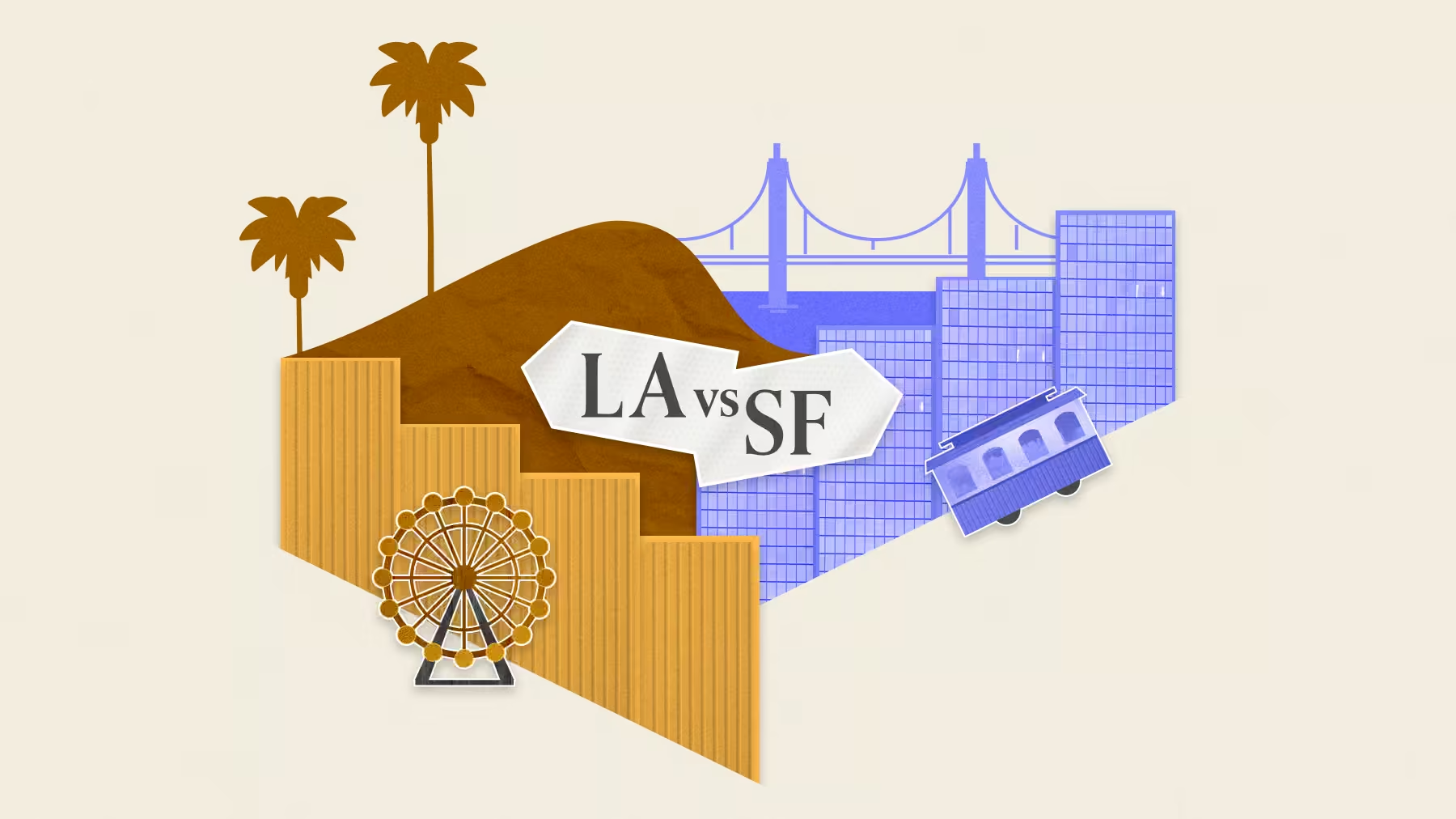
While return-to-office trends have stabilized in many markets nationwide, Los Angeles and San Francisco face unique challenges that set them apart from national patterns. This report examines the divergent trajectories of these two major West Coast markets, with particular focus on Los Angeles' ongoing struggles and the emergence of one specific submarket that bucks broader trends.
Through analysis of commuter patterns, demographic shifts, and localized performance data, we explore how factors ranging from out-of-market workforce changes to amenity-driven location advantages are reshaping the competitive landscape for office real estate in Southern California.
Both Los Angeles and San Francisco continue to significantly underperform the national office occupancy average. In June 2025, average nationwide visits to office buildings were 30.5% below January 2019 levels, compared to a 46.6% and 46.4% decline in visits to Los Angeles and San Francisco offices, respectively.
While both cities now show similar RTO rates, they arrived there through different trajectories. San Francisco has consistently lagged behind national return-to-office levels since pandemic restrictions first lifted.
Los Angeles, however, initially mirrored nationwide trends before its office market began diverging and falling behind around mid-2022.
The decline in office visits in Los Angeles and San Francisco can be partly attributed to fewer out-of-market commuters. Both cities saw significant drops in the percentage of employees who live outside the city but commute to work between H1 2019 and H1 2023.
However, here too, the two cities diverged in recent years: San Francisco's share of out-of-market commuters relative to local employees rebounded between 2023 and 2024, while Los Angeles' continued to decline – another indication that LA's RTO is decelerating as San Francisco stabilizes.
Like in other markets, Los Angeles saw a larger drop in office visits than in office visitors when comparing current trends to pre-pandemic levels. This is consistent with the shift to hybrid work arrangements, where many of the workers who returned to the office are coming in less frequently than before the pandemic, leading to a larger drop in visits compared to the drop in visitors.
But looking at the trajectory of RTO more recently shows that in most markets – including San Francisco – office visits are up year-over-year (YoY) while visitor numbers are down. This suggests that the workers slated to return to the office have already done so, and increasing the numbers of visits per visitor is now the path towards increased office occupancy.
In Los Angeles, visits also outperformed visitors – but both figures were down YoY (the gap in visits was smaller than the gap in visitors). So while the visitors who did head to the office in LA in Q2 2025 clocked in more visits per person compared to Q2 2024, the increase in visits per visitor was not enough to offset the decline in office visitors.
While Los Angeles may be lagging in terms of its overall office recovery, the city does have pockets of strength – most notably Century City. In Q2 2025, the number of inbound commuters visiting the neighborhood was just 24.7% lower than it was in Q2 2019 and higher (+1.0%) than last year's levels.
According to Colliers' Q2 2025 report, Century City accounts for 27% of year-to-date leasing activity in West Los Angeles – more than double any other submarket – and commands the highest asking rental rates. The area benefits from Trophy and Class A office towers that may create a flight-to-quality dynamic where tenants migrate from urban core locations to this Westside submarket.
The submarket's success is likely bolstered by its strategic location adjacent to Westfield Century City shopping center – visit data reveals that 45% of weekday commuters to Century City also visited Westfield Century City during Q2 2025. The convenience of accessing the mall's extensive retail, dining, and entertainment options during lunch breaks or after work may encourage employees to come into the office more frequently.
Perhaps thanks to its strategic locations and amenities-rich office buildings, Century City succeeds in attracting relatively affluent office workers.
Century City's office submarket has a higher median trade area household income (HHI) than either mid-Wilshire or Downtown LA. The neighborhood also attracts significant shares of the "Educated Urbanite" Spatial.ai: PersonaLive segment – defined as "well educated young singles living in dense urban areas working relatively high paying jobs".
This demographic typically has fewer family obligations and greater flexibility in their work arrangements, making them more likely to embrace hybrid schedules that include regular office attendance. Affluent singles also tend to value the lifestyle amenities and networking opportunities that come with working in a premium office environment like Century City: This demographic is often in career-building phases where in-person collaboration and visibility matter more, driving consistent office utilization that helps sustain the submarket's performance even as other LA office areas struggle with lower occupancy rates.
The higher disposable income of this audience also aligns well with the submarket's upscale retail and dining options at nearby Westfield Century City, creating a mutually reinforcing ecosystem where the office environment and surrounding amenities cater to their preferences.
As the broader Los Angeles market grapples with a shrinking commuter base and declining office utilization, the performance gap between premium, amenity-rich locations and traditional office districts is likely to widen. For investors and tenants alike, these trends underscore the growing importance of location quality, demographic targeting, and lifestyle integration in determining long-term office market viability across Southern California.
Century City's success – anchored by its affluent, career-focused workforce and integrated lifestyle amenities – can offer a blueprint for office market resilience in the hybrid work era.

1. Appetite for offline retail & dining is stronger than ever. Both retail and dining visits were higher in H1 2025 than they were pre-pandemic.
2. Consumers are willing to go the extra mile for the perfect product or brand. The era of one-stop-shops may be waning, as many consumers now prefer to visit multiple chains or stores to score the perfect product match for every item on their shopping list.
3. Value – and value perception – gives chains a clear advantage. Value-oriented retail and dining segments have seen their visits skyrocket since the pandemic.
4. Consumer behavior has bifurcated toward budget and premium options. This trend is driving strength at the ends of the spectrum while putting pressure on many middle-market players.
5. The out-of-home entertainment landscape has been fundamentally altered. Eatertainment and museums have stabilized at a different set point than pre-COVID, while movie theater traffic trends are now characterized by box-office-driven volatility.
6. Hybrid work permanently reshaped office utilization. Visits to office buildings nationwide are still 33.3% below 2019 levels, despite RTO efforts.
The first half of 2025 marked five years since the onset of the pandemic – an event that continues to impact retail, dining, entertainment, and office visitation trends today.
This report analyzes visitation patterns in the first half of 2025 compared to H1 2019 and H1 2024 to identify some of the lasting shifts in consumer behavior over the past five years. What is driving consumers to stores and dining venues? Which categories are stabilizing at a higher visit point? Where have the traffic declines stalled? And which segments are still in flux? Read the report to find out.
In the first half of 2025, visits to both the retail and dining segments were consistently higher than they were in 2019. In both the dining and the retail space, the increases compared to pre-COVID were probably driven by significant expansions from major players, including Costco, Chick-fil-A, Raising Cane's, and Dutch Bros, which offset the numerous retail and dining closures of recent years.
The overall increase in visits indicates that, despite the ubiquity of online marketplaces and delivery services, consumer appetite for offline retail and dining remains strong – whether to browse in store, eat on-premises, collect a BOPIS order, or pick up takeaway.
A closer look at the chart above also reveals that, while both retail and dining visits have exceeded pre-pandemic levels, retail visit growth has slightly outpaced the dining traffic increase.
The larger volume of retail visits could be due to a shift in consumer behavior – from favoring convenience to prioritizing the perfect product match and exhibiting a willingness to visit multiple chains to benefit from each store's signature offering. Indeed, zooming into the superstore and grocery sector shows an increase in cross-shopping since COVID, with a larger share of visitors to major grocery chains regularly visiting superstores and wholesale clubs. It seems, then, that many consumers are no longer looking for a one-stop-shop where they can buy everything at once. Instead, shoppers may be heading to the grocery stores for some things, the dollar store for other items, and the wholesale club for a third set of products.
This trend also explains the success of limited assortment grocers in recent years – shoppers are willing to visit these stores to pick up their favorite snack or a particularly cheap store-branded basic, knowing that this will be just one of several stops on their grocery run.
Diving into the traffic data by retail category reveals that much of the growth in retail visits since COVID can be attributed to the surge in visits to value-oriented categories, such as discount & dollar stores, value grocery stores, and off-price apparel. This period has been defined by an endless array of economic obstacles like inflation, recession concerns, gas price spikes, and tariffs that all trigger an orientation to value. The shift also speaks to an ability of these categories to capitalize on swings – consumers who visited value-oriented retailers to cut costs in the short term likely continued visiting those chains even after their economic situation stabilized.
Some of the visit increases are due to the aggressive expansion strategies of leaders in those categories – including Dollar General and Dollar Tree, Aldi, and all the off-price leaders. But the dramatic increase in traffic – around 30% for all three categories since H1 2019 – also highlights the strong appetite for value-oriented offerings among today's consumers. And zooming into YoY trends shows that the visit growth is still ongoing, indicating that the demand for value has not yet reached a ceiling.
While affordable pricing has clearly driven success for value retailers, offering low prices isn't a guaranteed path to growth. Although traffic to beauty and wellness chains remains significantly higher than in 2019, this growth has now plateaued – even top performers like Ulta saw slight YoY declines following their post-pandemic surge – despite the relatively affordable price points found at these chains.
Some of the beauty visit declines likely stems from consumers cutting discretionary spending – but off-price apparel's ongoing success in the same non-essential category suggests budget constraints aren't the full story. Instead, the plateauing of beauty and drugstore visits while off-price apparel visits boom may be due to the difference in value perception: Off-price retailers are inherently associated with savings, while drugstores and beauty retailers, despite carrying affordable items, lack that same value-driven brand positioning. This may suggest that in today's market, perceived value matters as much as actual affordability.
Another indicator of the importance of value perception is the decline in visits to chains selling bigger-ticket items – both home furnishing chains and electronic stores saw double-digit drops in traffic since H1 2019.
And looking at YoY trends shows that visits here have stabilized – like in the beauty and drugstore categories – suggesting that these sectors have reached a new baseline that reflects permanently shifted consumer priorities around discretionary spending.
A major post-pandemic consumer trend has been the bifurcation of consumer spending – with high-end chains and discount retailers thriving while the middle falls behind. This trend is particularly evident in the apparel space – although off-price visits have taken off since 2019 (as illustrated in the earlier graph) overall apparel traffic declined dramatically – while luxury apparel traffic is 7.6% higher than in 2019.
Dining traffic trends also illustrate this shift: Categories that typically offer lower price points such as QSR, fast casual, and coffee have expanded significantly since 2019, as has the upscale & fine dining segment. But casual dining – which includes classic full-service chains such as Red Lobster, Applebee's, and TGI Fridays – has seen its footprint shrink in recent years as consumers trade down to lower-priced options or visit higher-end venues for special occasions.
Chili's has been a major exception to the casual dining downturn, largely driven by the chain's success in cementing its value-perception among consumers – suggesting that casual dining chains can still shine in the current climate by positioning themselves as leaders in value.
Consumers' current value orientation seems to be having an impact beyond the retail and dining space: When budgets are tight, spending money in one place means having less money to spend in another – and recent data suggests that the consumer resilience in retail and dining may be coming at the expense of travel – or perhaps experiences more generally.
While airport visits from domestic travelers were up compared to pre-COVID, diving into the data reveals that the growth is mostly driven by frequent travelers visiting airports two or more times in a month. Meanwhile, the number of more casual travelers – those visiting airports no more than once a month – is lower than it was in 2019.
This may suggest that – despite consumers' self-reported preferences for "memorable, shareable moments" – at least some Americans are actually de-prioritizing experiences in the first half of 2025, and choosing instead to spend their budgets in retail and dining venues.
The out of home entertainment landscape has also undergone a significant change since COVID – and the sector seems to have settled into a new equilibrium, though for part of the sector, the equilibrium is marked by consistent volatility.
Eatertainment chains – led by significant expansions from venues like Top Golf – saw a 5.5% visit increase compared to pre-pandemic levels, though YoY growth remained modest at 1.1%. On the other hand, H1 2025 museum traffic fell 10.9% below 2019 levels with flat YoY performance (+0.2%). The minimal year-over-year changes in both categories suggest that these entertainment segments have found their new post-COVID equilibrium.
The rise of eatertainment alongside the drop in museum visits may also reflect the intense focus on value for today's consumers. Museums in 2025 offer essentially the same value proposition that they offered in 2019 – and for some, that value proposition may no longer justify the entrance fee. But eatertainment has gained popularity in recent years as a format that offers consumers more bang for their buck relative to stand-alone dining or entertainment venues – which makes it the perfect candidate for success in today's value-driven consumer landscape.
But movie theaters traffic trends are still evolving – even accounting for venue closures, visits in H1 2025 were well below H1 2019 levels. But compared to 2024, movie traffic was also up – buoyed by the release of several blockbusters that drove audiences back to cinemas in the first half of 2025. So while the segment is still far from its pre-COVID baseline, movie theaters retain the potential for significant traffic spikes when compelling content drives consumer demand.
The blockbuster-driven YoY increase can perhaps also be linked to consumers' spending caution. With budgets tight, movie-goers may want to make sure that they're spending time and money on films they are sure to enjoy – taking fewer risks than they did in 2019, when movie tickets and concession prices were lower and consumers were less budget-conscious.
H1 2025 also brought some moderate good news on the return to office (RTO) front, with YoY visits nationwide up 2.1% and most offices seeing YoY office visit increases – perhaps due to the plethora of RTO mandates from major companies. But comparing office visitation levels to pre pandemic levels highlights the way left to go – nationwide visits were 33.3% below H1 2019 levels in H1 2025, with even RTO leaders New York and Miami still seeing 11.9% and 16.1% visit gaps, respectively.
So while the data suggests that the office recovery story is still being written – with visits inching up slowly – the substantial gap from pre-pandemic levels suggests that remote and hybrid work models have fundamentally reshaped office utilization patterns.
Five years post-pandemic, consumer behavior across the retail, dining, entertainment, and office spaces has crystallized into distinct new patterns.
Traffic to retail and dining venues now surpasses pre-pandemic levels, driven primarily by value-focused segments. But retail and dining segments that cater to higher income consumers –such as luxury apparel and fine dining – have also stabilized at a higher level, highlighting the bifurcation of consumer behavior that has emerged in recent years. Entertainment formats show more variability – while eatertainment traffic has settled above and museums below 2019 levels, and movie theaters still seeking stability. Office spaces remain the laggard, with visits well below pre-pandemic levels despite corporate return-to-office initiatives showing modest impact.
It seems, then, that the new consumer landscape rewards businesses that can clearly articulate their value proposition to attract consumers' increasingly selective spending and time allocation – or offer a premium product or experience catering to higher-income audiences.
.avif)
1. Overall dining traffic is mostly flat, but growth is concentrated in specific areas.
While nationwide dining visits were nearly unchanged in early 2025, western states like Utah, Idaho, and Nevada showed moderate growth, while states in the Midwest and South, along with Washington D.C., saw declines.
2. Fine dining and coffee chains are growing through expansion, not just busier locations.
These two segments were the only ones to see an increase in total visits, but their visits-per-location actually decreased, indicating that opening new stores is the primary driver of their growth.
3. Higher-income diners are driving the growth in resilient categories.
The segments that saw visit growth—fine dining and coffee—also attracted customers with the highest median household incomes, suggesting that affluent consumers are still spending on dining despite economic headwinds.
4. Remote work continues to reshape dining habits.
The share of suburban customers at fine dining establishments has increased since 2019, while it has decreased for coffee chains. This reflects a shift towards "destination" dining closer to home and away from commute-based coffee runs.
5. Limited-service restaurants own the weekdays; full-service restaurants win the weekend.
QSR, fast casual, and coffee chains see the majority of their traffic from Monday to Friday, whereas casual and fine dining see a significant spike in visits on weekends.
6. Each dining segment dominates a specific time of day.
Consumer visits are highly predictable by the hour: coffee leads in the early morning, fast casual peaks at lunch, casual dining takes the afternoon, fine dining owns the dinner slot, and QSR captures the late-night crowd.
Overall dining visits held relatively steady in the first five months of 2025, with year-over-year (YoY) visits to the category down 0.5% for January to May 2025 compared to the same period in 2024. Most of the country saw slight declines (less than 2.0%), though some states and districts experienced larger drops: Washington, D.C, saw the largest visit gap (-3.6% YoY), followed by Kansas and North Dakota (-2.9%), Arkansas (-2.8%), Missouri and Kentucky (-2.6%), Oklahoma (-2.1%), and Louisiana (-2.0%).
Still, there were several pockets of moderate dining strength, specifically in the west of the United States. January to May 2025 dining visits in Utah, Idaho, and Nevada increased 1.8% to 2.4% YoY, while the coastal states saw traffic rise 0.6% (California) to 1.2% (Washington). Vermont also saw a slight increase in dining visits (+1.9%).
Diving into visit trends by dining segment shows that fine dining and coffee saw the strongest overall visit trends, with visits to the segments up 1.3% and 2.6% YoY, respectively, between January and May 2025. But visits per location trends were negative for both segments – a decline of 0.8% YoY for fine dining and 1.8% for coffee during the period – suggesting that much of the visit strength is due to expansions rather than more crowded restaurants and coffee shops.
In contrast, full-service casual dining saw overall visits decrease by 1.5%, while visits per location remained stable (+0.2%) YoY between January and May 2025. Several casual dining chains have rightsized in the past twelve months – including Red Lobster, TGI Fridays, and Outback Steakhouse – which impacted overall visit numbers. But the data seems to show that their rightsizing was effective, as the remaining locations successfully absorbed the traffic and maintained performance levels from the previous year. And the monthly data also provides much reason for optimism, with May traffic up both overall and on a visit per location basis – suggesting that the casual dining segment is well positioned for growth in the second half of 2025.
Meanwhile, QSR and fast casual chains saw similar minor visits per venue dips (-1.5% and -1.2%, respectively). At the same time, QSR also saw an overall visit dip (-0.8%) while traffic to fast casual chains increased slightly (+0.3%) – suggesting that the fast casual segment is expanding more aggressively than QSR. But the two segments decoupled somewhat in May, with overall traffic and visits per venue to fast casual chains up YoY while traffic remained flat and visits per venue fell slightly for QSR – perhaps due to the relatively greater affluence of fast casual's consumer base.
Analyzing the income levels of visitors to the various dining segments over time shows that each segment followed a slightly different trend – and the differences in visitor income may help explain some of the current traffic patterns.
The only three segments with YoY visit growth – casual dining, fine dining, and coffee – also had the highest captured market median household income (HHI). Although the median HHI in the captured market of upscale and fine dining chains fell after COVID, it has risen back steadily over time and now stands at $98.0K – slightly higher than the $97.1K median HHI between January to May 2019. This may explain the segment's resilience in the face of wider consumer headwinds. Meanwhile, the median HHI at fast casual and coffee chains has fallen slightly, perhaps due to aggressive expansions in the space – including Dave's Hot Chicken and Dutch Bros – which likely broadened the reach of the segments, driving visits up and trade area median HHI down.
Like fine dining, casual dining also saw its trade area median HHI increase slightly over time – but the segment has still been facing visit dips. This could mean that, even though consumers trading down to casual dining may have boosted the trade area median HHI for the segment, it still might not have been enough to make up for the customers lost to tighter budgets.
The QSR segment saw its trade area median HHI remain remarkably steady – and visits to the segment have also been quite consistent – staying between $70.6K and $70.9K between 2019 and 2025 – which may explain why the segment's visits remained relatively stable YoY.
Diving into the psychographic segmentation shows that, although the fine dining segment attracted visitors from the highest-income areas between January and May 2025, fast casual chains drew the highest share of visitors from suburban areas, followed by casual dining and coffee. QSR attracted the smallest share of suburban visitors, with just 30.5% of the category's captured market between January and May 2025 belonging to Spatial.ai: PersonaLive suburban segments.
But looking at the data since 2019 reveals small but significant changes in the shares of suburban audiences in some categories' captured markets. And although the percentage changes are slight, these represent hundreds of thousands of diners every year.
The data shows that shares of suburban segments in the captured markets of fine dining chains have increased, while their share in the captured market of coffee chains has decreased. The shares of suburban visitors to QSR, fast casual, and casual chains have remained relatively steady.
This may suggest that the COVID-19 pandemic and the subsequent rise of remote and hybrid work models are still impacting consumer dining habits, benefiting destination-worthy experiences in suburban locales such as fine dining chains while reducing the necessity of daily coffee runs that were often tied to commuting and office work. Meanwhile, the stability in QSR, fast casual, and casual dining segments could indicate that these categories continue to meet consistent suburban demand for convenience and everyday dining, largely unaffected by the redistribution seen in the fine dining and coffee sectors.
Although QSR, fast casual, casual dining, fine dining, and coffee all fall under the wider dining umbrella, the data shows distinct consumer behavior patterns regarding visits to these five categories.
Limited service segments, including QSR, fast casual, and coffee tend to see higher shares of visits on weekdays, while full service segments – casual dining and fine dining – receive higher shares of weekend visits. Diving deeper shows that QSR has the largest share of weekday visits, with 72.3% of traffic coming in between Monday and Friday, followed by fast casual (69.8% of visits on weekdays) and coffee (69.4% of visits on weekdays.) Looking at trends within the work week shows that QSR receives a slightly larger visit share between Monday and Thursday compared to the other limited service segments. Meanwhile, coffee seems to receive the smallest share of Friday visits – 16.3% compared to 17.0% for fast casual and 17.2% for QSR.
On the full-service side, casual dining and fine dining chains have relatively similar shares of weekend visits (39.0% and 38.8%, respectively), but fine dining also sees an uptick of visits on Fridays (with 19.1% of weekly visits) as consumers choose to start the weekend on a festive note.
Hourly visit patterns also show variability between the segments. Coffee is the unsurprising leader of early visits, with 14.6% of visits taking place before 8 AM and, almost two-thirds (64.9%) of visits taking place before 2 PM. Fast casual leads the lunch rush (29.4% of visits between 11 AM and 2 PM), casual dining chains receive the largest share of afternoon (2 PM to 5 PM) visits, and fine dining chains receive the largest share of dinner visits, with almost 70% of visits taking place between 5 PM and 11 PM. QSR leads the late night visit share – 4.1% of visits take place between 11 PM and 5 AM – followed by casual dining chains (3.2% late night and overnight visit share), likely due to the popularity of 24-hour diners.
This suggests that each dining segment effectively "owns" a different part of the day, from the morning coffee ritual and the quick lunch break to the leisurely evening meal and late-night cravings.
An analysis of average visit duration also reveals a small but lasting shift in post-pandemic dining behavior. Between January and May 2025, the average dwell time for nearly every dining segment was shorter than during the same period in 2019. This efficiency trend is evident across limited-service categories like QSR, fast casual, and coffee shops, suggesting a continued emphasis on speed and convenience.
The one notable exception to this trend is upscale and fine dining, where the average visit duration has actually increased compared to pre-COVID levels. This may suggest that, while visits to most segments have become more transactional, consumers are treating fine dining more as an extended, deliberate experience, reinforcing its position as a destination-worthy occasion.