.png)
.png)

.png)
.png)

What does 2024 hold for malls and shopping centers? We dove into the data to unearth the trends likely to shape the space in the coming year.
The move towards greater tenant diversity in malls shaped the shopping center space in recent years, and the trend appears set to be taken to the next level in 2024. Placemaking – crafting public spaces that go beyond utilitarian needs to foster social interaction and exchange – is at the forefront of many urban development initiatives, and the trend is already boosting retail performance in successful placemaking projects.
Fenton, a mixed-use district in Cary, N.C., opened in June 2022. The project showcases the potential of placemaking to transform an underutilized space into a vibrant “live-work-play” community with something for individuals and families of all ages. The retail and entertainment village includes shops, restaurants, seasonal attractions, entertainment venues, and other diverse offerings that are establishing Fenton as a community hub and a prime destination for residents. Visits were up 53.2% between July and December 2023 compared to the same period in 2022, while median dwell time increased from 64 to 83 minutes.
.avif)
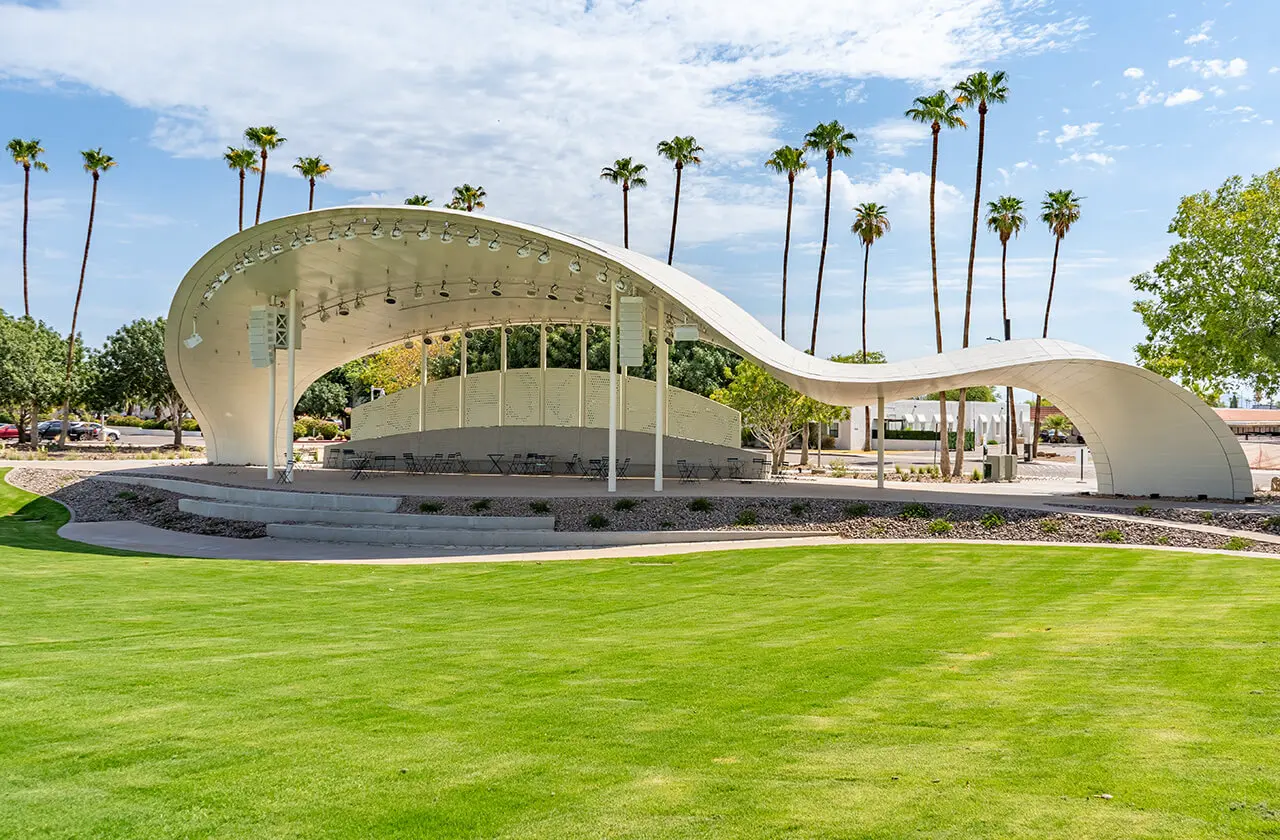
Across the country, in Phoenix, AZ, Park Central Mall – the state’s first open-air shopping center – was also redesigned as a mixed-use development Park Central. The complex includes restaurants, office space, medical facilities, and bioscience research labs, with more hospitality and housing under construction. And although the project first reopened in 2019, visits to the revitalized Park Central continue to grow – between 2022 and 2023, foot traffic to Park Central increased by 32.8% while median dwell time grew from 75 to 80 minutes.
.avif)
In 2023, malls attracted relatively high income shoppers – and as the trend is likely to continue in 2024, with high-income shoppers displaying significantly stronger consumer confidence than their middle- and low-income counterparts.
Households in the potential market trade areas of Indoor Malls, Open-Air Lifestyle Centers, and Outlet Malls tended to have higher incomes relative to the nationwide median – and the median HHI was even higher in the malls’ captured market trade area. This means that many of these malls are located within relatively affluent communities (hence the relatively high potential market median HHI) and attract the higher-income shoppers within those areas (as shown by the even higher captured market median HHI).
With middle-income shoppers expected to tighten their budgets in 2024, high-income consumers will likely remain a significant share of mall-goers in 2024 as well.
.avif)
Malls used to be the place for teens to hang out on weekends – and it looks like shopping centers are once again attracting younger generations of consumers. Between 2019 and 2023, the share of “Young Professionals” and “Young Urban Singles” in the captured market trade areas of Indoor Malls, Open-Air Shopping Centers, and Outlet Malls increased. At the same time, the share of older segments – “Suburban Boomers” and “Sunset Boomers” – decreased.
As Gen-Z shoppers rediscover physical stores and increasingly seek out the mall-going experience, the share of younger consumers visiting shopping centers may well grow larger in the upcoming year.
.avif)
Last year’s ongoing inflation brought a unique set of challenges to a brick-and-mortar space still recovering from the pandemic’s impact. But 2023 ended with a surge in consumer confidence, and 2024 may well bring a positive shift to malls and the wider retail landscape. And shopping centers – especially those that offer a diversity of experience and succeed in catering high-income and/or younger shoppers – can take advantage of the opportunities in the year ahead.
For more data-driven insights, visit placer.ai/blog.

Few things are as universally loved as freshly baked bread. And the options for where to find a loaf are plentiful, from local artisan shops to bakery chains to grocery store bread counters. Is there room in the crowded bakery scene for everyone? We take a closer look at the visitation data for a few bakery chains that are on the rise to find out.
Paris Baguette, the South Korean bakery and cafe chain, inaugurated its first U.S. store in Los Angeles in 2005. True to its name, the chain offers a menu inspired by classic French boulangeries with a Korean twist – think mochi donuts sold alongside croissants.
Paris Baguette hopes to operate 1,000 stores across the country by 2030; to that end, it embraced a franchising approach in 2015 to accelerate growth and store openings. Visitation patterns suggest that this move has proven itself to be a winning one.
Examining the change in monthly visits to Paris Baguette locations since November 2019 underscores the brand’s remarkable growth. The chain operated 77 stores in the U.S. in November 2019; today, that number has nearly doubled. And visits have soared accordingly, with December 2023 seeing 96.7% more monthly visits than December 2019.
As Paris Baguette continues to see its success rising, the bakery chain appears well-positioned to maintain its momentum and achieve its ambitious expansion plans.
.avif)
85°C Bakery, often dubbed the "Starbucks of Taiwan," made its way to the U.S. in 2008. The chain, which operated 59 U.S. stores as of March 2023 in addition to its significant international presence, seeks to solidify its standing in the American market.
Named after the ideal coffee-brewing temperature, 85°C has enjoyed year-over-year (YoY) foot traffic growth throughout most of 2023. And the chain, which currently operates in the West and in Texas, announced plans for an East Coast expansion in August 2023, signaling its intent to reach new consumer segments.
Diving into the visitation data reveals that 85°C not only enjoys strong monthly foot traffic but also draws more family households (defined by the Spatial.ai: PersonaLive dataset) to its trade areas compared to the statewide average. In California, Texas, and Washington, the trade areas show an overrepresentation of "Near-Urban Diverse Families," "Ultra Wealthy Families," and "Wealthy Suburban Families." This suggests that families – particularly affluent ones – are drawn to the chain.
As 85°C continues expanding, including into new markets and dining concepts – such as the recent addition of a dumpling shop – the chain hopes to continue bringing its Taiwanese flavors to a wider audience.
.avif)
Tartine and Porto’s are two Los Angeles natives with very different approaches to dough. Tartine, the brainchild of breadmasters Chad Robertson and Elizabeth Prueitt, is thought to have brought sourdough bread into the mainstream in the U.S. Porto’s, on the other hand, began as an immigrant-owned bakery in the 1970s, bringing the taste of Cuba to California.
And the two chains, while both based in the same city, see significant differences in their visitor demographics. Analyzing visitors to both bakery brands using the STI: Popstats dataset reveals that, while 29.1% of Porto’s captured market* trade area was made up of households with children – very close to the California median of 29.6% – only 17.3% of Tartine’s captured market* trade area was made up of households with children. And the median household income (HHI) also showed significant variance between the brands, with Tartine visitors earning significantly more than Porto’s and the California median HHI.
*A business’s captured market refers to the trade area with each census block weighted according to its share of visits to the chain or venue in question.
.avif)
The variance in demographics across these two iconic Los Angeles bakeries serves as testament to the city's diverse culinary landscape and ability to embrace and sustain a wide array of eateries.
The four bakeries prove that there is plenty of room in a crowded kitchen for different kinds of bakeries to succeed, from tiny artisan bakeries to major chains.
For more data-driven dining insights, visit placer.ai/blog.

Country clubs are changing with the times, moving away from the once-exclusive image of business dealings on the golf course. A more inclusive concept is taking root – and attracting a growing number of young members.
We took a closer look at the location intelligence metrics of country clubs throughout the country to understand how they are shifting and what might be driving these changes.
Golf and tennis, two country club stalwarts, surged in popularity over the COVID-19 pandemic, and that increase has sustained itself – more people than ever are playing the games. Looking at year-over-four-year (Yo4Y) visits to country clubs suggests that these establishments are reaping the benefits of the interest in both sports. Visits were elevated compared to the same period in 2019 for all but two months analyzed.
June, when the U.S. Open was held, saw the most impressive Yo4Y visit growth of 28.7%. The championship, the most-watched golf tournament since 2019, was held in the Los Angeles Country Club, and likely contributed to a spike in visits to golf clubs, either for U.S. Open-related events or a U.S. Open-inspired desire to golf. The year ended on a high note, with December visits to country clubs up by 12.1% Yo4Y – a solid indication that interest in membership clubs remains strong.
.avif)
Millennials, a consumer cohort that has historically shown little interest in joining country clubs, seem to be changing course and may be driving some of the visit growth. This population is increasingly seeking spaces to socialize and network – and in response, many golf clubs are shifting their offerings to appeal to a younger demographic. Location intelligence indicates that the strategy is working.
Examining country club demographics across the country – in Long Island, New York; Austin, Texas; Atlanta, Georgia; and Minneapolis, Minnesota – suggests a shift in membership makeup. Some of these areas have seen an influx of millennials in recent years, which likely expanded the pool of younger potential country club members. But the trade areas of many of the country clubs’ also skewed younger in 2023 than they did in 2019 – meaning that these clubs are attracting visitors from neighborhoods with lower median ages compared to the neighborhoods feeding visits to country clubs in 2019.
Some clubs, like the Capital City Country Club in Atlanta, Georgia, saw relatively small drops in median age – from 41.2 in 2019 to 40.2 in 2023. But other clubs saw much more pronounced drops – the Hazeltine National Golf Club near Minneapolis, Minnesota saw its median age drop by 7.8 years between 2019 and 2023. The Country Club Of The South in Atlanta, Georgia, also saw a Yo4Y drop in median age – from 38.0 to 31.8.
.avif)
Country clubs tend to have a steep financial barrier to entry, with costs including annual membership dues, initiation fees, and expenses for food and beverages. And perhaps unsurprisingly, most country club members boast a median household income (HHI) well above the nationwide median. And although younger demographics generally have to have less income than their older counterparts, the drop in median age across many country clubs does not seem to be having a major impact on the affluence of these clubs’ visitor bases.
Some clubs that experienced Yo4Y drops in the median age of visitors – Great Hills Country Club in Austin, Texas, for example – did see the median HHI of its visitors drop slightly. But for the most part, the median HHI of visitors to country clubs remained stable Yo4Y, and some, like the Edina Country Club in Minnesota, saw the median HHI grow Yo4Y. This suggests that the decline in median age within membership clubs may be driven by a desire for socializing and new experiences rather than a shift towards increased financial accessibility for a broader range of members.
.avif)
The shift in the demographics of country club visitors, marked by the rising number of younger members, is a trend that may solidify further. Clubs in tune with this demographic – young professionals and millennials – can consider what is important to this cohort to continue attracting the younger generation.
For more data-driven leisure and entertainment insights, visit placer.ai/blog.

Florida, known for its year-round sunny weather and iconic attractions like Disneyland and EPCOT, has long been a popular tourist destination. And though many people think of Miami and Orlando when planning a trip to Florida, Tampa is fast becoming one of the country's most popular getaway spots. The city has seen its tourism sector grow over the past few years, so we dove into the location analytics data to better understand these tourism trends.
Tampa has emerged as an attractive place for out-of-state home buyers and relocators in recent years – especially for younger generations looking to take advantage of the city’s status as an emerging tech hub as well as enjoy the pleasant climate and beautiful beaches. But examining foot traffic trends to Downtown Tampa also reveals Tampa’s growing popularity among out-of-state visitors.
Tampa International Airport – named the “best large airport in North America in 2023” – is growing fast, and visits to the Downtown Tampa POI from visitors coming from 250+ miles away were up almost every month of 2023, especially compared to pre-pandemic 2019. (Most places 250 miles or more outside Tampa are also outside Florida.) And although YoY foot traffic did dip some months, the drop was likely due to the comparison with a particularly strong 2022 that brought a record number of tourists to the Hillsborough County seat.
.avif)
Diving into the demographic data of visitors traveling to Downtown Tampa from at least 250 miles away helps shed light on who is driving this domestic tourism surge.
Between 2019 and 2023, the share of households with children in the trade areas feeding out-of-state visits to downtown Tampa grew from 25.9% in 2019 to 27.1% in 2023. Similarly, the median household income (HHI) of visitors to the city’s downtown also increased from $85.1K/year to $91.8K/year. These shifts in visitor demographics suggest that at least some of the tourism surge to the city may be driven by families with children and wealthy families.
It seems, then, that Tampa is on the rise not just as a retirement hub or as a millennial and Gen-Z hotspot. The city is also attracting an increasingly larger share of affluent families with children, indicating that this rising Florida star with something for everyone may soar even higher in 2024.
.avif)
With its pristine beaches and diverse attractions, Tampa has long boasted a robust tourism sector – and the city’s popularity has surged even higher post-pandemic. So far, 2024 looks promising for the city’s tourism segment. Will Tampa continue to attract vacationers and sight-seers?
Visit placer.ai/blog to find out.

As discussed last week, 2023 was a year that forced restaurant operators to stay agile amid inflationary headwinds and changes in consumer behavior, daypart shifts, new approaches to drive-thru, and population migration changes. This week’s ICR Conference also gave us a chance to speak with the management team from more than 25 restaurant chains as well as their investors to better understand their lessons from 2023 and how they plan to apply them in 2024.
Despite most chains reporting that visits are still down on a year-over-year basis, there was a sense of optimism among many of the operators we spoke to. Many acknowledged that there were still pressures weighing on consumer spending, but that the strategies put in place during 2023 to stabilize visitation trends had been working (including an emphasis on value, elevated experience, adopting new restaurant formats to better address a wider range of commercial property types, and new menu innovations). Several management teams acknowledged that the contractor availability and equipment supply chain bottlenecks that had plagued new store openings in 2023 had started to dissipate, with several chains planning to resume or even exceed their pre-pandemic pace of restaurant openings (although many admitted that new store buildout costs are still running 25%-30% higher than they were 5 years ago). Given the higher costs involved with new store openings (and the risk of opening a location in a subpar site), there was a heavy emphasis on harnessing new data sources to better understand migration trends, trade area demographics, and incumbent competition when making site selection opportunities (and thank you to customers like Dave & Buster’s and Chuy’s for highlighting how they are incorporating Placer data into these decisions).
Below, we discuss a few key trends that restaurant operators and their commercial real estate partners should be thinking about as we move into 2024.
Perhaps it shouldn’t be surprising at an event where several restaurant operators were looking to raise capital, but the overarching theme from most management teams that we spoke to this week was that they were ready to accelerate unit expansion plans. Expansion strategies differed by concept, but most operators planned to open new locations across a combination of existing and new markets. With respect to new markets, many operators told us they were prioritizing South and Southeastern markets for new market expansion, echoing what we heard from McDonald’s and others last year. Below, we’ve presented the latest data from Placer’s Migration Trends Report which shows total population changes by market from November 2019-November 2023. Indeed, our data confirms that many South (Phoenix, Texas) and Southeast (Central Florida, Carolinas) markets were among the highest growth populations in the U.S. over the past four years.
That said, with so many restaurant operators targeting these regions, we heard from several executives about the importance of fully understanding the makeup of the markets. Said another way, just because a market has seen meaningful population growth, it doesn’t necessarily mean it’s a candidate for expansion. Below, we’ve presented the same migration map as above (2019-2023 population growth), but with a origin/destination household income filter. A red dot on this map indicates that a market saw the average household income fall because of migration, while a green dot indicates that a market saw an increase in household income. Here, we see a slightly different story, as many higher growth populations actually saw a decline in household income due to migration. We also see the impact of the urban/suburban migration shift that we’ve discussed in the past, with many smaller markets across the Carolinas and Central Florida seeing the highest household income growth versus 2019.
Below, we’ve attempted to bring the two charts together and identify markets that have not only seen population growth but also a significant increase in household income. We see markets like Las Vegas and other areas in Central Florida and the Carolinas region score well using this methodology, but a number of other markets like Boise City, ID, Lakeland, WI, and Spokane, WA also seeing increases in population but also an increase in their average household income.
Most U.S. markets have gone through significant changes post-pandemic both in terms of population size and population makeup. At the end of the day, it's important for restaurants and retailers to not only understand both of these factors when evaluating new markets for growth. We’ve certainly seen success stories–Portillo’s continues to thrive in Texas, for example–but we’ve also seen cases where restaurant openings haven’t been as successful in newer markets because of migration changes.
We spoke about trends in the eatertainment category last year with the conclusion being that these concepts were still key in driving traffic to commercial properties (despite facing tougher year-over-year comparisons from the great reopening we saw in 2022). There was a palpable sense of optimism among the eatertainment concepts we spoke to at the event, whether they were more focused on entertainment (including Dave & Buster’s, Puttshack, and Pinstripes) or interactive dining (Kura Revolving Sushi Bar or GEN Korean BBQ).
We’ve updated the eatertainment versus casual dining category visit per location analysis we’ve presented in the past below. Although eatertainment’s visit per location outperformance narrowed versus casual dining during Q4 2023, we believe this is a byproduct of seasonality (shift to sit-down dining during the holiday season) and expect the gap to widen once again during Q1 2024.
Most of the eatertainment concepts we spoke to at the ICR conference planned a two-pronged approach to unit expansion in 2024: infilling existing markets and establishing a beachhead in newer markets. Most concepts in this category were planning to grow their store bases by at least double-digit growth rates in 2024, with some like Pinstripes are forecasting 30%+ unit growth this year. Other like Dave & Buster’s are planning to focus on remodeling activity on top of new unit openings to modernize their locations. As demand for eatertainment remains strong among consumers and mall owners, we anticipate that this will remain one of the past growing categories in dining during 2024.
Casual dining concepts often have a reputation of catering to an older population. However, Darden’s management team called out several demographic trends that should benefit its different brands (including Olive Garden, Longhorn Steakhouse, Cheddar’s, Yardhouse, and others). First, while the percentage of the population in their peak earning years (typically between the ages of 35 and 55) had been on a downward trend for much of the 2000s and part of the 2010s, we’ve seen a reversal of this trend in recent years, which should stimulate demand for full-service dining. Second, the company noted that it over-indexes to millennials. Our data reinforces this, as the potential trade area audience profile by age cohort for Olive Garden (below) indicates a higher percentage of population between the ages of 30-49, encapsulating much of the millennial age range (roughly 27-42 years old today). Last year, we noted that some of the shift to earlier dining times may have been due to changing demographic trends in cities, with an increase in younger families in urban markets needing earlier dining times. Darden's commentary offers further validation of these trends and offers hope for other casual dining chains as this generation cohort continues to enter their peak earning years.
Last year, we noted that some of the shift to earlier dining times may have been due to changing demographic trends in cities, with an increase in younger families in urban markets needing earlier dining times. Darden's commentary offers further validation of these trends and offers hope for other casual dining chains as this generation cohort continues to enter their peak earning years.

Grocery anchors proved to be a saving grace for many a shopping center during COVID. With apparel and dining shut down and only essential retailers allowed to open, many centers suddenly found that having a superstore/mass merchant like Walmart or Target, a warehouse like Costco or Sam’s Club, or a grocery store on the premises helped to steady some of the waves of traffic fluctuations. Whether it was as part of a specific center or more broadly adding grocery-anchored centers to a portfolio, REITs started looking more closely at the role of grocery in their centers. Indeed, we have written about the inclusion of specialty grocery stores and ethnic grocery stores in shopping centers being even rather quotidian these days. We’ve also written about the redevelopment of shopping centers that include food halls as part of their renaissance.
So it was rather surprising that Bristol Farms’ concept Newfound Market, which opened at the Irvine Spectrum in March 2022, recently announced that it is closing. The initial concept was to be “very much about experience…diving in deep on food and beverage…curated, yet everyday.” It was to feature seven of Bristol Farms’ own chef-created restaurant brands.
We take a look at some Placer statistics to see what might have accounted for reduced traffic for what sounded like an amazing concept. As a control, we compared the Bristol Farms in Irvine to one in nearby Newport Beach. We see that when Newfound Market first opened, it had nearly twice the traffic of the one in Newport Beach. This could be due to overall excitement about the chef-driven concepts, wanting to check out a new grocery store, or other factors. However, traffic for Newfound Market began dwindling in Fall 2022, and fell even further in Fall 2023, likely leading to its closure.
If we look at variance, we see that during the same time period, traffic grew for Irvine Spectrum Center as a whole (note it was one of our spectacular callouts for holiday shopping 2023 in terms of year-over-year growth), and traffic was fairly steady for the Newport Beach branch of the Bristol Farms.
How much did the number of Newfound Market shoppers change over time? We compared the Bristol Farms Newfound Market Shopper from Apr.-Dec. 2022 with that of the shopper from Apr.-Dec. 2023. During that time, there were over 150K fewer visits and around 100K fewer visitors. Visit frequency also decreased from 1.54 to 1.4 (below).
There was a slight dip in the average household income of the visitor.
There was a marked decrease in the proportion of Ultra Wealthy Families coming in 2023, and somewhat of a decrease of Wealthy Suburban Families.
Interestingly, the trade area has expanded from 2022 to 2023, as shown by the increase in red dots from further afield.
And indeed, Placer analysis reveals that the trade area increased by 28 square miles. On one hand, this is a plus, showing that there is a magnetic draw to a wider audience. On the other hand, given that most grocery stores live on weekly visits from a much tighter trade area, this could indicate that a trip to Irvine Spectrum and/or the Bristol Farms Newfound Market began to fall under the umbrella of a “destination” visit, rather than a regular “essential” visit. Over time, those locals who associate the Irvine Spectrum more with a Ferris Wheel might not have grocery shopping there as top-of-mind, and those who come from further away have already tried out the food hall.
The average visit frequency to Bristol Farms Newfound market was 1.54 from Apr.-Dec. 2022 and 1.40 from Apr.-Dec. 2023. In contrast, the average visit frequency to the top four most-trafficked Bristol Farms was closer to 3-4 visits, a rate more than double. Most telling is when we look at the bar chart below and see that the number of one-time visitors versus 30+ time visitors at Newfound Market is almost in direct contrast to its four other peers, who have a much higher proportion of their visits in the 10+ range.
This by no means negates the fact that grocery stores and food halls can be wonderful additions to shopping centers. For instance, 99 Ranch opened at Westfield Oakridge around the same time period (March 2022) and to date it has proven to have a steady stream of traffic. Keep in mind that Oakridge is more of your neighborhood mall with typical mall retailers, hence more likely to be part of a weekly or monthly routine.
Comparing year-over-year variance, the 99 Ranch at Oakridge has also overindexed on a percentage basis compared to the overall mall. The grocery store draws from a trade area of 58 square miles, with an average of 2.86 visits.


1. The hypergrowth of Costco, Dollar Tree, and Dollar General between 2019 and 2025 has fundamentally changed the brick-and-mortar retail landscape.
2. Overall visits to Target and Walmart have remained essentially stable even as traffic to the new retail giants skyrocketed – so the increased competition is not necessarily coming at legacy giants' expense. Instead, each retail giant is filling a different need, and success now requires excelling at specific shopping missions rather than broad market dominance.
3. Cross-shopping has become the new normal, with Walmart and Target maintaining their popularity even as their relative visit shares decline, creating opportunities for complementary rather than purely competitive strategies.
4. Dollar stores are rapidly graduating from "fill-in" destinations to primary shopping locations, signaling a fundamental shift in how Americans approach everyday retail.
5. Walmart still enjoys the highest visit frequency, but the other four chains – and especially Dollar General – are gaining ground in this realm.
6. Geographic and demographic specialization is becoming the key differentiator, as each chain carves out distinct niches rather than competing head-to-head across all markets and customer segments.
Evolving shopper priorities, economic pressures, and new competitors are reshaping how and where Americans buy everyday goods. And as value-focused players gain ground, legacy retail powerhouses are adapting their strategies in a bid to maintain their visit share. In this new consumer reality, shoppers no longer stick to one lane, creating a complex ecosystem where loyalty, geography, and cross-visitation patterns – not just market share – define who is truly winning.
This report explores the latest retail traffic data for Walmart, Target, Costco, Dollar Tree, and Dollar General to decode what consumers want from retail giants in 2025. By analyzing visit patterns, loyalty trends, and cross-shopping shifts, we reveal how fast-growing chains are winning over consumers and uncover the strategies helping legacy players stay competitive in today's value-driven retail landscape.
In 2019, Walmart and Target were the two major behemoths in the brick-and-mortar retail space. And while traffic to these chains remains close to 2019 levels, overall visits to Dollar General, Dollar Tree, and Costco have increased 36.6% to 45.9% in the past six years. Much of the growth was driven by aggressive store expansions, but average visits per location stayed constant (in the case of Dollar Tree) or grew as well (in the case of Dollar General and Costco). This means that these chains are successfully filling new stores with visitors – consumers who in the past may have gone to Walmart or Target for at least some of the items now purchased at wholesale clubs and dollar stores.
This substantial increase in visits to Costco, Dollar General, and Dollar Tree has altered the competitive landscape in which Walmart and Target operate. In 2019, 55.9% of combined visits to the five retailers went to Walmart. Now, Walmart’s relative visit share is less than 50%. Target received the second-highest share of visits to the five retailers in 2019, with 15.9% of combined traffic to the chains. But Between January and July 2025, Dollar General received more visits than Target – even though the discount store had received just 12.1% of combined visits in 2019.
Some of the growth of the new retail giants could be attributed to well-timed expansion. But the success of these chains is also due to the extreme value orientation of U.S. consumers in recent years. Dollar General, Dollar Tree, and Costco each offer a unique value proposition, giving today's increasingly budget-conscious shoppers more options.
Walmart’s strategy of "everyday low prices" and its strongholds in rural and semi-rural areas reflect its emphasis on serving broad, value-focused households – often catering to essential, non-discretionary shopping.
Dollar General serves an even larger share of rural and semi-rural shoppers than Walmart, following its strategy of bringing a curated selection of everyday basics to underserved communities. The retailer's packaging is typically smaller than Walmart's, which allows Dollar General to price each item very affordably – and its geographic concentration in rural and semi-rural areas also highlights its direct competition to Walmart.
By contrast, Target and Costco both compete for consumer attention in suburban and small city settings, where shopper profiles tilt more toward families seeking one-stop-shopping and broader discretionary offerings. But Costco's audience skews slightly more affluent – the retailer attracts consumers who can afford the membership fees and bulk purchasing requirements – and its visit growth may be partially driven by higher income Target shoppers now shopping at Costco.
Dollar Tree, meanwhile, showcases a uniquely balanced real estate strategy. The chain's primary strength lies in suburban and small cities but it maintains a solid footing in both rural and urban areas. The chain also offers a unique value proposition, with a smaller store format and a fixed $1.25 price point on most items. So while the retailer isn't consistently cheaper than Walmart or Dollar General across all products, its convenience and predictability are helping it cement its role as a go-to chain for quick shopping trips or small quantities of discretionary items. And its versatile, three-pronged geographic footprint allows it to compete across diverse markets: Dollar Tree can serve as a convenient, quick-trip alternative to big-box retailers in the suburbs while also providing essential value in both rural and dense urban communities.
As each chain carves out distinct geographic and demographic niches, success increasingly depends on being the best option for particular shopping missions (bulk buying, quick trips, essential needs) rather than trying to be everything to everyone.
Still, despite – or perhaps due to – the increased competition, shoppers are increasingly spreading their visits across multiple retailers: Cross-shopping between major chains rose significantly between 2019 and 2025. And Walmart remains the most popular brick-and-mortar retailer, consistently ranking as the most popular cross-shopping destination for visitors of every other chain, followed by Target.
This creates an interesting paradox when viewed alongside the overall visit share shift. Even as Walmart and Target's total share of visits has declined, their importance as a secondary stop has actually grown. This suggests that the legacy retail giants' dip in market share isn't due to shoppers abandoning them. Instead, consumers are expanding their shopping routines by visiting other growing chains in addition to their regular trips to Walmart and Target, effectively diluting the giants' share of a larger, more fragmented retail landscape.
Cross-visitation to Costco from Walmart, Target, and Dollar Tree also grew between 2019 and 2025, suggesting that Costco is attracting a more varied audience to its stores.
But the most significant jumps in cross-visitation went to Dollar Tree and Dollar General, with cross-visitation to these chains from Target, Walmart, and Costco doubling or tripling over the past six years. This suggests that these brands are rapidly graduating from “fill-in” fare to primary shopping destinations for millions of households.
The dramatic rise in cross-visitation to dollar stores signals an opportunity for all retailers to identify and capitalize on specific shopping missions while building complementary partnerships rather than viewing every chain as direct competition.
Walmart’s status as the go-to destination for essential, non-discretionary spending is clearly reflected in its exceptional loyalty rates – nearly half its visitors return at least three times per month on average -between January to July 2025, a figure virtually unchanged since 2019. This steady high-frequency visitation underscores how necessity-driven shopping anchors customer routines and keeps Walmart atop the retail loyalty ranks.
But the data also reveals that other retail giants – and Dollar General in particular – are steadily gaining ground. Dollar General's increased visit frequency is largely fueled by its strategic emphasis on adding fresh produce and other grocery items, making it a viable everyday stop for more households and positioning it to compete more directly with Walmart.
Target also demonstrates a notable uptick in loyal visitors, with its share of frequent shoppers visiting at least three times a month rising from 20.1% to 23.6% between 2019 and 2025. This growth may suggest that its strategic initiatives – like the popular Drive Up service, same-day delivery options, and an appealing mix of essentials and exclusive brands – are successfully converting some casual shoppers into repeat customers.
Costco stands out for a different reason: while overall visits increased, loyalty rates remained essentially unchanged. This speaks to Costco’s unique position as a membership-based outlet for targeted bulk and premium-value purchases, where the shopping behavior of new visitors tends to follow the same patterns as those of its already-loyal core. As a result, trip frequency – rooted largely in planned stock-ups – remains remarkably consistent even as the warehouse giant grows foot traffic overall.
Dollar Tree currently has the smallest share of repeat visitors but is improving this metric. As it successfully encourages more frequent trips and narrows the loyalty gap with its larger rivals, it's poised to become an increasing source of competition for both Target and Costco.
The increase in repeat visits and cross-shopping across the five retail giants showcases consumers' current appetite for value-oriented mass merchants and discount chains. And although the retail giants landscape may be more fragmented, the data also reveals that the pie itself has grown significantly – so the increased competition does not necessarily need to come at the expense of legacy retail giants.
The retail landscape of 2025 demands a fundamental shift from zero-sum competition to strategic complementarity, where success lies in owning specific shopping missions rather than fighting for total market dominance. Retailers that forego attempting to compete on every front and instead clearly communicate their mission-specific value propositions – whether that's emergency runs, bulk essentials, or family shopping experiences – may come out on top.

1. Market Divergence: While San Francisco's return-to-office trends have stabilized, Los Angeles is increasingly lagging behind national averages with office visits down 46.6% compared to pre-pandemic levels as of June 2025.
2. Commuter Pattern Shifts: Los Angeles faces a persistent decline in out-of-market commuters while San Francisco's share of out-of-market commuters has recovered slightly, indicating deeper structural challenges in LA's office market recovery.
3. Visit vs. Visitor Gap: Unlike other markets where increased visits per worker offset declining visitor numbers, Los Angeles saw both metrics decline year-over-year, suggesting fundamental workforce retention issues.
4. Century City Exception: Century City emerges as LA's strongest office submarket with visits only 28.1% below pre-pandemic levels, driven by its premium amenities and strategic location adjacent to Westfield Century City shopping center.
5. Demographic Advantage: Century City's success may stem from its success in attracting affluent, educated young professionals who value lifestyle integration and are more likely to maintain consistent office attendance in hybrid work arrangements.
While return-to-office trends have stabilized in many markets nationwide, Los Angeles and San Francisco face unique challenges that set them apart from national patterns. This report examines the divergent trajectories of these two major West Coast markets, with particular focus on Los Angeles' ongoing struggles and the emergence of one specific submarket that bucks broader trends.
Through analysis of commuter patterns, demographic shifts, and localized performance data, we explore how factors ranging from out-of-market workforce changes to amenity-driven location advantages are reshaping the competitive landscape for office real estate in Southern California.
Both Los Angeles and San Francisco continue to significantly underperform the national office occupancy average. In June 2025, average nationwide visits to office buildings were 30.5% below January 2019 levels, compared to a 46.6% and 46.4% decline in visits to Los Angeles and San Francisco offices, respectively.
While both cities now show similar RTO rates, they arrived there through different trajectories. San Francisco has consistently lagged behind national return-to-office levels since pandemic restrictions first lifted.
Los Angeles, however, initially mirrored nationwide trends before its office market began diverging and falling behind around mid-2022.
The decline in office visits in Los Angeles and San Francisco can be partly attributed to fewer out-of-market commuters. Both cities saw significant drops in the percentage of employees who live outside the city but commute to work between H1 2019 and H1 2023.
However, here too, the two cities diverged in recent years: San Francisco's share of out-of-market commuters relative to local employees rebounded between 2023 and 2024, while Los Angeles' continued to decline – another indication that LA's RTO is decelerating as San Francisco stabilizes.
Like in other markets, Los Angeles saw a larger drop in office visits than in office visitors when comparing current trends to pre-pandemic levels. This is consistent with the shift to hybrid work arrangements, where many of the workers who returned to the office are coming in less frequently than before the pandemic, leading to a larger drop in visits compared to the drop in visitors.
But looking at the trajectory of RTO more recently shows that in most markets – including San Francisco – office visits are up year-over-year (YoY) while visitor numbers are down. This suggests that the workers slated to return to the office have already done so, and increasing the numbers of visits per visitor is now the path towards increased office occupancy.
In Los Angeles, visits also outperformed visitors – but both figures were down YoY (the gap in visits was smaller than the gap in visitors). So while the visitors who did head to the office in LA in Q2 2025 clocked in more visits per person compared to Q2 2024, the increase in visits per visitor was not enough to offset the decline in office visitors.
While Los Angeles may be lagging in terms of its overall office recovery, the city does have pockets of strength – most notably Century City. In Q2 2025, the number of inbound commuters visiting the neighborhood was just 24.7% lower than it was in Q2 2019 and higher (+1.0%) than last year's levels.
According to Colliers' Q2 2025 report, Century City accounts for 27% of year-to-date leasing activity in West Los Angeles – more than double any other submarket – and commands the highest asking rental rates. The area benefits from Trophy and Class A office towers that may create a flight-to-quality dynamic where tenants migrate from urban core locations to this Westside submarket.
The submarket's success is likely bolstered by its strategic location adjacent to Westfield Century City shopping center – visit data reveals that 45% of weekday commuters to Century City also visited Westfield Century City during Q2 2025. The convenience of accessing the mall's extensive retail, dining, and entertainment options during lunch breaks or after work may encourage employees to come into the office more frequently.
Perhaps thanks to its strategic locations and amenities-rich office buildings, Century City succeeds in attracting relatively affluent office workers.
Century City's office submarket has a higher median trade area household income (HHI) than either mid-Wilshire or Downtown LA. The neighborhood also attracts significant shares of the "Educated Urbanite" Spatial.ai: PersonaLive segment – defined as "well educated young singles living in dense urban areas working relatively high paying jobs".
This demographic typically has fewer family obligations and greater flexibility in their work arrangements, making them more likely to embrace hybrid schedules that include regular office attendance. Affluent singles also tend to value the lifestyle amenities and networking opportunities that come with working in a premium office environment like Century City: This demographic is often in career-building phases where in-person collaboration and visibility matter more, driving consistent office utilization that helps sustain the submarket's performance even as other LA office areas struggle with lower occupancy rates.
The higher disposable income of this audience also aligns well with the submarket's upscale retail and dining options at nearby Westfield Century City, creating a mutually reinforcing ecosystem where the office environment and surrounding amenities cater to their preferences.
As the broader Los Angeles market grapples with a shrinking commuter base and declining office utilization, the performance gap between premium, amenity-rich locations and traditional office districts is likely to widen. For investors and tenants alike, these trends underscore the growing importance of location quality, demographic targeting, and lifestyle integration in determining long-term office market viability across Southern California.
Century City's success – anchored by its affluent, career-focused workforce and integrated lifestyle amenities – can offer a blueprint for office market resilience in the hybrid work era.