Skip to Main Content
Thank you! Your submission has been received!
Oops! Something went wrong while submitting the form.
0
0
0
0
----------
0
0
Articles
Article
Catching Up With Fast Food
2023 was a challenging year for many restaurant operators as persistent inflation caused many would-be diners to rethink a meal out. Today, we take a closer look at three fast-food and fast-casual dining chains – McDonald’s, Chipotle, and Panda Express – to see what is driving visits.
Bracha Arnold
Jan 23, 2024
3 minutes

2023 was a challenging year for many restaurant operators as persistent inflation caused many would-be diners to rethink going out for a bite to eat. Today, we take a closer look at three fast-food and fast-casual dining chains – McDonald’s, Chipotle, and Panda Express – to see what – and who – is driving visits to these restaurants. 

Biting Into Demographics

McDonald’s, Chipotle, and Panda Express each boast thousands of locations across the country. And a closer look at the three chains’ trade areas, analyzed using the STI: Popstats dataset, reveals differences in visitors across each dining chain. The median household income (HHI) of the three chains’ trade areas differed both on a nationwide average basis and when diving into individual states.

Chipotle consistently drew in visitors coming from higher-income trade areas – its nationwide median HHI stood at $75.9K/year. In contrast, Panda Express’ trade area had nationwide median HHIs of $68.2K/year, and McDonald’s, known for its affordability, had a trade area median $61.2K/year, respectively. And these trends persisted across all analyzed states, including New York, Texas, Arizona, North Carolina, and Florida, with Chipotle drawing visitors from the highest-income areas, followed by Panda Express and then McDonald’s.

Bar Graphs: Chipotle Trade Areas Tend to have highest income and lowest shares of households with children compared to Panda Express and McDonald's

Breakfast, Lunch, Or Dinner?

The past few years have seen consumers shifting their dining patterns as the pandemic with its more flexible schedules and drop in office attendance led many to adjust when, and where, they went out to eat. And though some pre-COVID habits have now returned, other consumer behaviors have proved to be stickier.  

For example, McDonald’s saw a significant drop in its share of early morning and lunch visits between 2019 and 2021, likely a result of fewer workers heading into the office and grabbing a coffee or Big Mac for a pick-me-up. But 2023 saw breakfast visits ticking back up, growing from 15.9% to 16.7% YoY, perhaps driven by a gradual return to in-person work.

Meanwhile, Panda Express, which also saw lunchtime visits drop in 2021 – but visits between 11:00 AM and 2:00 PM have steadily increased since and almost reached pre-pandemic levels in 2023. Midday visits also increased while dinnertime (7 PM to 10 PM) visits decreased slightly – perhaps thanks to the chain’s recent focus on building out its to-go options, which allows customers to pick up dinner on their way home instead of heading out to dine on-premises.

Like the other two chains, Chipotle also experienced a decline in lunchtime visits in 2021 – but unlike Panda Express, the lunchtime rush at Chipotle has yet to return in full force, with the share of visits between 11 AM and 2 PM just 36.2% in 2023 compared to 40.0% in 2019. At the same time, mid-afternoon (3 PM to 6 PM) visits picked up, which may be due to the chain’s relatively high prices compared to the other two chains leading some consumers to stick with lower-cost afternoon snacks instead of full meals. And evening visits have also increased since COVID, perhaps driven by the wider QSR trend towards more late-night visits and by some consumers choosing to visit Chipotle for their main meal of the day instead of splurging on an on-the-go lunch. 

Bar Graphs: Share of hourly visits for McDonald's, Panda Express, and Chipotle, 2019, 2021, 2022, and 2023

Final Plates

McDonald’s, Chipotle, and Panda Express have managed to find their own niche within the crowded and competitive world of quick-service and fast-casual dining. Will their success continue into 2024? 

Visit placer.ai/blog to find out.

Article
The Grocery Sector in 2023: An End-of-Year Recap
Which grocery brands were most popular in 2023? Did large chains dominate the scene, or did smaller regional or local banners also take market share? We look at the foot traffic to discover the broader trends that shaped brick-and-mortar grocery shopping last year.
Lila Margalit
Jan 22, 2024
3 minutes

For grocery stores, last year held plenty of challenges – from high food-at-home prices to increased competition from non-traditional grocery players like dollar stores and superstores. But 2023 also offered the segment plenty of opportunities. Discount chains made a strong showing – and customers spent more time browsing grocery aisles, loading up on essentials and making every trip to the store count.

But which grocery brands were most popular in 2023? Did large national chains dominate the scene, or did regional and local banners also have a role to play? And what can foot traffic analytics tell us about some of the broader trends that shaped brick-and-mortar grocery shopping last year?

We dove into the data to find out. 

And the Winner is… Kroger!

The nation’s most-visited grocery banner in 2023 was Kroger, which captured almost 19% of annual foot traffic to the nation’s ten most-frequented grocery chains. Safeway, owned by Albertsons, also made the top ten list. 

But significantly, several regional chains also garnered significant nationwide visit share – including Texas cult-favorite H-E-B, midwestern Meijer, and East Coast Food Lion and ShopRite. Aldi, the no-frills budget chain that keeps prices low by offering a limited inventory of mainly private-label products, emerged as the fourth most-visited grocery store in the country. And fan-favorite Trader Joe’s, also known for its high-quality own-label merchandise, drew 6.5% of visits to the top ten brands.

Pie Chart: Kroger's Kroger Banner Leads Nationwide Relative Share of Grocery Visits. Ten most-visited chains comprise 42.6% of total grocery visit share for 2023.

Plenty of Room for Regional and Local Players

And drilling down deeper into the data for each of the fifty states shows that each region of the country had its own local favorite. Kroger banners – including Kroger, Smith’s, King Soopers, Dillons, Fry’s Food Stores, Fred Meyer, and Pick n’ Save – topped the charts in 14 states. In one of these (Oregon), Kroger’s Fred Meyer was tied for first place with Safeway, an Albertsons banner. In addition to Oregon, Albertsons banners took the lead in nine more states, mainly in the Western region of the U.S., while Ahold Delhaize banners ranked first in seven Northeast and South Atlantic states. And a variety of more local chains held sway throughout much of the Midwest and parts of the South.

Map: Kroger Banners Are the Most-Visited Grocer in 14 States

A Changing Customer Profile

Who were the shoppers driving visits to brick-and-mortar grocery stores in 2023? Location intelligence shows that overall, visitors to grocery chains last year tended to come from areas with slightly higher median household incomes (HHIs) than the nationwide average. Less affluent consumers, perhaps, were more likely to seek out lower-cost grocery alternatives like dollar stores. At the same time, there remained significant HHI gaps between chains, likely reflective in part of regional differences.

Bar Graph: Visitors to Grocery Stores tend to come from more affluent areas but there is variance among chains.


And comparing the overall median HHI of grocery chains’ captured markets to that of previous years reveals a small but distinct decline in the relative affluence of likely grocery visitors, from $76.2K in 2019 to $73.8K in 2023. Over the same period, the share of “Flourishing Families” in the chains’ captured markets (A psychographic segment encompassing affluent middle-aged families and couples) decreased slightly, while the share of “Singles and Starters” increased. 

These shifts may be partially due to the more widespread adoption of online grocery shopping among certain audience segments in the wake of COVID. While ecommerce only accounted for an estimated 7.2% of grocery spending as of May 2023 – with high delivery fees continuing to deter many Americans from going the online route – higher-HHI consumers may be particularly willing to prioritize convenience over price. 

Graphs: The demographic and psychographic Profiles of In-Store Grocery Shoppers Have Shifted Over the Past Four years. Based on STI: PopStats and Experian: Mosaic datasets and Placer.ai captured trade area data

Key Takeaways

For grocery stores, 2023 was all about value – with many customers flocking to discount chains and going out of their way to maximize savings. Still, traditional mainstays like Kroger and Albertsons continued to capture the biggest pieces of the grocery pie. 

What does 2024 have in store for the grocery space? Will shoppers place less emphasis on savings as inflation continues to ease? And which chains will emerge as nationwide and regional winners?

Follow Placer.ai’s data-driven retail analyses to find out.

Article
The Lure of Waikiki and Beyond: The Feel of Fifth Avenue on Oahu?
Caroline Wu
Jan 20, 2024

While brutally cold weather blasts much of the continental U.S. this week--including the Midwest, Deep South, and Montana--one might just dream about moving to the balmy shores of Hawaii, where temperatures have been hovering in the high 70s of late. Besides being home to the Ala Moana Center, the most-visited open-air shopping center in the US over the holidays, there is also constant redevelopment and improvement occurring on the island of Oahu.

For instance, the International Market Place on Kalakaua Ave, once known for decades as a touristy collection of kiosks, has upped its game and now boasts a Tesla showroom and a Balenciaga store at its entrance. Were it not for the commanding Banyan Tree that has been preserved, one would hardly recognize this iteration of the shopping venue compared to 10 years ago. Since it re-opened in early 2017, traffic has steadily been climbing. Hawaii tourism was hit hard by COVID in Spring 2020, but by July 2021 we begin to see a marked increase, to be repeated and exceeded in subsequent Julys as well. The summer of 2023 boasts a record in traffic originating from domestic visitors for the International Market Place.  

Just down the street is the Royal Hawaiian Center, which encompasses three separate buildings that are connected by skywalks. Since its opening in 1980, it too has seen numerous changes, though its commitment to sharing the spirit of Aloha remains the same.  The food options are extensive and come from all corners of the globe, such as Wolfgang’s Steakhouse, Tsurutontan Udon Noodle, Tim Ho Wan dim sum, and Wicked Maine Lobster. There was a massive spike in visitation in July 2021, which has since decreased a bit, but is still above pre-COVID levels.

There are definitely some unique, only-in-Hawaii treats, such as the shaka waffle ice cream cone at Kokoro Cafe at the Royal Hawaiian Center.

Shake cone image 1.17.24

The other notable shift at the Royal Hawaiian Center is the bountiful array of luxury shopping available.  From Hermes to Fendi, Harry Winston to Tiffany, designer showcases beckon from the street as well as from the interior corridors.

Article
Home Furnishing: 2024 Outlook for Housewares, Mattress, and Furniture Retail
R.J. Hottovy
Jan 20, 2024

When we last checked in on the home furnishing retail category, we noted that we had started to see a divergence among several of the various subcategories, with houseware retailers seeing great visits year-over-year relative to furniture retailers. At the time, we hypothesized that housewares were outperforming because of several reasons, including (1) consumers’ willingness to spend around holiday periods last year due to post-pandemic home entertaining trends; (2) the departure of Bed Bath & Beyond and other retailer from the market driving visits to other housewares retailers; and (3) urban residential migration trends among younger families increasing demand for houseware trends. The divergence in visitation trends continued through the back half of 2023, with housewares continuing to outperform through December.

One of the home furnishing subcategories that flew under the radar in 2023 is mattresses. As shown above, this retail category didn’t quite keep pace with houseware retail visit trends, but outperformed value and full-priced furniture. What’s behind this outperformance? For starters, our data indicates that migration trends may play a role. We reviewed visitation trends for pure-play mattress retailers across the top 25 CBSAs in the U.S. (ranked by population) during the Black Friday promotional period (early November 2023 to early December 2023) and found that several of the top performing markets–New York, San Francisco, Minneapolis, Chicago, Detroit–had seen total population declines since the pandemic (according to Placer's Migration Trends Report) but also experienced a rebound in population growth this past summer, creating increased demand for mattresses. However, population trends continued on a downward trajectory in the second half of 2023 in a number of these markets, indicating this demand may not be sustainable.

What should home furnishing retailers expect in 2024? From a year-over-year visitation standpoint, we expect the subcategories to remain roughly the same in terms of rankings through the first half of the year, with housewares continuing to lead, followed by mattresses, value furniture, and then full-priced furniture. Continued migration trends across the U.S.--especially smaller markets–should continue to stimulate demand for housewares and mattresses (although Temu and other online retailers will also compete for houseware spending in the year ahead). Migration trends should also create demand for value furniture retailers, as should new smaller-format and smaller-market store openings from IKEA and others. Full-priced furniture will continue to face headwinds in the form of elevated mortgage rates (compared to last year), sluggish new housing development trends, and stagnant housing turnover, suggesting that visitation trends could be challenged for much of 2024 (despite facing easier comparisons).

Article
3 Mall & Shopping Center Trends for 2024
What does 2024 hold for malls and shopping centers? We dove into the data to unearth the trends likely to shape the space in the coming year. 
Shira Petrack
Jan 18, 2024
3 minutes

What does 2024 hold for malls and shopping centers? We dove into the data to unearth the trends likely to shape the space in the coming year. 

  1. Greater Diversity Among Mall Tenants

The move towards greater tenant diversity in malls shaped the shopping center space in recent years, and the trend appears set to be taken to the next level in 2024. Placemaking – crafting public spaces that go beyond utilitarian needs to foster social interaction and exchange – is at the forefront of many urban development initiatives, and the trend is already boosting retail performance in successful placemaking projects. 

Fenton, a mixed-use district in Cary, N.C., opened in June 2022. The project showcases the potential of placemaking to transform an underutilized space into a vibrant “live-work-play” community with something for individuals and families of all ages. The retail and entertainment village includes shops, restaurants, seasonal attractions, entertainment venues, and other diverse offerings that are establishing Fenton as a community hub and a prime destination for residents. Visits were up 53.2% between July and December 2023 compared to the same period in 2022, while median dwell time increased from 64 to 83 minutes. 

Graph: Fenton Development Center Visits were up 53.2% in H2 '23 compared to the same period in 2022, while median dwell time increased from 64 to 83 minutes.

Across the country, in Phoenix, AZ, Park Central Mall – the state’s first open-air shopping center – was also redesigned as a mixed-use development Park Central. The complex includes restaurants, office space, medical facilities, and bioscience research labs, with more hospitality and housing under construction. And although the project first reopened in 2019, visits to the revitalized Park Central continue to grow – between 2022 and 2023, foot traffic to Park Central increased by 32.8% while median dwell time grew from 75 to 80 minutes.

Graph: visits to the revitalized Park Central continue to grow – between 2022 and 2023, foot traffic to Park Central increased by 32.8% while median dwell time grew from 75 to 80 minutes.


  1. Higher-Income Visitors Likely to Drive Mall Visit Growth in 2024

In 2023, malls attracted relatively high income shoppers – and as the trend is likely to continue in 2024, with high-income shoppers displaying significantly stronger consumer confidence than their middle- and low-income counterparts.  

Households in the potential market trade areas of Indoor Malls, Open-Air Lifestyle Centers, and Outlet Malls tended to have higher incomes relative to the nationwide median – and the median HHI was even higher in the malls’ captured market trade area. This means that many of these malls are located within relatively affluent communities (hence the relatively high potential market median HHI) and attract the higher-income shoppers within those areas (as shown by the even higher captured market median HHI). 

With middle-income shoppers expected to tighten their budgets in 2024, high-income consumers will likely remain a significant share of mall-goers in 2024 as well. 

Graph: Median HHI across mall types is higher in captured market vs. potential market, 2023 based on STI: PopStats 2022 dataset combined with placer.ai trade area data.
  1. Malls Will Continue Attracting Younger Shoppers  

Malls used to be the place for teens to hang out on weekends – and it looks like shopping centers are once again attracting younger generations of consumers. Between 2019 and 2023, the share of “Young Professionals” and “Young Urban Singles” in the captured market trade areas of Indoor Malls, Open-Air Shopping Centers, and Outlet Malls increased. At the same time, the share of older segments – “Suburban Boomers” and “Sunset Boomers” – decreased. 

As Gen-Z shoppers rediscover physical stores and increasingly seek out the mall-going experience, the share of younger consumers visiting shopping centers may well grow larger in the upcoming year. 

Graph: Malls attract younger shoppers post-COVID, based on Spatial.ai: PersonaLive dataset and Placer.ai trade area data

Looking Ahead to 2024 

Last year’s ongoing inflation brought a unique set of challenges to a brick-and-mortar space still recovering from the pandemic’s impact. But 2023 ended with a surge in consumer confidence, and 2024 may well bring a positive shift to malls and the wider retail landscape. And shopping centers – especially those that offer a diversity of experience and succeed in catering high-income and/or younger shoppers – can take advantage of the opportunities in the year ahead. 

For more data-driven insights, visit placer.ai/blog.   

Article
Bakery Chains Rising To The Top
Few things are as universally loved as freshly baked bread. And the options for where to find a loaf are plentiful - so today, we find out if there is there room in the crowded bakery scene for everyone.
Bracha Arnold
Jan 17, 2024
4 minutes

Few things are as universally loved as freshly baked bread. And the options for where to find a loaf are plentiful, from local artisan shops to bakery chains to grocery store bread counters. Is there room in the crowded bakery scene for everyone? We take a closer look at the visitation data for a few bakery chains that are on the rise to find out. 

  1. Paris Baguette's Bakery Boom

Paris Baguette, the South Korean bakery and cafe chain, inaugurated its first U.S. store in Los Angeles in 2005. True to its name, the chain offers a menu inspired by classic French boulangeries with a Korean twist – think mochi donuts sold alongside croissants.  

Paris Baguette hopes to operate 1,000 stores across the country by 2030; to that end, it embraced a franchising approach in 2015 to accelerate growth and store openings. Visitation patterns suggest that this move has proven itself to be a winning one.

Examining the change in monthly visits to Paris Baguette locations since November 2019 underscores the brand’s remarkable growth. The chain operated 77 stores in the U.S. in November 2019; today, that number has nearly doubled. And visits have soared accordingly, with December 2023 seeing 96.7% more monthly visits than December 2019. 

As Paris Baguette continues to see its success rising, the bakery chain appears well-positioned to maintain its momentum and achieve its ambitious expansion plans.

Graph: Paris Baguette Visits grow compared to Dec. 2019 amidst expansion
  1. 85°C Bakery: Family Friendly Fare 

85°C Bakery, often dubbed the "Starbucks of Taiwan," made its way to the U.S. in 2008. The chain, which operated 59 U.S. stores as of March 2023 in addition to its significant international presence, seeks to solidify its standing in the American market.

Named after the ideal coffee-brewing temperature, 85°C has enjoyed year-over-year (YoY) foot traffic growth throughout most of 2023. And the chain, which currently operates in the West and in Texas, announced plans for an East Coast expansion in August 2023, signaling its intent to reach new consumer segments.

Diving into the visitation data reveals that 85°C not only enjoys strong monthly foot traffic but also draws more family households (defined by the Spatial.ai: PersonaLive dataset) to its trade areas compared to the statewide average. In California, Texas, and Washington, the trade areas show an overrepresentation of "Near-Urban Diverse Families," "Ultra Wealthy Families," and "Wealthy Suburban Families." This suggests that families – particularly affluent ones – are drawn to the chain. 

As 85°C continues expanding, including into new markets and dining concepts – such as the recent addition of a dumpling shop – the chain hopes to continue bringing its Taiwanese flavors to a wider audience.

Graph: 85°C Bakery Cafe attracts affluent family households
  1. Tartine & Portos: California Dreaming

Tartine and Porto’s are two Los Angeles natives with very different approaches to dough. Tartine, the brainchild of breadmasters Chad Robertson and Elizabeth Prueitt, is thought to have brought sourdough bread into the mainstream in the U.S. Porto’s, on the other hand, began as an immigrant-owned bakery in the 1970s, bringing the taste of Cuba to California.

And the two chains, while both based in the same city, see significant differences in their visitor demographics. Analyzing visitors to both bakery brands using the STI: Popstats dataset reveals that, while 29.1% of Porto’s captured market* trade area was made up of households with children – very close to the California median of 29.6% – only 17.3% of Tartine’s captured market* trade area was made up of households with children. And the median household income (HHI) also showed significant variance between the brands, with Tartine visitors earning significantly more than Porto’s and the California median HHI.
*A business’s captured market refers to the trade area with each census block weighted according to its share of visits to the chain or venue in question.

Graph: Both Tartine Bakery & Portos see strong visits despite different client bases

The variance in demographics across these two iconic Los Angeles bakeries serves as testament to the city's diverse culinary landscape and ability to embrace and sustain a wide array of eateries. 

Give Us Our Daily Bread

The four bakeries prove that there is plenty of room in a crowded kitchen for different kinds of bakeries to succeed, from tiny artisan bakeries to major chains.

For more data-driven dining insights, visit placer.ai/blog.

Reports
INSIDER
Report
Retail Trends to Watch in 2026
Which retail trends are set to define 2026? Using location intelligence, we explore the shifting patterns that could shape the retail landscape in the year ahead.
November 14, 2025

Key Takeaways 

1. Retail is deeply divided. Visits to value and luxury apparel segments grew YoY in 2025 while traffic to mid-tier retailers flagged. 

2. Upscale dining momentum reflects similar bifurcation.  More resilient, affluent consumers are bolstering fine-dining traffic. 

3. Authenticity is key. Brands successfully executing on a clear sense of purpose – from community-driven grocers to bookstores – are driving consistent visit growth. 

4. Online and offline retail are converging into a seamless ecosystem. As consumers seek online value and in-person convenience, AI fulfillment, dark stores, and local pickup are accelerating.

5. Digitally native brands expanding into physical retail are redefining omnichannel. These chains provide a blueprint for merging digital efficiency with personalized in-store experiences.

6. Traditionally urban brands are shifting to suburbia to capture new audiences. With consumers rooted in hybrid lifestyles and growing suburban demand, chains that adapt their footprints drive fresh traffic.

7. Expansion into college markets and celebrity pop-ups are helping retailers and malls connect with younger consumers. Brands that grew their footprints in college towns or on campuses increased their Gen Z traffic, as did malls that hosted celebrity or influencer activations.

2025 Set the Trends

Retail and dining faced another complex year in 2025. Persistent economic headwinds and uncertainty surrounding tariffs intensified consumers’ focus on value, even as affluent shoppers continued to indulge in luxury brands and upscale dining experiences.

Yet the year also revealed behavioral shifts that extended beyond price sensitivity. Shoppers increasingly prioritized brands that convey authenticity and a clear sense of purpose – those that deliver value not only through price, but through omnichannel convenience, product quality, and brand ethos.

For their part, retailers and malls continued to evolve, adopting strategies to capture both the expanding suburban market and a rising generation of younger consumers emerging as a defining force in retail.

How have these trends evolved, and how will they shape the retail landscape in 2026? We dove into the data to find out.

Bifurcation in Apparel and Dining

Off-Price, Thrift, and Luxury Lead in Apparel’s Widening Divide

The first three quarters of 2025 underscored a widening divide in the apparel sector, with strength at both ends of the price and income spectrums. 

Off-price retailers and thrift stores, which draw shoppers from lower- and middle-income trade areas, gained significant ground – reflecting consumers’ ongoing search for value and treasure-hunt experiences that feel both economical and rewarding. At the same time, luxury maintained modest growth, showing that high-income shoppers remain resilient and willing to spend on premium experiences. Meanwhile, traditional apparel and mid-tier department stores continued to see visit declines, signaling further pressure on the retail middle. Retailers such as Target and Kohl’s, traditional staples of this middle segment, are contending with the challenge of defining their identity to consumers in a market increasingly split between value and luxury.

Looking ahead to 2026, mid-tier retailers will need to navigate a complex and polarized landscape. Without the clear positioning enjoyed by value and luxury players, success will require sharper differentiation and disciplined execution. But though the middle remains a tough place to compete, it still holds potential: Brands that can redefine relevance – something many of these same chains achieved just a few years ago – stand to capture consumers with spending power.  

Fine Dining and Fast Casual Succeed in a Bifurcated Landscape

A similar bifurcation dynamic is also unfolding in the dining sector. 

Upscale full-service restaurants (FSRs) are outperforming their casual dining counterparts, as higher-income consumers – and those dining out for special occasions – seek elevated experiences at fine-dining chains. 

At the same time, more cost-conscious diners are trading down from casual dining FSRs to fast-casual chains, which continue to outperform the casual dining segment. Fast-casual brands are also benefiting from trading up within the limited-service segment, as consumers who choose to eat out – rather than eat at home or grab a lower-cost prepared meal at a c-store or grocery – opt for more experiences that feel more premium yet remain accessible.  

Brands Executing on Authenticity and Purpose

Across both retail and dining, bifurcation doesn’t tell the whole story. Even as spending concentrates at the high and low ends of the market, a growing number of brands are succeeding by delivering an experience that feels intentional, distinctive, and true to their identity. These concepts share a clear raison d’être – a sense of purpose that resonates with consumers – as well as successful execution. The data shows that brands providing this kind of “on-point” experience are driving consistent visit growth in 2025, signaling that authenticity may be important retail currency in 2026.

Barnes & Noble, Trader Joe’s, and Sprouts Stay True to Communities and Themselves

Trader Joe’s sustained momentum reflects its ability to make shopping feel like discovery. The chain’s locally-inspired assortments, roughly 80% private-label mix, and steady rotation of seasonal products keep visits fresh and engagement high. 

Sprouts, for its part, continues to benefit from a sharpened identity centered on freshness, sustainability, and health. Its smaller-format stores, curated product mix, and messaging around healthy living have helped it build a loyal base of wellness‐oriented shoppers.

Meanwhile, Barnes & Noble’s transformation offers a compelling case study in the power of experience. Its strategy of empowering local managers to curate store selections and host community events has turned stores into cultural touchpoints – driving increased visits and dwell times.

All three brands derive their strength from their clarity of purpose – illustrating how authenticity and intentionality are becoming meaningful factors shaping consumer engagement.

Regional Players Tap Into Local Identity

Authenticity isn’t limited to national names. Regional players such as H-E-B and In-N-Out Burger demonstrate how deeply ingrained local identity can translate into sustained growth. 

H-E-B’s community-driven ethos, local sourcing, and operational excellence have built trust across Texas markets, helping it remain one of the country’s most beloved grocery chains, with high rates of shoppers visiting multiple times a month. And in the quick-service category, California-native In-N-Out Burger stands out for its quality, nostalgia, and mystique, as the chain continues to attract visitation trends that exceed national QSR benchmarks.

These brands demonstrate that authenticity can have a local element. Their success reflects not just product strength or efficiency, but a deeper connection to the communities they serve.

The Convergence of Online and Offline

While regional and experience-driven brands continue to build deep consumer connections, the broader retail landscape is also being reshaped by operational innovation. As technology and infrastructure improve, retailers are finding new ways to merge digital efficiency with convenient physical touchpoints.

Demand for Online Shopping and Local Pick-Up

E-commerce growth and in-store activity are increasingly interconnected. Visits to ecommerce distribution centers* climbed steadily between October 2021 and September 2025, while the share of short, under-10-minute trips to big-box chains Target, Walmart, BJ’s Wholesale Club, and Sam’s Club also increased. Together, these patterns suggest that while online shopping continues to expand, consumers remain highly engaged with physical locations through buy-online-pick-up-in-store (BOPIS) and same-day fulfillment channels – combining the value of online deals with the convenience of quick, local pickup.

This trend also reflects ongoing advancements in AI-driven fulfillment and Walmart’s testing of dark stores – retail spaces converted into local fulfillment hubs that accelerate delivery and enable quick customer pickup. These innovations are shortening fulfillment windows while optimizing store networks for hybrid demand. 

As retailers continue to blur the boundaries between digital and physical commerce in 2026, expect them to become increasingly complementary parts of a single, omnichannel ecosystem.

*The Placer.ai E-commerce Distribution Center Index measures foot traffic across more than 400 distribution centers nationwide, including facilities operated by leading retailers such as Amazon, Walmart, and Target. Designed as a barometer for U.S. e-commerce activity, the index captures two key audiences: employees, estimated through dwell-time patterns, and visitors, who often represent logistics partners delivering raw materials, moving in-process goods, or collecting finished products.

Digitally Native Brands Re-Engage Offline

The resurgence of digitally native brands embracing physical retail underscores how online and offline strategies are converging into an integrated model, combining digital efficiency with the benefits of a physical presence. 

Framebridge, a DTC custom framing brand, offers a clear example of this trend. As the brand has expanded its footprint, the average number of monthly visits to each of its locations rose sharply throughout 2025. 

Framebridge’s success lies in its well-executed omnichannel model. Customers can place orders online or in store, with the option to ship directly to their homes or pick up in person. 

But for Framebridge, physical locations aren’t just about convenience. Art and memories are often one of a kind, so having knowledgeable staff in store and the opportunity to engage with materials firsthand transforms a transaction into a personalized, consultative experience. 

Framebridge exemplifies how digitally native brands are merging the ease of online shopping with physical spaces that provide a personal touch. And more digitally native brands, like Gymshark, are looking to bring their business offline with the hope of adding value for consumers.

Suburban Investment Drives Growth

As retailers advance their omnichannel strategies, another enduring shift is reshaping the retail map post-pandemic – the continued rise of suburban traffic. Brands that entered the pandemic with strong suburban footprints were among the first to benefit as in-person activity rebounded, while urban-focused chains that expanded outward have met migrating consumers and captured new audiences anchored in hybrid lifestyles and local shopping routines.

Strategic Pivots Towards Suburbia

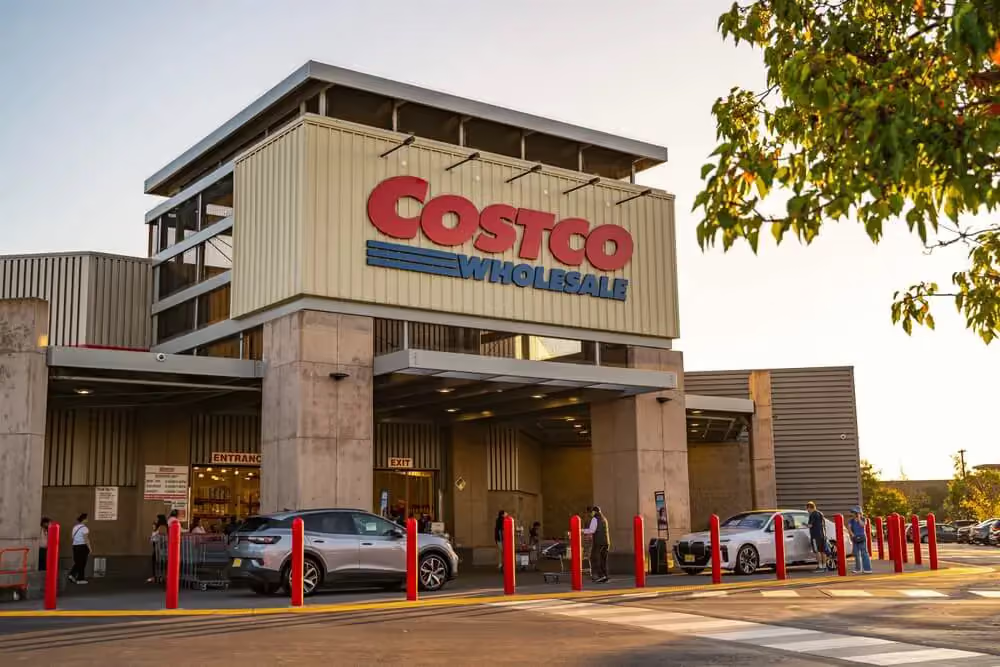
Large-format and drive-thru focused brands like Costco, Cava, and Dutch Bros. entered the pandemic era from a position of strength as they are traditionally situated in suburban and exurban areas. As consumers spent more time close to home and away from urban centers, these chains captured heightened local demand and saw visits rebound rapidly once in-person shopping resumed.

And as the pandemic reshaped consumer traffic patterns, brands like Shake Shack and Chipotle quickly recognized emerging opportunities in suburban markets and adjusted their strategies to capture this shifting demand. For Shake Shack – a brand once defined by its urban storefronts – the shift toward suburban drive-thrus and stand-alone locations represented a significant pivot. Chipotle followed a similar path, accelerating its suburban expansion through the rollout of “Chipotlane” drive-thru lanes. 

Arriving somewhat later to the suburban landscape, sweetgreen, once synonymous with its urban footprint, opened its first drive-thru in 2022, and by 2024 had made suburban markets a core pillar of its growth strategy

These real estate moves positioned all three brands to capture demand from remote and hybrid workers, helping sustain visit growth well above pre-pandemic baselines. 

As suburban demand continues to grow, the suburbs will likely remain a critical growth frontier for many brands in the year ahead.

Strategy That Drives Traffic From Key Demographics

Investment in suburban markets underscores how changing market conditions and strategy adaptation can allow brands to meet consumers where they are. And a parallel trend is unfolding in college towns and youth-dense trade areas, where brands are channeling investment to capture rising Gen Z spending power. 

Expansion in college-anchored markets, paired with celebrity and influencer-driven pop-ups, is helping retailers build cultural relevance and increase engagement with this emerging consumer base.

College Town Expansions Attract Gen Z Audiences

The graph below underscores how targeted expansion into college-anchored markets can meaningfully shift audience composition. Over the last several years, many brands have expanded their near-campus footprints – and in turn, attracted a higher share of the Spatial.ai:PersonaLive “Young Urban Singles” segment, one highly aligned with Gen Z consumers.

CAVA’s rapid unit growth, including openings near major universities and in college towns, helped the brand increase its share of “Young Urban Singles” within its captured trade areas between October 2018-September 2019 and October 2024-September 2025. Meanwhile, Panda Express and Raising Cane's, which already had relatively large shares of the segment six years ago, have also invested in college-adjacent locations, lifting their “Young Urban Singles” audience share.

Even legacy mass retailer Target benefited from small-format and large store expansions near universities – growing its captured market share of “Young Urban Singles”.

These shifts suggest that college towns will continue to be strategic growth markets, including for luxury brands like Hermès. By making inroads in college towns and with Gen Z shoppers, brands can strengthen loyalty early and build durable market share that remains as these young adults move on from campus life.

Influencer and Celebrity Pop-Ups Increase Gen Z Engagement

As Gen Z’s influence expands beyond campus borders, retail engagement is increasingly driven by cultural moments that resonate with this cohort. And malls are finding that temporary pop-ups including influencer collaborations and celebrity-led activations can attract these young consumers.

At The Grove, the Pandora pop-up with brand ambassador girl-group Katseye in October 2024 led to a modest but significant increase in the Gen Z-dominant  “Young Professionals” and “Young Urban Singles” segments within the mall’s captured trade area during the first week of the activation – compared to the average for the last twelve months. 

Similarly, at Westfield Century City, the Taylor Swift x TikTok activation from October 3rd-9th, 2025 – which allowed fans to immerse themselves in the sets from the viral “The Fate of Ophelia” music video boosted the shares of “Young Urban Singles”  and Young Professionals”, underscoring the star power of everything Taylor Swift.

And at American Dream, the pattern extended beyond younger audiences. On September 5th and 6th, 2025, Ninja Kidz attended the grand opening of their Action Park while Salish Matters made an appearance at the mall on September 6th for her skincare pop-up – which drew such large crowds that it had to be shut down. During these two event days, the mall’s shares of both “Young Professionals” and “Ultra-Wealthy Families” increased substantially, highlighting that pop-up events can draw young and affluent family audiences.

Together, these examples reinforce that, in 2026, the integration of short-term pop-ups will continue to be a strategy for malls and individual brands to gain relevance for key demographic segments.

What Lies Ahead

2025 reinforced that retail remains as dynamic as ever. Value continues to anchor decisions, but consumers are redefining what value means – blending price sensitivity with expectations for authenticity. And in the current retail landscape, online and physical retail are growing more interconnected as consumers demand convenience and experience.

In 2026, adaptability will be retailers’ greatest competitive edge. The next era of retail will belong to brands that can continue to refine their operating strategy – while staying true to a clear brand identity. 

INSIDER
Report
Winning Holiday Shoppers in 2025: Key Insights for Advertisers and Retailers
Dive into the data to uncover the retail categories, audiences, and timing strategies poised to deliver high-impact campaigns this holiday season. 
October 30, 2025

Key Takeaways

1) Retail foot traffic faces lingering pressure – making promotions more critical than ever. Financial uncertainty, tariffs, and inflation continue to weigh on discretionary spending, making well-timed, targeted holiday promotions essential to reignite demand and drive in-store traffic.

2) The retail divide appears set to widen this holiday season Luxury and off-price apparel are both outpacing overall retail, reflecting a deepening bifurcation of consumer behavior. And this December, the affluence gap between the two categories is expected to expand further, underscoring opportunities to engage both premium and value-focused shoppers across segments.

3) Despite slower overall performance, beauty and electronics have performed well during recent retail milestones. To make the most of this momentum, advertisers should align campaigns with shifting holiday audiences – electronics toward married homeowners and beauty toward affluent suburban families.

4) Early Promotions Could Lift In-Store Traffic Last year, early holiday campaigns helped offset a shorter shopping season and sustain strong results. With another condensed window and continued shipping disruptions, retailers who start early and emphasize in-store availability will be best positioned to capture additional visits and outperform 2024’s results.

A Complex Season Ahead

The holiday season is fast approaching, but this year’s backdrop looks especially complex. Consumers are navigating heightened financial uncertainty, with tariffs driving up prices and disrupting supply, while inflation continues to weigh on discretionary spending. 

For retailers and advertisers, the stakes are high. The holiday period remains a critical window for promotional engagement, and success will depend on understanding consumer behavior and crafting promotions that are timed, targeted, and designed to meet shoppers where they are.

We turned to foot traffic data to uncover the key trends shaping this season’s retail environment, and to identify promotional strategies likely to succeed.

Promotions Matter More Than Ever

Consumer activity appeared strong in most of early 2025 – except in February, when extreme weather and leap-year comparisons drove sharp year-over-year (YoY) declines. But foot traffic slowed this summer, highlighting the toll of lingering financial uncertainty and strain. 

For advertisers, this underscores how pivotal seasonal promotions will be in reigniting demand. With many consumers cutting back on discretionary spending, well-timed and well-targeted campaigns will be essential to encourage shoppers to spend more freely during the holidays. These promotions don’t have to rely solely on price cuts — pop-culture collaborations and other creative product launches have also proven highly effective in driving traffic this year.

Bottom Line:

> Financial uncertainty and tighter household budgets are weighing on retail foot traffic this year – making effective holiday promotions more critical than ever.

Understanding the Retail Divide

Still, not all retail categories have been equally affected by broader economic headwinds. Some segments have experienced softer demand, signaling where advertisers may need to take a more measured, efficiency-focused approach. Others, however, have shown notable resilience – offering opportunities to double down on creative promotions that deepen engagement during the holidays.

One such segment is home furnishings, which has seen YoY traffic gains over the past 12 months, driven by the strong performance of discount chains as shoppers favor accessible décor updates over large-scale renovations. Strategic campaigns highlighting affordable refreshes and quick “holiday-ready” makeovers could give the category an additional lift in Q4, as households look to update their spaces in preparation for hosting family and friends.

But the biggest gains have been in the apparel category, where a bifurcation trend has emerged, boosting visits at both luxury and off-price retailers. The success of both segments underscores promotional strategies that can amplify momentum – steep-value discounts on one end of the spectrum, and exclusivity and quality on the other. Advertisers across retail segments can adapt this dual approach to engage both budget-driven and premium audiences effectively.

Deepening Bifurcation During the Holiday Period

And demographic data reveals just how deeply entrenched this bifurcation has become – especially during the holiday season.

The chart below examines monthly changes in the median household incomes (HHIs) of luxury and off-price retailers’ captured markets since January 2023. Even small shifts in HHI across major retail categories can signal meaningful changes in audience composition – and these patterns tell a clear story.

In luxury apparel, where the median HHI is well above the national average of $79.6K, visitor income follows a distinct seasonal rhythm. During the early holiday shopping period, HHI remains lower in October and dips slightly in November as middle-income shoppers take advantage of early promotions to snag products that may be out of reach the rest of the year. It then rises in December as affluent consumers return to purchase gifts. Notably, luxury HHI has trended upward since 2023 – with each holiday peak higher than the last – suggesting that this December’s visitor base will be even more affluent than last year.

For advertisers, this means late-season campaigns should prioritize prestige audiences while still engaging aspirational shoppers during early holiday promotions like Black Friday.

In the off-price apparel segment, on the other hand, median HHI typically declines during the holidays – especially in December – indicating an influx of more price-sensitive shoppers. And over time, this visitor base has become even more value-driven, reinforcing the importance of promotional messaging that emphasizes unbeatable deals and savings.

Together, these patterns once again highlight the growing need for tailored strategies: premium experiences for high earners and sharp value propositions for cost-conscious consumers – a lesson that may extend well beyond these categories.

Bottom Line: 

>The retail divide is expected to deepen further in December 2025, with off-price retailers drawing more value-driven shoppers and luxury brands attracting increasingly affluent consumers.

The Opportunity in Beauty and Electronics 

In a challenging economic environment, one might expect promotions around key retail milestones to prompt consumers to deviate from their usual habits, experimenting with new brands or categories. Yet the data shows that, for the most part, shoppers instead deepened their engagement with the retailers they already patronize – utilizing holiday promotions to buy the same products at better prices. 

The graph below shows that during recent shopping milestones, the off-price and luxury categories both stood out in YoY performance – reflecting the strong momentum sustained by both segments over the past twelve months. 

Beauty and Electronics Set to Shine

Still, the graph above also highlights two additional segments potentially poised for holiday success: beauty & self care and electronics. 

Despite slower traffic over the past year, beauty retailers saw notable spikes around key recent promotional moments – including Black Friday, Mother’s Day, and Memorial Day. And although electronics retailers continued to face headwinds as consumers delayed big-ticket purchases – including during last year’s Black Friday – more recent milestones have seen traffic stabilize or even increase YoY. 

This indicates that the right promotional environment can still effectively drive engagement in these discretionary categories, and that deal-driven behavior is likely to remain a defining theme this holiday season. In addition, as the replacement cycle begins for major electronics first purchased during the pandemic, shoppers may be especially willing to upgrade to a new TV or laptop if the right offer comes along.

Finding Their Audiences in the Holiday Season

But to make the most of the opportunity presented by Q4, advertisers and retailers in the beauty and electronics spaces should pay close attention to the shifting demographics of their in-store audiences during the holiday season. 

For electronics retailers, married couples and homeowners become increasingly important during the peak holiday shopping period. Their share in the category’s captured market rises consistently each December, indicating that campaigns emphasizing household upgrades, family entertainment, and quality-of-life improvements may resonate most effectively in late Q4.

In contrast, beauty retailers – typically buoyed by young professionals – see their audience composition shift towards suburbia during the holidays. In December, the share of wealthy suburban families in beauty retailers’ captured markets grows meaningfully, while the share of young professionals declines. Advertisers can capitalize by highlighting premium bundles, limited-edition sets, and gifting options that speak directly to these households’ desire for premium, family-oriented products. 

Bottom Line:

> Off-price and luxury retailers maintained strong performance during major retail milestones, but beauty and electronics stand out as rising opportunities for the 2025 holiday season.

> As holiday demographics shift during the holiday season – with electronics drawing more married homeowners and beauty attracting wealthier suburban families – campaigns that reflect these audiences’ lifestyles and priorities will resonate most.

Early Holiday Push Could Lift In-Store Traffic

Timing is also a decisive factor in retailer and advertiser success during the holiday season. 

Traditionally, the “core” holiday retail period begins with Black Friday and continues until Christmas Eve. But in 2024, there was one fewer week between these two milestones compared to the previous year. And to compensate, many retailers launched an “early” holiday season, rolling out promotions in October and early November to maximize consumer engagement. 

As the graph below shows, the shorter “core” season of 2024 unsurprisingly drew less in-store traffic across retail categories than the longer period the year before. Yet by embracing early promotions, retailers offset much of this shortfall, leading to overall holiday season results that, in many cases, matched or even exceeded 2023’s performance.

Looking ahead, 2025 once again brings a compressed “core” shopping window. And with shipping disruptions still influenced by shifting tariff regulations, more consumers may turn to brick-and-mortar stores earlier in the season to ensure timely purchases – further supporting offline traffic.

If retailers and advertisers double down on early-season engagement while continuing to drive momentum through the “core” weeks, YoY traffic for the 2025 holiday season could deliver even bigger overall gains than those seen in 2024.

Bottom Line: 

> Last year, early holiday promotions helped offset a shorter core holiday season. 

> In 2025, retail and advertising professionals are again faced with a relatively short core shopping season. And aware of the condensed timeline and shipping disruptions, more shoppers may opt for early in-store purchases to avoid the risk of delayed deliveries.

Balancing Value, Aspiration, and Timing

This holiday season will reward advertisers and retailers who recognize the growing retail divide and tailor their messaging to the shoppers most likely to visit during the holidays – whether married homeowners on the hunt for electronics or affluent suburban families seeking beauty products. As in 2024, acting early to offset a shorter core shopping period will be essential to capturing demand. And those who combine sharp timing with audience insight will be best positioned to turn a complex season into a strong finish.

INSIDER
Report
What is Driving Discretionary Spending in 2025?
See which discretionary retail categories are gaining momentum by delivering value, accessible upgrades, and immersive experiences.
October 2, 2025

Key Takeaways: 

1) Value Wins in 2025: Discount & Dollar Stores and Off-Price Apparel are outperforming as consumers prioritize value and the “treasure-hunt” experience.
2) Small Splurges Over Big Projects: Clothing and Home Furnishing traffic remains strong as shoppers favor accessible wardrobe updates and decor refreshes instead of major renovations.
3) Big-Ticket Weakness: Electronics and Home Improvement visits continue to lag, reflecting a continued deferment of larger purchases.
4) Bifurcation in Apparel: Visits to off-price and luxury segments are growing, while general apparel, athleisure, and department stores face ongoing pressures from consumer trade-downs.
5) Income Dynamics Shape Apparel: Higher-income shoppers sustain luxury and athleisure, while off-price is driving traffic from more lower-income consumers.
6) Beauty Normalizes but Stays Relevant: After a pandemic-driven surge, YoY declines likely indicate that beauty visits are stabilizing; shorter trips are giving way to longer visits as retailers deploy new tech and immersive experiences.

An Overview of Discretionary Retail Traffic 

Economic headwinds, including tariffs and higher everyday costs, are limiting discretionary budgets and prompting consumers to make more selective choices about where they spend. But despite these pressures, foot traffic to several discretionary retail categories continues to thrive year-over-year (YoY).

Fitness and Apparel Lead

Of the discretionary categories analyzed, fitness and apparel had the strongest year-over-year traffic trends – likely thanks to consumers finding perceived value in these segments. 

Fitness and apparel (boosted by off-price) appeal to value-driven, experience seeking consumers – fitness thanks to its membership model of unlimited visits for an often low fee, and off-price with its discount prices and treasure-hunt dynamic. Both categories may also be riding a cultural wave tied to the growing use of GLP-1s, as more consumers pursue fitness goals and refresh their wardrobes to match changing lifestyles and sizes.

Electronics and Home Improvement Lag While Home Furnishing Pulls Ahead

Big-ticket categories, including electronics, also faced significant challenges, as tighter consumer budgets hamper growth in the space. Traffic to home improvement retailers also generally declined, as lagging home sales and consumers putting off costly renovations likely contributed to the softness in the space.

But home furnishing visits pulled ahead in July and August 2025 – benefitting from strong performances at discount chains such as HomeGoods – suggesting that consumers are directing their home-oriented spending towards more accessible decor. 

Beauty Faces Challenges 

The beauty sector – typically a resilient "affordable luxury" category – also experienced declines in recent months. The slowdown can be partially attributed to stabilization following several years of intense growth, but it may also mean that consumers are simplifying their beauty routines or shifting their beauty buying online.

Bottom Line: 

> Traffic to fitness and apparel chains – led by off-price – continued to grow YoY in 2025, as value and experiences continue to draw consumers.

> Consumers are shopping for accessible home decor upgrades to refresh their space rather than undertaking major renovations.

> Shoppers are holding off on big-ticket purchases, leading to YoY declines in the electronics and home improvement categories.

> Beauty has experienced softening traffic trends as the sector stabilizes following its recent years of hypergrowth as shoppers simplify routines and shift some of their spending online.

The Home Furnishings Category Makes A Turnaround

Suburban And Small Town Visits Drive Gains

After two years of visit declines, the Home Furnishings category rebounded in 2025, with visits up 4.9% YoY between January and August. By contrast, Home Improvement continued its multi-year downward trend, though the pace of decline appears to have slowed.

So what’s fueling Home Furnishings’ resurgence while Home Improvement visits remain soft? Probably a combination of factors, including a more affluent shopper base and a product mix that includes a variety of lower-ticket items.

Home Furnishing's More Affluent Audience

On the audience side, this category draws a much larger share of visits from suburban and urban areas, with a median household income well above that of home improvement shoppers. The differences are especially pronounced when analyzing the audience in their captured markets – indicating that the gap stems not just from store locations, but from meaningful differences in the types of consumers each category attracts. 

Home improvement's larger share of rural visits is not accidental – home improvement leaders have been intentionally expanding into smaller markets for a while. But while betting on rural markets is likely to pay off down the line, home improvement may continue to face headwinds in the near future as its rural shopper base grapples with fewer discretionary dollars.

Home Improvement Impacted by Slowdown in Big-Ticket Items

On the merchandise side, home improvement chains cater to larger renovations and higher-cost projects – and have likely been impacted by the slowdown in larger-ticket purchases which is also impacting the electronics space.  Meanwhile, home furnishing chains carry a large assortment of lower-ticket items, including home decor, accessories, and tableware.

Consumers are still spending more time at home now than they were pre-COVID, and investing in comfortable living spaces is more important than ever. And although many high-income consumers are also tightening their belts, upgrading tableware or even a piece of furniture is still much cheaper than undertaking a renovation – which could explain the differences in traffic trends.  

Consumer Preferences Drive Changes in Apparel

Different Context For Traffic Trends by Segment

Traditional apparel, mid-tier department stores, and activewear chains all experienced similar levels of YoY traffic declines in 2025 YTD, as shown in the graph above. But analyzing traffic data from 2021 shows that each segment's dip is part of a trajectory unique to that segment. 

Traffic to mid-tier department stores has been trending downward since 2021, a shift tied not only to macroeconomic headwinds but also to structural changes in the sector. The pandemic accelerated e-commerce adoption, hitting department stores particularly hard as consumers seeking one-stop shopping and broad assortments increasingly turned to the convenience of online channels. 

Traffic to traditional apparel chains has also not fully recovered from the pandemic, but the segment did consistently outperform mid-tier department stores and luxury retailers between 2021 and 2024. But in H1 2025, the dynamic with luxury shifted, so that traffic trends at luxury apparel retailers are now stronger than at traditional apparel both YoY and compared to Q1 2019. This highlights the current bifurcation of consumer spending also in the apparel space, as luxury and off-price segments outperform mid-market chains.  

In contrast, the activewear & athleisure category continues to outperform its pre-pandemic baseline, despite experiencing a slight YoY softening in 2025 as consumers tighten their budgets. The category has capitalized on post-lockdown lifestyle shifts, and comfort-driven wardrobes that blur the line between work, fitness, and leisure remain entrenched consumer staples several years on.

Evidence of the Resilient High-Income Consumer and a Trade-Down to Value Segments in the HHI Data

The two segments with the highest YoY growth – off-price and luxury – are at the two ends of the spectrum in terms of household income levels, highlighting the bifurcation that has characterized much of the retail space in 2025. And luxury and off-price are also benefiting from larger consumer trends that are boosting performance at both premium and value-focused retailers. 

In-store traffic behavior reveals that these two segments enjoy the longest average dwell times in the apparel category, with an average visit to a luxury or off-price retailer lasting 39.2 and 41.3 minutes, respectively. This suggests that consumers are drawn to the experiential aspect of both segments – treasure hunting at off-price chains or indulging in a sense of prestige at a luxury retailer. Together, these patterns highlight that – despite appealing to different consumer groups – both ends of the market are thriving by offering shopping experiences that foster longer engagement.  

Bottom Line: 

> Off-price and luxury segments are outperforming, while general apparel, athleisure, and department store visits lag YoY under tariff pressures and consumer trade-downs.

> Looking over the longer term reveals that athleisure is still far ahead of its pre-pandemic baseline – even if YoY demand has softened.

> Luxury and off-price both are thriving by offering shopping experiences that foster longer engagement.

Is Beauty Still A Resilient Discretionary Category? 

Beauty Retail’s Transformation Since the Pre-Pandemic Era

The beauty sector has long benefitted from the “lipstick effect” — the tendency for consumers to indulge in small luxuries even when discretionary spending is constrained. And while the beauty category’s softening in today’s cautious spending environment could suggest that this effect has weakened, a longer view of the data tells a more nuanced story. 

Beauty visits grew significantly between 2021 and 2024, fueled by a confluence of factors including post-pandemic “revenge shopping,” demand for bolder looks as consumers returned to social life, and new store openings and retail partnerships. Against that backdrop, recent YoY traffic dips are likely a sign of stabilization rather than true declines. Social commerce, and minimalist skincare routines may be moderating in-store traffic, but shoppers are still engaged, even as they blend online and offline shopping or seek out lower-cost alternatives to maximize value. 

The Evolving Role of Physical Retail in the Beauty Space

Analysis of average visit duration for three leading beauty chains – Ulta Beauty, Bath & Body Works, and Sally Beauty Supply – highlights the shifting role but continued relevance of physical stores in the space. 

Average visit duration decreased post-pandemic – likely due to more purposeful trips and increased online product discovery. But that trend began to reverse in H1 2025, signaling the changing role of physical stores. Enhanced tech for in-store product exploration and rich experiences may be helping drive deeper engagement, underscoring beauty retail’s staying power even in a more measured spending environment. 

Bottom Line: 

> Beauty’s slight YoY visit declines point to a period of normalization following a post-pandemic boom, while longer-term trends show the category remains stronger than pre-pandemic levels.

> Visits grew shorter post-pandemic, driven by more purposeful trips and increased online product discovery – but dwell time is now lengthening again, signaling renewed in-store engagement driven by tech-enabled discovery and immersive experiences.

Selective Spending Shapes Discretionary Retail in 2025

Foot traffic data highlight major differences in the recent performance of various discretionary apparel categories. Off-price, fitness, and home furnishings are pulling ahead, well-positioned to keep capitalizing on shifting priorities. Luxury also remains resilient, likely thanks to its higher-income visitor base. 

At the same time, beauty’s normalization and the slowdown in mid-tier apparel, electronics, and home improvement show that caution persists across discretionary budgets. Moving forward, retailers that align with consumers’ demand for value, accessible upgrades, and immersive experiences may be best placed to thrive in this era of selective spending.

Loading results...
We couldn't find anything matching your search.
Browse one of our topic pages to help find what you're looking for.
For more in-depth analyses on a variety of subjects, explore Reports.
The Anchor Logo
INSIDER
Stay Anchored: Subscribe to Insider & Unlock more Foot Traffic Insights
Gain insider insights with our in-depth analytics crafted by industry experts
— giving you the knowledge and edge to stay ahead.
Subscribe