.png)
.png)

.png)
.png)


With prices still elevated and consumer sentiment down significantly from last year, appetite for savings is stronger than ever. But as shoppers pull back on non-essentials, how are discretionary-oriented value chains like Five Below and Ollie’s Bargain Outlet holding up?
In its most recent reported quarter (ending November 1, 2025), Ollie’s delivered a 3.3% increase in same-store sales, driven by a mid-single-digit rise in transactions even as average ticket declined slightly. Five Below posted even stronger comp growth (+14.3%), fueled by both higher transaction counts and larger baskets.
And both chains saw solid year-over-year (YoY) overall traffic growth during the final months of 2025 – including the all-important holiday season – and into 2026. This performance suggests that even in a cautious consumer environment, demand for discretionary value remains resilient.
Customer loyalty is also increasing at both chains. For Ollie’s, which enjoys a slightly higher share of repeat visits, loyalty – fueled by its constantly shifting inventory of closeout merchandise – is further reinforced by the growing Ollie’s Army rewards program.
For Five Below, the gains appear to reflect the strength of its value positioning and evolving mix of affordable, fun indulgences – from seasonal décor to trendy toys – that create a steady cadence of newness and encourage frequent visits, even without a formal loyalty program.
And as both chains continue to grow, sustaining this repeat engagement will be critical to supporting comps and maximizing productivity across an expanding store base.
With traffic growth supported by a growing base of loyal customers, the discount segment appears well-positioned to maintain its edge into 2026. But how much runway remains before expansion begins to dilute store productivity?
Follow Placer.ai/anchor to find out.
Placer.ai leverages a panel of tens of millions of devices and utilizes machine learning to make estimations for visits to locations across the US. The data is trusted by thousands of industry leaders who leverage Placer.ai for insights into foot traffic, demographic breakdowns, retail sale predictions, migration trends, site selection, and more.

Dollar General and Dollar Tree have both been thriving, delivering positive same-store comps for several quarters in a row even as they continue expanding their footprints. But how long can both keep winning? As the two chains grow, will the overlap between them begin to pressure performance?
Despite intensifying competition from mass merchants like Walmart, the data suggests that Dollar General and Dollar Tree still have meaningful runway for growth. Both retailers are expanding their footprints while maintaining traffic at existing stores – a sign of robust demand.
Dollar General, now a staple grocery destination for many households, posted mid- to high-single-digit same-store traffic gains between September 2025 and January 2026, even as it deepened its expansion into rural America. Meanwhile, Dollar Tree, which added more than 300 stores over the past year, maintained flat to modestly positive same-store traffic trends.
As price-conscious consumers prioritize value, overall demand for dollar stores appears to be expanding rather than simply shifting between banners.
Visitor behavior at the two chains helps explain why there is room for both to continue expanding. In addition to serving different geographies – Dollar General maintains a stronger presence in rural communities and in the eastern United States, while Dollar Tree has greater penetration in the West – the banners also fulfill different shopping missions.
As the chart below shows, 25.0% of Dollar General visitors in 2025 were frequent shoppers, defined as four or more visits in an average month, compared to just 9.2% at Dollar Tree. Average dwell time also diverged, with shoppers spending 20.0 minutes per visit at Dollar General versus 13.6 minutes at Dollar Tree.
Those patterns suggest that Dollar General functions as a routine essentials stop embedded in weekly shopping habits – a consumables-driven positioning that appears to be strengthening as the company expands large-format stores and invests further in fresh food offerings.
Dollar Tree, by contrast, plays a more targeted role, capturing shorter, mission-driven trips often tied to seasonal goods, party supplies, or discretionary bargains. And as it leans further into higher-ticket discretionary items through its multi-price 3.0 format – while also expanding its consumables assortment – the chain is reinforcing its treasure-hunt appeal while gradually becoming more relevant for routine trips.
All in all, the data points to a category that is expanding rather than consolidating. Consistent same-store visit growth, ongoing store expansion, and differentiated shopping behavior all suggest that Dollar General and Dollar Tree are thriving side by side – serving distinct missions within a shared value-driven ecosystem.
For more data-driven retail insights, follow Placer.ai/anchor.
Placer.ai leverages a panel of tens of millions of devices and utilizes machine learning to make estimations for visits to locations across the US. The data is trusted by thousands of industry leaders who leverage Placer.ai for insights into foot traffic, demographic breakdowns, retail sale predictions, migration trends, site selection, and more.
.avif)
Beauty retail continues to navigate a complex landscape in which discretionary spending remains constrained and digital and social commerce play an increasingly significant role. But diving into the foot traffic trends for Ulta Beauty and Bath & Body Works – two of the sector’s largest players – reveals how the right strategy can drive both brick-and-mortar and online growth in a dynamic retail environment.
Ulta delivered fiscal Q3 results that exceeded expectations. Management credited the success of Ulta Beauty Unleashed, including investments in digital capabilities, celebrity activations, and brand launches that strengthened both e-commerce and in-store performance. One of the key milestones for the company during the quarter included the launch of the Ulta Beauty Marketplace, which expands the assortment of products available to Ulta’s online shoppers.
And while year-over-year (YoY) visits and visits per venue were essentially flat in December 2025, foot traffic trends in recent months suggest the company could be on track for another positive quarter.
In its most recent earnings call, Bath & Body Works reported sales declines, pointing to macroeconomic pressure on consumers and an elevated promotional environment. In response, management outlined a “consumer-first formula” centered on product innovation, an elevated in-store experience, renewed cultural relevance, and enhanced digital discovery – including the launch of an Amazon storefront.
Yet Bath & Body Works’ YoY monthly visits remained positive throughout 2025 and into early 2026, indicating that the brand has maintained relevance even as consumers grew more value conscious. If Bath & Body Works can execute on its updated strategic direction, it may be positioned to build on its existing traffic momentum and improve overall performance in the months ahead.
Younger audience engagement emerged as a theme in both companies’ strategic discussions, whether by way of Ulta’s campus activations or Bath & Body Works’ network of influencers.
An AI-powered analysis of each brand’s potential versus captured markets – comparing the trade areas from which they could draw visitors with the households that ultimately account for in-store traffic – offers additional context to the companies’ investment in this key demographic.
In 2025, both retailers attracted an outsized share of family-oriented segments. Wealthy Suburban Families, Upper Suburban Diverse Families, and Near-Urban Diverse Families were overrepresented in captured markets relative to potential markets for both brands. Meanwhile, shares of Young Urban Singles, Young Professionals, and Educated Urbanites (well-educated, younger consumers) were smaller in both brands’ captured markets than in their potential markets.
The gap between captured and potential audiences points to a meaningful opportunity that Ulta and Bath & Body Works seem to understand. While both retailers resonate with established, family households, incremental growth may hinge on driving more traffic from younger consumers.
Ulta and Bath & Body Works’ traffic patterns suggest that beauty demand remains resilient, even as consumer spending patterns evolve. And both brands are positioning for their next phase of growth through multi-pronged strategies that address deepening engagement from younger audiences.
Will these beauty retailers build on their successes in the coming months? Visit Placer.ai/anchor to find out.
Placer.ai leverages a panel of tens of millions of devices and utilizes machine learning to make estimations for visits to locations across the US. The data is trusted by thousands of industry leaders who leverage Placer.ai for insights into foot traffic, demographic breakdowns, retail sale predictions, migration trends, site selection, and more.

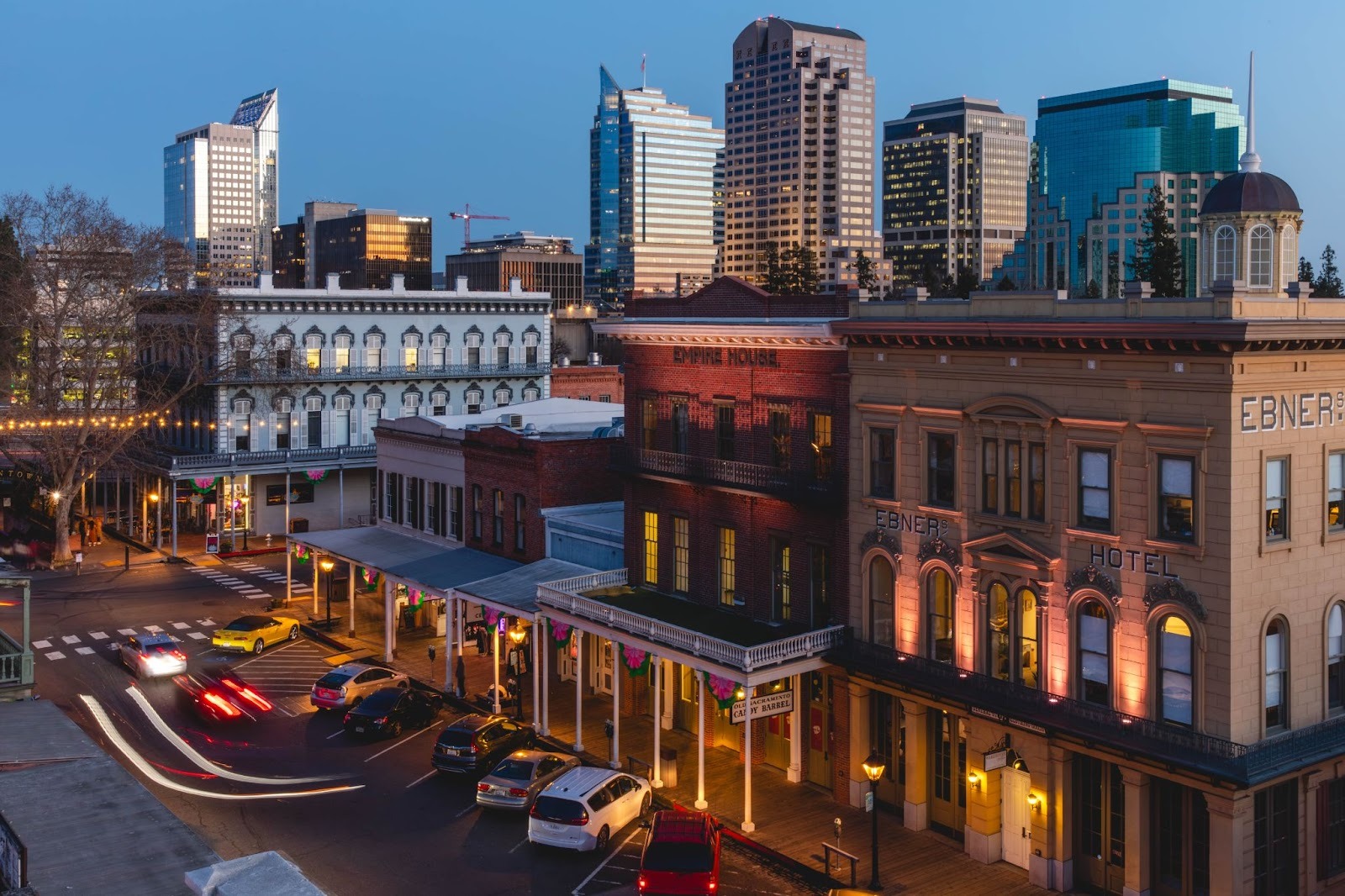
For downtowns still waiting on office attendance or international tourism to fully rebound, Sacramento offers a more proactive recovery model. Rather than anchoring its future to any single demand driver, the city has spent the past several years deliberately engineering demand – using programming, placemaking, and policy to create the kinds of “social collisions” that give people reasons to show up, stay longer, and come back.

Like many cities, Sacramento has navigated prolonged disruptions to traditional downtown demand streams, from office attendance to international tourism and business travel. But instead of waiting for those patterns to fully normalize, city leaders have leaned into what they could control – regional identity and local draw.
Elevating the city’s creative and cultural assets while strengthening its positioning as the “Farm-to-Fork Capital of America” through major festivals like Terra Madre Americas, has helped Sacramento stabilize leisure visitation even amid broader uncertainty. Food-forward events, large-scale music festivals, and major league sports – including NBA Kings games and MLB Athletics games based in West Sacramento through 2027 – have created reasons to visit that do not depend on office mandates or long-haul travel.
And the impact of this strategy is showing up in visitor behavior. Weekend out-of-market visits to downtown Sacramento are on the rise, and visitors are staying longer – signaling sustained engagement with the urban core.
At the center of Sacramento’s strategy is a belief that programming functions as economic infrastructure. Over the past decade, the downtown has expanded from hosting a relatively limited number of annual events to more than 200 today, ranging from major festivals to weekly farmers markets.

These events translate directly into foot traffic and revenue for retail, dining, and entertainment. The chart below shows how local programming draws visitors into DOCO, the Downtown Commons entertainment and retail district adjacent to Golden 1 Center, with audience composition varying by event. Family-oriented programming such as the Sacramento Santa Parade attracts more affluent family households, while events like the California Brewers Festival draw a higher share of younger singles and early-career professionals.
Event days are also associated with longer dwell times within the district, suggesting deeper engagement with the surrounding retail environment.
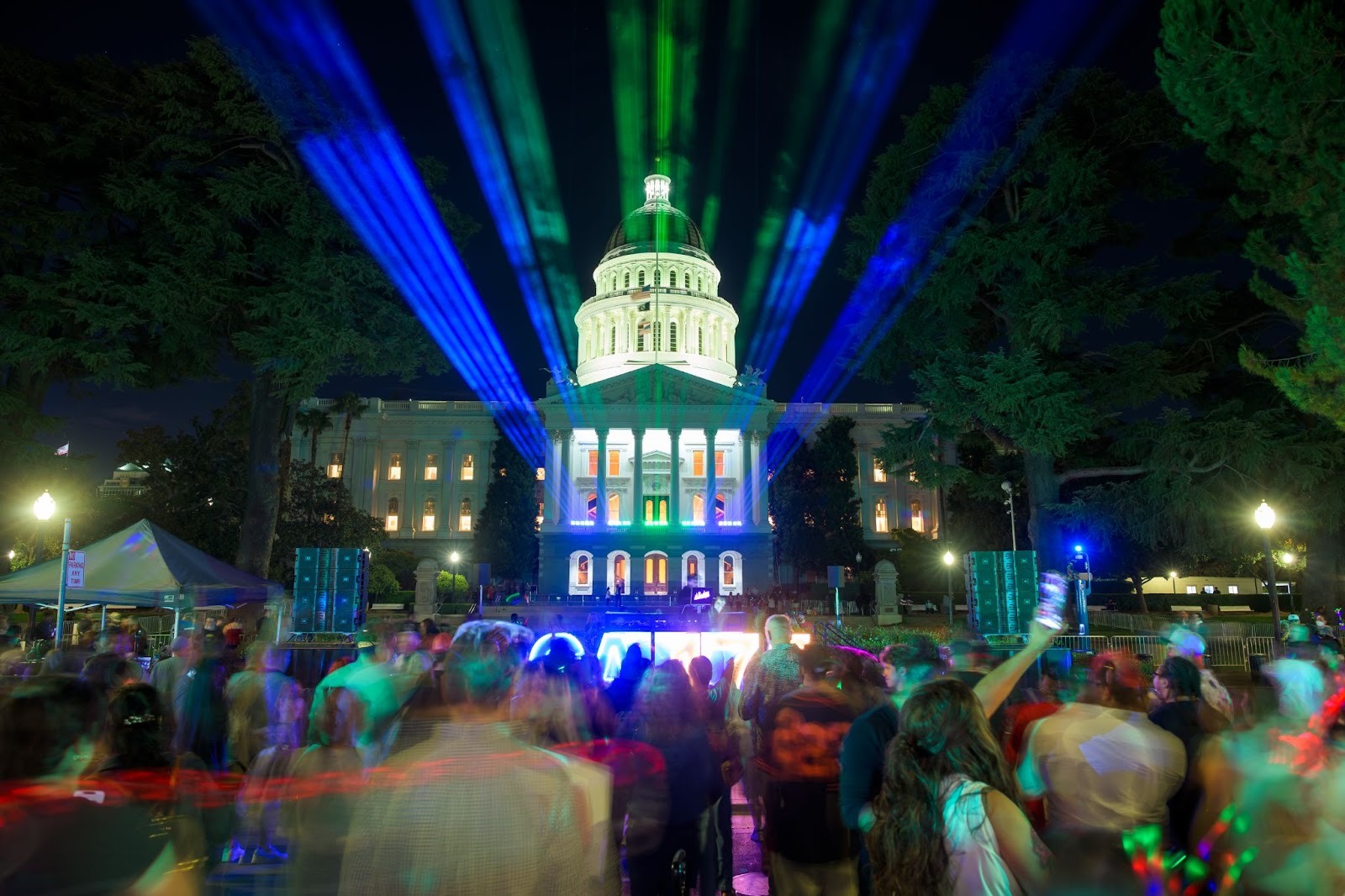
The city has also taken other steps to generate “social collisions”. Working with the city’s nighttime economy manager, Sacramento introduced a limited entertainment permit that removes one-size-fits-all regulatory barriers and allows brick-and-mortar businesses to host local performances at a far lower cost. And these policy changes were reinforced with targeted investments – like a six-block illuminated pedestrian corridor connecting key downtown anchors, which shifts colors for Sacramento Kings games or seasonal moments.

Sacramento’s downtown recovery offers a clear lesson for cities navigating long-term structural change: Waiting for old patterns to return is far riskier than designing new ones. By leaning into culture and programming, Sacramento is strengthening the downtown economy while delivering value to local residents and the broader region.
.avif)
The Kroger Company closed Q4 2025 with an average 2.3% year-over-year (YoY) overall traffic growth and a 2.8% YoY increase in visits per venue across its 20+ banners, highlighting the ongoing resilience of the grocery category going into 2026. For the full year (2025), the company's overall traffic as well as average visits per venue increased 1.0% YoY.
But even as traffic increased, average dwell time across the company's banners decreased YoY – suggesting that consumers may be visiting Kroger stores more frequently but filling smaller baskets during each trip.
Traffic trends to Kroger's largest banners mirrored the company-wide performance with more visits but a shorter average dwell time compared to the previous year.
These patterns reflect larger trends seen across the grocery space, where traffic growth has been largely driven by an increase in shorter trips as shoppers split their lists across retailers and make more targeted visits based on price, promotion, or specific product needs. In this more fragmented and mission-driven environment, Kroger’s scale, private-label penetration, and data-driven promotional engine provide a competitive advantage. Still, in a market defined by shorter, targeted visits, sustainable growth will depend on Kroger’s ability to defend “share of list” while leveraging its operational efficiency and loyalty ecosystem to convert traffic gains into profitable sales.
For more data-driven retail insights, visit placer.ai/anchor.
Placer.ai leverages a panel of tens of millions of devices and utilizes machine learning to make estimations for visits to locations across the US. The data is trusted by thousands of industry leaders who leverage Placer.ai for insights into foot traffic, demographic breakdowns, retail sale predictions, migration trends, site selection, and more.

The athletic apparel and sporting goods landscape has faced various headwinds throughout 2025 – from shifting consumer spending patterns to challenging macroeconomic conditions. Against this backdrop, an AI-powered analysis of Dick’s Sporting Goods, Academy Sports + Outdoors, and lululemon highlights where each brand may find momentum in 2026.
DICK’s delivered a solid fiscal Q3, and the most recent year-over-year (YoY) foot traffic data indicates that stability carried into the following months. The company continues to work through the integration of Foot Locker – streamlining inventory and refining operations – while simultaneously expanding its House of Sport and Field House concepts. Investment in these experiential formats underscores a strategic commitment to immersive retail and broader merchandise diversification to drive long-term growth.
Academy Sports + Outdoors delivered positive top-line growth and profitability in fiscal Q3, despite a modest decline in comparable sales. And while management noted record Black Friday performance, cooling same-store traffic persisted from November 2025 through January 2026.
Yet focusing solely on offline traffic may overlook several of Academy’s omnichannel growth drivers. The brand emphasized the connection between digital customer acquisition and continued store expansion, since a growing store footprint expands BOPIS fulfillment capacity. In this context, softer visit trends may reflect channel mix shifts, positioning the company for long-term growth.
Lululemon’s fiscal Q3 results reflected a bifurcated performance, with U.S. revenue declining modestly while international growth surged. At the time, management emphasized product innovation and global expansion as strategic priorities in 2026, reinforcing the brand’s long-term growth roadmap; so while recent YoY foot traffic trends point to some domestic pressure, the strength of lululemon’s international markets serves as a stabilizing force that could reignite engagement stateside over time.
Lululemon, Academy Sports + Outdoors, and DICK’s performance shows that strategy and execution across channels matters. DICK’s investment in specialized formats, Academy’s omnichannel push, and lululemon’s international expansion, each address distinct growth levers in a challenging discretionary environment.
For more data-driven retail insights, visit placer.ai/anchor.

This report leverages location intelligence data to analyze the auto dealership market in the United States. By looking at visit trends to branded showrooms, used car lots, and mixed inventory dealerships – and analyzing the types of visitors that visit each category – this white paper sheds light on the state of car dealership space in 2023.
Prior to the pandemic and throughout most of 2020, visits to both car brand and used-only dealerships followed relatively similar trends. But the two categories began to diverge in early 2021.
Visits to car brand dealerships briefly returned to pre-pandemic levels in mid-2021, but traffic fell consistently in the second half of the year as supply-chain issues drove consistent price increases. So despite the brief mid-year bump, 2021 ended with overall new car sales – as well as overall foot traffic to car brand dealerships – below 2019 levels. Visits continued falling in 2022 as low inventory and high prices hampered growth.
Meanwhile, although the price for used cars rose even more (the average price for a new and used car was up 12.1% and 27.1% YoY, respectively, in September 2021), used cars still remained, on average, more affordable than new ones. So with rising demand for alternatives to public transportation – and with new cars now beyond the reach of many consumers – the used car market took off and visits to used car dealerships skyrocketed for much of 2021 and into 2022. But in the second half of last year, as gas prices remained elevated – tacking an additional cost onto operating a vehicle – visits to used car dealerships began falling dramatically.
Now, the price of both used and new cars has finally begun falling slightly. Foot traffic data indicates that the price drops appear to be impacting the two markets differently. So far this year, sales and visits to dealerships of pre-owned vehicles have slowed, while new car sales grew – perhaps due to the more significant pent-up demand in the new car market. The ongoing inflation, which has had a stronger impact on lower-income households, may also be somewhat inhibiting used-car dealership visit growth. At the same time, foot traffic to used car dealerships did remain close to or slightly above 2019 levels for most of 2023, while visits to branded dealerships were significantly lower year-over-four-years.
The situation remains dynamic – with some reports of prices creeping back up – so the auto dealership landscape may well continue to shift going into 2024.
With car prices soaring, the demand for pre-owned vehicles has grown substantially. Analyzing the trade area composition of leading dealerships that sell used cars reveals the wide spectrum of consumers in this market.
Dealerships carrying a mixed inventory of both new and used vehicles seem to attract relatively high-income consumers. Using the STI: Popstats 2022 data set to analyze the trade areas of Penske Automotive, AutoNation, and Lithia Auto Stores – which all sell used and new cars – reveals that the HHI in the three dealerships’ trade areas is higher than the nationwide median. Differences did emerge within the trade areas of the mixed inventory car dealerships, but the range was relatively narrow – between $77.5K to $84.5K trade area median HHI.
Meanwhile, the dealerships selling exclusively used cars – DriveTime, Carvana, and CarMax – exhibited a much wider range of trade area median HHIs. CarMax, the largest used-only car dealership in the United States, had a yearly median HHI of $75.9K in its trade area – just slightly below the median HHI for mixed inventory dealerships Lithia Auto Stores and AutoNation and above the nationwide median of $69.5K. Carvana, a used car dealership that operates according to a Buy Online, Pick Up in Store (BOPIS) model, served an audience with a median HHI of $69.1K – more or less in-line with the nationwide median. And DriveTime’s trade areas have a median HHI of $57.6K – significantly below the nationwide median.
The variance in HHI among the audiences of the different used-only car dealerships may reflect the wide variety of offerings within the used-car market – from virtually new luxury vehicles to basic sedans with 150k+ miles on the odometer.
Visits to car brands nationwide between January and September 2023 dipped 0.9% YoY, although several outliers reveal the potential for success in the space even during times of economic headwinds.
Visits to Tesla’s dealerships have skyrocketed recently, perhaps thanks to the company’s frequent price cuts over the past year – between September 2022 and 2023, the average price for a new Tesla fell by 24.7%. And with the company’s network of Superchargers gearing up to serve non-Tesla Electric Vehicles (EVs), Tesla is finding room for growth beyond its already successful core EV manufacturing business and positioning itself for a strong 2024.
Japan-based Mazda used the pandemic as an opportunity to strengthen its standing among U.S. consumers, and the company is now reaping the fruits of its labor as visits rise YoY. Porsche, the winner of U.S New & World Report Best Luxury Car Brand for 2023, also outperformed the wider car dealership sector. Kia – owned in part by Hyundai – and Hyundai both saw their foot traffic increase YoY as well, thanks in part to the popularity of their SUV models.
Analyzing dealerships on a national level can help car manufacturers make macro-level decisions on marketing, product design, and brick-and-mortar fleet configurations. But diving deeper into the unique characteristics of each dealership’s trade area on a state level reveals differences that can serve brands looking to optimize their offerings for their local audience.
For example, analyzing the share of households with children in the trade areas of four car brand dealership chains in four different states reveals significant variation across the regional markets.
Nationwide, Tesla served a larger share of households with children than Kia, Ford, or Land Rover. But focusing on California shows that in the Golden State, Kia’s trade area population included the largest share of this segment than the other three brands, while Land Rover led this segment in Illinois. Meanwhile, Ford served the smallest share of households with children on a nationwide basis – but although the trend held in Illinois and Pennsylvania, California Ford dealerships served more households with children than either Tesla or Land Rover.
Leveraging location intelligence to analyze car dealerships adds a layer of consumer insights to industry provided sales numbers. Visit patterns and audience demographics reveal how foot traffic to used-car lots, mixed inventory dealerships, and manufacturers’ showrooms change over time and who visits these businesses on a national or regional level. These insights allow auto industry stakeholders to assess current demand, predict future trends, and keep a finger on the pulse of car-purchasing habits in the United States.