.png)
.png)

.png)
.png)

2025 is shaping up to be the year of the RTO mandate. Local governments and companies across industries – from AT&T to Amazon and Starbucks – have introduced stricter in-person requirements, with some even shifting back to a full five-day, in-office work week. Still, rolling out these mandates hasn’t been entirely smooth sailing, and many workplaces still strive to strike a balance between RTO and WFH.
So how are these trends unfolding on the ground? Did the office recovery continue to stagnate as it did in May, or did the start of the summer reignite RTO momentum? We dove into the data to find out.
After losing a bit of steam in May, office visits regained their stride in June 2025. Foot traffic to the Placer.ai Nationwide Office Index was just 27.4% below pre-COVID (2019) levels – a significant improvement from June 2024, when it was down by 32.9%. While part of this uptick can be attributed to June 2024 having one fewer working day (19, compared to 20 in both 2019 and 2025), the data nevertheless points to meaningful RTO progress.
And looking at monthly fluctuations in office visits since June 2019 further highlights the month’s strong performance. Despite having only 20 working days, June 2025 ranked as the fourth busiest in-office month since the pandemic, trailing only October 2024, July 2024, and April 2025 – each with 22 working days.
Once again, Miami and New York led the RTO charge, with both cities nearing a full post-pandemic recovery. Miami posted just a 4.2% gap compared to June 2019, while New York recorded a 5.3% deficit – putting them both well ahead of the nationwide average. Sunbelt cities such as Atlanta, Dallas, and Houston also outperformed the U.S. overall, reflecting a robust return to workplaces in these regions.
Most of the cities analyzed also saw notable year-over-year (YoY) gains in June 2025 – partly attributable to this June’s extra work day. Los Angeles was the only hub to experience a YoY gap – potentially linked to last month’s local protests, which may have disrupted commuting routines for some employees. Houston, for its part, lapping a storm-ridden June 2024, recorded an impressive 17.2% YoY bump. And though San Francisco remained farthest from its pre-pandemic attendance levels, the city maintained its strong YoY streak, suggesting steady recovery in its tech-heavy landscape.
Overall, June’s data indicates that RTO mandates and hybrid strategies are helping fuel a meaningful rebound in office attendance. While the road to full recovery is still unfolding, these positive trends point to an office environment that is very much alive and evolving.
How will the RTO continue to develop as the year progresses? Follow Placer.ai/anchor for more office visitation insights.

Consumer anticipation of potential tariffs on goods in 2025 has varied across retail categories. Some segments allow consumers to plan purchases far in advance, while others require a “read and react” approach. In general, consumers appear to have followed the latter strategy from late April to June 2025, as year-over-year (YoY) foot traffic returned to levels more in line with long-term trends. Still, this may shift as summer progresses.
One specific category that has been interesting to watch is baby products. Because these purchases are tied to specific life events, they tend to be driven by necessity rather than desire – leaving shoppers with little flexibility to time their buying. At the same time, baby items may face a disproportionate impact from potential tariffs due to their manufacturing sources, giving consumers an incentive to make purchases sooner rather than later.
Against this backdrop, have consumers changed their visit behavior regarding baby products? Data from baby registry Babylist’s physical showroom in Beverly Hills, CA – where customers can test and browse items in person before adding them to a registry – indicates that anticipation of tariffs may indeed be influencing shopping patterns in this space. Starting in April 2025, visits to the showroom began to rise, peaking in May before settling (though still elevated) in June. This trend suggests that new and expecting parents may have pulled forward purchases in order to secure products before potential price hikes, especially on higher-ticket items like strollers, car seats, or furniture.
An analysis of Babylist’s trade area using the STI:PopStats dataset shows that it caters to an affluent demographic: Between January and May 2025, the showroom’s captured market had a median household income of $112.6K, well above both nationwide ($79.6K) and California ($99.3K) baselines. This speaks to the notion that even higher-income consumers could be concerned about future price increases and potential shifts in demand due to tariffs.
Kohl’s provides another window into these shifts. Last fall, Kohl’s launched Babies”R”Us shop-in-shops across nearly 200 locations to expand its assortment and attract and retain shoppers. In our analyses of the program during the first few months post-launch, there hadn’t been much improvement in visitation trends compared to the total store fleet – and for most of early 2025, visits to the stores with Babies”R”Us underperformed the chainwide average.
However, in May and June 2025, Kohl’s locations featuring Babies”R”Us outpaced the chainwide YoY foot traffic. While overall visits were still down, these specific stores saw smaller declines than their counterparts.
One possible factor behind this trend may be the demographic mix at Kohl’s with Babies”R”Us. These stores draw more family-oriented visitor segments – such as Wealthy Suburban Families, Upper Suburban Diverse Families and Near-Urban Diverse Families – than the overall Kohl’s fleet. The family orientation of the Kohl’s + Babies”R”Us stores and the potential focus on the baby category in the midst of potential socioeconomic changes may have combined to help improve the trend at these sites.
How should retailers that carry baby items respond? The baby category is poised to be greatly disrupted due to potential tariff implementation and price increases are likely to hit store shelves. Consumers, for their parts, are clearly aware of potential cost changes and are reacting quickly to adjust their retail behavior. Retailers will need to continue to communicate value and product knowledge to shoppers, especially first-time parents. And creative problem solving will be critical to maintaining product assortment and quality for shoppers over the months and years to come.

About the Mall Index: The Index analyzes data from 100 top-tier indoor malls, 100 open-air shopping centers (not including outlet malls) and 100 outlet malls across the country, in both urban and suburban areas. Placer.ai leverages a panel of tens of millions of devices and utilizes machine learning to make estimations for visits to locations across the country.
In June 2025, shopping center traffic fell slightly following two straight months of year-over-year (YoY) visit growth – although indoor malls continued to show the strongest performance, with just a 0.7% drop in YoY June visits. (Open-air shopping centers and outlet malls saw YoY visit declines of 1.6% and 4.4%.)
The course reversal may suggest that the visit growth in April and May was at least partially driven by a pull-forward of consumer demand in anticipation of tariff-driven price hikes. By June, many of those purchases had likely already been made, and the resulting downturn in mall visits might represent a natural normalization of traffic rather than a new weakness in consumer demand.
Still, despite the June slow-down, shopping center traffic was mostly positive in H1 2025. Indoor malls led the pack, with YoY visits up 1.8%, while open-air shopping centers saw visits grow 0.6% YoY and outlet mall traffic remained relatively flat at -0.8%. And all mall formats experienced a rise in average visit duration – with indoor malls once again seeing the largest average dwell time increase of 3.3% – suggesting an improvement in visit quality and consumer engagement.
But while indoor malls led in terms of short-term growth, comparing current visitation to pre-COVID patterns revealed the longer-term strength of the open-air format – the only shopping center type to surpass pre-pandemic levels, with visits up 0.3% compared to H1 2019. At the same time, indoor malls' average visit duration has recovered more closely to 2019 levels – perhaps suggesting that visit quality is improving at indoor malls faster than the visit quantity.
Looking at quarterly visit data since the pandemic also highlights the visitation success of open-air shopping centers and the recent comeback of indoor malls.
Open-air shopping centers are the only type of mall where visits consistently met or exceeded pre-pandemic levels over the past two years, with Q2 '25 visits 2.7% higher than in Q2 '19. But indoor malls narrowed the gap significantly this past quarter – with Q2 '25 visits just 1.1% lower than in Q2 2019, marking their strongest performance since 2020 – suggesting that the post-pandemic indoor mall story is still being written.
While June's softness may reflect natural demand normalization after spring's tariff-driven shopping surge, the broader YoY H1 2025 trends show shopping centers generally exceeding last year's visit levels with average visit duration also on the rise. And while visit quantity and quality is generally not quite back to pre-COVID levels, the data suggests that the recovery story is very much still being written.
For more data-driven retail insights, visit placer.ai/anchor.

Summer 2025 has arrived, and airports are gearing up for travelers heading out on long-awaited vacations.
We analyzed airport traffic on a nationwide, statewide, and DMA level to assess how the sector stands ahead of one of the year's busiest travel periods.
Summers are typically busy periods for airports as people head out to visit family and friends and take advantage of summer vacations. But going into the 2025 summer travel season, airport visits (excluding traffic from international visitors) have been lagging, with year-over-year (YoY) visits down since February 2025. And while some of the dip may be attributed to a normalization of traffic following the post-COVID recovery, the softer airport visitation trends could also indicate a slower travel season ahead.
Still, diving into airport visits by state reveals pockets of growth – specifically in New England and in the Northwest. Maine, Vermont, and Rhode Island led the country in terms of YoY visit growth in May 2025, with Connecticut and New Hampshire also seeing positive YoY airport visit trends. In the Northwest, May 2025 airport visits also increased YoY in South Dakota, Wyoming, Montana, Oregon, North Dakota and Idaho.
The strong airport performance in these states indicates that certain regions – perhaps those with outdoor recreation appeal – are still seeing robust visitor activity despite the wider cool down.
Plotting May 2025 YoY airport visits by DMA on a map provides a visual representation of this trend – and highlights other pockets of airport visit growth throughout the country.
For example, while overall airport visits in Florida declined 4.3% YoY in May 2025, airport visits in Tampa-St. Petersburg, Panama City, and Ft. Myers-Naples DMAs all increased. And California, which saw an overall 3.0% dip in airport visits, also saw airport visit bumps in several DMAs, including Bakersfield, Monterey-Selinas, Fresno-Visalia DMAs.
These localized bright spots suggest that while the broader travel recovery may be plateauing, specific markets continue to show resilience and growth potential.
The overall decline in airport visits may suggest a cooling in domestic tourism ahead of summer 2025, perhaps marking the end of the broad-based travel surge of recent years. This shift away from widespread growth suggests that travelers are becoming more discerning in their travel choices, perhaps favoring destinations that offer authentic experiences, natural beauty, or seasonal advantages.
For more data-driven consumer insights, visit placer.ai/anchor.

As value continues to dominate consumer behavior in 2025, full-service restaurants (FSRs) are finding creative ways to adapt to rising costs and shifting consumer priorities. We dove into the data to find out which FSR segments are winning this year and what’s driving these trends.
Despite ongoing anxiety about the economy, FSR visitation trends show that consumers continue to seek out opportunities to enjoy sit-down meals outside the home. During the first five months of 2025, casual dining chains and upscale restaurants both saw largely positive year-over-year visit growth, with only February and March registering YoY declines. And crucially, in May 2025 – a pivotal month for FSRs thanks to Mother’s Day, the industry’s busiest day of the year – both segments saw increases in total visits and average visits per location.
Still, there remain important differences between the two FSR categories. For casual dining, average visits per location grew faster than segment-wide foot traffic, reflecting a reduction in the number of locations over the past year as some brands implemented rightsizing initiatives. The positive gain in per-location gain suggests that those efforts are paying off, boosting visitation at remaining sites.
Meanwhile, for upscale dining chains, the opposite dynamic occurred – overall visit growth outpaced average visits per location. Even so, per-location visits rose YoY here as well, indicating that continued expansion is meeting robust demand.
A closer look at trends in casual dining – by far the larger of the two FSR segments – shows significant differences among cuisine types. Much like upscale concepts, casual dining steakhouses saw total foot traffic growth rise faster than per-location visits as chains like Texas Roadhouse and LongHorn Steakhouse continued to grow while maintaining momentum at existing locations. Against a backdrop of soaring beef prices, the draw of affordable, high-quality steaks remains particularly strong.
American-style restaurants, for their parts – many of which have focused on rightsizing – recorded especially robust per-location visit growth, buoyed by compelling value offers from major players like Chili's and Applebee's. And Italian-themed casual dining also performed well YoY.
However, not all casual dining categories have fared as well. Breakfast-oriented chains experienced a modest YoY decline, while the Mexican segment suffered the steepest dip – likely due in part to On the Border Mexican Grill & Cantina’s recent Chapter 11 filing, which was accompanied by the closure of dozens of locations. The segment has likely also been impacted by stiff competition from popular fast-casual brands like Chipotle and Qdoba that offer tasty, quality Mexican-inspired cuisine at more of a bargain.
The rising popularity of steakhouses is further underscored by shifts in casual dining visit share. Since 2019, steakhouses have seen their slice of total visits to the above categories climb from 14.0% to 18.1% in 2025, primarily at the expense of American-style concepts, whose share declined from 45.4% to 43.7% over the same period. Still, American chains have regained some ground over the past year, thanks in part to Chili’s strong comeback.
Looking ahead, the steady increases in per-location visits for both casual and upscale dining signal the industry’s overall resilience. What lies in store for FSRs as 2025 wears on?
Follow Placer.ai/anchor to find out.

As competition intensifies from drive-thru rivals and at-home coffee trends, Starbucks is doubling down on unique in-store experiences and AI-powered service improvements to reignite customer visit frequency.
But how likely are these moves to revitalize the company? We dove into the data to find out.
As the “Back to Starbucks” plan continues to take shape under CEO Brian Niccol, Starbucks finds itself banking on a familiar recipe for success: innovation. The company's recent announcement that it is testing a new protein-enhanced cold foam is a key example of its strategy to re-engage customers. The coffee chain also hopes to boost efficiency and free up employees to engage more with customers through its new “Green Apron” service model.
These moves suggest that Starbucks is focused on driving more consistent and loyal visits through thoughtful menu additions and the restoration of its “coffeehouse feel” rather than relying on temporary discounts – which often provide only a short-term lift without fostering lasting repeat business.
This strategic pivot is crucial as the company works to revitalize its brand. And while Starbucks' plans to return to its "coffeehouse roots" will take time to fully implement, it is building from a position of underlying strength. Data shows that the total number of unique customers visiting Starbucks has remained remarkably consistent over the past several years.
However, the core challenge lies in the fact that individual visit frequency has stagnated, meaning those loyal customers are simply coming back less often, turning instead to competitors or at-home coffee. This presents a clear opportunity: If Starbucks can give its large, established customer base new reasons to visit, it can unlock significant growth. And the narrowing of the company’s visit gap in 2025 so far – with both January and April seeing positive year-over-year visit growth – further underscores the company’s underlying strength.
The urgency for Starbucks’ turnaround is amplified by competition from all sides. The market has seen a surge in new, efficient drive-thru coffee concepts like Dutch Bros, 7 Brew, PJ’s Coffee and others that cater to consumers seeking speed and convenience. Simultaneously, Starbucks faces continued pressure from the at-home coffee trend, with many consumers opting to get their caffeine fix from grocery store purchases. By focusing on unique, in-store-only innovations like protein-boosted beverages, Starbucks aims to give customers an experience they can't replicate at home or get from a faster rival, providing a compelling reason to make that return visit.
For more data-driven dining insights visit Placer.ai/anchor.
.png)
1) Value Wins in 2025: Discount & Dollar Stores and Off-Price Apparel are outperforming as consumers prioritize value and the “treasure-hunt” experience.
2) Small Splurges Over Big Projects: Clothing and Home Furnishing traffic remains strong as shoppers favor accessible wardrobe updates and decor refreshes instead of major renovations.
3) Big-Ticket Weakness: Electronics and Home Improvement visits continue to lag, reflecting a continued deferment of larger purchases.
4) Bifurcation in Apparel: Visits to off-price and luxury segments are growing, while general apparel, athleisure, and department stores face ongoing pressures from consumer trade-downs.
5) Income Dynamics Shape Apparel: Higher-income shoppers sustain luxury and athleisure, while off-price is driving traffic from more lower-income consumers.
6) Beauty Normalizes but Stays Relevant: After a pandemic-driven surge, YoY declines likely indicate that beauty visits are stabilizing; shorter trips are giving way to longer visits as retailers deploy new tech and immersive experiences.
Economic headwinds, including tariffs and higher everyday costs, are limiting discretionary budgets and prompting consumers to make more selective choices about where they spend. But despite these pressures, foot traffic to several discretionary retail categories continues to thrive year-over-year (YoY).
Of the discretionary categories analyzed, fitness and apparel had the strongest year-over-year traffic trends – likely thanks to consumers finding perceived value in these segments.
Fitness and apparel (boosted by off-price) appeal to value-driven, experience seeking consumers – fitness thanks to its membership model of unlimited visits for an often low fee, and off-price with its discount prices and treasure-hunt dynamic. Both categories may also be riding a cultural wave tied to the growing use of GLP-1s, as more consumers pursue fitness goals and refresh their wardrobes to match changing lifestyles and sizes.
Big-ticket categories, including electronics, also faced significant challenges, as tighter consumer budgets hamper growth in the space. Traffic to home improvement retailers also generally declined, as lagging home sales and consumers putting off costly renovations likely contributed to the softness in the space.
But home furnishing visits pulled ahead in July and August 2025 – benefitting from strong performances at discount chains such as HomeGoods – suggesting that consumers are directing their home-oriented spending towards more accessible decor.
The beauty sector – typically a resilient "affordable luxury" category – also experienced declines in recent months. The slowdown can be partially attributed to stabilization following several years of intense growth, but it may also mean that consumers are simplifying their beauty routines or shifting their beauty buying online.
> Traffic to fitness and apparel chains – led by off-price – continued to grow YoY in 2025, as value and experiences continue to draw consumers.
> Consumers are shopping for accessible home decor upgrades to refresh their space rather than undertaking major renovations.
> Shoppers are holding off on big-ticket purchases, leading to YoY declines in the electronics and home improvement categories.
> Beauty has experienced softening traffic trends as the sector stabilizes following its recent years of hypergrowth as shoppers simplify routines and shift some of their spending online.
After two years of visit declines, the Home Furnishings category rebounded in 2025, with visits up 4.9% YoY between January and August. By contrast, Home Improvement continued its multi-year downward trend, though the pace of decline appears to have slowed.
So what’s fueling Home Furnishings’ resurgence while Home Improvement visits remain soft? Probably a combination of factors, including a more affluent shopper base and a product mix that includes a variety of lower-ticket items.
On the audience side, this category draws a much larger share of visits from suburban and urban areas, with a median household income well above that of home improvement shoppers. The differences are especially pronounced when analyzing the audience in their captured markets – indicating that the gap stems not just from store locations, but from meaningful differences in the types of consumers each category attracts.
Home improvement's larger share of rural visits is not accidental – home improvement leaders have been intentionally expanding into smaller markets for a while. But while betting on rural markets is likely to pay off down the line, home improvement may continue to face headwinds in the near future as its rural shopper base grapples with fewer discretionary dollars.
On the merchandise side, home improvement chains cater to larger renovations and higher-cost projects – and have likely been impacted by the slowdown in larger-ticket purchases which is also impacting the electronics space. Meanwhile, home furnishing chains carry a large assortment of lower-ticket items, including home decor, accessories, and tableware.
Consumers are still spending more time at home now than they were pre-COVID, and investing in comfortable living spaces is more important than ever. And although many high-income consumers are also tightening their belts, upgrading tableware or even a piece of furniture is still much cheaper than undertaking a renovation – which could explain the differences in traffic trends.
Traditional apparel, mid-tier department stores, and activewear chains all experienced similar levels of YoY traffic declines in 2025 YTD, as shown in the graph above. But analyzing traffic data from 2021 shows that each segment's dip is part of a trajectory unique to that segment.
Traffic to mid-tier department stores has been trending downward since 2021, a shift tied not only to macroeconomic headwinds but also to structural changes in the sector. The pandemic accelerated e-commerce adoption, hitting department stores particularly hard as consumers seeking one-stop shopping and broad assortments increasingly turned to the convenience of online channels.
Traffic to traditional apparel chains has also not fully recovered from the pandemic, but the segment did consistently outperform mid-tier department stores and luxury retailers between 2021 and 2024. But in H1 2025, the dynamic with luxury shifted, so that traffic trends at luxury apparel retailers are now stronger than at traditional apparel both YoY and compared to Q1 2019. This highlights the current bifurcation of consumer spending also in the apparel space, as luxury and off-price segments outperform mid-market chains.
In contrast, the activewear & athleisure category continues to outperform its pre-pandemic baseline, despite experiencing a slight YoY softening in 2025 as consumers tighten their budgets. The category has capitalized on post-lockdown lifestyle shifts, and comfort-driven wardrobes that blur the line between work, fitness, and leisure remain entrenched consumer staples several years on.
The two segments with the highest YoY growth – off-price and luxury – are at the two ends of the spectrum in terms of household income levels, highlighting the bifurcation that has characterized much of the retail space in 2025. And luxury and off-price are also benefiting from larger consumer trends that are boosting performance at both premium and value-focused retailers.
In-store traffic behavior reveals that these two segments enjoy the longest average dwell times in the apparel category, with an average visit to a luxury or off-price retailer lasting 39.2 and 41.3 minutes, respectively. This suggests that consumers are drawn to the experiential aspect of both segments – treasure hunting at off-price chains or indulging in a sense of prestige at a luxury retailer. Together, these patterns highlight that – despite appealing to different consumer groups – both ends of the market are thriving by offering shopping experiences that foster longer engagement.
> Off-price and luxury segments are outperforming, while general apparel, athleisure, and department store visits lag YoY under tariff pressures and consumer trade-downs.
> Looking over the longer term reveals that athleisure is still far ahead of its pre-pandemic baseline – even if YoY demand has softened.
> Luxury and off-price both are thriving by offering shopping experiences that foster longer engagement.
The beauty sector has long benefitted from the “lipstick effect” — the tendency for consumers to indulge in small luxuries even when discretionary spending is constrained. And while the beauty category’s softening in today’s cautious spending environment could suggest that this effect has weakened, a longer view of the data tells a more nuanced story.
Beauty visits grew significantly between 2021 and 2024, fueled by a confluence of factors including post-pandemic “revenge shopping,” demand for bolder looks as consumers returned to social life, and new store openings and retail partnerships. Against that backdrop, recent YoY traffic dips are likely a sign of stabilization rather than true declines. Social commerce, and minimalist skincare routines may be moderating in-store traffic, but shoppers are still engaged, even as they blend online and offline shopping or seek out lower-cost alternatives to maximize value.
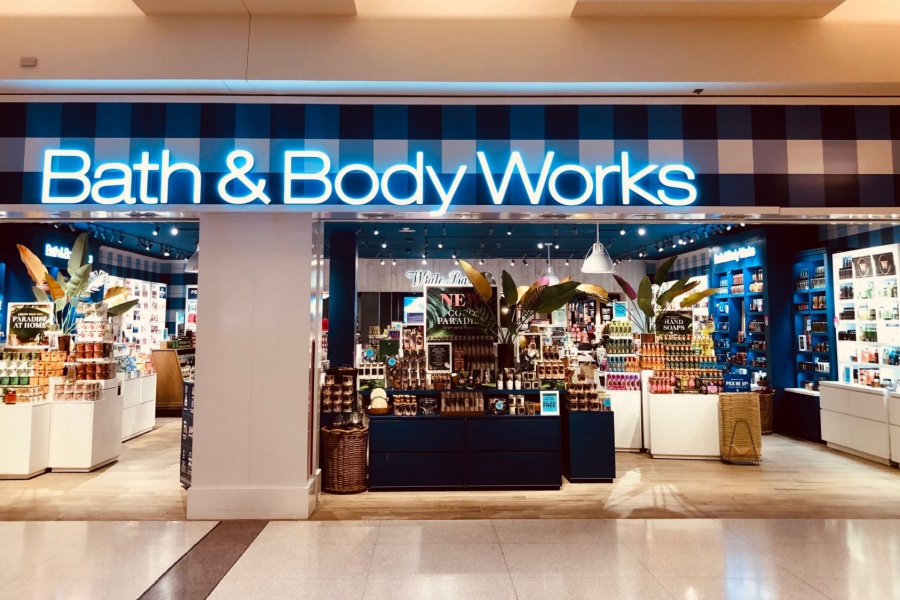
Analysis of average visit duration for three leading beauty chains – Ulta Beauty, Bath & Body Works, and Sally Beauty Supply – highlights the shifting role but continued relevance of physical stores in the space.
Average visit duration decreased post-pandemic – likely due to more purposeful trips and increased online product discovery. But that trend began to reverse in H1 2025, signaling the changing role of physical stores. Enhanced tech for in-store product exploration and rich experiences may be helping drive deeper engagement, underscoring beauty retail’s staying power even in a more measured spending environment.
Bottom Line:
> Beauty’s slight YoY visit declines point to a period of normalization following a post-pandemic boom, while longer-term trends show the category remains stronger than pre-pandemic levels.
> Visits grew shorter post-pandemic, driven by more purposeful trips and increased online product discovery – but dwell time is now lengthening again, signaling renewed in-store engagement driven by tech-enabled discovery and immersive experiences.
Foot traffic data highlight major differences in the recent performance of various discretionary apparel categories. Off-price, fitness, and home furnishings are pulling ahead, well-positioned to keep capitalizing on shifting priorities. Luxury also remains resilient, likely thanks to its higher-income visitor base.
At the same time, beauty’s normalization and the slowdown in mid-tier apparel, electronics, and home improvement show that caution persists across discretionary budgets. Moving forward, retailers that align with consumers’ demand for value, accessible upgrades, and immersive experiences may be best placed to thrive in this era of selective spending.
1) Broad-based growth: All four grocery formats grew year-over-year in Q2 2025, with traditional grocers posting their first rebound since early 2024.
2) Value grocers slow: After leading during the 2022–24 trade-down wave, value grocer growth has decelerated as that shift matures.
3) Fresh formats surge: Now the fastest-growing segment, fueled by affluent shoppers seeking health, wellness, and convenience.
4) Bifurcation widens: Growth concentrated at both the low-income (value) and high-income (fresh) ends, highlighting polarized spending.
5) Shopping missions diverge: Short trips are rising, supporting fresh formats, while traditional grocers retain loyal stock-up customers and value chains capture fill-in trips through private labels.
6) Traditional grocers adapt: H-E-B and Harris Teeter outperformed by tailoring strategies to their core geographies and demographics.Bifurcation of Consumer Spending Help Fresh Format Lead Grocery Growth
Grocery traffic across all four major categories – value grocers, fresh format, traditional grocery, ethnic grocers – was up year over year in Q2 2025 as shoppers continue to engage with a wide range of grocery formats. Traditional grocery posted its first YoY traffic increase since Q1 2024, while ethnic grocers maintained their steady pattern of modest but consistent gains.
Value grocers, which dominated growth through most of 2024 as shoppers prioritized affordability, continued to expand but have now ceded leadership to fresh-format grocers. Rising food costs between 2022 and 2024 drove many consumers to chains like Aldi and Lidl, but much of this “trade-down” movement has already occurred. Although price sensitivity still shapes consumer choices – keeping the value segment on an upward trajectory – its growth momentum has slowed, making it less of a driver for the overall sector.
Fresh-format grocers have now taken the lead, posting the strongest YoY traffic gains of any category in 2025. This segment, anchored by players like Sprouts, appeals to the highest-income households of the four categories, signaling a growing influence of affluent shoppers on the competitive grocery landscape. Despite accounting for just 7.0% of total grocery visits in H1 2025, the segment’s rapid gains point to a broader shift: premium brands emphasizing health and wellness are emerging as the primary engine of growth in the grocery sector.
The fact that value grocers and fresh-format grocers – segments with the lowest and highest median household incomes among their customer bases – are the two categories driving the most growth underscores how the bifurcation of consumer spending is playing out in the grocery space as well. On one end, price-sensitive shoppers continue to seek out affordable options, while on the other, affluent consumers are fueling demand for premium, health-oriented formats. This dual-track growth pattern highlights how widening economic divides are reshaping competitive dynamics in grocery retail.
1) Broad-based growth: All four grocery categories posted YoY traffic gains in Q2 2025.
2) Traditional grocery rebound: First YoY increase since Q1 2024.
3) Ethnic grocers: Continued steady but modest upward trend.
4) Value grocers: Still growing, but slowing after most trade-down activity already occurred (2022–24).
5) Fresh formats: Now the fastest-growing segment, driven by affluent shoppers and interest in health & wellness.
6) Market shift: Premium, health-oriented brands are becoming the new growth driver in grocery.
7) Bifurcation of spending: Growth at both value and fresh-format grocers highlights a polarization in consumer spending patterns that is reshaping grocery competition.
Over the past two years, short grocery trips (under 10 minutes) have grown far more quickly than longer visits. While they still make up less than one-quarter of all U.S. grocery trips, their steady expansion suggests this behavioral shift is here to stay and that its full impact on the industry has yet to be realized.
One format particularly aligned with this trend is the fresh-format grocer, where average dwell times are shorter than in other categories. Yet despite benefiting from the rise of convenience-driven shopping, fresh formats attract the smallest share of loyal visitors (4+ times per month). This indicates they are rarely used for a primary weekly shop. Instead, they capture supplemental trips from consumers looking for specific needs – unique items, high-quality produce, or a prepared meal – who also value the ability to get in and out quickly.
In contrast, leading traditional grocers like H-E-B and Kroger thrive on a classic supermarket model built around frequent, comprehensive shopping trips. With the highest share of loyal visitors (38.5% and 27.6% respectively), they command a reliable customer base coming for full grocery runs and taking time to fill their carts.
Value grocers follow a different, but equally effective playbook. Positioned as primary “fill-in” stores, they sit between traditional and fresh formats in both dwell time and visit frequency. Many rely on limited assortments and a heavy emphasis on private-label goods, encouraging shoppers to build larger baskets around basics and store brands. Still, the data suggests consumers reserve their main grocery hauls for traditional supermarkets with broader selections, while using value grocers to stretch budgets and stock up on essentials.
1) Short trips surge: Under-10-minute visits have grown fastest, signaling a lasting behavioral shift.
2) Fresh formats thrive on convenience: Small footprints, prepared foods, and specialty items align with quick missions.
3) Traditional grocers retain loyalty: Traditional grocers such as H-E-B and Kroger attract frequent, comprehensive stock-up trips.
4) Value grocers fill the middle ground: Limited assortments and private label drive larger baskets, but main hauls remain with traditional supermarkets.
5) Fresh formats as supplements: Fresh format grocers such as The Fresh Market capture quick, specialized trips rather than weekly shops.
While broad market trends favor value and fresh-format grocers, certain traditional grocers are proving that a tailored strategy is a powerful tool for success. In the first half of 2025, H-E-B and Harris Teeter significantly outperformed their category's modest 0.6% average year-over-year visit growth, posting impressive gains of 5.6% and 2.8%, respectively. Their success demonstrates that even in a polarizing environment, there is ample room for traditional formats to thrive by deeply understanding and catering to a specific target audience.
These two brands achieve their success with distinctly different, yet equally focused, demographic strategies. H-E-B, a Texas powerhouse, leans heavily into major metropolitan areas like Austin and San Antonio. This urban focus is clear, with 32.6% of its visitors coming from urban centers and their peripheries, far above the category average. Conversely, Harris Teeter has cultivated a strong following in suburban and satellite cities in the South Atlantic region, drawing a massive 78.3% of its traffic from these areas. This deliberate targeting shows that knowing your customer's geography and lifestyle remains a winning formula for growth.
1) Traditional grocers can still be competitive: H-E-B (+5.6% YoY) and Harris Teeter (+2.8% YoY) outpaced the category average of +0.6% in H1 2025.
2) H-E-B’s strategy: Strong urban focus, with 32.6% of traffic from major metro areas like Austin and San Antonio.
3) Harris Teeter’s strategy: Suburban and satellite city focus, with 78.3% of traffic from South Atlantic suburbs.