Thank you! Your submission has been received!
Oops! Something went wrong while submitting the form.
0
0
0
0
----------
0
0
Articles
Article
What Are the Fast-Growing QSR Categories in 2025?
Coffee, chicken, and Mexican-inspired chains stand out as 2025’s QSR growth leaders, though August softness signals the need for strategic discipline.
Bracha Arnold
Sep 9, 2025
3 minutes

Chicken, Mexican, and Coffee Chains Lead 2025 QSR Trends

This year has posed challenges for limited-service dining chains as inflation and higher prices continued to weigh on consumer traffic. We analyzed visitation trends in 2025 so far across major segments to better understand which categories are holding up – and which may need to adjust strategies.

Coffee, Chicken, and Mexican-Inspired Chains Lead Limited Service Dining

This year brought significant challenges for the limited-service dining industry, as persistent price increases kept many would-be diners at home. Even industry giants like McDonald’s reported declines in same-store sales as lower- and middle-income consumers pulled back spending. Yet several categories, including the ever-impressive chicken segment, managed to buck the trend.

The chart below highlights the differences in YoY foot traffic for major limited service dining concepts in H1 2025. Pizza, burger, and sandwich chains experienced declines, while coffee, chicken, and Mexican-inspired concepts emerged as the growth drivers in terms of overall visit increases. 

These segments were likely aided by aggressive unit expansion and consumer preferences shifting toward more affordable, customizable, and protein-forward options. Coffee continues to hold steady as a daily staple, while chicken and Mexican-inspired operators are capturing demand for protein-forward and customizable formats. 

However, per-location data tempers this growth narrative. Visits per store declined across every major category – even those with overall visit increases – indicating that expansion may be outpacing underlying demand and pushing the segment toward potential oversaturation.

Softer August Results

Recent summer data underscores the cautionary signals. Year-over-year traffic growth for coffee, chicken, and Mexican-inspired concepts was weaker in July than in the first half of the year. By August, declines had spread across nearly every category – with chicken chains in particular seeing a dip in traffic and an even steeper drop in average visits per location – leaving coffee as the only segment to sustain growth.

This broader slowdown in limited-service dining, combined with persistent economic uncertainty, suggests that consumers may be scaling back restaurant spending – even in categories traditionally viewed as more budget-friendly.

Final Thoughts

While 2025 has been marked by volatility, the underlying consumer appetite for convenient, protein-forward, and customizable dining is helping some limited-service segments stay ahead of the pack. Still, visit per location data suggests that expansion plans may need to be put on ice for the next few quarters. 

Instead, operators that focus on menu innovation, building loyalty, and driving higher output per store stand to capture demand when economic pressures ease. As confidence rebounds, concepts that have expanded strategically may be especially well positioned to benefit from renewed consumer traffic.

For the most up-to-date dining data, check out Placer.ai’s free tools.

Placer.ai leverages a panel of tens of millions of devices and utilizes machine learning to make estimations for visits to locations across the US. The data is trusted by thousands of industry leaders who leverage Placer.ai for insights into foot traffic, demographic breakdowns, retail sale predictions, migration trends, site selection, and more.

Article
Placer.ai August 2025 Mall Index: Is Consumer Caution Weighing on Mall Performance? 
Placer.ai’s August 2025 Mall Index reveals a summer slowdown in mall traffic, with indoor malls showing modest gains and outlet malls closing visit gaps. Shorter visit durations and softer Labor Day results signal rising consumer caution. The holiday season presents a pivotal chance to recapture momentum.
Shira Petrack
Sep 8, 2025
4 minutes

Slowing Momentum Continues in August 

After a strong spring for mall traffic, momentum slowed over the summer. As the chart below shows, visits in June declined year-over-year across all three formats, while July and August traffic leveled off. 

Yet, even in this softer environment, indoor malls stood out as the only format to register growth – albeit modest – in both July and August. At the same time, outlet malls managed to close their YoY visit gap, likely buoyed by families looking to save on back-to-school shopping. This trend also points to the potential for a rebound in the format, as consumers’ growing focus on value continues to shape shopping behaviors in new ways.

Traffic Falls Slightly Over Labor Day 

A softer Labor Day capped off the slower summer, with slight dips in visits across all three mall formats compared to Labor Day weekend 2024 (though indoor malls continued to lead with the smallest YoY visit gap). Outlet malls saw the biggest drop, which combined with their flat August performance, suggests that shoppers frequented outlets earlier in the month rather than holding off for Labor Day promotions. 

Taken together, these trends indicate that the summer slowdown was not simply the result of consumers holding back for holiday sales. Instead, with sentiment weakening, shoppers appear to be reducing discretionary purchases that typically drive mall traffic, or looking for better value on a routine basis rather than waiting for special sales. 

Visit Length on the Decline

The decline in average mall visit length offers another indicator of softening consumer sentiment and a cutting back on discretionary purchases. Visit length plummeted over the pandemic as consumers tried to limit their time spent in enclosed spaces, but the average visit duration to malls rose in 2023 and again in 2024 – suggesting that malls were slowly regaining their role as destinations for leisure, dining, and extended shopping trips. 

The drop in August 2025, however, signals a reversal of that momentum, perhaps reflecting heightened consumer caution and a renewed focus on efficiency and essentials over browsing and discretionary spending.

Early Signs, Not Final Conclusions

Malls’ strong visitation trends just a few months ago caution against drawing overly dire conclusions, and the softer summer may represent a temporary reset rather than a lasting shift. Seasonal headwinds, travel, and consumer caution likely weighed on recent performance, while the steady resilience of indoor malls points to enduring shopper demand for in-person experiences. Outlet malls' success in closing their visit gap also adds reason for optimism. 

The upcoming holiday season offers malls a chance to regain momentum and recapture consumer attention. While recent trends highlight caution and shorter visit durations, they also underscore consumers’ growing appetite for value and convenience – dynamics that indoor and outlet malls are uniquely positioned to meet. By pairing value-driven promotions with engaging experiences and festive activations, malls can reassert their role as destinations not just for shopping, but for leisure and community during the holidays. This combination positions shopping centers to benefit from seasonal demand, even as consumers remain more selective with discretionary spending.

For more data-driven consumer insights, visit placer.ai/anchor 

Placer.ai leverages a panel of tens of millions of devices and utilizes machine learning to make estimations for visits to locations across the US. The data is trusted by thousands of industry leaders who leverage Placer.ai for insights into foot traffic, demographic breakdowns, retail sale predictions, migration trends, site selection, and more

Article
Subscriptions Drive Eatertainment Visits for Topgolf, Dave & Buster’s, and Chuck E. Cheese 
In Q2 2025, the eatertainment industry is finding new momentum in subscription-based models that encourage repeat visits and build customer loyalty. Although these unlimited-play programs are reshaping consumer behavior, the challenge lies in turning heightened loyalty into long-term revenue gains.
Lila Margalit
Sep 4, 2025
4 minutes

After a period of robust growth following COVID, the eatertainment sector has slowed. Rising prices and economic uncertainty have led many consumers to tighten their budgets, cutting back on discretionary activities. But Q2 2025 data points to an emerging trend that could reshape the industry's trajectory: unlimited-play subscription models that drive repeat visits to major chains. 

Different Post-COVID Paths

Eatertainment’s leading brands have followed very different trajectories since 2019. Topgolf and Dave & Buster’s expanded significantly after COVID, driving overall visits above 2019 levels and outperforming the broader full-service restaurant (FSR) segment. By Q2 2025, Topgolf’s systemwide foot traffic was up 59.2% compared to the same period in 2019, while Dave & Buster’s overall visits rose 7.1%. However, both chains began to slow at the unit level in 2022 as inflation weighed on household budgets.

Chuck E. Cheese, meanwhile, shuttered dozens of locations after its 2020 bankruptcy. But in  mid-2024, the brand’s systemwide and per-location visits began rebounding significantly, surpassing even the broader FSR segment by Q1 2025.

Chuck E. Cheese’s Fun Pass Comeback

Chuck E. Cheese’s resurgence can be traced to a revamped Summer Fun Pass program launched in the summer of 2024. By offering unlimited play, the company drove a dramatic increase in repeat visits – and the model proved so successful that the company extended it year-round, fueling sustained visit growth that continued into 2025.

Between March and May 2025, per-location visits to Chuck E. Cheese surged 17.6% to 23.0% year over year (YoY), before stabilizing in June and July as the chain began lapping its extraordinary 2024 performance. Importantly, this plateau doesn’t indicate decline – instead, it highlights Chuck E. Cheese’s ability to maintain traffic levels that seemed unimaginable just two years ago.

Chuck E. Cheese’s loyalty surge also shows no signs of abating. In June 2024 12.0% of visitors came in at least twice during the month – up from 7.2% to 8.0% the previous summer. And although repeat visitation dipped somewhat when school resumed in the fall, it remained elevated YoY and rebounded again this summer.

Topgolf: Signs of a Turnaround

Topgolf has long relied on expansion to drive growth. But even as overall foot traffic has continued surging past pre-COVID benchmarks, visits per location began declining in 2022. 

Recent data, however, suggests this dynamic is shifting. Since May, the chain has posted high single-digit per-location YoY growth – a clear indicator of unit-level recovery. And though same-venue sales still fell 6.0% last quarter, the company raised its guidance, signaling an improved outlook.  

Here too, loyalty metrics point to the central role of Topgolf’s revived Summer Fun Pass in reigniting traffic by offering value-conscious consumers more affordable access to its premium experience. Though the gains are smaller than those seen by Chuck E. Cheese’s, they still mark a meaningful step in Topgolf’s recovery.

Dave & Buster’s: A Solid Foundation

Dave & Buster’s flagship chain continues to lag peers on YoY visitation, with Q2 2025 traffic below 2024 levels. Still, visit data for May to July 2025 points to an improving trend, aligning with the company’s recent report of better comp sales in June. 

Once again, progress appears tied to a new subscription model – Dave & Buster’s first-ever Summer Season Pass. Priced similarly to last year’s new Winter Pass, but timed to coincide with school and college vacations, the summer program significantly boosted repeat visits and strengthened customer engagement. And although per-location traffic at Dave & Buster’s remains a challenge, the brand’s growing loyalty base and expanding footprint give it a foundation for steady, sustainable growth.

Subscriptions, Subscriptions, Subscriptions!

Much like gym memberships, affordable flat fees for gameplay at eatertainment venues allow budget-conscious consumers to stretch their dollars by visiting more often. And these subscription-based models appear to be resonating with consumers in 2025. 

But the model comes with its own challenges. For Chuck E. Cheese, Topgolf, and Dave & Buster’s, the key test will be turning higher visitation into greater spend. Converting traffic gains into food, beverage, and event revenue – without eroding margins – will ultimately determine whether subscription-driven loyalty can deliver sustainable long-term growth.

For more data-driven consumer insights, visit placer.ai/anchor.

Article
Has Starbucks' Pumpkin Spice Latte Retained Its Appeal in 2025? 
Starbucks’ 2025 Pumpkin Spice Latte launch once again fueled a nationwide traffic surge, reaffirming its enduring cultural and financial impact. Competitors like Dunkin’ and Dutch Bros. lag behind, underscoring Starbucks’ unrivaled mastery in seasonal LTO strategy.
Shira Petrack
Sep 4, 2025
3 minutes

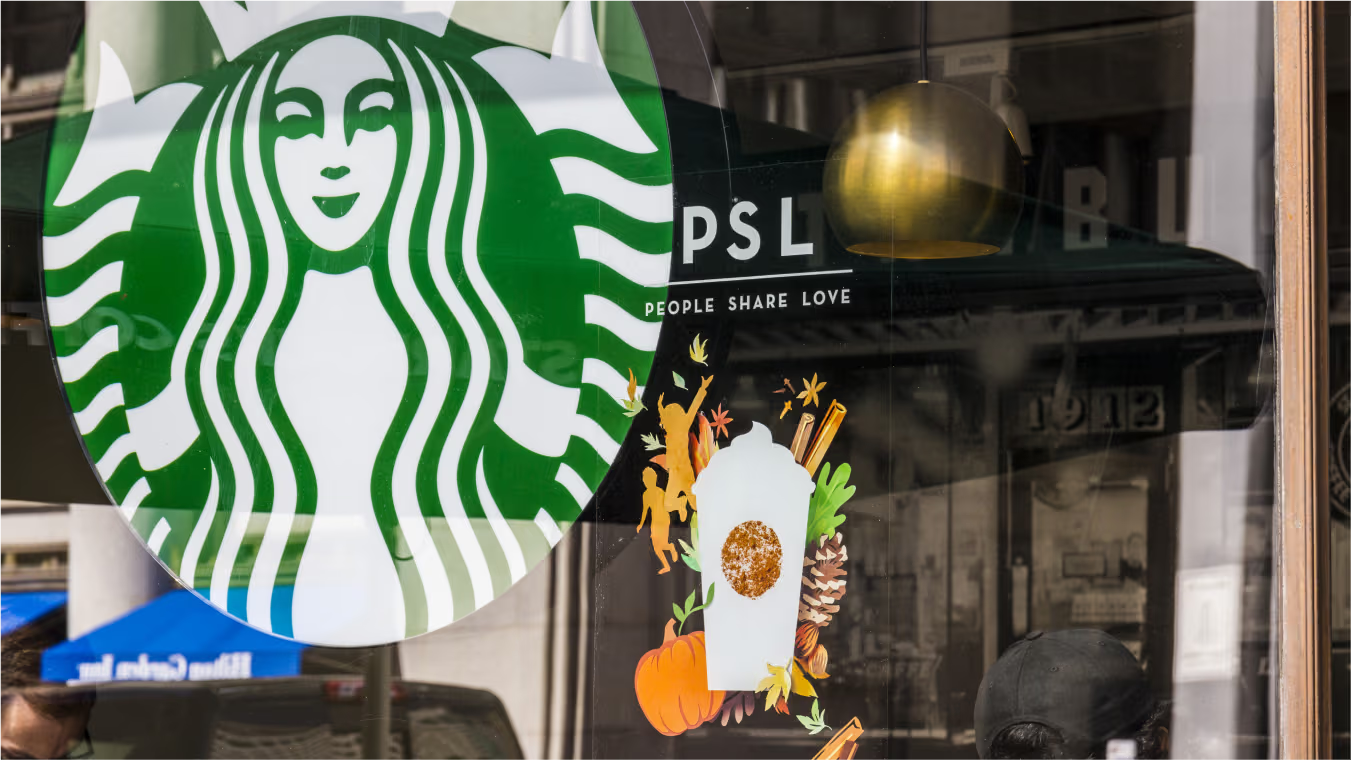
Starbucks launched its latest fall menu on August 26th, 2025, which included the fan-favorite Pumpkin Spice Latte (PSL). How did the return of the anticipated beverage impact visits this year? We dove into the data to find out. 

More Than Two Decades In, PSL and Fall Menu Continue to Resonate 

The fall menu launch and PSL return drove significant visit spikes to Starbucks, as shown in the chart below. And traffic on this year's PSL launch was nearly identical to 2024 levels – highlighting the remarkable consistency of the seasonal offering that has now become a cultural staple. The ability of the PSL to drive traffic at scale – even after two decades – underscores its unique role in Starbucks' playbook.

Where is the Pumpkin Spice Latte Most Popular? 

While the PSL's appeal is coast-to-coast, enthusiasm varies geographically.

The map below plots the increase in Starbucks visits on the launch of the fall menu compared to each state's pre-fall menu launch daily average. The Mountain region emerged as this year's PSL epicenter: Utah led the nation with a traffic surge of over 40% above its daily average, with neighboring states like Colorado, Idaho, and Nevada also showing exceptional gains. The Midwest and Appalachia, including West Virginia and Kentucky, followed with their own impressive double-digit increases.

By contrast, increases were more muted in the Northeast and Southeast, with single-digit visit growth in Louisiana, Mississippi, Georgia, New York, Vermont, and New Hampshire. Together, these patterns reveal both the universal draw of Starbucks’ seasonal offerings and the regional nuances that shape consumer response.

How Does the Fall Menu Launch at Dunkin' and Dutch Bros. Stack Up to Starbucks? 

While competitors like Dunkin' and Dutch Bros. also leverage seasonal menus to attract customers, their launch-day boosts don't match the scale of the PSL phenomenon, as shown in the chart below. Starbucks has successfully transformed a menu update into a highly anticipated cultural moment that competitors struggle to replicate.

This data suggests that Starbucks' fall launch doesn't just boost its own traffic – it sets the benchmark for the entire industry. The brand’s ability to blend product innovation with cultural relevance reinforces its position as the undisputed leader in the seasonal beverage market.

Starbucks' Fall Menu Still a Reliable Traffic Driver

The data from the 2025 fall menu launch suggests that the Pumpkin Spice Latte is far more than a seasonal beverage; it is one of Starbucks' most reliable and defensible strategic assets. The popular LTO provides a predictable traffic and revenue anchor, transforming the fall menu and the PSL at its center into a reliable financial instrument that widens the company's competitive advantage.

Ultimately, the enduring success of the PSL highlights Starbucks' mastery in transforming a product into a cultural tradition, proving that the most powerful driver of consumer behavior isn't just the product itself, but the anticipation and ritual built around it.

For more data-driven insights, visit placer.ai/anchor 

Article
Thrift Store Visit Growth Outpaces Apparel as Tariffs Loom
Thrift stores are defying retail headwinds – and with higher-income and rural and suburban shoppers joining the mix, thrifting has gone mainstream. As tariffs loom, secondhand appears set to remain one of retail’s standout success stories.
Lila Margalit
Sep 3, 2025
3 minutes

Secondhand shopping has emerged as a major storyline this season amid potential tariff-driven apparel price hikes – but foot traffic data shows that thrifting's move into the mainstream has been years in the making. We dove into the data to assess the state of the thrift store segment in 2025 and explore what’s driving its continued momentum.

Thrift Stores Give Apparel a Dressing Down

Thrift store foot traffic has been on an impressive upward trajectory since COVID. In Q2 2025, visits were up 39.5% compared to Q2 2019 – far exceeding the 9.5% growth seen across the broader clothing industry. 

This visit growth advantage reflects a mix of factors, including heightened economic pressures and sustainability concerns. In addition, while much apparel shopping has shifted online – and digital resale platforms like ThredUp are gaining traction – thrifting remains inherently experiential and in-person.

Thrifting’s unique seasonality also highlights its important role in the consumer shopping cycle. As the chart below illustrates, conventional apparel peaks during the holiday shopping season (Q4) while thrift stores hit their stride in summer (Q3) – likely buoyed by warm-weather wardrobe refreshes and back-to-school shopping.

More Stores, More Visits Per Store

A closer look at year-over-year (YoY) trends show industry-wide thrift store visit increases outpacing per-location gains, suggesting that the segment’s growth is partly driven by store openings. Yet established locations are thriving too, with average visits per location continuing to rise even against last year’s strong benchmarks. 

This dual pattern – new stores bringing in additional shoppers while established locations continue to grow – shows that thrifting’s momentum reflects true market expansion rather than merely a redistribution of demand.

Thrifting Goes Mainstream

Demographic data also points to thrifting’s ongoing move into the mainstream. The median household income of areas feeding visits to thrift stores has risen steadily since 2019, signaling a significant broadening of these stores' customer base beyond their traditional lower-income demographic.

Geographically, thrift shopping has also expanded beyond its urban roots. The share of visits from rural, semi-rural, and suburban communities has climbed consistently over the past six years, making secondhand shopping a fixture of consumer culture across regions and income levels.

The Future is Secondhand

With potential tariffs threatening to raise the cost of imported clothing, continued economic pressures, and rising demand for sustainable alternatives, thrift stores appear poised to thrive well into the future. Will secondhand visits climb to new highs this summer?

Follow Placer.ai/anchor to find out. 

Article
America’s Parks Are Calling: Later, Longer, Busier
America’s parks are experiencing rising visits and shifting usage patterns. People are coming more in spring, staying longer, and shifting their visits to weekends and later in the day. Park audiences are also evolving – including more middle-income households and families with children. These changes carry major implications for cities and communities.
Maytal Cohen
Sep 2, 2025
4 minutes

Whether it’s a family picnic, a romantic stroll, or a casual jog, local parks have long been woven into the fabric of American life. In recent years, however, when and how people use these green spaces has shifted in important ways.

Using Placer.ai’s index of 3,000 local parks (i.e., smaller parks within cities, towns, and suburbs and excluding national and state parks), we analyzed visitation patterns over the past year and compared them to pre-COVID baselines. The results reveal not only a steady rise in park traffic, but also meaningful changes in how Americans engage with these public spaces.

Local Park Visits on the Rise – Especially in Spring and Early Summer

Visits to local parks have steadily increased since 2019 as shown in the graph below – reflecting a sustained post-pandemic shift toward outdoor activities

But the data also shows an interesting seasonal shift. Unsurprisingly, park visits tend to peak in spring and summer (Q2 and Q3), and drop in winter. But whereas in 2019 and 2021, Q3 slightly outperformed Q2, this trend began to reverse in 2022 – and over the past three years, spring and early summer have consistently outpaced the July to September period. Additionally, while Q2 visits have grown year after year, Q3 visits began to decline in 2024 – and July 2025 data suggests the trend may be continuing. 

The shift, though subtle, may be tied to extreme summer heat waves in recent years – but it remains to be seen if this pattern will hold long-term. 

Longer, Later, and on the Weekends

Beyond sheer numbers, how people use parks is also changing. Since 2019, the share of visits lasting under 30 minutes has dropped, while visits over 30 minutes have increased – pointing to more intentional, extended outings that may include picnics, sports, or social gatherings.

At the same time, the share of weekday and early-day visits have declined, while weekend and evening visits have grown. This suggests that park trips are increasingly seen as dedicated leisure activities – part of people’s weekend plans rather than casual, quick visits.

More Middle-Income Families With Children

Meanwhile, analyzing parks' trade areas indicates a subtle but significant shift in the demographic profiles of park-goers. 

In both 2018/9 and 2024/5, park visitors tended to come from relatively affluent areas, with median household incomes (HHIs) above the nationwide average of $79.6K. But the analyzed period saw a modest but significant decline in the median HHI of parks’ trade areas. indicating a broadening of the audience making use of these spaces. 

This shift was accompanied by an increase in the participation of families with children – further evidence of the emergence of local parks as communal, family-oriented spaces.

What This Means for Cities

The growth in visitation along with the shifts in timing, duration, and demography carry important implications for local governments and park planners – and understanding these trends can help cities serve their communities and allocate relevant resources more effectively. 

For example, with weekend visitation on the rise, cities could plan more park events on Saturdays and Sundays to maximize attendance and community engagement. In addition, more weekend visitors may require expanded parking, public transport options, or bike access to accommodate higher demand.

The growth in later and longer park visits may also suggest a greater need for improved evening amenities, such as better lighting for safety and extended hours for public facilities. Longer visits could also mean higher demand for seating, shaded areas, restrooms, and refreshment vendors. And more families with children could drive demand for enhanced playground equipment, family-friendly programming, and child safety features.

By aligning park services with these evolving patterns, local governments can better serve residents, attract more visitors, and make the most of the growing enthusiasm for outdoor public spaces.

For more up-to-date insights into population movement and civic trends, explore our free migration tool

Reports
INSIDER
Report
Winning Holiday Shoppers in 2025: Key Insights for Advertisers and Retailers
Dive into the data to uncover the retail categories, audiences, and timing strategies poised to deliver high-impact campaigns this holiday season. 
October 30, 2025

Key Takeaways

1) Retail foot traffic faces lingering pressure – making promotions more critical than ever. Financial uncertainty, tariffs, and inflation continue to weigh on discretionary spending, making well-timed, targeted holiday promotions essential to reignite demand and drive in-store traffic.

2) The retail divide appears set to widen this holiday season Luxury and off-price apparel are both outpacing overall retail, reflecting a deepening bifurcation of consumer behavior. And this December, the affluence gap between the two categories is expected to expand further, underscoring opportunities to engage both premium and value-focused shoppers across segments.

3) Despite slower overall performance, beauty and electronics have performed well during recent retail milestones. To make the most of this momentum, advertisers should align campaigns with shifting holiday audiences – electronics toward married homeowners and beauty toward affluent suburban families.

4) Early Promotions Could Lift In-Store Traffic Last year, early holiday campaigns helped offset a shorter shopping season and sustain strong results. With another condensed window and continued shipping disruptions, retailers who start early and emphasize in-store availability will be best positioned to capture additional visits and outperform 2024’s results.

A Complex Season Ahead

The holiday season is fast approaching, but this year’s backdrop looks especially complex. Consumers are navigating heightened financial uncertainty, with tariffs driving up prices and disrupting supply, while inflation continues to weigh on discretionary spending. 

For retailers and advertisers, the stakes are high. The holiday period remains a critical window for promotional engagement, and success will depend on understanding consumer behavior and crafting promotions that are timed, targeted, and designed to meet shoppers where they are.

We turned to foot traffic data to uncover the key trends shaping this season’s retail environment, and to identify promotional strategies likely to succeed.

Promotions Matter More Than Ever

Consumer activity appeared strong in most of early 2025 – except in February, when extreme weather and leap-year comparisons drove sharp year-over-year (YoY) declines. But foot traffic slowed this summer, highlighting the toll of lingering financial uncertainty and strain. 

For advertisers, this underscores how pivotal seasonal promotions will be in reigniting demand. With many consumers cutting back on discretionary spending, well-timed and well-targeted campaigns will be essential to encourage shoppers to spend more freely during the holidays. These promotions don’t have to rely solely on price cuts — pop-culture collaborations and other creative product launches have also proven highly effective in driving traffic this year.

Bottom Line:

> Financial uncertainty and tighter household budgets are weighing on retail foot traffic this year – making effective holiday promotions more critical than ever.

Understanding the Retail Divide

Still, not all retail categories have been equally affected by broader economic headwinds. Some segments have experienced softer demand, signaling where advertisers may need to take a more measured, efficiency-focused approach. Others, however, have shown notable resilience – offering opportunities to double down on creative promotions that deepen engagement during the holidays.

One such segment is home furnishings, which has seen YoY traffic gains over the past 12 months, driven by the strong performance of discount chains as shoppers favor accessible décor updates over large-scale renovations. Strategic campaigns highlighting affordable refreshes and quick “holiday-ready” makeovers could give the category an additional lift in Q4, as households look to update their spaces in preparation for hosting family and friends.

But the biggest gains have been in the apparel category, where a bifurcation trend has emerged, boosting visits at both luxury and off-price retailers. The success of both segments underscores promotional strategies that can amplify momentum – steep-value discounts on one end of the spectrum, and exclusivity and quality on the other. Advertisers across retail segments can adapt this dual approach to engage both budget-driven and premium audiences effectively.

Deepening Bifurcation During the Holiday Period

And demographic data reveals just how deeply entrenched this bifurcation has become – especially during the holiday season.

The chart below examines monthly changes in the median household incomes (HHIs) of luxury and off-price retailers’ captured markets since January 2023. Even small shifts in HHI across major retail categories can signal meaningful changes in audience composition – and these patterns tell a clear story.

In luxury apparel, where the median HHI is well above the national average of $79.6K, visitor income follows a distinct seasonal rhythm. During the early holiday shopping period, HHI remains lower in October and dips slightly in November as middle-income shoppers take advantage of early promotions to snag products that may be out of reach the rest of the year. It then rises in December as affluent consumers return to purchase gifts. Notably, luxury HHI has trended upward since 2023 – with each holiday peak higher than the last – suggesting that this December’s visitor base will be even more affluent than last year.

For advertisers, this means late-season campaigns should prioritize prestige audiences while still engaging aspirational shoppers during early holiday promotions like Black Friday.

In the off-price apparel segment, on the other hand, median HHI typically declines during the holidays – especially in December – indicating an influx of more price-sensitive shoppers. And over time, this visitor base has become even more value-driven, reinforcing the importance of promotional messaging that emphasizes unbeatable deals and savings.

Together, these patterns once again highlight the growing need for tailored strategies: premium experiences for high earners and sharp value propositions for cost-conscious consumers – a lesson that may extend well beyond these categories.

Bottom Line: 

>The retail divide is expected to deepen further in December 2025, with off-price retailers drawing more value-driven shoppers and luxury brands attracting increasingly affluent consumers.

The Opportunity in Beauty and Electronics 

In a challenging economic environment, one might expect promotions around key retail milestones to prompt consumers to deviate from their usual habits, experimenting with new brands or categories. Yet the data shows that, for the most part, shoppers instead deepened their engagement with the retailers they already patronize – utilizing holiday promotions to buy the same products at better prices. 

The graph below shows that during recent shopping milestones, the off-price and luxury categories both stood out in YoY performance – reflecting the strong momentum sustained by both segments over the past twelve months. 

Beauty and Electronics Set to Shine

Still, the graph above also highlights two additional segments potentially poised for holiday success: beauty & self care and electronics. 

Despite slower traffic over the past year, beauty retailers saw notable spikes around key recent promotional moments – including Black Friday, Mother’s Day, and Memorial Day. And although electronics retailers continued to face headwinds as consumers delayed big-ticket purchases – including during last year’s Black Friday – more recent milestones have seen traffic stabilize or even increase YoY. 

This indicates that the right promotional environment can still effectively drive engagement in these discretionary categories, and that deal-driven behavior is likely to remain a defining theme this holiday season. In addition, as the replacement cycle begins for major electronics first purchased during the pandemic, shoppers may be especially willing to upgrade to a new TV or laptop if the right offer comes along.

Finding Their Audiences in the Holiday Season

But to make the most of the opportunity presented by Q4, advertisers and retailers in the beauty and electronics spaces should pay close attention to the shifting demographics of their in-store audiences during the holiday season. 

For electronics retailers, married couples and homeowners become increasingly important during the peak holiday shopping period. Their share in the category’s captured market rises consistently each December, indicating that campaigns emphasizing household upgrades, family entertainment, and quality-of-life improvements may resonate most effectively in late Q4.

In contrast, beauty retailers – typically buoyed by young professionals – see their audience composition shift towards suburbia during the holidays. In December, the share of wealthy suburban families in beauty retailers’ captured markets grows meaningfully, while the share of young professionals declines. Advertisers can capitalize by highlighting premium bundles, limited-edition sets, and gifting options that speak directly to these households’ desire for premium, family-oriented products. 

Bottom Line:

> Off-price and luxury retailers maintained strong performance during major retail milestones, but beauty and electronics stand out as rising opportunities for the 2025 holiday season.

> As holiday demographics shift during the holiday season – with electronics drawing more married homeowners and beauty attracting wealthier suburban families – campaigns that reflect these audiences’ lifestyles and priorities will resonate most.

Early Holiday Push Could Lift In-Store Traffic

Timing is also a decisive factor in retailer and advertiser success during the holiday season. 

Traditionally, the “core” holiday retail period begins with Black Friday and continues until Christmas Eve. But in 2024, there was one fewer week between these two milestones compared to the previous year. And to compensate, many retailers launched an “early” holiday season, rolling out promotions in October and early November to maximize consumer engagement. 

As the graph below shows, the shorter “core” season of 2024 unsurprisingly drew less in-store traffic across retail categories than the longer period the year before. Yet by embracing early promotions, retailers offset much of this shortfall, leading to overall holiday season results that, in many cases, matched or even exceeded 2023’s performance.

Looking ahead, 2025 once again brings a compressed “core” shopping window. And with shipping disruptions still influenced by shifting tariff regulations, more consumers may turn to brick-and-mortar stores earlier in the season to ensure timely purchases – further supporting offline traffic.

If retailers and advertisers double down on early-season engagement while continuing to drive momentum through the “core” weeks, YoY traffic for the 2025 holiday season could deliver even bigger overall gains than those seen in 2024.

Bottom Line: 

> Last year, early holiday promotions helped offset a shorter core holiday season. 

> In 2025, retail and advertising professionals are again faced with a relatively short core shopping season. And aware of the condensed timeline and shipping disruptions, more shoppers may opt for early in-store purchases to avoid the risk of delayed deliveries.

Balancing Value, Aspiration, and Timing

This holiday season will reward advertisers and retailers who recognize the growing retail divide and tailor their messaging to the shoppers most likely to visit during the holidays – whether married homeowners on the hunt for electronics or affluent suburban families seeking beauty products. As in 2024, acting early to offset a shorter core shopping period will be essential to capturing demand. And those who combine sharp timing with audience insight will be best positioned to turn a complex season into a strong finish.

INSIDER
Report
What is Driving Discretionary Spending in 2025?
See which discretionary retail categories are gaining momentum by delivering value, accessible upgrades, and immersive experiences.
October 2, 2025

Key Takeaways: 

1) Value Wins in 2025: Discount & Dollar Stores and Off-Price Apparel are outperforming as consumers prioritize value and the “treasure-hunt” experience.
2) Small Splurges Over Big Projects: Clothing and Home Furnishing traffic remains strong as shoppers favor accessible wardrobe updates and decor refreshes instead of major renovations.
3) Big-Ticket Weakness: Electronics and Home Improvement visits continue to lag, reflecting a continued deferment of larger purchases.
4) Bifurcation in Apparel: Visits to off-price and luxury segments are growing, while general apparel, athleisure, and department stores face ongoing pressures from consumer trade-downs.
5) Income Dynamics Shape Apparel: Higher-income shoppers sustain luxury and athleisure, while off-price is driving traffic from more lower-income consumers.
6) Beauty Normalizes but Stays Relevant: After a pandemic-driven surge, YoY declines likely indicate that beauty visits are stabilizing; shorter trips are giving way to longer visits as retailers deploy new tech and immersive experiences.

An Overview of Discretionary Retail Traffic 

Economic headwinds, including tariffs and higher everyday costs, are limiting discretionary budgets and prompting consumers to make more selective choices about where they spend. But despite these pressures, foot traffic to several discretionary retail categories continues to thrive year-over-year (YoY).

Fitness and Apparel Lead

Of the discretionary categories analyzed, fitness and apparel had the strongest year-over-year traffic trends – likely thanks to consumers finding perceived value in these segments. 

Fitness and apparel (boosted by off-price) appeal to value-driven, experience seeking consumers – fitness thanks to its membership model of unlimited visits for an often low fee, and off-price with its discount prices and treasure-hunt dynamic. Both categories may also be riding a cultural wave tied to the growing use of GLP-1s, as more consumers pursue fitness goals and refresh their wardrobes to match changing lifestyles and sizes.

Electronics and Home Improvement Lag While Home Furnishing Pulls Ahead

Big-ticket categories, including electronics, also faced significant challenges, as tighter consumer budgets hamper growth in the space. Traffic to home improvement retailers also generally declined, as lagging home sales and consumers putting off costly renovations likely contributed to the softness in the space.

But home furnishing visits pulled ahead in July and August 2025 – benefitting from strong performances at discount chains such as HomeGoods – suggesting that consumers are directing their home-oriented spending towards more accessible decor. 

Beauty Faces Challenges 

The beauty sector – typically a resilient "affordable luxury" category – also experienced declines in recent months. The slowdown can be partially attributed to stabilization following several years of intense growth, but it may also mean that consumers are simplifying their beauty routines or shifting their beauty buying online.

Bottom Line: 

> Traffic to fitness and apparel chains – led by off-price – continued to grow YoY in 2025, as value and experiences continue to draw consumers.

> Consumers are shopping for accessible home decor upgrades to refresh their space rather than undertaking major renovations.

> Shoppers are holding off on big-ticket purchases, leading to YoY declines in the electronics and home improvement categories.

> Beauty has experienced softening traffic trends as the sector stabilizes following its recent years of hypergrowth as shoppers simplify routines and shift some of their spending online.

The Home Furnishings Category Makes A Turnaround

Suburban And Small Town Visits Drive Gains

After two years of visit declines, the Home Furnishings category rebounded in 2025, with visits up 4.9% YoY between January and August. By contrast, Home Improvement continued its multi-year downward trend, though the pace of decline appears to have slowed.

So what’s fueling Home Furnishings’ resurgence while Home Improvement visits remain soft? Probably a combination of factors, including a more affluent shopper base and a product mix that includes a variety of lower-ticket items.

Home Furnishing's More Affluent Audience

On the audience side, this category draws a much larger share of visits from suburban and urban areas, with a median household income well above that of home improvement shoppers. The differences are especially pronounced when analyzing the audience in their captured markets – indicating that the gap stems not just from store locations, but from meaningful differences in the types of consumers each category attracts. 

Home improvement's larger share of rural visits is not accidental – home improvement leaders have been intentionally expanding into smaller markets for a while. But while betting on rural markets is likely to pay off down the line, home improvement may continue to face headwinds in the near future as its rural shopper base grapples with fewer discretionary dollars.

Home Improvement Impacted by Slowdown in Big-Ticket Items

On the merchandise side, home improvement chains cater to larger renovations and higher-cost projects – and have likely been impacted by the slowdown in larger-ticket purchases which is also impacting the electronics space.  Meanwhile, home furnishing chains carry a large assortment of lower-ticket items, including home decor, accessories, and tableware.

Consumers are still spending more time at home now than they were pre-COVID, and investing in comfortable living spaces is more important than ever. And although many high-income consumers are also tightening their belts, upgrading tableware or even a piece of furniture is still much cheaper than undertaking a renovation – which could explain the differences in traffic trends.  

Consumer Preferences Drive Changes in Apparel

Different Context For Traffic Trends by Segment

Traditional apparel, mid-tier department stores, and activewear chains all experienced similar levels of YoY traffic declines in 2025 YTD, as shown in the graph above. But analyzing traffic data from 2021 shows that each segment's dip is part of a trajectory unique to that segment. 

Traffic to mid-tier department stores has been trending downward since 2021, a shift tied not only to macroeconomic headwinds but also to structural changes in the sector. The pandemic accelerated e-commerce adoption, hitting department stores particularly hard as consumers seeking one-stop shopping and broad assortments increasingly turned to the convenience of online channels. 

Traffic to traditional apparel chains has also not fully recovered from the pandemic, but the segment did consistently outperform mid-tier department stores and luxury retailers between 2021 and 2024. But in H1 2025, the dynamic with luxury shifted, so that traffic trends at luxury apparel retailers are now stronger than at traditional apparel both YoY and compared to Q1 2019. This highlights the current bifurcation of consumer spending also in the apparel space, as luxury and off-price segments outperform mid-market chains.  

In contrast, the activewear & athleisure category continues to outperform its pre-pandemic baseline, despite experiencing a slight YoY softening in 2025 as consumers tighten their budgets. The category has capitalized on post-lockdown lifestyle shifts, and comfort-driven wardrobes that blur the line between work, fitness, and leisure remain entrenched consumer staples several years on.

Evidence of the Resilient High-Income Consumer and a Trade-Down to Value Segments in the HHI Data

The two segments with the highest YoY growth – off-price and luxury – are at the two ends of the spectrum in terms of household income levels, highlighting the bifurcation that has characterized much of the retail space in 2025. And luxury and off-price are also benefiting from larger consumer trends that are boosting performance at both premium and value-focused retailers. 

In-store traffic behavior reveals that these two segments enjoy the longest average dwell times in the apparel category, with an average visit to a luxury or off-price retailer lasting 39.2 and 41.3 minutes, respectively. This suggests that consumers are drawn to the experiential aspect of both segments – treasure hunting at off-price chains or indulging in a sense of prestige at a luxury retailer. Together, these patterns highlight that – despite appealing to different consumer groups – both ends of the market are thriving by offering shopping experiences that foster longer engagement.  

Bottom Line: 

> Off-price and luxury segments are outperforming, while general apparel, athleisure, and department store visits lag YoY under tariff pressures and consumer trade-downs.

> Looking over the longer term reveals that athleisure is still far ahead of its pre-pandemic baseline – even if YoY demand has softened.

> Luxury and off-price both are thriving by offering shopping experiences that foster longer engagement.

Is Beauty Still A Resilient Discretionary Category? 

Beauty Retail’s Transformation Since the Pre-Pandemic Era

The beauty sector has long benefitted from the “lipstick effect” — the tendency for consumers to indulge in small luxuries even when discretionary spending is constrained. And while the beauty category’s softening in today’s cautious spending environment could suggest that this effect has weakened, a longer view of the data tells a more nuanced story. 

Beauty visits grew significantly between 2021 and 2024, fueled by a confluence of factors including post-pandemic “revenge shopping,” demand for bolder looks as consumers returned to social life, and new store openings and retail partnerships. Against that backdrop, recent YoY traffic dips are likely a sign of stabilization rather than true declines. Social commerce, and minimalist skincare routines may be moderating in-store traffic, but shoppers are still engaged, even as they blend online and offline shopping or seek out lower-cost alternatives to maximize value. 

The Evolving Role of Physical Retail in the Beauty Space

Analysis of average visit duration for three leading beauty chains – Ulta Beauty, Bath & Body Works, and Sally Beauty Supply – highlights the shifting role but continued relevance of physical stores in the space. 

Average visit duration decreased post-pandemic – likely due to more purposeful trips and increased online product discovery. But that trend began to reverse in H1 2025, signaling the changing role of physical stores. Enhanced tech for in-store product exploration and rich experiences may be helping drive deeper engagement, underscoring beauty retail’s staying power even in a more measured spending environment. 

Bottom Line: 

> Beauty’s slight YoY visit declines point to a period of normalization following a post-pandemic boom, while longer-term trends show the category remains stronger than pre-pandemic levels.

> Visits grew shorter post-pandemic, driven by more purposeful trips and increased online product discovery – but dwell time is now lengthening again, signaling renewed in-store engagement driven by tech-enabled discovery and immersive experiences.

Selective Spending Shapes Discretionary Retail in 2025

Foot traffic data highlight major differences in the recent performance of various discretionary apparel categories. Off-price, fitness, and home furnishings are pulling ahead, well-positioned to keep capitalizing on shifting priorities. Luxury also remains resilient, likely thanks to its higher-income visitor base. 

At the same time, beauty’s normalization and the slowdown in mid-tier apparel, electronics, and home improvement show that caution persists across discretionary budgets. Moving forward, retailers that align with consumers’ demand for value, accessible upgrades, and immersive experiences may be best placed to thrive in this era of selective spending.

INSIDER
Report
3 Trends Shaping the Grocery Sector Right Now
Discover the 2025 grocery sector trends driving growth across value, fresh, traditional, and ethnic formats. Learn how shifting consumer behavior, bifurcated spending, and short-trip missions are reshaping retail competition.
Placer Research
September 22, 2025

Key Takeaways 

1) Broad-based growth: All four grocery formats grew year-over-year in Q2 2025, with traditional grocers posting their first rebound since early 2024.

2) Value grocers slow: After leading during the 2022–24 trade-down wave, value grocer growth has decelerated as that shift matures.

3) Fresh formats surge: Now the fastest-growing segment, fueled by affluent shoppers seeking health, wellness, and convenience.

4) Bifurcation widens: Growth concentrated at both the low-income (value) and high-income (fresh) ends, highlighting polarized spending.

5) Shopping missions diverge: Short trips are rising, supporting fresh formats, while traditional grocers retain loyal stock-up customers and value chains capture fill-in trips through private labels.

6) Traditional grocers adapt: H-E-B and Harris Teeter outperformed by tailoring strategies to their core geographies and demographics.Bifurcation of Consumer Spending Help Fresh Format Lead Grocery Growth

Growth Across Grocery Formats

Grocery traffic across all four major categories – value grocers, fresh format, traditional grocery, ethnic grocers – was up year over year in Q2 2025 as shoppers continue to engage with a wide range of grocery formats. Traditional grocery posted its first YoY traffic increase since Q1 2024, while ethnic grocers maintained their steady pattern of modest but consistent gains.

Value Grocers Growth Slows as Trade-Down Effect Matures

Value grocers, which dominated growth through most of 2024 as shoppers prioritized affordability, continued to expand but have now ceded leadership to fresh-format grocers. Rising food costs between 2022 and 2024 drove many consumers to chains like Aldi and Lidl, but much of this “trade-down” movement has already occurred. Although price sensitivity still shapes consumer choices – keeping the value segment on an upward trajectory – its growth momentum has slowed, making it less of a driver for the overall sector.

Affluent Shoppers Drive Major Gains for Fresh-Format Grocers

Fresh-format grocers have now taken the lead, posting the strongest YoY traffic gains of any category in 2025. This segment, anchored by players like Sprouts, appeals to the highest-income households of the four categories, signaling a growing influence of affluent shoppers on the competitive grocery landscape. Despite accounting for just 7.0% of total grocery visits in H1 2025, the segment’s rapid gains point to a broader shift: premium brands emphasizing health and wellness are emerging as the primary engine of growth in the grocery sector.

Bifurcation of Spending Reshaping Grocery

The fact that value grocers and fresh-format grocers – segments with the lowest and highest median household incomes among their customer bases – are the two categories driving the most growth underscores how the bifurcation of consumer spending is playing out in the grocery space as well. On one end, price-sensitive shoppers continue to seek out affordable options, while on the other, affluent consumers are fueling demand for premium, health-oriented formats. This dual-track growth pattern highlights how widening economic divides are reshaping competitive dynamics in grocery retail.

Bottom Line: 

1) Broad-based growth: All four grocery categories posted YoY traffic gains in Q2 2025.

2) Traditional grocery rebound: First YoY increase since Q1 2024.

3) Ethnic grocers: Continued steady but modest upward trend.

4) Value grocers: Still growing, but slowing after most trade-down activity already occurred (2022–24).

5) Fresh formats: Now the fastest-growing segment, driven by affluent shoppers and interest in health & wellness.

6) Market shift: Premium, health-oriented brands are becoming the new growth driver in grocery.

7) Bifurcation of spending: Growth at both value and fresh-format grocers highlights a polarization in consumer spending patterns that is reshaping grocery competition.

Consumers Turn to Different Grocery Formats for Different Needs

The Rise of Short Trips

Over the past two years, short grocery trips (under 10 minutes) have grown far more quickly than longer visits. While they still make up less than one-quarter of all U.S. grocery trips, their steady expansion suggests this behavioral shift is here to stay and that its full impact on the industry has yet to be realized.

Fresh Formats Capture Quick Missions

One format particularly aligned with this trend is the fresh-format grocer, where average dwell times are shorter than in other categories. Yet despite benefiting from the rise of convenience-driven shopping, fresh formats attract the smallest share of loyal visitors (4+ times per month). This indicates they are rarely used for a primary weekly shop. Instead, they capture supplemental trips from consumers looking for specific needs – unique items, high-quality produce, or a prepared meal – who also value the ability to get in and out quickly.

Traditional Grocers Built on Loyalty

In contrast, leading traditional grocers like H-E-B and Kroger thrive on a classic supermarket model built around frequent, comprehensive shopping trips. With the highest share of loyal visitors (38.5% and 27.6% respectively), they command a reliable customer base coming for full grocery runs and taking time to fill their carts. 

Value Grocers as “Fill-In” Players

Value grocers follow a different, but equally effective playbook. Positioned as primary “fill-in” stores, they sit between traditional and fresh formats in both dwell time and visit frequency. Many rely on limited assortments and a heavy emphasis on private-label goods, encouraging shoppers to build larger baskets around basics and store brands. Still, the data suggests consumers reserve their main grocery hauls for traditional supermarkets with broader selections, while using value grocers to stretch budgets and stock up on essentials.

Bottom Line: 

1) Short trips surge: Under-10-minute visits have grown fastest, signaling a lasting behavioral shift.

2) Fresh formats thrive on convenience: Small footprints, prepared foods, and specialty items align with quick missions.

3) Traditional grocers retain loyalty: Traditional grocers such as H-E-B and Kroger attract frequent, comprehensive stock-up trips.

4) Value grocers fill the middle ground: Limited assortments and private label drive larger baskets, but main hauls remain with traditional supermarkets.

5) Fresh formats as supplements: Fresh format grocers such as The Fresh Market capture quick, specialized trips rather than weekly shops.

The Right Strategy Can Drive Growth For Traditional Grocers 

Traditional Grocers Can Still Win

While broad market trends favor value and fresh-format grocers, certain traditional grocers are proving that a tailored strategy is a powerful tool for success. In the first half of 2025, H-E-B and Harris Teeter significantly outperformed their category's modest 0.6% average year-over-year visit growth, posting impressive gains of 5.6% and 2.8%, respectively. Their success demonstrates that even in a polarizing environment, there is ample room for traditional formats to thrive by deeply understanding and catering to a specific target audience.

Different Paths, Same Focus

These two brands achieve their success with distinctly different, yet equally focused, demographic strategies. H-E-B, a Texas powerhouse, leans heavily into major metropolitan areas like Austin and San Antonio. This urban focus is clear, with 32.6% of its visitors coming from urban centers and their peripheries, far above the category average. Conversely, Harris Teeter has cultivated a strong following in suburban and satellite cities in the South Atlantic region, drawing a massive 78.3% of its traffic from these areas. This deliberate targeting shows that knowing your customer's geography and lifestyle remains a winning formula for growth.

Bottom Line: 

1) Traditional grocers can still be competitive: H-E-B (+5.6% YoY) and Harris Teeter (+2.8% YoY) outpaced the category average of +0.6% in H1 2025.

2) H-E-B’s strategy: Strong urban focus, with 32.6% of traffic from major metro areas like Austin and San Antonio.

3) Harris Teeter’s strategy: Suburban and satellite city focus, with 78.3% of traffic from South Atlantic suburbs.

Loading results...
We couldn't find anything matching your search.
Browse one of our topic pages to help find what you're looking for.
For more in-depth analyses on a variety of subjects, explore Reports.
The Anchor Logo
INSIDER
Stay Anchored: Subscribe to Insider & Unlock more Foot Traffic Insights
Gain insider insights with our in-depth analytics crafted by industry experts
— giving you the knowledge and edge to stay ahead.
Subscribe