.png)
.png)

.png)
.png)

.avif)
With roughly one in eight Americans now using GLP-1 medications for weight loss, their rapid adoption is shaping up to be one of the most consequential behavioral shifts in recent memory – with wide-ranging implications for businesses tied to how people spend their time and money.
We analyzed the data to understand how GLP-1 usage may be influencing real-world retail and dining foot traffic. How is grocery store visitation changing? What’s happening in limited-service dining? And which other categories are gaining from a heightened focus on health and wellness – further accelerating trends that began to take hold after the pandemic?
Research from Cornell University shows that GLP-1 users reduce household grocery spending by an average of 5.3% within six months of starting a medication, with the most significant pullbacks concentrated in calorie-dense, processed categories. At the same time, a handful of health-oriented foods – including yogurt, fresh fruit, nutrition bars, and meat snacks – are seeing increased spend.
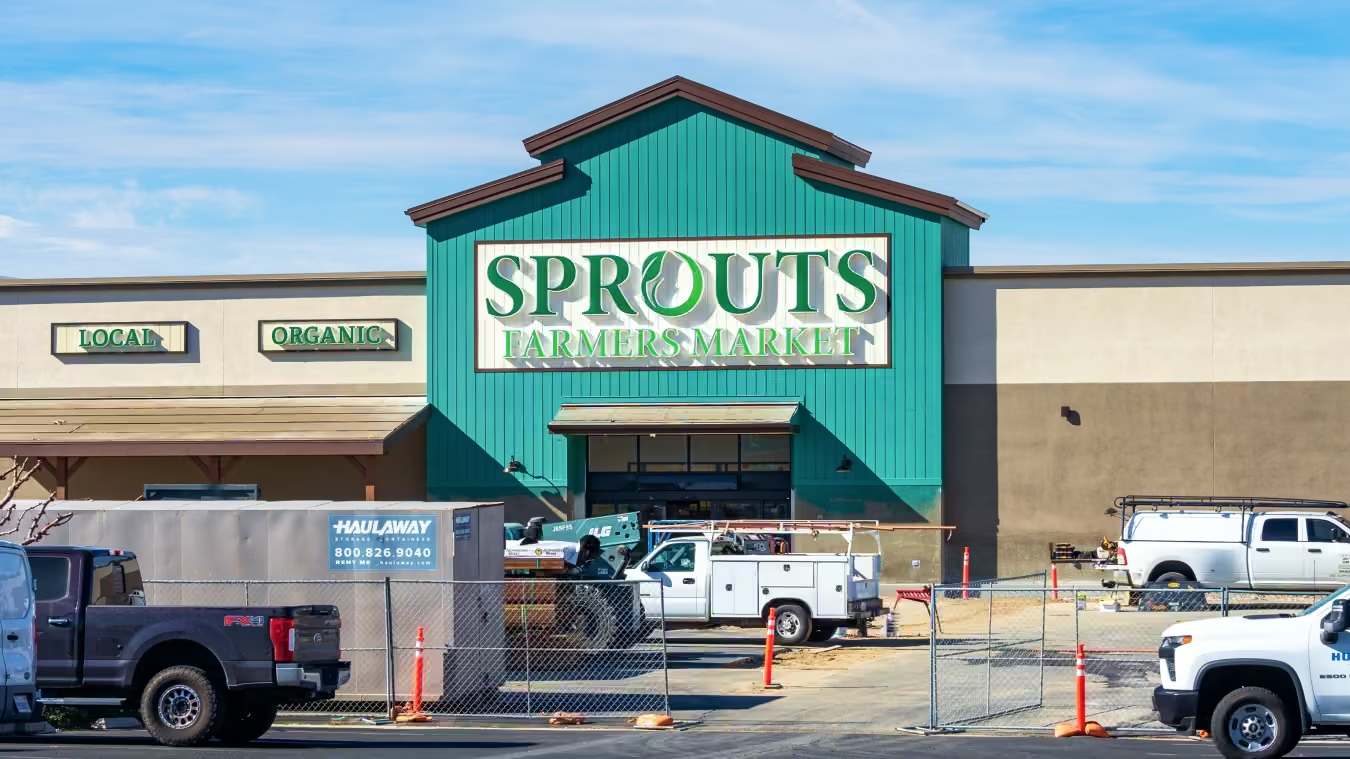
And foot traffic data points to a parallel shift in where consumers are shopping, with a growing share of grocery visits flowing toward fresh-format stores like Trader Joe’s and Sprouts Farmers Market that emphasize high-quality perishables, curated health-oriented assortments, and an elevated in-store experience. While this pivot has been underway for several years, reflecting a broader post-pandemic focus on health and wellness, its recent acceleration coincides with the rise in GLP-1 use.
From Q1 2022 to Q1 2026, these chains steadily expanded their share of overall grocery foot traffic, with momentum accelerating beginning in Q1 2024, even as some experienced per-store softness amid a challenging consumer environment. Over the same period, the median household income within fresh-format chains’ captured markets, which had remained largely stable through early 2024, began to decline. This trend suggests a broadening customer base, as households across income brackets increasingly prioritize higher-quality food and allocate a larger share of their grocery trips to fresh formats.
The reallocation of spending also extends beyond the grocery aisle. Foot traffic data points to a meaningful reordering of food-away-from-home visits over the past three years, with healthier dining segments outperforming more indulgent ones – underscoring a broader shift toward more nutritious options that GLP-1 adoption may be helping to reinforce.
Frozen yogurt chains outpaced ice cream shops in year-over-year visit growth in both 2024 and 2025, as consumers gravitated toward lighter frozen treats. Smoothie and juice chains also captured growing demand, buoyed by expanding footprints from brands like Tropical Smoothie Cafe, Smoothie King, and Playa Bowls, while fast-casual similarly pulled ahead of QSR.
Fitness participation has been on the rise since the pandemic, and the data suggests gym habits are becoming more consistent over time – a trend that GLP-1 users, who often incorporate structured exercise into their routines, may be helping to reinforce.
Between Q1 2023 and Q1 2026, the share of visitors to leading gyms stopping by at least three times in an average month rose from 44.8% to 46.8%, while the share visiting at least four times rose from 37.3% to 39.1%. For a growing segment of the population, going to the gym has become a regular part of the weekly routine – with implications for fitness brands and the broader ecosystem of health-oriented businesses competing for this newly routine-driven consumer.
As consumers deepen their focus on health and fitness, the body transformations associated with GLP-1 use are also reshaping apparel demand. Alongside a growing need for wardrobe replenishment, GLP-1 users are investing more in their appearance and rediscovering the experience of shopping for clothes.
And this trend aligns with recent foot traffic data. Even as discretionary spending continues to face headwinds in a challenging macroeconomic environment, clothing retailers are seeing consistent year-over-year visit growth, driven in large part by the off-price sector – with each year outpacing the broader discretionary retail category by a widening margin. Apparel is pulling away from the pack, likely driven in part by a consumer whose relationship with their body – and with shopping – has fundamentally changed.
The GLP-1 era is still in its early stages – but as programs like Amazon’s new GLP-1 management program expand access, these drugs are likely to continue reshaping shopping behavior in the months and years ahead. The data points to a consumer who is eating differently, moving more, and spending in ways that reflect a new set of priorities, further amplifying the focus on health and wellness that has emerged over the past several years.
For more data-driven retail and dining insights, visit Placer.ai/anchor.

Sprouts Farmers Market entered 2026 expecting a challenging quarter – and Q1 foot traffic trends bore that out. Against a Q1 2025 comparison where comps surged 11.7% year over year (YoY), the company guided Q1 2026 comparable sales to decline between -3.0% and -1.0%, citing both the tough lap and continued pressure on grocery shoppers from elevated food prices. And same-store visits also dropped, falling between -3.0% and -6.0% YoY in Q1.
Still, overall foot traffic rose 1.8%, supported by the 37 stores opened in fiscal 2025 and additional locations added in early 2026, which helped offset softness at existing stores.
Against this backdrop, Sprouts is making several forward-looking investments that could support a traffic recovery later this year. Continued expansion, a new loyalty program launched in 2025, and ongoing merchandising innovation – alongside its transition to self-distribution for fresh meat – all position the company to compete on both quality and value as macro conditions evolve.
Will Sprouts return to same-store visit growth in Q2?
Visit Placer.ai/anchor to find out.
Placer.ai leverages a panel of tens of millions of devices and utilizes machine learning to make estimations for visits to locations across the US. The data is trusted by thousands of industry leaders who leverage Placer.ai for insights into foot traffic, demographic breakdowns, retail sale predictions, migration trends, site selection, and more.
.avif)
In February 2026, Chipotle unveiled its "Recipe for Growth" plan to reverse declining sales by improving operations, boosting marketing, and refreshing its menu. And though the plan has only been in place for a couple of months, traffic data suggests that it may already be having a positive impact on foot traffic to the chain.
After three consecutive quarters of year-over-year declines in average visits per location, Chipotle's foot traffic trends are showing signs of recovery. In Q1 2026, average visits per location were nearly flat (-0.2% YoY), while overall visits grew 5.8% – the strongest growth seen over the past year.
Several branding and menu innovations likely contributed to Chipotle's traffic recovery, including the high protein menu launched in late December 2025 and partnerships with athletes and sporting events. The biggest single driver, however, appears to have been the return of Chicken al Pastor on February 10, 2026 – a fan-favorite protein that had generated more social media requests for its comeback than any other LTO in the chain's history. In the month of its launch, overall visits rose 10.1% YoY and same-store visits grew 5.1%.
Still, the following month, overall visits were up just 3.6% and same-store visits were flat – suggesting that popular menu items can generate meaningful visit spikes, but those spikes may not automatically translate into lasting traffic bumps.
Chipotle appears to be leaning into this dynamic rather than fighting it. Starting April 28, the chain is rotating out Chicken al Pastor in favor of Honey Chicken – its best-performing LTO ever – effectively betting that a steady drumbeat of novelty and scarcity can sustain traffic where any single item cannot.
Another pillar of the company's "Back to Growth" plan entailed creating "new occasions that drive demand into our restaurants" – and Chipotle seems to have accomplished just that with its successful "Tatted Like a Chipotle Bag" BOGO promotion.
On March 13, 2026, from 3 to 4 PM local time, Chipotle offered an in-store BOGO entrée to any customer sporting a tattoo – real, temporary, or hand-drawn – a nod to the iconic tattoo-style graphics on a Chipotle bag. The one-hour activation drove a 55.3% spike in visits above the year-to-date average, with the highest daily visit count recorded since Placer.ai began tracking Chipotle's traffic in 2018. Chipotle also reported March 13th 2026 as the highest daily sales day in the chain's history.
That a single one-hour, in-store promotion could shatter the chain's all-time sales record speaks to the power of Chipotle's brand equity and the effectiveness of leaning into what makes it culturally distinct.
The early results suggest that Chipotle's 'Recipe for Growth' is already working – Q1's traffic recovery was built on a potent mix of menu innovation, viral activations, and renewed cultural relevance. But while the chain's strategy of cycling LTOs and engineering shareable moments has clearly rekindled consumer excitement – whether this delivers consistent same-store visit growth will be the real measure of "Recipe for Growth" success.
For more data-driven dining insights, visit placer.ai/anchor

After a strong Q4 2025 that delivered record single-day sales and one of the largest digital acquisition events in McDonald's history, Q1 2026 posed a harder test. Severe weather, pressure on lower-income consumers, and rising gas prices all weighed on the QSR category. So how did McDonald’s perform in Q1? We dove into the data to find out.
Q1 2026 visits to McDonald’s rose 0.6% year over year (YoY), with average visits per location essentially flat at 0.1%. Given Winter Storm Fern’s outsized impact on January traffic and a consumer environment that grew more selective as the quarter progressed, finishing Q1 in positive territory is a meaningful result.
That resilience reflects momentum built in Q4 2025, when McDonald’s delivered across all three of the pillars the company has identified as central to the brand's recovery: value, marketing, and menu. The September 2025 relaunch of Extra Value Meals helped reestablish McDonald’s value positioning, while MONOPOLY – returning to U.S. restaurants for the first time in nearly a decade – became one of the brand’s largest digital customer acquisition events ever. Meanwhile, the December 2025 Grinch Meal, featuring Dill Pickle McShaker Fries and collectible holiday socks, drove the highest single sales day in company history.
McDonald’s carried that strategy into Q1, bringing back the Shamrock Shake in February and launching the Big Arch Burger nationally in March. But in a quarter shaped by weather disruption and more cautious consumer spending, these initiatives generated more muted traffic responses than Q4’s record-setting activations.
The chart below illustrates McDonald’s uneven performance throughout the quarter. January same-store visits fell 1.3% YoY, due in part to Winter Storm Fern, which swept across more than 30 states late in the month, disrupting operations and driving temporary restaurant closures. February rebounded to +3.8% YoY, supported by pent-up demand and the return of the Shamrock Shake, which delivered a modest but discernable lift during its launch week. March, however, slipped back to -1.2% – reflecting the Big Arch Burger's more muted traffic response and possibly also the tightening of consumer purse strings in the face of rising gas prices.
But despite this consumer caution, the response to McDonald's latest pop-culture collab shows that even in a more demanding environment, the right promotion can still cut through.
On March 31 – the launch date of McDonald's collaboration with Netflix's Oscar-winning animated film KPop Demon Hunters – Tuesday visits reached 11.1% above the year-to-date Tuesday average, the highest single Tuesday reading of the entire first quarter. The promotion featured two dueling adult meals inspired by the film's rival groups, HUNTR/X and the Saja Boys, along with limited-time Korean-inspired items like Ramyeon McShaker Fries. And traffic stayed elevated in the days that followed, contributing to the chain's busiest week of the year so far.
Q1 data shows that McDonald’s can still drive traffic at scale, even in a softer environment. But success increasingly depends on executing consistently across value, marketing, and menu – while also delivering the kind of culturally relevant moments that give consumers a compelling reason to visit. How will the chain perform in Q2 as it rolls out its revamped McValue menu?
Follow Placer.ai/anchor to find out.
Placer.ai leverages a panel of tens of millions of devices and utilizes machine learning to make estimations for visits to locations across the US. The data is trusted by thousands of industry leaders who leverage Placer.ai for insights into foot traffic, demographic breakdowns, retail sale predictions, migration trends, site selection, and more.
.avif)
Starbucks and Dutch Bros may both operate in the coffee space, but they are pursuing distinct strategies that reflect their different stages of growth. Starbucks, the legacy leader, is focused on revitalizing its established brand. Dutch Bros, the newer, fast-growing entrant, is expanding its footprint and building brand awareness. And AI-powered location analytics suggests that both approaches appear to be working.
Dutch Bros is driving traffic through aggressive expansion, a drive-thru–focused model, and ongoing menu innovation. Meanwhile, Starbucks’ “Back to Starbucks” plan centers on closing underperforming stores, re-emphasizing the coffeehouse experience, and simplifying operations. Both chains may also be benefiting from the current consumer headwinds driving demand for affordable treats, with year-over-year (YoY) same-store visits up every month of the past six months.
In September 2024, Starbucks' then-new CEO Brian Niccol announced the Back to Starbucks turnaround strategy, focusing on reestablishing the brand's core identity as a coffee-first, community-centered brand, centered on high-quality coffee, skilled baristas, and a welcoming in-store experience. It also prioritizes improving service speed and consistency, simplifying operations, and strengthening the overall customer experience.
In September 2024, shortly after becoming CEO, Brian Niccol introduced the company's "Back to Starbucks" turnaround strategy, aimed at restoring the brand’s identity as a coffee-first, community-centered experience built on quality coffee, skilled baristas, and welcoming stores. The plan also emphasizes improving speed and consistency, simplifying operations, and enhancing the overall customer experience.
Traffic data reveals that the restructuring plan is already bearing fruit. Over the past two full quarters (Q4 2025 and Q1 2026) the company's overall traffic and average visits per venue increased 4.9% to 5.9% compared to the previous year – a particularly strong performance given broader consumer headwinds. If sustained, this momentum could signal a meaningful and durable return to growth for the brand.
Concurrently, Dutch Bros’ rapid expansion is translating into strong top-line traffic growth, with overall visits rising at a double-digit pace throughout 2025 and into early 2026. Quarterly gains ranged from 12.3% to 17.9% YoY as the brand entered new markets and scaled its footprint.
At the same time, average visits per location have remained relatively stable, suggesting that new store openings are not significantly cannibalizing existing units. This combination of robust overall traffic growth and steady per-location performance points to a healthy expansion strategy, where footprint growth is driving incremental demand rather than diluting it.
As both brands continue to execute on their respective strategies, early traffic trends suggest that there is no single path to growth in today’s coffee space. Starbucks’ operational reset and Dutch Bros’ expansion-led model are each resonating with consumers, albeit in different ways. The key question going forward will be whether these gains can be sustained as macro pressures persist and competition intensifies.
For more data-driven insights, visit placer.ai.anchor
.avif)
In a macroeconomic environment that continues to challenge dining chains, Shake Shack’s performance offers a clear signal of what consumers prioritize in 2026 – familiarity, convenience, and affordable indulgences.
Over the past several years, Shake Shack has expanded its footprint while maintaining solid performance at existing locations. In Q4 2025, total revenue rose nearly 22% year over year, while same-store sales increased 2.1%, driven primarily by pricing alongside a modest (+0.5%) lift in traffic – marking the brand’s 20th consecutive quarter of positive comparable growth. Restaurant-level margins also improved, pointing to stronger execution at the unit level.
And that momentum carried into Q1 2026. Overall visits rose 19.9% YoY, with average visits per location increasing in every month except January, when severe weather – including Winter Storm Fern – likely contributed to a slight 0.4% YoY dip.
A key driver of this consistency is Shake Shack’s alignment with evolving consumer routines. Loyalty has been rising, with repeat visitors accounting for an increasing share of traffic. At the same time, shorter weekday visits are becoming more common, suggesting that more customers are incorporating the brand into their weekly rhythms – whether for a quick lunch or an afternoon treat. And Shake Shack’s newly announced loyalty platform is likely to reinforce this behavior, further embedding the brand into day-to-day routines.
Menu innovation and popular limited-time offers also continue to play a major role in Shake Shack’s growth. Last summer, the nationwide launch of the Dubai Chocolate Pistachio Shake generated significant buzz. And more recently, the chain’s popular Valentine’s Day “True Love Shake” BOGO delivered its busiest day of the year – with visits jumping 14.8% above the typical Saturday baseline.
Shake Shack’s expansion strategy and visitation patterns point to a broader truth about dining in 2026: Success increasingly hinges on fitting seamlessly into everyday life while still delivering moments of excitement. As macroeconomic pressures persist, the brands that can balance routine convenience with craveable, culturally relevant offerings are likely to lead the next phase of growth.
For more data-driven dining insights, visit Placer.ai/anchor.
Placer.ai leverages a panel of tens of millions of devices and utilizes machine learning to make estimations for visits to locations across the US. The data is trusted by thousands of industry leaders who leverage Placer.ai for insights into foot traffic, demographic breakdowns, retail sale predictions, migration trends, site selection, and more.
The first quarter of 2024 was generally a good one for retailers. Though unusually cold and stormy weather left its mark on the sector’s January performance, February and March saw steady year-over-year (YoY) weekly visit growth that grew more robust as the quarter wore on.
March ended on a high note, with the week of March 25th – including Easter Sunday – seeing a 6.1% YoY visit boost, driven in part by increased retail activity in the run-up to the holiday. (Last year, Easter fell on April 9th, 2023, so the week of March 25th is being compared to a regular week.)
Though prices remain high and consumer confidence has yet to fully regain its footing, retail’s healthy Q1 showing may be a sign of good things to come in 2024.
Drilling down into the data for leading retail segments demonstrates the continued success of value-priced, essential, and wellness-related categories.
Discount & Dollar Stores led the pack with 11.2% YoY quarterly visit growth, followed by Grocery Stores, Fitness, and Superstores – all of which outperformed Overall Retail. Dining also enjoyed a YoY quarterly visit bump, despite the segment’s largely discretionary nature. And despite the high interest rates continuing to weigh on the housing and home renovation markets, Home Improvement & Furnishings maintained just a minor YoY visit gap.
Discount & Dollar Stores experienced strong YoY visit growth throughout most of Q1 – and as go-to destinations for groceries and other other essential goods, they held their own even during mid-January’s Arctic blast. In the last week of March, shoppers flocked to leading discount chains for everything from chocolate Easter bunnies to basket-making supplies – driving a remarkable 21.5% YoY visit spike.
Dollar General continued to dominate the Discount & Dollar Store space in Q1, with visits to its locations accounting for nearly half of the segment’s quarterly foot traffic (44.7%). Next in line was Dollar Tree, followed by Family Dollar and Five Below. Together, the four chains – all of which experienced positive YoY quarterly visit growth – drew a whopping 91.6% of quarterly visits to the category.
Rain or shine, people have to eat. And like Discount & Dollar Stores, traditional Grocery Stores were relatively busy through January as shoppers braved the storms to stock up on needed items. Momentum continued to build throughout the quarter, culminating in a 10.5% foot traffic increase in the week ending with Easter Sunday.
Like in other categories, it was budget-friendly Grocery banners that took the lead. No-frills Aldi drove a chain-wide 24.4% foot traffic increase in Q1, by expanding its fleet – while also growing the average number of visits per location. Other value-oriented chains, including Trader Joe’s and Food Lion, experienced significant foot traffic increases of their own. And though conventional grocery leaders like H-E-B, Kroger, and Albertsons saw smaller visit bumps, they too outperformed Q1 2023 by meaningful margins.
January is New Year’s resolution season – when people famously pick themselves up off the couch, dust off their trainers, and vow to go to the gym more often. And with wellness still top of mind for many consumers, the Fitness category enjoyed robust YoY visit growth throughout most of Q1 – despite lapping a strong Q1 2023.
Predictably, Fitness’s visit growth slowed during the last week of March, when many Americans likely indulged in Easter treats rather than work out. But given the category’s strength over the past several years, there is every reason to believe it will continue to flourish.
For Fitness chains, too, cost was key to success in Q1 – with value gyms experiencing the biggest visit jumps. EōS Fitness and Crunch Fitness, both of which offer low-cost membership options, saw their Q1 visits skyrocket 28.9% and 22.0% YoY, respectively – helped in part by aggressive expansions. At the same time, premium and mid-range gyms like Life Time and LA Fitness are also finding success – showing that when it comes to Fitness, there’s plenty of room for a variety of models to thrive.
Superstores – including wholesale clubs – are prime destinations for big, planned shopping expeditions – during which customers can load up on a month’s supply of food items or stock up on home goods. And perhaps for this reason, the category felt the impact of January’s inclement weather more than either dollar chains or supermarkets – which are more likely to see shoppers pop in as needed for daily essentials.
But like Grocery Stores and Discount & Dollar Stores, Superstores ended the quarter with an impressive YoY visit spike, likely fueled by Easter holiday shoppers.
As in Q4 2023, membership warehouse chains – Costco Wholesale, BJ’s Wholesale Club, and Sam’s Club – drove much of the Superstore category’s positive visit growth, as shoppers likely engaged in mission-driven shopping in an effort to stretch their budgets. Still, segment mainstays Walmart and Target also enjoyed positive foot traffic growth, with YoY visits up 3.9% and 3.5%, respectively.
Moving into more discretionary territory, Dining experienced a marked January slump, as hunkered-down consumers likely opted for delivery. But the segment rallied in February and March, even though foot traffic dipped slightly during the last week of March, when many families gathered to enjoy home-cooked holiday meals.
Coffee Chains and Fast-Casual Restaurants saw the largest YoY visit increases, followed by QSR – highlighting the enduring power of lower-cost, quick-serve dining options. But Full-Service Restaurants (FSR) also saw a slight segment-wide YoY visit uptick in Q1 – good news for a sector that has yet to bounce back from the one-two punch of COVID and inflation. Within each Dining category, however, some chains experienced outsize visit growth – including favorites like Dutch Bros. Coffee, Slim Chickens, In-N-Out Burger, and Texas Roadhouse.
Since the shelter-in-place days of COVID – when everybody had their sourdough starter and DIY was all the rage – Home Improvement & Furnishings chains have faced a tough environment. Many deferred or abandoned home improvement projects in the wake of inflation, and elevated interest rates coupled with a sluggish housing market put a further damper on the category.
Against this backdrop, Home Improvement & Furnishings’ relatively lackluster Q1 visit performance should come as no surprise. But the narrowing of the visit gap in March – which also saw one week of positive visit growth – may serve as a promising sign for the segment. (The abrupt foot traffic drop during the week of March 25th, 2024 is likely a just reflection of Easter holiday shopping pattern.)
Within the Home Improvement & Furnishings space, some bright spots stood out in Q1 – including Harbor Freight Tools, which saw visits increase by 10.0%, partly due to the brand’s growing store count. Tractor Supply Co., Menards, and Ace Hardware also registered visit increases.
January 2024’s stormy weather left its mark on the Q1 retail environment, especially for discretionary categories. But as the quarter progressed, retailers rallied, with healthy YoY foot traffic growth that peaked during the last week of March – the week of Easter Sunday. All in all, retail’s positive Q1 performance leaves plenty of room for optimism about what’s in store for the rest of 2024.

This report includes data from Placer.ai Data Version 2.0, which implements improvements to our extrapolation capabilities, adds short visit monitoring, and enhances visit detection.
Over the past year, Fast-Casual & Quick-Service Restaurant (QSR) chains have thrived, consistently outperforming the Full-Service Dining segment with positive year-over-year (YoY) visit growth every quarter since 2023. In this white paper, we dive into the data for leading dining chains to take a closer look at what’s driving visitors to the QSR segment and what other dining categories can learn from fast-food’s success.
One of the key factors separating QSR chains – aptly known as “fast food” – from the rest of the dining industry is the speed at which diners can get a ready-to-eat meal in their hands. And within the QSR space, speed of service is one of the ways chains differentiate themselves from their competition.
Leading fast-food chains are investing heavily in technologies and systems designed to help them serve customers ever more quickly:
Taco Bell’s “Touch Display Kitchen System” is designed to optimize cooking operations and improve wait times, while the chain’s Go Mobile restaurant format seeks to alleviate bottlenecks in the drive-thru lane. Chick-fil-A also has dedicated channels for quick mobile order pick-up and is planning four-lane drive-thrus with second-floor kitchens to get meals out even faster. And to save time at the drive-thru, Wendy’s is experimenting with generative AI and developing an underground, robotic system to deliver digital orders to designated parking spots within seconds.
And location intelligence shows that all three chains are succeeding in reducing customer wait times. Over the past four years, Taco Bell, Chick-fil-A, and Wendy’s have seen steady increases in the share of visits to their venues lasting less than 10 minutes.
The data also suggests that investment in speed of service can increase overall visitation to QSR venues.
In late 2022, McDonald’s opened a to-go-only location outside of Dallas, TX with a lane dedicated to mobile order fulfillment via a conveyor belt. And in Q1 2024, this venue not only had a larger share of short visits compared to the other McDonald’s locations in the region, but also more visits compared to the McDonald’s average visits per venue in the Dallas-Fort Worth CBSA.
This provides further support for the power of fast order fulfillment to drive QSR visits, with customers motivated by the prospect of getting in and out quickly.
The success of the fast-food segment is even driving other restaurants to borrow typical QSR formats – especially during time slots when people are most likely to grab a bite to eat on the go.
In September 2023, full-service leader Applebee’s opened a new format: a fast casual location focusing on To Go orders in Deer Park, NY, featuring pick-up lockers for digital orders and limited dine-in options without table service.
And the new format is already attracting outsized weekday and lunchtime crowds. In Q1 2024, 20.5% of visits to the chain’s To Go venue took place during the 12:00 PM - 2:00 PM time slot, while the average Applebee’s in the New York-Newark-Jersey City CBSA received less than 10% of its daily visits during that daypart. The new restaurant also drew a significantly higher share of weekday visits than other nearby venues.
This suggests that takeaway-focused venues could help full-service chains grow their visit share during weekdays and the coveted lunch rush, when consumers may be less inclined to have a sit-down meal.
An additional factor contributing to QSR and Fast Casual success in 2024 may be the rise of chicken-based chains. Chicken is a versatile ingredient that has remained relatively affordable, which could be contributing to its growing popularity and the rapid expansion of several chicken chains.
Comparing the relative visit share (not including delivery) of various sub-segments within the wider Fast Casual & QSR space showed that the share of visits to chains with chicken-based menus has increased steadily between 2019 and 2023: In Q1 2024, 15.3% of Fast Casual & QSR visits were to a chicken restaurant concept, compared to just 13.4% in Q1 2019.
The strength of chicken-based concepts is also evident when comparing average visits per venue at leading chicken chains with the wider Fast Casual & QSR average.
Both Chick-fil-A, the nation’s predominant chicken chain, and Raising Cane’s, a rapidly expanding player in the fast-food chicken space, are receiving significantly more visits per venue than their Fast Casual & QSR peers: In Q1 2024, Raising Cane’s and Chick-fil-A restaurants saw an average of 153.0% and 237.7% more visits per venue, respectively, compared to the combined Fast Casual & QSR industries average.
The elevated traffic at chicken chains likely plays a part in their profitability per restaurant relative to other Fast Casual & QSR concepts with more sizable fleets.
QSR and Fast-Casual chains are also particularly adept at generating seasonal visit spikes through unique Limited Time Offers and holiday promotions adapted to the calendar.
Arby’s recently launched a 2 for $6 sandwich promotion on February 1st, with two of the three sandwich options on promotion being fish-based in an apparent attempt to entice diners eschewing meat in observance of Lent. The company also brought back a specialty fish sandwich, likely with the goal of further appealing to the Lent-observing demographic.
The offers seem to have driven significant traffic spikes, with foot traffic during the promotion period significantly higher than the January daily visit average. And traffic was particularly elevated during Lent – which this year fell on Wednesday, February 14th through Thursday, March 28th, with visits spiking on Fridays when those observing are most likely to seek out fish-based meals.
Some of the elevated visits in the second half of Q1 may be attributed to the comparison to a weaker January across the dining segment. But the success of the fish-forward promotion specifically during Lent suggests that the company’s calendar-appropriate LTO played a major role in driving visits to the chain.
Shorter-term promotions – even those lasting just a single day – can also drive major visit spikes.
Since 1991, White Castle has transformed its fast-food restaurants into a reservation-only, “fine-dining” experience for dinner on Valentine's Day. In 2024, Valentine’s Day fell on a Wednesday, and White Castle’s sit-down event drove a 11.8% visit increase relative to the average Wednesday in Q1 2024 and a 3.9% visit increase compared to the overall Q1 2024 daily average.
The elevated visit numbers over Valentine’s Day are even more impressive when considering that a full-service dining room can accommodate fewer visitors than the drive-thrus and counter service of White Castle’s typical QSR configuration. The spike in February 14th visits may also be attributed to an increased number of diners showing up throughout the day to take in the Valentine’s Day buzz.
QSR and Fast-Casual dining are having a moment. And the data shows that a combination of factors – including fast and efficient service, the rising popularity of chicken-based dining concepts, and effective LTOs – are all playing a part in the categories’ recent success.

This report includes data from Placer.ai Data Version 2.0, which implements improvements to our extrapolation capabilities, adds short visit monitoring, and enhances visit detection.
The first American mall opened in 1956 and reinvented retail – within a decade there were over 4,500 malls across the country. But a rise in e-commerce coupled with the oversaturation of mall options across the country paved the way for mall visits to slow, and many predicted that malls would go the way of the dinosaur.
But although malls were hit hard over the past few years as lockdowns and rising costs contributed to a significant drop in foot traffic, shopping centers have proven resilient. Leading players in the space have consistently reinvented themselves and explored alternate ways to draw in crowds – and as inflation cools, malls are bouncing back as well.
This white paper analyzes the Placer.ai Shopping Center Industry – a collection of over 3000 shopping centers across the United States – as well as the Placer.ai’s Mall Indexes, which focus on top-tier Indoor Malls, Open-Air Shopping Centers, Outlet Malls. The report examines how visits are shifting and where behaviors are changing – and where they’re staying the same – and takes a closer look at the strategies malls are using to attract shoppers in 2024.
Malls experienced a rocky few years as pandemic-related restrictions and economic headwinds kept many shoppers at home, and visits to all mall types in 2021 were between 10.7% to 15.3% lower than in 2019. But foot traffic trends improved significantly in 2022 – likely due to the fading out of COVID restrictions.
By 2023, visits to the wider Shopping Center Industry were just 2.3% lower than they had been in 2019, and the visit gaps for Indoor Malls and Open-Air Shopping Centers had narrowed to 5.8% and 1.0% lower, respectively. Outlet Malls also saw visits ticking up once again, with the visit gap compared to 2019 narrowing to 8.5% in 2023 after having dropped to 11.3% in 2022. This more sustained foot traffic dip may stem from consumers’ desire to save on gas costs or the impacts of inclement weather. However, the narrowing visit gaps suggest that shoppers are increasingly returning to the segment, and foot traffic may yet pick up again in 2024.
COVID-19 impacted more than just visit numbers – it also changed in-store consumer behavior. And now, with the Coronavirus a distant memory for many, some of these pandemic-acquired habits are fading away, while other shifts appear to be holding steady.
One visit metric that appears to have reverted to pre-COVID norms is the share of weekday vs. weekend visits. Weekday visits had increased in 2021 – at the height of COVID – as consumers found themselves with more free time midweek, but the balance of weekday vs. weekend visits has now returned to 2019 levels.
In 2023, the Shopping Center Industry, which includes a number of grocery-anchored centers along with open-air shopping centers and their relatively large variety of dining options, saw the largest share of weekday visits, followed by Indoor Malls. Outlet Malls received the lowest share of weekday visits – around 55% – likely due to the longer distances usually required to drive to these malls, making them ideal destinations for weekend day trips.
While the day of the week that people frequent malls hasn't changed significantly since 2019, there is one notable difference in mall foot traffic pre- and post-pandemic. Almost all mall categories are seeing fewer during the late morning-midday and late evening dayparts, while the amount of people heading to a mall in the afternoon and early evening has increased.
In 2019, Indoor Malls saw 20.1% of visits occurring between 10:00am and 1:00pm, but that share decreased to 18.6% in 2023. Meanwhile, the share of visits between 4:00-7:00 pm rose from 29.1% in 2019 to 32.4% in 2023. Similar patterns repeated across all shopping center categories, with the 1:00-4:00pm daypart seeing a slight increase, the 4:00-7:00 pm daypart receiving the largest boost and the 7:00-10:00 pm daypart seeing the largest drop. So although changes in work habits have not altered the weekly visit distribution, it seems like hybrid workers are taking advantage of their new, and likely more flexible schedules to frequent malls in the afternoon instead of reserving their mall trips for after work. The significant numbers of Americans moving to the suburbs in recent years may also be contributing to the decline of late night visits, with these suburban newcomers perhaps less likely to spend time outside the house during the evening hours.
Although malls have enjoyed consistent growth in foot traffic over the past two years, visits still remain below 2019 levels. How can shopping centers attract more shoppers and recover their pre-COVID foot traffic?
Some malls are attracting visitors by looking beyond traditional retail with offerings such as gyms, amusement parks, and even entertainment complexes. And with more traditional mall anchors shutting their doors than ever, even smaller shopping centers are adding lifestyle experiences options in newly vacant spaces – and incorporating unique elements into traditional retail spaces.
In September 2023, the Chandler Fashion Center in Arizona opened a giant SCHEELS store in its mall. The 250,000-square-foot sporting goods store boasts more than just sneakers – visitors can ride on a 45-foot Ferris Wheel or marvel at a 16,000-gallon saltwater aquarium. And monthly visitation data to the mall reveals the power of this new retail destination, with foot traffic to the mall experiencing a major jump from October 2023 onward. The excitement of the new SCHEELS seems to be sustaining itself, with February 2024 visits 23.3% higher than the same period of 2023.
Restaurants, too, can help bring people into malls. The Southgate Mall in Missoula, Montana, experienced a jump in monthly visits following the opening of a Texas Roadhouse steakhouse in November 2023. Customers seem to be receptive to this new addition – the mall saw a sustained increase in foot traffic from November 2023 onward, with year-over-year (YoY) visit growth of 17.0% in February 2024.
The addition of Texas Roadhouse provides Missoula residents with a family-friendly dining experience while tapping into the evergreen popularity of steakhouses.
Malls that don’t want to choose between adding a dining option and incorporating a novel entertainment venue can blend the two and go the “eatertainment” route. One shopping center – North Carolina’s Cross Creek Mall – is proving just how effective these concepts can be for a mall looking to grow its foot traffic.
Eatertainment destination Main Event opened at the mall in August 2023, bringing laser tag, video games, virtual reality, and 18 bowling lanes with it. Main Event’s opening also provided a boost in foot traffic to the mall – monthly visits to Cross Creek Mall surged following the opening. And this foot traffic boost sustained itself, particularly into the colder winter months – January and February 2024 saw YoY growth of 12.3% and 25.1%, respectively.
Integrating entertainment options at malls is one strategy for driving visits, but there are plenty of other ways to bring people through the doors. Pop-ups have been a particularly popular option of late, especially as more online brands venture into the world of physical retail. And malls, which typically tend to leave a small portion of their storefronts vacant, can be the perfect place to host a retailer for a limited time.
One brand – Shein – has been a leader in the pop-up space, bringing its affordable fashion to malls in Las Vegas, Seattle, and Indianapolis. These short-term residencies – typically no longer than three to four days – allow shoppers to try the popular online retailer’s products before they buy.
Shein has enjoyed success with its mall residencies, evidenced by the foot traffic at the Woodfield Mall in Illinois, which hosted a three-day pop-up from December 15-17, 2023. The retail event was hugely popular, with visits reaching Super Saturday (the last weekend before Christmas) proportions – even though this year’s Super Saturday coincided with Christmas Eve Eve (December 23rd) and drove unusually high traffic spikes.
Shein pop-ups are typically very short – no more than three to four days. This format, known for creating a sense of urgency among shoppers, has proven powerful in driving store visits. But can longer-lasting pop-ups find success as well?
Foot traffic data from pop-ups hosted by Swedish home furnisher IKEA suggests that yes – longer-term residencies can be successful. The chain is working on growing its presence across the country, particularly in malls. To that end, IKEA has been experimenting with mall pop-ups, beginning with a six-month residency at the Rosedale Center in Roseville, Minnesota.
IKEA opened its store on February 16, 2024, and visits to the mall increased significantly immediately after. The first week of the pop-up saw a 12.9% growth in visits compared to a January 1-7, 2024 baseline. And by the third week of the pop-up, there were still noticeably more people frequenting the mall than before the launch.
The luxury retail segment has had a great few years, and malls are tapping into this popularity. Nearly 40% of new high-end store openings in 2023 were in mall settings, many in Sunbelt states like Texas, Florida, and Arizona, perhaps driven in part by demand from an influx of wealthy newcomers to those states.
A comparison of upscale shopping malls to standard shopping centers across Sunbelt States reveals just how popular high-end retail is in the region. Malls with a high percentage of luxury and designer stores like the Lenox Square Mall in Georgia or the NorthPark Center in Texas saw considerably more YoY visit growth than the average visit growth for shopping centers in their respective states.
Lenox Square Mall saw foot traffic increase 31.2% YoY in 2023, while shopping centers in Georgia saw their visits grow by just 2.7% YoY in the same period. Similar trends repeated in Louisiana, Arizona, California, and Florida. And while some of this growth may be due to the resilience of these wealthier shoppers in the face of inflation, one thing is clear – luxury is here to stay.
Malls are thriving, carving out spaces for themselves in a competitive retail environment. By prioritizing experiential retail, entertainment, pop-up shops, and luxury offerings, shopping centers across the country are remaining relevant in a rapidly changing retail world. And mall operators that recognize the power of innovation and evolve along with their customers can hope to meet with continued success.