Thank you! Your submission has been received!
Oops! Something went wrong while submitting the form.
0
0
0
0
----------
0
0
Articles
Article
Placer.ai April 2025 Office Index: Recovery Apace
With return-to-work policies gaining steam across the country, are office patterns changing? We took a look at visits to office buildings in major cities across the country to see whether March 2025's resurgence continued into April.
Lila Margalit
May 9, 2025
3 minutes

With Google and Uber joining the ever-growing ranks of companies tightening remote work policies, employees across industries are being forced to spend more time in the office. But how much are office visit patterns really changing on the ground? Did the resurgence observed in March 2025 continue into April, or was it merely a brief reprieve from the slump seen earlier this year? 

Third-Busiest In-Office Month Since COVID

April 2025 emerged as the third-busiest in-office month since COVID, outpaced only by October and July 2024. And visits to the Placer.ai Nationwide Office Index were down just 30.7% compared to April 2019 (pre-COVID) – an improvement over April 2024. The upswing is especially notable given that Easter fell in April this year, whereas last year it fell in March. Though the holiday itself takes place on Sunday, many employees celebrate the occasion with a long weekend. 

April 2025’s strong performance suggests that despite setbacks in January and February, the office recovery is back on track, with further increases potentially ahead in the coming months. 

New York’s Near-Complete Recovery

A closer look at regional trends shows significant variation across major business hubs. New York City, long at the forefront of office recovery, nearly closed its post-pandemic office visit gap in April 2025, with visits just 5.5% below April 2019 levels. Miami also performed strongly, with visits down only 15.3%. Meanwhile, Atlanta and Dallas outperformed the national baseline (Dallas, just barely), while San Francisco once again took up the rear with Chicago.

Tuesdays and Wednesdays are Back! (in NYC)

Drilling down deeper into the data for office recovery leaders, New York and Miami highlights the continued influence of hybrid work on office visitation trends, even as numbers approach pre-pandemic levels. 

Nationwide, office visits recovered most strongly mid-week. But this trend was especially pronounced in nearly-recovered NYC, where Tuesdays and Wednesdays were actually busier last month than they were during the same period of 2019 – and where Thursdays were essentially on par with April 2019 levels. Meanwhile, Fridays, and to a lesser extent Mondays, remained significantly below pre-COVID benchmarks. In Miami, too, it was midweek attendance that powered the office recovery – though Fridays rebounded more strongly in the Florida hub than in New York or nationwide. 

San Francisco Leads in YoY Growth

Turning to year-over-year (YoY) trends, San Francisco once again led in YoY office visit growth – suggesting that accumulating RTO mandates in the city’s tech sector may be fueling substantial recovery. Boston was not far behind, with visits up 7.4% YoY. And while most other cities also posted YoY visit growth, a few hubs – including Houston and Los Angeles – saw modest declines. 

Full Speed Ahead?

April 2025 data from the Placer.ai Office Index indicates that the renewed office recovery momentum seen in March 2025 is continuing apace – though hybrid work remains in full force. What lies ahead for offices in the months to come? 

Follow Placer.ai’s data-driven office recovery analyses to find out. 

Article
How Are Coachella Crowds Evolving? 
The Coachella Valley Music and Arts Festival, held annually at the Empire Polo Club in Indio, CA, recently wrapped up its 24th run. We dove into the location intelligence data to understand how the audience has changed in recent years and understand how the shift is impacting spending patterns at the festival.
Shira Petrack
May 8, 2025
4 minutes

The Coachella Valley Music and Arts Festival, held annually at the Empire Polo Club in Indio, CA, recently wrapped up its 24th run. We dove into the location intelligence data to understand how the audience has changed in recent years and understand how the shift is impacting spending patterns at the festival.  

Coachella Drives Visitors to Indio, CA

Indio, CA is home to the Empire Polo Club, a thousand-acre event facility known for hosting many large-scale events throughout the year which attract numerous out-of-towners. One of the venue’s oldest annual events is the Coachella Valley Music and Arts Festivals (often referred to just as “Coachella”) that takes place over two consecutive three-day weekends in April and drives large visit spikes to Indio during its run.

Coachella Audience Shifted In Recent Years

Like many other live cultural events, Coachella was cancelled in 2020 and 2021 due to the ongoing COVID pandemic. And comparing the recent audience segmentation data for Empire Polo Club visitors during recent Coachella weekends to pre-pandemic trends suggests that the festival’s audience shifted slightly following its post-pandemic return. 

In recent years (2023, 2024, and 2025), the share of family segments in the Empire Polo Club’s captured market has generally been higher than it was pre-pandemic, while the share of single audience segments decreased. Specifically, Spatial.ai’s segments of Near-Urban Diverse Families, Wealthy Suburban Families, and Melting Pot Families grew, while the share of Young Professionals fell. The share of Educated Urbanites in the Empire Polo Club’s captured market showed more variance, though it was also lower over the last two years (2024 and 2025) than it was in 2019. 

The audience shift could suggest that Coachella is becoming more family-friendly, with some parents choosing to make a family trip out of the festival weekend. At the same time, the increase in family-oriented segments may also indicate that the audience base has shifted younger and that the festival now attracts more Gen Z attendees, many of whom still live at home.

Shifts in Spending Patterns 

The shift in audience also seems to have driven a change in spending patterns over Coachella weekend. Between 2019 and 2025, the data reveals a notable decrease in hotel & resort visits by Coachella attendees along with an increase in visits to major retail and dining categories, with the largest visit increase reserved for the most affordable segments.

Perhaps budget-conscious families and cash-strapped Gen-Zers living at home are foregoing the more expensive hotels and resorts in favor of more affordable accommodations such as Airbnbs or even camping on-site. To stretch their budgets even further, these attendees are favoring grocery stores, superstores, c-stores, and QSR as their preferred food options, driving significant visit increases to these categories. 

At the same time, traffic to full-service restaurants and even apparel chains also grew somewhat in recent years – which could suggest a bifurcated spending pattern. While a significant portion of attendees prioritize affordability in lodging and everyday food, other segments with more disposable income are still willing to spend on sit-down dining and fashion purchases, perhaps viewing these as part of the overall festival experience.

Staying Relevant in 2025 and Beyond 

Analyzing post-pandemic Coachella audiences reveals an increased presence of family segments, coupled with a notable gravitation towards budget-friendly spending – painting a picture of a potentially younger, more financially conscious attendee base. Simultaneously, the continued, albeit more moderate, growth in spending at full-service restaurants and apparel chains also indicates a persistent segment willing to invest in the broader festival experience. This dual trend underscores Coachella's success in balancing its appeal to both value-driven attendees and those seeking a more premium experience and suggests that the festival is continuing to maintain its relevance in 2025 – and beyond. 

For more data-driven consumer insights, visit placer.ai/anchor

Article
Placer.ai Mall Index: Traffic Up Across All Mall Formats 
April 2025 data showed a resurgence in mall activity, with YoY visits up across all formats. Diving deeper into the data uncovers the why behind these visitation patterns.
Shira Petrack
May 7, 2025
4 minutes

April 2025 Visits Increased to All Mall Formats 

Following a February slowdown, March 2025 mall data offered early signs of a rebound as indoor mall traffic increased and visit gaps at open-air shopping centers and outlet malls narrowed. Now, April data confirms the resurgence in mall activity, with YoY monthly visits up across all mall formats. 

Some of the strength may be due to this year’s relatively late Easter, which fell in April (Easter 2024 took place in March) and may have led to a YoY increase in April 2025 as families utilized the holiday weekend for shopping and leisure. But diving deeper into the data suggests that the calendar shift is just one reason for this month’s strong visit numbers, which may also have been boosted by a pull-forward of consumer demand following the early April tariff announcement.

Easter Drives Visit Boost – And Dip 

Looking at daily visits in April reveals that the Easter calendar shift had both a positive and negative impact on mall foot traffic. Visits were strong the week before Easter – particularly on Good Friday – as consumers bought gifts, shopped sales, and used their day off to visit mall-based dining and entertainment venues with friends and family. Outlet malls in particular received a significant boost with visits on April 18th (Good Friday) up 26.2% compared to the April 2025 Friday average – perhaps evidence of a more challenged consumer.

But visits to all three formats also dropped significantly on Easter Sunday, with visits to indoor malls, open-air shopping centers, and outlet malls down 59.4%, 33.3%, and 25.9%, respectively, compared to each format’s Sunday average in April 2025. So while Easter did drive a visit boost before the holiday, Sunday’s traffic drop may have balanced out any Easter-driven increase. Rather, the robust April performance likely reflects sustained consumer demand for mall experiences.

Weekly Data Shows Positive Mall Trends Beyond Easter 

Weekly numbers also suggest that malls’ performance is not just due to an Easter bump. YoY weekly visits increased for all three formats during the last three full weeks of April, with indoor malls and open-air shopping centers receiving the largest boost the week after Easter – pointing to a broader trend of renewed consumer interest in mall-based activities. 

The weekly numbers showing visit hikes following April 2nd also suggest that tariffs may already be impacting consumer behavior, with some shoppers likely beginning to stock up ahead of anticipated price increases and possible shortages.

More & Longer Mall Visits 

Analyzing the average visit duration adds another layer of insights into malls’ April success. 

Last month, the average visit duration increased for all three mall formats – so not only did malls receive more visits YoY, each visit also lasted longer, on average, than it did last year. This may suggest a larger combined basket size, with consumers spending more time in stores or visiting more mall-based retailers in a single trip. This highlights once again the resilience of the format and the ongoing consumer demand for mall-based retail, dining, and entertainment – and may offer another indication of the pull-forward of demand from certain consumers.

Malls’ Robust April Performance

April 2025 mall data reveals a significant upswing in mall traffic across all formats along with an increase in average visit duration, demonstrating a recovery that extends beyond the influence of the Easter calendar shift. These positive trends reveal malls’ continued role as key destinations for shopping and leisure – even in times of economic headwinds – and could be pointing to a pull-forward of consumer demand in anticipation of retail uncertainty.

For more data-driven consumer insights, visit placer.ai/anchor

Executive Insights
The Untapped Potential of Class-B Malls 
Class B malls offer significant potential for investors and retailers to unlock value while meeting the needs of local communities. We took a look at how some of these malls - typically located in suburban or secondary markets - are being redeveloped to better serve today's consumer.
Barrie Scardina & Richard Latella
May 6, 2025
4 minutes

As new retail construction slows, the trend of repurposing underperforming malls is accelerating, offering exciting opportunities to transform these properties into vibrant mixed-use developments. By blending retail, lifestyle, entertainment, and essential services, these redevelopments can better serve the evolving needs of today’s consumers. Class B malls offer significant potential for investors and retailers to unlock value while meeting the needs of local communities.

Characteristics of Class-B Malls

According to Green Street, there are 250 Class-B malls in the U.S., making up 28% of all U.S. malls. These properties are typically located in suburban or secondary markets and often feature a mid-tier tenant mix of national and regional retailers within a traditional enclosed mall format. According to Green Street data, A-rated malls boast an impressive 95% occupancy rate, while B malls sit at 89%. Meanwhile, occupancy drops significantly to 72% for C-rated malls and below.

B Malls face a number of challenges in addition to their higher vacancy rates, including lower sales per square foot, less desirable locations, outdated designs, and competition from newer lifestyle centers that offer a more dynamic mix of retail, dining, and entertainment.

The Future of Class-B Malls  

Class-B malls, despite their challenges, offer a compelling opportunity for adaptive reuse. Often priced below their original value, these properties are ideal for redevelopment into community-centric hubs, featuring a mix of residential, retail, and public spaces. Reimagining these spaces not only allows investors and developers to achieve significant returns, but also fosters positive economic growth in local communities. For retailers, these revitalized spaces offer the chance to thrive in environments with increasing foot traffic and elevated customer engagement. 

Promising redevelopment ideas include: 

  • Densification and Mixed-Use Developments: Incorporating residential components – like multifamily housing, age-restricted communities, or mixed-income units – can breathe new life into surrounding neighborhoods and create walkable communities while addressing critical housing needs. Adding office spaces, co-working hubs, and hospitality services further enhances the property’s versatility, catering to a wide range of needs. 
  • Experiential Retail Hubs: Transforming B malls into experiential spaces can attract younger demographics and re-engage shoppers. This could include entertainment venues like escape rooms, virtual reality experiences, live music, or food and beverage experiences such as craft breweries or celebrity chef-driven food halls. 
  • Healthcare & Community Spaces: Some B malls are being repurposed into vital community hubs, incorporating medical offices, educational institutions, and municipal services to meet the daily needs of consumers. 
  • Last Mile Distribution and Data Centers: The rise of e-commerce and demand for data centers has led to the conversion of some B malls into last-mile distribution centers or tech hubs, especially in suburban areas with large footprints and access to transportation networks. 
  • Anchor Repurposing: As anchor tenants such as Sears and JCPenney exit, repurposing these stores into larger-format retailers, fitness centers, or indoor sports complexes offers a chance to create new, engaging destinations for local communities. 
  • Partial Redevelopment: Many B malls are hindered by outdated, closed-off designs. By opening spaces, adding green areas, outdoor-facing stores, and lifestyle features, developers can create more inviting environments that appeal to today’s consumers. 

Revitalizing B Malls – The Case of Hawthorn Mall

Hawthorn Mall, a premier two-story super-regional shopping center in Vernon Hills, Illinois, is one B Mall currently undergoing a significant transformation – and early data suggests that the revitalization efforts are already bearing fruit.  

Owned by Centennial Real Estate, Hawthorn is strategically positioned at the intersection of Lake County’s key thoroughfares, offering exceptional convenience and accessibility. The center is anchored by major brands like AMC, Dave & Buster’s, JCPenney, and Macy’s, with a diverse mix of more than 60 retailers and restaurants, including Anthropologie, FP Movement, H&M, Lovesac, PGA Tour Superstore, Perry’s Steakhouse & Grille, and Pure Barre. Now, in the midst of redevelopment, Hawthorn is evolving into a vibrant mixed-use community, integrating luxury residential, expanded retail and dining, and pedestrian-friendly spaces.

Although the Hawthorn Mall redevelopment is still under way, visit quality to the mall has already improved – with the median visit duration rising from 54 minutes between April 2022 and March 2023 to 61 minutes between April 2024 and March 2025. The median household income in Hawthorn’s captured market has increased as well, perhaps thanks to the addition of a luxury apartment complex on the mall’s property. Lastly, the share of evenings visits also grew, suggesting that Hawthorn's revamped dining and entertainment are making it an increasingly popular evening destination for locals.

Looking Ahead 

Class-B malls represent a unique opportunity to meet both market demands and community needs through thoughtful redevelopment. While challenges such as securing financing, navigating zoning and regulatory hurdles, and managing costs exist, the potential rewards are significant. Successful redevelopment requires targeted tenant curation, strategic location, and a bold, forward-thinking vision. With expansive footprints, prime access, and adaptability, Class-B malls are perfectly positioned to evolve into dynamic, mixed-use centers – redefining retail experiences and meeting the needs of modern consumers and communities.

Article
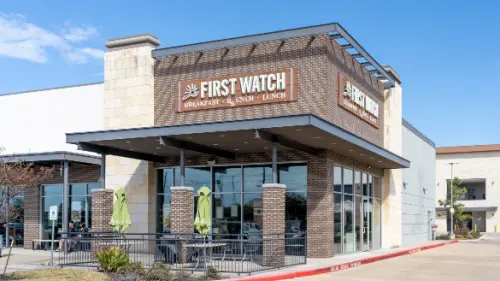
First Watch Traffic Continues to Climb 
First Watch is continuing to add more stores to its fleet, and visits continue to grow as well.
Shira Petrack
May 5, 2025
1 minute

Traffic to First Watch continues to climb as the company forges on with its expansion. Visits to the chain were 7.3% higher year-over-year (YoY) in Q1 2025 as visits per location held essentially steady (-0.8% YoY) – revealing that demand for the breakfast, brunch, and lunch dining concept remains robust despite the consumer headwinds.

And according to the latest monthly data, First Watch may be in even better shape than its already strong Q1 2024 visit numbers suggest. In April 2025, overall visits to the chain grew 10.5% YoY while visits per location increased by 3.0% – indicating that the morning and afternoon-focused dining brand likely still has more room to grow.

For more data-driven consumer analysis, visit placer.ai/anchor

Article
Warby Parker and Allbirds: Stabilization Trends Into 2025
Direct-to-consumer retailers Warby Parker and Allbirds have taken different approaches to their brick-and-mortar stores - Warby Parker has been expanding while Allbirds has shrunk its store fleet. How are the two retailers faring thus far into 2025? We took a closer look.
Bracha Arnold
May 5, 2025
3 minutes

While Warby Parker and Allbirds both originated as direct-to-consumer brands, they have since firmly established themselves as brick-and-mortar retailers. Warby Parker, known for its quirky and affordable approach to eyecare, has around 270 stores in the United States, while Allbirds, which recently underwent a significant rightsizing process, currently operates 24 stores across the country.

We took a look at the visit data for the two retailers to explore how they are faring thus far in 2025.

Optimal Optical Opportunities 

Warby Parker continues to impress. The eyewear chain, which transitioned from an online-only model to physical stores in 2013, spent 2024 adding stores to its current fleet – and visit data highlights the positive impact of this expansion.

Q4 2024 and Q1 2025 visits to Warby Parker were 13.4% and 6.6% higher, respectively, than in Q4 2023 and Q1 2024. Average visits per location, too, showed growth in Q4 2024 (+4.9%), though they slowed slightly in Q1 2025. Still, Warby Parker’s ability to drive visit growth while keeping average visits per location stable suggests that its expansions are meeting with consistent demand. 

Weekly visits from 2025 onward highlight the brands’ strong positioning, with YoY visit growth in most analyzed weeks. (The significant YoY visit decline during the weeks of March 31st and April 7th is likely due to the comparison with last year’s major eclipse-related promotion, during which the chain offered free solar eclipse glasses.)

Allbirds Aligns with Agility

Shoewear company Allbirds has been charting a new performance course over the last year. The chain, known for its sustainable approach to footwear, recently closed nearly a third of its U.S. fleet in an attempt to optimize its stateside operations. And this consolidation, which allows Allbirds to prioritize top-performing locations, has yielded promising results for the chain.

While YoY visits were down across all analyzed months – an anticipated outcome given the significant reduction in store count – average visits per location, a more relevant indicator of Allbirds’ performance, were up on a near-constant basis. In Q1 2025, visits declined by 35.8% YoY, but visits per location grew by 14.1%. 

Monthly visits followed a similar pattern: while overall visits declined by 25.9% YoY in March 2025, visits per location were up by 23.8%. This positive trend continued into April 2025, with overall visits down by just 9.2% YoY and visits per location remaining elevated at 21.0%, suggesting a strengthened performance at the remaining Allbirds stores.

This focus on a more efficient store footprint seems to be paying off for Allbirds, allowing the chain to accurately target its most receptive audience while cutting out underperforming locations.

Direct-to-Consumer Confidence

Warby Parker and Allbirds are performing well, highlighting the importance of remaining agile and pivoting to meet evolving consumer challenges. 

Will the two retailers continue to thrive?
Visit Placer.ai to keep up with the latest data-driven retail news. 

Reports
INSIDER
Winning Strategies for a Stabilizing Fitness Market
Gym visits are stabilizing following two years of post-pandemic growth - and staying on top of changing consumer preferences can help fitness studios continue driving visits.
May 16, 2024
6 minutes

Fitness Segment Back In Shape

The Fitness industry was a major post-pandemic winner. Visits to gyms across the country surged as stay-at-home orders ended and people returned to their in-person workout routines. And even as consumers reduced discretionary spending in the face of inflation, they kept going to the gym – finding room in their budgets for the chance to embrace wellness and get in shape while interacting with other people.

But no category can sustain such unabated growth forever – and as the segment inevitably stabilizes, gyms will need to stay nimble on their feet to maintain their competitive edge. 

This white paper takes a closer look at the state of Fitness as the category transitions into a more stable growth phase following two years of outsize post-pandemic demand. The report digs into the location analytics to reveal how the Fitness space has changed – and what strategies gyms can adopt to stay ahead of the pack. 

*This report excludes locations within Washington state due to local legislation.

Stability Is The Name Of The Game

Monthly visits to the Fitness category have grown consistently year over year (YoY) since early 2022, when COVID subsided and gyms returned to full capacity. And the segment is still doing remarkably well. Even in January and March 2024 – when visits were curtailed by an Arctic blast and by the Easter holiday weekend – YoY Fitness visits remained positive, despite the comparison to an already strong 2023.  

Still, recent months have seen smaller YoY increases than last year, indicating that the Fitness category is entering a more normalized growth phase. 

Leaning Into Evolving Consumer Preferences

By keeping a close watch on evolving consumer preferences, fitness chains can uncover new opportunities for growth and adaptation within a stabilizing market – including leaning into increasingly popular dayparts.  

Late Afternoon And Evening Visits On The Rise

Examining the evolving distribution of gym visits by daypart over the past six years shows that major shifts were brought on by the COVID-19 pandemic. 

Between Q1 2019 and Q1 2021, as remote work took hold, gyms saw their share of 2:00 PM - 5:00 PM visits increase from 15.8% to 18.6%. Though this trend partially reversed as the pandemic receded, afternoon visits remained elevated in Q1 2024 compared to pre-COVID – likely a reflection of hybrid work patterns that leave people free to take an exercise break during their workdays.

At the same time, the share of morning visits to fitness chains (between 8:00 AM and 11:00 AM) dropped from 20.5% in Q1 2019 to 17.2% in Q1 2024, while evening visits (between 8:00 PM and 11:00 PM) increased from 11.3% to 13.2%. 

Gyms that recognize this changing behavior can adapt to new workout preferences – whether by incentivizing morning visits, scheduling popular classes mid-afternoon, or offering extended evening hours.  

Evening Workouts Provide Gains

In fact, the data indicates that gyms that are leaning into the evening workout trend are already finding success: Of the top 12 most-visited gym chains in the country, those that saw bigger increases in their shares of evening visits also tended to see greater YoY visit growth. 

EōS Fitness and Crunch Fitness, for example, have seen their shares of evening visits grow by 5.5% and 3.4%, respectively, since COVID – and in Q1 2024, their YoY visits grew by 29.0% and 21.8%, respectively. Other chains, including 24 Hour Fitness and Chuze Fitness, experienced similar shifts in visit patterns. At the same time, LA Fitness saw just a minor increase in its share of evening visits between Q1 2019 and Q1 2024, and a correspondingly small increase in YoY visits. 

As the evening workout slot gains popularity, gym operators that can adapt to these new trends and encourage evening visits may see significant benefits in the years to come.

Young Gym-Goers Driving Success

Diving into demographic data for the analyzed gym chains sheds light on some factors that may be driving this heightened preference for evening workouts at top-performing gyms. 

The four fitness chains that experienced the greatest YoY visit boosts in Q1 – Crunch Fitness, EōS Fitness, 24 Hour Fitness, and Chuze Fitness all featured trade areas with significantly higher-than-average shares of Young Professionals and Non-Family Households. (STI: PopStat’s Non-Family Household segment includes households with more than one person not defined as family members. Spatial.ai: PersonaLive’s Young Professional consumer segment includes young professionals starting their careers in white collar or technical jobs.) 

In plainer terms, these consumer segments – typically young, well-educated, and without children – and therefore more likely to be flexible in their workout times – are driving visits to some of the best-performing gyms across the country. And these audiences seem to be displaying a preference for nighttime sweat sessions – a factor that gyms can take into account when planning programming and marketing efforts. 

Attracting Niche Markets

Leaning into emerging gym visitation patterns is one way for fitness chains to thrive in 2024 – but it isn’t the only marker of success for the segment. Even after years of visit growth, the market remains open to new opportunities and innovations that meet health-conscious consumers where they are. 

Striding Towards Success

STRIDE Fitness, a gym that offers treadmill-based interval training, has sparked a trend among running enthusiasts. This niche player is finding success, particularly among a specific demographic: runners and endurance training enthusiasts. 

Between January and April 2024, monthly YoY visits to STRIDE Fitness consistently outperformed the wider Fitness space. A standout month was January, when STRIDE Fitness’s visits soared by an impressive 33.6% YoY, surpassing the industry average of 5.7% for the same period.

Psychographic data from the Spatial.ai’s FollowGraph dataset – which looks at the social media activity of a given audience – suggests that STRIDE Fitness’ trade areas are well-positioned to attract those visitors most open to its offerings. Residents of STRIDE Fitness’s potential market are 24% more likely to be, or to be interested in, Endurance Athletes than the nationwide average – compared to just 3% for the Fitness industry as a whole. Similar patterns emerge for Marathon Runners and Triathlon Participants. This indicates that the chain is well-situated near consumers with a passion for endurance sports and long distance running, helping it maintain a competitive edge in the crowded gym market. 

Pickleball Craze Sends Visits Soaring

Pickleball, a game that blends elements of tennis, ping pong, and badminton, is the fastest-growing sport in the country. And recognizing its broad appeal, some fitness chains have begun incorporating pickleball courts into their facilities. 

Arizona-based EōS Fitness added a pickleball court at a Phoenix, AZ location – and early 2024 data highlights the impact of this addition. Between January and April 2024, the location drew between 9.1% and 33.3% more monthly visits than the chain’s Arizona visit-per-location average. 

And analyzing the demographic profile of the chain’s location with a pickleball court reinforces the game’s increasingly wide appeal. Young consumer segments have been embracing the game in large numbers – and the Phoenix EōS Fitness location’s potential market includes a significantly higher share of 18 to 34-year-olds than the chain’s overall Arizona potential market. Residents of the pickleball location’s trade area are also less affluent than the chain’s Arizona average. 

Pickleball has typically been associated with more affluent consumer segments, and it seems like this may be shifting. With more people than ever embracing the game, gyms that choose to add courts to their facilities may reap the foot traffic benefits. 

Something For Everyone

The Fitness industry has undergone a significant transformation since COVID-19. The category’s outsize post-pandemic visit growth has begun to stabilize, and gyms are staying ahead by adapting to changing consumer preferences. Evenings are emerging as crucial dayparts for gym operators, likely driven by younger consumer segments. And niche fitness chains are seeing visit success, proving that there are plenty of ways for the Fitness segment to succeed.

INSIDER
C-Stores: From Convenient Stops to Go-To Destinations
Discover key strategies helping C-Stores drive visits, engage customers, and cement their roles as dining, shopping, and tourism destinations in their own right.
April 25, 2024
5 minutes

This report includes data from Placer.ai Data Version 2.0, which implements improvements to our extrapolation capabilities, adds short visit monitoring, and enhances visit detection.

C-Stores: Charging Ahead

Grabbing a coffee or snack at a convenience store is a time-honored road trip tradition – but increasingly, Convenience Stores (C-Stores) have also emerged as places people go out of their way to visit. 

Convenience stores have thrived in recent years, making inroads into the discretionary dining space and growing both their audiences and their sales. Between April 2023 and March 2024, C-Stores experienced consistent year-over-year (YoY) visit growth, generally outperforming Overall Retail. Unsurprisingly, C-Stores fell behind Overall Retail in November and December 2023, when holiday shoppers flocked to malls and superstores to buy gifts for loved ones. But in January 2024, the segment regained its lead, growing YoY visits even as Overall Retail languished in the face of an Arctic blast that had many consumers hunkering down at home.

C-Stores’ current strength is partially due to the significant innovation by leading players in the space: Chains like Casey’s, Maverik, Buc-ee’s, and Rutter’s are investing in both in their product offerings and in their physical venues to transform the humble C-Store from a stop along the way into a bona fide destination. Dive into the data to explore some of the key strategies helping C-Stores drive consumer engagement and stay ahead of the pack. 

Four C-Store Brands Ahead of the Curve

While chain expansion may explain some of the C-Store segment growth, a look at visit-per-location trends shows that demand is growing at the store level as well. Over the past year (April 2023 to March 2024), average visits per location on an industry-wide basis grew by 1.8%, compared to the year prior (April 2022 to 2023). 

And within this growing segment, some brands are distinguishing themselves and outperforming category averages. Casey’s, for example, saw the average number of visits to each of its locations increase by 2.3% over the same time frame – while Maverik, Buc-ee’s and Rutter’s saw visits per location increase by 3.2%, 3.4% and 3.9%, respectively.

Chains That Are Becoming The Final C-Store Destinations

Each in its own way, Casey’s, Maverik, Buc-ee’s, and Rutter’s, are helping to transform C-Stores from pit stops where people can stretch their legs and grab a cup of coffee to destinations in and of themselves. 

Casey’s & Maverik: Leaning into Breakfast 

Midwestern gas and c-store chain Casey’s – famous for its breakfast pizza and other grab-and-go breakfast items – has emerged as a prime spot for fast food pizza lovers to grab a slice first thing in the morning. And Salt Lake City, Utah-based Maverik – which recently acquired Kum & Go and its 400-plus stores – is also establishing itself as a breakfast destination thanks to its specialty burritos and other chef-inspired creations.  

Casey’s and Maverik’s popular breakfast options are likely helping the chains receive its larger-than-average share of morning visits: In Q1 2024, 16.3% of visits to Maverik and 17.5% of visits to Casey’s took place during the 7:00 AM - 10:00 AM daypart, compared to just 14.9% of visits to the wider C-Store category.

Psychographic data from the Spatial.ai’s FollowGraph dataset – which looks at the social media activity of a given audience – also suggests that Casey’s and Maverik’s have opened stores in locations that allow them to reach their target audience. Compared to the average consumer, residents of Casey’s potential market are 7% more likely to be “Fast Food Pizza Lovers” than both the average consumer and the average C-Store trade area resident. Residents of Maverik’s potential market are 16% more likely than the average consumer to be “Mexican Food Enthusiasts,” compared to residents of the average C-Store’s trade area who are only 1% more likely to fall into that category.

With both chains expanding, Casey’s and Maverik can hope to introduce new audiences to their unique breakfast options and solidify their hold over the morning daypart within the C-Store space over the next few years. 

Buc-ee’s: Bigger Is Better

Everything is said to be bigger in the Lone Star State, and Texas-based convenience store chain Buc-ee’s – holder of the record for the worlds’ largest C-Store – is no exception. With a unique array of specialty food items and award-winning bathrooms, Buc-ee’s has emerged as a well-known tourist attraction. And the popular chain’s status as a visitor hotspot is reflected in two key metrics. 

First, Buc-ee’s attracts a much greater share of weekend visits than other convenience store chains. In Q1 2024, 39.6% of visits to Buc-ee’s took place on the weekends, compared to just 28.3% for the wider C-Store industry. And second, Buc-ee’s captured markets feature higher-than-average shares of family-centric households – including those belonging to Experian: Mosaic’s Suburban Style, Flourishing Families, and Promising Families segments.

Rather than merely a place to stop on the way to work, Buc-ee’s has emerged as a favored destination for families and for people looking for something fun to do on their days off.

Rutter’s: Expanding Upward

Buc-ee’s isn’t the only C-Store chain that believes bigger is better. Pennsylvania-based Rutter’s is increasing visits and customer dwell time by expanding its footprint – both in terms of store count and venue size. New stores will be 10,000 to 12,000 square feet – significantly larger than the industry average of around 3,100 square feet. And in more urban areas, where space is at a premium, the company is building upwards.

Rutter’s added a second floor to one of its existing locations in York, PA in December 2023. The remodel, which was met with enthusiasm by customers, provided additional seating for up to 30 diners, a beer cave, and an expanded wine selection. And in Q1 2024, the location experienced 15.6% YoY visit growth – compared to a chainwide average of 7.6%. Visitors to the newly remodeled Rutter’s also stayed significantly longer than they did pre-renovation. The share of extended visits to the store (longer than ten minutes) grew from 20.8% in Q1 2023 to 27.0% in Q1 2024 – likely from people browsing the chain’s selection of beers or grabbing a bite to eat. 

Convenience At Every Corner

Convenience stores are flourishing, transforming into some of the most exciting dining and tourist destinations in the country. Today, C-Store customers can expect to find brisket sandwiches, gourmet coffees, or craft beers, rather than the stale cups of coffee of old. And the data shows that customers are receptive to these innovations, helping drive the segment’s success. 

INSIDER
Q1 2024 Retail & Dining Review
Discover how the Discount & Dollar Stores, Grocery Stores, Fitness, Superstores, Dining, and Home Improvement & Furnishings categories performed in Q1 2024.
April 18, 2024
6 minutes

Q1 2024 Overview 

Overall Retail on the Rise

The first quarter of 2024 was generally a good one for retailers. Though unusually cold and stormy weather left its mark on the sector’s January performance, February and March saw steady year-over-year (YoY) weekly visit growth that grew more robust as the quarter wore on. 

March ended on a high note, with the week of March 25th – including Easter Sunday – seeing a 6.1% YoY visit boost, driven in part by increased retail activity in the run-up to the holiday. (Last year, Easter fell on April 9th, 2023, so the week of March 25th is being compared to a regular week.)

Though prices remain high and consumer confidence has yet to fully regain its footing, retail’s healthy Q1 showing may be a sign of good things to come in 2024. 

Success Across Categories

Drilling down into the data for leading retail segments demonstrates the continued success of value-priced, essential, and wellness-related categories. 

Discount & Dollar Stores led the pack with 11.2% YoY quarterly visit growth, followed by Grocery Stores, Fitness, and Superstores – all of which outperformed Overall Retail. Dining also enjoyed a YoY quarterly visit bump, despite the segment’s largely discretionary nature. And despite the high interest rates continuing to weigh on the housing and home renovation markets, Home Improvement & Furnishings maintained just a minor YoY visit gap. 

Discount & Dollar Stores 

Discount & Dollar Stores experienced strong YoY visit growth throughout most of Q1 – and as go-to destinations for groceries and other other essential goods, they held their own even during mid-January’s Arctic blast. In the last week of March, shoppers flocked to leading discount chains for everything from chocolate Easter bunnies to basket-making supplies – driving a remarkable 21.5% YoY visit spike.

Dollar General Reins Supreme

Dollar General continued to dominate the Discount & Dollar Store space in Q1, with visits to its locations accounting for nearly half of the segment’s quarterly foot traffic (44.7%). Next in line was Dollar Tree, followed by Family Dollar and Five Below. Together, the four chains – all of which experienced positive YoY quarterly visit growth – drew a whopping 91.6% of quarterly visits to the category.

Grocery Stores

Rain or shine, people have to eat. And like Discount & Dollar Stores, traditional Grocery Stores were relatively busy through January as shoppers braved the storms to stock up on needed items. Momentum continued to build throughout the quarter, culminating in a 10.5% foot traffic increase in the week ending with Easter Sunday. 

Aldi Leads the Way

Like in other categories, it was budget-friendly Grocery banners that took the lead. No-frills Aldi drove a chain-wide 24.4% foot traffic increase in Q1, by expanding its fleet – while also growing the average number of visits per location. Other value-oriented chains, including Trader Joe’s and Food Lion, experienced significant foot traffic increases of their own. And though conventional grocery leaders like H-E-B, Kroger, and Albertsons saw smaller visit bumps, they too outperformed Q1 2023 by meaningful margins.

Fitness

January is New Year’s resolution season – when people famously pick themselves up off the couch, dust off their trainers, and vow to go to the gym more often. And with wellness still top of mind for many consumers, the Fitness category enjoyed robust YoY visit growth throughout most of Q1 – despite lapping a strong Q1 2023.

Predictably, Fitness’s visit growth slowed during the last week of March, when many Americans likely indulged in Easter treats rather than work out. But given the category’s strength over the past several years, there is every reason to believe it will continue to flourish.

Value Chains Come out Ahead

For Fitness chains, too, cost was key to success in Q1 – with value gyms experiencing the biggest visit jumps. EōS Fitness and Crunch Fitness, both of which offer low-cost membership options, saw their Q1 visits skyrocket 28.9% and 22.0% YoY, respectively – helped in part by aggressive expansions. At the same time, premium and mid-range gyms like Life Time and LA Fitness are also finding success – showing that when it comes to Fitness, there’s plenty of room for a variety of models to thrive. 

Superstores

Superstores – including wholesale clubs – are prime destinations for big, planned shopping expeditions – during which customers can load up on a month’s supply of food items or stock up on home goods. And perhaps for this reason, the category felt the impact of January’s inclement weather more than either dollar chains or supermarkets – which are more likely to see shoppers pop in as needed for daily essentials.

But like Grocery Stores and Discount & Dollar Stores, Superstores ended the quarter with an impressive YoY visit spike, likely fueled by Easter holiday shoppers.

Warehouse Clubs Continue to Thrive

As in Q4 2023, membership warehouse chains – Costco Wholesale, BJ’s Wholesale Club, and Sam’s Club – drove much of the Superstore category’s positive visit growth, as shoppers likely engaged in  mission-driven shopping in an effort to stretch their budgets. Still, segment mainstays Walmart and Target also enjoyed positive foot traffic growth, with YoY visits up 3.9% and 3.5%, respectively.

Dining

Moving into more discretionary territory, Dining experienced a marked January slump, as hunkered-down consumers likely opted for delivery. But the segment rallied in February and March, even though foot traffic dipped slightly during the last week of March, when many families gathered to enjoy home-cooked holiday meals. 

Coffee, Coffee, Coffee!

Coffee Chains and Fast-Casual Restaurants saw the largest YoY  visit increases, followed by QSR – highlighting the enduring power of lower-cost, quick-serve dining options. But Full-Service Restaurants (FSR) also saw a slight segment-wide YoY visit uptick in Q1 – good news for a sector that has yet to bounce back from the one-two punch of COVID and inflation. Within each Dining category, however, some chains experienced outsize visit growth  – including favorites like Dutch Bros. Coffee, Slim Chickens, In-N-Out Burger, and Texas Roadhouse.

Home Improvement 

Since the shelter-in-place days of COVID – when everybody had their sourdough starter and DIY was all the rage – Home Improvement & Furnishings chains have faced a tough environment. Many deferred or abandoned home improvement projects in the wake of inflation, and elevated interest rates coupled with a sluggish housing market put a further damper on the category.

Against this backdrop, Home Improvement & Furnishings’ relatively lackluster Q1 visit performance should come as no surprise. But the narrowing of the visit gap in March – which also saw one week of positive visit growth – may serve as a promising sign for the segment. (The abrupt foot traffic drop during the week of March 25th, 2024 is likely a just reflection of Easter holiday shopping pattern.)

Home Improvement Bright Spots

Within the Home Improvement & Furnishings space, some bright spots stood out in Q1 – including Harbor Freight Tools, which saw visits increase by 10.0%, partly due to the brand’s growing store count. Tractor Supply Co., Menards, and Ace Hardware also registered visit increases.

Good Things to Come

January 2024’s stormy weather left its mark on the Q1 retail environment, especially for discretionary categories. But as the quarter progressed, retailers rallied, with healthy YoY foot traffic growth that peaked during the last week of March – the week of Easter Sunday. All in all, retail’s positive Q1 performance leaves plenty of room for optimism about what’s in store for the rest of 2024.

Loading results...
We couldn't find anything matching your search.
Browse one of our topic pages to help find what you're looking for.
For more in-depth analyses on a variety of subjects, explore Reports.
The Anchor Logo
INSIDER
Stay Anchored: Subscribe to Insider & Unlock more Foot Traffic Insights
Gain insider insights with our in-depth analytics crafted by industry experts
— giving you the knowledge and edge to stay ahead.
Subscribe