Skip to Main Content
Thank you! Your submission has been received!
Oops! Something went wrong while submitting the form.
0
0
0
0
----------
0
0
Articles
Article
Starbucks and Dunkin’: 2023 in Four Data Points
With the new year gathering steam, we dove into the data to explore consumer trends impacting Starbucks and Dunkin’ in 2023. What were the biggest days of the year for the two chains? And who were the java enthusiasts driving visits to the two chains last year?
Lila Margalit
Jan 29, 2024
4 minutes

High food-away-from-home prices weighed on the dining sector in 2023. But affordable indulgences were the name of the game – and for plenty of people, their daily caffeine fix remained non-negotiable. 

So with the new year gathering steam, we dove into the data to explore consumer trends impacting Starbucks and Dunkin’ in 2023. What were the biggest days of the year for the two chains? And who were the java enthusiasts driving visits to the two chains last year?

1. National Donut Day is Coming Back

The first Friday of every June is National Donut Day, an event first kicked off by the Salvation Army in the 1930’s to honor folks that served doughnuts to soldiers during the First World War. Every year, Dunkin’ marks the occasion with – you guessed it – free doughnuts, and this year wasn’t any different. On June 2, 2023, Dunkin’ fans were invited to snag a delicious free treat with the purchase of any beverage, and customers turned out in droves. 

The day turned out to be the busiest one of the year, with Dunkin’ locations seeing a 49.4% increase in foot traffic compared to the chain’s 2023 daily average. And after a couple of years when the occasion garnered somewhat less turnout, National Donut Day appears to be very much on track to regain its pre-COVID glory (The last time National Donut Day was the busiest day of the year was in 2019). Friends, it seems, really don't let friends miss out on free doughnuts. 

Bar Graph: National Donut Day was Dunkin's busiest day of the year.

2. Holiday Cheer, Black Friday, and … Pumpkin Spice, Of Course!

Like many restaurant and coffee chains, Starbucks tends to be busiest on Saturdays. And in 2023, the popular coffee chain drew its biggest crowds on November 4th – the first Saturday after the launch of the eagerly-anticipated holiday menu. With mouth-watering offerings like Chestnut Praline Latte and Iced Gingerbread Oatmeal Chai, it’s no wonder customers can’t wait to indulge – especially when they can top off their drink with a Snowman Cookie or a Peppermint Brownie Cake Pop. (Luckily, the menu launch comes before those pesky new year’s resolutions.)

Starbucks’ second-busiest day of the year in 2023 was Black Friday (November 24th), as shoppers sought a quick way to fuel up or get a caffeine boost while they hit the stores. And the chain’s third-busiest day of the year was August 26th – the first Saturday after the annual release of Starbucks’ calendar-owning Pumpkin Spice Latte, a tradition that never fails to drive excitement – and foot traffic.

BAr graph: for starbucks Nov. 4th 2023, the first Saturday after the holiday menu launch was the busiest day of the year.

3. Reaching Diverse Crowds Year-Round

But who were the customers that fueled Starbucks’ and Dunkin’s foot traffic in 2023? Analyzing the two chains’ captured markets with psychographics from Spatial.ai shows that while each of them attracted a somewhat different audience, they both drew diverse crowds throughout the year. 

Starbucks, which features a cozy ambiance that encourages people to stay a while, has emerged as a popular WFH spot – and is more likely than Dunkin’ to be frequented by Young Professionals. The doughnut leader, on the other hand, boasts a to-go vibe, and draws greater shares of Suburban Boomers and Rural High-Income customers. Still, the data shows that coffee consumption is far from a zero-sum game, and in 2023, both chains attracted healthy shares of each of the analyzed segments. 

Bar graph: both Starbucks and Dunkin' Attracted Diverse Audiences in 2023

4. A Regional Coffee Game

In addition, while Starbucks customers tend to hail from more affluent areas than Dunkin’ fans, the median household income (HHI) of each chain’s customer base varied considerably by region last year – as did the extent of the HHI gap between the two chains. 

Starbucks’ most affluent customer base was in New England, where the median HHI of its captured market stood at $90.7K – a significant 19.2% higher than that of Dunkin’s ($75.8K). But in the Pacific region, including California, Dunkin’s captured market had a median HHI of $83.2K, just 2.1% lower than that of Starbucks. 

Bar Graph: Median HHI of Starbucks and Dunkin's customer bases varies by region. Demographics based on data from STI: PopStats. Captured Markets based on Placer.ai's proprietary data.

Key Takeaways

“Coffee, coffee, coffee!” may be a bit from Gilmore Girls, but it’s also a way of life for millions of Americans. And location data shows that in 2023, there was plenty of love to go around for coffee leaders like Starbucks and Dunkin’. 

How will National Donut Day and Starbucks’ holiday menu play out in 2024? And what does the new year have in store for the coffee space more generally? 

Follow Placer.ai’s data-driven analyses to find out. 

Article
Parks, Recreation Centers, and Redeveloped Malls: Community Glue
Caroline Wu
Jan 27, 2024

In the spring of 2023, the surgeon general released an alarming report about the epidemic of loneliness in the US, which has negative implications on our physical, social, and emotional health such as “a 29% increased risk of heart disease, a 32% increased risk of stroke, and a 50% increased risk of developing dementia for older adults. Additionally, lacking social connection increases risk of premature death by more than 60%.”  Among his six recommendations to combat this, the number one idea was to “Strengthen Social Infrastructure: Connections are not just influenced by individual interactions, but by the physical elements of a community (parks, libraries, playgrounds) and the programs and policies in place. To strengthen social infrastructure, communities must design environments that promote connection, establish and scale community connection programs, and invest in institutions that bring people together.”  We’ve written at length about how malls are becoming one of the old-but-new gathering places for Gen Z and how pickleball is a new craze that has been bringing people together.  Let’s take a look now at how some parks and recreation centers serve their communities as well as the vision for one mall redeveloper, who held town halls and numerous local meetings in order to understand the needs of the community.

First up is Brooklyn Bridge Park.  This 85- acre park resides on the Brooklyn side of the East River in New York City. It has revitalized 1.3 miles of Brooklyn’s post-industrial waterfront.  Among its many offerings are playgrounds, athletic fields, a roller-skating rink, fitness equipment, kayak and canoe launch sites, and basketball, bocce, handball, and beach volleyball courts.

Source:  City Parks Alliance

There’s certainly a seasonal element to park visitation, with visits increasing into the spring and peaking in the summer.

Late afternoon into the evening tends to be when most people visit the park.

It appears most visitors enjoy their park outing with hamburgers, some shopping, pizza, and ice cream with Shake Shack the top destination before and after visiting.  

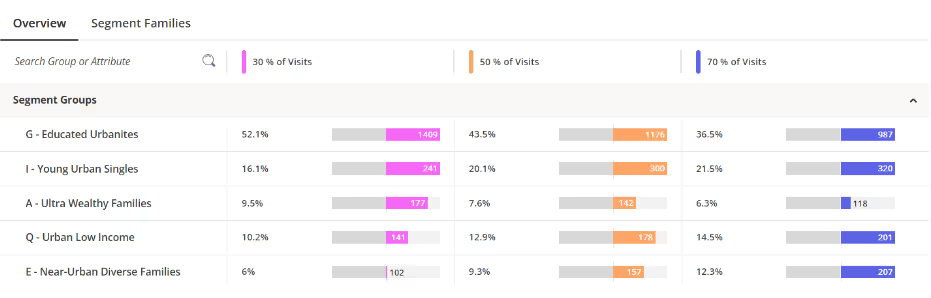
While Educated Urbanites and Young Urban Singles make up the majority of segments, the park attracts a broad range of additional segments, ranging from Ultra Wealthy Families to Urban Low Income. Another fun fact about this park is that it is financially self-sustaining, due to the fact that 10% of the parkland was set aside for development, which sustains 90% of the park’s operating budget.

Brooklyn segments

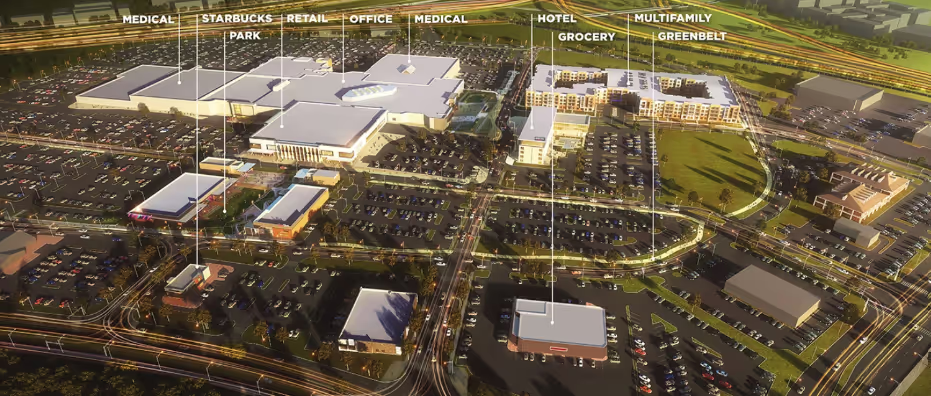
Speaking of Brooklyn, we now turn our attention to a Dallas-based developer, Peter Brodsky, who originally hails from Brooklyn. He purchased the Redbird Mall in South Dallas in 2015 and incorporated much community feedback to understand what the residents in the area wanted, such as jobs, health care, grocers, restaurants, and a Starbucks. It’s currently under development as The Shops at RedBird, and incorporating trends we’ve highlighted in previous Anchor articles, such as mixed-use, with a new apartment complex on the grounds of an ex-parking lot; a Courtyard Marriott hotel to follow; two health care providers--Parkland and UT Southwestern-- taking over Dillard’s and Sears further reinforcing our bullishness on malls and healthcare; and on the second floor a call center operator that employs two thousand workers with plans for more. Below, we show a birds-eye view plan for this exciting new development. Plus, there is a one-acre lawn for community events.

Source: Omniplan

Like almost all malls, these shops saw a dip during the pandemic, but since then traffic has perked up.

When we look at year-over-year change from the surrounding zip codes, we see a fair amount of growth coming from the south and the farther western direction.  

Using Jan 1, 2023 as a baseline, the overall shopping center as well as some of the major tenants like Starbucks, Burlington, and Foot Locker show a positive trend.

In fact, among all the Starbucks stores that Placer tracks, this Starbucks location at Redbird ranks #5 in traffic for the year 2023.

In more exciting news, there are also plans for a Tom Thumb grocery to open up at this shopping center.  We will keep an eye on this development for sure as more tenants and office/residence/hospitality opens up.

Article
How Have Winter Storms Impacted Retail Visits?
R.J. Hottovy
Jan 27, 2024

The past four years have each taken on their own identities for consumers, retailers, and commercial real estate companies. 2020 was obviously the pandemic year, where consumers had to quickly change behaviors and retailers were forced to make drastic changes in their business models to keep up. With such drastic changes in 2020, 2021 became a year where many retailers and commercial real estate companies made structural changes in their operating models, adopting new store sizes or formats or evolving their tenant mix. 2022 got off to a rocky start with COVID variants and inflationary pressures, but eventually, we saw a reopening that led to a shift away from physical goods to experiences that has largely continued through today. And while inflation defined much of 2023, we also think consumers' focus on events, value, and uniqueness also explains consumer behavior.
Heading into the year, there was hope that 2024 would be our first “normal” year in some time, but three weeks in, we’re already seeing evidence that weather may be end up being a more pronounced story. Storms across the Midwest (for the week ending Jan. 15) and Southeast (during the week ended Jan. 22) have already had a significant impact on visitation trends across many retail categories. Below, we’ve used data from Placer’s Industry Trends report to examine year-over-year visit trends for chains across all major retail categories to start the year. 

For the week ended Jan. 8, visits decreased -8.6% nationwide across all categories and a relatively small variance range across states (ranging from double-digit declines across much of the Northeast to low-single-digit decline in the upper Midwest).

We start to see the impact of the snowstorms that hit the Midwest U.S. during the week ended Jan. 15, with Nebraska and Iowa seeing an almost 30% decrease in visitors year-over-year, and many other surrounding states seeing a 20% decrease in visits.

For the week ended Jan. 22, the Southeast U.S. was more heavily impacted, including a -32% decrease in retail visits in Tennessee, a -22% decline in Mississippi, and mid-to-high teens declines in Arkansas, Kentucky, Alabama, and West Virginia. Texas saw a -14% decline in visits that week.

Which categories were hit hardest by these weather trends? Consumer electronics–which had a strong Black Friday and solid holiday period (which we discuss in the economics section below)–saw mid-to-high teen declines in visits throughout January, although the category is lapping some tougher comparisons with many retailers shedding excess inventory in the year ago period (this is also true for office supplies). After that, we see the greatest impact in a few more weather-sensitive categories like home improvement (mid-teens declines in visits) and restaurants (the QSR/Fast Casual and full-service restaurant categories both saw double-digit declines in visits as the month progressed).

We expect weather will be a key topic as retailers and restaurants begin to report their full-year 2023 results and provide 2024 outlooks over the next month. Historically, inclement weather is something that doesn’t have a major impact on consumer demand for products and services (it usually just delays these purchases), but it is possible that those chains that have outsized exposure to the affected regions may temper their expectations for the year.

Article
Who Visits CVS and Walgreens?
CVS and Walgreens are the two leading brick-and-mortar pharmacy chains in the country. And though the two chains may appear similar, the location analytics reveals that each brand serves a slightly different audience. We take a closer look, here.
Shira Petrack
Jan 25, 2024
3 minutes

CVS and Walgreens are the two leading brick-and-mortar pharmacy chains, controlling together over 40% of the U.S. prescription drug market. And although the companies have been rightsizing their physical footprint over the past couple of years, CVS and Walgreens together still operate over 18,000 locations throughout the country. 

And while the two chains may sometimes appear interchangeable, diving into the demographic differences between CVS and Walgreens’ trade areas indicates that each brand serves a slightly different audience. 

Differences in Visitor Income 

A chain’s potential market looks at the Census Block Groups – CBGs – where visitors to a chain come from, weighted according to the population of each CBG. And since both CVS and Walgreens operate in all 50 states and often have locations in the same town or city, the makeup of the two chains’ potential market trade area is remarkably similar – indicating that both chains have the potential to reach the same types of households. 

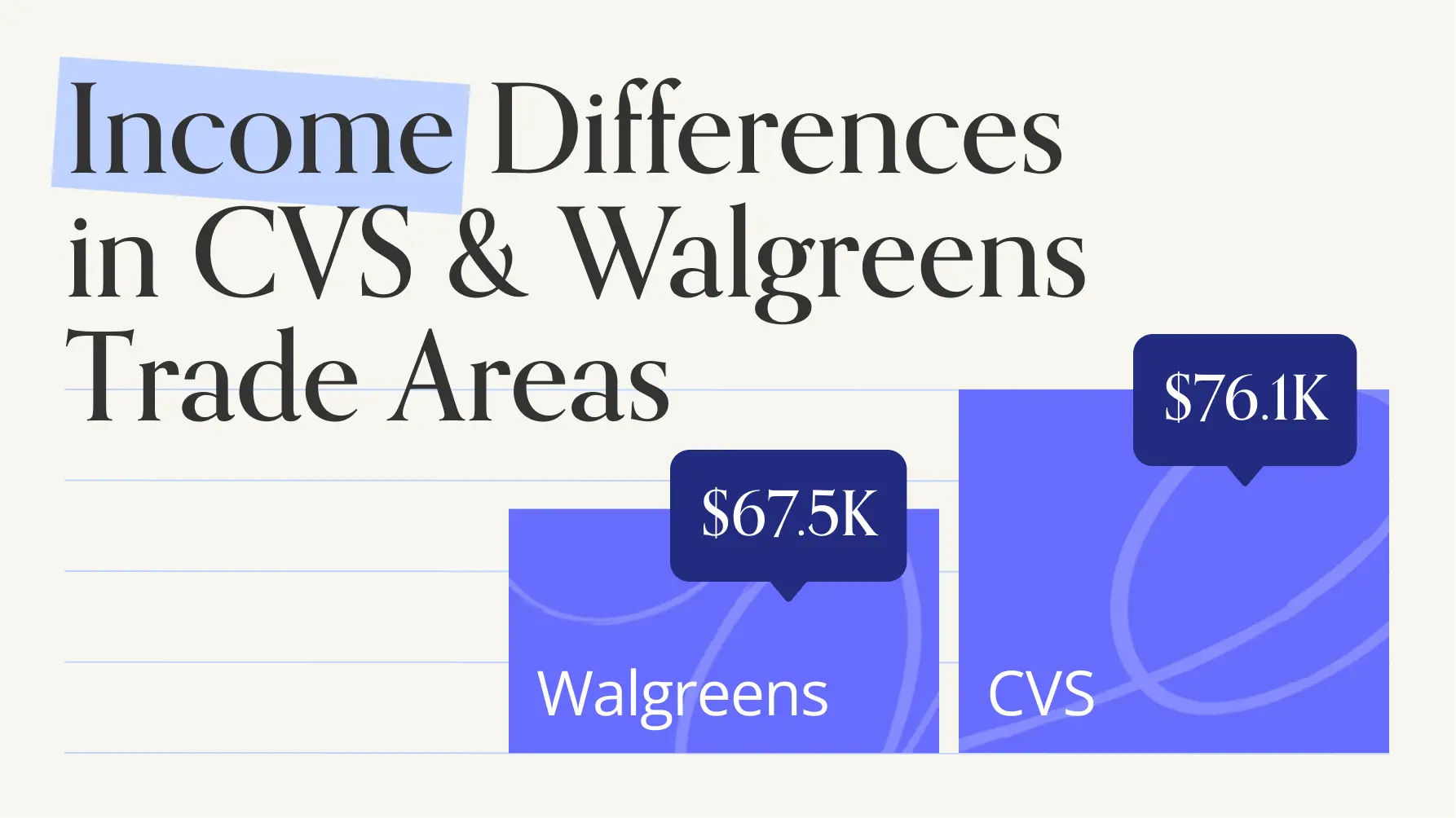
But diving into the captured market (the trade area of each chain weighted according to the actual number of visits from each CBG) reveals a major difference in trade area median household income (HHI). Although both chains have the potential to attract visitors with a median HHI of around $70.0K, visitors to CVS come from CBGs with a median HHI of $76K – meaning that visitors to CVS tend to come from the more affluent neighborhoods within CVS’s potential trade area. Walgreens visitors, on the other hand, come from CBGs with a median HHI of $67.5K, which is lower than the median HHI in the brand’s potential market, and indicates that Walgreens visitors tend to come from the less affluent neighborhood within the company’s trade area.  

Bar graphs: CVS visitors tend to come form higher-income areas than Walgreens visitors. based on STI: Popstats 2022 dataset and placer.ai captured and potential trade areas

CVS Attracts Larger Households, While Walgreens Serves More Singles 

The two pharmacy leaders also seem to attract different shares of singles and families, although the differences are not as pronounced as the differences in median HHI. 

CVS and Walgreens have equal shares of one-person & non-family households in their trade areas, but the share of this segment in Walgreens’ captured market is slightly larger than in CVS’ captured market. Still, for both brands, one-person and non-family households are slightly underrepresented in the captured market relative to the potential market, indicating that singles across the board are perhaps slightly less likely to visit brick-and-mortar pharmacy chains. 

On the other hand, both CVS and Walgreens had more families (households with four or more children) in their captured market than in their potential market – although the share of this segment in CVS’ captured market was slightly higher than in Walgreens’.


bar graphs: CVS Attracts Larger Households, While Walgreens Serves More Singles, based on STI: PopStats 2022 dataset and placer.ai cap ured and potential trade areas

CVS Appeals to Families

CVS’ relative popularity with family segments also comes through when looking at the psychographic makeup of its trade area. When compared to Walgreens, CVS’s captured market included larger shares of three out of four family-oriented segments analyzed by the Spatial.ai: PersonaLive dataset – Ultra Wealthy Families, Wealthy Suburban Families, and Near-Urban Diverse Families. Walgreens’ captured market did include larger shares of Upper Suburban Diverse Families, but the difference was minimal – 9.8% for Walgreens compared to 9.5% for CVS. 

bar graphs: CVS' trade area includes more family psychographic segments. based on Spatial.ai: PersonaLive dataset combined with placer.ai captured trade area data

Differences and Overlaps between CVS and Walgreens Visitors  

CVS and Walgreens carry a very similar product selection, and the two chains’ nearly identical potential trade area makeup indicates that both brands’ locations have the potential to reach the same types of customers. But diving into CVS and Walgreens’ captured market reveals some differences between the two chains’ audiences – CVS tends to attract more affluent visitors, while Walgreens seems slightly more popular among singles. 

For more data-driven retail insights, visit placer.ai/blog

Article
Fashionably Frugal: Apparel in 2023
The fashion industry faced plenty of headwinds in 2023 - but discount and thrift apparel chains are thriving. We take a closer look at location intelligence to understand how the demographic profiles of visitors to apparel chains of all kinds have shifted in recent years.
Lila Margalit
Jan 24, 2024

From high prices to changing workplace attire (yes, soft pants are most definitely still a thing) – the fashion industry faced plenty of headwinds in 2023. But some segments, like off-price and thrift stores, reaped the benefits of trading down by consumers. And the category as a whole enjoyed a robust holiday season, helping to drive record holiday sales. 

So with 2024 getting underway, we dove into the data to explore the evolving relationship between three major segments that comprise the fashion industry: non-off-price apparel chains, off-price retailers (such as T.J. Maxx, Marshalls, Ross Dress for Less, and Burlington), and thrift shops.* Which segment drew the most foot traffic in 2023? And how have the demographic profiles of visitors to the three sub-categories shifted in recent years?  

*Analysis includes major thrift shop chains, including Goodwill, the Salvation Army, Buffalo Exchange, Plato’s Closet, and others.

Off-Price and Thrift Stores Gain Market Share

Last year saw an acceleration of the redistribution of foot traffic between non-off-price apparel retailers, off-price apparel chains, and thrift shops – a trend which began even before COVID. Back in 2017, non-off-price apparel stores accounted for just over 50% of visits to these three segments – but in the years since, the sub-category’s visit share dwindled to 38.9%. Over the same period, off–price-apparel chains grew their visit share by 8.1 percentage points, from 39.3% to 47.4%, and the share of visits to thrift shops increased by 3.2%.

Stacked Bar Graph: Off-Price apparel retailers and thrift stores have been gaining visit share since 2017

Apparel Affluence Gap Persists

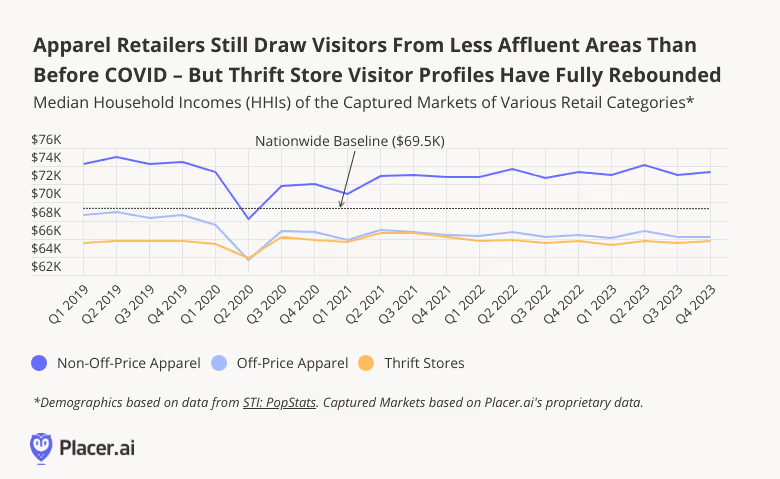
Unsurprisingly, non-off-price apparel chains have traditionally attracted more affluent consumers than either off-price retailers or thrift stores. And throughout the analyzed period, the captured market of non-off-price apparel retailers continued to feature a median household income (HHI) that was significantly higher than the nationwide baseline, while the captured markets of off-price chains and thrift stores featured median HHIs below the nationwide median. 

But the three segments were impacted differently by shifts in consumer behavior in the wake of the pandemic. In early 2020, all three sub-categories experienced significant dips in the affluence of their captured markets. But while thrift shops saw an immediate HHI rebound, non-off-price apparel chains – and even more so off-price retailers – have yet to see the affluence of their visitor bases return to 2019 levels. 

Line graph: apparel retailers draw visitors from less affluent areas than before COVID, but thrift store visitor profiles have fully rebounded. Demographics based in STI: PopStats dataset and Placer.ai captured trade area data

Thrifting is (Disproportionately) for Singles

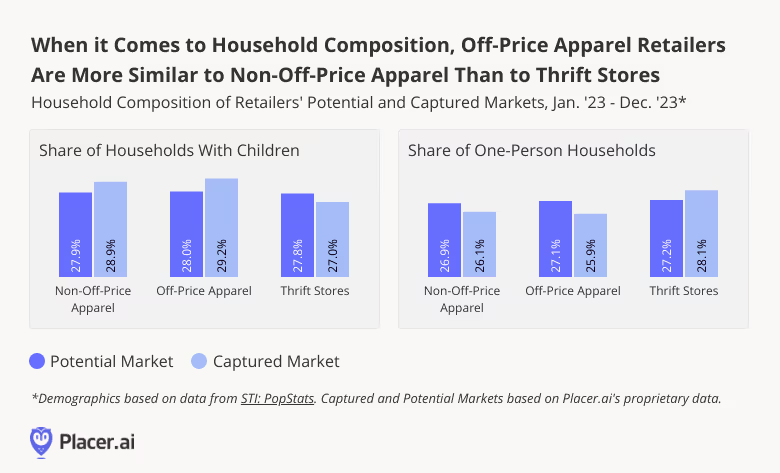
Foot traffic data also reveals an interesting divide in the household composition of visitors to the three segments: While the income profiles of off-price apparel shoppers are more akin to those of thrifters, their household composition is closer to that of visitors to non-off-price apparel stores. 

The potential markets of all three categories, for example, featured similar shares of one-person households in 2023. But their captured markets were quite different – with singles over-represented for thrift stores, and under-represented for off-price and non-off-price apparel stores. This indicates that thrifters hail disproportionately from Census Block Groups (CBGs) that feature higher-than-average shares of one-person households. And visitors to off-price and non-off-price retailers come from the CBGs within the trade areas of these chains that feature smaller-than-expected concentrations of one-person households. Given the special appeal thrift shops carry for demographics like college students, it may come as no surprise that singles are among their best customers. 

For families with children, on the other hand, more traditional apparel retailers hold sway: Visitors to off-price and non-off-price apparel stores were more likely to come from areas with higher concentrations of families with children in 2023, while thrifters were more likely to come from areas with smaller ones. 

Bar graphs: households that visit off-price retailers are more similar to those that visit non-off price than to thrift stores, based on STI: PopStats dataset and placer.ai captured and potential trade area data

Key Takeaways

Economic headwinds and evolving consumer preferences have left their mark on the shifting  relationship between different sub-categories within the fashion industry. But what does 2024 have in store for the sector? Will cooling inflation and rebounding consumer confidence lead to an increase in visit share for non-off-price favorites? And will more parental households make the pivot to thrift stores? 

Follow Placer.ai’s data-driven retail analyses to find out.

Article
Catching Up With Fast Food
2023 was a challenging year for many restaurant operators as persistent inflation caused many would-be diners to rethink a meal out. Today, we take a closer look at three fast-food and fast-casual dining chains – McDonald’s, Chipotle, and Panda Express – to see what is driving visits.
Bracha Arnold
Jan 23, 2024
3 minutes

2023 was a challenging year for many restaurant operators as persistent inflation caused many would-be diners to rethink going out for a bite to eat. Today, we take a closer look at three fast-food and fast-casual dining chains – McDonald’s, Chipotle, and Panda Express – to see what – and who – is driving visits to these restaurants. 

Biting Into Demographics

McDonald’s, Chipotle, and Panda Express each boast thousands of locations across the country. And a closer look at the three chains’ trade areas, analyzed using the STI: Popstats dataset, reveals differences in visitors across each dining chain. The median household income (HHI) of the three chains’ trade areas differed both on a nationwide average basis and when diving into individual states.

Chipotle consistently drew in visitors coming from higher-income trade areas – its nationwide median HHI stood at $75.9K/year. In contrast, Panda Express’ trade area had nationwide median HHIs of $68.2K/year, and McDonald’s, known for its affordability, had a trade area median $61.2K/year, respectively. And these trends persisted across all analyzed states, including New York, Texas, Arizona, North Carolina, and Florida, with Chipotle drawing visitors from the highest-income areas, followed by Panda Express and then McDonald’s.

Bar Graphs: Chipotle Trade Areas Tend to have highest income and lowest shares of households with children compared to Panda Express and McDonald's

Breakfast, Lunch, Or Dinner?

The past few years have seen consumers shifting their dining patterns as the pandemic with its more flexible schedules and drop in office attendance led many to adjust when, and where, they went out to eat. And though some pre-COVID habits have now returned, other consumer behaviors have proved to be stickier.  

For example, McDonald’s saw a significant drop in its share of early morning and lunch visits between 2019 and 2021, likely a result of fewer workers heading into the office and grabbing a coffee or Big Mac for a pick-me-up. But 2023 saw breakfast visits ticking back up, growing from 15.9% to 16.7% YoY, perhaps driven by a gradual return to in-person work.

Meanwhile, Panda Express, which also saw lunchtime visits drop in 2021 – but visits between 11:00 AM and 2:00 PM have steadily increased since and almost reached pre-pandemic levels in 2023. Midday visits also increased while dinnertime (7 PM to 10 PM) visits decreased slightly – perhaps thanks to the chain’s recent focus on building out its to-go options, which allows customers to pick up dinner on their way home instead of heading out to dine on-premises.

Like the other two chains, Chipotle also experienced a decline in lunchtime visits in 2021 – but unlike Panda Express, the lunchtime rush at Chipotle has yet to return in full force, with the share of visits between 11 AM and 2 PM just 36.2% in 2023 compared to 40.0% in 2019. At the same time, mid-afternoon (3 PM to 6 PM) visits picked up, which may be due to the chain’s relatively high prices compared to the other two chains leading some consumers to stick with lower-cost afternoon snacks instead of full meals. And evening visits have also increased since COVID, perhaps driven by the wider QSR trend towards more late-night visits and by some consumers choosing to visit Chipotle for their main meal of the day instead of splurging on an on-the-go lunch. 

Bar Graphs: Share of hourly visits for McDonald's, Panda Express, and Chipotle, 2019, 2021, 2022, and 2023

Final Plates

McDonald’s, Chipotle, and Panda Express have managed to find their own niche within the crowded and competitive world of quick-service and fast-casual dining. Will their success continue into 2024? 

Visit placer.ai/blog to find out.

Reports
INSIDER
Pricing Strategies Driving Restaurant Visits in 2024
Dive into the data to explore the state of the restaurant industry in 2024 and see how leading chains are navigating the challenges posed by rising prices.
September 26, 2024
7 minutes

Dining in 2024 (So Far)

The restaurant space has experienced its fair share of challenges in recent years – from pandemic-related closures to rising labor and ingredient costs. Despite these hurdles, the category is holding its own, with total 2024 spending projected to reach $1.1 trillion by the end of the year.

And an analysis of year-over-year (YoY) visitation trends to restaurants nationwide shows that consumers are frequenting dining establishments in growing numbers – despite food-away-from-home prices that remain stubbornly high.

Overall, monthly visits to restaurants were up nearly every month this year compared to the equivalent periods of 2023. Only in January, when inclement weather kept many consumers at home, did restaurants see a significant YoY drop. Throughout the rest of the analyzed period, YoY visits either held steady or grew – showing that Americans are finding room in their budgets to treat themselves to tasty, hassle-free meals.

Still, costs remain elevated and dining preferences have shifted, with consumers prioritizing value and convenience – and restaurants across segments are looking for ways to meet these changing needs. This white paper dives into the data to explore the trends impacting quick-service restaurants (QSR), full-service restaurants (FSR), and fast-casual dining venues – and strategies all three categories are using to stay ahead of the pack. 

Dollar-Driven Dining Decisions 

Overall, the dining sector has performed well in 2024, but a closer look at specific segments within the industry shows that fast-casual restaurants are outperforming both QSR and FSR chains. 

Between January and August 2024, visits to fast-casual establishments were up 3.3% YoY, while QSR visits grew by just 0.7%, and FSR visits fell by 0.3% YoY. As eating out becomes more expensive, consumers are gravitating toward dining options that offer better perceived value without compromising on quality. Fast-casual chains, which balance affordability with higher-quality ingredients and experiences, have increasingly become the go-to choice for value-conscious diners.

Fast-casual restaurants also tend to attract a higher-income demographic. Between January and August 2024, fast-casual restaurants drew visitors from Census Block Groups (CBGs) with a weighted median household income of $78.2K – higher than the nationwide median of $76.1K. (The CBGs feeding visits to these restaurants, weighted to reflect the share of visits from each CBG, are collectively referred to as their captured market). 

Perhaps unsurprisingly, quick-service restaurants drew visitors from much less affluent areas. But interestingly, despite their pricier offerings, full-service restaurants also drew visitors from CBGs with a median HHI below the nationwide baseline. While fast-casual restaurants likely attract office-goers and other routine diners that can afford to eat out on a more regular basis, FSR chains may serve as special occasion destinations for those with more moderate means. 

Who Can Afford to Raise Prices?

Though QSR, FSR, and fast-casual spots all seek to provide strong value propositions, dining chains across segments have been forced to raise prices over the past year to offset rising food and labor costs. This next section takes a look at several chains that have succeeded in raising prices without sacrificing visit growth – to explore some of the strategies that have enabled them to thrive.

Shake Shack: Drawing Affluent Audiences 

The fast-casual restaurant space attracts diners that are on the wealthier side – but some establishments cater to even higher earners. One chain of note is NYC-based burger chain Shake Shack, which features a captured market median HHI of $94.3K. In comparison, the typical fast-casual diner comes from areas with a median HHI of $78.2K. 

Shake Shack emphasizes high-quality ingredients and prices its offerings accordingly. The chain, which has been expanding its footprint, strategically places its locations in affluent, upscale, and high-traffic neighborhoods – driving foot traffic that consistently surpasses other fast-casual chains. And this elevated foot traffic has continued to impress, even as Shake Shack has raised its prices by 2.5% over the past year. 

Texas Roadhouse: Thriving Through Price Hikes

Steakhouse chain Texas Roadhouse has enjoyed a positive few years, weathering the pandemic with aplomb before moving into an expansion phase. And this year, the chain ranked in the top five for service, food quality, and overall experience by the 2024 Datassential Top 500 Restaurant Chain.

Like Shake Shack, Texas Roadhouse has raised its prices over the past year – three times – while maintaining impressive visit metrics. Between January and August 2024, foot traffic to the steakhouse grew by 9.7% YoY, outpacing visits to the overall FSR segment by wide margins. 

This foot traffic growth is fueled not only by expansion but also by the chain's ability to draw traffic during quieter dayparts like weekday afternoons, while at the same time capitalizing on high-traffic times like weekends. Some 27.7% of weekday visits to Texas Roadhouse take place between 3:00 PM and 6:00 PM – compared to just 18.9% for the broader FSR segment – thanks to the chain’s happy hour offerings early dining specials. And 43.3% of visits to the popular steakhouse take place on Saturdays and Sundays, when many diners are increasingly choosing to splurge on restaurant meals, compared to 38.4% for the wider category.

QSR Limited-Time Offers (LTOs) to the Rescue

Though rising costs have been on everybody’s minds, summer 2024 may be best remembered as the summer of value – with many quick-service restaurants seeking to counter higher prices by embracing Limited-Time Offers (LTOs). These LTOs offered diners the opportunity to save at the register and get more bang for their buck – while boosting visits at QSR chains across the country. 

Hardee’s August Combo Deal: A Recipe for Loyalty

Limited time offers such as discounted meals and combo offers can encourage frequent visits, and Hardee’s $5.99 "Original Bag" combo, launched in August 2024, did just that. The combo allowed diners to mix and match popular items like the Double Cheeseburger and Hand-Breaded Chicken Tender Wraps, offering both variety and affordability. And visits to the chain during the month of August 2024 were 4.9% higher than Hardee’s year-to-date (YTD) monthly visit average.

August’s LTO also drove up Hardee’s already-impressive loyalty rates. Between May and July 2024, 40.1% to 43.4% of visits came from customers who visited Hardee’s at least three times during the month, likely encouraged by Hardee’s top-ranking loyalty program. But in August, Hardee’s share of loyal visits jumped to 51.5%, highlighting just how receptive many diners are to eating out – as long as they feel they are getting their money’s worth. 

McDonald’s Special Meal Deal

McDonald’s launched its own limited-time offer in late June 2024, aimed at providing value to budget-conscious consumers. And the LTO – McDonald’s foray into this summer’s QSR value wars – was such a resounding success that the fast-food leader decided to extend the deal into December. 

McDonald’s LTO drove foot traffic to restaurants nationwide. But a closer look at the chain’s regional captured markets shows that the offer resonated particularly well with “Young Urban Singles” – a segment group defined by Spatial.ai's PersonaLive dataset as young singles beginning their careers in trade jobs. McDonald's locations in states where the captured market shares of this demographic surpassed statewide averages by wider margins saw bigger visit boosts in July 2024 – and the correlation was a strong one.  

For example, the share of “Young Urban Singles” in McDonald’s Massachusetts captured market was 56.0% higher than the Massachusetts statewide baseline – and the chain saw a 10.6% visit boost in July 2024, compared to the chain's statewide H1 2024 monthly average. But in Florida, where McDonald’s captured markets were over-indexed for “Young Urban Singles” by just 13% compared to the statewide average, foot traffic jumped in July 2024 by a relatively modest 7.3%. 

These young, price-conscious consumers, who are receptive to spending their discretionary income on dining out, are not the sole driver of McDonald’s LTO foot traffic success. Still, the promotion’s outsize performance in areas where McDonald’s attracts higher-than-average shares of Young Urban Singles shows that the offering was well-tailored to meet the particular needs and preferences of this key demographic. 

Michelin Star Success 

While QSR, fast-casual, and FSR chains have largely boosted foot traffic through deals and specials, reputation is another powerful way to attract diners. Restaurants that earn a coveted Michelin Star often see a surge in visits, as was the case for Causa – a Peruvian dining destination in Washington, D.C. The restaurant received its first Michelin Star in November 2023, a major milestone for Chef Carlos Delgado.

The Michelin Star elevated the restaurant's profile, drawing in affluent diners who prioritize exclusivity and are less sensitive to price increases. Since the award, Causa saw its share of the "Power Elite" segment group in its captured market increase from 24.7% to 26.6%. Diners were also more willing to travel for the opportunity to partake in the Causa experience: In the six months following the award, some 40.3% of visitors to the restaurant came from more than ten miles away, compared to just 30.3% in the six months prior.

These data points highlight the power of a Michelin Star to increase a restaurant’s draw and attract more affluent audiences – allowing it to raise prices without losing its core clientele. Wealthier diners often seek unique culinary experiences, where price is less of a concern, making these establishments more resilient to inflation than more venues that serve more price-sensitive customers.

The Final Plate

Dining preferences continue to evolve as restaurants adapt to a rapidly changing culinary landscape. From the rise in fast-casual dining to the benefits of limited-time offers, the analyzed restaurant categories are determining how to best reach their target audiences. By staying up-to-date with what people are eating, these restaurant categories can hope to continue bringing customers through the door. 

INSIDER
The Rising Stars: Six Metro Areas Welcoming Young Professionals
Find out which metro areas are seeing positive net migration and discover what might be drawing newcomers to these cities.
September 23, 2024
3 minutes

The COVID-19 pandemic – and the subsequent shift to remote work – has fundamentally redefined where and how people live and work, creating new opportunities for smaller cities to thrive. 

But where are relocators going in 2024 – and what are they looking for? This post dives into the data for several CBSAs with populations ranging from 500K to 2.5 million that have seen positive net domestic migration over the past several years – where population inflow outpaces outflow. Who is moving to these hubs, and what is drawing them? 

CBSAs on the Rise

The past few years have seen a shift in where people are moving. While major metropolitan areas like New York still attract newcomers, smaller cities, which offer a balance of affordability, livability, and career opportunities, are becoming attractive alternatives for those looking to relocate. 

Between July 2020 and July 2024, for example, the Austin-Round Rock-Georgetown, TX CBSA, saw net domestic migration of 3.6% – not surprising, given the city of Austin’s ranking among U.S. News and World Report’s top places to live in 2024-5. Raleigh-Cary, NC, which also made the list, experienced net population inflow of 2.6%. And other metro areas, including Fayetteville-Springdale-Rogers, AR (3.3%), Des Moines-West Des Moines, IA (1.4%), Oklahoma City, OK (1.1%), and Madison, WI (0.6%) have seen more domestic relocators moving in than out over the past four years.

All of these CBSAs have also continued to see positive net migration over the past 12 months – highlighting their continued appeal into 2024.

Younger and Hungrier

What is driving domestic migration to these hubs? While these metropolitan areas span various regions of the country, they share a common characteristic: They all attract residents coming, on average, from CBSAs with younger and less affluent populations. 

Between July 2020 and July 2024, for example, relocators to high-income Raleigh, NC – where the median household income (HHI) stands at $84K – tended to hail from CBSAs with a significantly lower weighted median HHI ($66.9K). Similarly, those moving to Austin, TX – where the median HHI is $85.4K – tended to come from regions with a median HHI of $69.9K. This pattern suggests that these cities offer newcomers an aspirational leap in both career and financial prospects.

Moreover, most of these CBSAs are drawing residents with a younger weighted median age than that of their existing residents, reinforcing their appeal as destinations for those still establishing and growing their careers. Des Moines and Oklahoma City, in particular, saw the largest gaps between the median age of newcomers and that of the existing population.

Housing and Jobs: Upgrading and Improving

Career opportunities and affordable housing are major drivers of migration, and data from Niche’s Neighborhood Grades suggests that these CBSAs attract newcomers due to their strong performance in both areas. All of the analyzed CBSAs had better "Jobs" and "Housing" grades compared to the regions from which people migrated. For example, Austin, Texas received the highest "Jobs" rating with an A-, while most new arrivals came from areas where the "Jobs" grade was a B. 

While the other analyzed CBSAs showed smaller improvements in job ratings, the combination of improvements in both “Jobs” and “Housing” make them appealing destinations for those seeking better economic opportunities and affordability.

Final Grades

Young professionals may be more open than ever to living in smaller metro areas, offering opportunities for cities like Austin and Raleigh to thrive. And the demographic analysis of newcomers to these CBSAs underscores their appeal to individuals seeking job opportunities and upward mobility. 

Will these CBSAs continue to attract newcomers and cement their status as vibrant, opportunity-rich hubs for young professionals? And how will this new mix of population impact these growing markets?

Visit Placer.ai to keep up with the latest data-driven civic news. 

INSIDER
Redefining Retail Spaces: Lessons from the C-Store Category
Dive into the data to see how convenience stores are redefining retail spaces.
September 16, 2024
5 minutes

Convenience stores, or c-stores, have been one of the more exciting retail categories to watch over the past few years. The segment has undergone significant shifts, embracing more diverse offerings like fresh food and expanded dining options, while also exploring new markets and adapting to changing consumer needs. We looked at the recent foot traffic data to see what this category's successes reveal about the current state of brick-and-mortar retail.

Seasonal Stops Along The Way

Convenience stores are increasingly viewed not only as places to fuel up, but as affordable destinations for quick meals, snacks, and other necessities. And analyzing monthly visits to the category shows that it is continuing to benefit from its positioning as a stop for food, fuel, and in some cases, tourism. 

Despite lapping a strong H1 2023, visits to the category either exceeded last year’s levels or held steady during all but one of the first eight months of 2024 – highlighting the segment’s ongoing strength. Only in January 2024 did C-stores see a slight YoY dip, likely reflecting a weather-induced exaggeration of the segment’s normal seasonality. 

Indeed, examining monthly fluctuations in visits to c-stores (compared to a January 2021 baseline) shows that foot traffic to the category tends to peak in summer months – perhaps driven by summer road trips and vacations – and slow down significantly in winter. Given summer’s importance for convenience stores, the category’s August YoY visit bump is a particularly promising indication of c-stores’ robust positioning this year.  

Regional Chains Expanding Their Reach

While some C-store chains, like 7-Eleven, have a nationwide presence, others are concentrated in specific areas of the country. But as the popularity of C-stores continues to grow, regional chains like Wawa, Buc-ee’s, and Sheetz are expanding into new territories, broadening their reach.

Wawa, a beloved brand with roots in Pennsylvania, has become synonymous with its fresh sandwiches, coffee, and a highly loyal customer base. Wawa has been a major player in the c-store space in recent years, with a revamped menu driving ever-stronger foot traffic to its Mid-Atlantic region stores. Between January and August 2024, YoY visits to the chain were mostly elevated. And the chain is now venturing into states like Florida – where its store count has grown significantly over the past few years – as well as Georgia and Alabama. 

Meanwhile, Texas favorite Buc-ee’s, though known for its enormous stores and mind boggling array of dining options, has a relatively small footprint – but that might be changing. The chain, which also outpaced its already-strong 2023 performance this year, is opening locations in Arkansas and North Carolina, further building on its reputation as a destination for travelers. And Sheetz, another regional chain with a strong presence in Pennsylvania, is also expanding, with plans to open locations in Southern states like North Carolina and Tennessee.

Taking the Pulse of Statewide Dwell Times

This trend toward regional expansion offers significant opportunities for growth, not only by increasing store count, but also by reaching new consumer bases and target audiences. Customer behavior differs between markets – and by expanding into new areas, c-stores can tap into unique local visitation patterns.  

One metric that highlights local differences in consumer behavior is dwell time, or the amount of time a customer spends inside a convenience store per visit. In some regions, visitors tend to move in and out quickly, while in others, customers linger for longer periods of time.

Analyzing convenience store dwell times by state highlights substantial differences in visitor behavior. During the first eight months of 2024, coastal states (with the exception of Oregon) tended to see shorter average dwell times (between 7.5 and 11.8 minutes). On the other hand, in states like Wyoming, Montana, and North Dakota, average dwell times ranged between 21.2 and 28.2 minutes. 

Interestingly, the states with the longest dwell times also have some of the highest percentages of truck traffic on interstate highways – suggesting that these longer stops are perhaps made by long-haul truckers looking for a place to shower, relax, and grab a bite to eat. 

Limited-Time Options

Even as regional favorites expand their reach, nationwide classic 7-Eleven is taking steps to further cement its growing role as a prime grab-and-go food and beverage destination. And like other dining destinations, the chain relies on limited-time offers (LTOs) to fuel excitement – and visits. 

One of the most iconic, and beloved c-store LTOs is 7-Eleven’s Slurpee Day, which falls each year on July 11th. The event, during which all 7-Eleven locations hand out free slurpees, tends to drive significant upticks in foot traffic – and this year was no exception. Visits to the convenience store jumped by a whopping 127.3% on July 11th, 2024 relative to the YTD daily visit average – proving that good deals will bring customers in the door.

A Strong Year for Convenience Stores

The convenience store sector continues building on the impressive growth seen in 2023. As many chains double down on expanding both their regional presence and their offerings, will they continue to drive growth in the coming years?

Visit Placer.ai to keep up with the latest data-driven convenience store updates. 

Loading results...
We couldn't find anything matching your search.
Browse one of our topic pages to help find what you're looking for.
For more in-depth analyses on a variety of subjects, explore Reports.
The Anchor Logo
INSIDER
Stay Anchored: Subscribe to Insider & Unlock more Foot Traffic Insights
Gain insider insights with our in-depth analytics crafted by industry experts
— giving you the knowledge and edge to stay ahead.
Subscribe