Skip to Main Content
Thank you! Your submission has been received!
Oops! Something went wrong while submitting the form.
0
0
0
0
----------
0
0
Articles
Article
2024 Pre-Thanksgiving Consumer Traffic Trends 
We dove into the consumer foot traffic trends for the week before Thanksgiving to uncover some lesser-known ripple effects the holiday brought to retail, dining, airports, and more.
Shira Petrack
Dec 3, 2024
3 minutes

Many of Thanksgiving’s consumer behavior impacts are broadly recognized, from the pre-Thanksgiving Turkey Wednesday peak at grocery stores to the post-Thanksgiving Black Friday shopping bonanza. But diving into consumer foot traffic trends for the week before the holiday reveals some lesser-known ripple effects from many Americans’ favorite national event. So how did Thanksgiving impact retail, dining, and airport visits this year? We analyzed the data to find out. 

Visits to Home Decor & Party Supply Stores Spike  

Many Americans host friends and family for Thanksgiving dinner, leading to the well-recognized spike in pre-Thanksgiving grocery traffic that culminates on Turkey Wednesday. But hosting a proper Thanksgiving dinner requires more than just good food – the space needs to be prepped as well. 

Foot traffic data indicates that many consumers do in fact spend the week before Thanksgiving shopping for decor and other entertainment supplies, driving visit increases at home furnishing stores such as Homesense and at party supply stores such as Party City. And the prospect of guests also seems to motivate consumers to tackle whatever home repair projects they’ve been putting off – visits to home improvement stores, including Home Depot and Lowe’s, also received a significant boost the week before Turkey Day. 

Visits to Furniture & Home Furnishing Stores, Gifts & Craft Stores Over Thanksgiving Week, Compared to Same-Day Average* between 9/1/24-11/21/24 show a surge in visits

Dining Visits Rise 

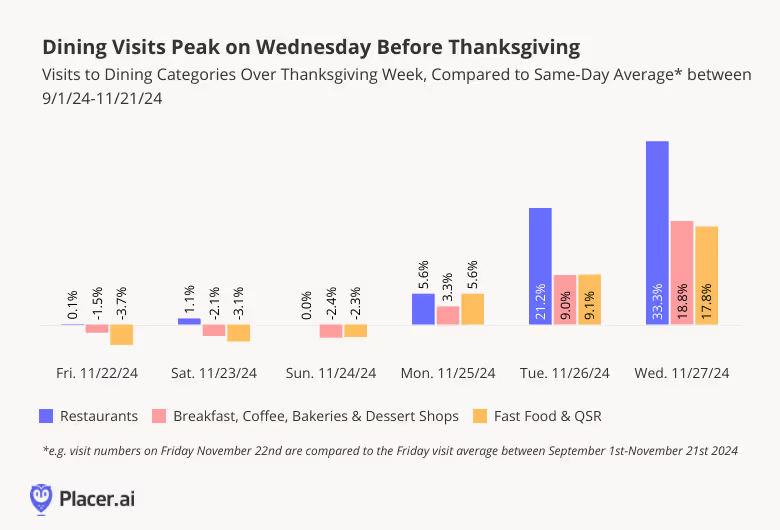
All the time spent in the kitchen cooking for Thanksgiving may also be contributing to a rise in dining visits on the days leading up to the holiday. Although visits to restaurants, breakfast joints, and fast food places dipped slightly during the weekend before Thanksgiving, foot traffic to major dining segments began climbing on Monday, November 25th before peaking on Turkey Wednesday. 

This increase in dining visits could be due in part to home cooks – and their families – looking to fuel up outside the home as the kitchen gets taken over by Thanksgiving prep. And some Americans who started the Thanksgiving vacation early may choose to spend some quality time going out to eat with their friends and families prior to the big day. Others who are already traveling may also be driving up dining visits by looking for more meals on the go. 

Visits to Dining Categories Over Thanksgiving Week, Compared to Same-Day Average* between 9/1/24-11/21/24 show a peak on wednesday before Thanksgiving

Car Categories’ Visit Boost Limited to Wednesday 

But even as some Americans begin their Thanksgiving travels earlier in the week, most Americans traveling by car seem to wait until Wednesday to head out – and the traffic boost to car-related categories seems to occur much closer to the day itself. Car shops & services and gas stations & convenience stores received a minor bump on the Tuesday before Thanksgiving as some Americans hit the road early or got their car serviced ahead of the long drive back home. But most of the traffic boost to car shops, car washes, and gas stations occurred on Wednesday November 27th – just before Thanksgiving travel. 

Boost to Auto-Related Categories Limited to Day Before Thanksgiving

Thanksgiving’s Foot Traffic Boost 

Thanksgiving’s economic impact is not limited to grocery stores and post-Thanksgiving Black Friday shopping. Analyzing consumer foot traffic data for the week before the holiday reveals the widespread impact that Thanksgiving has on a range of consumer sectors, from car washes to dining segments to home improvement. 

For more data-driven consumer insights, visit placer.ai

Article
Turkey Wednesday 2024: A Veritable Grocery Feast 
Turkey Wednesday – the day before Thanksgiving – is the busiest day of the year for the grocery industry. How did this year’s Turkey Wednesday measure up – and which brands capitalized most successfully on this critical shopping event?
Lila Margalit
Dec 2, 2024
5 minutes

Turkey Wednesday – the day before Thanksgiving – is the grocery industry’s Black Friday. As shoppers flock to stores for turkeys, cranberry sauce, and other holiday essentials, the day delivers impressive visit spikes for grocery, superstore, and dollar stores alike. But how did this year’s Turkey Wednesday measure up – and which brands capitalized most successfully on this critical shopping event?

We dove into the data to find out. 

Gobble Till You Wobble

People love to shop – but they also love to procrastinate, descending on stores just before major holidays to grab last-minute supplies. So far in 2024, March 30th (Easter Eve), May 11th (the day before Mother's Day), and November 27th (Turkey Wednesday) have been the busiest days of the year for grocery stores, superstores, and discount & dollar stores. But while the first two milestones drew bigger crowds to superstores and discount & dollar stores – both natural destinations for gift buyers and food shoppers alike – Turkey Wednesday was the grocery sector’s time to shine. 

On November 27th, 2024, grocery stores saw visits surge by 81.0% compared to a year-to-date (YTD) daily average, capturing over half (51.2%) of visits across grocery, superstore, and discount chains. (During the rest of the year, grocery stores account for just 46.6% of the three industries’ overall visit pie.) Still, superstores and discount & dollar stores also attracted plenty of pre-Thanksgiving shoppers with enticing holiday promotions of their own. And despite reports of consumer cut-backs ahead of the holiday, this year’s Turkey Wednesday performance was on par with last year’s, with grocery visits on November 27th 2024 up 0.7% relative to November 22nd 2023 (last year’s Turkey Wednesday). 

A bar chart compares visit increases on the day before Easter, Mother's Day, and Turkey Wednesday (Nov. 27, 2024) relative to the daily average, with Turkey Wednesday showing the highest grocery store spike (81%). Another bar chart illustrates visit share distribution among grocery stores, superstores, and discount/dollar stores, highlighting grocery stores' increased dominance on Turkey Wednesday.

See You in Mississippi – and Minnesota

Diving into statewide grocery store data shows that like Black Friday, Turkey Wednesday’s appeal isn’t evenly distributed across the United States. Though grocery visits spiked nationwide on November 27th, 2024, some regions saw bigger foot traffic peaks than others. 

In the Pacific Northwest, parts of New England, and some Mountain states, for example, grocery visits increased by less than 70.0% compared to a YTD daily average. But in parts of the Midwest and South, visits spiked by over 90.0%. Mississippi and Minnesota in particular stood out as major Turkey Wednesday winners, with visits up 96.8% and 96.5%, respectively. These regional differences highlight Turkey Wednesday’s special resonance in areas where holiday shopping traditions like Black Friday also dominate.

Visits to Grocery Stores on Turkey Wednesday (Nov. 27 '24)  Compared to YTD (Jan. 1 - Nov. 26 '24) Daily Average by state shows highest change in parts of midwest and south

Traditional Grocery Chains Claim the Spotlight

Which grocery chains benefit the most from Turkey Wednesday? A look at individual brands shows that traditional grocery stores – think Kroger, Albertsons, and Safeway – generally see bigger pre-Thanksgiving visit boosts than limited-assortment value chains like Aldi and Trader Joe’s. And in keeping with the regional trends noted above, some of the best-performing chains are midwestern favorites like Schnucks and Albertsons’ Jewel-Osco, which saw Turkey Wednesday foot traffic surges this year of 103.9% and 92.6%, respectively. 

But numerous other chains also saw major Turkey-fueled visit increases on November 27th – including Food 4 Less, the Kroger-owned regional value chain with locations in both the Midwest and California, and East Coast brands ShopRite and Wegmans. When it comes to last-minute holiday shopping, it seems, there is plenty of room for multiple brands to thrive.

Turkey Wednesday visits compared to daily average show traditional grocery chains experience the largest increase in traffic

Budget Brands Get in the Game 

Though value-oriented grocery chains typically see smaller visit spikes on Turkey Wednesday, many budget brands are steadily growing their pre-holiday audiences. 

Grocery Outlet Bargain Market and Aldi saw foot traffic rise by 13.5% and 11.2%, respectively, on November 27th, 2024 compared to last year’s Turkey Wednesday. (Both chains also saw substantial increases in the average number of visits to each of their individual locations – 9.7% and 8.4%, respectively – proving that the increase isn’t solely a result of fleet expansion.) Meanwhile, traditional grocery leaders like H-E-B, Kroger’s Ralphs, Ahold Delhaize’s Hannaford, and Albertsons’ Jewel Osco, also recorded year-over-year (YoY) foot traffic gains, highlighting robust performance across much of the sector.

Value and Specialty Grocery Chains Lead Turkey Wednesday YoY Visit Growth

No Time to Go Cold Turkey

Groceries are a crucial part of the Thanksgiving holiday – but liquor, it seems, may be even more indispensable. On November 27th, 2024, visits to liquor stores surged even higher than visits to grocery stores – generating a remarkable 186.4% visit spike, as consumers stocked up on spirits to ease the mood at stressful family gatherings or to show gratitude to hard-working hosts. Like for grocery stores, Turkey Wednesday was liquor stores’ busiest day of the year so far – though if last year is any indication, the run-up to Christmas will likely generate even more impressive traffic bumps. 

Liquor stores see a large increase in traffic, +186.4% compared to the YTD average

Plenty of Gratitude to Go Around

Turkey Wednesday 2024 reaffirmed the key role played by traditional grocery stores in the run-up to Thanksgiving. And though supermarkets and liquor stores stole the spotlight, superstores and discount & dollar stores also experienced significant visit upticks – and value chains are steadily growing their pre-holiday audiences. How will these categories continue to fare throughout the rest of the holiday season? 

Follow Placer.ai’s data-driven retail analysis to find out. 

Article
Starbucks’ Red Cup Day Makes a Comeback 
Visits to Starbucks usually spike on its annual Red Cup Day, as patrons flock to the chain to order a specialty holiday beverage and receive a complimentary reusable red cup. How successful was the promotion in 2024? We took a look at the data to find out.
Shira Petrack
Nov 27, 2024
3 minutes

Visits to Starbucks usually spike on its annual Red Cup Day, as patrons flock to the chain to order a specialty holiday beverage and receive a complimentary reusable red cup. But last year, the chain’s Red Cup Day performance was relatively muted – although foot traffic still got a boost, the jump was not quite as significant as in previous years. Was the promotion more effective in 2024? We dove into the data to find out. 

Red Cup Day Drove a Higher Visit Spike in 2024 relative to 2022 & 2023 

Starbucks’ Red Cup Day came roaring back in 2024, with Thursday, November 14th – the day of the promotion – receiving 42.4% more visits than the recent Thursday daily visit average. And Red Cup Day didn’t just drive visits relative to a regular weekday – the promotion brought a 9.4% lift in overall weekly visits to Starbucks during the week of the event. 

The relative visit bump was significantly higher than on Red Cup Day 2023 – when visits on Thursday, November 16th 2023 were only 25.0% higher than the previous five Thursday averages – and even outshined the already strong performance of Red Cup Day 2022. 

Daily & Weekly Visit Bump Around Red Cup Day, 2022 to 2024

Red Cup Day Lift More Significant Than PSL Launch 

As usual, Red Cup Day at Starbucks drove a larger visit spike than the launch of the chain’s popular Pumpkin Spice Latte (PSL): During the week of the PSL launch, visits rose 9.7% compared to the first week of H2 (July 1st-7th 2024), while Red Cup Day drove a 12.9% foot traffic bump relative to that same baseline. 

Nevertheless, the recent data also indicates that the PSL remains a seasonal fan favorite – Starbucks received more weekly visits on the PSL’s arrival week than it did when it launched the holiday menu, when visits increased 6.7% relative to the beginning of H2. 

Change in Weekly Visits to Starbucks Since the First Week of H2 2024 (July 1-7 2024) shows Red Cup Day Drives Larger Visit Spike than PSL Launch

Starbucks’ Wins Consumers Back by Owning the Calendar  

This year’s Red Cup Day followed several weeks of year-over-year (YoY) visit dips at Starbucks, with weekly foot traffic between September 2nd and November 10th 2024 down an average of 4.4% YoY. But the success of the promotion – which drove YoY visit growth for the first time since August – showcases Starbucks’ expertise at driving visits by owning the calendar. 

The chain has succeeded in establishing a yearly buzz around its branded cups that drive visits during what would otherwise be an off-season for the chain. And even this year, when consumers seem to be tightening their purse strings and cutting down on discretionary spending ahead of the holidays, Red Cup Day still managed to drive patrons to Starbucks stores in search of holiday beverages and free swag. 

Red cup day drives weekly visit growth to Starbucks

How will Starbucks perform throughout the end of 2024? 

Visit placer.ai to find out. 

Article
Eatertainment in Q3 2024: Dave & Buster’s and Chuck E. Cheese
How did leading eatertainment chains Dave & Buster’s and Chuck E. Cheese perform in Q3 2024? We dove into the data to find out. 
Lila Margalit
Nov 26, 2024
5 minutes

How did leading eatertainment chains Dave & Buster’s and Chuck E. Cheese perform in Q3 2024? We dove into the data to find out. 

Dave & Buster’s Sees Lower But More Extended Summer Visit Peak

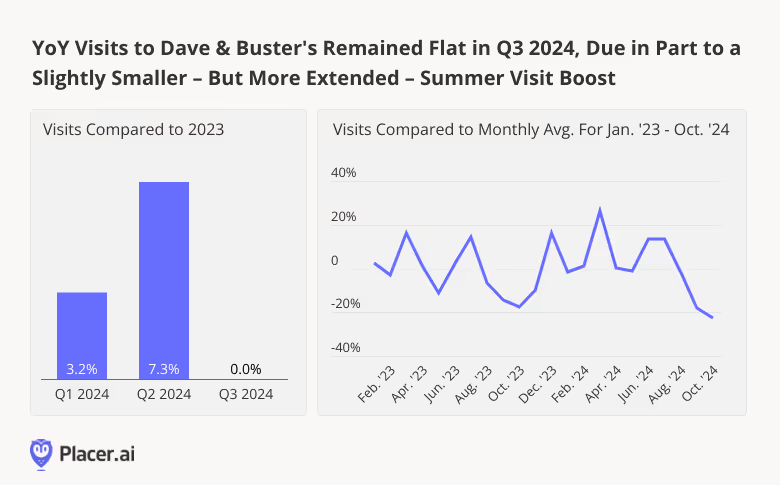
Since January 2024, Dave & Buster’s has enjoyed mainly positive YoY visit growth, fueled in part by the eatertainment leader’s continued expansion. In Q2 and Q3 2024, visits to the chain were up 3.2% and 7.3%, respectively. And though YoY foot traffic to the chain slowed down in Q3 2024, a look at Dave & Buster’s monthly visit patterns shows that this may have been due in part to a summer visit peak that was slightly lower – but more extended – than that seen last year. 

In 2023, Dave & Buster’s experienced three distinct visit spikes – in March, July, and December – with the restaurant’s 14.6% July visit boost (compared to a monthly average for Jan. ‘23 - Oct. ‘24) preceded by a relatively quiet June (+2.0%). But this year, summer foot traffic began to trend upwards earlier, with both June and July seeing substantial upticks – 13.6% and 13.4%, respectively. (June is in Q2 and so this part of the uptick would not have been included in Q3 foot traffic numbers). And though September, usually a down period for Dave & Buster’s, saw a modest drop in visitors compared to 2023, the chain’s March peak was higher than last year’s.

YoY growth for Dave & Busters remained flat in Q3 and saw a summer visit boost

Weekday Visits on an Upswing

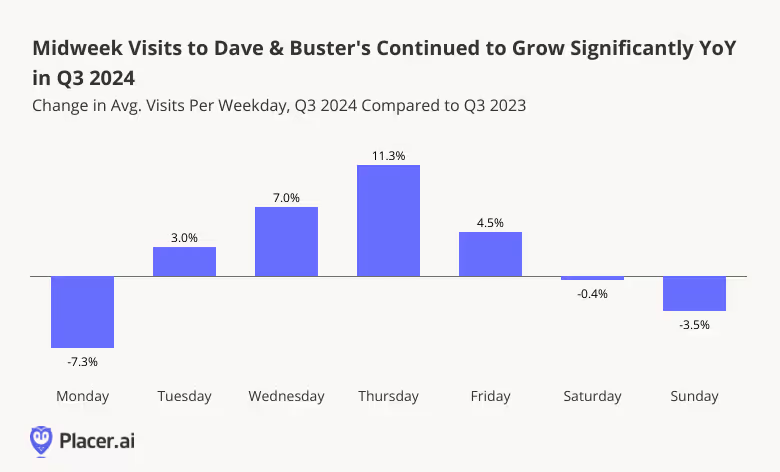
Digging even deeper into the data shows that even as YoY quarterly visits to Dave & Buster’s remained flat in Q3 2024, mid-week visits to the chain continued to climb. Dave & Buster’s has been investing heavily in mid-week promotions meant to drive traffic during quieter periods, and its efforts are clearly paying off. On Wednesdays, Dave & Buster’s offers a 50% discount on games – and the average number of Wednesday visits to the chain were up 7.0% YoY. Thursdays, too, saw an 11.3% YoY foot traffic increase, likely fueled by diners drawn to Thursday specials as the most intensive part of the work week wound down. (In Q3 2024, July 4th fell on a Thursday, which also generated a significant visit bump – but even when discounting the week of the holiday, Thursday visits were up 6.4% on average.)

Against the backdrop of solid seasonal peaks and impressive mid-week visitation trends, Dave & Buster’s appears poised to enjoy a robust December – another important seasonal milestone for the restaurant. And keep an eye out for the week after Christmas, traditionally Dave & Buster’s busiest week of the year: Last year, the week starting December 25th drove a 65.0% visit spike to the chain compared to a 2023 weekly average.

Average YoY growth per weekday for Q3 2024 shows a rise in midweek visits

Summer Success at Chuck E. Cheese 

Speaking of promotions – Chuck E. Cheese is another eatertainment leader that has been finding success by leaning into special deals, making it easier for price-conscious consumers to treat their kids to pizza and fun. 

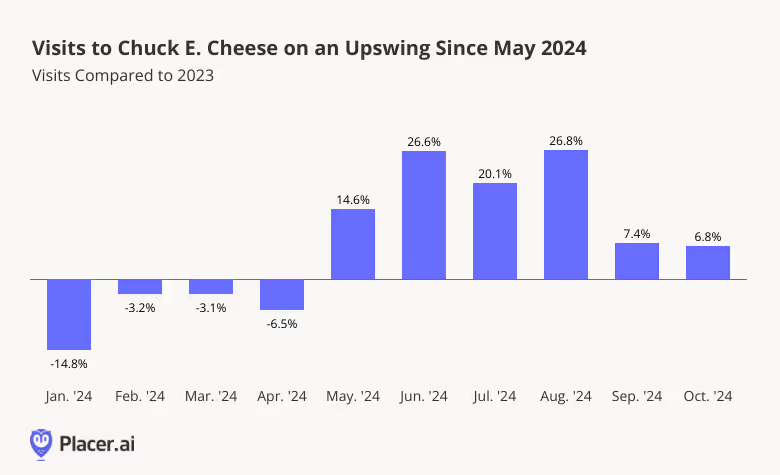
Following a lackluster start to the year, YoY visits to Chuck E. Cheese began trending upwards in May 2024 and have remained elevated ever since. Between June and August 2024, foot traffic to Chuck E. Cheese was up between 20.1% and 26.8% compared to the equivalent period of 2023. And though the pace of visit growth began to taper in September as kids went back to school, visits remained substantially higher than last year.  

Chuck E. Cheese YoY growth shows an upswing since May 2024

Chuck it Up to Loyalty

What’s behind Chuck E. Cheese’s summer flourishing? A look at shifts in loyalty trends at the chain suggests that the success of this year’s Summer Fun Pass may be a big part of the story. 

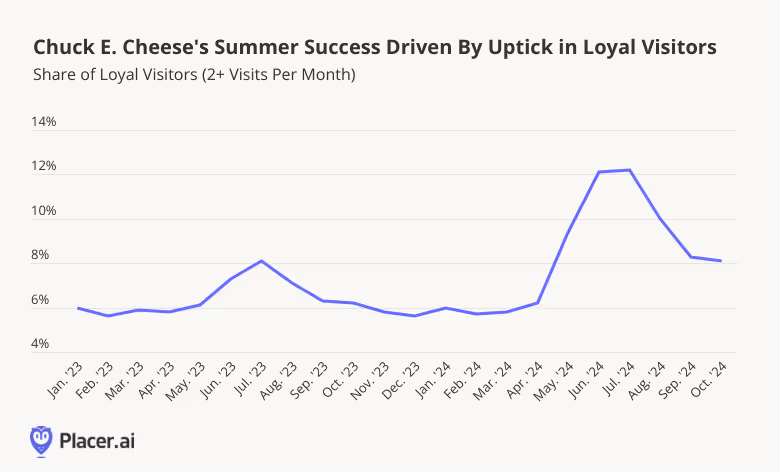
On average, the share of loyal visitors to Chuck E. Cheese – i.e. those frequenting the restaurant at least twice in a month – tends to range between five and seven percent. Last summer, this percentage increased to 8.1%, as parents sought out indoor activities to keep kids occupied when school was out. But this year’s summer loyalty spike – just over 12.0% in both June and July – was significantly higher. 

Though Chuck E. Cheese also offered a Summer Fun Pass last year, this year’s deal provided even greater value – including unlimited visits over a two-month period, steep discounts on food, and up to 250 games per day. And the promotion was such a smashing success that Chuck E. Cheese has launched a new unlimited-visit pass meant to make frequent trips to the chain more affordable for families all year round. As the kids’ eatertainment leader continues to revamp its offerings – remodeling locations and adding new activities like indoor trampolines – Chuck E. Cheese appears poised to keep drawing the crowds.

Chuck E. Cheese summer success driven by an increase in loyal visitors

Winning With Fun

Today’s cautious consumers are always on the lookout for ways to save – and eatertainment chains are paying attention. Will Dave & Buster’s post-Christmas visit spike outperform last year’s? And will Chuck E. Cheese’s new unlimited play model continue to drive traffic throughout Q4? 

Follow Placer.ai’s data driven analyses to find out. 

Article
Dollar Stores Ahead of the Holidays
Shoppers continue to prioritize value in 2024, offering opportunities for discount and dollar stores to thrive during the upcoming holiday season. We took a look at what this holiday season might have in store for discount retailers Dollar Tree and Dollar General.
Bracha Arnold
Nov 25, 2024
3 minutes

Shoppers continue to prioritize value in 2024, offering opportunities for discount and dollar stores to thrive during the upcoming holiday season. 

With that in mind, we took a look at visitation metrics – both from 2024 and from previous years – to see how the segment is performing and what the crucial holiday season might hold for discount retailers Dollar Tree and Dollar General.

Foot Traffic Shows No Signs of Slowing

Discount and dollar stores continue to benefit from an inflation-impacted economy, with category leaders like Dollar Tree and Dollar General continuing to expand their footprints to serve the increasing number of budget-conscious shoppers.

And in large part thanks to the increased store count, visits to Dollar Tree and Dollar General have continued to increase – Q3 2024 visits to the chains were up by 5.3% and 4.8% YoY, respectively. Monthly visits also showed impressive growth, with October 2024 visits up by 7.6% at Dollar Tree and 7.8% at Dollar General. These growth numbers may be slightly lower than the visit increases posted by the category in the past – but the ongoing positive performance by discount & dollar store leaders indicates that the category remains one of the most consistently strong players in the wider retail space.   

Dollar Tree and Dollar General continue to see strong quarterly and monthly YoY growth

When Do Visits Get Their Biggest Boosts?

November and December are typically the most important months for retailers as multiple shopping events – Turkey Wednesday, Black Friday, Christmas Eve Eve, and Boxing Day – drive consumers to the tills. And while many retailers open the holiday season with visit spikes driven by big Black Friday discounts, the visitation patterns look slightly different at discount chains, where prices are already low and discounts are – as their name implies – already applied. So when do these retailers get their holiday visit boosts? 

Comparing weekly visit numbers in 2021, 2022, and 2023 to each year’s weekly average reveals differences between the two discount & dollar store leaders. Visits to Dollar Tree gradually increase from early November onward and peak on the last full week before Christmas, likely driven by shoppers flocking to its stores to pick up snacks, gift wrap, and stocking stuffers. Meanwhile, Dollar General’s visits exhibited more stability – although visits were higher than average between Black Friday and Christmas Eve Eve, the increase was much more muted relative to Dollar Tree’s holiday spike. Dollar General’s softer holiday traffic may be due to the expansion of its Dollar General Market concept, which turned many of its stores into destinations for fresh foods – so consumers may be treating Dollar General more like a grocery store and less like a holiday shopping spot. 

Weekly Visits Relative to the Year-to-Date January–December Visit Average for Each Year show Dollar Tree and Dollar General experiencing visit boosts after black friday, pre-christmas

Previous years’ visitation patterns indicate that the busiest time of the year is still ahead for Dollar General and Dollar Tree. How will these retailers perform during the critical pre-Christmas rush? Visit Placer.ai to find out.  

Article
What Does Walmart’s Results Mean for Other Discretionary Retailers?
R.J. Hottovy
Nov 22, 2024
3 minutes

Heading into the Q3 2024 retailer reporting period, most expected Walmart to continue gaining market share from essentials-focused retailers. In our coverage of Walmart’s Q2 2024 update, we highlighted the chain’s significant disruption in the grocery category, driven by everyday low pricing, Walmart+ store delivery orders, store remodeling efforts, an improved selection of premium merchandise, and a broadened marketplace offering. These strategies notably boosted visits among higher-income households earning $100,000 or more annually.

While Walmart did indeed disrupt essentials retailers this quarter, what stood out even more was its impact across discretionary categories. Management reported low-single-digit comparable sales growth in general merchandise, with mid-single-digit unit growth offsetting low-to-mid single-digit price deflation. Categories like home, toys, and hardlines led this growth, complemented by strength in beauty, fashion, and apparel. Walmart’s marketplace played a key role in this success, offering consumers a broader selection of brands and items than in-store. Marketplace sales in beauty, toys, hardlines, and home each grew by 20% year-over-year.

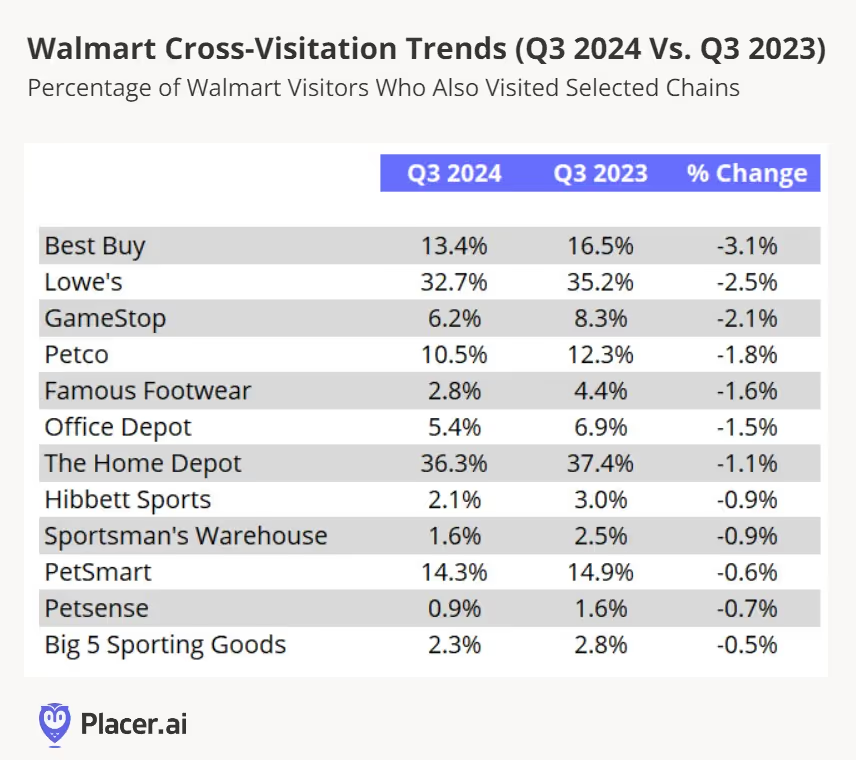
To assess Walmart’s impact on other general merchandise retailers, we analyzed cross-visitation trends. Our data indicates that year-over-year cross-visitation between Walmart and other hardgoods retailers like Best Buy, GameStop, Lowe’s, Home Depot, Hibbett Sports, Sportsman Warehouse, and Big 5—as well as pet retailers like Petco and PetSmart—declined. This suggests a potential shift in consumer behavior, with shoppers consolidating more of their general merchandise purchases at Walmart.

Walmart cross visitation trends for Q3 '24 vs '23 show the highest change was to Best Buy and Lowe's

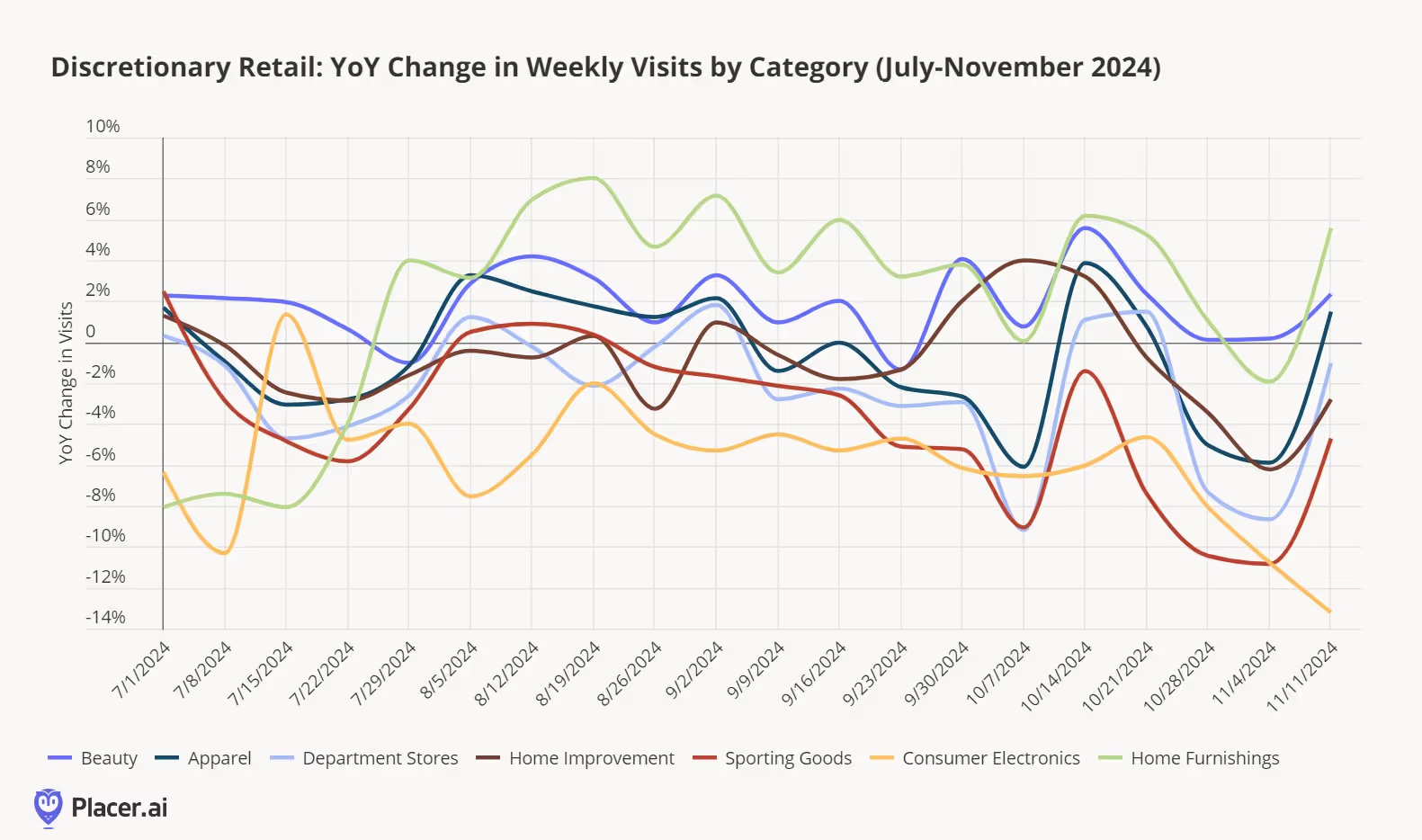
To confirm Walmart's impact on general merchandise, we analyzed visitation trends across several discretionary categories from July to November 2024 (below). With the exceptions of beauty and home furnishings—more on that category in a minute—most categories experienced year-over-year declines throughout much of the August to October quarter. Notably, mid-October brought a temporary improvement in visit trends, coinciding with major promotional events such as Amazon’s Big Deal Days, Walmart’s Holiday Deals Event, and Target’s Circle Week, underscoring how deal-driven consumers are in today’s environment. Following these promotions, shopping activity largely paused until last week, when Black Friday deal announcements began to drive renewed interest.

year over year change in weekly visits for discretionary retail categories for July - Nov. '24

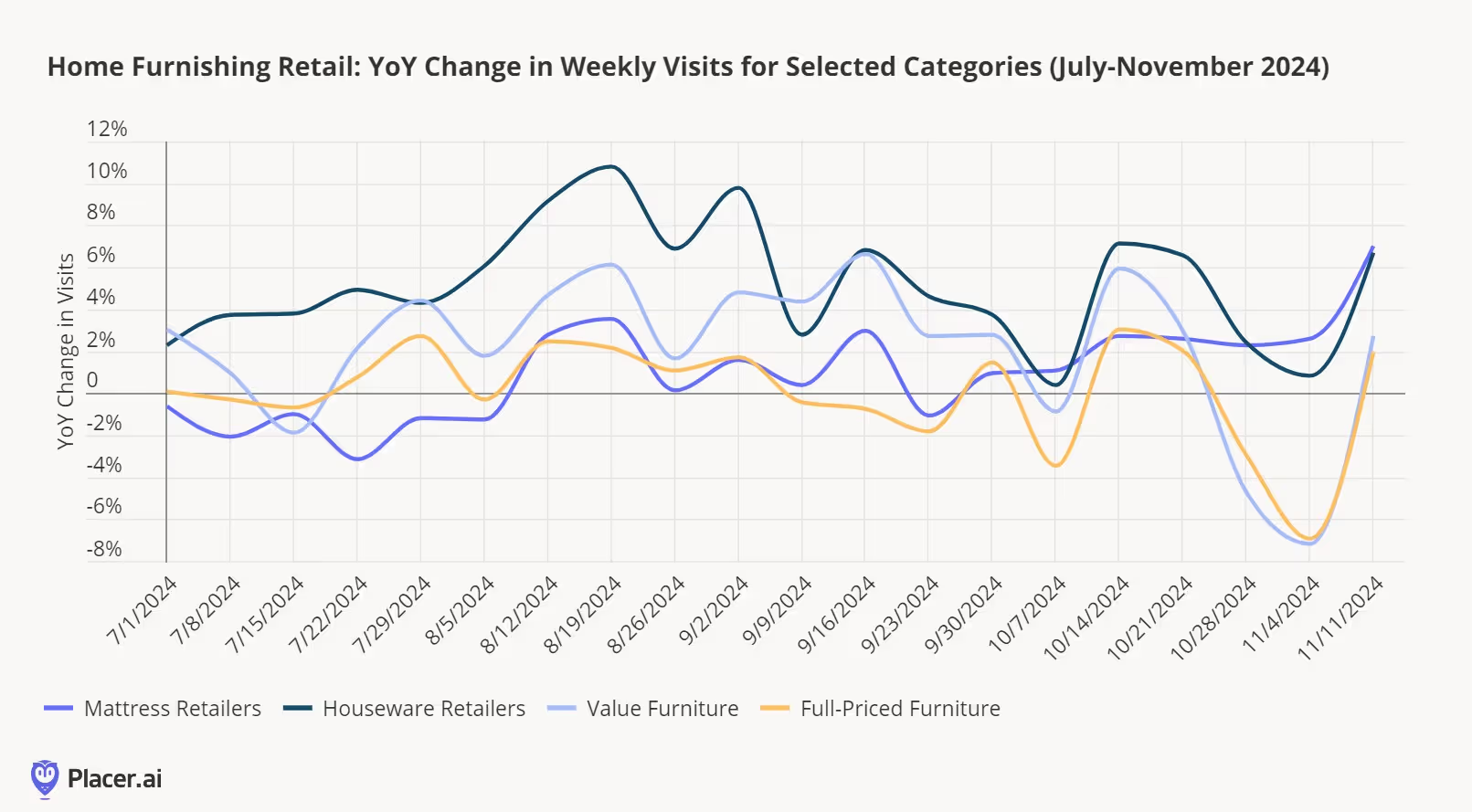
Home furnishings deserve a closer look. Earlier this year, we noted strong visit trends in housewares retail, and that momentum has largely continued. Mattress retailers, which began the year on a high note, have also maintained positive year-over-year visitation growth in the second half of 2024. Notably, furniture retailers—both value-focused and full-priced—saw year-over-year visitation gains during the quarter, though there was a slight pause in November as consumers waited for Black Friday deals.

Year over year weekly visit change for Home furnishing categories for July - Nov. '24

These trends align with the third-quarter 2024 update from Williams-Sonoma, where management highlighted improvements in furniture sales at its West Elm and Pottery Barn brands. Additionally, the company cited strength in seasonal items and housewares, suggesting that Walmart’s strong performance in the home category reflects both broader industry trends and its own merchandising improvements. These patterns may also mark the early stages of a new home furnishings cycle as we near the five-year anniversary of the COVID-19 pandemic.

Walmart’s strong performance in discretionary categories serves as a warning to other discretionary retailers to elevate their strategies ahead of the holiday shopping season. With in-store merchandise enhancements and a robust third-party marketplace offering access to over 700 million stock-keeping units (SKUs), Walmart is positioned to be even more competitive this holiday season.

Reports
INSIDER
Report
Meet You at the Mall: Malls' Summer Draw
We dove into the data to see how malls have been performing in 2024 – and explore factors driving mall foot traffic during peak summer months
October 11, 2024
8 min read

Malls have come a long way since their introduction to the world in the 1950s. These gleaming retail hubs promised shoppers a taste of the American dream, offering a third place for teens, families, and everyone in between to shop, socialize, and hang out. 

And though malls have faced challenges in recent years, as e-commerce and pandemic-induced store closures led to shifts in consumer habits, the outlook is brightening. Malls have embraced innovation, incorporating enhanced entertainment, dining, and experiential offerings that attract a diverse range of visitors and redefine their purpose.

This white paper takes a look at the recent location intelligence metrics to gain an understanding of the changes taking place at malls across the country – including both indoor malls and open-air shopping centers. The report explores questions like: Why do malls experience foot traffic bumps during the summer months? How much of an impact do movie theaters have on mall visits, and what can mall operators learn from the Mall of America and American Dream malls’ focus on experiential entertainment?

2024’s Summer Peak at the Mall

Mall visitation is highly seasonal, with strikingly consistent monthly visitation patterns. Each year, visits decline somewhat in February, pick up in March, and begin to trend upward again in May – before peaking again in August. Then, after a slower September and October, foot traffic skyrockets during the holiday season, spiking dramatically in December. 

And while these trends follow similar patterns every year, comparing monthly visits throughout 2019, 2023, and 2024 (YTD) to each year’s own January baseline shows that this seasonality is growing more pronounced - especially for indoor malls.

Following a lackluster 2023, visits to both indoor malls and open-air shopping centers peaked higher in March 2024 than in 2019. And this summer, indoor malls in particular saw a much larger visit boost than in previous years. In August 2024, for example, visits to indoor malls were 27.3% higher than in January 2024 – a substantially higher baseline jump than that seen either in August 2019 (17.0%) or in August 2023 (12.0%). And though open-air shopping centers experienced a smaller summer visit boost, they too saw a bigger bump this year than in 2019 or in 2023. 

Summer Of Shopping

But malls aren’t just seeing larger visit spikes this year relative to their January baselines – they are also drawing bigger crowds than they did in 2023.

Between June and August 2024, indoor malls and open-air shopping centers both experienced year-over-year (YoY) visit growth. Indoor malls saw the largest YoY foot traffic boost (3.7%) – perhaps owing in part to 2024’s record-breaking heat, which led many patrons to seek refuge in air conditioned spaces. Still, open-air shopping centers, which feature plenty of air conditioned stores and restaurants, also enjoyed a YoY visit boost of 2.8% during the analyzed period. 

Malls’ strong summer baseline and YoY foot traffic growth built upon the strong performance seen during most of 2024 so far, leading to the question: What is driving malls’ positive momentum? We delve into some of the factors propelling these changes below.

Blockbuster Attractions Bring Audiences 

One offering that continues to play a significant role in driving foot traffic to malls is on-site movie theaters. Summer blockbuster releases, in particular, help attract crowds to theaters, in turn boosting overall visits to malls. 

Much like malls, movie theaters have also proven their resilience over the past few years. While pundits fretted about the theater’s impending death, production houses were busy releasing blockbuster after blockbuster and shattering box-office records at an impressive clip. And while 2023 was certainly a banner year for blockbuster summer releases, 2024 has had its fair share of stunning box-office successes, leading to major visit boosts at theaters across the country. 

Analyzing visits to malls with and without movie theaters highlights the impact of these summer Hollywood hits. Between June and August 2024, malls with theaters saw bigger visit boosts compared to a monthly year-to-date (YTD) average than malls without – an effect observed both for indoor malls and for open-air shopping centers.

For both mall types, the gap between centers with and without movie theaters was most pronounced in July 2024, likely owing to the release of Inside Out 2 in mid-June as well as the July releases of Deadpool & Wolverine and Twister. But in June and August 2024, too, centers with movie theaters sustained particularly impressive visit boosts – a solid sign that movie theaters and malls remain a winning combination.  

Movies at the Mall: An Evening Affair

Malls with movie theaters also drew higher shares of evening visits (7:00 PM - 10:00 PM) this summer than those without. Between June and August 2024, for example, evening outings accounted for 22.9% of visits to open-air shopping centers with movie theaters – compared to 18.2% of visits to centers without theaters. Indoor malls with theaters also saw a larger share of evening visits than those without – 18.1% compared to 15.0%. 

This increase in evening traffic is likely driven by major summer movie releases and the flexibility of summer schedules, with many visitors – including families – taking advantage of late-night outings without the concern of early wakeup calls. These summer visitation trends benefit both theaters and malls, opening up opportunities for increased sales through concessions, promotions, and evening deals that attract a more relaxed and engaged crowd.

Families Lead the Summer Mall Surge

Analyzing the demographics of malls’ captured markets also reveals that centers with movie theaters are more likely to attract certain family-oriented segments than those without. (A mall’s captured market consists of the mall’s trade areas – the census block groups (CBGs) feeding visitors to the mall – weighted according to each CBG’s actual share of visits to the mall.)

Between June and August 2024, for example, 14.2% of the captured markets of open-air shopping centers with movie theaters were made up of “Wealthy Suburban Families” – compared to 9.7% for open-air shopping centers without theaters.  

Indoor malls saw a similar pattern with regard to “Near-Urban Diverse Families”: Middle class families living in and around cities made up 9.0% of the captured markets of indoor malls with movie theaters, compared to 7.1% of the captured markets of those without. 

This increase in foot traffic from middle-class and wealthy family segments can be a boon for malls and retail tenants – driving up food court profits and bolstering sales at stores with kid-friendly offerings. 

Malls as the Main Attraction

Willing to Travel: Malls Draw Summer Visits From Afar

Malls have long positioned themselves as destinations for summer entertainment as well as retail therapy, holding – in addition to back to school sales – events like Fourth of July celebrations and even indoor basketball and arena football games. And during the summer months, malls attract visitors from further away.

Between June and August 2024, indoor malls drew 18.2% of visitors from 30+ miles away – compared to just 16.7% during the first five months of the year. Similarly, open-air shopping centers drew 19.6% of visits from 30+ miles away during the summer, compared to 17.1% between January and May. 

Extended daylight hours, summer trips away from home, and more free time are likely among the contributors to the summer draw for long-distance mall visitors. But in addition to their classic offerings – from movie theaters to stores and food courts – malls have also invested in other kinds of unique experiences to attract visitors. This next section takes a look at two mega-malls winning at the visitation game, to see what sets them apart.

Mall Of America: Experiential Exuberance

The Minneapolis-based Mall of America opened in 1992, redefining the limits of what a mall could offer. The mall boasts hundreds of stores, games, rides, and more – and is constantly expanding its attractions, cementing its status as a top destination for retail and entertainment. 

Between June and August 2024, Mall of America experienced a 13.8% YoY visit increase, far outperforming the 3.7% visit boost seen by the wider indoor mall space. And as a major tourist attraction – the mall hosted a series of Olympic-themed events throughout the summer – it also drew 41.6% of visits from 30+ miles away. This share  of distant visitors was significantly higher than that seen at the mall during the first five months of 2024, and more than double the segment-wide summer average of 18.2%.

The Mall of America also seems to be attracting more upper-middle-class families during the summer than other indoor malls: Between June and August 2024, some 18.0% of Mall of America’s captured market consisted of  “Upper Suburban Diverse Family Households”  – a segment including upper-middle-class suburbanites – compared to just 11.1% for the wider indoor mall segment. The increased presence of these families at the Mall of America may be driven by the variety of events offered during the summer.

American Dream Mall:  ArenaBowl Draws Crowds

In 2019, the American Dream Mall in New Jersey opened and became the second-largest mall in the country. Since the mall opened its doors, it has also focused on blending retail and entertainment to draw in as wide a range of visitors as possible – and summer 2024 was no exception. 

The mall hosted the Arena Football League Championship, ArenaBowl XXXIII, on Friday, July 19th. The event successfully attracted a higher share of visitors traveling from 30+ miles away compared to the average summer Friday – 35.4% compared to 25.7%. 

Visits to the mall on the day of the championship were also 13.6% higher than the Friday visit average for the period between June and August 2024, showcasing the mall’s ability to draw in crowds by hosting major events.

Summer Rush Recap: Mall Visitation in Focus

Malls – both indoor and open-air – continue to evolve while playing a central role in the American retail landscape. Increasingly, malls are emerging as destinations for more than just shopping – especially during the summer – driving up foot traffic and attracting visitors from near and far. And while much is often said about the impact of holiday seasons on mall foot traffic, summer months offer another opportunity to boost mall visits. Malls that can curate experiences that resonate with their clientele can hope to see foot traffic growth – in the summer months and beyond.

INSIDER
Report
Hudson Yards: The On-Site Workforce of Manhattan's New Hub
Dive into the data to explore shifting work patterns among Manhattan’s on-site employees and examine emerging trends in the fast-growing Hudson Yards neighborhood.
October 8, 2024
4 minutes

New York City is one of the world’s leading commercial centers – and Manhattan, home to some of the nation's most prominent corporations, is at its epicenter. Manhattan’s substantial in-office workforce has helped make New York a post-pandemic office recovery leader, outpacing most other major U.S. hubs. And the plethora of healthcare, service, and other on-site workers that keep the island humming along also contribute to its thriving employment landscape.

Using the latest location analytics, this report examines the shifting dynamics of the many on-site workers employed in Manhattan and the up-and-coming Hudson Yards neighborhood. Where does today’s Manhattan workforce come from? How often do on-site employees visit Hudson Yards? And how has the share of young professionals across Manhattan’s different districts shifted since the pandemic? 

Read on to find out. 

The Beat of the Borough

Return of the Commuter 

The rise in work-from-home (WFH) trends during the pandemic and the persistence of hybrid work have changed the face of commuting in Manhattan. 

In Q2 2019, nearly 60% of employee visits to Manhattan originated off the island. But in Q2 2021, that share fell to just 43.9% – likely due to many commuters avoiding public transportation and practicing social distancing during COVID.

Since Q2 2022, however, the share of employee visits to Manhattan from outside the borough has rebounded – steadily approaching, but not yet reaching, pre-pandemic levels. By Q2 2024, 54.7% of employee visits to Manhattan originated from elsewhere – likely a reflection of the Big Apple’s accelerated RTO that is drawing in-office workers back into the city. 

Unsurprisingly, some nearby boroughs – including Queens and the Bronx – have seen their share of Manhattan worker visits bounce back to what they were in 2019, while further-away areas of New York and New Jersey continue to lag behind. But Q2 2024 also saw an increase in the share of Manhattan workers commuting from other states – both compared to 2023 and compared to 2019 – perhaps reflecting the rise of super commuting

Spotlight on Hudson Yards

A Hyper-Hybrid Environment

Commuting into Manhattan is on the rise – but how often are employees making the trip? Diving into the data for employees based in Hudson Yards – Manhattan’s newest retail, office, and residential hub, which was officially opened to the public in March 2019 – reveals that the local workforce favors fewer in-person work days than in the past.

In August 2019, before the pandemic, 60.2% of Hudson Yards-based employees visited the neighborhood at least fifteen times. But by August 2021, the neighborhood’s share of near-full-time on-site workers had begun to drop – and it has declined ever since. In August 2024, only 22.6% of local workers visited the neighborhood 15+ times throughout the month. Meanwhile, the share of Hudson Yards-based employees making an appearance between five and nine times during the month emerged as the most common visit frequency by August 2022 – and has continued to increase since. In August 2024, 25.0% of employees visited the neighborhood less than five times a month, 32.5% visited between five and nine times, and 19.2% visited between 10 and 14 times.  

Like other workers throughout Manhattan, Hudson Yards employees seem to have fully embraced the new hybrid normal – coming into the office between one and four times a week. 

New Buildings Worth The Commute

But not all employment centers in the Hudson Yards neighborhood see the same patterns of on-site work. Some of the newest office buildings in the area appear to attract employees more frequently and from further away than other properties.

Of the Hudson Yards properties analyzed, Two Manhattan West, which was completed this year, attracted the largest share of frequent, long-distance commuters in August 2024 (15.3%) – defined as employees visiting 10+ times per month from at least 30 miles away. And The Spiral, which opened last year, drew the second-largest share of such on-site workers (12.3%). 

Employees in these skyscrapers may prioritize in-person work – or have been encouraged by their employers to return to the office – more than their counterparts in other Hudson Yards buildings. Employees may also choose to come in more frequently to enjoy these properties’ newer and more advanced amenities. And service and shift workers at these properties may also be coming in more frequently to support the buildings’ elevated occupancy.

Hudson Yards Young

Diving deeper into the segmentation of on-site employees in the Hudson Yards district provides further insight into this unique on-site workforce. 

Analysis of POIs corresponding to several commercial and office hubs in the borough reveals that between August 2019 and August 2024, Hudson Yards’ captured market had the fastest-growing share of employees belonging to STI: Landscape's “Apprentices” segment, which encompasses young, highly-paid professionals in urban settings.

Companies looking to attract young talent have already noticed that these young professionals are receptive to Hudson Yards’ vibrant atmosphere and collaborative spaces, and describe this as a key factor in their choice to lease local offices.

At Work In Manhattan: A Mix Of Old And New

Manhattan is a bastion of commerce, and its strong on-site workforce has helped lead the nation’s post-pandemic office recovery. But the dynamics of the many Manhattan-based workers continues to shift. And as new commercial and residential hubs emerge on the island, workplace trends and the characteristics of employees are almost certain to evolve with them.

INSIDER
Pricing Strategies Driving Restaurant Visits in 2024
Dive into the data to explore the state of the restaurant industry in 2024 and see how leading chains are navigating the challenges posed by rising prices.
September 26, 2024
7 minutes

Dining in 2024 (So Far)

The restaurant space has experienced its fair share of challenges in recent years – from pandemic-related closures to rising labor and ingredient costs. Despite these hurdles, the category is holding its own, with total 2024 spending projected to reach $1.1 trillion by the end of the year.

And an analysis of year-over-year (YoY) visitation trends to restaurants nationwide shows that consumers are frequenting dining establishments in growing numbers – despite food-away-from-home prices that remain stubbornly high.

Overall, monthly visits to restaurants were up nearly every month this year compared to the equivalent periods of 2023. Only in January, when inclement weather kept many consumers at home, did restaurants see a significant YoY drop. Throughout the rest of the analyzed period, YoY visits either held steady or grew – showing that Americans are finding room in their budgets to treat themselves to tasty, hassle-free meals.

Still, costs remain elevated and dining preferences have shifted, with consumers prioritizing value and convenience – and restaurants across segments are looking for ways to meet these changing needs. This white paper dives into the data to explore the trends impacting quick-service restaurants (QSR), full-service restaurants (FSR), and fast-casual dining venues – and strategies all three categories are using to stay ahead of the pack. 

Dollar-Driven Dining Decisions 

Overall, the dining sector has performed well in 2024, but a closer look at specific segments within the industry shows that fast-casual restaurants are outperforming both QSR and FSR chains. 

Between January and August 2024, visits to fast-casual establishments were up 3.3% YoY, while QSR visits grew by just 0.7%, and FSR visits fell by 0.3% YoY. As eating out becomes more expensive, consumers are gravitating toward dining options that offer better perceived value without compromising on quality. Fast-casual chains, which balance affordability with higher-quality ingredients and experiences, have increasingly become the go-to choice for value-conscious diners.

Fast-casual restaurants also tend to attract a higher-income demographic. Between January and August 2024, fast-casual restaurants drew visitors from Census Block Groups (CBGs) with a weighted median household income of $78.2K – higher than the nationwide median of $76.1K. (The CBGs feeding visits to these restaurants, weighted to reflect the share of visits from each CBG, are collectively referred to as their captured market). 

Perhaps unsurprisingly, quick-service restaurants drew visitors from much less affluent areas. But interestingly, despite their pricier offerings, full-service restaurants also drew visitors from CBGs with a median HHI below the nationwide baseline. While fast-casual restaurants likely attract office-goers and other routine diners that can afford to eat out on a more regular basis, FSR chains may serve as special occasion destinations for those with more moderate means. 

Who Can Afford to Raise Prices?

Though QSR, FSR, and fast-casual spots all seek to provide strong value propositions, dining chains across segments have been forced to raise prices over the past year to offset rising food and labor costs. This next section takes a look at several chains that have succeeded in raising prices without sacrificing visit growth – to explore some of the strategies that have enabled them to thrive.

Shake Shack: Drawing Affluent Audiences 

The fast-casual restaurant space attracts diners that are on the wealthier side – but some establishments cater to even higher earners. One chain of note is NYC-based burger chain Shake Shack, which features a captured market median HHI of $94.3K. In comparison, the typical fast-casual diner comes from areas with a median HHI of $78.2K. 

Shake Shack emphasizes high-quality ingredients and prices its offerings accordingly. The chain, which has been expanding its footprint, strategically places its locations in affluent, upscale, and high-traffic neighborhoods – driving foot traffic that consistently surpasses other fast-casual chains. And this elevated foot traffic has continued to impress, even as Shake Shack has raised its prices by 2.5% over the past year. 

Texas Roadhouse: Thriving Through Price Hikes

Steakhouse chain Texas Roadhouse has enjoyed a positive few years, weathering the pandemic with aplomb before moving into an expansion phase. And this year, the chain ranked in the top five for service, food quality, and overall experience by the 2024 Datassential Top 500 Restaurant Chain.

Like Shake Shack, Texas Roadhouse has raised its prices over the past year – three times – while maintaining impressive visit metrics. Between January and August 2024, foot traffic to the steakhouse grew by 9.7% YoY, outpacing visits to the overall FSR segment by wide margins. 

This foot traffic growth is fueled not only by expansion but also by the chain's ability to draw traffic during quieter dayparts like weekday afternoons, while at the same time capitalizing on high-traffic times like weekends. Some 27.7% of weekday visits to Texas Roadhouse take place between 3:00 PM and 6:00 PM – compared to just 18.9% for the broader FSR segment – thanks to the chain’s happy hour offerings early dining specials. And 43.3% of visits to the popular steakhouse take place on Saturdays and Sundays, when many diners are increasingly choosing to splurge on restaurant meals, compared to 38.4% for the wider category.

QSR Limited-Time Offers (LTOs) to the Rescue

Though rising costs have been on everybody’s minds, summer 2024 may be best remembered as the summer of value – with many quick-service restaurants seeking to counter higher prices by embracing Limited-Time Offers (LTOs). These LTOs offered diners the opportunity to save at the register and get more bang for their buck – while boosting visits at QSR chains across the country. 

Hardee’s August Combo Deal: A Recipe for Loyalty

Limited time offers such as discounted meals and combo offers can encourage frequent visits, and Hardee’s $5.99 "Original Bag" combo, launched in August 2024, did just that. The combo allowed diners to mix and match popular items like the Double Cheeseburger and Hand-Breaded Chicken Tender Wraps, offering both variety and affordability. And visits to the chain during the month of August 2024 were 4.9% higher than Hardee’s year-to-date (YTD) monthly visit average.

August’s LTO also drove up Hardee’s already-impressive loyalty rates. Between May and July 2024, 40.1% to 43.4% of visits came from customers who visited Hardee’s at least three times during the month, likely encouraged by Hardee’s top-ranking loyalty program. But in August, Hardee’s share of loyal visits jumped to 51.5%, highlighting just how receptive many diners are to eating out – as long as they feel they are getting their money’s worth. 

McDonald’s Special Meal Deal

McDonald’s launched its own limited-time offer in late June 2024, aimed at providing value to budget-conscious consumers. And the LTO – McDonald’s foray into this summer’s QSR value wars – was such a resounding success that the fast-food leader decided to extend the deal into December. 

McDonald’s LTO drove foot traffic to restaurants nationwide. But a closer look at the chain’s regional captured markets shows that the offer resonated particularly well with “Young Urban Singles” – a segment group defined by Spatial.ai's PersonaLive dataset as young singles beginning their careers in trade jobs. McDonald's locations in states where the captured market shares of this demographic surpassed statewide averages by wider margins saw bigger visit boosts in July 2024 – and the correlation was a strong one.  

For example, the share of “Young Urban Singles” in McDonald’s Massachusetts captured market was 56.0% higher than the Massachusetts statewide baseline – and the chain saw a 10.6% visit boost in July 2024, compared to the chain's statewide H1 2024 monthly average. But in Florida, where McDonald’s captured markets were over-indexed for “Young Urban Singles” by just 13% compared to the statewide average, foot traffic jumped in July 2024 by a relatively modest 7.3%. 

These young, price-conscious consumers, who are receptive to spending their discretionary income on dining out, are not the sole driver of McDonald’s LTO foot traffic success. Still, the promotion’s outsize performance in areas where McDonald’s attracts higher-than-average shares of Young Urban Singles shows that the offering was well-tailored to meet the particular needs and preferences of this key demographic. 

Michelin Star Success 

While QSR, fast-casual, and FSR chains have largely boosted foot traffic through deals and specials, reputation is another powerful way to attract diners. Restaurants that earn a coveted Michelin Star often see a surge in visits, as was the case for Causa – a Peruvian dining destination in Washington, D.C. The restaurant received its first Michelin Star in November 2023, a major milestone for Chef Carlos Delgado.

The Michelin Star elevated the restaurant's profile, drawing in affluent diners who prioritize exclusivity and are less sensitive to price increases. Since the award, Causa saw its share of the "Power Elite" segment group in its captured market increase from 24.7% to 26.6%. Diners were also more willing to travel for the opportunity to partake in the Causa experience: In the six months following the award, some 40.3% of visitors to the restaurant came from more than ten miles away, compared to just 30.3% in the six months prior.

These data points highlight the power of a Michelin Star to increase a restaurant’s draw and attract more affluent audiences – allowing it to raise prices without losing its core clientele. Wealthier diners often seek unique culinary experiences, where price is less of a concern, making these establishments more resilient to inflation than more venues that serve more price-sensitive customers.

The Final Plate

Dining preferences continue to evolve as restaurants adapt to a rapidly changing culinary landscape. From the rise in fast-casual dining to the benefits of limited-time offers, the analyzed restaurant categories are determining how to best reach their target audiences. By staying up-to-date with what people are eating, these restaurant categories can hope to continue bringing customers through the door. 

Loading results...
We couldn't find anything matching your search.
Browse one of our topic pages to help find what you're looking for.
For more in-depth analyses on a variety of subjects, explore Reports.
The Anchor Logo
INSIDER
Stay Anchored: Subscribe to Insider & Unlock more Foot Traffic Insights
Gain insider insights with our in-depth analytics crafted by industry experts
— giving you the knowledge and edge to stay ahead.
Subscribe