.png)
.png)

.png)
.png)

Return-to-office (RTO) mandates are once again the talk of the town, with growing numbers of employers requiring workers to move back closer to the office and come into the office more frequently. Despite employee pushback, the trend is leaving its mark on everything from downtown retailers to local housing markets.
But how is the RTO push impacting office attendance? We dove into the data to find out.
In June 2024, visits to offices nationwide were just 29.4% below June 2019 levels – and the highest they’ve been since before the pandemic. June’s strong year-over-year (YoY) showing is particularly impressive given the fact that June 2024 had one fewer workday than June 2019 (Juneteenth was declared a federal holiday in 2021).

Digging down into regional data shows Miami continuing to lead the office recovery pack, with June 2024 visits down just 9.8% compared to the equivalent period of 2019. New York was once again close on Miami’s heels – driven in part by strict RTO policies on Wall Street. Atlanta, Dallas, and Washington, D.C. also outperformed the nationwide baseline, while Boston, Chicago, Denver, Los Angeles, Houston, and San Francisco took up the rear.

A look at regional YoY visitation patterns offers additional insight into each city’s unique office recovery trajectory. Houston, which was hit hard by inclement weather in May 2024, suffered an additional setback in June – with tropical storm warnings and extreme heat waves likely inducing many locals to stay home.
Atlanta and Boston, on the other hand, experienced their busiest in-office month since the pandemic – with respective June 2024 YoY visit increases of 10.0% and 10.3%. Atlanta, which has been outperforming nationwide averages for some months now, has seen an accelerated recovery fueled by accumulating RTO mandates. And in Boston, too, growing numbers of companies are calling on employees to put in more face time.
San Francisco, meanwhile, surrendered its YoY visit growth lead, even as the San Francisco Federal Reserve president urged tech companies to tighten their in-office policies.

The new hybrid normal may be firmly entrenched – but foot traffic data shows that the RTO story is still very much ongoing. How will office visits continue to shape up as the year wears on?
Follow Placer.ai’s data-driven analyses to find out.

Movie theaters, among the hardest-hit industries during the pandemic, have faced challenges in foot traffic recovering to pre-COVID levels. However, the release of major blockbusters including Barbie, Oppenheimer, Spiderman: No Way Home, Top Gun: Maverick, and others, led to dramatic surges in movie theater visits, proving that the silver screen can still draw crowds.
While some of these films shattered box-office records upon release, the recently premiered "Inside Out 2" – an animated coming-of-age film – is poised to exceed even those impressive metrics, setting a new benchmark for success.
Expectations for the new Disney-Pixar powerhouse sequel “Inside Out 2” were high long before its theatrical premiere on June 14th, 2024. Fans and critics alike were eagerly anticipating the return of Riley and her emotions. But even among these high expectations, the film’s effect was astonishing, becoming the fastest-ever animated feature to surpass the billion-dollar mark.
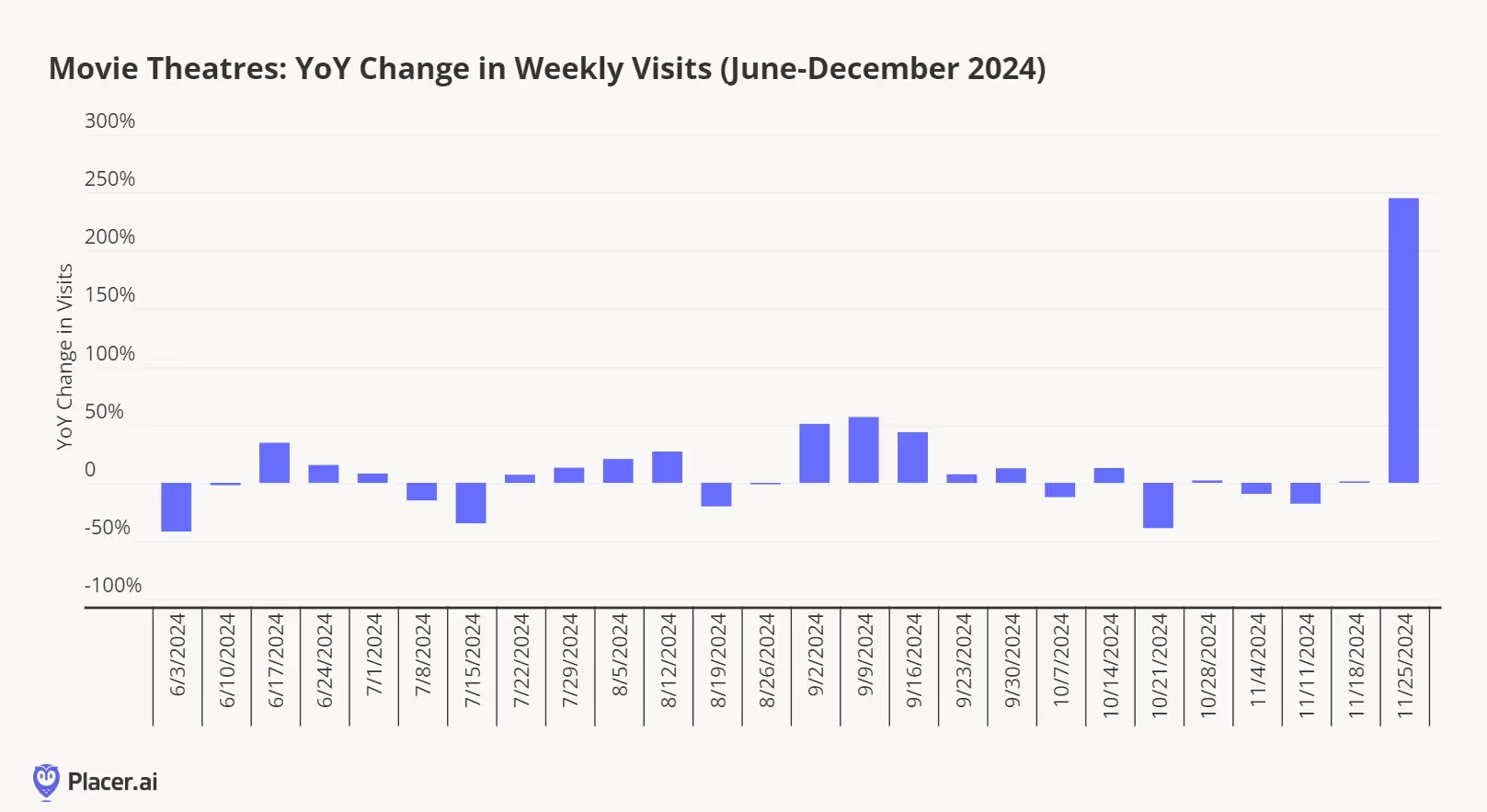
And the film's huge success is only further emphasized by foot traffic data of major movie theater chains across the country. On the week of June 10th, when the film was released, AMC theaters, Cinemark, and Regal Cinemas saw remarkable respective visit peaks of 76.7%, 70.5%, and 83.2% compared to the previous week.
But the momentum didn’t stop there. Theater visits continued to surge into the second week following the film’s release, driven by the ongoing hype surrounding "Inside Out 2." Week over week, AMC theaters, Cinemark and Regal Cinemas experienced respective visits increases of 14.8%, 18.2%, and 14.3%.

The "Inside Out 2" visit effect was not only impressive on its own but also remarkable when compared to other major blockbuster films released in the past two years. Visits to the three biggest theater chains nationwide saw extraordinary upticks ranging from 67.5% to 72.6% compared to the weekly average of the second quarter of 2024. The closest comparable accomplishment in the past two years was the release of the “Super Mario Bros. Movie” in April 2023, which generated theater visits between 32.2% and 35.8% higher than the weekly average visits for that quarter.
The visit surge brought on by "Inside Out 2" highlights the movie’s massive draw and sets a new industry benchmark, solidifying its place as a monumental success in recent cinema history.

Theater chains know in advance that a highly anticipated Disney-Pixar film will fill their theaters with the joyful squeals of little ones. However, family films don’t just attract families; they also draw visitors from a wider range of socioeconomic backgrounds, all eager to enjoy a much-talked-about film and an affordable outing for the entire family. This was especially true for "Inside Out 2," which premiered just as a record-breaking heat wave hit the country, driving millions to seek refuge in an air-conditioned movie theater.
Indeed, analyzing the captured markets of the most-visited AMC, Cinemark, and Regal Cinemas during the week of the film’s release showed that not only did they attract a higher percentage of visitors from households with children, as anticipated, but they also drew more visitors with lower household incomes. This influx significantly lowered the median household income of the theater’s captured markets, highlighting the film’s broad appeal and its ability to provide accessible entertainment to all.

The impressive visit surge from the release of "Inside Out 2" highlights the still-strong demand for out-of-home entertainment and the staying power of the movie theater industry. And with a lineup of highly anticipated releases this summer, theaters are poised to continue satisfying the demand for in-cinema entertainment well into 2024 and beyond.
Will major blockbuster films continue to be the main factor driving the movie theater industry forward? Can the industry maintain strong visit volumes between top releases?
Visit our blog at Placer.ai to find out.

How did Petco and PetSmart, the two big-box leaders of the pet sector, fare in early 2024? We dove into the data to find out.
In recent months, Inflation and sagging consumer confidence have taken their toll on the pet supplies industry, which relies at least partially on discretionary spending, and in its Q1 2024 earnings report, Petco reported a minor YoY drop in revenue. But while Petco saw YoY visit dips in January and April – softened by minor upticks in February and March – visits increased 3.7% YoY in May.
PetSmart, for its part, experienced even more consistent YoY visit lags in early 2024. But like its competitor, the pet supplies giant also saw signs of a potential softening or even reversal of this trend in May. And for both chains, May’s positive showing may be a sign of even better things to come heading into summer.

But while Petco led PetSmart in YoY visit performance in early 2024, PetSmart hasn’t relinquished its position as the most-visited pet store chain in the country. Between January and May 2024, 62.1% of total foot traffic to the two chains went to PetSmart, compared to just 37.9% for Petco, and PetSmart was the top-visited chain in most regions nationwide.
Still, drilling down into statewide-level data reveals a more complex picture. In New England, Petco was the dominant player in early 2024. And in the Pacific region, the two chains were neck in neck.
PetSmart’s visit share lead is partially driven by its larger fleet. But foot traffic data shows that other factors are likely at play as well.

Indeed, though both chains boast loyal visitor bases, PetSmart customers generate more repeat visits than Petco ones – a factor likely further contributing to PetSmart’s increased visit share.
During the first part of 2024, some 21.1% to 21.8% of PetSmart visitors visited the chain at least twice each month – compared to 18.1% to 19.0% for Petco. PetSmart’s enhanced loyalty may be driven in part by the greater selection in-house pet services offered by the chain.

Pet store visits tend to be seasonal – December is generally the industry’s busiest month of the year, followed by March and July. Do Petco’s and PetSmart’s May upticks herald strong July peaks this year?
Follow Placer.ai’s data driven retail analyses to find out.

Everybody loves ice cream – so with summer underway, we dove into the data to explore the performance of ice cream shops nationwide.
The past couple of years have been all about affordable indulgences – and ice cream chains have been riding the wave. Comparing monthly category-wide visits to a January 2020 baseline shows the industry reaching new peaks each summer, with May 2024 seeing the most monthly foot traffic in 4.5 years.
In June 2024, weekly YoY visits trended upwards even more sharply – as a record-breaking heat wave during the week of June 17th sent Americans nationwide seeking ways to cool down. The scorching temperatures left no doubt that summer had officially arrived, and as consumers fired up their ACs and got their summer wardrobes ready, they also flocked to ice-cream chains to chill out with a sweet treat.
With such strong performance under their belts, ice cream chains appear poised to continue to flourish as the peak summer season wears on.

It’s no secret that ice cream is one of the most seasonal food sectors – and the success of many ice cream chains hinges on their ability to make the most of the summer months, when foot traffic is generally at its highest. But a look at seasonal visitation trends for four major chains – Dairy Queen (focusing on “treat only” locations that do not include a full-service restaurant), Cold Stone Creamery, Carvel, and Ben & Jerry’s – shows that the extent of this seasonality varies among chains – and among different regions of the country.
Visits to Dairy Queen locations in New York, for example, are highly driven by seasonality – with May foot traffic more than 300% higher than that seen in January. Dairy Queen locations in Florida, on the other hand, experience much more subdued summer visit peaks. Similar trends can be observed for the other analyzed chains.

Ice cream’s seasonality impacts consumer behavior in other ways as well. Though there are once again important differences between ice cream chains, all analyzed brands saw visitor dwell time jump during the summer and decline in winter.
In May 2023 and 2024, for example, a respective 49.1% and 48.6% of visits to Dairy Queen lasted more than ten minutes. But between November 2023 and February 2024, less than 40.0% of visits lasted more than ten minutes – as customers likely ordered their ice-cream to go. Visitors to Ben and Jerry’s, on the other hand, are more likely to linger in-store, with over 70.0% of visits lasting more than ten minutes year-round. But like Dairy Queen, the chain also sees a significant jump in longer visits during the summer.

The ice cream industry continues to show strong performance across the board, with indications of an even stronger summer ahead. Are there more visit peaks in store for the category this year?
Follow our blog at Placer.ai to find out.

In recent weeks, we’ve analyzed auto dealers and convenience stores, so we thought we’d extend the conversation by taking a look at the car wash industry. The car wash industry in the United States has been one of the fastest growing retail categories coming out of the pandemic due to the increasing number of vehicles on the road, an increase in average vehicle age, a shift to a membership-based model for many operators, as well as advancements in car wash technology that have made services more efficient and automated. This shift is evidenced by the fact that around 80% of car washes are now done at professional locations, compared to 48% in 1994 according to the International Car Wash Association.
According to car wash trade groups, there are approximately 65,000 car wash locations across the nation. Mister Car Wash is the largest car wash chain in the U.S., operates more than 480 locations across 21 states. However, the category remains highly fragmented, with nearly three-fourths of industry operators having less than 2 locations. This has naturally set the stage for industry consolidation the past several years, with larger companies acquiring smaller operators to expand their footprints. We see the overall growth and consolidation of the category in a visitation trendline of a custom grouping of nearly 60 of the largest car wash chains in the U.S., where total visits have increased by roughly seven times since 2017.

We also see consolidation show up share of visit numbers from 2019-2023, which we show below. Mister Car Wash has remained the largest player in the category with respect to share of visits the past several years by growing both its unit counts (from 322 at the end of 2019 to 482 as of March) and visits per location (up more than 8% over the same time period). There has been movement among the chains ranked number 2 through 6 the past several years, but the group has generally included Quick Quack Car Wash, Take 5 Car Wash, Tommy’s Express Car Wash, and Zips Car Wash. However, the most notable observation from share of visit trends is the tremendous growth in visit share among smaller chains the past several years.

Car washes have been an attractive investment for private equity the past several years, helping to fuel some of the growth of smaller chains. Individual car wash locations generate an estimated $1.5M in annual sales according to industry trade groups–which is slightly ahead of the average unit sales of a quick-service restaurant chain of $1.4 million–while offering lower labor requirements and more predictable results due to the increasing popularity of membership models. In many respects, the growth of the car wash category mirrors the growth we’ve seen across the fitness category the past several years.
Despite the strong industry growth the past several years, Q1 2024 trends were impacted by a number of factors according to Mister Car Wash’s management team, including increased competition and a lower-income customer cohort that's been under more pressure (inclement weather in January across much of the country also likely played a role). Placer data confirms that Q1 2024 was in fact the weakest quarter from a category visit per location standpoint in several years. However, we’ve seen a rebound in Q2 2024 trends so far, with quarter-to-date visitation trends pacing just behind the year ago period with just a few days left in the quarter.

We mentioned that a membership-based approach has helped to drive visitation growth for the category and led to more predictable results, and we see that when we look at visitor loyalty data for Mister Car Wash. According to the company’s most recent annual report, it increased overall Unlimited Car Wash (UWC) monthly subscription penetration to 71% of total wash sales in 2023, up from 68% the year prior. When we look at visits from “casual” (1 visit per month) versus “loyal” (2+ visits per month) customers, we’ve seen a meaningful shift toward more loyal customers the past several years, particularly during peak visitation months in the summer.

Despite a slower start to 2024 due to aforementioned factors, the U.S. car wash industry appears well positioned for continued growth and consolidation due to the continued aging of the auto fleet, population migration trends, the continued shift toward membership-based revenue models, attractive unit economics, and new technological advances.

In June 2024, Placer.ai released three white papers: Unlocking Potential in Underserved Grocery Markets, Brewing Success: Winning Strategies for Coffee Chains, and Advantages of New Players in the Retail Media Space.
Below is a taste of our findings from Brewing Success: Winning Strategies for Coffee Chains – which dove into the data to see how leading coffee chains including Starbucks, Dunkin’, Dutch Bros., and BIGGBY COFFEE are driving coffee visits in 2024.
Everybody loves coffee. And with some 75% of American adults indulging in a cup of joe at least once a week, it’s no wonder the industry is constantly on an upswing.
In early 2024, year-over-year (YoY) visits to coffee chains increased nationwide – with every state in the continental U.S. experiencing year-over-year (YoY) coffee visit growth. The most substantial foot traffic boosts were seen in smaller markets like Oklahoma (19.4%), Wyoming (19.3%), and Arkansas (16.9%), where expansions may have a more substantial impact on statewide industry growth. But the nation’s largest coffee markets, including Texas (10.9%), California (4.2%), Florida (4.2%), and New York (3.5%), also experienced significant YoY upticks.

The nation’s coffee visit growth is being fueled, in large part, by chain expansions: Major coffee players are leaning into growing demand by steadily increasing their footprints. And a look at per-location foot traffic trends shows that by and large, they are doing so without significantly diluting visitation to existing stores.
On an industry-wide level, visits to coffee chains increased 5.1% YoY during the first five months of 2024. And over the same period, the average number of visits to each individual coffee location declined just slightly by 0.6% – meaning that individual stores drew just about the same amount of foot traffic as they did in 2023.
Drilling down into chain-level data shows some variation between brands. Dutch Bros., BIGGBY COFFEE and Dunkin’ all saw significant chain-wide visit boosts, accompanied by minor increases in their average number of visits per location.
Starbucks, for its part, which reported a YoY decline in U.S. sales for Q2 2024, maintained a small lag in visits per location. But given the coffee leader’s massive footprint – some 16,600 stores nationwide – its ability to expand while avoiding more significant dilution of individual store performance shows that Starbucks’ growth is meeting robust demand.

Read the full report here to discover more coffee insights. For more data-driven consumer research, visit our resource library.
The grocery industry has navigated unprecedented challenges in recent years – from pandemic-driven shifts in consumer behavior and supply chain disruptions to rising costs, labor shortages, and increased operational demands. In the face of these hurdles, the category has been pushed to innovate, adapting everything from product selections to shopping formats to meet changing consumer expectations.
But within the grocery industry, some segments resonate particularly strongly with the 2024 consumer. This white paper dives into the data to explore two segments that have been leading category-wide visit growth for some time: specialty and fresh format stores, which focus on produce, organic foods, and culturally specific items (think Trader Joe’s, Sprouts Farmers Market, and H Mart, to name a few), and value grocery chains like Aldi, WinCo Foods, and Grocery Outlet Bargain Market. Location analytics show shoppers are increasingly drawn to these two grocery store types, a shift that has the potential to reshape the grocery landscape.
How did value and specialty grocery chains perform in Q3 2024 in comparison to traditional supermarkets like Kroger, Albertsons, and H-E-B? How does visitor behavior vary between the three grocery segments, and what differences can be observed in the demographic and psychographic make-ups of their trade areas? The report explores these questions and more below.
The grocery industry has performed well over the past few months, with steady weekly year-over-year (YoY) visit increases throughout Q3 2024. During the week of July 1st, the segment saw a 4.6% YoY foot traffic boost, likely driven by shoppers loading up on ingredients for Independence Day barbecues and picnics. And after tapering somewhat in early August, visits picked up again in September, with YoY increases ranging from 2.0% to 2.9% throughout the month. This positive growth is a good sign for the segment – which has experienced more than its fair share of challenges over the past few years.
Though the grocery category as a whole is thriving, a closer look at different segments within the industry reveals that some are seeing more significant growth than others.
Indeed, digging deeper into grocery visits throughout Q3 2024 reveals that much of the industry’s growth is being driven by specialty and fresh format stores and value grocery chains. The two segments offer markedly different shopping experiences: Specialty chains tend to emphasize harder-to-find ingredients and fresh produce – sometimes even at higher price points than traditional grocery stores – while value grocery stores focus on affordability. But both categories are experiencing outsize visit growth in 2024, highlighting consumers’ dual interest in both quality and value.
In July and August 2024, traditional supermarkets, specialty grocers, and value chains all experienced positive YoY visit growth. But while traditional grocery stores saw a 3.1% increase in July and just a 0.9% uptick in August, value and specialty chains saw YoY growth ranging from 4.7% to 7.7% during the two months. In September 2024, YoY visits to traditional grocery stores fell by 0.5%, while value and specialty chains saw 5.0% and 5.2% increases, respectively. For today’s consumer, it seems, savings are key – but specialty offerings also resonate strongly.
Today’s grocery shoppers are increasingly embracing specialty grocery options – and analyzing consumer driving habits to grocery stores shows that they are willing to go the extra mile to reach them.
Breaking down grocery visits by distance traveled reveals that just 18.5% of visits to specialty and fresh format grocery chains came from less than one mile away in Q3 2024 – compared to 23.9% for traditional grocery stores and 23.2% for value chains. Similarly, 31.3% of visits to specialty and fresh format grocery stores originated from one to three miles away, compared to 34.7% and 34.5% for the other analyzed segments.
On the flip side, some 26.4% of visits to specialty and fresh format stores were made by people traveling at least seven miles to do their shopping – compared to 22.7% and 21.4% for traditional and value chains, respectively. Specialty grocery operators can account for this difference, locating stores in areas accessible to geographically dispersed audiences eager to shop their unique offerings.
And a look at changes in visitor behavior at three key specialty chains – Trader Joe’s, Sprouts Farmers Market, and Great Wall Supermarket – shows that even as these brands expand their footprints, customers are increasingly willing to travel the distance to visit them. Between 2019 and 2024, all three chains saw a marked increase in the share of visitors traveling over seven miles to shop their offerings. .
Asian grocery chain Great Wall Supermarket, a relatively small regional chain with some 22 locations across eight states, saw the most significant increase in visits from afar over the analyzed period. In Q3 2024, 32.3% of visits to the chain originated from seven or more miles away, up from 28.3% in Q3 2019. Ranked America’s Best Supermarket by Newsweek in 2024, the chain’s wide selection of everything from seafood to fresh produce has made it a hit among Asian food aficionados – and as the supermarket’s reputation grows, so does its draw among customers living further away from its venues.
Consumer favorite Trader Joe’s and organic grocery chain Sprouts Farmers Market also grew their shares of long-distance visits between 2019 and 2024 – no small feat for the two chains, given their expansion over the past several years.
This travel distance snapshot serves as a reminder of the unique role played by specialty grocery stores that offer their customers unique shopping experiences, premium or organic products, and culturally specific items. Shoppers will go out of their way to travel to these stores – and even as they expand and become more readily accessible, their growing popularity makes them ever-more attractive destinations for customers coming from further away.
While visitors to specialty grocery chains often travel long distances for unique offerings, cost-conscious consumers at value stores exhibit other behaviors that differentiate them from traditional and specialty grocery shoppers.
The rising cost of living has pushed the discount retail segment into overdrive – and value grocery chains are also benefiting. The category has flourished in recent years, with many bargain-oriented grocery chains adding new stores at a rapid clip to meet burgeoning consumer demand.
Like visitors to specialty grocery chains, value grocery shoppers demonstrate segment-specific behaviors that reflect their preferences and habits. And perhaps most strikingly, foot traffic data reveals that these shoppers tend to stay longer in-store than visitors to traditional and specialty grocery chains.
In Q3 2024, 26.5% of visits to value grocery chains lasted longer than 30 minutes, compared to 23.4% for traditional grocery chains and 23.7% for specialty and fresh format chains. This suggests that these stores attract shoppers who take their time and carefully consider price points, looking for the best value for their dollar – a need that the chains they frequent seem to be meeting.
Given the tremendous success of the value grocery space in recent years, it may come as no surprise that some traditional supermarkets are getting in on the action by opening or expanding discount banners of their own. How do such off-shoot banners impact these grocers’ reach?
Cult-favorite Texas grocery chain H-E-B opened the first branch of its value banner, Joe V’s Smart Shop, in 2010. The discount arm currently includes 11 stores – mainly in the Houston area – with several new stores opening, or in planning stages, in Dallas.
And foot traffic data shows that Joe V's attracts mission-driven shoppers who make less frequent but significantly longer trips than visitors to traditional grocery stores. In Q3 2024, the average visit duration at Joe V’s was 37.8 minutes, compared to just 26.8 minutes at H-E-B – a full 11 minute difference. At the same time, while 38.5% of Q3 visits to H-E-B were made by customers frequenting the chain, on average, at least four times a month, just 11.8% of visits to Joe V’s were made by visitors reaching that threshold.
Joe V’s is also more likely than H-E-B to attract parental households, with 36.8% of its captured market made up of households with children – significantly higher than H-E-B’s 32.0%.
Together, these data points paint a picture of the average Joe V’s shopper: cost-conscious, likely to have children, and inclined to carefully plan shopping trips to maximize savings and cut down on grocery runs. This suggests that they are mission-driven and focused on stocking up rather than running out to grab ingredients as the need arises.
Major grocery store operators often operate a variety of store types at different price points to appeal to as many shoppers as possible, and Hy-Vee is no exception. The regional grocery favorite launched a discount chain, Dollar Fresh, in 2018 and currently operates 25 stores under that banner, aiming to attract middle-class, cost-conscious shoppers.
Using Experian’s Mosaic dataset to analyze Dollar Fresh’s trade area reveals that the chain’s captured market features significantly higher shares of lower-middle-class family consumers than its potential one – highlighting its special draw for these shoppers. (A chain’s potential market is obtained by weighting each Census Block Group (CBG) in its trade area according to population size, thus reflecting the overall makeup of the chain’s trade area. A business’ captured market, on the other hand, is obtained by weighting each CBG according to its share of visits to the chain in question – and thus represents the profile of its actual visitor base. Comparing a chain’s captured market to its potential one can serve as a helpful gauge of the brand’s success at attracting key audience segments.)
In Q3 2024, the “Pastoral Pride” family segment represented 11.4% of Dollar Fresh’s captured market, compared to just 5.3% of its potential market. This over-representation of lower-middle-class consumers from small towns in Dollar Fresh’s captured market indicates that the chain is especially effective at drawing customers that belong to this segment. Though Hy-Vee’s captured market also boasted a higher share of this demographic than its potential one in Q3, the difference was much smaller – and the chain’s overall reach among these consumers was more limited.
In contrast, Hy-Vee excels at attracting “Flourishing Families” – affluent, middle-aged families and couples – who made up 10.3% of the supermarket’s captured market in Q3 2024. Dollar Fresh’s captured market, on the other hand, featured a smaller share of this segment than its potential one – showing that the discount chain is of less interest to these consumers. So while Hy-Vee tends to appeal to higher-income families with more spending flexibility, value-conscious shoppers have been making their way to Dollar Fresh.
This audience segmentation analysis shows how value offerings help grocery chains attract wider audiences – and highlights the advantage of operating multiple store types to appeal to a broader range of shoppers.
People will always need access to a variety of fresh foods – ensuring that grocery stores and supermarkets continue to play a vital role in in the retail landscape. And while the category as a whole has continued to thrive even in today’s challenging environment, specialty and value grocery chains resonate particularly strongly with the 2024 consumer. As grocery retailers diversify their formats, those aligning with consumer preferences for affordability, uniqueness, and quality are well-positioned for continued growth.
Malls have come a long way since their introduction to the world in the 1950s. These gleaming retail hubs promised shoppers a taste of the American dream, offering a third place for teens, families, and everyone in between to shop, socialize, and hang out.
And though malls have faced challenges in recent years, as e-commerce and pandemic-induced store closures led to shifts in consumer habits, the outlook is brightening. Malls have embraced innovation, incorporating enhanced entertainment, dining, and experiential offerings that attract a diverse range of visitors and redefine their purpose.
This white paper takes a look at the recent location intelligence metrics to gain an understanding of the changes taking place at malls across the country – including both indoor malls and open-air shopping centers. The report explores questions like: Why do malls experience foot traffic bumps during the summer months? How much of an impact do movie theaters have on mall visits, and what can mall operators learn from the Mall of America and American Dream malls’ focus on experiential entertainment?
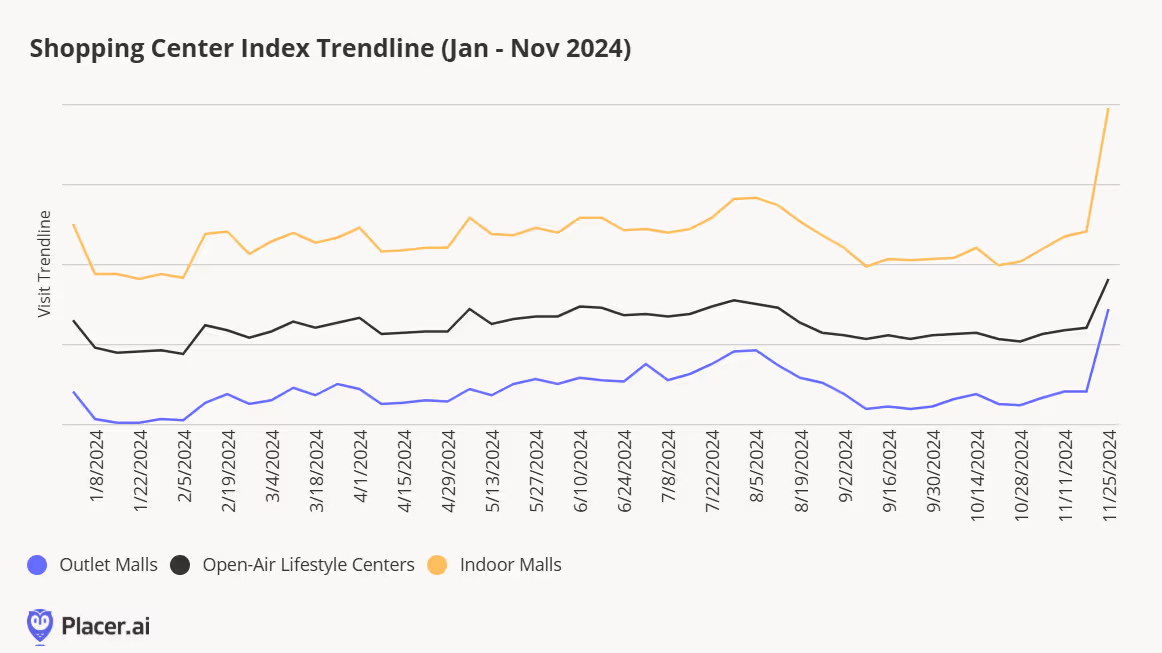
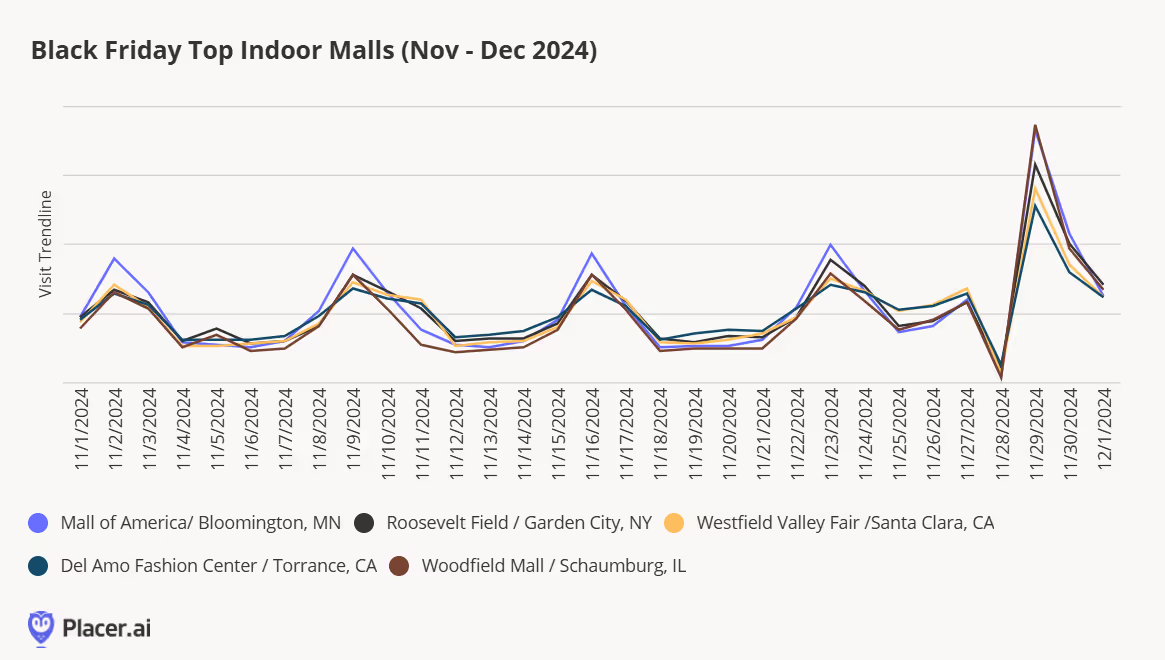
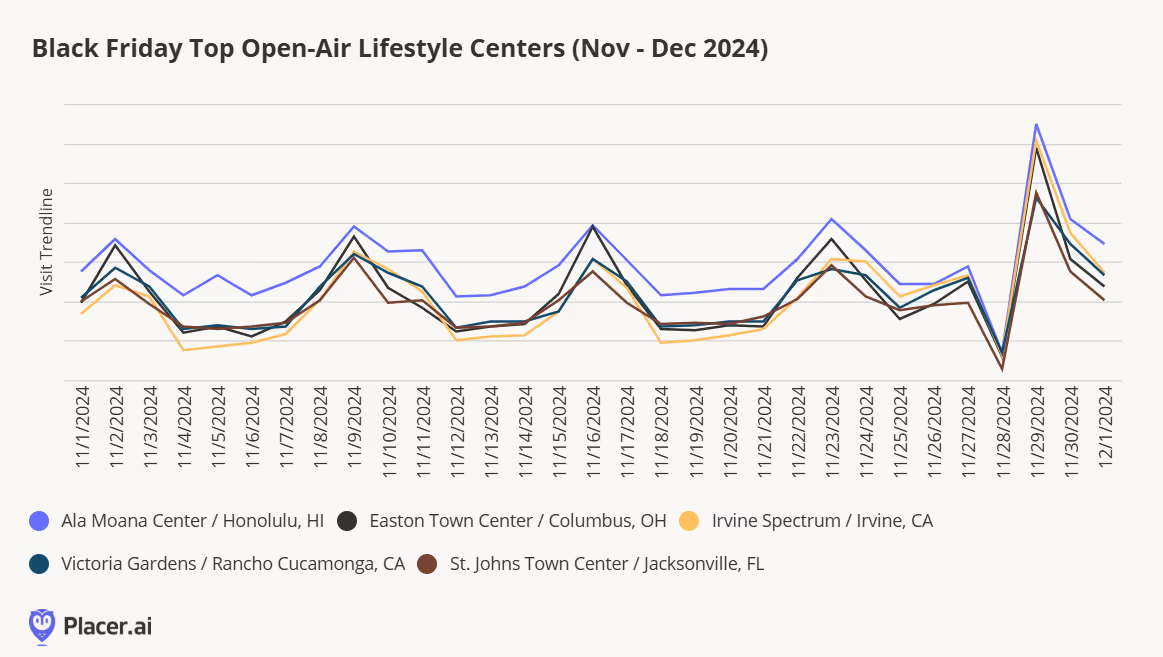
Mall visitation is highly seasonal, with strikingly consistent monthly visitation patterns. Each year, visits decline somewhat in February, pick up in March, and begin to trend upward again in May – before peaking again in August. Then, after a slower September and October, foot traffic skyrockets during the holiday season, spiking dramatically in December.
And while these trends follow similar patterns every year, comparing monthly visits throughout 2019, 2023, and 2024 (YTD) to each year’s own January baseline shows that this seasonality is growing more pronounced - especially for indoor malls.
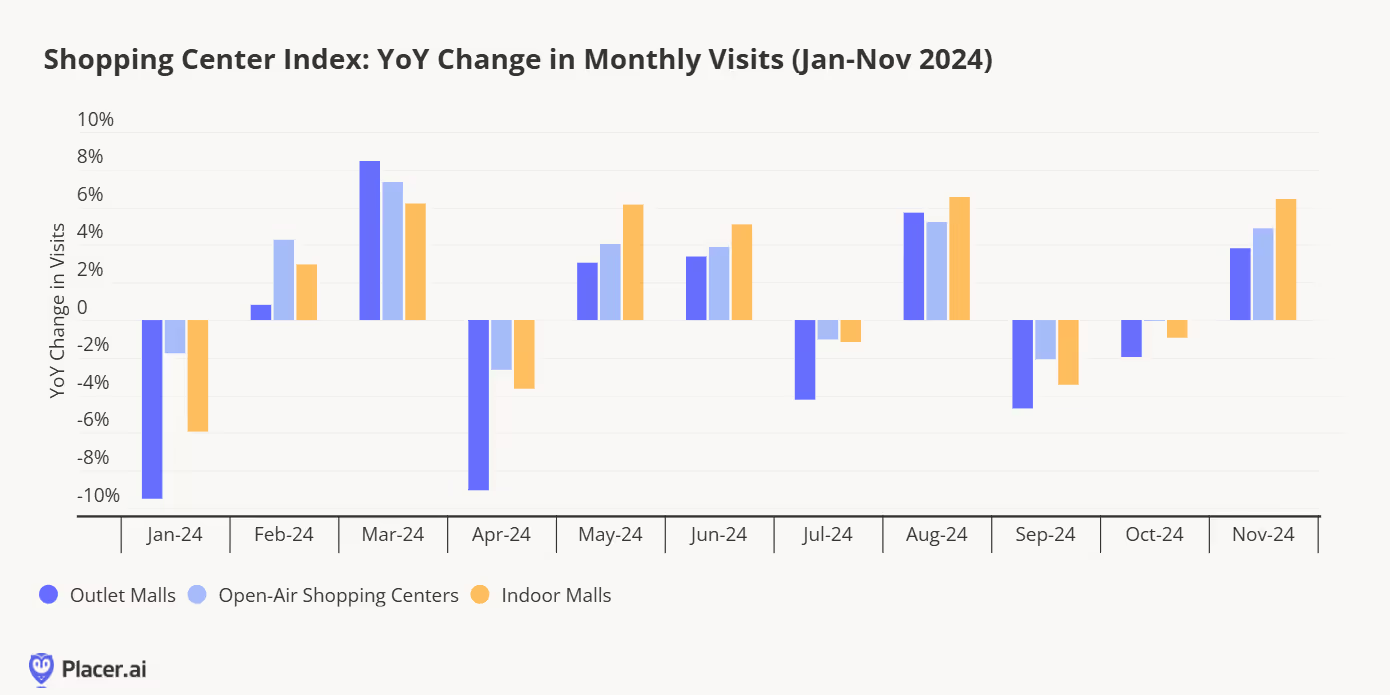
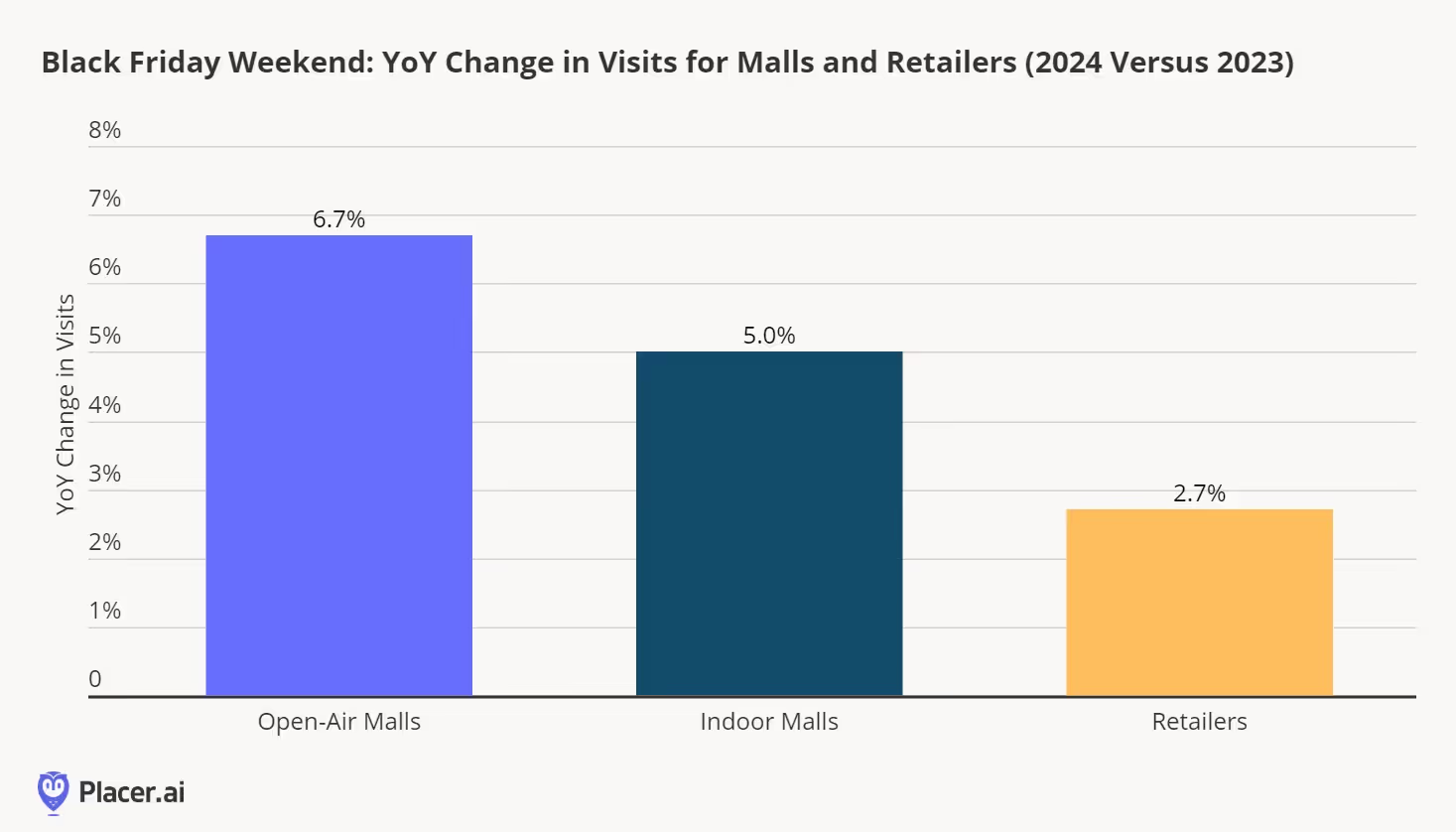
Following a lackluster 2023, visits to both indoor malls and open-air shopping centers peaked higher in March 2024 than in 2019. And this summer, indoor malls in particular saw a much larger visit boost than in previous years. In August 2024, for example, visits to indoor malls were 27.3% higher than in January 2024 – a substantially higher baseline jump than that seen either in August 2019 (17.0%) or in August 2023 (12.0%). And though open-air shopping centers experienced a smaller summer visit boost, they too saw a bigger bump this year than in 2019 or in 2023.
But malls aren’t just seeing larger visit spikes this year relative to their January baselines – they are also drawing bigger crowds than they did in 2023.
Between June and August 2024, indoor malls and open-air shopping centers both experienced year-over-year (YoY) visit growth. Indoor malls saw the largest YoY foot traffic boost (3.7%) – perhaps owing in part to 2024’s record-breaking heat, which led many patrons to seek refuge in air conditioned spaces. Still, open-air shopping centers, which feature plenty of air conditioned stores and restaurants, also enjoyed a YoY visit boost of 2.8% during the analyzed period.
Malls’ strong summer baseline and YoY foot traffic growth built upon the strong performance seen during most of 2024 so far, leading to the question: What is driving malls’ positive momentum? We delve into some of the factors propelling these changes below.
One offering that continues to play a significant role in driving foot traffic to malls is on-site movie theaters. Summer blockbuster releases, in particular, help attract crowds to theaters, in turn boosting overall visits to malls.
Much like malls, movie theaters have also proven their resilience over the past few years. While pundits fretted about the theater’s impending death, production houses were busy releasing blockbuster after blockbuster and shattering box-office records at an impressive clip. And while 2023 was certainly a banner year for blockbuster summer releases, 2024 has had its fair share of stunning box-office successes, leading to major visit boosts at theaters across the country.
Analyzing visits to malls with and without movie theaters highlights the impact of these summer Hollywood hits. Between June and August 2024, malls with theaters saw bigger visit boosts compared to a monthly year-to-date (YTD) average than malls without – an effect observed both for indoor malls and for open-air shopping centers.
For both mall types, the gap between centers with and without movie theaters was most pronounced in July 2024, likely owing to the release of Inside Out 2 in mid-June as well as the July releases of Deadpool & Wolverine and Twister. But in June and August 2024, too, centers with movie theaters sustained particularly impressive visit boosts – a solid sign that movie theaters and malls remain a winning combination.
Malls with movie theaters also drew higher shares of evening visits (7:00 PM - 10:00 PM) this summer than those without. Between June and August 2024, for example, evening outings accounted for 22.9% of visits to open-air shopping centers with movie theaters – compared to 18.2% of visits to centers without theaters. Indoor malls with theaters also saw a larger share of evening visits than those without – 18.1% compared to 15.0%.
This increase in evening traffic is likely driven by major summer movie releases and the flexibility of summer schedules, with many visitors – including families – taking advantage of late-night outings without the concern of early wakeup calls. These summer visitation trends benefit both theaters and malls, opening up opportunities for increased sales through concessions, promotions, and evening deals that attract a more relaxed and engaged crowd.
Analyzing the demographics of malls’ captured markets also reveals that centers with movie theaters are more likely to attract certain family-oriented segments than those without. (A mall’s captured market consists of the mall’s trade areas – the census block groups (CBGs) feeding visitors to the mall – weighted according to each CBG’s actual share of visits to the mall.)
Between June and August 2024, for example, 14.2% of the captured markets of open-air shopping centers with movie theaters were made up of “Wealthy Suburban Families” – compared to 9.7% for open-air shopping centers without theaters.
Indoor malls saw a similar pattern with regard to “Near-Urban Diverse Families”: Middle class families living in and around cities made up 9.0% of the captured markets of indoor malls with movie theaters, compared to 7.1% of the captured markets of those without.
This increase in foot traffic from middle-class and wealthy family segments can be a boon for malls and retail tenants – driving up food court profits and bolstering sales at stores with kid-friendly offerings.
Malls have long positioned themselves as destinations for summer entertainment as well as retail therapy, holding – in addition to back to school sales – events like Fourth of July celebrations and even indoor basketball and arena football games. And during the summer months, malls attract visitors from further away.
Between June and August 2024, indoor malls drew 18.2% of visitors from 30+ miles away – compared to just 16.7% during the first five months of the year. Similarly, open-air shopping centers drew 19.6% of visits from 30+ miles away during the summer, compared to 17.1% between January and May.
Extended daylight hours, summer trips away from home, and more free time are likely among the contributors to the summer draw for long-distance mall visitors. But in addition to their classic offerings – from movie theaters to stores and food courts – malls have also invested in other kinds of unique experiences to attract visitors. This next section takes a look at two mega-malls winning at the visitation game, to see what sets them apart.
The Minneapolis-based Mall of America opened in 1992, redefining the limits of what a mall could offer. The mall boasts hundreds of stores, games, rides, and more – and is constantly expanding its attractions, cementing its status as a top destination for retail and entertainment.
Between June and August 2024, Mall of America experienced a 13.8% YoY visit increase, far outperforming the 3.7% visit boost seen by the wider indoor mall space. And as a major tourist attraction – the mall hosted a series of Olympic-themed events throughout the summer – it also drew 41.6% of visits from 30+ miles away. This share of distant visitors was significantly higher than that seen at the mall during the first five months of 2024, and more than double the segment-wide summer average of 18.2%.
The Mall of America also seems to be attracting more upper-middle-class families during the summer than other indoor malls: Between June and August 2024, some 18.0% of Mall of America’s captured market consisted of “Upper Suburban Diverse Family Households” – a segment including upper-middle-class suburbanites – compared to just 11.1% for the wider indoor mall segment. The increased presence of these families at the Mall of America may be driven by the variety of events offered during the summer.
In 2019, the American Dream Mall in New Jersey opened and became the second-largest mall in the country. Since the mall opened its doors, it has also focused on blending retail and entertainment to draw in as wide a range of visitors as possible – and summer 2024 was no exception.
The mall hosted the Arena Football League Championship, ArenaBowl XXXIII, on Friday, July 19th. The event successfully attracted a higher share of visitors traveling from 30+ miles away compared to the average summer Friday – 35.4% compared to 25.7%.
Visits to the mall on the day of the championship were also 13.6% higher than the Friday visit average for the period between June and August 2024, showcasing the mall’s ability to draw in crowds by hosting major events.
Malls – both indoor and open-air – continue to evolve while playing a central role in the American retail landscape. Increasingly, malls are emerging as destinations for more than just shopping – especially during the summer – driving up foot traffic and attracting visitors from near and far. And while much is often said about the impact of holiday seasons on mall foot traffic, summer months offer another opportunity to boost mall visits. Malls that can curate experiences that resonate with their clientele can hope to see foot traffic growth – in the summer months and beyond.
New York City is one of the world’s leading commercial centers – and Manhattan, home to some of the nation's most prominent corporations, is at its epicenter. Manhattan’s substantial in-office workforce has helped make New York a post-pandemic office recovery leader, outpacing most other major U.S. hubs. And the plethora of healthcare, service, and other on-site workers that keep the island humming along also contribute to its thriving employment landscape.
Using the latest location analytics, this report examines the shifting dynamics of the many on-site workers employed in Manhattan and the up-and-coming Hudson Yards neighborhood. Where does today’s Manhattan workforce come from? How often do on-site employees visit Hudson Yards? And how has the share of young professionals across Manhattan’s different districts shifted since the pandemic?
Read on to find out.
The rise in work-from-home (WFH) trends during the pandemic and the persistence of hybrid work have changed the face of commuting in Manhattan.
In Q2 2019, nearly 60% of employee visits to Manhattan originated off the island. But in Q2 2021, that share fell to just 43.9% – likely due to many commuters avoiding public transportation and practicing social distancing during COVID.
Since Q2 2022, however, the share of employee visits to Manhattan from outside the borough has rebounded – steadily approaching, but not yet reaching, pre-pandemic levels. By Q2 2024, 54.7% of employee visits to Manhattan originated from elsewhere – likely a reflection of the Big Apple’s accelerated RTO that is drawing in-office workers back into the city.
Unsurprisingly, some nearby boroughs – including Queens and the Bronx – have seen their share of Manhattan worker visits bounce back to what they were in 2019, while further-away areas of New York and New Jersey continue to lag behind. But Q2 2024 also saw an increase in the share of Manhattan workers commuting from other states – both compared to 2023 and compared to 2019 – perhaps reflecting the rise of super commuting.
Commuting into Manhattan is on the rise – but how often are employees making the trip? Diving into the data for employees based in Hudson Yards – Manhattan’s newest retail, office, and residential hub, which was officially opened to the public in March 2019 – reveals that the local workforce favors fewer in-person work days than in the past.
In August 2019, before the pandemic, 60.2% of Hudson Yards-based employees visited the neighborhood at least fifteen times. But by August 2021, the neighborhood’s share of near-full-time on-site workers had begun to drop – and it has declined ever since. In August 2024, only 22.6% of local workers visited the neighborhood 15+ times throughout the month. Meanwhile, the share of Hudson Yards-based employees making an appearance between five and nine times during the month emerged as the most common visit frequency by August 2022 – and has continued to increase since. In August 2024, 25.0% of employees visited the neighborhood less than five times a month, 32.5% visited between five and nine times, and 19.2% visited between 10 and 14 times.
Like other workers throughout Manhattan, Hudson Yards employees seem to have fully embraced the new hybrid normal – coming into the office between one and four times a week.
But not all employment centers in the Hudson Yards neighborhood see the same patterns of on-site work. Some of the newest office buildings in the area appear to attract employees more frequently and from further away than other properties.
Of the Hudson Yards properties analyzed, Two Manhattan West, which was completed this year, attracted the largest share of frequent, long-distance commuters in August 2024 (15.3%) – defined as employees visiting 10+ times per month from at least 30 miles away. And The Spiral, which opened last year, drew the second-largest share of such on-site workers (12.3%).
Employees in these skyscrapers may prioritize in-person work – or have been encouraged by their employers to return to the office – more than their counterparts in other Hudson Yards buildings. Employees may also choose to come in more frequently to enjoy these properties’ newer and more advanced amenities. And service and shift workers at these properties may also be coming in more frequently to support the buildings’ elevated occupancy.
Diving deeper into the segmentation of on-site employees in the Hudson Yards district provides further insight into this unique on-site workforce.
Analysis of POIs corresponding to several commercial and office hubs in the borough reveals that between August 2019 and August 2024, Hudson Yards’ captured market had the fastest-growing share of employees belonging to STI: Landscape's “Apprentices” segment, which encompasses young, highly-paid professionals in urban settings.
Companies looking to attract young talent have already noticed that these young professionals are receptive to Hudson Yards’ vibrant atmosphere and collaborative spaces, and describe this as a key factor in their choice to lease local offices.
Manhattan is a bastion of commerce, and its strong on-site workforce has helped lead the nation’s post-pandemic office recovery. But the dynamics of the many Manhattan-based workers continues to shift. And as new commercial and residential hubs emerge on the island, workplace trends and the characteristics of employees are almost certain to evolve with them.