.png)
.png)

.png)
.png)


The off-price apparel space remains well-positioned as consumers continue to favor budget-friendly retailers. We dive into the latest location intelligence for the space – and category leaders Burlington, Marshalls, Ross Dress for Less, and T.J. Maxx – to explore how the segment closed out 2024 and started off in 2025.
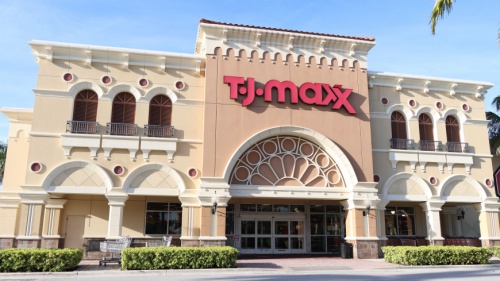
The leaders of the off-price apparel space – Burlington, Marshalls, Ross Dress for Less, and T.J. Maxx – drove the success of the category last year. In 2024, Burlington’s visits increased (7.9%), as did visits to Marshalls (5.3%), Ross (0.7%) and T.J. Maxx (4.9%).
Zooming into H2 2024 reveals that Burlington, Marshalls, and T.J. Maxx saw consistent YoY visit growth. And although Ross Dress for Less saw mild visit gaps for some of the period, all four off-price apparel chains analyzed started the new year on a high note with January 2025 visits up across the board compared to the previous year.
Marmaxx, Ross, and Burlington expanded their real estate footprints in 2024 – likely contributing to the chains’ YoY visit increases. And all four retailers’ have plans to continue their expansion strategies in the coming years – putting them on a foot traffic growth trajectory for 2025.
The foot traffic growth of Burlington, Marmaxx, and Ross plays a significant role in the success of the off-price category, which has steadily increased its share of total apparel visits.
In Q4 2024, the off-price apparel category claimed a majority of the combined off-price and our traditional apparel category visits (51.9%) for the first time since at least 2019. This demonstrates the segment’s strong holiday performance and continued resilience in the face of economic headwinds for both consumers and retailers.
Diving deeper into the foot traffic for Burlington, Ross, Marshalls, and T.J. Maxx highlights robust nationwide visits as well as several regional preferences among consumers.
Nationwide, Ross claimed the lion’s share of visits between the four chains in Q4 2024 (31.0%), followed by T.J. Maxx (28.0%), Marshalls (23.1%), and Burlington (17.9%).
Analysis of the chains’ share of visits by CBSA reveals that Ross claimed the greatest share of visits in a majority of the West and Southwest, as well as in many large metropolises. Meanwhile, T.J. Maxx appeared to be the most-visited brand in many CBSAs throughout the Eastern United States, while Marshalls appeared to be the preferred brand in the Mid-Atlantic.
And despite claiming 17.9% of combined visits to the four off-price apparel chains, Burlington received the largest share of visits in only two CBSAs – Midland, TX and Anchorage, AK, which could be due to the brand’s long-term smaller-format strategy. While a smaller-format store may have less physical real estate (and therefore visitor potential) than the typical Marmaxx and Ross location, it affords Burlington the flexibility to source locations with strong economics that can drive productivity for the brand in markets nationwide.
All four brands have a robust presence nationwide, yet regional preferences and variations in real estate footprints highlight the different paths to success in the off-price space.
The off-price apparel segment is thriving in 2025, with Burlington, Marshalls, Ross, and T.J. Maxx leading the charge. Consumers continue to prioritize value, fueling steady foot traffic growth and cementing off-price retailers as key players in the apparel space. Each brand is carving out its own regional strongholds while expanding its footprint, setting the stage for even greater success in the year ahead.
Want more data-driven insights? Visit Placer.ai.

How did Walmart, Target, and wholesale clubs perform in 2024? What do early 2025 foot traffic trends tell us about superstores’ growth potential in the coming year? And what do visitation patterns at Target and Walmart reveal about the role each chain plays in the wider retail landscape? We dove into the data to find out.
Wholesale clubs outperformed more traditional superstores in 2024, as Costco, BJ’s, and Sam’s Club saw 4.8% to 7.2% YoY increases in visits while Target and Walmart’s traffic remained relatively flat. And though wholesale clubs continued outperforming Target and Walmart in the new year as well, the two superstore leaders did see clear visit increases of 3.6% and 3.0%, respectively, in January 2025 – a promising sign for the retail giants’ growth in the year ahead.
Target and Walmart both operate national chains of one-stop shops that carry a variety of consumables and non-consumables, including groceries, apparel, toys, and electronics. But diving into the demographics of the two brand’s captured market reveals that each chain serves a slightly different audience.
Target tends to attract visitors from areas with higher HHI and larger households: The company’s captured market includes a larger share of both households with children and non-family (e.g. roommates) households than Walmart’s, perhaps due to Target’s relative appeal to both suburban and strongly urbanized segments. Meanwhile, Walmart seems to attract more repeat monthly visitors (who visit the chain at least twice a month), perhaps thanks to the chain’s extensive grocery offerings and to its popularity among rural and semirural segments who may not have a variety of retail options to frequent.
The two chains’ visitor base also exhibit differences in in-store behavior. Walmart visitors do seem to linger a little longer in store, with 20.7% of the chain’s visits lasting longer than 45 minutes compared to Target’s 17.1% – maybe thanks to the mission-driven shopping behavior of some of its rural and semirural customer base. But despite the longer visits, Walmart still receives a larger share of weekday visits than Target – perhaps thanks to its larger share of single shoppers with fewer weekday commitments.
For more data-driven consumer insights, visit placer.ai.

How did home improvement leaders The Home Depot and Lowe’s perform in 2024? And what lies ahead for the chains in 2025? We dove into the data to find out.
A challenging retail environment continued weighing on the home improvement space in 2024 as high prices and tighter consumer budgets led many consumers to push off discretionary renovations and remodels. As a result, visits to The Home Depot and Lowe’s remained below 2023 levels throughout 2024. Still, the visit gaps were relatively minor – The Home Depot received 1.6% to 3.5% fewer quarterly visits and Lowe’s saw a 2.2% to 4.7% visit gap relative to 2023 – a testament to the enduring strength of these home improvement giants.
Diving deeper into the daily visits data also reveals that, despite the challenges, the two retailers succeeded in driving significant visit boosts through promotions and holiday sales: Mother’s Day, Black Friday, and the Saturday of Memorial Day were the top three visited days for The Home Depot and Lowe’s in 2024. Lowe’s received its highest daily traffic boost on Mother’s Day – likely thanks to its free plant giveaway – while The Home Depot saw its largest visit surge over the traditionally busy Black Friday. Finally, Memorial Day sales drove the third largest visit peak for both chains.
The boost in consumer traffic during special events underscores the potential of seasonal promotions to drive engagement and foot traffic – even in times of wider retail headwinds and economic uncertainty.
Both The Home Depot and Lowe’s received fewer visitors in 2024 compared to 2023, but a closer look reveals that the YoY dips in repeat visitors (who visited at least twice a month) were larger than the declines in casual (once a month) shoppers. For example, in December 2024, the number of casual visitors to The Home Depot dipped 3.0% YoY while the number of repeat monthly visitors declined by 4.0% compared to 2023. YoY visitor trends to Lowe’s generally followed a similar trend.
This trend suggests that, with home sales at their lowest levels since 1995 and many consumers looking to avoid non-essential expenditures, demand for large-scale renovations may be slowing. As a result, contractors and homeowners undertaking major remodeling projects are likely visiting these stores less frequently.
But while these trends may be hampering home improvement visits in the short term, the current downturn could also be setting the stage for a future recovery – as a stabilizing economy could unleash significant pent-up demand.
Visits to the country’s two largest home improvement retailers, while not yet returned to their pandemic-era highs, are beginning to stabilize. Will 2025 see a return to normal for the chains?
Visit Placer.ai to keep up with the latest data-driven retail insights.

With consumer interest in wellness showing no sign of slowing down, we dove into fitness foot traffic data to see how the segment performed in 2024 and understand what the new year holds for the category.
The fitness category has yet to hit its peak. Following consistent year-over-year (YoY) growth in monthly visits throughout 2024, traffic to the category rose again in January 2025 with visits 2.3% higher than in January 2024 – a strong start for what is likely to be another standout year in the fitness space.
And while some may consider New Year’s resolutions to be an outdated, unhelpful institution, the data indicates that January still drives a significant fitness spike as Americans across the country commit to their wellness goals at the start of the year.
Fitness visits in January 2025 were 21.2% higher than in December 2024 – only a slightly lower spike than the month-over-month (MoM) January 2024 jump of 23.4% – indicating that New Year’s resolutions are still quite popular in 2025. At the same time, the slightly lower MoM growth in January may also reflect the relatively stable visitation trends throughout 2024 – a shift from the traditional patterns of fitness chains losing about 30% of their members each year.
Diving into individual fitness chains reveals that the category’s ongoing success is driving visit growth across the fitness segment – including at budget gyms such as Planet Fitness and Crunch Fitness, mid-range chains such as LA Fitness, and premium brands such as Life Time. And critically, both overall visitors and visit frequency were consistently elevated in H2 2024 and going into 2025, indicating that not only are more people going to the gym – they’re also generally going more frequently. It seems, then, that the wellness trend of the past few years is still gaining momentum.
While the increased interest in wellness seems to have brought a boost in industry-wide fitness visits, analyzing visit frequency by brand and quarter does reveal some differences – and some similarities – across different brand tiers.
All four brands analyzed – Planet Fitness, Crunch Fitness, LA Fitness, and Life Time – received the largest share of repeat visitors (at least twice a month) in Q1 2024, as New Year’s resolutions drove a boost in gym-going frequency. The share of repeat visitors then consistently fell throughout the year, and the chains (with the exception of Life Time) received the lowest share of repeat visits in Q4 as vacations and holidays likely interfered with people’s exercise schedule.
One might expect high value low price (HVLP) gyms to attract lower-usage members – since the modest fee may mean that members are not compelled to get the most bang for their buck – but looking at the data reveals that visit frequency did not necessarily correlate with membership pricing. While Planet Fitness and Crunch Fitness are both HVLP chains, their visit frequency patterns differed significantly: Planet Fitness seemed to attract a relatively high share of lower-usage members, while Crunch Fitness’ visit frequency exceeded that of higher-priced LA Fitness and was in fact was closer to that of premium chain Life Time.
For more data-driven consumer insights, visit placer.ai.

Bloomin’ Brands, the parent company of Outback Steakhouse, Carrabba’s Italian Grill, Bonefish Grill, and Fleming’s Prime Steakhouse, faced a year of mixed results in 2024 amid continued challenges in the dining sector.
We analyzed the company’s overall performance, along with its individual brands, to see what the visit data reveals about the past year.
The past year was a challenging one for many restaurant chains, and Bloomin’ Brands was not immune. Overall visits to the restaurant group declined by 2.9% YoY, with quarterly visits in 2024 falling between 1.9% and 4.0% compared to 2023.
Still, Bloomin’ appears to be working on a pivot – and visits per location metrics suggest that this is working. The company closed dozens of stores throughout 2024, a rightsizing strategy aimed at focusing on high-performing locations. As a result, visits per location tracked more closely with 2023 levels, with visits per location for 2024 as a whole up by 0.1% compared to 2023.
Diving into individual brands reveals that most of Bloomin’s chains displayed minimal visit gaps. In particular, Fleming’s Prime Steakhouse finished the year strong with a 0.8% YoY increase in Q4 2024 visits – in keeping with the general outperformance of fine dining concepts, especially around the holidays.
Still, one brand, Bonefish Grill, lagged behind the others. The company intends to simplify the menu and enhance the core brand experience, which may help bring visits back to Bonefish in 2025.
While most Bloomin’ Brands chains experienced visit declines in 2024, visits per location tracked closely with 2023 levels, reflecting the impact of the company’s strategic closures.
Outback Steakhouse, Carrabba’s Italian Grill, and Fleming’s Prime Steakhouse all saw YoY increases in visits per location for three out of four quarters in 2024. Fleming’s in particular ended the year strong with a 3.3% visit per location increase in Q4 2024 – suggesting that Bloomin’ might do well by focusing on its more upscale offerings.
And Bonefish Grill saw smaller YoY visit gaps in average visits per location compared to its overall visit metric – a sign that rightsizing may have helped offset some of the broader traffic challenges.
Despite facing a challenging year, the stability in the average visits per location across Bloomin’ Brands serves as a reminder that there are plenty of ways for restaurants to pivot and succeed.
Follow Placer.ai for the latest data-driven dining insights.

CAVA and sweetgreen have been rapidly expanding, cementing their place in the fast-casual dining landscape. We dive into the data to take a closer look at CAVA and sweetgreen’s foot traffic performance and uncover the seasonal visitation patterns driving appetite for these fast-growing chains in 2025.
CAVA and sweetgreen are still firmly in expansion mode, with new store openings fueling their foot traffic growth. Last quarter, CAVA reported a 21.4% year-over-year (YoY) increase in total restaurants and currently boasts nearly 380 locations. And in the past year, sweetgreen has opened dozens of new venues, growing the chain’s footprint to over 900 locations.
Through H2 2024 and the start of 2025, CAVA and sweetgreen experienced consistent YoY visit growth – outperforming the fast-casual restaurant category every month. CAVA’s significantly larger visit growth (26.9% compared to sweetgreen’s 9.9% YoY in Q4 2024) was likely due to the proportional impact of new restaurant openings on CAVA’s smaller real estate footprint.
As CAVA and sweetgreen continue to expand, 2025 is likely to be another year of sustained growth for both restaurants.
Analyzing seasonal visit trends can reveal some of the factors driving sweetgreen and CAVA’s success.
Fast-casual restaurants generally receive more of their visits during lunch than during dinner. And CAVA and sweetgreen received an even larger share of lunchtime (12 PM to 3 PM) visits than the fast-casual average – indicating that these restaurants’ lunchtime popularity is likely a major growth driver.
CAVA also received the highest dinner (between 6 PM and 9 PM) visit share. This indicates that despite CAVA’s fast-casual designation, consumers seem to treat it more like a full-service restaurant, with patrons visiting the chain to eat a proper meal and not just to grab a convenient bite between errands. And the company’s recently launched loyalty program may well bring even more lunch and dinner visits to the chain in 2025.
Meanwhile, sweetgreen’s dinner visit share remained at or below the fast-casual average throughout the year. But evening traffic to the salad chain did increase during the warmer months – hitting a high of 27.4% between July and October – perhaps due to consumers remaining out and about later when there were more daylight hours. Consumers generally spend significantly more on dinner out than on lunch, so sweetgreen may want to fuel its warm-weather dinner boost by offering specials or promotions to attract even more evening patrons to its locations during Q2 and Q3. Sweetgreen may also choose to incorporate time-dependent ordering incentives into its new loyalty program to encourage more evening visits throughout the year.
Further analysis of visitor behavior reveals that CAVA and sweetgreen drive a significant share of weekend visits. And while sweetgreen’s dinner boost tends to occur in Q2 and Q3, both sweetgreen and CAVA’s weekend visit share increases in Q1 and Q4.
At least some of the elevated weekend visits in Q4 2024 may have been due to the many consumers that were on vacation – eating fewer mid-week meals out of the house – or grabbing a bite while doing their holiday shopping on Saturday and Sunday. Still, elevated weekend traffic in Q1 indicates that the chains have the potential to drive significant traffic during other cold-weather months on days when consumers have more time for recreation.
CAVA’s continued investment in inviting dining rooms – part of the chain’s “Project Soul” campaign – may attract unhurried diners looking to experience a cozy ambiance, while sweetgreen’s early-stage rollout of the robotic “Infinite Kitchen” may actually elevate the indoor dining experience to one that is fun and weekend-worthy.
As sweetgreen and CAVA pursue various strategies in their next phase of growth, an understanding of consumer behavior can help the chains maximize the potential of their robust visitor bases and enhance operational efficiency.
Want more data-driven dining insights? Visit Placer.ai.

1. Expanded grocery supply is increasing overall category engagement. New locations and deeper food assortments across formats are bringing shoppers into the category more often, rather than fragmenting demand.
2. Grocery visit growth is being driven by low- and middle-income households. Elevated food costs are leading to more frequent, budget-conscious trips, reinforcing grocery’s role as a non-discretionary category.
3. Short, frequent trips are a major driver of brick-and-mortar traffic growth. Fill-in shopping, deal-seeking, and omnichannel behaviors are pushing visit frequency higher, even as trip duration declines.
4. Scale is accelerating consolidation among large grocery chains. Larger retailers are using their size to invest in value, assortment, private label, and execution, allowing them to capture longer and more engaged shopping trips.
5. Both large and small grocers have viable paths to growth. Large chains are winning by competing for the full grocery list, while smaller banners can grow by specializing, owning specific missions, or offering compelling value that earns them a place in shoppers’ routines.
While much of the retail conversation going into 2026 focused on discretionary spending pressure, digital substitution, and higher-income consumers as the primary drivers of growth, grocery foot traffic tells a different story.
Rather than being diluted by new formats or eroded by e-commerce, brick-and-mortar grocery engagement is expanding. Visits are rising even as grocery supply spreads across wholesale clubs, discount and dollar stores, and mass merchants. At the same time, growth is being powered not by affluent trade areas, but by low- and middle-income households navigating higher food costs through more frequent, targeted trips. Shoppers are showing up more often and increasingly splitting their trips across retailers based on value, availability, and mission – pushing grocers to compete for portions of the grocery list instead of the full weekly basket.
The data also suggests that the largest grocery chains are capturing a disproportionate share of rising grocery demand – but the multi-trip nature of grocery shopping in 2026 means that smaller banners can still drive traffic growth. By strengthening their value proposition, specializing in specific products, or owning specific shopping missions, these smaller chains can complement, rather than compete with, larger one-stop destinations.
Ultimately, AI-based location analytics point to a clear set of grocery growth drivers in 2026: expanded supply that increases overall engagement, more frequent and mission-driven trips, and continued traffic concentration among large chains alongside new opportunities for smaller banners.
One driver of grocery growth in recent years is simply the expansion of grocery supply across multiple retail formats. Wholesale clubs are constantly opening new locations and discount and dollar stores are investing more heavily in their food selection, giving consumers a wider choice of where to shop for groceries. And rather than fragmenting demand, this broader availability appears to have increased overall grocery engagement – benefiting both dedicated grocery stores and grocery-adjacent channels.
Grocery stores continue to capture nearly half of all visits across grocery stores, wholesale clubs, discount and dollar stores, and mass merchants. That share has remained remarkably stable thanks to consistent year-over-year traffic growth – so even as grocery supply increases across categories, dedicated grocery stores remain the primary destination for food shopping.
Meanwhile, mass merchants have seen a decline in relative visit share as expanding grocery assortments at discount and dollar stores and the growing store fleets of wholesale clubs give consumers more alternatives for one-stop shopping.
While much of the broader retail conversation heading into 2026 centers on higher-income consumers carrying growth, the trend looks different in the grocery space. Recent visit trends show that grocery growth has increasingly shifted toward lower- and middle-income trade areas, underscoring the distinct dynamics of non-discretionary retail.
For lower- and middle-income shoppers, elevated food costs appear to be translating into more frequent grocery trips as consumers manage budgets through smaller baskets, deal-seeking, and shopping across retailers. In contrast, higher-income households – often cited as a key growth engine for discretionary retail – are contributing less to grocery visit growth, likely reflecting more stable shopping patterns or a greater ability to consolidate trips or shift spend online.
This means that, in 2026, grocery growth is not being propped up by high-income consumers. Instead, it is being fueled by necessity-driven shopping behavior in lower- and middle-income communities – reinforcing grocery’s role as an essential category and suggesting that similar dynamics may be at play across other non-discretionary retail segments.
Another factor driving grocery growth is the rise in short grocery visits in recent years. Between 2022 and 2025, the biggest year-over-year visit gains in the grocery space went to visits under 30 minutes, with sub-15 minute visits seeing particularly big boosts. As of 2025, visits under 15 minutes made up over 40% of grocery visits nationwide – up from 37.9% of visits in 2022.
This shift toward shorter visits – especially those under 15 minutes – is driven in part by the continued expansion of omnichannel grocery shopping, as many consumers complete larger stock-up orders online and rely on in-store trips for order collection or quick, fill-in needs. At the same time, the rise in short visits paired with consistent YoY growth in grocery traffic points to additional, behavior-driven forces at play – consumers' growing willingness to shop around at different grocery stores in search of the best deal or just-right product.
Value-conscious shoppers – particularly consumers from low- and middle-income households, which have driven much of recent grocery growth – seem to be increasingly shopping across multiple retailers to secure the best prices. This behavior often involves making targeted trips to different stores in search of the strongest deals, a pattern that is contributing to the rise in shorter, more frequent grocery visits. At the same time, other grocery shoppers are making quick trips to pick up a single ingredient or specialty item – perhaps reflecting the increasingly sophisticated home cooks and social media-driven ingredient crazes. In both these cases, speed is secondary to getting the best value or the right product.
So while some shorter visits reflect a growing emphasis on efficiency – as shoppers use in-store trips to complement primarily online grocery shopping – others appear driven by a preference for value or product selection over speed. Despite their differences, all of these behaviors have one thing in common – they're all contributing to continued growth in brick-and-mortar grocery visits. Grocers who invest in providing efficient in-store experiences are particularly well-positioned to benefit from these trends.
As early as 2022, the top 15 most-visited grocery chains already accounted for roughly half of all grocery visits nationwide. And by outpacing the industry average in terms of visit growth, these chains have continued to capture a growing share of grocery foot traffic.
This widening gap suggests that scale is increasingly enabling grocers to reinvest in the factors that attract and retain shoppers. Larger chains are better positioned to invest in broader and more differentiated product selection, stronger private-label programs that deliver quality at accessible price points, competitive pricing, and operational excellence across stores and omnichannel touchpoints. These capabilities allow top chains to serve a wide range of shopping missions – from quick, convenience-driven trips to more intentional visits in search of the right product or ingredient.
Consolidation at the top of the grocery category is reinforcing a virtuous cycle: scale enables better value, selection, and experience, which in turn draws more shoppers into stores and supports continued grocery traffic growth.
In 2025, the top 15 most-visited grocery chains accounted for a disproportionate share of visits lasting 15 minutes or more, while smaller grocers captured a larger share of the shortest trips. As shown above, larger grocery chains, which tend to attract longer visits, grew faster than the industry overall – but short visits, which skew more heavily toward smaller chains, accounted for a greater share of total traffic growth. Together, these patterns show that both long, destination trips and short, targeted visits are driving grocery traffic growth and creating viable paths forward for retailers of all sizes.
Larger chains are more likely to serve as destinations for fuller shopping missions, competing for the entire grocery list – or a significant share of it. But smaller banners can grow too by competing for more short visits. By specializing in a specific product category, owning a clearly defined shopping mission, or delivering a compelling value proposition, smaller grocers can earn a place in shoppers’ routines and become a deliberate stop within a broader grocery journey.
As grocery moves deeper into 2026, growth is being driven by the cumulative effect of how consumers are navigating food shopping today. Expanded supply has increased overall engagement, higher food costs are driving more frequent and targeted trips, and shoppers are increasingly willing to split their grocery list across retailers based on value, availability, and mission.
Looking ahead, this suggests that grocery growth will remain resilient, but unevenly distributed. Retailers that clearly understand which trips they are best positioned to win – and invest accordingly – will be best placed to capture that growth. Large chains are likely to continue benefiting from scale, consolidation, and their ability to serve full shopping missions, while smaller banners can grow by earning a defined role within shoppers’ broader grocery journeys. In 2026, success in grocery will be less about winning every trip and more about consistently winning the right ones.

To optimize office utilization and surrounding activity in 2026, stakeholders should:
1. Plan for continued, but slower, office recovery. Attendance continues to rise and has reached a post-pandemic high, but moderating growth suggests the return-to-office may progress at a more gradual and incremental pace than in prior years.
2. Account for growing seasonality in office staffing, local retail operations, and municipal services. As office visitation becomes increasingly concentrated in late spring and summer, offices, downtown retailers, and cities may need to plan for more predictable peaks and troughs by adjusting hours, staffing levels, and local services accordingly, rather than relying on annual averages.
3. Align leasing strategies with seasonal demand. Stronger attendance in Q2 and Q3 suggests these quarters are best suited for leasing activity, while softer Q1 and Q4 periods may be better used for renovations, repositioning, and targeted activation efforts designed to draw workers in.
4. Design hybrid policies around midweek anchor days. With Tuesdays and Wednesdays consistently driving the highest office attendance, employers can maximize collaboration and space utilization by concentrating meetings, programming, and in-office expectations midweek.
5. Reduce early-week commute friction to support attendance. Monday office attendance appears closely correlated with commute ease, suggesting that reliable and efficient transportation may be an important factor in early-week office recovery.
6. Prioritize proximity in leasing and development decisions. Visits from employees traveling less than five miles to work have increased steadily since 2019, reinforcing the value of centrally located offices and housing near employment hubs.
2025 was the year of the return-to-office (RTO) mandate. Employers across industries – from Amazon to JPMorgan Chase – instituted full-time on-site requirements and sought to rein in remote work. But the year also underscored the limits of policy. As employee pushback and enforcement challenges mounted, many organizations turned to quieter tactics such as “hybrid creep” to gradually expand in-office expectations without triggering outright resistance.
For employers seeking to boost attendance, as well as office owners, retailers, and cities looking to maximize today’s visitation patterns, understanding what actually drives employee behavior has become more critical than ever. This reports dives into the data to examine office visitation patterns in 2025 – and explore how structural factors such as weather, commute convenience, and workplace proximity have emerged as key differentiators shaping how and when, and how often workers come into the office.
National office visits rose 5.6% year over year in 2025, bringing attendance to just 31.7% below pre-pandemic levels and marking the highest point since COVID disrupted workplace routines. At the same time, the pace of growth slowed compared to 2024, signaling a possible transition into a steadier phase of recovery.
With new return-to-office mandates expected in 2026, and the balance of power quietly shifting towards employers, additional gains remain likely. But the trajectory suggested by the data points toward gradual progress rather than a return to the more rapid rebounds seen in 2023 or 2024.
Before COVID, “I couldn’t come in, it was raining” would have sounded like a flimsy excuse to most bosses. But today, weather, travel, and individual scheduling are widely accepted reasons to stay home, reflecting a broader assumption that face time should flex around convenience.
This shift is visible in the growing seasonality of office visitation, which has intensified even as overall attendance continues to rise. In 2019, office life followed a relatively steady year-round cadence, with only modest quarterly variation after adjusting for the number of working days. In recent years, however, greater seasonality has emerged. Since 2024, Q1 and Q4 have consistently underperformed while Q2 and Q3 have posted meaningfully stronger attendance – a pattern that became even more pronounced in 2025. Winter weather disruptions, extended holiday travel, and the growing normalization of “workations” appear to be pulling some visits out of the colder, holiday-heavy months and concentrating them into late spring and summer.
For employers, office owners, downtown retailers, and city planners, this emerging seasonality matters. Staffing, operating budgets, and programming decisions increasingly need to account for predictable soft quarters and peak periods, making quarterly planning a more useful lens than annual averages. Leasing activity may also convert best in Q2 and Q3, when districts feel most active. Slower quarters, meanwhile, may be better suited for renovations, construction, or employer- and city-led programming designed to give workers a reason to show up.
The growing premium placed on convenience is also evident in the persistence of the TGIF workweek – and in the factors shaping its regional variability.
Before COVID, Mondays were typically the busiest day of the week, followed by relatively steady attendance through Thursday and a modest drop-off on Fridays. Today, Tuesdays and Wednesdays have firmly established themselves as the primary anchor days, while Mondays and Fridays see consistently lower activity. And notably, this pattern has remained essentially stable over the past three years – despite minor fluctuations – as workers continue to cluster their in-office time around the days that offer the most perceived value while preserving flexibility at the edges of the week.
At the same time, while the hybrid workweek remains firmly entrenched nationwide, its contours vary significantly across regions – and the data suggests that convenience is once again a key differentiator.
Across major markets, a clear pattern emerges: Cities with higher reliance on public transportation tend to see weaker Monday office attendance, while markets where more workers drive alone show stronger early-week presence. While industry mix and local office culture still matter, the data points to commute hassle as another factor potentially shaping Monday attendance.
New York City, excluded from the chart below as a clear outlier, stands as the exception that proves the rule. Despite nearly half of local employees relying on public transportation (48.7% according to the Census 2024 (ACS)), the city’s extensive and deeply embedded transit system appears to reduce perceived friction. In 2025, Mondays accounted for 18.4% of weekly office visits in the city, even with heavy transit usage.
The contrast highlights an important nuance: Where transit is fast, frequent, and integrated into daily routines, it can support office recovery, offering a potential roadmap for other dense urban markets seeking to rebuild early-week momentum.
Another powerful signal of today’s convenience-first mindset shows up in commute distances. Since 2019, the share of office visits generated by employees traveling less than five miles has steadily increased, largely at the expense of mid-distance commuters traveling 10 to 25 miles.
To be sure, this metric reflects total visits rather than unique visitors, so the shift may be driven by increased visit frequency among workers with shorter, simpler commutes rather than a change in where employees live overall. Still, the pattern is telling: Workers with shorter commutes appear more likely to generate repeat in-person visits, while longer and more complex commutes correspond with fewer trips. Over time, this dynamic could shape office leasing decisions, residential demand near employment centers – whether in urban cores or in nearby suburbs – and the geography of the workforce.
Taken together, the data paints a clear picture of the modern return-to-office landscape. Attendance is rising, but behavior is no longer driven by mandates alone. Instead, workers are making rational, convenience-based decisions about when coming in is worth the effort.
For cities, the implication is straightforward: Ease of access matters. Investments in transit reliability, last-mile connectivity, and housing near employment centers can all play a meaningful role in shaping how consistently people show up. For employers, too, the lesson is that the path back to the office runs through convenience, not just compulsion, as attendance gains are increasingly driven by how effectively organizations reduce friction and increase the perceived value of being on-site.

1. AI is raising the bar for physical retail as shoppers arrive more informed, more intentional, and less tolerant of friction – though the impact varies by category and format.
2. As discovery shifts upstream, stores increasingly serve as confirmation rather than discovery points where shoppers validate decisions through hands-on experience and expert guidance.
3. AI-based tools can improve in-store performance by removing operational friction – shortening trips in efficiency-led formats and supporting deeper engagement in experience-led ones.
4. By embedding expertise directly into frontline workflows, AI helps retailers deliver consistent, high-quality service despite high turnover and limited training windows.
5. AI enables precise, location-specific marketing and execution, allowing retailers of any size to align assortments, staffing, and messaging with real local demand.
6. Retailers can also use AI to manage their store fleets with greater discipline and understand where to expand, where to avoid cannibalization, and where to rightsize based on observed demand rather than static assumptions.
7. AI is not a universal lever in physical retail; its value depends on the store format, and in discovery-driven models it should support operations behind the scenes rather than reshape the customer experience.
Physical retail has faced repeated claims of obsolescence, from the rise of e-commerce to the shock of COVID. Each time, analysts predicted a structural decline in brick-and-mortar. And each time, physical retail adapted.
AI has triggered a similar round of predictions. Much of the current discussion frames retail’s future as a binary outcome: either stores become heavily automated, or e-commerce becomes so optimized that physical locations lose relevance altogether.
But past disruptions point in a different direction. E-commerce changed how physical retail operated by raising expectations for omnichannel integration, speed, and clarity of purpose. Retailers that adjusted store formats, merchandising, and operations accordingly went on to drive sustained growth.
AI likely represents another inflection point for physical retail. As shoppers arrive with more information, clearer intent, and even less tolerance for friction than in the age of "old-fashioned" e-commerce, physical stores will remain – but the standards they are held to continue to rise.
This report presents four ways retailers are using AI to get – and stay – ahead as physical retail adapts to this next wave of disruption.
E-commerce moved discovery earlier in the shopping journey. Instead of beginning the process in-store, many shoppers now arrive at brick-and-mortar locations after having deeply researched products, comparing options, and narrowing choices online – entering the store to validate rather than initiate their purchasing decision.
AI-powered shopping accelerates this pattern. Conversational assistants, recommendation engines, and AI-driven discovery across search and social reduce the time and effort required to evaluate options – and this shift is changing consumers' expectations around the in-store experience.
Apple shows what it looks like when a physical store is built for well-informed shoppers. Given the prevalence of AI-powered search and assistants in high-consideration categories like consumer electronics, Apple customers likely arrive at the Apple Store with more preferences already shaped by AI-assisted research than other retail categories.
Apple Stores were designed for this kind of customer long before AI became widespread. The layout puts working products directly in customers’ hands, merchandising emphasizes live use over promotional signage, and associates are trained to answer detailed technical questions rather than walk shoppers through basic options.
That alignment is showing up in store behavior. Even as AI-powered shopping expands, Apple Stores continue to see rising foot traffic and longer visits thanks to the store's specific and curated role in the customer journey – a place where customers confirm decisions through hands-on experience and expert guidance.
Some applications of AI extend trends that e-commerce has already introduced. Others address operational challenges that previously required manual coordination or tradeoffs.
AI can reduce friction and make store visits more predictable by improving staffing allocation, reducing checkout delays, optimizing inventory placement, and managing traffic flow. These changes reduce friction without altering the visible customer experience.
Sam's Club offers a clear, recent example of AI solving a specific in-store bottleneck. For years, customers completed checkout only to face a second line at the exit, where an employee manually scanned paper receipts and spot-checked carts.
In early 2024, Sam’s Club introduced computer vision-powered exit gates, allowing customers to exit the store without stopping as AI algorithms instantly captured images of the items in their carts and matched them against digital purchase data. Employees previously tasked with receipt checks could now shift their focus to member assistance and in-store support.
The impact was measurable. Sam’s Club reported that customers now exit stores 23% faster than under manual receipt checks, a result confirmed by a sustained nationwide decline in average dwell time. During the same period, in-store traffic increased 3.3% year-over-year – demonstrating how removing friction with AI can deliver tangible gains.
AI optimizes stores for different outcomes. At Sam’s Club, it shortens visits by removing friction from task-driven trips. At Apple, upstream research leads to longer visits focused on testing, questions, and decision validation. In both cases, AI aligns store execution with shopper intent – prioritizing speed and throughput in efficiency-led formats and deeper engagement in experience-led ones.
Beyond shaping store roles and streamlining operations, AI can also address a long-standing challenge in physical retail: delivering consistent, high-quality expertise on the sales floor despite high turnover and seasonal staffing. In the past, retailers relied on heavy training investments that often failed to pay off. AI can now embed that expertise directly into frontline workflows, allowing associates to deliver confident, informed service regardless of tenure and strengthening the in-store experience at scale.
In May 2025, Lowe’s rolled out a major in-store AI enhancement called Mylow Companion, an AI-powered assistant that equips frontline staff with real-time, expert support on product details, home improvement projects, inventory, and customer questions.
Mylow Companion is embedded directly into associates’ handheld devices, delivering instant guidance through natural, conversational interactions, including voice-to-text. This enables even newly hired employees to provide confident, expert-level advice from day one, while helping experienced associates upsell and cross-sell more effectively. The tool complements Mylow, a customer-facing AI advisor launched the same year to help shoppers plan projects and discover the right products, leading to increased customer satisfaction.
While AI alone cannot solve demand challenges—especially amid macroeconomic pressure on large-ticket discretionary spending—early signals suggest it may still play a meaningful role. Location analytics indicate narrowing year-over-year visit gaps at Lowe’s post-deployment, pointing to a potentially improved in-store experience. And Home Depot’s recent announcement of agentic AI tools developed with Google Cloud suggests that these technologies are becoming table stakes in this category.
As more retailers roll out similar capabilities, those that moved earlier are better positioned to help set the bar – and benefit as the market adapts.
Beyond improving the in-store experience, AI also gives retailers a powerful way to drive foot traffic through precision marketing. By processing large volumes of behavioral, location, and timing data, AI can help retailers decide who to reach, when to engage them, where to activate, and what message or assortment will resonate – shifting marketing from broad seasonal pushes to campaigns grounded in local demand.
Target offers an early example of this approach before AI became widespread. Stores near college campuses have long tailored assortments and messaging around the academic calendar, especially during the back-to-school season. In August, these locations emphasize dorm essentials, compact storage, bedding, tech accessories, and affordable décor – supported by campaigns aimed at students and parents preparing for move-in. That localized approach has been effective in driving in-store traffic to Target stores near college campuses, with these venues seeing consistent visit spikes every August and outperforming the national average across multiple back-to-school seasons from 2023 to 2025.
AI makes local execution repeatable at scale. By analyzing visit patterns, past performance, and timing signals across thousands of locations, retailers can decide which products to promote, how to staff stores, and when to run campaigns at each location. Marketing, merchandising, and store operations then act on the same demand signals instead of separate assumptions.
Crucially, AI makes this level of localization accessible to retailers of all sizes. What once required the resources and institutional knowledge of a big-box giant can now be achieved through precision marketing and demand forecasting tools, allowing brands to adapt each store’s messaging, assortment, and execution to the unique rhythms of its community.
Beyond improving performance at individual stores, AI can also give retailers a clearer view of how their entire store fleet is working – and where it should grow, contract, or change. By analyzing foot traffic patterns, trade areas, customer overlap, and visit frequency across locations, AI helps retailers identify which sites are truly reaching their target audiences and which are underperforming relative to local demand.
AI also plays a critical role in smarter expansion. Retailers can use it to identify markets and neighborhoods where demand is growing, customer overlap is low, and incremental visits are likely – reducing the risk of cannibalization when opening new stores. By modeling how shoppers move between existing locations, AI can flag when a proposed site will attract new customers versus simply shifting traffic from nearby stores, grounding expansion decisions in observed behavior rather than demographic proxies or intuition alone.
Equally important, AI helps retailers recognize when expansion no longer makes sense. By tracking total fleet traffic, visit growth, and trade-area saturation, retailers can assess whether new stores are adding net demand or diluting performance. The same signals can identify locations where demand has structurally declined, informing rightsizing decisions and store closures. In this way, AI supports a more disciplined approach to physical retail – one that treats the store fleet as a dynamic system to be optimized over time, rather than a footprint that only grows.
The impact of AI on physical retail will vary significantly by category and format. Not every successful store experience is built around efficiency, prediction, or pre-qualification. Retailers with clearly differentiated offline value don’t necessarily benefit from forcing AI into customer-facing experiences that dilute what makes their stores work.
“Treasure hunt” formats are a clear example. Off-price retailers like TJ Maxx, Marshalls, Ross, and Burlington continue to drive strong traffic by offering unpredictability, scarcity, and discovery that cannot be replicated – or meaningfully enhanced – through AI-driven search or recommendation. The appeal lies precisely in not knowing what you’ll find. For these retailers, heavy investment in AI-led personalization or pre-shopping guidance risks undermining the core experience rather than improving it.
Similar dynamics apply in other categories. Independent boutiques, vintage stores, resale shops, and certain specialty retailers succeed by offering curation, serendipity, and human taste rather than optimization. In these cases, AI may still play a role behind the scenes – supporting inventory planning, pricing, or site selection – but it should not reshape the customer-facing experience. AI is most valuable when it reinforces a retailer’s existing value proposition. Formats built around discovery, surprise, or experiential browsing should protect those strengths, even as other parts of the retail landscape move toward greater efficiency and intent-driven shopping.
AI is forcing physical retail to evolve with intention. By creating a supportive environment for customers who arrive with made-up minds, removing friction inside the store, offering the best in-store services, and orchestrating demand with greater precision, retailers are adapting to the new world standards set by AI. All five strategies focus on aligning stores with shopper intent – what customers want, how the store supports it, and when the interaction happens.
The retailers that win in this next era won’t be the ones that use AI to simply automate what already exists. They’ll be the ones that use it to sharpen the role of physical retail – turning stores into places that help shoppers validate decisions, deliver value beyond convenience, and show up at exactly the right moment in a customer’s journey.
In the age of AI, physical retail wins by becoming more intentional – designed around informed shoppers, optimized for the right outcome in each format, and activated at moments when demand is real.