


.svg)




April 2025 Visits Increased to All Mall Formats
Following a February slowdown, March 2025 mall data offered early signs of a rebound as indoor mall traffic increased and visit gaps at open-air shopping centers and outlet malls narrowed. Now, April data confirms the resurgence in mall activity, with YoY monthly visits up across all mall formats.
Some of the strength may be due to this year’s relatively late Easter, which fell in April (Easter 2024 took place in March) and may have led to a YoY increase in April 2025 as families utilized the holiday weekend for shopping and leisure. But diving deeper into the data suggests that the calendar shift is just one reason for this month’s strong visit numbers, which may also have been boosted by a pull-forward of consumer demand following the early April tariff announcement.
Easter Drives Visit Boost – And Dip
Looking at daily visits in April reveals that the Easter calendar shift had both a positive and negative impact on mall foot traffic. Visits were strong the week before Easter – particularly on Good Friday – as consumers bought gifts, shopped sales, and used their day off to visit mall-based dining and entertainment venues with friends and family. Outlet malls in particular received a significant boost with visits on April 18th (Good Friday) up 26.2% compared to the April 2025 Friday average – perhaps evidence of a more challenged consumer.
But visits to all three formats also dropped significantly on Easter Sunday, with visits to indoor malls, open-air shopping centers, and outlet malls down 59.4%, 33.3%, and 25.9%, respectively, compared to each format’s Sunday average in April 2025. So while Easter did drive a visit boost before the holiday, Sunday’s traffic drop may have balanced out any Easter-driven increase. Rather, the robust April performance likely reflects sustained consumer demand for mall experiences.
Weekly Data Shows Positive Mall Trends Beyond Easter
Weekly numbers also suggest that malls’ performance is not just due to an Easter bump. YoY weekly visits increased for all three formats during the last three full weeks of April, with indoor malls and open-air shopping centers receiving the largest boost the week after Easter – pointing to a broader trend of renewed consumer interest in mall-based activities.
The weekly numbers showing visit hikes following April 2nd also suggest that tariffs may already be impacting consumer behavior, with some shoppers likely beginning to stock up ahead of anticipated price increases and possible shortages.
More & Longer Mall Visits
Analyzing the average visit duration adds another layer of insights into malls’ April success.
Last month, the average visit duration increased for all three mall formats – so not only did malls receive more visits YoY, each visit also lasted longer, on average, than it did last year. This may suggest a larger combined basket size, with consumers spending more time in stores or visiting more mall-based retailers in a single trip. This highlights once again the resilience of the format and the ongoing consumer demand for mall-based retail, dining, and entertainment – and may offer another indication of the pull-forward of demand from certain consumers.
Malls’ Robust April Performance
April 2025 mall data reveals a significant upswing in mall traffic across all formats along with an increase in average visit duration, demonstrating a recovery that extends beyond the influence of the Easter calendar shift. These positive trends reveal malls’ continued role as key destinations for shopping and leisure – even in times of economic headwinds – and could be pointing to a pull-forward of consumer demand in anticipation of retail uncertainty.
For more data-driven consumer insights, visit placer.ai/anchor.
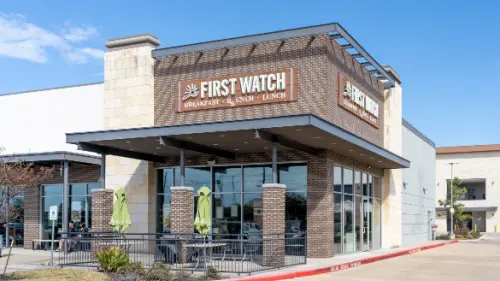
Traffic to First Watch continues to climb as the company forges on with its expansion. Visits to the chain were 7.3% higher year-over-year (YoY) in Q1 2025 as visits per location held essentially steady (-0.8% YoY) – revealing that demand for the breakfast, brunch, and lunch dining concept remains robust despite the consumer headwinds.
And according to the latest monthly data, First Watch may be in even better shape than its already strong Q1 2024 visit numbers suggest. In April 2025, overall visits to the chain grew 10.5% YoY while visits per location increased by 3.0% – indicating that the morning and afternoon-focused dining brand likely still has more room to grow.
For more data-driven consumer analysis, visit placer.ai/anchor.
We dove into the visit data to see how Starbucks, Dunkin,’ and Dutch Bros are faring in Q1 2025.
Coffee Consumers Looking For Indulgence
Affordable luxuries like coffee tend to do well in times of rising prices and heightened budget-consciousness. So it should come as no surprise that visits to coffee chains have been on the rise recently, with overall traffic to the category up 1.8% year-over-year (YoY) in Q1 2025. Much of the increase can be attributed to the aggressive expansions of small and medium coffee chains such as Dutch Bros (13.4% YoY increase in visits in Q1 2025), Scooter’s Coffee (+15.3% YoY) and 7 Brew Coffee (+87.3%).
Meanwhile, visits to coffee leaders Starbucks and Dunkin’ remained relatively stable – falling by just 0.9% and 1.6%, respectively, in line with the wider QSR Q1 2025 YoY visit gap of 1.6%. Contrasting the growth of smaller coffee chains with Starbucks and Dunkin’s minor traffic dips may suggest that consumers prefer to spend their limited discretionary funds on unique or decadent treats instead of on classic drinks and pastries.
Starbucks Continues to Lead the Category
But despite the rapid growth of smaller coffee chains, Starbucks continues to dominate the coffee category, receiving over half of combined visits to Starbucks, Dunkin’, Dutch Bros, Scooter’s Coffee, and 7 Brew Coffee. At the same time, though, Starbucks’ stronghold on the category may be loosening slightly – the Seattle-based coffee giant’s relative visit share fell from 55.8% in Q1 2024 to 51.2% in Q1 2025 as smaller chains continued growing and expanding.
The cross-visitation data also highlights Starbucks’ dominance. In Q1 2025, the majority of visitors to most other coffee chains (51.3% of Dunkin’ visitors, 65.7% of Dutch Bros, and 58.4% of 7 Brew visitors) also visited a Starbucks in the same period. Meanwhile, only 27.4% of Starbucks consumers went to Dunkin’ and 16.4% went to Dutch Bros during the analyzed period, with even smaller shares going to Scooter’s and 7 Brew. So while the smaller chains are clearly making inroads into the coffee market, Starbucks still commands a strong central position, attracting a majority of coffee-goers and enjoying significant loyalty.
Despite the ongoing expansion of Dutch Bros and the rise of smaller coffee chains, Starbucks continues to dominate the U.S. coffee category.
For more data-driven dining insights, visit placer.ai/anchor.

Despite its recent release, Sinners has already generated significant buzz with overwhelmingly positive early reviews and a box office performance likely to break records as the best performing R-rated April release ever. The movie has also helped movie theaters maintain their strong momentum created by the success of A Minecraft Movie.
When Captain America: Brave New World was released on February 14th 2025, the movie drove a 37.0% increase in movie theater visits relative to the YTD (January 6th to April 20th 2025) weekly average. But visits quickly fell following the release week, and movie theater traffic was down 31.1% compared to the YTD average two weeks later.
Meanwhile, A Minecraft Movie led to a 88.6% spike in visits relative to the YTD average on the week of its release, likely thanks to the significant advertising and promotional activities in anticipation of the opening. But traffic was already beginning to fall when Sinners opened on April 18th – and the supernatural thriller helped slow the visit drop: Visits were 13.1% lower over the week of April 7th – April 13th compared to the week of March 31st to April 6th, but only dropped 7.2% week-over-week during the week of the Sinners release, when movie theater traffic stayed 52.1% above YTD weekly visit levels.

Marketers, retailers, and category managers spend a lot of time trying to analyze the retail preferences of Gen Z shoppers. Meanwhile, Gen X and Baby Boomers are seldom considered, even though almost 40% of American adults are aged 55 or older. We analyzed the latest data to better understand these frequently overlooked consumer segments.
- Older Consumers Still Shop Offline
Although the overwhelming majority of older Americans spend several hours a day online and over half of American seniors own a smartphone, the data indicates many consumers aged 55+ are still more comfortable shopping in-store.
Comparing the age distribution among adult visitors to Walmart’s website with the age distribution in Walmart’s offline trade area shows that older consumers (aged 55+) are overrepresented in the retailer’s offline trade area relative to its online visitor base.
Offline shopping offers a range of benefits, from personalized service to the ability to physically examine products and the convenience of walking out with the purchased items. Retailers looking to increase their penetration with older audience segments might consider investing in brick-and-mortar stores that give older consumers the shopping experience that best fits their needs.
- Optimizing the In-Store Experience For Older Audiences
For retailers looking to reach Gen X and Baby Boomers, merely building brick-and-mortar channels may not be enough – brands should also ensure that the in-store experience is optimized for older audiences. And the first step may be ensuring that staffing and opening hours are adapted to the shopping habits of older Americans.
Analyzing the hourly visit distribution at L.L. Bean and Ocean State Job Lot – two chains particularly popular with a variety of older audiences – suggests that Gen X and Baby Boomer shoppers may prefer visiting stores earlier in the day: Visits between the hours of 9 AM and 2 PM accounted for a much larger share of visits to both chains when compared to visitation behavior for the wider category. So retailers seeking to attract Gen X and Baby Boomers may consider earlier opening hours and robust staffing during the late morning and early afternoon.
- Older Consumers Are Not a Monolith
At the same time, while many older consumers do exhibit some commonalities – such as a preference for offline shopping or for earlier-in-the-day store visits – it is important to remember that older shoppers are not a monolith. Like other age-based market segments, the label of “older consumer” lumps together a variety of customer types from various socioeconomic backgrounds representing a wide array of values and interests. Retailers looking to cater to this demographic should also consider the particular characteristics of their target audience beyond the general attributes common to many older consumers.
The chart below shows the share of various “Boomer” segments (from the Spatial.ai: PersonaLive dataset) in the trade areas of seven apparel retailers popular with older consumers. All these segments – Sunset Boomers, Suburban Boomers, and Budget Boomers – consist of consumers aged 65-74, but their living arrangements and household income levels vary. And as the chart shows, each Boomer segment exhibits unique brand affinities.
Sunset Boomers – the most affluent segment – were significantly overrepresented in the captured markets Talbots, Anthropologie, Vineyard Vines, and Chico’s. Suburban Boomers – middle-class older consumers – were also slightly overrepresented in Talbots, Vineyard Vines, and Chico’s captured market, but were underrepresented for Anthropologie and significantly overrepresented at Boscov’s. And Budget Boomers – older consumers with household incomes of $35K to $50K – were overrepresented in Bealls and Cato’s captured market even though these retailers did not seem particularly popular with the other two Boomer segments.
To effectively target older consumers, retailers should assess how their products and services align with the unique tastes and spending abilities of each Boomer and Gen X sub-segment.
Older consumers make up a significant share of U.S. shoppers, even though this demographic is not always top of mind for marketers and retailers. By embracing the continued importance of physical stores and adapting to the specific shopping behaviors of Baby Boomers and Gen X consumers, retailers can cultivate stronger engagement with these segments. Ultimately, though, success with this audience will hinge on recognizing the heterogeneity of older shoppers and tailoring strategies accordingly.
For more data-driven retail insights, visit placer.ai/anchor.

Minor Retail & Dining Visit Declines
Visits to brick-and-mortar retail and dining chains fell slightly in Q1 2025 compared to Q1 2024. The year-over-year (YoY) visit gaps widened to 0.5% for retail while dining visits dropped 1.4% below Q1 2024 levels. And while some of the dip may be due to Q1 2025 having one day less than 2024’s longer February, the decline could also signal a softening of consumer sentiment.
At the same time, the decrease in visits was extremely minor. In the retail space especially, YoY visits were technically negative, but at -0.5% this year’s Q1 visitation trends remained essentially on par with last year’s traffic numbers. The muted dip in visits during this period of economic uncertainty is likely due to the resilience of the U.S. consumer and to the range of budget-friendly retail and dining segments that provide options to even the most price conscious consumers.
Lower-Priced Dining Offerings Stand Out
Although overall dining visits declined in Q1, some budget-friendly options did experience visit growth. Visits to coffee chains were up 1.7% in Q1 2025, and fast casual and QSR concepts – that operate at a somewhat higher price point – saw a minor traffic drop of 1.4% YoY. Meanwhile, traffic to full-service restaurants declined 3.0% YoY.
These visitation patterns suggest that consumers are still willing to spend on budget-friendly treats, such as a specialty coffee or pastry, and – to a lesser extent – slightly pricier fast-food or fast-casual entrees. But many may be cutting back on meals at sit-down restaurants and redirecting their spending towards more affordable indulgences.
Grocery Leads Essential Retail
Although overall retail visits remained relatively close to Q1 2024 levels, traffic declined to several essential retail categories – including superstores, gas stations & convenience stores, and drugstores & pharmacies. Retailers in these categories also carry many non-essential items, so the dip in visitation may be due to reduced discretionary spending within those categories.
Meanwhile, visits to the grocery category increased 0.9% relative to last year following three straight quarters of YoY visit growth, and traffic to discount & dollar stores stabilized following several years of rapid growth. This suggests that the competitive pressure from discount & dollar stores on traditional grocery formats may be abating and highlights grocery's ability to withstand challenges in the evolving retail landscape.
Off-Price Remains On Top
Consumers’ budgetary concerns are also evident in the recent performance of the various apparel segments. Off-price continued leading the apparel pack with Q1 2025 visits up 3.2% YoY, while every other apparel segment analyzed experienced a dip in traffic. Sportswear & athleisure in particular – which saw visits surge over the pandemic – saw visits decline for the fourth quarter in a row.
More Auto Repairs, Fewer New Cars
The auto retail space also revealed consumers' relatively thrifty preferences over this past quarter. While visits to auto parts shops & service chains increased 2.5% YoY in Q1 2025, visits to car dealerships fell 4.1% – suggesting that consumers are bringing in their cars for repairs rather than trading them in for newer vehicles.
Catering to Value
Q1 2025’s retail and dining visitation patterns suggest that today’s consumer continues to be highly price conscious, with the budget-friendly segment coming out ahead in almost every category analyzed. Retailers and dining concepts who can cater to consumer’s value orientation will likely come out ahead in this increasingly competitive market.
For more data-driven retail and dining insights, visit placer.ai/anchor.

