


.svg)




With budgets stretched and food inflation lingering, many dining concepts assume that value – specifically, a compelling price-per-food-item ratio – is the key to driving traffic in 2025. And this approach may work: chains like Chili's have shown that an array of deals – such as the 3 For Me and the Triple Dipper Deal – has helped the casual dining brand significantly outpace the wider dining category for more than a year.
But looking at recent QSR traffic trends suggests a more nuanced story. At both McDonald’s and Burger King, the strongest visit lifts in recent months came from experiential promotions and culturally resonant LTOs – not from discounts.
Boo Buckets & The Grinch Meal Outperform Extra Value Meals
McDonald’s reintroduced its Extra Value Meals on September 8, 2025 – but despite substantial promotional support, the rollout produced only a modest uptick in visits that week. And while traffic improved slightly in the weeks that followed, analyzing recent foot traffic trends highlights that the real inflection points came from experiential activations.
The return of Monopoly, which gave registered app users the chance to win prizes ranging from free food to high-value rewards, sustained elevated visits for weeks through gamification. Boo Buckets sparked a Halloween-season surge driven by nostalgia and collectability and drove a 10.8% increase in weekly visits compared to the January to August weekly visit average. And The Grinch Meal generated the strongest spike of the entire period by tapping into holiday IP and playful packaging. This data highlights that while consumers may appreciate affordability, moments that feel fun, shareable, and culturally relevant may sometimes be more effective at bringing them through the door.
LTOs Outperform Deal Weaks at Burger King
Burger King’s recent performance shows a similar pattern. The rollout of the limited-time Monster Menu generated a stronger visit lift than either Treat Week or Perks Week, both of which focused on giveaways and discounts. The debut of the chain’s nearly $20 Advent Calendar also outperformed Treat Week and Perks Week, underscoring how novelty and excitement may have a greater impact than price-based incentives.
And the strongest surge came with the debut of the SpongeBob Menu, which produced the strongest spike of the entire period and pushed weekly visits well above the January to August average. By pairing a beloved character franchise with themed packaging, kids’ meal tie-ins, and a sense of occasion, Burger King tapped into the same emotional drivers fueling McDonald’s biggest wins.
Designing Value for 2026: Different Playbooks for QSR and Full-Service Chains
While price sensitivity will likely continue to influence dining decisions in 2026, recent QSR data underscores an important point: Consumers may be watching their wallets, but price alone doesn’t determine where they choose to eat. Chili’s success shows that a compelling value platform can be a powerful differentiator in full-service dining, where the experience is already baked into the visit. But the same strategy doesn’t automatically translate to the QSR landscape, where affordability is expected and price-based promotions quickly blur together.
Consumers still care about value – but value now spans both price and experience. For full-service restaurants, this means leaning harder into the affordability side of that equation. With ambiance, service, and hospitality already part of the offering, emphasizing everyday value or reliable deal structures may help guests justify dining out more often.
For QSR brands, the calculus is different, and price alone may not be enough to unlock meaningful incremental traffic. Instead, traffic data shows that the strongest results in the QSR space come from experience-driven LTOs, cultural tie-ins, and moments that feel fun, collectible, or social. In other words, fast-food chains may need to focus less on matching grocery-store economics and more on delivering the kind of excitement consumers simply can’t get at home.
As budgets remain tight and expectations continue to evolve, the brands that win won’t be those that chase the lowest price – but those that understand how to deliver the right kind of value for their category: affordability where it matters, and memorable experiences where it counts.
For more data-driven insights, visit placer.ai/anchor.
Placer.ai leverages a panel of tens of millions of devices and utilizes machine learning to make estimations for visits to locations across the US. The data is trusted by thousands of industry leaders who leverage Placer.ai for insights into foot traffic, demographic breakdowns, retail sale predictions, migration trends, site selection, and more.
Early November Momentum Sets the Tone
Prior to Black Friday, mall visits across the three formats (indoor malls, open-air shopping centers, and outlet malls) were running comfortably ahead of 2024 levels. But during the week of Black Friday 2025, visits to indoor malls and open-air centers flattened or even dropped year over year – suggesting that many shoppers had moved their trips to earlier in November, when mall retailers had begun rolling out early Black Friday promotions.
Softer Black Friday Weekend Activity on Saturday and Sunday
A closer look at daily traffic across the Black Friday weekend reveals how this shift played out. Friday performed well across all formats, with indoor mall visits rising 3.1% year over year, open-air centers up 1.7%, and outlet malls essentially flat but still slightly positive. But Saturday and Sunday traffic declined YoY, weighing down on Friday's gains and pulling the whole week into negative YoY territory.
So Friday retained its status as the high-impact day, but the rest of the weekend showed signs of promotional fatigue – or simply that shoppers had already taken advantage of the deals they wanted.
If visit counts capture one dimension of consumer behavior, dwell time reveals another. The share of visits lasting more than an hour declined across all mall formats relative to last year, indicating a more mission-driven shopper – someone who arrives with a plan, moves efficiently, and heads on to the next task. The trend may also hint at a strategic shift: some consumers may have used earlier November visits to scout specific items or sizes, allowing them to streamline their Black Friday trips and focus on securing the best deals both inside and outside the mall.
Early Engagement Carries November Across the Finish Line
Most importantly, a broader look at year-over-year monthly visits shows that the early surge in November traffic more than offset the softness during Black Friday week, ultimately providing November 2025 with an overall YoY traffic boost. This pattern suggests that the holiday season’s momentum is becoming less dependent on a single weekend and increasingly shaped by how effectively retailers engage shoppers throughout the month – and the longer holiday season as a whole.
Implications for Holiday Retail
Black Friday mall data suggests that consumers are still engaging deeply with physical retail, yet the cadence of that engagement is evolving. They are starting earlier, concentrating their in-person activity in shorter bursts, and reserving their longest visits for fewer occasions. For retailers, this dynamic underscores the importance of capturing Friday’s surge, aligning promotions with earlier November interest, and offering experiences compelling enough to draw shoppers back later in the weekend. For landlords, the data highlights opportunities to support purposeful shopping with frictionless navigation, efficient operations, and programming that encourages dwell at moments when the natural impulse may be to move quickly.
As December data comes into view – from Super Saturday to the final week before Christmas – the key question will be whether these patterns continue or whether late-season urgency reshapes the curve once again. For now, the early read is clear: shoppers are showing up, but on their own terms, and malls that adapt to this more intentional consumer are positioned to capture the strongest returns.
For more data-driven consumer insights, visit placer.ai/anchor.
Placer.ai leverages a panel of tens of millions of devices and utilizes machine learning to make estimations for visits to locations across the US. The data is trusted by thousands of industry leaders who leverage Placer.ai for insights into foot traffic, demographic breakdowns, retail sale predictions, migration trends, site selection, and more.
Black Friday 2025 offered an early look at how consumers are approaching a holiday season defined by tighter budgets and more deliberate spending. Foot traffic trends across regions and retail categories show that while the traditional Black Friday playbook still generates major surges for core retail segments, value-oriented formats and convenient, low-cost treats are playing a larger role in shaping how and where shoppers decide to spend. The data points to a consumer who is highly selective: willing to pursue standout deals, but just as focused on stretching their dollars and fitting purchases into packed holiday routines.
1. Value-Driven Shoppers Make the Midwest a Black Friday Standout
The map below shows retail visits on Black Friday (November 28, 2025) compared to each DMA’s year-to-date daily average. Purple areas indicate DMAs where Black Friday traffic rose more than the national average increase of 53.0%, while yellow areas represent markets where the surge fell below that benchmark.
Once again, the Midwest led the country in in-person Black Friday activity, far outpacing major coastal metros. The region’s strong turnout reflects how sharply Midwestern shoppers respond to clear, compelling value. For retailers and dining brands hoping to grow their footprint in the region, the takeaway is straightforward: transparent pricing, well-structured promotions, and messaging that reinforces everyday value can go a long way in capturing visits.
2. Cost-Conscious Consumers Shift Black Friday Category Dynamics
Several value-focused categories – thrift stores, wholesale clubs, off-price retailers, and discount & dollar stores – posted year-over-year (YoY) visit gains, even though their increases relative to typical daily traffic were relatively modest. This YoY growth on a day defined by aggressive discount-hunting suggests that these formats are becoming meaningful Black Friday destinations – and could indicate that more consumers are motivated by the final price they pay rather than the size of the advertised markdown.
Still, the data also makes clear that traditional Black Friday winners can draw crowds. Mid-tier department stores, beauty, sporting goods, and electronics all saw outsized visit spikes relative to their YTD averages, with department stores more than doubling typical weekend traffic.
Together, the data paints a picture of a holiday season defined by careful tradeoffs: Even amid macroeconomic pressure, mid-tier retailers can still draw high-intent shoppers – especially if offering the right discount. At the same time, value-focused formats are gaining traction among consumers watching their budgets more closely.
3. Longer Visits Highlight Shoppers’ Deal-Finding Mindset
Consumers’ in-store behavior over Black Friday also reflected a strong focus on value. The share of longer visits (30+ minutes) increased across all four Black Friday mainstays – mid-tier department stores, beauty & self care, sporting goods, and electronics – reflecting a consumer base willing to invest more time to secure the right deal. Many shoppers likely used in-store browsing as a strategy to compare options, verify value, and assemble baskets made up of multiple smaller-ticket items rather than focusing their spend on a single high-priced purchase. The uptick in extended visits suggests that Black Friday is becoming as much about maximizing savings as it is about fulfilling gift lists – an approach aligned with shoppers’ heightened price sensitivity and the growing emphasis on strategic, mission-driven store trips.
Overall, the rise in longer visits also underscores that value – not just discounts – shaped the in-store experience this year, prompting consumers to slow down, evaluate options, and leave with fuller baskets.
4. Convenience and Low-Ticket Indulgence Drive Coffee’s Black Friday Surge
Coffee chains were one of Black Friday’s most unexpected standouts, with visits to drive-thru forward formats in particular (Dutch Bros, 7 Brew Coffee, and Scooter's Coffee) surging 47.5% to 52.6% higher than their YTD daily average. These spikes show how strongly convenient, low-ticket beverages resonate on a day otherwise dominated by big purchases and aggressive deal-hunting.
The Black Friday visit boosts also reveal that, even as budgets tighten, consumers continue to make space for small, affordable indulgences – especially those that fit naturally into a day of errands and shopping. For coffee chains, this underscores the value of speed, seamless access, and timely seasonal offerings. For retailers, it highlights the role food-and-beverage stops play in the broader holiday journey, creating opportunities for cross-promotion and helping stabilize traffic around peak shopping windows.
Preparing for a Value-Driven Holiday Season
As the holiday season continues, the trends emerging from Black Friday suggest retailers should prepare for a consumer defined by cautious but purposeful spending. Regions that respond most strongly to value, categories anchored in everyday affordability, and concepts that offer convenience and small indulgences all appear well positioned to capture incremental holiday visits. Retailers that adapt with localized value messaging, balanced promotional strategies, and partnerships or offerings that align with shoppers’ broader journeys stand to benefit as consumers prioritize both savings and ease.
For more data-driven consumer insights, visit placer.ai/anchor.
Placer.ai leverages a panel of tens of millions of devices and utilizes machine learning to make estimations for visits to locations across the US. The data is trusted by thousands of industry leaders who leverage Placer.ai for insights into foot traffic, demographic breakdowns, retail sale predictions, migration trends, site selection, and more.

Thanksgiving brought a healthy rise in movie theater traffic while still trailing 2024’s exceptional highs. The gap points to a growing reality in the theatrical space: In 2025, audiences show up strongest when franchises – and preferably, multiple franchises at once – lead the way.
Thanksgiving Movie Lift Falls Short of 2024’s Exceptional Surge
Thanksgiving reliably drives a surge in theater visits, as families seek shared holiday activities and studios lean into the demand by releasing family-friendly blockbusters. This year was no different, when the release of Wicked: For Good on November 21st and Zootopia 2 on November 26th – both installments in well-established franchises – helped fuel a holiday bump. Movie theater visits climbed 218% higher than the YTD average for a typical Wednesday on the Wednesday before Thanksgiving, while Black Friday traffic rose 103.2% above the average Friday so far in 2025.
Still, movie theater traffic fell significantly short of 2024 levels, dropping 27.9% on the Wednesday before Thanksgiving and 31.7% on Black Friday. These gaps underscore just how extraordinary last year’s slate was, when Wicked and Gladiator II opened the Friday before Thanksgiving, followed by Moana 2 the next Wednesday. These franchise titles – and, in the case of Wicked, a film backed by a major existing IP – produced unusually large attendance spikes throughout the 2024 holiday window.
Theaters Depend on Franchise-Fueled Traffic Surges
Analyzing year-to-date traffic patterns at movie theaters reinforces just how dependent theaters have become on major franchise installments. Throughout 2025, nearly every pronounced traffic peak aligns with a franchise launch – from Captain America: Brave New World on Valentine’s Day to Minecraft in April, Jurassic World: Rebirth and Superman in July, and The Conjuring: Last Rites in September.
These weekends routinely spiked movie traffic over the release weekend – and the strongest releases produced multi-week periods of elevated visitation. As shown in the chart below, titles like Minecraft, Jurassic World, and the latest Mission: Impossible kept both weekday and weekend traffic meaningfully higher for two to four weeks – often until the next major blockbuster arrived.
The data suggests that moviegoing has shifted from a routine outing to an event-driven decision. Audiences aren’t heading to theaters just for the experience anymore – they go when a specific film feels worth the trip, typically a sequel or another piece of well-known IP. As a result, theaters no longer see steady week-to-week demand, though blockbusters can still drive weeks of elevated traffic.
Holiday Blockbusters Set the Stage for a Strong December
As the holiday season continues, theaters have an opportunity to extend the strong, IP-driven momentum that has shaped 2025 so far. December brings a lineup of major sequels and family-friendly releases – including Avatar: Fire and Ash and The SpongeBob Movie: Search for SquarePants, both arriving the Friday before Christmas. These titles are poised to draw large holiday audiences and, if recent patterns hold, generate multi-week lifts that support not only theaters but the broader mix of surrounding businesses.
For more data-driven consumer insights, visit placer.ai/anchor.
Placer.ai leverages a panel of tens of millions of devices and utilizes machine learning to make estimations for visits to locations across the US. The data is trusted by thousands of industry leaders who leverage Placer.ai for insights into foot traffic, demographic breakdowns, retail sale predictions, migration trends, site selection, and more.
.avif)
After a relatively subdued summer performance, malls rebounded sharply in October 2025, with foot traffic to indoor malls, open-air shopping centers, and outlet malls rising significantly both year over year (YoY) and month over month (MoM). What does this mean for the upcoming holiday season? Read on to find out.
Shoppers Return to Malls in October
All mall formats saw clear YoY visit gains in October 2025, potentially signaling renewed consumer enthusiasm heading into the holiday season. And although indoor malls led the growth – continuing their strong performance throughout 2025 – open-air shopping centers and outlet malls also returned to positive territory after four consecutive months of declines, underscoring the breadth and strength of the October recovery.
Early Holiday Shopping Fuels Strong MoM Gains
The MoM data underscores the scale of this recovery. In October 2025, visits rose sharply compared to September 2025 – up 6.1% for Indoor Malls, 5.5% for Open-Air Shopping Centers, and 7.9% for Outlet Malls. In comparison, October 2024 saw only slight MoM increases of 0.5%, 2.1%, and 1.4%, respectively, compared to September 2024.
While the YoY data shows steady improvement in overall mall traffic, this month-over-month jump reveals a meaningful change in consumer behavior. Rather than waiting for November’s traditional start to the holiday season, shoppers appear to be hitting stores earlier and in greater numbers, making October a much more significant month for retail activity than it was last year.
The standout performance of outlet malls in particular reinforces consumer interest in value and discounts. As households remain price-sensitive, outlet centers continue to benefit from their combination of recognizable brands and lower price points.
What Does this Mean For the Upcoming Holiday Season?
October’s surge suggests that the 2025 holiday shopping season may be starting earlier and spreading out more evenly than in previous years. Recent research shows that many U.S. consumers plan to start their holiday shopping sooner, driven by concerns over rising prices and a desire for better product selection. Retailers are responding with expanded October promotions that pull forward demand.
At the same time, shoppers remain highly value-driven, with most saying inflation has made them more price-conscious. That dynamic likely helped fuel outlet malls’ nearly 8% MoM increase, as consumers sought recognizable brands at lower prices.
Together, these trends suggest that consumers are approaching the 2025 holiday season with more intention – shopping earlier, seeking value, and spreading spending over a longer period. For malls, that could mean a steadier flow of visits throughout Q4, rather than the sharp peaks of prior years.
For more data-driven consumer insights, visit placer.ai/anchor.
Placer.ai leverages a panel of tens of millions of devices and utilizes machine learning to make estimations for visits to locations across the US. The data is trusted by thousands of industry leaders who leverage Placer.ai for insights into foot traffic, demographic breakdowns, retail sale predictions, migration trends, site selection, and more.
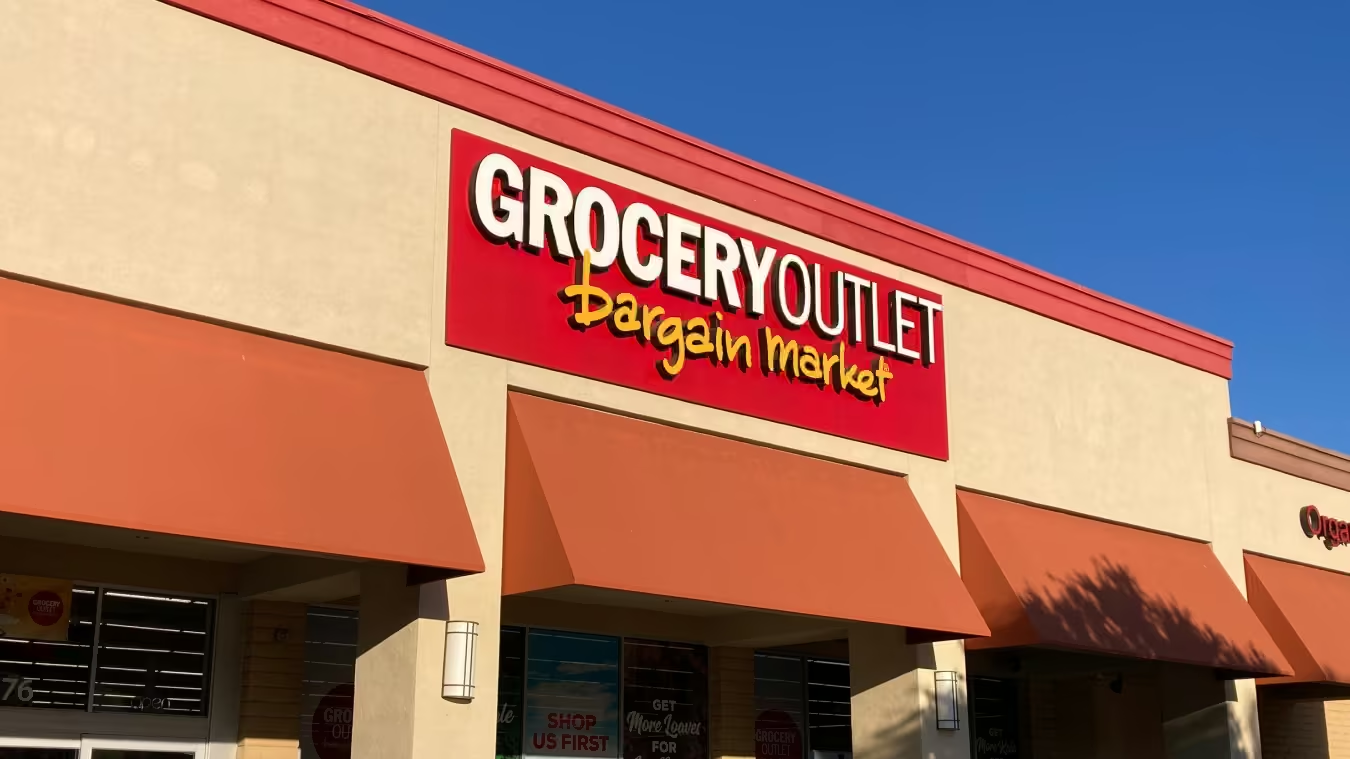
With food prices remaining elevated, value grocers like Grocery Outlet Bargain Market are continuing to gain ground. We analyzed the latest traffic data to uncover what’s driving their sustained momentum.
Traffic Still Rising For Value Grocery Chains
Although food prices have now been elevated for several years – with 2025 bringing yet another uptick at the grocery till – traffic data suggests that consumers are continuing to adjust to this new normal. Value grocers are still gaining ground, with both Grocery Outlet Bargain Market and WinCo Foods experiencing strong year-over-year traffic gains.
Grocery Outlet Bargain Market – which has been expanding beyond its West Coast core markets – saw its traffic increase 7.5% year over year (YoY) over the past 12 months.
WinCo Foods – another value grocer rooted in the Western U.S. and growing in new regions – also experienced continued traffic growth.
Grocery Shopping Behavior Slow to Change
Grocery Outlet Bargain Market and WinCo sustained momentum – even after years of high food prices – suggesting that grocery shopping habits change slowly. But while some shoppers may take longer to trade down from their traditional grocers, each additional month of high prices appears to draw more households toward value-focused chains. Value grocers' ongoing YoY visit gains point to a slow but steady realignment of consumer loyalties toward discount and private-label-driven formats that can keep prices low, even if it means a less familiar product mix.
At the same time, chains like Grocery Outlet and WinCo are meeting this demand head-on. Both are expanding into new markets and capturing shoppers who are now more willing to try new stores in search of savings. After several years of navigating higher grocery bills, consumers have become more intentional about where they shop and what they buy – and value grocers are benefiting from that sustained recalibration.
For the most up-to-date grocery insights, check out Placer.ai’s free tools.
Placer.ai leverages a panel of tens of millions of devices and utilizes machine learning to make estimations for visits to locations across the US. The data is trusted by thousands of industry leaders who leverage Placer.ai for insights into foot traffic, demographic breakdowns, retail sale predictions, migration trends, site selection, and more.

