


.svg)





%20(1).avif)
What Are the Top 5 Metros for Ice Cream Lovers?
Ice cream is the quintessential summer treat, with 2.1% of all dining visits nationwide in June and July 2026 going to ice cream parlors or frozen yogurt shops. Where do consumers love ice cream the most? We analyzed the data to find out.
Four Beach Towns
Perhaps unsurprisingly, four of the five metros where ice cream and frozen yogurt shops accounted for the highest share of dining visits in June and July 2026 – Portland, ME; Atlantic City, NJ; Wilmington, NC; and Myrtle Beach, SC – are beach destinations. Vacationers coming to relax and enjoy their time off are more likely to indulge than they would at home, boosting demand for locally available frozen treats.
One Rust Belt Market
The one standout on the list is Youngstown, OH – a landlocked city that is decidedly not known as a vacation hotspot. So what is driving the city’s unusually high share of ice cream visits?
A closer look at the data points to Handel’s Homemade Ice Cream, a homegrown chain that has expanded from its Youngstown roots to more than 175 locations across the United States. Yet even as the brand has grown nationally, Youngstown locals appear to have remained especially loyal to their hometown favorite, generating enough visits to help propel the metro into Placer’s Top 5 Metros for Ice Cream Lovers.
Different Paths to Ice Cream Dominance
Youngstown’s showing highlights a different path to ice cream dominance: While tourism may fuel demand in beach destinations, a deeply rooted local brand can inspire the kind of habitual loyalty that produces similarly outsized visitation.
For more data-driven dining insights, visits Placer.ai/anchor.
Mall Momentum Continues in H2 2026
Malls' H1 2026 momentum continued going into the second half of the year, with year-over-year (YoY) visits to shopping centers up across all three formats analyzed (indoor, open-air, and outlet) in July 2026. Open-air shopping centers – which have led the category since the beginning of the year – continued their outperformance, with YoY traffic up 5.1%, followed closely by indoor malls (+4.3%). Outlet malls, which spent much of last year trailing 2024 levels, posted a 0.5% increase in traffic – a notable showing given their slightly more modest audience profile and still-elevated gas prices.
Mall Engagement on the Rise
Even more encouraging for malls, however, may be the shift in visitor behavior. Between February and June 2026, average dwell time declined YoY across all three mall formats even as visits grew – suggesting that much of the traffic increase came from task-oriented shopping behavior, which limited opportunities for cross-shopping and dining. But July saw a reversal of the trend, with average dwell time up across all three mall formats – indicating that shoppers are once again spending more time at malls, creating greater opportunities for incremental spending.
Strong Fundamentals Ahead of Back-to-School & the Holiday Season
July's combination of rising visits and longer dwell times suggests that shopping centers are not only attracting more consumers but also creating more opportunities for discretionary spending—a positive signal for retailers and landlords alike. If this shift in engagement persists through the back-to-school and holiday shopping seasons, it could support stronger tenant performance and reinforce demand for experiential merchandising, dining, and entertainment that encourages shoppers to stay longer.
The New Formula for a Blockbuster Box Office Opening
Spider-Man: Brand New Day's blockbuster opening highlights what it takes to create a true theatrical event in today's increasingly selective moviegoing environment. While blockbuster franchises remain the industry's strongest traffic drivers, the biggest visitation surges increasingly occur when anticipation has time to build and is reinforced by strong execution and positive momentum.
Recent hits such as Top Gun: Maverick, Avatar: The Way of Water, and Inside Out 2 similarly benefited from years-long gaps that heightened anticipation, while strong reviews and word of mouth turned that anticipation into record-setting attendance. The trend suggests consumers remain eager to visit theaters – but are becoming increasingly selective about which releases justify the trip.
Warby Parker's Investment in Brick & Mortar is Paying Off
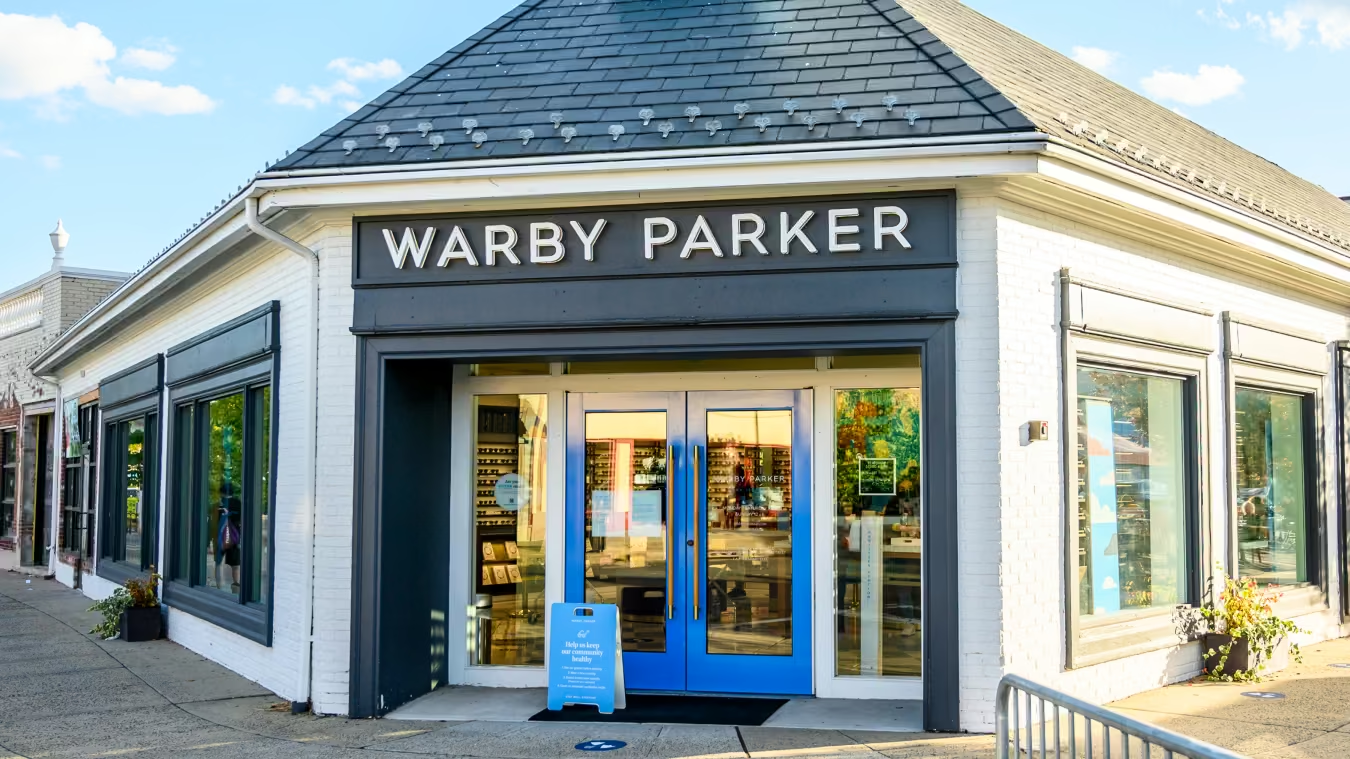
Warby Parker is doubling down on brick-and-mortar. The company recently ended its Home-Try On program while expanding in-store eye exam offerings, further cementing the store as the center of the Warby Parker customer experience. And after opening a record 47 new stores in 2025, the company is planning 50 store openings this year as well as the continued roll out of its Target partnership.
These initiatives – and especially the aggressive store fleet expansion – have translated into skyrocketing traffic for the chain's owned stores. Visits increased 23.5% year over year (YoY) in Q2 2026, while same-store traffic returned to growth in May and June following a softer start to the year – suggesting that Warby Parker still has substantial runway for expansion.
Shifts in Visit Duration Point to Increased Engagement
Visit duration trends also reflect deeper engagement among Warby Parker's in-store visitors. In Q2 2025, visits lasting 30 minutes or more accounted for 37.5% of all Warby Parker visits – but this share that increased to 39.3% in Q2 2026 thanks to the dramatic YoY increase in longer visits. This shift towards longer visits is likely partly due to visitors spending more time trying on frames in stores in the absence of the Home-Try On program and to the increased availability of eye exams across more locations.
Multiple Drivers to Support Ongoing Growth
With plans to launch an AI-enabled eyewear collection this fall and a long-term goal of operating 900 stores, Warby Parker appears to have multiple levers to sustain traffic growth as it scales its physical footprint.
For more data-driven retail insights, visit placer.ai/anchor.
Same Headwinds, Different Outcomes
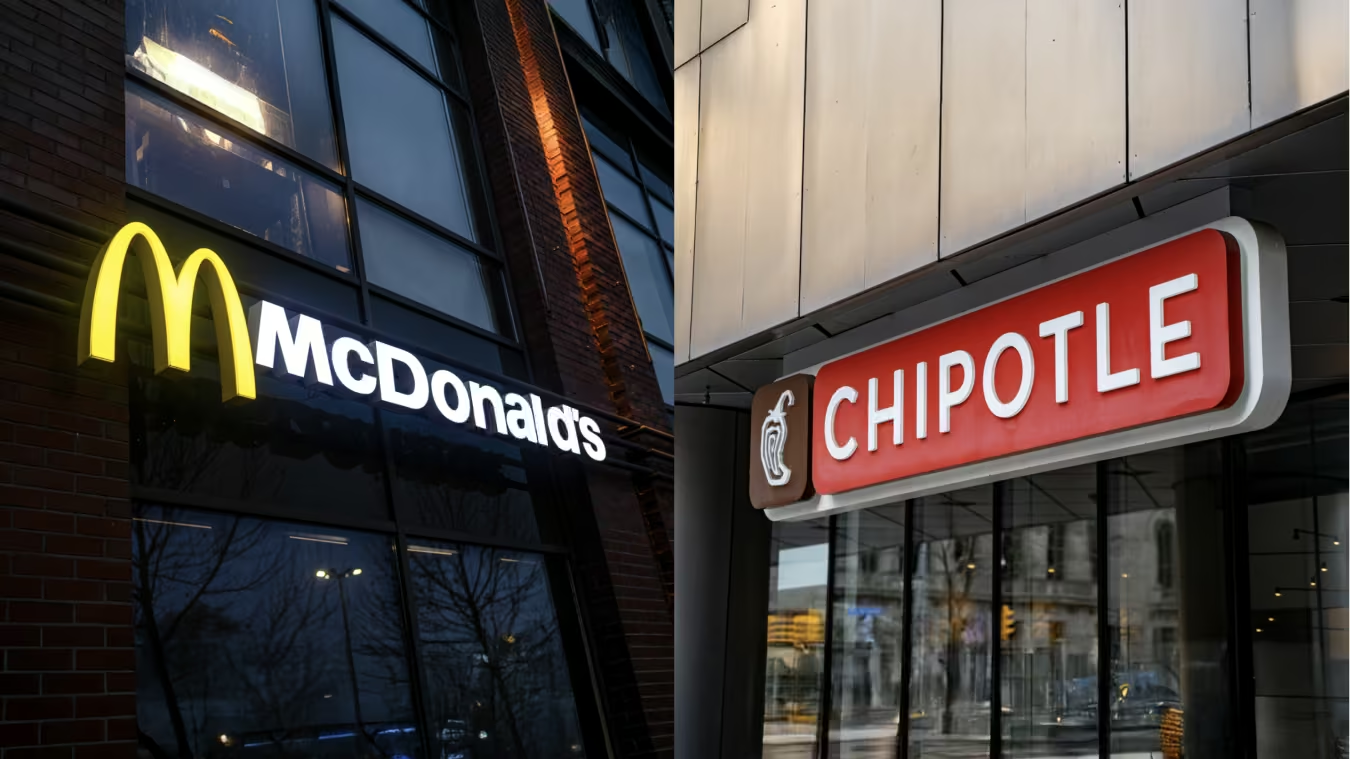
Chipotle and McDonald's have spent the past year navigating significant headwinds, as rising gas prices, tighter household budgets, and cautious discretionary spending pressured restaurant traffic – particularly among lower-income households.
Still, the shared macro backdrop produced very different outcomes. Chipotle generated 4.7% year-over-year (YoY) traffic growth in Q2, while McDonald's visits fell 4.5%.
Chipotle's Demand Story Is Improving
Because Chipotle is continuing to expand, overall traffic growth naturally outpaced same-store performance – though visitation at existing locations remained positive throughout Q2 2026 as well, ending the quarter 1.8% above year-ago levels. So after a difficult 2025 that saw slowing traffic, negative comparable sales, and reduced guidance raise investor concerns about the pace of Chipotle's growth, visitation trends suggest demand may be stabilizing.
Customer Demographics May Explain McDonald's Underperformance
Unlike Chipotle, McDonald's U.S. footprint remained relatively stable, so same-store traffic closely mirrored overall visitation, with both declining year over year (YoY) throughout Q2 2026. The divergence between the two chains may partly reflect differences in their customer bases. Only 30.1% of Chipotle visitors came from trade areas with median household incomes below $50K, while nearly a quarter came from areas with median household incomes above $150K. By comparison, 36.1% of McDonald's visitors came from trade areas with median household incomes below $50K, while just 17.5% came from areas above $150K, suggesting its customer base was likely more exposed to higher gas prices and rising food costs.
Looking Beyond a Challenging Quarter
While McDonald's softer Q2 traffic warrants monitoring, the timing suggests the slowdown should be viewed in the context of an unusually challenging environment for lower-income consumers rather than as definitive evidence of weakening brand relevance. If pressure from higher gas prices and food costs begins to ease, the chain could be well positioned to benefit as its core customer regains spending power.
For more data-driven restaurant insights, visit placer.ai/anchor

Prime Week as a Consumer Barometer
Consumers are entering the back half of 2026 under real pressure. The University of Michigan's consumer sentiment index registered 49.5 in June, the second-lowest reading in records going back to the 1970s and nearly 20% below where it sat a year earlier. According to Deloitte, roughly four in 10 Americans now exhibit deal-driven, cost-conscious habits, and close to seven in 10 retail executives view value-seeking as a structural change rather than a temporary one.
So when Amazon's Prime event ran June 23rd to 26th, alongside overlapping promotions from Walmart, Target, Best Buy, and Kohl's, the week became more than a battle for retail traffic. It became a barometer. Who shows up when the deals land, when they show up, and where they steer their trips offers a real-time read on how a pressured, deliberate consumer is actually behaving. We analyzed foot traffic across the four major chains to find out.
A Pressured Consumer Still Shows Up for a Deal
Measured against each retailer's year-to-date day-of-week average, the four major retailers analyzed all saw visits climb during Prime Week. Best Buy and Kohl's led the pack on opening day, with visits running 18.1% and 18.4% above their respective baselines on June 23. Target wasn't far behind at 16.3%, while Walmart posted a steadier 4.7% increase. And all four chains continued seeing visit gains throughout the analyzed period.
A lift across all four chains, not just Amazon's direct competitors in one category, suggests a consumer who is responsive and cross-shopping. When promotions appear, the value-seeker turns out, and they spread those trips across whichever retailers are running deals.
Best Buy Saw the Clearest Event-Driven Lift
Isolating the event from seasonality sharpens the picture. Comparing daily visits to the prior five weeks' day-of-week average controls for longer-term trends, which matters this year because Prime Day shifted to late June, much closer to Memorial Day and Father's Day than usual and against a higher recent traffic baseline. Even on that tougher benchmark, Best Buy stood out, with visits up 12.3% on June 23 and holding double digits through Thursday. Target saw a meaningful early-week lift, while Walmart sat just below its recent baseline and Kohl's slipped to -3.9% by Friday.
Best Buy's strength against recent weeks carries the most useful read on the consumer. Electronics are big-ticket and discretionary, the kind of spending a pressured shopper might be expected to defer. But the event-driven lift suggests that consumers have not stopped making sizable purchases – they have just made them event-dependent.
Target and Kohl's Came Out Ahead Year-over-Year
But stacking 2026 against the comparable 2025 Prime Week (July 8th to 11th) adds another layer to the story. Target was the standout performer here, with visits up 10.3% year-over-year (YoY) on opening day and gains every single day of the event. Kohl's also outpaced last year through most of the week, while Walmart held modestly positive ground throughout.
Best Buy tells the most complex story. Even as it posted the strongest event-driven lift relative to recent weeks, its visits ran 2% to 5% below last year's Prime Week – a reminder that a strong showing against a recent baseline doesn't always translate to year-over-year growth. These YoY declines suggest that while compelling promotions can still draw shoppers into stores, they have not fully offset softer demand for discretionary electronics.
Prime Week's Offline Opportunity
Analyzing offline traffic to major retailers during Prime Day 2026 suggests that, although sentiment may be near record lows and value-seeking may now be a fixed habit, the appetite to spend is still there – although it has become more deliberate.
For more data-driven retail insights, visit placer.ai/anchor

