.svg)





It’s hard to imagine, but we’ve eclipsed the five year anniversary of the onset of the pandemic lockdowns across the U.S., when the retail industry was transformed overnight. By April 2020, thousands of stores had closed and uncertainty loomed. At the time, it felt like the potential end of physical retail that the industry had been ruminating over for years.
The Resilience of Physical Retail
Five years later, the industry looks mostly like it did at the beginning of 2020. Online shopping did not kill physical retail, and although e-commerce adoption has substantially increased since pre-pandemic – fueled by the spike in new online shoppers in 2020 – the vast majority of retail transactions (over 80%) still occur in brick-and-mortar locations.
At the same time, while the retail industry looks similar to itself structurally, there have been numerous changes at the category level. Many large ticket purchases like consumer electronics and home furnishings that experienced a pull forward in demand during the pandemic waned over the past few years. Visits to apparel retailers and department stores looked, for a while, like they would never recover. And as people emerged from their homes or found their way to TikTok, beauty became the in-demand category that spread like wildfire. Grocery shopping went from a mundane chore to a form of consumer escapism in 2020; in many ways, that behavior has stuck for shoppers as they now frequent more grocery chains in their journey.
We’ve also observed some fundamental changes across U.S. consumers; more workers still work from home than before the pandemic, although return to office numbers keep rising. And many city dwellers who migrated during the peak pandemic period still remain in more suburban and rural areas.
So what have the past five years taught us about U.S. shoppers? First, we’ve learned that consumers are much more resilient than we give them credit for as they demonstrated a remarkable ability to both adapt to unprecedented circumstances and return to their former shopping habits once the situation normalized. Second, consumers are very cyclical in their behaviors and interests – five years after the pandemic’s start, many of the categories that suffered are coming back into their own. And, as consumers face different types of economic uncertainty, we should be optimistic that they can weather different types of storms. But perhaps the key lesson from the past five years has been that brick-and-mortar stores serve a distinct purpose to both retailers and shoppers – and that physical commerce is definitively here to stay.
Visits to Brick & Mortar Surpass Pre-Pandemic Levels While Dwell Time Decreases
Looking at the Placer 100 Retail and Dining Index reveals that visits to retail and dining locations not only rebounded from the pandemic, but have surpassed pre-pandemic levels. There are a few underlying causes that could have contributed to these changes: store and unit openings, a higher frequency in visits to certain categories, and increased consumer demand.
At the same time, dwell times across the macro retail industry have shifted since the pandemic as consumers are generally spending less time in stores than they did in 2019. There could be a few reasons contributing to this decrease: a higher adoption of e-commerce as a research tool before visiting a store, a higher utilization of BOPIS and curbside offerings, or more frequent visits leading to shorter individual trips but longer overall time in store. Last year (2024) also saw a higher share of weekday visits compared to the pre-pandemic period, where more consumers shopped on the weekend.
From a consumer perspective, as we wrote about recently, higher income households are more important to the retail industry than prior to the pandemic – even though they account for fewer visits overall. Meanwhile, lower income households are visiting retailers more frequently, especially in essential categories, as they look to combat inflationary pressures that exploded since the pandemic.
Essential Retailers Cemented Their Importance
What did the pandemic reveal about essential retail categories? For many consumers, these segments got them through the peak pandemic time period as discretionary retail locations remained closed. Grocery stores, pharmacies, and superstores provided a sense of normalcy for shoppers as visiting a store became much more than a weekly errand. Today’s shoppers mirror many of those behaviors; they visit these types of retailers more frequently and don’t balk at making an extra trip for that “must-have” item from a specific chain.
Value Retailers Came Out On Top
Looking at the relative share of visits by category shows that dollar and discount stores gained the most visit share compared to the pre-pandemic trends. These chains have invested heavily in fresh food items and assortment expansion to become more of a destination for shoppers, especially those who are more price sensitive. So while visitation growth to dollar store chains did stagnate in 2024, even as retailers continued to expand store fleets, the leading players in this category have already entrenched themselves deeper into consumers' shopping journey compared to the pre-pandemic period.
Similarly, value based grocers and warehouse clubs have become more frequent stops in consumer daily routines, even if their share of visitation hasn’t risen dramatically. These chains have benefitted from changes in consumer behavior over the past five years: Warehouse clubs were well positioned for consumers who migrated from urban to suburban environments, and value grocery stores such as Aldi and Trader Joe’s became a safe haven for consumers trying to combat inflationary pressures as the country emerged from the pandemic.
Drugstores – a COVID-era Winner – Face Challenges
The one sector that hasn’t fared as well? The drugstore channel. The increase in visitation during the vaccine roll out period didn’t result in long term sustained traffic, and drugstores with their expansive store fleet have struggled to find their true value proposition as competition from wellness chains (such as GNC & Vitamin Shoppe), beauty retailers, and superstores grew. Drug-based retailers are still working to right size business today, as further constrained shoppers look elsewhere.
Adapting to Evolving Consumer Needs in Essential Retail
Essential retail players have had to contend with ever-evolving consumer needs in the post-pandemic period and continue to play a key role in the return for normalcy. Some sectors have fared better than others, but those that have emerged as winners looked to stay in lock step with their consumers on their journey. Retailers realized that they didn’t have to be the best at everything – experience, convenience, value, and assortment – but they needed to lean into their speciality to be successful.
Post-Pandemic Hurdles for Discretionary Retail
On the other end of the retail spectrum, discretionary categories have faced headwinds as consumers exited the peak pandemic period. The peak pandemic years (2020 and 2021) were banner years for retail segments that cater to shoppers’ “wants”. But as the need to self-soothe with goods waned and inflationary pressures rose, consumers walked away from many of the retailers who had benefited from their behavioral changes. (The declines in foot traffic in these categories likely also reflected some of the shift to online channels, as most of these retailers were forced to shut their doors during the early days of COVID.)
It’s been a long road to recovery for discretionary businesses, but we began to see some renewed signs of life over the past year. These retailers must remain vigilant in their quest for relevance with shoppers; high levels of uncertainty, debts, and increasing focus on value all still present headwinds for the retail industry – particularly those who focus on satisfying desires instead of needs.
Beauty Visits Normalize Following Post-Pandemic Surge
In reviewing the visitation growth since 2022, discretionary retail could be broken into two performance categories: beauty and everything else. As we’ve written previously, the beauty industry was able to ride the wave of post-lockdown consumer behaviors, including the need to replace outdated products that hadn’t been worn while spending more time at home. At the same time, consumers also became more enamored with mass beauty brands, or those sold at drugstores or mass merchants at lower price points. The success of these brands and retailers that harnessed the power of consumer choice, like Ulta Beauty, intersected with a strong consumer desire for value. And although 2024 was a year of reckoning for the beauty industry as the consumer shifts towards other priorities, the category’s strong success during the early post-pandemic period cannot be overstated.
Post-Pandemic Adjustment for Home Goods and Apparel
The performance of other discretionary segments has been more mixed. Categories that saw meteoric growth during the pandemic lockdowns – such as home furnishings, home improvement and consumer electronics – failed to sustain momentum. Apparel trends, like the rise of athleisure, had helped drive continued demand to retail chains and department stores even without the need for traditional clothing, and as life got back to normal and these trends faded, retailers saw year-over-year declines in visitation.
But the 2024 data began the slow rebound of some of these categories, particularly in home and apparel. Home furnishings, home improvement, and consumer electronics may continue to see a rebound in 2025 as we enter a new replacement cycle and those who purchased these categories during the pandemic look to refresh their homes and upgrade their technology. Apparel’s rebound can be attributed to a resurgence of national brands as increased use of semaglutide medications and an interest in healthy living drive shoppers to revamp their wardrobes.
The one area of discretionary retail that outperformed its competitors and continues to shine? The off-price channel has had an extraordinary few years of visitation growth since the onset of the pandemic. Off-price retailers have enticed consumers with the perfect blend of value orientation, in-store experience, and immediacy that drive repeat visitation and keep shoppers engaged. The success of off-price retail also underscores the continued importance of physical retailers, despite the initial changes in behavior during the pandemic. This sector of discretionary retail is probably best positioned to handle the potential economic uncertainty of 2025 and beyond.
Overall, the discretionary side of the retail industry has begun to recover from its challenging few years of visitation, but 2025 does pose uncertainty that could impact consumers’ disposable income levels. Retailers that cater to consumers’ “wants” must work even harder to stay on their customers’ radar and entice shoppers to come into physical retail locations instead of shopping online or via social media platforms. As mentioned earlier, high income shoppers are going to become even more valuable to this sector of retail as it tries to maintain momentum.
Consumer Resilience and Future Retail Opportunities
The retail industry has undergone a tremendous transformation over the past five years. But while so much has evolved, there is still a lot of opportunity for the industry to be more agile in its ability to satisfy consumer demands. Despite the early days of store closures during the pandemic, physical retail not only bounced back, but has flourished. Retailers continue to focus on upgrading store fleets and opening new stores. Stores have moved away from being experiential to trying to just provide a good shopper experience. Retail’s reality is that consumers still face many challenges ahead, especially economic uncertainty. But, the pandemic highlighted the resilience of both retailers and shoppers to support one another, which will hopefully continue into the future of retail.

The battle for theme park dominance in Orlando is heating up this spring and summer. The highly anticipated opening of Universal Orlando Resort’s Epic Universe on May 22nd brings a third theme park gate to the resort, inching closer to the count of Walt Disney World. Universal has been slowly chipping away at Disney’s stronghold over the Orlando market with new resort hotels, water parks and now the addition of a third gate, while Disney has concentrated efforts around upgrades to existing parks and expansion of programs like the Disney Vacation Club.
The opening of Epic Universe reveals some of the tension brewing beneath the surface when it comes to changing consumer demands. Visiting the resorts in Orlando, a rite of passage for many families, has gotten much more expensive in recent years, and theme park ticket prices are similar at both destinations, although Walt Disney World does have a higher overall Median Household Income in its captured market. According to Placer.ai’s cross-visitation analysis, 40% of visitors to Universal Orlando Resort also visit Walt Disney World, signaling that Epic Universe needs to wow in order to keep visitors on property instead of resort hopping.
Placer.ai’s foot traffic estimates show that the two resorts attract slightly different demographic profiles. Walt Disney World attracts a higher distribution of Ultra Wealthy Families and Wealthy Suburban Families, while Universal Orlando Resort captures more visits from middle-income cohorts like Blue Collar Suburbs, City Hopefuls and Near-Urban Diverse Families. There’s even a difference in the young people who visit each resort: Walt Disney World captures more Young Professionals – the potential “Disney Adults” – whereas Universal sees a higher share of visits from Young Urban Singles.
With the year-over-year price increases, even a wealthier base of visitors may not help to sustain visitation with a new theme park opening and uncertain economic headwinds. Both Orlando destinations are up against a changing consumer base and theme park loyalists who expect the highest standard of excellence and innovation.
For more data-driven consumer insights, visit placer.ai/anchor.
Consumers have been taking stock of their habits and behaviors over the past few years. With the explosion of semaglutide medications in the market and the high frequency of adoption by consumers, there’s a renewed focus on health and wellness across the U.S. population that extends to other consumption behaviors. One of the outcomes of this change in perspective is the increased scrutiny around the consumption of alcoholic beverages – especially among younger consumers.
At the same time, alcohol consumption increased handily during the pandemic, which has helped liquor stores and retail chains to stand out from the rest of the retail industry. As we hit the five year anniversary of the beginning of the pandemic, it’s time to dive deeper into the Bev Alc space to uncover new trends, changes with consumer engagement, and potential headwinds for the industry.
Deceleration in Liquor Store Visit Growth in 2024
Liquor store chains benefited greatly from shifts in behavior during the pandemic, and for the most part, they’ve been able to sustain those levels of success over the past few years. However, 2024 signaled a deceleration of foot traffic growth across chains, particularly in the second half of the year.
Bev Alc had been a visitation leader in the essential side of the retail industry in the early days of the pandemic, and the category continued to benefit greatly from sustained levels of alcohol consumption even after pandemic restrictions eased. But as with all pandemic-era consumer habits, as we approach the five year anniversary, reversal of some trends are taking shape: While year-over-year visits continued to rise in 2024, last year’s 4.0% average increase in monthly visits was significantly less than the 8.6%, 9.1%, 7.1%, or 6.7% average increases in monthly visits in 2020, 2021, 2022, and 2023, respectively.
There are also various factors that could potentially impact the industry this year: Decreased consumption of alcohol that could have played a role in 2024’s softening of visits is likely to continue in 2025, and potential tariffs on popular spirits like Tequila and Mezcal may impact consumer preferences going forward.
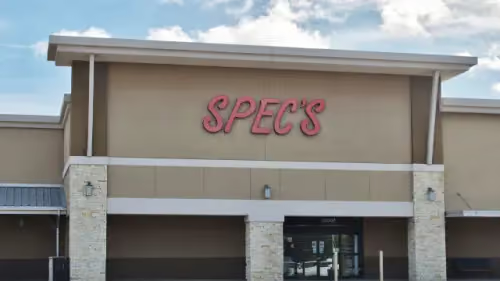
Spec’s Outperformed the Bev Alc Category in 2024
From a retailer perspective, Spec’s posted the strongest visit performance while BevMo! had the most challenging 2024 of the larger liquor retail chains, although most chains experienced some softening in foot traffic throughout the year. Bev Alc retail is a notoriously regional and local category, meaning that changes in foot traffic by chain are often impacted by what’s going on in a specific region of the U.S. BevMO! services Arizona, California and Washington, so the chain’s modest performance may point to some decreases in demand across the western part of the country. Meanwhile, Spec’s operates primarily in Texas, and its consistent YoY visit growth throughout 2024 may suggest that the shift in alcohol consumption habits has been more muted in the Lone Star State.
What’s Driving Liquor Store Visitation Shifts?
With the broader context of what’s going on across the category analyzed, what’s really driving these changes in visitation to liquor stores? As referenced, there’s been a narrative that younger consumers’ changing alcohol consumption habits will greatly impact the Bev Alc space.
But layering Spatial.ai’s Personalive demographic and psychographic visitor segmentation onto liquor store’s captured market reveals a slightly more nuanced reality. The data shows that between 2019 and 2024, the share of wealthier families and of Educated Urbanites – a younger, well-educated, and more affluent cohort – in the captured market of liquor stores. During the same period, the share of Young Professionals and Young Urban Singles – both segments of younger visitors have lower median household incomes than Educated Urbanites – actually increased.
What the data reveals is that we can’t build a singular narrative around the alcohol habits of all younger consumers; there’s also a layer of socioeconomics that has also impacted consumers' desire to frequent liquor stores and engage in alcohol consumption. This knowledge may also contribute to the changes we’ve seen in BevMo!’s business, as their highest shares of visitation come from wealthier families and Educated Urbanites.
Shifts in Visit Times
Foot traffic estimates also reveal that consumers have shifted the time of day that they visit liquor store chains. In 2024, we observed a higher share of visits after 3 PM compared to 2019, with the largest penetration shift coming between the hours of 6 PM to 8 PM. Consumers are visiting liquor stores more frequently after working hours than before the pandemic, which underscores the shifting role of alcohol in people’s lives. Our data also indicated a higher distribution of visits during weekdays in 2024 compared to 2019, but a lower share of weekend visits.
Liquor store visit frequency contextualizes the changes that we’ve observed in consumption habits, highlighting that, despite the increased interest in moderating drinking habits, the pandemic did fundamentally shift how people engage with the category and alcohol retail has become more of a presence in consumers’ weekly routines.
Adapting to Shifting Consumer Preferences
As the cultural perception of alcohol shifts, changes are likely to occur across the industry. We’ve observed more liquor brands opening bars and drinking establishments to engage directly with consumers, while there’s also still a continued rise in local and regional brands popping up. Another area that has been growing steadily over the past few years is non-alcoholic beverages. The aisles of grocery stores and liquor stores are now filled with non-alcoholic alternatives of brand names, as well as mocktail entrants into wildly popular canned cocktails. Beyond that, there’s also been an increase in the number of non-alcoholic bottle shops, and the prevalence of non-alcoholic options will likely continue to grow and extend to other areas of the country outside of major cities. The Bev Alc industry is at a true crossroads with consumers, and consumer behavior will dictate how the industry must evolve to stay relevant.
As we wrap up Q1 2025, we’re already beginning to see a slow down in retail visitation by consumers. Despite general growth in retail visitation over the past few years, rapid price increases and changes in consumer behavior may finally have caught up to consumers across income levels. In this new unknown chapter of the retail industry, one thing is clear; high income consumers are critical for retailers to capture and retain in order to offset a drop-off in demand by other cohorts.
High income shoppers have long been the elusive target of retailers across a variety of price points. From Target to Neiman Marcus to specialty grocers, retailers have tried to enhance assortments, increase service offerings, and eliminate inconveniences for consumers who have the highest levels of disposable income. These factors only grew in importance as the retail industry navigated the pandemic and the subsequent consumer recovery – high income shoppers' price elasticity has bolstered the industry against rising inflation and price increases.
Share of High-Income Shoppers in Brick-and-Mortar Retail Declined Slightly Since the Pandemic
What’s fascinating, though, is that despite the buying power of high income consumers – they aren’t large contributors of retail visitation overall. According to our Placer 100 Dining and Retail Index, households with income greater than $200K accounted for 8.1% of overall visits in 2024, which is slightly lower than the share of visits from the same group in 2019 (8.2%). The share of visits from lower income households increased since the pandemic (32.9% of visits from households with a median income of $50K or less in 2024, compared to 32.7% in 2019), while the inverse is true for higher income shoppers.
The lower share of visits from high income households does align with the general trends we’ve observed across retail. Lower income shoppers, who have become more price conscious and constrained by rising costs, have increased their frequency of visits across multiple retail chains in order to derive the most value from their visits. Meanwhile, wealthier shoppers may have maintained or increased their online purchasing since the pandemic onset, which could have lessened their desire to shop in person.
With a smaller share of the wealthiest shoppers visiting retail locations, the fight for those consumer dollars is going to be even more competitive. Alternatively, for categories that are capturing even more visits from high income shoppers, the need to satisfy their needs and drive conversion is critical.
Walmart’s Success With Wealthier Cohorts
Retailers that have won over this group have tapped into the desire for value no matter the level of household income. Walmart executives recently shared that their largest growth in market share came from consumers with income over $100K. Placer’s foot traffic estimates also indicate that, indeed, traffic distribution for households with income over $75K increased in 2024 compared to 2022, with declines in the share of visits by lower income households.
Walmart attributed these changes to their increased premium service offerings, including its membership program and delivery services – but there could also be another element at play. As prices have gone up considerably since the pandemic, even wealthier shoppers don’t want to see their receipts rise on a daily or weekly basis. Price perception can spur changes in consumer behavior, and this can apply to any consumer, no matter their socioeconomic status. Walmart’s success with wealthier cohorts sends a message to others in the industry; just because a consumer can afford to pay higher prices, doesn’t mean they will.
Shifts in Luxury Retail Shoppers
On the other end of the retail spectrum, the luxury retail market is also facing new challenges in regards to their changing consumer base. As we discussed in our overview of the category in January, there has been a consolidation of visits favoring high income households. In reviewing the captured share of visits by household income for luxury apparel and accessories chains, the largest declines came from “aspirational shoppers,” or those who made less than $150K, who might shop for luxury brands less frequently or for a special purchase. With a smaller pool of potential shoppers to pull from, luxury brands can no longer rely on those outside their core base.
The higher concentration of ultra wealthy consumers forces luxury brands to once again center themselves around the in-store experience and competitive advantages. Brands are constantly vying for shoppers' attention, and luxury brands can take full advantage of their store fleets as a way to court consumers. Personal shoppers, services, and private appointments will all become more important for stores to make up for a potential loss in aspirational consumers.
According to Personalive’s window of insight into different socioeconomic consumer cohorts, Ultra Wealthy Families, defined as those with income higher than $200K, also frequent specialty grocery chains, high-end fitness clubs such as Lifetime Fitness and high-end home goods retailers like Restoration Hardware and West Elm. These retailers, similar to luxury apparel and accessories brands, cater directly to high income households, which provides both opportunities for growth and potential hurdles if these consumers change their spending habits.
High income shoppers are quickly becoming the most courted shopper cohort. As retailers look to innovate and open new locations, lucrative neighborhoods with more high-touch services might pave the way for growth. However, the industry, particularly retailers who service middle and low income families, cannot abandon their consumer base in their efforts. With consumers so intrinsically focused on value, even high income consumers can’t be relied on solely to sustain the retail industry.
For more data-driven insights, visit placer.ai
Shifting Consumer Preferences Impact Beauty Retail
The beauty industry’s reign over specialty retail may be slowly coming to an end in 2025. In the post-pandemic retail economy, beauty had been an outlier as it continued to grow visitation despite declines in other discretionary categories and a general pullback in retail demand. Beauty retailers were primed for the interaction of mass and prestige beauty growth; brands at both the low and high end benefited as consumers' appetite for make up and skincare exploded.
But in 2024, consumers began to shift their focus away from beauty and back towards other discretionary categories, such as apparel and home furnishings. At the same time, we’ve also observed more caution amongst consumers surrounding all discretionary demand. Beauty tends to do well during times of economic uncertainty; items are small and generally less expensive than other discretionary purchases like shoes or accessories.
However, the category’s sustained success over the past few years may have run out, even as consumers look for value and small indulgences. Beauty executives warned of these headwinds in early 2024, and Placer’s visit trends have corroborated the softening of trends across the industry.
Beauty Still Growing – But At a Slower Pace
2024 visits to beauty and self care retail chains grew 1.5% versus the previous year, compared to 18% growth in 2023 and 17% growth in 2022. There was a true shift in momentum of this industry over the last year, and the deceleration of growth is in stark contrast to the industry’s flourishing in the immediate post-pandemic years.
When we put this into the context of broader discretionary retail, the trends in beauty counter those of apparel and home furnishings, who accelerated their rebounds throughout last year. There are a myriad of reasons for these changes in 2024, but major beauty brands have shared a drop-off in demand and waning sales, signs that point to changing consumer behavior instead of a shift in channel preference from physical to digital.
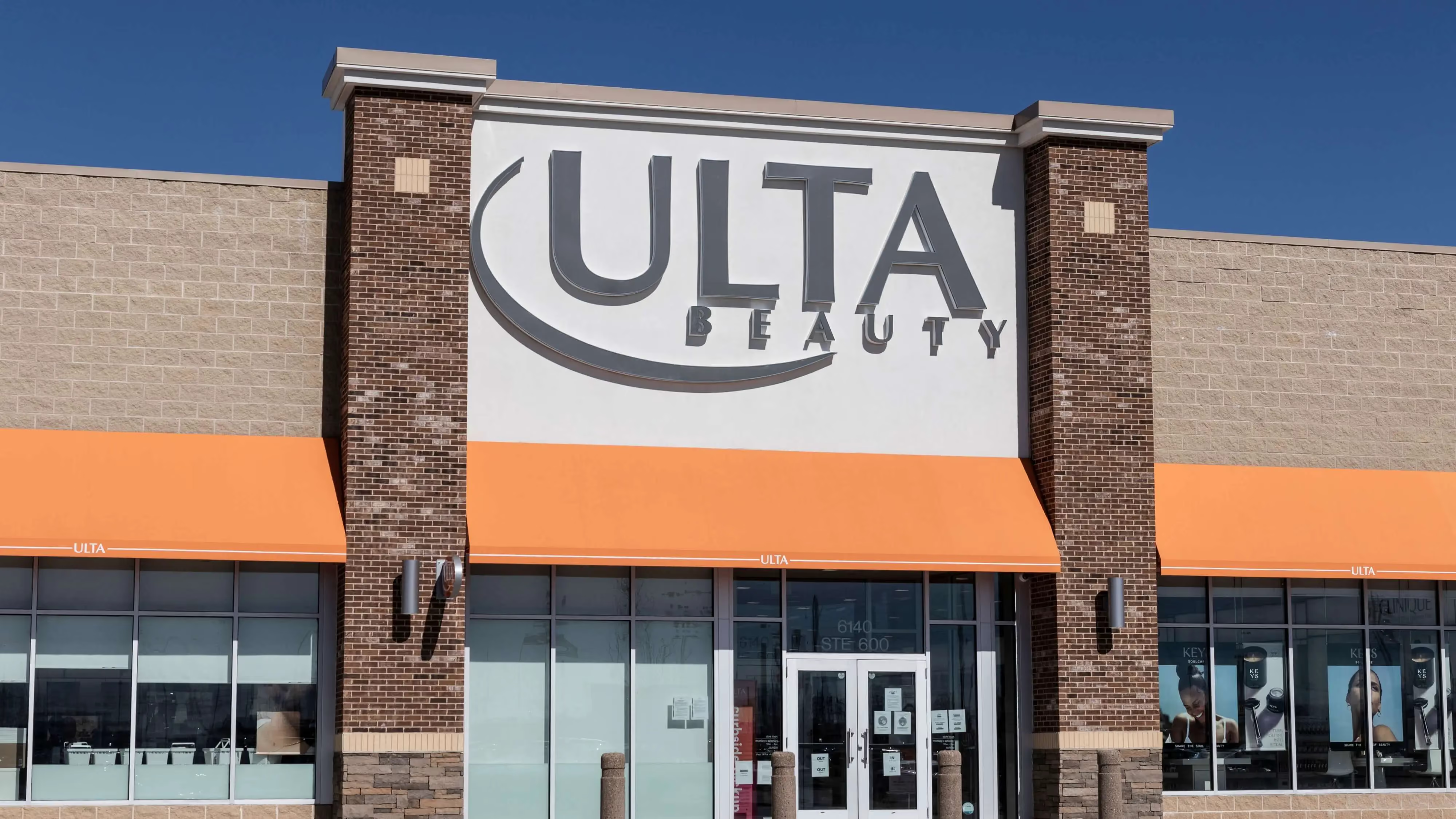
Ulta Beauty had been driving much of the growth of the beauty industry, due to its positioning as a destination for both mass and prestige beauty products. This business model, which served it well over the past few years, also exposed some potential hurdles as demand decelerated in 2024. Ulta’s visit growth in 2024 was just 1.9% year-over-year (2.5% YoY growth for Q4 2024), which surpassed other beauty chains, but slowed dramatically compared to previous trends.
Ulta’s Target Shop-in-Shops May Be Cannibalizing Visits From Stand-Alone Stores
A potential source of Ulta’s visit growth declaration could be one of its greatest opportunities over the past few years; its shop-in-shop partnership with Target. The two chains attract similar consumer demographics and align in their value offerings to shoppers. Looking at Placer’s cross visitation analysis, among visitors to Ulta Beauty, those who also visited Target increased from 86.9% in 2022 to 90.1% in 2024. Ulta visitors may be choosing to visit an Ulta outpost in Target more frequently than in the past, due to the convenience. But, that increase in visits to Target may be cannibalizing visit frequency to standalone Ulta Beauty locations.
Shift in Ulta’s Visitor Base
Another change to Ulta Beauty’s overall visitation comes from the distribution of visitors to the retail chain. There were declines in the share of visits to Ulta from wealthier, suburban, and younger consumer segments, which account for the largest consumer bases for the retailer. There have been slight increases in the share of visits by Blue Collar Families and diverse shopper segments, but those consumers are likely to be more constrained in purchasing power than Ulta’s core shoppers.
What’s in Store for Beauty in 2025?
Overall, the beauty space’s journey in 2024 is likely an indicator of what’s to come, especially for the larger chains. One retailer that has been the exception to the rule is Bluemercury, which Placer selected as a 10 Top Brands to Watch in 2025. For the remainder of the industry, retailers must find their reason for consumers to visit, despite a potential decline in demand for the category.
In the wake of the devastating wildfires across the greater Los Angeles area, retailers—both local and national—have played a crucial role in providing relief, comfort, and a sense of community for those impacted. Retail is an industry that touches consumers’ lives daily, often more frequently than most other businesses. Because retailers fulfill a wide range of needs, they have become essential partners in supporting communities facing unimaginable crises.
Retailers Transform Stores into Donation Hubs
In the immediate aftermath of the Palisades and Eaton Fires, retailers transformed their stores into donation hubs, offering displaced individuals essential items such as clothing and N95 masks. Major brands, including J.Crew, Gap Inc., and Free People, quickly repurposed their stores to serve as distribution centers. Free People even opened an entirely new shop in Santa Monica—Free Shop by Free People and FP Movement—where affected residents could book time slots to browse and collect necessary items. Beyond national retailers, Los Angeles-based brands also stepped up to support fire victims. Babyletto, a juvenile furniture brand, donated cribs to displaced families, while apparel company Big Bud Press launched new collections with proceeds benefiting the Pasadena Jobs Center.
While retail depends on consumerism, its role over the past month has extended beyond sales, making a profound impact on the local community. Many retailers in the discretionary sector opened their doors to directly assist affected families, demonstrating that physical retail spaces can be used for more than just commerce. By taking action on the ground rather than simply offering monetary donations, retailers provided immediate, tangible support to those in need.
Relief Initiatives at Gap, Babylist, and Alo Yoga
Three specific retail locations in Los Angeles exemplified this effort, with Placer’s data revealing just how meaningful their initiatives were. Gap’s Santa Monica store was among the first to pivot toward relief efforts, distributing new Gap merchandise and PPE to community members beginning on January 11th. Alo Yoga’s Beverly Hills location provided care kits to impacted residents between January 14th and 16th. Meanwhile, Babylist, an online registry service with a physical showroom in Beverly Hills, hosted donation days on January 21st and 28th, allowing displaced families to shop for free and replace lost items.
Placer’s foot traffic estimates suggest that these relief efforts were well-received and widely utilized. Each of these locations saw an increase in visits during the weeks their relief initiatives took place, surpassing the average January baseline. The data underscores how critical these retailer-driven efforts were in supporting Los Angeles families and providing much-needed aid during a difficult time.
More Visits From Greater Los Angeles Area During Alo Yoga’s Donation Event
During Alo Yoga’s donation event from January 14th to 16th, there was a noticeable increase in visitation from across the greater Los Angeles area, drawing new traffic beyond the Beverly Hills neighborhood. Compared to January baseline trends, the week of January 13th saw a higher share of visits originating from 3 to 10 miles away. More significantly, visits also increased from 10 to 30 miles away, likely including individuals affected by the Eaton Fire. In contrast, visits from over 250 miles away declined, underscoring the sharp drop in tourism to Los Angeles during the peak of the wildfire crisis.
Babylist’s Donation Efforts Help Young Families and Grandparents
Babylist’s LA showroom opened its doors to families in need, offering a space to replace essential baby items lost in the fires. These relief events attracted a different visitor mix than the store typically sees, providing immediate support for young families and grandparents. According to PersonaLive’s visitor segmentation, during the weeks Babylist hosted its relief events, there was a higher distribution of visits from Educated Urbanites, Young Professionals, and Sunset Boomers. In contrast, the full-month January data showed a greater share of visits from Ultra Wealthy Families. This shift highlights how retailer-led relief efforts were actively utilized by those in need, reinforcing the critical role local businesses can play in supporting communities during crises.
Brick-and-Mortar Stores As Essential Community Assets
Retailers play a vital role in the communities they serve, and their ability to provide immediate support in Los Angeles through physical stores allowed for faster distribution of donations and aid. The best-in-class relief strategies implemented by these retailers should serve as a blueprint for others to follow, reinforcing the importance of brick-and-mortar stores as essential community assets during times of crisis and recovery.

Introduction
2024 has been another challenging year for retailers. Still-high prices and an uncertain economic climate led many shoppers to trade down and cut back on unnecessary indulgences. Value took center stage, as cautious consumers sought to stretch their dollars as far as possible.
But price wasn’t the only factor driving consumer behavior in 2024. This past year saw the rise of a variety of retail and dining trends, some seemingly at odds with one another. Shoppers curbed discretionary spending, but made room in their budgets for “essential non-essentials” like gym memberships and other wellness offerings. Consumers placed a high premium on speed and convenience, while at the same time demonstrating a willingness to go out of their way for quality or value finds. And even amidst concern about the economy, shoppers were ready to pony up for specialty items, legacy brands, and fun experiences – as long as they didn’t break the bank.
How did these currents – likely to continue shaping the retail landscape into 2025 – impact leading brands and categories? We dove into the data to find out.
Conventional Value Reaching Its Ceiling
Bifurcation has emerged as a foundational principle in retail over the past few years: Consumers are increasingly gravitating toward either luxury or value offerings and away from the ‘middle.’ Add extended economic uncertainty along with rapid expansions and product diversification from top value-oriented retailers, and you have an explosion of visits in the value lane.
But we are seeing a ceiling to that growth – especially in the discount & dollar store space. Throughout 2023 and the first part of 2024, visits to discount & dollar stores increased steadily. But no category can sustain uninterrupted visit growth forever. Since April 2024, year–over-year (YoY) foot traffic to the segment has begun to slow, with September 2024 showing just a modest 0.8% YoY visit increase.
Discount & dollar stores, which attract lower-income shoppers compared to both grocery stores and superstores, have also begun lagging behind these segments in visit-per-location growth. In Q3, the average number of visits to each discount and dollar store location remained essentially flat compared to 2023 (+0.2%), while visits per location to superstores and grocery stores grew by 2.8% and 1.0%, respectively. As 2024 draws to a close, it is the latter segments, which appeal to shoppers with incomes closer to the nationwide median of $76.1K, which are seeing better YoY performance.
The deceleration doesn’t mean that discount retailers are facing existential risk – discount & dollar stores are still extremely strong and well-positioned with focused offerings that resonate with consumers. The visitation data does suggest, however, that future growth may need to focus on initiatives other large-scale fleet expansions. Some of these efforts will involve moving upmarket (see pOpShelf), some will focus on fleet optimization, and others may include new offerings and channels.
Return of the middle anyone?
Innovative and Disruptive Value Shake Up Retail and Dining
Still, in an environment where consumers have been facing the compounded effects of rising prices, value remains paramount for many shoppers. And brands that have found ways to let customers have their cake and eat it too – enjoy specialty offerings and elevated experiences without breaking the bank – have emerged as major visit winners this year.
Trader Joe’s Drives Visits With Private Label Innovation
Trader Joe’s, in particular, has stood out as one of the leading retail brands for innovative value in 2024, a trend that is expected to continue into 2025.
Trader Joe’s dedicated fan base is positively addicted to the chain’s broad range of high-quality specialty items. But by maintaining a much higher private label mix than most grocers – approximately 80%, compared to an industry average of 25% to 30% – the retailer is also able to keep its pricing competitive. Trader Joe’s cultivates consumer excitement by constantly innovating its product line – there are even websites dedicated to showcasing the chain’s new offerings each season. In turn, Trader Joe’s enjoys much higher visits per square foot than the rest of the grocery category: Over the past twelve months, Trader Joe’s drew a median 56 visits per square foot – compared to 23 for H-E-B, the second-strongest performer.
Chili’s Beats QSR at its Own Game
Casual dining chain Chili’s has also been a standout on the disruptive value front this past year – offering consumers a full-service dining experience at a quick-service price point.
Chili’s launched its Big Smasher Burger on April 29th, 2024, adding the item to its popular ‘3 for Me’ offering, which includes an appetizer, entrée, and drink for just $10.99 – lower than than the average ticket at many quick-service restaurant chains. The innovative promotion, which has been further expanded since, continues to drive impressive visitation trends. With food-away-from-home inflation continuing to decelerate, this strategy of offering deep discounts is likely to continue to be a key story in 2025.
The Convenience Myth
Convenience is king, right?
Well, probably not. If convenience truly were king, visitors would orient themselves to making fewer, longer visits to retailers – to minimize the inconvenience of frequent grocery trips and spend less time on the road. But analyzing the data suggests that, while consumers may want to save time, it is not always their chief concern.
Looking at the superstore and grocery segments (among others) reveals that the proportion of visitors spending under 30 minutes at the grocery store is actually increasing – from 73.3% in Q3 2019 to 76.6% in Q3 2024. This indicates that shoppers are increasingly willing to make shorter trips to the store to pick up just a few items.
At the same time, more consumers than ever are willing to travel farther to visit specialty grocery chains in the search of specific products that make the visit worthwhile.
Cross visitation between chains is also increasing – suggesting that shoppers are willing to make multiple trips to find the products they want – at the right price point. Between Q3 2023 and Q3 2024, the share of traditional grocery store visitors who also visited a Costco at least three times during the quarter grew across chains.
Does this mean convenience doesn’t matter? Of course not. Does it indicate that value, quality and a love of specific products are becoming just as, if not more, important to shoppers? Yes.
The implications here are very significant. If consumers are willing to go out of their way for the right products at the right price points – even at the expense of convenience – then the retailers able to leverage these ‘visit drivers’ will be best positioned to grow their reach considerably. The willingness of consumers to forego convenience considerations when the incentives are right also reinforces the ever-growing importance of the in-store experience.
So while convenience may still be within the royal family, the role of king is up for grabs.
Serving Diners Quicker With Automatization
Chipotle Draws Crowds With Autocado
Convenience may not be everything, but the drive for quicker service has emerged as more important than ever in the restaurant space. Diners want their fast food… well, as fast as possible. And to meet this demand, quick-service restaurants (QSRs) and fast-casual chains have been integrating more technology into their operations. Chipotle has been a leader in this regard, unveiling the “Autocado” robot at a Huntington Beach, California location last month. The robot can peel, pit, and chop avocados in record time, a major benefit for the Tex-Mex chain.
And the Autocado seems to be paying off. The Huntington Beach location drew 10.0% more visits compared to the average Chipotle location in the Los Angeles-Long Beach-Anaheim metro area in Q3 2024. Visitors are visiting more frequently and getting their food more quickly – 43.9% of visits at this location lasted 10 minutes or less, compared to 37.5% at other stores in the CBSA.
Are diners flocking to this Chipotle location to watch the future of avocado chopping in action, or are they enticed by shorter wait times? Time will tell. But with workers able to focus on other aspects of food preparation and customer service, the innovation appears to be resonating with diners.
McDonald’s Leans into Automation in Texas
McDonald’s, too, has leaned into new technologies to streamline its service. The chain debuted its first (almost) fully automated, takeaway-only restaurant in White Settlement, TX in 2022 – where orders are placed at kiosks or on app, and then delivered to customers by robots. (The food is still prepared by humans.) Unsurprisingly, the restaurant drives faster visits than other local McDonald’s locations – in Q3 2023, 79.7% of visits to the chain lasted less than 10 minutes, compared to 68.5% for other McDonald’s in the Dallas-Fort Worth-Arlington, TX CBSA. But crucially, the automated location is also busier than other area McDonald’s, garnering 16.8% more visits in Q3 than the chain’s CBSA-wide average. And the location draws a higher share of late-night visits than other area McDonald’s – customers on the hunt for a late-night snack might be drawn to a restaurant that offers quick, interaction-free service.
Evolving Retail Formats - Finding the Right Fit
Changing store formats is another key trend shaping retail in 2024. Whether by reducing box sizes to cut costs, make stores more accessible, or serve smaller growth markets – or by going big with one-stop shops, retailers are reimagining store design. And the moves are resonating with consumers, driving visits while at the same improving efficiency.
Macy’s Draws Local Weekday Visitors With Small-Format Stores
Macy’s, Inc. is one retailer that is leading the small-format charge this year. In February 2024, Macy’s announced its “Bold New Chapter” – a turnaround plan including the downsizing of its traditional eponymous department store fleet and a pivot towards smaller-format Macy’s locations. Macy’s has also continued to expand its highly-curated, small-format Bloomie’s concept, which features a mix of established and trendy pop-up brands tailored to local preferences.
And the data shows that this shift towards small format may be helping Macy’s drive visits with more accessible and targeted offerings that consumers can enjoy as they go about their daily routines: In Q3 2024, Macy’s small-format stores drew a higher share of weekday visitors and of local customers (i.e. those coming from less than seven miles away) than Macy’s traditional stores.
Harbor Freight Tools and Ace Hardware Serve Smaller Growth Markets With Less Square Footage
Small-format stores are also making inroads in the home improvement category. The past few years have seen consumers across the U.S. migrating to smaller suburban and rural markets – and retailers like Harbor Freight Tools and Ace Hardware are harnessing their small-format advantage to accommodate these customers while keeping costs low.
Harbor Freight tools and Ace Hardware’s trade areas have a high degree of overlap with some of the highest growth markets in the U.S., many of which have populations under 200K. And while it can be difficult to justify opening a Home Depot or Lowe’s in these hubs – both chains average more than 100,000 square feet per store – Harbor Freight Tools and Ace Hardware’s smaller boxes, generally under 20,000 square feet, are a perfect fit.
This has allowed both chains to tap into the smaller markets which are attracting growing shares of the population. And so while Home Depot and Lowe’s have seen moderate visits declines on a YoY basis, Harbor Freight and Ace Hardware have seen consistent YoY visit boosts since Q1 2024 – outperforming the wider category since early 2023.
Hy-Vee Bucks the Trend by Going Big
Are smaller stores a better bet across the board? At the end of the day, the success of smaller-format stores depends largely on the category. For retail segments that have seen visit trends slow since the pandemic – home furnishings and consumer electronics, for example – smaller-format stores offer brands a more economical way to serve their customers. Retailers have also used smaller-format stores to better curate their merchandise assortments for their most loyal customers, helping to drive improved visit frequency.
That said, a handful of retailers, such as Hy-Vee, have recently bucked the trend of smaller-format stores. These large-format stores are often designed as destination locations – Hy-Vee’s larger-format locations usually offer a full suite of amenities beyond groceries, such as a food hall, eyewear kiosk, beauty department, and candy shop. Rather than focusing on smaller markets, these stores aim to attract visitors from surrounding areas.
Visit data for Hy-Vee’s large-format store in Gretna, Nebraska indicates that this location sees a higher percentage of weekend visits than other area locations – 37.7% compared to 33.1% for the chain’s Omaha CBSA average – as well as more visits lasting over 30 minutes (32.9% compared to 21.9% for the metro area as a whole). For these shoppers, large-format, one-stop shops offer a convenient – and perhaps more exciting – alternative to traditionally sized grocery stores. The success of the large-format stores is another sign that though convenience isn’t everything in 2024, it certainly resonates – especially when paired with added-value offerings.
A Resurgence of Legacy Brands
Many retail brands have entrenched themselves in American culture and become an extension of consumers' identities. And while some of these previously ubiquitous brands have disappeared over the years as the retail industry evolved, others have transformed to keep pace with changing consumer needs – and some have even come back from the brink of extinction. And the quest for value notwithstanding, 2024 has also seen the resurgence of many of these (decidedly non-off-price) legacy brands.
In apparel specifically, Gap and Abercrombie & Fitch – two brands that dominated the cultural zeitgeist of the 1990s and early 2000s before seeing their popularity decline somewhat in the late aughts and 2010s – may be staging a comeback. Bed Bath & Beyond, a leader in the home goods category, is also making a play at returning to physical retail through partnerships.
Anthropologie, another legacy player in women’s fashion and home goods, is also on the rise. Anthropologie’s distinctive aesthetic resonates deeply with consumers – especially women millennials aged 30 to 45. And by capturing the hearts of its customers, the retailer stands as a beacon for retailers that can hedge against promotional activity and still drive foot traffic growth.
And visits to the chain have been rising steadily. In Q4 2023, the chain experienced a bigger holiday season foot traffic spike than pre-pandemic, drawing more overall visits than in Q4 2019. And in Q3 2024, visits were higher than in Q3 2023.
Meeting the Evolving Needs of Millennials
And speaking of the 35 to 40 set – the generation that all retailers are courting? Millennials. Does that sound familiar? Yes, because this is the same generational cohort that retailers tried to target a decade ago. As millennials have aged into the family-formation stage of life, their retail needs have evolved, and the industry is now primed to meet them.
Sam’s Club Draws Value-Conscious Singles and Starters
From the revival of nostalgic brands like the Limited Too launch at Kohl’s to warehouse clubs expanding memberships to younger consumers as they move to suburban and rural communities, there are myriad examples of retailers reaching out to this cohort. And Sam’s Club offers a prime example of this trend.
Over the past few years, millennials and Gen-Zers have emerged as major drivers of membership growth at Sam’s Club, drawn to the retailer’s value offerings and digital upgrades – like the club’s Scan & Go technology. Over the same period, Sam’s Club has grown the share of “Singles and Starters” households in its captured market from 6% above the national benchmark in Q3 2019 to 15% in Q3 2024. And with plans to involve customers in co-creating products for its private-label brand, Sam’s Club may continue to grow its market share among this value-conscious – but also discerning and optimistic – demographic.
Taco Bell Brings in Crowds With Value Nostalgia Menu
Millennials are also now old enough to wax nostalgic about their youth – and brands are paying attention. This summer, Taco Bell leaned into nostalgia with a promotion bringing back iconic menu items from the 60s, 70s, 80s, and 90s – all priced under $3. The promotion, which soft-launched at three Southern California locations in August, was so successful that the company is now offering the specials nationwide. The three locations that trialed the “Decades Menu” saw significant boosts in visits during the promotional period compared to their daily averages for August. And people came from far and wide to sample the offerings – with a higher proportion of visitors traveling over seven miles to reach the stores while the items were available.
What Lies Ahead?
Hot on the heels of a tumultuous 2023, 2024’s retail environment has certainly kept retailers on their toes. While embracing innovative value has helped some chains thrive, other previously ascendant value segments, including discount & dollar stores, may have reached their growth ceilings. Consumers clearly care about convenience – but are willing to make multiple grocery stops to find what they need. At the same time, legacy brands are plotting their comeback, while others are harnessing the power of nostalgia to drive millennials – and other consumers – through their doors.