Skip to Main Content
Thank you! Your submission has been received!
Oops! Something went wrong while submitting the form.
0
0
0
0
----------
0
0
Articles
Article
Getting Into Gear: Exploring The Auto Part Industry
We checked in with AutoZone and O’Reilly – two pandemic winners from the auto parts industry – to understand what location intelligence reveals about the retailers in 2024. 
Bracha Arnold
Feb 26, 2024
3 minutes

We checked in with AutoZone and O’Reilly – two pandemic winners from the auto parts industry – to understand what location intelligence reveals about the retailers in 2024. 

AutoZone & O’Reilly Auto Parts Maintaining Their Gains

AutoZone and O’Reilly Auto Parts are both major players in the multi-billion dollar automotive aftermarket industry with thousands of locations across the country. As car prices skyrocketed over the pandemic, visits to these retailers increased – and analyzing foot traffic patterns to these retailers reveals that although growth in the sector may be slowing down, leading auto parts chains are holding on to their pandemic gains. 

On a year-over-year (YoY) basis, visits to AutoZone and O’Reilly Auto Parts continued growing in the first half of 2023 before stalling in Q3 2023 and dipping in Q4. But looking at year-over-four-year (Yo4Y) visits suggests that the drop may be due to the challenging comparison to an unusually strong period rather than to any drop in demand for auto parts. Last year’s visits to both AutoZone and O’Reilly Auto Parts were significantly higher than the chains’ 2019 baseline, with Q4 2023 visits exceeding Q4 2019 levels by 11.9% and 22.6% for AutoZone and O’Reilly Auto Parts, respectively.

bar graphs: AutoZone and O'Reilly auto parts maintaining pandemic gains – elevated quarterly visits compared to 2019

A Promising Start to 2024 

The pattern continued in January 2024, with visits to AutoZone and O’Reilly significantly higher than they were pre-pandemic, but slightly lower on a YoY basis. But the Q4 2023 YoY visit gaps narrowed for both chains, and used cars are still outselling new vehicle and fueling demand for car parts – so visits to the space are likely to remain strong in 2024. 

bar chart: January 2024 Visits were up 13.3% Yo4Y for AutoZone and 24.3% for O'Reilly. Jan. 2024 visits were also up 0.1% and 1.8% YoY for AutoZone and O'Reilly, respectively.

What’s Under The Hood? 

Analyzing the demographic data of visitors to O’Reilly Auto Parts and AutoZone reveals that both companies succeeded in staying far ahead of their pre-pandemic visit baseline despite attracting a large number of visitors from lower-income households. In 2023, the median household income (HHI) within the two chains’ potential market* trade area was lower than the nationwide median of $69.5K/year, while the median HHI in the captured market trade area was even lower. 

The income level of AutoZone and O’Reilly Auto Parts’ visitor base may help explain the chains’ Yo4Y strength and the YoY lags. With prices for used cars still significantly higher than they were in 2019, budget-conscious consumers are likely looking to patch up their existing rides instead of trading them in for newer vehicles – which could explain the sustained Yo4Y growth. At the same time, the ongoing inflation is likely straining this segment’s available funds, which may account for the YoY dips towards the end of 2023.

*A chain’s potential market refers to the population residing in a given trade area, weighted to reflect the number of households in each Census Block Group (CBG) comprising the trade area. A chain’s captured market weighs each CBG according to the actual number of visits originating to the chain from that CBG.  

bar chart: AutoZone and O'Reilly attract visitors from lower-income households. BAsed on STI: PopStats dataset combined with Placer.ai captured and potential trade area datat

Country Roads vs. City Highways 

When focusing on the trade area median HHI, the visitor base of AutoZone and O’Reilly Auto Parts looks nearly identical. But looking at the psychographic makeup of the two brands’ trade areas highlights differences between the companies. Using the Experian: Mosaic dataset to analyze the audience segments in the chains’ trade areas revealed that AutoZone tended to attract more city-based visitors, while O’Reilly seems to draw more small-town and rural households. Data from the Spatial.ai: PersonaLive’s dataset supports this pattern – and the success of both chains indicates that there is plenty of demand for car parts across a variety of audience types.

bar charts: AutoZone attracts more city-dwellers, O'Reilly Attracts more Rural and Small-Town segments. 2023

Cruise Control: Car Part Customer Chronicles

As both companies continue to expand, location intelligence indicates that there is plenty of demand for car parts to go around. 

For more data-driven retail analysis, visit placer.ai/blog.

This blog includes data from Placer.ai Data Version 2.0, which implements improvements to our extrapolation capabilities, adds short visit monitoring, and enhances visit detection.

Article
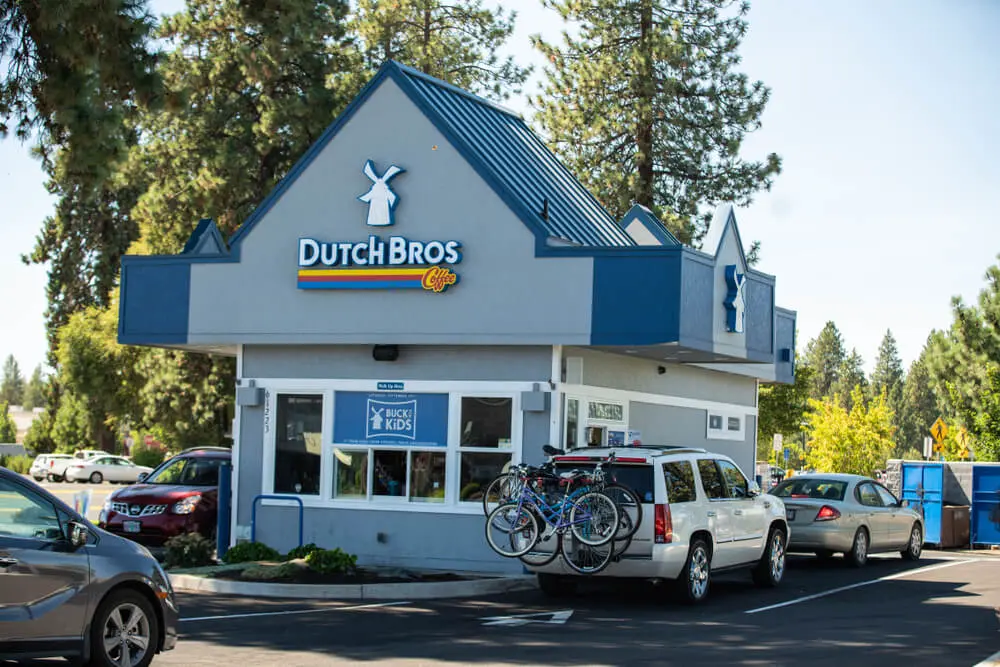
Dutch Bros: Innovation Driving Daypart Mix Changes; Long-Term Growth Plans On Track
R.J. Hottovy
Feb 23, 2024

Coffee has been a popular topic for us the past few months. We looked at why the category should still post a solid 2024 despite being one of the stronger categories in the restaurant industry last year. We also examined loyalty trends among Starbucks visitors, and where that might trend in the quarters ahead.


This week, we’re revisiting Dutch Bros., which has been one of our favorite growth stories to watch going back to (and even before) the company’s initial public offering. During the quarter, the company posted 5% comparable-store sales growth, representing 100 basis points of acceleration from Q3 2023. The growth was driven by a combination of factors, including sequential improvement in customer traffic with particular strength in the mid-day and afternoon dayparts (something we see in Q4 2023 visits by daypart compared to Q4 2022). Our data indicates that the periods between 1:00 PM and 7:00 PM saw the largest increases in percentage of visits year-over-year.

What’s driving the growth in mid-day and afternoon dayparts? Management chalked it up to category innovation, including new product platforms like Protein Coffee as well as limited time offers (LTOs), including the successful Truffle Mocha platform that was introduced in Q4 2023. The company is mindful that new products can have an impact on speed of service but appears to be focused on new products that don’t add “a layer of extra complexity” but can still drive incremental visits (something our data also indicates this quarter). Mobile app ordering–something the company plans to test in the Arizona market before potentially rolling out to a multi-shop test–also offers an opportunity with potential to attract new visitors and introduce new occasions, though it will likely be a few years before this functionality contributes to visit counts and financial results.

Looking ahead, Dutch Bros expects to open 150-165 new locations in 2024, compared to the 159 opened across 13 states in 2023. Over time, the company still sees the opportunity for 4,000-plus shops, balanced with “a renewed emphasis on capital efficiency” and a longer-term shift toward more build-to-suit leases and a wider array of prototype units such as end caps (management expects to see the impact of these changes beginning in 2025). From a market standpoint, the company expects to have more openings in existing markets like California, have less relative openings in the Texas market, and opened its first location in Florida (Orlando) this week.

Article
Recapping Valentine’s Day 2024 Foot Traffic Trends
Which retail segments saw the largest foot traffic boost on February 14th, and how did 2024's patterns compare to last year's trends? We take a closer look here.
Shira Petrack
Feb 23, 2024
3 minutes

Valentine’s Day presents an opportunity – or at least lays on the pressure – for coupled-up consumers to shower their significant other with chocolates, flowers, or special gifts. And while some shoppers choose to order online or visit stores ahead of time to find the perfect Valentine’s Day gift, those who forgot to plan in advance can stop by brick-and-mortar retailers the day of to ensure they don’t show up to date night empty-handed. So which industries saw the largest boost on February 14th? And how did 2024’s patterns compare to last year’s trends? We dove into the data to find out. 

Mid-Week Visit Spike 

Valentine’s Day may not be a major retail holiday – but the occasion still drives a mid-week visit boost across many retail categories, including Restaurants, Discount & Dollar Stores, Liquor Stores, Grocery, Superstores, Breakfast Shops, and Beauty & Spa. Comparing Valentine’s Day 2024 visits to average visit levels over the previous six Wednesdays reveals a significant jump in traffic compared to the typical mid-week shopping lull.

Restaurants saw the largest visit bump, with visits up 60.0% compared to the average number of Restaurant visits over the previous six Wednesdays. Others opted for a morning coffee or brunch date, driving a 19.7% increase in foot traffic to Breakfast, Coffee, Bakeries, and Dessert Shops. And some consumers seem to have chosen a romantic evening, leading to surges in Grocery and Liquor Store visits. Retailers carrying affordable gifts, including Discount & Dollar Stores, Superstores, and Beauty & Spa brands also benefited from the Valentine’s Day Boost. 

And visits to the analyzed categories weren’t just up relative to the year-to-date Wednesday average – traffic across the board also rose relative to Valentine’s Day 2023, boding well for brick-and-mortar retail in 2024.

bar graph: Valentine's day drove mid-week visit spikes across categories. Valentine's day 2024 compared to 2023 holiday and average of previous six wednesdays

Greeting Card Retailers Seeing Massive Spikes 

Valentine’s Day is sometimes referred to – not always affectionately – as a Hallmark Holiday. And foot traffic data reveals that the day really does drive significant visit increases to Hallmark stores nationwide, with Valentine’s Day 2024 traffic up 123.2% relative to the previous six Wednesday average. The Paper Store, another major greeting card retailer, also saw a large jump in Valentine’s Day visits compared to the year-to-date same weekday average, and Walgreens and CVS – also major greeting card purveyors – received a visit boost as well. 

At the same time, Hallmark, Walgreens, and CVS did not display the same year-over-year (YoY) increases as for the other categories. Instead, YoY Valentine’s Day visits stayed relatively steady – likely due to these chains’ store fleet contractions rather than to any drop in demand. Meanwhile, Valentine’s Day visits to The Paper Store grew by 10.8% YoY – perhaps aided by the company’s expansion.

bar chart: greeting card retailers enjoyed valentine's day bump

Offline Retail Facilitates Last-Minute Gift-Giving

Valentine’s Day yields a clear mid-week boost for brick-and-mortar retail, driving visits to a variety of dining and retail segments. And this year’s Valentine’s Day seems to have been particularly successful, driving YoY jumps across many major categories and brands. 

For more data-driven retail insights, visit our blog at placer.ai

Article
CAVA & sweetgreen Are On the Rise
Sweetgreen, which IPO-ed in 2021, and CAVA – public since last year – are continuing their growth spurt. We dove into the location intelligence data to understand what is driving success for these emerging fast-casual leaders. 
Shira Petrack
Feb 22, 2024
3 minutes

Sweetgreen, which IPO-ed in 2021, and CAVA – public since last year – are continuing their growth spurt. We dove into the location intelligence data to understand what is driving success for these emerging fast-casual leaders. 

Cava & sweetgreen’s Impressive Visit Growth Continues

Restaurant visit growth slowed last year as inflation took a toll on discretionary spending. But despite the wider dining deceleration, foot traffic to CAVA and sweetgreen continued to increase, helped by consistent store fleet expansion. Both chains posted year-over-year (YoY) visit gains every month of 2023, even as overall foot traffic to the fast-casual category lagged. 

The positive trends continued in the new year, when consumers braved the cold to drive a 18.4% and 22.3% YoY increase in January 2024 visits – despite the challenging comparison to an already impressive January 2023.

bar graph: CAVA and sweetgreen still seeing impressive visit growth

Higher-Income Visitor Base Helps Drive Growth

Cava and sweetgreen’s success may be attributed to a variety of factors. Both chains are known for their healthy offerings, which may attract the many consumers prioritizing health and wellness in their food choices. Plant-forward meals have also been particularly popular recently, and both CAVA and sweetgreen’s produce-heavy menus align well with this trend. 

The income level of the chains’ visitor bases may be another key driver of Cava and sweetgreen’s success. In general, the potential market trade areas of fast-casual dining chains consists of households with income (HHI) levels that are slightly above the nationwide median. The median HHI in the neighborhoods within those trade areas that feed the most visits to fast-casual chains (the chains’ captured market) is even higher. 

CAVA and sweetgreen’s potential market trade area median HHIs in 2023 was significantly higher than that in the wider fast-casual category – and the captured market median HHI was even greater. The particularly affluent visitor bases of CAVA and sweetgreen were likely less impacted by last year’s economic headwinds, which may have helped the chains continue to grow their footprint – and visit numbers – despite the wider challenges in the space.

bar graph: high-income visitors fueling CAVA and sweetgreen success. based on STI: PopStats data set and Placer.ai captured and potential trade area data

Appeal to Singles

The similarities between CAVA and sweetgreen extend beyond their high-income visitor bases and shared emphasis on healthy options – both chains also seem to attract a particularly high share of singles. CAVA and sweetgreen’s captured market trade area include 37.9% and 42.3% of one-person and non-family households, respectively, compared to to an average of 34.1% for the wider Fast-Casual category.

Diving into the psychographics confirms this pattern. The two chains’ captured markets include a larger percentage of Educated Urbanites, defined by Spatial.ai: PersonaLive as “Well educated young singles living in dense urban areas working relatively high paying jobs.” Young Professionals, defined as “Well-educated young professionals starting their careers in white-collar or technical jobs” and having an average household size of 1, are also overrepresented for CAVA and sweetgreen’s relative to the wider Fast-Casual category. 

The large share of singles in these chains’ trade areas – especially combined with the high median HHI – likely means that CAVA and sweetgreen visitors have fewer overall expenses and fairly large discretionary budgets which can be spent on dining out. 

bar graph: CAVA and sweetgreen trade areas include large shares of singles. based on Spatial.ai PersonaLive and STI: PopStats datasets and placer.ai captured trade area data

CAVA & sweetgreen Positioned for Success in 2024

CAVA and sweetgreen thrived in 2023 and appears poised to continue growing in 2024, with visits to both chains skyrocketing even as foot traffic growth tapered off in the wider dining industry. And the company’s success in attracting high-income visitors from small households – who likely have the funds to continue spending on non-essentials despite the ongoing headwinds – means that both companies are well positioned for continued strength in the new year. 

For more data-driven restaurant and dining insights, visit our blog at placer.ai.

Article
Fitness: A Strong Start to 2024
January is a time for new beginnings – and nearly half of Americans vowed to improve their fitness in the new year. So with 2024 picking up steam, we dove into the data to explore the current state of fitness. How did leading fitness chains perform last month?
Lila Margalit
Feb 21, 2024
4 minutes

January is a time for new beginnings – and nearly half of Americans vowed to improve their fitness in the new year. So with 2024 picking up steam, we dove into the data to explore the current state of fitness. How did leading fitness chains perform last month? And what’s in store for the industry as a whole? 

‘Tis the Season to be Healthy

The first month of the year is a time for gyms to shine. Analyzing month-over-month changes in the average number of daily gym visits reveals that the biggest visit spike of the year takes place between December and January, when people double down on their motivation to make a change.

This year was no exception. In January 2024, visits to gyms nationwide jumped by 22.1% relative to December 2023 and were up 1.7% year-over-year (YoY) – despite lapping a very strong January 2023 – indicating that the post-COVID obsession with health and wellness is showing staying power.

Drilling down into the data for the nation’s five most-visited fitness chains shows that there’s plenty of room at the top. Value gym Crunch Fitness led the pack with a 21.1% YoY foot traffic increase, partly fueled by the brand’s continued expansion. Next in line was 24 Hour Fitness, where YoY visit gains highlighted the chain’s recovery from its pandemic-induced troubles. Planet Fitness outpaced its own outstanding 2023 performance with a 1.7% YoY foot traffic increase. And LA Fitness and Anytime Fitness also held their own – with visits just 2.0% and 4.4% under January 2023’s already-impressive levels. 

bar and line graphs: fitness chains continued to benefit from January new year's resolutions

A Regional Story

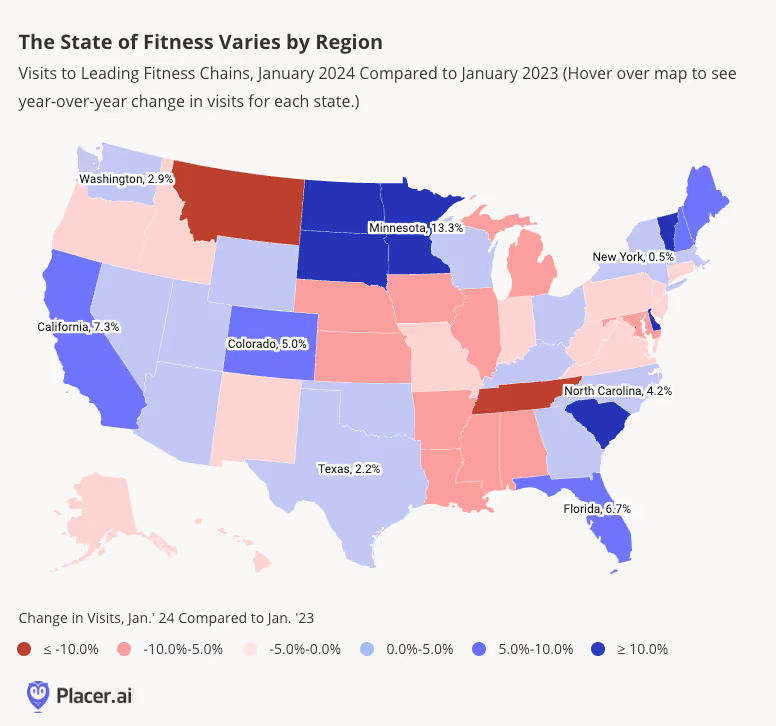
But the state of fitness isn’t only a national story – it’s also a regional one. Looking at January 2024 YoY fitness visits by state shows significant variations, with some areas seeing strong industry-wide growth, and some seeing YoY visit gaps. Major markets like California, Texas, Florida, and New York all saw visit increases – despite the unusually cold weather in some of these areas, including New York and Texas. Several states, including South Dakota, North Dakota, Minnesota, and South Carolina, even saw visits to fitness centers skyrocket by more than 10.0%. At the same time, parts of the Midwest and South Central regions saw foot traffic dips.

map: YoY visits to fitness chains in Jan 2024 by state

Planet Fitness Dives into Multi-Channel Advertising 

Planet Fitness remains America's most-frequented gym, drawing millions of customers each year with low prices and a quality Judgement Free Zone. In January 2024, a whopping 59.3% of total visits to Crunch Fitness, 24 Hour Fitness, LA Fitness, Anytime Fitness, and Planet Fitness – went to Planet Fitness’s vast club fleet. And in 2023, the category leader added 1.7 million new members to its rosters.

Given Planet Fitness’s incredible reach, it may come as no surprise that the chain has jumped on the media advertising bandwagon, announcing last month the launch of its own media network. The network will connect advertising partners with Planet Fitness’s growing audience, leveraging multiple channels – including in-club TV screens and other on-site promotional solutions. 

And a look at the demographic characteristics of Planet Fitness’s trade areas across major markets shows just how varied a customer base the fitness leader attracts – with clubs in different areas of the country drawing very different audiences. 

In California, for example, the median household income (HHI) of Planet Fitness’s captured market stood at $71.9K in 2023, 16.1% below the statewide baseline of $85.7K. But in New York, the median HHI of the brand’s captured market was $79.9% – 2.7% above the statewide baseline. And though Planet Fitness is squarely positioned as a bargain gym, a significant share of its captured market consisted last year of wealthy households earning more than $150K a year. This metric also varied across regions, as did the household composition of the chain’s customer base – with New York attracting customers from areas with disproportionately high shares of singles, and California drawing visitors from places with outsize shares of large households.  

Given the variation in its captured markets, Planet Fitness’s media network offers potential advertisers not just the ability to reach millions of customers – but also the possibility of creating targeted campaigns aimed at different locations’ specific audiences.

bar graphs: demographics of planet fitness's captured trade areas in 2023 by region. based on STE: PopStats dataset and Placer.ai captured trade area data

Key Takeaways

Gyms have flourished in recent years, buoyed by consumers’ growing emphasis on health, wellness, and affordable experiences. But will newly-committed gym rats tire as the power of their new year’s resolutions wanes? How will the sector continue to fare as 2024 wears on? 

Follow Placer.ai’s data driven analyses to find out.

Article
Dutch Bros. Continues To Percolate Visits
Dutch Bros. has impressed with its foot traffic growth over the past few years. We took a closer look at the foot traffic data to understand where this chain’s growth is headed.
Bracha Arnold
Feb 20, 2024
2 minutes

Dutch Bros. has impressed with its foot traffic growth over the past few years. We took a closer look at the foot traffic data to understand where this chain’s growth is headed.  

Brewing Up Visits

Dutch Bros., the country’s third-largest coffee chain, began as a simple coffee pushcart in Grants Pass, Oregon. Thirty-two years later, the company is one of the fastest-growing coffee chains in the country, having grown to over 900 locations in the country’s North and Southwest regions. 

Analyzing the change in monthly visits to the chain since 2019 reveals near-constant growth over the past few years – a noteworthy feat considering the challenges facing the space over COVID and during the recent inflation. And while some of Dutch Bros. visit increase is likely due to its expanding store fleet, the consistency and magnitude of the growth suggests that the chain is keeping its new customers coming back. 

Dutch Bros.’ success continued in 2023 and into the new year, with the company posting consistent year-over-year (YoY) visit gains for the past thirteen months. January 2024 visits to Dutch Bros. were 10.0% higher than in January 2023, while overall visits to the coffee space decreased by 2.7% YoY during the same period.

line chart: monthly visits to dutch bros. compared to January 2019 up over 150% in Jan. 2024. bar chart: monthly visits to Dutch Bros. up YoY since H2 2023

Who Visits Dutch Bros.?

Dutch Bros.’ drive-thru design helped the chain thrive during the pandemic – and the layout is also helping the chain reach suburban audience segments. 

A chain’s potential market refers to the population residing in a given trade area, weighted to reflect the number of households in each Census Block Group (CBG) comprising the trade area. A chain’s captured market weighs each CBG according to the actual number of visits originating to the chain from that CBG. 

Analyzing the psychographic makeup of Dutch Bros' trade areas in four major markets – Texas, Arizona, Oregon, and California – revealed that the chain’s captured market attracts an outsize share of suburban audience segments. Specifically, Spatial.ai: PersonaLive’s “Blue Collar Suburbs” and “Upper Suburban Diverse Families” were both overrepresented in Dutch Bros.’ captured market relative to their presence in the chain’s potential market. This suggests that the chain is particularly popular among suburban coffee lovers, regardless of income levels or economic backgrounds. As Dutch Bros. continues its expansion, focusing on suburban, car-centric areas may serve it well.

bar chart: dutch bros sees more suburban segments in its captured market than potential market

Pour It Up

Dutch Bros. has been a remarkable success story over the past few years despite the widespread economic headwinds challenges the dining space at large has experienced. Will the chain continue to see its momentum continue into 2024 and beyond? 

Stay up-to-date with the latest data-driven dining insights by visiting placer.ai.

Reports
INSIDER
Report
Migration After the Boom: Where Americans Are Moving in 2026
Find out where Americans are moving in 2026, why they're relocating, and how developers, investors, and retailers can stay ahead of the trends.
June 18, 2026

The Geography of Domestic Migration

During the pandemic and its aftermath, Americans were on the move. Millions left expensive coastal markets for lower-cost destinations across the Sun Belt, while boomtowns such as Bozeman, Boise, and Austin struggled to keep pace with the influx of new residents.

That wave of relocation has since cooled, as return-to-office mandates, higher mortgage rates, and a shrinking affordability gap between coastal cities and many COVID-era hotspots have dampened the incentive to move. But even in a slower market, domestic migration remains one of the most powerful forces shaping local economies, housing markets, and consumer demand. 

This report leverages AI-powered location analytics to examine the relocation patterns reshaping the United States in 2026 – where Americans are moving, the demographic and economic forces driving those decisions, and how retailers, investors, developers, and policymakers can respond to the opportunities and challenges created by these shifts. 

Which major metros are attracting the most new residents? Which pandemic-era standouts have seen growth stall or reverse? And what factors best predict a large metro area's domestic migration growth potential in 2026?

Interstate Flows: Which States Gained and Lost Residents?

South Carolina and Delaware Set the Pace

The latest statewide migration data shows that the slower relocation pace observed in 2024 persisted into 2025. No state recorded net inflows or outflows exceeding 0.7% of its starting population. And while several smaller states continued to attract new residents at meaningful rates, none of the nation's six most populous states saw net in-migration exceed 0.2%.

Among those smaller states, South Carolina and Delaware led the nation with net in-migration equal to 0.7% of their populations, followed by Idaho (0.6%), Maine (0.5%), Tennessee (0.4%), and North Carolina (0.3%). For most of these states, migration accelerated relative to 2024, though Delaware's inflow rate moderated slightly and North Carolina held steady. 

Despite their differences, these states tend to offer a similar mix of lifestyle amenities, relatively low congestion, and opportunities for growth. Many also benefit from business-friendly climates, favorable tax policies, or housing costs that remain attractive relative to the higher-cost markets from which they draw new residents.

Vermont Trails Behind

At the other end of the spectrum was Vermont, which saw the nation’s largest net outflow as share of population in 2025, losing 0.4% of its population to domestic relocation. The decline deepens a reversal that first emerged in 2024, when the state swung to a net loss of 0.2%, after attracting inflows of 0.8% and 0.5% in 2022 and 2023, respectively.

Vermont's reversal likely reflects a combination of factors, including return-to-office mandates and the waning appeal of remote work. Housing undersupply in the state may have also contributed, illustrating how important infrastructure investments are to sustaining migration gains over time. 

South Carolina, Delaware, and Idaho Lead the Nation in Domestic Migration Growth in 2025

Net Domestic Migration as a Share of Each State's Starting Population, 2025

Net Migration by State

Top Migration Magnets

2024
2025

*Analysis for each year is from Jan. – Dec.

Florida Sees Accelerated Inflow as Legacy Exodus States Slow Losses

Among the nation's six most populous states, Florida was the only one to see accelerating net in-migration in 2025, attracting new residents equal to 0.2% of its starting population, up from 0.1% the year before. Texas, by contrast, slowed from 0.1% net in-migration in 2024 to essentially flat in 2025, highlighting the cooling of what was once one of the country's strongest pandemic-era migration magnets.

Meanwhile, the legacy "exodus" states continue to lose residents, but at a slower pace than in previous years. Illinois and California have seen their migration deficits steadily narrow, with further improvement in 2025. Between 2022 and 2025, Illinois moved from -0.8% → -0.2% → -0.2% → -0.1%, while California moved from -0.9% → -0.4% → -0.3% → -0.2%. And though New York has held steady at -0.2% over the past two years, this marks a significant moderation from 2022, when the state experienced net outmigration equal to 1.1% of its population.

Major Insights:

  • Smaller states dominated migration gains in 2025, led by South Carolina, Delaware, Idaho, Maine, Tennessee, and North Carolina.
  • Vermont posted the nation's largest outflow after attracting strong inflows just a few years earlier.
  • Florida was the only top-population state to see meaningful net in-migration in 2025.
  • Texas' migration boom continued to cool, with net in-migration falling to flat in 2025.
  • Outmigration from New York, Illinois, and California is slowing, but these states are still losing residents overall.

Zooming In: Net Migration Across Metro Boundaries

Statewide trends reveal important shifts, but a closer look at the nation's ten largest metropolitan areas suggests that broader interstate averages increasingly mask diverging local realities. Several metros are attracting residents through interstate domestic migration even when their states as a whole are experiencing little or no net migration growth.

Phoenix (+0.3%), for example, stood out as the nation's top-performing large metro in 2025, despite Arizona's absence from the list of leading migration destinations – with the majority of its inflow coming from out of state.

Dallas (+0.2%) ranked second, continuing its rebound from -0.1% in 2023 even as Texas' statewide migration gains cooled. Like Phoenix, Dallas drew a majority of its new residents from outside the state, underscoring its growing appeal as a national migration destination. Houston, meanwhile, moved in the opposite direction, falling from 0.1% net in-migration in 2023 to -0.1% in 2025. While it is too early to call this a sustained reversal, the divergence between the two metros may reflect Dallas's growing pull as a corporate magnet alongside rising housing costs and weather-related challenges in Houston. 

Metro-level data also suggests that the pandemic-era "big-city exodus" narrative is continuing to fade. Los Angeles improved from -0.8% in 2023 to -0.3% in 2025, while New York held steady at -0.3% after improving in 2024. Even Miami (-0.6%), which ranked last among major metros despite Florida's continued statewide gains, saw its outflows moderate from 2023 levels. And while Illinois continued to post net outmigration, Chicago (0.0%) reached migration neutrality in 2025 after recording losses in both 2023 and 2024. 

Major Insights:

  • Phoenix was the nation's top large-metro migration destination in 2025.
  • Dallas gained momentum while Houston lost ground, highlighting growing divergence within Texas.
  • Miami continued to post the largest outflows among major metros despite Florida's broader migration success.
  • The Los Angeles, Chicago, and the New York metro areas all saw migration losses ease.

Florida Dominates Large Metros

Despite Miami's struggles – and Florida’s relatively modest 0.2% inflow – a look beyond the top 10 large metros reveals that the Sunshine State is home to six of the nation's eight fastest-growing large metros nationwide. 

Those top-performing metros, defined as CBSAs with 500K+ residents that added at least 0.8% of their population through net domestic migration over the past year, share a similar profile: lower housing costs, retiree appeal, suburban density, and an easy drive to a larger economic hub

Much of the growth of these Florida metro areas, however, is being fueled from within Florida itself. While major out-of-state metros such as New York (6.1%) and Chicago (2.0%) remained important sources of new residents, nearly half of the net migration into Florida's top destination metros came from elsewhere in the state. In 2025, Miami (22.5%), Orlando (13.0%), Tampa (5.8%), and Naples (4.2%) together accounted for 45.5% of the net positive migration feeding these fast-growing markets.

Major Insights:

  • Mid-sized Florida metros dominate the national migration leaderboard.
  • Florida's migration pipeline is overwhelmingly driven by in-state movement.

The Affordability Factor

The migration flows feeding the nation’s fastest-growing large metros suggest that affordability remains a powerful driver of domestic relocation.

In 2025, seven of the eight top destination metros analyzed above had lower typical home values than their largest feeder markets. Lakeland–Winter Haven, FL, for example, had a typical home value of $313.4K in December 2024, compared with $404.9K in Orlando and $380.2K in Tampa – its two largest sources of net migration. Even North Port–Bradenton–Sarasota, FL – the most expensive Florida metro in this group – drew its largest share of net migration from the New York metro area, where home values are substantially higher.

The lone exception was Charleston–North Charleston, SC, whose largest source of net migration was Baltimore – a market with lower typical home values than the destination. Even in Charleston, however, affordability appears to have played a role. New York, a significantly more expensive market, ranked a close second in 2025, accounting for 6.5% of net positive migration into Charleston, just behind Baltimore’s 6.8%.

While housing costs are only one factor influencing migration decisions, the data suggests that households continue to gravitate toward markets where homeownership is comparatively more attainable than in the places they leave behind.

Most Top Migration Destinations Pull Residents From More Expensive Housing Markets

Typical Home Values* in Top Feeder Markets to Destination Hubs, 2025

*Typical home value based on Zillow Research’s Zillow Home Value Index (ZHVI) for Dec. 2024, immediately preceding the analyzed migration period (Jan.–Dec. 2025).

Major Insights:

  • Most high-growth metros attract residents from more expensive housing markets.
  • Relative affordability continues to be a primary driver of domestic migration.

Demographics Over Dollars

But as important as affordability is in explaining today’s domestic migration patterns, age appears to be an even stronger determinant of where people choose to relocate. 

Among mid-sized and large metros (250K+ residents) experiencing significant population shifts – defined as gaining or losing at least 1.0% of their starting population through domestic migration over the past two years – households are increasingly moving toward older, more established communities.

The data reveals a clear negative relationship between migration performance and age differential – a metric calculated by subtracting the median age of the destination market from the weighted median age of its feeder markets. Negative values indicate movement toward older communities, while positive values indicate movement toward younger ones. In other words, the metros attracting the strongest migration inflows tend to be older than the markets sending them residents.

The data also shows a clear positive relationship between migration performance and retiree concentration. Metros with larger shares of residents aged 65 and older generally saw stronger migration gains over the past two years, while younger metros tended to attract fewer newcomers. This suggests that retiree-driven relocation has become an increasingly important driver of migration. At the same time, the influx of younger residents points to the broader appeal of these communities, which offer a mix of affordability, amenities, and lifestyle advantages.

Relocators are Gravitating Towards Older, More Established Communities – With Retirees Helping Fuel the Trend

Net Migration as Share of Starting Population, 2024–2025*

Net Migration vs. Weighted Age Differential

Net migration tends to be higher in metros with a negative age differential (movers heading to older markets).

Net Migration vs. Share of Residents 65+

Net migration tends to be higher in metros with a larger share of residents aged 65 and over.

*Analysis includes metro areas with 250K+ residents and domestic migration gains or losses of at least 1.0% during the study period. Weighted Age Differential compares the destination market’s median age with the weighted median age of origin markets, with positive values indicating migration toward younger markets and negative values indicating migration toward older markets. Age data: Census ACS 2020–2024.

Major Insights:

  • People are moving to older, more established communities. 
  • Markets with larger 65+ populations are attracting more domestic relocators.

The New Migration Map: Strategic Implications

The pandemic-era urban exodus is giving way to a more nuanced migration landscape. Large urban markets are stabilizing, while growth is increasingly concentrated in smaller states, secondary metros, and intra-state corridors. Affordability remains a powerful pull, but retirees, lifestyle considerations, and local market dynamics are also playing an increasingly important role in where Americans choose to live.

To capitalize on these shifts in 2026, civic leaders, commercial real estate (CRE) investors, retailers, and developers should: 

  1. Monitor smaller states gaining migration momentum. Among the nation's most populous states, only Florida saw (modest) net in-migration in 2025. By contrast, smaller states like South Carolina, Delaware, Idaho, Maine, Tennessee, and North Carolina continued to attract substantial inflow. Investors, retailers, and developers that monitor these patterns may be better positioned to identify emerging growth opportunities.
  2. Invest ahead of growth. Vermont's reversal shows how important it is for housing supply and infrastructure to keep pace with demand. High-growth communities will also need the retail, healthcare, transportation, and service capacity required to support expanding populations.
  3. Look beyond state-level narratives that can obscure local opportunities. Florida led the nation in fast-growing large metros even as Miami lost residents, while Texas saw Dallas gain momentum as Houston fell behind. Likewise, although Arizona was not a top destination state, Phoenix remained the nation's leading major metro for migration gains.
  4. Treat states as migration ecosystems. In Florida, for example, domestic migration is increasingly redistributed across a network of interconnected metros – as costs rise in one market, residents shift to nearby alternatives. Tracking these spillover effects can help identify tomorrow's growth markets before they show up in the rankings.
  5. Don't write off major urban markets. While New York, Los Angeles, and Miami continue to experience net outflows – and Chicago has yet to return to positive territory – migration losses have moderated substantially from their pandemic-era peaks. As these markets stabilize, investments in livability, affordability, and quality of life could help strengthen their long-term competitiveness and economic vitality.
  6. Protect affordability as a competitive advantage. Across the nation's fastest-growing metros, migration flows continue to move from more expensive housing markets to less expensive ones. As demand rises, preserving attainable housing will be critical to maintaining the cost advantages that attract new residents and businesses.
  7. Prepare for a retiree-driven demographic realignment. Older Americans are playing an outsized role in shaping domestic migration patterns, but the communities attracting them are increasingly appealing to a broader range of households as well. As these markets grow, demand is likely to increase for healthcare, recreation, hospitality, and housing, creating opportunities across a wide range of sectors.
INSIDER
Report
What High-Growth Brands Know About Picking the Right Location
Explore key signals guiding data-driven site selection from brands actively expanding their brick-and-mortar footprints.
May 21, 2026

Predicting The Next Best Location

Across segments, retail and dining expansions converge on a common set of priorities, including identifying markets with strong demand, ensuring alignment with target audiences, and leveraging local consumer behavior to drive synergy. Using AI-powered location intelligence, we analyzed five expanding brands and segments to uncover the core principles driving successful site selection.

1. Identifying Sustainable Growth in an Increasingly Saturated Market

Nationwide visits to coffee chains are up in 2026, with established brands and newcomers alike seeing their traffic increase as consumer headwinds lead some to shift their discretionary spend towards more affordable indulgences. But past visit growth does not necessarily indicate future opportunity – it may instead signal market saturation. Relying solely on overall visit trends to guide expansion could lead chains into highly competitive markets where existing supply already meets demand. 

For example, analyzing traffic trends in 10 major metro areas where coffee visits increased  year-over-year (YoY) in Q1 2026 reveals significant gaps between overall traffic trends and per-location demand. In some CBSAs, overall traffic growth significantly outpaced per-location traffic trends – suggesting that supply is already meeting (or exceeding) demand and limiting room for new coffee locations despite overall category growth. But in other metro areas, where overall visit growth appears smaller, per-location traffic is actually booming – indicating that the underlying demand is resilient enough to support additional coffee concepts. 

These patterns highlight the importance of looking beyond topline growth to identify where true whitespace still exists.

Strategic Takeaways: 

  • Relying solely on aggregate category performance can obscure regional white space. A market-level view may reveal opportunities for stronger returns in areas where consumer demand is gaining momentum.
  • Combining overall visit and visits per location data offers a more complete view of where demand is both strong and sustainable.

2. Ensuring Demographic Alignment on the Hyperlocal Level

Effective site selection matches both regional and local demographics to a brand’s target customer, supporting performance and reinforcing positioning. But even in well-aligned metros, results depend on site-level precision – locations where the trade area visitor profile most closely reflects the brand’s core audience are best positioned to drive incremental upside.

An analysis of Alo locations in the DC area suggests that the company is adopting this strategy. Within the already high-income metro area of Washington-Arlington-Alexandria, individual Alo Yoga stores are placed in centers that draw even more affluent visitors – maximizing the revenue potential of each location.

In fact, Alo's newest stores in the metro area – One Loudoun and Bethesda Row – drive traffic from households with higher median incomes than even the established area locations. This signals a clear focus on premium retail corridors and affluent consumer segments, which reinforces the brand’s positioning while capturing higher-spending customers at the site level.

Strategic Takeaways:

  • Beyond traffic potential, effective site selection requires a clear understanding of both regional and hyperlocal demographics, as well as the brand’s target audience.
  • As brands expand, aligning locations with core customer bases can drive success while reinforcing brand positioning.

3. Finding Retail Nodes With Complementary Visitation Patterns

Beyond driving traffic potential and demographic alignment, site selection should also ensure that a brand’s identity and operating model are well matched to the visitation patterns of prospective locations. Barnes & Noble offers a clear example. The company’s ongoing resurgence has relied in part on repositioning itself as a local cultural and social hub, with a stronger emphasis on local curation and community-driven events.

And analyzing Barnes & Noble’s 2026 openings shows a clear tilt toward centers with a higher share of local traffic than the chain average – supporting its shift away from a purely transactional retail model toward a more community-centric experience built around local curation, events, and repeat visitation. By prioritizing locally driven centers, the company’s site selection strategy not only captures relevant traffic but also reinforces its broader repositioning as a neighborhood-oriented brand.

Strategic Takeaways: 

  • Site selection strategy should look to align a brand’s identity and operating model with real-world visitation patterns at prospective locations.
  • For brands leaning into local curation, choosing centers with predominantly nearby visitors may be the key to performance and preserving brand identity.

4. Understanding the Benefits of Competitor Proximity

Effective site selection recognizes that proximity to competitors can function as a demand driver, amplifying traffic rather than diluting it.

In practice, this often takes the form of clustering – deliberately locating near similar or complementary concepts to capture shared demand. Shake Shack provides a clear example. Analyzing the chain's store fleet shows that many locations sit near other QSR and fast-casual concepts, creating opportunities to capture dining-based traffic. At the same time, strong cross-visitation patterns indicate that these co-located brands share a common customer base, positioning the brand closer to consumers who are already likely to visit. And, at least for Shake Shack, this strategy appears to be working – traffic to the chain increased 19.9% YoY in Q1 2026.

Strategic Takeaways:

  • As in retail, co-tenancy in the restaurant space can be mutually beneficial – establishing a center as a dining destination, driving incremental traffic, and increasing a brand’s opportunities to win share-of-stomach. 
  • Incorporating cross-visitation analysis into site selection helps pinpoint locations where target customers are already visiting nearby brands. Centers that already attract a brand’s overlapping customer base provide a stronger foundation for incremental growth.

5. Balancing Growth and Cannibalization Risk 

Incorporating trade area analysis into site selection can also help determine whether a new location will generate new traffic or risk cannibalizing existing demand. Aldi, a rapidly expanding grocery chain, offers a relevant example. 

The company opened a fourth Las Vegas store on S Decatur Blvd in October 2025, positioned between existing locations on W Craig Rd and S Rainbow Blvd, approximately eight miles from each. And analyzing the core trade area of each of the four Las Vegas locations indicated limited visitor cannibalization over the last six months, despite the stores’ close proximity. Only 6.2% and 7.6% of the S Decatur Blvd store’s trade area overlapped with the W Craig Rd and S Rainbow Blvd stores’ trade areas, respectively. 

These findings show that there is no one-size-fits-all approach to store spacing – it varies by brand, category, and market. Analyzing a company’s existing store network alongside competitor density and overall demand can help determine how closely locations can be placed without hurting performance. In many cases – especially in high-frequency categories like grocery – markets can support stores that are closer together than expected.

Strategic Takeaways: 

  • Site selection strategy needs to take into account local demand and visitation behavior typical of the category as a whole and of existing locations in particular.
  • Trade area analysis can reveal where a market allows for network densification without significant risk of visit cannibalization.
INSIDER
Report
Physical Retail in 2026: How the Giants Are Winning
Read the report to find out how Walmart, Target, Costco Wholesale, and Dollar General are performing in 2026 – and what their trajectories reveal about broader retail trends.
May 11, 2026

Physical retail is increasingly defined by a small group of dominant players – Walmart, Target, Costco Wholesale, and Dollar General – that span grocery, essentials, and discretionary categories at a scale no other retailers can match. These chains serve as bellwethers of consumer behavior, revealing where Americans are spending, how often they shop, and what drives their decisions. And understanding their visitation patterns sheds light on the key dynamics shaping both their performance and the broader blueprint for retail success in 2026. 

1. Physical Retail is Consolidating

Retail giants Walmart, Target, Costco Wholesale, and Dollar General continue to capture a growing share of brick-and-mortar visits nationwide.

Major Insight:

• The share of physical retail traffic captured by these giants rose from 16.8% in 2019 to 17.5% in Q1 2026, signaling continued sector consolidation.

• The scale advantage enjoyed by retail giants is increasingly self-reinforcing: Larger players benefit from superior data, stronger vendor leverage, and operational efficiencies that in turn further widen the gap. 

Strategic Takeaways: 

• As these advantages compound, direct competition becomes less viable. Instead, smaller retailers should focus on owning specific trip missions – such as convenience, fill-in, or discovery – where format, assortment curation, and in-store experience can more directly shape consumer choice.

• For CRE operators, the growing dominance of these retail giants increases reliance on top-tier anchors, potentially driving performance gaps between centers with strong national tenants and those without.

• For CPG companies, the consolidation in the offline retail space heightens channel concentration, making success with a handful of large retailers critical while increasing those retailers’ negotiating leverage.

2. Costco Wholesale and Dollar General Charge Ahead

Traffic trends across the four giants reveal meaningful divergence in performance.

Major Insights:

• Costco and Dollar General are driving the strongest visit growth, supported by both substantial fleet expansions and rising visits per location. In 2025, visits per store exceeded pre-pandemic levels by 18.1% for Costco and 10.2% for Dollar General, with both brands also seeing steady increases in their share of total brick-and-mortar retail chain visits.

• Walmart remains the largest player by far, accounting for 9.7% of traffic to major brick-and-mortar chains in 2025. And though the behemoth’s share of visits declined slightly in the immediate aftermath of the pandemic, it has held steady over the past three years. 

• Target’s visit share has remained relatively flat over the past three years, reflecting stalled momentum. Still, early 2026 trends point to emerging signs of recovery – with Q1 visits up 8.3% compared to Q1 2019.

Strategic Takeaways:

• Value retail is winning, but in more specialized forms: Dollar General (extreme value + convenience) and Costco (bulk value + loyalty) are driving the strongest traffic growth and rising visits per store, while Walmart’s broad “everyday value” remains steady with slower growth. Target, for its part, is lagging – likely a reflection of the broader bifurcation in retail which has left middle-market players caught between consumers trading down to value and those trading up to quality. 

• For retailers and CPG companies, the broader lesson is that value perception is becoming more nuanced. It’s no longer just about offering low prices at scale, but about how value is delivered – whether through small packs vs. bulk, or quick trips vs. stock-up missions. Success increasingly depends on prioritizing these distinct value formats and investing in channels where store-level productivity is improving.

• For CRE operators, the outperformance of retailers with clearly defined value propositions underscores the importance of mission-driven tenant mix. As shoppers visit with increasingly specific missions in mind, retailers that cater to those missions are outperforming. Tenant strategies should reflect this shift, ensuring complementary offerings that reinforce a cohesive shopping mission.

3. Beyond Walmart, Multiple Winners Emerge Across Markets and Segments

Walmart remains the dominant brick-and-mortar retailer nationwide and across all fifty states. Still, the data suggests there is room for multiple runners-up to succeed across geographies and customer segments.

Major Insights:

• Dollar General, Target, and Costco each attract distinct audience segments. Dollar General attracts a disproportionately high share of the “Mature and Retired Living” segment, while Costco leads among family households, with Target also over-indexing with this group. Among younger “Contemporary Households,” meanwhile – a segment encompassing singles, married couples without children, and non-family households – Target commands the highest share, slightly over-indexing compared to the nationwide baseline. 

• Regional strengths vary significantly, with Dollar General concentrated in the South, Costco dominant in the Northwest, and Target showing more dispersed areas of strength.

• Despite similar overall visit share, Dollar General leads in more states (26 vs. 17 for Target), reflecting broader geographic dominance.

Strategic Takeaways:

• For retailers, the data suggests that growth opportunities are increasingly shaped by localized demographic and geographic dynamics – meaning that targeted, market-specific strategies may be more effective than uniform national approaches.

• Younger “Contemporary Households” remain less locked-in than older demographics, representing a key battleground for future growth.

• For CPG companies, this data highlights that channel strategy is really about building the right mix of retailers, since even large national players reach different types of consumers. 

• CRE operators should ask "which anchor is right for this trade area" rather than "which anchor is strongest," as mismatched tenants can underperform even if they’re nationally dominant.

4. Walmart Sees Broad-Based Growth Across Nearly All Markets

After remaining essentially flat in 2025, average visits per location to Walmart grew 3.5% YoY in Q1 2026. And the retailer’s solid Q1 performance across the U.S. underscores its unique ability to resonate across income levels, geographies, and shopping missions.

Major Insights:

• Walmart posted year-over-year visit growth across nearly all U.S. markets in Q1 2026, reinforcing its role as a universally relevant retailer. 

• The giant’s comparative softness in small parts of the Northeast suggests an opportunity to double down on region-specific assortments, urban-friendly formats, or partnerships to better match local shopping behaviors. 

Strategic Takeaways:

• Walmart’s broad-based growth shows that even as consumers are increasingly willing to visit multiple retailers to get what they want, its Superstore model has solidified its role as a primary stop on the American shopping journey – making it a uniquely reliable anchor for CRE operators.

• For smaller retailers, this underscores the opportunity to win the “second stop” – capturing trips through curated assortments and more tailored in-store experiences that Walmart’s scale is less optimized to deliver.

• For CPG companies, Walmart stands out as a highly attractive partner for broad, efficient reach, given its consistent traffic across markets.

5. Target Shows Early Signs of a Turnaround

Target’s recent performance suggests early momentum in reversing prior softness.

Major Insights:

• Q1 2026 visits to Target rose 5.1% year over year, marking the chain’s first positive visit growth in more than a year, and suggesting that the chain’s new turnaround strategy may be bearing fruit. 

• Gains were driven primarily by visits lasting 30 to 45 minutes, which accounted for 19.6% of overall visits to Target in Q1 2026 – pointing to stronger in-store engagement rather than quick, mission-driven stops.

Strategic Takeaways:

• Target’s return to traffic growth – driven by increases in mid-length trips – signals a sustainable recovery on the horizon, strengthening its reliability as a traffic-driving tenant for CRE operators.

• Target's turnaround shows retailers how increasing shopper engagement can generate growth by converting quick trips into higher-value, multi-category experiences.

• For CPG companies, the rise in mid-length visits indicates a more receptive in-store environment for discovery and trade-up, making Target an increasingly attractive channel for innovation, merchandising, and premium offerings.

6. Dollar General Strengthens Its Role as a Local, Habitual Destination

Dollar General is becoming embedded in consumers’ daily routines. 

Major Insights:

• Visitor frequency to Dollar General is on the rise. In Q1 2026, nearly a quarter of visitors frequented the chain at least four times in an average month, up from 21.2% in Q1 2022.

• Dollar General is becoming increasingly local in nature: As its footprint expands, more visits originate nearby, with 28.0% coming from within one mile – reinforcing its role as a neighborhood store of choice. 

Strategic Takeaways:

• Dollar General’s visitation patterns point to a growing ownership of the convenience mission. Its expanding store density is creating a self-reinforcing network effect, where proximity fuels frequency, and frequency strengthens long-term defensibility. 

• For retailers, Dollar General’s rising share of nearby and high-frequency visits shows that proximity can drive habit, making convenience a powerful lever for building repeat behavior.

• For CRE operators, the data highlights the strength of hyper-local, necessity-driven traffic, positioning Dollar General as a stable tenant that anchors consistent, repeat visitation.

• For CPG professionals, the increase in frequent trips signals a high-velocity purchase environment, favoring smaller pack sizes and products that align with regular replenishment cycles.

7. Costco Sustains Growth Following Fee Hike

Costco continues to grow and diversify its audience despite higher membership fees and stricter food court access policies, highlighting the strength of its value proposition and loyalty model. 

Major Insights:

• In September 2024, Costco raised its membership fees for the first time in seven years – and more recently tightened enforcement of member-only access to its food courts. Despite these changes, visitation has remained strong, highlighting the company’s pricing power and deep customer loyalty.

• At the same time, Costco’s shopper base is broadening, with median household income trending slightly downward while remaining relatively affluent.

Strategic Takeaways:

• Offering strong value to a relatively affluent consumer base can be a winning formula in 2026. Retailers that combine quality, trust, and perceived savings – rather than competing solely on low prices – are well positioned to drive both loyalty and sustained traffic growth.

• For CRE operators, Costco’s sustained traffic growth and broadening shopper base reinforce its value as a standalone, high-demand traffic magnet that can anchor entire trade areas and drive surrounding retail development.

• For CPG companies, the combination of high traffic and declining median HHI signals that Costco is evolving into a scaled channel reaching beyond affluent shoppers, requiring more diversified assortment and pricing strategies.

Loading results...
We couldn't find anything matching your search.
Browse one of our topic pages to help find what you're looking for.
For more in-depth analyses on a variety of subjects, explore Reports.
The Anchor Logo
INSIDER
Stay Anchored: Subscribe to Insider & Unlock more Foot Traffic Insights
Gain insider insights with our in-depth analytics crafted by industry experts
— giving you the knowledge and edge to stay ahead.
Subscribe