.png)
.png)

.png)
.png)


The U.S. restaurant industry navigated a challenging first quarter in 2026, marked by macroeconomic headwinds, unfavorable weather, and cautious consumer spending. Yet, within the breakfast-first sector, a clear narrative is emerging: The era of the traditional legacy diner is fading, making way for premium, experience-driven concepts. And at the forefront of this shift is First Watch. Armed with a differentiated culinary menu, rapid but disciplined expansion, and a highly resilient consumer base, the brand is not only defying broader casual dining trends but is fundamentally rewriting the playbook for daytime dining.
Over the past few years, the breakfast-first restaurant category has bifurcated into two distinct camps: premium and experience-driven concepts capturing visit share, and legacy diner-style chains, many of which are struggling to keep up. While Q1 2026 proved to be a tighter traffic environment overall amid macroeconomic uncertainty and unfavorable weather conditions across the U.S., several experience-focused brands and resilient fan-favorites continued growing their footprints – and their audiences.
First Watch led the pack in overall visit growth as it continued expanding its store count, while average visits per location held steady – demonstrating its ability to scale without diluting demand at existing locations – while Snooze saw a 1.1% increase in visits per location.
Conversely, the steepest laggards in the segment were legacy diner chains IHOP, Denny’s, and Huddle House, all of which saw overall visits decline as they continued rightsizing their footprints, with visits per location also modestly down. These brands are increasingly tracking closer to casual dining peers like Applebee’s and Outback Steakhouse, which have faced significant headwinds in recent months.
Still, among legacy diners, Waffle House stood out as a clear outperformer in Q1 2026, likely due in part to its status as a regional institution across much of the South. And the chain’s operational resilience may have also played a role: While Winter Storm Fern pushed the so-called “Waffle House Index” into the red across much of the region in late January, the brand’s unique disaster-readiness appears to have enabled some locations to reopen quickly or avoid closure entirely.
Ultimately, despite a challenging macroeconomic environment, brands that leverage a differentiated culinary menu, high-touch customer service, or fierce brand loyalty are successfully navigating the highly fragmented daypart much better than their traditional diner counterparts.
While several premium concepts have successfully carved out a lucrative niche in breakfast-first dining, First Watch has redefined the category. By blending the elevated, chef-driven culinary experience of a localized brunch spot with the operational efficiency of a national powerhouse, First Watch has created a model that sees success across multiple regions of the U.S. This unique positioning provides the brand with a massive structural advantage, fueling a physical growth trajectory that far outpaces its competitors.
Importantly, visitation data also reinforces that First Watch’s restaurant classes from 2024 and 2025 have consistently kept pace with the maturity curve of recent openings. An analysis of visit-per-location trends for First Watch locations opened in 2024 and 2025 versus the chain’s nationwide fleet reveals that the class of 2024 outpaced nationwide trends, while the 2025 cohort – even when factoring in the high volume of openings that took place in Q3 2025 – has also kept pace. These are incredibly positive indicators for a brand rapidly scaling its national footprint.
First Watch has set a long-term goal of reaching more than 2,200 restaurants across the United States – an ambitious target that would more than triple its current size. Reaching this milestone is achievable, but it will require the brand to meaningfully deepen its penetration in large coastal and Sun Belt metros, where it remains under-penetrated relative to its proven suburban strongholds. Placer.ai foot traffic data across more than 100 Core Based Statistical Areas (CBSAs) reveals that First Watch's unit economics are remarkably consistent, confirming the model works across multiple geographies. While newer markets like New York, Chicago, Boston, and Las Vegas currently generate lower visits per capita than the chain's core Sun Belt and Midwest suburban markets, there are significant opportunities for expansion. First Watch's breakfast-first model, strong unit-level economics, and growing brand recognition give it a credible platform to aggressively capture market share in these new territories.
Despite slowing early-spring trends, First Watch remains well-positioned to hit its 2026 same-store sales growth target of 1% to 3%. This confidence is rooted in a few key factors. First, the brand benefits from a resilient core consumer who is materially less sensitive to macroeconomic pressures than the traditional diner customer, providing a much higher floor for baseline traffic. Second, First Watch leverages reliable pricing power, as its premium positioning and highly anticipated seasonal menu rotations consistently drive check growth. Finally, the company's commitment to operational excellence through its company-owned model ensures that execution remains strong and the guest experience is uncompromised, even during slower traffic periods. By driving outsized performance from its newest units and maintaining a highly loyal customer base, the brand is not merely surviving the breakfast category's headwinds; it is actively redefining what leadership in daytime dining looks like.
For more data-driven dining insights, follow Placer.ai/anchor.
Placer.ai leverages a panel of tens of millions of devices and utilizes machine learning to make estimations for visits to locations across the US. The data is trusted by thousands of industry leaders who leverage Placer.ai for insights into foot traffic, demographic breakdowns, retail sale predictions, migration trends, site selection, and more.

The fast-casual sector has long been defined by its sweet spot within the restaurant industry, combining the convenience of fast food and the quality of casual dining. For years, CAVA and sweetgreen have stood as the standard-bearers of the health-forward movement, expanding their store footprint while building fiercely loyal followings among affluent consumers. However, Q1 2026 foot traffic data suggests that these two brands are now on diverging trajectories. While overall visits to both chains grew – thanks in part to ongoing expansions – CAVA saw its average visits per venue grow as well, while sweetgreen's per-location traffic remained flat YoY.
The contrast between same-store visit trends is even more striking. Over the past six months, same-store visits to CAVA have been uniformly positive – and 2026 traffic was particularly strong. Meanwhile, sweetgreen has seen consistently negative same-store visit declines, with March 2026 same-store visits down 7.6% compared to CAVA's 6.8% increase. This represents a meaningful spread between two brands competing for the same premium consumer.
This divergence is the result of structural differences in menu mix and value perception. Over the past six months, CAVA has rolled out strategic menu enhancements designed to reengage with middle-income consumers who may have turned away from fast-casual options in recent months and elevate its overall value perception.
Leaning heavily into its warm, protein-forward architecture, the brand has introduced additions like premium glazed salmon as a protein option alongside new variations of its highly successful spicy chicken and steak offering. Alongside these protein upgrades, CAVA has refreshed its seasonal roasted vegetable lineups and also introduced smaller items like harissa pita chips, sides, and dips. This ensures that the menu remains dynamic enough to drive incremental visits and avoid customer fatigue while maintaining the highly customizable, assembly-line efficiency that protects its strong unit economics. The diversity of CAVA’s menu – both in terms of innovation and pricing – have helped to drive down the chain’s captured trade area median household income the past four quarters, according to data from STI: Popstats combined with Placer data.
To close this widening gap, Sweetgreen has also planned several menu changes in 2026 focused on operational simplicity, value perception, and a major new category expansion. The brand kicked off the year by highlighting its health-forward roots through a limited-time menu collaboration with Dr. Mark Hyman that utilized existing ingredients, followed by the launch of the seasonal Winter Harvest Bowl and the highly requested return of shredded cheese to the core menu. However, the most significant news is Sweetgreen's planned mid-2026 rollout of wraps.
Currently undergoing rigorous stage-gate testing in Los Angeles, the Midwest, and Manhattan, the wrap platform – featuring accessible price points starting at $10.95 and capping below $15 for in-store pickup – is designed to aggressively target consumer value sensitivity. Management noted that wraps are intended to build upon their 2025 efforts (which included increased protein portions and $12 Daily Greens) to prove to budget-conscious, quality-driven diners that Sweetgreen can deliver a compelling, high-value meal without compromising its premium brand identity.
Ultimately, the Q1 2026 data serves as a critical inflection point. CAVA is actively gaining share in a contracting category by mastering geographic diversification, daypart breadth, and perceived value. Sweetgreen has the brand identity, the affluent customer base, and the regional runway to recover, but the strategic decisions made over the next 12 to 18 months will dictate whether this current slump is a temporary setback or a permanent competitive reality.
For more data-driven dining insight, visit placer.ai/anchor
Placer.ai leverages a panel of tens of millions of devices and utilizes machine learning to make estimations for visits to locations across the US. The data is trusted by thousands of industry leaders who leverage Placer.ai for insights into foot traffic, demographic breakdowns, retail sale predictions, migration trends, site selection, and more.

Events are foundational to New Orleans’ identity and economic model. From the Sugar Bowl to Jazz Fest and Mardi Gras, to conferences, conventions, exhibitions and meetings of all sizes, the city operates on a year-round cycle of large-scale gatherings that drive consistent visitor inflows. Over the past 12 months, 64.6% of weekend visitors to New Orleans’ downtown, including the French Quarter, Central Business District (CBD), and Arts District, were domestic tourists coming from more than 250 miles away. And as travel behavior continues to evolve post-COVID – making it more difficult to predict attendance patterns from prior-year trends – the complexity of hosting at scale requires increasingly sophisticated, data-driven operational coordination.
Perhaps no event demonstrates this model – and this need – more clearly than Mardi Gras. Running from January 6th through Mardi Gras Day, the carnival season culminates in a surge of parades and celebrations that bring major crowds downtown (French Quarter, CBD, Arts District) and all along the uptown parade route.
Crucially, many of those visitors come from within Louisiana, making the festival a powerful vehicle for strengthening ties between the city and surrounding communities: During the final 12 days of Mardi Gras 2026, 54.2% of them came from within Louisiana, compared to 23.5% during the rest of the year.
And despite an uncertain macroeconomic environment, Mardi Gras’ audience continues to expand. From the Krewe of Cleopatra on February 6 through Mardi Gras Day on February 17, out-of-market visits to downtown New Orleans (French Quarter, CBD, Arts District) increased 10% year over year, reaching their highest level since 2020.
Data also shows that Mardi Gras draws a surprisingly diverse audience. To be sure, young revelers are a big part of the story – on Mardi Gras Day, the French Quarter sees an influx of “Contemporary Households”, a young-skewing segment that includes singles, couples without children, and non-family households. The median household income of the Quarter’s trade area also declines on the big day, as students and early-career professionals crowd into the neighborhood to party.
But some of the season's more family-friendly parades – like the Krewe of Bacchus which took place this year on Sunday, February 15th – have a decidedly different vibe.
On the day of the parade, families gather early along St. Charles Avenue, setting up tents and picnic tables and sharing traditional local food ahead of the evening procession. And surrounding neighborhoods such as the Garden District experience a measurable rise in affluent family segments and median household income, highlighting Mardi Gras’ broad and diverse appeal.
Of course, managing an event of this magnitude requires coordination across agencies, stakeholders, and neighborhoods. And in a post-pandemic environment where past attendance patterns cannot always serve as reliable benchmarks, data has become a critical tool for decision-making.
Audience insights now play a central role in operational planning – identifying where visitors congregate, estimating crowd volumes, and informing preparation by law enforcement, city officials, and other city stakeholders. When large gatherings are anticipated in specific corridors or blocks, recent visitation trends provide actionable context that helps partners allocate resources efficiently and prepare accordingly.
Few cities are as synonymous with celebration as New Orleans. And by combining tradition, diversity, and data-driven operational precision, the city has built the capacity to host complex, high-volume gatherings with consistency and coordination year after year.
.avif)
With roughly one in eight Americans now using GLP-1 medications for weight loss, their rapid adoption is shaping up to be one of the most consequential behavioral shifts in recent memory – with wide-ranging implications for businesses tied to how people spend their time and money.
We analyzed the data to understand how GLP-1 usage may be influencing real-world retail and dining foot traffic. How is grocery store visitation changing? What’s happening in limited-service dining? And which other categories are gaining from a heightened focus on health and wellness – further accelerating trends that began to take hold after the pandemic?
Research from Cornell University shows that GLP-1 users reduce household grocery spending by an average of 5.3% within six months of starting a medication, with the most significant pullbacks concentrated in calorie-dense, processed categories. At the same time, a handful of health-oriented foods – including yogurt, fresh fruit, nutrition bars, and meat snacks – are seeing increased spend.
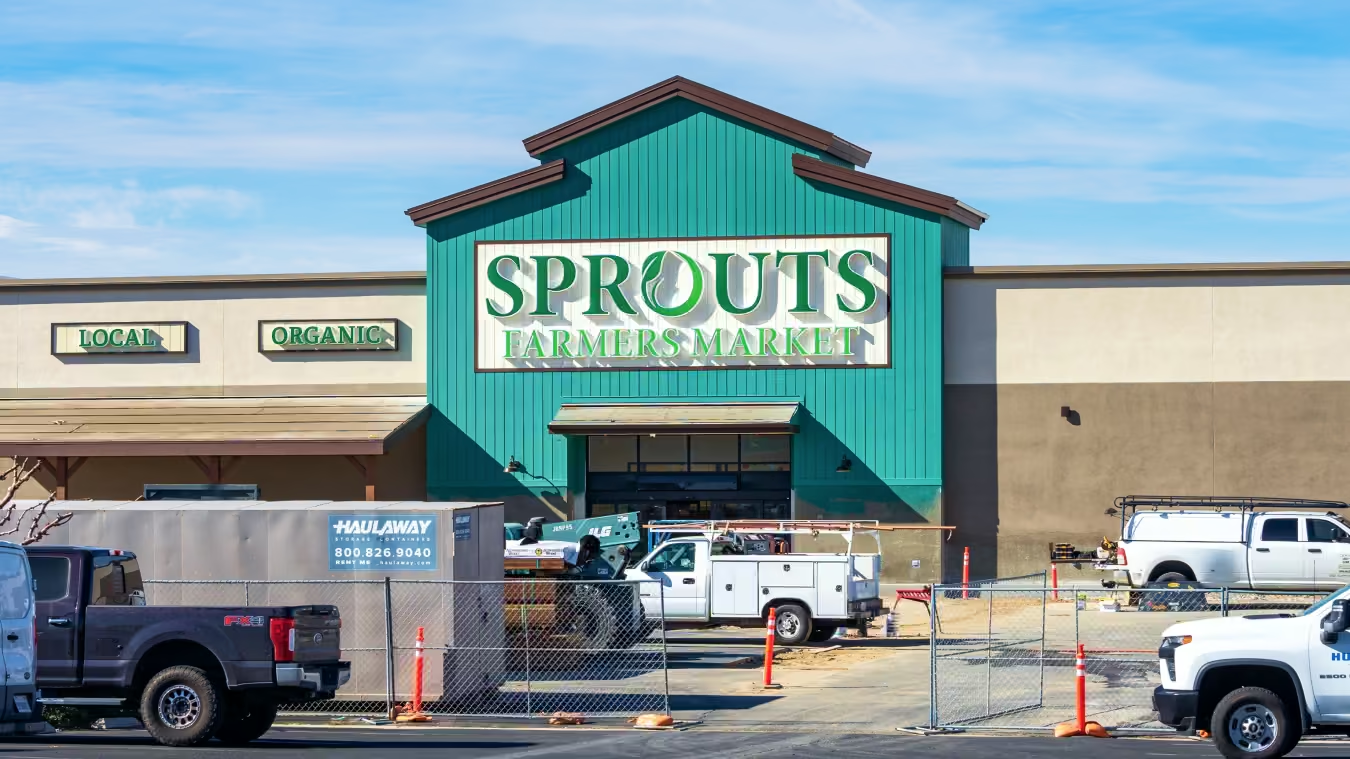
And foot traffic data points to a parallel shift in where consumers are shopping, with a growing share of grocery visits flowing toward fresh-format stores like Trader Joe’s and Sprouts Farmers Market that emphasize high-quality perishables, curated health-oriented assortments, and an elevated in-store experience. While this pivot has been underway for several years, reflecting a broader post-pandemic focus on health and wellness, its recent acceleration coincides with the rise in GLP-1 use.
From Q1 2022 to Q1 2026, these chains steadily expanded their share of overall grocery foot traffic, with momentum accelerating beginning in Q1 2024, even as some experienced per-store softness amid a challenging consumer environment. Over the same period, the median household income within fresh-format chains’ captured markets, which had remained largely stable through early 2024, began to decline. This trend suggests a broadening customer base, as households across income brackets increasingly prioritize higher-quality food and allocate a larger share of their grocery trips to fresh formats.
The reallocation of spending also extends beyond the grocery aisle. Foot traffic data points to a meaningful reordering of food-away-from-home visits over the past three years, with healthier dining segments outperforming more indulgent ones – underscoring a broader shift toward more nutritious options that GLP-1 adoption may be helping to reinforce.
Frozen yogurt chains outpaced ice cream shops in year-over-year visit growth in both 2024 and 2025, as consumers gravitated toward lighter frozen treats. Smoothie and juice chains also captured growing demand, buoyed by expanding footprints from brands like Tropical Smoothie Cafe, Smoothie King, and Playa Bowls, while fast-casual similarly pulled ahead of QSR.
Fitness participation has been on the rise since the pandemic, and the data suggests gym habits are becoming more consistent over time – a trend that GLP-1 users, who often incorporate structured exercise into their routines, may be helping to reinforce.
Between Q1 2023 and Q1 2026, the share of visitors to leading gyms stopping by at least three times in an average month rose from 44.8% to 46.8%, while the share visiting at least four times rose from 37.3% to 39.1%. For a growing segment of the population, going to the gym has become a regular part of the weekly routine – with implications for fitness brands and the broader ecosystem of health-oriented businesses competing for this newly routine-driven consumer.
As consumers deepen their focus on health and fitness, the body transformations associated with GLP-1 use are also reshaping apparel demand. Alongside a growing need for wardrobe replenishment, GLP-1 users are investing more in their appearance and rediscovering the experience of shopping for clothes.
And this trend aligns with recent foot traffic data. Even as discretionary spending continues to face headwinds in a challenging macroeconomic environment, clothing retailers are seeing consistent year-over-year visit growth, driven in large part by the off-price sector – with each year outpacing the broader discretionary retail category by a widening margin. Apparel is pulling away from the pack, likely driven in part by a consumer whose relationship with their body – and with shopping – has fundamentally changed.
The GLP-1 era is still in its early stages – but as programs like Amazon’s new GLP-1 management program expand access, these drugs are likely to continue reshaping shopping behavior in the months and years ahead. The data points to a consumer who is eating differently, moving more, and spending in ways that reflect a new set of priorities, further amplifying the focus on health and wellness that has emerged over the past several years.
For more data-driven retail and dining insights, visit Placer.ai/anchor.

Sprouts Farmers Market entered 2026 expecting a challenging quarter – and Q1 foot traffic trends bore that out. Against a Q1 2025 comparison where comps surged 11.7% year over year (YoY), the company guided Q1 2026 comparable sales to decline between -3.0% and -1.0%, citing both the tough lap and continued pressure on grocery shoppers from elevated food prices. And same-store visits also dropped, falling between -3.0% and -6.0% YoY in Q1.
Still, overall foot traffic rose 1.8%, supported by the 37 stores opened in fiscal 2025 and additional locations added in early 2026, which helped offset softness at existing stores.
Against this backdrop, Sprouts is making several forward-looking investments that could support a traffic recovery later this year. Continued expansion, a new loyalty program launched in 2025, and ongoing merchandising innovation – alongside its transition to self-distribution for fresh meat – all position the company to compete on both quality and value as macro conditions evolve.
Will Sprouts return to same-store visit growth in Q2?
Visit Placer.ai/anchor to find out.
Placer.ai leverages a panel of tens of millions of devices and utilizes machine learning to make estimations for visits to locations across the US. The data is trusted by thousands of industry leaders who leverage Placer.ai for insights into foot traffic, demographic breakdowns, retail sale predictions, migration trends, site selection, and more.
.avif)
In February 2026, Chipotle unveiled its "Recipe for Growth" plan to reverse declining sales by improving operations, boosting marketing, and refreshing its menu. And though the plan has only been in place for a couple of months, traffic data suggests that it may already be having a positive impact on foot traffic to the chain.
After three consecutive quarters of year-over-year declines in average visits per location, Chipotle's foot traffic trends are showing signs of recovery. In Q1 2026, average visits per location were nearly flat (-0.2% YoY), while overall visits grew 5.8% – the strongest growth seen over the past year.
Several branding and menu innovations likely contributed to Chipotle's traffic recovery, including the high protein menu launched in late December 2025 and partnerships with athletes and sporting events. The biggest single driver, however, appears to have been the return of Chicken al Pastor on February 10, 2026 – a fan-favorite protein that had generated more social media requests for its comeback than any other LTO in the chain's history. In the month of its launch, overall visits rose 10.1% YoY and same-store visits grew 5.1%.
Still, the following month, overall visits were up just 3.6% and same-store visits were flat – suggesting that popular menu items can generate meaningful visit spikes, but those spikes may not automatically translate into lasting traffic bumps.
Chipotle appears to be leaning into this dynamic rather than fighting it. Starting April 28, the chain is rotating out Chicken al Pastor in favor of Honey Chicken – its best-performing LTO ever – effectively betting that a steady drumbeat of novelty and scarcity can sustain traffic where any single item cannot.
Another pillar of the company's "Back to Growth" plan entailed creating "new occasions that drive demand into our restaurants" – and Chipotle seems to have accomplished just that with its successful "Tatted Like a Chipotle Bag" BOGO promotion.
On March 13, 2026, from 3 to 4 PM local time, Chipotle offered an in-store BOGO entrée to any customer sporting a tattoo – real, temporary, or hand-drawn – a nod to the iconic tattoo-style graphics on a Chipotle bag. The one-hour activation drove a 55.3% spike in visits above the year-to-date average, with the highest daily visit count recorded since Placer.ai began tracking Chipotle's traffic in 2018. Chipotle also reported March 13th 2026 as the highest daily sales day in the chain's history.
That a single one-hour, in-store promotion could shatter the chain's all-time sales record speaks to the power of Chipotle's brand equity and the effectiveness of leaning into what makes it culturally distinct.
The early results suggest that Chipotle's 'Recipe for Growth' is already working – Q1's traffic recovery was built on a potent mix of menu innovation, viral activations, and renewed cultural relevance. But while the chain's strategy of cycling LTOs and engineering shareable moments has clearly rekindled consumer excitement – whether this delivers consistent same-store visit growth will be the real measure of "Recipe for Growth" success.
For more data-driven dining insights, visit placer.ai/anchor
.png)
1) Value Wins in 2025: Discount & Dollar Stores and Off-Price Apparel are outperforming as consumers prioritize value and the “treasure-hunt” experience.
2) Small Splurges Over Big Projects: Clothing and Home Furnishing traffic remains strong as shoppers favor accessible wardrobe updates and decor refreshes instead of major renovations.
3) Big-Ticket Weakness: Electronics and Home Improvement visits continue to lag, reflecting a continued deferment of larger purchases.
4) Bifurcation in Apparel: Visits to off-price and luxury segments are growing, while general apparel, athleisure, and department stores face ongoing pressures from consumer trade-downs.
5) Income Dynamics Shape Apparel: Higher-income shoppers sustain luxury and athleisure, while off-price is driving traffic from more lower-income consumers.
6) Beauty Normalizes but Stays Relevant: After a pandemic-driven surge, YoY declines likely indicate that beauty visits are stabilizing; shorter trips are giving way to longer visits as retailers deploy new tech and immersive experiences.
Economic headwinds, including tariffs and higher everyday costs, are limiting discretionary budgets and prompting consumers to make more selective choices about where they spend. But despite these pressures, foot traffic to several discretionary retail categories continues to thrive year-over-year (YoY).
Of the discretionary categories analyzed, fitness and apparel had the strongest year-over-year traffic trends – likely thanks to consumers finding perceived value in these segments.
Fitness and apparel (boosted by off-price) appeal to value-driven, experience seeking consumers – fitness thanks to its membership model of unlimited visits for an often low fee, and off-price with its discount prices and treasure-hunt dynamic. Both categories may also be riding a cultural wave tied to the growing use of GLP-1s, as more consumers pursue fitness goals and refresh their wardrobes to match changing lifestyles and sizes.
Big-ticket categories, including electronics, also faced significant challenges, as tighter consumer budgets hamper growth in the space. Traffic to home improvement retailers also generally declined, as lagging home sales and consumers putting off costly renovations likely contributed to the softness in the space.
But home furnishing visits pulled ahead in July and August 2025 – benefitting from strong performances at discount chains such as HomeGoods – suggesting that consumers are directing their home-oriented spending towards more accessible decor.
The beauty sector – typically a resilient "affordable luxury" category – also experienced declines in recent months. The slowdown can be partially attributed to stabilization following several years of intense growth, but it may also mean that consumers are simplifying their beauty routines or shifting their beauty buying online.
> Traffic to fitness and apparel chains – led by off-price – continued to grow YoY in 2025, as value and experiences continue to draw consumers.
> Consumers are shopping for accessible home decor upgrades to refresh their space rather than undertaking major renovations.
> Shoppers are holding off on big-ticket purchases, leading to YoY declines in the electronics and home improvement categories.
> Beauty has experienced softening traffic trends as the sector stabilizes following its recent years of hypergrowth as shoppers simplify routines and shift some of their spending online.
After two years of visit declines, the Home Furnishings category rebounded in 2025, with visits up 4.9% YoY between January and August. By contrast, Home Improvement continued its multi-year downward trend, though the pace of decline appears to have slowed.
So what’s fueling Home Furnishings’ resurgence while Home Improvement visits remain soft? Probably a combination of factors, including a more affluent shopper base and a product mix that includes a variety of lower-ticket items.
On the audience side, this category draws a much larger share of visits from suburban and urban areas, with a median household income well above that of home improvement shoppers. The differences are especially pronounced when analyzing the audience in their captured markets – indicating that the gap stems not just from store locations, but from meaningful differences in the types of consumers each category attracts.
Home improvement's larger share of rural visits is not accidental – home improvement leaders have been intentionally expanding into smaller markets for a while. But while betting on rural markets is likely to pay off down the line, home improvement may continue to face headwinds in the near future as its rural shopper base grapples with fewer discretionary dollars.
On the merchandise side, home improvement chains cater to larger renovations and higher-cost projects – and have likely been impacted by the slowdown in larger-ticket purchases which is also impacting the electronics space. Meanwhile, home furnishing chains carry a large assortment of lower-ticket items, including home decor, accessories, and tableware.
Consumers are still spending more time at home now than they were pre-COVID, and investing in comfortable living spaces is more important than ever. And although many high-income consumers are also tightening their belts, upgrading tableware or even a piece of furniture is still much cheaper than undertaking a renovation – which could explain the differences in traffic trends.
Traditional apparel, mid-tier department stores, and activewear chains all experienced similar levels of YoY traffic declines in 2025 YTD, as shown in the graph above. But analyzing traffic data from 2021 shows that each segment's dip is part of a trajectory unique to that segment.
Traffic to mid-tier department stores has been trending downward since 2021, a shift tied not only to macroeconomic headwinds but also to structural changes in the sector. The pandemic accelerated e-commerce adoption, hitting department stores particularly hard as consumers seeking one-stop shopping and broad assortments increasingly turned to the convenience of online channels.
Traffic to traditional apparel chains has also not fully recovered from the pandemic, but the segment did consistently outperform mid-tier department stores and luxury retailers between 2021 and 2024. But in H1 2025, the dynamic with luxury shifted, so that traffic trends at luxury apparel retailers are now stronger than at traditional apparel both YoY and compared to Q1 2019. This highlights the current bifurcation of consumer spending also in the apparel space, as luxury and off-price segments outperform mid-market chains.
In contrast, the activewear & athleisure category continues to outperform its pre-pandemic baseline, despite experiencing a slight YoY softening in 2025 as consumers tighten their budgets. The category has capitalized on post-lockdown lifestyle shifts, and comfort-driven wardrobes that blur the line between work, fitness, and leisure remain entrenched consumer staples several years on.
The two segments with the highest YoY growth – off-price and luxury – are at the two ends of the spectrum in terms of household income levels, highlighting the bifurcation that has characterized much of the retail space in 2025. And luxury and off-price are also benefiting from larger consumer trends that are boosting performance at both premium and value-focused retailers.
In-store traffic behavior reveals that these two segments enjoy the longest average dwell times in the apparel category, with an average visit to a luxury or off-price retailer lasting 39.2 and 41.3 minutes, respectively. This suggests that consumers are drawn to the experiential aspect of both segments – treasure hunting at off-price chains or indulging in a sense of prestige at a luxury retailer. Together, these patterns highlight that – despite appealing to different consumer groups – both ends of the market are thriving by offering shopping experiences that foster longer engagement.
> Off-price and luxury segments are outperforming, while general apparel, athleisure, and department store visits lag YoY under tariff pressures and consumer trade-downs.
> Looking over the longer term reveals that athleisure is still far ahead of its pre-pandemic baseline – even if YoY demand has softened.
> Luxury and off-price both are thriving by offering shopping experiences that foster longer engagement.
The beauty sector has long benefitted from the “lipstick effect” — the tendency for consumers to indulge in small luxuries even when discretionary spending is constrained. And while the beauty category’s softening in today’s cautious spending environment could suggest that this effect has weakened, a longer view of the data tells a more nuanced story.
Beauty visits grew significantly between 2021 and 2024, fueled by a confluence of factors including post-pandemic “revenge shopping,” demand for bolder looks as consumers returned to social life, and new store openings and retail partnerships. Against that backdrop, recent YoY traffic dips are likely a sign of stabilization rather than true declines. Social commerce, and minimalist skincare routines may be moderating in-store traffic, but shoppers are still engaged, even as they blend online and offline shopping or seek out lower-cost alternatives to maximize value.
Analysis of average visit duration for three leading beauty chains – Ulta Beauty, Bath & Body Works, and Sally Beauty Supply – highlights the shifting role but continued relevance of physical stores in the space.
Average visit duration decreased post-pandemic – likely due to more purposeful trips and increased online product discovery. But that trend began to reverse in H1 2025, signaling the changing role of physical stores. Enhanced tech for in-store product exploration and rich experiences may be helping drive deeper engagement, underscoring beauty retail’s staying power even in a more measured spending environment.
Bottom Line:
> Beauty’s slight YoY visit declines point to a period of normalization following a post-pandemic boom, while longer-term trends show the category remains stronger than pre-pandemic levels.
> Visits grew shorter post-pandemic, driven by more purposeful trips and increased online product discovery – but dwell time is now lengthening again, signaling renewed in-store engagement driven by tech-enabled discovery and immersive experiences.
Foot traffic data highlight major differences in the recent performance of various discretionary apparel categories. Off-price, fitness, and home furnishings are pulling ahead, well-positioned to keep capitalizing on shifting priorities. Luxury also remains resilient, likely thanks to its higher-income visitor base.
At the same time, beauty’s normalization and the slowdown in mid-tier apparel, electronics, and home improvement show that caution persists across discretionary budgets. Moving forward, retailers that align with consumers’ demand for value, accessible upgrades, and immersive experiences may be best placed to thrive in this era of selective spending.
1) Broad-based growth: All four grocery formats grew year-over-year in Q2 2025, with traditional grocers posting their first rebound since early 2024.
2) Value grocers slow: After leading during the 2022–24 trade-down wave, value grocer growth has decelerated as that shift matures.
3) Fresh formats surge: Now the fastest-growing segment, fueled by affluent shoppers seeking health, wellness, and convenience.
4) Bifurcation widens: Growth concentrated at both the low-income (value) and high-income (fresh) ends, highlighting polarized spending.
5) Shopping missions diverge: Short trips are rising, supporting fresh formats, while traditional grocers retain loyal stock-up customers and value chains capture fill-in trips through private labels.
6) Traditional grocers adapt: H-E-B and Harris Teeter outperformed by tailoring strategies to their core geographies and demographics.Bifurcation of Consumer Spending Help Fresh Format Lead Grocery Growth
Grocery traffic across all four major categories – value grocers, fresh format, traditional grocery, ethnic grocers – was up year over year in Q2 2025 as shoppers continue to engage with a wide range of grocery formats. Traditional grocery posted its first YoY traffic increase since Q1 2024, while ethnic grocers maintained their steady pattern of modest but consistent gains.
Value grocers, which dominated growth through most of 2024 as shoppers prioritized affordability, continued to expand but have now ceded leadership to fresh-format grocers. Rising food costs between 2022 and 2024 drove many consumers to chains like Aldi and Lidl, but much of this “trade-down” movement has already occurred. Although price sensitivity still shapes consumer choices – keeping the value segment on an upward trajectory – its growth momentum has slowed, making it less of a driver for the overall sector.
Fresh-format grocers have now taken the lead, posting the strongest YoY traffic gains of any category in 2025. This segment, anchored by players like Sprouts, appeals to the highest-income households of the four categories, signaling a growing influence of affluent shoppers on the competitive grocery landscape. Despite accounting for just 7.0% of total grocery visits in H1 2025, the segment’s rapid gains point to a broader shift: premium brands emphasizing health and wellness are emerging as the primary engine of growth in the grocery sector.
The fact that value grocers and fresh-format grocers – segments with the lowest and highest median household incomes among their customer bases – are the two categories driving the most growth underscores how the bifurcation of consumer spending is playing out in the grocery space as well. On one end, price-sensitive shoppers continue to seek out affordable options, while on the other, affluent consumers are fueling demand for premium, health-oriented formats. This dual-track growth pattern highlights how widening economic divides are reshaping competitive dynamics in grocery retail.
1) Broad-based growth: All four grocery categories posted YoY traffic gains in Q2 2025.
2) Traditional grocery rebound: First YoY increase since Q1 2024.
3) Ethnic grocers: Continued steady but modest upward trend.
4) Value grocers: Still growing, but slowing after most trade-down activity already occurred (2022–24).
5) Fresh formats: Now the fastest-growing segment, driven by affluent shoppers and interest in health & wellness.
6) Market shift: Premium, health-oriented brands are becoming the new growth driver in grocery.
7) Bifurcation of spending: Growth at both value and fresh-format grocers highlights a polarization in consumer spending patterns that is reshaping grocery competition.
Over the past two years, short grocery trips (under 10 minutes) have grown far more quickly than longer visits. While they still make up less than one-quarter of all U.S. grocery trips, their steady expansion suggests this behavioral shift is here to stay and that its full impact on the industry has yet to be realized.
One format particularly aligned with this trend is the fresh-format grocer, where average dwell times are shorter than in other categories. Yet despite benefiting from the rise of convenience-driven shopping, fresh formats attract the smallest share of loyal visitors (4+ times per month). This indicates they are rarely used for a primary weekly shop. Instead, they capture supplemental trips from consumers looking for specific needs – unique items, high-quality produce, or a prepared meal – who also value the ability to get in and out quickly.
In contrast, leading traditional grocers like H-E-B and Kroger thrive on a classic supermarket model built around frequent, comprehensive shopping trips. With the highest share of loyal visitors (38.5% and 27.6% respectively), they command a reliable customer base coming for full grocery runs and taking time to fill their carts.
Value grocers follow a different, but equally effective playbook. Positioned as primary “fill-in” stores, they sit between traditional and fresh formats in both dwell time and visit frequency. Many rely on limited assortments and a heavy emphasis on private-label goods, encouraging shoppers to build larger baskets around basics and store brands. Still, the data suggests consumers reserve their main grocery hauls for traditional supermarkets with broader selections, while using value grocers to stretch budgets and stock up on essentials.
1) Short trips surge: Under-10-minute visits have grown fastest, signaling a lasting behavioral shift.
2) Fresh formats thrive on convenience: Small footprints, prepared foods, and specialty items align with quick missions.
3) Traditional grocers retain loyalty: Traditional grocers such as H-E-B and Kroger attract frequent, comprehensive stock-up trips.
4) Value grocers fill the middle ground: Limited assortments and private label drive larger baskets, but main hauls remain with traditional supermarkets.
5) Fresh formats as supplements: Fresh format grocers such as The Fresh Market capture quick, specialized trips rather than weekly shops.
While broad market trends favor value and fresh-format grocers, certain traditional grocers are proving that a tailored strategy is a powerful tool for success. In the first half of 2025, H-E-B and Harris Teeter significantly outperformed their category's modest 0.6% average year-over-year visit growth, posting impressive gains of 5.6% and 2.8%, respectively. Their success demonstrates that even in a polarizing environment, there is ample room for traditional formats to thrive by deeply understanding and catering to a specific target audience.
These two brands achieve their success with distinctly different, yet equally focused, demographic strategies. H-E-B, a Texas powerhouse, leans heavily into major metropolitan areas like Austin and San Antonio. This urban focus is clear, with 32.6% of its visitors coming from urban centers and their peripheries, far above the category average. Conversely, Harris Teeter has cultivated a strong following in suburban and satellite cities in the South Atlantic region, drawing a massive 78.3% of its traffic from these areas. This deliberate targeting shows that knowing your customer's geography and lifestyle remains a winning formula for growth.
1) Traditional grocers can still be competitive: H-E-B (+5.6% YoY) and Harris Teeter (+2.8% YoY) outpaced the category average of +0.6% in H1 2025.
2) H-E-B’s strategy: Strong urban focus, with 32.6% of traffic from major metro areas like Austin and San Antonio.
3) Harris Teeter’s strategy: Suburban and satellite city focus, with 78.3% of traffic from South Atlantic suburbs.