.png)
.png)

.png)
.png)


As new retail construction slows, the trend of repurposing underperforming malls is accelerating, offering exciting opportunities to transform these properties into vibrant mixed-use developments. By blending retail, lifestyle, entertainment, and essential services, these redevelopments can better serve the evolving needs of today’s consumers. Class B malls offer significant potential for investors and retailers to unlock value while meeting the needs of local communities.
According to Green Street, there are 250 Class-B malls in the U.S., making up 28% of all U.S. malls. These properties are typically located in suburban or secondary markets and often feature a mid-tier tenant mix of national and regional retailers within a traditional enclosed mall format. According to Green Street data, A-rated malls boast an impressive 95% occupancy rate, while B malls sit at 89%. Meanwhile, occupancy drops significantly to 72% for C-rated malls and below.
B Malls face a number of challenges in addition to their higher vacancy rates, including lower sales per square foot, less desirable locations, outdated designs, and competition from newer lifestyle centers that offer a more dynamic mix of retail, dining, and entertainment.
Class-B malls, despite their challenges, offer a compelling opportunity for adaptive reuse. Often priced below their original value, these properties are ideal for redevelopment into community-centric hubs, featuring a mix of residential, retail, and public spaces. Reimagining these spaces not only allows investors and developers to achieve significant returns, but also fosters positive economic growth in local communities. For retailers, these revitalized spaces offer the chance to thrive in environments with increasing foot traffic and elevated customer engagement.
Hawthorn Mall, a premier two-story super-regional shopping center in Vernon Hills, Illinois, is one B Mall currently undergoing a significant transformation – and early data suggests that the revitalization efforts are already bearing fruit.
Owned by Centennial Real Estate, Hawthorn is strategically positioned at the intersection of Lake County’s key thoroughfares, offering exceptional convenience and accessibility. The center is anchored by major brands like AMC, Dave & Buster’s, JCPenney, and Macy’s, with a diverse mix of more than 60 retailers and restaurants, including Anthropologie, FP Movement, H&M, Lovesac, PGA Tour Superstore, Perry’s Steakhouse & Grille, and Pure Barre. Now, in the midst of redevelopment, Hawthorn is evolving into a vibrant mixed-use community, integrating luxury residential, expanded retail and dining, and pedestrian-friendly spaces.
Although the Hawthorn Mall redevelopment is still under way, visit quality to the mall has already improved – with the median visit duration rising from 54 minutes between April 2022 and March 2023 to 61 minutes between April 2024 and March 2025. The median household income in Hawthorn’s captured market has increased as well, perhaps thanks to the addition of a luxury apartment complex on the mall’s property. Lastly, the share of evenings visits also grew, suggesting that Hawthorn's revamped dining and entertainment are making it an increasingly popular evening destination for locals.
Class-B malls represent a unique opportunity to meet both market demands and community needs through thoughtful redevelopment. While challenges such as securing financing, navigating zoning and regulatory hurdles, and managing costs exist, the potential rewards are significant. Successful redevelopment requires targeted tenant curation, strategic location, and a bold, forward-thinking vision. With expansive footprints, prime access, and adaptability, Class-B malls are perfectly positioned to evolve into dynamic, mixed-use centers – redefining retail experiences and meeting the needs of modern consumers and communities.

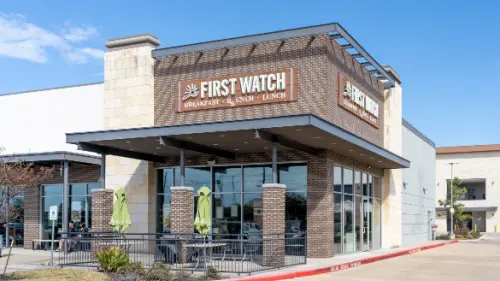
Traffic to First Watch continues to climb as the company forges on with its expansion. Visits to the chain were 7.3% higher year-over-year (YoY) in Q1 2025 as visits per location held essentially steady (-0.8% YoY) – revealing that demand for the breakfast, brunch, and lunch dining concept remains robust despite the consumer headwinds.
And according to the latest monthly data, First Watch may be in even better shape than its already strong Q1 2024 visit numbers suggest. In April 2025, overall visits to the chain grew 10.5% YoY while visits per location increased by 3.0% – indicating that the morning and afternoon-focused dining brand likely still has more room to grow.
For more data-driven consumer analysis, visit placer.ai/anchor.

While Warby Parker and Allbirds both originated as direct-to-consumer brands, they have since firmly established themselves as brick-and-mortar retailers. Warby Parker, known for its quirky and affordable approach to eyecare, has around 270 stores in the United States, while Allbirds, which recently underwent a significant rightsizing process, currently operates 24 stores across the country.
We took a look at the visit data for the two retailers to explore how they are faring thus far in 2025.
Warby Parker continues to impress. The eyewear chain, which transitioned from an online-only model to physical stores in 2013, spent 2024 adding stores to its current fleet – and visit data highlights the positive impact of this expansion.
Q4 2024 and Q1 2025 visits to Warby Parker were 13.4% and 6.6% higher, respectively, than in Q4 2023 and Q1 2024. Average visits per location, too, showed growth in Q4 2024 (+4.9%), though they slowed slightly in Q1 2025. Still, Warby Parker’s ability to drive visit growth while keeping average visits per location stable suggests that its expansions are meeting with consistent demand.
Weekly visits from 2025 onward highlight the brands’ strong positioning, with YoY visit growth in most analyzed weeks. (The significant YoY visit decline during the weeks of March 31st and April 7th is likely due to the comparison with last year’s major eclipse-related promotion, during which the chain offered free solar eclipse glasses.)
Shoewear company Allbirds has been charting a new performance course over the last year. The chain, known for its sustainable approach to footwear, recently closed nearly a third of its U.S. fleet in an attempt to optimize its stateside operations. And this consolidation, which allows Allbirds to prioritize top-performing locations, has yielded promising results for the chain.
While YoY visits were down across all analyzed months – an anticipated outcome given the significant reduction in store count – average visits per location, a more relevant indicator of Allbirds’ performance, were up on a near-constant basis. In Q1 2025, visits declined by 35.8% YoY, but visits per location grew by 14.1%.
Monthly visits followed a similar pattern: while overall visits declined by 25.9% YoY in March 2025, visits per location were up by 23.8%. This positive trend continued into April 2025, with overall visits down by just 9.2% YoY and visits per location remaining elevated at 21.0%, suggesting a strengthened performance at the remaining Allbirds stores.
This focus on a more efficient store footprint seems to be paying off for Allbirds, allowing the chain to accurately target its most receptive audience while cutting out underperforming locations.
Warby Parker and Allbirds are performing well, highlighting the importance of remaining agile and pivoting to meet evolving consumer challenges.
Will the two retailers continue to thrive?
Visit Placer.ai to keep up with the latest data-driven retail news.

Some moments in our lives remain ingrained in our heads. One such time period was March of 2020, when it felt like the world suddenly stood still as malls, street retail, and dining establishments closed, everyone masked up, and only essential retail and health services continued. After a while, limitations relaxed, but not without a subconscious preference for open-air shopping centers that appears to linger to this day. Granted, many open-air shopping centers are also newer or redeveloped, thus likely contributing to their popularity. However, there’s no doubt that they’ve rebounded at a higher rate compared to their indoor mall and even outlet mall counterparts.
We analyzed traffic data for one of the most-visited open-air shopping centers in the nation, Victoria Gardens, to see what sets it apart and what continues to draw consumers to open-air centers.
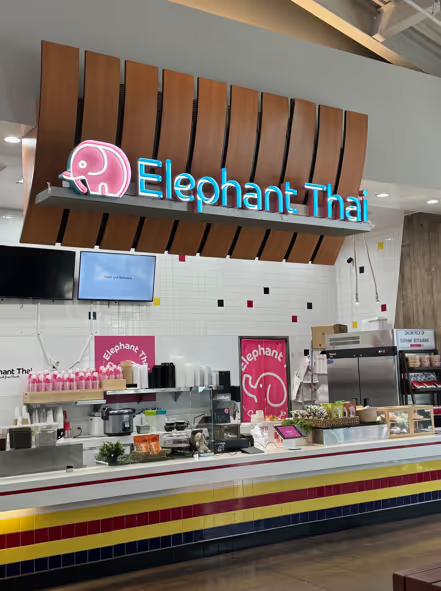
This open-air shopping center is over 1.1 million square feet and hosts over 160 retailers within its borders. In addition to marquee brands such as Apple, lululemon, AMC Theatres, and Cheesecake Factory, it also has regional favorites such as Seven Grams dumpling house and cult-favorite Duck Donuts. Boasting a 160 acre main street community, its walkable layout beckons while classics play in the background. Quite a few of the concepts at Victoria Gardens are on trend. For instance, the Food Hall features local eatery Elephant Thai, which is perfectly in keeping with the popularity of all things Thai these days with Season 3 of White Lotus being set in Koh Samui.


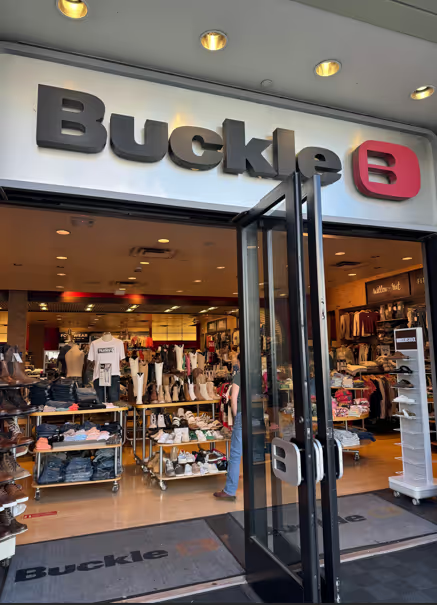
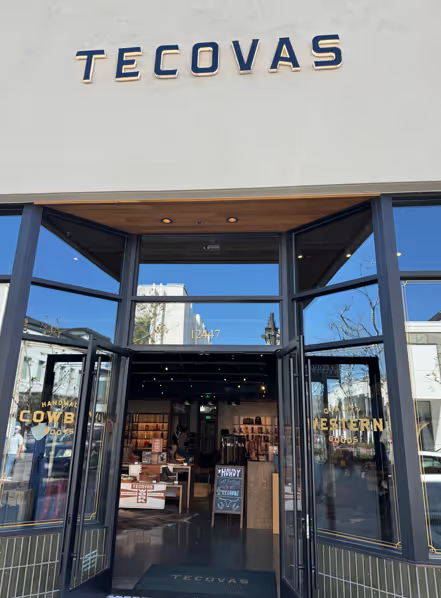
Another genre that one doesn’t often see in more urban mall locations are two retailers devoted to Western wear – Buckle and Tecovas.


Tecovas has a fascinating backstory with its founder, Paul Hedrick, partnering initially with bootmakers from Leon, Mexico, the “boot-making capital of the Americas” and selling his first pairs from the backseat of his SUV. With an average dwell time of 40 minutes between April 2024 and February 2025 and holiday spikes for Thanksgiving and Christmas, it’s clear that for many shoppers, a pair of Tecova boots are on their wishlist.
One of the more unique aspects of this mall is its Cultural Center on premise. With a performing arts theater, library, and interactive children’s museum right next to retail, dining, and a movie theater, it’s truly a one-stop shop for its community.
As shopping centers continue to evolve, with many adopting a Town Square approach, the appeal of open-air shopping centers – full of public spaces, greenery, walkable paths, and fresh air – will only continue to grow.
For more data-driven consumer insights, visit placer.ai/anchor

Aldi and Lidl have firmly established themselves as discount powerhouses. The two German retailers entered the United States market at different times, with Aldi opening its first location in 1976 and Lidl making its way stateside in 2017 – and diving into the foot traffic shows that both are thriving.
In the first quarter of 2025, visits to Aldi and Lidl saw significant year-over-year (YoY) increases of 8.9% and 4.2%, respectively – well above the industry-wide average (0.9%.)
Aldi, which has been on an expansion tear for the past few years, saw a YoY increase in average visits per location – but so did Lidl, which has been slower to add new locations. And this growth – 4.7% at Aldi and 1.9% at Lidl – highlights that their stores, whether new locations or already-existing ones, are driving sustained demand.
A closer look at visitor behavior offers valuable insights into the factors driving the foot traffic success of Aldi and Lidl.
A significantly larger proportion of Aldi and Lidl's visits – 37.2% and 37.7%, respectively – took place on Saturdays and Sundays compared to visits to traditional and value grocery stores. This suggests that the attractive price points offered by Aldi and Lidl position them as prime destinations for shoppers making weekend stock-up trips.
On a chain level, both Aldi and Lidl are finding their own paths to success. Aldi is currently undergoing a significant growth phase, aiming to operate 800 stores by the end of 2028. This ambitious trajectory includes adding at least 225 new locations in 2025 alone – and examining the visit distribution across Aldi's largest markets provides valuable insights into how its strategy is unfolding. Contextualizing Aldi’s performance against the wider grocery segment provides a birds-eye view of the value grocer’s performance.
Over the past few years, Aldi has consistently increased its visit share when compared to the overall grocery segment, both nationally and across its major markets. For instance, in Florida, one of Aldi’s largest markets, its visit share grew from 4.8% in Q1 2022 to 7.0% in Q1 2025. And in Illinois, now its second-largest market, Aldi increased its visit share from 12.2% to 14.8% over the same period.
This consistent growth in visit share underscores the broad appeal of Aldi's value proposition to shoppers across the country, suggesting that its ambitious expansion plans are likely to be well-received by consumers.
Lidl also plans to grow its store count, though at a more modest pace than Aldi. And the chain is focusing on its already-existing markets in hopes of entrenching itself further in areas where it already has strong brand recognition.
Geographic segmentation data from the Esri: Tapestry Segmentation dataset within Lidl’s potential and captured markets reveals promising insights into where the retailer might find its most receptive audiences. In its potential market – calculated by weighting each Census Block Group (CBG) within Lidl’s trade area according to population size – the share of visitors from "Suburban Periphery" areas was 41.5%. However, in its captured market, determined by weighting each CBG according to its share of actual visits to Lidl – so better representing its current visitor profile – this suburban segment constitutes a significantly larger 56.4%. Conversely, the proportion of visitors originating from "Principal Urban Centers" and "Metro Cities" was higher in Lidl’s potential market compared to its captured market.
These metrics strongly suggest that Lidl has more demand in the suburbs than it may realize – and as it expands, focusing on these areas might prove to be a winning strategy for the chain.
Aldi and Lidl are thriving, growing their audiences during a challenging economic climate.
Will visits to the two chains continue to increase throughout 2025? Visit Placer.ai to keep up with the latest data-driven grocery insights.

Amid rising housing costs and shifting consumer lifestyles, self-storage has emerged as a go-to solution for many Americans. We dove into the data to take the pulse of the market in Q1 2025 – and uncover the audience segments behind the industry’s ongoing growth.
Visits to leading self-storage companies have been on a steady growth trajectory since 2019. During the pandemic, storage utilization surged as many Americans relocated or stored items to free up space for home offices or DIY projects. Since then, high prices and interest rates appear to have further fueled demand, with some households likely deferring space-adding renovations or larger home purchases.
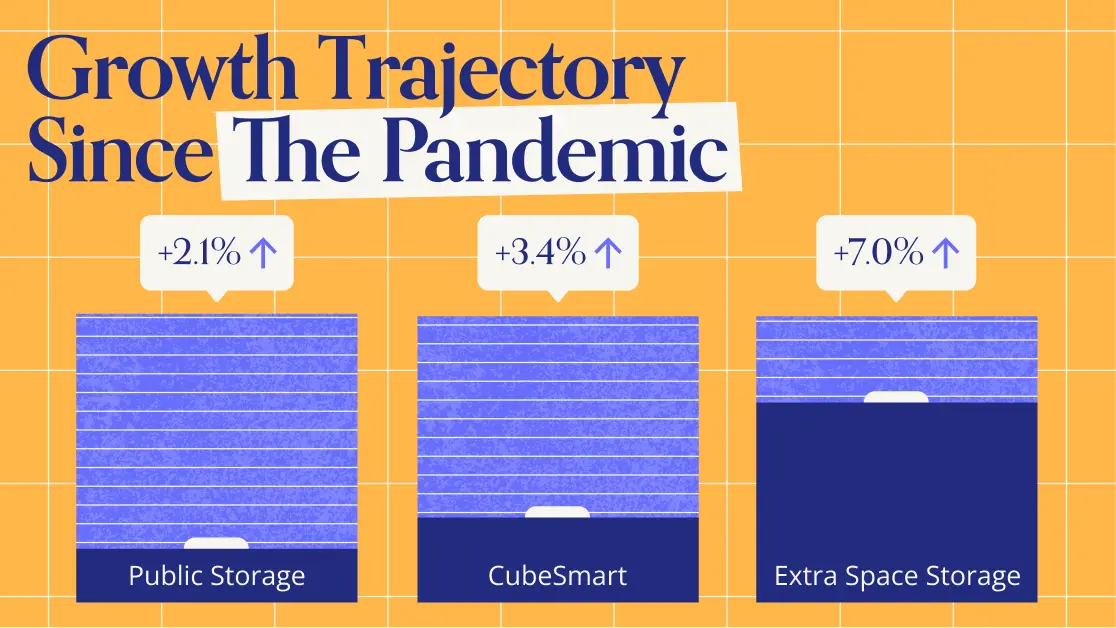
In Q1 2025, visits to Public Storage and CubeSmart were up 24.7% and 30.7%, respectively, compared to a Q1 2019 baseline. Extra Space Storage – which substantially expanded its unit count following its 2023 acquisition of Life Storage – saw visits surge 98.3% over the same baseline. And year over year (YoY), all three chains posted foot traffic growth, partly driven by continued expansion.
The baseline visit analysis also reveals a distinct seasonal pattern in self-storage usage patterns. Each year, visits to self-storage chains peak in Q2 and Q3 (April through September), aligning with spring cleaning, home improvement prime time, and moving season. Then in Q1, visits drop as people stay indoors during winter – likely also making fewer trips to access recreational gear and vehicles in storage.
Who are the consumers driving self-storage visit growth? Looking at the demographic characteristics of Extra Space Storage, Public Storage, and CubeSmart’s visitor bases reveals a common consumer profile across chains. In Q1 2025, the captured markets of all three chains had nearly identical median household incomes (HHIs), very close to the nationwide baseline of $79.6K. Their markets were also disproportionately urban, with higher-than-average shares of renter-occupied and multi-unit housing – all groups more likely to need extra storage space.
Still, as the self-storage market has grown, industry leaders have grown their presence in more affluent suburban markets. Between Q1 2019 and Q1 2025, Extra Space Storage’s share of “Wealthy Suburban Families” rose from 9.1% to 10.1% – slightly above the nationwide baseline of 9.6%. Meanwhile, Public Storage’s share of this segment increased from 8.8% to 9.8%, and CubeSmart’s share remained steady at 10.1%. A similar pattern emerged for “Upper Suburban Diverse Families”, with all three chains at or above the nationwide segment baseline of 9.0% by Q1 2025.
This small but perceptible shift may reflect rising demand from households where adult children are increasingly staying at home or returning after college, prompting a need for additional storage. Spare rooms once used for storage may also be increasingly repurposed into home offices, studios, or workout spaces in the wake of hybrid work trends.
Known for resilience in the face of economic headwinds and uncertainty, the self-storage space appears well-positioned to continue to thrive. How will the segment evolve in the years and months ahead?
Follow Placer.ai/anchor to find out.

This report leverages location intelligence data to analyze the auto dealership market in the United States. By looking at visit trends to branded showrooms, used car lots, and mixed inventory dealerships – and analyzing the types of visitors that visit each category – this white paper sheds light on the state of car dealership space in 2023.
Prior to the pandemic and throughout most of 2020, visits to both car brand and used-only dealerships followed relatively similar trends. But the two categories began to diverge in early 2021.
Visits to car brand dealerships briefly returned to pre-pandemic levels in mid-2021, but traffic fell consistently in the second half of the year as supply-chain issues drove consistent price increases. So despite the brief mid-year bump, 2021 ended with overall new car sales – as well as overall foot traffic to car brand dealerships – below 2019 levels. Visits continued falling in 2022 as low inventory and high prices hampered growth.
Meanwhile, although the price for used cars rose even more (the average price for a new and used car was up 12.1% and 27.1% YoY, respectively, in September 2021), used cars still remained, on average, more affordable than new ones. So with rising demand for alternatives to public transportation – and with new cars now beyond the reach of many consumers – the used car market took off and visits to used car dealerships skyrocketed for much of 2021 and into 2022. But in the second half of last year, as gas prices remained elevated – tacking an additional cost onto operating a vehicle – visits to used car dealerships began falling dramatically.
Now, the price of both used and new cars has finally begun falling slightly. Foot traffic data indicates that the price drops appear to be impacting the two markets differently. So far this year, sales and visits to dealerships of pre-owned vehicles have slowed, while new car sales grew – perhaps due to the more significant pent-up demand in the new car market. The ongoing inflation, which has had a stronger impact on lower-income households, may also be somewhat inhibiting used-car dealership visit growth. At the same time, foot traffic to used car dealerships did remain close to or slightly above 2019 levels for most of 2023, while visits to branded dealerships were significantly lower year-over-four-years.
The situation remains dynamic – with some reports of prices creeping back up – so the auto dealership landscape may well continue to shift going into 2024.
With car prices soaring, the demand for pre-owned vehicles has grown substantially. Analyzing the trade area composition of leading dealerships that sell used cars reveals the wide spectrum of consumers in this market.
Dealerships carrying a mixed inventory of both new and used vehicles seem to attract relatively high-income consumers. Using the STI: Popstats 2022 data set to analyze the trade areas of Penske Automotive, AutoNation, and Lithia Auto Stores – which all sell used and new cars – reveals that the HHI in the three dealerships’ trade areas is higher than the nationwide median. Differences did emerge within the trade areas of the mixed inventory car dealerships, but the range was relatively narrow – between $77.5K to $84.5K trade area median HHI.
Meanwhile, the dealerships selling exclusively used cars – DriveTime, Carvana, and CarMax – exhibited a much wider range of trade area median HHIs. CarMax, the largest used-only car dealership in the United States, had a yearly median HHI of $75.9K in its trade area – just slightly below the median HHI for mixed inventory dealerships Lithia Auto Stores and AutoNation and above the nationwide median of $69.5K. Carvana, a used car dealership that operates according to a Buy Online, Pick Up in Store (BOPIS) model, served an audience with a median HHI of $69.1K – more or less in-line with the nationwide median. And DriveTime’s trade areas have a median HHI of $57.6K – significantly below the nationwide median.
The variance in HHI among the audiences of the different used-only car dealerships may reflect the wide variety of offerings within the used-car market – from virtually new luxury vehicles to basic sedans with 150k+ miles on the odometer.
Visits to car brands nationwide between January and September 2023 dipped 0.9% YoY, although several outliers reveal the potential for success in the space even during times of economic headwinds.
Visits to Tesla’s dealerships have skyrocketed recently, perhaps thanks to the company’s frequent price cuts over the past year – between September 2022 and 2023, the average price for a new Tesla fell by 24.7%. And with the company’s network of Superchargers gearing up to serve non-Tesla Electric Vehicles (EVs), Tesla is finding room for growth beyond its already successful core EV manufacturing business and positioning itself for a strong 2024.
Japan-based Mazda used the pandemic as an opportunity to strengthen its standing among U.S. consumers, and the company is now reaping the fruits of its labor as visits rise YoY. Porsche, the winner of U.S New & World Report Best Luxury Car Brand for 2023, also outperformed the wider car dealership sector. Kia – owned in part by Hyundai – and Hyundai both saw their foot traffic increase YoY as well, thanks in part to the popularity of their SUV models.
Analyzing dealerships on a national level can help car manufacturers make macro-level decisions on marketing, product design, and brick-and-mortar fleet configurations. But diving deeper into the unique characteristics of each dealership’s trade area on a state level reveals differences that can serve brands looking to optimize their offerings for their local audience.
For example, analyzing the share of households with children in the trade areas of four car brand dealership chains in four different states reveals significant variation across the regional markets.
Nationwide, Tesla served a larger share of households with children than Kia, Ford, or Land Rover. But focusing on California shows that in the Golden State, Kia’s trade area population included the largest share of this segment than the other three brands, while Land Rover led this segment in Illinois. Meanwhile, Ford served the smallest share of households with children on a nationwide basis – but although the trend held in Illinois and Pennsylvania, California Ford dealerships served more households with children than either Tesla or Land Rover.
Leveraging location intelligence to analyze car dealerships adds a layer of consumer insights to industry provided sales numbers. Visit patterns and audience demographics reveal how foot traffic to used-car lots, mixed inventory dealerships, and manufacturers’ showrooms change over time and who visits these businesses on a national or regional level. These insights allow auto industry stakeholders to assess current demand, predict future trends, and keep a finger on the pulse of car-purchasing habits in the United States.